

NO.1 Can you briefly introduce yourself?
Hello everyone, I’m Meng Yan, co-founder of Solv Protocol and co-author of the ERC-3525 token standard. I’m currently responsible for the development of the ERC-3525 ecosystem, focusing on research areas including pure chain structured finance, programmable payment networks, digital certificates, and account abstraction.
Since I joined the blockchain field in 2015, I have been engaged in the dissemination, training and consulting of blockchain knowledge until I founded Solv in 2020. In 2019, I was fortunate to be named one of the top ten blockchain education teachers in China. At that time, I focused on the dissemination, preaching and research of the token economy and achieved some small achievements.
I am widely recognized in the domestic blockchain circle for proposing to translate the English word "token" into "通证" and advocating in-depth research on the token economy. I established the theoretical framework of the token economy in the early stage, so I have a certain influence in the circle. At the same time, I have also been invited to famous domestic universities such as Tsinghua University and Peking University to communicate with students and teach relevant knowledge systems and information.
NO.2 Can you share your opportunity to enter the circle?
I think I have three experiences of entering the circle. The first time was in 2015, when I was working at IBM. In this year, IBM underwent a major change. Arvind Krishna, an Indian-American technical expert, replaced the highly respected John Kelly III and became the helmsman of IBM's technology and research. Soon after he took office, he announced that he would add blockchain to IBM's global technology strategy, which shocked me a lot. Because such a clear reform behavior may be seen as a criticism of the previous strategy. Why is there such an urgent need to change the strategy? I became interested in this decision, so I studied blockchain in depth and was deeply attracted to it. I was originally one of the earliest smartphone software development engineers in China, and later turned to the field of corporate strategic communication and learned knowledge in the fields of politics, economics, and finance. Combining my technical background with this knowledge, I found that blockchain and digital currency are very consistent with my interests, even if it was just a hobby or professional direction at the time. I hope to work in blockchain-related fields, so I studied cryptography courses online at Stanford and the University of Maryland in my spare time, as well as professional courses on Bitcoin and encrypted digital currencies at Princeton University.
In April 2017, I entered the circle for the second time and decided to leave IBM to specialize in blockchain and AI-related work. Initially, I dabbled in both areas, but by August 2017, I decided to focus entirely on blockchain. In the first few years, I was mainly engaged in communication, evangelism, training, consulting and other related work, and I also achieved good results until 2020.
During the pandemic, I had a rare respite to calm down and think carefully about my next plan. In my previous job, I was often on business trips and had meetings almost every week, which left me with little time to think and explore new things. But in 2020, I had time to reflect and realized that I should create something new. So, in October 2022, I launched a new project called Solv with my partners. This is my third experience in the circle, because I was mainly engaged in evangelism and other related work in the blockchain field before, and this time I decided to devote myself to the blockchain field. This decision made me feel the change of role, which requires extra courage and determination. **Our project originally wanted to create a new type of financial application NFT and named it "Financial NFT". **We realized that existing token standards such as ERC-20 and ERC-721 could not meet our needs in financial NFT. Therefore, we decided to develop a new token standard ourselves. So, starting in October 2020, we worked hard for 23 months, until September 2022, when our token standard was finally approved by the Ethereum community and core developers, became the industry standard, and was named ERC-3525.
Core content: The first time I entered the circle was in 2015. I was working at IBM. At that time, the company underwent major changes and introduced blockchain technology as one of its strategies. I became very interested in this, conducted in-depth research and learned relevant knowledge, and I hope to switch to blockchain. So in 2017, I entered the industry for the second time and left IBM to focus on blockchain work and continue to develop in this field. Finally, in October 2022, I co-launched a project called Solv with my partners, committed to creating a new type of financial NFT, and developed a new token standard ERC-3525, which gained support from the Ethereum community and core developers With the approval, this is my third experience of devoting myself fully to the blockchain field.
NO.3 Can you explain ERC-3525 and Solv in detail?
ERC-3525 is a new type of token standard. The tokens created based on this standard become semi-fungible tokens, referred to as SFT for short, which correspond to NFT. Initially we planned to do financial NFT, but during the development process, we found that there were many areas for improvement in this field, so we gradually formed the SFT standard, which went through four major revisions and was finally adopted in the fourth edition. and become an industry standard.
So, what exactly does ERC-3525 do? The simple statement is that ERC-3525 is used to express digital bills. This word exists in Chinese, but there is no direct corresponding word in English. Digital notes are extremely common in life and business, including invoices, receipts, bills, IOUs, IOUs, rental contracts, etc., as well as some non-financial notes, such as vouchers, coupons, discount coupons, membership cards, etc. It is more common in the financial and commercial fields, such as commercial acceptance bill, bank acceptance bill, bill of lading, warehouse receipt, bill of lading, letter of credit, etc. Even cash and stocks can be regarded as a kind of bill. There are also more complex structured assets such as options, futures, asset-backed securities, CDOs, MBS, etc.
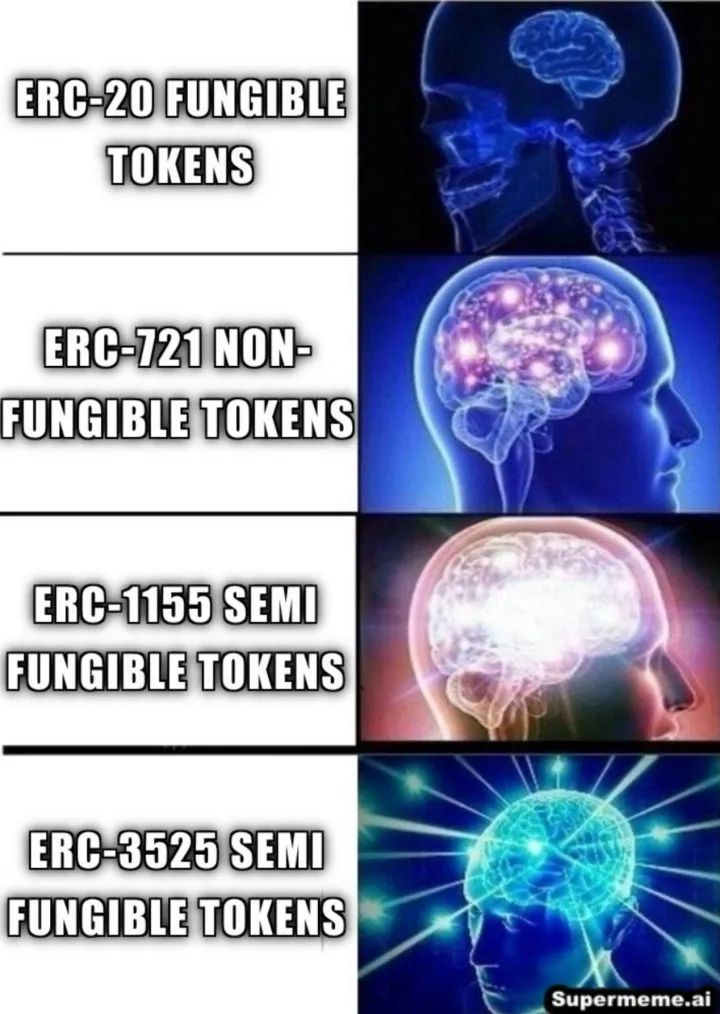
At the end of 2020, we found that there was no standard in the entire blockchain field to express digital bills. Therefore, we decided to take matters into our own hands and develop a new token standard, namely ERC-3525, also known as SFT, for expressing digital bills. This standard has the following characteristics: First, unlike ERC-20, it is visual, similar to NFT, and can have a face with rich information placed on it. ERC-3525 can better express complex financial bill information, such as maturity date, interest rate, interest payment plan, etc., making it more intuitive and artistic. Second, it can be split, merged and calculated. Like NFT, it can also display a lot of information, but unlike NFT, ERC-3525 has the characteristic of being freely split. For example, you can split a bond with a face value of 1,000 into one with a face value of 700 and another with a face value of 300, which is conducive to financial calculations and transactions. Third, it is a container that can package a variety of other assets. You can package different types of assets such as Bitcoin, Ethereum, BNB, etc. into the same ERC-3525, which enhances its inclusiveness and packaging capabilities. At the same time, as a container, it can independently receive and process asset transfers without going through a wallet or smart contract. The last advantage is its ability to combine, which can combine multiple ERC-3525s into a larger combination, further increasing the flexibility and diversity of its applications. ERC-3525 is a very flexible token standard that can package other assets and combine them with other ERC-3525s to form larger structured and financially structured assets. This makes it a very powerful industry-level token protocol that is particularly good at expressing and processing complex financial assets such as bills.
As the technical inventors of the Solv team, we can see that the application space of this protocol is almost unlimited. However, we cannot make all the applications at once. We need to choose a clear direction and make one or two demonstrative products to let everyone see the advantages and characteristics of ERC-3525. By playing a leading role in demonstration, we can attract more partners and developers to use ERC-3525 to develop various applications, whether in games, finance or social aspects. We hope that the products we make are not just a showpiece, but applications that can really help solve problems and create value. Our goal is to provide truly valuable applications in the market and contribute to the development of the entire blockchain ecosystem.
In the Solv team, we have made three products, the first two of which are exploratory in nature. **Now we mainly focus on active fund management platforms. Active funds are managed by a fund manager (which can be a real person, a robot, or an algorithm), and investors (including institutions and retail investors) can purchase fund shares and invest in the fund manager. **After the fund manager receives the funds, he can actively invest and manage money and distribute the income to investors. This is similar to the traditional funds we are familiar with.
However, in the blockchain field, active funds have some hidden dangers that have not yet been fully resolved, such as improper behavior of fund managers that may cause investors to lose money. In order to solve these problems, we have built a powerful risk control system to ensure that fund managers meet risk control requirements when operating funds, while protecting the safety and interests of investors.
In the traditional industry, funds can usually be divided into two categories: one is passive funds and the other is active funds. In the blockchain, decentralized passive funds are automatically managed by some algorithms. Investors can pledge their own funds (such as Bitcoin, Ethereum or USDC, etc.) to Compound, and then the algorithm will calculate the income according to the pre-set rules and automatically distribute it to investors. The yield of this kind of fund is usually not high, and a few tenths of a percent is very common. Recently, there has been a problem of inverted interest rates on US Treasury bonds, which has further reduced the yield of this type of fund. Active funds are actively adjusted and bought and sold by a living person or quantitative algorithm to strive for higher returns. However, this kind of fund has some security risks, such as improper behavior of fund managers, running away or conducting irregular transactions, which may cause investors to suffer losses. In order to solve these problems, a complete set of risk control and security systems needs to be built. This risk control system must ensure that fund managers use some strategies to obtain higher returns when operating funds, but at the same time, it must also ensure the safety of funds and risk control. In this process, transparency and monitoring are very important, and emergency measures are required, such as redemption or liquidation.
The product launched by the Solv team is an active fund, which will be launched on March 20, 2023. Through the powerful risk control system we have built,** we can allow quantitative teams, market makers and investment managers with special skills to issue funds on our platform and raise funds from institutions or retail investors. **These fund managers can obtain higher returns through active investment strategies. At the same time, we will conduct strict risk control and monitoring to ensure the safety of funds and protect the interests of investors. Because of the successful establishment of our risk control security system, our products have achieved remarkable results in the DeFi protocol of the bear market and should be ranked among the top ten.
Core content: We have developed a new token standard ERC-3525, referred to as SFT, for expressing digital bills. This standard has the characteristics of visualization, splitting, merging and calculation, containerization, and combination capabilities. At present, we focus on a product called "active fund" to ensure the safety and interests of investors through a strong risk control system. Our products have achieved remarkable results in the blockchain industry and are ranked in the top ten in the DeFi protocol.
NO.4 What is your most unforgettable experience in Web3?
The reason why I hold such a view on blockchain and digital assets is closely related to my personal experience. I focus on innovation, regard innovation and entrepreneurship as value investment, and am very wary of speculation. This view is mainly the result of two aspects of experience.
First, after I joined the blockchain industry, I experienced an ups and downs process of rising and then losing money. At that time, I invested in Ethereum and caught a big appreciation in early 2017. I felt that if it rose so many times again, I would be financially free.
However, the ICO boom in 2017 put me in a state of euphoria. I invested in many projects, some of which were from entrepreneurs with backgrounds in prestigious universities, teams with backgrounds in Google, Tencent, and some mysterious hacker teams. Some projects were endorsed by well-known bigwigs in the industry. Like many people, I blindly followed these projects and lost all the money I had previously made from Bitcoin and Ethereum in five or six investments. **From this, I found that when the entire market is in a bear market, diversification does not guarantee that there will be projects that will make money. Even viable assets such as Bitcoin and Ethereum will experience ups and downs, and those with glamorous backgrounds do not necessarily understand blockchain better than me or take this industry more seriously. **Although they may have a deeper background in the field of technology and even have achieved success in the field of Web2, high-quality projects in the field of blockchain and Web3 have some unique characteristics. They focus more on community building and need an open community. They should not pay too much attention to the background of investors or founders, especially their educational background, but should be very clear about how speculative the other party is. I later reflected and found that many of these founders were not as persistent and determined as I was in their knowledge and belief in blockchain. They took advantage of the booming industry to seek gold, but later gave up due to lack of persistence and deep understanding of the industry. In fact, they were speculators of entrepreneurs. On the contrary, many successful project teams did not have a glamorous educational background, but had strong hands-on ability, deep cognition and firm determination in the direction of decentralization. In fact, this is also the root of creating value.
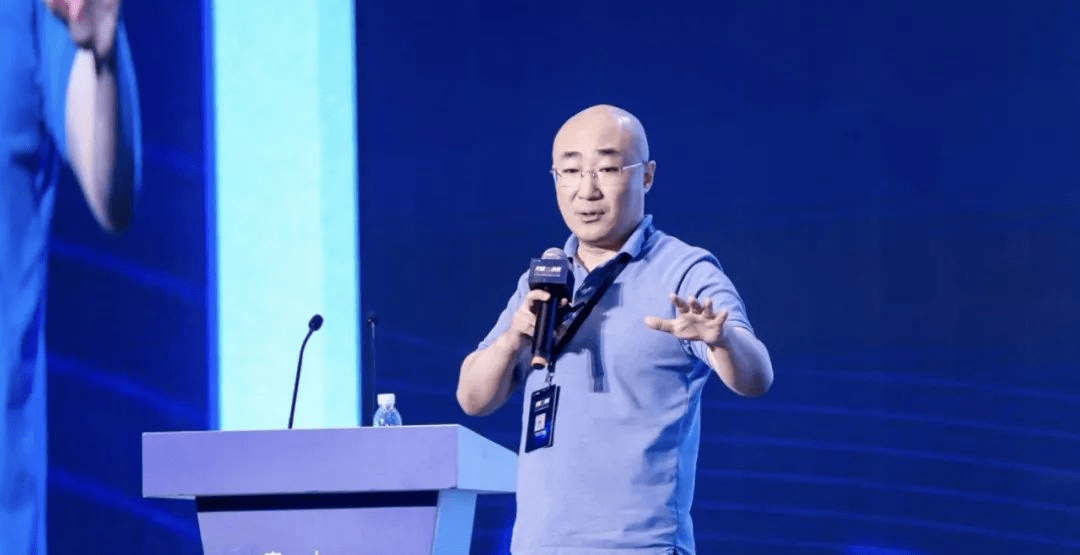
Secondly, over the years, I have made many friends from all walks of life in the crypto community and observed their experiences. Although I cannot specifically mention individuals or events, after long-term observation, I have a deep feeling that very few people can escape from the casino or make stable profits in the trading market. Although some people may make huge fortunes in the short term, such as grabbing one or two air coins or meme coins, or obtaining high returns through leveraged currency speculation. When they are proud, they promote some of their ideas in a high-profile manner, which often destroys their three outlooks. But at that time, they were really angry and blaming Fang Qiu, which would affect many people and lead to confusion of values. But in the long run, the vast majority of such people will not become the ultimate winners. They may go bankrupt in the violent market fluctuations, they may go to jail, or they may be on the run, and more often than not, they will slowly lose all their money. , exit the stage. I used to envy those who made huge profits, but eight years of observation made me understand that speculation, especially bottomless speculation and market manipulation, is a game of raising worms, and the vast majority of people will be affected by the violent fluctuations in the market. In the process, the mentality is particularly bad, and the rationality and bottom line are gradually lost, and the game of mutual harm is entered. This is not a cause I want to be a part of.
As a result, my concept of investment and wealth has undergone a huge change. On the one hand, it was at this time that I read some classic books on value investing, which sparked my thinking. Buffett has a very important point of view, which is the so-called circle of competence. Buffett believes that within this circle of competence, it is possible for people to beat the market. But building this circle of competence requires a long period of accumulation and learning to establish sufficient knowledge and beliefs.
So I started to stay away from speculation and focus more on innovation and entrepreneurship. I believe that through innovation, I can not only create value for the entire industry and community, but also build my own circle of competence. Only on this basis can we talk about luck. Through unremitting efforts and in-depth understanding, I believe I can achieve more success in this industry. Therefore, I will now devote more energy to innovation and entrepreneurship, and regard this as my own way of value investment. I believe this will be a reliable path to achieve wealth growth.
Now, I believe that hard work pays off. Luck brings superficial wealth, while real wealth comes from one's own efforts and sweat. In fact, unlike the vast majority of people in this industry, I stick to my beliefs. Many people think that the blockchain industry is gambling and speculation, and laugh at me as a nerd and a pedant. However, I don't care much about these remarks. I chose a path that suits my personality and ideas. Through innovation and down-to-earth work, I create something truly useful and valuable for this industry and community, while building my own circle of competence and investing within it. In this industry, there may be relatively few people with ideas like mine. But I firmly believe in my ideas and demonstrate them through practical actions.
Core content: My concept is closely related to my experience. After experiencing ups and downs, I have become more cautious and no longer blindly follow the trend of investment. I believe that wealth comes from the circle of competence, from one's own cognition and ability, rather than relying on luck. Innovation and practice are the ways for me to build my own circle of competence. I only invest within my circle of competence.
NO.5 What do you think are the potential development tracks in Web3 in the future?
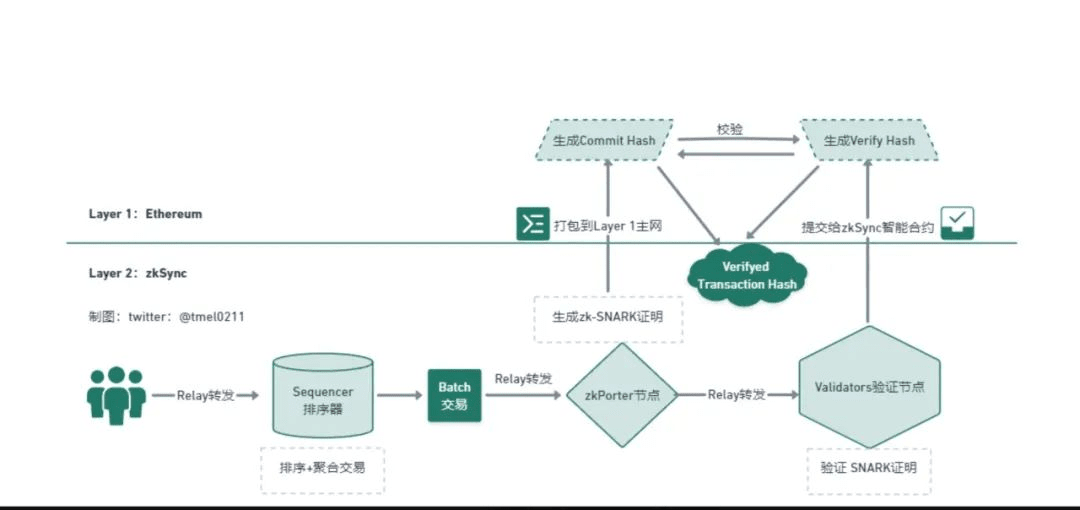
DeFi and the public chain track are directions that I am very optimistic about. Especially L2 and ZK, I think there are huge prospects at the infrastructure level. ZK can achieve optional and controllable privacy protection while achieving almost unlimited performance expansion. This is a key technology for the future of blockchain to move towards mainstream applications.
The second track that I am optimistic about is account abstraction, which is smart contract wallet. This technology can make using digital assets and Web3 applications in the future as simple, convenient and interesting as using ordinary mobile applications, thereby reducing the difficulty for ordinary users to use blockchain and digital assets. This will attract billions of ordinary users to join the revolution in the blockchain industry. This is a track that I think is very promising.
The third track I am optimistic about is RWA. This track is to map real-world assets to the blockchain and turn them into programmable digital assets to achieve supervision and liquidity. Through blockchain technology, these traditional offline assets can become more convenient, mortgageable and circulated. I believe that in the future, trillions of dollars of real-world assets will exist in the form of digital assets, which will become the largest, most sustainable, and most far-reaching direction in the industry.
As for Web3 social, although I think it also has huge room for imagination, I have not yet seen an ideal solution. I hope to see someone provide a convincing design architecture that can reshape the Internet's account system, traffic system, information sharing and privacy protection. While this track may develop in the future, I don't think it will happen anytime soon. At present, there is a lack of theoretical and academic research results in this field, and more time and effort are needed to achieve it.
Core content: I am very optimistic about DeFi and public chain tracks, especially L2 and ZK technologies, which have great prospects at the infrastructure level and can achieve privacy protection and performance expansion. In addition, I think account abstraction and RWA tracks are also very promising. The former can reduce the difficulty of using blockchain and attract more users to participate, and the latter can map real-world assets to blockchain to achieve regulation and liquidity. As for the web3 social track, although there is huge room for imagination, there is still a lack of ideal solutions, which requires more time and research to achieve.
NO.6 What plans do you have for the future?
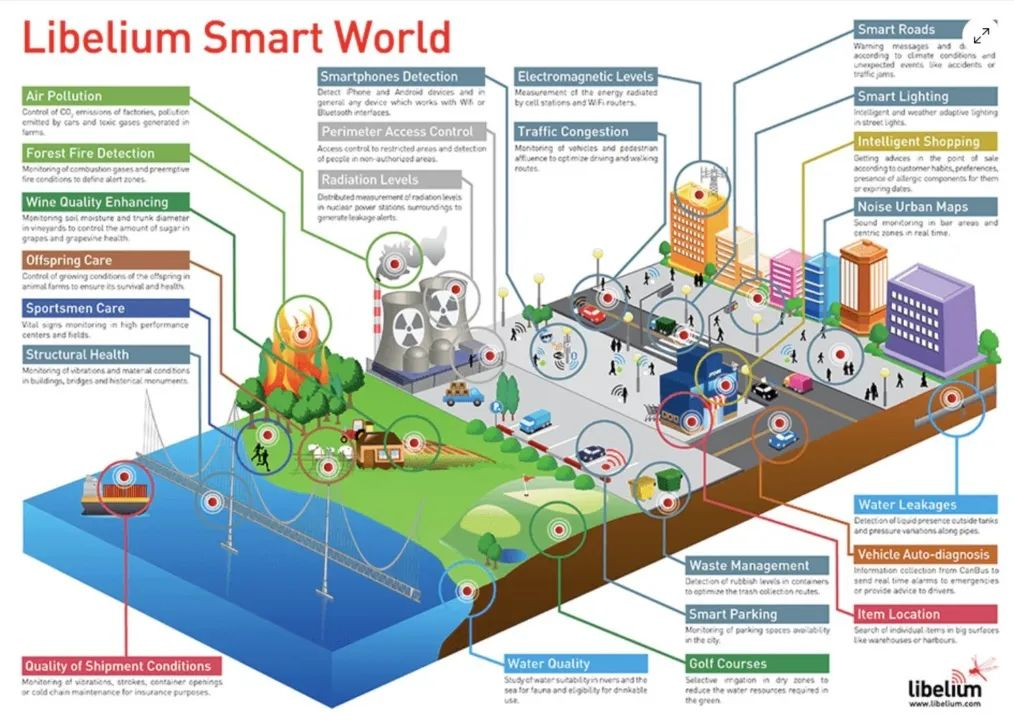
My current focus is on laying out the RWA track, because our 3525, as a digital ticket, in addition to having rich applications in the field of encryption and digital assets, has many applications in the fields of Web3 and pure digital assets, as well as in fields such as games. application potential. Especially in the RWA field, we have incubated a company that specializes in issuing digital invoice solutions for real-world assets for central bank digital currencies and programmable stablecoins. The company was successfully shortlisted as one of the 14 best projects in the Australian Central Bank's digital currency pilot project and received high praise. Of course, I am also very concerned about the tokenization of national debt projects. We are concerned about how to realize the tokenization of national debt in compliance with regulations. This includes combining treasury bonds with stablecoins, making them more efficient powered by 3525 technology.
The second is digital certificates and programmable currency. I have always believed that payment is the first major application scenario of blockchain. Musk once said that as long as blockchain can solve the payment problem, it will be super useful. I think there are two advantages of blockchain payment. The first is borderless real-time clearing and settlement, and the second is programmability. The former has now been widely used, but it just needs to cooperate with the progress of CBDC and RWA to enter the real economy and daily payments, while the latter is the most powerful super weapon of blockchain payment. We are also studying how to use 3525 technology to express various qualification certificates, such as tickets, business licenses, licenses and qualification certificates. Even digital assets like invoices are, to some extent, a certificate. I believe that ERC-3525, combined with digital certificates, can be one of the best solutions for realizing a secure, open and programmable currency system.
The third is account abstraction. We are exploring how to combine 3525 technology with 6551 technology to develop the next generation of smart contract wallets to provide richer functions and more powerful capabilities.
The fourth direction is the field of environmental protection, involving carbon emission control, waste plastic management and garbage classification and recycling. These are areas in the real economy that need strong support, and blockchain and 3525 technology provide very suitable solutions. These directions allow us to use 3525 technology in the expression and management of real-world assets, which is a very meaningful application scenario.
Core content: I am currently focusing on the RWA track and incubating a company that issues digital invoice solutions for real-world assets for central bank digital currencies and stablecoins. In addition, I focus on applications in the fields of digital certificates, programmable currency, account abstraction and environmental protection. These directions are very promising in leveraging ERC-3525 technology to express and manage real-world assets.
NO.7 What do you think about how to attract new people?
As for the introduction of newcomers, I am more concerned about how to bring these high-quality users and high-quality funds and assets into this industry. In my opinion, there are two major parts in this part. **One is responsibility. Now some people, including some regulatory agencies, hope that the entire blockchain industry can innovate responsibly. **This statement may sound harsh to many friends in the future, and they may not necessarily be willing to accept it, but I think it is a very correct statement. It is to innovate responsibly, that is, you have to consider what purpose you want to achieve by doing this? Is it to mobilize the greed and ugly side of human nature, to take advantage of human weaknesses, or to promote the advantages of human nature, and then contribute to society or the economy? I think this includes contributing to the organization. What I said is very mainstream, but it is my real thought.
In fact, if you had talked to me three years ago, I would not have talked about these things, because at that time, my understanding of this matter was not to this extent. I really think so now, that is, there are many people showing their teeth and telling you how to make money and how to get rich quickly. It seems to you that this person is very real, not pretending, and not talking about high-minded people. There are many people who sell this kind of persona, and they denounce people who value values as hypocrisy. Then tell you, "I'm very simple, I just help you make money." Many inexperienced people feel that this kind of person is honest and naturally creates a sense of trust. But in fact, I have observed over the past many years that these people are basically liars. I have basically never seen people who do this have particularly good results, because they first lose themselves.
Back to this topic, I still think we need to introduce better users, better institutions and better funds. From this perspective, I think the value proposition of Web3 is to return each of our accounts, data and social relationships to each of us, which is a just concept. We do RWA to enhance the liquidity of assets, so that small and medium-sized enterprises and everyone can obtain financial rights and interests, and no longer rely on intermediaries such as banks. These are very just and positive goals, and we should work hard to do these things well, attract high-quality users, institutions and funds to enter this industry, and let it grow healthily and continuously.
I want to emphasize again that those who show their teeth and appear to be happy with revenge often end up with bad results. I have met many such people, and I once envied them, and even wanted to develop in their direction, but in the end I realized that their ending was not optimistic. Some ended up in poverty, hiding from place to place, and some even went to jail. I don’t envy this kind of life at all, so I chose a more responsible, healthy and sustainable development path, not because of my personal high moral integrity, but based on my observations of the industry, this is the right direction. , is a promising and sustainable growth direction.
Ultimately, our goal is to enhance asset liquidity, promote social and economic development, provide more opportunities for small and medium-sized enterprises and individuals, and enable everyone to obtain the financial rights they deserve. We hope to attract more responsible and visionary high-quality users and funds to jointly promote the development and progress of the entire industry.
Core content: I am very concerned about introducing high-quality users, institutions and funds into this industry. Responsible innovation is important, and contributions to society and the economy must be considered. I believe that the justice concept of web3 can attract more people to participate, enhance asset liquidity, and promote financial rights for small and medium-sized enterprises and individuals. It is a wise decision to choose a responsible and sustainable direction. Ultimately, our goal is to make a positive contribution to social development.