

#leverage
leverage
1.2M views
6,307 Discussing
Hot
Latest

WHALE DOUBLES DOWN ON $BTC WITH A MASSIVE 40X LEVERAGE POSITION! 🦈 ⚡
Entry: 83,007 ⚡
Notable whale activity just expanded its directional bias, dropping an $8.31M order into $BTC at 83,007 using 40x leverage. 📊 This pushes total long exposure for the wallet to a staggering $127.33M, despite carrying a heavy historical draw-down of over $29M.
High-leverage conviction at these elevated levels creates massive volatility clusters for both sides of the order book. 🔍 When institutional-scale size pushes 40x risk, the market rarely stays quiet for long.
💡 Watching order flow closely as price interacts with this entry zone. 💬 Is this aggressive whale positioning signaling a continuation higher or priming a liquidity sweep? 👇
⚠️ Not financial advice. Always manage your risk. 🛡️
🏷️ #BTC #WhaleAlert #Leverage #Crypto
🦈 💥
WHALE DOUBLES DOWN ON $BTC WITH A MASSIVE 40X LEVERAGE POSITION! 🦈 ⚡
Entry: 83,007 ⚡
Notable whale activity just expanded its directional bias, dropping an $8.31M order into $BTC at 83,007 using 40x leverage. 📊 This pushes total long exposure for the wallet to a staggering $127.33M, despite carrying a heavy historical draw-down of over $29M.
High-leverage conviction at these elevated levels creates massive volatility clusters for both sides of the order book. 🔍 When institutional-scale size pushes 40x risk, the market rarely stays quiet for long.
💡 Watching order flow closely as price interacts with this entry zone. 💬 Is this aggressive whale positioning signaling a continuation higher or priming a liquidity sweep? 👇
⚠️ Not financial advice. Always manage your risk. 🛡️
🏷️ #BTC #WhaleAlert #Leverage #Crypto
🦈 💥
Entry: 83,007 ⚡
Notable whale activity just expanded its directional bias, dropping an $8.31M order into $BTC at 83,007 using 40x leverage. 📊 This pushes total long exposure for the wallet to a staggering $127.33M, despite carrying a heavy historical draw-down of over $29M.
High-leverage conviction at these elevated levels creates massive volatility clusters for both sides of the order book. 🔍 When institutional-scale size pushes 40x risk, the market rarely stays quiet for long.
💡 Watching order flow closely as price interacts with this entry zone. 💬 Is this aggressive whale positioning signaling a continuation higher or priming a liquidity sweep? 👇
⚠️ Not financial advice. Always manage your risk. 🛡️
🏷️ #BTC #WhaleAlert #Leverage #Crypto
🦈 💥
26

#Write2Earn
Leverage trading can feel like skill, but when risk becomes extreme, it can start behaving like gambling.
Gambling thrives on randomness, adrenaline, and the hope of the next win. Leverage trading can create the same cycle: win → excitement → bigger risk → loss → urge to recover → even bigger risk.
The real danger isn’t just losing money—it’s becoming addicted to the feeling of taking the next trade.
Sometimes, the smartest trade is not taking a trade at all.
#FutureTarding #Leverage #bitcoin
#Write2Earn
Leverage trading can feel like skill, but when risk becomes extreme, it can start behaving like gambling.
Gambling thrives on randomness, adrenaline, and the hope of the next win. Leverage trading can create the same cycle: win → excitement → bigger risk → loss → urge to recover → even bigger risk.
The real danger isn’t just losing money—it’s becoming addicted to the feeling of taking the next trade.
Sometimes, the smartest trade is not taking a trade at all.
#FutureTarding #Leverage #bitcoin
Leverage trading can feel like skill, but when risk becomes extreme, it can start behaving like gambling.
Gambling thrives on randomness, adrenaline, and the hope of the next win. Leverage trading can create the same cycle: win → excitement → bigger risk → loss → urge to recover → even bigger risk.
The real danger isn’t just losing money—it’s becoming addicted to the feeling of taking the next trade.
Sometimes, the smartest trade is not taking a trade at all.
#FutureTarding #Leverage #bitcoin
1
328

82% of all crypto trading volume right now is derivatives — futures, leverage, perpetuals. Not spot. Not "I bought Bitcoin and held it." Leveraged bets on price direction.
Peer-reviewed research on day trading, across markets, consistently finds 70-97% of day traders lose money. Only about 1% stay profitable long-term. That's not a crypto-specific stat — it's just what leverage trading does to most humans, in any market, over any long enough timeframe.
Now overlay this: the global crypto gambling market hit $92.6B in gross gaming revenue this year — 27% of ALL online gambling revenue worldwide, up from a market with 1,200 platforms in 2020 to 3,800+ now. The line between "leverage trading platform" and "gambling platform" isn't blurry because users are confused. It's blurry because the products are functionally identical: variance-maximizing bets with a house that profits either way (funding rates, liquidation fees, spread).
Nobody markets it as gambling. It gets marketed as "trading," "hedging," "market participation." The UI has candlesticks instead of a roulette wheel, so it feels like skill instead of chance. But if 9 out of 10 participants lose money to the same handful of winners plus the platform taking a cut regardless — what exactly is the functional difference?
This isn't an argument to ban leverage or that spot holding is virtuous. It's a question about self-honesty: if you're opening 5x-20x positions on hourly timeframes, are you trading, or are you gambling with extra steps and worse odds than a casino gives you on paper?
#CryptoTrading #Leverage #DeFi #RiskManagement
82% of all crypto trading volume right now is derivatives — futures, leverage, perpetuals. Not spot. Not "I bought Bitcoin and held it." Leveraged bets on price direction.
Peer-reviewed research on day trading, across markets, consistently finds 70-97% of day traders lose money. Only about 1% stay profitable long-term. That's not a crypto-specific stat — it's just what leverage trading does to most humans, in any market, over any long enough timeframe.
Now overlay this: the global crypto gambling market hit $92.6B in gross gaming revenue this year — 27% of ALL online gambling revenue worldwide, up from a market with 1,200 platforms in 2020 to 3,800+ now. The line between "leverage trading platform" and "gambling platform" isn't blurry because users are confused. It's blurry because the products are functionally identical: variance-maximizing bets with a house that profits either way (funding rates, liquidation fees, spread).
Nobody markets it as gambling. It gets marketed as "trading," "hedging," "market participation." The UI has candlesticks instead of a roulette wheel, so it feels like skill instead of chance. But if 9 out of 10 participants lose money to the same handful of winners plus the platform taking a cut regardless — what exactly is the functional difference?
This isn't an argument to ban leverage or that spot holding is virtuous. It's a question about self-honesty: if you're opening 5x-20x positions on hourly timeframes, are you trading, or are you gambling with extra steps and worse odds than a casino gives you on paper?
#CryptoTrading #Leverage #DeFi #RiskManagement
Peer-reviewed research on day trading, across markets, consistently finds 70-97% of day traders lose money. Only about 1% stay profitable long-term. That's not a crypto-specific stat — it's just what leverage trading does to most humans, in any market, over any long enough timeframe.
Now overlay this: the global crypto gambling market hit $92.6B in gross gaming revenue this year — 27% of ALL online gambling revenue worldwide, up from a market with 1,200 platforms in 2020 to 3,800+ now. The line between "leverage trading platform" and "gambling platform" isn't blurry because users are confused. It's blurry because the products are functionally identical: variance-maximizing bets with a house that profits either way (funding rates, liquidation fees, spread).
Nobody markets it as gambling. It gets marketed as "trading," "hedging," "market participation." The UI has candlesticks instead of a roulette wheel, so it feels like skill instead of chance. But if 9 out of 10 participants lose money to the same handful of winners plus the platform taking a cut regardless — what exactly is the functional difference?
This isn't an argument to ban leverage or that spot holding is virtuous. It's a question about self-honesty: if you're opening 5x-20x positions on hourly timeframes, are you trading, or are you gambling with extra steps and worse odds than a casino gives you on paper?
#CryptoTrading #Leverage #DeFi #RiskManagement
1
7
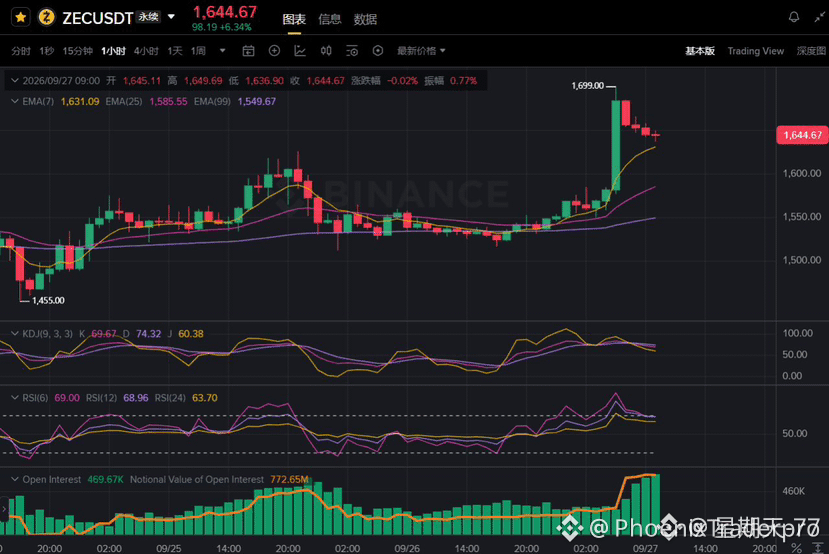
$ZEC RALLIES ON PURE LEVERAGE AS OPEN INTEREST SPIKES TO $773M! ⚡ 🦈
$ZEC pushed from 15.49 to a 16.99 high before settling near 16.44, holding a 6% gain without a single fundamental news catalyst. 📊 Open interest exploded from 300k to 469.7k contracts, pumping nominal value to $773M as aggressive leveraged longs force a self-reinforcing squeeze.
📌 Momentum built strictly on leverage expansion can stretch much further than logical targets, but the eventual unwind is equally violent once buyer exhaustion sets in. ⚡ When order flow drives price action without narrative backing, liquidity sweeps always lurk behind the trend. 💬 Are you riding this momentum cascade or waiting for the leverage flush? 👇
⚠️ Not financial advice. Always manage your risk. 🛡️
🏷️ #ZEC #Leverage #Crypto #Altcoins
🔥 ⚡
$ZEC RALLIES ON PURE LEVERAGE AS OPEN INTEREST SPIKES TO $773M! ⚡ 🦈
$ZEC pushed from 15.49 to a 16.99 high before settling near 16.44, holding a 6% gain without a single fundamental news catalyst. 📊 Open interest exploded from 300k to 469.7k contracts, pumping nominal value to $773M as aggressive leveraged longs force a self-reinforcing squeeze.
📌 Momentum built strictly on leverage expansion can stretch much further than logical targets, but the eventual unwind is equally violent once buyer exhaustion sets in. ⚡ When order flow drives price action without narrative backing, liquidity sweeps always lurk behind the trend. 💬 Are you riding this momentum cascade or waiting for the leverage flush? 👇
⚠️ Not financial advice. Always manage your risk. 🛡️
🏷️ #ZEC #Leverage #Crypto #Altcoins
🔥 ⚡
$ZEC pushed from 15.49 to a 16.99 high before settling near 16.44, holding a 6% gain without a single fundamental news catalyst. 📊 Open interest exploded from 300k to 469.7k contracts, pumping nominal value to $773M as aggressive leveraged longs force a self-reinforcing squeeze.
📌 Momentum built strictly on leverage expansion can stretch much further than logical targets, but the eventual unwind is equally violent once buyer exhaustion sets in. ⚡ When order flow drives price action without narrative backing, liquidity sweeps always lurk behind the trend. 💬 Are you riding this momentum cascade or waiting for the leverage flush? 👇
⚠️ Not financial advice. Always manage your risk. 🛡️
🏷️ #ZEC #Leverage #Crypto #Altcoins
🔥 ⚡
17

·
--
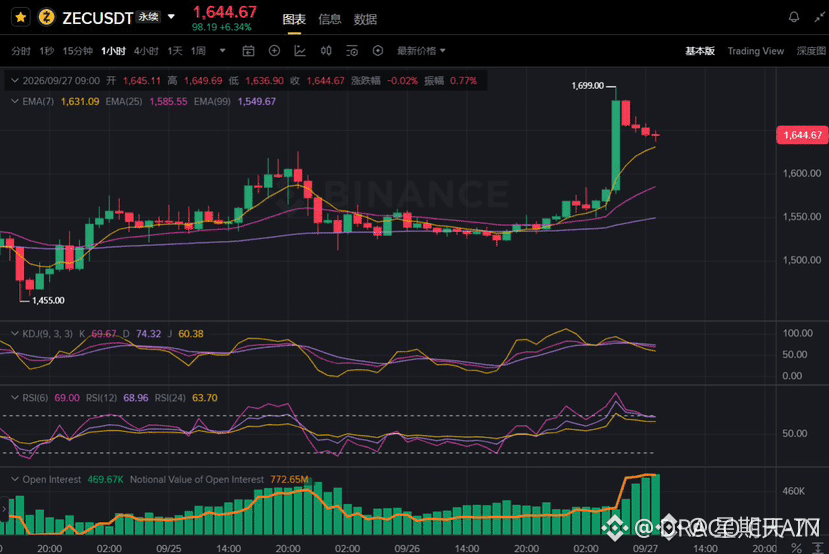
🚨 $ZEC PUSHES +100 POINTS AS LEVERAGE EXPANDS TO $773M WITHOUT NEWS! 💣
$ZEC executed an aggressive run from $1549 to $1699 highs before settling around $1644, completely unprompted by fundamental headlines. 📊 Open Interest exploded from 300k to 469.7k contracts, pushing nominal leveraged exposure up to $773M as aggressive longs built positions into thin order books.
💡 This pure leverage expansion creates a classic reflexive structural loop: aggressive bidding pushes price, triggering automated positioning until momentum stalls. 🔍 When systemic leverage stacks this high without structural spot demand backfilling the range, any downside pivot threatens rapid liquidation cascades.
💬 Are you managing risk ahead of a potential leverage flush, or riding this momentum loop higher? 👇
⚠️ Not financial advice. Always manage your risk. 🛡️
🏷️ #ZEC #MarketStructure #Crypto #Leverage
⚡ 📊
🚨 $ZEC PUSHES +100 POINTS AS LEVERAGE EXPANDS TO $773M WITHOUT NEWS! 💣
$ZEC executed an aggressive run from $1549 to $1699 highs before settling around $1644, completely unprompted by fundamental headlines. 📊 Open Interest exploded from 300k to 469.7k contracts, pushing nominal leveraged exposure up to $773M as aggressive longs built positions into thin order books.
💡 This pure leverage expansion creates a classic reflexive structural loop: aggressive bidding pushes price, triggering automated positioning until momentum stalls. 🔍 When systemic leverage stacks this high without structural spot demand backfilling the range, any downside pivot threatens rapid liquidation cascades.
💬 Are you managing risk ahead of a potential leverage flush, or riding this momentum loop higher? 👇
⚠️ Not financial advice. Always manage your risk. 🛡️
🏷️ #ZEC #MarketStructure #Crypto #Leverage
⚡ 📊
$ZEC executed an aggressive run from $1549 to $1699 highs before settling around $1644, completely unprompted by fundamental headlines. 📊 Open Interest exploded from 300k to 469.7k contracts, pushing nominal leveraged exposure up to $773M as aggressive longs built positions into thin order books.
💡 This pure leverage expansion creates a classic reflexive structural loop: aggressive bidding pushes price, triggering automated positioning until momentum stalls. 🔍 When systemic leverage stacks this high without structural spot demand backfilling the range, any downside pivot threatens rapid liquidation cascades.
💬 Are you managing risk ahead of a potential leverage flush, or riding this momentum loop higher? 👇
⚠️ Not financial advice. Always manage your risk. 🛡️
🏷️ #ZEC #MarketStructure #Crypto #Leverage
⚡ 📊
96

everyone thinks catching the top on privacy coins is free money, but actually counter-trend leverage will wipe you out faster than anything else.
most traders blow up accounts simply because they refuse to cut losses on a runaway breakout, letting an ego short turn into pure portfolio devastation.
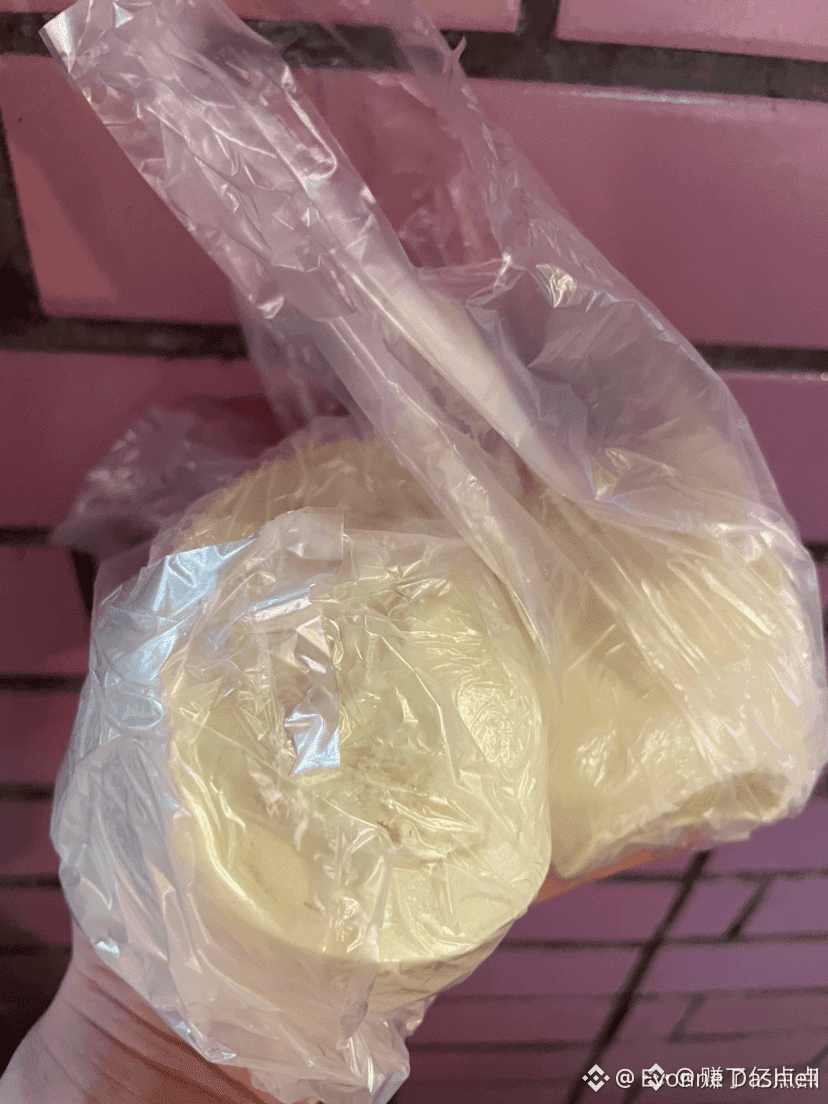
just saw a degen sitting on a -$113,680 unrealized pnl while trying to short $ZEC on perps. price pushed up another +1.75% and the position is just bleeding out. the guy literally joked his kids are eating steamed buns for dinner now.
ngl when older alts like $DASH or $ZEC start catching a random liquidity bid, standing in front of that freight train with heavy size is suicide. momentum does not care about your entry price.
are you guys still trying to short these random privacy pumps, or just riding the trend?
#cryptotrading #leverage #altcoins
everyone thinks catching the top on privacy coins is free money, but actually counter-trend leverage will wipe you out faster than anything else.
most traders blow up accounts simply because they refuse to cut losses on a runaway breakout, letting an ego short turn into pure portfolio devastation.
just saw a degen sitting on a -$113,680 unrealized pnl while trying to short $ZEC on perps. price pushed up another +1.75% and the position is just bleeding out. the guy literally joked his kids are eating steamed buns for dinner now.
ngl when older alts like $DASH or $ZEC start catching a random liquidity bid, standing in front of that freight train with heavy size is suicide. momentum does not care about your entry price.
are you guys still trying to short these random privacy pumps, or just riding the trend?
#cryptotrading #leverage #altcoins
most traders blow up accounts simply because they refuse to cut losses on a runaway breakout, letting an ego short turn into pure portfolio devastation.
just saw a degen sitting on a -$113,680 unrealized pnl while trying to short $ZEC on perps. price pushed up another +1.75% and the position is just bleeding out. the guy literally joked his kids are eating steamed buns for dinner now.
ngl when older alts like $DASH or $ZEC start catching a random liquidity bid, standing in front of that freight train with heavy size is suicide. momentum does not care about your entry price.
are you guys still trying to short these random privacy pumps, or just riding the trend?
#cryptotrading #leverage #altcoins
57

·
--
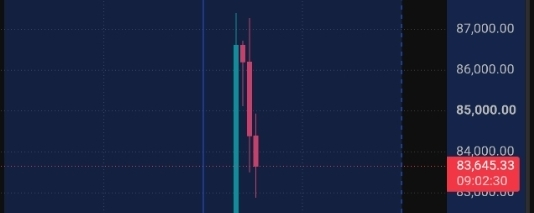
Article
How I Lost $200 With 10x Leverage And the Rule That Changed My TradingI lost $200 with 10x leverage because I focused on profit instead of risk the mistake was simpler than you think.
Read my full breakdown + the risk rule I use now to protect my account.
#BTC #CryptoEducation #TradingTips #Leverage
How I Lost $200 With 10x Leverage And the Rule That Changed My Trading
I lost $200 with 10x leverage because I focused on profit instead of risk the mistake was simpler than you think.
Read my full breakdown + the risk rule I use now to protect my account.
#BTC #CryptoEducation #TradingTips #Leverage
Read my full breakdown + the risk rule I use now to protect my account.
#BTC #CryptoEducation #TradingTips #Leverage
1
69

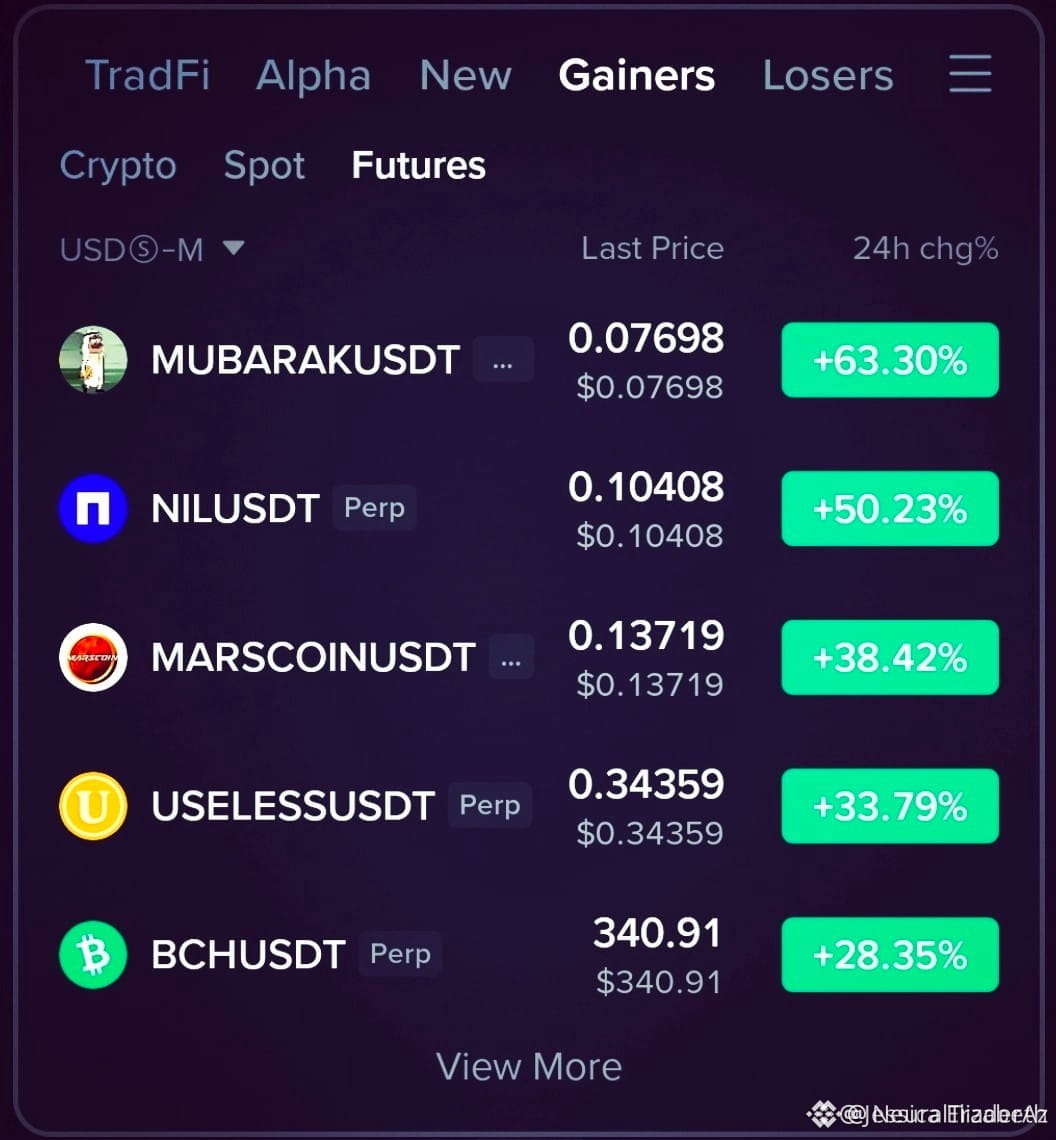
🚀 $MUBARAK SURGES WITH 30X LEVERAGE WHALE SWEEP! 💥
Smart money is re‑stacking $MUBARAK after a clean liquidity sweep that punched through the $BCH order block, leaving a gap on the 15‑min chart. 📊 The 30x leverage call amplifies the demand zone, positioning price just above the last bullish block.
Meanwhile $USELESS posted a dead‑cat bounce, feeding the upward thrust and confirming institutional intent. 🦈 Volume spikes line up with a classic fair‑value gap fill, hinting at further upside.
Risk‑reward stays attractive: a tight stop near the recent swing low and an upside target at the next resistance cluster. ⚡ Watch order flow for the next liquidity test.
💬 Are you loading positions for the next push or waiting for a pullback to re‑test the gap? 👇
⚠️ Not financial advice. Always manage your risk. 🛡️
🏷️ #MUBARAK #LongSetup #Leverage #Crypto
🚀 🦈
🚀 $MUBARAK SURGES WITH 30X LEVERAGE WHALE SWEEP! 💥
Smart money is re‑stacking $MUBARAK after a clean liquidity sweep that punched through the $BCH order block, leaving a gap on the 15‑min chart. 📊 The 30x leverage call amplifies the demand zone, positioning price just above the last bullish block.
Meanwhile $USELESS posted a dead‑cat bounce, feeding the upward thrust and confirming institutional intent. 🦈 Volume spikes line up with a classic fair‑value gap fill, hinting at further upside.
Risk‑reward stays attractive: a tight stop near the recent swing low and an upside target at the next resistance cluster. ⚡ Watch order flow for the next liquidity test.
💬 Are you loading positions for the next push or waiting for a pullback to re‑test the gap? 👇
⚠️ Not financial advice. Always manage your risk. 🛡️
🏷️ #MUBARAK #LongSetup #Leverage #Crypto
🚀 🦈
Smart money is re‑stacking $MUBARAK after a clean liquidity sweep that punched through the $BCH order block, leaving a gap on the 15‑min chart. 📊 The 30x leverage call amplifies the demand zone, positioning price just above the last bullish block.
Meanwhile $USELESS posted a dead‑cat bounce, feeding the upward thrust and confirming institutional intent. 🦈 Volume spikes line up with a classic fair‑value gap fill, hinting at further upside.
Risk‑reward stays attractive: a tight stop near the recent swing low and an upside target at the next resistance cluster. ⚡ Watch order flow for the next liquidity test.
💬 Are you loading positions for the next push or waiting for a pullback to re‑test the gap? 👇
⚠️ Not financial advice. Always manage your risk. 🛡️
🏷️ #MUBARAK #LongSetup #Leverage #Crypto
🚀 🦈
139
This mistake cost traders millions in previous cycles, and we are watching it happen again in real time.
Holding massive unrealized losses while doubling down on leverage is how solid portfolios evaporate before the breakout even arrives.
A top trader just put up an $850,000 position betting that $BTC will blast straight past $90,000, yet the trade is already sitting at a -$104,649 unrealized loss after a quick dip. It reminds me of the aggressive leveraged longs back in late 2021 where conviction was high, but timing and liquidations wiped out accounts before the real macro trend played out.
While majors like $ETH and $SOL show similar chop, blindly diamond-handing deep red leverage positions usually rewards the market makers more than the trader. Having a bullish thesis is great, but surviving the volatility to actually collect the profit is the whole game.
Do you think this long gets liquidated first or prints that massive target?
#Bitcoin #CryptoTrading #Leverage
This mistake cost traders millions in previous cycles, and we are watching it happen again in real time.
Holding massive unrealized losses while doubling down on leverage is how solid portfolios evaporate before the breakout even arrives.
A top trader just put up an $850,000 position betting that $BTC will blast straight past $90,000, yet the trade is already sitting at a -$104,649 unrealized loss after a quick dip. It reminds me of the aggressive leveraged longs back in late 2021 where conviction was high, but timing and liquidations wiped out accounts before the real macro trend played out.
While majors like $ETH and $SOL show similar chop, blindly diamond-handing deep red leverage positions usually rewards the market makers more than the trader. Having a bullish thesis is great, but surviving the volatility to actually collect the profit is the whole game.
Do you think this long gets liquidated first or prints that massive target?
#Bitcoin #CryptoTrading #Leverage
Holding massive unrealized losses while doubling down on leverage is how solid portfolios evaporate before the breakout even arrives.
A top trader just put up an $850,000 position betting that $BTC will blast straight past $90,000, yet the trade is already sitting at a -$104,649 unrealized loss after a quick dip. It reminds me of the aggressive leveraged longs back in late 2021 where conviction was high, but timing and liquidations wiped out accounts before the real macro trend played out.
While majors like $ETH and $SOL show similar chop, blindly diamond-handing deep red leverage positions usually rewards the market makers more than the trader. Having a bullish thesis is great, but surviving the volatility to actually collect the profit is the whole game.
Do you think this long gets liquidated first or prints that massive target?
#Bitcoin #CryptoTrading #Leverage

40

·
--
HIGH-LEVERAGE SHORT ON $SNDK SEES DRAWDOWN SHRINK TO 5.47M AS PRICE RETRACES 📉
Entry: 1,485.67 ⚡
Stop Loss: 2,421.74 ⚠️
High-conviction trader Loracle is managing a 29 million dollar 9x leveraged short on $SNDK from 1,485.67. 🦈 A 3% intraday decline has compressed the position's drawdown significantly, reducing unrealized losses down to 5.47 million dollars. 📊
With liquidation standing at 2,421.74, this setup demonstrates how high-leverage positioning absorbs volatility near structural pivot zones. 💡 As seller pressure continues to test lower support areas, open interest dynamics remain critical for tracking the next leg. 💬 Do you expect this downside pressure to continue, or will buyers reclaim control here? 👇
⚠️ Not financial advice. Always manage your risk. 🛡️
🏷️ #SNDK #ShortPosition #MarketStructure #Leverage
🎯 🦈
HIGH-LEVERAGE SHORT ON $SNDK SEES DRAWDOWN SHRINK TO 5.47M AS PRICE RETRACES 📉
Entry: 1,485.67 ⚡
Stop Loss: 2,421.74 ⚠️
High-conviction trader Loracle is managing a 29 million dollar 9x leveraged short on $SNDK from 1,485.67. 🦈 A 3% intraday decline has compressed the position's drawdown significantly, reducing unrealized losses down to 5.47 million dollars. 📊
With liquidation standing at 2,421.74, this setup demonstrates how high-leverage positioning absorbs volatility near structural pivot zones. 💡 As seller pressure continues to test lower support areas, open interest dynamics remain critical for tracking the next leg. 💬 Do you expect this downside pressure to continue, or will buyers reclaim control here? 👇
⚠️ Not financial advice. Always manage your risk. 🛡️
🏷️ #SNDK #ShortPosition #MarketStructure #Leverage
🎯 🦈
Entry: 1,485.67 ⚡
Stop Loss: 2,421.74 ⚠️
High-conviction trader Loracle is managing a 29 million dollar 9x leveraged short on $SNDK from 1,485.67. 🦈 A 3% intraday decline has compressed the position's drawdown significantly, reducing unrealized losses down to 5.47 million dollars. 📊
With liquidation standing at 2,421.74, this setup demonstrates how high-leverage positioning absorbs volatility near structural pivot zones. 💡 As seller pressure continues to test lower support areas, open interest dynamics remain critical for tracking the next leg. 💬 Do you expect this downside pressure to continue, or will buyers reclaim control here? 👇
⚠️ Not financial advice. Always manage your risk. 🛡️
🏷️ #SNDK #ShortPosition #MarketStructure #Leverage
🎯 🦈
217
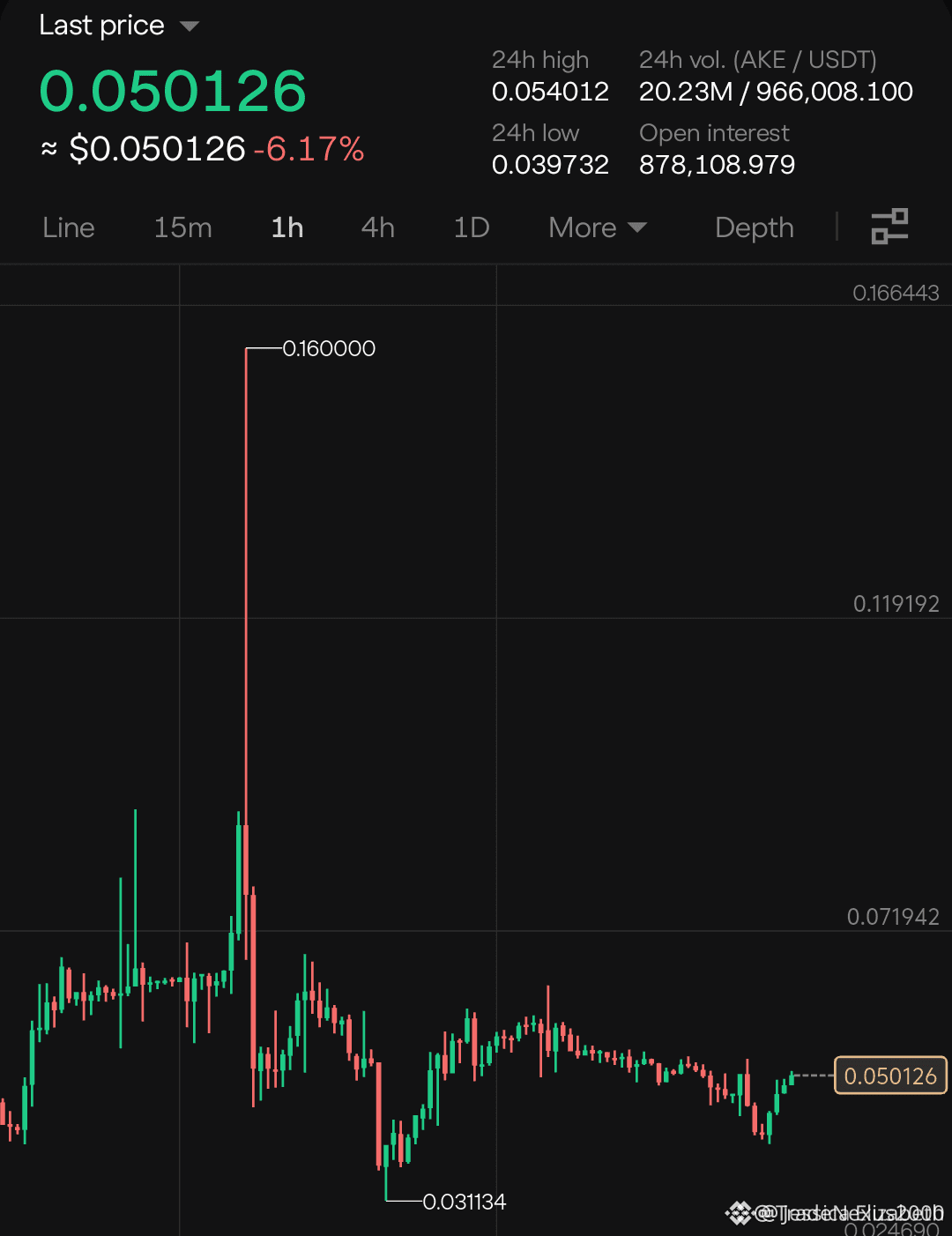
🚀 $AKE SURFACES IN LIQUIDITY SWEEP – 10X LEVERAGE OPPORTUNITY! 🦈
Entry: 0.049-0.051 ⚡
Target: 0.056 🚀
Target: 0.062 🚀
Stop Loss: 0.038 ⚠️
Smart money is re‑stacking around the 0.049‑0.051 demand cluster, a classic order‑block that swallowed three aggressive sells this week. 📊 The price now sits on the edge of a liquidity vacuum, primed for a bullish retest.
Volume spikes on the 4H chart confirm hidden accumulation, while RSI nudges oversold – a textbook swing for a 10× leverage play. ⚡ The 0.056 resistance mirrors the prior swing high, and 0.062 aligns with a historic imbalance zone. 📌
💬 Do you anticipate the next wave breaching the 0.056 barrier? 👇
⚠️ Not financial advice. Always manage your risk. 🛡️
🏷️ #AKE #LongSetup #Leverage #Crypto
🦈 🔥
🚀 $AKE SURFACES IN LIQUIDITY SWEEP – 10X LEVERAGE OPPORTUNITY! 🦈
Entry: 0.049-0.051 ⚡
Target: 0.056 🚀
Target: 0.062 🚀
Stop Loss: 0.038 ⚠️
Smart money is re‑stacking around the 0.049‑0.051 demand cluster, a classic order‑block that swallowed three aggressive sells this week. 📊 The price now sits on the edge of a liquidity vacuum, primed for a bullish retest.
Volume spikes on the 4H chart confirm hidden accumulation, while RSI nudges oversold – a textbook swing for a 10× leverage play. ⚡ The 0.056 resistance mirrors the prior swing high, and 0.062 aligns with a historic imbalance zone. 📌
💬 Do you anticipate the next wave breaching the 0.056 barrier? 👇
⚠️ Not financial advice. Always manage your risk. 🛡️
🏷️ #AKE #LongSetup #Leverage #Crypto
🦈 🔥
Entry: 0.049-0.051 ⚡
Target: 0.056 🚀
Target: 0.062 🚀
Stop Loss: 0.038 ⚠️
Smart money is re‑stacking around the 0.049‑0.051 demand cluster, a classic order‑block that swallowed three aggressive sells this week. 📊 The price now sits on the edge of a liquidity vacuum, primed for a bullish retest.
Volume spikes on the 4H chart confirm hidden accumulation, while RSI nudges oversold – a textbook swing for a 10× leverage play. ⚡ The 0.056 resistance mirrors the prior swing high, and 0.062 aligns with a historic imbalance zone. 📌
💬 Do you anticipate the next wave breaching the 0.056 barrier? 👇
⚠️ Not financial advice. Always manage your risk. 🛡️
🏷️ #AKE #LongSetup #Leverage #Crypto
🦈 🔥
35
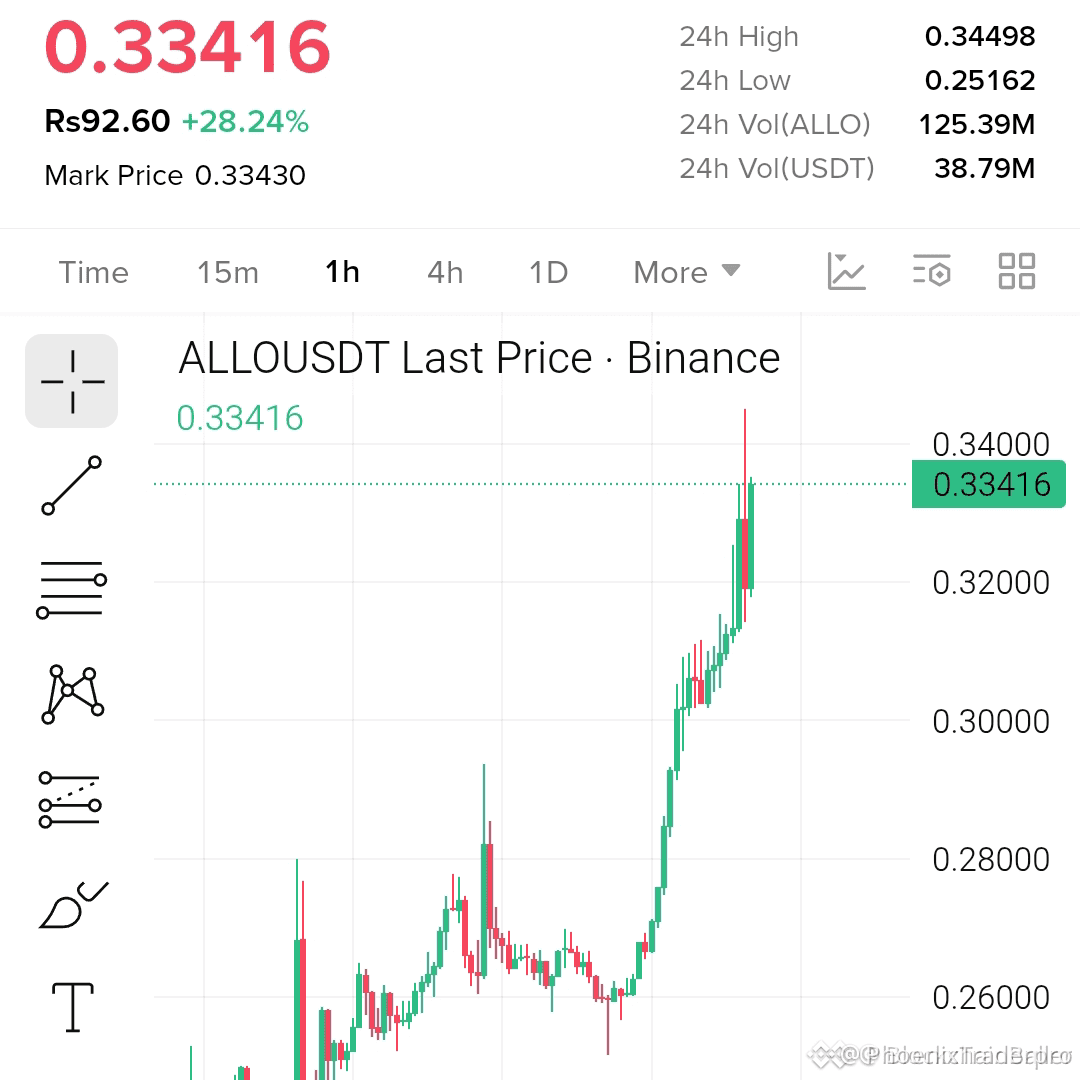
🚀 $ALLO SURFING 10X LEVERAGE ON A LIQUIDITY SURGE! 🟢
Entry: 0.330-0.334 ⚡
Target: 0.338 🚀
Target: 0.344 🚀
Stop Loss: 0.324 ⚠️
Smart money is loading the order block at 0.33, and the 10x lever is primed to flip the next wave. 📊 The recent uptick in buying pressure has cleared a thin liquidity pocket, setting the stage for a clean break. 🦈
With resistance at 0.338 and a second sweet spot at 0.344, the upside feels like a rocket launch. ⚡ Keep an eye on volume spikes; they’ll confirm the swing before the stop hunts at 0.324. 💬 Are you ready to ride this surge or waiting for a deeper dip? 👇
⚠️ Not financial advice. Always manage your risk. 🛡️
🏷️ #ALLO #LongSetup #Leverage #Crypto
🔥 💎
🚀 $ALLO SURFING 10X LEVERAGE ON A LIQUIDITY SURGE! 🟢
Entry: 0.330-0.334 ⚡
Target: 0.338 🚀
Target: 0.344 🚀
Stop Loss: 0.324 ⚠️
Smart money is loading the order block at 0.33, and the 10x lever is primed to flip the next wave. 📊 The recent uptick in buying pressure has cleared a thin liquidity pocket, setting the stage for a clean break. 🦈
With resistance at 0.338 and a second sweet spot at 0.344, the upside feels like a rocket launch. ⚡ Keep an eye on volume spikes; they’ll confirm the swing before the stop hunts at 0.324. 💬 Are you ready to ride this surge or waiting for a deeper dip? 👇
⚠️ Not financial advice. Always manage your risk. 🛡️
🏷️ #ALLO #LongSetup #Leverage #Crypto
🔥 💎
Entry: 0.330-0.334 ⚡
Target: 0.338 🚀
Target: 0.344 🚀
Stop Loss: 0.324 ⚠️
Smart money is loading the order block at 0.33, and the 10x lever is primed to flip the next wave. 📊 The recent uptick in buying pressure has cleared a thin liquidity pocket, setting the stage for a clean break. 🦈
With resistance at 0.338 and a second sweet spot at 0.344, the upside feels like a rocket launch. ⚡ Keep an eye on volume spikes; they’ll confirm the swing before the stop hunts at 0.324. 💬 Are you ready to ride this surge or waiting for a deeper dip? 👇
⚠️ Not financial advice. Always manage your risk. 🛡️
🏷️ #ALLO #LongSetup #Leverage #Crypto
🔥 💎
25
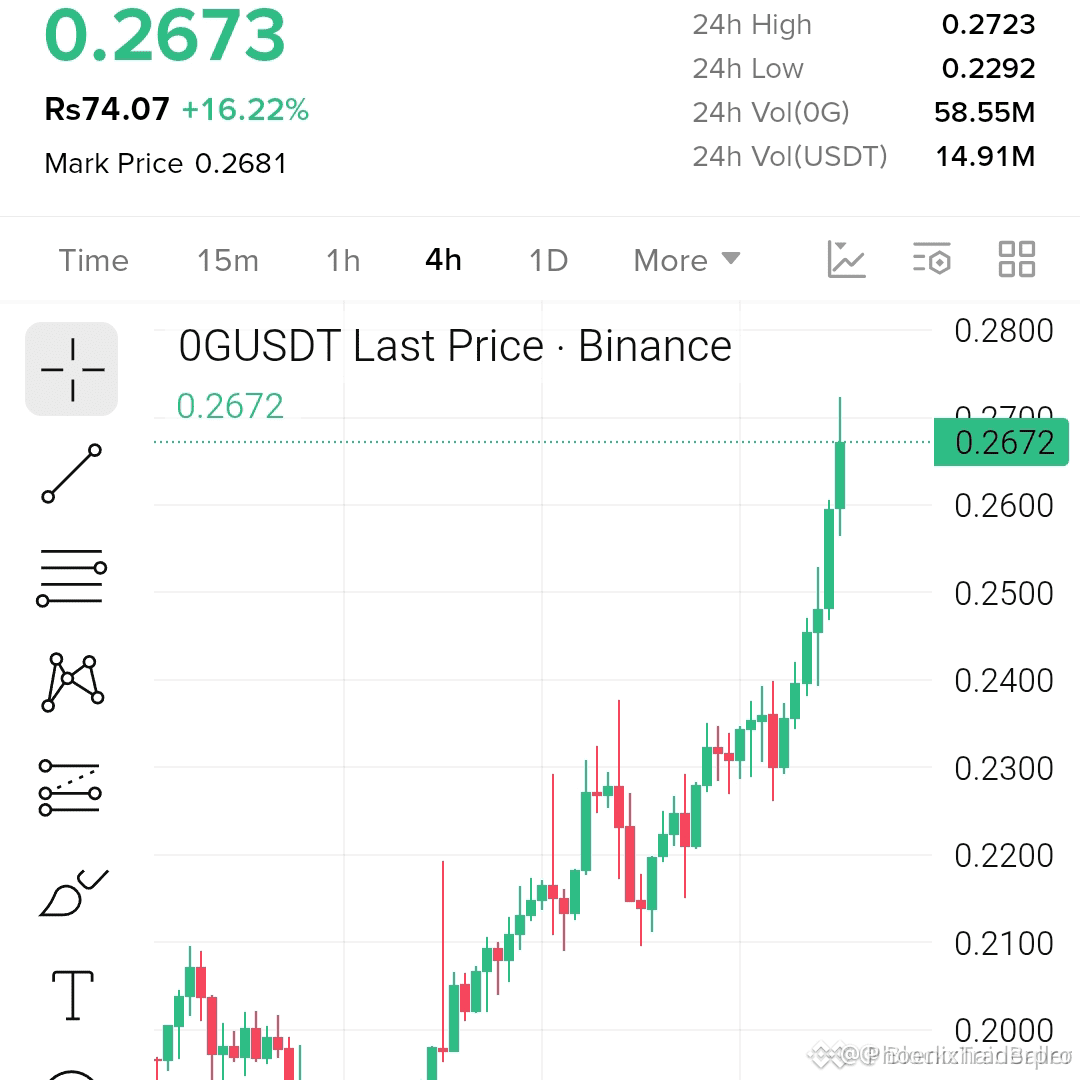
🚀 $0G SURFING 10X LEVERAGE ON A QUICK BULL RUN! 🟢
Entry: 0.262‑0.267 ⚡
Target: 0.272 🚀
Target: 0.278 🚀
Stop Loss: 0.256 ⚠️
🦈 Smart money has been stacking orders just above the 0.262 zone, turning every dip into a liquidity sweep. 📊 Volume on the 1H chart spikes each time price nudges the lower bound, signaling aggressive buying pressure.
💡 With a clean 1:3‑1:4 risk‑to‑reward, the setup rides the momentum wave while keeping the stop tight below the recent swing low. 🤔 Are you ready to flip this swing into a 10x payday or waiting for the next liquidity dump? 💬
⚠️ Not financial advice. Always manage your risk. 🛡️
🏷️ #0G #LongSetup #Leverage #Crypto
🔥 💎
🚀 $0G SURFING 10X LEVERAGE ON A QUICK BULL RUN! 🟢
Entry: 0.262‑0.267 ⚡
Target: 0.272 🚀
Target: 0.278 🚀
Stop Loss: 0.256 ⚠️
🦈 Smart money has been stacking orders just above the 0.262 zone, turning every dip into a liquidity sweep. 📊 Volume on the 1H chart spikes each time price nudges the lower bound, signaling aggressive buying pressure.
💡 With a clean 1:3‑1:4 risk‑to‑reward, the setup rides the momentum wave while keeping the stop tight below the recent swing low. 🤔 Are you ready to flip this swing into a 10x payday or waiting for the next liquidity dump? 💬
⚠️ Not financial advice. Always manage your risk. 🛡️
🏷️ #0G #LongSetup #Leverage #Crypto
🔥 💎
Entry: 0.262‑0.267 ⚡
Target: 0.272 🚀
Target: 0.278 🚀
Stop Loss: 0.256 ⚠️
🦈 Smart money has been stacking orders just above the 0.262 zone, turning every dip into a liquidity sweep. 📊 Volume on the 1H chart spikes each time price nudges the lower bound, signaling aggressive buying pressure.
💡 With a clean 1:3‑1:4 risk‑to‑reward, the setup rides the momentum wave while keeping the stop tight below the recent swing low. 🤔 Are you ready to flip this swing into a 10x payday or waiting for the next liquidity dump? 💬
⚠️ Not financial advice. Always manage your risk. 🛡️
🏷️ #0G #LongSetup #Leverage #Crypto
🔥 💎
96
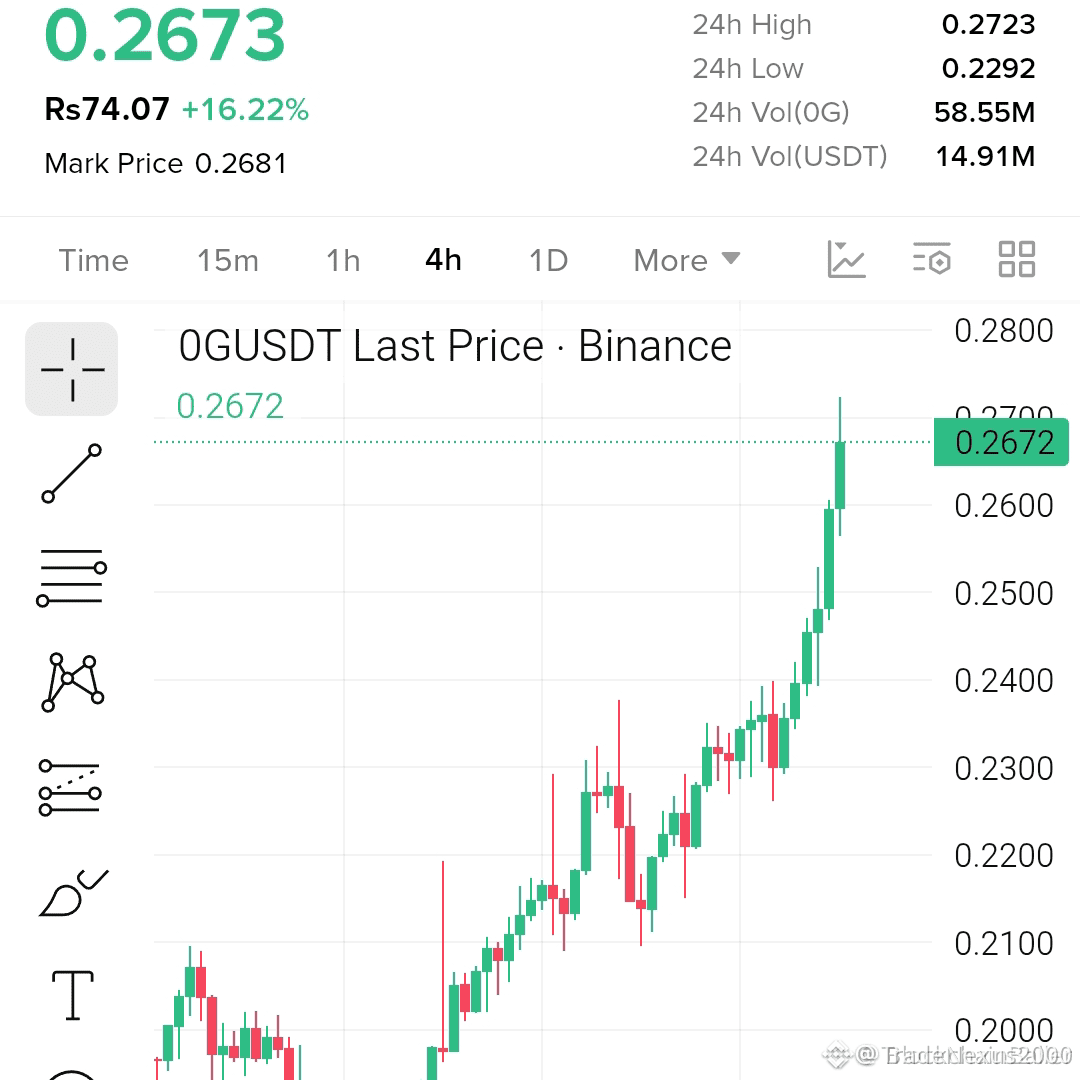
🚀 $0G SURFACES ON 10X LEVERAGE BREAKOUT! 💥
Entry: 0.262‑0.267 ⚡
Target: 0.272 🚀
Target: 0.278 🚀
Stop Loss: 0.256 ⚠️
📊 Smart money has been anchoring a demand block just below 0.267, repeatedly absorbing sell pressure. 🔍 A fresh liquidity sweep on the 5‑minute chart forced the market into the 0.262‑0.267 corridor, setting the stage for a rapid upside thrust. 🌊 With 10× leverage, the risk‑reward curve tilts sharply in favor of the long side, provided the next wave respects the 0.272‑0.278 ceiling. 💡 Are you ready to ride this institutional push or waiting for the next liquidity hunt? 👇
⚠️ Not financial advice. Always manage your risk. 🛡️
🏷️ #0G #LongSetup #Leverage #Crypto
🔥 💎
🚀 $0G SURFACES ON 10X LEVERAGE BREAKOUT! 💥
Entry: 0.262‑0.267 ⚡
Target: 0.272 🚀
Target: 0.278 🚀
Stop Loss: 0.256 ⚠️
📊 Smart money has been anchoring a demand block just below 0.267, repeatedly absorbing sell pressure. 🔍 A fresh liquidity sweep on the 5‑minute chart forced the market into the 0.262‑0.267 corridor, setting the stage for a rapid upside thrust. 🌊 With 10× leverage, the risk‑reward curve tilts sharply in favor of the long side, provided the next wave respects the 0.272‑0.278 ceiling. 💡 Are you ready to ride this institutional push or waiting for the next liquidity hunt? 👇
⚠️ Not financial advice. Always manage your risk. 🛡️
🏷️ #0G #LongSetup #Leverage #Crypto
🔥 💎
Entry: 0.262‑0.267 ⚡
Target: 0.272 🚀
Target: 0.278 🚀
Stop Loss: 0.256 ⚠️
📊 Smart money has been anchoring a demand block just below 0.267, repeatedly absorbing sell pressure. 🔍 A fresh liquidity sweep on the 5‑minute chart forced the market into the 0.262‑0.267 corridor, setting the stage for a rapid upside thrust. 🌊 With 10× leverage, the risk‑reward curve tilts sharply in favor of the long side, provided the next wave respects the 0.272‑0.278 ceiling. 💡 Are you ready to ride this institutional push or waiting for the next liquidity hunt? 👇
⚠️ Not financial advice. Always manage your risk. 🛡️
🏷️ #0G #LongSetup #Leverage #Crypto
🔥 💎
28
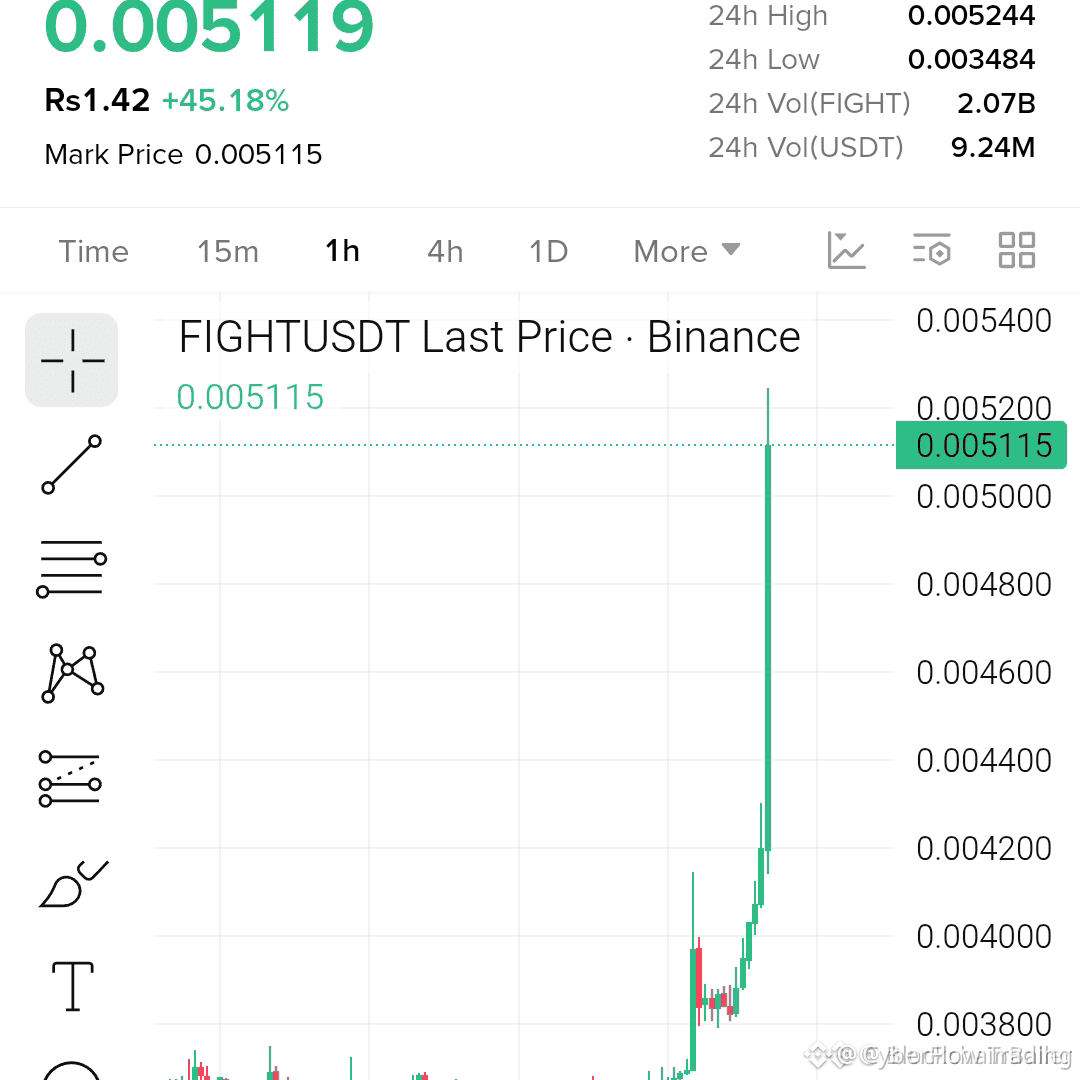
🚀 $FIGHT SURGES WITH 10X LEVERAGE ON LIQUIDITY SWEEP! 💥
Entry: 0.00495-0.00510 ⚡
Target: 0.00525 🚀
Target: 0.00540 🚀
Stop Loss: 0.00475 ⚠️
📊 Smart money is stacking orders right at the 0.00510 ceiling, forcing sellers to bleed liquidity. 🌊 The 10x thrust ignites a short‑term thrust, but the zone below 0.00495 remains a magnet for aggressive bids. ⚡ Keep your eyes on the order flow and avoid chasing the candle beyond the entry band.
💬 Are you riding this wave or waiting for the next liquidity trap? 👇
⚠️ Not financial advice. Always manage your risk. 🛡️
🏷️ #FIGHT #LongSetup #Leverage #Crypto
🔥 💎
🚀 $FIGHT SURGES WITH 10X LEVERAGE ON LIQUIDITY SWEEP! 💥
Entry: 0.00495-0.00510 ⚡
Target: 0.00525 🚀
Target: 0.00540 🚀
Stop Loss: 0.00475 ⚠️
📊 Smart money is stacking orders right at the 0.00510 ceiling, forcing sellers to bleed liquidity. 🌊 The 10x thrust ignites a short‑term thrust, but the zone below 0.00495 remains a magnet for aggressive bids. ⚡ Keep your eyes on the order flow and avoid chasing the candle beyond the entry band.
💬 Are you riding this wave or waiting for the next liquidity trap? 👇
⚠️ Not financial advice. Always manage your risk. 🛡️
🏷️ #FIGHT #LongSetup #Leverage #Crypto
🔥 💎
Entry: 0.00495-0.00510 ⚡
Target: 0.00525 🚀
Target: 0.00540 🚀
Stop Loss: 0.00475 ⚠️
📊 Smart money is stacking orders right at the 0.00510 ceiling, forcing sellers to bleed liquidity. 🌊 The 10x thrust ignites a short‑term thrust, but the zone below 0.00495 remains a magnet for aggressive bids. ⚡ Keep your eyes on the order flow and avoid chasing the candle beyond the entry band.
💬 Are you riding this wave or waiting for the next liquidity trap? 👇
⚠️ Not financial advice. Always manage your risk. 🛡️
🏷️ #FIGHT #LongSetup #Leverage #Crypto
🔥 💎
99

·
--
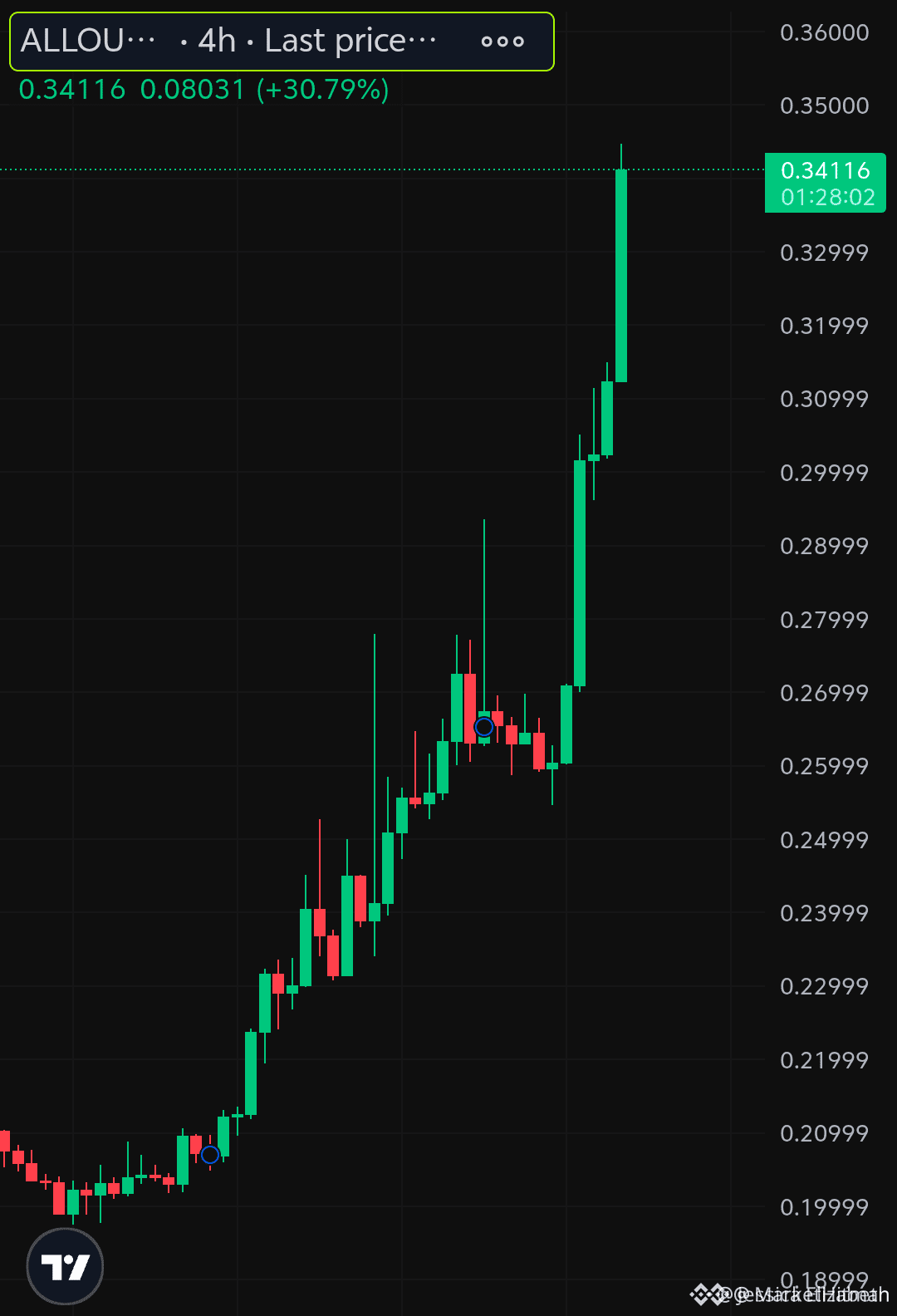
🚀 $ALLO SURGES INTO 10X LEVERAGE PLAY! 💥
Entry: 0.3380-0.3400 ⚡
Target: 0.3645 / 0.3810 🚀
Stop Loss: 0.2900 ⚠️
📊 The order block between 0.3380‑0.3400 has been gobbled up by smart‑money whales, carving a clean liquidity pocket. 🌊 Volume on the 4H is spiking, confirming buyers are flipping the script fast. 📈 Hitting the first TP at 0.3645 already paints a 1:3.5 risk‑reward, and the second stretch to 0.3810 adds extra upside for those riding the wave with 10× leverage.
💬 Who’s loading up the bid ladder now? 👇
⚠️ Not financial advice. Always manage your risk. 🛡️
🏷️ #ALLO #LongSetup #Leverage #Crypto
🔥 💎
🚀 $ALLO SURGES INTO 10X LEVERAGE PLAY! 💥
Entry: 0.3380-0.3400 ⚡
Target: 0.3645 / 0.3810 🚀
Stop Loss: 0.2900 ⚠️
📊 The order block between 0.3380‑0.3400 has been gobbled up by smart‑money whales, carving a clean liquidity pocket. 🌊 Volume on the 4H is spiking, confirming buyers are flipping the script fast. 📈 Hitting the first TP at 0.3645 already paints a 1:3.5 risk‑reward, and the second stretch to 0.3810 adds extra upside for those riding the wave with 10× leverage.
💬 Who’s loading up the bid ladder now? 👇
⚠️ Not financial advice. Always manage your risk. 🛡️
🏷️ #ALLO #LongSetup #Leverage #Crypto
🔥 💎
Entry: 0.3380-0.3400 ⚡
Target: 0.3645 / 0.3810 🚀
Stop Loss: 0.2900 ⚠️
📊 The order block between 0.3380‑0.3400 has been gobbled up by smart‑money whales, carving a clean liquidity pocket. 🌊 Volume on the 4H is spiking, confirming buyers are flipping the script fast. 📈 Hitting the first TP at 0.3645 already paints a 1:3.5 risk‑reward, and the second stretch to 0.3810 adds extra upside for those riding the wave with 10× leverage.
💬 Who’s loading up the bid ladder now? 👇
⚠️ Not financial advice. Always manage your risk. 🛡️
🏷️ #ALLO #LongSetup #Leverage #Crypto
🔥 💎
69
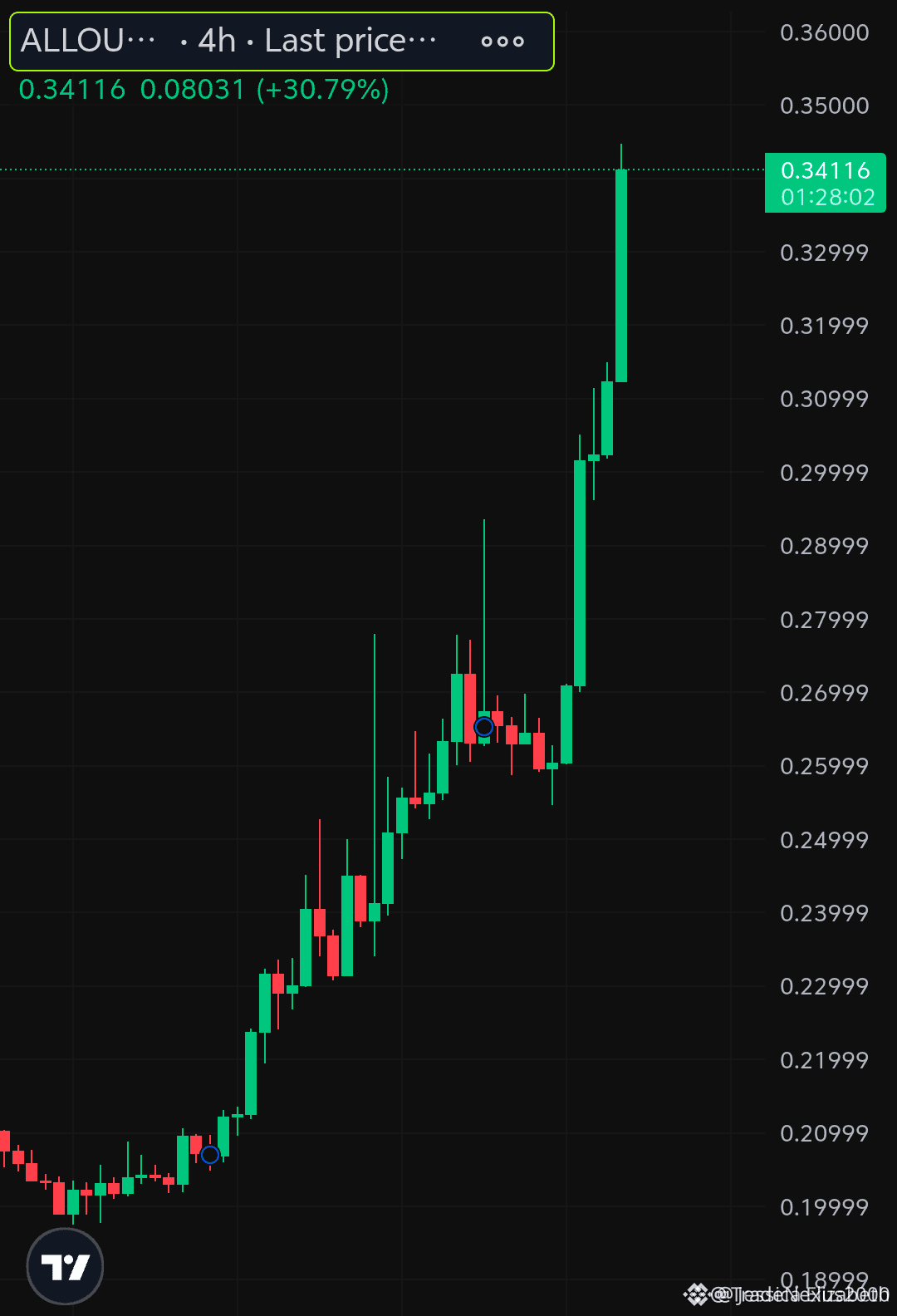
🚀 $ALLO BREAKING THROUGH THE 0.34 ZONE – 10X LEVERAGE OPPORTUNITY 💥
Entry: 0.3380-0.3400 ⚡
Target: 0.3645 / 0.3810 🚀
Stop Loss: 0.2900 ⚠️
📊 Smart money has been accumulating at the 0.34 cluster, turning a former supply wall into a demand basin. The recent bullish order block aligns with a rising volume surge on the 4H, hinting at a liquidity sweep that cleared the lower side. 💡 A clean 1:4 R:R emerges as price eyes the first TP, with the second TP offering a runway to fresh highs if the upside momentum persists. 📈
💬 Does the order block validation justify loading up at the top of the range, or are you waiting for a retest confirmation? 👇
⚠️ Not financial advice. Always manage your risk. 🛡️
🏷️ #ALLO #LongSetup #Leverage #Crypto
🚀 💎
🚀 $ALLO BREAKING THROUGH THE 0.34 ZONE – 10X LEVERAGE OPPORTUNITY 💥
Entry: 0.3380-0.3400 ⚡
Target: 0.3645 / 0.3810 🚀
Stop Loss: 0.2900 ⚠️
📊 Smart money has been accumulating at the 0.34 cluster, turning a former supply wall into a demand basin. The recent bullish order block aligns with a rising volume surge on the 4H, hinting at a liquidity sweep that cleared the lower side. 💡 A clean 1:4 R:R emerges as price eyes the first TP, with the second TP offering a runway to fresh highs if the upside momentum persists. 📈
💬 Does the order block validation justify loading up at the top of the range, or are you waiting for a retest confirmation? 👇
⚠️ Not financial advice. Always manage your risk. 🛡️
🏷️ #ALLO #LongSetup #Leverage #Crypto
🚀 💎
Entry: 0.3380-0.3400 ⚡
Target: 0.3645 / 0.3810 🚀
Stop Loss: 0.2900 ⚠️
📊 Smart money has been accumulating at the 0.34 cluster, turning a former supply wall into a demand basin. The recent bullish order block aligns with a rising volume surge on the 4H, hinting at a liquidity sweep that cleared the lower side. 💡 A clean 1:4 R:R emerges as price eyes the first TP, with the second TP offering a runway to fresh highs if the upside momentum persists. 📈
💬 Does the order block validation justify loading up at the top of the range, or are you waiting for a retest confirmation? 👇
⚠️ Not financial advice. Always manage your risk. 🛡️
🏷️ #ALLO #LongSetup #Leverage #Crypto
🚀 💎
30
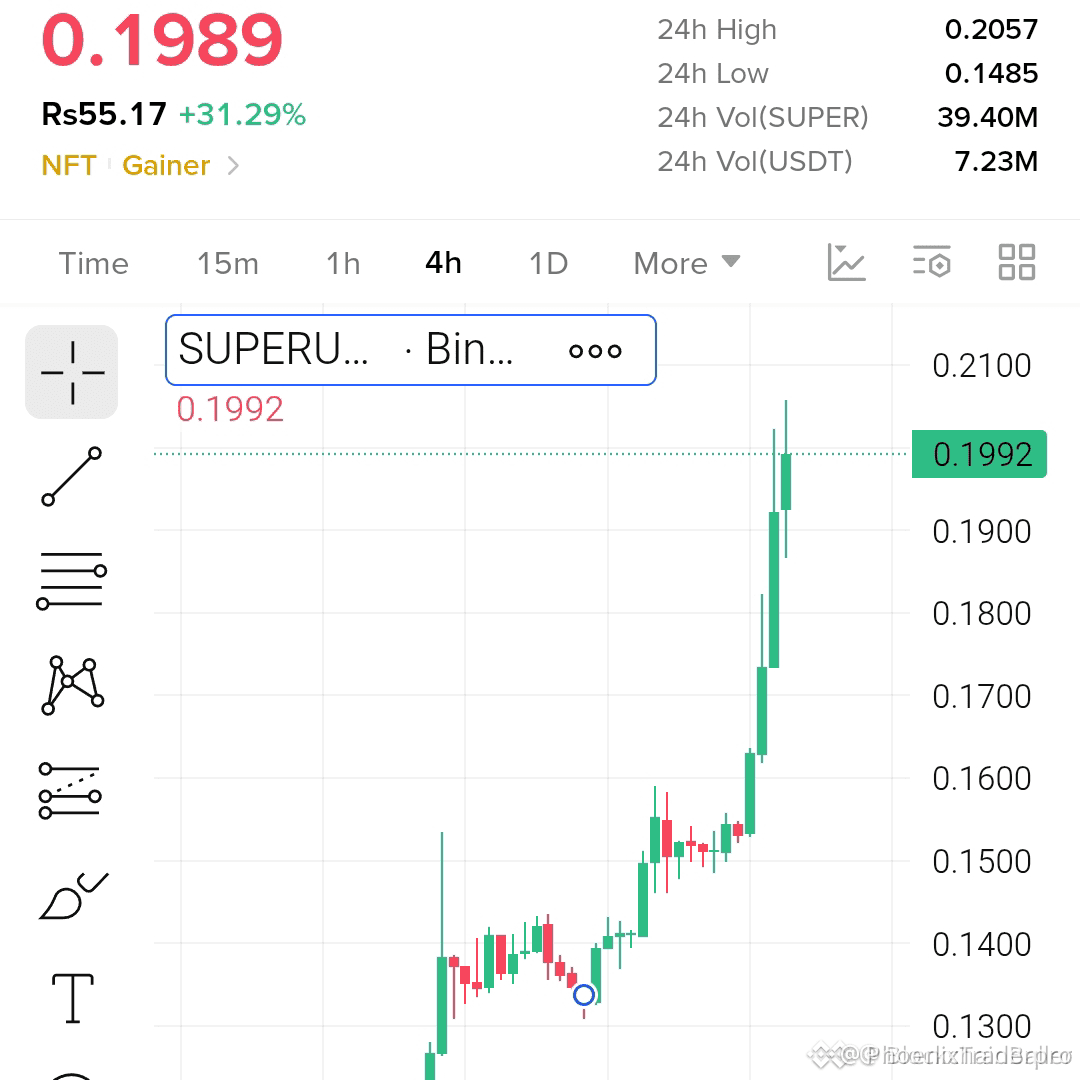
🚀 $SUPER 10X LONG RAMPING THROUGH $0.20 🚀
Entry: 0.195‑0.199 ⚡
Target: 0.202 🚀
Target: 0.205 🚀
Target: 0.210 🚀
Stop Loss: 0.189 ⚠️
📊 The order block around $0.195‑$0.199 has been gobbled up three times, signaling smart‑money liquidity sweeps that now set the stage for a rapid thrust. ⚡ Volume is spiking on the 1H chart, and the price is carving a clean bullish wedge, giving the 10x levered long a razor‑sharp edge. 💡 With three tiered profit targets, the risk‑to‑reward curve looks primed for a swift ride to the next resistance. 🤔 Are you ready to ride the wave or waiting for the next pullback? 👇
⚠️ Not financial advice. Always manage your risk. 🛡️
🏷️ #SUPER #LongSetup #Leverage #Crypto
🔥 💎
🚀 $SUPER 10X LONG RAMPING THROUGH $0.20 🚀
Entry: 0.195‑0.199 ⚡
Target: 0.202 🚀
Target: 0.205 🚀
Target: 0.210 🚀
Stop Loss: 0.189 ⚠️
📊 The order block around $0.195‑$0.199 has been gobbled up three times, signaling smart‑money liquidity sweeps that now set the stage for a rapid thrust. ⚡ Volume is spiking on the 1H chart, and the price is carving a clean bullish wedge, giving the 10x levered long a razor‑sharp edge. 💡 With three tiered profit targets, the risk‑to‑reward curve looks primed for a swift ride to the next resistance. 🤔 Are you ready to ride the wave or waiting for the next pullback? 👇
⚠️ Not financial advice. Always manage your risk. 🛡️
🏷️ #SUPER #LongSetup #Leverage #Crypto
🔥 💎
Entry: 0.195‑0.199 ⚡
Target: 0.202 🚀
Target: 0.205 🚀
Target: 0.210 🚀
Stop Loss: 0.189 ⚠️
📊 The order block around $0.195‑$0.199 has been gobbled up three times, signaling smart‑money liquidity sweeps that now set the stage for a rapid thrust. ⚡ Volume is spiking on the 1H chart, and the price is carving a clean bullish wedge, giving the 10x levered long a razor‑sharp edge. 💡 With three tiered profit targets, the risk‑to‑reward curve looks primed for a swift ride to the next resistance. 🤔 Are you ready to ride the wave or waiting for the next pullback? 👇
⚠️ Not financial advice. Always manage your risk. 🛡️
🏷️ #SUPER #LongSetup #Leverage #Crypto
🔥 💎
36
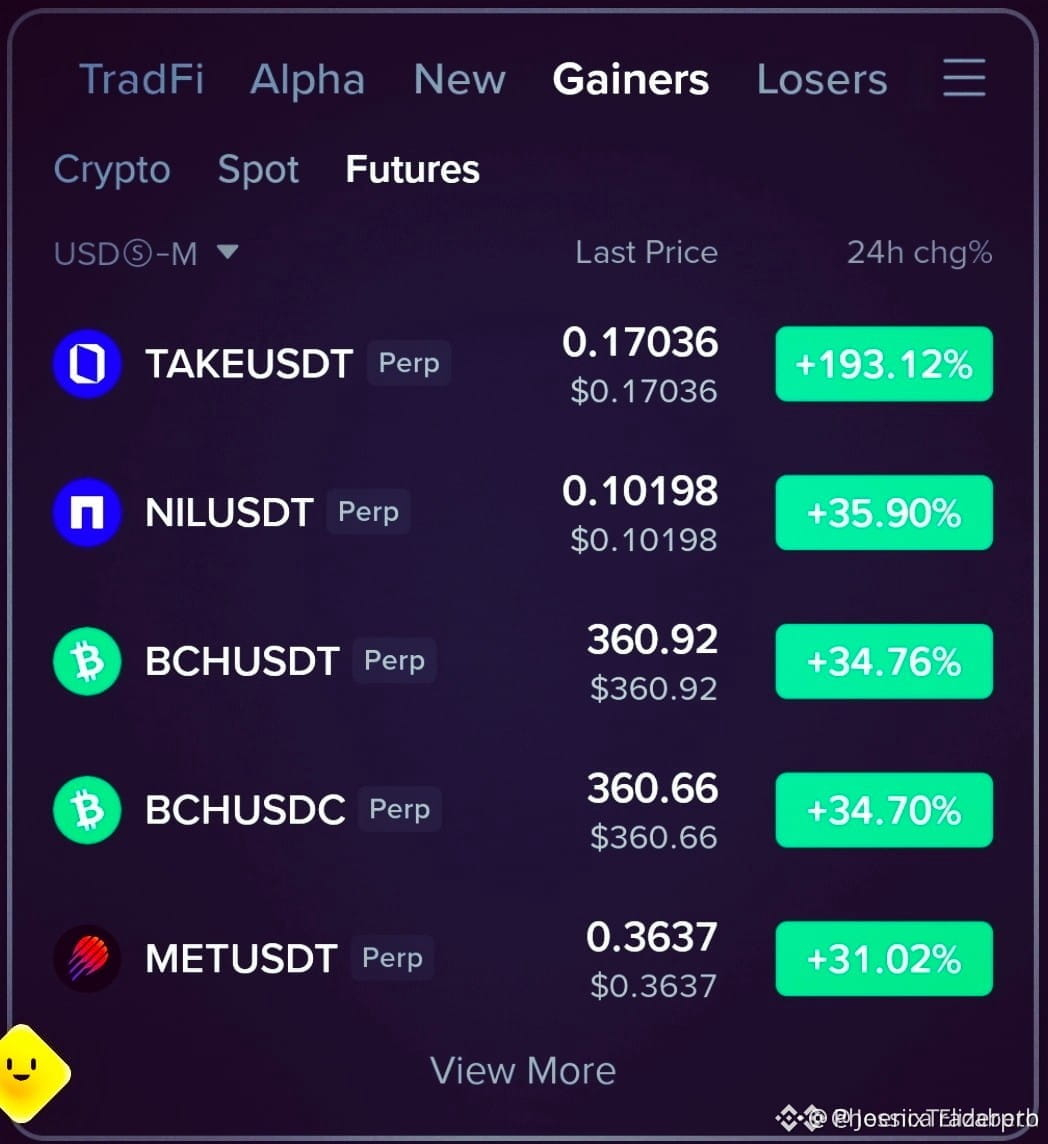
🚀 $BCH SURFACES ON 30X LEVERAGE, BEAST MODE ENGAGED! 🦈
Smart money is loading the order book on $BCH with a ferocious 30× push, turning the depth into a tidal wave of buying pressure. 🦈📊
Every candle is snapping higher as liquidity pools get swept, and the 3‑beast pattern signals a fresh breakout corridor. ⚡🌊
If the bulls keep feeding the surge, we could see a rapid climb toward the next resistance, but a sudden unwind would flash the market back into a pullback. 📈💡
💬 Who's ready to ride this 30x wave before the tide turns?
⚠️ Not financial advice. Always manage your risk. 🛡️
🏷️ #BCH #Leverage #BullishSetup #Crypto
🔥 💎
🚀 $BCH SURFACES ON 30X LEVERAGE, BEAST MODE ENGAGED! 🦈
Smart money is loading the order book on $BCH with a ferocious 30× push, turning the depth into a tidal wave of buying pressure. 🦈📊
Every candle is snapping higher as liquidity pools get swept, and the 3‑beast pattern signals a fresh breakout corridor. ⚡🌊
If the bulls keep feeding the surge, we could see a rapid climb toward the next resistance, but a sudden unwind would flash the market back into a pullback. 📈💡
💬 Who's ready to ride this 30x wave before the tide turns?
⚠️ Not financial advice. Always manage your risk. 🛡️
🏷️ #BCH #Leverage #BullishSetup #Crypto
🔥 💎
Smart money is loading the order book on $BCH with a ferocious 30× push, turning the depth into a tidal wave of buying pressure. 🦈📊
Every candle is snapping higher as liquidity pools get swept, and the 3‑beast pattern signals a fresh breakout corridor. ⚡🌊
If the bulls keep feeding the surge, we could see a rapid climb toward the next resistance, but a sudden unwind would flash the market back into a pullback. 📈💡
💬 Who's ready to ride this 30x wave before the tide turns?
⚠️ Not financial advice. Always manage your risk. 🛡️
🏷️ #BCH #Leverage #BullishSetup #Crypto
🔥 💎
255
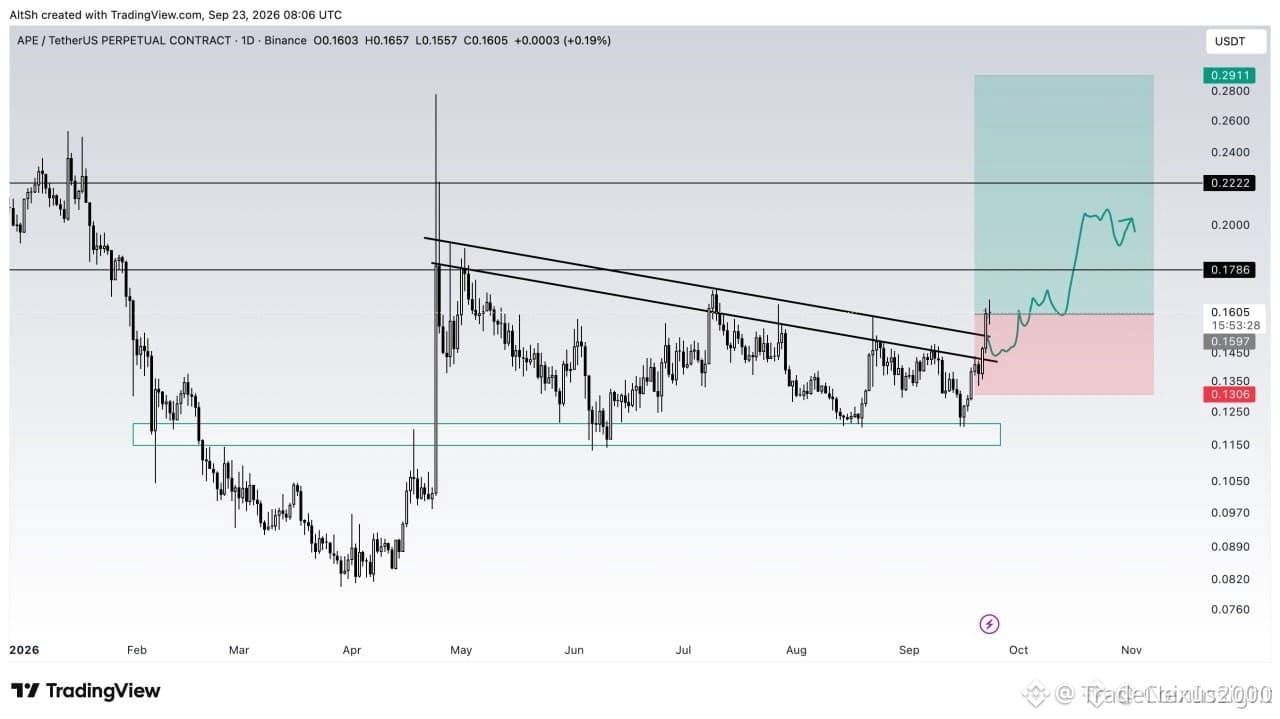
🚀 $LONG ISOLATED X5 BULLISH SURGE TO $0.29 📈
Entry: 0.1604 ⚡
Target: 0.1786 🚀
Target: 0.2222 🚀
Target: 0.2911 🚀
Stop Loss: 0.1306 ⚠️
📊 The 0.1604 demand zone has been repeatedly defended, signaling a smart‑money order block that absorbed liquidity on the 4H chart. 🦈 Volume spikes confirm institutional accumulation as price retests this anchor.
💡 With three tiered upside objectives, the risk‑to‑reward stretches beyond 1:4, and each target aligns with historic swing highs where sellers previously capitulated. 📌 Positioning now lets you ride the next leg of the institutional push. 🤔 Which target aligns with your trade horizon? 👇
⚠️ Not financial advice. Always manage your risk. 🛡️
🏷️ #LONG #LongSetup #Leverage #Crypto
🔥 💎
🚀 $LONG ISOLATED X5 BULLISH SURGE TO $0.29 📈
Entry: 0.1604 ⚡
Target: 0.1786 🚀
Target: 0.2222 🚀
Target: 0.2911 🚀
Stop Loss: 0.1306 ⚠️
📊 The 0.1604 demand zone has been repeatedly defended, signaling a smart‑money order block that absorbed liquidity on the 4H chart. 🦈 Volume spikes confirm institutional accumulation as price retests this anchor.
💡 With three tiered upside objectives, the risk‑to‑reward stretches beyond 1:4, and each target aligns with historic swing highs where sellers previously capitulated. 📌 Positioning now lets you ride the next leg of the institutional push. 🤔 Which target aligns with your trade horizon? 👇
⚠️ Not financial advice. Always manage your risk. 🛡️
🏷️ #LONG #LongSetup #Leverage #Crypto
🔥 💎
Entry: 0.1604 ⚡
Target: 0.1786 🚀
Target: 0.2222 🚀
Target: 0.2911 🚀
Stop Loss: 0.1306 ⚠️
📊 The 0.1604 demand zone has been repeatedly defended, signaling a smart‑money order block that absorbed liquidity on the 4H chart. 🦈 Volume spikes confirm institutional accumulation as price retests this anchor.
💡 With three tiered upside objectives, the risk‑to‑reward stretches beyond 1:4, and each target aligns with historic swing highs where sellers previously capitulated. 📌 Positioning now lets you ride the next leg of the institutional push. 🤔 Which target aligns with your trade horizon? 👇
⚠️ Not financial advice. Always manage your risk. 🛡️
🏷️ #LONG #LongSetup #Leverage #Crypto
🔥 💎
68
Log in to explore more content
Join global crypto users on Binance Square
⚡️ Get latest and useful information about crypto.
💬 Trusted by the world’s largest crypto exchange.
👍 Discover real insights from verified creators.
Email / Phone number
Trending Topics
1
#UKFCAWinsCourtOrderToRecover851400Pounds
938 views
170 Discussing
2
#ChainlinkLaunchesCCIP2WithEnterpriseVerification
10,578 views
473 Discussing
3
#GoldFallsTo$4144
5,124 views
105 Discussing
4
#QNTFallsOver40%FromMorningHigh
38,850 views
881 Discussing
5
#USDTAdds845900HoldersInPast7Days
1,803 views
154 Discussing
6
#KospiFalls2.7%SamsungSKHynixDropOver5%
8,107 views
392 Discussing
7
#BitgetCEOConfirms$388MStolenInHack
3,294 views
38 Discussing
8
#BTCFallsBelow$83000
18,043 views
143 Discussing
9
#BitgetDetailsSecurityIncidentTimeline
22,764 views
543 Discussing
10
#BitcoinSpotETFs$2.39BWeeklyNetInflow
7,607 views
36 Discussing