

#ethfi
ethfi
25.9M views
16,298 Discussing
Hot
Latest

·
--
$ETHFI #ETHFI
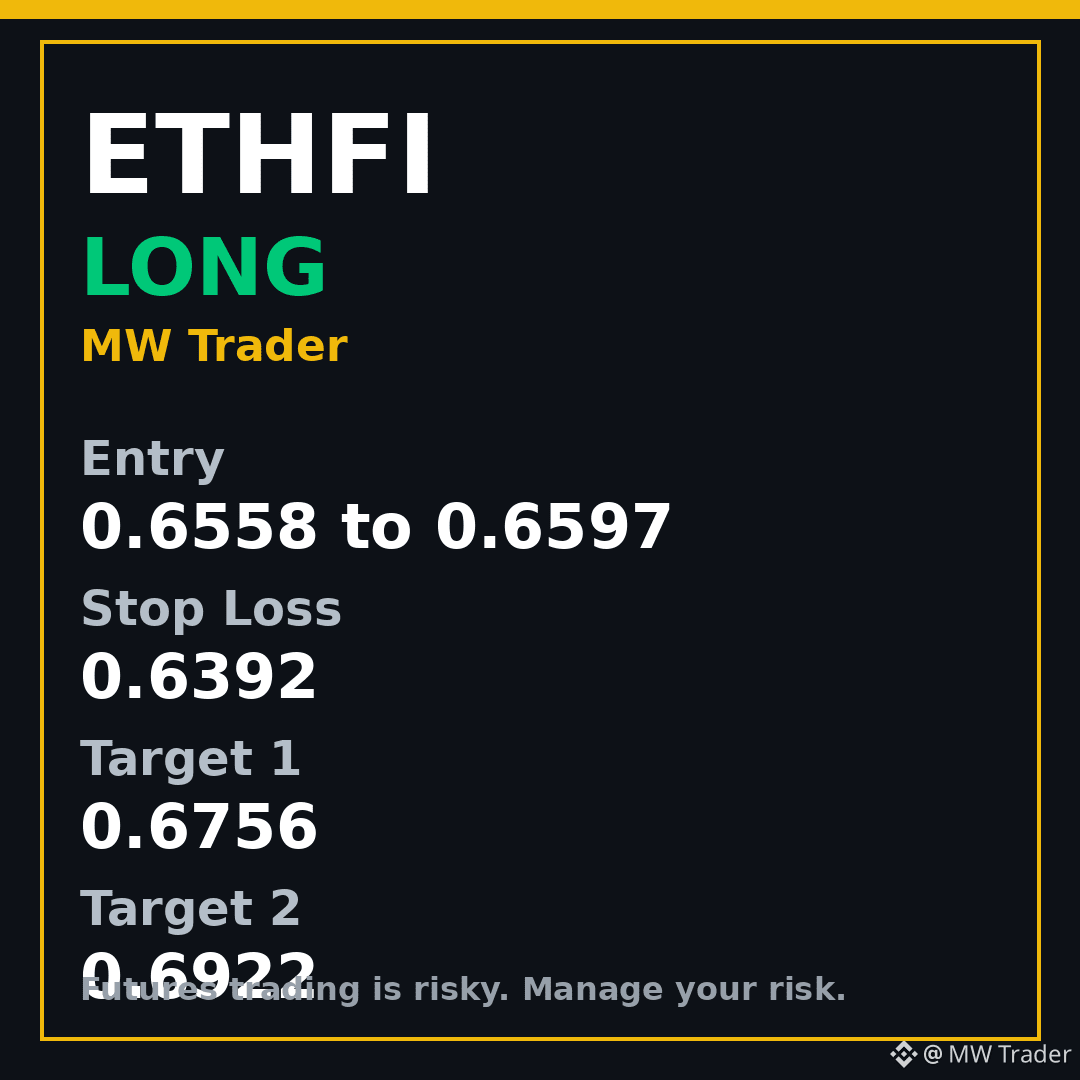
LONG idea
Entry: 0.6558 to 0.6597
Stop loss: 0.6392
Target 1: 0.6756
Target 2: 0.6922
Noticing Ether.fi again, momentum is turning in favour of buyers.
Price is near 0.6624 after a +5.2% move in 24 hours, with a day range of 0.6251 to 0.6709 and about $49M traded. Wait for price to reach the entry zone first, do not chase it. If price closes beyond the stop loss, this idea is invalid.
Futures trading is risky. Trade small, manage your risk, and do your own research.
# #Crypto #FuturesTrading #TradingSignals
Follow for more trades.
$ETHFI #ETHFI
LONG idea
Entry: 0.6558 to 0.6597
Stop loss: 0.6392
Target 1: 0.6756
Target 2: 0.6922
Noticing Ether.fi again, momentum is turning in favour of buyers.
Price is near 0.6624 after a +5.2% move in 24 hours, with a day range of 0.6251 to 0.6709 and about $49M traded. Wait for price to reach the entry zone first, do not chase it. If price closes beyond the stop loss, this idea is invalid.
Futures trading is risky. Trade small, manage your risk, and do your own research.
# #Crypto #FuturesTrading #TradingSignals
Follow for more trades.
LONG idea
Entry: 0.6558 to 0.6597
Stop loss: 0.6392
Target 1: 0.6756
Target 2: 0.6922
Noticing Ether.fi again, momentum is turning in favour of buyers.
Price is near 0.6624 after a +5.2% move in 24 hours, with a day range of 0.6251 to 0.6709 and about $49M traded. Wait for price to reach the entry zone first, do not chase it. If price closes beyond the stop loss, this idea is invalid.
Futures trading is risky. Trade small, manage your risk, and do your own research.
# #Crypto #FuturesTrading #TradingSignals
Follow for more trades.
4

·
--
$ETHFI looks ready to go up from here 🚀
Up 5.1 percent today and holding strong
Buying $ETHFI between 0.66252 and 0.67037
Invalid below 0.63396
Taking profit at 0.72105 0.75589 0.80814
Sitting right at 93 percent of the daily range
RSI at 65 so plenty of room left
Price is in the zone right now
Tap $ETHFI to buy
Who else is in
#ETHFI #TradingSignals
$ETHFI looks ready to go up from here 🚀
Up 5.1 percent today and holding strong
Buying $ETHFI between 0.66252 and 0.67037
Invalid below 0.63396
Taking profit at 0.72105 0.75589 0.80814
Sitting right at 93 percent of the daily range
RSI at 65 so plenty of room left
Price is in the zone right now
Tap $ETHFI to buy
Who else is in
#ETHFI #TradingSignals
Up 5.1 percent today and holding strong
Buying $ETHFI between 0.66252 and 0.67037
Invalid below 0.63396
Taking profit at 0.72105 0.75589 0.80814
Sitting right at 93 percent of the daily range
RSI at 65 so plenty of room left
Price is in the zone right now
Tap $ETHFI to buy
Who else is in
#ETHFI #TradingSignals

·
--
Bullish
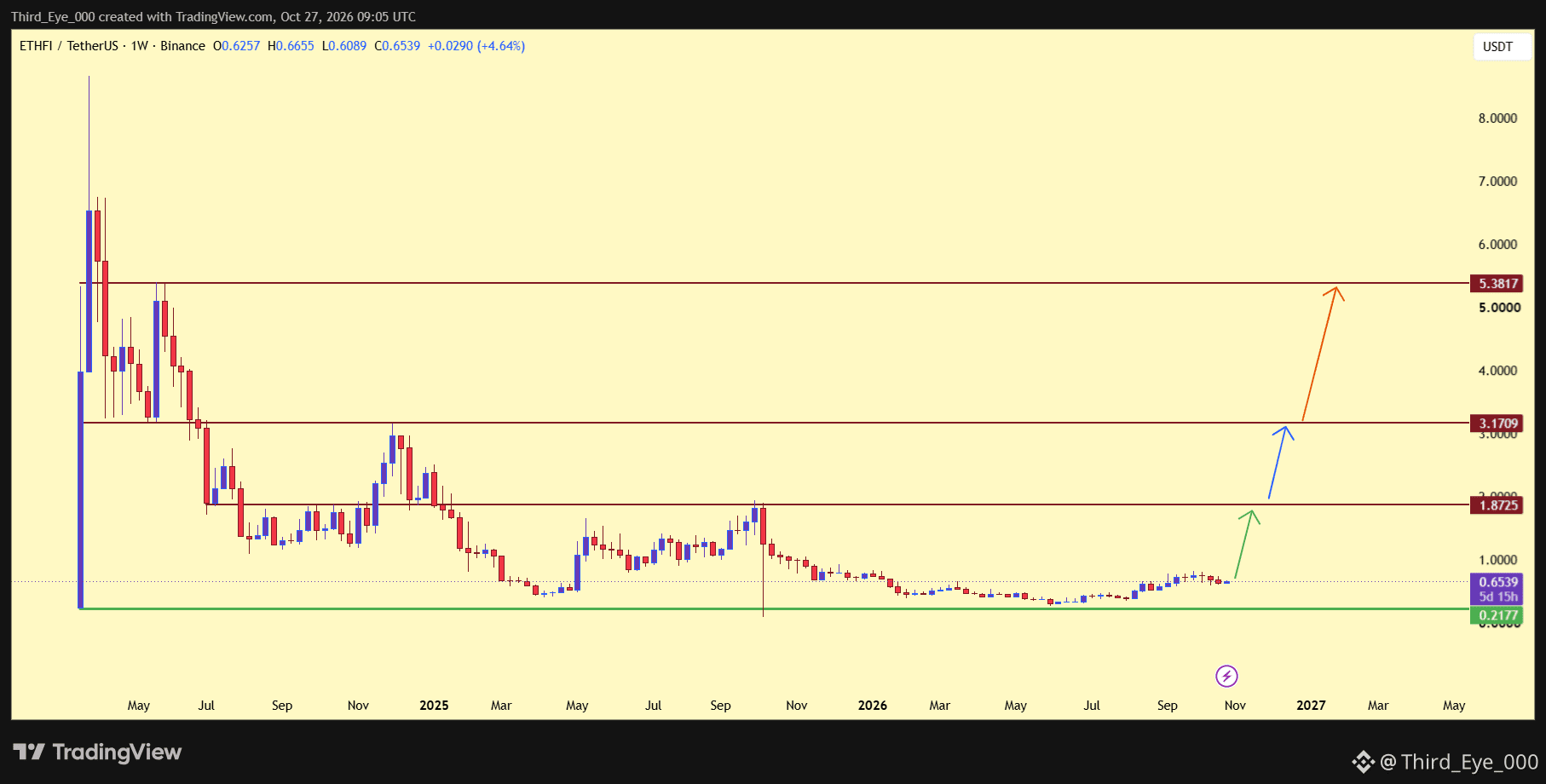
👁️ $ETHFI — From the Bottom to the Billions? 🚀
Everyone sees the long downtrend. Third Eye is watching the base that's forming. 👀
$ETHFI is trading around $0.65, with major resistance levels at:
🎯 $1.87
🎯 $3.17
🎯 $5.38
Imagine what happens if finally #ETHFI breaks out of this long accumulation zone and starts reclaiming these levels.
The first move could surprise the crowd. The next ones could leave many wishing they had paid attention earlier. 👁️
First vision, then execution. 🧠
The chart has a plan. Now let's see if price delivers.
{spot}(ETHFIUSDT)
👁️ $ETHFI — From the Bottom to the Billions? 🚀
Everyone sees the long downtrend. Third Eye is watching the base that's forming. 👀
$ETHFI is trading around $0.65, with major resistance levels at:
🎯 $1.87
🎯 $3.17
🎯 $5.38
Imagine what happens if finally #ETHFI breaks out of this long accumulation zone and starts reclaiming these levels.
The first move could surprise the crowd. The next ones could leave many wishing they had paid attention earlier. 👁️
First vision, then execution. 🧠
The chart has a plan. Now let's see if price delivers.
Everyone sees the long downtrend. Third Eye is watching the base that's forming. 👀
$ETHFI is trading around $0.65, with major resistance levels at:
🎯 $1.87
🎯 $3.17
🎯 $5.38
Imagine what happens if finally #ETHFI breaks out of this long accumulation zone and starts reclaiming these levels.
The first move could surprise the crowd. The next ones could leave many wishing they had paid attention earlier. 👁️
First vision, then execution. 🧠
The chart has a plan. Now let's see if price delivers.
1
86

·
--
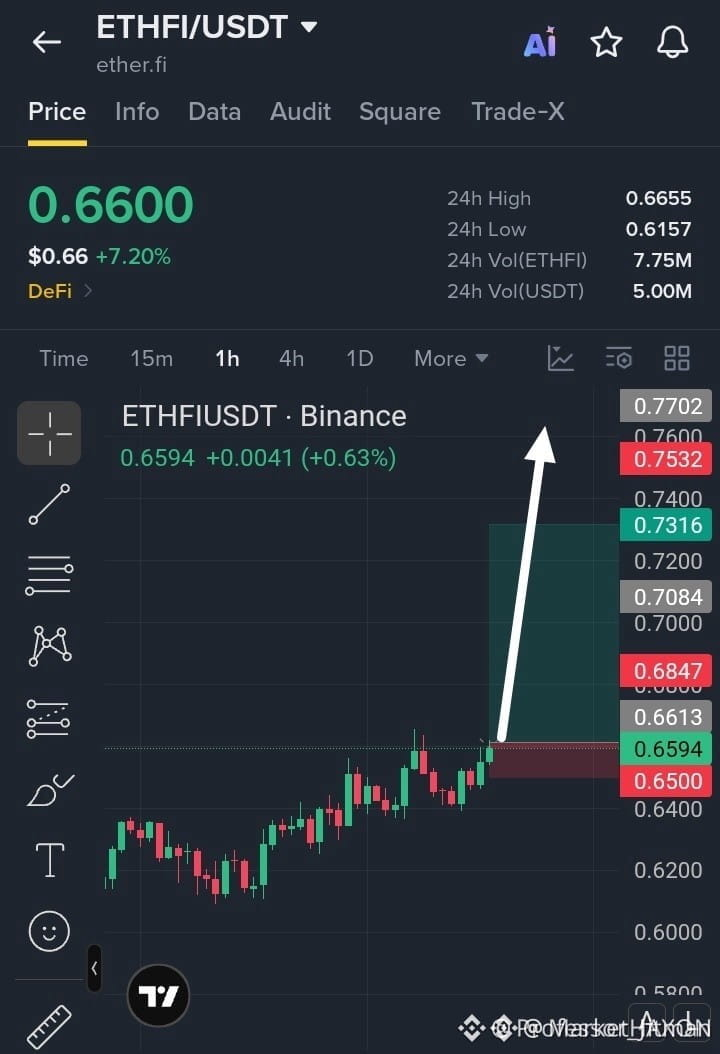
🚀 $ETHFI SURFACES ON BULLISH BREAKOUT, MOMENTUM CHARGING UP! 📈
Entry: 0.6550‑0.6610 ⚡
Target: 0.6847‑0.7316 🚀
Stop Loss: 0.6500 ⚠️
📊 Higher lows on the 1‑hour chart are painting a clean upward staircase, and every test of the 0.6655 barrier fuels a fresh wave of buying pressure. 🌊 Smart money is locking liquidity in the 0.6550‑0.6610 zone, ready to flip the market into a higher swing if the breakout holds. 📌 Keep an eye on volume spikes; they’ll confirm whether the bulls can sustain the march toward the 0.7316 ceiling.
💬 Who’s positioning for the next liquidity sweep beyond the 0.7084 mark? 👇
⚠️ Not financial advice. Always manage your risk. 🛡️
🏷️ #ETHFI #LongSetup #Breakout #Crypto
🔥 💎
🚀 $ETHFI SURFACES ON BULLISH BREAKOUT, MOMENTUM CHARGING UP! 📈
Entry: 0.6550‑0.6610 ⚡
Target: 0.6847‑0.7316 🚀
Stop Loss: 0.6500 ⚠️
📊 Higher lows on the 1‑hour chart are painting a clean upward staircase, and every test of the 0.6655 barrier fuels a fresh wave of buying pressure. 🌊 Smart money is locking liquidity in the 0.6550‑0.6610 zone, ready to flip the market into a higher swing if the breakout holds. 📌 Keep an eye on volume spikes; they’ll confirm whether the bulls can sustain the march toward the 0.7316 ceiling.
💬 Who’s positioning for the next liquidity sweep beyond the 0.7084 mark? 👇
⚠️ Not financial advice. Always manage your risk. 🛡️
🏷️ #ETHFI #LongSetup #Breakout #Crypto
🔥 💎
Entry: 0.6550‑0.6610 ⚡
Target: 0.6847‑0.7316 🚀
Stop Loss: 0.6500 ⚠️
📊 Higher lows on the 1‑hour chart are painting a clean upward staircase, and every test of the 0.6655 barrier fuels a fresh wave of buying pressure. 🌊 Smart money is locking liquidity in the 0.6550‑0.6610 zone, ready to flip the market into a higher swing if the breakout holds. 📌 Keep an eye on volume spikes; they’ll confirm whether the bulls can sustain the march toward the 0.7316 ceiling.
💬 Who’s positioning for the next liquidity sweep beyond the 0.7084 mark? 👇
⚠️ Not financial advice. Always manage your risk. 🛡️
🏷️ #ETHFI #LongSetup #Breakout #Crypto
🔥 💎
11

·
--
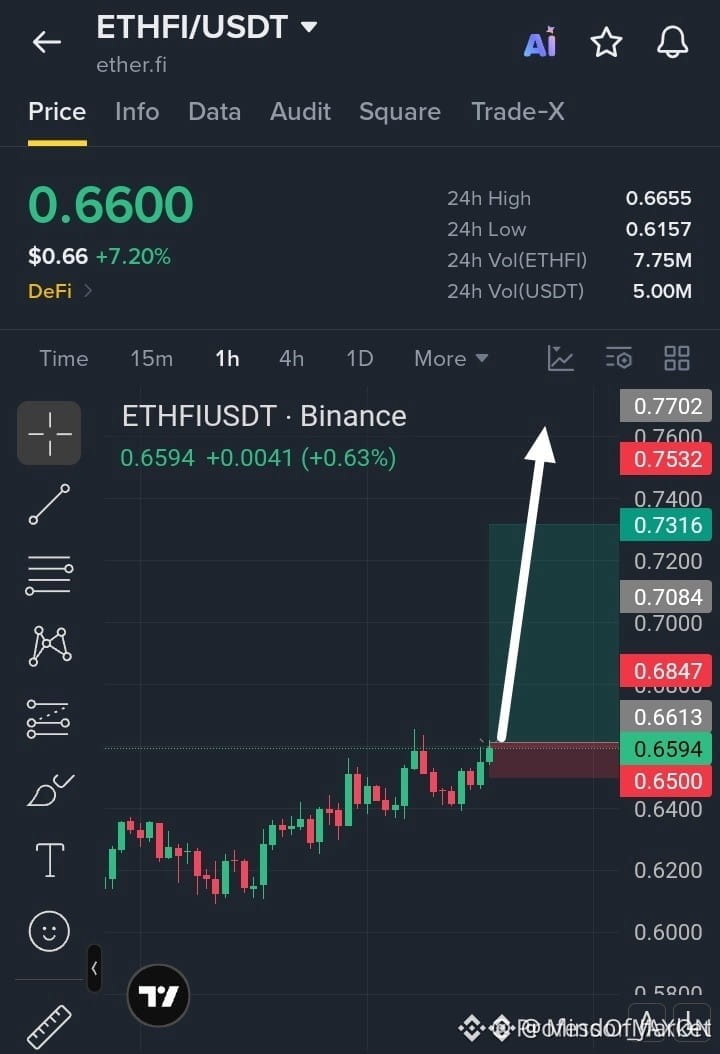
🚀 $ETHFI EYES BULLISH BREAKOUT AS MOMENTUM CLIMBS 📈
Entry: 0.6550-0.6610 ⚡
Target: 0.6847 / 0.7084 / 0.7316 🚀
Stop Loss: 0.6500 ⚠️
Higher lows on the 1‑hour chart signal that smart money is re‑accumulating, with the demand zone tightening between 0.6550‑0.6610. A clean break above 0.6655 would unlock the next resistance cluster, confirming the bullish tilt. 📊
Liquidity pools sit just below 0.6500, primed for a short squeeze if buyers hold the line. Volume spikes and a tightening range suggest the institutional order block is ready to be retested. 🌊⚡
💬 Are you aligning your entry within the demand corridor or waiting for the 0.6655 trigger? 👇
⚠️ Not financial advice. Always manage your risk. 🛡️
🏷️ #ETHFI #LongSetup #BullishBreakout #Crypto
🔥 💎
🚀 $ETHFI EYES BULLISH BREAKOUT AS MOMENTUM CLIMBS 📈
Entry: 0.6550-0.6610 ⚡
Target: 0.6847 / 0.7084 / 0.7316 🚀
Stop Loss: 0.6500 ⚠️
Higher lows on the 1‑hour chart signal that smart money is re‑accumulating, with the demand zone tightening between 0.6550‑0.6610. A clean break above 0.6655 would unlock the next resistance cluster, confirming the bullish tilt. 📊
Liquidity pools sit just below 0.6500, primed for a short squeeze if buyers hold the line. Volume spikes and a tightening range suggest the institutional order block is ready to be retested. 🌊⚡
💬 Are you aligning your entry within the demand corridor or waiting for the 0.6655 trigger? 👇
⚠️ Not financial advice. Always manage your risk. 🛡️
🏷️ #ETHFI #LongSetup #BullishBreakout #Crypto
🔥 💎
Entry: 0.6550-0.6610 ⚡
Target: 0.6847 / 0.7084 / 0.7316 🚀
Stop Loss: 0.6500 ⚠️
Higher lows on the 1‑hour chart signal that smart money is re‑accumulating, with the demand zone tightening between 0.6550‑0.6610. A clean break above 0.6655 would unlock the next resistance cluster, confirming the bullish tilt. 📊
Liquidity pools sit just below 0.6500, primed for a short squeeze if buyers hold the line. Volume spikes and a tightening range suggest the institutional order block is ready to be retested. 🌊⚡
💬 Are you aligning your entry within the demand corridor or waiting for the 0.6655 trigger? 👇
⚠️ Not financial advice. Always manage your risk. 🛡️
🏷️ #ETHFI #LongSetup #BullishBreakout #Crypto
🔥 💎
20

·
--
ETHFI: A STRONG STORY, BUT THE MARKET HASN'T PICKED A SIDE.
THE MARKET READ
0.654 | 24H +6.71%
4H STRUCTURE: RANGE
1H CONFIRMATION: BULLISH
RELATIVE VOLUME: 2.11x
THE NARRATIVE
Ether.fi: ether.fi is a modern crypto neobank that replaces the traditional consumer bank. Users can save, grow, and spend their crypto through one connected experience.
MY VIEW — NEUTRAL
Neutral. The narrative may attract attention, but price structure has not yet shown which side is in control.
WHAT WOULD CONFIRM IT
Technical confirmation is weak: wait for cleaner structure and stronger participation before drawing a firm conclusion.
This is narrative analysis, not a trade signal. Verify current market data and project claims before acting.
#ETHFI #Crypto #MarketStructure
ETHFI: A STRONG STORY, BUT THE MARKET HASN'T PICKED A SIDE.
THE MARKET READ
0.654 | 24H +6.71%
4H STRUCTURE: RANGE
1H CONFIRMATION: BULLISH
RELATIVE VOLUME: 2.11x
THE NARRATIVE
Ether.fi: ether.fi is a modern crypto neobank that replaces the traditional consumer bank. Users can save, grow, and spend their crypto through one connected experience.
MY VIEW — NEUTRAL
Neutral. The narrative may attract attention, but price structure has not yet shown which side is in control.
WHAT WOULD CONFIRM IT
Technical confirmation is weak: wait for cleaner structure and stronger participation before drawing a firm conclusion.
This is narrative analysis, not a trade signal. Verify current market data and project claims before acting.
#ETHFI #Crypto #MarketStructure
THE MARKET READ
0.654 | 24H +6.71%
4H STRUCTURE: RANGE
1H CONFIRMATION: BULLISH
RELATIVE VOLUME: 2.11x
THE NARRATIVE
Ether.fi: ether.fi is a modern crypto neobank that replaces the traditional consumer bank. Users can save, grow, and spend their crypto through one connected experience.
MY VIEW — NEUTRAL
Neutral. The narrative may attract attention, but price structure has not yet shown which side is in control.
WHAT WOULD CONFIRM IT
Technical confirmation is weak: wait for cleaner structure and stronger participation before drawing a firm conclusion.
This is narrative analysis, not a trade signal. Verify current market data and project claims before acting.
#ETHFI #Crypto #MarketStructure
3

·
--
$ETHFI +5.78% | $LUMIA +5.70% | $牛来 +5.61%
#ETHFI nudged to $0.6517, up +5.78% on $4.7 M volume. The neobank angle gives it a narrative edge as it positions itself as a modern crypto‑bank.
#LUMIA rose to $0.0816, gaining +5.70% with $1.6 M traded. Momentum is modest but the price jump feels clean against the lower turnover.
#牛来 climbed to $0.0565, up +5.61% on $2.7 M volume. Chinese‑named projects often see bursts of interest that can be short‑lived.
👀 Keep an eye on whether the volume spread among these gainers signals a coordinated push or isolated spikes.
#Write2Earn #Binance
$ETHFI +5.78% | $LUMIA +5.70% | $牛来 +5.61%
#ETHFI nudged to $0.6517, up +5.78% on $4.7 M volume. The neobank angle gives it a narrative edge as it positions itself as a modern crypto‑bank.
#LUMIA rose to $0.0816, gaining +5.70% with $1.6 M traded. Momentum is modest but the price jump feels clean against the lower turnover.
#牛来 climbed to $0.0565, up +5.61% on $2.7 M volume. Chinese‑named projects often see bursts of interest that can be short‑lived.
👀 Keep an eye on whether the volume spread among these gainers signals a coordinated push or isolated spikes.
#Write2Earn #Binance
#ETHFI nudged to $0.6517, up +5.78% on $4.7 M volume. The neobank angle gives it a narrative edge as it positions itself as a modern crypto‑bank.
#LUMIA rose to $0.0816, gaining +5.70% with $1.6 M traded. Momentum is modest but the price jump feels clean against the lower turnover.
#牛来 climbed to $0.0565, up +5.61% on $2.7 M volume. Chinese‑named projects often see bursts of interest that can be short‑lived.
👀 Keep an eye on whether the volume spread among these gainers signals a coordinated push or isolated spikes.
#Write2Earn #Binance
17

⚡ $ETHFI SILENT ACCUMULATION IS SETTING UP A POTENTIAL MOMENTUM EXPLOSION! 🚀
Entry: 0.5719 ⚡
Target: 0.6035 🚀
Stop Loss: 0.5508 ⚠️
📌 Beneath the quiet market conditions, buyers are discreetly building positions around this key demand shelf. 🌊 Smart money is quietly absorbing sell-side pressure, coiling $ETHFI for a decisive expansion phase.
📊 The setup offers a crisp risk-to-reward ratio as buyers defend the lows and target liquidity overhead. 💡 Retaking localized momentum from this consolidation could ignite swift upward continuation. 💬 Are you front-running this move before momentum confirms, or waiting for the breakout? 👇
⚠️ Not financial advice. Always manage your risk. 🛡️
🏷️ #ETHFI #LongSetup #Crypto #Breakout #Altcoins
🔥 💎
⚡ $ETHFI SILENT ACCUMULATION IS SETTING UP A POTENTIAL MOMENTUM EXPLOSION! 🚀
Entry: 0.5719 ⚡
Target: 0.6035 🚀
Stop Loss: 0.5508 ⚠️
📌 Beneath the quiet market conditions, buyers are discreetly building positions around this key demand shelf. 🌊 Smart money is quietly absorbing sell-side pressure, coiling $ETHFI for a decisive expansion phase.
📊 The setup offers a crisp risk-to-reward ratio as buyers defend the lows and target liquidity overhead. 💡 Retaking localized momentum from this consolidation could ignite swift upward continuation. 💬 Are you front-running this move before momentum confirms, or waiting for the breakout? 👇
⚠️ Not financial advice. Always manage your risk. 🛡️
🏷️ #ETHFI #LongSetup #Crypto #Breakout #Altcoins
🔥 💎
Entry: 0.5719 ⚡
Target: 0.6035 🚀
Stop Loss: 0.5508 ⚠️
📌 Beneath the quiet market conditions, buyers are discreetly building positions around this key demand shelf. 🌊 Smart money is quietly absorbing sell-side pressure, coiling $ETHFI for a decisive expansion phase.
📊 The setup offers a crisp risk-to-reward ratio as buyers defend the lows and target liquidity overhead. 💡 Retaking localized momentum from this consolidation could ignite swift upward continuation. 💬 Are you front-running this move before momentum confirms, or waiting for the breakout? 👇
⚠️ Not financial advice. Always manage your risk. 🛡️
🏷️ #ETHFI #LongSetup #Crypto #Breakout #Altcoins
🔥 💎
4

🎯 $ETHFI IS PRINTING A TEXTBOOK CONTROLLED RETRACEMENT FOR A HIGH-CONVICTION RECLAIM! ⚡
Entry: 0.5628–0.5648 ⚡
Target: 0.5747 / 0.5761 / 0.611 🚀
Stop Loss: 0.5602 ⚠️
📌 Price action on the 1H timeframe is cooling off into a pristine demand pocket, setting up a razor-sharp R:R profile for disciplined execution. 📊 Sellers are losing momentum on this pullback, leaving liquidity ripe for a swift rotation higher once confirmation prints.
💡 Scaling out systematically at key resistance bands locks in capital while keeping skin in the game for the full extension. 💬 Are you waiting for entry confirmation here or watching from the sidelines? 👇
⚠️ Not financial advice. Always manage your risk. 🛡️
🏷️ #ETHFI #LongSetup #Altcoins #Crypto #Trading
🎯 ⚡
🎯 $ETHFI IS PRINTING A TEXTBOOK CONTROLLED RETRACEMENT FOR A HIGH-CONVICTION RECLAIM! ⚡
Entry: 0.5628–0.5648 ⚡
Target: 0.5747 / 0.5761 / 0.611 🚀
Stop Loss: 0.5602 ⚠️
📌 Price action on the 1H timeframe is cooling off into a pristine demand pocket, setting up a razor-sharp R:R profile for disciplined execution. 📊 Sellers are losing momentum on this pullback, leaving liquidity ripe for a swift rotation higher once confirmation prints.
💡 Scaling out systematically at key resistance bands locks in capital while keeping skin in the game for the full extension. 💬 Are you waiting for entry confirmation here or watching from the sidelines? 👇
⚠️ Not financial advice. Always manage your risk. 🛡️
🏷️ #ETHFI #LongSetup #Altcoins #Crypto #Trading
🎯 ⚡
Entry: 0.5628–0.5648 ⚡
Target: 0.5747 / 0.5761 / 0.611 🚀
Stop Loss: 0.5602 ⚠️
📌 Price action on the 1H timeframe is cooling off into a pristine demand pocket, setting up a razor-sharp R:R profile for disciplined execution. 📊 Sellers are losing momentum on this pullback, leaving liquidity ripe for a swift rotation higher once confirmation prints.
💡 Scaling out systematically at key resistance bands locks in capital while keeping skin in the game for the full extension. 💬 Are you waiting for entry confirmation here or watching from the sidelines? 👇
⚠️ Not financial advice. Always manage your risk. 🛡️
🏷️ #ETHFI #LongSetup #Altcoins #Crypto #Trading
🎯 ⚡
4
·
--
$ETHFI +4.74% | $ZAMA +4.71% | $CHIP +4.22%
#ETHFI is on the move with a +4.74% climb, now trading at $0.6298. This surge is notable, especially considering the impressive $2.2M in trading volume. The project's focus on a decentralized banking experience might be resonating with users.
#ZAMA isn't far behind, up +4.71% to $0.0700 with a solid $3.8M in trades. A tight race for the top spot here.
#CHIP rounds out the leaderboard, rising +4.22% to $0.0454 and attracting $3.5M in volume.
It's worth noting that these gains come on varying volumes, which may impact the tokens' ability to hold onto their new highs.
#Write2Earn #Binance
$ETHFI +4.74% | $ZAMA +4.71% | $CHIP +4.22%
#ETHFI is on the move with a +4.74% climb, now trading at $0.6298. This surge is notable, especially considering the impressive $2.2M in trading volume. The project's focus on a decentralized banking experience might be resonating with users.
#ZAMA isn't far behind, up +4.71% to $0.0700 with a solid $3.8M in trades. A tight race for the top spot here.
#CHIP rounds out the leaderboard, rising +4.22% to $0.0454 and attracting $3.5M in volume.
It's worth noting that these gains come on varying volumes, which may impact the tokens' ability to hold onto their new highs.
#Write2Earn #Binance
#ETHFI is on the move with a +4.74% climb, now trading at $0.6298. This surge is notable, especially considering the impressive $2.2M in trading volume. The project's focus on a decentralized banking experience might be resonating with users.
#ZAMA isn't far behind, up +4.71% to $0.0700 with a solid $3.8M in trades. A tight race for the top spot here.
#CHIP rounds out the leaderboard, rising +4.22% to $0.0454 and attracting $3.5M in volume.
It's worth noting that these gains come on varying volumes, which may impact the tokens' ability to hold onto their new highs.
#Write2Earn #Binance
4

·
--
🚨 CRYPTO MARKET WATCH TODAY: ETHFI, BTC & ALTCOINS — OPPORTUNITY OR RISK? 🚨
📅 October 26, 2026The crypto market is moving through another interesting phase, and traders are keeping a close eye on Bitcoin, Ethereum, and selected altcoins.
📊 1. ETHFI — ALTCOIN TO WATCH
ETHFI is worth watching for traders looking for potential short-term opportunities in the DeFi sector.
🔎 Key things to monitor:
✅ 24-hour trading volume
✅ Important support and resistance levels
✅ Breakout confirmation
✅ Buying pressure and market sentiment
📈 A breakout supported by strong volume could attract more attention, while a rejection at resistance may lead to further downside.
₿ 2. BITCOIN (BTC) — THE MARKET LEADER
Bitcoin remains one of the most important indicators of overall crypto market sentiment.
If BTC stabilizes and buying pressure returns, some altcoins may also recover. However, continued weakness in BTC could put additional pressure on the altcoin market.
⚡ 3. WHAT SHOULD TRADERS WATCH TODAY?
🔹 BTC price action
🔹 ETH market strength
🔹 ETHFI volume and volatility
🔹 Altcoin liquidity
🔹 Unexpected market-moving news
💡 MY TRADING VIEW
Instead of chasing green candles, traders should wait for confirmation, identify key price levels, and manage risk carefully.
A good setup is not just about finding a coin that is moving. It is about understanding the trend, volume, and potential downside before entering a trade.
🔥 COMMUNITY QUESTION
Which coin are you watching today?
🚀 ETHFI
₿ $BTC
💎 $ETH
⚡ $BNB
Comment with your favorite coin and share your market outlook!
⚠️ Disclaimer: This post is for educational and informational purposes only, not financial advice. Cryptocurrency trading involves significant risk. Always do your own research before trading.
#BinanceSquare #ETHFI #CryptoMarket #Bitcoin #Altcoins #CryptoTrading #Binance #TechnicalAnalysis
🚨 CRYPTO MARKET WATCH TODAY: ETHFI, BTC & ALTCOINS — OPPORTUNITY OR RISK? 🚨 📅 October 26, 2026
The crypto market is moving through another interesting phase, and traders are keeping a close eye on Bitcoin, Ethereum, and selected altcoins.
📊 1. ETHFI — ALTCOIN TO WATCH
ETHFI is worth watching for traders looking for potential short-term opportunities in the DeFi sector.
🔎 Key things to monitor:
✅ 24-hour trading volume
✅ Important support and resistance levels
✅ Breakout confirmation
✅ Buying pressure and market sentiment
📈 A breakout supported by strong volume could attract more attention, while a rejection at resistance may lead to further downside.
₿ 2. BITCOIN (BTC) — THE MARKET LEADER
Bitcoin remains one of the most important indicators of overall crypto market sentiment.
If BTC stabilizes and buying pressure returns, some altcoins may also recover. However, continued weakness in BTC could put additional pressure on the altcoin market.
⚡ 3. WHAT SHOULD TRADERS WATCH TODAY?
🔹 BTC price action
🔹 ETH market strength
🔹 ETHFI volume and volatility
🔹 Altcoin liquidity
🔹 Unexpected market-moving news
💡 MY TRADING VIEW
Instead of chasing green candles, traders should wait for confirmation, identify key price levels, and manage risk carefully.
A good setup is not just about finding a coin that is moving. It is about understanding the trend, volume, and potential downside before entering a trade.
🔥 COMMUNITY QUESTION
Which coin are you watching today?
🚀 ETHFI
₿ $BTC
💎 $ETH
⚡ $BNB
Comment with your favorite coin and share your market outlook!
⚠️ Disclaimer: This post is for educational and informational purposes only, not financial advice. Cryptocurrency trading involves significant risk. Always do your own research before trading.
#BinanceSquare #ETHFI #CryptoMarket #Bitcoin #Altcoins #CryptoTrading #Binance #TechnicalAnalysis
📊 1. ETHFI — ALTCOIN TO WATCH
ETHFI is worth watching for traders looking for potential short-term opportunities in the DeFi sector.
🔎 Key things to monitor:
✅ 24-hour trading volume
✅ Important support and resistance levels
✅ Breakout confirmation
✅ Buying pressure and market sentiment
📈 A breakout supported by strong volume could attract more attention, while a rejection at resistance may lead to further downside.
₿ 2. BITCOIN (BTC) — THE MARKET LEADER
Bitcoin remains one of the most important indicators of overall crypto market sentiment.
If BTC stabilizes and buying pressure returns, some altcoins may also recover. However, continued weakness in BTC could put additional pressure on the altcoin market.
⚡ 3. WHAT SHOULD TRADERS WATCH TODAY?
🔹 BTC price action
🔹 ETH market strength
🔹 ETHFI volume and volatility
🔹 Altcoin liquidity
🔹 Unexpected market-moving news
💡 MY TRADING VIEW
Instead of chasing green candles, traders should wait for confirmation, identify key price levels, and manage risk carefully.
A good setup is not just about finding a coin that is moving. It is about understanding the trend, volume, and potential downside before entering a trade.
🔥 COMMUNITY QUESTION
Which coin are you watching today?
🚀 ETHFI
₿ $BTC
💎 $ETH
⚡ $BNB
Comment with your favorite coin and share your market outlook!
⚠️ Disclaimer: This post is for educational and informational purposes only, not financial advice. Cryptocurrency trading involves significant risk. Always do your own research before trading.
#BinanceSquare #ETHFI #CryptoMarket #Bitcoin #Altcoins #CryptoTrading #Binance #TechnicalAnalysis
191

·
--
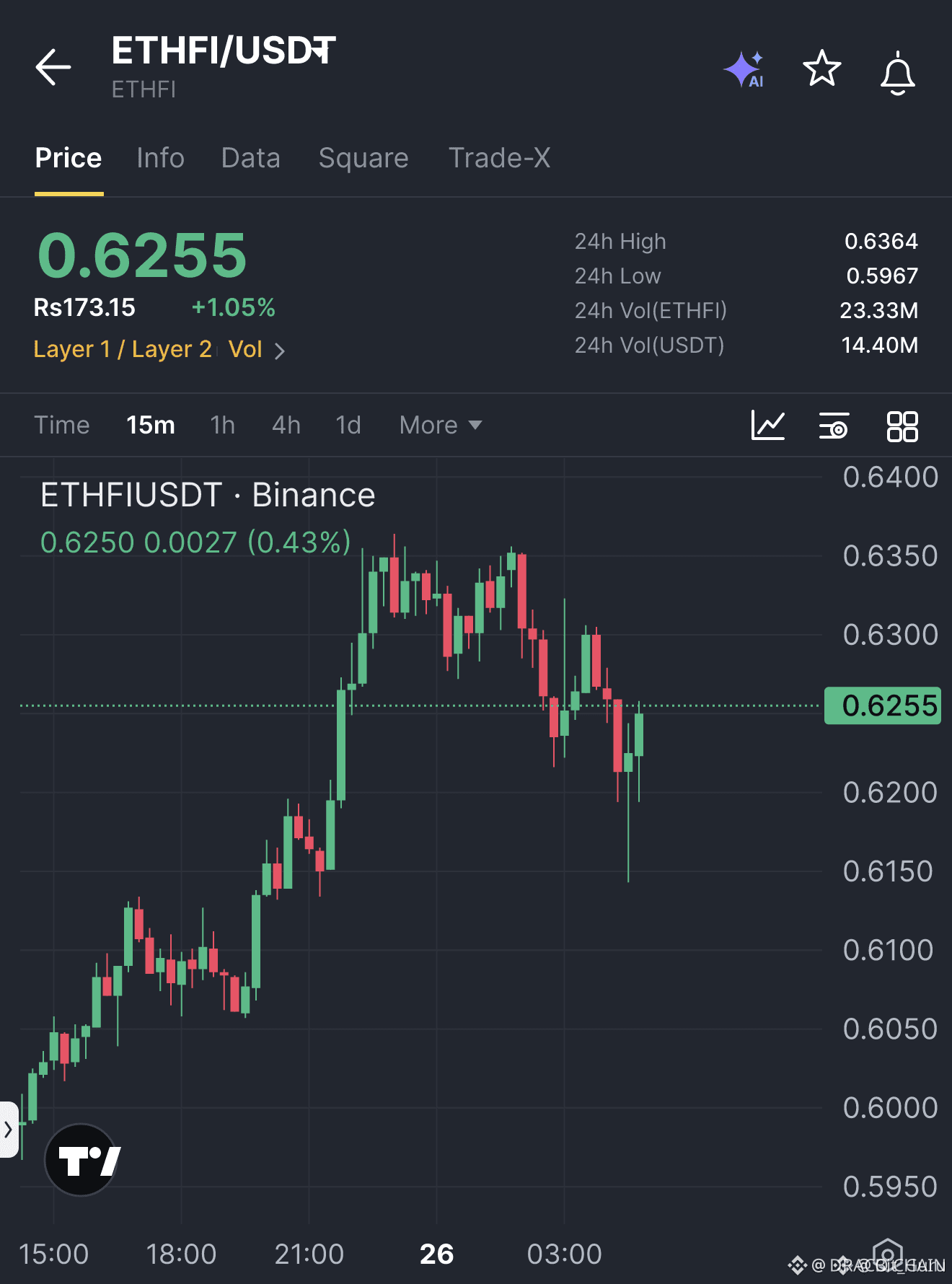
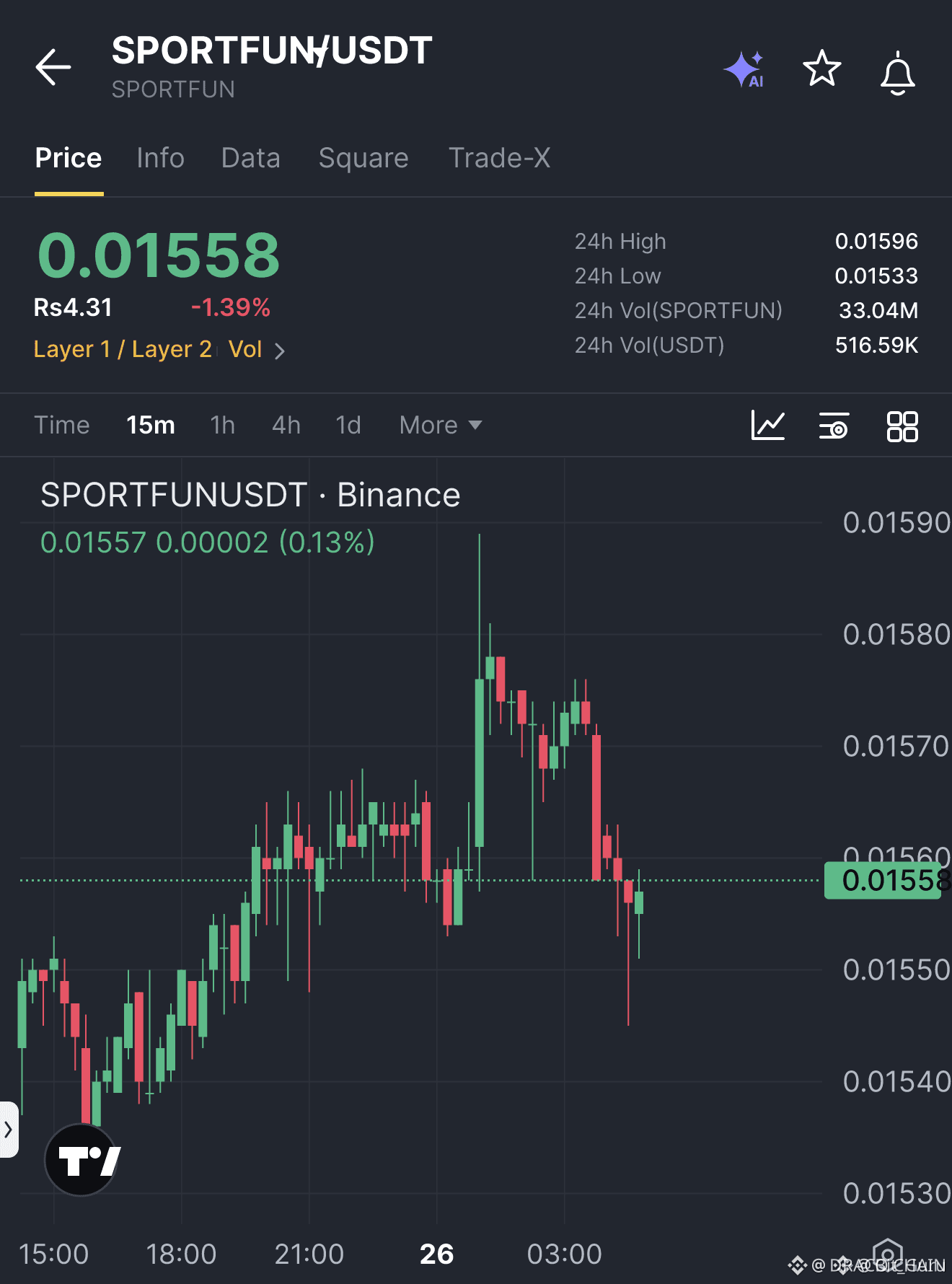
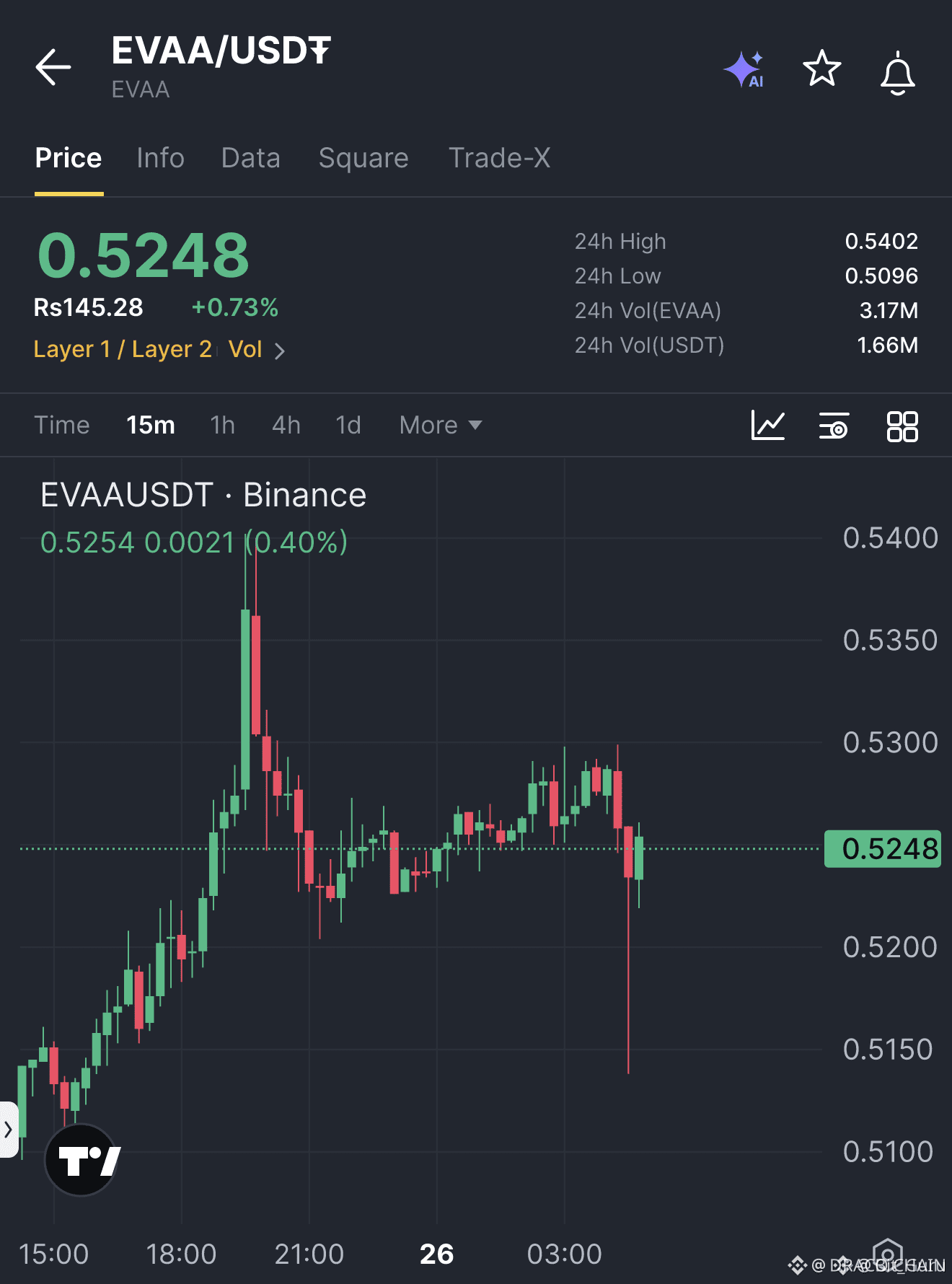
🚨 $ETHFI $SPORTFUN $EVAA STOP LOSS SWEEPS CLOSE OUT! 📉
Stop Loss: 0.01553 ⚠️
Stop Loss: 0.5183 ⚠️
📊 The recent liquidity hunts forced $SPORTFUN and $EVAA into their stop zones, confirming that smart money is pruning weak hands. 🦈 $ETHFI hit TP1 and exited cleanly, showcasing disciplined profit taking. 💡 Each cut preserves capital, letting us re‑align with the next order block on a top‑tier exchange.
💬 Which setup will you target next after these clean exits? 👇
⚠️ Not financial advice. Always manage your risk. 🛡️
🏷️ #ETHFI #SPORTFUN #EVAA #StopLoss #Trading #Crypto
🔥 💎
🚨 $ETHFI $SPORTFUN $EVAA STOP LOSS SWEEPS CLOSE OUT! 📉
Stop Loss: 0.01553 ⚠️
Stop Loss: 0.5183 ⚠️
📊 The recent liquidity hunts forced $SPORTFUN and $EVAA into their stop zones, confirming that smart money is pruning weak hands. 🦈 $ETHFI hit TP1 and exited cleanly, showcasing disciplined profit taking. 💡 Each cut preserves capital, letting us re‑align with the next order block on a top‑tier exchange.
💬 Which setup will you target next after these clean exits? 👇
⚠️ Not financial advice. Always manage your risk. 🛡️
🏷️ #ETHFI #SPORTFUN #EVAA #StopLoss #Trading #Crypto
🔥 💎
Stop Loss: 0.01553 ⚠️
Stop Loss: 0.5183 ⚠️
📊 The recent liquidity hunts forced $SPORTFUN and $EVAA into their stop zones, confirming that smart money is pruning weak hands. 🦈 $ETHFI hit TP1 and exited cleanly, showcasing disciplined profit taking. 💡 Each cut preserves capital, letting us re‑align with the next order block on a top‑tier exchange.
💬 Which setup will you target next after these clean exits? 👇
⚠️ Not financial advice. Always manage your risk. 🛡️
🏷️ #ETHFI #SPORTFUN #EVAA #StopLoss #Trading #Crypto
🔥 💎
52
·
--
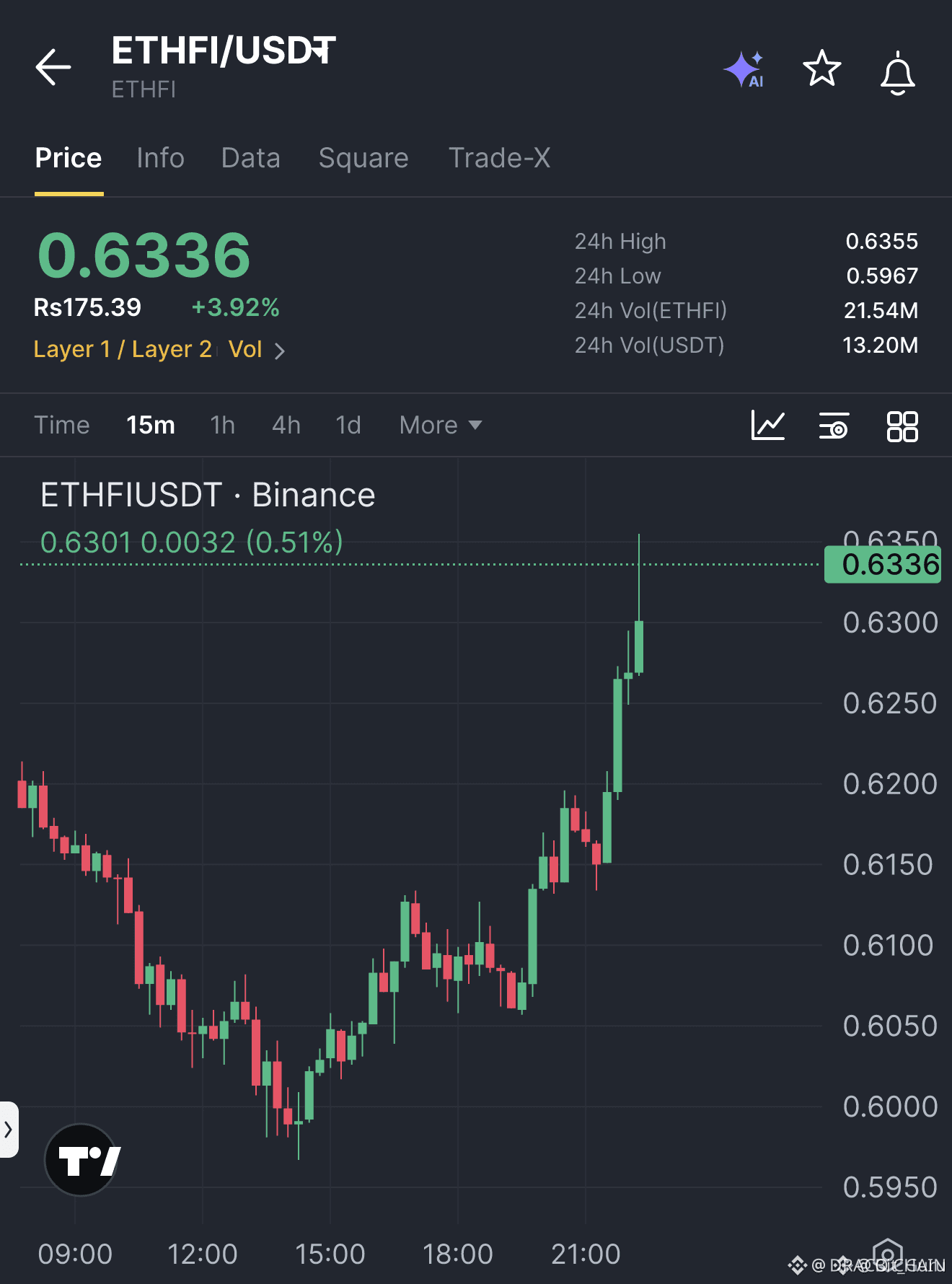
🚀 $ETHFI SMASHES TP1 WITH QUICK 2.8% POP! 🦈
Entry: 0.6084 ⚡
Target: 0.6255 🚀
📊 The 0.6084 demand block acted as a smart‑money anchor, swallowing sell pressure and propelling the price into a tight range. 🌊 A swift liquidity sweep on the 15‑min chart confirmed institutional intent, while volume spikes signaled aggressive buying. 🔍 With the trade still live, the stop remains guarded, preserving the upside bias.
💬 Are you riding this momentum or waiting for the next liquidity pocket to emerge? 👇
⚠️ Not financial advice. Always manage your risk. 🛡️
🏷️ #ETHFI #LongSetup #LiquiditySweep #Crypto
🦈 🔥
🚀 $ETHFI SMASHES TP1 WITH QUICK 2.8% POP! 🦈
Entry: 0.6084 ⚡
Target: 0.6255 🚀
📊 The 0.6084 demand block acted as a smart‑money anchor, swallowing sell pressure and propelling the price into a tight range. 🌊 A swift liquidity sweep on the 15‑min chart confirmed institutional intent, while volume spikes signaled aggressive buying. 🔍 With the trade still live, the stop remains guarded, preserving the upside bias.
💬 Are you riding this momentum or waiting for the next liquidity pocket to emerge? 👇
⚠️ Not financial advice. Always manage your risk. 🛡️
🏷️ #ETHFI #LongSetup #LiquiditySweep #Crypto
🦈 🔥
Entry: 0.6084 ⚡
Target: 0.6255 🚀
📊 The 0.6084 demand block acted as a smart‑money anchor, swallowing sell pressure and propelling the price into a tight range. 🌊 A swift liquidity sweep on the 15‑min chart confirmed institutional intent, while volume spikes signaled aggressive buying. 🔍 With the trade still live, the stop remains guarded, preserving the upside bias.
💬 Are you riding this momentum or waiting for the next liquidity pocket to emerge? 👇
⚠️ Not financial advice. Always manage your risk. 🛡️
🏷️ #ETHFI #LongSetup #LiquiditySweep #Crypto
🦈 🔥
4
🚀 $ETHFI SURGES PAST TP1 WITH 2.8% RALLY! 📈
Entry: 0.6084 ⚡
Target: 0.6255 🚀
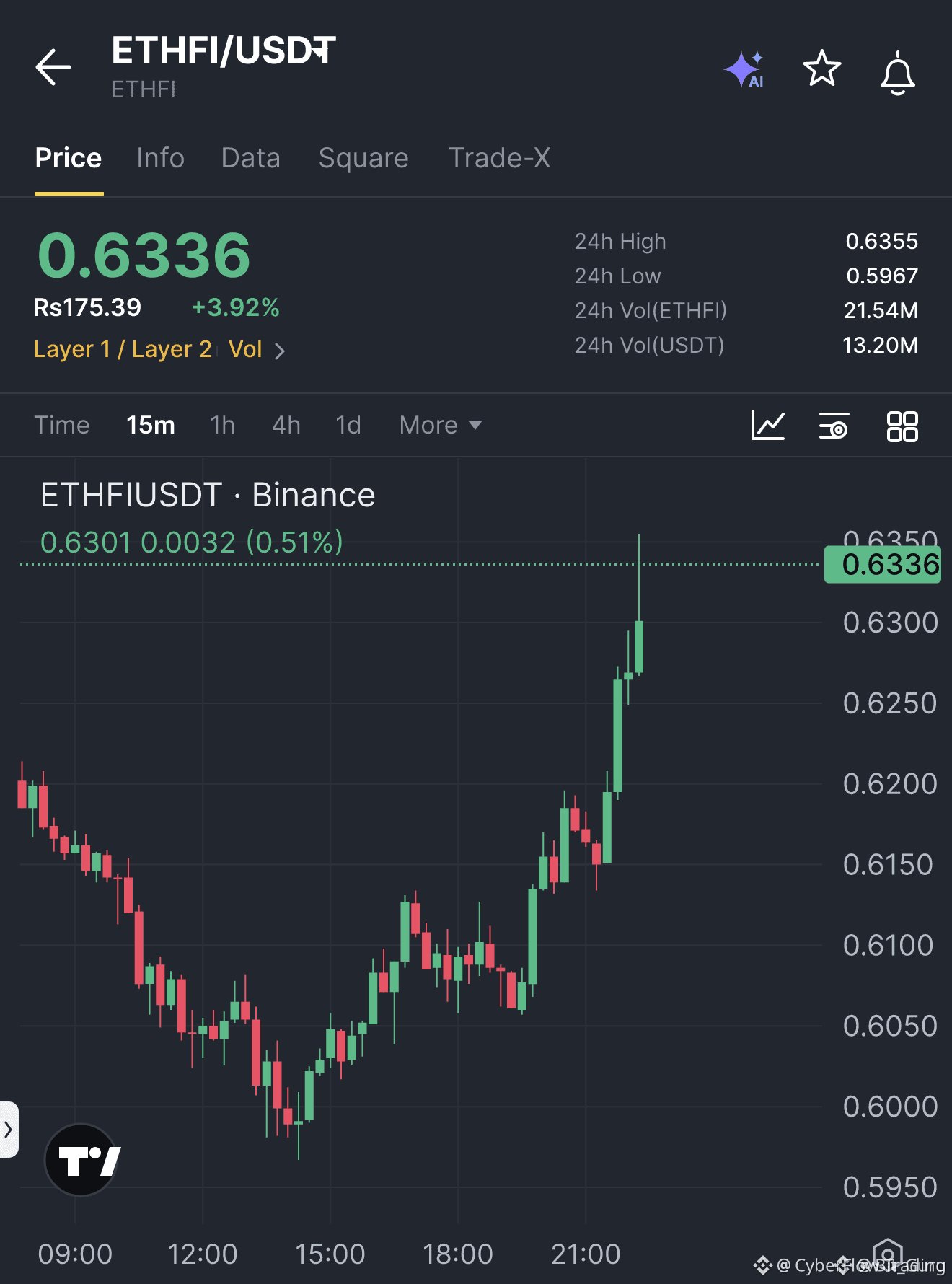
📊 Liquidity hunters are still flushing the order block at 0.6084, and the price ripped up to 0.6255, carving a clean +2.81% sprint. 🦈 The volume surge on the 1‑hour chart signals smart money flipping the script, while RSI nudges off the oversold zone, hinting the upside could keep feeding. ⚡
💬 Are you riding this wave or waiting for the next liquidity sweep? 👇
⚠️ Not financial advice. Always manage your risk. 🛡️
🏷️ #ETHFI #LongSetup #Momentum #Crypto
🔥 💎
🚀 $ETHFI SURGES PAST TP1 WITH 2.8% RALLY! 📈
Entry: 0.6084 ⚡
Target: 0.6255 🚀
📊 Liquidity hunters are still flushing the order block at 0.6084, and the price ripped up to 0.6255, carving a clean +2.81% sprint. 🦈 The volume surge on the 1‑hour chart signals smart money flipping the script, while RSI nudges off the oversold zone, hinting the upside could keep feeding. ⚡
💬 Are you riding this wave or waiting for the next liquidity sweep? 👇
⚠️ Not financial advice. Always manage your risk. 🛡️
🏷️ #ETHFI #LongSetup #Momentum #Crypto
🔥 💎
Entry: 0.6084 ⚡
Target: 0.6255 🚀
📊 Liquidity hunters are still flushing the order block at 0.6084, and the price ripped up to 0.6255, carving a clean +2.81% sprint. 🦈 The volume surge on the 1‑hour chart signals smart money flipping the script, while RSI nudges off the oversold zone, hinting the upside could keep feeding. ⚡
💬 Are you riding this wave or waiting for the next liquidity sweep? 👇
⚠️ Not financial advice. Always manage your risk. 🛡️
🏷️ #ETHFI #LongSetup #Momentum #Crypto
🔥 💎
6


·
--
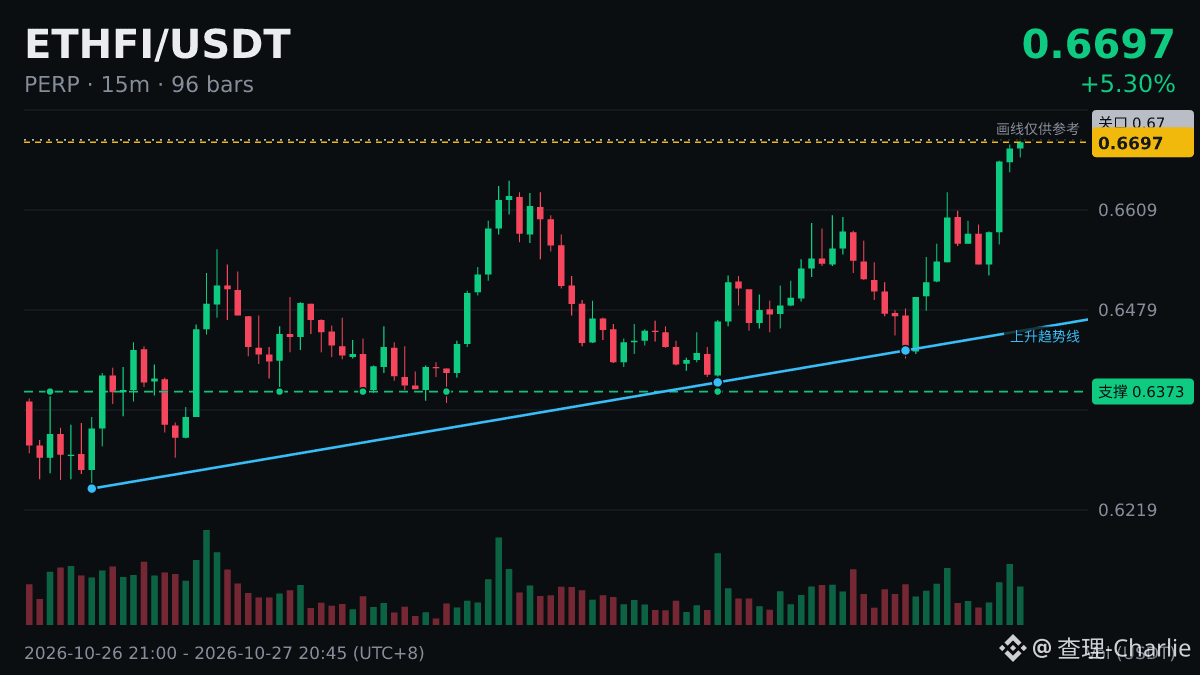
$ETHFI 24-hour new high, the bears are starting to panic, right?
Current price 0.6698, previous high 0.6647.
When FOMO sentiment is at its strongest, it is often the time to be the calmest. If you missed out, drop a 1
#ETHFI
$ETHFI 24-hour new high, the bears are starting to panic, right?
Current price 0.6698, previous high 0.6647.
When FOMO sentiment is at its strongest, it is often the time to be the calmest. If you missed out, drop a 1
#ETHFI
Current price 0.6698, previous high 0.6647.
When FOMO sentiment is at its strongest, it is often the time to be the calmest. If you missed out, drop a 1
#ETHFI
31

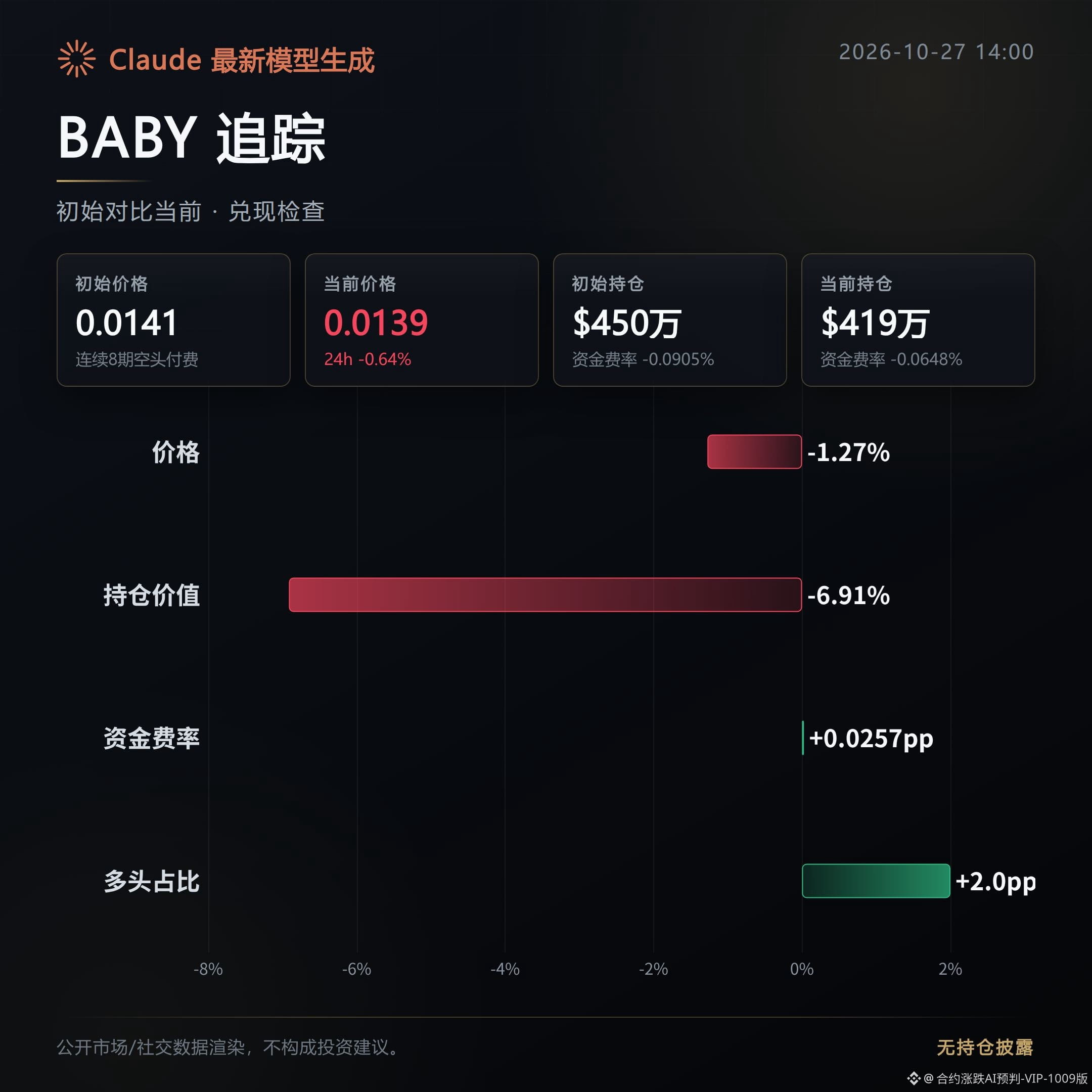
Of the 3 contracts flagged as bullish about 6 hours ago this morning, 1 has played out and 2 have not held up. This is the first review of this morning’s price-action watch.
Review of the initial watch: positions are being built.
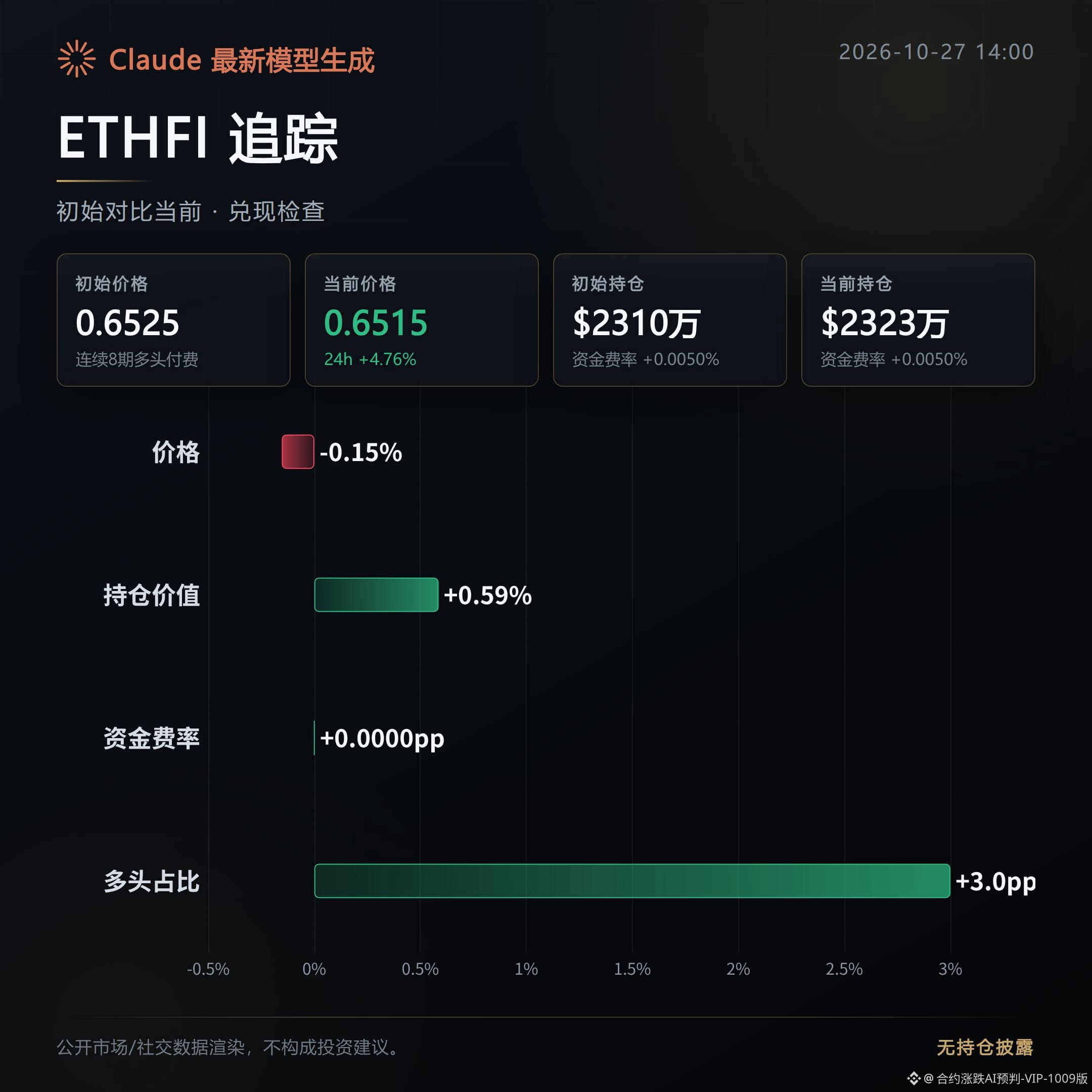
ETHFI: Mixed. The bullish call from this morning has not played out yet, and the price has not continued in the expected direction.
After the initial alert, the price slipped 0.15%, suggesting the upward move still lacks confirmation.
Open interest increased 0.59%, but the taker buy/sell ratio fell to 0.81. The added positions were not supported by active buying.
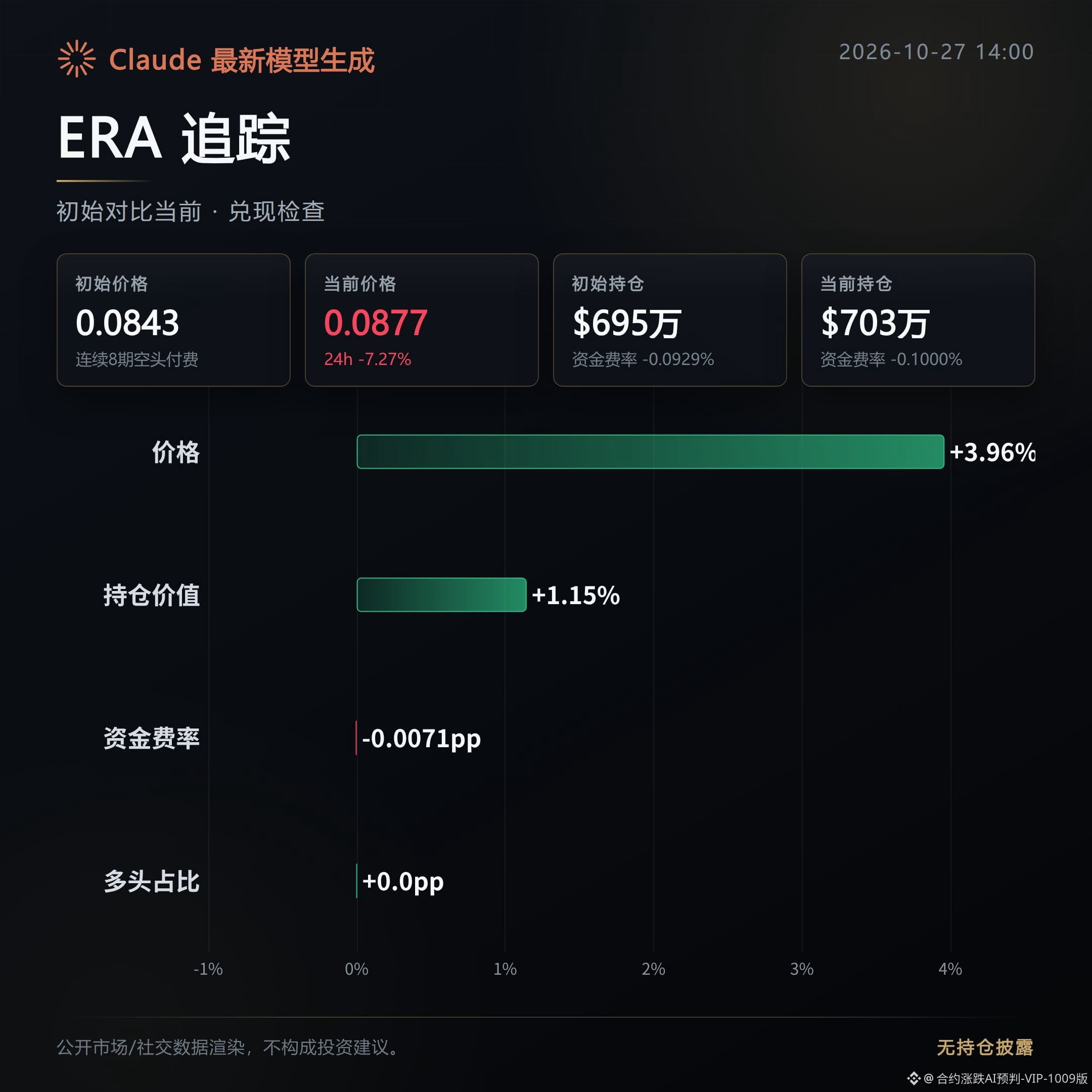
ERA: Played out. This bullish call came through, with the price continuing to rise 3.96% after the initial alert.
Open interest also increased 1.15%, suggesting positions continued to support the price as it rose.
However, there was no clear strengthening in active buying, so whether the move can continue remains to be seen.
BABY: Mixed. The bullish call from this morning did not hold up, with both price and open interest falling behind.
After the initial alert, the price dropped 1.27%, moving away from the original bullish direction.
Open interest fell 6.91%, and the taker buy/sell ratio also dropped below 1, indicating weakening support.
Next, watch whether the price can regain strength, whether open interest can rise in tandem, and whether the taker buy/sell ratio can move back above 1.
If the price remains weak and open interest contracts further, that would contradict this morning’s bullish watchlist, and the market structure will need to be reassessed.
#ETHFI #ERA #BABY
#ContractReview
This content was generated with assistance from Claude Fable 5 and is for informational purposes only. Please verify independently.
Of the 3 contracts flagged as bullish about 6 hours ago this morning, 1 has played out and 2 have not held up. This is the first review of this morning’s price-action watch.
Review of the initial watch: positions are being built.
ETHFI: Mixed. The bullish call from this morning has not played out yet, and the price has not continued in the expected direction.
After the initial alert, the price slipped 0.15%, suggesting the upward move still lacks confirmation.
Open interest increased 0.59%, but the taker buy/sell ratio fell to 0.81. The added positions were not supported by active buying.
ERA: Played out. This bullish call came through, with the price continuing to rise 3.96% after the initial alert.
Open interest also increased 1.15%, suggesting positions continued to support the price as it rose.
However, there was no clear strengthening in active buying, so whether the move can continue remains to be seen.
BABY: Mixed. The bullish call from this morning did not hold up, with both price and open interest falling behind.
After the initial alert, the price dropped 1.27%, moving away from the original bullish direction.
Open interest fell 6.91%, and the taker buy/sell ratio also dropped below 1, indicating weakening support.
Next, watch whether the price can regain strength, whether open interest can rise in tandem, and whether the taker buy/sell ratio can move back above 1.
If the price remains weak and open interest contracts further, that would contradict this morning’s bullish watchlist, and the market structure will need to be reassessed.
#ETHFI #ERA #BABY
#ContractReview
This content was generated with assistance from Claude Fable 5 and is for informational purposes only. Please verify independently.
Review of the initial watch: positions are being built.
ETHFI: Mixed. The bullish call from this morning has not played out yet, and the price has not continued in the expected direction.
After the initial alert, the price slipped 0.15%, suggesting the upward move still lacks confirmation.
Open interest increased 0.59%, but the taker buy/sell ratio fell to 0.81. The added positions were not supported by active buying.
ERA: Played out. This bullish call came through, with the price continuing to rise 3.96% after the initial alert.
Open interest also increased 1.15%, suggesting positions continued to support the price as it rose.
However, there was no clear strengthening in active buying, so whether the move can continue remains to be seen.
BABY: Mixed. The bullish call from this morning did not hold up, with both price and open interest falling behind.
After the initial alert, the price dropped 1.27%, moving away from the original bullish direction.
Open interest fell 6.91%, and the taker buy/sell ratio also dropped below 1, indicating weakening support.
Next, watch whether the price can regain strength, whether open interest can rise in tandem, and whether the taker buy/sell ratio can move back above 1.
If the price remains weak and open interest contracts further, that would contradict this morning’s bullish watchlist, and the market structure will need to be reassessed.
#ETHFI #ERA #BABY
#ContractReview
This content was generated with assistance from Claude Fable 5 and is for informational purposes only. Please verify independently.
174

·
--
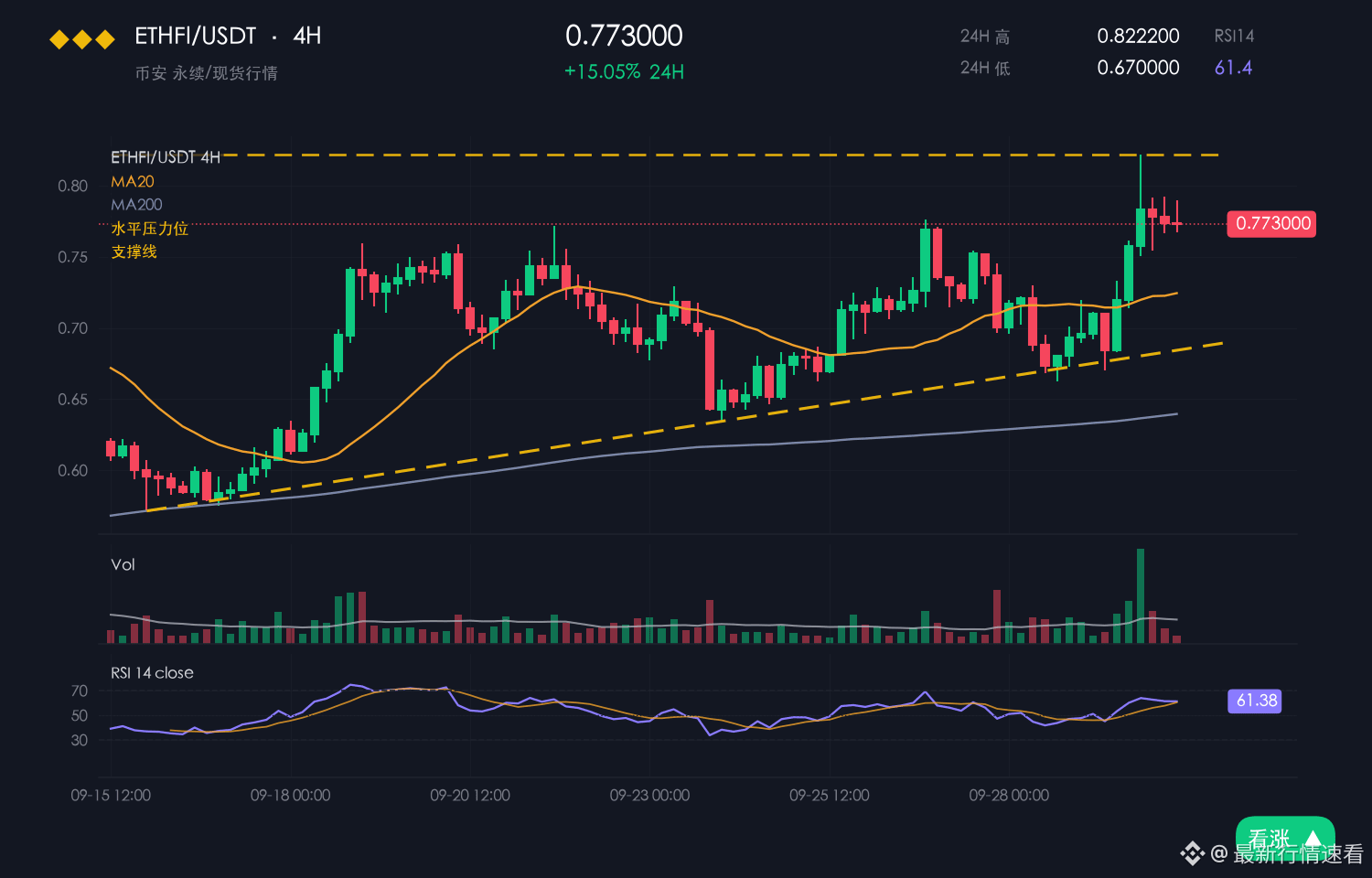
ETHFI is currently at 0.6160, up 1.15% over 24 hours but still down 13.57% over 7 days. The intraday range is 0.5973–0.6370, with a 6.6% amplitude.
【Market】
Overall strength is leaning bullish, with 0.6370 still acting as a key dividing line for ETHFI.
ETHFI pulled back after reaching a high of 0.6370. Its 1.15% daily gain has shifted the trajectory of its 13.57% seven-day decline.
The center of gravity has continued to rise across the last few 4-hour candles, showing clear signs that bulls are in control.
After moving away from 0.5973, the price has held firm, keeping the overall pullback within manageable bounds.
The broader market was down just 0.62%, so ETHFI's 1.15% gain represents outperformance.
【Macro】 U.S. stocks fell overnight, with the Nasdaq down 1.88% and the S&P 500 down 1.11% (close on 2026-10-14). BTC ETFs have seen net outflows of about $45.2 billion this month. U.S. CPI came in at 3.7% year over year, above expectations. The probability of a rate hike at the 2026-10-27/28 meeting is about 47%.
The short-term outlook leans bullish.
【Bullish Reasons】
As long as 0.5973 holds, there is still a case to be made; if it breaks, 0.5973 could act like a magnet.
The 1.15% 24-hour gain, combined with a trading range of 0.5973–0.6370, shows that buyers are currently in control.
Let the next candle do the talking.
Fast gains can also mean fast pullbacks, so leaving some room in your position is more comfortable than going all-in.
$ETHFI #ETHFI
ETHFI is currently at 0.6160, up 1.15% over 24 hours but still down 13.57% over 7 days. The intraday range is 0.5973–0.6370, with a 6.6% amplitude.
【Market】
Overall strength is leaning bullish, with 0.6370 still acting as a key dividing line for ETHFI.
ETHFI pulled back after reaching a high of 0.6370. Its 1.15% daily gain has shifted the trajectory of its 13.57% seven-day decline.
The center of gravity has continued to rise across the last few 4-hour candles, showing clear signs that bulls are in control.
After moving away from 0.5973, the price has held firm, keeping the overall pullback within manageable bounds.
The broader market was down just 0.62%, so ETHFI's 1.15% gain represents outperformance.
【Macro】 U.S. stocks fell overnight, with the Nasdaq down 1.88% and the S&P 500 down 1.11% (close on 2026-10-14). BTC ETFs have seen net outflows of about $45.2 billion this month. U.S. CPI came in at 3.7% year over year, above expectations. The probability of a rate hike at the 2026-10-27/28 meeting is about 47%.
The short-term outlook leans bullish.
【Bullish Reasons】
As long as 0.5973 holds, there is still a case to be made; if it breaks, 0.5973 could act like a magnet.
The 1.15% 24-hour gain, combined with a trading range of 0.5973–0.6370, shows that buyers are currently in control.
Let the next candle do the talking.
Fast gains can also mean fast pullbacks, so leaving some room in your position is more comfortable than going all-in.
$ETHFI #ETHFI
【Market】
Overall strength is leaning bullish, with 0.6370 still acting as a key dividing line for ETHFI.
ETHFI pulled back after reaching a high of 0.6370. Its 1.15% daily gain has shifted the trajectory of its 13.57% seven-day decline.
The center of gravity has continued to rise across the last few 4-hour candles, showing clear signs that bulls are in control.
After moving away from 0.5973, the price has held firm, keeping the overall pullback within manageable bounds.
The broader market was down just 0.62%, so ETHFI's 1.15% gain represents outperformance.
【Macro】 U.S. stocks fell overnight, with the Nasdaq down 1.88% and the S&P 500 down 1.11% (close on 2026-10-14). BTC ETFs have seen net outflows of about $45.2 billion this month. U.S. CPI came in at 3.7% year over year, above expectations. The probability of a rate hike at the 2026-10-27/28 meeting is about 47%.
The short-term outlook leans bullish.
【Bullish Reasons】
As long as 0.5973 holds, there is still a case to be made; if it breaks, 0.5973 could act like a magnet.
The 1.15% 24-hour gain, combined with a trading range of 0.5973–0.6370, shows that buyers are currently in control.
Let the next candle do the talking.
Fast gains can also mean fast pullbacks, so leaving some room in your position is more comfortable than going all-in.
$ETHFI #ETHFI
49

·
--

Article
ETHFI is up six and a half points: Binance funding is negative, while Bybit’s is positiveETHFI is up six and a half points. Binance funding is around −0.000151, while Bybit is around +0.00005—shorts pay longs on Binance, while longs pay shorts on Bybit.
Price check: ETHFI is around 0.6606 on Binance (+6.497%) and 0.6610 on OKX (+6.579%). OKX funding data is missing, so compare Binance with Bybit instead.
Price is up six and a half points, but funding rates are pulling in opposite directions—shorts paying on one exchange, longs on the other. Which side should we listen to in the short term?
#ETHFI #资金费率 #合约行情 #Opinion
Up six and a half points, with Binance funding negative and Bybit pulling the other way, positive. Are shorts still paying longs, or has it flipped already—which funding rate are you on?
ETHFI is up six and a half points: Binance funding is negative, while Bybit’s is positive
ETHFI is up six and a half points. Binance funding is around −0.000151, while Bybit is around +0.00005—shorts pay longs on Binance, while longs pay shorts on Bybit.
Price check: ETHFI is around 0.6606 on Binance (+6.497%) and 0.6610 on OKX (+6.579%). OKX funding data is missing, so compare Binance with Bybit instead.
Price is up six and a half points, but funding rates are pulling in opposite directions—shorts paying on one exchange, longs on the other. Which side should we listen to in the short term?
#ETHFI #资金费率 #合约行情 #Opinion
Up six and a half points, with Binance funding negative and Bybit pulling the other way, positive. Are shorts still paying longs, or has it flipped already—which funding rate are you on?
Price check: ETHFI is around 0.6606 on Binance (+6.497%) and 0.6610 on OKX (+6.579%). OKX funding data is missing, so compare Binance with Bybit instead.
Price is up six and a half points, but funding rates are pulling in opposite directions—shorts paying on one exchange, longs on the other. Which side should we listen to in the short term?
#ETHFI #资金费率 #合约行情 #Opinion
Up six and a half points, with Binance funding negative and Bybit pulling the other way, positive. Are shorts still paying longs, or has it flipped already—which funding rate are you on?
89

·
--
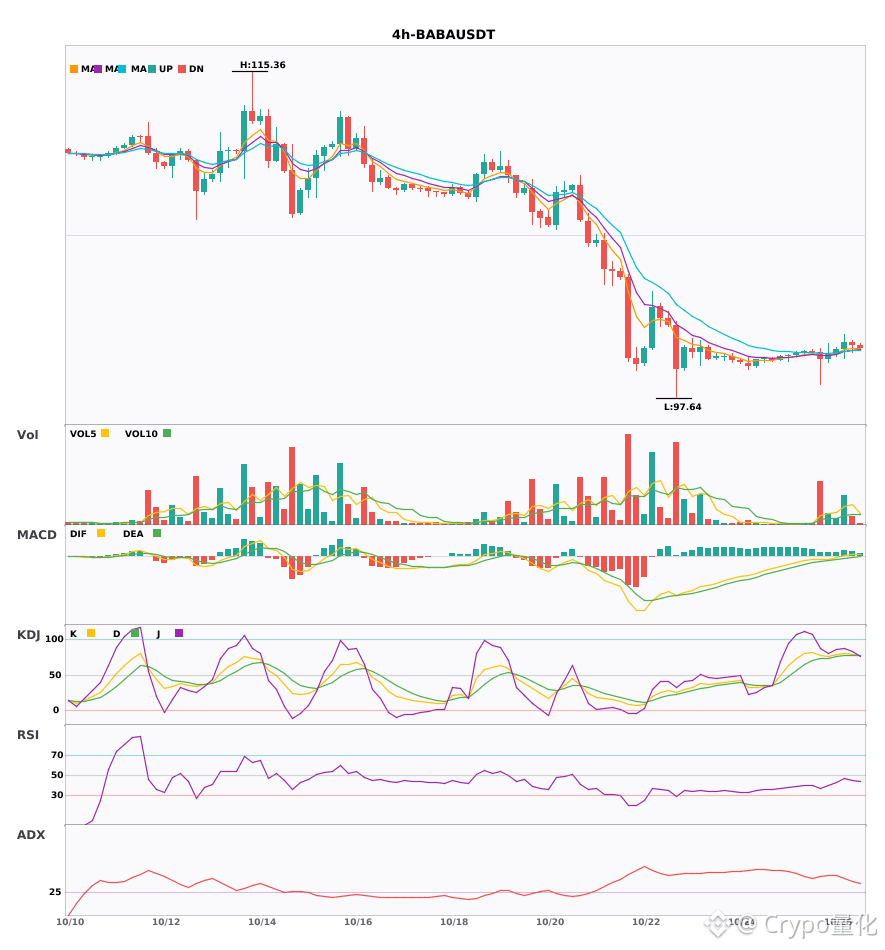
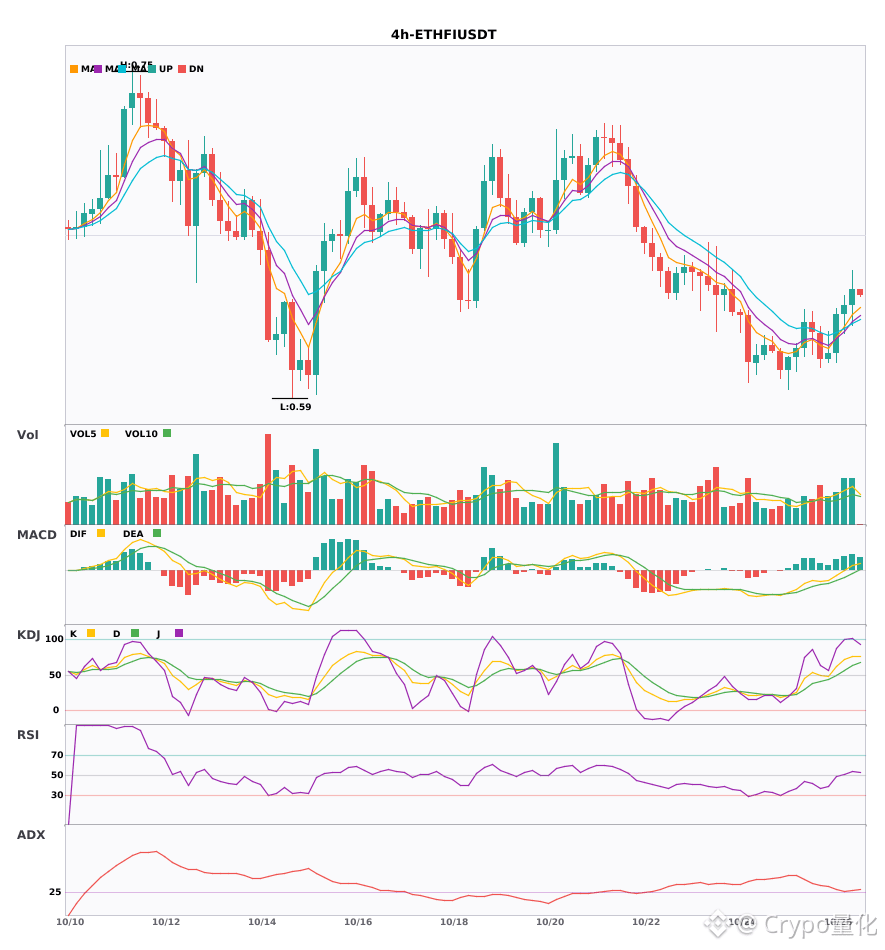
$BABA / $ETHFI / $AMAT are bullish on the 4-hour timeframe, with short-term confluence opportunities 🔥
════════════════════
🔴 $BABA 4-hour bullish signal
⚠️ Technical analysis: ADX (33): clear trending market | MACD is bullish, trend is strong, momentum is weakening | EMA5 > EMA8 > EMA13: bullish alignment | KDJ is strong, with bulls in control (K: 79.4, D: 77.8) | Volume surge (3.0x)
════════════════════
🔴 $ETHFI 4-hour bullish signal
⚠️ Technical analysis: ADX (28): trend is forming; opportunity to participate | MACD is bullish, trend is strong, momentum is strengthening | EMA5 > EMA8 > EMA13: bullish alignment | KDJ is strong, with bulls in control (K: 75.7, D: 63.2) | Volume increase (1.7x)
════════════════════
🔴 $AMAT 4-hour bullish signal
⚠️ Technical analysis: ADX (33): clear trending market | MACD is bullish, trend is strong, momentum is strengthening | EMA5 > EMA8 > EMA13: bullish alignment | KDJ is strong, with bulls in control (K: 65.1, D: 57.1) | Volume surge (4.6x)
════════════════════
🔔 Follow for the latest market updates 🔔
#技术分析 #BABA #ETHFI #AMAT
📌 When trading, check whether the candlestick patterns align
$BABA / $ETHFI / $AMAT are bullish on the 4-hour timeframe, with short-term confluence opportunities 🔥
════════════════════
🔴 $BABA 4-hour bullish signal
⚠️ Technical analysis: ADX (33): clear trending market | MACD is bullish, trend is strong, momentum is weakening | EMA5 > EMA8 > EMA13: bullish alignment | KDJ is strong, with bulls in control (K: 79.4, D: 77.8) | Volume surge (3.0x)
════════════════════
🔴 $ETHFI 4-hour bullish signal
⚠️ Technical analysis: ADX (28): trend is forming; opportunity to participate | MACD is bullish, trend is strong, momentum is strengthening | EMA5 > EMA8 > EMA13: bullish alignment | KDJ is strong, with bulls in control (K: 75.7, D: 63.2) | Volume increase (1.7x)
════════════════════
🔴 $AMAT 4-hour bullish signal
⚠️ Technical analysis: ADX (33): clear trending market | MACD is bullish, trend is strong, momentum is strengthening | EMA5 > EMA8 > EMA13: bullish alignment | KDJ is strong, with bulls in control (K: 65.1, D: 57.1) | Volume surge (4.6x)
════════════════════
🔔 Follow for the latest market updates 🔔
#技术分析 #BABA #ETHFI #AMAT
📌 When trading, check whether the candlestick patterns align
════════════════════
🔴 $BABA 4-hour bullish signal
⚠️ Technical analysis: ADX (33): clear trending market | MACD is bullish, trend is strong, momentum is weakening | EMA5 > EMA8 > EMA13: bullish alignment | KDJ is strong, with bulls in control (K: 79.4, D: 77.8) | Volume surge (3.0x)
════════════════════
🔴 $ETHFI 4-hour bullish signal
⚠️ Technical analysis: ADX (28): trend is forming; opportunity to participate | MACD is bullish, trend is strong, momentum is strengthening | EMA5 > EMA8 > EMA13: bullish alignment | KDJ is strong, with bulls in control (K: 75.7, D: 63.2) | Volume increase (1.7x)
════════════════════
🔴 $AMAT 4-hour bullish signal
⚠️ Technical analysis: ADX (33): clear trending market | MACD is bullish, trend is strong, momentum is strengthening | EMA5 > EMA8 > EMA13: bullish alignment | KDJ is strong, with bulls in control (K: 65.1, D: 57.1) | Volume surge (4.6x)
════════════════════
🔔 Follow for the latest market updates 🔔
#技术分析 #BABA #ETHFI #AMAT
📌 When trading, check whether the candlestick patterns align
1
·
--
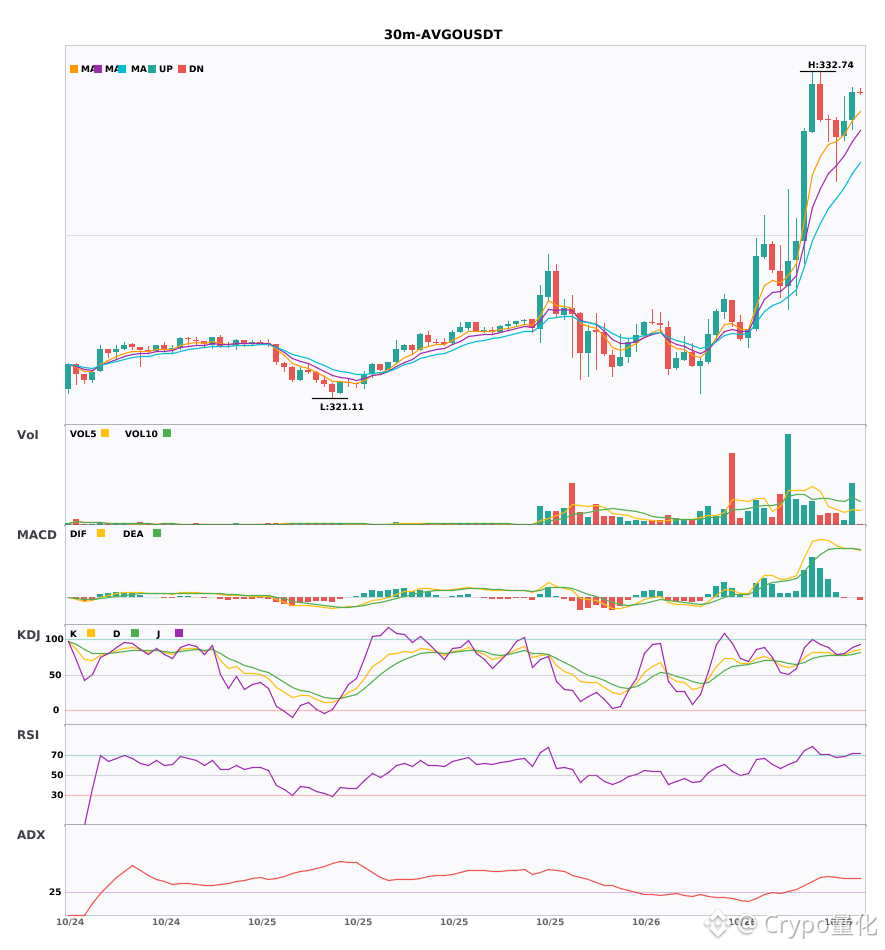
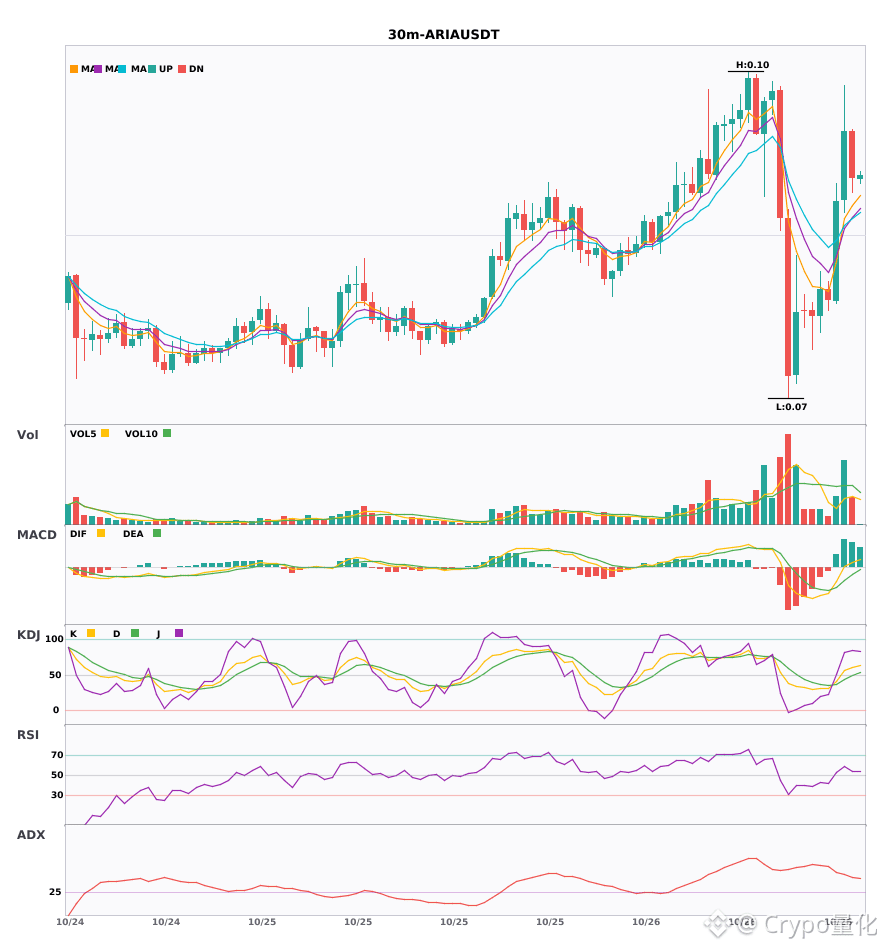
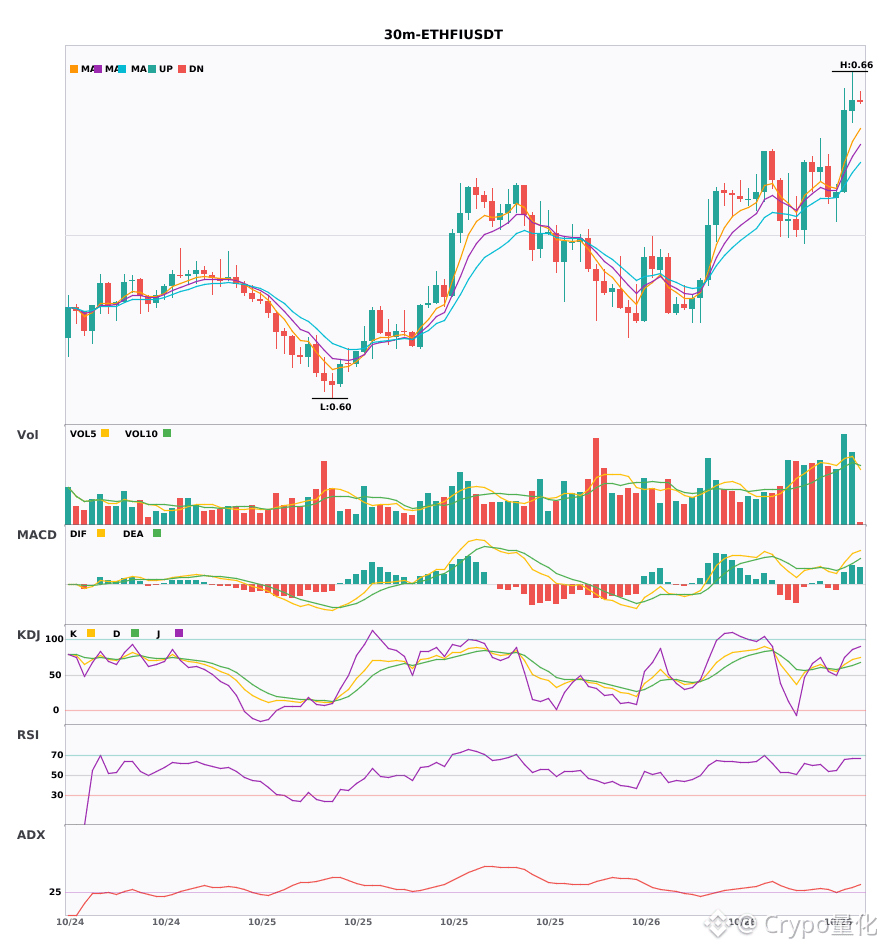
Three bullish signals on the 30-minute timeframe appeared simultaneously: $AVGO / $ARIA / $ETHFI🔥
════════════════════
🔴 $AVGO 30-minute bullish signal
⚠️ Technical analysis: ADX (42): clear trend | MACD bullish crossover above zero, bullish momentum emerging | EMA5 > EMA8 > EMA13: bullish alignment | KDJ showing strength, bulls in control (K: 82.6, D: 79.4) | Volume increased (1.5x)
════════════════════
🔴 $ARIA 30-minute bullish signal
⚠️ Technical analysis: ADX (43): clear trend | MACD bullish, trend strong, momentum weakening | EMA5 > EMA8 > EMA13: bullish alignment | Volume increased (1.6x)
════════════════════
🔴 $ETHFI 30-minute bullish signal
⚠️ Technical analysis: ADX (28): trend forming, potential entry | MACD bullish crossover above zero, bullish momentum emerging | EMA5 > EMA8 > EMA13: bullish alignment | KDJ bullish crossover, short-term outlook bullish (K: 65.1, D: 60.2) | Volume increased (1.5x)
════════════════════
🔔 Follow for first-hand market alerts 🔔
#技术分析 #AVGO #ARIA #ETHFI
📌 When trading, pay attention to whether the candlestick pattern confirms the setup
Three bullish signals on the 30-minute timeframe appeared simultaneously: $AVGO / $ARIA / $ETHFI 🔥
════════════════════
🔴 $AVGO 30-minute bullish signal
⚠️ Technical analysis: ADX (42): clear trend | MACD bullish crossover above zero, bullish momentum emerging | EMA5 > EMA8 > EMA13: bullish alignment | KDJ showing strength, bulls in control (K: 82.6, D: 79.4) | Volume increased (1.5x)
════════════════════
🔴 $ARIA 30-minute bullish signal
⚠️ Technical analysis: ADX (43): clear trend | MACD bullish, trend strong, momentum weakening | EMA5 > EMA8 > EMA13: bullish alignment | Volume increased (1.6x)
════════════════════
🔴 $ETHFI 30-minute bullish signal
⚠️ Technical analysis: ADX (28): trend forming, potential entry | MACD bullish crossover above zero, bullish momentum emerging | EMA5 > EMA8 > EMA13: bullish alignment | KDJ bullish crossover, short-term outlook bullish (K: 65.1, D: 60.2) | Volume increased (1.5x)
════════════════════
🔔 Follow for first-hand market alerts 🔔
#技术分析 #AVGO #ARIA #ETHFI
📌 When trading, pay attention to whether the candlestick pattern confirms the setup
════════════════════
🔴 $AVGO 30-minute bullish signal
⚠️ Technical analysis: ADX (42): clear trend | MACD bullish crossover above zero, bullish momentum emerging | EMA5 > EMA8 > EMA13: bullish alignment | KDJ showing strength, bulls in control (K: 82.6, D: 79.4) | Volume increased (1.5x)
════════════════════
🔴 $ARIA 30-minute bullish signal
⚠️ Technical analysis: ADX (43): clear trend | MACD bullish, trend strong, momentum weakening | EMA5 > EMA8 > EMA13: bullish alignment | Volume increased (1.6x)
════════════════════
🔴 $ETHFI 30-minute bullish signal
⚠️ Technical analysis: ADX (28): trend forming, potential entry | MACD bullish crossover above zero, bullish momentum emerging | EMA5 > EMA8 > EMA13: bullish alignment | KDJ bullish crossover, short-term outlook bullish (K: 65.1, D: 60.2) | Volume increased (1.5x)
════════════════════
🔔 Follow for first-hand market alerts 🔔
#技术分析 #AVGO #ARIA #ETHFI
📌 When trading, pay attention to whether the candlestick pattern confirms the setup
21
Log in to explore more content
Join global crypto users on Binance Square
⚡️ Get latest and useful information about crypto.
💬 Trusted by the world’s largest crypto exchange.
👍 Discover real insights from verified creators.
Email / Phone number
Trending Topics
1
#FOMCWatch
8.9M views
26,842 Discussing
2
#EthereumDropsBelow$2300
3,949 views
94 Discussing
3
#BitcoinSlipsBelow$80KAgain
11,561 views
66 Discussing
4
#ThailandLaunchesWORPTStablecoinToQRPaymentApp
18,985 views
365 Discussing
5
#StrategySkipsBitcoinPurchasesSpends$205MOnSTRCBuybacks
5,487 views
81 Discussing
6
#BitmineAdds10452ETH
57,229 views
769 Discussing
7
#SouthKoreaConsidersEducationTaxOnCryptoExchanges
31,709 views
583 Discussing
8
#OCCUrgesCommunityBanksToEnterStablecoinPayments
24,895 views
415 Discussing
9
#RippleWinsFullApprovalAsNationalTrustBank
37,902 views
418 Discussing
10
#AkashSelectsSolanaAsMigrationTarget
14,232 views
203 Discussing