

#etfs.
etfs.
248,803 views
411 Discussing
Hot
Latest





Binance News
·
--
Wall Street Capital Moves From HYPE ETF to Spot Ethereum ETFs
Wall Street capital appears to be shifting from the HYPE ETF into spot Ethereum ETFs, according to an analysis by BeInCrypto. According to NS3.AI, spot Ethereum ETFs drew $84 million, $105 million and $103.9 million over the past three weeks, while HYPE ETF weekly trading volume fell to $62.7 million, its lowest level since its May launch.




















Binance News
·
--
Bitcoin News Today: BlackRock's Bitcoin Income ETF Could Launch June 18 — Form 8-A Filing Signals Imminent Debut
BlackRock has taken what is typically the final procedural step before an ETF goes live, filing a Form 8-A share registration document for its iShares Bitcoin Premium Income ETF with Nasdaq on Thursday. The filing has prompted Bloomberg ETF analyst Eric Balchunas to predict a specific launch date: Thursday, June 18.
What the Form 8-A signals
"The filing typically means launch in one week," Balchunas wrote on X, noting his bet that the fund — ticker BITA — begins trading next Thursday. Balchunas had said a day earlier that he expected the fund to debut "very soon," framing the timeline as part of a race against a competing Goldman Sachs covered-call Bitcoin product due to launch around July 1. BlackRock's filing puts it roughly two weeks ahead of Goldman in what is becoming a competitive sprint among major asset managers to capture the income-focused Bitcoin ETF category first.
Earlier filings indicate the fund has already been seeded — it is actively buying Bitcoin and IBIT shares and writing call options against those holdings. With the 8-A now filed, the remaining step is for the registration to become effective, which is largely a formality once this stage is reached.
How the fund works: covered calls on IBIT
BITA will generate income by selling call options on BlackRock's own iShares Bitcoin Trust — IBIT, the largest spot Bitcoin ETF with $49 billion in net assets. Each month, the fund will write options on a portion of its holdings and collect the premiums generated as income distributed to shareholders.
The structure represents a classic covered-call income strategy applied to Bitcoin exposure for the first time at this scale by the world's largest asset manager. The trade-off is straightforward and well understood in traditional covered-call products: selling call options caps the fund's upside if Bitcoin rallies sharply, since shares may be called away or the fund forgoes gains above the strike price in exchange for the steady premium income.
Pricing: undercutting the competition
BITA's planned 0.65% fee undercuts the two largest existing covered-call Bitcoin funds, which charge 0.95% and 0.99% respectively. A meaningful fee advantage from the largest asset manager in the world — entering a category that already has established competitors — signals BlackRock's intent to capture significant market share quickly rather than simply participate in the category.
Why this matters for Bitcoin and crypto markets
The launch represents BlackRock's continued expansion of Bitcoin exposure into an income-generating product for mainstream investors — building directly on the spot exposure that IBIT already provides. For income-oriented investors, particularly in the current environment where Treasury yields above 4.5% have made yield generation a competitive priority across all asset classes, a covered-call Bitcoin product offers a structurally different value proposition than pure spot exposure: income now in exchange for capped upside later.
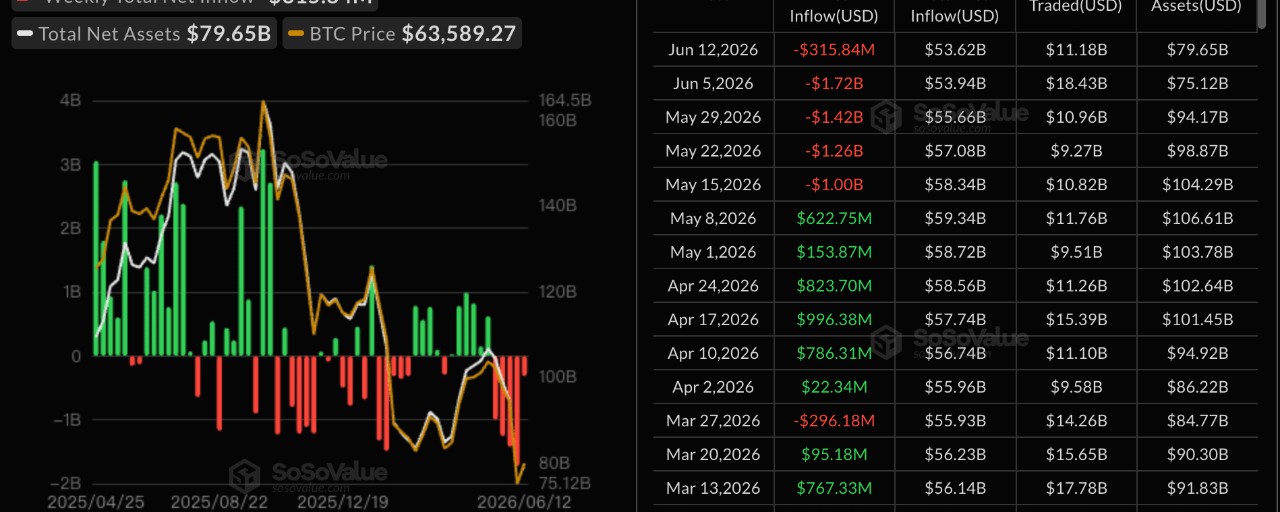
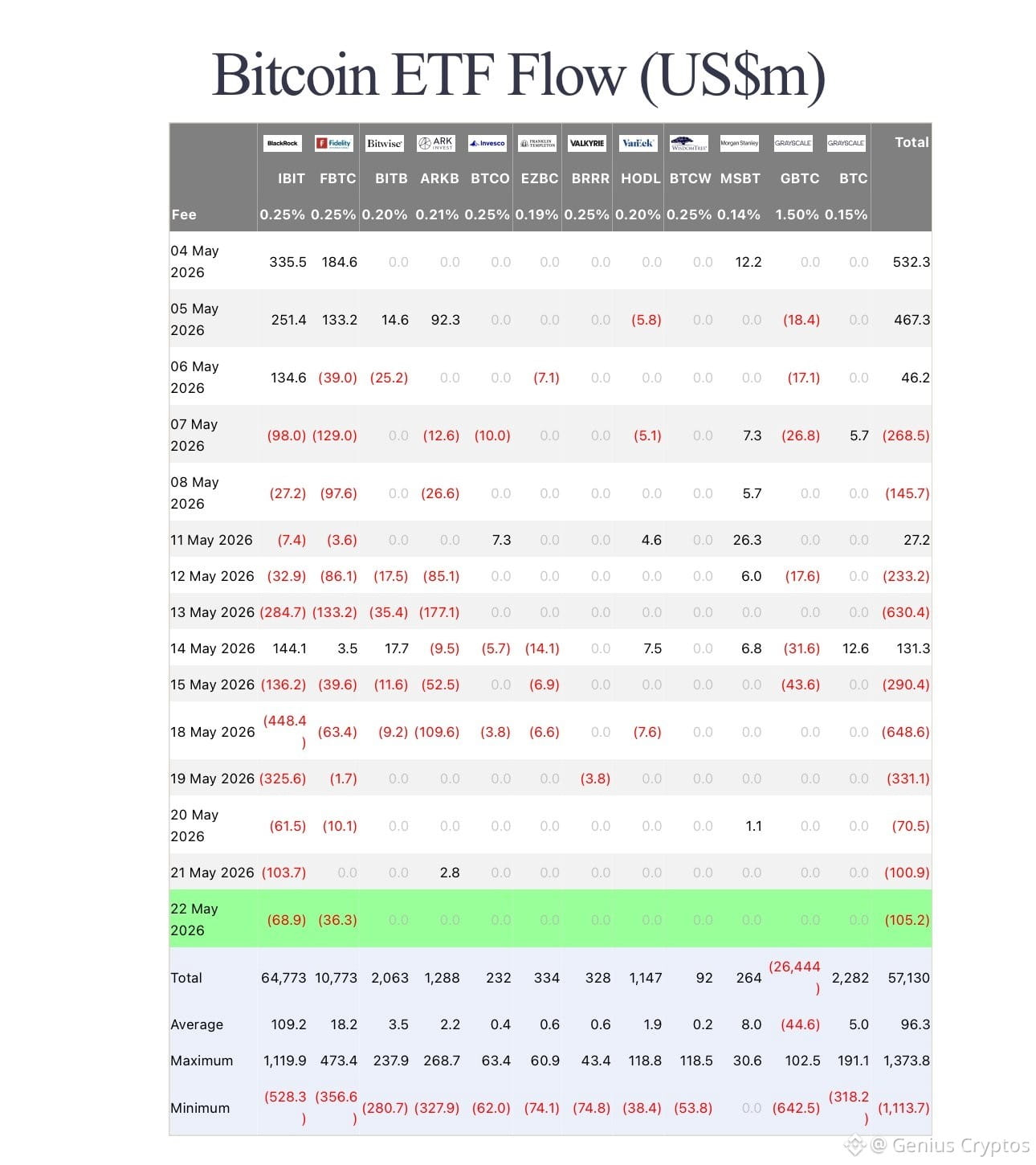
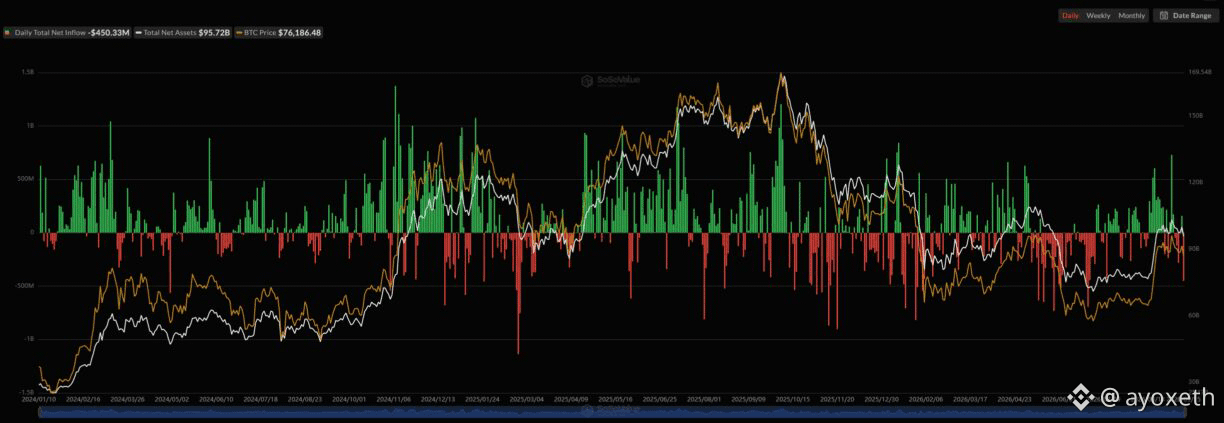
The timing is notable given the broader context. IBIT itself has been working through a record outflow streak, with $2.04 billion in cumulative redemptions over the recent 9-to-13-day outflow periods. A new income-generating product built on top of IBIT could attract a different investor base — one seeking yield rather than pure price appreciation — potentially providing a new and distinct source of demand for Bitcoin exposure that doesn't directly compete with the existing IBIT investor base for the same capital.
With Bitcoin holding steady near $63,000 and the broader market searching for signs that institutional demand is stabilizing, a successful BITA launch — particularly if it attracts meaningful inflows in its first days — could serve as a small but symbolically important data point that BlackRock continues to see durable demand for Bitcoin-linked products across multiple structures, even as the flagship spot product navigates its most challenging flow environment since launch.
If Balchunas's June 18 prediction holds, BITA's debut would land just one day after the June 17 FOMC meeting — meaning the fund could launch into a market that has just received its first clear signal from the Warsh-led Fed about the rate path for the remainder of 2026, adding an interesting layer of timing to what is already a closely watched product launch.
What the Form 8-A signals
"The filing typically means launch in one week," Balchunas wrote on X, noting his bet that the fund — ticker BITA — begins trading next Thursday. Balchunas had said a day earlier that he expected the fund to debut "very soon," framing the timeline as part of a race against a competing Goldman Sachs covered-call Bitcoin product due to launch around July 1. BlackRock's filing puts it roughly two weeks ahead of Goldman in what is becoming a competitive sprint among major asset managers to capture the income-focused Bitcoin ETF category first.
Earlier filings indicate the fund has already been seeded — it is actively buying Bitcoin and IBIT shares and writing call options against those holdings. With the 8-A now filed, the remaining step is for the registration to become effective, which is largely a formality once this stage is reached.
How the fund works: covered calls on IBIT
BITA will generate income by selling call options on BlackRock's own iShares Bitcoin Trust — IBIT, the largest spot Bitcoin ETF with $49 billion in net assets. Each month, the fund will write options on a portion of its holdings and collect the premiums generated as income distributed to shareholders.
The structure represents a classic covered-call income strategy applied to Bitcoin exposure for the first time at this scale by the world's largest asset manager. The trade-off is straightforward and well understood in traditional covered-call products: selling call options caps the fund's upside if Bitcoin rallies sharply, since shares may be called away or the fund forgoes gains above the strike price in exchange for the steady premium income.
Pricing: undercutting the competition
BITA's planned 0.65% fee undercuts the two largest existing covered-call Bitcoin funds, which charge 0.95% and 0.99% respectively. A meaningful fee advantage from the largest asset manager in the world — entering a category that already has established competitors — signals BlackRock's intent to capture significant market share quickly rather than simply participate in the category.
Why this matters for Bitcoin and crypto markets
The launch represents BlackRock's continued expansion of Bitcoin exposure into an income-generating product for mainstream investors — building directly on the spot exposure that IBIT already provides. For income-oriented investors, particularly in the current environment where Treasury yields above 4.5% have made yield generation a competitive priority across all asset classes, a covered-call Bitcoin product offers a structurally different value proposition than pure spot exposure: income now in exchange for capped upside later.
The timing is notable given the broader context. IBIT itself has been working through a record outflow streak, with $2.04 billion in cumulative redemptions over the recent 9-to-13-day outflow periods. A new income-generating product built on top of IBIT could attract a different investor base — one seeking yield rather than pure price appreciation — potentially providing a new and distinct source of demand for Bitcoin exposure that doesn't directly compete with the existing IBIT investor base for the same capital.
With Bitcoin holding steady near $63,000 and the broader market searching for signs that institutional demand is stabilizing, a successful BITA launch — particularly if it attracts meaningful inflows in its first days — could serve as a small but symbolically important data point that BlackRock continues to see durable demand for Bitcoin-linked products across multiple structures, even as the flagship spot product navigates its most challenging flow environment since launch.
If Balchunas's June 18 prediction holds, BITA's debut would land just one day after the June 17 FOMC meeting — meaning the fund could launch into a market that has just received its first clear signal from the Warsh-led Fed about the rate path for the remainder of 2026, adding an interesting layer of timing to what is already a closely watched product launch.




Log in to explore more content