
#dolarbcv
dolarbcv
563 views
57 Discussing
Hot
Latest

·
--
Article
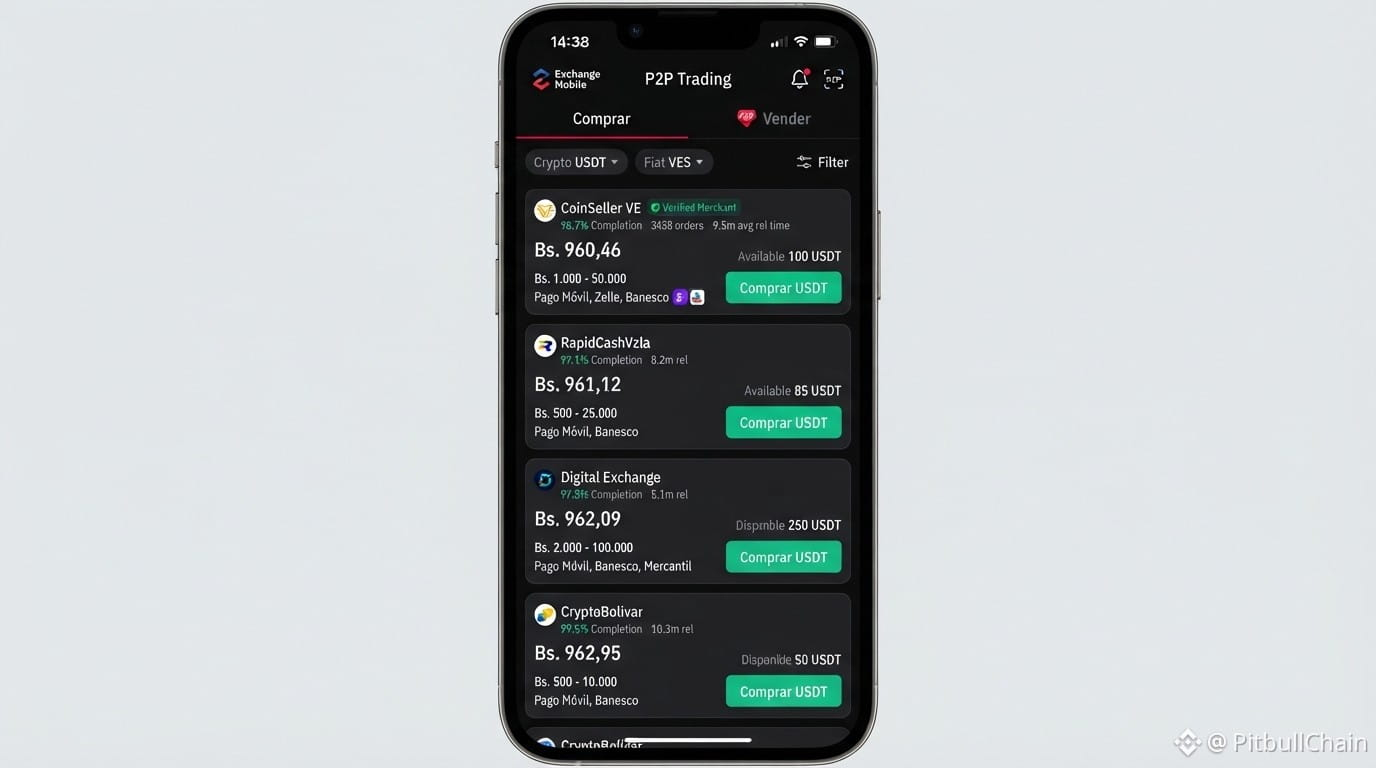
Exchange rate gap in Venezuela: why does P2P exceed the BCV by more than 18%?The gap between the official BCV dollar rate and the USDT P2P rate reaches 18.7%. While the BCV marks 813.74 Bs/USD, buying USDT in the P2P market implies paying, on average, 965.88 Bs per unit. This difference is not just a number: it reflects supply-and-demand dynamics, liquidity, and expectations in a dual market. With live data from the PitbullChain Radar, we break down what this gap means and how to navigate it with caution. X-ray of the gap: BCV vs P2P in numbers According to the data captured on September 6, 2026 at 18:00 UTC, the official rate published by the BCV is 813.7361 Bs/USD. In parallel, the USDT P2P market on platforms such as Binance, other platforms and other platforms records an average buying price of 965.8774 Bs/USDT and a selling price of 935.9196 Bs. This means a premium of 18.70% versus the BCV for those acquiring USDT. But it is also key to observe the spread between buy and sell within the P2P market itself: almost 30 Bs (exactly 29.96 Bs), which is equivalent to 3.20%. It is a high spread, indicating a considerable cost when entering and exiting the market. Recent evolution: what happened since August 28? The official rate has had a slow but steady movement. On August 28, the BCV stood at 791.66 Bs/USD (according to consulted sources). Nine days later, it has risen to 813.74 Bs, which implies an increase of 2.79% over that period. This gradual adjustment is typical of the official exchange rate, which seeks to maintain a degree of stability. In contrast, the USDT P2P market has remained significantly above the official rate. Although we do not have the exact P2P history in this capture, the persistent premium over the BCV suggests that the parallel market continues to express a different price discovery, influenced by local supply and demand, as well as the convenience of crypto assets in a context of restrictions on access to foreign currency. Why does P2P quote well above the BCV? Several factors explain this difference. In a dual-exchange system, the official rate is administered and not freely convertible. Access to dollars at the BCV price is limited to certain operations and certain actors. P2P, by contrast, operates as a free market where participants agree on prices according to supply and demand. This includes legitimate uses such as international payments, savings in stablecoins, or remittances, which creates upward pressure on the price of USDT. In addition, the P2P market in Venezuela has become a benchmark for many because it allows access to a currency with higher perceived value. Differences in liquidity, banking restrictions, and transaction times also generate premiums. In this environment, it is not surprising that P2P exceeds the official rate by double digits. P2P spread: the hidden cost of operating The radar shows a spread of 3.20% between buying and selling USDT. This means that if you buy USDT at 965.88 Bs and sell it immediately, you would receive 935.92 Bs; you would lose 30 Bs per unit. This spread is an additional cost that must be calculated carefully, especially in large-volume operations. The PitbullChain traffic light, in yellow, reinforces caution: the market has a score of 71/100, with a warning about the spread, although there is sufficient liquidity in several banks. The recommendation is to compare offers across exchanges and verify the bank, reputation, and limits before operating. PitbullChain traffic light: yellow, moderate caution The traffic light is in a “moderate caution” state. The metrics show: Spread: score 20 (high). Premium vs BCV: 75 (high). Liquidity: 95 (sufficient in several banks). Depth: 45 (moderate). Banking availability: 95. In practice, the yellow signal invites you to pause and verify: are you paying too much for USDT? Are you selling at a fair price? The radar order book shows buy interest at 963.50 Bs and sell offers from 917.32 Bs, which reveals the real market range. Tools such as the bank comparator and the P2P calculator can help you choose the best option according to your profile. How to navigate the difference in practice If you need USDT to send money or as a savings mechanism, the P2P rate is the reference that applies to you. At 965.88 Bs per unit, the cost in bolivars is higher than the official rate, but it is the price that balances the available supply and demand. If, on the other hand, you have USDT and want to convert them to bolivars, P2P offers you 935.92 Bs per unit, a value far above the official one (813.74 Bs). In any operation, comparing prices is essential. Exchanges such as Binance, other platforms and other platforms show variations, and some banks such as Banesco, Banco de Venezuela and Pago Móvil concentrate more offers. The radar aggregates 253 active offers and shows an interesting market depth, with offers from 917.32 Bs to 963.50 Bs. This is not about recommending buying or selling, but about understanding which reference applies in each case and what costs are involved. The 18.7% gap may widen or narrow depending on economic news, exchange measures, and demand for foreign currency. Stay informed with up-to-date data, and always verify the spread and fees before executing. Sources: [1] BCV Exchange Rate September 7, 2026 – Finanzas Digital. [4] BCV exchange rate Aug 28 – QBNOTICIAS. Live data: PitbullChain Radar, September 6, 2026.
Exchange rate gap in Venezuela: why does P2P exceed the BCV by more than 18%?
The gap between the official BCV dollar rate and the USDT P2P rate reaches 18.7%. While the BCV marks 813.74 Bs/USD, buying USDT in the P2P market implies paying, on average, 965.88 Bs per unit. This difference is not just a number: it reflects supply-and-demand dynamics, liquidity, and expectations in a dual market. With live data from the PitbullChain Radar, we break down what this gap means and how to navigate it with caution. X-ray of the gap: BCV vs P2P in numbers According to the data captured on September 6, 2026 at 18:00 UTC, the official rate published by the BCV is 813.7361 Bs/USD. In parallel, the USDT P2P market on platforms such as Binance, other platforms and other platforms records an average buying price of 965.8774 Bs/USDT and a selling price of 935.9196 Bs. This means a premium of 18.70% versus the BCV for those acquiring USDT. But it is also key to observe the spread between buy and sell within the P2P market itself: almost 30 Bs (exactly 29.96 Bs), which is equivalent to 3.20%. It is a high spread, indicating a considerable cost when entering and exiting the market. Recent evolution: what happened since August 28? The official rate has had a slow but steady movement. On August 28, the BCV stood at 791.66 Bs/USD (according to consulted sources). Nine days later, it has risen to 813.74 Bs, which implies an increase of 2.79% over that period. This gradual adjustment is typical of the official exchange rate, which seeks to maintain a degree of stability. In contrast, the USDT P2P market has remained significantly above the official rate. Although we do not have the exact P2P history in this capture, the persistent premium over the BCV suggests that the parallel market continues to express a different price discovery, influenced by local supply and demand, as well as the convenience of crypto assets in a context of restrictions on access to foreign currency. Why does P2P quote well above the BCV? Several factors explain this difference. In a dual-exchange system, the official rate is administered and not freely convertible. Access to dollars at the BCV price is limited to certain operations and certain actors. P2P, by contrast, operates as a free market where participants agree on prices according to supply and demand. This includes legitimate uses such as international payments, savings in stablecoins, or remittances, which creates upward pressure on the price of USDT. In addition, the P2P market in Venezuela has become a benchmark for many because it allows access to a currency with higher perceived value. Differences in liquidity, banking restrictions, and transaction times also generate premiums. In this environment, it is not surprising that P2P exceeds the official rate by double digits. P2P spread: the hidden cost of operating The radar shows a spread of 3.20% between buying and selling USDT. This means that if you buy USDT at 965.88 Bs and sell it immediately, you would receive 935.92 Bs; you would lose 30 Bs per unit. This spread is an additional cost that must be calculated carefully, especially in large-volume operations. The PitbullChain traffic light, in yellow, reinforces caution: the market has a score of 71/100, with a warning about the spread, although there is sufficient liquidity in several banks. The recommendation is to compare offers across exchanges and verify the bank, reputation, and limits before operating. PitbullChain traffic light: yellow, moderate caution The traffic light is in a “moderate caution” state. The metrics show: Spread: score 20 (high). Premium vs BCV: 75 (high). Liquidity: 95 (sufficient in several banks). Depth: 45 (moderate). Banking availability: 95. In practice, the yellow signal invites you to pause and verify: are you paying too much for USDT? Are you selling at a fair price? The radar order book shows buy interest at 963.50 Bs and sell offers from 917.32 Bs, which reveals the real market range. Tools such as the bank comparator and the P2P calculator can help you choose the best option according to your profile. How to navigate the difference in practice If you need USDT to send money or as a savings mechanism, the P2P rate is the reference that applies to you. At 965.88 Bs per unit, the cost in bolivars is higher than the official rate, but it is the price that balances the available supply and demand. If, on the other hand, you have USDT and want to convert them to bolivars, P2P offers you 935.92 Bs per unit, a value far above the official one (813.74 Bs). In any operation, comparing prices is essential. Exchanges such as Binance, other platforms and other platforms show variations, and some banks such as Banesco, Banco de Venezuela and Pago Móvil concentrate more offers. The radar aggregates 253 active offers and shows an interesting market depth, with offers from 917.32 Bs to 963.50 Bs. This is not about recommending buying or selling, but about understanding which reference applies in each case and what costs are involved. The 18.7% gap may widen or narrow depending on economic news, exchange measures, and demand for foreign currency. Stay informed with up-to-date data, and always verify the spread and fees before executing. Sources: [1] BCV Exchange Rate September 7, 2026 – Finanzas Digital. [4] BCV exchange rate Aug 28 – QBNOTICIAS. Live data: PitbullChain Radar, September 6, 2026.
3
·
--
Did you notice how the premium settled against the official rate this week?
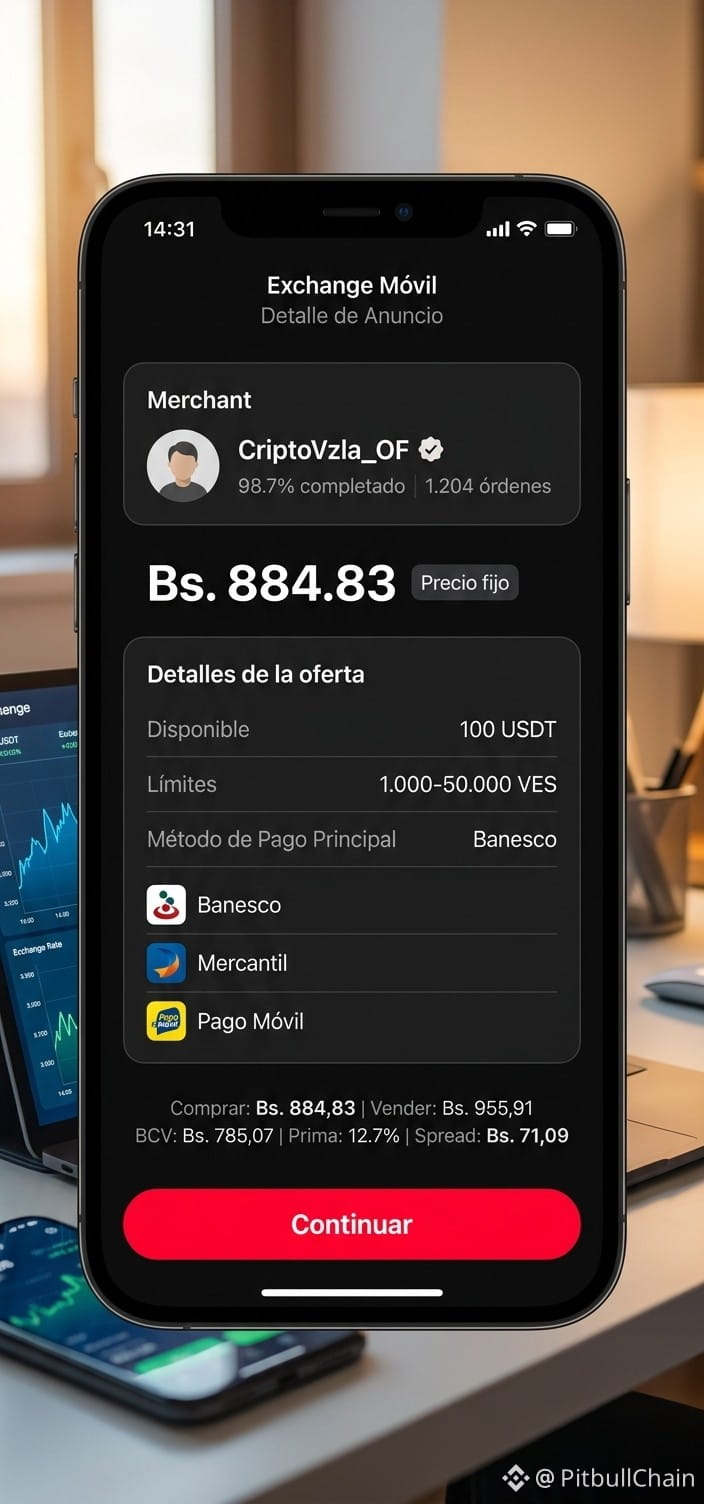
With the BCV rate at Bs. 785.07, the P2P premium is currently at 12.71%, confirming a notable compression in the exchange-rate spread. On Binance, we see USDT moving between Bs. 884.83 for buying and Bs. 955.91 for selling, maintaining a spread of Bs. 71.09 (8.03%) with more than 200 active traders.
The market shows steady liquidity, but with this margin it’s key to review orders carefully before trading so you don’t take on unnecessary costs due to slippage.
📊 Live rates and analysis at pitbullchain.com
#BinanceP2P #VenezuelaCrypto #DolarBCV #USDT
Did you notice how the premium settled against the official rate this week?
With the BCV rate at Bs. 785.07, the P2P premium is currently at 12.71%, confirming a notable compression in the exchange-rate spread. On Binance, we see USDT moving between Bs. 884.83 for buying and Bs. 955.91 for selling, maintaining a spread of Bs. 71.09 (8.03%) with more than 200 active traders.
The market shows steady liquidity, but with this margin it’s key to review orders carefully before trading so you don’t take on unnecessary costs due to slippage.
📊 Live rates and analysis at pitbullchain.com
#BinanceP2P #VenezuelaCrypto #DolarBCV #USDT
With the BCV rate at Bs. 785.07, the P2P premium is currently at 12.71%, confirming a notable compression in the exchange-rate spread. On Binance, we see USDT moving between Bs. 884.83 for buying and Bs. 955.91 for selling, maintaining a spread of Bs. 71.09 (8.03%) with more than 200 active traders.
The market shows steady liquidity, but with this margin it’s key to review orders carefully before trading so you don’t take on unnecessary costs due to slippage.
📊 Live rates and analysis at pitbullchain.com
#BinanceP2P #VenezuelaCrypto #DolarBCV #USDT
30

·
--
$USDT Based on the behavior of the official rate during July, this is my forecast for 17/07
🟢 731,81 Bs/USD
📈 Estimated variation: +0,60%
Do you think the BCV will maintain this adjustment pace throughout the month?
#BCV #DolarBCV #TasaBCV #MercadoCambiario
$USDT Based on the behavior of the official rate during July, this is my forecast for 17/07
🟢 731,81 Bs/USD
📈 Estimated variation: +0,60%
Do you think the BCV will maintain this adjustment pace throughout the month?
#BCV #DolarBCV #TasaBCV #MercadoCambiario
🟢 731,81 Bs/USD
📈 Estimated variation: +0,60%
Do you think the BCV will maintain this adjustment pace throughout the month?
#BCV #DolarBCV #TasaBCV #MercadoCambiario
1
136
·
--

Article
ExxonMobil negotiates a return to the Orinoco Oil Belt: what about the P2P dollar?📊 A giant knocks on the door again
Executives from ExxonMobil Holdings Corp. moved to Caracas this week to meet with the national executive branch about a possible return to Venezuela. The information, first reported by Bloomberg and echoed by local media, suggests the company wants to secure access to four heavy oil fields: two that it operated in the past in the Orinoco Oil Belt—Petrovictoria and Petromonagas, nationalized in the mid-2000s—and two more located in Block Carabobo.
ExxonMobil negotiates a return to the Orinoco Oil Belt: what about the P2P dollar?
📊 A giant knocks on the door again
Executives from ExxonMobil Holdings Corp. moved to Caracas this week to meet with the national executive branch about a possible return to Venezuela. The information, first reported by Bloomberg and echoed by local media, suggests the company wants to secure access to four heavy oil fields: two that it operated in the past in the Orinoco Oil Belt—Petrovictoria and Petromonagas, nationalized in the mid-2000s—and two more located in Block Carabobo.
Executives from ExxonMobil Holdings Corp. moved to Caracas this week to meet with the national executive branch about a possible return to Venezuela. The information, first reported by Bloomberg and echoed by local media, suggests the company wants to secure access to four heavy oil fields: two that it operated in the past in the Orinoco Oil Belt—Petrovictoria and Petromonagas, nationalized in the mid-2000s—and two more located in Block Carabobo.
25
·
--
Article
BCV rises to Bs. 852.4168 and the P2P USDT premium is anchored at 12.98% Live P2P Radar Capture: 22/9/2026, 12:00:14 a. m.
USDT/VES reference Bs. 963.10
Buy USDT Bs. 963.10
USDT sale Bs. 932.33
BCV Bs. 852.42
Premium vs BCV 12.98%
P2P spread 3.30%
Observed offers 99
Check current data on P2P Radar
The BCV rate was published at Bs. 852.4168 per dollar, an increase of 0.34% compared to the previous day, according to the Finanzas Digital record. On the other side of the counter, the Venezuelan P2P market follows its own logic: USDT is bought for Bs. 963.10 and sold for Bs. 932.33, with a premium of 12.98% versus the official rate and a spread of 3.30%. This analysis cross-references the two benchmarks with the P2P Radar data captured on September 22, 2026 at 04:00 UTC.
BCV rises to Bs. 852.4168 and the P2P USDT premium is anchored at 12.98%
Live P2P Radar Capture: 22/9/2026, 12:00:14 a. m.
USDT/VES reference Bs. 963.10
Buy USDT Bs. 963.10
USDT sale Bs. 932.33
BCV Bs. 852.42
Premium vs BCV 12.98%
P2P spread 3.30%
Observed offers 99
Check current data on P2P Radar
The BCV rate was published at Bs. 852.4168 per dollar, an increase of 0.34% compared to the previous day, according to the Finanzas Digital record. On the other side of the counter, the Venezuelan P2P market follows its own logic: USDT is bought for Bs. 963.10 and sold for Bs. 932.33, with a premium of 12.98% versus the official rate and a spread of 3.30%. This analysis cross-references the two benchmarks with the P2P Radar data captured on September 22, 2026 at 04:00 UTC.
USDT/VES reference Bs. 963.10
Buy USDT Bs. 963.10
USDT sale Bs. 932.33
BCV Bs. 852.42
Premium vs BCV 12.98%
P2P spread 3.30%
Observed offers 99
Check current data on P2P Radar
The BCV rate was published at Bs. 852.4168 per dollar, an increase of 0.34% compared to the previous day, according to the Finanzas Digital record. On the other side of the counter, the Venezuelan P2P market follows its own logic: USDT is bought for Bs. 963.10 and sold for Bs. 932.33, with a premium of 12.98% versus the official rate and a spread of 3.30%. This analysis cross-references the two benchmarks with the P2P Radar data captured on September 22, 2026 at 04:00 UTC.
7
·
--
Article
See translation
La Guaira: alquileres por las nubes y el USDT como nuevo aval📊 Un mercado inmobiliario que se partió en dos
Después del doble sismo que sacudió la costa central, el mercado de inmuebles guaireño entró en una dinámica que nadie tenía en el mapa. María Teresa Brito, presidenta de la Cámara Inmobiliaria de La Guaira, advirtió que los precios de compra-venta y de alquiler subieron de manera desmedida, mientras la oferta disponible se contrajo hasta un 60%. La causa no es únicamente la destrucción de viviendas: es también la llegada masiva de créditos y subsidios estatales para reubicar a las familias damnificadas. Cuando entra dinero nuevo a un mercado con poca oferta, el resultado es matemático: el que vende pone el precio que le venga en gana.
La vocera gremial lo dijo sin adornos: el subsidio movilizó la búsqueda de propiedades de hasta 100.000 dólares y los precios se dispararon, incluso dentro del propio estado golpeado. Sumó una práctica que calificó de desproporcionada: exigir un 10% de reserva a gente que acaba de perder su vivienda, su comercio y sus fuentes de ingreso. Su llamado fue claro: los propietarios deben adaptarse a la nueva realidad y aceptar como forma de pago el crédito que entregan las instituciones gubernamentales.
📈 El subsidio como motor y como distorsión de precio
Hay un detalle que se pierde entre titulares: quien recibe un crédito habitacional del Estado no recibe dólares en la mano. Recibe un instrumento en bolívares con destino específico y con tiempos administrativos que pueden estirarse semanas o meses. El vendedor, en cambio, quiere preservar valor. Ahí nace la tensión que define hoy cada negociación en La Guaira.
Brito también destacó que el Plan Venezuela Renace ha mostrado celeridad en la entrega de créditos a juntas de condominio para reparar fachadas y trabajos de mampostería en inmuebles con etiqueta amarilla. Eso es una buena noticia estructural, pero agrega otro ingrediente: más dinero circulando en una zona donde la reconstrucción apenas comienza. Más liquidez, menos inventario disponible, precios al alza.
🔎 Lo que esto significa para quien opera con USDT
Aquí es donde la historia inmobiliaria se cruza con el mercado P2P venezolano. El vendedor que acepta crédito institucional termina, tarde o temprano, buscando convertir esos bolívares a una moneda dura. Y en la práctica, esa conversión ocurre en las mesas P2P de USDT, no en una taquilla bancaria.
Eso genera tres efectos concretos que ya se sienten en los chats y en los libros de órdenes:
• Presión sobre la tasa P2P: cada desembolso grande de créditos empuja órdenes de compra de USDT y ensancha el diferencial entre el precio publicado y el precio real de ejecución.
• Ventaja relativa para el ahorrador en stablecoins: quien guardó valor en USDT llega a la mesa con capacidad de negociación; quien guardó en bolívares ve cómo el sobreprecio de los inmuebles se come su poder de compra.
• Dolarización de facto del mercado inmobiliario: aunque el pago formal venga en crédito, el precio se piensa, se negocia y se cierra mentalmente en dólares. El USDT es simplemente el instrumento que hace esa cuenta posible.
💰 Banca digital y el cuello de botella del papeleo
El otro frente es operativo. Reservas, adelantos, abonos parciales y comisiones de intermediación se mueven hoy por transferencia inmediata, billeteras digitales o P2P. La banca venezolana ha mejorado en velocidad, pero sigue topada por límites de monto, horarios y requisitos de origen de fondos. Para una operación de decenas de miles de dólares, eso obliga a fragmentar pagos y a depender de terceros de confianza.
El resultado es un ecosistema híbrido: parte formal por crédito estatal, parte informal por P2P, con el USDT funcionando como capa de liquidación entre ambas. No es un capricho tecnológico, es una respuesta práctica a un sistema que no siempre puede mover montos grandes con agilidad.
🛡️ Cómo moverse sin caer en la trampa del sobreprecio
Nuestra lectura desde PitbullChain es directa: el mercado guaireño está en fase de burbuja empujada por crédito público, y toda burbuja con techo administrativo eventualmente corrige. Si el flujo de desembolsos se retrasa, los precios que hoy parecen firmes se van a sentar. Algunas recomendaciones prácticas para quien esté evaluando comprar, alquilar o simplemente mover sus USDT en la zona:
📖 Lee el artículo completo: https://pitbullchain.com/noticias/la-guaira-alquileres-por-las-nubes-y-el-usdt-como-nuevo-aval-850162
https://public.bnbstatic.com/image/pgc/20260922/7810fa1edd074fb7b4f46f7596516780.jpg
📊 Tasas y análisis en vivo en https://pitbullchain.com
$USDT #LaGuaira #mercadoinmobiliarioVenezuela #USDTVenezuela #P2Pcripto #dolarBCV
La Guaira: alquileres por las nubes y el USDT como nuevo aval
📊 Un mercado inmobiliario que se partió en dos
Después del doble sismo que sacudió la costa central, el mercado de inmuebles guaireño entró en una dinámica que nadie tenía en el mapa. María Teresa Brito, presidenta de la Cámara Inmobiliaria de La Guaira, advirtió que los precios de compra-venta y de alquiler subieron de manera desmedida, mientras la oferta disponible se contrajo hasta un 60%. La causa no es únicamente la destrucción de viviendas: es también la llegada masiva de créditos y subsidios estatales para reubicar a las familias damnificadas. Cuando entra dinero nuevo a un mercado con poca oferta, el resultado es matemático: el que vende pone el precio que le venga en gana.
La vocera gremial lo dijo sin adornos: el subsidio movilizó la búsqueda de propiedades de hasta 100.000 dólares y los precios se dispararon, incluso dentro del propio estado golpeado. Sumó una práctica que calificó de desproporcionada: exigir un 10% de reserva a gente que acaba de perder su vivienda, su comercio y sus fuentes de ingreso. Su llamado fue claro: los propietarios deben adaptarse a la nueva realidad y aceptar como forma de pago el crédito que entregan las instituciones gubernamentales.
📈 El subsidio como motor y como distorsión de precio
Hay un detalle que se pierde entre titulares: quien recibe un crédito habitacional del Estado no recibe dólares en la mano. Recibe un instrumento en bolívares con destino específico y con tiempos administrativos que pueden estirarse semanas o meses. El vendedor, en cambio, quiere preservar valor. Ahí nace la tensión que define hoy cada negociación en La Guaira.
Brito también destacó que el Plan Venezuela Renace ha mostrado celeridad en la entrega de créditos a juntas de condominio para reparar fachadas y trabajos de mampostería en inmuebles con etiqueta amarilla. Eso es una buena noticia estructural, pero agrega otro ingrediente: más dinero circulando en una zona donde la reconstrucción apenas comienza. Más liquidez, menos inventario disponible, precios al alza.
🔎 Lo que esto significa para quien opera con USDT
Aquí es donde la historia inmobiliaria se cruza con el mercado P2P venezolano. El vendedor que acepta crédito institucional termina, tarde o temprano, buscando convertir esos bolívares a una moneda dura. Y en la práctica, esa conversión ocurre en las mesas P2P de USDT, no en una taquilla bancaria.
Eso genera tres efectos concretos que ya se sienten en los chats y en los libros de órdenes:
• Presión sobre la tasa P2P: cada desembolso grande de créditos empuja órdenes de compra de USDT y ensancha el diferencial entre el precio publicado y el precio real de ejecución.
• Ventaja relativa para el ahorrador en stablecoins: quien guardó valor en USDT llega a la mesa con capacidad de negociación; quien guardó en bolívares ve cómo el sobreprecio de los inmuebles se come su poder de compra.
• Dolarización de facto del mercado inmobiliario: aunque el pago formal venga en crédito, el precio se piensa, se negocia y se cierra mentalmente en dólares. El USDT es simplemente el instrumento que hace esa cuenta posible.
💰 Banca digital y el cuello de botella del papeleo
El otro frente es operativo. Reservas, adelantos, abonos parciales y comisiones de intermediación se mueven hoy por transferencia inmediata, billeteras digitales o P2P. La banca venezolana ha mejorado en velocidad, pero sigue topada por límites de monto, horarios y requisitos de origen de fondos. Para una operación de decenas de miles de dólares, eso obliga a fragmentar pagos y a depender de terceros de confianza.
El resultado es un ecosistema híbrido: parte formal por crédito estatal, parte informal por P2P, con el USDT funcionando como capa de liquidación entre ambas. No es un capricho tecnológico, es una respuesta práctica a un sistema que no siempre puede mover montos grandes con agilidad.
🛡️ Cómo moverse sin caer en la trampa del sobreprecio
Nuestra lectura desde PitbullChain es directa: el mercado guaireño está en fase de burbuja empujada por crédito público, y toda burbuja con techo administrativo eventualmente corrige. Si el flujo de desembolsos se retrasa, los precios que hoy parecen firmes se van a sentar. Algunas recomendaciones prácticas para quien esté evaluando comprar, alquilar o simplemente mover sus USDT en la zona:
📖 Lee el artículo completo: https://pitbullchain.com/noticias/la-guaira-alquileres-por-las-nubes-y-el-usdt-como-nuevo-aval-850162
https://public.bnbstatic.com/image/pgc/20260922/7810fa1edd074fb7b4f46f7596516780.jpg
📊 Tasas y análisis en vivo en https://pitbullchain.com
$USDT #LaGuaira #mercadoinmobiliarioVenezuela #USDTVenezuela #P2Pcripto #dolarBCV
Después del doble sismo que sacudió la costa central, el mercado de inmuebles guaireño entró en una dinámica que nadie tenía en el mapa. María Teresa Brito, presidenta de la Cámara Inmobiliaria de La Guaira, advirtió que los precios de compra-venta y de alquiler subieron de manera desmedida, mientras la oferta disponible se contrajo hasta un 60%. La causa no es únicamente la destrucción de viviendas: es también la llegada masiva de créditos y subsidios estatales para reubicar a las familias damnificadas. Cuando entra dinero nuevo a un mercado con poca oferta, el resultado es matemático: el que vende pone el precio que le venga en gana.
La vocera gremial lo dijo sin adornos: el subsidio movilizó la búsqueda de propiedades de hasta 100.000 dólares y los precios se dispararon, incluso dentro del propio estado golpeado. Sumó una práctica que calificó de desproporcionada: exigir un 10% de reserva a gente que acaba de perder su vivienda, su comercio y sus fuentes de ingreso. Su llamado fue claro: los propietarios deben adaptarse a la nueva realidad y aceptar como forma de pago el crédito que entregan las instituciones gubernamentales.
📈 El subsidio como motor y como distorsión de precio
Hay un detalle que se pierde entre titulares: quien recibe un crédito habitacional del Estado no recibe dólares en la mano. Recibe un instrumento en bolívares con destino específico y con tiempos administrativos que pueden estirarse semanas o meses. El vendedor, en cambio, quiere preservar valor. Ahí nace la tensión que define hoy cada negociación en La Guaira.
Brito también destacó que el Plan Venezuela Renace ha mostrado celeridad en la entrega de créditos a juntas de condominio para reparar fachadas y trabajos de mampostería en inmuebles con etiqueta amarilla. Eso es una buena noticia estructural, pero agrega otro ingrediente: más dinero circulando en una zona donde la reconstrucción apenas comienza. Más liquidez, menos inventario disponible, precios al alza.
🔎 Lo que esto significa para quien opera con USDT
Aquí es donde la historia inmobiliaria se cruza con el mercado P2P venezolano. El vendedor que acepta crédito institucional termina, tarde o temprano, buscando convertir esos bolívares a una moneda dura. Y en la práctica, esa conversión ocurre en las mesas P2P de USDT, no en una taquilla bancaria.
Eso genera tres efectos concretos que ya se sienten en los chats y en los libros de órdenes:
• Presión sobre la tasa P2P: cada desembolso grande de créditos empuja órdenes de compra de USDT y ensancha el diferencial entre el precio publicado y el precio real de ejecución.
• Ventaja relativa para el ahorrador en stablecoins: quien guardó valor en USDT llega a la mesa con capacidad de negociación; quien guardó en bolívares ve cómo el sobreprecio de los inmuebles se come su poder de compra.
• Dolarización de facto del mercado inmobiliario: aunque el pago formal venga en crédito, el precio se piensa, se negocia y se cierra mentalmente en dólares. El USDT es simplemente el instrumento que hace esa cuenta posible.
💰 Banca digital y el cuello de botella del papeleo
El otro frente es operativo. Reservas, adelantos, abonos parciales y comisiones de intermediación se mueven hoy por transferencia inmediata, billeteras digitales o P2P. La banca venezolana ha mejorado en velocidad, pero sigue topada por límites de monto, horarios y requisitos de origen de fondos. Para una operación de decenas de miles de dólares, eso obliga a fragmentar pagos y a depender de terceros de confianza.
El resultado es un ecosistema híbrido: parte formal por crédito estatal, parte informal por P2P, con el USDT funcionando como capa de liquidación entre ambas. No es un capricho tecnológico, es una respuesta práctica a un sistema que no siempre puede mover montos grandes con agilidad.
🛡️ Cómo moverse sin caer en la trampa del sobreprecio
Nuestra lectura desde PitbullChain es directa: el mercado guaireño está en fase de burbuja empujada por crédito público, y toda burbuja con techo administrativo eventualmente corrige. Si el flujo de desembolsos se retrasa, los precios que hoy parecen firmes se van a sentar. Algunas recomendaciones prácticas para quien esté evaluando comprar, alquilar o simplemente mover sus USDT en la zona:
📖 Lee el artículo completo: https://pitbullchain.com/noticias/la-guaira-alquileres-por-las-nubes-y-el-usdt-como-nuevo-aval-850162
https://public.bnbstatic.com/image/pgc/20260922/7810fa1edd074fb7b4f46f7596516780.jpg
📊 Tasas y análisis en vivo en https://pitbullchain.com
$USDT #LaGuaira #mercadoinmobiliarioVenezuela #USDTVenezuela #P2Pcripto #dolarBCV
15
·
--
Article
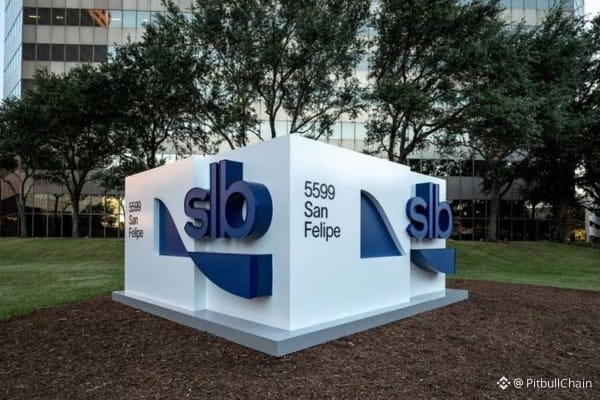
SLB and PDVSA: could this new era of oil data move the dollar and P2P?📊 What does the contract between SLB and PDVSA imply?
The U.S. company SLB signed an agreement with Petróleos de Venezuela (PDVSA) to reorganize and digitize the oil industry’s databases. For more than a decade, Venezuela has not published reliable oil statistics, creating uncertainty among markets and analysts. Now, with SLB’s involvement and the use of artificial intelligence, it is expected to restore the reliability of these data—a key step toward economic transparency.
SLB and PDVSA: could this new era of oil data move the dollar and P2P?
📊 What does the contract between SLB and PDVSA imply?
The U.S. company SLB signed an agreement with Petróleos de Venezuela (PDVSA) to reorganize and digitize the oil industry’s databases. For more than a decade, Venezuela has not published reliable oil statistics, creating uncertainty among markets and analysts. Now, with SLB’s involvement and the use of artificial intelligence, it is expected to restore the reliability of these data—a key step toward economic transparency.
The U.S. company SLB signed an agreement with Petróleos de Venezuela (PDVSA) to reorganize and digitize the oil industry’s databases. For more than a decade, Venezuela has not published reliable oil statistics, creating uncertainty among markets and analysts. Now, with SLB’s involvement and the use of artificial intelligence, it is expected to restore the reliability of these data—a key step toward economic transparency.
9
·
--
Sunday 20-Sep: buy $USDT is at Bs. 958.47 and sell at Bs. 919.40. Spread of Bs. 39.07 (4.25%) with only 231 active offers and a premium of 12.82% versus the BCV (Bs. 849.56).
Sunday with low liquidity: fewer offers = wider spreads. Before you close your trade, check the counterparty’s reputation, available amount, and issuing bank; if anything doesn’t add up, move to the next listing.
📊 Live rates and analysis at https://pitbullchain.com
$USDT #P2P #USDT #Venezuela #BinanceSquare #DolarBCV
Sunday 20-Sep: buy $USDT is at Bs. 958.47 and sell at Bs. 919.40. Spread of Bs. 39.07 (4.25%) with only 231 active offers and a premium of 12.82% versus the BCV (Bs. 849.56).
Sunday with low liquidity: fewer offers = wider spreads. Before you close your trade, check the counterparty’s reputation, available amount, and issuing bank; if anything doesn’t add up, move to the next listing.
📊 Live rates and analysis at https://pitbullchain.com
$USDT #P2P #USDT #Venezuela #BinanceSquare #DolarBCV
Sunday with low liquidity: fewer offers = wider spreads. Before you close your trade, check the counterparty’s reputation, available amount, and issuing bank; if anything doesn’t add up, move to the next listing.
📊 Live rates and analysis at https://pitbullchain.com
$USDT #P2P #USDT #Venezuela #BinanceSquare #DolarBCV
25
·
--
Article
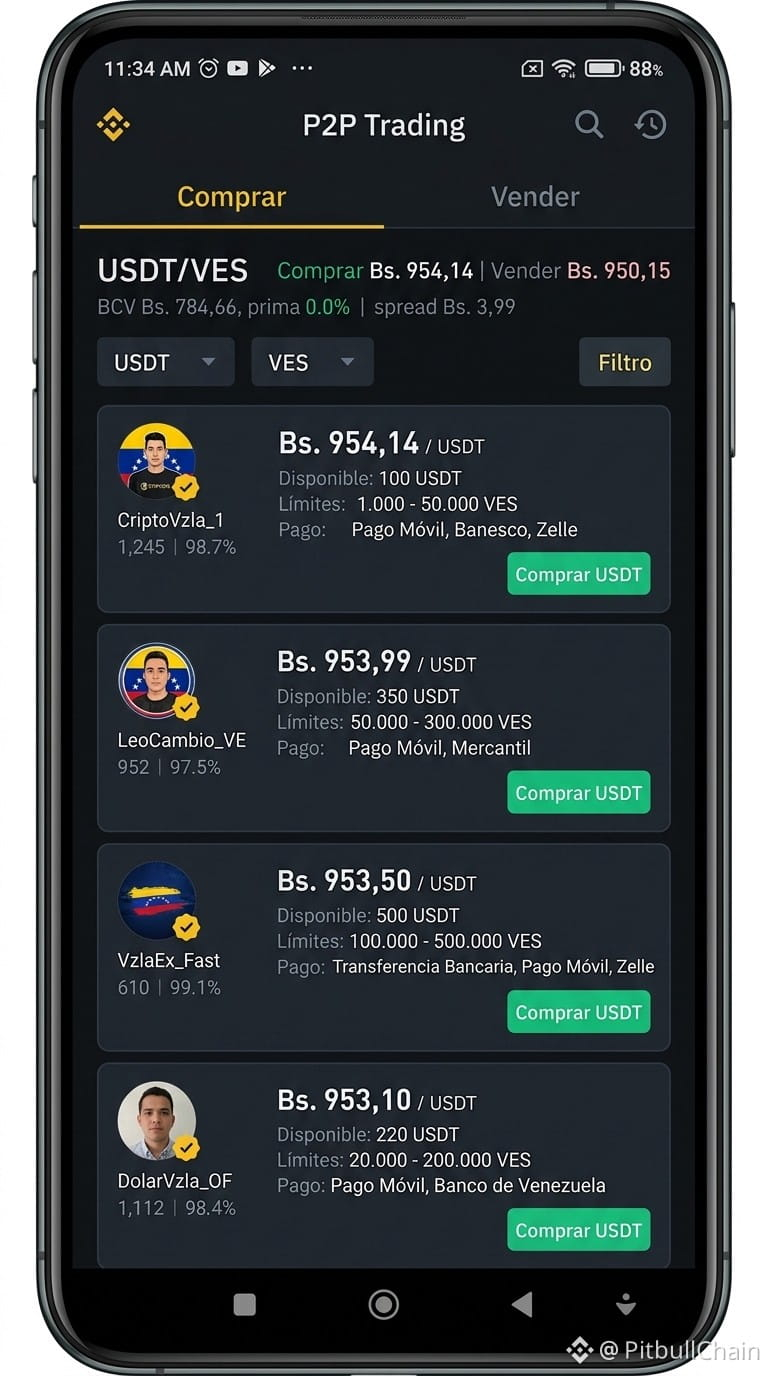
USDT P2P in Venezuela: spread exceeds 4% and the traffic light turns yellow Live P2P Radar Capture: 27/8/2026, 9:30:16 a. m.
USDT/VES reference Bs. 961.77
Buy USDT Bs. 961.77
Sale USDT Bs. 922.47
BCV Bs. 791.32
Premium vs BCV 21.54%
P2P spread 4.26%
Observed offers 253
Verify current data in Radar P2P
The P2P market for USDT against the bolívar (USDT/VES) kicked off the day of August 27, 2026 with a clear signal: the spread is above 4%, which forces users to compare prices before trading. According to PitbullChain’s Radar P2P, the purchase price of USDT is Bs. 961.77, while the selling price is Bs. 922.47, leaving a difference of Bs. 39.29 (4.26%). This spread level is higher than the historical average and lights up the P2P traffic light, which remains yellow.
USDT P2P in Venezuela: spread exceeds 4% and the traffic light turns yellow
Live P2P Radar Capture: 27/8/2026, 9:30:16 a. m.
USDT/VES reference Bs. 961.77
Buy USDT Bs. 961.77
Sale USDT Bs. 922.47
BCV Bs. 791.32
Premium vs BCV 21.54%
P2P spread 4.26%
Observed offers 253
Verify current data in Radar P2P
The P2P market for USDT against the bolívar (USDT/VES) kicked off the day of August 27, 2026 with a clear signal: the spread is above 4%, which forces users to compare prices before trading. According to PitbullChain’s Radar P2P, the purchase price of USDT is Bs. 961.77, while the selling price is Bs. 922.47, leaving a difference of Bs. 39.29 (4.26%). This spread level is higher than the historical average and lights up the P2P traffic light, which remains yellow.
USDT/VES reference Bs. 961.77
Buy USDT Bs. 961.77
Sale USDT Bs. 922.47
BCV Bs. 791.32
Premium vs BCV 21.54%
P2P spread 4.26%
Observed offers 253
Verify current data in Radar P2P
The P2P market for USDT against the bolívar (USDT/VES) kicked off the day of August 27, 2026 with a clear signal: the spread is above 4%, which forces users to compare prices before trading. According to PitbullChain’s Radar P2P, the purchase price of USDT is Bs. 961.77, while the selling price is Bs. 922.47, leaving a difference of Bs. 39.29 (4.26%). This spread level is higher than the historical average and lights up the P2P traffic light, which remains yellow.
·
--

Article
BNC goes into the neighborhood in La Guaira: banking seeks the ground that P2P dominatesThe National Bank of Credit (BNC) brought an end to the Social Week promoted by the World Savings Banks and Retail Financial Services Institute (WSBI, for its acronym in English), a global initiative that this year was promoted under the slogan “Transforming local actions into global impact.” The closing ceremony had a specific setting: the Espíritu Santo parish in Los Corales, in the state of La Guaira, where the institution worked with the local Diocese to deliver school supplies, medical care, CPR workshops, and even a children’s play.
BNC goes into the neighborhood in La Guaira: banking seeks the ground that P2P dominates
The National Bank of Credit (BNC) brought an end to the Social Week promoted by the World Savings Banks and Retail Financial Services Institute (WSBI, for its acronym in English), a global initiative that this year was promoted under the slogan “Transforming local actions into global impact.” The closing ceremony had a specific setting: the Espíritu Santo parish in Los Corales, in the state of La Guaira, where the institution worked with the local Diocese to deliver school supplies, medical care, CPR workshops, and even a children’s play.
12
·
--
Article
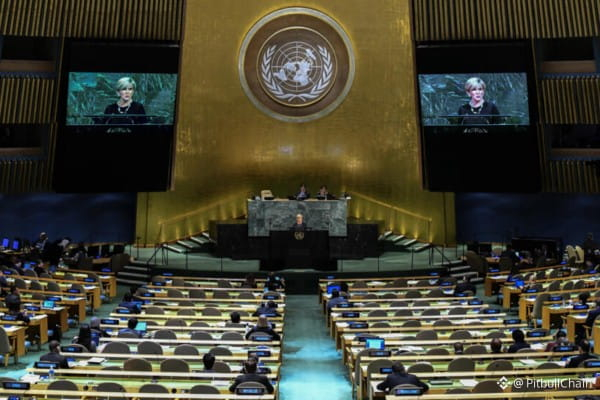
UN, oil and sanctions: what the General Assembly stirs in Venezuela’s P2PThe high-level week of the 81st session of the UN General Assembly gets under way in New York with a menu packed with open conflicts: Iran, Gaza, Ukraine, Cuba and, of course, Venezuela. Under the slogan "restoring trust," heads of state will sit down to discuss peace, cooperation, and the Sustainable Development Goals. But for anyone operating with cryptocurrencies in the country, what really matters isn’t the speeches—it’s what’s going on behind the scenes: oil, visas, sanctions, and the endless standoff with Washington.
UN, oil and sanctions: what the General Assembly stirs in Venezuela’s P2P
The high-level week of the 81st session of the UN General Assembly gets under way in New York with a menu packed with open conflicts: Iran, Gaza, Ukraine, Cuba and, of course, Venezuela. Under the slogan "restoring trust," heads of state will sit down to discuss peace, cooperation, and the Sustainable Development Goals. But for anyone operating with cryptocurrencies in the country, what really matters isn’t the speeches—it’s what’s going on behind the scenes: oil, visas, sanctions, and the endless standoff with Washington.
23
·
--
Article
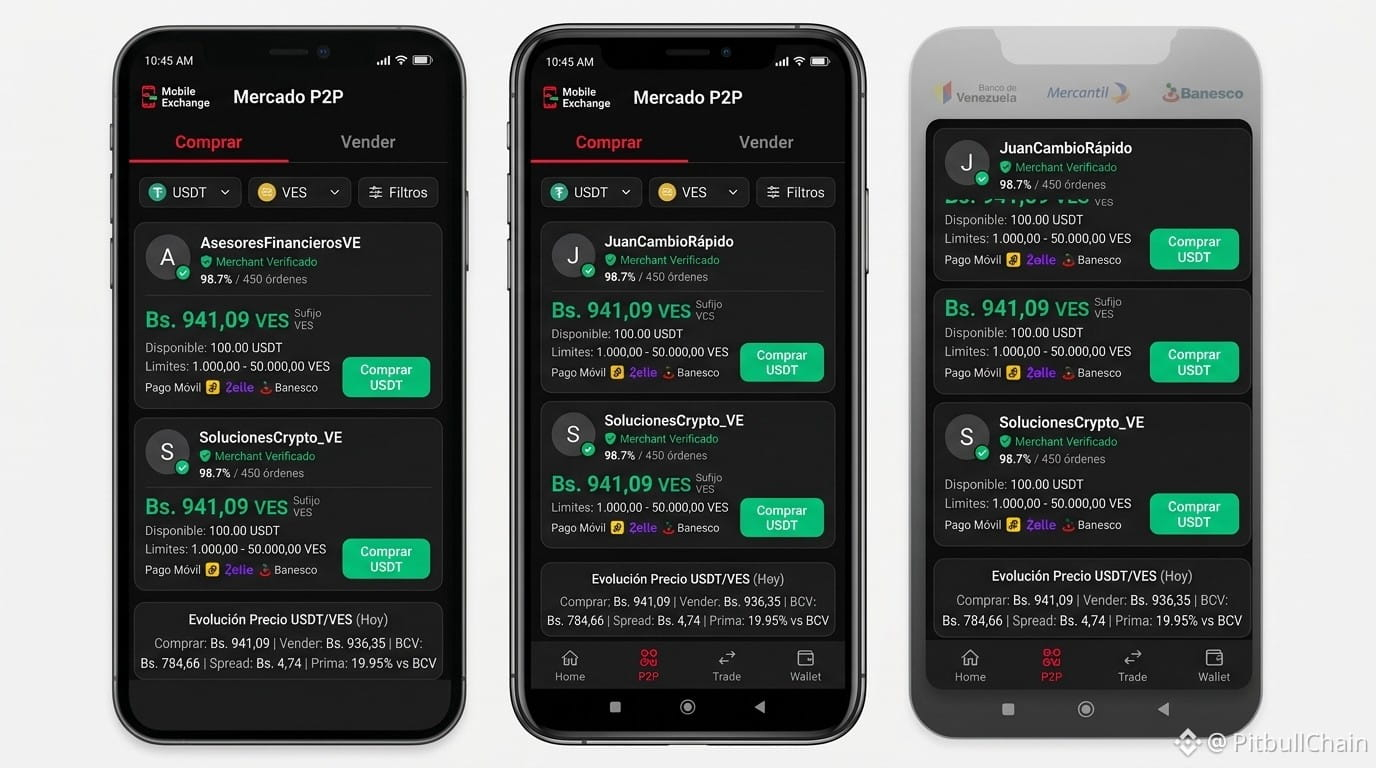
BCV Dollar vs P2P USDT: 19.6% gap and 4.5% spread Live P2P Radar Capture: 28/8/2026, 9:00:07 a. m.
USDT/VES reference Bs. 946.98
Buy USDT Bs. 946.98
Sell USDT Bs. 905.55
BCV Bs. 791.67
Premium vs BCV 19.62%
P2P Spread 4.57%
Observed offers 233
Check current data on P2P Radar
At the close of August 2026, the Venezuelan P2P market shows a historical gap between the official exchange rate and the USDT price. According to PitbullChain's P2P Radar, the USDT purchase rate in bolívares stood at Bs. 946.98 while the BCV dollar remains at Bs. 791.67. This implies a gap of 19.62%.
BCV Dollar vs P2P USDT: 19.6% gap and 4.5% spread
Live P2P Radar Capture: 28/8/2026, 9:00:07 a. m.
USDT/VES reference Bs. 946.98
Buy USDT Bs. 946.98
Sell USDT Bs. 905.55
BCV Bs. 791.67
Premium vs BCV 19.62%
P2P Spread 4.57%
Observed offers 233
Check current data on P2P Radar
At the close of August 2026, the Venezuelan P2P market shows a historical gap between the official exchange rate and the USDT price. According to PitbullChain's P2P Radar, the USDT purchase rate in bolívares stood at Bs. 946.98 while the BCV dollar remains at Bs. 791.67. This implies a gap of 19.62%.
USDT/VES reference Bs. 946.98
Buy USDT Bs. 946.98
Sell USDT Bs. 905.55
BCV Bs. 791.67
Premium vs BCV 19.62%
P2P Spread 4.57%
Observed offers 233
Check current data on P2P Radar
At the close of August 2026, the Venezuelan P2P market shows a historical gap between the official exchange rate and the USDT price. According to PitbullChain's P2P Radar, the USDT purchase rate in bolívares stood at Bs. 946.98 while the BCV dollar remains at Bs. 791.67. This implies a gap of 19.62%.
2
·
--
Article
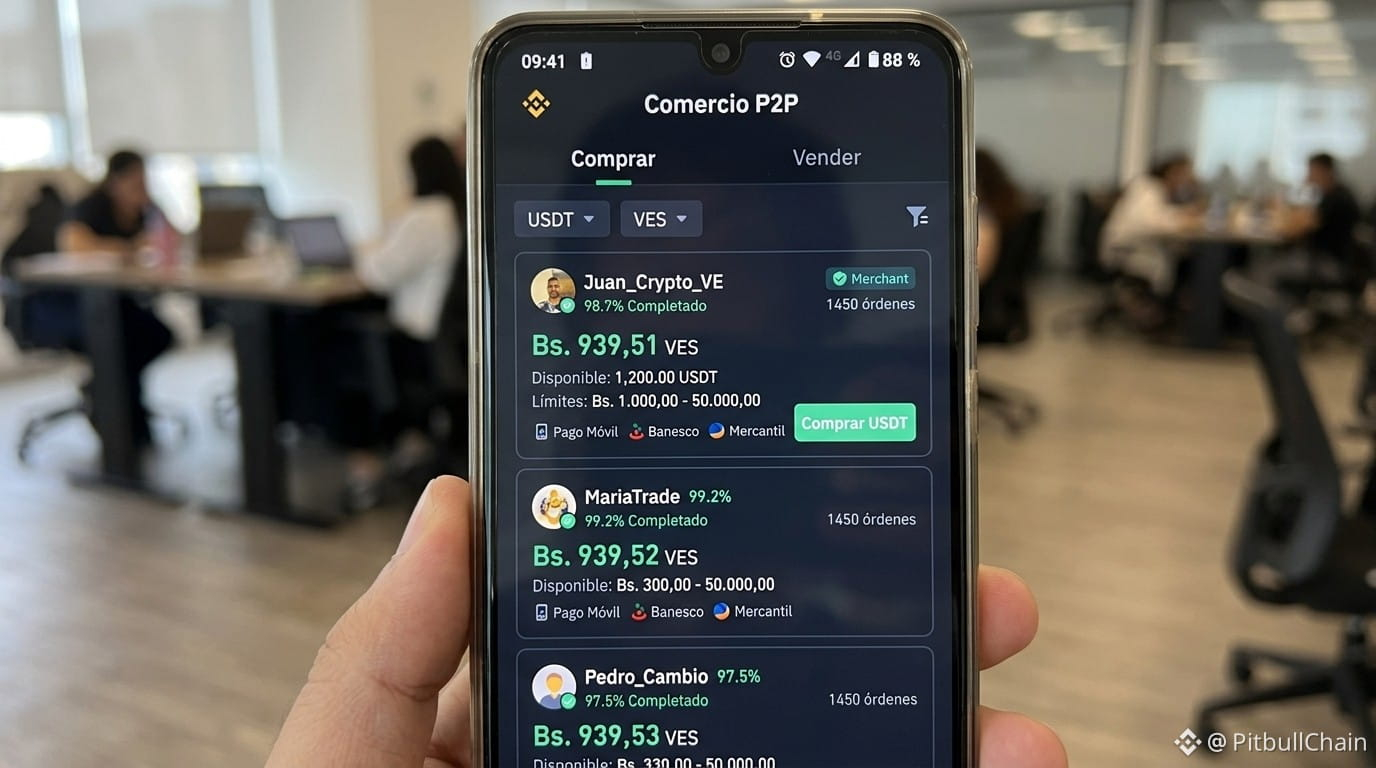
USDT Spread on Binance P2P rises to 3.75% in Venezuela Live P2P Radar Capture: 28/8/2026, 7:00:16 p. m.
USDT/VES reference Bs. 948.62
Buy USDT Bs. 948.62
USDT Purchase Bs. 914.35
BCV Bs. 794.99
Premium vs BCV 19.32%
P2P Spread 3.75%
Offers observed 242
Verify current data on Radar P2P
Venezuela’s USDT P2P market shows a new imbalance: the spread between buy and sell prices expanded to 3.75% during the night of August 28, 2026, according to P2P Radar data captured at 23:00 UTC. The gap reached 34.27 bolívares, with a buy price of Bs. 948.62 and a sell price of Bs. 914.35. This dynamic reflects buying pressure that significantly outweighs the available supply in the order book, in a context of high demand for currency hedging.
USDT Spread on Binance P2P rises to 3.75% in Venezuela
Live P2P Radar Capture: 28/8/2026, 7:00:16 p. m.
USDT/VES reference Bs. 948.62
Buy USDT Bs. 948.62
USDT Purchase Bs. 914.35
BCV Bs. 794.99
Premium vs BCV 19.32%
P2P Spread 3.75%
Offers observed 242
Verify current data on Radar P2P
Venezuela’s USDT P2P market shows a new imbalance: the spread between buy and sell prices expanded to 3.75% during the night of August 28, 2026, according to P2P Radar data captured at 23:00 UTC. The gap reached 34.27 bolívares, with a buy price of Bs. 948.62 and a sell price of Bs. 914.35. This dynamic reflects buying pressure that significantly outweighs the available supply in the order book, in a context of high demand for currency hedging.
USDT/VES reference Bs. 948.62
Buy USDT Bs. 948.62
USDT Purchase Bs. 914.35
BCV Bs. 794.99
Premium vs BCV 19.32%
P2P Spread 3.75%
Offers observed 242
Verify current data on Radar P2P
Venezuela’s USDT P2P market shows a new imbalance: the spread between buy and sell prices expanded to 3.75% during the night of August 28, 2026, according to P2P Radar data captured at 23:00 UTC. The gap reached 34.27 bolívares, with a buy price of Bs. 948.62 and a sell price of Bs. 914.35. This dynamic reflects buying pressure that significantly outweighs the available supply in the order book, in a context of high demand for currency hedging.
2
·
--
Article
Venezuela out of the US anti-drugs list: what does the crypto market gain?📊 A move that is read more in Washington than in Caracas
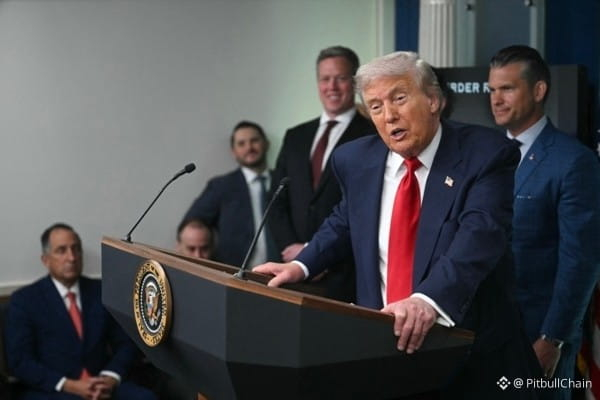
The US president, Donald Trump, decided to remove Venezuela from the group of countries identified for demonstrably failing to meet their drug-control commitments. The presidential determination for fiscal year 2027 keeps the country within the list of transit or production nations for illicit substances, but it no longer appears among those that openly fail to cooperate. Afghanistan, Bolivia, Myanmar, and Colombia continue to carry that label.
Venezuela out of the US anti-drugs list: what does the crypto market gain?
📊 A move that is read more in Washington than in Caracas
The US president, Donald Trump, decided to remove Venezuela from the group of countries identified for demonstrably failing to meet their drug-control commitments. The presidential determination for fiscal year 2027 keeps the country within the list of transit or production nations for illicit substances, but it no longer appears among those that openly fail to cooperate. Afghanistan, Bolivia, Myanmar, and Colombia continue to carry that label.
The US president, Donald Trump, decided to remove Venezuela from the group of countries identified for demonstrably failing to meet their drug-control commitments. The presidential determination for fiscal year 2027 keeps the country within the list of transit or production nations for illicit substances, but it no longer appears among those that openly fail to cooperate. Afghanistan, Bolivia, Myanmar, and Colombia continue to carry that label.
13
·
--
Article
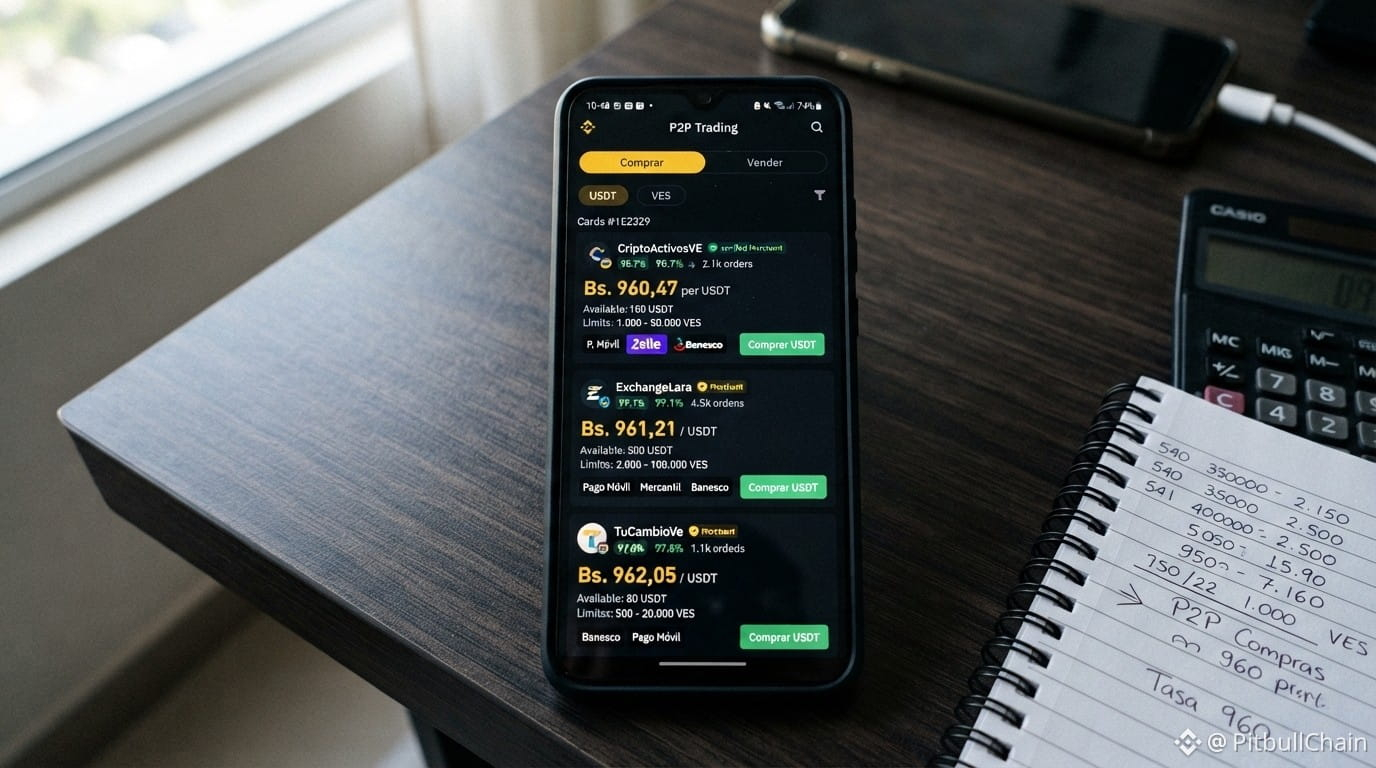
BCV 847.44 vs USDT P2P: the 14% premium and the real 0.15% spreadLive P2P Radar Capture: 16/9/2026, 4:00:12 p. m.
USDT/VES reference Bs. 967.40
Buy USDT Bs. 967.40
Selling USDT Bs. 939.56
BCV Bs. 847.44
Premium vs BCV 14.16%
P2P Spread 2.96%
Observed offers 214
Check current data in P2P Radar
This Wednesday, September 16, 2026, the BCV rate in our Radar capture (20:00 UTC) was set at Bs. 847.44 per dollar. P2P USDT, measured with the same yardstick, is quoted at Bs. 967.40 on the buy side and Bs. 939.56 on the sell side. The distance vs. the official rate is 14.16%.
BCV 847.44 vs USDT P2P: the 14% premium and the real 0.15% spread
Live P2P Radar Capture: 16/9/2026, 4:00:12 p. m.
USDT/VES reference Bs. 967.40
Buy USDT Bs. 967.40
Selling USDT Bs. 939.56
BCV Bs. 847.44
Premium vs BCV 14.16%
P2P Spread 2.96%
Observed offers 214
Check current data in P2P Radar
This Wednesday, September 16, 2026, the BCV rate in our Radar capture (20:00 UTC) was set at Bs. 847.44 per dollar. P2P USDT, measured with the same yardstick, is quoted at Bs. 967.40 on the buy side and Bs. 939.56 on the sell side. The distance vs. the official rate is 14.16%.
USDT/VES reference Bs. 967.40
Buy USDT Bs. 967.40
Selling USDT Bs. 939.56
BCV Bs. 847.44
Premium vs BCV 14.16%
P2P Spread 2.96%
Observed offers 214
Check current data in P2P Radar
This Wednesday, September 16, 2026, the BCV rate in our Radar capture (20:00 UTC) was set at Bs. 847.44 per dollar. P2P USDT, measured with the same yardstick, is quoted at Bs. 967.40 on the buy side and Bs. 939.56 on the sell side. The distance vs. the official rate is 14.16%.
12
·
--

Article
Venezuelan aluminum heading to the U.S.: oxygen for the dollar and P2P?📊 A shipment that breaks years of commercial silence
Venezuela is preparing to move 15,000 tons of aluminum destined for the United States, in what would be the first shipment of that metal to U.S. territory in years. The material would have been produced by Venalum and would ship under an agreement with Mercuria Energy Group Ltd. and Heeney Capital, according to Bloomberg Line reports cited by national business press. Sources linked to the deal even suggest that the announcement could coincide with an energy summit between the two countries.
Venezuelan aluminum heading to the U.S.: oxygen for the dollar and P2P?
📊 A shipment that breaks years of commercial silence
Venezuela is preparing to move 15,000 tons of aluminum destined for the United States, in what would be the first shipment of that metal to U.S. territory in years. The material would have been produced by Venalum and would ship under an agreement with Mercuria Energy Group Ltd. and Heeney Capital, according to Bloomberg Line reports cited by national business press. Sources linked to the deal even suggest that the announcement could coincide with an energy summit between the two countries.
Venezuela is preparing to move 15,000 tons of aluminum destined for the United States, in what would be the first shipment of that metal to U.S. territory in years. The material would have been produced by Venalum and would ship under an agreement with Mercuria Energy Group Ltd. and Heeney Capital, according to Bloomberg Line reports cited by national business press. Sources linked to the deal even suggest that the announcement could coincide with an energy summit between the two countries.
6
·
--

Article
Oil, smoke and mirrors: what it means for USDT and Venezuelan P2P📊 Smoke and mirrors: the warning that came from Houston
Dan Pickering, an investment banking specialist in the energy sector, put his finger on the problem during the Super DUG 2026 conference by Hart Energy, held in Houston. His message was direct: the oil agreements signed in Venezuela over the past few weeks have not yet dispelled investors’ doubts about whether contracts will be honored. The most quoted line—"there’s a lot of smoke and mirrors" around the country—summarizes the distrust of an industry that scrutinizes every small detail before risking capital.
Oil, smoke and mirrors: what it means for USDT and Venezuelan P2P
📊 Smoke and mirrors: the warning that came from Houston
Dan Pickering, an investment banking specialist in the energy sector, put his finger on the problem during the Super DUG 2026 conference by Hart Energy, held in Houston. His message was direct: the oil agreements signed in Venezuela over the past few weeks have not yet dispelled investors’ doubts about whether contracts will be honored. The most quoted line—"there’s a lot of smoke and mirrors" around the country—summarizes the distrust of an industry that scrutinizes every small detail before risking capital.
Dan Pickering, an investment banking specialist in the energy sector, put his finger on the problem during the Super DUG 2026 conference by Hart Energy, held in Houston. His message was direct: the oil agreements signed in Venezuela over the past few weeks have not yet dispelled investors’ doubts about whether contracts will be honored. The most quoted line—"there’s a lot of smoke and mirrors" around the country—summarizes the distrust of an industry that scrutinizes every small detail before risking capital.
20
·
--
Article
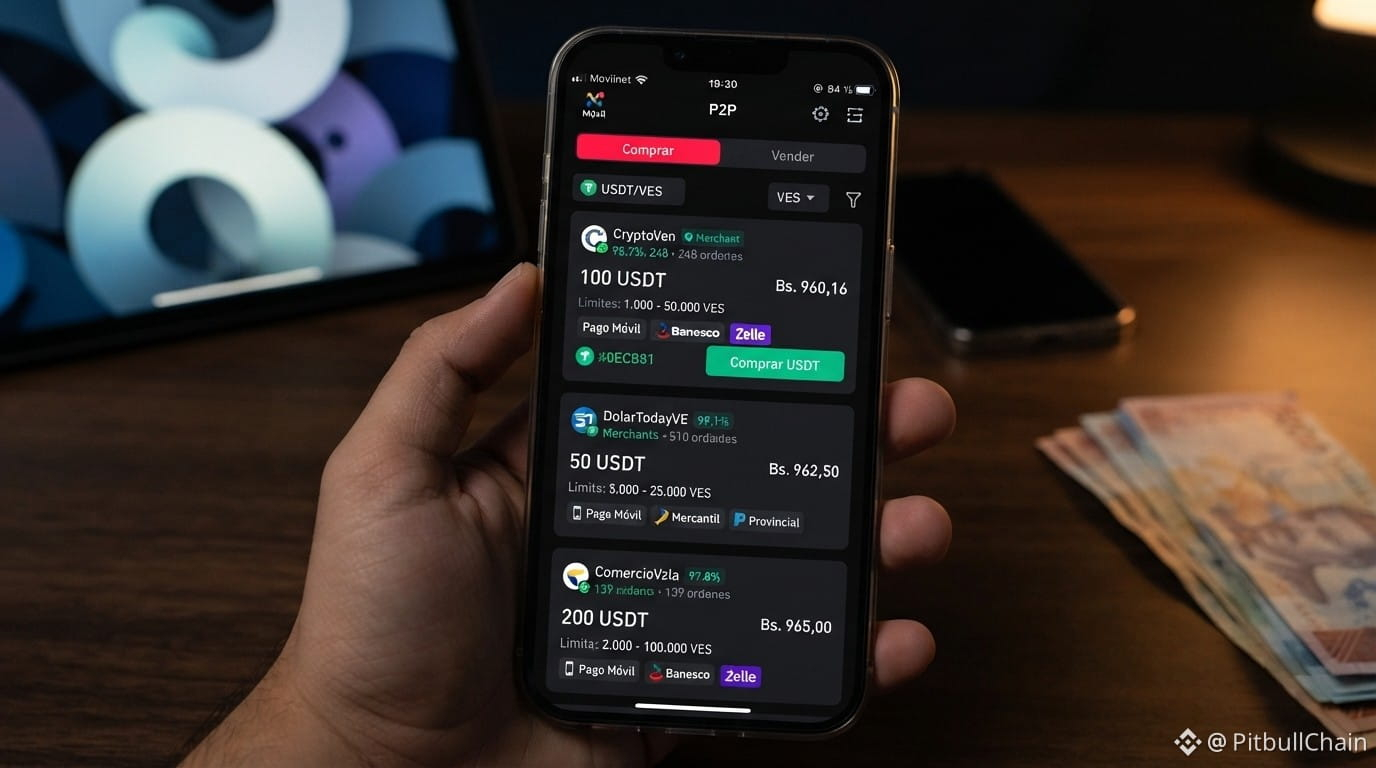
The invisible gap in P2P: 6.19% spread vs 0.46% realLive P2P Radar Capture: 16/9/2026, 6:00:12 a. m.
USDT/VES reference Bs. 982.63
Buy USDT Bs. 982.63
Sell USDT Bs. 925.39
BCV Bs. 846.51
Premium vs BCV 16.08%
P2P Spread 6.19%
Observed offers 156
Check current data in P2P Radar
**As of September 16, 2026, with data captured at 10:00 (Venezuela time)**, the PitbullChain dashboard showed two USDT/VES spreads that describe the same market and yet look nothing alike: the semaphor published 6.19% and the consolidated order book from Binance and other platforms showed 0.46%. Between them there are 5.73 percentage points of distance. This is not a calculation error or old data: they are two different layers, measured over different populations of offers, and confusing them is the most common way to overpay in a P2P operation.
The invisible gap in P2P: 6.19% spread vs 0.46% real
Live P2P Radar Capture: 16/9/2026, 6:00:12 a. m.
USDT/VES reference Bs. 982.63
Buy USDT Bs. 982.63
Sell USDT Bs. 925.39
BCV Bs. 846.51
Premium vs BCV 16.08%
P2P Spread 6.19%
Observed offers 156
Check current data in P2P Radar
**As of September 16, 2026, with data captured at 10:00 (Venezuela time)**, the PitbullChain dashboard showed two USDT/VES spreads that describe the same market and yet look nothing alike: the semaphor published 6.19% and the consolidated order book from Binance and other platforms showed 0.46%. Between them there are 5.73 percentage points of distance. This is not a calculation error or old data: they are two different layers, measured over different populations of offers, and confusing them is the most common way to overpay in a P2P operation.
USDT/VES reference Bs. 982.63
Buy USDT Bs. 982.63
Sell USDT Bs. 925.39
BCV Bs. 846.51
Premium vs BCV 16.08%
P2P Spread 6.19%
Observed offers 156
Check current data in P2P Radar
**As of September 16, 2026, with data captured at 10:00 (Venezuela time)**, the PitbullChain dashboard showed two USDT/VES spreads that describe the same market and yet look nothing alike: the semaphor published 6.19% and the consolidated order book from Binance and other platforms showed 0.46%. Between them there are 5.73 percentage points of distance. This is not a calculation error or old data: they are two different layers, measured over different populations of offers, and confusing them is the most common way to overpay in a P2P operation.
4
·
--

Article
Poker revives in Venezuela: US$100,000 a month and a parallel economyPoker has returned to the large table of Venezuela’s economy. After more than a decade of forced absence, the tournaments played in Caracas and Lechería are now moving between 60,000 and 100,000 US dollars per month in entries alone, and the community of active players has grown from about 150 to more than a thousand in just four years since reopening. The figure isn’t huge, but it is telling: it describes a niche that rebuilt its payment structure, its travel logistics, and its competitive calendar in a country where moving money is still a risky business.
Poker revives in Venezuela: US$100,000 a month and a parallel economy
Poker has returned to the large table of Venezuela’s economy. After more than a decade of forced absence, the tournaments played in Caracas and Lechería are now moving between 60,000 and 100,000 US dollars per month in entries alone, and the community of active players has grown from about 150 to more than a thousand in just four years since reopening. The figure isn’t huge, but it is telling: it describes a niche that rebuilt its payment structure, its travel logistics, and its competitive calendar in a country where moving money is still a risky business.
64
·
--
Article
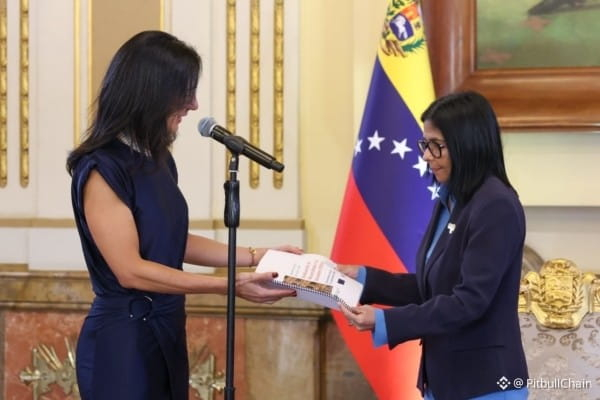
UNDP and reconstruction: the dollar, USDT, and what’s coming for P2PThe Venezuelan economic board added this week an element that few people associate with the foreign exchange market: international cooperation. Acting President Delcy Rodríguez received in Miraflores the UNDP regional director for Latin America and the Caribbean, Michelle Muschett, who delivered the first Post-Disaster Needs Assessment (PDNA) report— the technical diagnosis aimed at organizing the country’s recovery after the earthquakes of June 24.
At PitbullChain, we don’t view this type of announcement as a mere ceremonial act. When a multilateral organization puts numbers, sectors, and priorities on the table, what usually comes next is financing, technical assistance, and—eventually—foreign currency. And in an economy where the exchange rate moves every day, any external flow deserves attention.
UNDP and reconstruction: the dollar, USDT, and what’s coming for P2P
The Venezuelan economic board added this week an element that few people associate with the foreign exchange market: international cooperation. Acting President Delcy Rodríguez received in Miraflores the UNDP regional director for Latin America and the Caribbean, Michelle Muschett, who delivered the first Post-Disaster Needs Assessment (PDNA) report— the technical diagnosis aimed at organizing the country’s recovery after the earthquakes of June 24.
At PitbullChain, we don’t view this type of announcement as a mere ceremonial act. When a multilateral organization puts numbers, sectors, and priorities on the table, what usually comes next is financing, technical assistance, and—eventually—foreign currency. And in an economy where the exchange rate moves every day, any external flow deserves attention.
At PitbullChain, we don’t view this type of announcement as a mere ceremonial act. When a multilateral organization puts numbers, sectors, and priorities on the table, what usually comes next is financing, technical assistance, and—eventually—foreign currency. And in an economy where the exchange rate moves every day, any external flow deserves attention.
7
Log in to explore more content
Join global crypto users on Binance Square
⚡️ Get latest and useful information about crypto.
💬 Trusted by the world’s largest crypto exchange.
👍 Discover real insights from verified creators.
Email / Phone number
Trending Topics
1
#XRPRises8%
2,180 views
212 Discussing
2
#AppleGoogleSeekStablecoinTokenizedDepositTalent
1,978 views
165 Discussing
3
#NvidiaToBuyAnother$1.5BSBEnergySharesPreIPO
474 views
17 Discussing
4
#AgoraGetsPreliminaryOCCApprovalForTrustBank
961 views
74 Discussing
5
#NEARRisesNearly80%InAWeek
59,972 views
1,147 Discussing
6
#MultiversXPlansHardForkRecovery
48,157 views
867 Discussing
7
#CircleLaunchesInstitutionalBTCBackedBorrowing
43,071 views
874 Discussing
8
#BitcoinHits$85K
61,426 views
328 Discussing
9
#ZetaChainVotesToMigrateZETAToSolana
30,621 views
574 Discussing
10
#ECBStartsBlockchainEuroSettlement
58,921 views
871 Discussing