
#cryptowinter
cryptowinter
54,601 views
304 Discussing
Hot
Latest



$BTC MARKET STILL BLEEDING — ANOTHER WAVE OF CRYPTO PROJECT SHUTDOWNS 🔥
AscendEX is shutting down, Zapper pulls the plug on August 3rd, and YGG Play cuts 35 jobs. The bear market is far from over – funding is drying up and operating costs are crushing projects across exchanges, DeFi, and gaming.
Despite a slight bounce from recent lows, the industry hasn't shaken the bearish sentiment. This consolidation phase is real – even established names are closing doors. Are you holding any assets on platforms that might be next?
Not financial advice. Always manage your risk.
#BTC #CryptoWinter #ProjectShutdowns #BearMarket #RiskManagement
🔥
AscendEX is shutting down, Zapper pulls the plug on August 3rd, and YGG Play cuts 35 jobs. The bear market is far from over – funding is drying up and operating costs are crushing projects across exchanges, DeFi, and gaming.
Despite a slight bounce from recent lows, the industry hasn't shaken the bearish sentiment. This consolidation phase is real – even established names are closing doors. Are you holding any assets on platforms that might be next?
Not financial advice. Always manage your risk.
#BTC #CryptoWinter #ProjectShutdowns #BearMarket #RiskManagement
🔥

🐻 Crypto Winter Survival Strategies: Practical Tips for Navigating Downturns
On July 10, 2026, with the market at $2.28T, crypto winter survival requires both financial and psychological preparation. The first rule: only invest what you can afford to hold through volatility.
Practical strategies include maintaining a stablecoin reserve for opportunity buying, focusing on dollar-cost averaging into quality assets like $BTC and $ETH , and avoiding leveraged positions.
With 56.36% dominance, the market favors safety. Use this period to research protocols, learn technical analysis, and build conviction for the next cycle.
📌 Key Takeaway:
Surviving crypto winter means reducing risk, staying liquid, and preparing for the next bull run. Patience and preparation are everything.
#CryptoWinter #SurvivalGuide
#BinanceAlphaAlert
On July 10, 2026, with the market at $2.28T, crypto winter survival requires both financial and psychological preparation. The first rule: only invest what you can afford to hold through volatility.
Practical strategies include maintaining a stablecoin reserve for opportunity buying, focusing on dollar-cost averaging into quality assets like $BTC and $ETH , and avoiding leveraged positions.
With 56.36% dominance, the market favors safety. Use this period to research protocols, learn technical analysis, and build conviction for the next cycle.
📌 Key Takeaway:
Surviving crypto winter means reducing risk, staying liquid, and preparing for the next bull run. Patience and preparation are everything.
#CryptoWinter #SurvivalGuide
#BinanceAlphaAlert
🏗️ Building During the Bear: The Best Projects Emerge in Downturns
On July 6, 2026, with the market at $2.27T, it's worth remembering that most of today's top projects were built during bear markets. Ethereum $ETH , Solana $SOL , and BNB $BNB all launched in tough conditions.
Building during downturns means fewer distractions, lower competition for talent, and teams focused on product rather than price. The current consolidation at $2.27T total market cap is fertile ground for innovation.
Projects that survive bear markets tend to thrive in subsequent bull runs.
📌 Key Takeaway:
Bear markets are where winners are built. The foundations laid today will determine which projects lead the next cycle.
#Build #CryptoWinter
#BinanceAlphaAlert
On July 6, 2026, with the market at $2.27T, it's worth remembering that most of today's top projects were built during bear markets. Ethereum $ETH , Solana $SOL , and BNB $BNB all launched in tough conditions.
Building during downturns means fewer distractions, lower competition for talent, and teams focused on product rather than price. The current consolidation at $2.27T total market cap is fertile ground for innovation.
Projects that survive bear markets tend to thrive in subsequent bull runs.
📌 Key Takeaway:
Bear markets are where winners are built. The foundations laid today will determine which projects lead the next cycle.
#Build #CryptoWinter
#BinanceAlphaAlert

$BTC BEAR MARKET SURVIVAL? HERE'S WHAT THE DATA SAYS 🛑
Most traders who ask this question are already thinking about exiting. That doubt is what separates winners from the crowd.
Look, bear markets are brutal but they don't last forever. The 2018 bear was about 365 days. 2022 was 12 months too. Every single time, the ones who stayed to accumulate at the bottom came out ahead.
The real question is: are you building a position or just waiting for confirmation?
Not financial advice. Always manage your risk.
#BTC #BearMarket #SurvivalMindset #CryptoWinter
💎
Most traders who ask this question are already thinking about exiting. That doubt is what separates winners from the crowd.
Look, bear markets are brutal but they don't last forever. The 2018 bear was about 365 days. 2022 was 12 months too. Every single time, the ones who stayed to accumulate at the bottom came out ahead.
The real question is: are you building a position or just waiting for confirmation?
Not financial advice. Always manage your risk.
#BTC #BearMarket #SurvivalMindset #CryptoWinter
💎

Every cycle bottom gets called a dozen times before it sticks. This one feels different.
Standard Chartered just put a name on it: the $59,000 low was the end of crypto winter. Their thesis? The SpaceX IPO landing with a $1.29B BTC treasury plus early signals of a US-Iran peace deal created a dual macro catalyst that flipped institutional risk appetite overnight.
Here’s what that means for alts:
$SOL , $ADA , and $AVAX didn’t lead the fear. They bled alongside BTC through weeks of Extreme Fear. That’s actually the setup. Post-bottom confirmation, capital doesn’t sit in BTC forever — it rotates. The pattern is consistent: BTC bottoms, BTC dominance spikes, then productive L1s with real fee revenue, staking yield, and shipping ecosystems get repriced.
The FOMC is 6 days out. The Clarity Act has a July 4 deadline. $250 billion in stablecoins is sitting on-chain.
If Standard Chartered is right about the bottom, the altcoin rotation clock just started — most traders will notice it 30 days too late.
#CryptoWinter #AltcoinSeason #Crypto2026 #BinanceSquare #DYOR
Standard Chartered just put a name on it: the $59,000 low was the end of crypto winter. Their thesis? The SpaceX IPO landing with a $1.29B BTC treasury plus early signals of a US-Iran peace deal created a dual macro catalyst that flipped institutional risk appetite overnight.
Here’s what that means for alts:
$SOL , $ADA , and $AVAX didn’t lead the fear. They bled alongside BTC through weeks of Extreme Fear. That’s actually the setup. Post-bottom confirmation, capital doesn’t sit in BTC forever — it rotates. The pattern is consistent: BTC bottoms, BTC dominance spikes, then productive L1s with real fee revenue, staking yield, and shipping ecosystems get repriced.
The FOMC is 6 days out. The Clarity Act has a July 4 deadline. $250 billion in stablecoins is sitting on-chain.
If Standard Chartered is right about the bottom, the altcoin rotation clock just started — most traders will notice it 30 days too late.
#CryptoWinter #AltcoinSeason #Crypto2026 #BinanceSquare #DYOR
You've Been Holding On, But Here's What Could Change It All
Imagine if you had a roadmap to get out of the crypto winter and back into the sunshine. Sounds too good to be true, but Fidelity has just outlined 5 potential catalysts that could help us shake off this cold spell.
#CryptoWinter #EndOfWinter
Imagine regulation finally catching up with the industry, making it a more stable and trustworthy space for institutions and individuals alike. This clarity on regulations could be the key that unlocks a new wave of investment and adoption, sending prices soaring. Think of it as getting the green light to finally drive on that highway you've been stuck on the side of.
In a similar way, fresh use cases could emerge, giving Bitcoin and other cryptos new life. What if decentralized finance (DeFi) finally becomes widely accepted, or if a major corporation starts using blockchain technology in a game-changing way? The possibilities are endless.
But here's the thing: history often repeats itself, with the crypto market following a four-year cycle. If the next catalyst is just around the corner, we need to be ready.
So, what do you think could be the breakthrough that gets us out of this crypto winter? Are you holding on tight, or looking to make a move? Share your thoughts in the comments below, and let's start the conversation. #CryptoCommunity
Imagine if you had a roadmap to get out of the crypto winter and back into the sunshine. Sounds too good to be true, but Fidelity has just outlined 5 potential catalysts that could help us shake off this cold spell.
#CryptoWinter #EndOfWinter
Imagine regulation finally catching up with the industry, making it a more stable and trustworthy space for institutions and individuals alike. This clarity on regulations could be the key that unlocks a new wave of investment and adoption, sending prices soaring. Think of it as getting the green light to finally drive on that highway you've been stuck on the side of.
In a similar way, fresh use cases could emerge, giving Bitcoin and other cryptos new life. What if decentralized finance (DeFi) finally becomes widely accepted, or if a major corporation starts using blockchain technology in a game-changing way? The possibilities are endless.
But here's the thing: history often repeats itself, with the crypto market following a four-year cycle. If the next catalyst is just around the corner, we need to be ready.
So, what do you think could be the breakthrough that gets us out of this crypto winter? Are you holding on tight, or looking to make a move? Share your thoughts in the comments below, and let's start the conversation. #CryptoCommunity

🔥 THE FLOOD HAS STARTED: Crypto projects are shutting down at an alarming rate as token models FAIL under pressure, with many left with no choice but to cease operations due to weakened funding and fragmented structures.
📊 The proof is in the numbers: BTC is still holding strong at $64,266 with a bullish RSI of 61.3, but the real story is in the altcoins, with SOL's transaction volume taking a hit and smart money moving out of the coin, as seen with GHOSTI and ANSEM smart wallets on Solana #Solana #CryptoWinter #DeFi.
💡 The stakes are high: as these projects shut down, it's a clear sign that the market is undergoing a major correction, and investors need to be cautious, especially with the current fear sentiment at 26/100 and BTC's open interest at $6.58B, indicating a potential shift in market dynamics #Bitcoin #Cryptocurrency.
❓ Will you be the one to spot the next big opportunity in the crypto space, or will you get left behind as the market continues to evolve and consolidate - drop a comment with your thoughts on which coin will be the next to rise.
📊 The proof is in the numbers: BTC is still holding strong at $64,266 with a bullish RSI of 61.3, but the real story is in the altcoins, with SOL's transaction volume taking a hit and smart money moving out of the coin, as seen with GHOSTI and ANSEM smart wallets on Solana #Solana #CryptoWinter #DeFi.
💡 The stakes are high: as these projects shut down, it's a clear sign that the market is undergoing a major correction, and investors need to be cautious, especially with the current fear sentiment at 26/100 and BTC's open interest at $6.58B, indicating a potential shift in market dynamics #Bitcoin #Cryptocurrency.
❓ Will you be the one to spot the next big opportunity in the crypto space, or will you get left behind as the market continues to evolve and consolidate - drop a comment with your thoughts on which coin will be the next to rise.
🚨 ROBINHOOD LAYOFFS = CLASSIC "LATE BEAR" FLASH — BUT HERE’S THE TWIST NO ONE’S TALKING ABOUT
Robinhood’s C-suite exodus + 23% staff cut, BitGo slashing 15%, and Coinbase quietly trimming fat too — this isn’t just "cost-cutting." It’s a textbook late-cycle capitulation signal in crypto markets. 📉
But let’s be real:
Trading volumes are down 70%+ from peaks, retail is hibernating, and VC money has dried up faster than a desert puddle. 🏜️
Yet here’s the kicker 👇
Layoffs are a REACTION, not a predictor. They confirm what prices already show — but they also mark the exact zone where smart money starts building.
Historically?
Late bears = early entries.
Think 2015, 2018, 2020 — every major bottom had mass layoffs right before the violent reversal.
So the real question isn’t "is this the bottom?" —
It’s "are you brave enough to buy when others are crying?" 😏
Because while retail panics, whales accumulate.
And if you’re waiting for "clear confirmation," you’re already late.
Drop a comment:
👉 Are you buying this dip, or waiting for even MORE blood?
👉 Do layoffs make you more bullish or bearish?
Let’s settle this. ⚔️
#CryptoWinter #BearMarketBottom #SmartMoneyMoves
$NVDA
$SPCX
$BTC
Robinhood’s C-suite exodus + 23% staff cut, BitGo slashing 15%, and Coinbase quietly trimming fat too — this isn’t just "cost-cutting." It’s a textbook late-cycle capitulation signal in crypto markets. 📉
But let’s be real:
Trading volumes are down 70%+ from peaks, retail is hibernating, and VC money has dried up faster than a desert puddle. 🏜️
Yet here’s the kicker 👇
Layoffs are a REACTION, not a predictor. They confirm what prices already show — but they also mark the exact zone where smart money starts building.
Historically?
Late bears = early entries.
Think 2015, 2018, 2020 — every major bottom had mass layoffs right before the violent reversal.
So the real question isn’t "is this the bottom?" —
It’s "are you brave enough to buy when others are crying?" 😏
Because while retail panics, whales accumulate.
And if you’re waiting for "clear confirmation," you’re already late.
Drop a comment:
👉 Are you buying this dip, or waiting for even MORE blood?
👉 Do layoffs make you more bullish or bearish?
Let’s settle this. ⚔️
#CryptoWinter #BearMarketBottom #SmartMoneyMoves
$NVDA
$SPCX
$BTC



⚠️ MARKET ALERT !!!
HOST BLOOMBERG: THIS MIGHT BE "THE COLDEST CRYPTO WINTER EVER" 🔥🟡📉
Joe Weisenthal — host of Bloomberg's Odd Lots — claims this could be "the coldest crypto winter we've ever seen" in his personal update. 🛠
The pressures he mentions: the narrative of "it’s too early" has faded, institutional and favorable policies are already priced in, AI is sucking up capital and electricity resources, concerns over quantum security for Bitcoin, and firms like Strategy are shifting from buy to short. 💰
The strong rallies in AI and tech stocks are pulling capital away from crypto, while a few crypto "winners" might have completed their biggest rallies. 📊
This is Weisenthal's personal opinion — but it reflects the increasing skepticism from traditional analysts towards the current cycle. 🎯
Not investment advice. The market always has two sides — focus on actual data rather than just sentiment.
#crypto #BTC #cryptowinter
$BTC $ETH $MRVL
HOST BLOOMBERG: THIS MIGHT BE "THE COLDEST CRYPTO WINTER EVER" 🔥🟡📉
Joe Weisenthal — host of Bloomberg's Odd Lots — claims this could be "the coldest crypto winter we've ever seen" in his personal update. 🛠
The pressures he mentions: the narrative of "it’s too early" has faded, institutional and favorable policies are already priced in, AI is sucking up capital and electricity resources, concerns over quantum security for Bitcoin, and firms like Strategy are shifting from buy to short. 💰
The strong rallies in AI and tech stocks are pulling capital away from crypto, while a few crypto "winners" might have completed their biggest rallies. 📊
This is Weisenthal's personal opinion — but it reflects the increasing skepticism from traditional analysts towards the current cycle. 🎯
Not investment advice. The market always has two sides — focus on actual data rather than just sentiment.
#crypto #BTC #cryptowinter
$BTC $ETH $MRVL
🏗️ What Bear Markets Are Really For: Building vs Trading
On July 1, 2026, with Bitcoin $BTC at $59,240 and most altcoins consolidating, traders are frustrated by low volatility. But the real work of crypto happens during these quiet periods.
Development doesn't stop when prices fall. The 1,488 active markets and 17,429 cryptocurrencies represent ongoing building. Projects that ship during downturns dominate the next cycle. Bear markets are for builders, not traders.
📌 Key Takeaway:
Bear markets with range-bound prices are for building — the projects that ship during downturns are the ones that lead the next cycle.
#BearMarket #Building #CryptoWinter
#BinanceAlphaAlert
On July 1, 2026, with Bitcoin $BTC at $59,240 and most altcoins consolidating, traders are frustrated by low volatility. But the real work of crypto happens during these quiet periods.
Development doesn't stop when prices fall. The 1,488 active markets and 17,429 cryptocurrencies represent ongoing building. Projects that ship during downturns dominate the next cycle. Bear markets are for builders, not traders.
📌 Key Takeaway:
Bear markets with range-bound prices are for building — the projects that ship during downturns are the ones that lead the next cycle.
#BearMarket #Building #CryptoWinter
#BinanceAlphaAlert
BREAKING: 💥 CZ just broke his silence — Bitcoin is FAR from dead, and he’s telling traders to CHILL and HODL. 🧊🐂
The bear market fear is exaggerated. Again. While everyone panic-sells, the smart money knows: dips are for accumulation, not despair. 📉➡️📈
Do you really trust the FUD over a man who’s been through more crypto winters than you’ve had hot dinners? 🥶👀
Drop a 🔥 if you’re buying this dip — or a 🤡 if you still think BTC is going to zero.
#Bitcoin #CZ #CryptoWinter
$BTC
$BNB
The bear market fear is exaggerated. Again. While everyone panic-sells, the smart money knows: dips are for accumulation, not despair. 📉➡️📈
Do you really trust the FUD over a man who’s been through more crypto winters than you’ve had hot dinners? 🥶👀
Drop a 🔥 if you’re buying this dip — or a 🤡 if you still think BTC is going to zero.
#Bitcoin #CZ #CryptoWinter
$BTC
$BNB

I'm not saying I told you she's crypto market would go full-on "I did it again" like Britney, but... turns out tech selloff is a real mood, and it's got our favorite digital assets feeling extra extra.
As Coindesk breaks it down, the Nasdaq tech bubble popping has caused a domino effect, sending Bitcoin down 2.5% to $62,300 and Ethereum on a 4% decline. Meanwhile, $717 million in liquidations have altcoins feeling the squeeze - it's like they say, "when Nasdaq goes, crypto goes too" #CryptoWinter #TechSelloffSucks #BinanceProtect
Time to grab those crypto emergency funds and put them to work? Are you prepared to HODL through the storm?
As Coindesk breaks it down, the Nasdaq tech bubble popping has caused a domino effect, sending Bitcoin down 2.5% to $62,300 and Ethereum on a 4% decline. Meanwhile, $717 million in liquidations have altcoins feeling the squeeze - it's like they say, "when Nasdaq goes, crypto goes too" #CryptoWinter #TechSelloffSucks #BinanceProtect
Time to grab those crypto emergency funds and put them to work? Are you prepared to HODL through the storm?
"HODLing our breaths, but Putin's been flexing his regulatory muscles - Russian decree bans crypto mining across Moscow region through 2032. The Block reports regional energy officials had estimated that mining consumes 1 GW of power and could contribute to future electricity shortages #cryptowinter #RussiaCrypto #MiningFees"
THE ALPHA:
As the crypto winter sets in, expect prices to drop alongside mining demand. This move could push more miners to explore greener pastures or more energy-efficient options.
THE PUNCHLINE INSIGHT:
In short, Moscow's gone crypto cold, and we might be seeing the early signs of a crypto exodus from the resource-intensive space.
ENGAGEMENT BAIT:
Will this ban set the stage for an even bigger crypto migration to cleaner, more cost-effective solutions? Sound off in the comments: what's your take on Russia's crypto crackdown?
THE ALPHA:
As the crypto winter sets in, expect prices to drop alongside mining demand. This move could push more miners to explore greener pastures or more energy-efficient options.
THE PUNCHLINE INSIGHT:
In short, Moscow's gone crypto cold, and we might be seeing the early signs of a crypto exodus from the resource-intensive space.
ENGAGEMENT BAIT:
Will this ban set the stage for an even bigger crypto migration to cleaner, more cost-effective solutions? Sound off in the comments: what's your take on Russia's crypto crackdown?

🚨 Fear & Greed at 36. Extreme fear. Everyone's shorting $BTC .
But what if this panic is exactly the buy signal you’ve been waiting for?
While the retail crowd is fleeing, institutions and whales are quietly accumulating. Did Trump promise a strategic Bitcoin reserve? If he follows through, <a>$BTC </a> to the moon. If not, the long-term thesis remains intact.
<a>$SOL </a> is bleeding too. But projects with solid fundamentals survive any bear market.
Today’s fear is tomorrow’s profit. Are you buying or waiting for $70k?
<a>#Bitcoin #CryptoWinter #Solana </a>#Accumulate
— Crypto Zion 🌿
But what if this panic is exactly the buy signal you’ve been waiting for?
While the retail crowd is fleeing, institutions and whales are quietly accumulating. Did Trump promise a strategic Bitcoin reserve? If he follows through, <a>$BTC </a> to the moon. If not, the long-term thesis remains intact.
<a>$SOL </a> is bleeding too. But projects with solid fundamentals survive any bear market.
Today’s fear is tomorrow’s profit. Are you buying or waiting for $70k?
<a>#Bitcoin #CryptoWinter #Solana </a>#Accumulate
— Crypto Zion 🌿
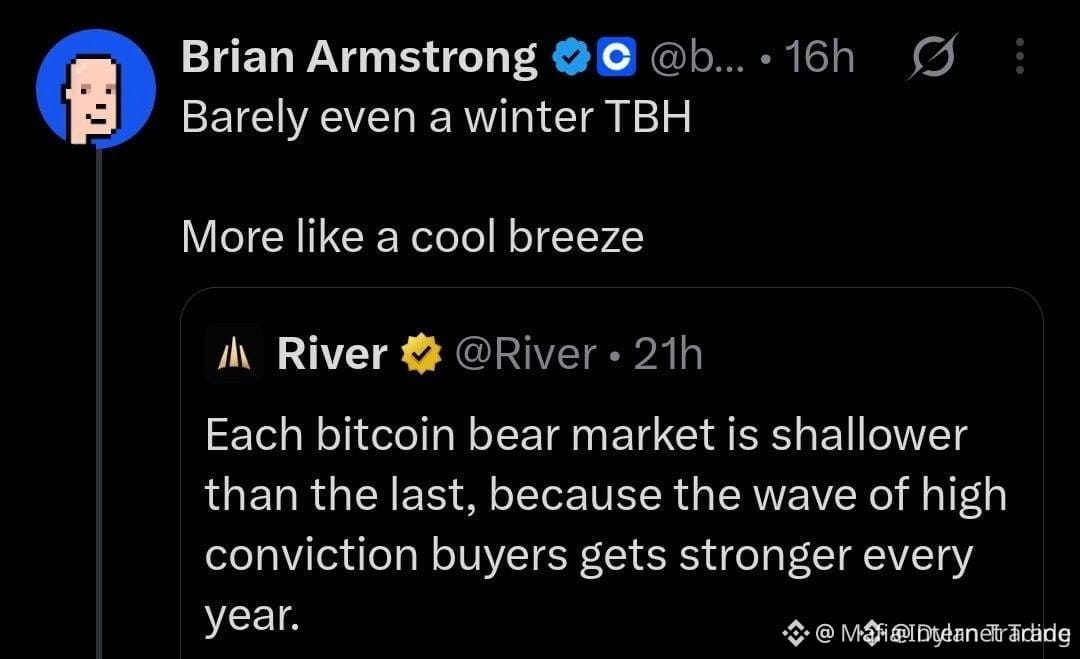
BRIAN ARMSTRONG JUST DECLARED CRYPTO WINTER OVER – $PIVX NEXT 🚀
Brian Armstrong just went on record saying the worst is behind us. That kind of conviction from a major CEO moves markets, and $PIVX is already catching a bid on higher timeframe lows.
Volume is starting to pick up on the daily and the broader market is reacting. We've seen this pattern before – a key figure speaks, and the following 48 hours often set the tone for weeks.
Are you leaning long or waiting for confirmation?
Not financial advice. Always manage your risk.
#PIVX #CryptoWinter #Bullish #MarketSentiment
🔥
Brian Armstrong just went on record saying the worst is behind us. That kind of conviction from a major CEO moves markets, and $PIVX is already catching a bid on higher timeframe lows.
Volume is starting to pick up on the daily and the broader market is reacting. We've seen this pattern before – a key figure speaks, and the following 48 hours often set the tone for weeks.
Are you leaning long or waiting for confirmation?
Not financial advice. Always manage your risk.
#PIVX #CryptoWinter #Bullish #MarketSentiment
🔥
COINUS-3.93%
Standard Chartered called the bottom at 59K. SpaceX IPO holds 1.29B in $BTC . Iran peace deal cleared the last macro overhang. FOMC is 5 days out — rate fear historically peaks BEFORE the meeting, not after.
Here is what the post-winter rotation playbook actually looks like:
1. BTC stabilizes and absorbs institutional flow first — ETFs restarting, Strategy buying, BlackRock income ETF launching
2. Productive L1s catch up — driven by real yield, burn mechanics, and upgrade tailwinds
3. Mid-cap infrastructure plays accelerate last — subnet deployments, compliance-ready architecture, enterprise usage
The trap is waiting for confirmation from each stage before entering the next. By the time the signal is obvious, the discount is gone.
The Clarity Act has a July 4 deadline. Japan just passed crypto-as-stocks legislation. $BNB just got a VanEck ETF filing citing fee revenue and burns — not just access. These are the scaffolding that makes capital want to rotate.
The boring phase after a bottom is always the hardest to hold through. It is also usually the most rewarding.
#CryptoWinter #Bitcoin #BNBChain #Altcoins #DeFi
Here is what the post-winter rotation playbook actually looks like:
1. BTC stabilizes and absorbs institutional flow first — ETFs restarting, Strategy buying, BlackRock income ETF launching
2. Productive L1s catch up — driven by real yield, burn mechanics, and upgrade tailwinds
3. Mid-cap infrastructure plays accelerate last — subnet deployments, compliance-ready architecture, enterprise usage
The trap is waiting for confirmation from each stage before entering the next. By the time the signal is obvious, the discount is gone.
The Clarity Act has a July 4 deadline. Japan just passed crypto-as-stocks legislation. $BNB just got a VanEck ETF filing citing fee revenue and burns — not just access. These are the scaffolding that makes capital want to rotate.
The boring phase after a bottom is always the hardest to hold through. It is also usually the most rewarding.
#CryptoWinter #Bitcoin #BNBChain #Altcoins #DeFi

📉 tom lee calls mark cuban’s $BTC dump “rage-quitting” — a classic move at the end of crypto winter. while he agrees btc hasn’t tracked equities/software, he warns this “wrong-feeling” selling can mark a bottom. #bitcoin #btc #cryptowinter #binancesquare
⚠️ Industry Signal: BitGo Cuts 15% as Market Struggles
On June 26, 2026, BitGo, one of the largest crypto custodians, laid off 15% of its staff to refocus on AI and stablecoins. The job cuts at a well-funded infrastructure firm raise questions about broader industry health.
With total market cap declining to $2.14T and majors like Bitcoin $BTC and Ethereum $ETH under pressure, the layoff could be a harbinger of more cost-cutting across the sector.
📌 Key Takeaway:
BitGo's 15% staff reduction suggests crypto firms are preparing for an extended period of lower revenue.
#BitGo #CryptoWinter #Layoffs
#BinanceAlphaAlert
On June 26, 2026, BitGo, one of the largest crypto custodians, laid off 15% of its staff to refocus on AI and stablecoins. The job cuts at a well-funded infrastructure firm raise questions about broader industry health.
With total market cap declining to $2.14T and majors like Bitcoin $BTC and Ethereum $ETH under pressure, the layoff could be a harbinger of more cost-cutting across the sector.
📌 Key Takeaway:
BitGo's 15% staff reduction suggests crypto firms are preparing for an extended period of lower revenue.
#BitGo #CryptoWinter #Layoffs
#BinanceAlphaAlert
💰 Total Market Cap at $2.145T: How Low Can Crypto Go?
On July 1, 2026, the total crypto market cap sits at $2.145 trillion, down from its yearly highs. The 24-hour trading volume of $81.6B suggests that participation, while active, is concentrated in top-tier assets and stablecoins.
Bitcoin $BTC accounts for $1.18T of that total, and Ethereum $ETH adds $192.7B. The remaining ~$770B is distributed across 17,429 other cryptocurrencies. For historical context, the total market cap has found strong support near $2T during previous bear cycles. A drop to $2T would represent another ~6.8% decline from current levels.
📌 Key Takeaway:
The $2.145T total market cap is approaching historical support — a break below $2T could accelerate selling pressure.
#CryptoMarket #MarketCap #CryptoWinter
#BinanceAlphaAlert
On July 1, 2026, the total crypto market cap sits at $2.145 trillion, down from its yearly highs. The 24-hour trading volume of $81.6B suggests that participation, while active, is concentrated in top-tier assets and stablecoins.
Bitcoin $BTC accounts for $1.18T of that total, and Ethereum $ETH adds $192.7B. The remaining ~$770B is distributed across 17,429 other cryptocurrencies. For historical context, the total market cap has found strong support near $2T during previous bear cycles. A drop to $2T would represent another ~6.8% decline from current levels.
📌 Key Takeaway:
The $2.145T total market cap is approaching historical support — a break below $2T could accelerate selling pressure.
#CryptoMarket #MarketCap #CryptoWinter
#BinanceAlphaAlert
Log in to explore more content