

#cryptoalgebra
cryptoalgebra
3,126 views
7 Discussing
Hot
Latest

·
--
Bullish
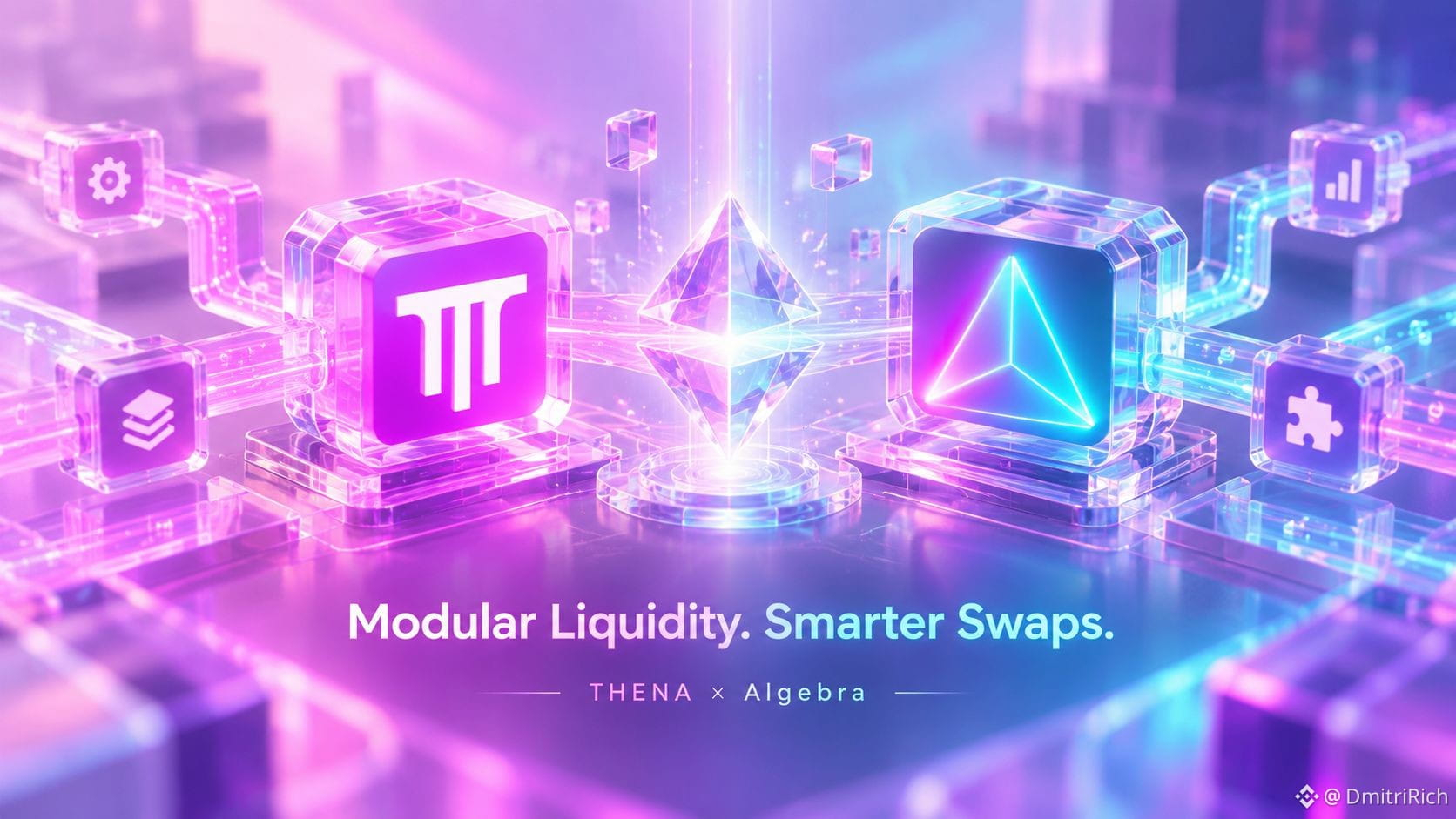
You can use #THENA without ever knowing what #CryptoAlgebra is. That’s actually the point.
Algebra Integral is AMM infrastructure behind THENA’s concentrated liquidity. Think of it as $THE engine under the hood.
And plugins let that engine add extra logic without rebuilding the whole pool.
Here’s why it matters.
1/ First: concentrated liquidity.
Instead of spreading #LP capital across every possible price, liquidity can be placed inside specific price ranges.
That can make the same amount of liquidity more useful around $THE price where people are actually trading.
For traders ➵ potentially better execution.
For LPs ➵ more capital efficiency but also more management and risk.
2/ So what is an Algebra plugin?
In simple terms, it’s an extra smart contract connected to a liquidity pool.
Through “hooks,” it can run additional logic around actions like swaps or liquidity changes.
The important part: new functionality can be added without replacing the core AMM or migrating the pool’s liquidity.
3/ A real example on THENA: dynamic fees.
Instead of every concentrated pool being stuck with one fixed fee, the fee mechanism can adapt to market conditions.
When volatility increases, fees can rise to better compensate LPs. In calmer conditions, they can fall to keep trading competitive.
The user doesn’t have to manually adjust this.
4/ Who benefits?
▹ Traders: concentrated liquidity can provide deeper liquidity around the active price
▹ LPs: capital can be deployed more efficiently, while dynamic fees respond to changing market conditions
▹ Projects: Algebra’s modular design gives THENA more flexibility in how liquidity pools can evolve.
And all of this runs on #BNBChain , which now reaches finality in about 0.65 seconds under normal conditions.
You can use #THENA without ever knowing what #CryptoAlgebra is. That’s actually the point.
Algebra Integral is AMM infrastructure behind THENA’s concentrated liquidity. Think of it as $THE engine under the hood.
And plugins let that engine add extra logic without rebuilding the whole pool.
Here’s why it matters.
1/ First: concentrated liquidity.
Instead of spreading #LP capital across every possible price, liquidity can be placed inside specific price ranges.
That can make the same amount of liquidity more useful around $THE price where people are actually trading.
For traders ➵ potentially better execution.
For LPs ➵ more capital efficiency but also more management and risk.
2/ So what is an Algebra plugin?
In simple terms, it’s an extra smart contract connected to a liquidity pool.
Through “hooks,” it can run additional logic around actions like swaps or liquidity changes.
The important part: new functionality can be added without replacing the core AMM or migrating the pool’s liquidity.
3/ A real example on THENA: dynamic fees.
Instead of every concentrated pool being stuck with one fixed fee, the fee mechanism can adapt to market conditions.
When volatility increases, fees can rise to better compensate LPs. In calmer conditions, they can fall to keep trading competitive.
The user doesn’t have to manually adjust this.
4/ Who benefits?
▹ Traders: concentrated liquidity can provide deeper liquidity around the active price
▹ LPs: capital can be deployed more efficiently, while dynamic fees respond to changing market conditions
▹ Projects: Algebra’s modular design gives THENA more flexibility in how liquidity pools can evolve.
And all of this runs on #BNBChain , which now reaches finality in about 0.65 seconds under normal conditions.
Algebra Integral is AMM infrastructure behind THENA’s concentrated liquidity. Think of it as $THE engine under the hood.
And plugins let that engine add extra logic without rebuilding the whole pool.
Here’s why it matters.
1/ First: concentrated liquidity.
Instead of spreading #LP capital across every possible price, liquidity can be placed inside specific price ranges.
That can make the same amount of liquidity more useful around $THE price where people are actually trading.
For traders ➵ potentially better execution.
For LPs ➵ more capital efficiency but also more management and risk.
2/ So what is an Algebra plugin?
In simple terms, it’s an extra smart contract connected to a liquidity pool.
Through “hooks,” it can run additional logic around actions like swaps or liquidity changes.
The important part: new functionality can be added without replacing the core AMM or migrating the pool’s liquidity.
3/ A real example on THENA: dynamic fees.
Instead of every concentrated pool being stuck with one fixed fee, the fee mechanism can adapt to market conditions.
When volatility increases, fees can rise to better compensate LPs. In calmer conditions, they can fall to keep trading competitive.
The user doesn’t have to manually adjust this.
4/ Who benefits?
▹ Traders: concentrated liquidity can provide deeper liquidity around the active price
▹ LPs: capital can be deployed more efficiently, while dynamic fees respond to changing market conditions
▹ Projects: Algebra’s modular design gives THENA more flexibility in how liquidity pools can evolve.
And all of this runs on #BNBChain , which now reaches finality in about 0.65 seconds under normal conditions.
66
Log in to explore more content
Join global crypto users on Binance Square
⚡️ Get latest and useful information about crypto.
💬 Trusted by the world’s largest crypto exchange.
👍 Discover real insights from verified creators.
Email / Phone number
Trending Topics
1
#ADAGains10%Above$0.27
1,426 views
69 Discussing
2
#ETHUp70%InQ3ButLiquidityFalls
20,233 views
336 Discussing
3
#EthStakingExitQueueHits2026High
7,075 views
316 Discussing
4
#FedOctoberHoldOdds82.3%
9,913 views
300 Discussing
5
#Nikkei225Jumps2.5%ToThreeMonthHigh
44,245 views
712 Discussing
6
#CircleMints$2.75BUSDCOnSolanaIn7Days
431 views
20 Discussing
7
#DriftHackVictimsBeginClaims
123,852 views
1,368 Discussing
8
#SolanaTokenizedStockVolumeTops$4.4BInSeptember
10,743 views
123 Discussing
9
#BitcoinSpotETFsDraw$6.34BInflowsInQ3
39,806 views
241 Discussing
10
#EthereumValidatorExitQueueJumps392%
256,233 views
2,285 Discussing