
#apro
apro
5.5M views
98,399 Discussing
Hot
Latest

·
--
Bullish
🔥 **AT/USDT (APRO) BULLISH CONSOLIDATION BREAKOUT SIGNAL** 🚀
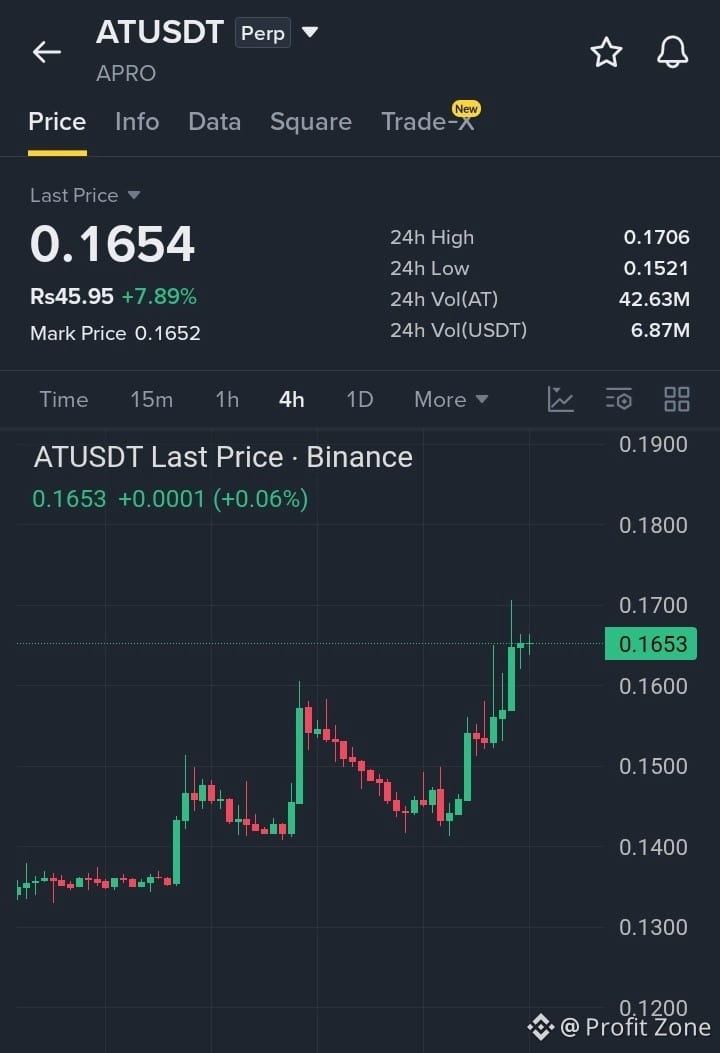
The single correct signal for **AT/USDT** based on price structure and high liquidity consolidation is **BULLISH** 🐂🟢. **APRO (AT)** is holding a strong bullish trend structure above key support levels ($0.1305), printing a steady **+1.79%** gain with robust 24-hour liquidity over **1.13M+ USDT**. As an infrastructure/AI oracle project, it is building heavy momentum for a push toward new local highs! 📈
$AT
{future}(ATUSDT)
💥 **Signal Type:** **STRONG BULLISH** 🐂🟢
📍 **Current Price:** $0.13650000
📊 **24h High:** $0.13670000
📉 **24h Low:** $0.13050000
💰 **24h Volume (USDT):** $1,138,171.48
⚡ **24h Volume (AT):** 8.45M+ AT
🏷️ **Category:** Infrastructure / Oracle Network
---
### 📊 Technical Setup & Key Drivers
1. **Steady Higher Lows:** Price defended the critical demand zone at **$0.1305** and is pushing right against daily resistance at **$0.1367**.
2. **Impending Breakout:** The current market price ($0.1365) is trading near the 24h peak ($0.1367). A clean 1-hour/4-hour candle close above **$0.1367** will trigger immediate buying momentum toward higher expansion levels.
3. **Solid Volume Support:** 8.45 Million+ AT tokens traded shows consistent institutional accumulation without sell pressure spikes.
---
### 🎯 Trade Parameters
* **Best Entry Zone:** $0.13400000 – $0.13650000
* **Target 1 (TP1):** $0.13670000 *(Breakout Level / Local High)* 🎯
* **Target 2 (TP2):** $0.14200000 🎯
* **Target 3 (TP3):** $0.15000000 🚀
* **Stop Loss (SL):** $0.12950000 *(Below 24h Low Support)* 🛑
---
### 💡 Strategy & Risk Management
Maintain a moderate leverage setup (3x to 5x for futures) and keep risk management strict. Set your Stop Loss firmly at **$0.12950000**. Once price clears Target 1 ($0.1367), trail your Stop Loss into profit to secure risk-free gains! 📈✨
---
#ATENCIÓN #APRO #cryptosignals
🔥 **AT/USDT (APRO) BULLISH CONSOLIDATION BREAKOUT SIGNAL** 🚀
The single correct signal for **AT/USDT** based on price structure and high liquidity consolidation is **BULLISH** 🐂🟢. **APRO (AT)** is holding a strong bullish trend structure above key support levels ($0.1305), printing a steady **+1.79%** gain with robust 24-hour liquidity over **1.13M+ USDT**. As an infrastructure/AI oracle project, it is building heavy momentum for a push toward new local highs! 📈
$AT
💥 **Signal Type:** **STRONG BULLISH** 🐂🟢
📍 **Current Price:** $0.13650000
📊 **24h High:** $0.13670000
📉 **24h Low:** $0.13050000
💰 **24h Volume (USDT):** $1,138,171.48
⚡ **24h Volume (AT):** 8.45M+ AT
🏷️ **Category:** Infrastructure / Oracle Network
---
### 📊 Technical Setup & Key Drivers
1. **Steady Higher Lows:** Price defended the critical demand zone at **$0.1305** and is pushing right against daily resistance at **$0.1367**.
2. **Impending Breakout:** The current market price ($0.1365) is trading near the 24h peak ($0.1367). A clean 1-hour/4-hour candle close above **$0.1367** will trigger immediate buying momentum toward higher expansion levels.
3. **Solid Volume Support:** 8.45 Million+ AT tokens traded shows consistent institutional accumulation without sell pressure spikes.
---
### 🎯 Trade Parameters
* **Best Entry Zone:** $0.13400000 – $0.13650000
* **Target 1 (TP1):** $0.13670000 *(Breakout Level / Local High)* 🎯
* **Target 2 (TP2):** $0.14200000 🎯
* **Target 3 (TP3):** $0.15000000 🚀
* **Stop Loss (SL):** $0.12950000 *(Below 24h Low Support)* 🛑
---
### 💡 Strategy & Risk Management
Maintain a moderate leverage setup (3x to 5x for futures) and keep risk management strict. Set your Stop Loss firmly at **$0.12950000**. Once price clears Target 1 ($0.1367), trail your Stop Loss into profit to secure risk-free gains! 📈✨
---
#ATENCIÓN #APRO #cryptosignals
The single correct signal for **AT/USDT** based on price structure and high liquidity consolidation is **BULLISH** 🐂🟢. **APRO (AT)** is holding a strong bullish trend structure above key support levels ($0.1305), printing a steady **+1.79%** gain with robust 24-hour liquidity over **1.13M+ USDT**. As an infrastructure/AI oracle project, it is building heavy momentum for a push toward new local highs! 📈
$AT
💥 **Signal Type:** **STRONG BULLISH** 🐂🟢
📍 **Current Price:** $0.13650000
📊 **24h High:** $0.13670000
📉 **24h Low:** $0.13050000
💰 **24h Volume (USDT):** $1,138,171.48
⚡ **24h Volume (AT):** 8.45M+ AT
🏷️ **Category:** Infrastructure / Oracle Network
---
### 📊 Technical Setup & Key Drivers
1. **Steady Higher Lows:** Price defended the critical demand zone at **$0.1305** and is pushing right against daily resistance at **$0.1367**.
2. **Impending Breakout:** The current market price ($0.1365) is trading near the 24h peak ($0.1367). A clean 1-hour/4-hour candle close above **$0.1367** will trigger immediate buying momentum toward higher expansion levels.
3. **Solid Volume Support:** 8.45 Million+ AT tokens traded shows consistent institutional accumulation without sell pressure spikes.
---
### 🎯 Trade Parameters
* **Best Entry Zone:** $0.13400000 – $0.13650000
* **Target 1 (TP1):** $0.13670000 *(Breakout Level / Local High)* 🎯
* **Target 2 (TP2):** $0.14200000 🎯
* **Target 3 (TP3):** $0.15000000 🚀
* **Stop Loss (SL):** $0.12950000 *(Below 24h Low Support)* 🛑
---
### 💡 Strategy & Risk Management
Maintain a moderate leverage setup (3x to 5x for futures) and keep risk management strict. Set your Stop Loss firmly at **$0.12950000**. Once price clears Target 1 ($0.1367), trail your Stop Loss into profit to secure risk-free gains! 📈✨
---
#ATENCIÓN #APRO #cryptosignals
1
109

·
--
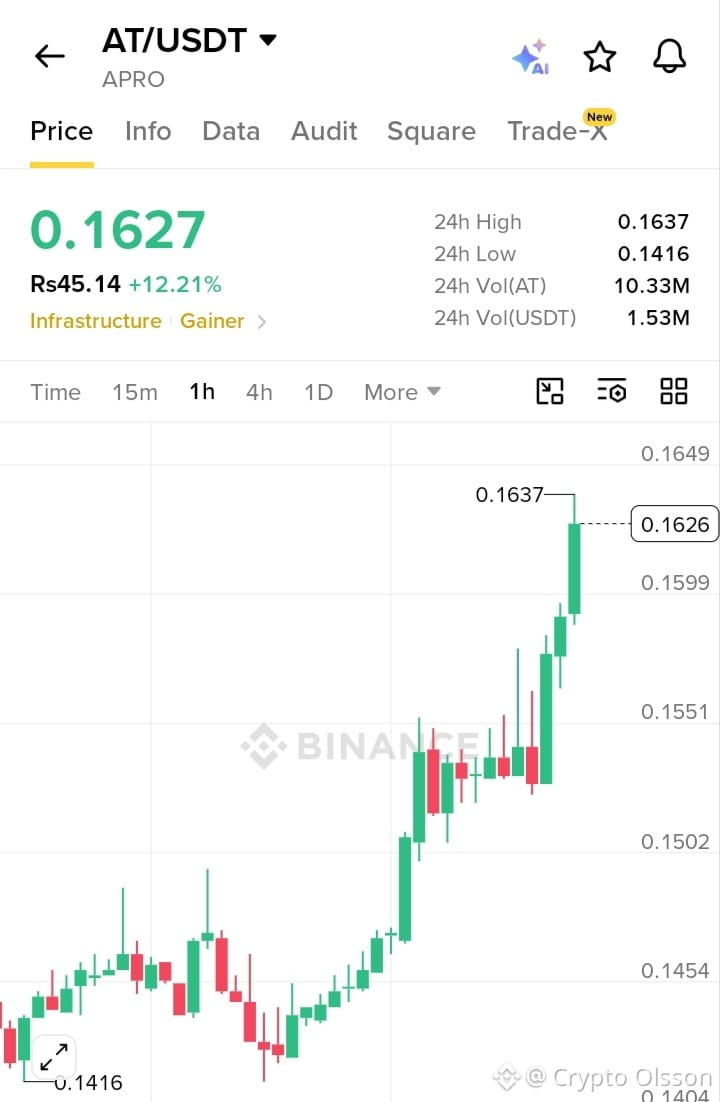
I've been digging into APRO and it's one of those projects that doesn't get much attention compared to the big AI or meme narratives.
A few things that caught my eye:
🔸️ Low visibility compared to many projects with similar ambitions.
🔸️ Focus on infrastructure rather than hype. Not the kind of thing that trends every day, but sometimes that's where opportunities appear.
🔸️ Market still seems undecided. Some traders see potential, others don't care yet. That's usually more interesting to me than assets everyone already agrees on.
Now, let's be real:
⚠️ APRO isn't guaranteed to moon.
⚠️ It could underperform.
⚠️ Crypto is full of projects that looked promising and went nowhere.
But that's exactly why I'm watching it. The risk/reward profile feels more interesting than chasing tokens that already pumped 500%.
What I usually do with coins like this:
✔️ Read the docs.
✔️Check tokenomics.
✔️Watch volume and liquidity.
✔️ Open a small position first and let the market prove me right (or wrong).
Not financial advice, of course. Just sharing a project that's currently on my watchlist and its has kinda strong protection against this downtrend we all see
Have you looked into APRO yet? Bullish, bearish, or staying away?
$AT #APRO
{spot}(ATUSDT)
I've been digging into APRO and it's one of those projects that doesn't get much attention compared to the big AI or meme narratives.
A few things that caught my eye:
🔸️ Low visibility compared to many projects with similar ambitions.
🔸️ Focus on infrastructure rather than hype. Not the kind of thing that trends every day, but sometimes that's where opportunities appear.
🔸️ Market still seems undecided. Some traders see potential, others don't care yet. That's usually more interesting to me than assets everyone already agrees on.
Now, let's be real:
⚠️ APRO isn't guaranteed to moon.
⚠️ It could underperform.
⚠️ Crypto is full of projects that looked promising and went nowhere.
But that's exactly why I'm watching it. The risk/reward profile feels more interesting than chasing tokens that already pumped 500%.
What I usually do with coins like this:
✔️ Read the docs.
✔️Check tokenomics.
✔️Watch volume and liquidity.
✔️ Open a small position first and let the market prove me right (or wrong).
Not financial advice, of course. Just sharing a project that's currently on my watchlist and its has kinda strong protection against this downtrend we all see
Have you looked into APRO yet? Bullish, bearish, or staying away?
$AT #APRO
A few things that caught my eye:
🔸️ Low visibility compared to many projects with similar ambitions.
🔸️ Focus on infrastructure rather than hype. Not the kind of thing that trends every day, but sometimes that's where opportunities appear.
🔸️ Market still seems undecided. Some traders see potential, others don't care yet. That's usually more interesting to me than assets everyone already agrees on.
Now, let's be real:
⚠️ APRO isn't guaranteed to moon.
⚠️ It could underperform.
⚠️ Crypto is full of projects that looked promising and went nowhere.
But that's exactly why I'm watching it. The risk/reward profile feels more interesting than chasing tokens that already pumped 500%.
What I usually do with coins like this:
✔️ Read the docs.
✔️Check tokenomics.
✔️Watch volume and liquidity.
✔️ Open a small position first and let the market prove me right (or wrong).
Not financial advice, of course. Just sharing a project that's currently on my watchlist and its has kinda strong protection against this downtrend we all see
Have you looked into APRO yet? Bullish, bearish, or staying away?
$AT #APRO
1
175

#APRO
🔍 $AT Price Outlook: Real Focus on Profit or Macroeconomic Pressure?
Short-Term Volatility or Foundation for Future Growth? We analyze the key factors that will determine the $AT price movement in the near future.
1️⃣ 🚀 Adoption and Integrations: The Foundation is Growing
Reality: The protocol is already running on over 40 blockchains. An important marker is the launch of a key integration with Arbitrum and a steady weekly increase in AI oracle calls.
Price Impact: DeFi, RWA and prediction markets are creating real demand for the network. If the economic model effectively links this activity to the token (via staking or fees), we will see strong structural demand. However, the fight for market share with giants like Chainlink still leaves this factor moderately speculative.
2️⃣ 📊 Exchange Liquidity: A Double-edged Sword
Pros: The airdrop and listing on Binance, as well as the appearance on Bitrue and Tapbit, provided the token with strong visibility and initial capital inflows.
Cons: The recent removal of the AT/BNB trading pair on Binance may slightly reduce accessibility for some of the audience and provoke local volatility. Risks for short-term traders are increasing.
3️⃣ 📉 Market sentiment: Altcoins under pressure
Macro picture: The crypto market is currently in the “Fear” zone, with Bitcoin dominance remaining high (over 58%).
What this means: Oracles are high-beta assets. As long as capital is focused on BTC and the AltSeason index is stagnating at 46, APRO will find it difficult to go against the tide. The price will remain dependent on the overall risk appetite of investors.
⚠️ Summary for holders
APRO's medium-term success directly depends on the project's ability to convert cool technical integrations (such as with Arbitrum) into real utility and demand for the token. While the macroeconomic background is stormy, the investor's main weapon is patience and monitoring the ecosystem.
{future}(ATUSDT)
#APRO
🔍 $AT Price Outlook: Real Focus on Profit or Macroeconomic Pressure?
Short-Term Volatility or Foundation for Future Growth? We analyze the key factors that will determine the $AT price movement in the near future.
1️⃣ 🚀 Adoption and Integrations: The Foundation is Growing
Reality: The protocol is already running on over 40 blockchains. An important marker is the launch of a key integration with Arbitrum and a steady weekly increase in AI oracle calls.
Price Impact: DeFi, RWA and prediction markets are creating real demand for the network. If the economic model effectively links this activity to the token (via staking or fees), we will see strong structural demand. However, the fight for market share with giants like Chainlink still leaves this factor moderately speculative.
2️⃣ 📊 Exchange Liquidity: A Double-edged Sword
Pros: The airdrop and listing on Binance, as well as the appearance on Bitrue and Tapbit, provided the token with strong visibility and initial capital inflows.
Cons: The recent removal of the AT/BNB trading pair on Binance may slightly reduce accessibility for some of the audience and provoke local volatility. Risks for short-term traders are increasing.
3️⃣ 📉 Market sentiment: Altcoins under pressure
Macro picture: The crypto market is currently in the “Fear” zone, with Bitcoin dominance remaining high (over 58%).
What this means: Oracles are high-beta assets. As long as capital is focused on BTC and the AltSeason index is stagnating at 46, APRO will find it difficult to go against the tide. The price will remain dependent on the overall risk appetite of investors.
⚠️ Summary for holders
APRO's medium-term success directly depends on the project's ability to convert cool technical integrations (such as with Arbitrum) into real utility and demand for the token. While the macroeconomic background is stormy, the investor's main weapon is patience and monitoring the ecosystem.
🔍 $AT Price Outlook: Real Focus on Profit or Macroeconomic Pressure?
Short-Term Volatility or Foundation for Future Growth? We analyze the key factors that will determine the $AT price movement in the near future.
1️⃣ 🚀 Adoption and Integrations: The Foundation is Growing
Reality: The protocol is already running on over 40 blockchains. An important marker is the launch of a key integration with Arbitrum and a steady weekly increase in AI oracle calls.
Price Impact: DeFi, RWA and prediction markets are creating real demand for the network. If the economic model effectively links this activity to the token (via staking or fees), we will see strong structural demand. However, the fight for market share with giants like Chainlink still leaves this factor moderately speculative.
2️⃣ 📊 Exchange Liquidity: A Double-edged Sword
Pros: The airdrop and listing on Binance, as well as the appearance on Bitrue and Tapbit, provided the token with strong visibility and initial capital inflows.
Cons: The recent removal of the AT/BNB trading pair on Binance may slightly reduce accessibility for some of the audience and provoke local volatility. Risks for short-term traders are increasing.
3️⃣ 📉 Market sentiment: Altcoins under pressure
Macro picture: The crypto market is currently in the “Fear” zone, with Bitcoin dominance remaining high (over 58%).
What this means: Oracles are high-beta assets. As long as capital is focused on BTC and the AltSeason index is stagnating at 46, APRO will find it difficult to go against the tide. The price will remain dependent on the overall risk appetite of investors.
⚠️ Summary for holders
APRO's medium-term success directly depends on the project's ability to convert cool technical integrations (such as with Arbitrum) into real utility and demand for the token. While the macroeconomic background is stormy, the investor's main weapon is patience and monitoring the ecosystem.
1
132

🚀 Just explored the APRO documentation and it's clear the team is focused on building a developer-friendly ecosystem.
Well-structured docs, a straightforward onboarding experience, and the resources developers need to start building with confidence. Great documentation is one of the strongest indicators of a project's long-term potential.
If you're building in Web3, it's worth checking out and following the project's progress.
#APRO #Web3 #blockchain #DeFi: #Developers #Crypto #BuildInPublic
🚀 Just explored the APRO documentation and it's clear the team is focused on building a developer-friendly ecosystem.
Well-structured docs, a straightforward onboarding experience, and the resources developers need to start building with confidence. Great documentation is one of the strongest indicators of a project's long-term potential.
If you're building in Web3, it's worth checking out and following the project's progress.
#APRO #Web3 #blockchain #DeFi: #Developers #Crypto #BuildInPublic
Well-structured docs, a straightforward onboarding experience, and the resources developers need to start building with confidence. Great documentation is one of the strongest indicators of a project's long-term potential.
If you're building in Web3, it's worth checking out and following the project's progress.
#APRO #Web3 #blockchain #DeFi: #Developers #Crypto #BuildInPublic
94

·
--
🚨 URGENT: WILL AT/USDT BREAK OUT OR BREAK DOWN? UNDERSTAND THE MOVE RIGHT NOW! 🚨
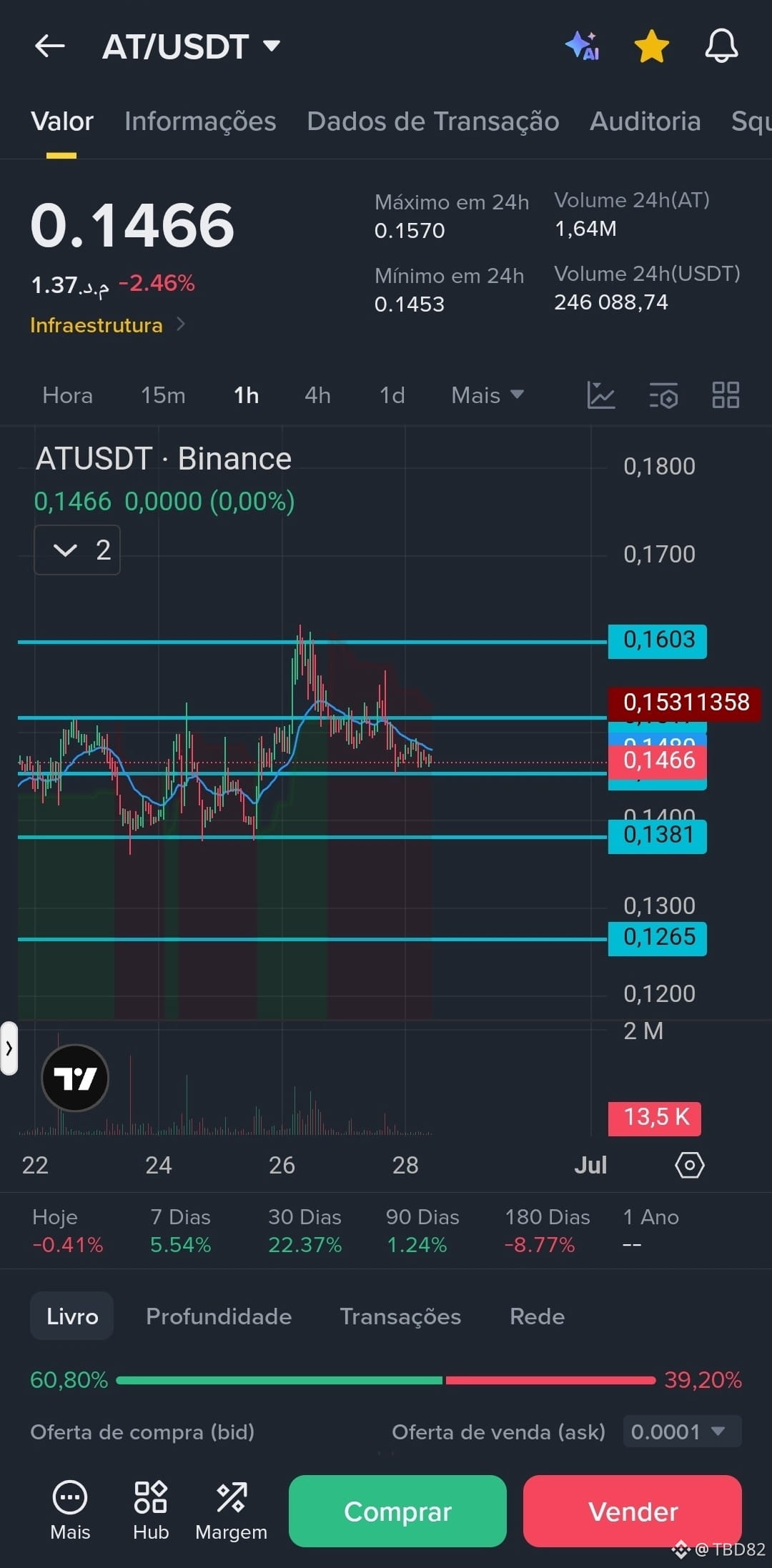
The AT token (APRO) is consolidating at $0.1466 (-2.46%), but the clock is ticking! ⏳ If you’re already positioned or thinking about entering, pay close attention to these crucial technical factors in the coming hours:
📈 THE BULLISH SIDE (UP):
Strategic integrations with BNB Chain and ListaDAO have drastically increased the usefulness of oracles for RWAs and DeFi. The community is anticipating a breakout! Strong support in the $0.1381 to $0.1400 region has been holding the price firmly.
📉 THE BEARISH RISK (DOWN):
Short-term momentum has slowed down. The MACD on the 1H chart shows negative histograms and the price has pulled back slightly. Also, daily liquidity is reduced (Volume: 1.64M), meaning any whale could move the market suddenly. If support at $0.1381 is lost, the next target is $0.1265. But if the RSI signals oversold and volume comes in, we’ll quickly go after resistance at $0.1603!
🎯 PROFITABLE STRATEGY: Don’t trade in the dark! Wait for volume confirmation before opening your position.
👉 Want to make big profits with exclusive analyses before everyone else? Click FOLLOW my profile now so you don’t miss the next market signals and explosive updates! 🚀
#BinanceSquare #CryptoAnalise #APRO #trading #Altcoins $BTC $SPCXB $AT
{spot}(ATUSDT)
🚨 URGENT: WILL AT/USDT BREAK OUT OR BREAK DOWN? UNDERSTAND THE MOVE RIGHT NOW! 🚨
The AT token (APRO) is consolidating at $0.1466 (-2.46%), but the clock is ticking! ⏳ If you’re already positioned or thinking about entering, pay close attention to these crucial technical factors in the coming hours:
📈 THE BULLISH SIDE (UP):
Strategic integrations with BNB Chain and ListaDAO have drastically increased the usefulness of oracles for RWAs and DeFi. The community is anticipating a breakout! Strong support in the $0.1381 to $0.1400 region has been holding the price firmly.
📉 THE BEARISH RISK (DOWN):
Short-term momentum has slowed down. The MACD on the 1H chart shows negative histograms and the price has pulled back slightly. Also, daily liquidity is reduced (Volume: 1.64M), meaning any whale could move the market suddenly. If support at $0.1381 is lost, the next target is $0.1265. But if the RSI signals oversold and volume comes in, we’ll quickly go after resistance at $0.1603!
🎯 PROFITABLE STRATEGY: Don’t trade in the dark! Wait for volume confirmation before opening your position.
👉 Want to make big profits with exclusive analyses before everyone else? Click FOLLOW my profile now so you don’t miss the next market signals and explosive updates! 🚀
#BinanceSquare #CryptoAnalise #APRO #trading #Altcoins $BTC $SPCXB $AT
The AT token (APRO) is consolidating at $0.1466 (-2.46%), but the clock is ticking! ⏳ If you’re already positioned or thinking about entering, pay close attention to these crucial technical factors in the coming hours:
📈 THE BULLISH SIDE (UP):
Strategic integrations with BNB Chain and ListaDAO have drastically increased the usefulness of oracles for RWAs and DeFi. The community is anticipating a breakout! Strong support in the $0.1381 to $0.1400 region has been holding the price firmly.
📉 THE BEARISH RISK (DOWN):
Short-term momentum has slowed down. The MACD on the 1H chart shows negative histograms and the price has pulled back slightly. Also, daily liquidity is reduced (Volume: 1.64M), meaning any whale could move the market suddenly. If support at $0.1381 is lost, the next target is $0.1265. But if the RSI signals oversold and volume comes in, we’ll quickly go after resistance at $0.1603!
🎯 PROFITABLE STRATEGY: Don’t trade in the dark! Wait for volume confirmation before opening your position.
👉 Want to make big profits with exclusive analyses before everyone else? Click FOLLOW my profile now so you don’t miss the next market signals and explosive updates! 🚀
#BinanceSquare #CryptoAnalise #APRO #trading #Altcoins $BTC $SPCXB $AT
206



$APRO JUST LANDED A MAJOR ORACLE DEAL THAT FEW ARE TALKING ABOUT 🚀
APRO's MORE program just added Lista DAO, bringing price feeds for six new Binance bStocks pairs — MSFTB, METAB, LITEB, PLTRB, QQQB, SKHYB — alongside existing assets like NVDAB and TSLAB. This isn't a tiny update; it's APRO positioning as the go-to oracle for tokenized stocks on BNB Chain. With bStocks volume growing, the demand for reliable price data is non-negotiable.
The team says they now offer the most comprehensive coverage in the bStocks space. That's a narrative that tends to attract volume when the market catches on. Are you watching the $APRO chart for a volume spike?
Not financial advice. Always manage your risk.
#APRO #Oracle #BNBChain #DeFi #bStocks
🔥
$APRO JUST LANDED A MAJOR ORACLE DEAL THAT FEW ARE TALKING ABOUT 🚀
APRO's MORE program just added Lista DAO, bringing price feeds for six new Binance bStocks pairs — MSFTB, METAB, LITEB, PLTRB, QQQB, SKHYB — alongside existing assets like NVDAB and TSLAB. This isn't a tiny update; it's APRO positioning as the go-to oracle for tokenized stocks on BNB Chain. With bStocks volume growing, the demand for reliable price data is non-negotiable.
The team says they now offer the most comprehensive coverage in the bStocks space. That's a narrative that tends to attract volume when the market catches on. Are you watching the $APRO chart for a volume spike?
Not financial advice. Always manage your risk.
#APRO #Oracle #BNBChain #DeFi #bStocks
🔥
APRO's MORE program just added Lista DAO, bringing price feeds for six new Binance bStocks pairs — MSFTB, METAB, LITEB, PLTRB, QQQB, SKHYB — alongside existing assets like NVDAB and TSLAB. This isn't a tiny update; it's APRO positioning as the go-to oracle for tokenized stocks on BNB Chain. With bStocks volume growing, the demand for reliable price data is non-negotiable.
The team says they now offer the most comprehensive coverage in the bStocks space. That's a narrative that tends to attract volume when the market catches on. Are you watching the $APRO chart for a volume spike?
Not financial advice. Always manage your risk.
#APRO #Oracle #BNBChain #DeFi #bStocks
🔥
81

·
--
$APRO POWERS LISTA DAO'S BSTORKS INTEGRATION — ECOSYSTEM EXPANDING 🚀
APRO is now providing price feed services for six new bStock trading pairs on Lista DAO through the MORE program. This adds MSFTB, METAB, LITEB, PLTRB, QQQB, and SKHYB to the existing coverage.
The multi-oracle structure eliminates single-point-of-failure risk while stabilizing pricing across tokenized equities. With bStocks growing rapidly on BNB Chain, APRO's role as the primary oracle provider gives it structural demand that isn't priced in yet.
Does this move strengthen $APRO 's position as the go-to oracle for BNB Chain synthetic assets?
Not financial advice. Always manage your risk.
#APRO #LISTA #Oracle #bStocks #BNBChain
🔥
$APRO POWERS LISTA DAO'S BSTORKS INTEGRATION — ECOSYSTEM EXPANDING 🚀
APRO is now providing price feed services for six new bStock trading pairs on Lista DAO through the MORE program. This adds MSFTB, METAB, LITEB, PLTRB, QQQB, and SKHYB to the existing coverage.
The multi-oracle structure eliminates single-point-of-failure risk while stabilizing pricing across tokenized equities. With bStocks growing rapidly on BNB Chain, APRO's role as the primary oracle provider gives it structural demand that isn't priced in yet.
Does this move strengthen $APRO 's position as the go-to oracle for BNB Chain synthetic assets?
Not financial advice. Always manage your risk.
#APRO #LISTA #Oracle #bStocks #BNBChain
🔥
APRO is now providing price feed services for six new bStock trading pairs on Lista DAO through the MORE program. This adds MSFTB, METAB, LITEB, PLTRB, QQQB, and SKHYB to the existing coverage.
The multi-oracle structure eliminates single-point-of-failure risk while stabilizing pricing across tokenized equities. With bStocks growing rapidly on BNB Chain, APRO's role as the primary oracle provider gives it structural demand that isn't priced in yet.
Does this move strengthen $APRO 's position as the go-to oracle for BNB Chain synthetic assets?
Not financial advice. Always manage your risk.
#APRO #LISTA #Oracle #bStocks #BNBChain
🔥
98


·
--
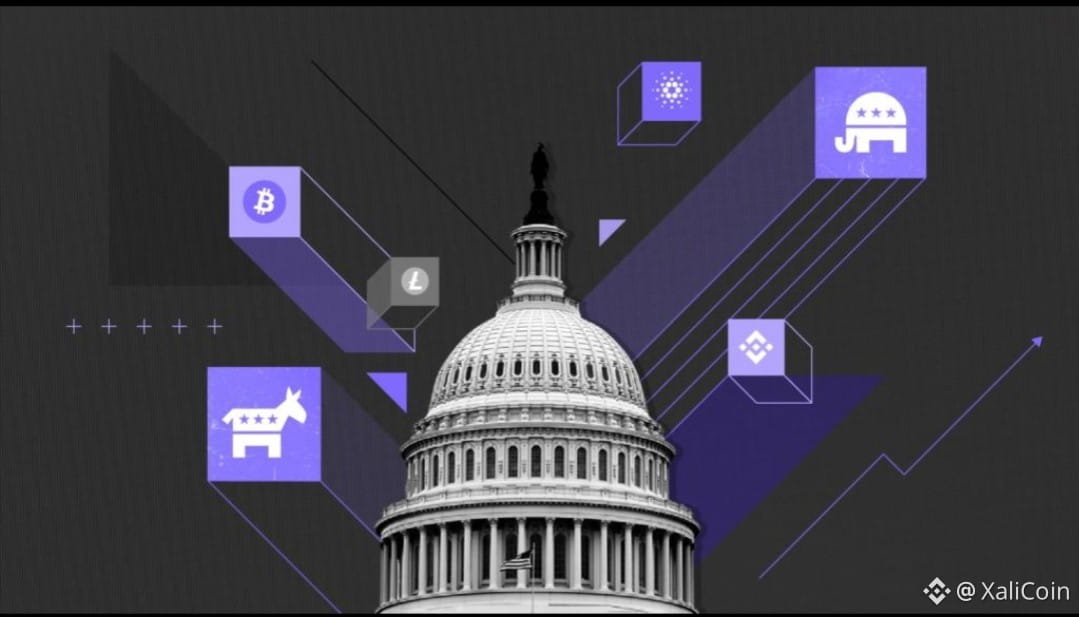
#USPARITYCryptoTaxBill
Digital Asset Protection, Accountability, Regulation, Innovation, Taxation & Yields (PARITY) Act
BACKGROUND
This bill was officially introduced on May 19, 2026, by a bipartisan group from the House Ways and Means Committee — Rep. Steven Horsford (D-Nev.), Suzan DelBene (D-Wash.), Max Miller (R-Ohio), and Mike Carey (R-Ohio).
This didn't just pop up out of nowhere — the PARITY Act first dropped as a discussion draft back in December 2025, then got re-released in March 2026 for further review.
$AT @APRO-Oracle #APRO
{spot}(ATUSDT)
#USPARITYCryptoTaxBill
Digital Asset Protection, Accountability, Regulation, Innovation, Taxation & Yields (PARITY) Act
BACKGROUND
This bill was officially introduced on May 19, 2026, by a bipartisan group from the House Ways and Means Committee — Rep. Steven Horsford (D-Nev.), Suzan DelBene (D-Wash.), Max Miller (R-Ohio), and Mike Carey (R-Ohio).
This didn't just pop up out of nowhere — the PARITY Act first dropped as a discussion draft back in December 2025, then got re-released in March 2026 for further review.
$AT @APRO Oracle #APRO
Digital Asset Protection, Accountability, Regulation, Innovation, Taxation & Yields (PARITY) Act
BACKGROUND
This bill was officially introduced on May 19, 2026, by a bipartisan group from the House Ways and Means Committee — Rep. Steven Horsford (D-Nev.), Suzan DelBene (D-Wash.), Max Miller (R-Ohio), and Mike Carey (R-Ohio).
This didn't just pop up out of nowhere — the PARITY Act first dropped as a discussion draft back in December 2025, then got re-released in March 2026 for further review.
$AT @APRO Oracle #APRO
1
1
313

·
--
Bearish
🔴 $AT — SHORT SIGNAL
📊 Conviction: 91.7%
⚖️ R:R: Up to 1:2.18
🎯 Entry: $0.1430–$0.1440
🛑 SL: $0.1520 (+5.9%)
🎯 TP1: $0.1345 (-6.3%)
🎯 TP2: $0.1300 (-9.4%)
🎯 TP3: $0.1250 (-12.9%)
🔥 Key Signals:
• Top Trader Ratio: 6.80 → 6.31 ↓
• Support $0.1400 under pressure
• OI ~57.8M, contracting from peak
• Funding +0.0050%
• Basis near zero/negative
• Repeated taker-sell spikes
• Retail accounts heavily short-biased
⚡ Confirmation: 15m/1H close below $0.1400 with strong sell volume.
❌ Invalidation: Sustained reclaim above $0.1520.
⚠️ Retail shorts are already crowded, so a relief squeeze is possible. Manage risk carefully.
#AT #APRO #Crypto #Futures #Trading
{future}(ATUSDT)
🔴 $AT — SHORT SIGNAL
📊 Conviction: 91.7%
⚖️ R:R: Up to 1:2.18
🎯 Entry: $0.1430–$0.1440
🛑 SL: $0.1520 (+5.9%)
🎯 TP1: $0.1345 (-6.3%)
🎯 TP2: $0.1300 (-9.4%)
🎯 TP3: $0.1250 (-12.9%)
🔥 Key Signals:
• Top Trader Ratio: 6.80 → 6.31 ↓
• Support $0.1400 under pressure
• OI ~57.8M, contracting from peak
• Funding +0.0050%
• Basis near zero/negative
• Repeated taker-sell spikes
• Retail accounts heavily short-biased
⚡ Confirmation: 15m/1H close below $0.1400 with strong sell volume.
❌ Invalidation: Sustained reclaim above $0.1520.
⚠️ Retail shorts are already crowded, so a relief squeeze is possible. Manage risk carefully.
#AT #APRO #Crypto #Futures #Trading
📊 Conviction: 91.7%
⚖️ R:R: Up to 1:2.18
🎯 Entry: $0.1430–$0.1440
🛑 SL: $0.1520 (+5.9%)
🎯 TP1: $0.1345 (-6.3%)
🎯 TP2: $0.1300 (-9.4%)
🎯 TP3: $0.1250 (-12.9%)
🔥 Key Signals:
• Top Trader Ratio: 6.80 → 6.31 ↓
• Support $0.1400 under pressure
• OI ~57.8M, contracting from peak
• Funding +0.0050%
• Basis near zero/negative
• Repeated taker-sell spikes
• Retail accounts heavily short-biased
⚡ Confirmation: 15m/1H close below $0.1400 with strong sell volume.
❌ Invalidation: Sustained reclaim above $0.1520.
⚠️ Retail shorts are already crowded, so a relief squeeze is possible. Manage risk carefully.
#AT #APRO #Crypto #Futures #Trading

65

·
--
Bullish
السلام عليكم ورحمة الله وبركاته
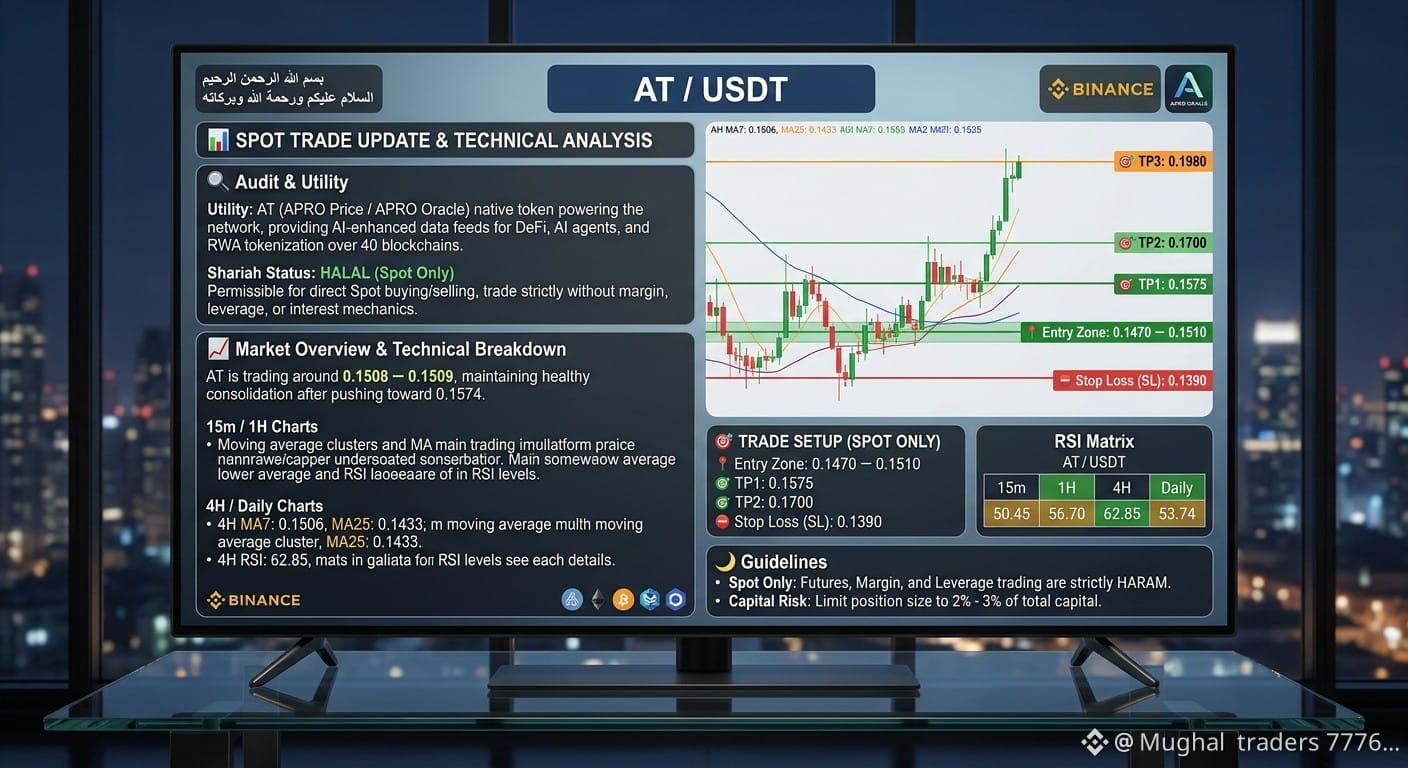
📊 SPOT TRADE UPDATE & TECHNICAL ANALYSIS: $AT / USDT
🔍 Audit & Utility
Utility: $AT is the native utility, staking, and governance token powering the APRO Oracle network. It provides AI-enhanced, decentralized real-world data feeds across over 40 blockchains for DeFi, AI agents, and Real-World Asset (RWA) tokenization.
Shariah Status: HALAL (Spot Only) (Permissible for direct Spot buying and selling as a decentralized AI oracle data-feed infrastructure asset; trade strictly on Spot without margin, leverage, or interest mechanics).
📈 Market Overview & Technical Breakdown
AT is trading around 0.1508 – 0.1509, maintaining a healthy consolidation pattern after pushing up toward its recent high near 0.1574.
15m / 1H Charts: On lower timeframes, AT is consolidating near key moving average clusters following a brief spike to 0.1574. On 15m, price action is hovering around short-term moving averages (15m MA7: 0.1511, MA25: 0.1509, MA99: 0.1506; 1H MA7: 0.1509, MA25: 0.1506, MA99: 0.1429). 15m RSI is neutral at 50.45, while 1H RSI sits at 56.70.
4H / Daily Charts: Higher timeframes show strong macro recovery and upward continuation from its bottom support floor of 0.1302 (4H low) and 0.0948 (Daily swing low). Price is trading comfortably above long-term moving averages (4H MA7: 0.1506, MA25: 0.1433, MA99: 0.1406; Daily MA7: 0.1412, MA25: 0.1452, MA99: 0.1416). 4H RSI stands at 62.85 and Daily RSI holds a solid 53.74.
RSI Matrix: 15m: 50.45 | 1H: 56.70 | 4H: 62.85 | Daily: 53.74.
🎯 TRADE SETUP (SPOT ONLY)
Asset: AT / USDT | Type: Spot (Halal Setup) | Status: Bullish Consolidation / MA Support Reclaim
📍 Entry Zone: 0.1470 – 0.1510
🎯 TP1: 0.1575
🎯 TP2: 0.1700
🎯 TP3: 0.1980
⛔ Stop Loss (SL): 0.1390
🌙 Guidelines
Spot Only: Futures, Margin, and Leverage trading are strictly HARAM.
Capital Risk: Limit position size to 2% - 3% of total capital.
{spot}(ATUSDT)
#AT #APRO #CryptoAnalysis #SpotTrading #HalalCrypto
السلام عليكم ورحمة الله وبركاته
📊 SPOT TRADE UPDATE & TECHNICAL ANALYSIS: $AT / USDT
🔍 Audit & Utility
Utility: $AT is the native utility, staking, and governance token powering the APRO Oracle network. It provides AI-enhanced, decentralized real-world data feeds across over 40 blockchains for DeFi, AI agents, and Real-World Asset (RWA) tokenization.
Shariah Status: HALAL (Spot Only) (Permissible for direct Spot buying and selling as a decentralized AI oracle data-feed infrastructure asset; trade strictly on Spot without margin, leverage, or interest mechanics).
📈 Market Overview & Technical Breakdown
AT is trading around 0.1508 – 0.1509, maintaining a healthy consolidation pattern after pushing up toward its recent high near 0.1574.
15m / 1H Charts: On lower timeframes, AT is consolidating near key moving average clusters following a brief spike to 0.1574. On 15m, price action is hovering around short-term moving averages (15m MA7: 0.1511, MA25: 0.1509, MA99: 0.1506; 1H MA7: 0.1509, MA25: 0.1506, MA99: 0.1429). 15m RSI is neutral at 50.45, while 1H RSI sits at 56.70.
4H / Daily Charts: Higher timeframes show strong macro recovery and upward continuation from its bottom support floor of 0.1302 (4H low) and 0.0948 (Daily swing low). Price is trading comfortably above long-term moving averages (4H MA7: 0.1506, MA25: 0.1433, MA99: 0.1406; Daily MA7: 0.1412, MA25: 0.1452, MA99: 0.1416). 4H RSI stands at 62.85 and Daily RSI holds a solid 53.74.
RSI Matrix: 15m: 50.45 | 1H: 56.70 | 4H: 62.85 | Daily: 53.74.
🎯 TRADE SETUP (SPOT ONLY)
Asset: AT / USDT | Type: Spot (Halal Setup) | Status: Bullish Consolidation / MA Support Reclaim
📍 Entry Zone: 0.1470 – 0.1510
🎯 TP1: 0.1575
🎯 TP2: 0.1700
🎯 TP3: 0.1980
⛔ Stop Loss (SL): 0.1390
🌙 Guidelines
Spot Only: Futures, Margin, and Leverage trading are strictly HARAM.
Capital Risk: Limit position size to 2% - 3% of total capital.
#AT #APRO #CryptoAnalysis #SpotTrading #HalalCrypto
📊 SPOT TRADE UPDATE & TECHNICAL ANALYSIS: $AT / USDT
🔍 Audit & Utility
Utility: $AT is the native utility, staking, and governance token powering the APRO Oracle network. It provides AI-enhanced, decentralized real-world data feeds across over 40 blockchains for DeFi, AI agents, and Real-World Asset (RWA) tokenization.
Shariah Status: HALAL (Spot Only) (Permissible for direct Spot buying and selling as a decentralized AI oracle data-feed infrastructure asset; trade strictly on Spot without margin, leverage, or interest mechanics).
📈 Market Overview & Technical Breakdown
AT is trading around 0.1508 – 0.1509, maintaining a healthy consolidation pattern after pushing up toward its recent high near 0.1574.
15m / 1H Charts: On lower timeframes, AT is consolidating near key moving average clusters following a brief spike to 0.1574. On 15m, price action is hovering around short-term moving averages (15m MA7: 0.1511, MA25: 0.1509, MA99: 0.1506; 1H MA7: 0.1509, MA25: 0.1506, MA99: 0.1429). 15m RSI is neutral at 50.45, while 1H RSI sits at 56.70.
4H / Daily Charts: Higher timeframes show strong macro recovery and upward continuation from its bottom support floor of 0.1302 (4H low) and 0.0948 (Daily swing low). Price is trading comfortably above long-term moving averages (4H MA7: 0.1506, MA25: 0.1433, MA99: 0.1406; Daily MA7: 0.1412, MA25: 0.1452, MA99: 0.1416). 4H RSI stands at 62.85 and Daily RSI holds a solid 53.74.
RSI Matrix: 15m: 50.45 | 1H: 56.70 | 4H: 62.85 | Daily: 53.74.
🎯 TRADE SETUP (SPOT ONLY)
Asset: AT / USDT | Type: Spot (Halal Setup) | Status: Bullish Consolidation / MA Support Reclaim
📍 Entry Zone: 0.1470 – 0.1510
🎯 TP1: 0.1575
🎯 TP2: 0.1700
🎯 TP3: 0.1980
⛔ Stop Loss (SL): 0.1390
🌙 Guidelines
Spot Only: Futures, Margin, and Leverage trading are strictly HARAM.
Capital Risk: Limit position size to 2% - 3% of total capital.
#AT #APRO #CryptoAnalysis #SpotTrading #HalalCrypto
40

·
--
Bullish
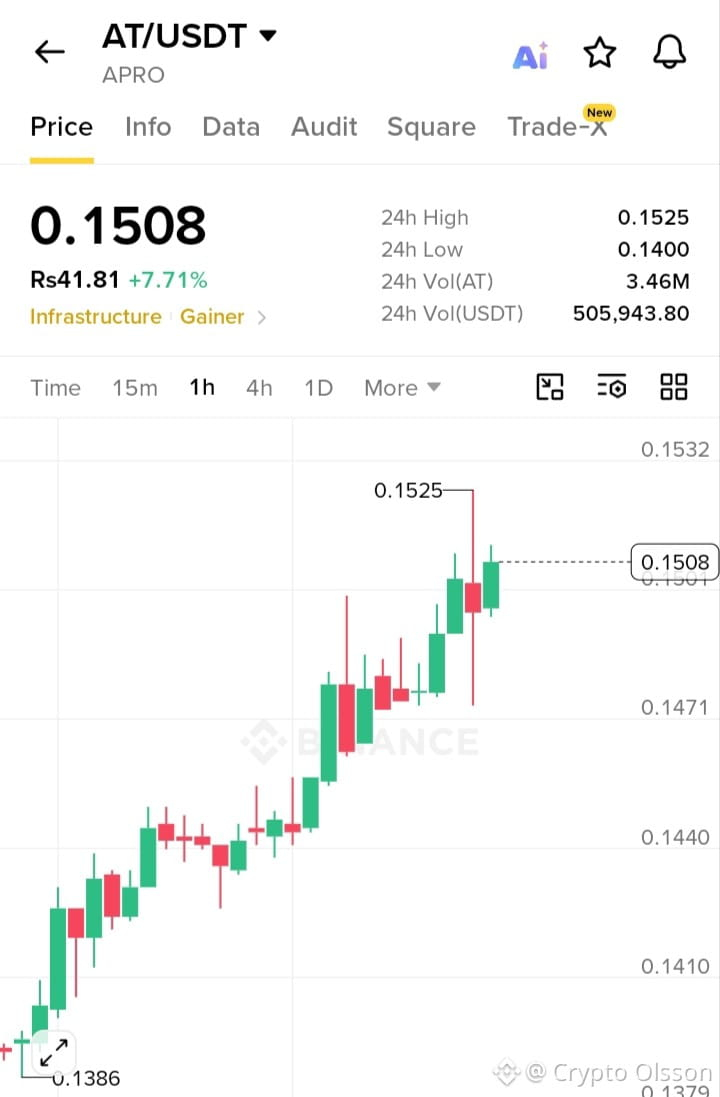
🔥 $AT /USDT — LONG SETUP
Entry Point (EP): $0.1470 – $0.1500
TP1: $0.1525
TP2: $0.1532
TP3: $0.1580
🛑 SL: $0.1410
Bullish idea: Hold above $0.1470 and reclaim $0.1525 with volume → potential continuation higher.
⚠️ Don't chase the pump. Wait for a proper entry/retest and manage risk.
#AT #ATUSDT #APRO #LongSetup
$AT
{future}(ATUSDT)
🔥 $AT /USDT — LONG SETUP
Entry Point (EP): $0.1470 – $0.1500
TP1: $0.1525
TP2: $0.1532
TP3: $0.1580
🛑 SL: $0.1410
Bullish idea: Hold above $0.1470 and reclaim $0.1525 with volume → potential continuation higher.
⚠️ Don't chase the pump. Wait for a proper entry/retest and manage risk.
#AT #ATUSDT #APRO #LongSetup
$AT
Entry Point (EP): $0.1470 – $0.1500
TP1: $0.1525
TP2: $0.1532
TP3: $0.1580
🛑 SL: $0.1410
Bullish idea: Hold above $0.1470 and reclaim $0.1525 with volume → potential continuation higher.
⚠️ Don't chase the pump. Wait for a proper entry/retest and manage risk.
#AT #ATUSDT #APRO #LongSetup
$AT
1
97
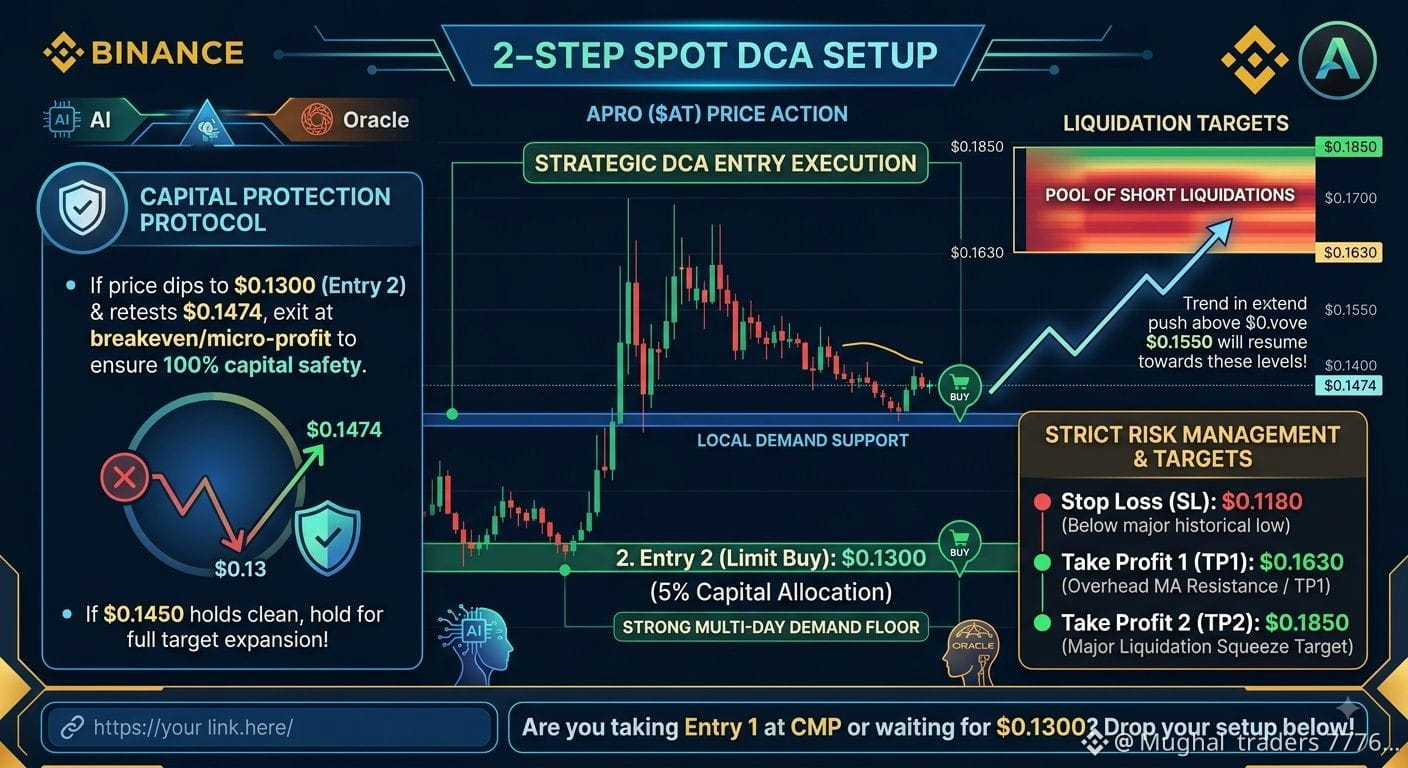
🔥 $AT SPOT DCA SETUP: AI ORACLE TOKEN AT LOCAL DEMAND SUPPORT! 🚀
APRO ($AT ) is currently cooling down after a volatility spike, trading near $0.1474, right around its short-term support zone.
Here is a capital-protected 2-step DCA setup designed for a clean relief bounce toward overhead liquidity! 👇
🧠 360° DATA & EXECUTION BREAKDOWN:
1️⃣ Strategic DCA Entry Execution:
Entry 1: $0.1474 (CMP — Local Support Base).
Entry 2: $0.1300 (Limit Buy — Strong Multi-Day Demand Floor).
2️⃣ Liquidation Targets: The recent rejection left a pool of short liquidations between $0.1630 and $0.1850. A push above $0.1550 will resume upside momentum.
3️⃣ Capital Protection Protocol: If price dips to Entry 2 ($0.1300) and retests $0.1474 (retested resistance), exit at breakeven/micro-profit to ensure 100% capital safety. If $0.1450 holds clean, hold for full target expansion!
🎯 2-STEP SPOT DCA PLAN ($AT) 🎯
📥 Entry 1 (CMP): $0.1474 (5% Capital Allocation)
📥 Entry 2 (Limit Buy): $0.1300 (5% Capital Allocation - Bottom Support)
💼 Total Position Exposure: 10% Equity Max
📊 STRICT RISK MANAGEMENT & TARGETS:
🛑 Stop Loss (SL): $0.1180 (Exit below major historical low)
🎯 Take Profit 1 (TP1): $0.1630 (Overhead MA Resistance / TP1)
🎯 Take Profit 2 (TP2): $0.1850 (Major Liquidation Squeeze Target)
💡 CONCLUSION: This strategy prioritizes capital safety. A dip to $0.1300 followed by a retest of $0.1474 provides a risk-free exit, while holding current levels triggers a bounce back toward $0.1630+!
👇 Trade $AT Spot on Binance: 👇
{spot}(ATUSDT)
💬 Are you taking Entry 1 at CMP or waiting for $0.1300? Drop your setup below! 👇
#AT #APRO #CryptoAI #BinanceSpot #RiskManagement
🔥 $AT SPOT DCA SETUP: AI ORACLE TOKEN AT LOCAL DEMAND SUPPORT! 🚀
APRO ($AT ) is currently cooling down after a volatility spike, trading near $0.1474, right around its short-term support zone.
Here is a capital-protected 2-step DCA setup designed for a clean relief bounce toward overhead liquidity! 👇
🧠 360° DATA & EXECUTION BREAKDOWN:
1️⃣ Strategic DCA Entry Execution:
Entry 1: $0.1474 (CMP — Local Support Base).
Entry 2: $0.1300 (Limit Buy — Strong Multi-Day Demand Floor).
2️⃣ Liquidation Targets: The recent rejection left a pool of short liquidations between $0.1630 and $0.1850. A push above $0.1550 will resume upside momentum.
3️⃣ Capital Protection Protocol: If price dips to Entry 2 ($0.1300) and retests $0.1474 (retested resistance), exit at breakeven/micro-profit to ensure 100% capital safety. If $0.1450 holds clean, hold for full target expansion!
🎯 2-STEP SPOT DCA PLAN ($AT ) 🎯
📥 Entry 1 (CMP): $0.1474 (5% Capital Allocation)
📥 Entry 2 (Limit Buy): $0.1300 (5% Capital Allocation - Bottom Support)
💼 Total Position Exposure: 10% Equity Max
📊 STRICT RISK MANAGEMENT & TARGETS:
🛑 Stop Loss (SL): $0.1180 (Exit below major historical low)
🎯 Take Profit 1 (TP1): $0.1630 (Overhead MA Resistance / TP1)
🎯 Take Profit 2 (TP2): $0.1850 (Major Liquidation Squeeze Target)
💡 CONCLUSION: This strategy prioritizes capital safety. A dip to $0.1300 followed by a retest of $0.1474 provides a risk-free exit, while holding current levels triggers a bounce back toward $0.1630+!
👇 Trade $AT Spot on Binance: 👇
💬 Are you taking Entry 1 at CMP or waiting for $0.1300? Drop your setup below! 👇
#AT #APRO #CryptoAI #BinanceSpot #RiskManagement
APRO ($AT ) is currently cooling down after a volatility spike, trading near $0.1474, right around its short-term support zone.
Here is a capital-protected 2-step DCA setup designed for a clean relief bounce toward overhead liquidity! 👇
🧠 360° DATA & EXECUTION BREAKDOWN:
1️⃣ Strategic DCA Entry Execution:
Entry 1: $0.1474 (CMP — Local Support Base).
Entry 2: $0.1300 (Limit Buy — Strong Multi-Day Demand Floor).
2️⃣ Liquidation Targets: The recent rejection left a pool of short liquidations between $0.1630 and $0.1850. A push above $0.1550 will resume upside momentum.
3️⃣ Capital Protection Protocol: If price dips to Entry 2 ($0.1300) and retests $0.1474 (retested resistance), exit at breakeven/micro-profit to ensure 100% capital safety. If $0.1450 holds clean, hold for full target expansion!
🎯 2-STEP SPOT DCA PLAN ($AT ) 🎯
📥 Entry 1 (CMP): $0.1474 (5% Capital Allocation)
📥 Entry 2 (Limit Buy): $0.1300 (5% Capital Allocation - Bottom Support)
💼 Total Position Exposure: 10% Equity Max
📊 STRICT RISK MANAGEMENT & TARGETS:
🛑 Stop Loss (SL): $0.1180 (Exit below major historical low)
🎯 Take Profit 1 (TP1): $0.1630 (Overhead MA Resistance / TP1)
🎯 Take Profit 2 (TP2): $0.1850 (Major Liquidation Squeeze Target)
💡 CONCLUSION: This strategy prioritizes capital safety. A dip to $0.1300 followed by a retest of $0.1474 provides a risk-free exit, while holding current levels triggers a bounce back toward $0.1630+!
👇 Trade $AT Spot on Binance: 👇
💬 Are you taking Entry 1 at CMP or waiting for $0.1300? Drop your setup below! 👇
#AT #APRO #CryptoAI #BinanceSpot #RiskManagement
85

·
--
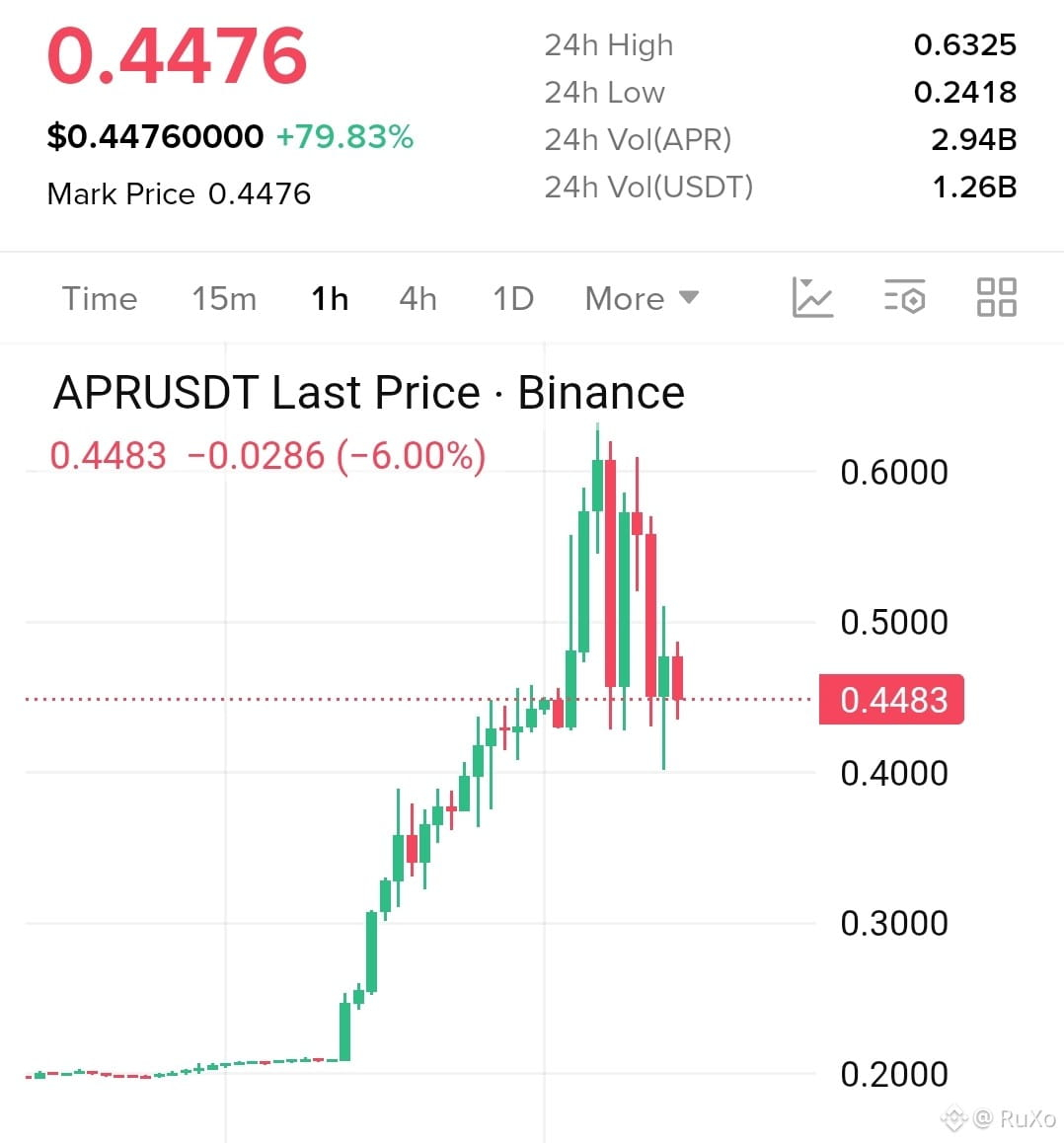
🚀 $APR surging +79.83% & consolidating near $0.4476! 👀🔥
1H timeframe showing a huge rally off 24h lows of $0.2418 to reach a 24h high of $0.6325, currently pulling back into key support! Lock in your parameters:
🟢 LONG: Close ABOVE $0.4850 🎯 TP: $0.5500 | $0.6300+ 🚀 🛑 SL: $0.4200
🔴 SHORT: Close BELOW $0.4150 🎯 TP: $0.3500 | $0.2800- 📉 🛑 SL: $0.4700
Manage your risk & DYOR! 📊⚡
{future}(APRUSDT)
➡️ CLICK $APR BELOW TO TRADE ⬅️
#APRUSDT #Apro #BinanceSquare #CryptoTrading #DYOR
🚀 $APR surging +79.83% & consolidating near $0.4476! 👀🔥
1H timeframe showing a huge rally off 24h lows of $0.2418 to reach a 24h high of $0.6325, currently pulling back into key support! Lock in your parameters:
🟢 LONG: Close ABOVE $0.4850 🎯 TP: $0.5500 | $0.6300+ 🚀 🛑 SL: $0.4200
🔴 SHORT: Close BELOW $0.4150 🎯 TP: $0.3500 | $0.2800- 📉 🛑 SL: $0.4700
Manage your risk & DYOR! 📊⚡
➡️ CLICK $APR BELOW TO TRADE ⬅️
#APRUSDT #Apro #BinanceSquare #CryptoTrading #DYOR
1H timeframe showing a huge rally off 24h lows of $0.2418 to reach a 24h high of $0.6325, currently pulling back into key support! Lock in your parameters:
🟢 LONG: Close ABOVE $0.4850 🎯 TP: $0.5500 | $0.6300+ 🚀 🛑 SL: $0.4200
🔴 SHORT: Close BELOW $0.4150 🎯 TP: $0.3500 | $0.2800- 📉 🛑 SL: $0.4700
Manage your risk & DYOR! 📊⚡
➡️ CLICK $APR BELOW TO TRADE ⬅️
#APRUSDT #Apro #BinanceSquare #CryptoTrading #DYOR
313


·
--
$BTC 📉 The crypto market reminded us of something again: nothing goes up forever.
In a matter of hours, enthusiasm can turn into fear and green candles into a downpour of reds. 🔴
What’s curious is how the sentiment shifts: yesterday everyone was talking about opportunities and today many are already asking if “it’s over.”
But maybe the most interesting question isn’t “why is it falling?”, but:
👀 Who is taking advantage of the fear while everyone else is selling? $BANK $DEXE
#bajista #APRO
$BTC 📉 The crypto market reminded us of something again: nothing goes up forever.
In a matter of hours, enthusiasm can turn into fear and green candles into a downpour of reds. 🔴
What’s curious is how the sentiment shifts: yesterday everyone was talking about opportunities and today many are already asking if “it’s over.”
But maybe the most interesting question isn’t “why is it falling?”, but:
👀 Who is taking advantage of the fear while everyone else is selling? $BANK $DEXE
#bajista #APRO
In a matter of hours, enthusiasm can turn into fear and green candles into a downpour of reds. 🔴
What’s curious is how the sentiment shifts: yesterday everyone was talking about opportunities and today many are already asking if “it’s over.”
But maybe the most interesting question isn’t “why is it falling?”, but:
👀 Who is taking advantage of the fear while everyone else is selling? $BANK $DEXE
#bajista #APRO
2
141


·
--
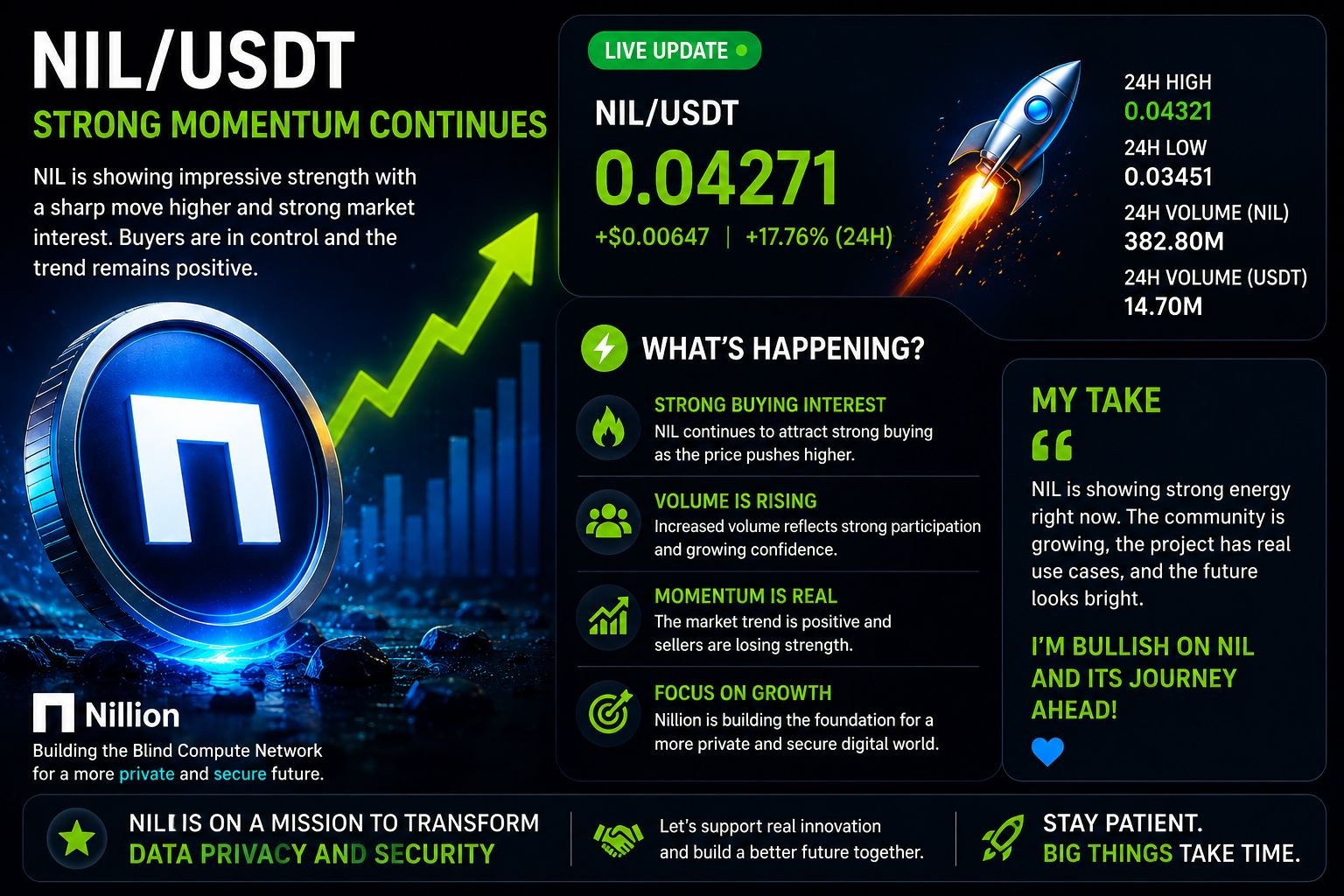
$NIL
{future}(NILUSDT)
NIL is showing one of the strongest short-term structures I’ve seen on its recent chart. After bouncing from the 0.0345 area, price pushed through multiple moving averages with rising volume and reached 0.04321. On the 15M chart, NIL is now pressing against the 0.04330 Bollinger upper band, making this a key decision point.
I’m not interested in chasing the candle here. What matters next is confirmation. A strong 15M close above 0.04330 could open the way toward 0.0453 and potentially 0.0463. If the breakout fails, I’d watch 0.0415–0.0417 first, followed by 0.0403.
For me, the trend remains bullish, but the best trade may come from patience rather than FOMO. If buyers turn 0.0433 into support, NIL could have another leg higher.
#NIL
#XAI
#prom
#zec
#APRO
$PROM
{future}(PROMUSDT)
$ZEC
{future}(ZECUSDT)
$NIL
NIL is showing one of the strongest short-term structures I’ve seen on its recent chart. After bouncing from the 0.0345 area, price pushed through multiple moving averages with rising volume and reached 0.04321. On the 15M chart, NIL is now pressing against the 0.04330 Bollinger upper band, making this a key decision point.
I’m not interested in chasing the candle here. What matters next is confirmation. A strong 15M close above 0.04330 could open the way toward 0.0453 and potentially 0.0463. If the breakout fails, I’d watch 0.0415–0.0417 first, followed by 0.0403.
For me, the trend remains bullish, but the best trade may come from patience rather than FOMO. If buyers turn 0.0433 into support, NIL could have another leg higher.
#NIL
#XAI
#prom
#zec
#APRO
$PROM
$ZEC
NIL is showing one of the strongest short-term structures I’ve seen on its recent chart. After bouncing from the 0.0345 area, price pushed through multiple moving averages with rising volume and reached 0.04321. On the 15M chart, NIL is now pressing against the 0.04330 Bollinger upper band, making this a key decision point.
I’m not interested in chasing the candle here. What matters next is confirmation. A strong 15M close above 0.04330 could open the way toward 0.0453 and potentially 0.0463. If the breakout fails, I’d watch 0.0415–0.0417 first, followed by 0.0403.
For me, the trend remains bullish, but the best trade may come from patience rather than FOMO. If buyers turn 0.0433 into support, NIL could have another leg higher.
#NIL
#XAI
#prom
#zec
#APRO
$PROM
$ZEC
4
233

·
--
APRO and the Rise of the Living Data NetworkAt first, it does not announce itself loudly.
It arrives like a signal under the noise.
A quiet realization that the digital world has been trusting fragile truths for far too long.
In blockchains, everything depends on data. Prices. Events. Outcomes. Decisions. Yet most chains live blind to the real world unless someone brings information to them. This fragile bridge between reality and code has always been the weakest point. APRO emerges right at that fracture. Not as a patch. But as a new way of sensing truth itself.
APRO feels less like a product and more like an awakening. A moment when decentralized systems begin to realize they need perception, not just computation. It is the understanding that blockchains are no longer isolated machines. They are organisms that must see, verify, and react to a living world.
As APRO unfolds, its design reveals itself slowly. It does not rush. It breathes. Data flows into the network the way oxygen enters lungs. Some information is pushed forward, arriving instantly when the world changes. Some is pulled with intention, called forth only when needed. This dual rhythm gives the system balance. Speed without chaos. Precision without delay.
Behind this flow lies a layered structure that feels almost biological. One layer listens to the outside world. It gathers signals from markets, games, property records, human activity, and digital events. Another layer thinks. It verifies. It questions. It compares truth against truth. AI does not dominate here. It assists like a quiet analyst in the background, checking patterns, spotting anomalies, filtering noise. The result is data that feels earned, not assumed.
Smart contracts inside APRO behave like veins. They carry verified information to where it is needed. Liquidity moves through them like blood, responding to pressure and demand. Governance sits above it all like consciousness. A collective awareness that adjusts rules, incentives, and trust over time. Nothing is frozen. Nothing is rigid. The system learns because the world never stops changing.
For developers, the experience feels different from traditional oracle tools. There is no sense of wrestling with complexity. Integration feels natural. Like plugging into a current that already understands the terrain. APRO does not ask builders to adapt to it. It adapts to the chains it connects with. More than forty networks already speak its language, each with different needs, speeds, and cultures.
This closeness to infrastructure changes everything. Costs soften. Performance sharpens. Latency fades into the background. Data arrives when it matters most. Not too early. Not too late. Just in time to shape decisions.
For traders, APRO feels like clarity after fog. Prices reflect reality faster. Volatility becomes readable instead of random. Risk feels measurable. There is a quiet confidence that the numbers on the screen are grounded in something solid. Something verified. Something alive.
For creators and game builders, the magic feels emotional. Worlds react in real time. Outcomes feel fair. Randomness becomes trustworthy rather than suspicious. When a rare event happens, players believe in it. Not because they are told to, but because the system itself proves it.
This is where verifiable randomness reveals its deeper meaning. It is not just about fairness. It is about trust in chance itself. APRO turns randomness into a shared truth rather than a hidden trick. Everyone can see it. Everyone can verify it. Mystery remains, but manipulation fades.
As the network grows, it begins to resemble a nervous system rather than a tool. Signals fire. Responses adjust. Feedback loops form. The oracle is no longer an external add on. It becomes part of the body of decentralized systems.
There is something quietly philosophical about this evolution. Humans have always built tools that extend their senses. Telescopes for sight. Microphones for sound. APRO extends perception into the digital realm. It allows machines to sense reality with nuance and care.
AI inside APRO does not replace human judgment. It mirrors it. It checks. It questions. It learns patterns the way a careful observer would. This partnership between code and cognition hints at something larger. A future where machines do not just execute orders, but understand context.
As more assets flow through the network, the scope widens. Crypto markets are only the beginning. Stocks. Real estate. Gaming economies. Digital identities. Even abstract signals like sentiment and activity patterns begin to enter the stream. APRO does not discriminate. If data can shape decisions, it belongs here.
What makes this expansion feel safe is the two layer design. Raw data never rushes blindly into contracts. It is filtered. Confirmed. Weighted. The system respects uncertainty instead of hiding it. This honesty is rare in digital systems. And powerful.
Users may not see these layers directly. They feel them instead. In smoother experiences. In fewer failures. In systems that respond as expected. Trust grows not because APRO claims authority, but because it earns it quietly over time.
Zooming out, APRO starts to look less like infrastructure and more like a bridge between worlds. The physical and the digital. The human and the machine. The unpredictable and the deterministic.
We are entering an era where machines must collaborate with humans rather than replace them. Where data must be understood, not just consumed. APRO fits into this future like a missing organ finally taking its place.
It does not shout about revolution. It whispers about alignment. About systems that listen before they act. About networks that sense truth instead of assuming it.
As the camera pulls back further, you begin to see the larger pattern. APRO is not just serving blockchains. It is teaching them how to perceive. How to verify. How to coexist with a complex world.
In the long arc of human progress, tools evolve into partners. APRO feels like an early sign of that shift. A quiet signal that the next phase of human machine collaboration will not be built on blind speed, but on shared understanding.
And somewhere beneath the noise of markets and headlines, the data keeps flowing. Verified. Alive. A new nervous system forming in real time.
@APRO-Oracle #APRO $AT
{future}(ATUSDT)
APRO and the Rise of the Living Data Network
At first, it does not announce itself loudly.
It arrives like a signal under the noise.
A quiet realization that the digital world has been trusting fragile truths for far too long.
In blockchains, everything depends on data. Prices. Events. Outcomes. Decisions. Yet most chains live blind to the real world unless someone brings information to them. This fragile bridge between reality and code has always been the weakest point. APRO emerges right at that fracture. Not as a patch. But as a new way of sensing truth itself.
APRO feels less like a product and more like an awakening. A moment when decentralized systems begin to realize they need perception, not just computation. It is the understanding that blockchains are no longer isolated machines. They are organisms that must see, verify, and react to a living world.
As APRO unfolds, its design reveals itself slowly. It does not rush. It breathes. Data flows into the network the way oxygen enters lungs. Some information is pushed forward, arriving instantly when the world changes. Some is pulled with intention, called forth only when needed. This dual rhythm gives the system balance. Speed without chaos. Precision without delay.
Behind this flow lies a layered structure that feels almost biological. One layer listens to the outside world. It gathers signals from markets, games, property records, human activity, and digital events. Another layer thinks. It verifies. It questions. It compares truth against truth. AI does not dominate here. It assists like a quiet analyst in the background, checking patterns, spotting anomalies, filtering noise. The result is data that feels earned, not assumed.
Smart contracts inside APRO behave like veins. They carry verified information to where it is needed. Liquidity moves through them like blood, responding to pressure and demand. Governance sits above it all like consciousness. A collective awareness that adjusts rules, incentives, and trust over time. Nothing is frozen. Nothing is rigid. The system learns because the world never stops changing.
For developers, the experience feels different from traditional oracle tools. There is no sense of wrestling with complexity. Integration feels natural. Like plugging into a current that already understands the terrain. APRO does not ask builders to adapt to it. It adapts to the chains it connects with. More than forty networks already speak its language, each with different needs, speeds, and cultures.
This closeness to infrastructure changes everything. Costs soften. Performance sharpens. Latency fades into the background. Data arrives when it matters most. Not too early. Not too late. Just in time to shape decisions.
For traders, APRO feels like clarity after fog. Prices reflect reality faster. Volatility becomes readable instead of random. Risk feels measurable. There is a quiet confidence that the numbers on the screen are grounded in something solid. Something verified. Something alive.
For creators and game builders, the magic feels emotional. Worlds react in real time. Outcomes feel fair. Randomness becomes trustworthy rather than suspicious. When a rare event happens, players believe in it. Not because they are told to, but because the system itself proves it.
This is where verifiable randomness reveals its deeper meaning. It is not just about fairness. It is about trust in chance itself. APRO turns randomness into a shared truth rather than a hidden trick. Everyone can see it. Everyone can verify it. Mystery remains, but manipulation fades.
As the network grows, it begins to resemble a nervous system rather than a tool. Signals fire. Responses adjust. Feedback loops form. The oracle is no longer an external add on. It becomes part of the body of decentralized systems.
There is something quietly philosophical about this evolution. Humans have always built tools that extend their senses. Telescopes for sight. Microphones for sound. APRO extends perception into the digital realm. It allows machines to sense reality with nuance and care.
AI inside APRO does not replace human judgment. It mirrors it. It checks. It questions. It learns patterns the way a careful observer would. This partnership between code and cognition hints at something larger. A future where machines do not just execute orders, but understand context.
As more assets flow through the network, the scope widens. Crypto markets are only the beginning. Stocks. Real estate. Gaming economies. Digital identities. Even abstract signals like sentiment and activity patterns begin to enter the stream. APRO does not discriminate. If data can shape decisions, it belongs here.
What makes this expansion feel safe is the two layer design. Raw data never rushes blindly into contracts. It is filtered. Confirmed. Weighted. The system respects uncertainty instead of hiding it. This honesty is rare in digital systems. And powerful.
Users may not see these layers directly. They feel them instead. In smoother experiences. In fewer failures. In systems that respond as expected. Trust grows not because APRO claims authority, but because it earns it quietly over time.
Zooming out, APRO starts to look less like infrastructure and more like a bridge between worlds. The physical and the digital. The human and the machine. The unpredictable and the deterministic.
We are entering an era where machines must collaborate with humans rather than replace them. Where data must be understood, not just consumed. APRO fits into this future like a missing organ finally taking its place.
It does not shout about revolution. It whispers about alignment. About systems that listen before they act. About networks that sense truth instead of assuming it.
As the camera pulls back further, you begin to see the larger pattern. APRO is not just serving blockchains. It is teaching them how to perceive. How to verify. How to coexist with a complex world.
In the long arc of human progress, tools evolve into partners. APRO feels like an early sign of that shift. A quiet signal that the next phase of human machine collaboration will not be built on blind speed, but on shared understanding.
And somewhere beneath the noise of markets and headlines, the data keeps flowing. Verified. Alive. A new nervous system forming in real time.
@APRO Oracle #APRO $AT
It arrives like a signal under the noise.
A quiet realization that the digital world has been trusting fragile truths for far too long.
In blockchains, everything depends on data. Prices. Events. Outcomes. Decisions. Yet most chains live blind to the real world unless someone brings information to them. This fragile bridge between reality and code has always been the weakest point. APRO emerges right at that fracture. Not as a patch. But as a new way of sensing truth itself.
APRO feels less like a product and more like an awakening. A moment when decentralized systems begin to realize they need perception, not just computation. It is the understanding that blockchains are no longer isolated machines. They are organisms that must see, verify, and react to a living world.
As APRO unfolds, its design reveals itself slowly. It does not rush. It breathes. Data flows into the network the way oxygen enters lungs. Some information is pushed forward, arriving instantly when the world changes. Some is pulled with intention, called forth only when needed. This dual rhythm gives the system balance. Speed without chaos. Precision without delay.
Behind this flow lies a layered structure that feels almost biological. One layer listens to the outside world. It gathers signals from markets, games, property records, human activity, and digital events. Another layer thinks. It verifies. It questions. It compares truth against truth. AI does not dominate here. It assists like a quiet analyst in the background, checking patterns, spotting anomalies, filtering noise. The result is data that feels earned, not assumed.
Smart contracts inside APRO behave like veins. They carry verified information to where it is needed. Liquidity moves through them like blood, responding to pressure and demand. Governance sits above it all like consciousness. A collective awareness that adjusts rules, incentives, and trust over time. Nothing is frozen. Nothing is rigid. The system learns because the world never stops changing.
For developers, the experience feels different from traditional oracle tools. There is no sense of wrestling with complexity. Integration feels natural. Like plugging into a current that already understands the terrain. APRO does not ask builders to adapt to it. It adapts to the chains it connects with. More than forty networks already speak its language, each with different needs, speeds, and cultures.
This closeness to infrastructure changes everything. Costs soften. Performance sharpens. Latency fades into the background. Data arrives when it matters most. Not too early. Not too late. Just in time to shape decisions.
For traders, APRO feels like clarity after fog. Prices reflect reality faster. Volatility becomes readable instead of random. Risk feels measurable. There is a quiet confidence that the numbers on the screen are grounded in something solid. Something verified. Something alive.
For creators and game builders, the magic feels emotional. Worlds react in real time. Outcomes feel fair. Randomness becomes trustworthy rather than suspicious. When a rare event happens, players believe in it. Not because they are told to, but because the system itself proves it.
This is where verifiable randomness reveals its deeper meaning. It is not just about fairness. It is about trust in chance itself. APRO turns randomness into a shared truth rather than a hidden trick. Everyone can see it. Everyone can verify it. Mystery remains, but manipulation fades.
As the network grows, it begins to resemble a nervous system rather than a tool. Signals fire. Responses adjust. Feedback loops form. The oracle is no longer an external add on. It becomes part of the body of decentralized systems.
There is something quietly philosophical about this evolution. Humans have always built tools that extend their senses. Telescopes for sight. Microphones for sound. APRO extends perception into the digital realm. It allows machines to sense reality with nuance and care.
AI inside APRO does not replace human judgment. It mirrors it. It checks. It questions. It learns patterns the way a careful observer would. This partnership between code and cognition hints at something larger. A future where machines do not just execute orders, but understand context.
As more assets flow through the network, the scope widens. Crypto markets are only the beginning. Stocks. Real estate. Gaming economies. Digital identities. Even abstract signals like sentiment and activity patterns begin to enter the stream. APRO does not discriminate. If data can shape decisions, it belongs here.
What makes this expansion feel safe is the two layer design. Raw data never rushes blindly into contracts. It is filtered. Confirmed. Weighted. The system respects uncertainty instead of hiding it. This honesty is rare in digital systems. And powerful.
Users may not see these layers directly. They feel them instead. In smoother experiences. In fewer failures. In systems that respond as expected. Trust grows not because APRO claims authority, but because it earns it quietly over time.
Zooming out, APRO starts to look less like infrastructure and more like a bridge between worlds. The physical and the digital. The human and the machine. The unpredictable and the deterministic.
We are entering an era where machines must collaborate with humans rather than replace them. Where data must be understood, not just consumed. APRO fits into this future like a missing organ finally taking its place.
It does not shout about revolution. It whispers about alignment. About systems that listen before they act. About networks that sense truth instead of assuming it.
As the camera pulls back further, you begin to see the larger pattern. APRO is not just serving blockchains. It is teaching them how to perceive. How to verify. How to coexist with a complex world.
In the long arc of human progress, tools evolve into partners. APRO feels like an early sign of that shift. A quiet signal that the next phase of human machine collaboration will not be built on blind speed, but on shared understanding.
And somewhere beneath the noise of markets and headlines, the data keeps flowing. Verified. Alive. A new nervous system forming in real time.
@APRO Oracle #APRO $AT
1
1
28
Log in to explore more content
Join global crypto users on Binance Square
⚡️ Get latest and useful information about crypto.
💬 Trusted by the world’s largest crypto exchange.
👍 Discover real insights from verified creators.
Email / Phone number
Trending Topics
1
#CPIWatch
86.3M views
500,095 Discussing
2
#BitcoinFallsTo$77KAfterGoldenCross
0 views
2 Discussing
3
#CLARITYActRevisionToRuleNonDeFiControllers
3,743 views
105 Discussing
4
#TencentBackedEnflameToStartTradingAfter$911MIPO
828 views
14 Discussing
5
#BlockstreamRefusesToPayRansomToLiquidAttacker
3,232 views
102 Discussing
6
#LiquidNetworkResumesBlocksAfter$320MExploit
1,161 views
50 Discussing
7
#USToSanctionBigBankMonday
9,767 views
265 Discussing
8
#TrumpDeclinesSaudiRequestToStrikeHouthis
16,305 views
357 Discussing
9
#CryptoSectorsFallSecondDay
23,943 views
612 Discussing
10
#BitcoinGoldenCrossConfirms
20,626 views
583 Discussing