
Coinstages
5.9k Posts

Coinstages
 Square Verified+
Report
Block User
We Show The Invisible :) | #News | #Articles | #PressRelease | #TradingSignal | #PricePredictions | #Altcoin | #Memecoin | #BinancePride

Top Voices

Level 2 Creator
Open Trade

SOLV Holder
Frequent Trader
5.7 Years
17 Following
131.1K+ Followers
96.0K+ Liked
2 Badges
Posts
Portfolio
All
Quotes
Videos
PINNED
·
--
🤩We are excited to announce that we are getting Binance 6th Anniversary gifts 🎁
Thanks a lot #binance team
What’s in the box📦
~ Mini Luggage
~ Hoodies
~ Yoga Mat
~ Zipper Pouch
#Binanceturns6
🤩We are excited to announce that we are getting Binance 6th Anniversary gifts 🎁
Thanks a lot #binance team
What’s in the box📦
~ Mini Luggage
~ Hoodies
~ Yoga Mat
~ Zipper Pouch
#Binanceturns6
Thanks a lot #binance team
What’s in the box📦
~ Mini Luggage
~ Hoodies
~ Yoga Mat
~ Zipper Pouch
#Binanceturns6

132
10
364
41.3k
·
--
Article
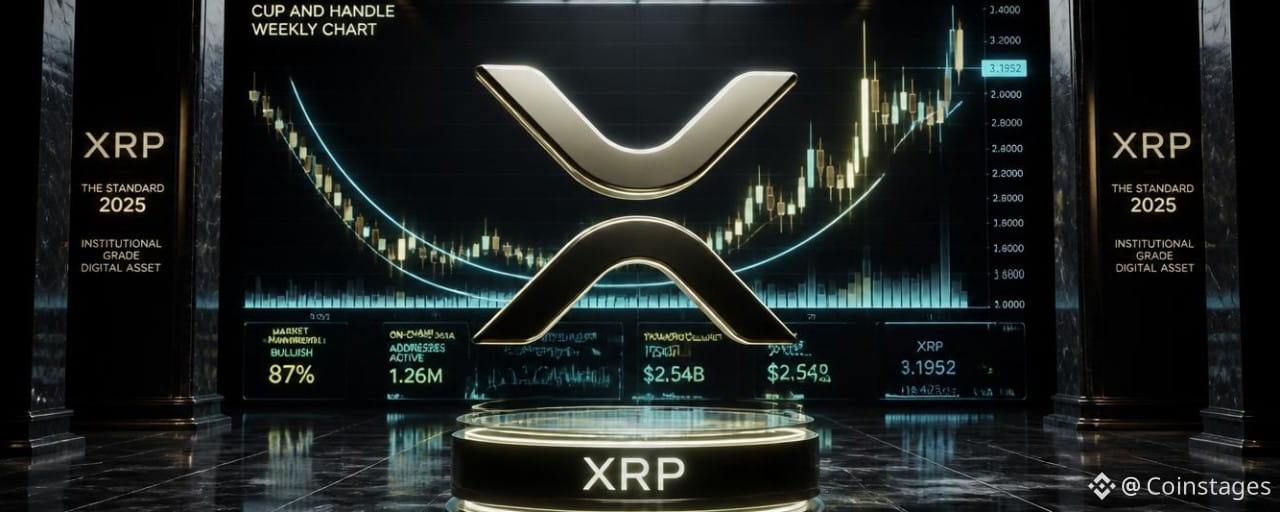
XRP ENTERS KEY BREAKOUT PHASE: COULD CUP-AND-HANDLE RETEST TRIGGER AN 800% RALLY TO $13.50?XRP has entered a pivotal technical phase following its volatile August price action. On the weekly chart, market structure indicates a massive cup-and-handle pattern formation, with the recent pullback representing a potential retest of the handle before the next major macro expansion.
The Macro Structure: From August Lows to Handle Consolidation
The broader price structure traces back to XRP’s slide from its July 2025 peak near $3.65 down to its mid-August 2026 low of $0.99, a steep 73% drawdown. The subsequent swift recovery toward $1.70 formed the rounded "cup" base, bolstered by spot XRP ETF inflows, institutional whale accumulation, and legislative tailwinds surrounding the CLARITY Act.
The Handle Formation: Following an August flash crash, XRP has consolidated into a tighter trading range between $1.30 and $1.50. This range creates the handle portion of the macro structure.Critical Defense Level: Buyers must hold firm above the $1.35 support level (followed by $1.30) to keep the bullish structure intact. A daily close below $1.30 risks exposing lower levels around $1.23, which would put the cup-and-handle thesis under severe pressure.Resistance Barrier: The weekly RSI has cooled off to around 58 from overbought territory, meaning XRP requires fresh volume to push past the immediate $1.45–$1.50 resistance zone.
Fibonacci Projections: Three Major Price Targets
If buyers successfully clear the handle's upper resistance shelf, Fibonacci extension metrics map out clear upside targets:
Target 1 ($3.6330): Reclaiming the previous July 2025 cycle peak to confirm the structural breakout.Target 2 ($6.8899): The secondary mid-range extension level as institutional momentum builds.Target 3 ($13.5687): The full measured extension target, representing an 800%+ rally from current $1.39 levels.
Essential Financial Disclaimer
This article is strictly for educational and informational purposes only and does not constitute financial, investment, legal, or trading advice. Digital asset markets carry extreme volatility and price risks. Always conduct independent research (DYOR) and consult a certified financial advisor before making investment decisions.
Will XRP defend $1.35 and trigger a breakout above $1.50, or are we headed for deeper consolidation? Share your technical targets and chart analysis in the comments below! 📊⚡
XRP ENTERS KEY BREAKOUT PHASE: COULD CUP-AND-HANDLE RETEST TRIGGER AN 800% RALLY TO $13.50?
XRP has entered a pivotal technical phase following its volatile August price action. On the weekly chart, market structure indicates a massive cup-and-handle pattern formation, with the recent pullback representing a potential retest of the handle before the next major macro expansion.
The Macro Structure: From August Lows to Handle Consolidation
The broader price structure traces back to XRP’s slide from its July 2025 peak near $3.65 down to its mid-August 2026 low of $0.99, a steep 73% drawdown. The subsequent swift recovery toward $1.70 formed the rounded "cup" base, bolstered by spot XRP ETF inflows, institutional whale accumulation, and legislative tailwinds surrounding the CLARITY Act.
The Handle Formation: Following an August flash crash, XRP has consolidated into a tighter trading range between $1.30 and $1.50. This range creates the handle portion of the macro structure.Critical Defense Level: Buyers must hold firm above the $1.35 support level (followed by $1.30) to keep the bullish structure intact. A daily close below $1.30 risks exposing lower levels around $1.23, which would put the cup-and-handle thesis under severe pressure.Resistance Barrier: The weekly RSI has cooled off to around 58 from overbought territory, meaning XRP requires fresh volume to push past the immediate $1.45–$1.50 resistance zone.
Fibonacci Projections: Three Major Price Targets
If buyers successfully clear the handle's upper resistance shelf, Fibonacci extension metrics map out clear upside targets:
Target 1 ($3.6330): Reclaiming the previous July 2025 cycle peak to confirm the structural breakout.Target 2 ($6.8899): The secondary mid-range extension level as institutional momentum builds.Target 3 ($13.5687): The full measured extension target, representing an 800%+ rally from current $1.39 levels.
Essential Financial Disclaimer
This article is strictly for educational and informational purposes only and does not constitute financial, investment, legal, or trading advice. Digital asset markets carry extreme volatility and price risks. Always conduct independent research (DYOR) and consult a certified financial advisor before making investment decisions.
Will XRP defend $1.35 and trigger a breakout above $1.50, or are we headed for deeper consolidation? Share your technical targets and chart analysis in the comments below! 📊⚡
The Macro Structure: From August Lows to Handle Consolidation
The broader price structure traces back to XRP’s slide from its July 2025 peak near $3.65 down to its mid-August 2026 low of $0.99, a steep 73% drawdown. The subsequent swift recovery toward $1.70 formed the rounded "cup" base, bolstered by spot XRP ETF inflows, institutional whale accumulation, and legislative tailwinds surrounding the CLARITY Act.
The Handle Formation: Following an August flash crash, XRP has consolidated into a tighter trading range between $1.30 and $1.50. This range creates the handle portion of the macro structure.Critical Defense Level: Buyers must hold firm above the $1.35 support level (followed by $1.30) to keep the bullish structure intact. A daily close below $1.30 risks exposing lower levels around $1.23, which would put the cup-and-handle thesis under severe pressure.Resistance Barrier: The weekly RSI has cooled off to around 58 from overbought territory, meaning XRP requires fresh volume to push past the immediate $1.45–$1.50 resistance zone.
Fibonacci Projections: Three Major Price Targets
If buyers successfully clear the handle's upper resistance shelf, Fibonacci extension metrics map out clear upside targets:
Target 1 ($3.6330): Reclaiming the previous July 2025 cycle peak to confirm the structural breakout.Target 2 ($6.8899): The secondary mid-range extension level as institutional momentum builds.Target 3 ($13.5687): The full measured extension target, representing an 800%+ rally from current $1.39 levels.
Essential Financial Disclaimer
This article is strictly for educational and informational purposes only and does not constitute financial, investment, legal, or trading advice. Digital asset markets carry extreme volatility and price risks. Always conduct independent research (DYOR) and consult a certified financial advisor before making investment decisions.
Will XRP defend $1.35 and trigger a breakout above $1.50, or are we headed for deeper consolidation? Share your technical targets and chart analysis in the comments below! 📊⚡
1
324
·
--

Article
CHINA BOUGHT 20 TONS OF GOLD IN AUGUST: PBOC EXTENDS STREAK TO 22 STRAIGHT MONTHSWhile prices ran hot, Beijing just pulled off its largest gold acquisition in nearly three years.
Data from China’s State Administration of Foreign Exchange (SAFE) reveals that the People’s Bank of China (PBOC) added 650,000 troy ounces—roughly 20.2 metric tons—of gold to its reserves in August. Marking its 22nd consecutive month of accumulation, this massive haul stands as Beijing’s single largest monthly purchase since October 2023, bringing total official reserves to a staggering 76.73 million fine troy ounces.
The Accumulation Ramp-Up: Buying When Prices Spike
Beijing’s relentless appetite for bullion highlights a deliberate, long-term strategic shift:
Escalating Pace: In February, the PBOC added just 30,000 ounces. August’s haul was more than 21 times that amount, topping July’s strong 640,000-ounce addition.Valuation Surge: Total reported value of Chinese gold reserves jumped from $306.35 billion to $350.08 billion in a single month—a $43.7 billion swing largely propelled by gold’s stellar August rally.Unshaken Confidence: Beijing accelerated physical accumulation even as gold gained nearly 10% across August, demonstrating total disregard for short-term price tops in favor of strategic reserve positioning.
The US Dollar "Debasement Trade" Fuels Dual Rallies
August’s gold surge was heavily driven by a resurgence in the global "debasement trade". As the US Treasury outlined plans to expand debt buybacks, concerns mounted over US dollar debasement and long-term fiscal stability.
This macroeconomic backdrop pushed global institutions toward hard stores of value, benefiting both traditional gold and sovereign-neutral digital assets like Bitcoin (BTC). While central banks stock physical vaults, institutional investors increasingly view both assets as critical hedges against fiat inflation and geopolitical risk.
De-Dollarization Strategy & What Comes Next
Analysts emphasize that China’s ongoing gold buying is a forward-looking strategy aimed at insulating national reserves from foreign exchange volatility, potential financial sanctions, and over-reliance on US Treasury debt.
Although hawkish signaling from Federal Reserve Chair Kevin Warsh eventually tempered momentum late in the month, China's 22-month buying streak proves that central banks are playing a long game focused on sovereign financial autonomy.
Essential Financial Disclaimer
This article is strictly for educational, analytical, and informational purposes and does not constitute financial, investment, legal, or trading advice. Precious metals and digital assets involve market risk. Always perform independent research and consult a licensed financial professional before making investment decisions.
Is China’s 22-month gold streak signaling a permanent shift away from the US Dollar? Share your thoughts on global de-dollarization in the comments below! 🌐💰
CHINA BOUGHT 20 TONS OF GOLD IN AUGUST: PBOC EXTENDS STREAK TO 22 STRAIGHT MONTHS
While prices ran hot, Beijing just pulled off its largest gold acquisition in nearly three years.
Data from China’s State Administration of Foreign Exchange (SAFE) reveals that the People’s Bank of China (PBOC) added 650,000 troy ounces—roughly 20.2 metric tons—of gold to its reserves in August. Marking its 22nd consecutive month of accumulation, this massive haul stands as Beijing’s single largest monthly purchase since October 2023, bringing total official reserves to a staggering 76.73 million fine troy ounces.
The Accumulation Ramp-Up: Buying When Prices Spike
Beijing’s relentless appetite for bullion highlights a deliberate, long-term strategic shift:
Escalating Pace: In February, the PBOC added just 30,000 ounces. August’s haul was more than 21 times that amount, topping July’s strong 640,000-ounce addition.Valuation Surge: Total reported value of Chinese gold reserves jumped from $306.35 billion to $350.08 billion in a single month—a $43.7 billion swing largely propelled by gold’s stellar August rally.Unshaken Confidence: Beijing accelerated physical accumulation even as gold gained nearly 10% across August, demonstrating total disregard for short-term price tops in favor of strategic reserve positioning.
The US Dollar "Debasement Trade" Fuels Dual Rallies
August’s gold surge was heavily driven by a resurgence in the global "debasement trade". As the US Treasury outlined plans to expand debt buybacks, concerns mounted over US dollar debasement and long-term fiscal stability.
This macroeconomic backdrop pushed global institutions toward hard stores of value, benefiting both traditional gold and sovereign-neutral digital assets like Bitcoin (BTC). While central banks stock physical vaults, institutional investors increasingly view both assets as critical hedges against fiat inflation and geopolitical risk.
De-Dollarization Strategy & What Comes Next
Analysts emphasize that China’s ongoing gold buying is a forward-looking strategy aimed at insulating national reserves from foreign exchange volatility, potential financial sanctions, and over-reliance on US Treasury debt.
Although hawkish signaling from Federal Reserve Chair Kevin Warsh eventually tempered momentum late in the month, China's 22-month buying streak proves that central banks are playing a long game focused on sovereign financial autonomy.
Essential Financial Disclaimer
This article is strictly for educational, analytical, and informational purposes and does not constitute financial, investment, legal, or trading advice. Precious metals and digital assets involve market risk. Always perform independent research and consult a licensed financial professional before making investment decisions.
Is China’s 22-month gold streak signaling a permanent shift away from the US Dollar? Share your thoughts on global de-dollarization in the comments below! 🌐💰
Data from China’s State Administration of Foreign Exchange (SAFE) reveals that the People’s Bank of China (PBOC) added 650,000 troy ounces—roughly 20.2 metric tons—of gold to its reserves in August. Marking its 22nd consecutive month of accumulation, this massive haul stands as Beijing’s single largest monthly purchase since October 2023, bringing total official reserves to a staggering 76.73 million fine troy ounces.
The Accumulation Ramp-Up: Buying When Prices Spike
Beijing’s relentless appetite for bullion highlights a deliberate, long-term strategic shift:
Escalating Pace: In February, the PBOC added just 30,000 ounces. August’s haul was more than 21 times that amount, topping July’s strong 640,000-ounce addition.Valuation Surge: Total reported value of Chinese gold reserves jumped from $306.35 billion to $350.08 billion in a single month—a $43.7 billion swing largely propelled by gold’s stellar August rally.Unshaken Confidence: Beijing accelerated physical accumulation even as gold gained nearly 10% across August, demonstrating total disregard for short-term price tops in favor of strategic reserve positioning.
The US Dollar "Debasement Trade" Fuels Dual Rallies
August’s gold surge was heavily driven by a resurgence in the global "debasement trade". As the US Treasury outlined plans to expand debt buybacks, concerns mounted over US dollar debasement and long-term fiscal stability.
This macroeconomic backdrop pushed global institutions toward hard stores of value, benefiting both traditional gold and sovereign-neutral digital assets like Bitcoin (BTC). While central banks stock physical vaults, institutional investors increasingly view both assets as critical hedges against fiat inflation and geopolitical risk.
De-Dollarization Strategy & What Comes Next
Analysts emphasize that China’s ongoing gold buying is a forward-looking strategy aimed at insulating national reserves from foreign exchange volatility, potential financial sanctions, and over-reliance on US Treasury debt.
Although hawkish signaling from Federal Reserve Chair Kevin Warsh eventually tempered momentum late in the month, China's 22-month buying streak proves that central banks are playing a long game focused on sovereign financial autonomy.
Essential Financial Disclaimer
This article is strictly for educational, analytical, and informational purposes and does not constitute financial, investment, legal, or trading advice. Precious metals and digital assets involve market risk. Always perform independent research and consult a licensed financial professional before making investment decisions.
Is China’s 22-month gold streak signaling a permanent shift away from the US Dollar? Share your thoughts on global de-dollarization in the comments below! 🌐💰
370
·
--
Article
BEN COWEN: 65% CHANCE BITCOIN BEAR MARKET CONTINUES, EYES $53,000 REALIZED PRICEDespite a massive summer rally, crypto analyst Benjamin Cowen warns that Bitcoin's cycle low may still be ahead.
In a fresh market analysis with BeInCrypto, Into The Cryptoverse founder Benjamin Cowen revealed he puts 65% odds on Bitcoin’s true cycle bottom occurring in the future, compared to just a 35% chance that the low is already behind us. Even after a sharp 40% rebound off summer lows that brought Bitcoin near $78,300, historical cycle fractals suggest bears are far from finished.
The Midterm Bear Trap: Why Bounces Can Be Deceptive
For traders interpreting recent price strength as a confirmed bull market, Cowen offers a stark historical reminder:
Historical Echoes: Bitcoin experienced similar or larger countertrend rallies during the 2018 and 2022 bear markets.Fourth-Quarter Weakness: In prior four-year cycles, midterm-year summer rallies were frequently followed by secondary sell-offs in Q4.Pattern Persistence: Assuming the four-year cycle pattern breaks prematurely repeats a costly mistake traders made in past cycles.
$53,000 Realized Price: The Ultimate Target to Watch
The focal point of Cowen's bearish case centers on Bitcoin's realized price—the average cost basis across all active on-chain wallet addresses.
Currently hovering near $53,000, this level serves as an anchor line:
Every historical midterm-year bear market bottom has dropped below the network's realized price before establishing a generational macro floor.Until Bitcoin tests or breaches this key threshold near $53,000, market structure remains vulnerable to time-based or price-driven capitulation.
What Changes the Narrative?
Cowen outlined clear milestones for when he would abandon his bearish framework and turn structurally bullish:
Survivals Through October: If Bitcoin clears the month of October without making a new cycle low, probability shifts heavily back in favor of the bulls.Bears Capitulating: A sustained breakout into Q4 would force bears to capitulate, signaling a structural pivot ahead of 2027.Execution Strategy: Rather than trying to time the precise bottom, Cowen emphasizes that disciplined dollar-cost-averaging (DCA) consistently outperforms speculative bottom-picking.
Essential Financial Disclaimer
This article is strictly for educational, news, and analytical purposes only and does not constitute financial, investment, or trading advice. Digital assets are highly speculative and volatile. Always perform independent research (DYOR) and consult a certified financial advisor before executing trades.
Do you think $53,000 will be tested before Q4 ends, or is the cycle low already in? Drop your price predictions and DCA strategies in the comments below! 💬📈
BEN COWEN: 65% CHANCE BITCOIN BEAR MARKET CONTINUES, EYES $53,000 REALIZED PRICE
Despite a massive summer rally, crypto analyst Benjamin Cowen warns that Bitcoin's cycle low may still be ahead.
In a fresh market analysis with BeInCrypto, Into The Cryptoverse founder Benjamin Cowen revealed he puts 65% odds on Bitcoin’s true cycle bottom occurring in the future, compared to just a 35% chance that the low is already behind us. Even after a sharp 40% rebound off summer lows that brought Bitcoin near $78,300, historical cycle fractals suggest bears are far from finished.
The Midterm Bear Trap: Why Bounces Can Be Deceptive
For traders interpreting recent price strength as a confirmed bull market, Cowen offers a stark historical reminder:
Historical Echoes: Bitcoin experienced similar or larger countertrend rallies during the 2018 and 2022 bear markets.Fourth-Quarter Weakness: In prior four-year cycles, midterm-year summer rallies were frequently followed by secondary sell-offs in Q4.Pattern Persistence: Assuming the four-year cycle pattern breaks prematurely repeats a costly mistake traders made in past cycles.
$53,000 Realized Price: The Ultimate Target to Watch
The focal point of Cowen's bearish case centers on Bitcoin's realized price—the average cost basis across all active on-chain wallet addresses.
Currently hovering near $53,000, this level serves as an anchor line:
Every historical midterm-year bear market bottom has dropped below the network's realized price before establishing a generational macro floor.Until Bitcoin tests or breaches this key threshold near $53,000, market structure remains vulnerable to time-based or price-driven capitulation.
What Changes the Narrative?
Cowen outlined clear milestones for when he would abandon his bearish framework and turn structurally bullish:
Survivals Through October: If Bitcoin clears the month of October without making a new cycle low, probability shifts heavily back in favor of the bulls.Bears Capitulating: A sustained breakout into Q4 would force bears to capitulate, signaling a structural pivot ahead of 2027.Execution Strategy: Rather than trying to time the precise bottom, Cowen emphasizes that disciplined dollar-cost-averaging (DCA) consistently outperforms speculative bottom-picking.
Essential Financial Disclaimer
This article is strictly for educational, news, and analytical purposes only and does not constitute financial, investment, or trading advice. Digital assets are highly speculative and volatile. Always perform independent research (DYOR) and consult a certified financial advisor before executing trades.
Do you think $53,000 will be tested before Q4 ends, or is the cycle low already in? Drop your price predictions and DCA strategies in the comments below! 💬📈
In a fresh market analysis with BeInCrypto, Into The Cryptoverse founder Benjamin Cowen revealed he puts 65% odds on Bitcoin’s true cycle bottom occurring in the future, compared to just a 35% chance that the low is already behind us. Even after a sharp 40% rebound off summer lows that brought Bitcoin near $78,300, historical cycle fractals suggest bears are far from finished.
The Midterm Bear Trap: Why Bounces Can Be Deceptive
For traders interpreting recent price strength as a confirmed bull market, Cowen offers a stark historical reminder:
Historical Echoes: Bitcoin experienced similar or larger countertrend rallies during the 2018 and 2022 bear markets.Fourth-Quarter Weakness: In prior four-year cycles, midterm-year summer rallies were frequently followed by secondary sell-offs in Q4.Pattern Persistence: Assuming the four-year cycle pattern breaks prematurely repeats a costly mistake traders made in past cycles.
$53,000 Realized Price: The Ultimate Target to Watch
The focal point of Cowen's bearish case centers on Bitcoin's realized price—the average cost basis across all active on-chain wallet addresses.
Currently hovering near $53,000, this level serves as an anchor line:
Every historical midterm-year bear market bottom has dropped below the network's realized price before establishing a generational macro floor.Until Bitcoin tests or breaches this key threshold near $53,000, market structure remains vulnerable to time-based or price-driven capitulation.
What Changes the Narrative?
Cowen outlined clear milestones for when he would abandon his bearish framework and turn structurally bullish:
Survivals Through October: If Bitcoin clears the month of October without making a new cycle low, probability shifts heavily back in favor of the bulls.Bears Capitulating: A sustained breakout into Q4 would force bears to capitulate, signaling a structural pivot ahead of 2027.Execution Strategy: Rather than trying to time the precise bottom, Cowen emphasizes that disciplined dollar-cost-averaging (DCA) consistently outperforms speculative bottom-picking.
Essential Financial Disclaimer
This article is strictly for educational, news, and analytical purposes only and does not constitute financial, investment, or trading advice. Digital assets are highly speculative and volatile. Always perform independent research (DYOR) and consult a certified financial advisor before executing trades.
Do you think $53,000 will be tested before Q4 ends, or is the cycle low already in? Drop your price predictions and DCA strategies in the comments below! 💬📈
1
3
3.1k
·
--

Article
BITCOIN DEFIES MACRO GRAVITY: SURVIVES YEN SURGE THAT CRUSHED CRYPTO IN 2024When the Japanese Yen surges rapidly, digital asset markets usually tremble, but this time, Bitcoin held its ground. In a stark contrast to the historic market turmoil of August 2024, Bitcoin has successfully weathered a rapid 3.7% rally in the Japanese Yen. While past yen carry-trade unwinds triggered brutal 20% liquidations across crypto venues, Bitcoin demonstrated remarkable resilience by holding firm above key technical support near $79,000.
The Unwind Mechanism: How the Yen Carry Trade Triggers Liquidations
To understand why this price stability represents a major structural milestone, traders must examine global macro liquidity dynamics:
The Cheap Capital Engine: For years, global institutional funds borrowed low-interest Japanese Yen to acquire high-yielding risk assets, including Bitcoin and crypto derivatives.The Rapid Unwind Trigger: When the Yen appreciates suddenly, borrowing costs escalate instantly, forcing fund managers into margin calls.Forced De-risking: Institutions are compelled to liquidate liquid crypto positions rapidly to pay back Yen-denominated debt, creating aggressive selling pressure across derivative exchanges.
Why 2026 Differed From the August 2024 Liquidation Crisis
Unlike the August 2024 flash crash where a violent 6% Yen spike erased billions in open interest and sent Bitcoin tumbling 20%, the current market environment absorbed the shock with minimal structural damage:
Controlled Currency Appreciation: The latest Yen move saw a 3.7% gain over three trading sessions rather than a single-day cascade, giving market makers time to rebalance order books.Defending Key Support: Spot buying demand stepped in aggressively at $79,000, preventing a cascade of liquidation triggers across perpetual futures platforms.Priced-In Bank of Japan Expectations: Unlike the surprise August 2024 rate hike, hawkish signaling from the Bank of Japan was largely anticipated and priced into macro models well in advance.
Tokyo’s Shrinking Firepower & Monetary Outlook
Data reveals that Japan’s Ministry of Finance depleted $94.6 billion in foreign reserves to defend its currency, relying heavily on selling short-dated U.S. Treasuries. With reserve cushions tightening and growing political sensitivity around U.S. Treasury liquidations, the burden is shifting squarely back to Bank of Japan interest rate policy.
With markets pricing in potential Bank of Japan rate hikes up to 1.25%, macro volatility remains present, yet Bitcoin’s capacity to absorb this currency shock signals maturing spot demand and lower reliance on speculative Yen-denominated leverage.
Essential Financial Disclaimer
This article is strictly for educational and informational purposes only and does not constitute financial, investment, legal, or trading advice. Digital asset markets carry high volatility and macro risk. Always perform independent research (DYOR) and consult a certified financial advisor before making investment decisions.
How do you view Bitcoin's resilience against shifting central bank policies? Share your portfolio hedging strategies and macro perspectives in the comments below! 📊⚡
BITCOIN DEFIES MACRO GRAVITY: SURVIVES YEN SURGE THAT CRUSHED CRYPTO IN 2024
When the Japanese Yen surges rapidly, digital asset markets usually tremble, but this time, Bitcoin held its ground. In a stark contrast to the historic market turmoil of August 2024, Bitcoin has successfully weathered a rapid 3.7% rally in the Japanese Yen. While past yen carry-trade unwinds triggered brutal 20% liquidations across crypto venues, Bitcoin demonstrated remarkable resilience by holding firm above key technical support near $79,000.
The Unwind Mechanism: How the Yen Carry Trade Triggers Liquidations
To understand why this price stability represents a major structural milestone, traders must examine global macro liquidity dynamics:
The Cheap Capital Engine: For years, global institutional funds borrowed low-interest Japanese Yen to acquire high-yielding risk assets, including Bitcoin and crypto derivatives.The Rapid Unwind Trigger: When the Yen appreciates suddenly, borrowing costs escalate instantly, forcing fund managers into margin calls.Forced De-risking: Institutions are compelled to liquidate liquid crypto positions rapidly to pay back Yen-denominated debt, creating aggressive selling pressure across derivative exchanges.
Why 2026 Differed From the August 2024 Liquidation Crisis
Unlike the August 2024 flash crash where a violent 6% Yen spike erased billions in open interest and sent Bitcoin tumbling 20%, the current market environment absorbed the shock with minimal structural damage:
Controlled Currency Appreciation: The latest Yen move saw a 3.7% gain over three trading sessions rather than a single-day cascade, giving market makers time to rebalance order books.Defending Key Support: Spot buying demand stepped in aggressively at $79,000, preventing a cascade of liquidation triggers across perpetual futures platforms.Priced-In Bank of Japan Expectations: Unlike the surprise August 2024 rate hike, hawkish signaling from the Bank of Japan was largely anticipated and priced into macro models well in advance.
Tokyo’s Shrinking Firepower & Monetary Outlook
Data reveals that Japan’s Ministry of Finance depleted $94.6 billion in foreign reserves to defend its currency, relying heavily on selling short-dated U.S. Treasuries. With reserve cushions tightening and growing political sensitivity around U.S. Treasury liquidations, the burden is shifting squarely back to Bank of Japan interest rate policy.
With markets pricing in potential Bank of Japan rate hikes up to 1.25%, macro volatility remains present, yet Bitcoin’s capacity to absorb this currency shock signals maturing spot demand and lower reliance on speculative Yen-denominated leverage.
Essential Financial Disclaimer
This article is strictly for educational and informational purposes only and does not constitute financial, investment, legal, or trading advice. Digital asset markets carry high volatility and macro risk. Always perform independent research (DYOR) and consult a certified financial advisor before making investment decisions.
How do you view Bitcoin's resilience against shifting central bank policies? Share your portfolio hedging strategies and macro perspectives in the comments below! 📊⚡
The Unwind Mechanism: How the Yen Carry Trade Triggers Liquidations
To understand why this price stability represents a major structural milestone, traders must examine global macro liquidity dynamics:
The Cheap Capital Engine: For years, global institutional funds borrowed low-interest Japanese Yen to acquire high-yielding risk assets, including Bitcoin and crypto derivatives.The Rapid Unwind Trigger: When the Yen appreciates suddenly, borrowing costs escalate instantly, forcing fund managers into margin calls.Forced De-risking: Institutions are compelled to liquidate liquid crypto positions rapidly to pay back Yen-denominated debt, creating aggressive selling pressure across derivative exchanges.
Why 2026 Differed From the August 2024 Liquidation Crisis
Unlike the August 2024 flash crash where a violent 6% Yen spike erased billions in open interest and sent Bitcoin tumbling 20%, the current market environment absorbed the shock with minimal structural damage:
Controlled Currency Appreciation: The latest Yen move saw a 3.7% gain over three trading sessions rather than a single-day cascade, giving market makers time to rebalance order books.Defending Key Support: Spot buying demand stepped in aggressively at $79,000, preventing a cascade of liquidation triggers across perpetual futures platforms.Priced-In Bank of Japan Expectations: Unlike the surprise August 2024 rate hike, hawkish signaling from the Bank of Japan was largely anticipated and priced into macro models well in advance.
Tokyo’s Shrinking Firepower & Monetary Outlook
Data reveals that Japan’s Ministry of Finance depleted $94.6 billion in foreign reserves to defend its currency, relying heavily on selling short-dated U.S. Treasuries. With reserve cushions tightening and growing political sensitivity around U.S. Treasury liquidations, the burden is shifting squarely back to Bank of Japan interest rate policy.
With markets pricing in potential Bank of Japan rate hikes up to 1.25%, macro volatility remains present, yet Bitcoin’s capacity to absorb this currency shock signals maturing spot demand and lower reliance on speculative Yen-denominated leverage.
Essential Financial Disclaimer
This article is strictly for educational and informational purposes only and does not constitute financial, investment, legal, or trading advice. Digital asset markets carry high volatility and macro risk. Always perform independent research (DYOR) and consult a certified financial advisor before making investment decisions.
How do you view Bitcoin's resilience against shifting central bank policies? Share your portfolio hedging strategies and macro perspectives in the comments below! 📊⚡
269
·
--

Article
VIRAL TIKTOK MEME COIN $BIPOLAR LAUNCHES ON PUMP.FUN: BEWARE THE "BLOCK ZERO" BUNDLE TRAPA new meme coin named BIPOLAR is sweeping across TikTok and crypto social feeds ahead of its scheduled launch on Solana-based launchpad Pump.fun. Promoted heavily by viral creators and trading accounts for a specific release time, the token is drawing widespread attention. However, underlying on-chain mechanics reveal significant structural risks, highlighting how modern launch tools favor token creators over everyday retail buyers.
The Illusory "Fair" Minute & Open-Source Bundlers
Promoting an exact launch minute creates an impression of equal opportunity, but automated execution environments tell a vastly different story:
Block Zero Monopoly: Token generation occurs in a single computer instruction. While retail users manually refresh interfaces, automated programs and scripts execute buy orders in the exact same millisecond the token is deployed.Pre-Packaged Bundling Tools: Creators routinely leverage open-source Pump.fun bundlers to create a token and bundle it alongside up to 25 coordinated buy transactions within the same block.Asymmetric Protection: These bundled launch tools market "protection against front-running and MEV bots", safeguards that serve the token creator rather than secondary market participants.Bonding Curve Price Escalation: Pump.fun relies on a deterministic bonding curve formula. Because the developer's bundled buys execute first at the lowest possible price tier, late-arriving TikTok audiences pay significantly higher rates for the same asset.
Regulatory Void & Critical On-Chain Metrics
Unlike conventional financial venues, decentralized launchpads operate without traditional consumer protection frameworks:
No Brokerage Oversight: In traditional equities markets, regulators strictly prohibit market participants from trading ahead of customer orders. Decentralized launchpads enforce no such restrictions, allowing creators to front-run their own public promotional campaigns.High Failure Rates: Research from digital asset firm Galaxy highlights that meme coin launch platforms primarily generate revenue for platform operators and bundler developers. On-chain statistics show nearly 69% of tokens launched on Pump.fun collapse within 24 hours.Wallet Concentration Check: Market analysts urge traders to evaluate top-holder concentration metrics immediately post-launch. If the first few wallets command a vast majority of the circulating supply, subsequent buying volume simply provides exit liquidity for early bundle holders.
Essential Financial Disclaimer
This article is strictly for educational and informational purposes only and does not constitute financial, investment, legal, or trading advice. Micro-cap digital assets and meme coin launchpads carry extreme risks of total loss, developer dumping, and price manipulation. Always conduct independent research (DYOR) and consult a certified financial advisor before committing capital.
Are you tracking $BIPOLAR's top wallet concentration before trading, or avoiding block-zero launches altogether? Share your thoughts and risk management strategies in the comments below! 📊⚡
VIRAL TIKTOK MEME COIN $BIPOLAR LAUNCHES ON PUMP.FUN: BEWARE THE "BLOCK ZERO" BUNDLE TRAP
A new meme coin named BIPOLAR is sweeping across TikTok and crypto social feeds ahead of its scheduled launch on Solana-based launchpad Pump.fun. Promoted heavily by viral creators and trading accounts for a specific release time, the token is drawing widespread attention. However, underlying on-chain mechanics reveal significant structural risks, highlighting how modern launch tools favor token creators over everyday retail buyers.
The Illusory "Fair" Minute & Open-Source Bundlers
Promoting an exact launch minute creates an impression of equal opportunity, but automated execution environments tell a vastly different story:
Block Zero Monopoly: Token generation occurs in a single computer instruction. While retail users manually refresh interfaces, automated programs and scripts execute buy orders in the exact same millisecond the token is deployed.Pre-Packaged Bundling Tools: Creators routinely leverage open-source Pump.fun bundlers to create a token and bundle it alongside up to 25 coordinated buy transactions within the same block.Asymmetric Protection: These bundled launch tools market "protection against front-running and MEV bots", safeguards that serve the token creator rather than secondary market participants.Bonding Curve Price Escalation: Pump.fun relies on a deterministic bonding curve formula. Because the developer's bundled buys execute first at the lowest possible price tier, late-arriving TikTok audiences pay significantly higher rates for the same asset.
Regulatory Void & Critical On-Chain Metrics
Unlike conventional financial venues, decentralized launchpads operate without traditional consumer protection frameworks:
No Brokerage Oversight: In traditional equities markets, regulators strictly prohibit market participants from trading ahead of customer orders. Decentralized launchpads enforce no such restrictions, allowing creators to front-run their own public promotional campaigns.High Failure Rates: Research from digital asset firm Galaxy highlights that meme coin launch platforms primarily generate revenue for platform operators and bundler developers. On-chain statistics show nearly 69% of tokens launched on Pump.fun collapse within 24 hours.Wallet Concentration Check: Market analysts urge traders to evaluate top-holder concentration metrics immediately post-launch. If the first few wallets command a vast majority of the circulating supply, subsequent buying volume simply provides exit liquidity for early bundle holders.
Essential Financial Disclaimer
This article is strictly for educational and informational purposes only and does not constitute financial, investment, legal, or trading advice. Micro-cap digital assets and meme coin launchpads carry extreme risks of total loss, developer dumping, and price manipulation. Always conduct independent research (DYOR) and consult a certified financial advisor before committing capital.
Are you tracking $BIPOLAR's top wallet concentration before trading, or avoiding block-zero launches altogether? Share your thoughts and risk management strategies in the comments below! 📊⚡
The Illusory "Fair" Minute & Open-Source Bundlers
Promoting an exact launch minute creates an impression of equal opportunity, but automated execution environments tell a vastly different story:
Block Zero Monopoly: Token generation occurs in a single computer instruction. While retail users manually refresh interfaces, automated programs and scripts execute buy orders in the exact same millisecond the token is deployed.Pre-Packaged Bundling Tools: Creators routinely leverage open-source Pump.fun bundlers to create a token and bundle it alongside up to 25 coordinated buy transactions within the same block.Asymmetric Protection: These bundled launch tools market "protection against front-running and MEV bots", safeguards that serve the token creator rather than secondary market participants.Bonding Curve Price Escalation: Pump.fun relies on a deterministic bonding curve formula. Because the developer's bundled buys execute first at the lowest possible price tier, late-arriving TikTok audiences pay significantly higher rates for the same asset.
Regulatory Void & Critical On-Chain Metrics
Unlike conventional financial venues, decentralized launchpads operate without traditional consumer protection frameworks:
No Brokerage Oversight: In traditional equities markets, regulators strictly prohibit market participants from trading ahead of customer orders. Decentralized launchpads enforce no such restrictions, allowing creators to front-run their own public promotional campaigns.High Failure Rates: Research from digital asset firm Galaxy highlights that meme coin launch platforms primarily generate revenue for platform operators and bundler developers. On-chain statistics show nearly 69% of tokens launched on Pump.fun collapse within 24 hours.Wallet Concentration Check: Market analysts urge traders to evaluate top-holder concentration metrics immediately post-launch. If the first few wallets command a vast majority of the circulating supply, subsequent buying volume simply provides exit liquidity for early bundle holders.
Essential Financial Disclaimer
This article is strictly for educational and informational purposes only and does not constitute financial, investment, legal, or trading advice. Micro-cap digital assets and meme coin launchpads carry extreme risks of total loss, developer dumping, and price manipulation. Always conduct independent research (DYOR) and consult a certified financial advisor before committing capital.
Are you tracking $BIPOLAR's top wallet concentration before trading, or avoiding block-zero launches altogether? Share your thoughts and risk management strategies in the comments below! 📊⚡
324
·
--

Article
XRP Market Equilibrium: What Ripple's 700M Escrow Relock Means for TradersThe crypto market is currently witnessing a classic standoff in XRP pricing around the $1.40 mark. While massive token releases often trigger panic among retail traders, a closer look into on-chain dynamics and Ripple's execution model reveals a market caught between immovable supply management and hesitant trading volume.
The Escrow Breakdown: Mechanics vs. Market Reality
Ripple executed its regular monthly escrow unlocks, releasing 1 billion XRP tokens into circulation. However, directly following the unlock, Ripple re-locked 700 million XRP back into escrow contracts, leaving net circulating exposure at 300 million XRP (approx. $422 million).
The Net Release Factor: Re-locking 70-80% of released tokens is standard operating procedure for Ripple, keeping actual market supply expansion predictable rather than inflationary.On-Chain Routing: The remaining 300 million XRP shifted strictly between Ripple-labeled internal wallets rather than heading directly to exchange deposit addresses, signifying liquid allocation for strategic partners rather than market dumping.
On-Chain Dynamics: High Stagnation, Low Volume
Despite supply constraints, XRP continues to chop sideways. On-chain indicators point toward a structural standoff:
Holding Patterns: Age-band metrics show older coins have effectively stopped moving. Existing long-term holders display zero appetite to sell at current valuations, yet buyer depth remains equally thin.Dwindling Daily Volume: Daily overall trading volume has steadily tapered off, signaling low conviction on both sides of the order book.Lagging Cross-Asset Performance: XRP has quietly lagged behind other major blue-chip crypto assets on short-term relative strength metrics, despite technical indicators flirting with a potential 20-day / 200-day EMA golden cross.
Technical Outlook
Resistance Cluster: $1.56 - $1.69 (200-period EMA & August Highs)
Current Trading Zone: ~$1.40
Key Support Floor: $1.34 - $1.36 (100-period EMA Zone)
Essential Financial Disclaimer
This analysis is provided strictly for educational and informational purposes only and does not constitute financial, investment, or trading advice. Digital assets, including XRP, carry high market volatility and risk. Always perform independent research and consult a licensed financial advisor before making investment decisions.
What’s your stance on XRP’s next leg, are we gearing up for a breakout above major EMAs, or will low volume drag prices back to test lower support? Share your chart predictions in the comments below!
XRP Market Equilibrium: What Ripple's 700M Escrow Relock Means for Traders
The crypto market is currently witnessing a classic standoff in XRP pricing around the $1.40 mark. While massive token releases often trigger panic among retail traders, a closer look into on-chain dynamics and Ripple's execution model reveals a market caught between immovable supply management and hesitant trading volume.
The Escrow Breakdown: Mechanics vs. Market Reality
Ripple executed its regular monthly escrow unlocks, releasing 1 billion XRP tokens into circulation. However, directly following the unlock, Ripple re-locked 700 million XRP back into escrow contracts, leaving net circulating exposure at 300 million XRP (approx. $422 million).
The Net Release Factor: Re-locking 70-80% of released tokens is standard operating procedure for Ripple, keeping actual market supply expansion predictable rather than inflationary.On-Chain Routing: The remaining 300 million XRP shifted strictly between Ripple-labeled internal wallets rather than heading directly to exchange deposit addresses, signifying liquid allocation for strategic partners rather than market dumping.
On-Chain Dynamics: High Stagnation, Low Volume
Despite supply constraints, XRP continues to chop sideways. On-chain indicators point toward a structural standoff:
Holding Patterns: Age-band metrics show older coins have effectively stopped moving. Existing long-term holders display zero appetite to sell at current valuations, yet buyer depth remains equally thin.Dwindling Daily Volume: Daily overall trading volume has steadily tapered off, signaling low conviction on both sides of the order book.Lagging Cross-Asset Performance: XRP has quietly lagged behind other major blue-chip crypto assets on short-term relative strength metrics, despite technical indicators flirting with a potential 20-day / 200-day EMA golden cross.
Technical Outlook
Resistance Cluster: $1.56 - $1.69 (200-period EMA & August Highs)
Current Trading Zone: ~$1.40
Key Support Floor: $1.34 - $1.36 (100-period EMA Zone)
Essential Financial Disclaimer
This analysis is provided strictly for educational and informational purposes only and does not constitute financial, investment, or trading advice. Digital assets, including XRP, carry high market volatility and risk. Always perform independent research and consult a licensed financial advisor before making investment decisions.
What’s your stance on XRP’s next leg, are we gearing up for a breakout above major EMAs, or will low volume drag prices back to test lower support? Share your chart predictions in the comments below!
The Escrow Breakdown: Mechanics vs. Market Reality
Ripple executed its regular monthly escrow unlocks, releasing 1 billion XRP tokens into circulation. However, directly following the unlock, Ripple re-locked 700 million XRP back into escrow contracts, leaving net circulating exposure at 300 million XRP (approx. $422 million).
The Net Release Factor: Re-locking 70-80% of released tokens is standard operating procedure for Ripple, keeping actual market supply expansion predictable rather than inflationary.On-Chain Routing: The remaining 300 million XRP shifted strictly between Ripple-labeled internal wallets rather than heading directly to exchange deposit addresses, signifying liquid allocation for strategic partners rather than market dumping.
On-Chain Dynamics: High Stagnation, Low Volume
Despite supply constraints, XRP continues to chop sideways. On-chain indicators point toward a structural standoff:
Holding Patterns: Age-band metrics show older coins have effectively stopped moving. Existing long-term holders display zero appetite to sell at current valuations, yet buyer depth remains equally thin.Dwindling Daily Volume: Daily overall trading volume has steadily tapered off, signaling low conviction on both sides of the order book.Lagging Cross-Asset Performance: XRP has quietly lagged behind other major blue-chip crypto assets on short-term relative strength metrics, despite technical indicators flirting with a potential 20-day / 200-day EMA golden cross.
Technical Outlook
Resistance Cluster: $1.56 - $1.69 (200-period EMA & August Highs)
Current Trading Zone: ~$1.40
Key Support Floor: $1.34 - $1.36 (100-period EMA Zone)
Essential Financial Disclaimer
This analysis is provided strictly for educational and informational purposes only and does not constitute financial, investment, or trading advice. Digital assets, including XRP, carry high market volatility and risk. Always perform independent research and consult a licensed financial advisor before making investment decisions.
What’s your stance on XRP’s next leg, are we gearing up for a breakout above major EMAs, or will low volume drag prices back to test lower support? Share your chart predictions in the comments below!
420
·
--

Article
PETER SCHIFF REIGNITES BITCOIN BACKING CONTROVERSY: "ENERGY IS GONE ONCE SPENT!"Longtime gold advocate and vocal crypto skeptic Peter Schiff has reopened one of the oldest debates in digital finance. In a heated exchange with Bitcoin proponent Jeff Swanson, Schiff challenged the foundational narrative that proof-of-work computing power acts as intrinsic backing for Bitcoin, arguing that consumed electricity leaves behind zero tangible residual value.
The Clash: Consumed Electricity vs. Physical Gold
The debate flared up after Jeff Swanson characterized Bitcoin as the ultimate evolution of money, pointing to its programmatic fixed supply and decentralized network security:
The Energy Consumption Argument: Schiff countered Swanson’s thesis by arguing that once electricity is expended during the mining process, it ceases to exist. Unlike physical commodities, he claims consumed energy cannot serve as underlying asset collateral.The Gold Comparison: Drawing a direct contrast with gold, Schiff emphasized that energy used in precious metal extraction yields a tangible physical element that retains permanent intrinsic value and utility.Swanson’s Macro Defense: Swanson defended Bitcoin by highlighting soaring macroeconomic systemic risks, citing the U.S. national debt surpassing $40 trillion as the primary reason global markets require a hard-capped, non-sovereign monetary alternative.
Bitcoin Holds Support at $79.6K Amid Macro Pressures
Schiff’s latest criticism arrives during a period of consolidation across major digital asset markets:
Ranging Near $79.6K: Bitcoin ($BTC) traded around $79,600 following a minor 1.5% 24-hour pullback, consolidating after recent market-wide volatility.Evolving Hash Rate Dynamics: The debate coincides with shifting hash rate trends as mining firms balance network security costs against energy diversification.Institutional Counter-Narrative: Despite Schiff's skepticism, major global institutional asset managers continue to absorb spot ETF supply, treating proof-of-work security as an unprecedented technological moat rather than wasted energy.
Essential Financial Disclaimer
This article is strictly for educational and informational purposes only and does not constitute financial, investment, legal, or trading advice. Digital asset markets carry high volatility and capital risk. Always conduct independent research (DYOR) and consult a certified financial advisor before making investment decisions.
Is proof-of-work energy an indispensable security feature or consumed overhead? Share your thoughts and macro perspectives in the comments below! 🗣️⚡
PETER SCHIFF REIGNITES BITCOIN BACKING CONTROVERSY: "ENERGY IS GONE ONCE SPENT!"
Longtime gold advocate and vocal crypto skeptic Peter Schiff has reopened one of the oldest debates in digital finance. In a heated exchange with Bitcoin proponent Jeff Swanson, Schiff challenged the foundational narrative that proof-of-work computing power acts as intrinsic backing for Bitcoin, arguing that consumed electricity leaves behind zero tangible residual value.
The Clash: Consumed Electricity vs. Physical Gold
The debate flared up after Jeff Swanson characterized Bitcoin as the ultimate evolution of money, pointing to its programmatic fixed supply and decentralized network security:
The Energy Consumption Argument: Schiff countered Swanson’s thesis by arguing that once electricity is expended during the mining process, it ceases to exist. Unlike physical commodities, he claims consumed energy cannot serve as underlying asset collateral.The Gold Comparison: Drawing a direct contrast with gold, Schiff emphasized that energy used in precious metal extraction yields a tangible physical element that retains permanent intrinsic value and utility.Swanson’s Macro Defense: Swanson defended Bitcoin by highlighting soaring macroeconomic systemic risks, citing the U.S. national debt surpassing $40 trillion as the primary reason global markets require a hard-capped, non-sovereign monetary alternative.
Bitcoin Holds Support at $79.6K Amid Macro Pressures
Schiff’s latest criticism arrives during a period of consolidation across major digital asset markets:
Ranging Near $79.6K: Bitcoin ($BTC) traded around $79,600 following a minor 1.5% 24-hour pullback, consolidating after recent market-wide volatility.Evolving Hash Rate Dynamics: The debate coincides with shifting hash rate trends as mining firms balance network security costs against energy diversification.Institutional Counter-Narrative: Despite Schiff's skepticism, major global institutional asset managers continue to absorb spot ETF supply, treating proof-of-work security as an unprecedented technological moat rather than wasted energy.
Essential Financial Disclaimer
This article is strictly for educational and informational purposes only and does not constitute financial, investment, legal, or trading advice. Digital asset markets carry high volatility and capital risk. Always conduct independent research (DYOR) and consult a certified financial advisor before making investment decisions.
Is proof-of-work energy an indispensable security feature or consumed overhead? Share your thoughts and macro perspectives in the comments below! 🗣️⚡
The Clash: Consumed Electricity vs. Physical Gold
The debate flared up after Jeff Swanson characterized Bitcoin as the ultimate evolution of money, pointing to its programmatic fixed supply and decentralized network security:
The Energy Consumption Argument: Schiff countered Swanson’s thesis by arguing that once electricity is expended during the mining process, it ceases to exist. Unlike physical commodities, he claims consumed energy cannot serve as underlying asset collateral.The Gold Comparison: Drawing a direct contrast with gold, Schiff emphasized that energy used in precious metal extraction yields a tangible physical element that retains permanent intrinsic value and utility.Swanson’s Macro Defense: Swanson defended Bitcoin by highlighting soaring macroeconomic systemic risks, citing the U.S. national debt surpassing $40 trillion as the primary reason global markets require a hard-capped, non-sovereign monetary alternative.
Bitcoin Holds Support at $79.6K Amid Macro Pressures
Schiff’s latest criticism arrives during a period of consolidation across major digital asset markets:
Ranging Near $79.6K: Bitcoin ($BTC) traded around $79,600 following a minor 1.5% 24-hour pullback, consolidating after recent market-wide volatility.Evolving Hash Rate Dynamics: The debate coincides with shifting hash rate trends as mining firms balance network security costs against energy diversification.Institutional Counter-Narrative: Despite Schiff's skepticism, major global institutional asset managers continue to absorb spot ETF supply, treating proof-of-work security as an unprecedented technological moat rather than wasted energy.
Essential Financial Disclaimer
This article is strictly for educational and informational purposes only and does not constitute financial, investment, legal, or trading advice. Digital asset markets carry high volatility and capital risk. Always conduct independent research (DYOR) and consult a certified financial advisor before making investment decisions.
Is proof-of-work energy an indispensable security feature or consumed overhead? Share your thoughts and macro perspectives in the comments below! 🗣️⚡
2
273
·
--
Article
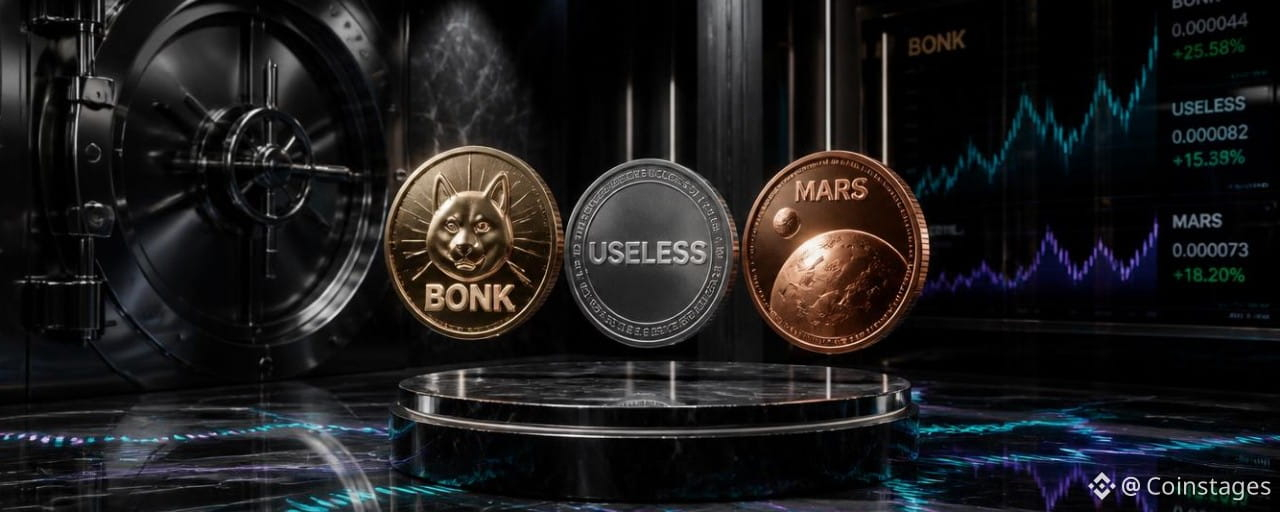
TOP 3 MEME COINS TO WATCH IN THE SECOND WEEK OF SEPTEMBERThe meme coin market is entering the second week of September with a fresh surge of speculative activity. Following a period of broader altcoin consolidation, select high-beta meme tokens are reclaiming market focus through key technical trend reversals, strong buyer defenses, and massive price expansions.
BONK (BONK): Snapping the Downtrend and Securing Support
Solana’s flagship meme coin BONK has officially broken out of a prolonged downward channel. After clearing key trendline resistance, the token has established firm buying interest above the $0.00000273 support floor.
If bulls continue to hold this baseline, BONK remains well-positioned to lead the next leg of momentum across Solana ecosystem assets. However, failing to defend this zone could trigger a swift retest of lower demand ranges.
USELESS (USELESS): Sustaining a Massive Extension
Despite its name, USELESS has emerged as one of the stronger performers heading into mid-September. The asset experienced a steep vertical expansion move, currently trading more than 50% above its nearest structural support baseline.
While this performance signals massive momentum, the large distance from underlying support raises short-term risk. Traders are watching closely for signs of exhaustion, as minor profit-taking could spark a sharp mean-reversion phase before finding a solid bottom.
MARSCOIN (MARS): Aggressive Surges Testing Overhead Baselines
Rounding out the watchlist, MARSCOIN has joined the rally with a powerful price surge, pushing significantly elevated above its primary demand zone.
The token is currently navigating a high-volatility window as buyers defend recent gains against early holders taking profits. Sustaining volume over the coming days will be crucial to confirm whether MARSCOIN can turn these elevated levels into a permanent launching pad.
Essential Financial Disclaimer
This article is strictly for educational and informational purposes only and does not constitute financial, investment, legal, or trading advice. Digital asset markets, especially speculative meme tokens, carry extreme price volatility and capital risk. Always perform independent research (DYOR) and consult a certified financial advisor before making investment decisions.
Which meme coin do you think will lead gains through the rest of September? Share your technical charts and market outlook in the comments below! 📊⚡
TOP 3 MEME COINS TO WATCH IN THE SECOND WEEK OF SEPTEMBER
The meme coin market is entering the second week of September with a fresh surge of speculative activity. Following a period of broader altcoin consolidation, select high-beta meme tokens are reclaiming market focus through key technical trend reversals, strong buyer defenses, and massive price expansions.
BONK (BONK): Snapping the Downtrend and Securing Support
Solana’s flagship meme coin BONK has officially broken out of a prolonged downward channel. After clearing key trendline resistance, the token has established firm buying interest above the $0.00000273 support floor.
If bulls continue to hold this baseline, BONK remains well-positioned to lead the next leg of momentum across Solana ecosystem assets. However, failing to defend this zone could trigger a swift retest of lower demand ranges.
USELESS (USELESS): Sustaining a Massive Extension
Despite its name, USELESS has emerged as one of the stronger performers heading into mid-September. The asset experienced a steep vertical expansion move, currently trading more than 50% above its nearest structural support baseline.
While this performance signals massive momentum, the large distance from underlying support raises short-term risk. Traders are watching closely for signs of exhaustion, as minor profit-taking could spark a sharp mean-reversion phase before finding a solid bottom.
MARSCOIN (MARS): Aggressive Surges Testing Overhead Baselines
Rounding out the watchlist, MARSCOIN has joined the rally with a powerful price surge, pushing significantly elevated above its primary demand zone.
The token is currently navigating a high-volatility window as buyers defend recent gains against early holders taking profits. Sustaining volume over the coming days will be crucial to confirm whether MARSCOIN can turn these elevated levels into a permanent launching pad.
Essential Financial Disclaimer
This article is strictly for educational and informational purposes only and does not constitute financial, investment, legal, or trading advice. Digital asset markets, especially speculative meme tokens, carry extreme price volatility and capital risk. Always perform independent research (DYOR) and consult a certified financial advisor before making investment decisions.
Which meme coin do you think will lead gains through the rest of September? Share your technical charts and market outlook in the comments below! 📊⚡
BONK (BONK): Snapping the Downtrend and Securing Support
Solana’s flagship meme coin BONK has officially broken out of a prolonged downward channel. After clearing key trendline resistance, the token has established firm buying interest above the $0.00000273 support floor.
If bulls continue to hold this baseline, BONK remains well-positioned to lead the next leg of momentum across Solana ecosystem assets. However, failing to defend this zone could trigger a swift retest of lower demand ranges.
USELESS (USELESS): Sustaining a Massive Extension
Despite its name, USELESS has emerged as one of the stronger performers heading into mid-September. The asset experienced a steep vertical expansion move, currently trading more than 50% above its nearest structural support baseline.
While this performance signals massive momentum, the large distance from underlying support raises short-term risk. Traders are watching closely for signs of exhaustion, as minor profit-taking could spark a sharp mean-reversion phase before finding a solid bottom.
MARSCOIN (MARS): Aggressive Surges Testing Overhead Baselines
Rounding out the watchlist, MARSCOIN has joined the rally with a powerful price surge, pushing significantly elevated above its primary demand zone.
The token is currently navigating a high-volatility window as buyers defend recent gains against early holders taking profits. Sustaining volume over the coming days will be crucial to confirm whether MARSCOIN can turn these elevated levels into a permanent launching pad.
Essential Financial Disclaimer
This article is strictly for educational and informational purposes only and does not constitute financial, investment, legal, or trading advice. Digital asset markets, especially speculative meme tokens, carry extreme price volatility and capital risk. Always perform independent research (DYOR) and consult a certified financial advisor before making investment decisions.
Which meme coin do you think will lead gains through the rest of September? Share your technical charts and market outlook in the comments below! 📊⚡
1
2
990
·
--
Article
ETHEREUM EIP-8141: VITALIK BUTERIN PROPOSES 'FRAME TRANSACTIONS' TO ELIMINATE SEED PHRASESEthereum co-founder Vitalik Buterin has unveiled an updated draft for EIP-8141, a monumental protocol proposal introducing native account abstraction via "Frame Transactions". Considered for inclusion in the upcoming Hegotá upgrade, EIP-8141 promises to solve Ethereum’s long-standing usability bottlenecks by enabling seedless account recovery, key rotation, gas sponsorship, and post-quantum cryptographic primitives directly at the base layer.
Frame Transactions: Splitting Validation from Execution
EIP-8141 introduces a brand-new transaction type (0x06) called the Frame Transaction. Instead of relying on a single top-level signature, Frame Transactions split a transaction into up to 64 programmable execution steps (frames):
Action vs. Dependency Separation: By decoupling what a transaction does (execution actions) from its prerequisites (dependencies like signatures, Merkle proofs, or ZK proofs), nodes can process and validate steps in parallel.No Middlemen Required: Unlike ERC-4337, which relies on off-chain bundlers and EntryPoint contracts, EIP-8141 handles account abstraction natively at the protocol level without third-party relayers.Atomic Step Batching: Users can bundle up to 64 distinct operations, such as token approvals, swaps, and liquidity deposits, into a single atomic step that succeeds or reverts together.
The Death of the 12-Word Seed Phrase
For retail crypto users, EIP-8141's most transformative breakthrough lies in wallet management:
Native Key Rotation & Account Recovery: Accounts will no longer be permanently bound to a single private key. If a user loses a key, access can be rebuilt via secondary trusted devices, social guardians, or passkeys,effectively ending reliance on paper seed phrases.Smartphone Security & Passkeys: EIP-8141 introduces native support for P256 signatures, enabling users to sign Ethereum transactions using standard smartphone biometrics (FaceID/TouchID) and hardware enclaves.Gas Sponsorship & Token Payments: Built-in "Paymaster" frames allow dApps to sponsor gas fees for new users or let traders pay transaction fees using ERC-20 stablecoins like USDC.Post-Quantum Preparedness: Removing rigid ECDSA dependencies allows individual accounts to adopt quantum-resistant signature schemes in the future.
Essential Financial Disclaimer
This article is strictly for educational and informational purposes only and does not constitute financial, investment, legal, or technical advice. Upgrading core protocol architectures and digital asset infrastructure carries inherent technical and smart contract risks. Always conduct independent research (DYOR) and consult a certified financial advisor before making investment decisions.
Will native account abstraction and the removal of seed phrases finally unlock mass mainstream adoption for Ethereum? Share your thoughts and developer perspectives in the comments below! 🌐⚡
ETHEREUM EIP-8141: VITALIK BUTERIN PROPOSES 'FRAME TRANSACTIONS' TO ELIMINATE SEED PHRASES
Ethereum co-founder Vitalik Buterin has unveiled an updated draft for EIP-8141, a monumental protocol proposal introducing native account abstraction via "Frame Transactions". Considered for inclusion in the upcoming Hegotá upgrade, EIP-8141 promises to solve Ethereum’s long-standing usability bottlenecks by enabling seedless account recovery, key rotation, gas sponsorship, and post-quantum cryptographic primitives directly at the base layer.
Frame Transactions: Splitting Validation from Execution
EIP-8141 introduces a brand-new transaction type (0x06) called the Frame Transaction. Instead of relying on a single top-level signature, Frame Transactions split a transaction into up to 64 programmable execution steps (frames):
Action vs. Dependency Separation: By decoupling what a transaction does (execution actions) from its prerequisites (dependencies like signatures, Merkle proofs, or ZK proofs), nodes can process and validate steps in parallel.No Middlemen Required: Unlike ERC-4337, which relies on off-chain bundlers and EntryPoint contracts, EIP-8141 handles account abstraction natively at the protocol level without third-party relayers.Atomic Step Batching: Users can bundle up to 64 distinct operations, such as token approvals, swaps, and liquidity deposits, into a single atomic step that succeeds or reverts together.
The Death of the 12-Word Seed Phrase
For retail crypto users, EIP-8141's most transformative breakthrough lies in wallet management:
Native Key Rotation & Account Recovery: Accounts will no longer be permanently bound to a single private key. If a user loses a key, access can be rebuilt via secondary trusted devices, social guardians, or passkeys,effectively ending reliance on paper seed phrases.Smartphone Security & Passkeys: EIP-8141 introduces native support for P256 signatures, enabling users to sign Ethereum transactions using standard smartphone biometrics (FaceID/TouchID) and hardware enclaves.Gas Sponsorship & Token Payments: Built-in "Paymaster" frames allow dApps to sponsor gas fees for new users or let traders pay transaction fees using ERC-20 stablecoins like USDC.Post-Quantum Preparedness: Removing rigid ECDSA dependencies allows individual accounts to adopt quantum-resistant signature schemes in the future.
Essential Financial Disclaimer
This article is strictly for educational and informational purposes only and does not constitute financial, investment, legal, or technical advice. Upgrading core protocol architectures and digital asset infrastructure carries inherent technical and smart contract risks. Always conduct independent research (DYOR) and consult a certified financial advisor before making investment decisions.
Will native account abstraction and the removal of seed phrases finally unlock mass mainstream adoption for Ethereum? Share your thoughts and developer perspectives in the comments below! 🌐⚡
Frame Transactions: Splitting Validation from Execution
EIP-8141 introduces a brand-new transaction type (0x06) called the Frame Transaction. Instead of relying on a single top-level signature, Frame Transactions split a transaction into up to 64 programmable execution steps (frames):
Action vs. Dependency Separation: By decoupling what a transaction does (execution actions) from its prerequisites (dependencies like signatures, Merkle proofs, or ZK proofs), nodes can process and validate steps in parallel.No Middlemen Required: Unlike ERC-4337, which relies on off-chain bundlers and EntryPoint contracts, EIP-8141 handles account abstraction natively at the protocol level without third-party relayers.Atomic Step Batching: Users can bundle up to 64 distinct operations, such as token approvals, swaps, and liquidity deposits, into a single atomic step that succeeds or reverts together.
The Death of the 12-Word Seed Phrase
For retail crypto users, EIP-8141's most transformative breakthrough lies in wallet management:
Native Key Rotation & Account Recovery: Accounts will no longer be permanently bound to a single private key. If a user loses a key, access can be rebuilt via secondary trusted devices, social guardians, or passkeys,effectively ending reliance on paper seed phrases.Smartphone Security & Passkeys: EIP-8141 introduces native support for P256 signatures, enabling users to sign Ethereum transactions using standard smartphone biometrics (FaceID/TouchID) and hardware enclaves.Gas Sponsorship & Token Payments: Built-in "Paymaster" frames allow dApps to sponsor gas fees for new users or let traders pay transaction fees using ERC-20 stablecoins like USDC.Post-Quantum Preparedness: Removing rigid ECDSA dependencies allows individual accounts to adopt quantum-resistant signature schemes in the future.
Essential Financial Disclaimer
This article is strictly for educational and informational purposes only and does not constitute financial, investment, legal, or technical advice. Upgrading core protocol architectures and digital asset infrastructure carries inherent technical and smart contract risks. Always conduct independent research (DYOR) and consult a certified financial advisor before making investment decisions.
Will native account abstraction and the removal of seed phrases finally unlock mass mainstream adoption for Ethereum? Share your thoughts and developer perspectives in the comments below! 🌐⚡
372
·
--
Article
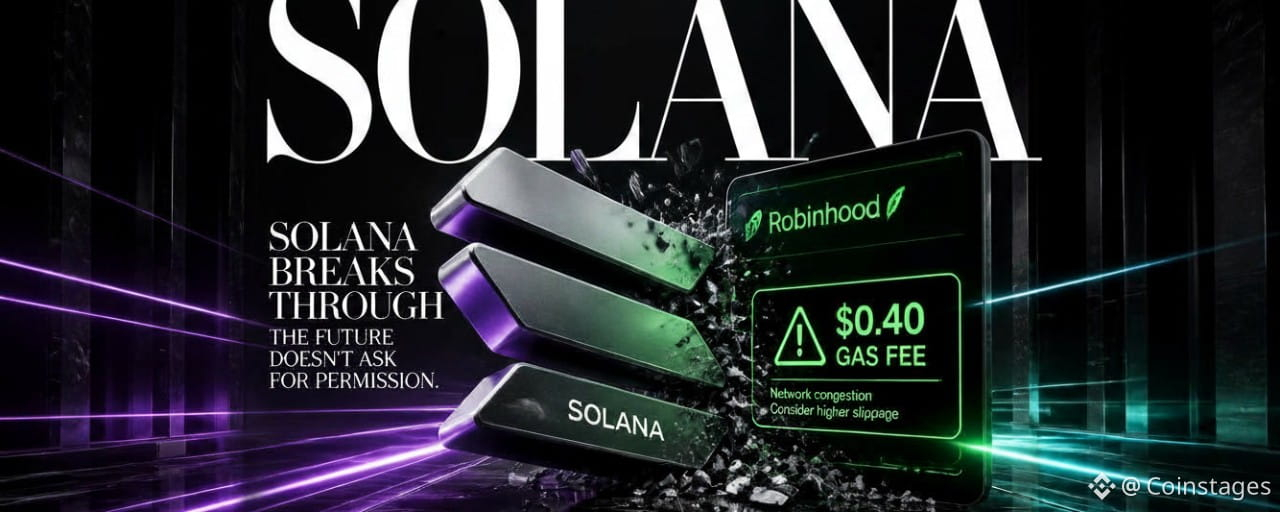
SOLANA CO-FOUNDER SLAMS ROBINHOOD CHAIN FEES: CALLS CONGESTION PROFITS "BRAIN DEAD"Solana co-founder Anatoly "Toly" Yakovenko has sparked a fierce Layer-1 vs. Layer-2 debate by calling out Robinhood Chain's business model. As average transaction costs on Robinhood's Arbitrum-powered network surged to $0.40, Yakovenko publicly criticized the brokerage for profiting from network congestion rather than offering a gasless, spread-based experience for users inside its app.
$0.40 Average Fees vs. Sub-Cent Solana Execution
The controversy ignited after data revealed a massive uptick in execution costs across Robinhood Chain following its July 2026 mainnet launch:
Gas Spike to $0.40: On-chain research by Bitquery confirmed that average fees on Robinhood Chain climbed from roughly $0.007 in late August to over $0.41 by early September, driven by heavy trading volume.100x Higher Than Solana: At $0.40 per transaction, Robinhood Chain fees sat at roughly 100 times the cost of a standard Solana transaction, which handles equivalent workloads for a fraction of a cent.Profiting from Congestion: Yakovenko argued that a consumer brokerage should charge users via transparent application spreads rather than allowing base-layer gas fees to escalate for every wallet when network blocks fill up.
The Arbitrum 10% Revenue Share Debate
Yakovenko highlighted the financial math behind Robinhood's infrastructure choices, arguing that the company missed an opportunity to offer a completely fee-free user experience:
Arbitrum Revenue Cut: Under the Arbitrum Expansion Program (AEP), Robinhood Chain returns 10% of its net revenue to the Arbitrum ecosystem (8% to ArbitrumDAO and 2% to the Developer Guild).4x Solana Fee Coverage: Yakovenko noted on X that the 10% revenue share Robinhood pays to Arbitrum would have covered Solana execution fees four times over, enabling a completely gasless experience for retail traders.Temporary Gas Subsidies: Robinhood Wallet currently subsidizes user network fees on eligible swaps, but that promotion is scheduled to expire at 11:59 p.m. EST on September 29, 2026, leaving users exposed to raw gas rates.
Essential Financial Disclaimer
This article is strictly for educational and informational purposes only and does not constitute financial, investment, legal, or trading advice. Digital asset networks and Layer-1/Layer-2 scaling protocols carry inherent execution and volatility risks. Always perform independent research (DYOR) and consult a certified financial advisor before making investment decisions.
Should crypto brokerages like Robinhood build on low-cost Layer-1s to eliminate gas fees, or do Ethereum Layer-2s offer superior security and liquidity? Share your thoughts and debate in the comments below! 🗣️⚡
SOLANA CO-FOUNDER SLAMS ROBINHOOD CHAIN FEES: CALLS CONGESTION PROFITS "BRAIN DEAD"
Solana co-founder Anatoly "Toly" Yakovenko has sparked a fierce Layer-1 vs. Layer-2 debate by calling out Robinhood Chain's business model. As average transaction costs on Robinhood's Arbitrum-powered network surged to $0.40, Yakovenko publicly criticized the brokerage for profiting from network congestion rather than offering a gasless, spread-based experience for users inside its app.
$0.40 Average Fees vs. Sub-Cent Solana Execution
The controversy ignited after data revealed a massive uptick in execution costs across Robinhood Chain following its July 2026 mainnet launch:
Gas Spike to $0.40: On-chain research by Bitquery confirmed that average fees on Robinhood Chain climbed from roughly $0.007 in late August to over $0.41 by early September, driven by heavy trading volume.100x Higher Than Solana: At $0.40 per transaction, Robinhood Chain fees sat at roughly 100 times the cost of a standard Solana transaction, which handles equivalent workloads for a fraction of a cent.Profiting from Congestion: Yakovenko argued that a consumer brokerage should charge users via transparent application spreads rather than allowing base-layer gas fees to escalate for every wallet when network blocks fill up.
The Arbitrum 10% Revenue Share Debate
Yakovenko highlighted the financial math behind Robinhood's infrastructure choices, arguing that the company missed an opportunity to offer a completely fee-free user experience:
Arbitrum Revenue Cut: Under the Arbitrum Expansion Program (AEP), Robinhood Chain returns 10% of its net revenue to the Arbitrum ecosystem (8% to ArbitrumDAO and 2% to the Developer Guild).4x Solana Fee Coverage: Yakovenko noted on X that the 10% revenue share Robinhood pays to Arbitrum would have covered Solana execution fees four times over, enabling a completely gasless experience for retail traders.Temporary Gas Subsidies: Robinhood Wallet currently subsidizes user network fees on eligible swaps, but that promotion is scheduled to expire at 11:59 p.m. EST on September 29, 2026, leaving users exposed to raw gas rates.
Essential Financial Disclaimer
This article is strictly for educational and informational purposes only and does not constitute financial, investment, legal, or trading advice. Digital asset networks and Layer-1/Layer-2 scaling protocols carry inherent execution and volatility risks. Always perform independent research (DYOR) and consult a certified financial advisor before making investment decisions.
Should crypto brokerages like Robinhood build on low-cost Layer-1s to eliminate gas fees, or do Ethereum Layer-2s offer superior security and liquidity? Share your thoughts and debate in the comments below! 🗣️⚡
$0.40 Average Fees vs. Sub-Cent Solana Execution
The controversy ignited after data revealed a massive uptick in execution costs across Robinhood Chain following its July 2026 mainnet launch:
Gas Spike to $0.40: On-chain research by Bitquery confirmed that average fees on Robinhood Chain climbed from roughly $0.007 in late August to over $0.41 by early September, driven by heavy trading volume.100x Higher Than Solana: At $0.40 per transaction, Robinhood Chain fees sat at roughly 100 times the cost of a standard Solana transaction, which handles equivalent workloads for a fraction of a cent.Profiting from Congestion: Yakovenko argued that a consumer brokerage should charge users via transparent application spreads rather than allowing base-layer gas fees to escalate for every wallet when network blocks fill up.
The Arbitrum 10% Revenue Share Debate
Yakovenko highlighted the financial math behind Robinhood's infrastructure choices, arguing that the company missed an opportunity to offer a completely fee-free user experience:
Arbitrum Revenue Cut: Under the Arbitrum Expansion Program (AEP), Robinhood Chain returns 10% of its net revenue to the Arbitrum ecosystem (8% to ArbitrumDAO and 2% to the Developer Guild).4x Solana Fee Coverage: Yakovenko noted on X that the 10% revenue share Robinhood pays to Arbitrum would have covered Solana execution fees four times over, enabling a completely gasless experience for retail traders.Temporary Gas Subsidies: Robinhood Wallet currently subsidizes user network fees on eligible swaps, but that promotion is scheduled to expire at 11:59 p.m. EST on September 29, 2026, leaving users exposed to raw gas rates.
Essential Financial Disclaimer
This article is strictly for educational and informational purposes only and does not constitute financial, investment, legal, or trading advice. Digital asset networks and Layer-1/Layer-2 scaling protocols carry inherent execution and volatility risks. Always perform independent research (DYOR) and consult a certified financial advisor before making investment decisions.
Should crypto brokerages like Robinhood build on low-cost Layer-1s to eliminate gas fees, or do Ethereum Layer-2s offer superior security and liquidity? Share your thoughts and debate in the comments below! 🗣️⚡
315
·
--
Article
RIPPLE CEO SLAMS $11 BILLION GOLD MOVE: WHY CRYPTO RAILS ARE THE FUTURE OF GLOBAL VALUE TRANSFERRipple CEO Brad Garlinghouse has taken aim at the legacy financial system after highlighting the Dutch central bank’s recent $11 billion gold relocation. Calling out traditional banking mechanics that still "shift value the way it did in the 1940s," Garlinghouse stressed that modern asset settlement needs an urgent upgrade to instant, transparent blockchain rails.
The $11B Gold Relocation: A "Paper Exercise" in Legacy Finance
De Nederlandsche Bank (DNB) shifted roughly 86 tonnes of gold reserves between March and August to improve market liquidity in London. However, the underlying operational mechanics reveal the deep friction embedded in traditional asset transfers:
70% Never Left the Ground: Rather than physically shipping all the bullion, the central bank sold 59 tonnes of gold in New York and repurchased the equivalent amount in London. Only 27 tonnes were physically flown across the Atlantic.Months of Operational Friction: Shifting paper ownership across traditional institutional intermediaries took months to organize and execute.Garlinghouse’s Take: Garlinghouse pointed out the irony that central banks are already utilizing abstract paper accounting to move physical assets, yet resist settling value instantly via cryptographically verified distributed ledgers.
XRP Ledger Proves Speed Advantage in Central Bank Tests
While legacy transfers depend on correspondent queues and paper rebalancing, decentralized blockchain networks demonstrate immediate operational superiority:
Sub-5-Second Settlement: Recent testing by the Bank for International Settlements (BIS) utilizing the XRP Ledger anchored official data with finality in 3 to 5 seconds and verification in just 1 to 2 seconds.Tokenized Gold Active on XRPL: Real-world assets (RWAs), including tokenized physical gold, are already actively trading on the XRP Ledger, allowing instant ownership transfer onchain while physical reserves stay securely vaulted.$1.5B to $2.7T Growth: Garlinghouse contrasted traditional finance's sluggish pace with the digital asset sector's evolution over the past decade, expanding from a $1.5 billion experiment into a $2.7 trillion asset class.
Essential Financial Disclaimer
This article is strictly for educational and informational purposes only and does not constitute financial, investment, legal, or trading advice. Digital asset markets and real-world asset (RWA) tokenization carry inherent market volatility and technological risks. Always conduct independent research (DYOR) and consult a certified financial advisor before making investment decisions.
Will central banks eventually migrate legacy asset settlement entirely to blockchain rails like the XRP Ledger? Share your thoughts and macro outlook in the comments below! 🌐⚡
RIPPLE CEO SLAMS $11 BILLION GOLD MOVE: WHY CRYPTO RAILS ARE THE FUTURE OF GLOBAL VALUE TRANSFER
Ripple CEO Brad Garlinghouse has taken aim at the legacy financial system after highlighting the Dutch central bank’s recent $11 billion gold relocation. Calling out traditional banking mechanics that still "shift value the way it did in the 1940s," Garlinghouse stressed that modern asset settlement needs an urgent upgrade to instant, transparent blockchain rails.
The $11B Gold Relocation: A "Paper Exercise" in Legacy Finance
De Nederlandsche Bank (DNB) shifted roughly 86 tonnes of gold reserves between March and August to improve market liquidity in London. However, the underlying operational mechanics reveal the deep friction embedded in traditional asset transfers:
70% Never Left the Ground: Rather than physically shipping all the bullion, the central bank sold 59 tonnes of gold in New York and repurchased the equivalent amount in London. Only 27 tonnes were physically flown across the Atlantic.Months of Operational Friction: Shifting paper ownership across traditional institutional intermediaries took months to organize and execute.Garlinghouse’s Take: Garlinghouse pointed out the irony that central banks are already utilizing abstract paper accounting to move physical assets, yet resist settling value instantly via cryptographically verified distributed ledgers.
XRP Ledger Proves Speed Advantage in Central Bank Tests
While legacy transfers depend on correspondent queues and paper rebalancing, decentralized blockchain networks demonstrate immediate operational superiority:
Sub-5-Second Settlement: Recent testing by the Bank for International Settlements (BIS) utilizing the XRP Ledger anchored official data with finality in 3 to 5 seconds and verification in just 1 to 2 seconds.Tokenized Gold Active on XRPL: Real-world assets (RWAs), including tokenized physical gold, are already actively trading on the XRP Ledger, allowing instant ownership transfer onchain while physical reserves stay securely vaulted.$1.5B to $2.7T Growth: Garlinghouse contrasted traditional finance's sluggish pace with the digital asset sector's evolution over the past decade, expanding from a $1.5 billion experiment into a $2.7 trillion asset class.
Essential Financial Disclaimer
This article is strictly for educational and informational purposes only and does not constitute financial, investment, legal, or trading advice. Digital asset markets and real-world asset (RWA) tokenization carry inherent market volatility and technological risks. Always conduct independent research (DYOR) and consult a certified financial advisor before making investment decisions.
Will central banks eventually migrate legacy asset settlement entirely to blockchain rails like the XRP Ledger? Share your thoughts and macro outlook in the comments below! 🌐⚡
The $11B Gold Relocation: A "Paper Exercise" in Legacy Finance
De Nederlandsche Bank (DNB) shifted roughly 86 tonnes of gold reserves between March and August to improve market liquidity in London. However, the underlying operational mechanics reveal the deep friction embedded in traditional asset transfers:
70% Never Left the Ground: Rather than physically shipping all the bullion, the central bank sold 59 tonnes of gold in New York and repurchased the equivalent amount in London. Only 27 tonnes were physically flown across the Atlantic.Months of Operational Friction: Shifting paper ownership across traditional institutional intermediaries took months to organize and execute.Garlinghouse’s Take: Garlinghouse pointed out the irony that central banks are already utilizing abstract paper accounting to move physical assets, yet resist settling value instantly via cryptographically verified distributed ledgers.
XRP Ledger Proves Speed Advantage in Central Bank Tests
While legacy transfers depend on correspondent queues and paper rebalancing, decentralized blockchain networks demonstrate immediate operational superiority:
Sub-5-Second Settlement: Recent testing by the Bank for International Settlements (BIS) utilizing the XRP Ledger anchored official data with finality in 3 to 5 seconds and verification in just 1 to 2 seconds.Tokenized Gold Active on XRPL: Real-world assets (RWAs), including tokenized physical gold, are already actively trading on the XRP Ledger, allowing instant ownership transfer onchain while physical reserves stay securely vaulted.$1.5B to $2.7T Growth: Garlinghouse contrasted traditional finance's sluggish pace with the digital asset sector's evolution over the past decade, expanding from a $1.5 billion experiment into a $2.7 trillion asset class.
Essential Financial Disclaimer
This article is strictly for educational and informational purposes only and does not constitute financial, investment, legal, or trading advice. Digital asset markets and real-world asset (RWA) tokenization carry inherent market volatility and technological risks. Always conduct independent research (DYOR) and consult a certified financial advisor before making investment decisions.
Will central banks eventually migrate legacy asset settlement entirely to blockchain rails like the XRP Ledger? Share your thoughts and macro outlook in the comments below! 🌐⚡
2
567
·
--
Verified
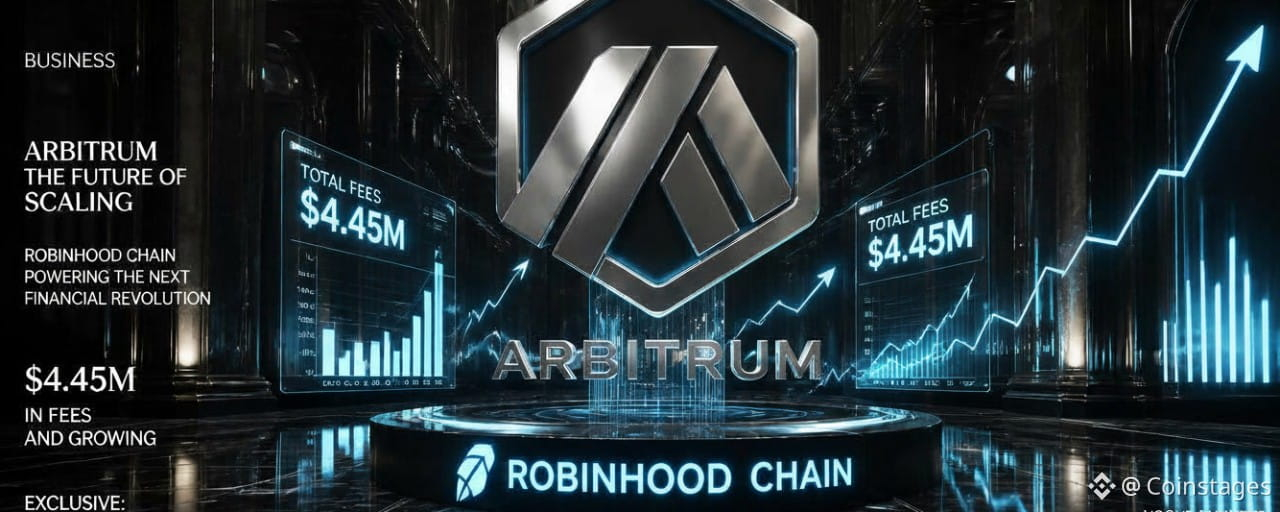
Article
ROBINHOOD CHAIN SPARKING 96% ARBITRUM REBOUND WITH RECORD $4.45M IN DAILY FEES!Arbitrum ($ARB) has staged an explosive recovery, surging over 90% from its historical June low. The sudden rally comes as the newly launched Robinhood Chain—built on the Arbitrum Orbit stack, recorded an all-time high of $4.45 million in daily transaction fees. The massive surge in fee generation is injecting vital momentum back into the Layer-2 ecosystem.
Robinhood Chain Out-Earns Arbitrum One by 320x
The activity metrics across Robinhood's dedicated Orbit chain showcase unprecedented decentralized finance (DeFi) trading volume:
Record $4.45 Million Fee Peak: Driven primarily by Uniswap trading routes and tokenized real-world asset (RWA) trading, Robinhood Chain fees surged past $4.45 million on September 2.Massive Disparity vs. Arbitrum One: While Arbitrum One processed 1.94 million daily transactions and earned roughly $14,000 (5.8 ETH) in fees, Robinhood Chain out-earned the flagship network by 320 times in a single 24-hour window.ArbitrumDAO Revenue Share: Under the Arbitrum Expansion Program, Orbit chains return 10% of revenue, 8% directly to ArbitrumDAO and 2% to a developer guild. This delivered roughly $320,000 directly to the DAO treasury in a single day.
Key Technical Resistance & Potential Volatility Tests
Despite strong network fundamentals, ARB price action faces key resistance levels and upcoming supply events:
Testing $0.140–$0.145 Resistance: After pulling back from localized highs near $0.145, ARB is testing major overhead resistance. A confirmed breakout above $0.145 opens the technical path toward $0.150–$0.170.Crucial EMA Support: Key downside support rests between $0.110 and $0.114, aligned with the 50-period Exponential Moving Average (EMA) and previous breakout zones.Upcoming September Unlocks & Subsidy Expirations: Traders are closely watching September 16, when 92.6 million ARB tokens (~$15.9M) unlock into circulation. Additionally, Robinhood's initial 90-day gas subsidy expires later this month, testing whether fee volume can remain elevated organically.
Essential Financial Disclaimer
This article is strictly for educational and informational purposes only and does not constitute financial, investment, legal, or trading advice. Layer-2 tokens and digital assets carry extreme volatility and market risk. Always perform independent research (DYOR) and consult a certified financial advisor before making investment decisions.
Will Robinhood Chain's massive fee revenue sustain ARB's rally past $0.150, or will the September token unlock cause a temporary pullback? Share your target charts and predictions in the comments below! 📊⚡
ROBINHOOD CHAIN SPARKING 96% ARBITRUM REBOUND WITH RECORD $4.45M IN DAILY FEES!
Arbitrum ($ARB) has staged an explosive recovery, surging over 90% from its historical June low. The sudden rally comes as the newly launched Robinhood Chain—built on the Arbitrum Orbit stack, recorded an all-time high of $4.45 million in daily transaction fees. The massive surge in fee generation is injecting vital momentum back into the Layer-2 ecosystem.
Robinhood Chain Out-Earns Arbitrum One by 320x
The activity metrics across Robinhood's dedicated Orbit chain showcase unprecedented decentralized finance (DeFi) trading volume:
Record $4.45 Million Fee Peak: Driven primarily by Uniswap trading routes and tokenized real-world asset (RWA) trading, Robinhood Chain fees surged past $4.45 million on September 2.Massive Disparity vs. Arbitrum One: While Arbitrum One processed 1.94 million daily transactions and earned roughly $14,000 (5.8 ETH) in fees, Robinhood Chain out-earned the flagship network by 320 times in a single 24-hour window.ArbitrumDAO Revenue Share: Under the Arbitrum Expansion Program, Orbit chains return 10% of revenue, 8% directly to ArbitrumDAO and 2% to a developer guild. This delivered roughly $320,000 directly to the DAO treasury in a single day.
Key Technical Resistance & Potential Volatility Tests
Despite strong network fundamentals, ARB price action faces key resistance levels and upcoming supply events:
Testing $0.140–$0.145 Resistance: After pulling back from localized highs near $0.145, ARB is testing major overhead resistance. A confirmed breakout above $0.145 opens the technical path toward $0.150–$0.170.Crucial EMA Support: Key downside support rests between $0.110 and $0.114, aligned with the 50-period Exponential Moving Average (EMA) and previous breakout zones.Upcoming September Unlocks & Subsidy Expirations: Traders are closely watching September 16, when 92.6 million ARB tokens (~$15.9M) unlock into circulation. Additionally, Robinhood's initial 90-day gas subsidy expires later this month, testing whether fee volume can remain elevated organically.
Essential Financial Disclaimer
This article is strictly for educational and informational purposes only and does not constitute financial, investment, legal, or trading advice. Layer-2 tokens and digital assets carry extreme volatility and market risk. Always perform independent research (DYOR) and consult a certified financial advisor before making investment decisions.
Will Robinhood Chain's massive fee revenue sustain ARB's rally past $0.150, or will the September token unlock cause a temporary pullback? Share your target charts and predictions in the comments below! 📊⚡
Robinhood Chain Out-Earns Arbitrum One by 320x
The activity metrics across Robinhood's dedicated Orbit chain showcase unprecedented decentralized finance (DeFi) trading volume:
Record $4.45 Million Fee Peak: Driven primarily by Uniswap trading routes and tokenized real-world asset (RWA) trading, Robinhood Chain fees surged past $4.45 million on September 2.Massive Disparity vs. Arbitrum One: While Arbitrum One processed 1.94 million daily transactions and earned roughly $14,000 (5.8 ETH) in fees, Robinhood Chain out-earned the flagship network by 320 times in a single 24-hour window.ArbitrumDAO Revenue Share: Under the Arbitrum Expansion Program, Orbit chains return 10% of revenue, 8% directly to ArbitrumDAO and 2% to a developer guild. This delivered roughly $320,000 directly to the DAO treasury in a single day.
Key Technical Resistance & Potential Volatility Tests
Despite strong network fundamentals, ARB price action faces key resistance levels and upcoming supply events:
Testing $0.140–$0.145 Resistance: After pulling back from localized highs near $0.145, ARB is testing major overhead resistance. A confirmed breakout above $0.145 opens the technical path toward $0.150–$0.170.Crucial EMA Support: Key downside support rests between $0.110 and $0.114, aligned with the 50-period Exponential Moving Average (EMA) and previous breakout zones.Upcoming September Unlocks & Subsidy Expirations: Traders are closely watching September 16, when 92.6 million ARB tokens (~$15.9M) unlock into circulation. Additionally, Robinhood's initial 90-day gas subsidy expires later this month, testing whether fee volume can remain elevated organically.
Essential Financial Disclaimer
This article is strictly for educational and informational purposes only and does not constitute financial, investment, legal, or trading advice. Layer-2 tokens and digital assets carry extreme volatility and market risk. Always perform independent research (DYOR) and consult a certified financial advisor before making investment decisions.
Will Robinhood Chain's massive fee revenue sustain ARB's rally past $0.150, or will the September token unlock cause a temporary pullback? Share your target charts and predictions in the comments below! 📊⚡
1
647
·
--
Partly True
Article
SHIBA INU PROPONENT SAYS SHIB NEEDS ONE ZERO GONE TO RETURN TO ATH, NOT 1,000 YEARSProminent Shiba Inu ($SHIB) ecosystem proponent Mazrael has forcefully pushed back against critics claiming the token could take centuries to reclaim its former glory. Responding to skepticism over SHIB's long-term trajectory, Mazrael clarified that the asset does not require a multi-century wait or an unrealistic overhaul, it simply needs to eliminate one single zero from its current valuation to challenge its all-time high ($0.00008616).
The 16.7x Rally & Historical Speed
Addressing doubts comparing the wait time for a SHIB recovery to biblical lifespans, Mazrael outlined why a return to ATH is structurally much closer than critics suggest:
Eliminating One Zero: Sitting at five leading zeros ($0.00000515) compared to four zeros at its peak ($0.00008616), SHIB requires a 16.7x rally, not a multi-thousand-percent impossible leap, to revisit its peak valuation.Proven Historical Velocity: Mazrael noted that SHIB has recorded 16.7x gains within a single week on 12 separate occasions historically, with three of those rallies occurring in as little as three days.Rapid Zero Removal: Highlighting the token's explosive volatility, Mazrael reminded community members that SHIB removed its previous zero in just 48 hours during past bull cycles.
Global Regulatory Recognition & Institutional Growth
Unlike its purely speculative 2021 run, the current Shiba Inu ecosystem is anchored by substantial legal, regulatory, and institutional backing across key global markets:
U.S. Digital Commodity Recognition: In early 2026, U.S. regulatory discussions including the SEC and CFTC acknowledged SHIB alongside select digital commodities.Japan FSA Approval & Laser Digital Listing: Japan’s Financial Services Agency (FSA) cleared SHIB for local trading. Furthermore, Nomura’s Laser Digital added SHIB as the only meme asset listed alongside Bitcoin, Ethereum, XRP, Bitcoin Cash, and Litecoin.European ETP Trading: Valour’s regulated SHIB Exchange-Traded Product (ETP) trades on Sweden's Spotlight Stock Market, granting mainstream European investors direct exposure via conventional brokerage accounts.Layer-2 Infrastructure: Shibarium continues to drive utility, providing decentralized execution, lower transaction fees, and programmatic burn mechanics.
Essential Financial Disclaimer
This article is strictly for educational and informational purposes only and does not constitute financial, investment, legal, or trading advice. Meme tokens and digital assets carry extreme price volatility and market risk. Always perform independent research (DYOR) and consult a certified financial advisor before making investment decisions.
Do you agree that SHIB can erase its next zero in the upcoming bull cycle? Share your target charts and community outlook in the comments below! 📊🐕
SHIBA INU PROPONENT SAYS SHIB NEEDS ONE ZERO GONE TO RETURN TO ATH, NOT 1,000 YEARS
Prominent Shiba Inu ($SHIB) ecosystem proponent Mazrael has forcefully pushed back against critics claiming the token could take centuries to reclaim its former glory. Responding to skepticism over SHIB's long-term trajectory, Mazrael clarified that the asset does not require a multi-century wait or an unrealistic overhaul, it simply needs to eliminate one single zero from its current valuation to challenge its all-time high ($0.00008616).
The 16.7x Rally & Historical Speed
Addressing doubts comparing the wait time for a SHIB recovery to biblical lifespans, Mazrael outlined why a return to ATH is structurally much closer than critics suggest:
Eliminating One Zero: Sitting at five leading zeros ($0.00000515) compared to four zeros at its peak ($0.00008616), SHIB requires a 16.7x rally, not a multi-thousand-percent impossible leap, to revisit its peak valuation.Proven Historical Velocity: Mazrael noted that SHIB has recorded 16.7x gains within a single week on 12 separate occasions historically, with three of those rallies occurring in as little as three days.Rapid Zero Removal: Highlighting the token's explosive volatility, Mazrael reminded community members that SHIB removed its previous zero in just 48 hours during past bull cycles.
Global Regulatory Recognition & Institutional Growth
Unlike its purely speculative 2021 run, the current Shiba Inu ecosystem is anchored by substantial legal, regulatory, and institutional backing across key global markets:
U.S. Digital Commodity Recognition: In early 2026, U.S. regulatory discussions including the SEC and CFTC acknowledged SHIB alongside select digital commodities.Japan FSA Approval & Laser Digital Listing: Japan’s Financial Services Agency (FSA) cleared SHIB for local trading. Furthermore, Nomura’s Laser Digital added SHIB as the only meme asset listed alongside Bitcoin, Ethereum, XRP, Bitcoin Cash, and Litecoin.European ETP Trading: Valour’s regulated SHIB Exchange-Traded Product (ETP) trades on Sweden's Spotlight Stock Market, granting mainstream European investors direct exposure via conventional brokerage accounts.Layer-2 Infrastructure: Shibarium continues to drive utility, providing decentralized execution, lower transaction fees, and programmatic burn mechanics.
Essential Financial Disclaimer
This article is strictly for educational and informational purposes only and does not constitute financial, investment, legal, or trading advice. Meme tokens and digital assets carry extreme price volatility and market risk. Always perform independent research (DYOR) and consult a certified financial advisor before making investment decisions.
Do you agree that SHIB can erase its next zero in the upcoming bull cycle? Share your target charts and community outlook in the comments below! 📊🐕
The 16.7x Rally & Historical Speed
Addressing doubts comparing the wait time for a SHIB recovery to biblical lifespans, Mazrael outlined why a return to ATH is structurally much closer than critics suggest:
Eliminating One Zero: Sitting at five leading zeros ($0.00000515) compared to four zeros at its peak ($0.00008616), SHIB requires a 16.7x rally, not a multi-thousand-percent impossible leap, to revisit its peak valuation.Proven Historical Velocity: Mazrael noted that SHIB has recorded 16.7x gains within a single week on 12 separate occasions historically, with three of those rallies occurring in as little as three days.Rapid Zero Removal: Highlighting the token's explosive volatility, Mazrael reminded community members that SHIB removed its previous zero in just 48 hours during past bull cycles.
Global Regulatory Recognition & Institutional Growth
Unlike its purely speculative 2021 run, the current Shiba Inu ecosystem is anchored by substantial legal, regulatory, and institutional backing across key global markets:
U.S. Digital Commodity Recognition: In early 2026, U.S. regulatory discussions including the SEC and CFTC acknowledged SHIB alongside select digital commodities.Japan FSA Approval & Laser Digital Listing: Japan’s Financial Services Agency (FSA) cleared SHIB for local trading. Furthermore, Nomura’s Laser Digital added SHIB as the only meme asset listed alongside Bitcoin, Ethereum, XRP, Bitcoin Cash, and Litecoin.European ETP Trading: Valour’s regulated SHIB Exchange-Traded Product (ETP) trades on Sweden's Spotlight Stock Market, granting mainstream European investors direct exposure via conventional brokerage accounts.Layer-2 Infrastructure: Shibarium continues to drive utility, providing decentralized execution, lower transaction fees, and programmatic burn mechanics.
Essential Financial Disclaimer
This article is strictly for educational and informational purposes only and does not constitute financial, investment, legal, or trading advice. Meme tokens and digital assets carry extreme price volatility and market risk. Always perform independent research (DYOR) and consult a certified financial advisor before making investment decisions.
Do you agree that SHIB can erase its next zero in the upcoming bull cycle? Share your target charts and community outlook in the comments below! 📊🐕
5
905
·
--
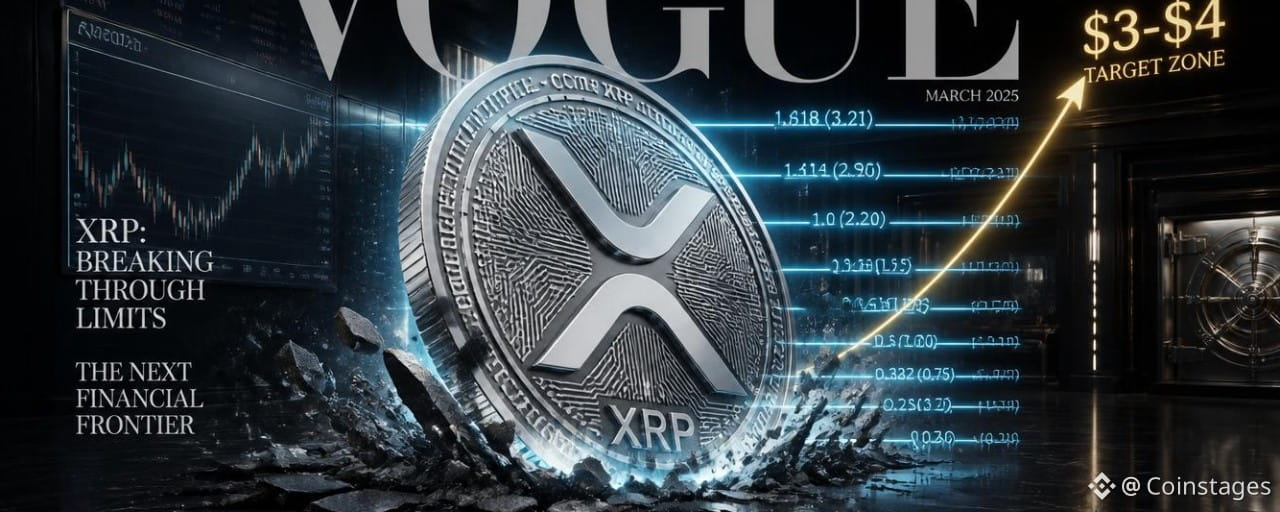
Article
XRP NEXT MOVE COULD BE HUGE AS ANALYST TARGETS $3–$4!XRP is preparing for its next major leg higher following a sharp localized pullback from its peak, according to popular Elliott Wave technician XForceGlobal. Following a brief 20% correction into localized support near $1.31–$1.44, technical models suggest that the asset is wrapping up a complex corrective phase to unlock a 2x to 3x upside expansion targeting $3.00 to $4.00.
Elliott Wave Breakdown & WXYXZ Correction Structure
XForceGlobal highlights that XRP's multi-month decline from its all-time high of $3.66 represents a complex corrective pattern rather than a structural five-wave breakdown:
The WXYXZ Corrective Floor: The analyst notes that the sharp drawdown to the $0.987 low completed a multi-phase WXYXZ corrective pattern. The subsequent 70% rally to $1.70 served as the initial confirmation of a structural trend change.Fibonacci Retracement Defense: During the current minor pullback, key Fibonacci levels ($1.13 to $1.39) have provided strong buying liquidity. Holding above these levels confirms that the current consolidation is a standard precursor to the next impulse move.Sequential Targets ($2.00 to $4.00): While the broader macro target sits between $3.00 and $4.00, the analyst expects XRP to first challenge and reclaim the $2.00 psychological resistance boundary.
Exchange Reserve Depletion Backs Bullish Technicals
Complementing the technical structure, on-chain fundamental metrics display significant supply absorption across top trading venues:
Binance Reserves Down 500 Million XRP: Data tracked by The Crypto Basic confirms that XRP reserves on Binance have plummeted from 3.1 billion in November 2025 to 2.6 billion XRP, marking the lowest monthly average since early 2024.Self-Custody & ETF Absorption: This massive reserve decline indicates that investors are steadily moving tokens into private self-custody wallets for long-term holding. Additionally, accumulating spot XRP ETF providers continue to absorb circulating supply directly from secondary markets.
Essential Financial Disclaimer
This article is strictly for educational and informational purposes only and does not constitute financial, investment, legal, or trading advice. Digital asset markets carry extreme volatility and capital risk. Always perform independent research (DYOR) and consult a certified financial advisor before making investment decisions.
Will XRP clear $2.00 on its way toward the $3–$4 macro target, or will consolidation last longer? Share your target charts and predictions in the comments below! 📊⚡
XRP NEXT MOVE COULD BE HUGE AS ANALYST TARGETS $3–$4!
XRP is preparing for its next major leg higher following a sharp localized pullback from its peak, according to popular Elliott Wave technician XForceGlobal. Following a brief 20% correction into localized support near $1.31–$1.44, technical models suggest that the asset is wrapping up a complex corrective phase to unlock a 2x to 3x upside expansion targeting $3.00 to $4.00.
Elliott Wave Breakdown & WXYXZ Correction Structure
XForceGlobal highlights that XRP's multi-month decline from its all-time high of $3.66 represents a complex corrective pattern rather than a structural five-wave breakdown:
The WXYXZ Corrective Floor: The analyst notes that the sharp drawdown to the $0.987 low completed a multi-phase WXYXZ corrective pattern. The subsequent 70% rally to $1.70 served as the initial confirmation of a structural trend change.Fibonacci Retracement Defense: During the current minor pullback, key Fibonacci levels ($1.13 to $1.39) have provided strong buying liquidity. Holding above these levels confirms that the current consolidation is a standard precursor to the next impulse move.Sequential Targets ($2.00 to $4.00): While the broader macro target sits between $3.00 and $4.00, the analyst expects XRP to first challenge and reclaim the $2.00 psychological resistance boundary.
Exchange Reserve Depletion Backs Bullish Technicals
Complementing the technical structure, on-chain fundamental metrics display significant supply absorption across top trading venues:
Binance Reserves Down 500 Million XRP: Data tracked by The Crypto Basic confirms that XRP reserves on Binance have plummeted from 3.1 billion in November 2025 to 2.6 billion XRP, marking the lowest monthly average since early 2024.Self-Custody & ETF Absorption: This massive reserve decline indicates that investors are steadily moving tokens into private self-custody wallets for long-term holding. Additionally, accumulating spot XRP ETF providers continue to absorb circulating supply directly from secondary markets.
Essential Financial Disclaimer
This article is strictly for educational and informational purposes only and does not constitute financial, investment, legal, or trading advice. Digital asset markets carry extreme volatility and capital risk. Always perform independent research (DYOR) and consult a certified financial advisor before making investment decisions.
Will XRP clear $2.00 on its way toward the $3–$4 macro target, or will consolidation last longer? Share your target charts and predictions in the comments below! 📊⚡
Elliott Wave Breakdown & WXYXZ Correction Structure
XForceGlobal highlights that XRP's multi-month decline from its all-time high of $3.66 represents a complex corrective pattern rather than a structural five-wave breakdown:
The WXYXZ Corrective Floor: The analyst notes that the sharp drawdown to the $0.987 low completed a multi-phase WXYXZ corrective pattern. The subsequent 70% rally to $1.70 served as the initial confirmation of a structural trend change.Fibonacci Retracement Defense: During the current minor pullback, key Fibonacci levels ($1.13 to $1.39) have provided strong buying liquidity. Holding above these levels confirms that the current consolidation is a standard precursor to the next impulse move.Sequential Targets ($2.00 to $4.00): While the broader macro target sits between $3.00 and $4.00, the analyst expects XRP to first challenge and reclaim the $2.00 psychological resistance boundary.
Exchange Reserve Depletion Backs Bullish Technicals
Complementing the technical structure, on-chain fundamental metrics display significant supply absorption across top trading venues:
Binance Reserves Down 500 Million XRP: Data tracked by The Crypto Basic confirms that XRP reserves on Binance have plummeted from 3.1 billion in November 2025 to 2.6 billion XRP, marking the lowest monthly average since early 2024.Self-Custody & ETF Absorption: This massive reserve decline indicates that investors are steadily moving tokens into private self-custody wallets for long-term holding. Additionally, accumulating spot XRP ETF providers continue to absorb circulating supply directly from secondary markets.
Essential Financial Disclaimer
This article is strictly for educational and informational purposes only and does not constitute financial, investment, legal, or trading advice. Digital asset markets carry extreme volatility and capital risk. Always perform independent research (DYOR) and consult a certified financial advisor before making investment decisions.
Will XRP clear $2.00 on its way toward the $3–$4 macro target, or will consolidation last longer? Share your target charts and predictions in the comments below! 📊⚡
1
4
1.3k
·
--

Article
RIPPLE CEO: MAKING AMERICA THE WORLD'S CRYPTO CAPITAL IS WITHIN REACH - "LET'S FINISH THE JOB"Ripple CEO Brad Garlinghouse has issued a decisive call to action for United States financial regulators and lawmakers. Responding to recent developments following a high-level White House summit, Garlinghouse emphasized that establishing the United States as the undisputed global capital for cryptocurrency and digital asset innovation is closer than ever, urging key stakeholders to "finish the job" through clear regulatory legislation.
The White House Crypto Summit & CFTC Endorsement
Garlinghouse’s comments follow public statements from CFTC Chairman Michael Selig regarding an executive roundtable held at the White House:
Industry Leaders at the Table: The August 19 meeting brought together President Donald Trump, SEC Chairman Paul Atkins, CFTC Chairman Michael Selig, and top industry executives, including Ripple CEO Brad Garlinghouse and Coinbase CEO Brian Armstrong.Building Modern Infrastructure Domestically: CFTC Chairman Selig reinforced that the administration aims to ensure the next generation of modern financial technology is engineered within the U.S., highlighting initiatives such as the GENIUS Act, strategic Bitcoin reserves, and clear boundaries separating crypto securities from commodities.Garlinghouse’s Response: Reacting to Selig's vision for American leadership, Garlinghouse posted on X: "Proud to be in the room. Making America the crypto capital of the world is within reach – let's finish the job."
Key Legislative Battleground: The CLARITY Act
The push to cement U.S. crypto leadership now hinges on critical legislative votes scheduled for mid-September:
Crucial September Votes: Lawmakers are preparing to vote on the CLARITY Act, a landmark bill designed to establish unambiguous federal guidelines for digital assets, commodity classifications, and market structure.Addressing Final Hurdles: While the White House meeting focused on resolving key policy sticking points, such as stablecoin yield structures, decentralized finance (DeFi) oversight, and official ethics rules, passing the bill remains essential to preventing domestic capital and web3 talent from moving offshore.Direct Impact on Ripple & XRP: For Ripple and $XRP, comprehensive U.S. regulatory clarity would remove years of lingering legal friction, facilitating broader institutional adoption and domestic enterprise integration on the XRP Ledger.
Essential Financial Disclaimer
This article is strictly for educational and informational purposes only and does not constitute financial, investment, legal, or regulatory advice. Operating or investing in digital assets carries inherent market volatility and compliance risks within evolving sovereign frameworks. Always conduct independent research (DYOR) and consult a certified financial or legal advisor before making investment decisions.
Will U.S. lawmakers successfully pass the CLARITY Act this month to solidify America's stance as a global crypto leader? Share your thoughts and regulatory predictions in the comments below! 🏛️🇺🇸
RIPPLE CEO: MAKING AMERICA THE WORLD'S CRYPTO CAPITAL IS WITHIN REACH - "LET'S FINISH THE JOB"
Ripple CEO Brad Garlinghouse has issued a decisive call to action for United States financial regulators and lawmakers. Responding to recent developments following a high-level White House summit, Garlinghouse emphasized that establishing the United States as the undisputed global capital for cryptocurrency and digital asset innovation is closer than ever, urging key stakeholders to "finish the job" through clear regulatory legislation.
The White House Crypto Summit & CFTC Endorsement
Garlinghouse’s comments follow public statements from CFTC Chairman Michael Selig regarding an executive roundtable held at the White House:
Industry Leaders at the Table: The August 19 meeting brought together President Donald Trump, SEC Chairman Paul Atkins, CFTC Chairman Michael Selig, and top industry executives, including Ripple CEO Brad Garlinghouse and Coinbase CEO Brian Armstrong.Building Modern Infrastructure Domestically: CFTC Chairman Selig reinforced that the administration aims to ensure the next generation of modern financial technology is engineered within the U.S., highlighting initiatives such as the GENIUS Act, strategic Bitcoin reserves, and clear boundaries separating crypto securities from commodities.Garlinghouse’s Response: Reacting to Selig's vision for American leadership, Garlinghouse posted on X: "Proud to be in the room. Making America the crypto capital of the world is within reach – let's finish the job."
Key Legislative Battleground: The CLARITY Act
The push to cement U.S. crypto leadership now hinges on critical legislative votes scheduled for mid-September:
Crucial September Votes: Lawmakers are preparing to vote on the CLARITY Act, a landmark bill designed to establish unambiguous federal guidelines for digital assets, commodity classifications, and market structure.Addressing Final Hurdles: While the White House meeting focused on resolving key policy sticking points, such as stablecoin yield structures, decentralized finance (DeFi) oversight, and official ethics rules, passing the bill remains essential to preventing domestic capital and web3 talent from moving offshore.Direct Impact on Ripple & XRP: For Ripple and $XRP, comprehensive U.S. regulatory clarity would remove years of lingering legal friction, facilitating broader institutional adoption and domestic enterprise integration on the XRP Ledger.
Essential Financial Disclaimer
This article is strictly for educational and informational purposes only and does not constitute financial, investment, legal, or regulatory advice. Operating or investing in digital assets carries inherent market volatility and compliance risks within evolving sovereign frameworks. Always conduct independent research (DYOR) and consult a certified financial or legal advisor before making investment decisions.
Will U.S. lawmakers successfully pass the CLARITY Act this month to solidify America's stance as a global crypto leader? Share your thoughts and regulatory predictions in the comments below! 🏛️🇺🇸
The White House Crypto Summit & CFTC Endorsement
Garlinghouse’s comments follow public statements from CFTC Chairman Michael Selig regarding an executive roundtable held at the White House:
Industry Leaders at the Table: The August 19 meeting brought together President Donald Trump, SEC Chairman Paul Atkins, CFTC Chairman Michael Selig, and top industry executives, including Ripple CEO Brad Garlinghouse and Coinbase CEO Brian Armstrong.Building Modern Infrastructure Domestically: CFTC Chairman Selig reinforced that the administration aims to ensure the next generation of modern financial technology is engineered within the U.S., highlighting initiatives such as the GENIUS Act, strategic Bitcoin reserves, and clear boundaries separating crypto securities from commodities.Garlinghouse’s Response: Reacting to Selig's vision for American leadership, Garlinghouse posted on X: "Proud to be in the room. Making America the crypto capital of the world is within reach – let's finish the job."
Key Legislative Battleground: The CLARITY Act
The push to cement U.S. crypto leadership now hinges on critical legislative votes scheduled for mid-September:
Crucial September Votes: Lawmakers are preparing to vote on the CLARITY Act, a landmark bill designed to establish unambiguous federal guidelines for digital assets, commodity classifications, and market structure.Addressing Final Hurdles: While the White House meeting focused on resolving key policy sticking points, such as stablecoin yield structures, decentralized finance (DeFi) oversight, and official ethics rules, passing the bill remains essential to preventing domestic capital and web3 talent from moving offshore.Direct Impact on Ripple & XRP: For Ripple and $XRP, comprehensive U.S. regulatory clarity would remove years of lingering legal friction, facilitating broader institutional adoption and domestic enterprise integration on the XRP Ledger.
Essential Financial Disclaimer
This article is strictly for educational and informational purposes only and does not constitute financial, investment, legal, or regulatory advice. Operating or investing in digital assets carries inherent market volatility and compliance risks within evolving sovereign frameworks. Always conduct independent research (DYOR) and consult a certified financial or legal advisor before making investment decisions.
Will U.S. lawmakers successfully pass the CLARITY Act this month to solidify America's stance as a global crypto leader? Share your thoughts and regulatory predictions in the comments below! 🏛️🇺🇸
2
1
511
·
--
Article
HISTORY HINTS AT HOW XRP COULD PERFORM AGAINST BITCOIN FOR THE REST OF 2026Despite briefly outperforming during market rebounds, the XRP/BTC trading pair has lagged behind Bitcoin for most of 2026. However, after breaking a multi-month downtrend with a ~4% gain in August 2026, historical seasonal patterns highlighted by crypto analyst EGRAG Crypto suggest that XRP may follow a distinct four-phase roadmap against Bitcoin to close out the year.
Historical Seasonal Averages & Q4 Pattern Roadmap
According to historical monthly average data for the XRP/BTC pair, the final four months of the year follow a well-defined cycle of rotation, shakeout, expansion, and acceleration:
September (+17.0% Avg. Gain): September historically marks a bullish rotation period where XRP builds momentum against Bitcoin. Following August's green close, historical trends favor continued short-term outperformance this month.October (-19.6% Avg. Decline): October stands out as a notoriously difficult month for XRP/BTC, finishing lower in 11 of the last 13 years. Historically, this "shakeout" phase forces a temporary pullback before broader year-end rallies.November (+30.5% Avg. Gain): Historically marking a massive expansion phase, November often reverses October drawdowns sharply. Notable historical examples include November 2020 (+93.8% surge after a -22.4% October drop) and November 2024 (+179.2% surge after a -24.9% October drop).December (+44.1% Avg. Gain): December serves as the primary acceleration window, delivering the highest average monthly returns for the XRP/BTC pair as capital rotates into altcoins.
The 2026 Macro Drag vs. Breakout Triggers
Before staging a macro reversal against Bitcoin, XRP must overcome severe 2026 underperformance metrics:
Extended 2026 Underperformance: XRP/BTC experienced steady losses throughout early 2026, dropping 0.5% in Jan, 1.8% in Feb, 4.4% in Mar, 8.8% in Apr, falling another 2.0% in Jun and 4.8% in Jul.48% Below Multi-Year Peaks: Sitting at 0.00001754 BTC, the pair remains roughly 48% below its January 2025 high of 0.00003415 BTC.Validation Level to Watch: Analysts stress that clearing and confirming the August peak as support is critical to validating the historical September rotation scenario before October's projected volatility.
Essential Financial Disclaimer
This article is strictly for educational and informational purposes only and does not constitute financial, investment, legal, or trading advice. Digital asset trading pairs involve extreme market volatility and leverage risks. Always conduct independent research (DYOR) and consult a certified financial advisor before making investment decisions.
Will XRP follow the historical roadmap to outperform Bitcoin in Q4, or will October's shakeout extend longer? Share your technical targets and market outlook in the comments below! 📊⚡
HISTORY HINTS AT HOW XRP COULD PERFORM AGAINST BITCOIN FOR THE REST OF 2026
Despite briefly outperforming during market rebounds, the XRP/BTC trading pair has lagged behind Bitcoin for most of 2026. However, after breaking a multi-month downtrend with a ~4% gain in August 2026, historical seasonal patterns highlighted by crypto analyst EGRAG Crypto suggest that XRP may follow a distinct four-phase roadmap against Bitcoin to close out the year.
Historical Seasonal Averages & Q4 Pattern Roadmap
According to historical monthly average data for the XRP/BTC pair, the final four months of the year follow a well-defined cycle of rotation, shakeout, expansion, and acceleration:
September (+17.0% Avg. Gain): September historically marks a bullish rotation period where XRP builds momentum against Bitcoin. Following August's green close, historical trends favor continued short-term outperformance this month.October (-19.6% Avg. Decline): October stands out as a notoriously difficult month for XRP/BTC, finishing lower in 11 of the last 13 years. Historically, this "shakeout" phase forces a temporary pullback before broader year-end rallies.November (+30.5% Avg. Gain): Historically marking a massive expansion phase, November often reverses October drawdowns sharply. Notable historical examples include November 2020 (+93.8% surge after a -22.4% October drop) and November 2024 (+179.2% surge after a -24.9% October drop).December (+44.1% Avg. Gain): December serves as the primary acceleration window, delivering the highest average monthly returns for the XRP/BTC pair as capital rotates into altcoins.
The 2026 Macro Drag vs. Breakout Triggers
Before staging a macro reversal against Bitcoin, XRP must overcome severe 2026 underperformance metrics:
Extended 2026 Underperformance: XRP/BTC experienced steady losses throughout early 2026, dropping 0.5% in Jan, 1.8% in Feb, 4.4% in Mar, 8.8% in Apr, falling another 2.0% in Jun and 4.8% in Jul.48% Below Multi-Year Peaks: Sitting at 0.00001754 BTC, the pair remains roughly 48% below its January 2025 high of 0.00003415 BTC.Validation Level to Watch: Analysts stress that clearing and confirming the August peak as support is critical to validating the historical September rotation scenario before October's projected volatility.
Essential Financial Disclaimer
This article is strictly for educational and informational purposes only and does not constitute financial, investment, legal, or trading advice. Digital asset trading pairs involve extreme market volatility and leverage risks. Always conduct independent research (DYOR) and consult a certified financial advisor before making investment decisions.
Will XRP follow the historical roadmap to outperform Bitcoin in Q4, or will October's shakeout extend longer? Share your technical targets and market outlook in the comments below! 📊⚡
Historical Seasonal Averages & Q4 Pattern Roadmap
According to historical monthly average data for the XRP/BTC pair, the final four months of the year follow a well-defined cycle of rotation, shakeout, expansion, and acceleration:
September (+17.0% Avg. Gain): September historically marks a bullish rotation period where XRP builds momentum against Bitcoin. Following August's green close, historical trends favor continued short-term outperformance this month.October (-19.6% Avg. Decline): October stands out as a notoriously difficult month for XRP/BTC, finishing lower in 11 of the last 13 years. Historically, this "shakeout" phase forces a temporary pullback before broader year-end rallies.November (+30.5% Avg. Gain): Historically marking a massive expansion phase, November often reverses October drawdowns sharply. Notable historical examples include November 2020 (+93.8% surge after a -22.4% October drop) and November 2024 (+179.2% surge after a -24.9% October drop).December (+44.1% Avg. Gain): December serves as the primary acceleration window, delivering the highest average monthly returns for the XRP/BTC pair as capital rotates into altcoins.
The 2026 Macro Drag vs. Breakout Triggers
Before staging a macro reversal against Bitcoin, XRP must overcome severe 2026 underperformance metrics:
Extended 2026 Underperformance: XRP/BTC experienced steady losses throughout early 2026, dropping 0.5% in Jan, 1.8% in Feb, 4.4% in Mar, 8.8% in Apr, falling another 2.0% in Jun and 4.8% in Jul.48% Below Multi-Year Peaks: Sitting at 0.00001754 BTC, the pair remains roughly 48% below its January 2025 high of 0.00003415 BTC.Validation Level to Watch: Analysts stress that clearing and confirming the August peak as support is critical to validating the historical September rotation scenario before October's projected volatility.
Essential Financial Disclaimer
This article is strictly for educational and informational purposes only and does not constitute financial, investment, legal, or trading advice. Digital asset trading pairs involve extreme market volatility and leverage risks. Always conduct independent research (DYOR) and consult a certified financial advisor before making investment decisions.
Will XRP follow the historical roadmap to outperform Bitcoin in Q4, or will October's shakeout extend longer? Share your technical targets and market outlook in the comments below! 📊⚡
492
·
--
Verified
Article
SHIBA INU WHALE WHO TURNED $13K INTO $9B MOVES 600B SHIB TO BITGO!An iconic early Shiba Inu ($SHIB) whale has broken a month of inactivity to resume large-scale token distribution. On-chain intelligence reveals that the legendary investor, who famously built a multi-billion dollar position from a minor August 2020 entry, has transferred nearly 600 billion SHIB (valued at $3.09 million) toward institutional custody and distribution infrastructure, signaling potential sell-side pressure.
The Legendary $13K to $9 Billion Legendary Bet
The history behind this single wallet makes every transaction a major market-moving event:
17.4% Supply Accumulation: In August 2020, during the earliest days of Shiba Inu, the whale spent just $13,700 to purchase 103 trillion SHIB, effectively controlling 17.4% of the circulating supply.Peak $9.1B Valuation: During SHIB's historic all-time-high rally in October 2021, this position ballooned to a staggering $9.1 billion, representing one of the greatest individual trades in crypto history.10.06 Trillion SHIB Liquidated: Over multi-year cycles, the whale has gradually distributed portions of its holding, realizing approximately $66.6 million across total lifetime sales totaling 10.06 trillion SHIB.
On-Chain Routing Signals Liquidation Preparation
Data tracked via Arkham Intelligence points to a structured, institutional distribution path for the latest batch of tokens:
Two-Part Transfer Split: The whale moved the 600 billion SHIB across two separate transactions, first dispatching 280 billion tokens followed by a second transfer of 320 billion SHIB.BitGo Forwarder Destination: Both transfers were routed through a intermediate Forwarder address linked to distribution activity before landing at an address affiliated with institutional custodian BitGo.Exchange Reserve Alignment: The move coincides with broader sell-side signals. CryptoQuant metrics show net positive exchange inflows of 189.18 billion SHIB over a 24-hour window, confirming that market participants are moving liquidity onto trading venues.
Market Impact & Massive Remaining Balance
Despite the gradual divestment, the whale's remaining balance continues to overhang the broader market:
$485M+ Balance Intact: The address still controls 93.27 trillion SHIB (worth roughly $485.9 million at $0.0000052).Market Influence: Controlling over 15% of total supply means any accelerated liquidation strategy by this single holder could heavily impact SHIB's localized order book depth and immediate support levels.
Essential Financial Disclaimer
This article is strictly for educational and informational purposes only and does not constitute financial, investment, legal, or trading advice. Digital assets, including meme tokens like Shiba Inu, carry extreme price volatility and market risk. Perform independent research (DYOR) and consult a certified financial advisor before making investment decisions.
Will SHIB market liquidity absorb this whale's distribution, or will exchange inflows force a breakdown below key support levels? Share your technical analysis and market predictions in the comments below! 📊🔥
SHIBA INU WHALE WHO TURNED $13K INTO $9B MOVES 600B SHIB TO BITGO!
An iconic early Shiba Inu ($SHIB) whale has broken a month of inactivity to resume large-scale token distribution. On-chain intelligence reveals that the legendary investor, who famously built a multi-billion dollar position from a minor August 2020 entry, has transferred nearly 600 billion SHIB (valued at $3.09 million) toward institutional custody and distribution infrastructure, signaling potential sell-side pressure.
The Legendary $13K to $9 Billion Legendary Bet
The history behind this single wallet makes every transaction a major market-moving event:
17.4% Supply Accumulation: In August 2020, during the earliest days of Shiba Inu, the whale spent just $13,700 to purchase 103 trillion SHIB, effectively controlling 17.4% of the circulating supply.Peak $9.1B Valuation: During SHIB's historic all-time-high rally in October 2021, this position ballooned to a staggering $9.1 billion, representing one of the greatest individual trades in crypto history.10.06 Trillion SHIB Liquidated: Over multi-year cycles, the whale has gradually distributed portions of its holding, realizing approximately $66.6 million across total lifetime sales totaling 10.06 trillion SHIB.
On-Chain Routing Signals Liquidation Preparation
Data tracked via Arkham Intelligence points to a structured, institutional distribution path for the latest batch of tokens:
Two-Part Transfer Split: The whale moved the 600 billion SHIB across two separate transactions, first dispatching 280 billion tokens followed by a second transfer of 320 billion SHIB.BitGo Forwarder Destination: Both transfers were routed through a intermediate Forwarder address linked to distribution activity before landing at an address affiliated with institutional custodian BitGo.Exchange Reserve Alignment: The move coincides with broader sell-side signals. CryptoQuant metrics show net positive exchange inflows of 189.18 billion SHIB over a 24-hour window, confirming that market participants are moving liquidity onto trading venues.
Market Impact & Massive Remaining Balance
Despite the gradual divestment, the whale's remaining balance continues to overhang the broader market:
$485M+ Balance Intact: The address still controls 93.27 trillion SHIB (worth roughly $485.9 million at $0.0000052).Market Influence: Controlling over 15% of total supply means any accelerated liquidation strategy by this single holder could heavily impact SHIB's localized order book depth and immediate support levels.
Essential Financial Disclaimer
This article is strictly for educational and informational purposes only and does not constitute financial, investment, legal, or trading advice. Digital assets, including meme tokens like Shiba Inu, carry extreme price volatility and market risk. Perform independent research (DYOR) and consult a certified financial advisor before making investment decisions.
Will SHIB market liquidity absorb this whale's distribution, or will exchange inflows force a breakdown below key support levels? Share your technical analysis and market predictions in the comments below! 📊🔥
The Legendary $13K to $9 Billion Legendary Bet
The history behind this single wallet makes every transaction a major market-moving event:
17.4% Supply Accumulation: In August 2020, during the earliest days of Shiba Inu, the whale spent just $13,700 to purchase 103 trillion SHIB, effectively controlling 17.4% of the circulating supply.Peak $9.1B Valuation: During SHIB's historic all-time-high rally in October 2021, this position ballooned to a staggering $9.1 billion, representing one of the greatest individual trades in crypto history.10.06 Trillion SHIB Liquidated: Over multi-year cycles, the whale has gradually distributed portions of its holding, realizing approximately $66.6 million across total lifetime sales totaling 10.06 trillion SHIB.
On-Chain Routing Signals Liquidation Preparation
Data tracked via Arkham Intelligence points to a structured, institutional distribution path for the latest batch of tokens:
Two-Part Transfer Split: The whale moved the 600 billion SHIB across two separate transactions, first dispatching 280 billion tokens followed by a second transfer of 320 billion SHIB.BitGo Forwarder Destination: Both transfers were routed through a intermediate Forwarder address linked to distribution activity before landing at an address affiliated with institutional custodian BitGo.Exchange Reserve Alignment: The move coincides with broader sell-side signals. CryptoQuant metrics show net positive exchange inflows of 189.18 billion SHIB over a 24-hour window, confirming that market participants are moving liquidity onto trading venues.
Market Impact & Massive Remaining Balance
Despite the gradual divestment, the whale's remaining balance continues to overhang the broader market:
$485M+ Balance Intact: The address still controls 93.27 trillion SHIB (worth roughly $485.9 million at $0.0000052).Market Influence: Controlling over 15% of total supply means any accelerated liquidation strategy by this single holder could heavily impact SHIB's localized order book depth and immediate support levels.
Essential Financial Disclaimer
This article is strictly for educational and informational purposes only and does not constitute financial, investment, legal, or trading advice. Digital assets, including meme tokens like Shiba Inu, carry extreme price volatility and market risk. Perform independent research (DYOR) and consult a certified financial advisor before making investment decisions.
Will SHIB market liquidity absorb this whale's distribution, or will exchange inflows force a breakdown below key support levels? Share your technical analysis and market predictions in the comments below! 📊🔥
1
1.1k
·
--

Article
Can XRP Surge Again? Historical 13% September Average Gain Fires Up BullsXRP enters September with a distinct statistical tailwind. Following an impressive August performance that saw the token post a 30% rally, market participants are eyeing historical seasonal trends to gauge whether the momentum can carry through the final quarter of the year.
Historically, September has delivered an average gain of +12.7% for XRP. Between 2018 and 2025, the digital asset recorded five green Septembers against three red ones. Standout historical September surges include a massive 94.4% jump in 2013 and a 73.2% rally in 2018. However, the month has not been entirely immune to pullbacks, notable September declines occurred in 2015 (-30%) and 2021 (-20.1%).
Historical Seasonality & Technical Drivers
If history repeats and XRP delivers its average ~13% September gain, price models point to a potential target near $1.74. However, analysts caution that August and September have historically moved in opposite directions; the two months have posted back-to-back gains only once before, in 2016. After August's strong run, a temporary period of consolidation or a brief pullback remains a distinct possibility before higher targets are tested.
Institutional Catalysts & Fundamental Backing
Resilient ETF Inflows: U.S. spot XRP ETFs are rapidly approaching $1.8 billion in cumulative net inflows. Following a $110 million weekly influx in late August, institutional demand remains a major structural support for price stability.On-Chain Ecosystem Expansion: Ripple's RLUSD stablecoin recently crossed the $2 billion market cap threshold, with over $1 billion issued directly on the XRP Ledger. This milestone boosts liquidity and network activity across the XRP ecosystem.
Professional & Analytical (Best for Swing Traders)
This setup favors swing traders watching the $1.70–$1.74 resistance boundary. While historical metrics favor long positions with a average +12.7% yield expectation, strict risk management is essential due to potential post-rally pullbacks and broader market dependency on Bitcoin holding key support levels.
Essential Financial Disclaimer This article is for informational and educational purposes only and does not constitute financial, investment, or trading advice. Cryptocurrency trading involves substantial risk of loss. Always perform your own independent research and consult a certified financial advisor before making any investment decisions.
Will XRP defy historical odds and secure consecutive gains this month, or is a brief retracement on the horizon? Share your technical outlook in the comments below and follow us for real-time crypto market updates!
Can XRP Surge Again? Historical 13% September Average Gain Fires Up Bulls
XRP enters September with a distinct statistical tailwind. Following an impressive August performance that saw the token post a 30% rally, market participants are eyeing historical seasonal trends to gauge whether the momentum can carry through the final quarter of the year.
Historically, September has delivered an average gain of +12.7% for XRP. Between 2018 and 2025, the digital asset recorded five green Septembers against three red ones. Standout historical September surges include a massive 94.4% jump in 2013 and a 73.2% rally in 2018. However, the month has not been entirely immune to pullbacks, notable September declines occurred in 2015 (-30%) and 2021 (-20.1%).
Historical Seasonality & Technical Drivers
If history repeats and XRP delivers its average ~13% September gain, price models point to a potential target near $1.74. However, analysts caution that August and September have historically moved in opposite directions; the two months have posted back-to-back gains only once before, in 2016. After August's strong run, a temporary period of consolidation or a brief pullback remains a distinct possibility before higher targets are tested.
Institutional Catalysts & Fundamental Backing
Resilient ETF Inflows: U.S. spot XRP ETFs are rapidly approaching $1.8 billion in cumulative net inflows. Following a $110 million weekly influx in late August, institutional demand remains a major structural support for price stability.On-Chain Ecosystem Expansion: Ripple's RLUSD stablecoin recently crossed the $2 billion market cap threshold, with over $1 billion issued directly on the XRP Ledger. This milestone boosts liquidity and network activity across the XRP ecosystem.
Professional & Analytical (Best for Swing Traders)
This setup favors swing traders watching the $1.70–$1.74 resistance boundary. While historical metrics favor long positions with a average +12.7% yield expectation, strict risk management is essential due to potential post-rally pullbacks and broader market dependency on Bitcoin holding key support levels.
Essential Financial Disclaimer This article is for informational and educational purposes only and does not constitute financial, investment, or trading advice. Cryptocurrency trading involves substantial risk of loss. Always perform your own independent research and consult a certified financial advisor before making any investment decisions.
Will XRP defy historical odds and secure consecutive gains this month, or is a brief retracement on the horizon? Share your technical outlook in the comments below and follow us for real-time crypto market updates!
Historically, September has delivered an average gain of +12.7% for XRP. Between 2018 and 2025, the digital asset recorded five green Septembers against three red ones. Standout historical September surges include a massive 94.4% jump in 2013 and a 73.2% rally in 2018. However, the month has not been entirely immune to pullbacks, notable September declines occurred in 2015 (-30%) and 2021 (-20.1%).
Historical Seasonality & Technical Drivers
If history repeats and XRP delivers its average ~13% September gain, price models point to a potential target near $1.74. However, analysts caution that August and September have historically moved in opposite directions; the two months have posted back-to-back gains only once before, in 2016. After August's strong run, a temporary period of consolidation or a brief pullback remains a distinct possibility before higher targets are tested.
Institutional Catalysts & Fundamental Backing
Resilient ETF Inflows: U.S. spot XRP ETFs are rapidly approaching $1.8 billion in cumulative net inflows. Following a $110 million weekly influx in late August, institutional demand remains a major structural support for price stability.On-Chain Ecosystem Expansion: Ripple's RLUSD stablecoin recently crossed the $2 billion market cap threshold, with over $1 billion issued directly on the XRP Ledger. This milestone boosts liquidity and network activity across the XRP ecosystem.
Professional & Analytical (Best for Swing Traders)
This setup favors swing traders watching the $1.70–$1.74 resistance boundary. While historical metrics favor long positions with a average +12.7% yield expectation, strict risk management is essential due to potential post-rally pullbacks and broader market dependency on Bitcoin holding key support levels.
Essential Financial Disclaimer This article is for informational and educational purposes only and does not constitute financial, investment, or trading advice. Cryptocurrency trading involves substantial risk of loss. Always perform your own independent research and consult a certified financial advisor before making any investment decisions.
Will XRP defy historical odds and secure consecutive gains this month, or is a brief retracement on the horizon? Share your technical outlook in the comments below and follow us for real-time crypto market updates!
1
622
·
--
Verified
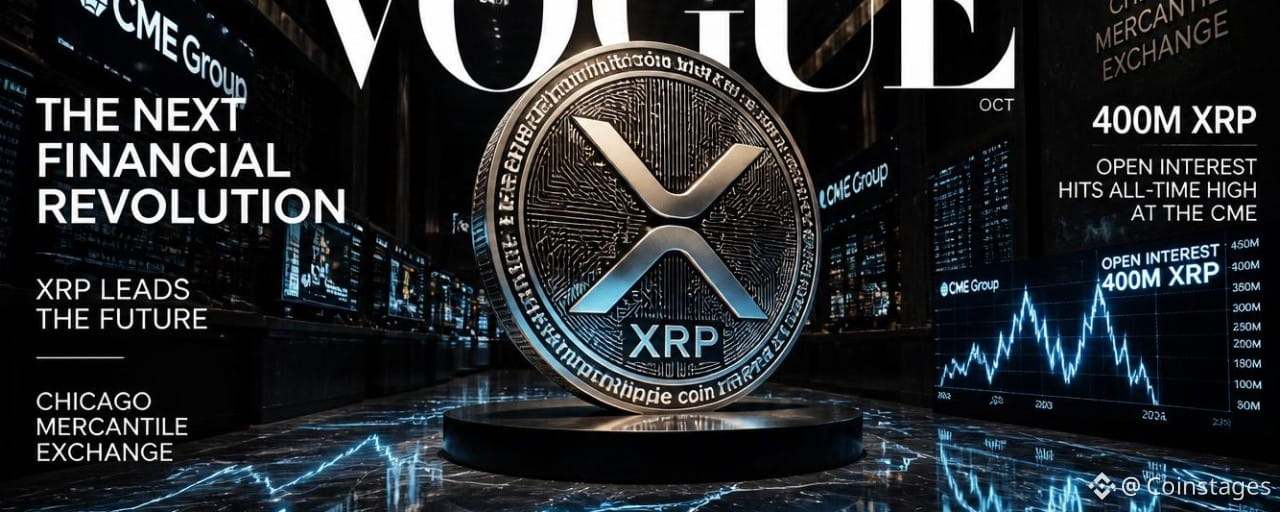
Article
CME BECOMES LARGEST XRP FUTURES VENUE AS OPEN INTEREST SPIKES PAST 400M XRP!In a massive structural shift for digital asset markets, CME Group has officially surpassed Binance to become the world’s largest exchange for XRP futures trading by Open Interest (OI). Driven by a relentless wave of institutional demand and spot ETF accumulation, active derivatives positioning on the Chicago-based regulated marketplace has surged to unprecedented record levels.
Wall Street Takes the Wheel: CME Overtakes Offshore Platforms
The transition of derivatives dominance from retail-focused offshore venues to traditional Wall Street infrastructure marks a major turning point for XRP market dynamics:
Open Interest Spikes to 410K XRP (~$530M+): CME’s XRP futures Open Interest recently doubled, surging from $270 million in mid-August to hit a record high near $570 million. The platform currently holds around 410,000 XRP contracts (valued at ~$530M+), outpacing Binance's 375,000 XRP contracts ($510M).Institutional Accumulation Surge: The rapid volume shift aligns directly with growing participation from global asset managers, hedge funds, and Wall Street institutions building derivative exposure alongside spot XRP ETF products.Regulated Capital Dominance: As professional traders migrate toward regulated avenues, price discovery for XRP is increasingly shifting from offshore retail crypto exchanges to traditional institutional venues.
Spot ETF Momentum & Macro Market Tailwinds
The unprecedented rise in CME futures interest is backed by compounding structural catalysts:
10-Day Spot ETF Inflow Streak: U.S. spot XRP ETFs have maintained uninterrupted net capital inflows for 10 consecutive trading sessions, absorbing steady liquid supply from the open market.Institutional Heavyweights Stepping In: Reports indicate top-tier financial institutions like Goldman Sachs, JPMorgan, and Morgan Stanley continue expanding their spot and derivative exposure to XRP products.Derivatives Volatility Prep: High open interest on CME typically precedes major volatility events, as institutional desks position hedging and arbitrage strategies around key technical breakout levels.
Essential Financial Disclaimer
This article is strictly for educational and informational purposes only and does not constitute financial, investment, legal, or trading advice. Derivatives instruments and digital asset markets carry high price volatility and capital risk. Always perform independent research (DYOR) and consult a certified financial advisor before making investment decisions.
Will institutional volume on CME spark XRP’s next explosive rally toward $2.00? Share your target charts and predictions in the comments below! 📊⚡
CME BECOMES LARGEST XRP FUTURES VENUE AS OPEN INTEREST SPIKES PAST 400M XRP!
In a massive structural shift for digital asset markets, CME Group has officially surpassed Binance to become the world’s largest exchange for XRP futures trading by Open Interest (OI). Driven by a relentless wave of institutional demand and spot ETF accumulation, active derivatives positioning on the Chicago-based regulated marketplace has surged to unprecedented record levels.
Wall Street Takes the Wheel: CME Overtakes Offshore Platforms
The transition of derivatives dominance from retail-focused offshore venues to traditional Wall Street infrastructure marks a major turning point for XRP market dynamics:
Open Interest Spikes to 410K XRP (~$530M+): CME’s XRP futures Open Interest recently doubled, surging from $270 million in mid-August to hit a record high near $570 million. The platform currently holds around 410,000 XRP contracts (valued at ~$530M+), outpacing Binance's 375,000 XRP contracts ($510M).Institutional Accumulation Surge: The rapid volume shift aligns directly with growing participation from global asset managers, hedge funds, and Wall Street institutions building derivative exposure alongside spot XRP ETF products.Regulated Capital Dominance: As professional traders migrate toward regulated avenues, price discovery for XRP is increasingly shifting from offshore retail crypto exchanges to traditional institutional venues.
Spot ETF Momentum & Macro Market Tailwinds
The unprecedented rise in CME futures interest is backed by compounding structural catalysts:
10-Day Spot ETF Inflow Streak: U.S. spot XRP ETFs have maintained uninterrupted net capital inflows for 10 consecutive trading sessions, absorbing steady liquid supply from the open market.Institutional Heavyweights Stepping In: Reports indicate top-tier financial institutions like Goldman Sachs, JPMorgan, and Morgan Stanley continue expanding their spot and derivative exposure to XRP products.Derivatives Volatility Prep: High open interest on CME typically precedes major volatility events, as institutional desks position hedging and arbitrage strategies around key technical breakout levels.
Essential Financial Disclaimer
This article is strictly for educational and informational purposes only and does not constitute financial, investment, legal, or trading advice. Derivatives instruments and digital asset markets carry high price volatility and capital risk. Always perform independent research (DYOR) and consult a certified financial advisor before making investment decisions.
Will institutional volume on CME spark XRP’s next explosive rally toward $2.00? Share your target charts and predictions in the comments below! 📊⚡
Wall Street Takes the Wheel: CME Overtakes Offshore Platforms
The transition of derivatives dominance from retail-focused offshore venues to traditional Wall Street infrastructure marks a major turning point for XRP market dynamics:
Open Interest Spikes to 410K XRP (~$530M+): CME’s XRP futures Open Interest recently doubled, surging from $270 million in mid-August to hit a record high near $570 million. The platform currently holds around 410,000 XRP contracts (valued at ~$530M+), outpacing Binance's 375,000 XRP contracts ($510M).Institutional Accumulation Surge: The rapid volume shift aligns directly with growing participation from global asset managers, hedge funds, and Wall Street institutions building derivative exposure alongside spot XRP ETF products.Regulated Capital Dominance: As professional traders migrate toward regulated avenues, price discovery for XRP is increasingly shifting from offshore retail crypto exchanges to traditional institutional venues.
Spot ETF Momentum & Macro Market Tailwinds
The unprecedented rise in CME futures interest is backed by compounding structural catalysts:
10-Day Spot ETF Inflow Streak: U.S. spot XRP ETFs have maintained uninterrupted net capital inflows for 10 consecutive trading sessions, absorbing steady liquid supply from the open market.Institutional Heavyweights Stepping In: Reports indicate top-tier financial institutions like Goldman Sachs, JPMorgan, and Morgan Stanley continue expanding their spot and derivative exposure to XRP products.Derivatives Volatility Prep: High open interest on CME typically precedes major volatility events, as institutional desks position hedging and arbitrage strategies around key technical breakout levels.
Essential Financial Disclaimer
This article is strictly for educational and informational purposes only and does not constitute financial, investment, legal, or trading advice. Derivatives instruments and digital asset markets carry high price volatility and capital risk. Always perform independent research (DYOR) and consult a certified financial advisor before making investment decisions.
Will institutional volume on CME spark XRP’s next explosive rally toward $2.00? Share your target charts and predictions in the comments below! 📊⚡
1
836
Log in to explore more content
Join global crypto users on Binance Square
⚡️ Get latest and useful information about crypto.
💬 Trusted by the world’s largest crypto exchange.
👍 Discover real insights from verified creators.
Email / Phone number
Trending Topics
USTreasuryToBuyBackUpTo$6BLongDatedDebt
5,180 views
105 Discussing
The U.S. Treasury just said it will buy back up to $6 billion of long-dated bonds this week.
Yields climbed anyway. The 10-year hit 4.845%, its highest since late 2023. The two-year also jumped. Markets clearly shrugged off the move.
Bitcoin slipped back near $78,500. Stocks fell. Oil stayed strong above $101.
Treasury Secretary Bessent wanted lower long-term rates. Instead, the bond market pushed yields higher and called the bluff. A buyer who always steps in can actually invite more selling.
This is the opposite of the late-August move that helped Bitcoin rally hard. Liquidity support looks weaker this time.
#USTreasuryToBuyBackUpTo$6BLongDatedDebt
$BTC $ETH $SNDK
CforCrypto7
·0 Likes
·214 views
BitcoinSurpasses$79K
41,383 views
228 Discussing
BrentCrudeTops$100
99,718 views
351 Discussing