

潮有信-
1.4k Posts

潮有信-
Report
Block User
🔸公众号《潮有信》🔸微博《潮有信灯未熄》🔸X:@chaoyouxin🔸邀请码:BTC928 看得久一点,想得深一点。剩下的,让时间慢慢回答。全平台同名,深耕交易员,纯个人纪录用作参考

BNB Holder
Occasional Trader
3.6 Years
73 Following
7.5K+ Followers
7.8K+ Liked
Posts
All
Quotes
Videos
·
--
Bullish
The technology revolution will redistribute wealth, but the wealth will definitely not be given to ordinary participants.
Crypto has indeed created a group of people who have experienced a leap in wealth, but most people are merely catching the wave at the top—getting liquidated, chasing trends.
AI is the same. The people who truly capture incremental value often don’t do so because they happened to catch AI; rather, they already had certain things: technical skills, product capabilities, distribution channels, capital, users, and execution speed.
The technology revolution will redistribute wealth, but the wealth will definitely not be given to ordinary participants.
Crypto has indeed created a group of people who have experienced a leap in wealth, but most people are merely catching the wave at the top—getting liquidated, chasing trends.
AI is the same. The people who truly capture incremental value often don’t do so because they happened to catch AI; rather, they already had certain things: technical skills, product capabilities, distribution channels, capital, users, and execution speed.
Crypto has indeed created a group of people who have experienced a leap in wealth, but most people are merely catching the wave at the top—getting liquidated, chasing trends.
AI is the same. The people who truly capture incremental value often don’t do so because they happened to catch AI; rather, they already had certain things: technical skills, product capabilities, distribution channels, capital, users, and execution speed.
632
·
--
Bullish
In the late stage of a trend, the importance of the message itself decreases, and the price’s reaction to the news becomes more important.
In the late period of a bull market, everyone has already bought heavily, so even a bigger piece of good news may not be able to bring in new incremental buying pressure.
The same is true in the late period of a bear market. Bad news is still there, but those who should sell have already sold for the most part, and new negative catalysts are unlikely to push prices further down.
Many of the earliest changes that appear at tops and bottoms are not that the news has changed, but that the market has begun to become less sensitive to news that would normally have worked.
This is also why it’s worth paying attention to the fact that good news doesn’t lift prices and bad news doesn’t push them down. It may not directly tell you where the top or bottom is, but it often signals an early warning that the trend is starting to dull.$BTC
In the late stage of a trend, the importance of the message itself decreases, and the price’s reaction to the news becomes more important.
In the late period of a bull market, everyone has already bought heavily, so even a bigger piece of good news may not be able to bring in new incremental buying pressure.
The same is true in the late period of a bear market. Bad news is still there, but those who should sell have already sold for the most part, and new negative catalysts are unlikely to push prices further down.
Many of the earliest changes that appear at tops and bottoms are not that the news has changed, but that the market has begun to become less sensitive to news that would normally have worked.
This is also why it’s worth paying attention to the fact that good news doesn’t lift prices and bad news doesn’t push them down. It may not directly tell you where the top or bottom is, but it often signals an early warning that the trend is starting to dull.$BTC
In the late period of a bull market, everyone has already bought heavily, so even a bigger piece of good news may not be able to bring in new incremental buying pressure.
The same is true in the late period of a bear market. Bad news is still there, but those who should sell have already sold for the most part, and new negative catalysts are unlikely to push prices further down.
Many of the earliest changes that appear at tops and bottoms are not that the news has changed, but that the market has begun to become less sensitive to news that would normally have worked.
This is also why it’s worth paying attention to the fact that good news doesn’t lift prices and bad news doesn’t push them down. It may not directly tell you where the top or bottom is, but it often signals an early warning that the trend is starting to dull.$BTC
2
1.1k
·
--
Bullish
To judge a bull top and bear bottom, the key is not how good or bad the news itself is, but how the market reacts: even great good news can’t push it higher, which may indicate you are near the top; even a major bad news can’t drag it down, which instead looks more like a bottom. $BTC
To judge a bull top and bear bottom, the key is not how good or bad the news itself is, but how the market reacts: even great good news can’t push it higher, which may indicate you are near the top; even a major bad news can’t drag it down, which instead looks more like a bottom. $BTC
428
·
--
Bearish
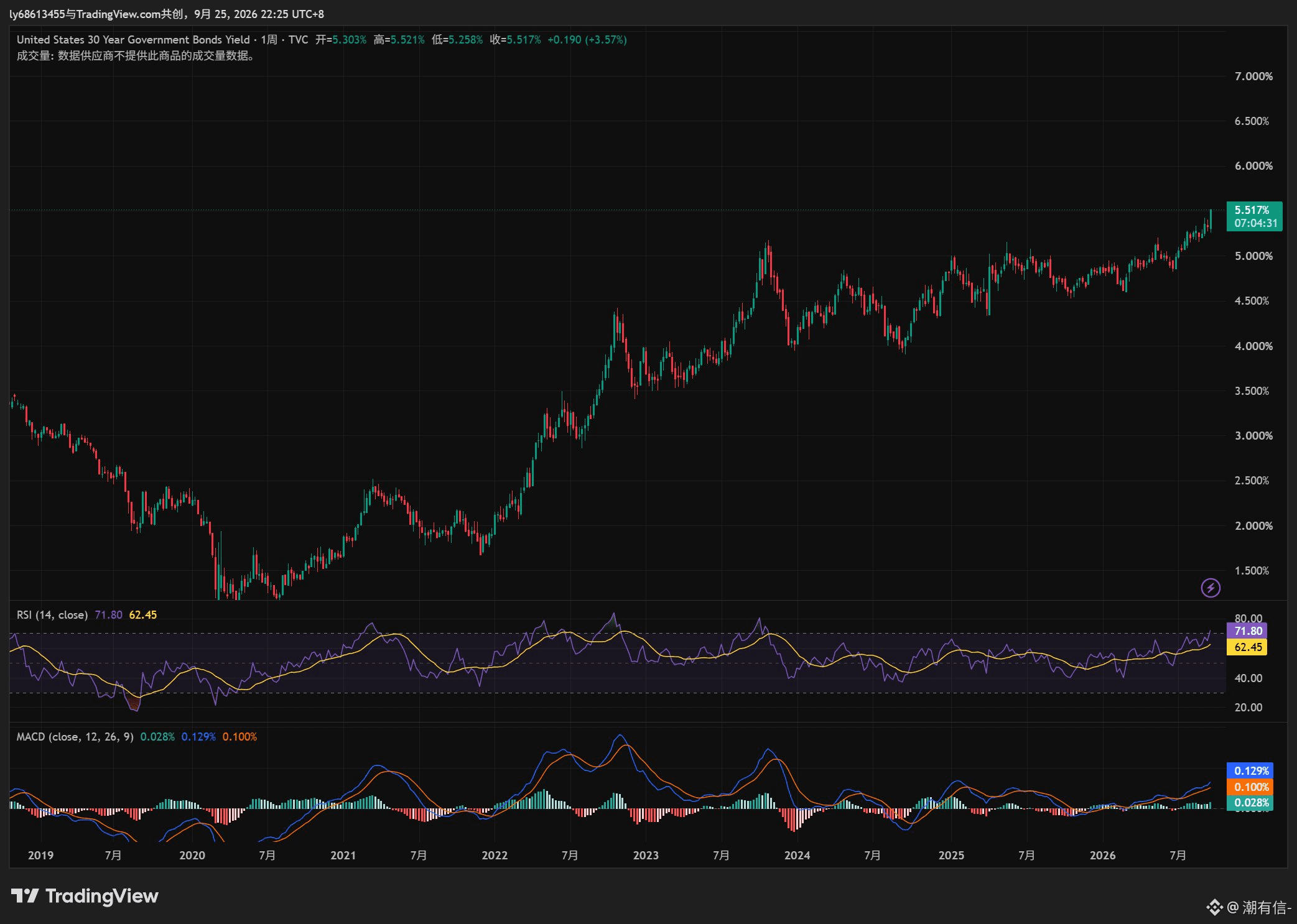
The 30-year U.S. Treasury yield has broken above 5.5%, and this level is a bit crazy right now. First, the 30-year rate represents the cost of long-term capital. The higher the yield, the more willing the market is to lend long-term money to the government, and the higher the return it demands—which directly raises the valuation hurdle across the board.
For U.S. stocks, the biggest pressure is still on overvalued, high-Beta names. When long-term Treasuries can offer 5%+, investors don’t need to take on so much risk just to chase yield. A key condition for the tech stocks’ rebound recently was that long-end interest rates and oil prices both fell, along with short-covering.
Now that 30Y is surging back above 5.5%, this support line is moving in the opposite direction. Unless corporate earnings can keep holding up, the market may end up compressing valuations on one side while trying to digest them through profit on the other. The tricky part is that if rates keep rising and earnings expectations start getting revised down again, then both valuation and earnings will be “killed” at the same time.
Crypto is similar. The higher the long-end rates, the more attractive cash and Treasuries become, and the higher the opportunity cost for risk assets. BTC may still be able to hold up thanks to ETF flows and institutional allocation, but high-Beta altcoins will likely feel much worse.
The 30-year U.S. Treasury yield has broken above 5.5%, and this level is a bit crazy right now. First, the 30-year rate represents the cost of long-term capital. The higher the yield, the more willing the market is to lend long-term money to the government, and the higher the return it demands—which directly raises the valuation hurdle across the board.
For U.S. stocks, the biggest pressure is still on overvalued, high-Beta names. When long-term Treasuries can offer 5%+, investors don’t need to take on so much risk just to chase yield. A key condition for the tech stocks’ rebound recently was that long-end interest rates and oil prices both fell, along with short-covering.
Now that 30Y is surging back above 5.5%, this support line is moving in the opposite direction. Unless corporate earnings can keep holding up, the market may end up compressing valuations on one side while trying to digest them through profit on the other. The tricky part is that if rates keep rising and earnings expectations start getting revised down again, then both valuation and earnings will be “killed” at the same time.
Crypto is similar. The higher the long-end rates, the more attractive cash and Treasuries become, and the higher the opportunity cost for risk assets. BTC may still be able to hold up thanks to ETF flows and institutional allocation, but high-Beta altcoins will likely feel much worse.
For U.S. stocks, the biggest pressure is still on overvalued, high-Beta names. When long-term Treasuries can offer 5%+, investors don’t need to take on so much risk just to chase yield. A key condition for the tech stocks’ rebound recently was that long-end interest rates and oil prices both fell, along with short-covering.
Now that 30Y is surging back above 5.5%, this support line is moving in the opposite direction. Unless corporate earnings can keep holding up, the market may end up compressing valuations on one side while trying to digest them through profit on the other. The tricky part is that if rates keep rising and earnings expectations start getting revised down again, then both valuation and earnings will be “killed” at the same time.
Crypto is similar. The higher the long-end rates, the more attractive cash and Treasuries become, and the higher the opportunity cost for risk assets. BTC may still be able to hold up thanks to ETF flows and institutional allocation, but high-Beta altcoins will likely feel much worse.

1
2.5k
·
--
The recent strength in U.S. stocks is more like a short squeeze triggered by falling oil prices and a decline in long-end yields, rather than a new one-way bull market. Now that 10Y has started to rise again and expectations for a second rate hike are still on the table, high-beta stocks have built up a large amount of unrealized gains. After the first half of the short-selling clampdown ends, the market is moving into a phase that is more prone to killing late-chasers. $BTC
The recent strength in U.S. stocks is more like a short squeeze triggered by falling oil prices and a decline in long-end yields, rather than a new one-way bull market. Now that 10Y has started to rise again and expectations for a second rate hike are still on the table, high-beta stocks have built up a large amount of unrealized gains. After the first half of the short-selling clampdown ends, the market is moving into a phase that is more prone to killing late-chasers. $BTC
648
·
--
The freedom of all humanity, divided by 21 million
is the final price of each Bitcoin. Unfortunately, very few people understand this.$BTC
The freedom of all humanity, divided by 21 million
is the final price of each Bitcoin. Unfortunately, very few people understand this.$BTC
is the final price of each Bitcoin. Unfortunately, very few people understand this.$BTC
2
5.3k
·
--
“Understanding” isn’t strictly black or white. Some opportunities you can understand very deeply, but the odds are average; others you only understand 70%, yet they offer a very good risk-to-reward ratio.
Whether to go heavy or not doesn’t depend only on whether you understand. Instead, you consider three things at the same time: how confident your judgment is, the room in the odds, and the cost you’ll pay if you’re wrong.
“Understanding” isn’t strictly black or white. Some opportunities you can understand very deeply, but the odds are average; others you only understand 70%, yet they offer a very good risk-to-reward ratio.
Whether to go heavy or not doesn’t depend only on whether you understand. Instead, you consider three things at the same time: how confident your judgment is, the room in the odds, and the cost you’ll pay if you’re wrong.
Whether to go heavy or not doesn’t depend only on whether you understand. Instead, you consider three things at the same time: how confident your judgment is, the room in the odds, and the cost you’ll pay if you’re wrong.
742
·
--
In a bull market, what more often throws people off the ride isn’t a crash—it’s those seemingly reasonable reasons for a pullback.
Macroeconomic pressure, unfavorable policy signals, “it’s run up too much and should adjust”—each one, taken on its own, is enough to make people cut positions, even to reverse and short. But the problem is that in a strong trend, many of these “bad news” items only shake out holdings. Once price strengthens again, what you face isn’t the question of whether you should cut losses—it’s a higher question: would you still dare to buy back?
That’s also why repeatedly shorting in a bull market is so difficult. You don’t just have to get one pullback right—you also have to judge when it’s time to turn back long. Only after you get two consecutive calls right can you truly profit from the swing.
Conversely, always keeping spot holdings and allowing your account to experience normal drawdowns is actually doing a simpler thing: focusing your biggest effort on whether the trend has ended, rather than guessing every fluctuation.
Many people don’t ultimately make much money in a bull market—not because they failed to understand the direction, but because every time there’s chop they try to dodge it. In the end, they end up missing the real big move as well. What doesn’t get off the train early isn’t just the position size—it’s also the amount of time you remain exposed to the correct trend. Don’t keep guessing the pullbacks; stay in the trend.
In a bull market, what more often throws people off the ride isn’t a crash—it’s those seemingly reasonable reasons for a pullback.
Macroeconomic pressure, unfavorable policy signals, “it’s run up too much and should adjust”—each one, taken on its own, is enough to make people cut positions, even to reverse and short. But the problem is that in a strong trend, many of these “bad news” items only shake out holdings. Once price strengthens again, what you face isn’t the question of whether you should cut losses—it’s a higher question: would you still dare to buy back?
That’s also why repeatedly shorting in a bull market is so difficult. You don’t just have to get one pullback right—you also have to judge when it’s time to turn back long. Only after you get two consecutive calls right can you truly profit from the swing.
Conversely, always keeping spot holdings and allowing your account to experience normal drawdowns is actually doing a simpler thing: focusing your biggest effort on whether the trend has ended, rather than guessing every fluctuation.
Many people don’t ultimately make much money in a bull market—not because they failed to understand the direction, but because every time there’s chop they try to dodge it. In the end, they end up missing the real big move as well. What doesn’t get off the train early isn’t just the position size—it’s also the amount of time you remain exposed to the correct trend. Don’t keep guessing the pullbacks; stay in the trend.
Macroeconomic pressure, unfavorable policy signals, “it’s run up too much and should adjust”—each one, taken on its own, is enough to make people cut positions, even to reverse and short. But the problem is that in a strong trend, many of these “bad news” items only shake out holdings. Once price strengthens again, what you face isn’t the question of whether you should cut losses—it’s a higher question: would you still dare to buy back?
That’s also why repeatedly shorting in a bull market is so difficult. You don’t just have to get one pullback right—you also have to judge when it’s time to turn back long. Only after you get two consecutive calls right can you truly profit from the swing.
Conversely, always keeping spot holdings and allowing your account to experience normal drawdowns is actually doing a simpler thing: focusing your biggest effort on whether the trend has ended, rather than guessing every fluctuation.
Many people don’t ultimately make much money in a bull market—not because they failed to understand the direction, but because every time there’s chop they try to dodge it. In the end, they end up missing the real big move as well. What doesn’t get off the train early isn’t just the position size—it’s also the amount of time you remain exposed to the correct trend. Don’t keep guessing the pullbacks; stay in the trend.
1.1k
·
--
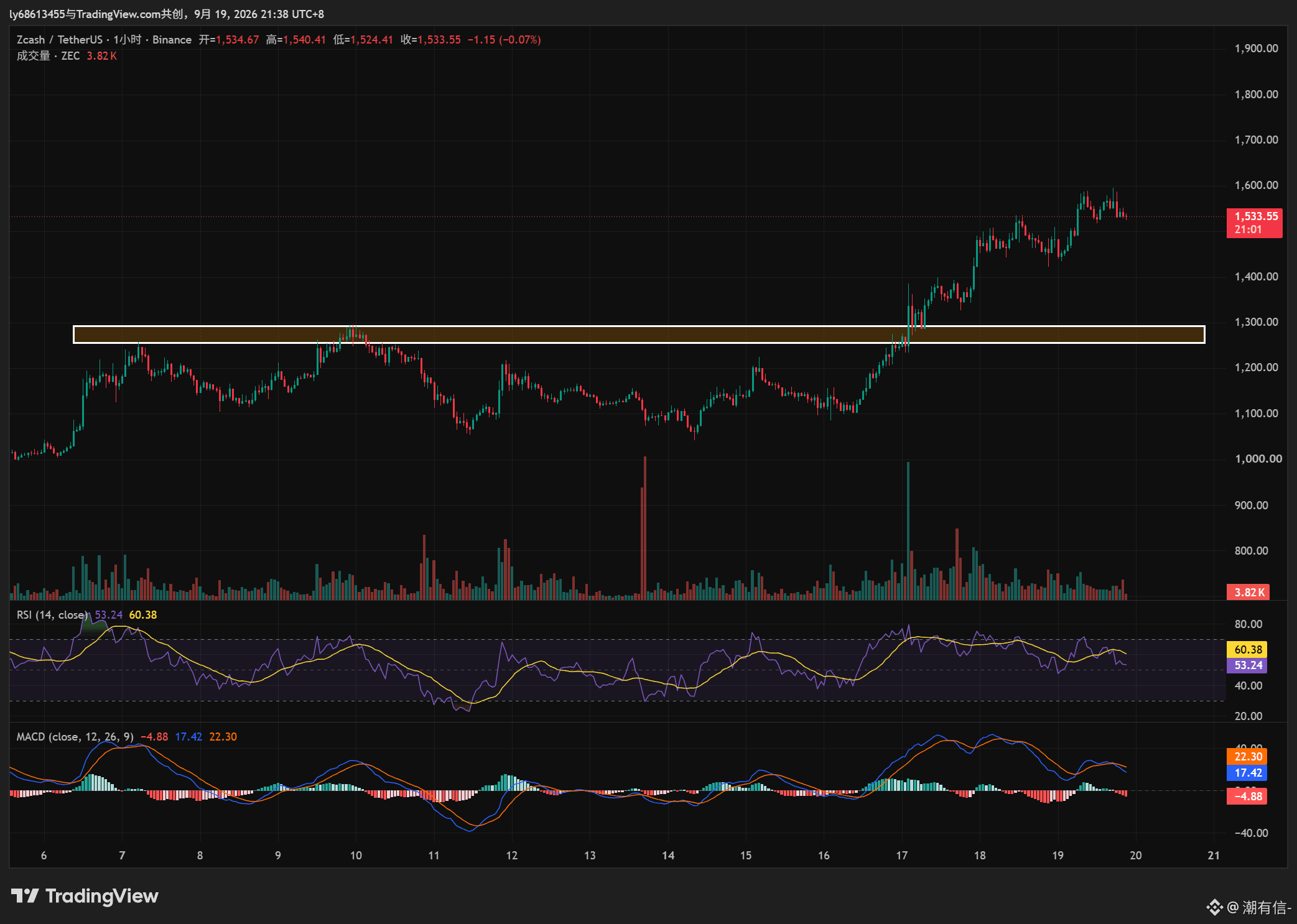
One of the biggest mistakes with a strong trend like ZEC is seeing more and more divergence and then assuming the top is getting more and more certain.
Actually, it could be the opposite. Each time price makes a new high, the indicator may lag, creating yet another divergence. If the trend itself is strong enough, you can see a second, third, even more divergences—while price still keeps moving higher. In this phase, divergence is telling you only that the efficiency of the up move is declining, not that sell pressure has already taken over the market.
A real top isn’t simply when someone draws another divergence line on the chart. It happens when price finally starts to respond to that divergence: the rally fails, the structure breaks down, the RSI turns, and those earlier divergences truly shift from potential risk into an actual turning point that has already occurred.
For a coin like ZEC, which is inherently in a strong trend and keeps squeezing out shorts, the most likely scenario when you try to call the top early based on divergence is: you might end up being directionally right, but you’re wiped out by the trend before you get the confirmation. $ZEC
{spot}(ZECUSDT)
One of the biggest mistakes with a strong trend like ZEC is seeing more and more divergence and then assuming the top is getting more and more certain.
Actually, it could be the opposite. Each time price makes a new high, the indicator may lag, creating yet another divergence. If the trend itself is strong enough, you can see a second, third, even more divergences—while price still keeps moving higher. In this phase, divergence is telling you only that the efficiency of the up move is declining, not that sell pressure has already taken over the market.
A real top isn’t simply when someone draws another divergence line on the chart. It happens when price finally starts to respond to that divergence: the rally fails, the structure breaks down, the RSI turns, and those earlier divergences truly shift from potential risk into an actual turning point that has already occurred.
For a coin like ZEC, which is inherently in a strong trend and keeps squeezing out shorts, the most likely scenario when you try to call the top early based on divergence is: you might end up being directionally right, but you’re wiped out by the trend before you get the confirmation. $ZEC
Actually, it could be the opposite. Each time price makes a new high, the indicator may lag, creating yet another divergence. If the trend itself is strong enough, you can see a second, third, even more divergences—while price still keeps moving higher. In this phase, divergence is telling you only that the efficiency of the up move is declining, not that sell pressure has already taken over the market.
A real top isn’t simply when someone draws another divergence line on the chart. It happens when price finally starts to respond to that divergence: the rally fails, the structure breaks down, the RSI turns, and those earlier divergences truly shift from potential risk into an actual turning point that has already occurred.
For a coin like ZEC, which is inherently in a strong trend and keeps squeezing out shorts, the most likely scenario when you try to call the top early based on divergence is: you might end up being directionally right, but you’re wiped out by the trend before you get the confirmation. $ZEC
1
1.6k
·
--
Bullish
The past copycat season was pretty easy to understand: BTC made money first, capital spread from BTC to ETH, then flowed all the way into the copycat coins, and in the end trash would often rise together too. But this time is clearly different.
To a large extent, ETFs have weakened the old path where BTC profits naturally spill over into the whole crypto market. Capital is starting to concentrate on a few assets that truly have inflows, revenue, or clear channels.
ZEC has privacy, ETFs, and its own supply-demand dynamics. UNI hit the tokenized-stock theme. HYPE has real trading volume. NEAR also has its own product catalysts.
Even more obvious is that nowadays, it’s often only the strongest few in a sector that are going up, and BTC’s market share hasn’t shown the kind of obvious decline seen in past copycat seasons.
Before, it was like when the water level rose, the garbage could float up too. Now the money is still there, but the market is starting to be selective about what it wants. So for those bag-holders from the last cycle who are holding a pile of old copycat coins, expecting everything to rise together when the copycat season comes—this strategy may not work as well as it used to.#比特币突破8万美元大关 $BTC
The past copycat season was pretty easy to understand: BTC made money first, capital spread from BTC to ETH, then flowed all the way into the copycat coins, and in the end trash would often rise together too. But this time is clearly different.
To a large extent, ETFs have weakened the old path where BTC profits naturally spill over into the whole crypto market. Capital is starting to concentrate on a few assets that truly have inflows, revenue, or clear channels.
ZEC has privacy, ETFs, and its own supply-demand dynamics. UNI hit the tokenized-stock theme. HYPE has real trading volume. NEAR also has its own product catalysts.
Even more obvious is that nowadays, it’s often only the strongest few in a sector that are going up, and BTC’s market share hasn’t shown the kind of obvious decline seen in past copycat seasons.
Before, it was like when the water level rose, the garbage could float up too. Now the money is still there, but the market is starting to be selective about what it wants. So for those bag-holders from the last cycle who are holding a pile of old copycat coins, expecting everything to rise together when the copycat season comes—this strategy may not work as well as it used to.#比特币突破8万美元大关 $BTC
To a large extent, ETFs have weakened the old path where BTC profits naturally spill over into the whole crypto market. Capital is starting to concentrate on a few assets that truly have inflows, revenue, or clear channels.
ZEC has privacy, ETFs, and its own supply-demand dynamics. UNI hit the tokenized-stock theme. HYPE has real trading volume. NEAR also has its own product catalysts.
Even more obvious is that nowadays, it’s often only the strongest few in a sector that are going up, and BTC’s market share hasn’t shown the kind of obvious decline seen in past copycat seasons.
Before, it was like when the water level rose, the garbage could float up too. Now the money is still there, but the market is starting to be selective about what it wants. So for those bag-holders from the last cycle who are holding a pile of old copycat coins, expecting everything to rise together when the copycat season comes—this strategy may not work as well as it used to.#比特币突破8万美元大关 $BTC
1.5k
·
--
Bullish
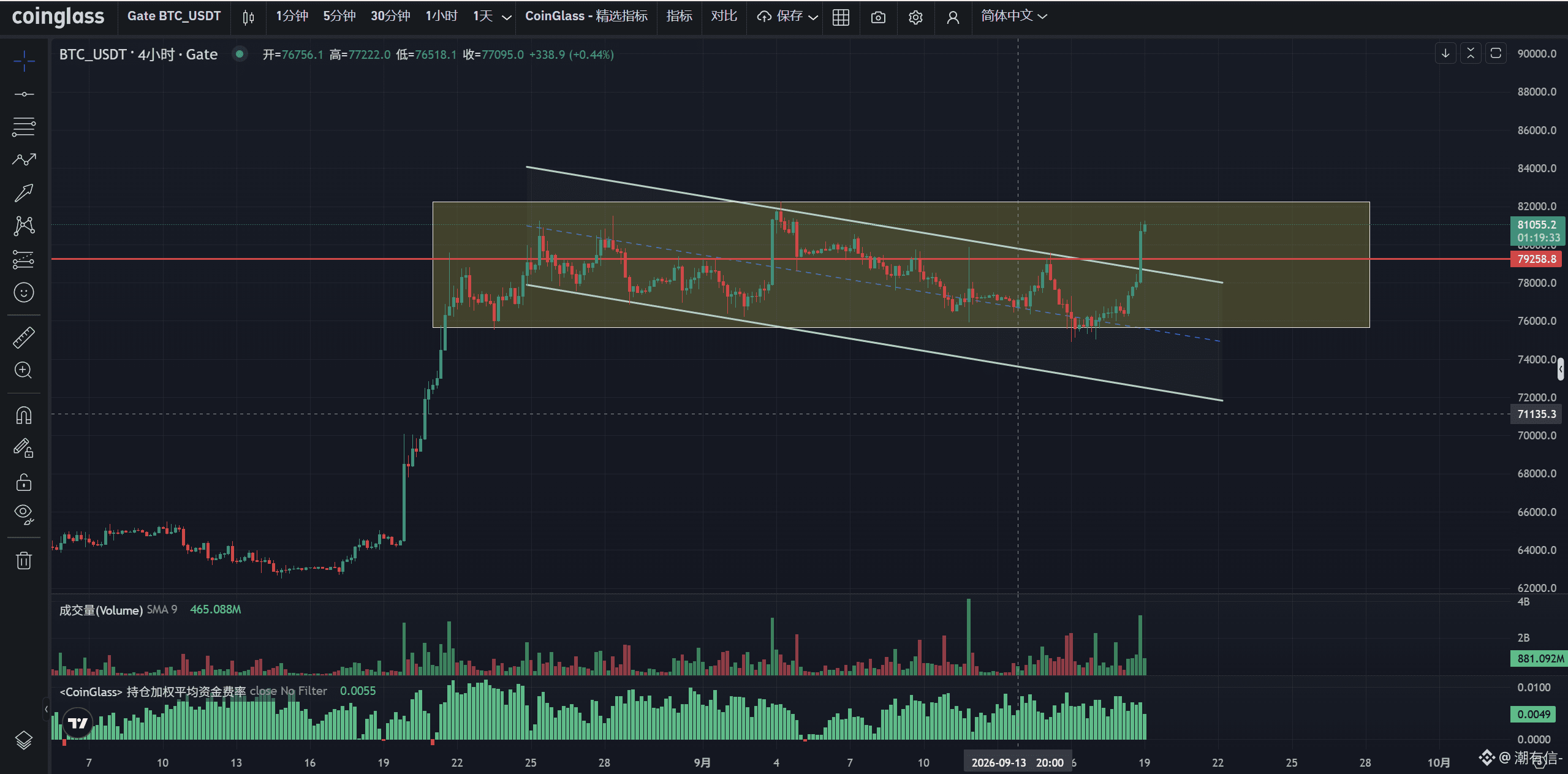
#BTC This structure looks awfully familiar—could it be the first wave of the bull flag?? $BTC
#BTC This structure looks awfully familiar—could it be the first wave of the bull flag?? $BTC
1.5k
·
--
Bullish
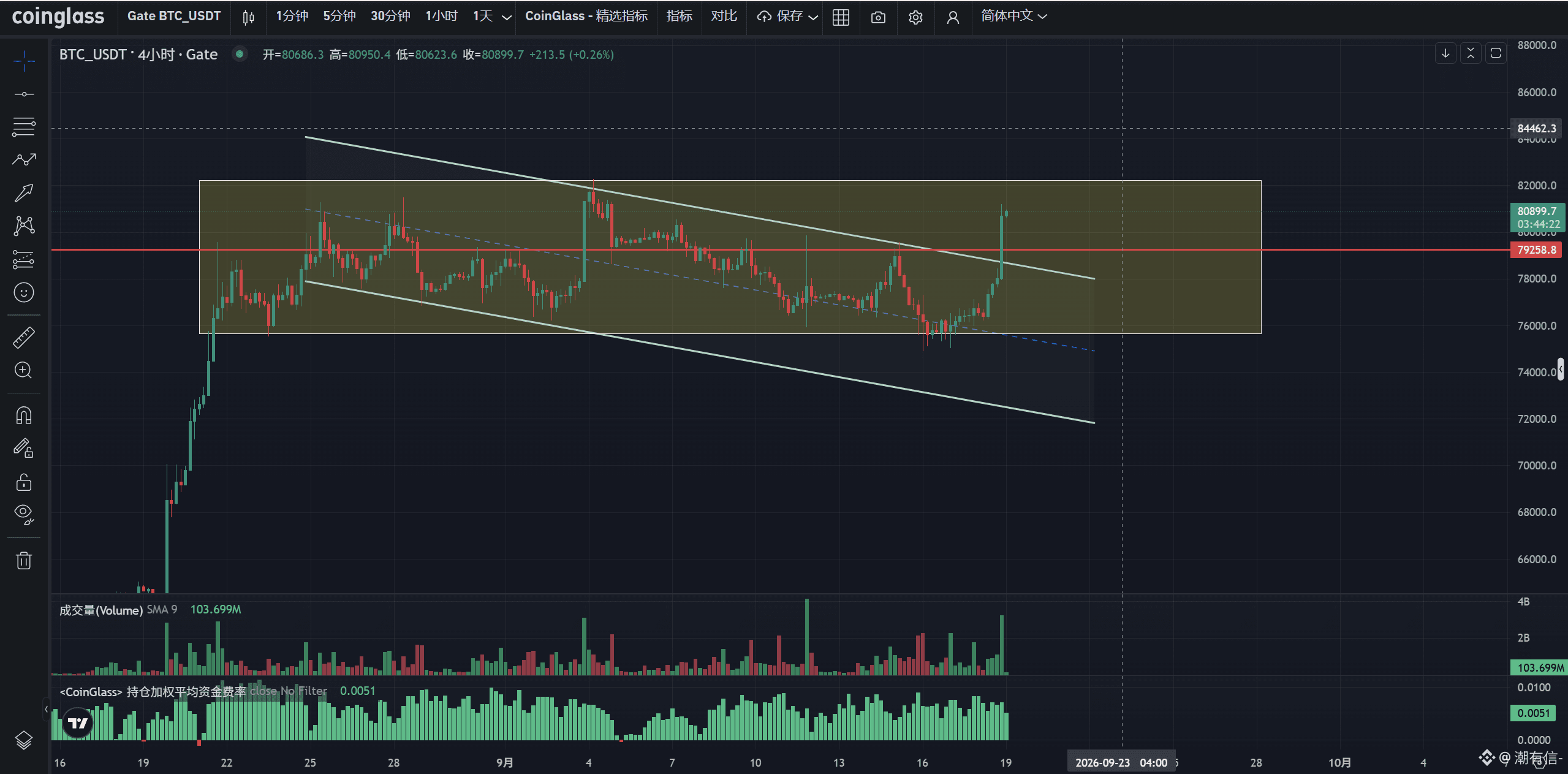
Missed the move? In actual operations, there’s no need to rush. Even if it goes up, it will still give you an opportunity. If it drops, it will also give you an opportunity. Right now, since it hasn’t exited the range, no matter what you do, the probability is relatively low.
I think this is a good position: the range formed starting from the 21st. The upper limit and high point is 82,500. As long as it reaches there, with me currently in a zero position, I will try to short, but I will control my position size.
The 79,500–79,000 area is the mid-axis of the uptrend, and the support formed here is very clearly visible in the chart. It’s a point where there are opportunities for both long and short trades. But we can’t tell for sure right now—mainly it depends on the outcome of whether it gains or loses this level. $BTC
Missed the move? In actual operations, there’s no need to rush. Even if it goes up, it will still give you an opportunity. If it drops, it will also give you an opportunity. Right now, since it hasn’t exited the range, no matter what you do, the probability is relatively low.
I think this is a good position: the range formed starting from the 21st. The upper limit and high point is 82,500. As long as it reaches there, with me currently in a zero position, I will try to short, but I will control my position size.
The 79,500–79,000 area is the mid-axis of the uptrend, and the support formed here is very clearly visible in the chart. It’s a point where there are opportunities for both long and short trades. But we can’t tell for sure right now—mainly it depends on the outcome of whether it gains or loses this level. $BTC
I think this is a good position: the range formed starting from the 21st. The upper limit and high point is 82,500. As long as it reaches there, with me currently in a zero position, I will try to short, but I will control my position size.
The 79,500–79,000 area is the mid-axis of the uptrend, and the support formed here is very clearly visible in the chart. It’s a point where there are opportunities for both long and short trades. But we can’t tell for sure right now—mainly it depends on the outcome of whether it gains or loses this level. $BTC
2.2k
·
--
Fed rate hikes, the Clear Act setbacks, and the Bank of Japan’s rate hike—all of them are, in essence, bearish. With a sequence of negative catalysts, the market’s bearish expectations are clearly getting heavier
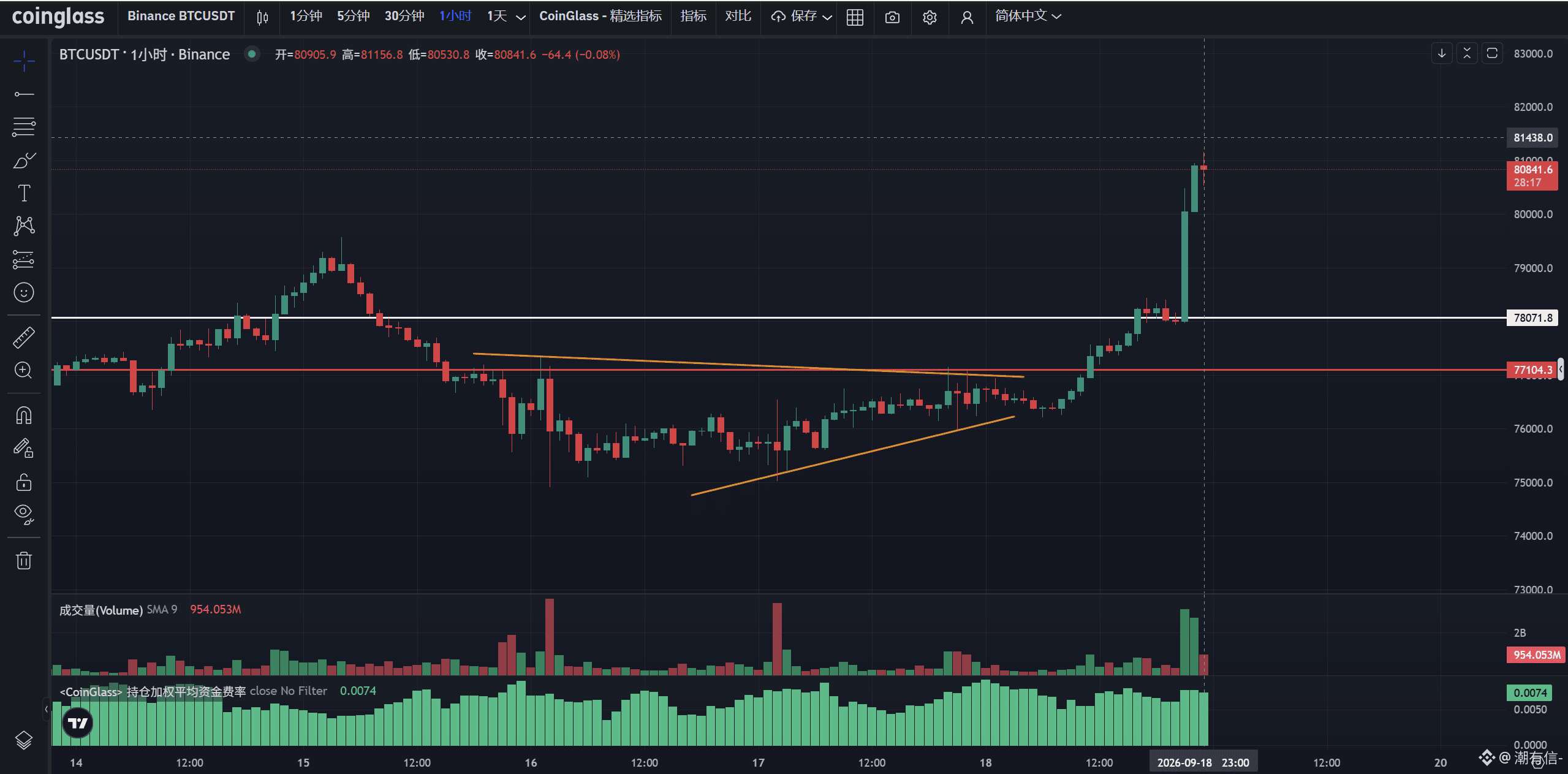
Structurally, there are three key levels. 78,000 is where the weekly chart regains the level; once broken, the structure will be more favorable for an upward trend. 75,000 is support that has been tested four times—each test adds another batch of shorts to the market, while the resistance level has been 77,100. As a result, the gains versus losses at these levels look especially important. The fact that it hasn’t broken down after several attempts suggests that some issues have been underestimated—specifically, the market’s buying strength.
In terms of price action, it also looks like bids have been coming in from 76,000 upward → the 77,100/78,000 zones are reclaimed → shorts begin covering and getting liquidated → in the second half, the rally accelerates noticeably. The market has repeatedly absorbed several negative catalysts and still can’t be pushed down. Once price regains the key levels, the positions that were previously pressing for further downside turn into fuel for the rise.
Ultimately, it still depends on the follow-through. After the short squeeze ends, can it hold above 80,000? If it can, then there’s no need to doubt it—there must be genuine institutional buying and order-book support behind it, which is why the consecutive negatives couldn’t drive price lower. If it slips back below 79,000—no matter whether it’s this week or the open on Monday—then I would lean toward pumping up to bait some longs and lure retail traders onto the train, believing that even under macro negatives the price can still push higher. Once retail is on board, then comes another round of a sudden, heavy sell-off $BTC
{spot}(BTCUSDT)
Fed rate hikes, the Clear Act setbacks, and the Bank of Japan’s rate hike—all of them are, in essence, bearish. With a sequence of negative catalysts, the market’s bearish expectations are clearly getting heavier
Structurally, there are three key levels. 78,000 is where the weekly chart regains the level; once broken, the structure will be more favorable for an upward trend. 75,000 is support that has been tested four times—each test adds another batch of shorts to the market, while the resistance level has been 77,100. As a result, the gains versus losses at these levels look especially important. The fact that it hasn’t broken down after several attempts suggests that some issues have been underestimated—specifically, the market’s buying strength.
In terms of price action, it also looks like bids have been coming in from 76,000 upward → the 77,100/78,000 zones are reclaimed → shorts begin covering and getting liquidated → in the second half, the rally accelerates noticeably. The market has repeatedly absorbed several negative catalysts and still can’t be pushed down. Once price regains the key levels, the positions that were previously pressing for further downside turn into fuel for the rise.
Ultimately, it still depends on the follow-through. After the short squeeze ends, can it hold above 80,000? If it can, then there’s no need to doubt it—there must be genuine institutional buying and order-book support behind it, which is why the consecutive negatives couldn’t drive price lower. If it slips back below 79,000—no matter whether it’s this week or the open on Monday—then I would lean toward pumping up to bait some longs and lure retail traders onto the train, believing that even under macro negatives the price can still push higher. Once retail is on board, then comes another round of a sudden, heavy sell-off $BTC
Structurally, there are three key levels. 78,000 is where the weekly chart regains the level; once broken, the structure will be more favorable for an upward trend. 75,000 is support that has been tested four times—each test adds another batch of shorts to the market, while the resistance level has been 77,100. As a result, the gains versus losses at these levels look especially important. The fact that it hasn’t broken down after several attempts suggests that some issues have been underestimated—specifically, the market’s buying strength.
In terms of price action, it also looks like bids have been coming in from 76,000 upward → the 77,100/78,000 zones are reclaimed → shorts begin covering and getting liquidated → in the second half, the rally accelerates noticeably. The market has repeatedly absorbed several negative catalysts and still can’t be pushed down. Once price regains the key levels, the positions that were previously pressing for further downside turn into fuel for the rise.
Ultimately, it still depends on the follow-through. After the short squeeze ends, can it hold above 80,000? If it can, then there’s no need to doubt it—there must be genuine institutional buying and order-book support behind it, which is why the consecutive negatives couldn’t drive price lower. If it slips back below 79,000—no matter whether it’s this week or the open on Monday—then I would lean toward pumping up to bait some longs and lure retail traders onto the train, believing that even under macro negatives the price can still push higher. Once retail is on board, then comes another round of a sudden, heavy sell-off $BTC
1
2.1k
·
--
Take partial profit first in a single transaction; then let the remaining position continue to rise. Looking back afterward, of course, it feels great.
Lock in profits first, then let them run. It’s not any less smart than exiting all at once. The remaining question is: why is it still worth holding the leftover position?
If you keep holding just because you’ve already made a lot and your cost has dropped, the risk is still there—it’s only that the psychological pressure is smaller.
Holding on to a good trade is truly difficult. The difficulty lies in telling whether you’re executing your original judgment, or whether you’re starting to hesitate to sell because your unrealized gains keep getting bigger.
Take partial profit first in a single transaction; then let the remaining position continue to rise. Looking back afterward, of course, it feels great.
Lock in profits first, then let them run. It’s not any less smart than exiting all at once. The remaining question is: why is it still worth holding the leftover position?
If you keep holding just because you’ve already made a lot and your cost has dropped, the risk is still there—it’s only that the psychological pressure is smaller.
Holding on to a good trade is truly difficult. The difficulty lies in telling whether you’re executing your original judgment, or whether you’re starting to hesitate to sell because your unrealized gains keep getting bigger.
Lock in profits first, then let them run. It’s not any less smart than exiting all at once. The remaining question is: why is it still worth holding the leftover position?
If you keep holding just because you’ve already made a lot and your cost has dropped, the risk is still there—it’s only that the psychological pressure is smaller.
Holding on to a good trade is truly difficult. The difficulty lies in telling whether you’re executing your original judgment, or whether you’re starting to hesitate to sell because your unrealized gains keep getting bigger.
537
·
--
Many people trade, and at the very beginning what they picture is freedom—
no punching in, no having to watch your boss’s mood, and the time is yours.
But once you really get into it, it’s easy to slide into another state.
When the market moves, you watch the charts; even if there’s no order, you still want to find one.
When you lose, you think you should quickly make it back; when you profit, you’re afraid of missing the next move.
When no one is催ing you anymore, your account starts催ing you.
Lately I’ve been increasingly convinced that, further down the road of trading,
whether you have freedom
is not about how many trades you can make in a day.
It’s whether you can simply shut off the screen today because you didn’t see an opportunity.
Don’t chase, don’t average down, don’t prove yourself.
If you don’t trade today, you won’t feel like you missed out on some gains.
Being able to calmly say, “I’m not doing this today,” in itself is really valuable.
Many people trade, and at the very beginning what they picture is freedom—
no punching in, no having to watch your boss’s mood, and the time is yours.
But once you really get into it, it’s easy to slide into another state.
When the market moves, you watch the charts; even if there’s no order, you still want to find one.
When you lose, you think you should quickly make it back; when you profit, you’re afraid of missing the next move.
When no one is催ing you anymore, your account starts催ing you.
Lately I’ve been increasingly convinced that, further down the road of trading,
whether you have freedom
is not about how many trades you can make in a day.
It’s whether you can simply shut off the screen today because you didn’t see an opportunity.
Don’t chase, don’t average down, don’t prove yourself.
If you don’t trade today, you won’t feel like you missed out on some gains.
Being able to calmly say, “I’m not doing this today,” in itself is really valuable.
no punching in, no having to watch your boss’s mood, and the time is yours.
But once you really get into it, it’s easy to slide into another state.
When the market moves, you watch the charts; even if there’s no order, you still want to find one.
When you lose, you think you should quickly make it back; when you profit, you’re afraid of missing the next move.
When no one is催ing you anymore, your account starts催ing you.
Lately I’ve been increasingly convinced that, further down the road of trading,
whether you have freedom
is not about how many trades you can make in a day.
It’s whether you can simply shut off the screen today because you didn’t see an opportunity.
Don’t chase, don’t average down, don’t prove yourself.
If you don’t trade today, you won’t feel like you missed out on some gains.
Being able to calmly say, “I’m not doing this today,” in itself is really valuable.
1
2
1.2k
·
--
Bullish
ZEC is already 1420, up 23%.
The biggest catalyst is that Paradigm holds ZEC, referring to ZEC as BTC’s privacy supplement.
This sentence has already made ZEC’s position clear.
BTC handles public, verifiable transactions; ZEC adds privacy.
The more mainstream BTC becomes, the more easily this kind of supplement can be noticed, and the value will be reflected more fully.$ZEC
ZEC is already 1420, up 23%.
The biggest catalyst is that Paradigm holds ZEC, referring to ZEC as BTC’s privacy supplement.
This sentence has already made ZEC’s position clear.
BTC handles public, verifiable transactions; ZEC adds privacy.
The more mainstream BTC becomes, the more easily this kind of supplement can be noticed, and the value will be reflected more fully.$ZEC
The biggest catalyst is that Paradigm holds ZEC, referring to ZEC as BTC’s privacy supplement.
This sentence has already made ZEC’s position clear.
BTC handles public, verifiable transactions; ZEC adds privacy.
The more mainstream BTC becomes, the more easily this kind of supplement can be noticed, and the value will be reflected more fully.$ZEC
1.3k
·
--
Bullish
When trading gets out of control, it usually doesn’t start with a big loss.
Instead, it’s often when you tell yourself for the first time:
“This time I’ll break the pattern—should be fine.”
When trading gets out of control, it usually doesn’t start with a big loss.
Instead, it’s often when you tell yourself for the first time:
“This time I’ll break the pattern—should be fine.”
Instead, it’s often when you tell yourself for the first time:
“This time I’ll break the pattern—should be fine.”
418
·
--
Bearish
Verified
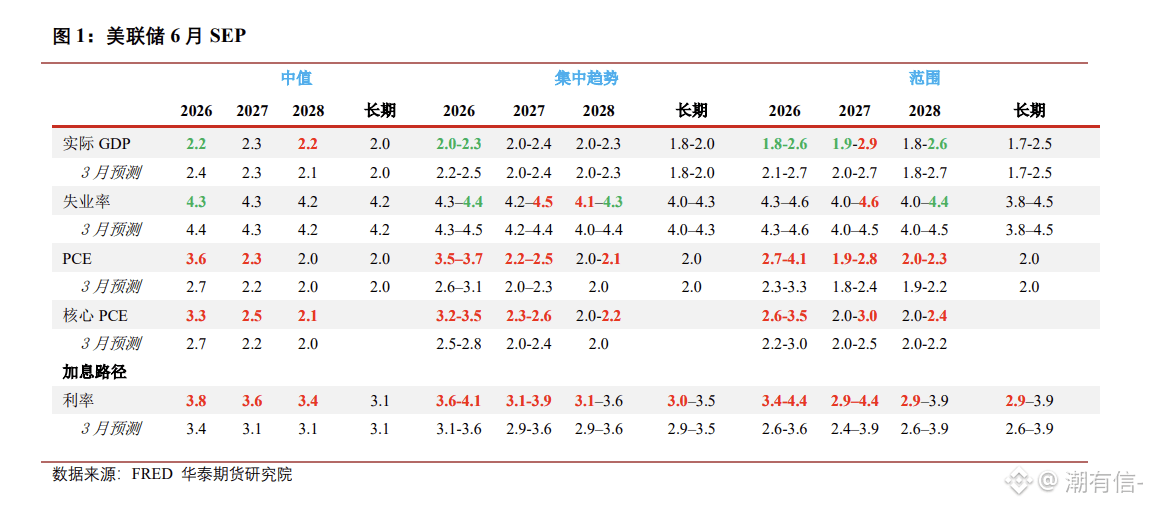
If the Federal Reserve raises rates by 25 bps tonight, the rate range would come to 3.75%–4.00%, with the midpoint at 3.875%.
Meanwhile, the Fed’s June SEP median forecast for the federal funds rate at the end of 2026 is 3.8%.
That means if this hike goes through, the policy rate will have roughly reached the year-end level that participants were expecting three months ago.
After the hike, the key question is whether the Fed still thinks current rates are high enough. That’s what matters most tonight.
Now, the market’s pricing for a 25 bps hike tonight is already close to 93%; part of that has already been anticipated, absorbed, and priced in by the market.
What’s more worth watching now is the new rate forecast, the dot plot, and the remarks from the press conference in terms of the future rate path.
If the subsequent rate path does not continue to be raised meaningfully, this would look more like a policy adjustment aimed at addressing recent inflation pressures.
But if the new rate forecasts continue to move higher—while leaving more room for additional hikes going forward—then what the market reprices won’t just be tonight’s 25 bps. It would be that future rates could be higher and remain elevated for longer.
If the Federal Reserve raises rates by 25 bps tonight, the rate range would come to 3.75%–4.00%, with the midpoint at 3.875%.
Meanwhile, the Fed’s June SEP median forecast for the federal funds rate at the end of 2026 is 3.8%.
That means if this hike goes through, the policy rate will have roughly reached the year-end level that participants were expecting three months ago.
After the hike, the key question is whether the Fed still thinks current rates are high enough. That’s what matters most tonight.
Now, the market’s pricing for a 25 bps hike tonight is already close to 93%; part of that has already been anticipated, absorbed, and priced in by the market.
What’s more worth watching now is the new rate forecast, the dot plot, and the remarks from the press conference in terms of the future rate path.
If the subsequent rate path does not continue to be raised meaningfully, this would look more like a policy adjustment aimed at addressing recent inflation pressures.
But if the new rate forecasts continue to move higher—while leaving more room for additional hikes going forward—then what the market reprices won’t just be tonight’s 25 bps. It would be that future rates could be higher and remain elevated for longer.
Meanwhile, the Fed’s June SEP median forecast for the federal funds rate at the end of 2026 is 3.8%.
That means if this hike goes through, the policy rate will have roughly reached the year-end level that participants were expecting three months ago.
After the hike, the key question is whether the Fed still thinks current rates are high enough. That’s what matters most tonight.
Now, the market’s pricing for a 25 bps hike tonight is already close to 93%; part of that has already been anticipated, absorbed, and priced in by the market.
What’s more worth watching now is the new rate forecast, the dot plot, and the remarks from the press conference in terms of the future rate path.
If the subsequent rate path does not continue to be raised meaningfully, this would look more like a policy adjustment aimed at addressing recent inflation pressures.
But if the new rate forecasts continue to move higher—while leaving more room for additional hikes going forward—then what the market reprices won’t just be tonight’s 25 bps. It would be that future rates could be higher and remain elevated for longer.
2
3
3.4k
·
--
Niúlái is much better than so-called many big-budget blockbusters—after all, they’re the real thing: solid, genuine manure. Unlike some current domestic movies, which wrap the manure with a layer of sugar on the outside.
Niúlái is much better than so-called many big-budget blockbusters—after all, they’re the real thing: solid, genuine manure. Unlike some current domestic movies, which wrap the manure with a layer of sugar on the outside.
1
923
·
--
Bearish
Iran stands firm against Trump! The situation in the Strait of Hormuz escalates instantly
Trump just stated: “If the Strait of Hormuz is not opened, Iran's power plants will be completely destroyed!”
Iran's latest response is straightforward:
1. Iran will completely block the Strait of Hormuz
2. It will strike important infrastructure in the Middle East (energy, information technology, and desalination facilities are all on the list)
3. An Iranian senior military commander announced: the military strategy has shifted from defense to offense
4. An Iranian official claimed: domestic basic material reserves are sufficient and can support for up to a year
This is no longer just talk; it's a real move.
Once it truly escalates into conflict, the global oil transport arteries will be choked, and energy prices, Middle Eastern stock markets, and risk assets will all be affected.
On Monday's opening, risk trading is very likely to be activated directly!
Is everyone ready? Is this a true black swan or just posturing?👀#黄金创43年来最大单周跌幅 #特朗普考虑结束伊朗冲突 #iOS安全更新 #伊朗 #伊美冲突
Iran stands firm against Trump! The situation in the Strait of Hormuz escalates instantly
Trump just stated: “If the Strait of Hormuz is not opened, Iran's power plants will be completely destroyed!”
Iran's latest response is straightforward:
1. Iran will completely block the Strait of Hormuz
2. It will strike important infrastructure in the Middle East (energy, information technology, and desalination facilities are all on the list)
3. An Iranian senior military commander announced: the military strategy has shifted from defense to offense
4. An Iranian official claimed: domestic basic material reserves are sufficient and can support for up to a year
This is no longer just talk; it's a real move.
Once it truly escalates into conflict, the global oil transport arteries will be choked, and energy prices, Middle Eastern stock markets, and risk assets will all be affected.
On Monday's opening, risk trading is very likely to be activated directly!
Is everyone ready? Is this a true black swan or just posturing?👀#黄金创43年来最大单周跌幅 #特朗普考虑结束伊朗冲突 #iOS安全更新 #伊朗 #伊美冲突
Trump just stated: “If the Strait of Hormuz is not opened, Iran's power plants will be completely destroyed!”
Iran's latest response is straightforward:
1. Iran will completely block the Strait of Hormuz
2. It will strike important infrastructure in the Middle East (energy, information technology, and desalination facilities are all on the list)
3. An Iranian senior military commander announced: the military strategy has shifted from defense to offense
4. An Iranian official claimed: domestic basic material reserves are sufficient and can support for up to a year
This is no longer just talk; it's a real move.
Once it truly escalates into conflict, the global oil transport arteries will be choked, and energy prices, Middle Eastern stock markets, and risk assets will all be affected.
On Monday's opening, risk trading is very likely to be activated directly!
Is everyone ready? Is this a true black swan or just posturing?👀#黄金创43年来最大单周跌幅 #特朗普考虑结束伊朗冲突 #iOS安全更新 #伊朗 #伊美冲突

1
1.1k
Log in to explore more content
Join global crypto users on Binance Square
⚡️ Get latest and useful information about crypto.
💬 Trusted by the world’s largest crypto exchange.
👍 Discover real insights from verified creators.
Email / Phone number