


Author: Cointime.com 237
With the development of blockchain technology and the continuous expansion of application scenarios, more and more blockchain projects and networks have emerged, forming a diversified and decentralized crypto market. This multi-chain pattern brings a series of advantages and opportunities.
On the one hand, the multi-chain landscape provides a wider range of choices and flexibility. Different blockchain networks have their own characteristics, performance and functions, and users can choose to participate in them according to their needs and preferences. This diversity of choice provides users with more opportunities to invest, trade and participate in DeFi, NFT and other crypto projects.
On the other hand, the multi-chain landscape also promotes innovation and competition. Competition between different blockchain projects and networks has prompted them to continuously launch innovative technologies, products, and solutions to attract users and expand the market. This competition-driven innovation has brought more possibilities and progress to the crypto market, driving the development of the entire industry.
In addition, the multi-chain structure also provides a mechanism for cross-chain interaction and asset flow. Through cross-chain technology and bridging protocols, users can freely transfer and trade assets between different blockchain networks. This cross-chain capability provides greater liquidity and flexibility options, increasing market efficiency and convenience.
However, this multi-chain structure also brings some challenges and risks, the most prominent of which is cross-chain risk.
Security is one of the main risks faced by cross-chain transactions. Since different blockchain networks have different security mechanisms and consensus algorithms, cross-chain transactions may be affected by potential vulnerabilities, attacks, or instabilities in one or more of the networks. Malicious actors may exploit the weaknesses of cross-chain bridge points to attack and steal assets.
In addition, liquidity is also one of the challenges faced by cross-chain exchanges. The liquidity of different blockchain networks may vary, and the assets on some chains may be less or less liquid. This may lead to increased price slippage in cross-chain transactions and insufficient transaction depth, thus affecting the user's trading experience and results.
In order to solve the above problems, Bitbyte.Finance integrates DEX, cross-chain bridges and routing through multi-chain deployment, and builds trading routes for multiple decentralized exchanges, so that users can directly trade the liquidity of other decentralized exchanges without establishing liquidity in Bitbyte. On the basis of ensuring trading liquidity and trading depth, it also meets users' demands for security and low slippage in cross-chain asset transactions.
Bitbyte.Finance: A digital asset financialization and socialization aggregation platform deployed on multiple chains
Bitbyte.Finance is a decentralized aggregation platform. It builds a multi-chain digital asset financial and social aggregation platform based on decentralized exchanges (DEX). The platform mainly revolves around the core concept of "DeFi+NFT+DAO". Through a series of DeFi product suites, NFT product suites and derivatives markets, a friend invitation mechanism is built into each basic function to build a community network and a digital identity system around users.
Based on the core characteristics of DeFi and the market's demand for cross-chain assets, Bitbyte.Finance integrates DEX, cross-chain bridges and routing through multi-chain deployment, and builds trading routes for multiple decentralized exchanges including Pancake, Uniswap, Sunswap, Cososwap, Biswap, Pofid, Jumbo, etc., so that users can directly trade the liquidity of other decentralized exchanges without establishing liquidity in Bitbyte. On the basis of ensuring trading liquidity and trading depth, it also meets users' demands for security and low slippage in cross-chain asset transactions.
In addition, Bitbyte launched the NFT market and NFT minting functions, supporting various mainstream auction types in the market, and introducing a digital identity system by building a user community network within the platform. The digital identity system is based on the decentralized, distributed and anonymous characteristics of blockchain technology, which realizes the organic combination of social and finance in the crypto market, forming a "decentralized social graph", and providing users entering Web3 and the metaverse with a complete set of solutions for trust and security issues in social finance.
At this point, Bitbyte.Finance has formed a "DeFi+NFT+DAO" ecological platform by building a multi-chain liquidity aggregator, combining NFT functions and built-in community network mechanisms.
Most of the core development team members of Bitbyte.finance are from Singapore. They include blockchain technology experts from the Financial Technology Research Center of Nanyang Technological University, as well as technical experts from the well-known public chain team TomoChain and the leading Metaverse project Enjin. The team currently focuses on asset cross-chain security technology, NFT derivatives and digital identity systems. Based on the deep technical accumulation in the industry, the team provides professional and reliable technical guarantees and services for Bitbyte.Finance platform users.
Platform Features
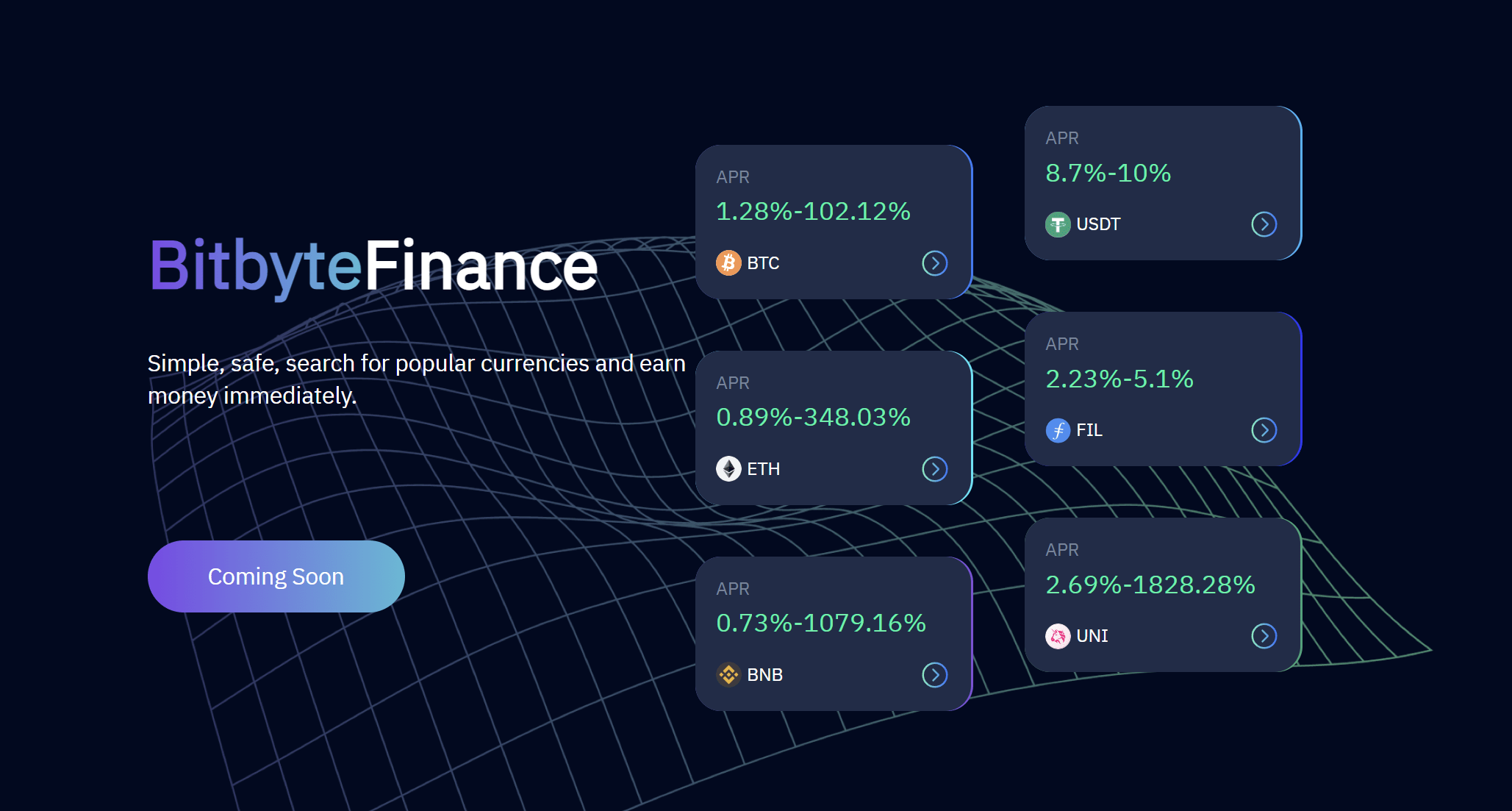
1. Permissionless and censorship-resistant
Anyone can access and use it without permission in any environment, and does not need to pass any KYC review.
2. Liquidity Aggregation
Users can use decentralized wallets to directly access the liquidity of multiple top DEXs on the corresponding network at one time and obtain the best and most effective transaction prices.
3. Cross-chain transactions
Build a cross-chain transaction pool based on mature and potential cross-chain solutions in the market, so that user assets can be freely traded and transferred between multiple chains.
4. NFT Minting and Auction
Based on the NFT auction market, it also provides NFT minting functions and derivatives market functions to release NFT liquidity.
5. Community-driven
Based on the innovative design of Bitbyte.Finance's invitation mechanism for various functions, decentralized governance and community-driven development will eventually be achieved.
Platform Architecture
The platform architecture of Bitbyte.Finance revolves around the structure of "DeFi+NFT+built-in DAO social network". The functions centered around DeFi elements include Swap, staking pool and liquidity pool, IDO crowdfunding and airdrop functions. The functions centered around NFT elements include NFT trading market, NFT minting, NFT derivatives market, etc.
Among the functions that have been built on the platform, there is a built-in invitation mechanism for the community network, which builds a community network around the users themselves and accumulates social value. Based on this, Bitbyte will also introduce a digital identity system, which will further open up the value network of social finance.
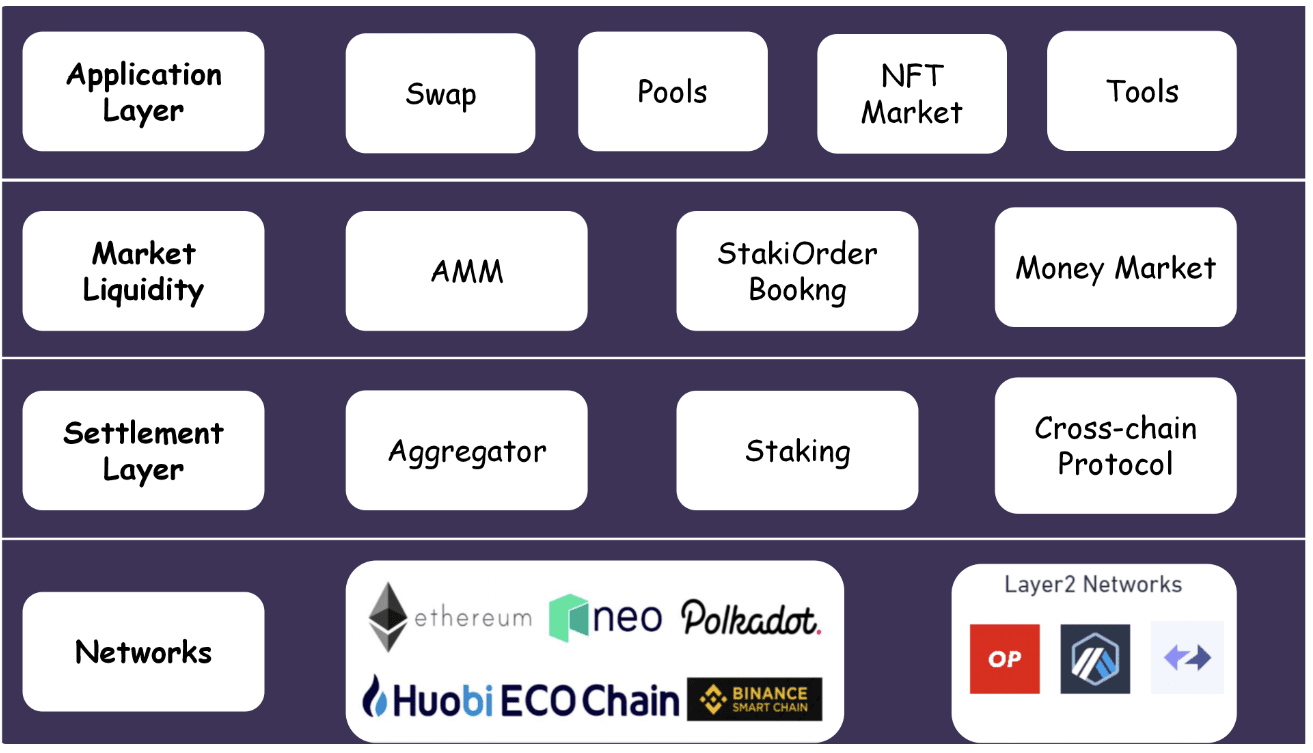
Bitbyte.Finance uses a four-layer structure to ensure the integrity and validity of digital asset information on the platform, providing users with a safe and efficient trading environment.
1. Networks
The network layer is the foundation of Bitbyte, including public chains such as BSC and Heco and the potential Layer 2.
2. Settlement Layer
Users connect to the trading pool through Bitbyte and complete settlement transactions based on wallet signature authorization and smart contracts. On the other hand, cross-chain protocols and cross-chain pools help users complete cross-chain asset conversion and settlement.
3. Market Liquidity
Bitbyte deploys aggregation protocols on different chains, connects and aggregates the liquidity of multiple high-quality DEXs, and recommends the best prices and transaction paths to users.
4. Application Layer
The corresponding functional services and smart contracts are encapsulated into a unified creation process for developers, and at the same time, a more convenient and easy-to-use front-end interface is provided for Bitbyte users to trade and earn coins.
product description
Bitbyte.finance's decentralized exchange DEX product suite includes smart aggregation trading, new liquidity pools, IDO crowdfunding pool building/new asset liquidity issuance, airdrop pools, funding pools and mining to earn coins (including liquidity mining, pledge mining and financial mining, etc.).
Bitbyte's NFT scenario functions include NFT auction market and NFT derivatives market, and it has introduced practical tools such as cross-chain bridges. In addition, all functions will introduce a digital identity system based on the construction of the user's personal community network to further precipitate the user's social value.
Bitbyte integrates mainstream wallet applications based on DEX, through which users can interact with various functions on the platform.
Specifically, it launched the following products:
1. Intelligent aggregation transactions
Bitbyte.finance can not only realize transactions between two arbitrary tokens on the same network through multi-chain deployment, but also build liquidity exchange of tokens between chains. It can intelligently find the best order routing from liquidity sources to provide traders with the best price and lowest slippage. In addition, users can also set transaction slippage and time limits by themselves. (The platform defaults to a slippage difference of 1.5% and a transaction time of 20 minutes.)
2. Add liquidity to market making
Bitbyte allows liquidity providers to flexibly create their own liquidity markets through liquidity pools. This is a completely permissionless and non-custodial process. Users can configure the parameters of their own pools and obtain LP tokens by establishing liquidity pools, thereby building liquidity mining pools for mining and earning coins.
3. Participate in IDO crowdfunding and pool building
Crowdfunding is a way to fairly distribute tokens and start a liquidity market. Inspired by the common new issuance mechanism in the market, equal opportunities ensure that no scientists can get ahead of others and no robots can interfere. With the additional security provided by the liquidity protection period, users can participate in liquidity issuance activities with peace of mind and effectively support their favorite projects.
4. Participate in airdrops and airdrop pool building
The airdrop pool is a function provided by the project party to build community popularity and increase the number of currency holding addresses. Projects participating in the airdrop pool activity can create their own airdrop pool on the platform, and the airdrop parameters can be set by themselves; users can participate in community building and obtain tokens at a low cost by participating in the airdrop activities of related projects.
5. Mining pool staking and earning coins
In addition to the above-mentioned liquidity mining, the platform already has single-coin staking pools, single-coin locked staking pools and financial management pools. Users can choose different mining pools according to their needs to participate in staking and earn coins; pool creators can use the creation function provided by the platform to provide mining rewards to users who hold their own tokens, thereby increasing community participation.
6. NFT Auction and NFT Minting
Bitbyte's NFT auction market provides mainstream pricing models, including fixed-price transactions, English auctions, Dutch auctions, etc. Users can participate in auctions according to different NFT project requirements.
In addition, the NFT minting function allows NFT creators to seamlessly create their own NFT sets and set relevant parameters by themselves. After successful creation, they can directly go to the NFT market for auction.
7. NFT derivatives market
Bitbyte's original NFT derivatives market, by combining the mechanisms of NFT and community networks, has greatly solved the problem that NFT liquidity and token liquidity are separated from the project community network, providing a new idea for launching the liquidity of NFT projects.
8. Cross-chain bridges and tool sets
The cross-chain bridge function provided by Bitbyte can realize the cross-chain flow of tokens and transfer digital assets on different chains, making it convenient for users to manage their digital assets efficiently and conveniently. Other practical tools include batch wallet generation, batch token sending, batch token collection, and arbitrage trading robots.
9. Social networks and digital identity systems
The existing functions on the Bitbyte platform support users to build a community network with themselves as the core in the process of interacting with the platform, and accumulate the value of the community network through the invitation mechanism. In the process of building a community network centered on users, the platform will create a complete on-chain digital identity system, which will completely open the door to the value Internet around users themselves.
Conclusion
As crypto assets become more popular and blockchain technology continues to advance, more and more users will seek secure, transparent and efficient financial solutions. Bitbyte.Finance is expected to become an important player in the crypto-financial field and play a key role at the intersection of DeFi, NFT and DAO.
At the same time, with the rise of Web3 and the metaverse, Bitbyte.Finance will also be expected to become a bridge between the real world and the crypto world. It will provide users with innovative, sustainable and socially influential solutions, and drive the entire crypto-financial ecosystem forward.
We can expect Bitbyte.Finance to continue to evolve and innovate, bringing more opportunities and growth potential to users, and driving the crypto-finance sector into a broader future.