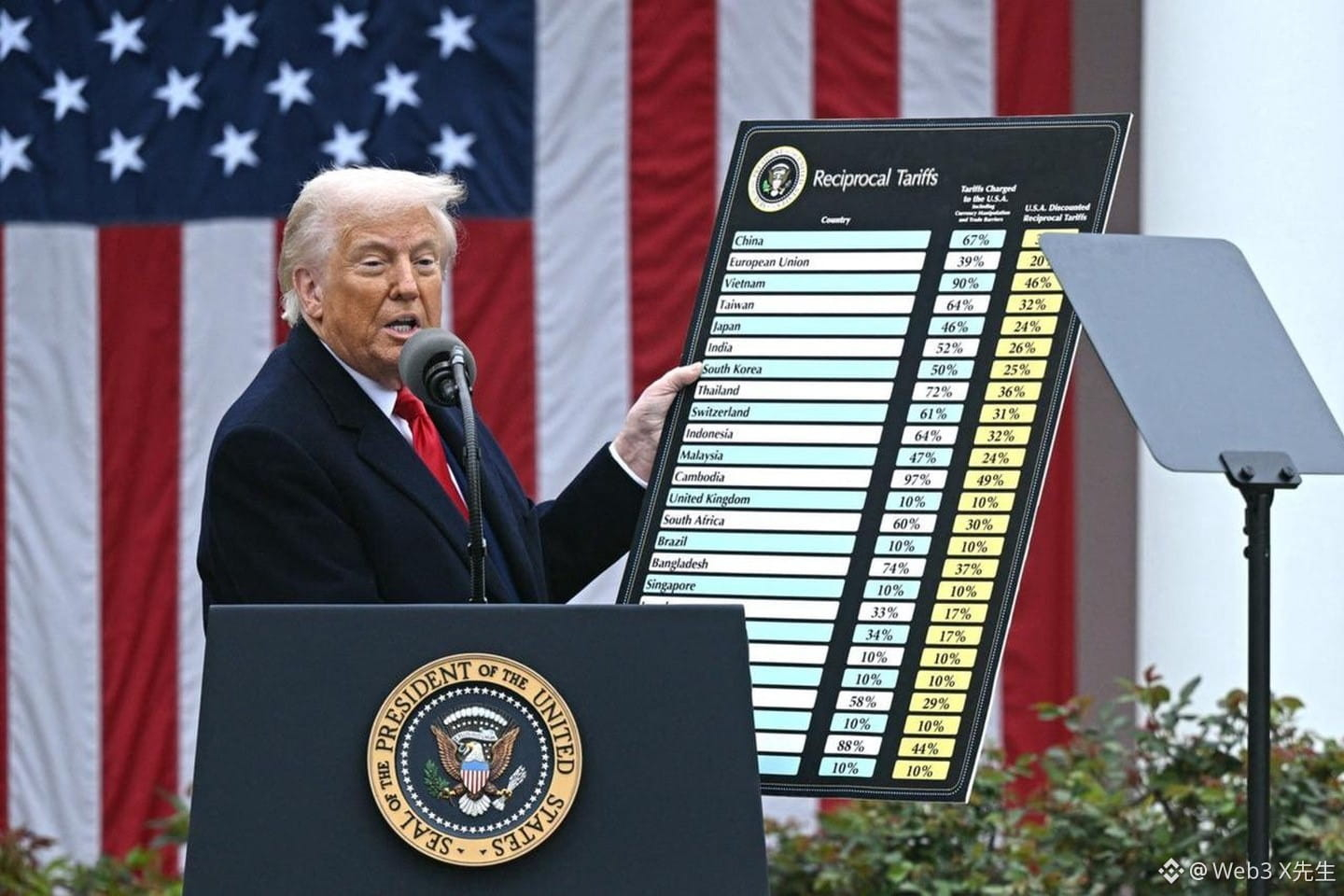
【Trump swings the tariff stick again, naming 16 economies; Bitcoin falls back to $59,000 🔨】
🚀 Join Mr. X’s fan group chat on the homepage to follow the market
People holding $BTC got another taste today of the news hitting first and the reason coming later. Bitcoin prices were pushed down by tariff news before inflation data even came out.
📢 On November 25, the Office of the U.S. Trade Representative is preparing to announce a new tariff plan covering 16 economies, including the EU, Japan, South Korea, and India. It’s based on Section 301, with overcapacity cited as the reason. Put simply, after the courts struck down the old tariffs, the White House wants to rebuild the tariff wall.
Why the rush to push this through now?
This round of investigations only began in March, and Section 301 lets the president impose tariffs unilaterally without waiting for Congress. The tariffs of 10% to 12.5% announced in July are being reviewed by the U.S. Court of International Trade. The old support is shaky, so they need a new one.
But one detail needs to be clear: this isn’t one big, uniform tariff stick. Rates will be set separately for each country. The EU, Japan, and South Korea have a 15% ceiling under last year’s agreements, leaving only 2.5 to 5 percentage points. India and Vietnam have a 19% ceiling, so the pressure is greater.
📉 The market reacted first. Bitcoin fell below $60,000, with Coinbase reporting $59,109. Ethereum was at $1,698.6, while spot ETFs saw net outflows for the sixth consecutive day. So far in November, U.S. spot Bitcoin ETFs have seen net outflows of about $4.94 billion, and Asian stock markets have also weakened.
⚠️ Let’s be clear about the risks. When reciprocal tariffs took effect this April, $BTC slid from $88,000 to $74,000 in less than two weeks. This round’s process is longer, and the announcement date hasn’t been finalized. The real risk isn’t how much prices fall on any given day; it’s that leveraged positions get liquidated first during the policy limbo.
📌 What really deserves attention is how the tariff rates and effective dates are set, and whether South Korea and Japan will trade their 15% ceilings for exemptions. Until the list is finalized, any rebound is just a brief opening in the news cycle. Understanding who the tariffs will hit is key to understanding why risk assets fall first.