“A farmer paid before the harvest season ends.”
That was the image chosen yesterday by Ajay Banga, president of the World Bank, to present a project with Citi and Circle: exploring the $USDC to disburse development funds.
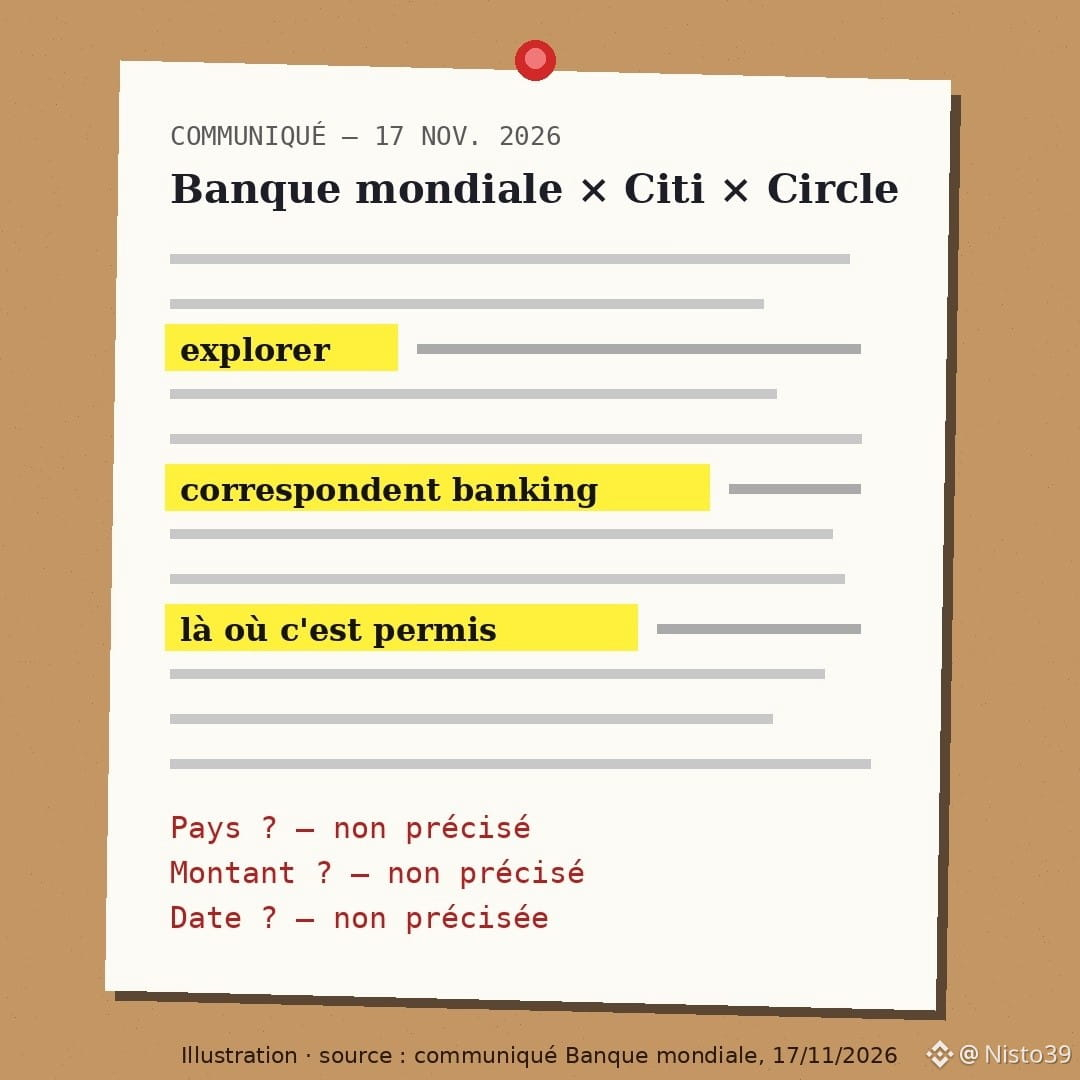
I read the November 17 press release in full. Three phrases caught my attention.
“Explore.” The word appears everywhere. The text names no countries, no amounts, no timeline. This is at the study stage, not the payment stage.
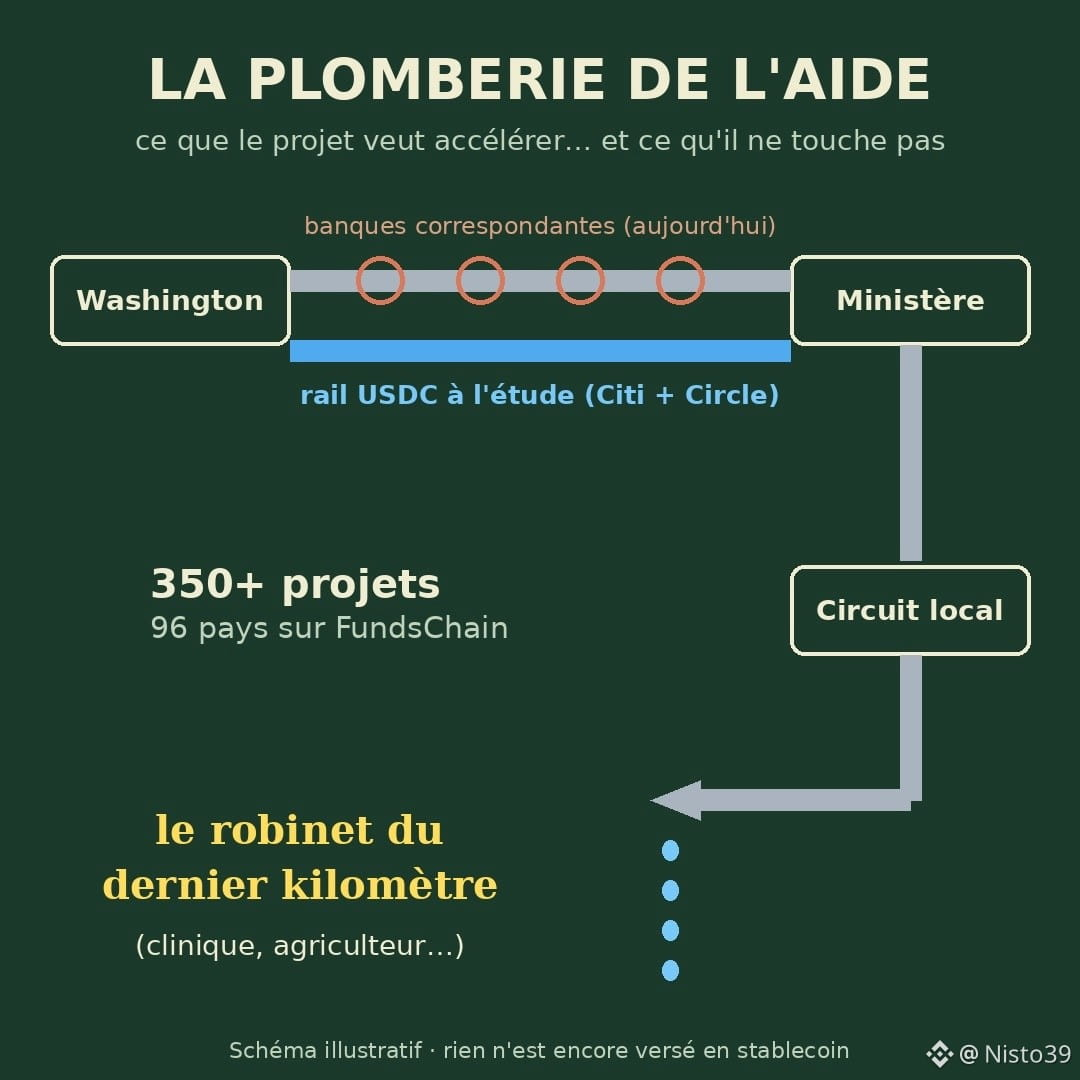
“Correspondent banking.” This is what the project aims to complement or improve: the chain of intermediary banks through which an international payment passes, each with its own delays and fees. Citi brings its banking connections; Circle issues and settles USDC (a stablecoin, meaning a digital token backed by the dollar).
“Where digital assets are permitted.” At the outset, only borrower countries that authorize these assets are covered. For part of Africa, the legal question will therefore come before the technical one.
It all relies on FundsChain, the Bank’s blockchain ledger, already used by more than 350 projects in 96 countries to track where the money goes.
My take: this is a real signal, but it affects the plumbing between institutions, not yet the farmer’s pocket. Saving a few days between Washington and a ministry is good. If the money then sits for two months in an administrative process, no stablecoin will change that. The most underestimated benefit may be traceability: it mainly bothers those who profit from opacity.
For those of you who have seen project funds pass through: does the money tend to get lost before it reaches the country, or afterward?
#WorldBank #USDC #Stablecoin #Afrique #CryptoNews