Anthropic’s profit statement in the IPO quarter may change due to the recognition of RSU expenses, so it should not be read as if the core business suddenly worsened. The previous post explained when old shares can be sold; this time we are looking at something else: when employees’ restricted stock units vest and when they are recognized as expenses.
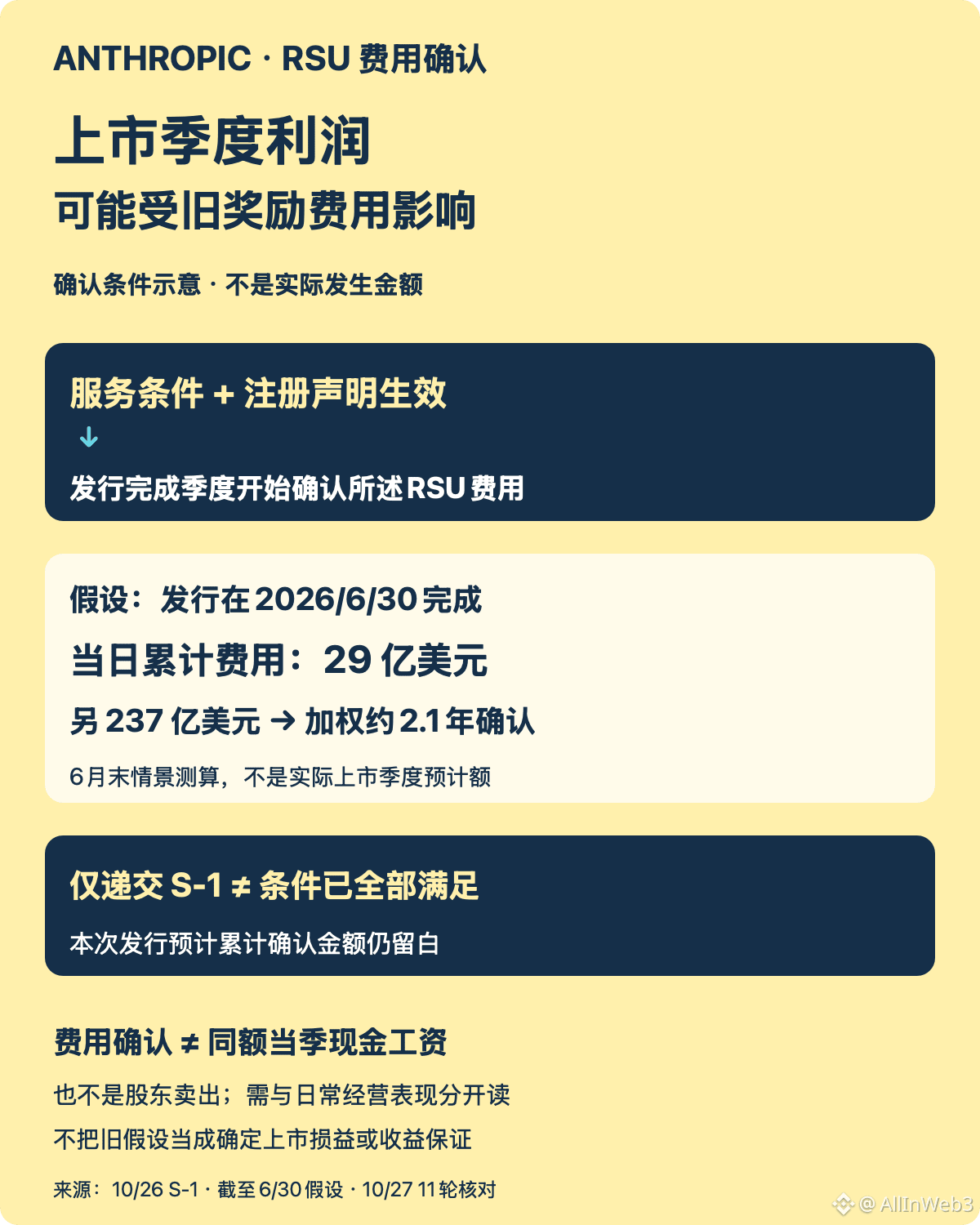
Filing terms: The S-1 filed on October 26 states that the RSUs described there are subject to both service and performance conditions. The service period is usually four years, and the performance condition generally involves a change of control or the effectiveness of this registration statement. Simply filing the S-1 does not mean both conditions have been satisfied.
Key impact: As of June 30, no stock-based compensation expense had yet been recognized for these RSUs. The company said that, in connection with this offering, it will begin recognizing the related expense, and the quarter in which the offering closes will be affected in particular; awards for which the service condition has been fully or partially satisfied may lead to cumulative expense recognition.
Numeric boundary: The S-1 assumes the offering closes on June 30, on which date it would recognize $2.9 billion of cumulative RSU expense, and another $23.7 billion over a weighted average of about 2.1 years. This is a historical point-in-time assumption, not the actual amount for the IPO quarter, and certainly not the full one-time recognition of $26.6 billion; the cumulative amount to be recognized for the actual offering remains undisclosed.
What to watch next: the effectiveness of the registration statement, completion of the offering, and how subsequent financial reports present these items. Recognizing stock-based compensation does not mean the same amount of cash wages are being paid, nor does it prove that the core business has deteriorated; the impact of such recognition should be viewed separately from day-to-day operating performance.