

Web3 X先生
1.2k Posts
 LIVE
LIVEWeb3 X先生
Report
Block User
Web3 6年行业观察 | 行情 价格 走势 分析 | X:blockx8855 | 公众号:加密老丁 | 每日策略 热点解读
Frequent Trader
5.8 Months
31 Following
2.0K+ Followers
491 Liked
Posts
All
Quotes
Live
·
--
【Bitcoin has drawn inflows for three straight weeks, while Ethereum has seen outflows for four days. Are investors switching sides within their own portfolio? 🔁💸】
Group chat: [🔥 现货ETF资金流向,进X先生粉丝群聊](https://app.binance.com/uni-qr/MwYFhLo4)
Last week’s spot ETF figures are finally in. Bitcoin funds recorded another $241 million in net inflows, marking their third consecutive week of inflows. The previous two weeks saw inflows of $2.4 billion and $6.2 million, respectively. Cumulative net inflows have now reached $57.8 billion. The figure isn’t explosive, but the trend is very steady.💰
Ethereum went in exactly the opposite direction. Net outflows reached $138 million last week, after $690 million in net inflows the week before. Money has flowed out for four consecutive days, with $37.4 million leaving in a single day. All the withdrawals came from products offered by two major fund managers. Sentiment can shift in an instant.🔄
The daily figures paint an even clearer picture. On October 2, Ethereum ETFs saw $37.4 million in net outflows. Not one of the nine funds recorded an inflow. BlackRock’s fund saw $20.1 million withdrawn, while Fidelity’s saw $17.3 million leave. The other seven simply sat still.🧊
They may be in the same sector, but the money is taking two different paths. Bitcoin funds have seen about $1.2 billion in net inflows year to date. Ethereum funds still have $13.8 billion in cumulative net inflows. The old money hasn’t left; the new money has just paused for now. The same institutions are making different choices at the same time.⚖️
Market sentiment is also gradually cooling. The Fear and Greed Index slipped from 74 to 70. It’s still in greed territory, but the heat has eased. Bitcoin is trading around $86,200, up 3.7% over the past week—a solid gain. Ethereum is at $2,727, with its weekly change roughly flat.🌡️
A quick look at a few smaller players: SOL funds took in $2.4 million last week, and XRP funds added $4.7 million. The amounts are small, but the direction is positive. Funds focused on less popular privacy coins, by contrast, shed nearly $94 million. This round, investors are clearly being selective.🍽️
📌 In a nutshell: Money is still flowing into Bitcoin, while Ethereum’s inflows have paused for now.
Are you adjusting your positions based on ETF flows? Share your thoughts in the comments.
#比特币现货ETF三季度净流入63.4亿美元
【Bitcoin has drawn inflows for three straight weeks, while Ethereum has seen outflows for four days. Are investors switching sides within their own portfolio? 🔁💸】
Group chat: 🔥 现货ETF资金流向,进X先生粉丝群聊
Last week’s spot ETF figures are finally in. Bitcoin funds recorded another $241 million in net inflows, marking their third consecutive week of inflows. The previous two weeks saw inflows of $2.4 billion and $6.2 million, respectively. Cumulative net inflows have now reached $57.8 billion. The figure isn’t explosive, but the trend is very steady.💰
Ethereum went in exactly the opposite direction. Net outflows reached $138 million last week, after $690 million in net inflows the week before. Money has flowed out for four consecutive days, with $37.4 million leaving in a single day. All the withdrawals came from products offered by two major fund managers. Sentiment can shift in an instant.🔄
The daily figures paint an even clearer picture. On October 2, Ethereum ETFs saw $37.4 million in net outflows. Not one of the nine funds recorded an inflow. BlackRock’s fund saw $20.1 million withdrawn, while Fidelity’s saw $17.3 million leave. The other seven simply sat still.🧊
They may be in the same sector, but the money is taking two different paths. Bitcoin funds have seen about $1.2 billion in net inflows year to date. Ethereum funds still have $13.8 billion in cumulative net inflows. The old money hasn’t left; the new money has just paused for now. The same institutions are making different choices at the same time.⚖️
Market sentiment is also gradually cooling. The Fear and Greed Index slipped from 74 to 70. It’s still in greed territory, but the heat has eased. Bitcoin is trading around $86,200, up 3.7% over the past week—a solid gain. Ethereum is at $2,727, with its weekly change roughly flat.🌡️
A quick look at a few smaller players: SOL funds took in $2.4 million last week, and XRP funds added $4.7 million. The amounts are small, but the direction is positive. Funds focused on less popular privacy coins, by contrast, shed nearly $94 million. This round, investors are clearly being selective.🍽️
📌 In a nutshell: Money is still flowing into Bitcoin, while Ethereum’s inflows have paused for now.
Are you adjusting your positions based on ETF flows? Share your thoughts in the comments.
#比特币现货ETF三季度净流入63.4亿美元
Group chat: 🔥 现货ETF资金流向,进X先生粉丝群聊
Last week’s spot ETF figures are finally in. Bitcoin funds recorded another $241 million in net inflows, marking their third consecutive week of inflows. The previous two weeks saw inflows of $2.4 billion and $6.2 million, respectively. Cumulative net inflows have now reached $57.8 billion. The figure isn’t explosive, but the trend is very steady.💰
Ethereum went in exactly the opposite direction. Net outflows reached $138 million last week, after $690 million in net inflows the week before. Money has flowed out for four consecutive days, with $37.4 million leaving in a single day. All the withdrawals came from products offered by two major fund managers. Sentiment can shift in an instant.🔄
The daily figures paint an even clearer picture. On October 2, Ethereum ETFs saw $37.4 million in net outflows. Not one of the nine funds recorded an inflow. BlackRock’s fund saw $20.1 million withdrawn, while Fidelity’s saw $17.3 million leave. The other seven simply sat still.🧊
They may be in the same sector, but the money is taking two different paths. Bitcoin funds have seen about $1.2 billion in net inflows year to date. Ethereum funds still have $13.8 billion in cumulative net inflows. The old money hasn’t left; the new money has just paused for now. The same institutions are making different choices at the same time.⚖️
Market sentiment is also gradually cooling. The Fear and Greed Index slipped from 74 to 70. It’s still in greed territory, but the heat has eased. Bitcoin is trading around $86,200, up 3.7% over the past week—a solid gain. Ethereum is at $2,727, with its weekly change roughly flat.🌡️
A quick look at a few smaller players: SOL funds took in $2.4 million last week, and XRP funds added $4.7 million. The amounts are small, but the direction is positive. Funds focused on less popular privacy coins, by contrast, shed nearly $94 million. This round, investors are clearly being selective.🍽️
📌 In a nutshell: Money is still flowing into Bitcoin, while Ethereum’s inflows have paused for now.
Are you adjusting your positions based on ETF flows? Share your thoughts in the comments.
#比特币现货ETF三季度净流入63.4亿美元

62
·
--
【1.45 million ETH waiting to enter the queue—25 days to get in? ⏳🔥】
Group chat: [🌟 加入X先生粉丝群聊跟进行情](https://app.binance.com/uni-qr/MwYFhLo4)
Ethereum is seeing a strange phenomenon right now. People looking to stake their ETH are lined up out the door. A whopping 1.458 million ETH is waiting in the queue. At the current rate, the wait is 25 days. The line stretches as far as the eye can see, and nobody wants to wait. But that’s the reality today. ⏳
The other queue isn’t idle either. Stakers looking to exit have 786,000 ETH lined up. Together, the two queues add up to more than 2 million ETH. Deposits and withdrawals are happening at the same time. The amount coming in is twice the amount going out. ETH is flowing in and out at once—it’s a surreal sight. 😵
Validators are lining up one by one, waiting to get to work. Just look back to early September, not so long ago. The entry queue stood at around 2 million ETH, with a wait of 35 days. Now the queue has shrunk, and the wait is 10 days shorter. But it’s still a substantial amount—the queues across the network are all long. 🐢
There’s a reason things are moving slowly. Ethereum limits the rate at which validators can enter and exit. The amount that can be processed each hour is fixed. There’s no way to cut in line. The longer the queue, the more the wait stretches out. The total amount staked across the network is about 43.6 million ETH. 🚦
There’s also a twist to this wave of exits. MetaMask unstaked a batch of validators that had been staking through Lido. The reason was a security incident involving its own infrastructure. The company said that neither the wallet nor user funds were affected. The validators completed their exit around October 7. 🛡️
Exiting isn’t the end of the story. Going through the exit, withdrawal, and restaking process can take up to 45 days. The reason is still that long entry queue. People holding stETH don’t need to do anything. The protocol will handle this portion automatically. 🧾
📌 In a nutshell: Those looking to enter face a 25-day wait, while those looking to exit are also stuck in a queue. The staking business is still crowded.
Would you lock up your funds for 25 days? Tell us what you think in the comments.
#以太坊验证者退出队列增392%
【1.45 million ETH waiting to enter the queue—25 days to get in? ⏳🔥】
Group chat: 🌟 加入X先生粉丝群聊跟进行情
Ethereum is seeing a strange phenomenon right now. People looking to stake their ETH are lined up out the door. A whopping 1.458 million ETH is waiting in the queue. At the current rate, the wait is 25 days. The line stretches as far as the eye can see, and nobody wants to wait. But that’s the reality today. ⏳
The other queue isn’t idle either. Stakers looking to exit have 786,000 ETH lined up. Together, the two queues add up to more than 2 million ETH. Deposits and withdrawals are happening at the same time. The amount coming in is twice the amount going out. ETH is flowing in and out at once—it’s a surreal sight. 😵
Validators are lining up one by one, waiting to get to work. Just look back to early September, not so long ago. The entry queue stood at around 2 million ETH, with a wait of 35 days. Now the queue has shrunk, and the wait is 10 days shorter. But it’s still a substantial amount—the queues across the network are all long. 🐢
There’s a reason things are moving slowly. Ethereum limits the rate at which validators can enter and exit. The amount that can be processed each hour is fixed. There’s no way to cut in line. The longer the queue, the more the wait stretches out. The total amount staked across the network is about 43.6 million ETH. 🚦
There’s also a twist to this wave of exits. MetaMask unstaked a batch of validators that had been staking through Lido. The reason was a security incident involving its own infrastructure. The company said that neither the wallet nor user funds were affected. The validators completed their exit around October 7. 🛡️
Exiting isn’t the end of the story. Going through the exit, withdrawal, and restaking process can take up to 45 days. The reason is still that long entry queue. People holding stETH don’t need to do anything. The protocol will handle this portion automatically. 🧾
📌 In a nutshell: Those looking to enter face a 25-day wait, while those looking to exit are also stuck in a queue. The staking business is still crowded.
Would you lock up your funds for 25 days? Tell us what you think in the comments.
#以太坊验证者退出队列增392%
Group chat: 🌟 加入X先生粉丝群聊跟进行情
Ethereum is seeing a strange phenomenon right now. People looking to stake their ETH are lined up out the door. A whopping 1.458 million ETH is waiting in the queue. At the current rate, the wait is 25 days. The line stretches as far as the eye can see, and nobody wants to wait. But that’s the reality today. ⏳
The other queue isn’t idle either. Stakers looking to exit have 786,000 ETH lined up. Together, the two queues add up to more than 2 million ETH. Deposits and withdrawals are happening at the same time. The amount coming in is twice the amount going out. ETH is flowing in and out at once—it’s a surreal sight. 😵
Validators are lining up one by one, waiting to get to work. Just look back to early September, not so long ago. The entry queue stood at around 2 million ETH, with a wait of 35 days. Now the queue has shrunk, and the wait is 10 days shorter. But it’s still a substantial amount—the queues across the network are all long. 🐢
There’s a reason things are moving slowly. Ethereum limits the rate at which validators can enter and exit. The amount that can be processed each hour is fixed. There’s no way to cut in line. The longer the queue, the more the wait stretches out. The total amount staked across the network is about 43.6 million ETH. 🚦
There’s also a twist to this wave of exits. MetaMask unstaked a batch of validators that had been staking through Lido. The reason was a security incident involving its own infrastructure. The company said that neither the wallet nor user funds were affected. The validators completed their exit around October 7. 🛡️
Exiting isn’t the end of the story. Going through the exit, withdrawal, and restaking process can take up to 45 days. The reason is still that long entry queue. People holding stETH don’t need to do anything. The protocol will handle this portion automatically. 🧾
📌 In a nutshell: Those looking to enter face a 25-day wait, while those looking to exit are also stuck in a queue. The staking business is still crowded.
Would you lock up your funds for 25 days? Tell us what you think in the comments.
#以太坊验证者退出队列增392%

161
·
--
【交易所被偷2.9亿,半年后只赔回1美分?😱💸】
Group chat: [🚀 加入X先生粉丝群聊跟进](https://app.binance.com/uni-qr/MwYFhLo4)
On Solana, there’s a derivatives exchange called Drift. On April 1, it was hacked and the stolen amount was confirmed to exceed $290 million. Investigators believe a North Korean hacking group was behind the attack. More than half a year later, the claims process has finally opened. 😱
The compensation rules look simple. For every $1 in loss, you get 1 DFX token. But now the redemption price is only $0.0104. That means for every $1 lost, you only get back 1 cent. Going from $290 million to 1 cent is quite a gap. The official statement also says this describes the mechanism, not a promise. 💸
The problem is that the pool is too small. At launch, the recovery pool had only $3.11 million. Meanwhile, the total supply of DFX is fixed at 299.5 million tokens. When you divide the pool by the total supply, the payout rate is left at just 1%. The denominator is too large and the numerator too small. 🧮
The pool isn’t dead, though. The rebuilt exchange was renamed Velocity. Every day, it sends part of its net income into the pool. For income up to $30,000, it allocates 60%. For the next $70,000, 70%. For amounts above $100,000, 90%. 📈
In addition, there are two external commitments. Tether will contribute up to $127.5 million. Strategic partners will add up to another $20 million. So far, about $9.2 million has been recovered and frozen funds have been secured. As these funds flow into the pool over time, the payout rate will rise. 🏦
Victims now have three options. Redeem directly to get back some USDT. Or sell it on the secondary market. You can also hold on and wait for the pool to grow slowly. Claims must be made using the same wallet address as the one on the day the incident happened. The channel will stay open until the New Year’s Day of 2028; anything after that expires and becomes invalid. ⏳
📌 Stolen $290 million—initially only $0.01 is paid back; the rest depends entirely on the income from the next two years.
If it were you, would you cut your losses and leave, or hold on and wait for the money to come back?
#Solana代币化股票9月交易量破44亿美元 #Drift黑客受害者启动索赔
【交易所被偷2.9亿,半年后只赔回1美分?😱💸】
Group chat: 🚀 加入X先生粉丝群聊跟进
On Solana, there’s a derivatives exchange called Drift. On April 1, it was hacked and the stolen amount was confirmed to exceed $290 million. Investigators believe a North Korean hacking group was behind the attack. More than half a year later, the claims process has finally opened. 😱
The compensation rules look simple. For every $1 in loss, you get 1 DFX token. But now the redemption price is only $0.0104. That means for every $1 lost, you only get back 1 cent. Going from $290 million to 1 cent is quite a gap. The official statement also says this describes the mechanism, not a promise. 💸
The problem is that the pool is too small. At launch, the recovery pool had only $3.11 million. Meanwhile, the total supply of DFX is fixed at 299.5 million tokens. When you divide the pool by the total supply, the payout rate is left at just 1%. The denominator is too large and the numerator too small. 🧮
The pool isn’t dead, though. The rebuilt exchange was renamed Velocity. Every day, it sends part of its net income into the pool. For income up to $30,000, it allocates 60%. For the next $70,000, 70%. For amounts above $100,000, 90%. 📈
In addition, there are two external commitments. Tether will contribute up to $127.5 million. Strategic partners will add up to another $20 million. So far, about $9.2 million has been recovered and frozen funds have been secured. As these funds flow into the pool over time, the payout rate will rise. 🏦
Victims now have three options. Redeem directly to get back some USDT. Or sell it on the secondary market. You can also hold on and wait for the pool to grow slowly. Claims must be made using the same wallet address as the one on the day the incident happened. The channel will stay open until the New Year’s Day of 2028; anything after that expires and becomes invalid. ⏳
📌 Stolen $290 million—initially only $0.01 is paid back; the rest depends entirely on the income from the next two years.
If it were you, would you cut your losses and leave, or hold on and wait for the money to come back?
#Solana代币化股票9月交易量破44亿美元 #Drift黑客受害者启动索赔
Group chat: 🚀 加入X先生粉丝群聊跟进
On Solana, there’s a derivatives exchange called Drift. On April 1, it was hacked and the stolen amount was confirmed to exceed $290 million. Investigators believe a North Korean hacking group was behind the attack. More than half a year later, the claims process has finally opened. 😱
The compensation rules look simple. For every $1 in loss, you get 1 DFX token. But now the redemption price is only $0.0104. That means for every $1 lost, you only get back 1 cent. Going from $290 million to 1 cent is quite a gap. The official statement also says this describes the mechanism, not a promise. 💸
The problem is that the pool is too small. At launch, the recovery pool had only $3.11 million. Meanwhile, the total supply of DFX is fixed at 299.5 million tokens. When you divide the pool by the total supply, the payout rate is left at just 1%. The denominator is too large and the numerator too small. 🧮
The pool isn’t dead, though. The rebuilt exchange was renamed Velocity. Every day, it sends part of its net income into the pool. For income up to $30,000, it allocates 60%. For the next $70,000, 70%. For amounts above $100,000, 90%. 📈
In addition, there are two external commitments. Tether will contribute up to $127.5 million. Strategic partners will add up to another $20 million. So far, about $9.2 million has been recovered and frozen funds have been secured. As these funds flow into the pool over time, the payout rate will rise. 🏦
Victims now have three options. Redeem directly to get back some USDT. Or sell it on the secondary market. You can also hold on and wait for the pool to grow slowly. Claims must be made using the same wallet address as the one on the day the incident happened. The channel will stay open until the New Year’s Day of 2028; anything after that expires and becomes invalid. ⏳
📌 Stolen $290 million—initially only $0.01 is paid back; the rest depends entirely on the income from the next two years.
If it were you, would you cut your losses and leave, or hold on and wait for the money to come back?
#Solana代币化股票9月交易量破44亿美元 #Drift黑客受害者启动索赔

1
729
·
--
【On-chain tokenized stocks: $4.4 billion in September volume—where did this money really come from?📈🔥】
Group chat: [🔥 加入X先生的粉丝群聊跟进](https://app.binance.com/uni-qr/MwYFhLo4)
This set of data may not have caught many people’s attention. In September, on-chain tokenized stocks recorded $4.4 billion in trading volume. This is the highest month on record. Buying U.S. stocks no longer requires a broker account. Just a few taps on your phone and you’re done. The money is quietly flowing onto the chain.📈
The main battlefield is the Solana network. Raydium is the busiest gateway. Orca also took a sizable share of orders. Together, these two platforms make up the bulk of the market. Year-to-date, cumulative volume has reached $12.4 billion. In Q3 alone, it captured 95% of share across the entire network. ⚡
Buying stocks is being moved onto the blockchain. On the U.S. side, exchanges are also racing to get in on this opportunity. Real stocks sit in custodial institutions. What you receive are tradable certificates. You can buy and sell 24 hours a day. The word “market closed” is becoming obsolete. 🌍
It’s not just retail traders playing this game. For years, Wall Street has been pushing tokenization—stocks, bonds, and funds all want to go on-chain. Giants like BlackRock have already jumped in for early trials. The total pool of on-chain assets keeps getting bigger. Stocks are just one piece of the puzzle. 🏦
But October is the real test. Is the $4.4 billion demand sustainable, or was it just a one-time surge? No one can answer that yet. The depth of on-chain stock trading still doesn’t match traditional brokerages. Slippage and liquidity are major weak points. Hype and genuine demand are two different things. ⚠️
Look at it another way: money is moving to on-chain stocks. Whoever gets this part running smoothly first will have the advantage. The $4.4 billion figure may only be the start. The imagination space for this track is far from small. Over the coming months, it’s worth keeping a close watch. 🚀
📌 One sentence: On-chain stock buying is no longer just a concept—$4.4 billion is only the first performance report delivered in September.
Would you consider buying U.S. stocks on-chain? Let’s chat in the comments.
#Solana代币化股票9月交易量破44亿美元
【On-chain tokenized stocks: $4.4 billion in September volume—where did this money really come from?📈🔥】
Group chat: 🔥 加入X先生的粉丝群聊跟进
This set of data may not have caught many people’s attention. In September, on-chain tokenized stocks recorded $4.4 billion in trading volume. This is the highest month on record. Buying U.S. stocks no longer requires a broker account. Just a few taps on your phone and you’re done. The money is quietly flowing onto the chain.📈
The main battlefield is the Solana network. Raydium is the busiest gateway. Orca also took a sizable share of orders. Together, these two platforms make up the bulk of the market. Year-to-date, cumulative volume has reached $12.4 billion. In Q3 alone, it captured 95% of share across the entire network. ⚡
Buying stocks is being moved onto the blockchain. On the U.S. side, exchanges are also racing to get in on this opportunity. Real stocks sit in custodial institutions. What you receive are tradable certificates. You can buy and sell 24 hours a day. The word “market closed” is becoming obsolete. 🌍
It’s not just retail traders playing this game. For years, Wall Street has been pushing tokenization—stocks, bonds, and funds all want to go on-chain. Giants like BlackRock have already jumped in for early trials. The total pool of on-chain assets keeps getting bigger. Stocks are just one piece of the puzzle. 🏦
But October is the real test. Is the $4.4 billion demand sustainable, or was it just a one-time surge? No one can answer that yet. The depth of on-chain stock trading still doesn’t match traditional brokerages. Slippage and liquidity are major weak points. Hype and genuine demand are two different things. ⚠️
Look at it another way: money is moving to on-chain stocks. Whoever gets this part running smoothly first will have the advantage. The $4.4 billion figure may only be the start. The imagination space for this track is far from small. Over the coming months, it’s worth keeping a close watch. 🚀
📌 One sentence: On-chain stock buying is no longer just a concept—$4.4 billion is only the first performance report delivered in September.
Would you consider buying U.S. stocks on-chain? Let’s chat in the comments.
#Solana代币化股票9月交易量破44亿美元
Group chat: 🔥 加入X先生的粉丝群聊跟进
This set of data may not have caught many people’s attention. In September, on-chain tokenized stocks recorded $4.4 billion in trading volume. This is the highest month on record. Buying U.S. stocks no longer requires a broker account. Just a few taps on your phone and you’re done. The money is quietly flowing onto the chain.📈
The main battlefield is the Solana network. Raydium is the busiest gateway. Orca also took a sizable share of orders. Together, these two platforms make up the bulk of the market. Year-to-date, cumulative volume has reached $12.4 billion. In Q3 alone, it captured 95% of share across the entire network. ⚡
Buying stocks is being moved onto the blockchain. On the U.S. side, exchanges are also racing to get in on this opportunity. Real stocks sit in custodial institutions. What you receive are tradable certificates. You can buy and sell 24 hours a day. The word “market closed” is becoming obsolete. 🌍
It’s not just retail traders playing this game. For years, Wall Street has been pushing tokenization—stocks, bonds, and funds all want to go on-chain. Giants like BlackRock have already jumped in for early trials. The total pool of on-chain assets keeps getting bigger. Stocks are just one piece of the puzzle. 🏦
But October is the real test. Is the $4.4 billion demand sustainable, or was it just a one-time surge? No one can answer that yet. The depth of on-chain stock trading still doesn’t match traditional brokerages. Slippage and liquidity are major weak points. Hype and genuine demand are two different things. ⚠️
Look at it another way: money is moving to on-chain stocks. Whoever gets this part running smoothly first will have the advantage. The $4.4 billion figure may only be the start. The imagination space for this track is far from small. Over the coming months, it’s worth keeping a close watch. 🚀
📌 One sentence: On-chain stock buying is no longer just a concept—$4.4 billion is only the first performance report delivered in September.
Would you consider buying U.S. stocks on-chain? Let’s chat in the comments.
#Solana代币化股票9月交易量破44亿美元
591
·
--
【The Bitcoin ETF buyers waited 9 months before finally breaking even—would you dare to chase after the 81.7k line? 📊💧】
Group chat: [🔥 加入X先生的粉丝群聊](https://app.binance.com/uni-qr/MwYFhLo4)
This set of numbers is incredibly satisfying to look at. Bitcoin ETF holders have finally surfaced. Their average cost is roughly $81.7k. BTC has been trading above $86k these days—first time back in the green. The last time was back in January this year. 💰
After spreading nine months of cost basis, the line was only just crossed. Analysts say this batch of people has finally made it back ashore. That’s not a small statement. People who’ve been trapped for too long love breaking even and running. These sell-side pressures have been weighing on the market for the entire year. 📉
Monday’s data was even more lively. Spot ETFs saw a net inflow of $998 million in a single day—its strongest day since October 2025. BlackRock’s IBIT contributed $381 million. ARKB added $289 million. Fidelity’s FBTC also brought in $238 million. 📈
Compare that for a sharper picture. During the week of September 18th, only $6.2 million was added—that was the lowest record in the 141-week period. Funding once went so cold it was practically frozen. Now, in just one day, it’s been replenished by a hundredfold. This kind of reversal is rare. 🔍
Of course, a small reminder: analysts say the money reported on Monday was actually bought on Friday. The next wave of bids will have to wait. Total ETF assets are about $110.1 billion, already accounting for 6.3% of Bitcoin’s market value. This line hasn’t held steady yet. 🧊
After breaking even, the playbook changes a bit. What used to be sell pressure could now turn into buying pressure. Cumulative net inflows have reached $56.16 billion. This pool can only get bigger. Next, it’s a question of who makes the first move. You and I are all watching this line. 🚀
📌 The $81.7k average cost has been reclaimed. The break-even sell pressure has loosened, and ETF money is queuing up again.
Has your Bitcoin ETF broken even? Let’s chat in the comments.
#比特币现货ETF三季度净流入63.4亿美元
【The Bitcoin ETF buyers waited 9 months before finally breaking even—would you dare to chase after the 81.7k line? 📊💧】
Group chat: 🔥 加入X先生的粉丝群聊
This set of numbers is incredibly satisfying to look at. Bitcoin ETF holders have finally surfaced. Their average cost is roughly $81.7k. BTC has been trading above $86k these days—first time back in the green. The last time was back in January this year. 💰
After spreading nine months of cost basis, the line was only just crossed. Analysts say this batch of people has finally made it back ashore. That’s not a small statement. People who’ve been trapped for too long love breaking even and running. These sell-side pressures have been weighing on the market for the entire year. 📉
Monday’s data was even more lively. Spot ETFs saw a net inflow of $998 million in a single day—its strongest day since October 2025. BlackRock’s IBIT contributed $381 million. ARKB added $289 million. Fidelity’s FBTC also brought in $238 million. 📈
Compare that for a sharper picture. During the week of September 18th, only $6.2 million was added—that was the lowest record in the 141-week period. Funding once went so cold it was practically frozen. Now, in just one day, it’s been replenished by a hundredfold. This kind of reversal is rare. 🔍
Of course, a small reminder: analysts say the money reported on Monday was actually bought on Friday. The next wave of bids will have to wait. Total ETF assets are about $110.1 billion, already accounting for 6.3% of Bitcoin’s market value. This line hasn’t held steady yet. 🧊
After breaking even, the playbook changes a bit. What used to be sell pressure could now turn into buying pressure. Cumulative net inflows have reached $56.16 billion. This pool can only get bigger. Next, it’s a question of who makes the first move. You and I are all watching this line. 🚀
📌 The $81.7k average cost has been reclaimed. The break-even sell pressure has loosened, and ETF money is queuing up again.
Has your Bitcoin ETF broken even? Let’s chat in the comments.
#比特币现货ETF三季度净流入63.4亿美元
Group chat: 🔥 加入X先生的粉丝群聊
This set of numbers is incredibly satisfying to look at. Bitcoin ETF holders have finally surfaced. Their average cost is roughly $81.7k. BTC has been trading above $86k these days—first time back in the green. The last time was back in January this year. 💰
After spreading nine months of cost basis, the line was only just crossed. Analysts say this batch of people has finally made it back ashore. That’s not a small statement. People who’ve been trapped for too long love breaking even and running. These sell-side pressures have been weighing on the market for the entire year. 📉
Monday’s data was even more lively. Spot ETFs saw a net inflow of $998 million in a single day—its strongest day since October 2025. BlackRock’s IBIT contributed $381 million. ARKB added $289 million. Fidelity’s FBTC also brought in $238 million. 📈
Compare that for a sharper picture. During the week of September 18th, only $6.2 million was added—that was the lowest record in the 141-week period. Funding once went so cold it was practically frozen. Now, in just one day, it’s been replenished by a hundredfold. This kind of reversal is rare. 🔍
Of course, a small reminder: analysts say the money reported on Monday was actually bought on Friday. The next wave of bids will have to wait. Total ETF assets are about $110.1 billion, already accounting for 6.3% of Bitcoin’s market value. This line hasn’t held steady yet. 🧊
After breaking even, the playbook changes a bit. What used to be sell pressure could now turn into buying pressure. Cumulative net inflows have reached $56.16 billion. This pool can only get bigger. Next, it’s a question of who makes the first move. You and I are all watching this line. 🚀
📌 The $81.7k average cost has been reclaimed. The break-even sell pressure has loosened, and ETF money is queuing up again.
Has your Bitcoin ETF broken even? Let’s chat in the comments.
#比特币现货ETF三季度净流入63.4亿美元

332
·
--
[BlackRock turns an entire portfolio into a single coin—are old-school funds going on-chain?🏦🔥]
Group chat: [🚀 加入X先生粉丝群聊跟进](https://app.binance.com/uni-qr/MwYFhLo4)
This time, the one making the move is BlackRock, and it’s not a small one. It created three model portfolio combinations at once. The names sound professional, but basically they’re three tiers: one focused on higher returns, one on steadier growth, and one specifically betting on high growth. Once you pick, the whole strategy gets compressed into a single token.🏦
What’s inside this coin isn’t actually that simple. There are stocks, bonds, and even Bitcoin funds. In the past, to assemble this kind of basket, you’d need multiple accounts. Buying and selling, fees and taxes—you can’t dodge any of it. Now you can just make the transfer on-chain and everything is settled. Even at midnight—no need to care what hours the doors are open.⏰
The actual “on-chain” work is handled by Ondo. BlackRock designs the entire portfolio. Ondo then turns it into an on-chain token. The two split the work, and the way it’s played changes. Previously, it was mostly just individual assets being moved on-chain. This time, the whole set of management actions gets packaged together too.🔗
How big is this market, really? There are some numbers: for model portfolio products, June saw around $980 billion. Tokenized real-world assets are only just touching $9 billion. That’s a difference of three entire orders of magnitude. So even if you move only a small slice over, it’s still significant. Tokenized stocks are currently the fastest-growing.📊
These tokens also have other uses. They can serve as collateral for on-chain lending, and they can be moved back and forth between wallets and platforms. Korea’s future assets and Japan’s SBI have already entered. Customers across Asia, Europe, and Australia can all get access. In the past, these only catered to big capital—ordinary people couldn’t touch them.🌏
But don’t get too excited yet. On-chain tokens don’t equal original shares. Redemption, compliance, and how taxes and fees are calculated are still unclear. When things get tense, liquidity will be a real test. If regulators’ interpretation shifts, the pace will slow down. BlackRock stepping in first is more like a trial run.⚖️
📌 One sentence: Tokenization is upgrading from selling single items to packaging an entire strategy.
Would you be willing to hand your money to a single token to manage? Let’s discuss in the comments.
[BlackRock turns an entire portfolio into a single coin—are old-school funds going on-chain?🏦🔥]
Group chat: 🚀 加入X先生粉丝群聊跟进
This time, the one making the move is BlackRock, and it’s not a small one. It created three model portfolio combinations at once. The names sound professional, but basically they’re three tiers: one focused on higher returns, one on steadier growth, and one specifically betting on high growth. Once you pick, the whole strategy gets compressed into a single token.🏦
What’s inside this coin isn’t actually that simple. There are stocks, bonds, and even Bitcoin funds. In the past, to assemble this kind of basket, you’d need multiple accounts. Buying and selling, fees and taxes—you can’t dodge any of it. Now you can just make the transfer on-chain and everything is settled. Even at midnight—no need to care what hours the doors are open.⏰
The actual “on-chain” work is handled by Ondo. BlackRock designs the entire portfolio. Ondo then turns it into an on-chain token. The two split the work, and the way it’s played changes. Previously, it was mostly just individual assets being moved on-chain. This time, the whole set of management actions gets packaged together too.🔗
How big is this market, really? There are some numbers: for model portfolio products, June saw around $980 billion. Tokenized real-world assets are only just touching $9 billion. That’s a difference of three entire orders of magnitude. So even if you move only a small slice over, it’s still significant. Tokenized stocks are currently the fastest-growing.📊
These tokens also have other uses. They can serve as collateral for on-chain lending, and they can be moved back and forth between wallets and platforms. Korea’s future assets and Japan’s SBI have already entered. Customers across Asia, Europe, and Australia can all get access. In the past, these only catered to big capital—ordinary people couldn’t touch them.🌏
But don’t get too excited yet. On-chain tokens don’t equal original shares. Redemption, compliance, and how taxes and fees are calculated are still unclear. When things get tense, liquidity will be a real test. If regulators’ interpretation shifts, the pace will slow down. BlackRock stepping in first is more like a trial run.⚖️
📌 One sentence: Tokenization is upgrading from selling single items to packaging an entire strategy.
Would you be willing to hand your money to a single token to manage? Let’s discuss in the comments.
Group chat: 🚀 加入X先生粉丝群聊跟进
This time, the one making the move is BlackRock, and it’s not a small one. It created three model portfolio combinations at once. The names sound professional, but basically they’re three tiers: one focused on higher returns, one on steadier growth, and one specifically betting on high growth. Once you pick, the whole strategy gets compressed into a single token.🏦
What’s inside this coin isn’t actually that simple. There are stocks, bonds, and even Bitcoin funds. In the past, to assemble this kind of basket, you’d need multiple accounts. Buying and selling, fees and taxes—you can’t dodge any of it. Now you can just make the transfer on-chain and everything is settled. Even at midnight—no need to care what hours the doors are open.⏰
The actual “on-chain” work is handled by Ondo. BlackRock designs the entire portfolio. Ondo then turns it into an on-chain token. The two split the work, and the way it’s played changes. Previously, it was mostly just individual assets being moved on-chain. This time, the whole set of management actions gets packaged together too.🔗
How big is this market, really? There are some numbers: for model portfolio products, June saw around $980 billion. Tokenized real-world assets are only just touching $9 billion. That’s a difference of three entire orders of magnitude. So even if you move only a small slice over, it’s still significant. Tokenized stocks are currently the fastest-growing.📊
These tokens also have other uses. They can serve as collateral for on-chain lending, and they can be moved back and forth between wallets and platforms. Korea’s future assets and Japan’s SBI have already entered. Customers across Asia, Europe, and Australia can all get access. In the past, these only catered to big capital—ordinary people couldn’t touch them.🌏
But don’t get too excited yet. On-chain tokens don’t equal original shares. Redemption, compliance, and how taxes and fees are calculated are still unclear. When things get tense, liquidity will be a real test. If regulators’ interpretation shifts, the pace will slow down. BlackRock stepping in first is more like a trial run.⚖️
📌 One sentence: Tokenization is upgrading from selling single items to packaging an entire strategy.
Would you be willing to hand your money to a single token to manage? Let’s discuss in the comments.
121
·
--
Verified
【Wall Street wants to give the frog coin PEPE an ETF—are the brokerage channels getting opened too? 🐸🔥】
Group chat: [🚀加入X先生的粉丝群聊跟进](https://app.binance.com/uni-qr/MwYFhLo4)
Canary has filed a new document again. This time, the main character is the frog coin PEPE. It’s not a contract, and it’s not a conceptual product. It’s real—someone intends to put the coin into a fund. Wall Street is opening a channel for a meme. Nobody would have dared think of this last year. 🐸
The filing was submitted on October 2nd. This is its second version of the filing. The fund plans to hold actual coins directly. Custody will be handled by BitGo Bank Trust. The listing venue is Cboe BZX. The issuer is Canary Capital from the United States. 🏦
Pricing uses a dedicated PEPE benchmark price. Creation and redemption are done in baskets of 10,000 shares. It can be done with cash or with coins. Since PEPE runs on the Ethereum chain, the fund can keep up to 5% of the ETH to cover fees. This money is only used for transfers and is not considered an investment. ⚙️
The document also mentions something eye-catching. The top ten wallets hold about 41% of the circulating supply. Many of them are exchange-proxy addresses, so this doesn’t completely equal a whale-driven monopoly. But once big holders move, liquidity on the order book gets tight. PEPE also has no release schedule sitting behind it. ⚠️
The issuer even acknowledges something themselves: PEPE doesn’t really have any practical use. Its price is mainly supported by the community and sentiment. These days it’s been trading around $0.0000043. Over the past seven days, it’s down 2.3%—no upside “price-boost” from any news. So this time, the bet is on the channel, not the hype. 📉
One ETF analyst directly weighed in. They said that a few months ago, nobody would have dared to launch a frog coin ETF. Now that they’re filing it, it’s a signal that the winter is over. But the filing hasn’t yet reached the point where it’s effective. The code and listing timeline are still empty. The initial version from April was basically a breadcrumb. 🤔
📌 In one sentence: The frog coin is moving into mainstream brokerage channels—the bet is on the channel, not the story.
Would you buy an ETF like this? Let’s discuss in the comments.
#Canary提交PEPE现货ETF修订S-1文件
【Wall Street wants to give the frog coin PEPE an ETF—are the brokerage channels getting opened too? 🐸🔥】
Group chat: 🚀加入X先生的粉丝群聊跟进
Canary has filed a new document again. This time, the main character is the frog coin PEPE. It’s not a contract, and it’s not a conceptual product. It’s real—someone intends to put the coin into a fund. Wall Street is opening a channel for a meme. Nobody would have dared think of this last year. 🐸
The filing was submitted on October 2nd. This is its second version of the filing. The fund plans to hold actual coins directly. Custody will be handled by BitGo Bank Trust. The listing venue is Cboe BZX. The issuer is Canary Capital from the United States. 🏦
Pricing uses a dedicated PEPE benchmark price. Creation and redemption are done in baskets of 10,000 shares. It can be done with cash or with coins. Since PEPE runs on the Ethereum chain, the fund can keep up to 5% of the ETH to cover fees. This money is only used for transfers and is not considered an investment. ⚙️
The document also mentions something eye-catching. The top ten wallets hold about 41% of the circulating supply. Many of them are exchange-proxy addresses, so this doesn’t completely equal a whale-driven monopoly. But once big holders move, liquidity on the order book gets tight. PEPE also has no release schedule sitting behind it. ⚠️
The issuer even acknowledges something themselves: PEPE doesn’t really have any practical use. Its price is mainly supported by the community and sentiment. These days it’s been trading around $0.0000043. Over the past seven days, it’s down 2.3%—no upside “price-boost” from any news. So this time, the bet is on the channel, not the hype. 📉
One ETF analyst directly weighed in. They said that a few months ago, nobody would have dared to launch a frog coin ETF. Now that they’re filing it, it’s a signal that the winter is over. But the filing hasn’t yet reached the point where it’s effective. The code and listing timeline are still empty. The initial version from April was basically a breadcrumb. 🤔
📌 In one sentence: The frog coin is moving into mainstream brokerage channels—the bet is on the channel, not the story.
Would you buy an ETF like this? Let’s discuss in the comments.
#Canary提交PEPE现货ETF修订S-1文件
Group chat: 🚀加入X先生的粉丝群聊跟进
Canary has filed a new document again. This time, the main character is the frog coin PEPE. It’s not a contract, and it’s not a conceptual product. It’s real—someone intends to put the coin into a fund. Wall Street is opening a channel for a meme. Nobody would have dared think of this last year. 🐸
The filing was submitted on October 2nd. This is its second version of the filing. The fund plans to hold actual coins directly. Custody will be handled by BitGo Bank Trust. The listing venue is Cboe BZX. The issuer is Canary Capital from the United States. 🏦
Pricing uses a dedicated PEPE benchmark price. Creation and redemption are done in baskets of 10,000 shares. It can be done with cash or with coins. Since PEPE runs on the Ethereum chain, the fund can keep up to 5% of the ETH to cover fees. This money is only used for transfers and is not considered an investment. ⚙️
The document also mentions something eye-catching. The top ten wallets hold about 41% of the circulating supply. Many of them are exchange-proxy addresses, so this doesn’t completely equal a whale-driven monopoly. But once big holders move, liquidity on the order book gets tight. PEPE also has no release schedule sitting behind it. ⚠️
The issuer even acknowledges something themselves: PEPE doesn’t really have any practical use. Its price is mainly supported by the community and sentiment. These days it’s been trading around $0.0000043. Over the past seven days, it’s down 2.3%—no upside “price-boost” from any news. So this time, the bet is on the channel, not the hype. 📉
One ETF analyst directly weighed in. They said that a few months ago, nobody would have dared to launch a frog coin ETF. Now that they’re filing it, it’s a signal that the winter is over. But the filing hasn’t yet reached the point where it’s effective. The code and listing timeline are still empty. The initial version from April was basically a breadcrumb. 🤔
📌 In one sentence: The frog coin is moving into mainstream brokerage channels—the bet is on the channel, not the story.
Would you buy an ETF like this? Let’s discuss in the comments.
#Canary提交PEPE现货ETF修订S-1文件

3
352
·
--
[Ethereum 850,000 ETH queued for withdrawals—who’s quietly running?🔥😳]
Group chat: [🌟 加入X先生的粉丝群聊跟进](https://app.binance.com/uni-qr/MwYFhLo4)
Ethereum’s exit queue has suddenly blown up these days. In under three days, the queued amount jumped 392%. It peaked at around 850,000 ETH before finally leveling off. If you want to leave, you have to wait more than 14 days. That’s roughly 2% of the total staked amount. At the same time, the coin price barely moved.😳
The largest single batch came from MetaMask staking. On September 30, it said its infrastructure was compromised. A block reward was briefly redirected. But users’ wallets and sensitive data were not affected. It simply pulled out nearly 17,000 validators. This batch totals about 523,000 ETH.😱
The remaining portion looks more like someone realizing profits. One mining pool founder sees it that way too. He said some people want to lock in profits while things are currently tied up. The $2,700 level isn’t cheap, but it’s not a panic-level price either. So leaving looks more like exiting in batches.🤔
That 14+ day waiting period spreads the selling pressure out. It’s not a one-day dump—it seeps out slowly. The impact on price is milder than expected, but it also exposes another issue. The staking track is too dependent on a single partner. When one point goes wrong, it drags down a whole bunch of pools.⚠️
Across the whole Ethereum network, about 43.6 million ETH is staked. Active validators are around 878,000. Even if the queue reaches the peak, it’s only about 2%. What really needs watching is the node on October 7. After that batch clears, can the queue be pulled back? If it can’t be, that’s when it’s worth getting nervous.📊
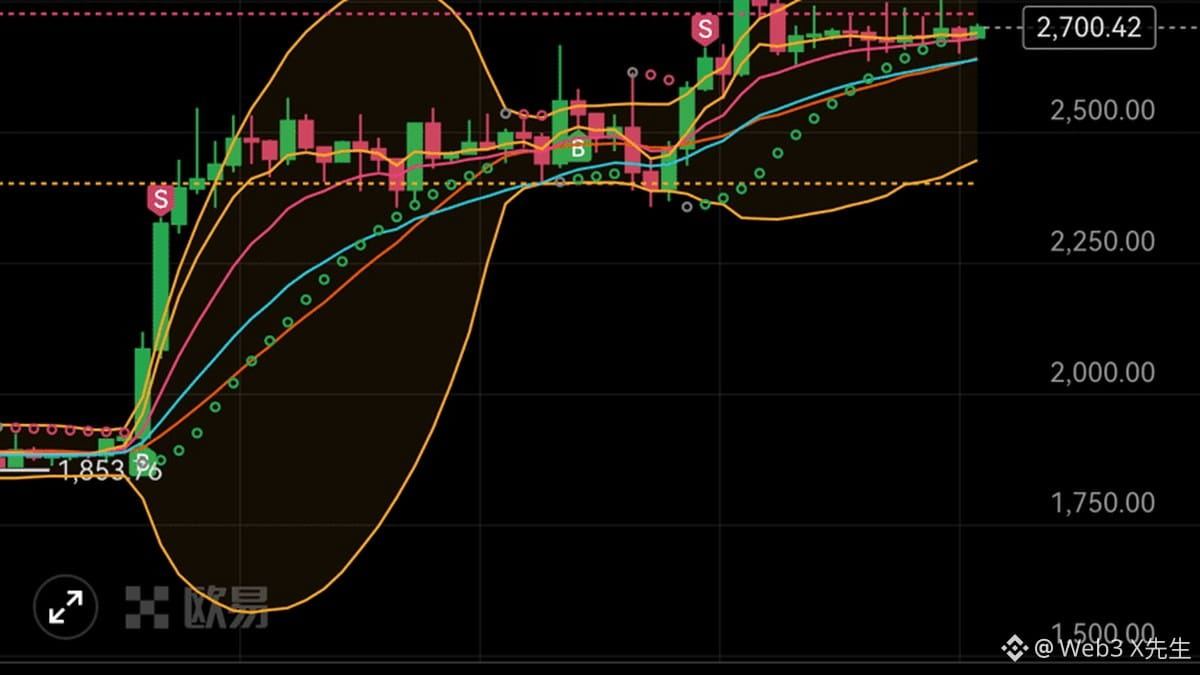
What’s interesting is what’s happening on the other side of the money flow. Spot Ethereum ETFs have seen outflows these past few days. ETH is hovering between $2,686 and $2,725. There’s pressure overhead and support below. This kind of tight-range chop is the most exhausting. Bulls and bears both don’t dare to go all-in.👀
📌 The selling pressure hasn’t disappeared—it’s just been diluted over 14 days.
Do you think this move is risk-avoidance, or profit-taking? Discuss it in the comments.
#以太坊验证者退出队列增392%
[Ethereum 850,000 ETH queued for withdrawals—who’s quietly running?🔥😳]
Group chat: 🌟 加入X先生的粉丝群聊跟进
Ethereum’s exit queue has suddenly blown up these days. In under three days, the queued amount jumped 392%. It peaked at around 850,000 ETH before finally leveling off. If you want to leave, you have to wait more than 14 days. That’s roughly 2% of the total staked amount. At the same time, the coin price barely moved.😳
The largest single batch came from MetaMask staking. On September 30, it said its infrastructure was compromised. A block reward was briefly redirected. But users’ wallets and sensitive data were not affected. It simply pulled out nearly 17,000 validators. This batch totals about 523,000 ETH.😱
The remaining portion looks more like someone realizing profits. One mining pool founder sees it that way too. He said some people want to lock in profits while things are currently tied up. The $2,700 level isn’t cheap, but it’s not a panic-level price either. So leaving looks more like exiting in batches.🤔
That 14+ day waiting period spreads the selling pressure out. It’s not a one-day dump—it seeps out slowly. The impact on price is milder than expected, but it also exposes another issue. The staking track is too dependent on a single partner. When one point goes wrong, it drags down a whole bunch of pools.⚠️
Across the whole Ethereum network, about 43.6 million ETH is staked. Active validators are around 878,000. Even if the queue reaches the peak, it’s only about 2%. What really needs watching is the node on October 7. After that batch clears, can the queue be pulled back? If it can’t be, that’s when it’s worth getting nervous.📊
What’s interesting is what’s happening on the other side of the money flow. Spot Ethereum ETFs have seen outflows these past few days. ETH is hovering between $2,686 and $2,725. There’s pressure overhead and support below. This kind of tight-range chop is the most exhausting. Bulls and bears both don’t dare to go all-in.👀
📌 The selling pressure hasn’t disappeared—it’s just been diluted over 14 days.
Do you think this move is risk-avoidance, or profit-taking? Discuss it in the comments.
#以太坊验证者退出队列增392%
Group chat: 🌟 加入X先生的粉丝群聊跟进
Ethereum’s exit queue has suddenly blown up these days. In under three days, the queued amount jumped 392%. It peaked at around 850,000 ETH before finally leveling off. If you want to leave, you have to wait more than 14 days. That’s roughly 2% of the total staked amount. At the same time, the coin price barely moved.😳
The largest single batch came from MetaMask staking. On September 30, it said its infrastructure was compromised. A block reward was briefly redirected. But users’ wallets and sensitive data were not affected. It simply pulled out nearly 17,000 validators. This batch totals about 523,000 ETH.😱
The remaining portion looks more like someone realizing profits. One mining pool founder sees it that way too. He said some people want to lock in profits while things are currently tied up. The $2,700 level isn’t cheap, but it’s not a panic-level price either. So leaving looks more like exiting in batches.🤔
That 14+ day waiting period spreads the selling pressure out. It’s not a one-day dump—it seeps out slowly. The impact on price is milder than expected, but it also exposes another issue. The staking track is too dependent on a single partner. When one point goes wrong, it drags down a whole bunch of pools.⚠️
Across the whole Ethereum network, about 43.6 million ETH is staked. Active validators are around 878,000. Even if the queue reaches the peak, it’s only about 2%. What really needs watching is the node on October 7. After that batch clears, can the queue be pulled back? If it can’t be, that’s when it’s worth getting nervous.📊
What’s interesting is what’s happening on the other side of the money flow. Spot Ethereum ETFs have seen outflows these past few days. ETH is hovering between $2,686 and $2,725. There’s pressure overhead and support below. This kind of tight-range chop is the most exhausting. Bulls and bears both don’t dare to go all-in.👀
📌 The selling pressure hasn’t disappeared—it’s just been diluted over 14 days.
Do you think this move is risk-avoidance, or profit-taking? Discuss it in the comments.
#以太坊验证者退出队列增392%
179
·
--
【IMF money comes with conditions: Should El Salvador not buy crypto anymore?🔥🤔】
Join X先生’s fan group chat on the homepage🔥
El Salvador finally got the money. The International Monetary Fund has released $138 million. The funds come from a $1.4 billion lending program. The conditions were negotiated for a long time and were once even stalled in the middle. Because of a clause, Bitcoin got dragged into it.😐
More dramatic is that El Salvador didn’t meet the targets. The IMF itself admits that some evaluations were not passed. The “additional Bitcoin accumulation” item is written in there. But in the end, the IMF still granted a waiver. The reason: the corrective measures were tough enough, and the commitments were new enough. The money still gets sent.💰
So what is this new commitment? The IMF’s wording is quite direct. Other than donations already recorded, it will not further accumulate Bitcoin. The government also handed over control of the Chivo wallet. This official wallet has been transferred to private operators. The government says it wants to reduce the state’s involvement in Bitcoin.🔻
Looking back, El Salvador really had the nerve to buy. In 2021, it declared Bitcoin legal tender—the first country in the world to do so. Last November, it even said it would buy 1,090 more Bitcoins. At the time, that was worth about $100 million. Whether this ledger is a profit or a loss is up for debate in the market.🧮
Now the winds have shifted. To get the money, the country has to buy fewer coins. The nation’s credit and belief in Bitcoin are being weighed on a balance. Regular retail investors reading this news can see something. Even a sovereign country has to negotiate with the rules. If you want to hold coins long-term, you’ll have to think it through yourself.⚖️
Even more crucial is the signal. When a government-level player pauses accumulation, sentiment will definitely be affected. But from another angle, none of the coins it holds has been sold. It’s just not adding more. That’s completely different from being forced to dump everything. Don’t mistake a pause for exiting the market.🕰️
📌 In one sentence: The IMF’s money has arrived. El Salvador’s Bitcoin-buying button has been paused for now—but it hasn’t sold a single coin.
Do you think El Salvador will add to its holdings next? Let’s discuss in the comments section.
【IMF money comes with conditions: Should El Salvador not buy crypto anymore?🔥🤔】
Join X先生’s fan group chat on the homepage🔥
El Salvador finally got the money. The International Monetary Fund has released $138 million. The funds come from a $1.4 billion lending program. The conditions were negotiated for a long time and were once even stalled in the middle. Because of a clause, Bitcoin got dragged into it.😐
More dramatic is that El Salvador didn’t meet the targets. The IMF itself admits that some evaluations were not passed. The “additional Bitcoin accumulation” item is written in there. But in the end, the IMF still granted a waiver. The reason: the corrective measures were tough enough, and the commitments were new enough. The money still gets sent.💰
So what is this new commitment? The IMF’s wording is quite direct. Other than donations already recorded, it will not further accumulate Bitcoin. The government also handed over control of the Chivo wallet. This official wallet has been transferred to private operators. The government says it wants to reduce the state’s involvement in Bitcoin.🔻
Looking back, El Salvador really had the nerve to buy. In 2021, it declared Bitcoin legal tender—the first country in the world to do so. Last November, it even said it would buy 1,090 more Bitcoins. At the time, that was worth about $100 million. Whether this ledger is a profit or a loss is up for debate in the market.🧮
Now the winds have shifted. To get the money, the country has to buy fewer coins. The nation’s credit and belief in Bitcoin are being weighed on a balance. Regular retail investors reading this news can see something. Even a sovereign country has to negotiate with the rules. If you want to hold coins long-term, you’ll have to think it through yourself.⚖️
Even more crucial is the signal. When a government-level player pauses accumulation, sentiment will definitely be affected. But from another angle, none of the coins it holds has been sold. It’s just not adding more. That’s completely different from being forced to dump everything. Don’t mistake a pause for exiting the market.🕰️
📌 In one sentence: The IMF’s money has arrived. El Salvador’s Bitcoin-buying button has been paused for now—but it hasn’t sold a single coin.
Do you think El Salvador will add to its holdings next? Let’s discuss in the comments section.
Join X先生’s fan group chat on the homepage🔥
El Salvador finally got the money. The International Monetary Fund has released $138 million. The funds come from a $1.4 billion lending program. The conditions were negotiated for a long time and were once even stalled in the middle. Because of a clause, Bitcoin got dragged into it.😐
More dramatic is that El Salvador didn’t meet the targets. The IMF itself admits that some evaluations were not passed. The “additional Bitcoin accumulation” item is written in there. But in the end, the IMF still granted a waiver. The reason: the corrective measures were tough enough, and the commitments were new enough. The money still gets sent.💰
So what is this new commitment? The IMF’s wording is quite direct. Other than donations already recorded, it will not further accumulate Bitcoin. The government also handed over control of the Chivo wallet. This official wallet has been transferred to private operators. The government says it wants to reduce the state’s involvement in Bitcoin.🔻
Looking back, El Salvador really had the nerve to buy. In 2021, it declared Bitcoin legal tender—the first country in the world to do so. Last November, it even said it would buy 1,090 more Bitcoins. At the time, that was worth about $100 million. Whether this ledger is a profit or a loss is up for debate in the market.🧮
Now the winds have shifted. To get the money, the country has to buy fewer coins. The nation’s credit and belief in Bitcoin are being weighed on a balance. Regular retail investors reading this news can see something. Even a sovereign country has to negotiate with the rules. If you want to hold coins long-term, you’ll have to think it through yourself.⚖️
Even more crucial is the signal. When a government-level player pauses accumulation, sentiment will definitely be affected. But from another angle, none of the coins it holds has been sold. It’s just not adding more. That’s completely different from being forced to dump everything. Don’t mistake a pause for exiting the market.🕰️
📌 In one sentence: The IMF’s money has arrived. El Salvador’s Bitcoin-buying button has been paused for now—but it hasn’t sold a single coin.
Do you think El Salvador will add to its holdings next? Let’s discuss in the comments section.

198
·
--
Verified
【Privacy-coin ETF suddenly took off for two months—so where did the money go?🔥😮】
Group chat: [🔥 加入X先生粉丝群聊跟进](https://app.binance.com/uni-qr/MwYFhLo4)
The Zcash ETF was a star just two months ago. Grayscale converted an old trust into it. It only launched in late August. Assets under management jumped from $300 million to $1 billion. In September, ZEC rose 102% in a month. But last week, for the first time, the money started flowing out.🏃
Data from SoSoValue, for the week of October 2. That ETF saw net outflows of $93.6 million. This was the first time since it launched—its first instance of weekly net outflows. In the weeks before, it had net inflows every time.📊
Looking at it day by day makes it even clearer. On September 30 alone, $30.25 million left. On October 2, another $26.93 million walked out. In just two days, that’s almost $60 million wiped out. Total fund assets—once above $1 billion—dropped to $751 million.📉
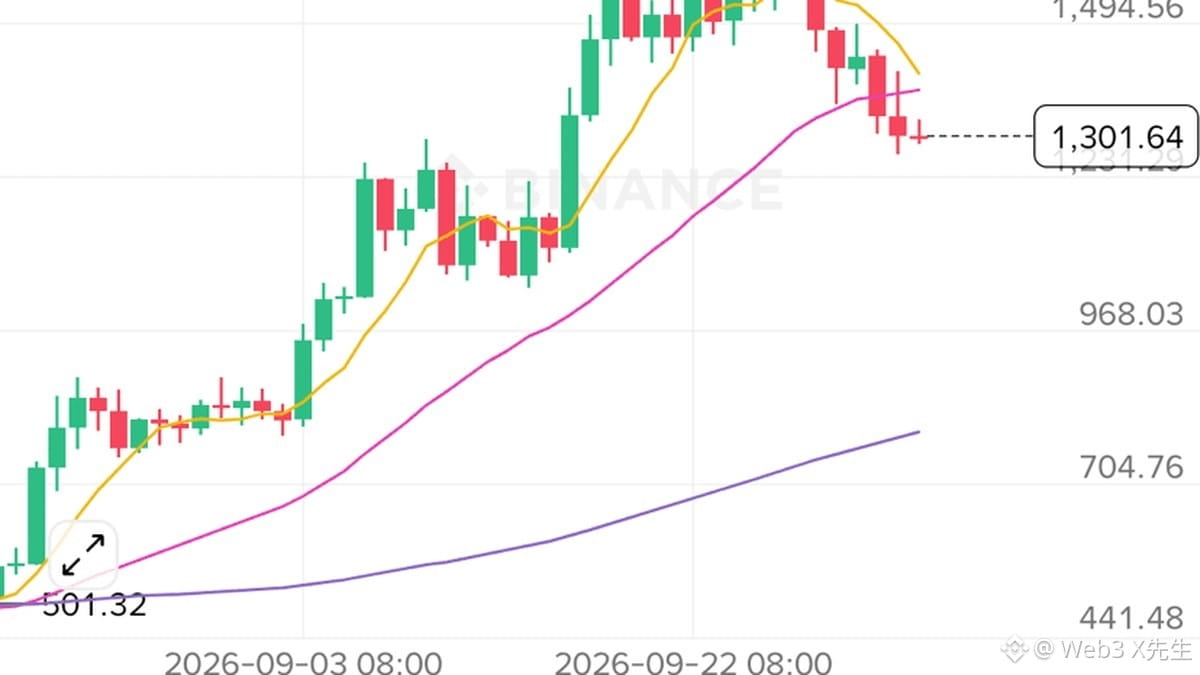
The price moved in sync as well. ZEC fell from $1,653 on September 26, all the way down to $1,304 by October 3. In less than half a month, it dropped 21%. That earlier push up to around $1,600 basically gave back the gains. Leveraged funds are also quietly reducing exposure.😮
But there’s a detail that’s easy to overlook. Cumulatively, this ETF’s net inflows are still positive—about $212 million, still net positive. That means more money has come in than has gone out. Grayscale also did a 1-for-3 split on September 30, fine-tuning the share count; the total value didn’t change.🧊
Don’t rush to treat this as “privacy coins are finished.” Assets that rally too fast always pull back hard. That 102% surge in September was basically driven by sentiment. When the sentiment cools, the price has to find new support. Now the key question is: who can hold it up?🔍
📌 One sentence: A 102% rally took a month—capital retreat took just seven days.
After a run like that and then exit, would you still touch an ETF like this? Let’s discuss in the comments.
#Zcash现货ETF首现周度净流出9360万美元
【Privacy-coin ETF suddenly took off for two months—so where did the money go?🔥😮】
Group chat: 🔥 加入X先生粉丝群聊跟进
The Zcash ETF was a star just two months ago. Grayscale converted an old trust into it. It only launched in late August. Assets under management jumped from $300 million to $1 billion. In September, ZEC rose 102% in a month. But last week, for the first time, the money started flowing out.🏃
Data from SoSoValue, for the week of October 2. That ETF saw net outflows of $93.6 million. This was the first time since it launched—its first instance of weekly net outflows. In the weeks before, it had net inflows every time.📊
Looking at it day by day makes it even clearer. On September 30 alone, $30.25 million left. On October 2, another $26.93 million walked out. In just two days, that’s almost $60 million wiped out. Total fund assets—once above $1 billion—dropped to $751 million.📉
The price moved in sync as well. ZEC fell from $1,653 on September 26, all the way down to $1,304 by October 3. In less than half a month, it dropped 21%. That earlier push up to around $1,600 basically gave back the gains. Leveraged funds are also quietly reducing exposure.😮
But there’s a detail that’s easy to overlook. Cumulatively, this ETF’s net inflows are still positive—about $212 million, still net positive. That means more money has come in than has gone out. Grayscale also did a 1-for-3 split on September 30, fine-tuning the share count; the total value didn’t change.🧊
Don’t rush to treat this as “privacy coins are finished.” Assets that rally too fast always pull back hard. That 102% surge in September was basically driven by sentiment. When the sentiment cools, the price has to find new support. Now the key question is: who can hold it up?🔍
📌 One sentence: A 102% rally took a month—capital retreat took just seven days.
After a run like that and then exit, would you still touch an ETF like this? Let’s discuss in the comments.
#Zcash现货ETF首现周度净流出9360万美元
Group chat: 🔥 加入X先生粉丝群聊跟进
The Zcash ETF was a star just two months ago. Grayscale converted an old trust into it. It only launched in late August. Assets under management jumped from $300 million to $1 billion. In September, ZEC rose 102% in a month. But last week, for the first time, the money started flowing out.🏃
Data from SoSoValue, for the week of October 2. That ETF saw net outflows of $93.6 million. This was the first time since it launched—its first instance of weekly net outflows. In the weeks before, it had net inflows every time.📊
Looking at it day by day makes it even clearer. On September 30 alone, $30.25 million left. On October 2, another $26.93 million walked out. In just two days, that’s almost $60 million wiped out. Total fund assets—once above $1 billion—dropped to $751 million.📉
The price moved in sync as well. ZEC fell from $1,653 on September 26, all the way down to $1,304 by October 3. In less than half a month, it dropped 21%. That earlier push up to around $1,600 basically gave back the gains. Leveraged funds are also quietly reducing exposure.😮
But there’s a detail that’s easy to overlook. Cumulatively, this ETF’s net inflows are still positive—about $212 million, still net positive. That means more money has come in than has gone out. Grayscale also did a 1-for-3 split on September 30, fine-tuning the share count; the total value didn’t change.🧊
Don’t rush to treat this as “privacy coins are finished.” Assets that rally too fast always pull back hard. That 102% surge in September was basically driven by sentiment. When the sentiment cools, the price has to find new support. Now the key question is: who can hold it up?🔍
📌 One sentence: A 102% rally took a month—capital retreat took just seven days.
After a run like that and then exit, would you still touch an ETF like this? Let’s discuss in the comments.
#Zcash现货ETF首现周度净流出9360万美元

230
·
--
[SEC shutdown, new crypto ETFs all get turned away at the doorstep, who’s waiting for approval—87,000?🔥⏳]
Join the X先生 fan group chat on the homepage🔥
US government funding has been cut off, and the SEC has followed suit. The review of new crypto ETFs has been completely put on hold. After one batch of issuers submitted their materials, they can only wait. The money wants to enter the market—but the door is closed first. This sounds very official, and the impact is direct.⏳
Just last week, US spot BTC ETF data came out. In a week, net inflows were only $82.9 million. BlackRock’s IBIT alone took in $292 million. Fidelity’s FBTC was actually hit with $167.9 million in redemptions. Grayscale’s GBTC also saw $54.6 million outflows. The money is choosing products—not just blindly buying.📊
BTC is getting stuck too. On October 2, it surged to $87,000, then got hard-slammed down. Now it’s grinding back around $84,000 to $85,000. There’s selling pressure overhead, and people are picking up below. Bulls and bears both don’t dare to go heavy. Everyone is waiting for one clear signal.📉
That signal might be the approval letter. Once the review pauses, the rhythm of everything gets thrown off. Fast cases drag on for a week, slow cases take a few more weeks. The longer it drags, the less direction the market has. Waiting money will only pile up more and more. This isn’t called a negative—it’s not called a positive either.🔥
Seasoned players all know one thing. ETF money isn’t the same as retail money. Before institutions buy, they check whether the rules are clear. If the rules aren’t clear, they’d rather lie low. Freezing the review is effectively locking a portion of buy orders. This money isn’t going anywhere—it’s queuing up at the door.🚪
Think about it another way: queuing itself is demand. If nobody wanted in, it wouldn’t matter whether the SEC stopped or not. Right now, a bunch of people are watching the approval. That means the desire to enter is still there. As soon as funding is restored, the review will restart. And the day that happens—that’s when it really becomes time to see.👀
📌 One sentence: When the SEC pauses, the ETF money doesn’t leave—it’s all waiting at the door for approval.
After approval is back, who do you think will be the first to rush in? Let’s talk in the comments.
[SEC shutdown, new crypto ETFs all get turned away at the doorstep, who’s waiting for approval—87,000?🔥⏳]
Join the X先生 fan group chat on the homepage🔥
US government funding has been cut off, and the SEC has followed suit. The review of new crypto ETFs has been completely put on hold. After one batch of issuers submitted their materials, they can only wait. The money wants to enter the market—but the door is closed first. This sounds very official, and the impact is direct.⏳
Just last week, US spot BTC ETF data came out. In a week, net inflows were only $82.9 million. BlackRock’s IBIT alone took in $292 million. Fidelity’s FBTC was actually hit with $167.9 million in redemptions. Grayscale’s GBTC also saw $54.6 million outflows. The money is choosing products—not just blindly buying.📊
BTC is getting stuck too. On October 2, it surged to $87,000, then got hard-slammed down. Now it’s grinding back around $84,000 to $85,000. There’s selling pressure overhead, and people are picking up below. Bulls and bears both don’t dare to go heavy. Everyone is waiting for one clear signal.📉
That signal might be the approval letter. Once the review pauses, the rhythm of everything gets thrown off. Fast cases drag on for a week, slow cases take a few more weeks. The longer it drags, the less direction the market has. Waiting money will only pile up more and more. This isn’t called a negative—it’s not called a positive either.🔥
Seasoned players all know one thing. ETF money isn’t the same as retail money. Before institutions buy, they check whether the rules are clear. If the rules aren’t clear, they’d rather lie low. Freezing the review is effectively locking a portion of buy orders. This money isn’t going anywhere—it’s queuing up at the door.🚪
Think about it another way: queuing itself is demand. If nobody wanted in, it wouldn’t matter whether the SEC stopped or not. Right now, a bunch of people are watching the approval. That means the desire to enter is still there. As soon as funding is restored, the review will restart. And the day that happens—that’s when it really becomes time to see.👀
📌 One sentence: When the SEC pauses, the ETF money doesn’t leave—it’s all waiting at the door for approval.
After approval is back, who do you think will be the first to rush in? Let’s talk in the comments.
Join the X先生 fan group chat on the homepage🔥
US government funding has been cut off, and the SEC has followed suit. The review of new crypto ETFs has been completely put on hold. After one batch of issuers submitted their materials, they can only wait. The money wants to enter the market—but the door is closed first. This sounds very official, and the impact is direct.⏳
Just last week, US spot BTC ETF data came out. In a week, net inflows were only $82.9 million. BlackRock’s IBIT alone took in $292 million. Fidelity’s FBTC was actually hit with $167.9 million in redemptions. Grayscale’s GBTC also saw $54.6 million outflows. The money is choosing products—not just blindly buying.📊
BTC is getting stuck too. On October 2, it surged to $87,000, then got hard-slammed down. Now it’s grinding back around $84,000 to $85,000. There’s selling pressure overhead, and people are picking up below. Bulls and bears both don’t dare to go heavy. Everyone is waiting for one clear signal.📉
That signal might be the approval letter. Once the review pauses, the rhythm of everything gets thrown off. Fast cases drag on for a week, slow cases take a few more weeks. The longer it drags, the less direction the market has. Waiting money will only pile up more and more. This isn’t called a negative—it’s not called a positive either.🔥
Seasoned players all know one thing. ETF money isn’t the same as retail money. Before institutions buy, they check whether the rules are clear. If the rules aren’t clear, they’d rather lie low. Freezing the review is effectively locking a portion of buy orders. This money isn’t going anywhere—it’s queuing up at the door.🚪
Think about it another way: queuing itself is demand. If nobody wanted in, it wouldn’t matter whether the SEC stopped or not. Right now, a bunch of people are watching the approval. That means the desire to enter is still there. As soon as funding is restored, the review will restart. And the day that happens—that’s when it really becomes time to see.👀
📌 One sentence: When the SEC pauses, the ETF money doesn’t leave—it’s all waiting at the door for approval.
After approval is back, who do you think will be the first to rush in? Let’s talk in the comments.
142
·
--
【Stablecoins quietly pile up to $31 billion, and the money is about to rush into Bitcoin? 💰🚀】
Join the X Mr. fan group chat on the homepage 🔥
The total stablecoin supply has quietly topped $310 billion. In the past three days alone, another $1 billion has come in. This isn’t small money—it’s gunpowder ready to buy crypto at any time. The market isn’t cheering, but the money is moving in silence. Real change often happens when nobody’s paying attention. 💰
Tether wants to move USDT back onto the Bitcoin network. The partner is called Utexo, which specializes in cross-chain channels. Previously, stablecoins mostly orbited around Ethereum and TRON. That old Bitcoin chain has been oddly quiet. Now the road is paved, so USDT can run directly on Bitcoin. This step is like opening a new water pipe for Bitcoin. 🔄
Circle is even more direct: it wants to push cirBTC. This thing essentially wraps Bitcoin into a 1:1 token. Use it for lending and settlement—no need to sell spot. You don’t have to liquidate, and you can still earn on-chain yield. Institutions love this kind of play: funds stay locked while they still generate money. What looks small is actually big in terms of channel significance. 🏦
The 90-day data also confirms this. USDC net increased by $881 million, ranking first among mainstream assets. RLUSD grew by $765 million. USDe also brought in $419 million. The money is flowing into stablecoins, not out of them. Everyone is holding cash, waiting for an entry signal. 📊
The underlying logic isn’t complicated. Stablecoins are the ammo reserve of the crypto world. The more you stockpile, the fiercer the buy pressure later. When BTC just touched 87,000, it got smashed back. But underneath, liquidity has been rising—that’s the key. Price is the result; money is the cause. ⚡
So what to watch next? Watch the stablecoin market cap chart. Also watch what USDT is doing on Bitcoin. As long as these two lines keep trending upward, Q4 has potential. Once they turn around, that’s the signal to pull back. Don’t guess price action—just track where the money is going. 👀
📌 One sentence: The $31 billion worth of gunpowder is already stacked up—it’s just waiting for Bitcoin to be ignited.
Do you think this batch of money will really make a move in Q4? Let’s discuss in the comments.
【Stablecoins quietly pile up to $31 billion, and the money is about to rush into Bitcoin? 💰🚀】
Join the X Mr. fan group chat on the homepage 🔥
The total stablecoin supply has quietly topped $310 billion. In the past three days alone, another $1 billion has come in. This isn’t small money—it’s gunpowder ready to buy crypto at any time. The market isn’t cheering, but the money is moving in silence. Real change often happens when nobody’s paying attention. 💰
Tether wants to move USDT back onto the Bitcoin network. The partner is called Utexo, which specializes in cross-chain channels. Previously, stablecoins mostly orbited around Ethereum and TRON. That old Bitcoin chain has been oddly quiet. Now the road is paved, so USDT can run directly on Bitcoin. This step is like opening a new water pipe for Bitcoin. 🔄
Circle is even more direct: it wants to push cirBTC. This thing essentially wraps Bitcoin into a 1:1 token. Use it for lending and settlement—no need to sell spot. You don’t have to liquidate, and you can still earn on-chain yield. Institutions love this kind of play: funds stay locked while they still generate money. What looks small is actually big in terms of channel significance. 🏦
The 90-day data also confirms this. USDC net increased by $881 million, ranking first among mainstream assets. RLUSD grew by $765 million. USDe also brought in $419 million. The money is flowing into stablecoins, not out of them. Everyone is holding cash, waiting for an entry signal. 📊
The underlying logic isn’t complicated. Stablecoins are the ammo reserve of the crypto world. The more you stockpile, the fiercer the buy pressure later. When BTC just touched 87,000, it got smashed back. But underneath, liquidity has been rising—that’s the key. Price is the result; money is the cause. ⚡
So what to watch next? Watch the stablecoin market cap chart. Also watch what USDT is doing on Bitcoin. As long as these two lines keep trending upward, Q4 has potential. Once they turn around, that’s the signal to pull back. Don’t guess price action—just track where the money is going. 👀
📌 One sentence: The $31 billion worth of gunpowder is already stacked up—it’s just waiting for Bitcoin to be ignited.
Do you think this batch of money will really make a move in Q4? Let’s discuss in the comments.
Join the X Mr. fan group chat on the homepage 🔥
The total stablecoin supply has quietly topped $310 billion. In the past three days alone, another $1 billion has come in. This isn’t small money—it’s gunpowder ready to buy crypto at any time. The market isn’t cheering, but the money is moving in silence. Real change often happens when nobody’s paying attention. 💰
Tether wants to move USDT back onto the Bitcoin network. The partner is called Utexo, which specializes in cross-chain channels. Previously, stablecoins mostly orbited around Ethereum and TRON. That old Bitcoin chain has been oddly quiet. Now the road is paved, so USDT can run directly on Bitcoin. This step is like opening a new water pipe for Bitcoin. 🔄
Circle is even more direct: it wants to push cirBTC. This thing essentially wraps Bitcoin into a 1:1 token. Use it for lending and settlement—no need to sell spot. You don’t have to liquidate, and you can still earn on-chain yield. Institutions love this kind of play: funds stay locked while they still generate money. What looks small is actually big in terms of channel significance. 🏦
The 90-day data also confirms this. USDC net increased by $881 million, ranking first among mainstream assets. RLUSD grew by $765 million. USDe also brought in $419 million. The money is flowing into stablecoins, not out of them. Everyone is holding cash, waiting for an entry signal. 📊
The underlying logic isn’t complicated. Stablecoins are the ammo reserve of the crypto world. The more you stockpile, the fiercer the buy pressure later. When BTC just touched 87,000, it got smashed back. But underneath, liquidity has been rising—that’s the key. Price is the result; money is the cause. ⚡
So what to watch next? Watch the stablecoin market cap chart. Also watch what USDT is doing on Bitcoin. As long as these two lines keep trending upward, Q4 has potential. Once they turn around, that’s the signal to pull back. Don’t guess price action—just track where the money is going. 👀
📌 One sentence: The $31 billion worth of gunpowder is already stacked up—it’s just waiting for Bitcoin to be ignited.
Do you think this batch of money will really make a move in Q4? Let’s discuss in the comments.

176
·
--
【MicroStrategy has 847,000 BTC—if gold turns around, is it worth $161.8 billion? 🔥⛏️】
Join the X Mr. fan chat on the homepage 🔥
MicroStrategy’s Bitcoin holdings are back on the hot list again. The company is currently accumulating 847,000 Bitcoins. The average buy price is $75,000 per coin. Total spent: $63.95 billion. Based on today’s coin price, it’s only worth $71.6 billion. They’ve held for more than a year—almost a wasted trade on paper. 😐
But one analyst proposed a different calculation. Assume two things happen together: Gold rises 15%, reaching $4,760 per ounce. The ratio of Bitcoin to gold returns to the end of 2024. Back then, the ratio was at both assets’ old high point. By that estimate, the Bitcoin price would reach $190,800. 🧐
So how big is the gap in this ratio? Two years ago, one Bitcoin could buy 40.1 ounces of gold. Now it can only buy 20.4 ounces. In less than two years, it has shrunk by nearly half. Gold has been surging upward, while Bitcoin has been grinding at the bottom. The market has compressed this gap for about 21 months. ⚖️
Multiply 40.1 ounces by $4,760, and you get $190,800 per Bitcoin. Then multiply that by 847,000 BTC, and MicroStrategy’s holdings would be valued at $161.8 billion. That’s $90 billion more than the current $71.6 billion. All of it would be unrealized gains on paper. 💰
But this $190k level is a historic all-time high. Bitcoin’s own record is still at $126,000—set on October 6, 2025. To reach $190.8k, Bitcoin would still need to rise another 51%. That move is bigger than what many institutions are calling for. Can it really complete the leap in one go? 🚀
The colder numbers right now look like this. Citigroup’s 12-month target is only $113,000. Gold has also been a bit uncooperative lately. On September 28, precious metals wiped out $550 billion overnight. But the gold price has been flat the past couple of days instead. The two assets are moving separately. 📉
📌 One-sentence summary: As long as the gold–Bitcoin seesaw swings back, MicroStrategy’s position will be repriced.
Do you think gold or Bitcoin will throw the other off first? Let’s discuss in the comments.
【MicroStrategy has 847,000 BTC—if gold turns around, is it worth $161.8 billion? 🔥⛏️】
Join the X Mr. fan chat on the homepage 🔥
MicroStrategy’s Bitcoin holdings are back on the hot list again. The company is currently accumulating 847,000 Bitcoins. The average buy price is $75,000 per coin. Total spent: $63.95 billion. Based on today’s coin price, it’s only worth $71.6 billion. They’ve held for more than a year—almost a wasted trade on paper. 😐
But one analyst proposed a different calculation. Assume two things happen together: Gold rises 15%, reaching $4,760 per ounce. The ratio of Bitcoin to gold returns to the end of 2024. Back then, the ratio was at both assets’ old high point. By that estimate, the Bitcoin price would reach $190,800. 🧐
So how big is the gap in this ratio? Two years ago, one Bitcoin could buy 40.1 ounces of gold. Now it can only buy 20.4 ounces. In less than two years, it has shrunk by nearly half. Gold has been surging upward, while Bitcoin has been grinding at the bottom. The market has compressed this gap for about 21 months. ⚖️
Multiply 40.1 ounces by $4,760, and you get $190,800 per Bitcoin. Then multiply that by 847,000 BTC, and MicroStrategy’s holdings would be valued at $161.8 billion. That’s $90 billion more than the current $71.6 billion. All of it would be unrealized gains on paper. 💰
But this $190k level is a historic all-time high. Bitcoin’s own record is still at $126,000—set on October 6, 2025. To reach $190.8k, Bitcoin would still need to rise another 51%. That move is bigger than what many institutions are calling for. Can it really complete the leap in one go? 🚀
The colder numbers right now look like this. Citigroup’s 12-month target is only $113,000. Gold has also been a bit uncooperative lately. On September 28, precious metals wiped out $550 billion overnight. But the gold price has been flat the past couple of days instead. The two assets are moving separately. 📉
📌 One-sentence summary: As long as the gold–Bitcoin seesaw swings back, MicroStrategy’s position will be repriced.
Do you think gold or Bitcoin will throw the other off first? Let’s discuss in the comments.
Join the X Mr. fan chat on the homepage 🔥
MicroStrategy’s Bitcoin holdings are back on the hot list again. The company is currently accumulating 847,000 Bitcoins. The average buy price is $75,000 per coin. Total spent: $63.95 billion. Based on today’s coin price, it’s only worth $71.6 billion. They’ve held for more than a year—almost a wasted trade on paper. 😐
But one analyst proposed a different calculation. Assume two things happen together: Gold rises 15%, reaching $4,760 per ounce. The ratio of Bitcoin to gold returns to the end of 2024. Back then, the ratio was at both assets’ old high point. By that estimate, the Bitcoin price would reach $190,800. 🧐
So how big is the gap in this ratio? Two years ago, one Bitcoin could buy 40.1 ounces of gold. Now it can only buy 20.4 ounces. In less than two years, it has shrunk by nearly half. Gold has been surging upward, while Bitcoin has been grinding at the bottom. The market has compressed this gap for about 21 months. ⚖️
Multiply 40.1 ounces by $4,760, and you get $190,800 per Bitcoin. Then multiply that by 847,000 BTC, and MicroStrategy’s holdings would be valued at $161.8 billion. That’s $90 billion more than the current $71.6 billion. All of it would be unrealized gains on paper. 💰
But this $190k level is a historic all-time high. Bitcoin’s own record is still at $126,000—set on October 6, 2025. To reach $190.8k, Bitcoin would still need to rise another 51%. That move is bigger than what many institutions are calling for. Can it really complete the leap in one go? 🚀
The colder numbers right now look like this. Citigroup’s 12-month target is only $113,000. Gold has also been a bit uncooperative lately. On September 28, precious metals wiped out $550 billion overnight. But the gold price has been flat the past couple of days instead. The two assets are moving separately. 📉
📌 One-sentence summary: As long as the gold–Bitcoin seesaw swings back, MicroStrategy’s position will be repriced.
Do you think gold or Bitcoin will throw the other off first? Let’s discuss in the comments.
441
·
--
Verified
【G7 releases 100 million barrels of oil overnight—why did oil prices drop first?😱🛢️】
Join the X先生 fan chat group on the homepage🔥
The G7 held an overnight meeting. After that, they announced they would release up to 100 million barrels of strategic reserves. Both crude oil and diesel are included. This batch of oil will be fed into the market gradually over four months. In the first 20 days, they will focus on releasing diesel. The countries also pledged not to block each other’s energy exports.⛽
Why release diesel first? Trucks, agricultural machinery, and heating all need it. If diesel gets more expensive, freight rates and grocery prices rise too. These U.S. and European diesel prices had already been pushed up. What’s missing is the one barrel that’s the hardest to replace. Without diesel, factories and farms could come to a standstill first.🚚
The spark was a single line from Trump. He threatened: if they don’t release oil, the U.S. will ban diesel exports. Europe blew up on the spot, cursing it as extortion. The two sides pulled back and forth for several rounds, and tempers stayed high. After a few rounds of back-and-forth statements, they finally reached an agreement. In the end, Europe still made a concession.😤
Before the news came out, oil prices once broke above $102. When the agreement was announced, U.S. crude oil immediately reversed and fell 1.9%. Then Trump changed his tune again: a ban on exports isn’t a serious option. But just two weeks ago, he had publicly supported that option. Market sentiment loosened instantly. Traders fear most is a sudden shortage of supply.📉
So what does this have to do with the crypto world? Oil is the toughest component in inflation. When oil prices get pushed down, pressure for further rate hikes can ease a bit. Wall Street is still betting on another rate hike in December. Last week’s non-farm payrolls rose by only 29,000. The unemployment rate also climbed to 4.2%.💵
Last week, Bitcoin briefly touched $86,500. There was a flood of news, but the money didn’t really flow out. Still, 100 million barrels will get released one day. Once reserves hit rock bottom, the pressure will come back. Then you’ll immediately see who was propping things up. This rebound relies on the same pot of money as before.🤔
📌 Releasing strategic reserves is a painkiller—it can’t fix a supply gap.
How long do you think this 100 million barrels of oil can hold things up?
【G7 releases 100 million barrels of oil overnight—why did oil prices drop first?😱🛢️】
Join the X先生 fan chat group on the homepage🔥
The G7 held an overnight meeting. After that, they announced they would release up to 100 million barrels of strategic reserves. Both crude oil and diesel are included. This batch of oil will be fed into the market gradually over four months. In the first 20 days, they will focus on releasing diesel. The countries also pledged not to block each other’s energy exports.⛽
Why release diesel first? Trucks, agricultural machinery, and heating all need it. If diesel gets more expensive, freight rates and grocery prices rise too. These U.S. and European diesel prices had already been pushed up. What’s missing is the one barrel that’s the hardest to replace. Without diesel, factories and farms could come to a standstill first.🚚
The spark was a single line from Trump. He threatened: if they don’t release oil, the U.S. will ban diesel exports. Europe blew up on the spot, cursing it as extortion. The two sides pulled back and forth for several rounds, and tempers stayed high. After a few rounds of back-and-forth statements, they finally reached an agreement. In the end, Europe still made a concession.😤
Before the news came out, oil prices once broke above $102. When the agreement was announced, U.S. crude oil immediately reversed and fell 1.9%. Then Trump changed his tune again: a ban on exports isn’t a serious option. But just two weeks ago, he had publicly supported that option. Market sentiment loosened instantly. Traders fear most is a sudden shortage of supply.📉
So what does this have to do with the crypto world? Oil is the toughest component in inflation. When oil prices get pushed down, pressure for further rate hikes can ease a bit. Wall Street is still betting on another rate hike in December. Last week’s non-farm payrolls rose by only 29,000. The unemployment rate also climbed to 4.2%.💵
Last week, Bitcoin briefly touched $86,500. There was a flood of news, but the money didn’t really flow out. Still, 100 million barrels will get released one day. Once reserves hit rock bottom, the pressure will come back. Then you’ll immediately see who was propping things up. This rebound relies on the same pot of money as before.🤔
📌 Releasing strategic reserves is a painkiller—it can’t fix a supply gap.
How long do you think this 100 million barrels of oil can hold things up?
Join the X先生 fan chat group on the homepage🔥
The G7 held an overnight meeting. After that, they announced they would release up to 100 million barrels of strategic reserves. Both crude oil and diesel are included. This batch of oil will be fed into the market gradually over four months. In the first 20 days, they will focus on releasing diesel. The countries also pledged not to block each other’s energy exports.⛽
Why release diesel first? Trucks, agricultural machinery, and heating all need it. If diesel gets more expensive, freight rates and grocery prices rise too. These U.S. and European diesel prices had already been pushed up. What’s missing is the one barrel that’s the hardest to replace. Without diesel, factories and farms could come to a standstill first.🚚
The spark was a single line from Trump. He threatened: if they don’t release oil, the U.S. will ban diesel exports. Europe blew up on the spot, cursing it as extortion. The two sides pulled back and forth for several rounds, and tempers stayed high. After a few rounds of back-and-forth statements, they finally reached an agreement. In the end, Europe still made a concession.😤
Before the news came out, oil prices once broke above $102. When the agreement was announced, U.S. crude oil immediately reversed and fell 1.9%. Then Trump changed his tune again: a ban on exports isn’t a serious option. But just two weeks ago, he had publicly supported that option. Market sentiment loosened instantly. Traders fear most is a sudden shortage of supply.📉
So what does this have to do with the crypto world? Oil is the toughest component in inflation. When oil prices get pushed down, pressure for further rate hikes can ease a bit. Wall Street is still betting on another rate hike in December. Last week’s non-farm payrolls rose by only 29,000. The unemployment rate also climbed to 4.2%.💵
Last week, Bitcoin briefly touched $86,500. There was a flood of news, but the money didn’t really flow out. Still, 100 million barrels will get released one day. Once reserves hit rock bottom, the pressure will come back. Then you’ll immediately see who was propping things up. This rebound relies on the same pot of money as before.🤔
📌 Releasing strategic reserves is a painkiller—it can’t fix a supply gap.
How long do you think this 100 million barrels of oil can hold things up?

427
·
--
【SEC suddenly nods—triple-leverage Bitcoin is coming? ⚡😱】
Join the X先生 fan community chat on the homepage 🔥
On October 2nd, the SEC approved a brand-new rule. This rule comes from the Chicago Board Options Exchange. It will open a leveraged channel for Bitcoin and Ethereum. Right off the bat, it offers triple leverage. This is the first time the United States has approved crypto leveraged products. Once the news broke, people in the industry were stunned for a few seconds. ⚡
The license went to a U.S. asset management firm. It plans to roll out six new products at once. The underlying assets include Bitcoin, Ethereum, gold, and silver—plus oil and natural gas, for a total of six. The leverage is fixed at 3x, reset once per day. It sounds like a short-term trading tool designed for seasoned players. 📊
The tricky part is the reset mechanism. Every day it gets wiped clean and starts over, not compounding for the long term. When the market whipsaws, net value will slowly be ground down. In volatile conditions, you can lose 30% in a single day. The 3x amplifies volatility, not returns. When you chase price upward, the drawdown also triples. ⚠️
But you still can’t buy it right away. The products need to wait for another registration process to become officially effective. The approval is just opening the door—the goods aren’t on the shelf yet. Observers say this is a major step forward. Three years ago, the SEC was still blocking such products in court. From blocking to allowing, the whole direction changed within three years. ⚖️
The market sentiment has indeed shifted—from blocking to moving in, and now to approving leverage. The market is responding in sync. Bitcoin has just climbed to around $86,000. Contract funding rates surged to as high as 10% for a time. Funds for spot ETFs are also moving in and out. The “flavor” of leverage is getting stronger and stronger. 🔥
Long-time players have always had polarized views on new tools. Some think it adds hedging and short-term trading options. Others worry that leverage will first flush out beginners. The historical lessons of 3x products are not few. If you take the opposite direction, you can be badly hurt in a single day. This time, with a different underlying asset, will the script be different? 🤔
📌 The door is open—but leverage has never been a free lunch.
For triple-leverage Bitcoin, do you dare to touch it? Let’s discuss in the comments.
【SEC suddenly nods—triple-leverage Bitcoin is coming? ⚡😱】
Join the X先生 fan community chat on the homepage 🔥
On October 2nd, the SEC approved a brand-new rule. This rule comes from the Chicago Board Options Exchange. It will open a leveraged channel for Bitcoin and Ethereum. Right off the bat, it offers triple leverage. This is the first time the United States has approved crypto leveraged products. Once the news broke, people in the industry were stunned for a few seconds. ⚡
The license went to a U.S. asset management firm. It plans to roll out six new products at once. The underlying assets include Bitcoin, Ethereum, gold, and silver—plus oil and natural gas, for a total of six. The leverage is fixed at 3x, reset once per day. It sounds like a short-term trading tool designed for seasoned players. 📊
The tricky part is the reset mechanism. Every day it gets wiped clean and starts over, not compounding for the long term. When the market whipsaws, net value will slowly be ground down. In volatile conditions, you can lose 30% in a single day. The 3x amplifies volatility, not returns. When you chase price upward, the drawdown also triples. ⚠️
But you still can’t buy it right away. The products need to wait for another registration process to become officially effective. The approval is just opening the door—the goods aren’t on the shelf yet. Observers say this is a major step forward. Three years ago, the SEC was still blocking such products in court. From blocking to allowing, the whole direction changed within three years. ⚖️
The market sentiment has indeed shifted—from blocking to moving in, and now to approving leverage. The market is responding in sync. Bitcoin has just climbed to around $86,000. Contract funding rates surged to as high as 10% for a time. Funds for spot ETFs are also moving in and out. The “flavor” of leverage is getting stronger and stronger. 🔥
Long-time players have always had polarized views on new tools. Some think it adds hedging and short-term trading options. Others worry that leverage will first flush out beginners. The historical lessons of 3x products are not few. If you take the opposite direction, you can be badly hurt in a single day. This time, with a different underlying asset, will the script be different? 🤔
📌 The door is open—but leverage has never been a free lunch.
For triple-leverage Bitcoin, do you dare to touch it? Let’s discuss in the comments.
Join the X先生 fan community chat on the homepage 🔥
On October 2nd, the SEC approved a brand-new rule. This rule comes from the Chicago Board Options Exchange. It will open a leveraged channel for Bitcoin and Ethereum. Right off the bat, it offers triple leverage. This is the first time the United States has approved crypto leveraged products. Once the news broke, people in the industry were stunned for a few seconds. ⚡
The license went to a U.S. asset management firm. It plans to roll out six new products at once. The underlying assets include Bitcoin, Ethereum, gold, and silver—plus oil and natural gas, for a total of six. The leverage is fixed at 3x, reset once per day. It sounds like a short-term trading tool designed for seasoned players. 📊
The tricky part is the reset mechanism. Every day it gets wiped clean and starts over, not compounding for the long term. When the market whipsaws, net value will slowly be ground down. In volatile conditions, you can lose 30% in a single day. The 3x amplifies volatility, not returns. When you chase price upward, the drawdown also triples. ⚠️
But you still can’t buy it right away. The products need to wait for another registration process to become officially effective. The approval is just opening the door—the goods aren’t on the shelf yet. Observers say this is a major step forward. Three years ago, the SEC was still blocking such products in court. From blocking to allowing, the whole direction changed within three years. ⚖️
The market sentiment has indeed shifted—from blocking to moving in, and now to approving leverage. The market is responding in sync. Bitcoin has just climbed to around $86,000. Contract funding rates surged to as high as 10% for a time. Funds for spot ETFs are also moving in and out. The “flavor” of leverage is getting stronger and stronger. 🔥
Long-time players have always had polarized views on new tools. Some think it adds hedging and short-term trading options. Others worry that leverage will first flush out beginners. The historical lessons of 3x products are not few. If you take the opposite direction, you can be badly hurt in a single day. This time, with a different underlying asset, will the script be different? 🤔
📌 The door is open—but leverage has never been a free lunch.
For triple-leverage Bitcoin, do you dare to touch it? Let’s discuss in the comments.
179
·
--
[Community banks sue regulators—will crypto firms’ banking licenses take off?🏦⚖️]
Join X Mr.’s fan group chat on the homepage 🔥
Traditional banks are really getting anxious this time. 😳 On October 2, the Community Bankers Association took action. They filed a lawsuit directly against the regulator. The issue at stake is whether crypto companies can obtain banking licenses. This isn’t a small matter—it’s an all-out, direct confrontation. The reasons sound technical, but once you break them down, they’re actually easy to understand.
The defendant is the U.S. Office of the Comptroller of the Currency. The plaintiff is the U.S. Community Bankers Association. They represent thousands of small and mid-sized banks across the country. Their accusation is that the other side overstepped its authority in granting licenses. The rules were set on March 2. The approvals came with an explanatory letter as well. 📜
This license is called the National Trust Bank. With it, you can legally hold customers’ assets in custody. It can also help customers process on-chain transfers. But it cannot take deposits, nor can it make loans. It doesn’t have to meet community reinvestment obligations. And it isn’t subject to strict capital and liquidity requirements either. 🚪
The plaintiff’s words are very strong. They say this is a massive regulatory loophole. Congress has never authorized this kind of setup. Crypto firms get the headline “federal license,” yet don’t have to take on the responsibilities that traditional banks must carry. Clearly, it’s two lanes, two sets of rules. 💰
Numbers make it even clearer. 📈 Over the past 18 months, regulators received 40 applications. 23 of them came from digital asset companies. In the previous four years combined, there were only around 5. That’s a more than eightfold increase. This year, in May, someone submitted new applications again.
Senator Warren is also watching this closely. She said that since last December, at least 9 licenses have been issued. If the court sides with the plaintiffs now, these licenses could be invalidated outright. The path for crypto to enter the banking system will get narrower. This chess game is only just beginning. ⚔️
📌 In one sentence: the license is a fight over rules, and the rules are a fight over money.
In this round, do you stand with traditional banks or with crypto firms? Talk in the comments.
[Community banks sue regulators—will crypto firms’ banking licenses take off?🏦⚖️]
Join X Mr.’s fan group chat on the homepage 🔥
Traditional banks are really getting anxious this time. 😳 On October 2, the Community Bankers Association took action. They filed a lawsuit directly against the regulator. The issue at stake is whether crypto companies can obtain banking licenses. This isn’t a small matter—it’s an all-out, direct confrontation. The reasons sound technical, but once you break them down, they’re actually easy to understand.
The defendant is the U.S. Office of the Comptroller of the Currency. The plaintiff is the U.S. Community Bankers Association. They represent thousands of small and mid-sized banks across the country. Their accusation is that the other side overstepped its authority in granting licenses. The rules were set on March 2. The approvals came with an explanatory letter as well. 📜
This license is called the National Trust Bank. With it, you can legally hold customers’ assets in custody. It can also help customers process on-chain transfers. But it cannot take deposits, nor can it make loans. It doesn’t have to meet community reinvestment obligations. And it isn’t subject to strict capital and liquidity requirements either. 🚪
The plaintiff’s words are very strong. They say this is a massive regulatory loophole. Congress has never authorized this kind of setup. Crypto firms get the headline “federal license,” yet don’t have to take on the responsibilities that traditional banks must carry. Clearly, it’s two lanes, two sets of rules. 💰
Numbers make it even clearer. 📈 Over the past 18 months, regulators received 40 applications. 23 of them came from digital asset companies. In the previous four years combined, there were only around 5. That’s a more than eightfold increase. This year, in May, someone submitted new applications again.
Senator Warren is also watching this closely. She said that since last December, at least 9 licenses have been issued. If the court sides with the plaintiffs now, these licenses could be invalidated outright. The path for crypto to enter the banking system will get narrower. This chess game is only just beginning. ⚔️
📌 In one sentence: the license is a fight over rules, and the rules are a fight over money.
In this round, do you stand with traditional banks or with crypto firms? Talk in the comments.
Join X Mr.’s fan group chat on the homepage 🔥
Traditional banks are really getting anxious this time. 😳 On October 2, the Community Bankers Association took action. They filed a lawsuit directly against the regulator. The issue at stake is whether crypto companies can obtain banking licenses. This isn’t a small matter—it’s an all-out, direct confrontation. The reasons sound technical, but once you break them down, they’re actually easy to understand.
The defendant is the U.S. Office of the Comptroller of the Currency. The plaintiff is the U.S. Community Bankers Association. They represent thousands of small and mid-sized banks across the country. Their accusation is that the other side overstepped its authority in granting licenses. The rules were set on March 2. The approvals came with an explanatory letter as well. 📜
This license is called the National Trust Bank. With it, you can legally hold customers’ assets in custody. It can also help customers process on-chain transfers. But it cannot take deposits, nor can it make loans. It doesn’t have to meet community reinvestment obligations. And it isn’t subject to strict capital and liquidity requirements either. 🚪
The plaintiff’s words are very strong. They say this is a massive regulatory loophole. Congress has never authorized this kind of setup. Crypto firms get the headline “federal license,” yet don’t have to take on the responsibilities that traditional banks must carry. Clearly, it’s two lanes, two sets of rules. 💰
Numbers make it even clearer. 📈 Over the past 18 months, regulators received 40 applications. 23 of them came from digital asset companies. In the previous four years combined, there were only around 5. That’s a more than eightfold increase. This year, in May, someone submitted new applications again.
Senator Warren is also watching this closely. She said that since last December, at least 9 licenses have been issued. If the court sides with the plaintiffs now, these licenses could be invalidated outright. The path for crypto to enter the banking system will get narrower. This chess game is only just beginning. ⚔️
📌 In one sentence: the license is a fight over rules, and the rules are a fight over money.
In this round, do you stand with traditional banks or with crypto firms? Talk in the comments.

124
·
--
【Bitcoin touches 87,000, and funding rates surge to 10% first—who’s paying the bill? 📈🔥】
Join Mr. X’s fan group chat on the homepage 🔥
In the past couple of days, money has been running faster than the news. Bitcoin started from just over 83,000 and kept climbing—reaching 87,000. In less than three days, it’s up by nearly $3,000. It’s exciting, but the leverage side is even crazier. Positions are getting added faster than the price is moving. 📈
On Binance’s Square, a topic has been drawing nearly 280,000 views. It’s called “Funding rate triples to 10%.” There are over 300 posts discussing this. Back on September 30, it was still around 3%—now it’s directly pushed up to 10%. To keep long positions, bulls have to pay three times the cost. 😳
Open contracts have also increased by 27,000 BTC. Total volume is about 653,000 BTC, equivalent to $56.2 billion. This isn’t spot money—it’s leverage piled up. On Friday, the liquidation amount for shorts wasn’t small, exceeding $120 million in a single day. The shorts were essentially beaten into submission first. 🔥
The catalyst was Friday night’s Non-Farm Payrolls. In September, only 29,000 jobs were added. The unemployment rate rose to 4.2%, worse than expectations. Meanwhile, the 10-year U.S. Treasury yield also pulled back. The market has now raised the probability of “October stays on hold” to 80%. When money gets cheaper, risk assets dare to lift their heads. 📉
But the price of leverage coming back is that longs pay every day. The higher the rate, the thicker the daily bills. As long as the price trades sideways for two days, many people can’t hold on. High funding rates often show up when sentiment is hottest. Historically, it’s normal for this kind of position to get flushed through and shake out floating profits. Don’t just look at the bullish side. ⚖️
Of course, there’s also solid support. In the first two days of October, spot ETFs returned to net inflows. BlackRock alone bought $195 million. However, Ethereum ETFs during the same period are still seeing outflows. With money and leverage moving together, the direction is more credible. Right now both forces are in play—you just have to see which side you’re on. 💡
📌 A triple jump in the funding rate signals leverage returning. Since it’s rising fast, it can also pull back fast—don’t overload your position size.
At this level, do you dare to chase? Let’s talk in the comments.
【Bitcoin touches 87,000, and funding rates surge to 10% first—who’s paying the bill? 📈🔥】
Join Mr. X’s fan group chat on the homepage 🔥
In the past couple of days, money has been running faster than the news. Bitcoin started from just over 83,000 and kept climbing—reaching 87,000. In less than three days, it’s up by nearly $3,000. It’s exciting, but the leverage side is even crazier. Positions are getting added faster than the price is moving. 📈
On Binance’s Square, a topic has been drawing nearly 280,000 views. It’s called “Funding rate triples to 10%.” There are over 300 posts discussing this. Back on September 30, it was still around 3%—now it’s directly pushed up to 10%. To keep long positions, bulls have to pay three times the cost. 😳
Open contracts have also increased by 27,000 BTC. Total volume is about 653,000 BTC, equivalent to $56.2 billion. This isn’t spot money—it’s leverage piled up. On Friday, the liquidation amount for shorts wasn’t small, exceeding $120 million in a single day. The shorts were essentially beaten into submission first. 🔥
The catalyst was Friday night’s Non-Farm Payrolls. In September, only 29,000 jobs were added. The unemployment rate rose to 4.2%, worse than expectations. Meanwhile, the 10-year U.S. Treasury yield also pulled back. The market has now raised the probability of “October stays on hold” to 80%. When money gets cheaper, risk assets dare to lift their heads. 📉
But the price of leverage coming back is that longs pay every day. The higher the rate, the thicker the daily bills. As long as the price trades sideways for two days, many people can’t hold on. High funding rates often show up when sentiment is hottest. Historically, it’s normal for this kind of position to get flushed through and shake out floating profits. Don’t just look at the bullish side. ⚖️
Of course, there’s also solid support. In the first two days of October, spot ETFs returned to net inflows. BlackRock alone bought $195 million. However, Ethereum ETFs during the same period are still seeing outflows. With money and leverage moving together, the direction is more credible. Right now both forces are in play—you just have to see which side you’re on. 💡
📌 A triple jump in the funding rate signals leverage returning. Since it’s rising fast, it can also pull back fast—don’t overload your position size.
At this level, do you dare to chase? Let’s talk in the comments.
Join Mr. X’s fan group chat on the homepage 🔥
In the past couple of days, money has been running faster than the news. Bitcoin started from just over 83,000 and kept climbing—reaching 87,000. In less than three days, it’s up by nearly $3,000. It’s exciting, but the leverage side is even crazier. Positions are getting added faster than the price is moving. 📈
On Binance’s Square, a topic has been drawing nearly 280,000 views. It’s called “Funding rate triples to 10%.” There are over 300 posts discussing this. Back on September 30, it was still around 3%—now it’s directly pushed up to 10%. To keep long positions, bulls have to pay three times the cost. 😳
Open contracts have also increased by 27,000 BTC. Total volume is about 653,000 BTC, equivalent to $56.2 billion. This isn’t spot money—it’s leverage piled up. On Friday, the liquidation amount for shorts wasn’t small, exceeding $120 million in a single day. The shorts were essentially beaten into submission first. 🔥
The catalyst was Friday night’s Non-Farm Payrolls. In September, only 29,000 jobs were added. The unemployment rate rose to 4.2%, worse than expectations. Meanwhile, the 10-year U.S. Treasury yield also pulled back. The market has now raised the probability of “October stays on hold” to 80%. When money gets cheaper, risk assets dare to lift their heads. 📉
But the price of leverage coming back is that longs pay every day. The higher the rate, the thicker the daily bills. As long as the price trades sideways for two days, many people can’t hold on. High funding rates often show up when sentiment is hottest. Historically, it’s normal for this kind of position to get flushed through and shake out floating profits. Don’t just look at the bullish side. ⚖️
Of course, there’s also solid support. In the first two days of October, spot ETFs returned to net inflows. BlackRock alone bought $195 million. However, Ethereum ETFs during the same period are still seeing outflows. With money and leverage moving together, the direction is more credible. Right now both forces are in play—you just have to see which side you’re on. 💡
📌 A triple jump in the funding rate signals leverage returning. Since it’s rising fast, it can also pull back fast—don’t overload your position size.
At this level, do you dare to chase? Let’s talk in the comments.
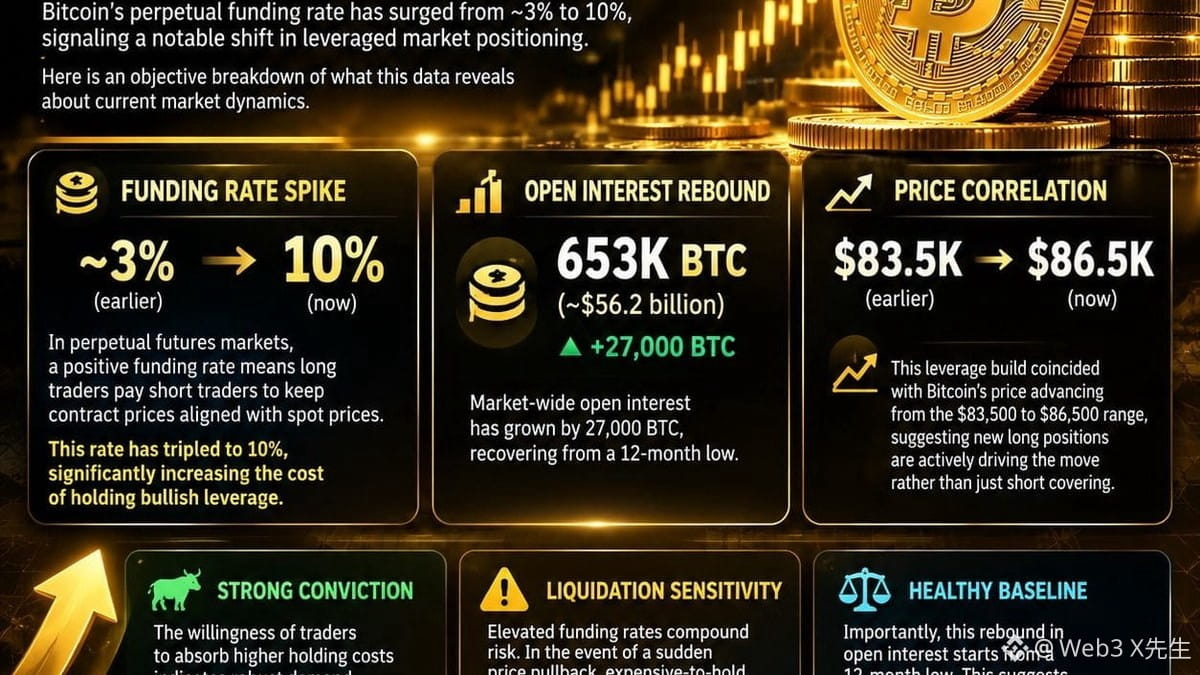
195
·
--
【Non-Farm Only Adds 29,000 Jobs; Bitcoin Reverses and Soars to $86,000—What Is the Money Betting On?🔥📈】
Join Mr. X’s fan chat group on the homepage🔥
First, look at these employment data. In September, the U.S. added only 29,000 jobs. The market had originally expected 84,000. That’s a huge miss. The unemployment rate also rose to 4.2%. The first two months were revised down by another 60,000.🍂
The bond market reacted most directly. The yield on the U.S. 2-year Treasury fell by 7.7 basis points. The 10-year fell by 5.6 basis points. The 30-year dropped by 2.8 basis points. All three lines moved down together. They had only just hit fresh record highs this century a few days ago.📉
The logic is simple. If jobs are harder to find, the case for further rate hikes weakens. Traders immediately slashed rate-hike bets downward. The probability of holding rates steady in October surged to 82.8%. The next rate hike was pushed out to year-end. Some people even said, “A rate hike in October won’t happen.”🧊
Bitcoin’s reaction was the most straightforward. As soon as the data came out, the price moved above $86,000. The intraday gain was close to 3%. Gold also jumped higher. U.S. stock index futures rose in tandem. This time, both the cautious and the adventurous went up together.🚀
The money is moving back, too. On Thursday, U.S. Bitcoin ETFs saw net inflows of $103 million. Just one—BlackRock’s—bought in $196 million. In the past 30 days, cumulative inflows totaled $2.99 billion. The record of nine consecutive up days was broken by just one day, and the money came right back. The institutions’ hands never really stopped.💰
On the other side, it’s much colder. Ethereum ETFs recorded net outflows for the third straight trading day. On Thursday alone, another $55.37 million left. With the same set of data in front of everyone, the money only chooses Bitcoin. This kind of favoritism is rare in a bull market. The next data release will give the answer soon.⚖️
📌 A shockingly cool employment report not only scattered rate-hike expectations, but also pushed Bitcoin up to $86,000.
So is the market actually turning for real now? In this wave, do you dare to chase?
【Non-Farm Only Adds 29,000 Jobs; Bitcoin Reverses and Soars to $86,000—What Is the Money Betting On?🔥📈】
Join Mr. X’s fan chat group on the homepage🔥
First, look at these employment data. In September, the U.S. added only 29,000 jobs. The market had originally expected 84,000. That’s a huge miss. The unemployment rate also rose to 4.2%. The first two months were revised down by another 60,000.🍂
The bond market reacted most directly. The yield on the U.S. 2-year Treasury fell by 7.7 basis points. The 10-year fell by 5.6 basis points. The 30-year dropped by 2.8 basis points. All three lines moved down together. They had only just hit fresh record highs this century a few days ago.📉
The logic is simple. If jobs are harder to find, the case for further rate hikes weakens. Traders immediately slashed rate-hike bets downward. The probability of holding rates steady in October surged to 82.8%. The next rate hike was pushed out to year-end. Some people even said, “A rate hike in October won’t happen.”🧊
Bitcoin’s reaction was the most straightforward. As soon as the data came out, the price moved above $86,000. The intraday gain was close to 3%. Gold also jumped higher. U.S. stock index futures rose in tandem. This time, both the cautious and the adventurous went up together.🚀
The money is moving back, too. On Thursday, U.S. Bitcoin ETFs saw net inflows of $103 million. Just one—BlackRock’s—bought in $196 million. In the past 30 days, cumulative inflows totaled $2.99 billion. The record of nine consecutive up days was broken by just one day, and the money came right back. The institutions’ hands never really stopped.💰
On the other side, it’s much colder. Ethereum ETFs recorded net outflows for the third straight trading day. On Thursday alone, another $55.37 million left. With the same set of data in front of everyone, the money only chooses Bitcoin. This kind of favoritism is rare in a bull market. The next data release will give the answer soon.⚖️
📌 A shockingly cool employment report not only scattered rate-hike expectations, but also pushed Bitcoin up to $86,000.
So is the market actually turning for real now? In this wave, do you dare to chase?
Join Mr. X’s fan chat group on the homepage🔥
First, look at these employment data. In September, the U.S. added only 29,000 jobs. The market had originally expected 84,000. That’s a huge miss. The unemployment rate also rose to 4.2%. The first two months were revised down by another 60,000.🍂
The bond market reacted most directly. The yield on the U.S. 2-year Treasury fell by 7.7 basis points. The 10-year fell by 5.6 basis points. The 30-year dropped by 2.8 basis points. All three lines moved down together. They had only just hit fresh record highs this century a few days ago.📉
The logic is simple. If jobs are harder to find, the case for further rate hikes weakens. Traders immediately slashed rate-hike bets downward. The probability of holding rates steady in October surged to 82.8%. The next rate hike was pushed out to year-end. Some people even said, “A rate hike in October won’t happen.”🧊
Bitcoin’s reaction was the most straightforward. As soon as the data came out, the price moved above $86,000. The intraday gain was close to 3%. Gold also jumped higher. U.S. stock index futures rose in tandem. This time, both the cautious and the adventurous went up together.🚀
The money is moving back, too. On Thursday, U.S. Bitcoin ETFs saw net inflows of $103 million. Just one—BlackRock’s—bought in $196 million. In the past 30 days, cumulative inflows totaled $2.99 billion. The record of nine consecutive up days was broken by just one day, and the money came right back. The institutions’ hands never really stopped.💰
On the other side, it’s much colder. Ethereum ETFs recorded net outflows for the third straight trading day. On Thursday alone, another $55.37 million left. With the same set of data in front of everyone, the money only chooses Bitcoin. This kind of favoritism is rare in a bull market. The next data release will give the answer soon.⚖️
📌 A shockingly cool employment report not only scattered rate-hike expectations, but also pushed Bitcoin up to $86,000.
So is the market actually turning for real now? In this wave, do you dare to chase?

481
·
--
【On-Chain Trading of US Stocks Quietly Breaks 1 Billion, With Binance Chain Taking a Full 30% of the Pie 🔥📈】
Join Mr. X’s fan chat on the homepage 🔥
There’s something small that everyone has been ignoring lately. Tokenized US stocks on-chain have quietly surpassed 1 billion in scale. The whole market has already climbed to 3.7 billion. Leading the pack is Binance Chain, which accounts for about 30%. Second place is Ethereum, with a little over 800 million. This track is only just beginning—now people are starting to take it seriously. 🌐
Let’s rewind to this January. Back then, the entire market combined was only 700 million. In less than a year, it more than quintupled. The month-over-month growth rate in September was around 17%. That works out to an extra 50+ million dollars in a month. The money is truly moving onto the chain. 🚀
On Binance Chain, the number of tokenized stock addresses is 1.8 million—about 45% of the whole market. This includes Binance’s own bStocks, as well as tokenized securities like Ondo. Products are being migrated onto-chain in batches. US stocks and ETFs can be moved onto the chain in a tangible, real way. 🪙
For regular retail investors, this is a whole different playbook. You no longer need to wait for market open and close. On-chain trading can happen 24/7. Even one share can be split into very, very small pieces. You can buy directly without having an overseas brokerage account. The onboarding barrier is much lower than it used to be. 🎯
But don’t treat tokenized stocks as “real stocks.” In fact, you don’t have voting rights. How dividends are distributed depends on the platform’s rules. On-chain liquidity is still fairly thin right now. If you want to unload large quantities, it’s not certain there will be someone willing to take the other side. And if something goes wrong with the platform, it won’t be easy to hold anyone accountable. 🚨
Right now, the race is about who becomes the leader in this track. Binance Chain already took a first win. Ethereum and Solana won’t just sit back. Most likely, there will be another round of talent-grabbing and subsidies afterward. For anyone who wants to get exposure to US stocks, this is good news—when competition gets fiercer, the cost of getting access drops. 🔍
📌 One sentence: When stocks are moved on-chain, whoever controls the entry wins.
Will you buy US stocks on-chain, or keep using a brokerage?
【On-Chain Trading of US Stocks Quietly Breaks 1 Billion, With Binance Chain Taking a Full 30% of the Pie 🔥📈】
Join Mr. X’s fan chat on the homepage 🔥
There’s something small that everyone has been ignoring lately. Tokenized US stocks on-chain have quietly surpassed 1 billion in scale. The whole market has already climbed to 3.7 billion. Leading the pack is Binance Chain, which accounts for about 30%. Second place is Ethereum, with a little over 800 million. This track is only just beginning—now people are starting to take it seriously. 🌐
Let’s rewind to this January. Back then, the entire market combined was only 700 million. In less than a year, it more than quintupled. The month-over-month growth rate in September was around 17%. That works out to an extra 50+ million dollars in a month. The money is truly moving onto the chain. 🚀
On Binance Chain, the number of tokenized stock addresses is 1.8 million—about 45% of the whole market. This includes Binance’s own bStocks, as well as tokenized securities like Ondo. Products are being migrated onto-chain in batches. US stocks and ETFs can be moved onto the chain in a tangible, real way. 🪙
For regular retail investors, this is a whole different playbook. You no longer need to wait for market open and close. On-chain trading can happen 24/7. Even one share can be split into very, very small pieces. You can buy directly without having an overseas brokerage account. The onboarding barrier is much lower than it used to be. 🎯
But don’t treat tokenized stocks as “real stocks.” In fact, you don’t have voting rights. How dividends are distributed depends on the platform’s rules. On-chain liquidity is still fairly thin right now. If you want to unload large quantities, it’s not certain there will be someone willing to take the other side. And if something goes wrong with the platform, it won’t be easy to hold anyone accountable. 🚨
Right now, the race is about who becomes the leader in this track. Binance Chain already took a first win. Ethereum and Solana won’t just sit back. Most likely, there will be another round of talent-grabbing and subsidies afterward. For anyone who wants to get exposure to US stocks, this is good news—when competition gets fiercer, the cost of getting access drops. 🔍
📌 One sentence: When stocks are moved on-chain, whoever controls the entry wins.
Will you buy US stocks on-chain, or keep using a brokerage?
Join Mr. X’s fan chat on the homepage 🔥
There’s something small that everyone has been ignoring lately. Tokenized US stocks on-chain have quietly surpassed 1 billion in scale. The whole market has already climbed to 3.7 billion. Leading the pack is Binance Chain, which accounts for about 30%. Second place is Ethereum, with a little over 800 million. This track is only just beginning—now people are starting to take it seriously. 🌐
Let’s rewind to this January. Back then, the entire market combined was only 700 million. In less than a year, it more than quintupled. The month-over-month growth rate in September was around 17%. That works out to an extra 50+ million dollars in a month. The money is truly moving onto the chain. 🚀
On Binance Chain, the number of tokenized stock addresses is 1.8 million—about 45% of the whole market. This includes Binance’s own bStocks, as well as tokenized securities like Ondo. Products are being migrated onto-chain in batches. US stocks and ETFs can be moved onto the chain in a tangible, real way. 🪙
For regular retail investors, this is a whole different playbook. You no longer need to wait for market open and close. On-chain trading can happen 24/7. Even one share can be split into very, very small pieces. You can buy directly without having an overseas brokerage account. The onboarding barrier is much lower than it used to be. 🎯
But don’t treat tokenized stocks as “real stocks.” In fact, you don’t have voting rights. How dividends are distributed depends on the platform’s rules. On-chain liquidity is still fairly thin right now. If you want to unload large quantities, it’s not certain there will be someone willing to take the other side. And if something goes wrong with the platform, it won’t be easy to hold anyone accountable. 🚨
Right now, the race is about who becomes the leader in this track. Binance Chain already took a first win. Ethereum and Solana won’t just sit back. Most likely, there will be another round of talent-grabbing and subsidies afterward. For anyone who wants to get exposure to US stocks, this is good news—when competition gets fiercer, the cost of getting access drops. 🔍
📌 One sentence: When stocks are moved on-chain, whoever controls the entry wins.
Will you buy US stocks on-chain, or keep using a brokerage?
645
Log in to explore more content
Join global crypto users on Binance Square
⚡️ Get latest and useful information about crypto.
💬 Trusted by the world’s largest crypto exchange.
👍 Discover real insights from verified creators.
Email / Phone number
Trending Topics
Nikkei225Jumps2.5%ToThreeMonthHigh
241 views
76 Discussing
#nikkei225jumps2.5%tothreemonthhigh
Nikkei Not a bad session close. Price is holding that key breakout level.
As long as index futures continue to hold above it, I think the macro momentum looks fine.
It’s not a major structural reversal zone. It’s important mainly because when you see a breakout of a multi-month high, you want to see the market respect that flip and provide continuation.
So far, the market is defending it.
Lower timeframe:
39,200 is the important lower timeframe zone. If buyers manage to hold above it, we can expect continuation higher into the Asian session.
Even better if price doesn’t revisit that zone again.
Highlighted Tradeable Coins to Watch (Global Risk & High-Beta Sectors):
$BTC (Bitcoin): The primary macro risk-on asset; tracking how global equity momentum and liquidity inflows from traditional markets impact digital asset sentiment.
$ETH (Ethereum): Leading smart-contract settlement layer; observing capital rotation and risk-on sentiment shifts as Asian equity indices push to three-month highs.
$SOL (Solana): High-beta altcoin leader; monitoring strong risk-on momentum and retail participation during favorable global macroeconomic conditions.
How are you positioning your portfolio around the Nikkei's 2.5% jump to a three-month high? Are you rotating into high-beta assets or staying defensive? Let's discuss your strategy in the comments below! 👇
#GlobalMarkets #bitcoin #cryptotrading #MacroEconomics
Axiom AlphA
·0 Likes
·692 views
DriftHackVictimsBeginClaims
69,282 views
771 Discussing
SolanaTokenizedStockVolumeTops$4.4BInSeptember
7,585 views
80 Discussing