

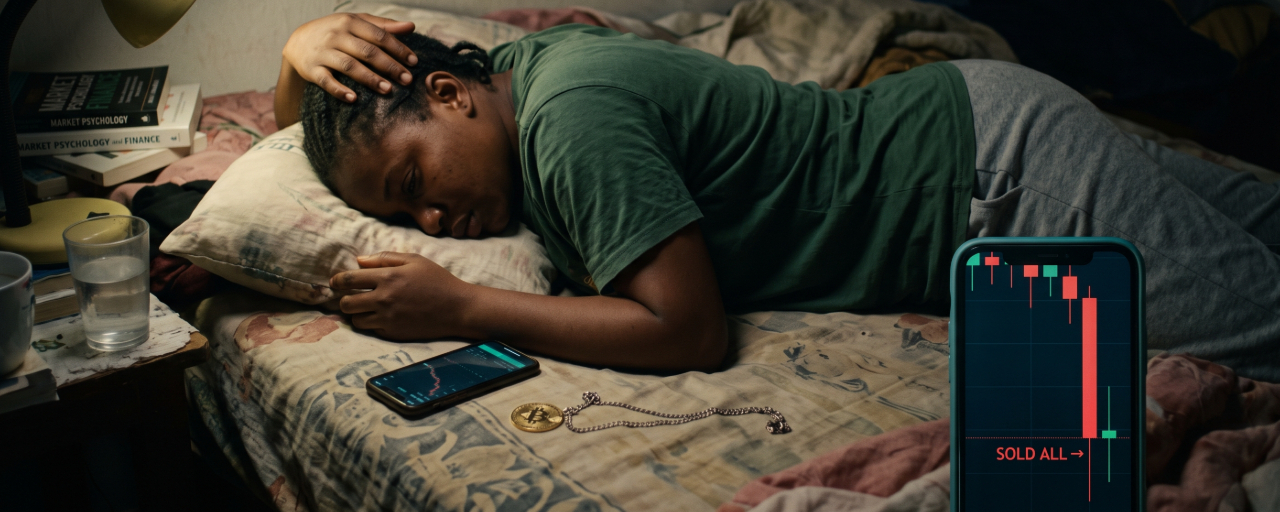

This was at the very depths of the bear market. After months of slow agony, my portfolio showed a loss of nearly 75%.
Every morning was torture. The media talked about the sector’s definitive death, the Telegram groups had emptied out, and I couldn’t bear seeing my savings melt away. One evening, overwhelmed by exhaustion and the certainty that everything would drop to zero, I gave in to panic.
I pressed the red button: Market Sell.
In the moment, I felt an odd sense of relief. The pain stopped. But this respite was short-lived.
Fourteen days later, without warning, a monumental green candle pierced the chart. Then another. The market had just hit its all-time low and was starting an incredible rally. By capitulating, I hadn’t saved my furniture: I had sold at the lowest point to buy back… the regret.
That monumental slap taught me how market psychology works:
The feeling of capitulation is an indicator: The moment you’re ready to let everything go out of pure disgust is almost always the moment institutional investors silently accumulate.
Pain is part of the cycle: If you can’t endure a bear market in the shadows and in doubt, you don’t deserve the euphoric gains of a bull run.
Never sell in the raw grip of emotion: An investment decision made out of fear or anger is a guaranteed mistake in 95% of cases.
The importance of fundamental conviction: If your investments are based on solid ground and not just rumors, today’s price only reflects market noise—not its future value.
Today, when despair takes over social media and prices collapse, I no longer look at the sell button. I step back, I turn off notifications, and I let time do its work.
Have you ever sold in panic at the bottom, right before seeing the chart explode upward? Tell us your worst moment in the comments.