



Recently, as I was sorting through the healthcare industry, I found that I had two misconceptions about this sector in the past:
(1) Simply treating the number of patients as the market.
(2) Simply treating the approval of an innovative drug as a drug company’s moat.
And these two misconceptions aren’t unique to me. While I’m browsing the Snowball community, I’ve found that many investors holding Eli Lilly, AstraZeneca, and investors who are paying attention to the pharmaceutical sector generally share similar understandings.
But for a drug, from the time it’s proposed as a concept in a lab to when it truly enters patients’ bodies, it has to go through a whole series of steps—clinical trials, manufacturing, diagnosis, cold-chain delivery, insurance reimbursement, and pharmacy dispensing, among others. If any one step gets stuck, the theoretical market size can never turn into real-world usage scenarios.
So what determines a healthcare company’s value and moat is still which key link it occupies, and what cost would be required to replace it.
If it is at one link but the upstream and downstream channels are not smooth enough, then even if the business has a huge potential market, that is only theoretical data;
This report will not discuss valuation, nor will it pile up financial data. I will just try to make this industry map clear, and then list 1 to 2 companies in each segment to explain what they actually make money from.
If you want to understand the U.S. healthcare sector, this report basically covers it.
1. First, make the whole healthcare industry map clear
If you lay out the full process from a patient becoming ill to receiving treatment, the healthcare industry can roughly be divided into two layers.
The first layer is the companies that face the disease directly. They provide drugs, devices, and diagnostic products, and their value mainly comes from treatment outcomes. Eli Lilly and AstraZeneca, mentioned above, are in this layer, and are relatively familiar pharmaceutical companies to investors.
The second layer is the companies that make these treatments possible and deliver them smoothly. For example, Thermo Fisher sells instruments, reagents, and consumables; McKesson delivers drugs to hospitals and pharmacies; UnitedHealth decides which drugs can be reimbursed and what conditions patients must meet first.
These two layers serve the same patient, but the business models are completely different.
The former relies more on product efficacy to capture value, while the latter relies more on scale and customer stability to continuously capture value.
This is also why the healthcare industry cannot be classified only by disease.
Metabolism, oncology, and neuroscience are demand-side disease areas, while devices, distribution, and payment are supply-side scenarios. Only when these two classifications are combined do you get a relatively complete sector picture.
Below I will separate these two segments and discuss them, but before that I need to state in advance that I will only list some representative examples and will not fully expand every subsegment, otherwise the article would become far too long.
2. Classified by disease
The diseases involved in healthcare are far more than the four categories below, and I do not intend to write a disease encyclopedia. I chose metabolism and obesity, oncology and immunology, neuroscience, and vaccines and infectious diseases because they each represent a different product logic and value-capture method.
2.1 Metabolism and obesity: selling well is only the first step
Metabolism and obesity are the easiest subsector to understand at present, because Eli Lilly and Novo Nordisk have turned what was originally a relatively marginal weight-loss market into one of the most watched directions in the global healthcare industry.
Novo Nordisk has long been deeply rooted in diabetes, while Eli Lilly, with tirzepatide, quickly expanded into obesity, sleep apnea, and other related diseases.
From the patient’s perspective, these two businesses are very straightforward: take one shot, appetite declines, weight decreases.
But the business models of Eli Lilly and Novo Nordisk are not one-time businesses.
Because after patients stop taking the drug, appetite and weight may rise again, so as long as efficacy can be maintained and side effects are tolerable, the business effect of this type of drug is very close to a long-term subscription.
This is also what makes it different from many short-term medications.
Antibiotics or targeted drugs for a specific disease usually end after the treatment course is completed, but obesity, diabetes, and other metabolic diseases require long-term management.
Under this business model, a patient’s product lifecycle is far more important than how many new patients are added. If a patient stops taking the drug because of gastrointestinal side effects, high out-of-pocket costs, or weight loss, the commercial chain breaks.
2.1.1 Novo Nordisk: extending from a diabetes company to obesity management
Novo Nordisk was originally a company built on diabetes and insulin.
It has long dealt with endocrinologists, hospitals, pharmacies, and payers, and has already built a mature production and sales network. Therefore, when semaglutide expands from diabetes treatment to obesity management, it is not re-entering a completely unfamiliar market, but merely extending its existing capabilities outward.
Its flagship products use the same core ingredient—semaglutide—but are placed into different scenarios:
(1) Ozempic and Rybelsus are mainly used for type 2 diabetes (the latter is oral);
(2) Wegovy is mainly used for long-term weight management in obese and overweight patients;
A classic case of multiple uses for one fish, the biggest advantage of this model is that one already validated system can keep adding use cases.
Wegovy was later expanded and is no longer just helping patients lose weight; it was also approved to reduce the risk of cardiovascular death, heart attack, and stroke in some obese or overweight adults with cardiovascular disease.
2.1.2 Eli Lilly: using one tirzepatide injection to quickly enter multiple disease markets
Eli Lilly $LLY ’s path is a bit different from Novo Nordisk’s, but it is basically also a case of multiple uses for one fish.
Novo Nordisk expanded gradually into other markets on the basis of diabetes; Eli Lilly, relying on tirzepatide’s efficacy, quickly captured the diabetes and obesity markets at the same time.
Tirzepatide acts on both the GIP and GLP-1 hormone pathways, thereby reducing appetite and food intake.
GIP and GLP-1 are both signals released by the gut after eating, helping the body release insulin based on blood sugar levels
Among them, GLP-1 also enhances satiety and reduces food intake, while GIP may further strengthen this regulation
Eli Lilly also splits the same ingredient into two main brands:
Mounjaro is used for type 2 diabetes;
Zepbound is used for long-term weight management in obese and overweight patients.
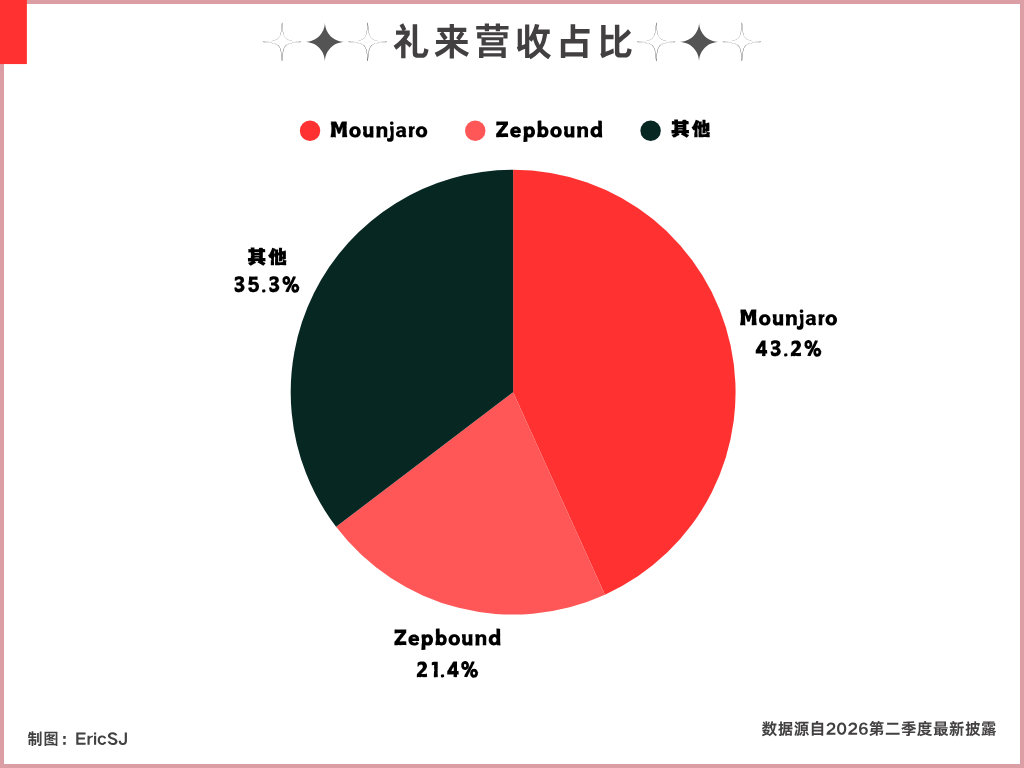
According to the latest quarterly report, the above two products account for about 65% of Eli Lilly’s total revenue combined. In other words, for every $100 Eli Lilly earns, nearly $65 comes from the same core ingredient—tirzepatide.
Eli Lilly chose to do this not simply by renaming the product.
Because diabetes and obesity correspond to different reimbursement rules within the insurance system. Diabetes has long been clearly regarded as a disease requiring long-term treatment, but insurance coverage for obesity drugs is not uniform.
Eli Lilly advancing tirzepatide into different indications is essentially opening multiple channels for the same drug to reach patients.
Zepbound later became the first drug in the U.S. approved to treat moderate to severe obstructive sleep apnea in adults with obesity. By reducing weight, it improves the problem of repeated pauses or weakening of breathing during sleep.
For Eli Lilly, this means more than just “it can sell to a larger group of patients.”
Because sleep apnea is another system, once Zepbound is included in this scope, Eli Lilly can further enter the sleep medicine market from the weight-loss market.
At the same time, indication expansion can also strengthen the case for insurance payment. Although approval does not mean insurance will definitely reimburse it, the clearer the disease indication, the easier it is for a company to prove the medical value of the drug.
At present, tirzepatide is very competitive, so the simplest way to understand Eli Lilly’s current business model is: extending the same drug into specialty disease areas and payment scenarios.
Eli Lilly and Novo Nordisk took different expansion paths, but the result is the same.
2.2 Oncology and immunology
I grouped oncology and immunology into the same section because both types of drugs intervene in parts of the human immune system.
In cancer treatment, one important route is to let the immune system rediscover and attack cancer cells; in autoimmune disease treatment, the goal is to suppress the overactive immune response and prevent the immune system from continuing to attack normal tissue.
2.2.1 Merck: turning one drug into an oncology treatment platform
Let’s start with cancer treatment: the patient must first be identified as having which cancer, then the pathology type, gene mutations, disease stage, and prior medications are considered before deciding which treatment is suitable.
There are many cancer patients, but that does not mean one drug can cover all groups. Clinical evidence is needed to enter specific cancer types, specific treatment stages, and specific combination regimens
Merck (U.S. Merck & Co., NYSE: $MRK.US ) is a representative of the PD-1-centered oncology immunotherapy model.
Its core product, Keytruda, is known in Chinese as pembrolizumab, a PD-1 inhibitor.
PD-1 can be understood as the “brake” on immune cells. Under normal circumstances, this mechanism prevents the immune system from overattacking the body itself; but some cancer cells can exploit it and make immune cells think they do not need to be eliminated.
So Keytruda is not trying to kill cancer cells like traditional chemotherapy; instead, it helps immune cells regain the ability to recognize and attack tumors.
So what it actually sells is a reusable immune mechanism that can keep entering different cancer treatment regimens, a reusable path that can move from one cancer to more cancers.
This is somewhat similar to the “multiple uses for one fish” idea in metabolic drugs.
It’s just that Eli Lilly and Novo Nordisk split the same ingredient into different products and place them into different use scenarios; Merck, by contrast, repeatedly proves Keytruda’s value across different cancer types, treatment stages, and combination regimens, turning a single drug into multiple use scenarios.
As of 2026, more than 2,800 studies worldwide have evaluated Keytruda across different cancer types and treatment settings.
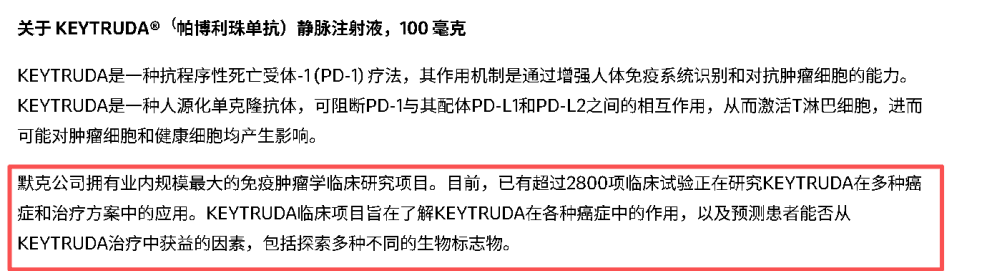
Therefore, Keytruda’s moat is a platform advantage formed by extensive clinical evidence and physician experience.
The cost and time required for later products to replace Keytruda in existing treatment regimens are enormous. They must not only prove efficacy, but also demonstrate clearly better efficacy, safety, or convenience in specific cancer types.
2.2.2 AbbVie: covering a group of long-term patients with multiple immune mechanisms
Compared with cancer treatment, immune diseases are closer to long-term chronic disease management.
Diseases like psoriasis and rheumatoid arthritis usually cannot be cured entirely with one course of treatment. As long as the drug works, side effects are acceptable, and insurance continues to reimburse it, patients may use it for a long time.
AbbVie previously built its immunology business through Humira, whose role was to block TNF and reduce inflammation.
TNF can be understood as the immune system’s “fire alarm.” Under normal circumstances, it summons immune cells to deal with infection; but in some patients, this alarm keeps ringing for a long time, instead damaging the skin, joints, and intestines.
After Humira lost market exclusivity in the U.S. in 2023, multiple biosimilars with similar mechanisms and efficacy, but more competitive pricing, entered the market. Insurance companies could then require patients to use biosimilars first, and Humira’s price and patient share both began to be squeezed.
AbbVie then shifted its focus to Skyrizi and Rinvoq. Skyrizi blocks IL-23, equivalent to shutting down an inflammatory pathway more closely related to psoriasis and inflammatory bowel disease; Rinvoq is an oral drug that cuts off part of the inflammatory signaling route from inside the cell.
The three drugs block inflammation at different points. If a patient is not suitable for one of them, AbbVie may still enter the treatment regimen through another product and share the doctor, sales, and insurance access network.
But it is not irreplaceable.
Insurance may require patients to first try traditional drugs or cheaper biosimilars, and only after failure can they use the new drug. This is called “step therapy.”
So, if AbbVie is viewed from the perspective of market competition, it does not have very strong “irreplaceability” at the single-product level; there are other products on the market that can control or jointly control the same type of problem.
So when I look at many third-party reports discussing AbbVie’s moat, they often involve subjective, abstract, and multi-dimensional interpretations. But I believe that when a company’s moat cannot be clearly explained in a few sentences, it is not a very suitable stock to hold.
2.3 Neuroscience: the bottleneck is not in the drug itself
Biogen and Eli Lilly can use Alzheimer’s disease to show why, in neuroscience, a larger patient population does not necessarily mean a bigger drug market.
Biogen’s Leqembi, co-developed with Eisai, and Eli Lilly’s Kisunla both work by clearing abnormal proteins accumulated in patients’ brains.
This protein can be understood as trash continuously accumulating in the brain. The drug can help clear some of it, slowing the decline in memory and daily functioning, but it cannot restore a damaged brain to normal or cure Alzheimer’s disease completely.
And these two drugs are mainly suitable for early-stage patients with milder disease; many patients are diagnosed after they have already moved beyond the early stages these drugs were primarily studied and approved for.
Even if it is detected early, patients cannot just use the drug based on memory loss alone. Doctors first need to confirm that this abnormal protein is indeed present in the patient’s brain, and then determine whether the patient’s physical condition is suitable for treatment.
After starting the medication, patients also need to go to the hospital regularly for treatment and undergo brain imaging to check whether side effects such as brain swelling or bleeding have occurred.
So from the point when a patient develops memory problems to actually using the drug, there are still several steps in between. If any one of them fails to keep up, the theoretical patients will be lost in reality.
This is also why the number of Alzheimer’s patients is huge, yet the rollout of a newly approved drug may still be very slow.
What limits the market is not whether pharma companies can produce enough drugs; usually the problem is that hospitals cannot identify suitable patients to arrange treatment and continuous monitoring.
This subsector currently lacks decisive outcomes and products. If later products are more effective, easier to use, or require fewer tests, doctors and patients are likely to switch treatment plans.
These existing products only have a first-mover advantage from approval, clinical evidence, and physician experience; they have not yet formed a stable moat.
2.4 Vaccines and infectious diseases: product approval does not mean people will get vaccinated
The biggest difference between vaccines and the drug categories mentioned earlier is that they usually face not patients who are already ill, but healthy people who may become ill in the future.
Ordinary drugs solve problems after disease occurs, while vaccines train the immune system in advance, before disease occurs.
GSK is a representative company in this field.
It has vaccine products covering diseases such as shingles, respiratory infections, meningitis, and hepatitis, among which the most representative are the shingles vaccine Shingrix and Arexvy, which prevents certain severe respiratory infections.
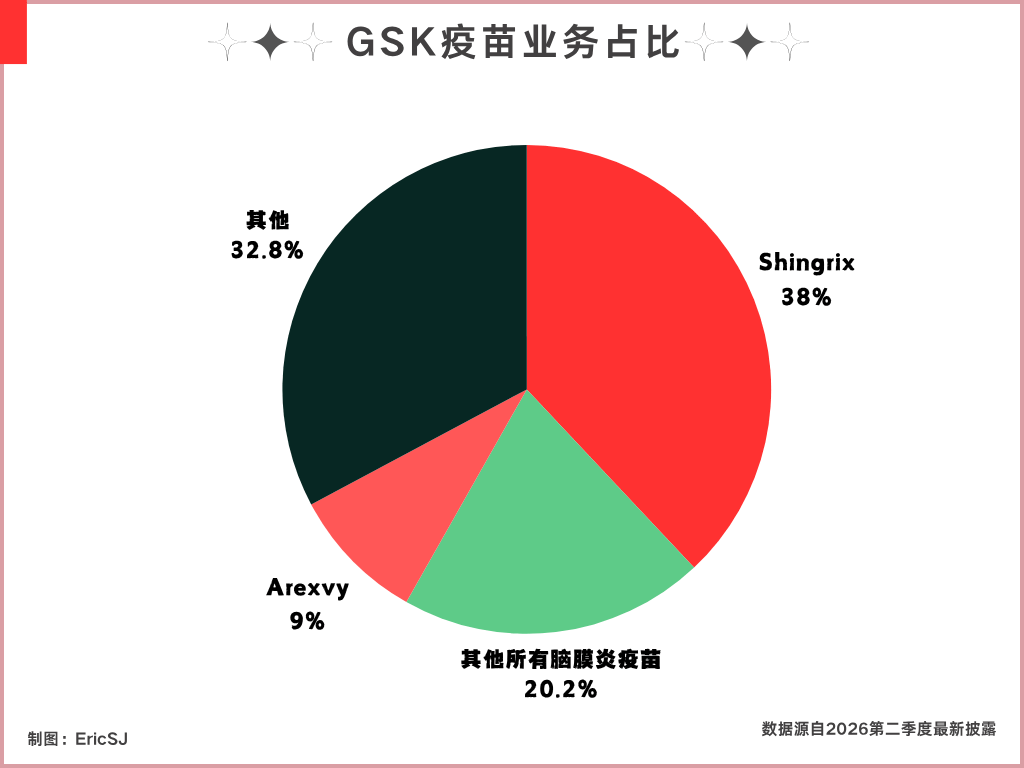
Here, Shingrix is GSK’s true vaccine flagship. In the second quarter of 2026, Shingrix sales were about 890 million pounds, accounting for nearly 39% of GSK’s vaccine business; for the first half of the year as a whole, the proportion exceeded 43%.
In other words, for every 100 pounds of revenue in GSK’s vaccine division, more than 40 pounds comes from the shingles vaccine.
The business model for vaccines is relatively simple; unlike chronic disease drugs, they do not require monthly repeat purchases.
Some complete a vaccination series and then do not buy again for a long time; some need boosters; and some, like flu vaccines, are repeated seasonally.
Therefore, GSK not only needs to keep expanding to new age-eligible populations, but also needs to improve completion rates for multi-dose vaccines.
And even for vaccines that require multiple doses, such as Shingrix, two doses are required. Even if someone gets the first shot, the demand for the second shot may still be lost if they forget, worry about side effects, or do not want to spend time going back to the hospital.
At the demand level, the vaccine market faces a special problem: it sells something that is “best if it never happens.”
Patients can feel pain relief or weight loss from the drug, but it is hard to tell whether they did not get infected with a certain disease because the vaccine worked or because they would not have gotten sick anyway.
Mass vaccination of the entire population during COVID was a very special situation and cannot be used to understand most routine vaccines. Routine vaccines usually face the issue that the eligible population is large, but actual willingness to vaccinate is unstable.
Even with a huge eligible population, achieving widespread routine vaccination is still very difficult.
GSK has advantages in product R&D, portfolio, and channels in this area, but these advantages only solve the supply-side problem and cannot directly address willingness to vaccinate. It is a niche area that fits the “upstream and downstream channels are not smooth enough” issue I described at the beginning.
3. Value capture beyond drugs
What we discussed earlier is how pharmaceutical companies develop products around different diseases, but getting a drug from the lab to the patient is not just the pharmaceutical company’s own affair.
Drugs need to be discovered, tested, and manufactured; hospitals and devices are needed to complete treatment; distributors must deliver them to the right place; and in the end, someone has to be willing to pay.
These companies may not necessarily own the most attention-grabbing drugs, but they control indispensable tools, processes, and entry points in the healthcare industry.
3.1 Medical devices: usage frequency determines value
Medical devices are a relatively familiar sector to ordinary investors besides drugs, especially with the arrival of AI. Surgical robots, sensors, and various devices enhanced by AI have entered investors’ field of view.
Intuitive Surgical and Dexcom, mentioned in this section, represent two different medical device business models.
3.1.1 Intuitive Surgical: first put robots into hospitals, then make money from each surgery
Intuitive Surgical $ISRG.US ’s core product is the da Vinci surgical system.
On the surface, it does a robot-selling business: hospitals pay a relatively large fee to put the equipment into the operating room.
But selling the equipment is only the first step in getting this business model moving. In every surgery, hospitals also need to use compatible instruments and accessories, and the equipment itself also needs maintenance and upgrades.
Therefore, Intuitive Surgical actually has three layers of revenue:
(1) Selling or leasing surgical robots to hospitals;
(2) As surgical volume increases, continuously sell compatible instruments and consumables;
(3) Provide maintenance services for installed equipment.
What can happen repeatedly over the long term are the latter two parts.
As of the second quarter of 2026, the installed base of the da Vinci system disclosed by Intuitive Surgical had reached 11,710 units;
In that quarter, about 76% of Intuitive Surgical’s revenue came from instruments, accessories, and maintenance services.
The significance of these two figures is not only that they show how many devices the company sold, but also the workflow built around the same system.
This process itself is the moat, and an exceptionally clear one at that. Even if a later competitor builds a robot with similar parameters, it still cannot directly replace Da Vinci.
This company in healthcare is a bit like ASML in semiconductors.
3.1.2 Dexcom: turning one-time testing into continuous use
Dexcom represents another type of medical device business model.
Traditional blood glucose testing requires patients to actively draw blood, and it can only show blood sugar at a single point in time. Dexcom’s continuous glucose monitoring device, by contrast, uses a sensor worn on the body to continuously record glucose changes and send the data to a phone or other device.
And this sensor needs to be replaced after a period of use, so Dexcom’s revenue is not one-time hardware sales, but repeat purchases generated as patients continue using it.
What it has in common with Intuitive Surgical is that the hardware is only the first step in opening the business model loop.
Once patients develop a usage habit and become dependent on the historical data generated, for example by relying on this data to plan diet and medication, user stickiness may increase over time.
However, the current product does not have a very high technical barrier. There are many domestic products of the same type in markets around the world, so it cannot be said that the product itself has great irreplaceability.
In addition, the usage habit for this type of monitoring has not yet become mainstream, and it also faces competitive pressure from other monitoring methods.
From the above, we can see that both of these cases involve hardware touchpoints and mainly sell “after-sales service,” but the key to the moat is highly related to the hardware’s technical barriers.
3.2 Research and clinical infrastructure: the shovel sellers before drugs reach the market
Intuitive Surgical and Dexcom’s products directly enter hospitals or patients’ daily treatment processes.
Thermo Fisher also sells a large amount of equipment, but these are not clinical devices used directly to treat patients; they are R&D and production tools placed in labs, drug factories, and research institutions.
Intuitive Surgical and Dexcom’s products directly enter hospitals or patients’ daily treatment processes; Thermo Fisher’s main customers, by contrast, are pharma companies, labs, and research institutions.
Its products usually do not appear directly in front of patients, but they participate in the entire process of a drug from R&D and clinical trials to manufacturing and quality testing.
If innovative drug companies are betting on which drug will ultimately succeed, Thermo Fisher is more like the person providing tools to all the competitors.
3.2.1 Thermo Fisher: not betting on which drug succeeds, but serving the entire R&D process
To develop a drug, a pharma company first needs to analyze samples, culture cells, and screen molecules, and then it must produce trial drugs and inspect product quality.
These steps all depend on instruments, reagents, consumables, and production equipment.
Thermo Fisher provides exactly these basic tools. Its products cover laboratory instruments, reagents and consumables, testing products, and parts of drug manufacturing and clinical R&D services.
As long as the industry is still doing experiments, carrying out R&D, manufacturing drugs, and conducting quality testing, it has a chance to obtain orders from it.
Thermo Fisher’s business model is somewhat similar to Intuitive Surgical’s: both first let customers use the equipment, then generate ongoing revenue through consumables and services.
But the two serve completely different scenarios.
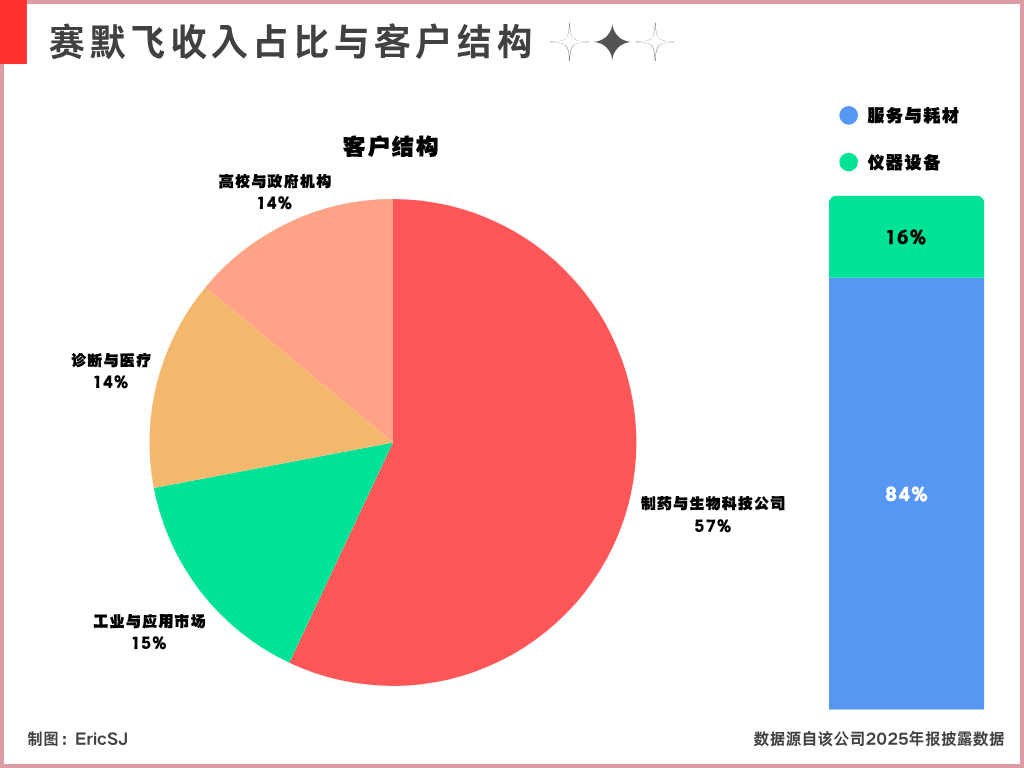
Intuitive Surgical’s equipment is placed in operating rooms, while Thermo Fisher’s equipment is in labs and drug factories. It belongs to the research tools segment and is a pure B2B business, so the moat in this field also has a strong B2B characteristic: stability.
In 2025, only about 16% of Thermo Fisher’s revenue came from instruments and equipment, while the remaining 84% came from consumables and services.
This is exactly the core of Thermo Fisher’s “selling shovels” model: instruments help it enter labs and drug factories, while what supports its long-term revenue is the continuous consumption of reagents and consumables as experiments continue, plus the production and R&D services that pharma companies keep buying.
If a lab process uses certain instruments and reagents for a long time, customers usually will not switch casually just to save a bit of money.
But Thermo Fisher is not unaffected by the pharmaceutical cycle either.
If biotech companies have difficulty raising funds, labs will reduce purchases; or if pharma companies cut R&D projects, the use of related reagents and consumables will also decline.
(When I was reading reports related to Thermo Fisher, I found that downstream customer inventory reduction was a very important influencing factor.)
3.3 Distribution and payment: can the drug get to the patient, and who is willing to pay
There is also a market-overlooked step before drugs reach patients: storage and delivery.
This is not something just any logistics company can do; it also requires the corresponding qualifications.
Even at the last moment before the drug is in hand, an insurance company still has to decide whether it will be reimbursed.
So the McKesson and UnitedHealth I listed here each control two important links in this path: one is responsible for getting the drug to the right place, and the other decides whether most patients can afford the drug.
3.3.1 McKesson: turning low-margin delivery into a business through scale
McKesson’s business is very simple: it handles the supply chain in healthcare, but medical products cannot be treated like ordinary express deliveries;
Drugs must be stored at the required temperature, and for some high-priced oncology drugs and other special medicines, delivery conditions are even more complicated.
The profit per transaction in ordinary drug distribution is usually very thin, so McKesson’s business model can be summed up in eight words: lower costs, improve efficiency, thin margins, high volume.
It needs massive purchasing volume, a dense distribution network, and high warehouse utilization to lower the cost of each delivery. A single order may not make much profit, but as large volumes of drugs continuously flow through this network every day, a stable business is formed.
McKesson’s moat can be said to be extremely hard to break, because very few new companies can quickly replicate its warehousing, distribution, years of accumulated credit, and customer network.
Pharmacies and hospitals also will not frequently switch distributors for very small price differences, but this business model also means McKesson’s growth expectations are somewhat lower than companies in the same sector.
3.3.2 UnitedHealth: an insurance company does more than just pay
McKesson solves how drugs get delivered to hospitals and pharmacies, while UnitedHealth solves who pays after patients receive care and buy medicine.
UnitedHealth Group’s business is mainly divided into two parts:
One part is the health insurance business, while the other part, Optum, provides drugs, pharmacy, and healthcare services.
Related to drug reimbursement here is Optum Rx under Optum, which can be understood as the “drug administrator” within the insurance system.
There may be many drugs on the market that treat the same disease, but insurance does not reimburse them all under the same terms.
Optum Rx negotiates with pharma companies on behalf of insurance plans and employers, helps design drug formularies and utilization rules, and then decides which drugs can be reimbursed and which drugs require patients to meet other conditions first.
For example, if a doctor thinks a patient is suitable for a higher-priced new drug, the insurance company may require the patient to first use a cheaper drug. Only if the cheaper drug does not work, or the patient cannot tolerate side effects, will insurance be willing to pay for the new drug.
And when the treatment effects of two drugs are relatively close, Optum will steer more patients toward the cheaper product, or the one with better negotiated terms.
Pharmaceutical companies decide what drugs to produce, and doctors determine which drug is suitable for a patient, but insurance companies can influence what drugs patients ultimately get to use by deciding which drugs they are more willing to pay for.
This is also what makes UnitedHealth’s business model relatively unique.
It collects insurance premiums and covers patients’ medical expenses on the one hand, and manages drug channels on the other. The more patients it manages, the more bargaining power it has when negotiating with drugmakers and hospitals, and the more control it has over its own spending.
This actually already explains where its moat comes from, and its moat is now quite clear.
But it can also be said that UnitedHealth’s strengths and risks come from the same place: the more links it participates in, the stronger its ability to control medical costs, but the more likely it is to be criticized for restricting treatment and favoring its own business.
4. Summary
In the two large sections above, I listed seven subsectors in healthcare and more than ten representative companies in their respective fields. I think I have already answered the two questions I raised at the beginning:
(1) Do not simply treat patient numbers as the market
(2) Do not simply treat the approval and market launch of an innovative drug (or patent) as a pharmaceutical company’s moat
At the same time, looking across the entire industry, there is actually no unified standard for judging moats; the ways value is retained differ completely across links and diseases.
If I were to summarize the companies above, which ones do I think have good business models and verifiable long-term moats, there are actually several answers:
Trillion-market-cap: Eli Lilly $LLY
Hundred-billion-market-cap: Merck $MRK and Intuitive Surgical $ISRG
The others are not bad either; after all, they are also representative companies in their niche. But overall, the ones I consider truly outstanding are just these two.
Next, I’ll continue focusing on the healthcare sector and look for individual innovative drug stocks with greater growth potential. Stay tuned~