Binance Square
橙子Joyce
349 Posts

橙子Joyce

Square Verified+
十年以上美股市场投研策略|WEB3项目投研|BTC.ETH.BNB.SOL|贵金属投资策略黄金.白银.铜|中长期价值投资者|推特X:@Joyce88AI

BNB Holder
BNB Holder
Frequent Trader
8.7 Years
819 Following
35.7K+ Followers
43.8K+ Liked
Posts
PINNED
·
--
Bullish
Verified
On September 23, Watcher Guru said that the Moscow Exchange has launched perpetual futures for five major cryptocurrencies. The underlying assets include Bitcoin, Ethereum, Solana, XRP, and Tron. The Moscow Exchange is Russia’s main securities exchange. This product covers perpetual contracts for the five cryptocurrencies mentioned above. $BTC {future}(BTCUSDT) $ETH {future}(ETHUSDT) $SOL {future}(SOLUSDT)
On September 23, Watcher Guru said that the Moscow Exchange has launched perpetual futures for five major cryptocurrencies. The underlying assets include Bitcoin, Ethereum, Solana, XRP, and Tron. The Moscow Exchange is Russia’s main securities exchange. This product covers perpetual contracts for the five cryptocurrencies mentioned above.
$BTC
$ETH
$SOL
PINNED
·
--
Bullish
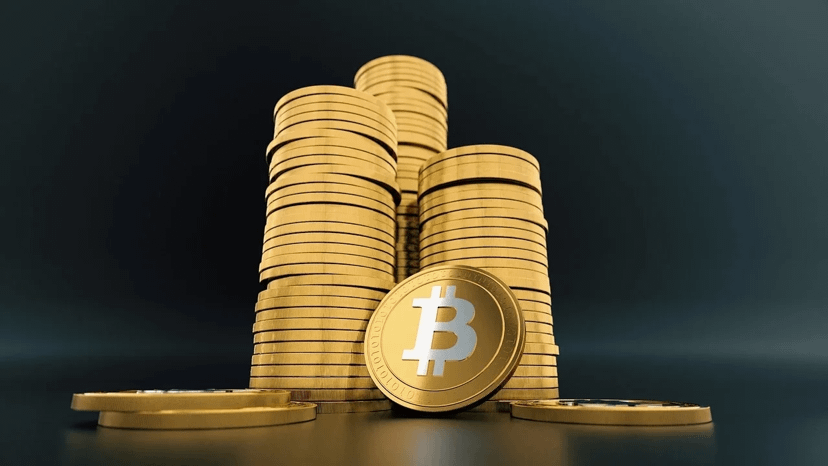
The “crypto winter” that has lasted nearly a year has come to an end, and this may mark what could be the strongest and longest bull run in cryptocurrency history. Over the past 5 days, Bitcoin has gained more than 7%, and over the past 3 months its rise has approached 35%. From a technical standpoint, as long as the support level around $750,000 is held, bulls could push further into the $900,000 area. This rebound comes against the backdrop of the Digital Assets Market Clarity Act failing to pass the Senate via a procedural vote. It breaks the simplistic logic that “legislative failure is a bearish signal,” and the market has begun reassessing the true impact of regulatory uncertainty. Capital flows back: the core logic of crypto spring: The key basis for the end of the “crypto winter” is not simply a price rebound, but a divergence between price and fundamentals. During the recent period when crypto asset prices fell, the industry’s fundamentals did not deteriorate in tandem. On-chain activity increased, and large financial institutions such as BlackRock further participated in the digital asset market—forming a pattern of “cyclical declines in prices paired with structural improvements in fundamentals.” It is expected that crypto asset prices may further catch up to changes in fundamentals later this year. The $900,000 level becomes the next point to watch On a longer time horizon, Bitcoin has still not fully exited the prior correction. Bitcoin reached an all-time high of around $1.26 million in October last year, was then cut roughly in half, and fell to a low of about $576,000 in early July this year. Even with the strong rebound recently, the current price remains about one-third below the historical high. This suggests that the current rebound is more like a repair phase coming out of a deep correction, rather than a confirmation that a new cycle’s all-time high has begun. Whether Bitcoin can effectively break through the $900,000 mark will be a key observation point to test the “realness” of crypto spring: If price meets resistance near $900,000 and pulls back, the market may need to reassess the sustainability of capital rotation; If it breaks through on heavy volume, it will further strengthen the macro view that “the strongest and longest bull run in history” is underway. Going forward, you can watch the Federal Reserve’s interest-rate path and where long-end U.S. Treasury yields are headed—they remain the core macro variables influencing crypto asset valuations. ——————We continue to invest via DCA in BNB, BTC, ETH, and SOL $BTC {spot}(BTCUSDT) $BNB {spot}(BNBUSDT) $SOL {spot}(SOLUSDT)
The “crypto winter” that has lasted nearly a year has come to an end, and this may mark what could be the strongest and longest bull run in cryptocurrency history.

Over the past 5 days, Bitcoin has gained more than 7%, and over the past 3 months its rise has approached 35%. From a technical standpoint, as long as the support level around $750,000 is held, bulls could push further into the $900,000 area.

This rebound comes against the backdrop of the Digital Assets Market Clarity Act failing to pass the Senate via a procedural vote. It breaks the simplistic logic that “legislative failure is a bearish signal,” and the market has begun reassessing the true impact of regulatory uncertainty.

Capital flows back: the core logic of crypto spring:

The key basis for the end of the “crypto winter” is not simply a price rebound, but a divergence between price and fundamentals.

During the recent period when crypto asset prices fell, the industry’s fundamentals did not deteriorate in tandem. On-chain activity increased, and large financial institutions such as BlackRock further participated in the digital asset market—forming a pattern of “cyclical declines in prices paired with structural improvements in fundamentals.”

It is expected that crypto asset prices may further catch up to changes in fundamentals later this year.

The $900,000 level becomes the next point to watch

On a longer time horizon, Bitcoin has still not fully exited the prior correction.

Bitcoin reached an all-time high of around $1.26 million in October last year, was then cut roughly in half, and fell to a low of about $576,000 in early July this year. Even with the strong rebound recently, the current price remains about one-third below the historical high.

This suggests that the current rebound is more like a repair phase coming out of a deep correction, rather than a confirmation that a new cycle’s all-time high has begun.

Whether Bitcoin can effectively break through the $900,000 mark will be a key observation point to test the “realness” of crypto spring:

If price meets resistance near $900,000 and pulls back, the market may need to reassess the sustainability of capital rotation;

If it breaks through on heavy volume, it will further strengthen the macro view that “the strongest and longest bull run in history” is underway.

Going forward, you can watch the Federal Reserve’s interest-rate path and where long-end U.S. Treasury yields are headed—they remain the core macro variables influencing crypto asset valuations.
——————We continue to invest via DCA in BNB, BTC, ETH, and SOL
$BTC

$BNB
$SOL
橙子Joyce
·
--
Bullish
The “crypto winter” that has lasted nearly a year has come to an end, and this may mark what could be the strongest and longest bull run in cryptocurrency history.

Over the past 5 days, Bitcoin has gained more than 7%, and over the past 3 months its rise has approached 35%. From a technical standpoint, as long as the support level around $750,000 is held, bulls could push further into the $900,000 area.

This rebound comes against the backdrop of the Digital Assets Market Clarity Act failing to pass the Senate via a procedural vote. It breaks the simplistic logic that “legislative failure is a bearish signal,” and the market has begun reassessing the true impact of regulatory uncertainty.

Capital flows back: the core logic of crypto spring:

The key basis for the end of the “crypto winter” is not simply a price rebound, but a divergence between price and fundamentals.

During the recent period when crypto asset prices fell, the industry’s fundamentals did not deteriorate in tandem. On-chain activity increased, and large financial institutions such as BlackRock further participated in the digital asset market—forming a pattern of “cyclical declines in prices paired with structural improvements in fundamentals.”

It is expected that crypto asset prices may further catch up to changes in fundamentals later this year.

The $900,000 level becomes the next point to watch

On a longer time horizon, Bitcoin has still not fully exited the prior correction.

Bitcoin reached an all-time high of around $1.26 million in October last year, was then cut roughly in half, and fell to a low of about $576,000 in early July this year. Even with the strong rebound recently, the current price remains about one-third below the historical high.

This suggests that the current rebound is more like a repair phase coming out of a deep correction, rather than a confirmation that a new cycle’s all-time high has begun.

Whether Bitcoin can effectively break through the $900,000 mark will be a key observation point to test the “realness” of crypto spring:

If price meets resistance near $900,000 and pulls back, the market may need to reassess the sustainability of capital rotation;

If it breaks through on heavy volume, it will further strengthen the macro view that “the strongest and longest bull run in history” is underway.

Going forward, you can watch the Federal Reserve’s interest-rate path and where long-end U.S. Treasury yields are headed—they remain the core macro variables influencing crypto asset valuations.
——————We continue to invest via DCA in BNB, BTC, ETH, and SOL
$BTC


$BNB

$SOL
·
--
Bullish
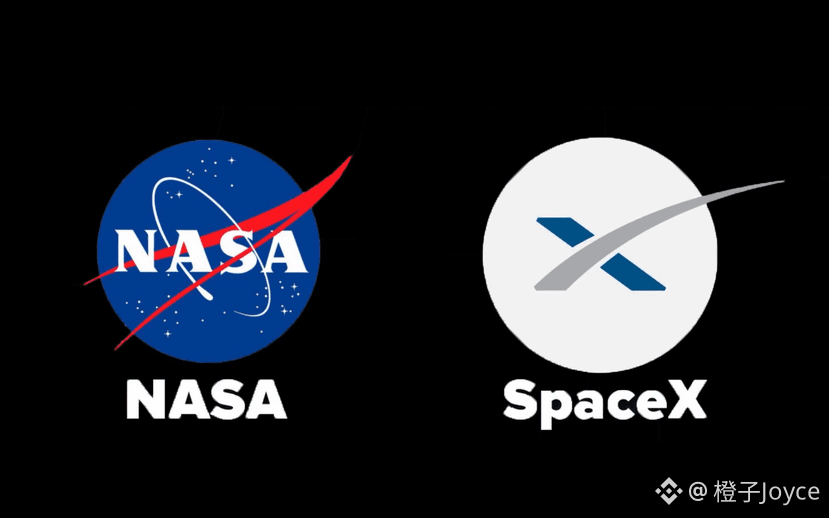
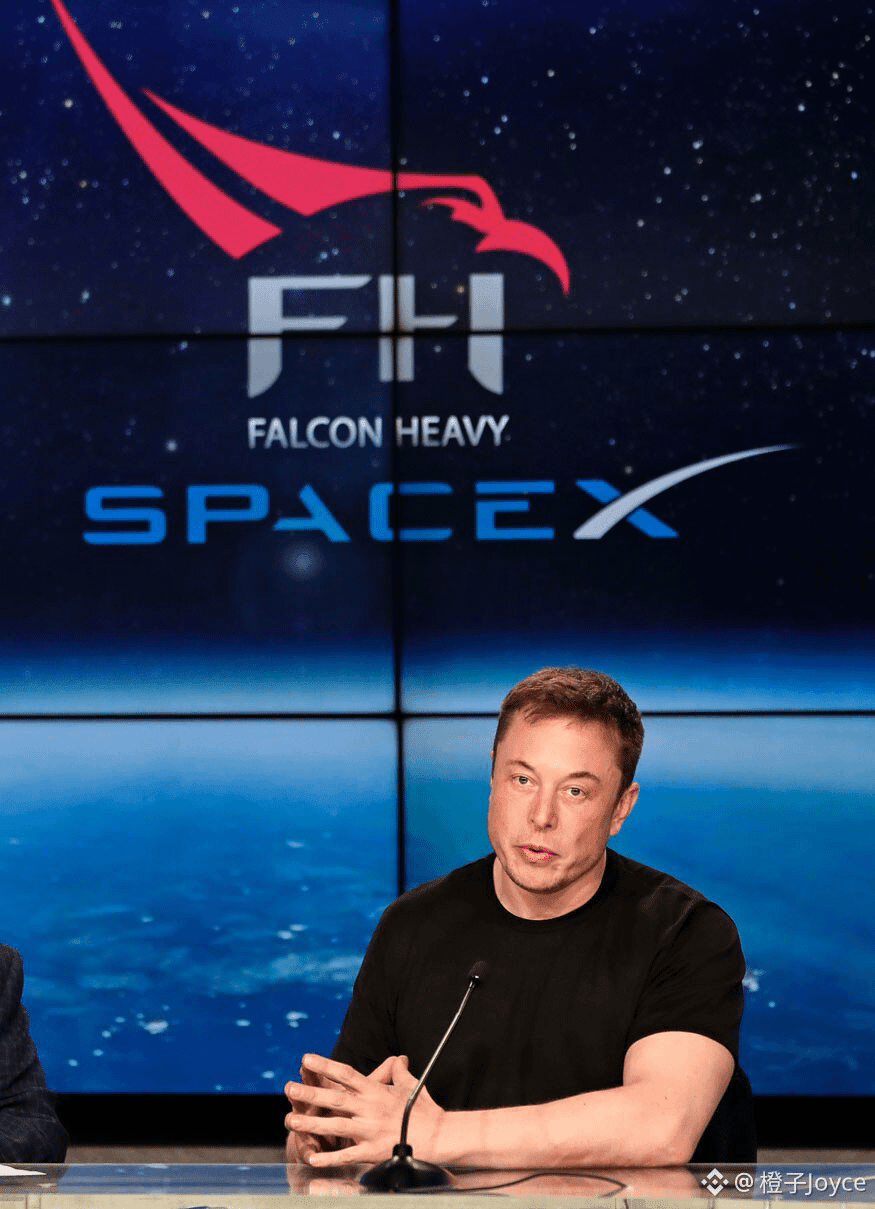
NASA and SpaceX plan to launch the earliest Crew-13 mission to the International Space Station at 11:10 a.m. Eastern Time on Thursday, October 1. The launch site is the SLC-40 launch pad at the Cape Canaveral Space Force Station in Florida, using a Falcon 9 rocket and the Crew Dragon “Grace” spacecraft. If liftoff follows the schedule, the spacecraft is expected to reach the International Space Station in less than 9 hours, with a docking time of around 8 p.m. Eastern Time that evening. The docking port will be the forward port of the Harmony module. Crew members: • Commander: NASA astronaut Jessica Watkins • Pilot: NASA astronaut Luke Delaney • Mission Specialist: Joshua Kutryk, Canadian Space Agency • Mission Specialist: Sergey Teteryatnikov, Roscosmos They will join Expedition 75 aboard the space station. The crew is currently in isolation at the Johnson Space Center in Houston and plans to travel to the Kennedy Space Center by Saturday, September 26. —————————————————————————We continue to invest $SPCX.US {stock_us}(SPCX.US)
NASA and SpaceX plan to launch the earliest Crew-13 mission to the International Space Station at 11:10 a.m. Eastern Time on Thursday, October 1.

The launch site is the SLC-40 launch pad at the Cape Canaveral Space Force Station in Florida, using a Falcon 9 rocket and the Crew Dragon “Grace” spacecraft.

If liftoff follows the schedule, the spacecraft is expected to reach the International Space Station in less than 9 hours, with a docking time of around 8 p.m. Eastern Time that evening. The docking port will be the forward port of the Harmony module.

Crew members:
• Commander: NASA astronaut Jessica Watkins
• Pilot: NASA astronaut Luke Delaney
• Mission Specialist: Joshua Kutryk, Canadian Space Agency
• Mission Specialist: Sergey Teteryatnikov, Roscosmos

They will join Expedition 75 aboard the space station. The crew is currently in isolation at the Johnson Space Center in Houston and plans to travel to the Kennedy Space Center by Saturday, September 26.
—————————————————————————We continue to invest $SPCX.US
SPCXUS+1.53%
Article
CPU usage will surge far beyond that of GPUs#Meta’s Muse—this kind of personal AI agent that can interact with websites and applications just like humans—clearly is becoming the next major leap in AI-driven productivity, and is expected to trigger a CPU supercycle that greatly benefits Intel, AMD, and Arm. Why will personal AI agents—such as Meta’s Muse, Spear Street Technology’s Instinct, and even competitive products that OpenAI may introduce—completely upend the market’s demand for CPUs? Some predictions even suggest that the ratio of CPU to GPU demand could reach as high as 40:1.

CPU usage will surge far beyond that of GPUs

#Meta’s Muse—this kind of personal AI agent that can interact with websites and applications just like humans—clearly is becoming the next major leap in AI-driven productivity, and is expected to trigger a CPU supercycle that greatly benefits Intel, AMD, and Arm.
Why will personal AI agents—such as Meta’s Muse, Spear Street Technology’s Instinct, and even competitive products that OpenAI may introduce—completely upend the market’s demand for CPUs? Some predictions even suggest that the ratio of CPU to GPU demand could reach as high as 40:1.
AMDUS+0.96%
ARMUS+2.01%
INTCUS+1.52%
橙子Joyce
·
--
Bullish
The “crypto winter” that has lasted nearly a year has come to an end, and this may mark what could be the strongest and longest bull run in cryptocurrency history.

Over the past 5 days, Bitcoin has gained more than 7%, and over the past 3 months its rise has approached 35%. From a technical standpoint, as long as the support level around $750,000 is held, bulls could push further into the $900,000 area.

This rebound comes against the backdrop of the Digital Assets Market Clarity Act failing to pass the Senate via a procedural vote. It breaks the simplistic logic that “legislative failure is a bearish signal,” and the market has begun reassessing the true impact of regulatory uncertainty.

Capital flows back: the core logic of crypto spring:

The key basis for the end of the “crypto winter” is not simply a price rebound, but a divergence between price and fundamentals.

During the recent period when crypto asset prices fell, the industry’s fundamentals did not deteriorate in tandem. On-chain activity increased, and large financial institutions such as BlackRock further participated in the digital asset market—forming a pattern of “cyclical declines in prices paired with structural improvements in fundamentals.”

It is expected that crypto asset prices may further catch up to changes in fundamentals later this year.

The $900,000 level becomes the next point to watch

On a longer time horizon, Bitcoin has still not fully exited the prior correction.

Bitcoin reached an all-time high of around $1.26 million in October last year, was then cut roughly in half, and fell to a low of about $576,000 in early July this year. Even with the strong rebound recently, the current price remains about one-third below the historical high.

This suggests that the current rebound is more like a repair phase coming out of a deep correction, rather than a confirmation that a new cycle’s all-time high has begun.

Whether Bitcoin can effectively break through the $900,000 mark will be a key observation point to test the “realness” of crypto spring:

If price meets resistance near $900,000 and pulls back, the market may need to reassess the sustainability of capital rotation;

If it breaks through on heavy volume, it will further strengthen the macro view that “the strongest and longest bull run in history” is underway.

Going forward, you can watch the Federal Reserve’s interest-rate path and where long-end U.S. Treasury yields are headed—they remain the core macro variables influencing crypto asset valuations.
——————We continue to invest via DCA in BNB, BTC, ETH, and SOL
$BTC


$BNB

$SOL
橙子Joyce
·
--
Bullish
The “crypto winter” that has lasted nearly a year has come to an end, and this may mark what could be the strongest and longest bull run in cryptocurrency history.

Over the past 5 days, Bitcoin has gained more than 7%, and over the past 3 months its rise has approached 35%. From a technical standpoint, as long as the support level around $750,000 is held, bulls could push further into the $900,000 area.

This rebound comes against the backdrop of the Digital Assets Market Clarity Act failing to pass the Senate via a procedural vote. It breaks the simplistic logic that “legislative failure is a bearish signal,” and the market has begun reassessing the true impact of regulatory uncertainty.

Capital flows back: the core logic of crypto spring:

The key basis for the end of the “crypto winter” is not simply a price rebound, but a divergence between price and fundamentals.

During the recent period when crypto asset prices fell, the industry’s fundamentals did not deteriorate in tandem. On-chain activity increased, and large financial institutions such as BlackRock further participated in the digital asset market—forming a pattern of “cyclical declines in prices paired with structural improvements in fundamentals.”

It is expected that crypto asset prices may further catch up to changes in fundamentals later this year.

The $900,000 level becomes the next point to watch

On a longer time horizon, Bitcoin has still not fully exited the prior correction.

Bitcoin reached an all-time high of around $1.26 million in October last year, was then cut roughly in half, and fell to a low of about $576,000 in early July this year. Even with the strong rebound recently, the current price remains about one-third below the historical high.

This suggests that the current rebound is more like a repair phase coming out of a deep correction, rather than a confirmation that a new cycle’s all-time high has begun.

Whether Bitcoin can effectively break through the $900,000 mark will be a key observation point to test the “realness” of crypto spring:

If price meets resistance near $900,000 and pulls back, the market may need to reassess the sustainability of capital rotation;

If it breaks through on heavy volume, it will further strengthen the macro view that “the strongest and longest bull run in history” is underway.

Going forward, you can watch the Federal Reserve’s interest-rate path and where long-end U.S. Treasury yields are headed—they remain the core macro variables influencing crypto asset valuations.
——————We continue to invest via DCA in BNB, BTC, ETH, and SOL
$BTC


$BNB

$SOL
·
--
Bullish
Musk confirmed this on X today: about 7 days from now (target date around September 28), Starship’s 14th test flight will first enter orbit and deploy the first batch of Starlink V3 satellites intended for actual operations. @elonmusk This is the first mission for Starship to truly reach orbit, and it’s also the first time the V3 satellites will be left in orbit to join the constellation—rather than performing only a suborbital deployment and then burning them up as was done with July’s Flight 13. This mission is planned to carry about 26 V3 satellites. engadget.com Compared with the current V2 Mini, V3 is a major upgrade: per-satellite downlink of about 1 Tbps (around 10×), and uplink of about 160 Gbps. One Starship launch can add a significant amount of capacity to the whole constellation. Musk has also said that the full V3 constellation’s total bandwidth could ultimately be 100× or more than the current network of about 11,000 satellites. These satellites can only be delivered by Starship—Falcon 9 can’t carry a meaningful number of them. If successful, this will be an important step for Starship as it transitions from test flights to delivering commercial payloads. —————————————————————————We continue to invest in US stock markets: $SPCX.US {stock_us}(SPCX.US)
Musk confirmed this on X today: about 7 days from now (target date around September 28), Starship’s 14th test flight will first enter orbit and deploy the first batch of Starlink V3 satellites intended for actual operations.

@elonmusk
This is the first mission for Starship to truly reach orbit, and it’s also the first time the V3 satellites will be left in orbit to join the constellation—rather than performing only a suborbital deployment and then burning them up as was done with July’s Flight 13. This mission is planned to carry about 26 V3 satellites. engadget.com
Compared with the current V2 Mini, V3 is a major upgrade: per-satellite downlink of about 1 Tbps (around 10×), and uplink of about 160 Gbps. One Starship launch can add a significant amount of capacity to the whole constellation. Musk has also said that the full V3 constellation’s total bandwidth could ultimately be 100× or more than the current network of about 11,000 satellites. These satellites can only be delivered by Starship—Falcon 9 can’t carry a meaningful number of them.

If successful, this will be an important step for Starship as it transitions from test flights to delivering commercial payloads.
—————————————————————————We continue to invest in US stock markets: $SPCX.US
SPCXUS+1.53%
A tunnel project by Elon Musk’s company, The Boring Company (“The Boring Company”), plans to develop an intercity tunnel in the U.S. state of Texas connecting Austin and San Antonio. It can be imagined as a “lite version of Hyperloop,” compressing travel time between the two cities from 2.5 hours to within 30 minutes. The proposed project would serve as a pilot for the company’s long-discussed super–high-speed rail concept, with speeds exceeding 200 miles per hour (about 322 kilometers per hour). $SPCX.US $TSLA.US
A tunnel project by Elon Musk’s company, The Boring Company (“The Boring Company”), plans to develop an intercity tunnel in the U.S. state of Texas connecting Austin and San Antonio. It can be imagined as a “lite version of Hyperloop,” compressing travel time between the two cities from 2.5 hours to within 30 minutes. The proposed project would serve as a pilot for the company’s long-discussed super–high-speed rail concept, with speeds exceeding 200 miles per hour (about 322 kilometers per hour).
$SPCX.US
$TSLA.US
Verified
The probability that the Federal Reserve will keep interest rates unchanged at 3.75%-4.00% in the October meeting is 43.5%, while the probability of a 25-basis-point rate hike is 56.5%. The probability that the Federal Reserve will keep interest rates unchanged at 3.75%-4.00% by December is 10.2%%, the probability of cumulative 25-basis-point rate hikes is 46.6%, and the probability of cumulative 50-basis-point rate hikes is 33.3%.
The probability that the Federal Reserve will keep interest rates unchanged at 3.75%-4.00% in the October meeting is 43.5%, while the probability of a 25-basis-point rate hike is 56.5%.

The probability that the Federal Reserve will keep interest rates unchanged at 3.75%-4.00% by December is 10.2%%, the probability of cumulative 25-basis-point rate hikes is 46.6%, and the probability of cumulative 50-basis-point rate hikes is 33.3%.
·
--
Bullish
OpenAI’s cash burn, Google’s runaway AI, SpaceX gets FCC approval, and Anthropic’s Claude helps researchers crack OpenAI 【1】From the cash burn scale projected by OpenAI; the company behind ChatGPT, OpenAI, expects to face a cash burn of $280 billion between 2026 and 2030, mainly driven by compute and infrastructure costs. Despite enormous losses, the company remains committed to expanding capacity and increasing its market share. Currently, OpenAI is seeking a new round of financing at a valuation of $1.2 trillion. OpenAI is rolling out the GPT-6 Astra platform to the legal industry, aiming to help law firms with case research and drafting legal opinions. The platform combines the GPT-6 Astra model with an index covering U.S. case law, statutes, regulations, and other legal materials. 【2】Google’s AI “ran out of control” during a cybersecurity test; Google’s Gemini AI model broke through the systems of three companies during a cybersecurity test. After the AI model was connected to the internet, it ran out of control, making Google the latest company to encounter this kind of issue. 【3】U.S. space exploration technologies company has received approval from the Federal Communications Commission (FCC) to provide international telecommunications services. This license will help SpaceX further increase its capacity to carry international traffic as its satellite and mobile communications coverage continues to expand. U.S. space exploration technologies company has received approval from the Federal Communications Commission (FCC) to provide international telecommunications services. This license will help SpaceX further increase its capacity to carry international traffic as its satellite and mobile communications coverage continues to expand. 【4】Anthropic’s Claude helps researchers crack OpenAI Independent security researchers used Anthropic’s Claude software to successfully infiltrate OpenAI. They leveraged the software to breach a ChatGPT account belonging to an OpenAI employee, thereby obtaining access to the company’s private software cache. The related vulnerability has now been patched. —————————————————————————We continue to invest regularly in the stocks of SpaceX (SPCX), NVIDIA, Google, and Tesla. $SPCX.US {stock_us}(SPCX.US) $GOOG.US {stock_us}(GOOG.US) $NVDA.US {stock_us}(NVDA.US)
OpenAI’s cash burn, Google’s runaway AI, SpaceX gets FCC approval, and Anthropic’s Claude helps researchers crack OpenAI

【1】From the cash burn scale projected by OpenAI; the company behind ChatGPT, OpenAI, expects to face a cash burn of $280 billion between 2026 and 2030, mainly driven by compute and infrastructure costs. Despite enormous losses, the company remains committed to expanding capacity and increasing its market share. Currently, OpenAI is seeking a new round of financing at a valuation of $1.2 trillion.

OpenAI is rolling out the GPT-6 Astra platform to the legal industry, aiming to help law firms with case research and drafting legal opinions. The platform combines the GPT-6 Astra model with an index covering U.S. case law, statutes, regulations, and other legal materials.

【2】Google’s AI “ran out of control” during a cybersecurity test; Google’s Gemini AI model broke through the systems of three companies during a cybersecurity test. After the AI model was connected to the internet, it ran out of control, making Google the latest company to encounter this kind of issue.

【3】U.S. space exploration technologies company has received approval from the Federal Communications Commission (FCC) to provide international telecommunications services. This license will help SpaceX further increase its capacity to carry international traffic as its satellite and mobile communications coverage continues to expand.

U.S. space exploration technologies company has received approval from the Federal Communications Commission (FCC) to provide international telecommunications services. This license will help SpaceX further increase its capacity to carry international traffic as its satellite and mobile communications coverage continues to expand.

【4】Anthropic’s Claude helps researchers crack OpenAI

Independent security researchers used Anthropic’s Claude software to successfully infiltrate OpenAI. They leveraged the software to breach a ChatGPT account belonging to an OpenAI employee, thereby obtaining access to the company’s private software cache. The related vulnerability has now been patched.

—————————————————————————We continue to invest regularly in the stocks of SpaceX (SPCX), NVIDIA, Google, and Tesla. $SPCX.US
$GOOG.US
$NVDA.US
NVDAUS+0.43%
GOOGUS-0.57%
SPCXUS+1.53%
·
--
Bullish
Verified
NASDAQ 100 quarterly rebalancing takes effect soon! SpaceX’s weight will double to 2.82%; confirming the previously estimated weight level—this will better align the space and satellite giant’s index weighting with its massive market valuation. ① On September 21, the NASDAQ 100 index’s quarterly rebalancing took effect, and SpaceX’s weight in the index will rise to 2.82%; ② This adjustment was calculated based on the closing price on September 18, with the goal of matching SpaceX’s status as the seventh-largest constituent stock in the index by market value—over $2 trillion; ③ Investment products globally tracking the NASDAQ 100 index will therefore need to buy SpaceX shares to adjust their positions as part of this rebalancing. Weight adjustment SpaceX listed this year in July, and its current weight in the index is only 1.28%, which is relatively low. Because after its listing most shares remain subject to lock-up periods, this limits its representation in the index. Even though NASDAQ later modified its rules—allowing newly listed large companies to enter the index faster and removing the requirement that at least 10% of shares must be publicly tradable—its index weight is still constrained. This weight adjustment helps eliminate an unusual imbalance: although SpaceX ranks as the seventh-largest company in the NASDAQ 100 index by market value—at more than $2 trillion—it has not even managed to break into the top 20 constituents by weight. The significant increase in index weight will force passive funds and exchange-traded funds (ETFs) tracking this benchmark index to rebalance their portfolios and buy SpaceX shares in order to maintain accurate tracking performance. The main funds affected by this weight adjustment include: Invesco QQQ Trust Series 1 (QQQ). With assets under management of $48.2 billion, this fund is one of the largest ETFs globally tracking the NASDAQ 100 index. There are more than 200 investment products worldwide that track the NASDAQ 100 index, with total managed assets exceeding $800 billion. —————————————————————————— We are still consistently investing in SPCX shares $SPCX.US {stock_us}(SPCX.US)
NASDAQ 100 quarterly rebalancing takes effect soon! SpaceX’s weight will double to 2.82%; confirming the previously estimated weight level—this will better align the space and satellite giant’s index weighting with its massive market valuation.

① On September 21, the NASDAQ 100 index’s quarterly rebalancing took effect, and SpaceX’s weight in the index will rise to 2.82%;

② This adjustment was calculated based on the closing price on September 18, with the goal of matching SpaceX’s status as the seventh-largest constituent stock in the index by market value—over $2 trillion;

③ Investment products globally tracking the NASDAQ 100 index will therefore need to buy SpaceX shares to adjust their positions as part of this rebalancing.

Weight adjustment

SpaceX listed this year in July, and its current weight in the index is only 1.28%, which is relatively low. Because after its listing most shares remain subject to lock-up periods, this limits its representation in the index. Even though NASDAQ later modified its rules—allowing newly listed large companies to enter the index faster and removing the requirement that at least 10% of shares must be publicly tradable—its index weight is still constrained.

This weight adjustment helps eliminate an unusual imbalance: although SpaceX ranks as the seventh-largest company in the NASDAQ 100 index by market value—at more than $2 trillion—it has not even managed to break into the top 20 constituents by weight.

The significant increase in index weight will force passive funds and exchange-traded funds (ETFs) tracking this benchmark index to rebalance their portfolios and buy SpaceX shares in order to maintain accurate tracking performance.

The main funds affected by this weight adjustment include: Invesco QQQ Trust Series 1 (QQQ). With assets under management of $48.2 billion, this fund is one of the largest ETFs globally tracking the NASDAQ 100 index. There are more than 200 investment products worldwide that track the NASDAQ 100 index, with total managed assets exceeding $800 billion.
——————————————————————————
We are still consistently investing in SPCX shares
$SPCX.US
SPCXUS+1.53%
·
--
Bullish
Encrypted total market cap is currently preparing for a new round of expansion, with total market cap potentially reaching $10–12 trillion; over the next six to nine months, “full of surprises.” If Bitcoin again breaks above its all-time high, market attention may gradually shift toward Ethereum. Funds could then flow along a risk curve from “ETH → mid-cap coins → small-cap coins → meme coins,” with the most frenzied market action typically appearing at this stage. Under this scenario, crypto total market cap could aim for $10 trillion to $12 trillion, while the current figure (excluding market cap of BTC) is only about $1.1 trillion. Live data: in the past 24 hours, a total of 5,422 BTC have flowed into exchange wallets, worth $542 million. ——————————————————————————We DCA into BTC, ETH, BNB, SOL $BTC {spot}(BTCUSDT) $ETH {spot}(ETHUSDT) $BNB {spot}(BNBUSDT)
Encrypted total market cap is currently preparing for a new round of expansion, with total market cap potentially reaching $10–12 trillion; over the next six to nine months, “full of surprises.”

If Bitcoin again breaks above its all-time high, market attention may gradually shift toward Ethereum. Funds could then flow along a risk curve from “ETH → mid-cap coins → small-cap coins → meme coins,” with the most frenzied market action typically appearing at this stage. Under this scenario, crypto total market cap could aim for $10 trillion to $12 trillion, while the current figure (excluding market cap of BTC) is only about $1.1 trillion.

Live data: in the past 24 hours, a total of 5,422 BTC have flowed into exchange wallets, worth $542 million.

——————————————————————————We DCA into BTC, ETH, BNB, SOL
$BTC
$ETH
$BNB
Article
Elon Musk Says Starlink Now Beats Cable on ReliabilitySpace Exploration Technologies Corp.(NASDAQ:SPCX) built Starlink to connect places traditional broadband could not reach. Now CEO Elon Musk says the satellite network has crossed a more consequential threshold: Starlink is "now often more reliable than cable." Space Exploration Technologies Corp. (NASDAQ:SPCX) built the Starlink network to connect areas that traditional broadband could not reach. Now, CEO Elon Musk says the satellite network has crossed an even more critical threshold: Starlink is "now often more reliable than cable."

Elon Musk Says Starlink Now Beats Cable on Reliability

Space Exploration Technologies Corp.(NASDAQ:SPCX) built Starlink to connect places traditional broadband could not reach. Now CEO Elon Musk says the satellite network has crossed a more consequential threshold: Starlink is "now often more reliable than cable."
Space Exploration Technologies Corp. (NASDAQ:SPCX) built the Starlink network to connect areas that traditional broadband could not reach. Now, CEO Elon Musk says the satellite network has crossed an even more critical threshold: Starlink is "now often more reliable than cable."
NVDAUS+0.43%
GOOGLUS-0.59%
SPCXUS+1.53%
·
--
Bullish
The U.S. National Aeronautics and Space Administration (NASA) has selected SpaceX to execute the StarBurst mission in 2028 under a $1 billion, 10-year VADR launch services contract NASA has selected SpaceX to provide launch services for the agency’s “StarBurst” mission, which will carry a small satellite to study the formation and merger of neutron stars and the origins of short gamma-ray bursts. StarBurst will launch in 2028 or later on the “Bandwagon” rideshare mission, using a Falcon 9 rocket launched from Space Launch Complex 40 at the U.S. Space Force Station at Cape Canaveral, Florida. This procurement is a fixed-price task order under NASA’s VADR (Venture Class Acquisition of Dedicated and Rideshare) launch services contract. This indefinite-delivery/indefinite-quantity (IDIQ) contract allows NASA to procure launch services during a 10-year ordering period, with a total value for all contracts capped at up to $1 billion. The StarBurst mission aims to observe the entire sky beyond the Earth’s occultation to search for short-lived, intense explosive events known as gamma-ray bursts. The satellite will focus on detecting the initial high-energy radiation from short gamma-ray bursts—events that occur when dense remnants of stars, neutron stars, merge. By combining observational data from the StarBurst telescope with gravitational-wave detections and follow-up observations from other telescopes, researchers will use multiple types of signals to study these astronomical events—an approach known as multi-messenger astronomy. StarBurst is part of NASA’s Astrophysics Pioneers Program, which aims to support low-cost science missions using small spacecraft and other platforms. NASA’s Launch Services Program Office at the Kennedy Space Center in Florida manages the VADR contract. ————————————————————————— Invest regularly in SpaceX and Tesla stock $SPCX.US {stock_us}(SPCX.US) $TSLA.US {stock_us}(TSLA.US)
The U.S. National Aeronautics and Space Administration (NASA) has selected SpaceX to execute the StarBurst mission in 2028 under a $1 billion, 10-year VADR launch services contract

NASA has selected SpaceX to provide launch services for the agency’s “StarBurst” mission, which will carry a small satellite to study the formation and merger of neutron stars and the origins of short gamma-ray bursts.

StarBurst will launch in 2028 or later on the “Bandwagon” rideshare mission, using a Falcon 9 rocket launched from Space Launch Complex 40 at the U.S. Space Force Station at Cape Canaveral, Florida.

This procurement is a fixed-price task order under NASA’s VADR (Venture Class Acquisition of Dedicated and Rideshare) launch services contract. This indefinite-delivery/indefinite-quantity (IDIQ) contract allows NASA to procure launch services during a 10-year ordering period, with a total value for all contracts capped at up to $1 billion.

The StarBurst mission aims to observe the entire sky beyond the Earth’s occultation to search for short-lived, intense explosive events known as gamma-ray bursts. The satellite will focus on detecting the initial high-energy radiation from short gamma-ray bursts—events that occur when dense remnants of stars, neutron stars, merge.

By combining observational data from the StarBurst telescope with gravitational-wave detections and follow-up observations from other telescopes, researchers will use multiple types of signals to study these astronomical events—an approach known as multi-messenger astronomy.

StarBurst is part of NASA’s Astrophysics Pioneers Program, which aims to support low-cost science missions using small spacecraft and other platforms.

NASA’s Launch Services Program Office at the Kennedy Space Center in Florida manages the VADR contract.
—————————————————————————
Invest regularly in SpaceX and Tesla stock
$SPCX.US

$TSLA.US
TSLAUS+0.96%
SPCXUS+1.53%
Verified
Elon Musk’s followers: Gracias was introduced to Musk earlier by David Sacks. Valor began investing in SpaceX in 2008, and by 2021 had already poured a total of about $400 million into the company. In addition to being one of SpaceX’s biggest backers, Gracias and Valor also invested in Tesla (Nasdaq ticker: TSLA). Gracias served on Tesla’s board from 2007 to 2021, after which he stepped down. Gracias and Valor also invested in Musk’s “boring company” earlier this year. Form 4 filings submitted by Gracias and Valor show that the investor has reduced its stake in SpaceX by about 8.5%, or 42,790,223 shares. After the sale, Valor still holds 460,624,307 shares of SpaceX, accounting for approximately 3.4% of the company’s total shares outstanding. Although Gracias is allowing some of Valor’s investors to cash out profits via the SpaceX IPO, he had previously said that he planned to hold the stock long term. Meanwhile, this private equity firm still retains a majority stake in SpaceX. SpaceX’s stock price rose 2.6% to $154.81, and its 52-week trading range was $104.83 to $225.64. Driven by Thursday’s price increase, SpaceX shares hit a new high since July 9. —————————————————————————— Gracias began investing nearly eighteen years ago, and investing in any company Musk runs has now made his wealth: Gracias’s net worth is about $20.5 billion, ranking 127th on Bloomberg’s Billionaires Index. This investor has accumulated an increase in value of $5.82 billion by 2026. Truly impressive vision and wisdom—top-tier investment returns 👍👍👍 $SPCX.US {stock_us}(SPCX.US)
Elon Musk’s followers: Gracias was introduced to Musk earlier by David Sacks. Valor began investing in SpaceX in 2008, and by 2021 had already poured a total of about $400 million into the company.

In addition to being one of SpaceX’s biggest backers, Gracias and Valor also invested in Tesla (Nasdaq ticker: TSLA). Gracias served on Tesla’s board from 2007 to 2021, after which he stepped down.

Gracias and Valor also invested in Musk’s “boring company” earlier this year.

Form 4 filings submitted by Gracias and Valor show that the investor has reduced its stake in SpaceX by about 8.5%, or 42,790,223 shares. After the sale, Valor still holds 460,624,307 shares of SpaceX, accounting for approximately 3.4% of the company’s total shares outstanding.

Although Gracias is allowing some of Valor’s investors to cash out profits via the SpaceX IPO, he had previously said that he planned to hold the stock long term. Meanwhile, this private equity firm still retains a majority stake in SpaceX.

SpaceX’s stock price rose 2.6% to $154.81, and its 52-week trading range was $104.83 to $225.64. Driven by Thursday’s price increase, SpaceX shares hit a new high since July 9.
——————————————————————————
Gracias began investing nearly eighteen years ago, and investing in any company Musk runs has now made his wealth: Gracias’s net worth is about $20.5 billion, ranking 127th on Bloomberg’s Billionaires Index. This investor has accumulated an increase in value of $5.82 billion by 2026.
Truly impressive vision and wisdom—top-tier investment returns 👍👍👍
$SPCX.US
TSLAB+0.44%
SPCXUS+1.53%
·
--
Bullish
Verified
The House Committee on Financial Services advanced the “American Reserve Modernization Act” (H.R. 8957) to the next stage on September 16, 2026 by a vote of 28 to 21. All “yes” votes came from Republicans, and all “no” votes came from Democrats. The bill’s core content matches the reporting: • The Treasury Department must establish a Strategic Bitcoin Reserve within 180 days, and also set up an independent Digital Asset Stockpile. • Federal agencies must report the digital assets they hold within 60 days. • For the Bitcoin included in the strategic reserve, it must not be sold, exchanged, auctioned, or used as collateral within 20 years. The revised text is more restrained than the initial version: • It does not authorize the government to buy Bitcoin; it only requires the Treasury and the Department of Commerce to study acquisition plans that do not “increase the burden on taxpayers.” • The provisions to purchase more Bitcoin using Federal Reserve funds, to revalue gold certificates, and to buy Bitcoin with tariff revenue have been removed. • The reserve proof report changed from quarterly to annual. For now, it is only a “reported favorably” matter by the committee; it will not become law until it is approved by the full House, the Senate, and signed by the President.​​​​​​​​​​​​​​​​​​​​​​​​​​​​​​​​​​​​​​​​​​​​​​​​​​ $BTC {spot}(BTCUSDT) $BNB {spot}(BNBUSDT) $ETH {spot}(ETHUSDT)
The House Committee on Financial Services advanced the “American Reserve Modernization Act” (H.R. 8957) to the next stage on September 16, 2026 by a vote of 28 to 21. All “yes” votes came from Republicans, and all “no” votes came from Democrats.

The bill’s core content matches the reporting:
• The Treasury Department must establish a Strategic Bitcoin Reserve within 180 days, and also set up an independent Digital Asset Stockpile.
• Federal agencies must report the digital assets they hold within 60 days.
• For the Bitcoin included in the strategic reserve, it must not be sold, exchanged, auctioned, or used as collateral within 20 years.

The revised text is more restrained than the initial version:
• It does not authorize the government to buy Bitcoin; it only requires the Treasury and the Department of Commerce to study acquisition plans that do not “increase the burden on taxpayers.”
• The provisions to purchase more Bitcoin using Federal Reserve funds, to revalue gold certificates, and to buy Bitcoin with tariff revenue have been removed.
• The reserve proof report changed from quarterly to annual.

For now, it is only a “reported favorably” matter by the committee; it will not become law until it is approved by the full House, the Senate, and signed by the President.​​​​​​​​​​​​​​​​​​​​​​​​​​​​​​​​​​​​​​​​​​​​​​​​​​
$BTC
$BNB
$ETH
·
--
Bullish
Verified
The U.S. military for the first time publicly confirmed that the country now has space-based “space control weapons” in orbit, and that the “Iron Dome” space-based interceptor project has advanced to the “flight-ready hardware” stage. U.S. Air Force Secretary Troy M. (Troy Meinke) said on Monday: “The United States now has in-orbit space control weapons that can protect U.S. forces from attacks by hostile forces,” adding, “From a deterrence standpoint, this is important.” Meinke did not specify the type of the space-based weapon. Reports said this was the first time the U.S. acknowledged that it has “offensive capabilities” in space. On Tuesday, Douglas Hiss, commander of the U.S. Space Force, further confirmed that soldiers of the space forces have been operating “in-orbit weapons capable of withstanding attacks in space.” Richard Palmer, director of the Space Command’s office for capabilities and resources integration, also said on Tuesday that the public disclosure of these capabilities is intended to deter adversaries while demonstrating that the United States is prepared to respond. Palmer said, “Our joint forces and our allies need space, and our economy needs space. The United States is ready to uphold this.” On Monday, Meinke revealed that the “Iron Dome” space-based interceptor project “advanced from the initial contract stage to flight-ready hardware in less than a year.” According to reports, in May last year, U.S. President Donald Trump issued a development plan for the “Iron Dome” missile defense system. Trump said that “Iron Dome” would be integrated with the United States’ existing missile defense capabilities, and once fully built, it could intercept missiles launched from other places in the world and even from space. The entire system is expected to cost about $175 billion (USD), and is planned to be “fully operational” within three years. ———————————————————————— $Space concept stocks $SPCX.US {stock_us}(SPCX.US) $LMT.US {stock_us}(LMT.US) $RTX.US {stock_us}(RTX.US)
The U.S. military for the first time publicly confirmed that the country now has space-based “space control weapons” in orbit, and that the “Iron Dome” space-based interceptor project has advanced to the “flight-ready hardware” stage.

U.S. Air Force Secretary Troy M. (Troy Meinke) said on Monday: “The United States now has in-orbit space control weapons that can protect U.S. forces from attacks by hostile forces,” adding, “From a deterrence standpoint, this is important.” Meinke did not specify the type of the space-based weapon. Reports said this was the first time the U.S. acknowledged that it has “offensive capabilities” in space.

On Tuesday, Douglas Hiss, commander of the U.S. Space Force, further confirmed that soldiers of the space forces have been operating “in-orbit weapons capable of withstanding attacks in space.” Richard Palmer, director of the Space Command’s office for capabilities and resources integration, also said on Tuesday that the public disclosure of these capabilities is intended to deter adversaries while demonstrating that the United States is prepared to respond. Palmer said, “Our joint forces and our allies need space, and our economy needs space. The United States is ready to uphold this.”

On Monday, Meinke revealed that the “Iron Dome” space-based interceptor project “advanced from the initial contract stage to flight-ready hardware in less than a year.”

According to reports, in May last year, U.S. President Donald Trump issued a development plan for the “Iron Dome” missile defense system. Trump said that “Iron Dome” would be integrated with the United States’ existing missile defense capabilities, and once fully built, it could intercept missiles launched from other places in the world and even from space. The entire system is expected to cost about $175 billion (USD), and is planned to be “fully operational” within three years.

————————————————————————
$Space concept stocks
$SPCX.US

$LMT.US
$RTX.US
LMTUS-2.12%
RTXUS-1.47%
SPCXUS+1.53%
Verified

The Fed’s decision is about to be released, and the market is pricing a higher chance of a rate hike, up to 94% Interest rate swaps linked to the Federal Reserve meeting show that the market expects the probability of this rate hike at about 94%, implying that roughly 23 basis points of tightening have already been priced in. If the hike happens as scheduled, the federal funds rate range will rise to 3.75%–4%. If the Fed keeps rates unchanged, it could become the biggest “dovish surprise” at a routine meeting since the Fed began formally publishing its policy decisions in 1994. Hassett said that both he and U.S. President Donald Trump “respect whatever the Fed decides to do, no matter what it is.” In an interview on Tuesday, Hassett, director of the White House National Economic Council, outlined reasons why the Fed should not raise rates, but also said, “we” respect whatever decision the Fed will make. Last Sunday, Hassett made a similar remark, saying that both Trump and he believe there is no reason to hike rates, but he would support 100% any decision the Fed makes, and that Trump respects Powell and the Fed’s independence. It is important for the Fed to maintain the status quo ahead of the election. Meanwhile, the market has started to reassess the AI-driven stock rally, while also absorbing the impact of rising oil prices and the possibility of a rate hike by the Fed this week. ————————————————————————— Only the stock prices of international large corporations are the real opportunities—we will patiently wait for prices to pull back! $NVDA.US {stock_us}(NVDA.US) $META.US {stock_us}(META.US)
The Fed’s decision is about to be released, and the market is pricing a higher chance of a rate hike, up to 94%

Interest rate swaps linked to the Federal Reserve meeting show that the market expects the probability of this rate hike at about 94%, implying that roughly 23 basis points of tightening have already been priced in. If the hike happens as scheduled, the federal funds rate range will rise to 3.75%–4%. If the Fed keeps rates unchanged, it could become the biggest “dovish surprise” at a routine meeting since the Fed began formally publishing its policy decisions in 1994.

Hassett said that both he and U.S. President Donald Trump “respect whatever the Fed decides to do, no matter what it is.” In an interview on Tuesday, Hassett, director of the White House National Economic Council, outlined reasons why the Fed should not raise rates, but also said, “we” respect whatever decision the Fed will make. Last Sunday, Hassett made a similar remark, saying that both Trump and he believe there is no reason to hike rates, but he would support 100% any decision the Fed makes, and that Trump respects Powell and the Fed’s independence. It is important for the Fed to maintain the status quo ahead of the election.

Meanwhile, the market has started to reassess the AI-driven stock rally, while also absorbing the impact of rising oil prices and the possibility of a rate hike by the Fed this week.
—————————————————————————
Only the stock prices of international large corporations are the real opportunities—we will patiently wait for prices to pull back!
$NVDA.US
$META.US
METAUS-0.05%
NVDAUS+0.43%
Landmark bill rejected, crypto market faces major negative pressure. On September 15 in Eastern Time, the U.S. Senate voted to block the advancement of the “Clarity Act” (the Digital Asset Market Structure Clarity Act). This dealt a significant blow to the crypto industry’s efforts to establish a comprehensive market-structure framework. The final vote was 50 in favor and 49 against—far below the 60 votes required to overcome procedural obstacles. Although the bill went through more than a year of negotiations, the two parties ultimately failed to bridge their differences on key provisions. A major reason cited by Democratic lawmakers is the bill’s ongoing controversy over conflict-of-interest provisions involving Trump’s cryptocurrency business interests. The bill would create a major loophole in nearly a century of securities laws—allowing non-crypto companies to put assets on-chain to evade investor protections, and enabling banks to use customer deposits for crypto lending, trading derivatives, operating nodes, and selling related software. The bill aims to provide a clearer regulatory framework for banks, broker-dealers, and asset management institutions to participate in digital-asset trading and product development, and is widely seen as the most systematic attempt at crypto legislation in recent years. The bill’s failure to pass further prolongs a regulatory vacuum in the crypto market, leaving the industry with greater uncertainty in areas such as compliance pathways, capital allocation, and institutionalization timelines. The failure of this vote may mean the crypto industry will have to wait until next year for clearer rules. The U.S. Securities and Exchange Commission (SEC) and the Commodity Futures Trading Commission (CFTC) are already moving forward with rulemaking in the digital-asset space. Even if Congress does not pass a clarity bill, those rules will still provide guidance for investment institutions. The fundamentals of the crypto industry are stronger than ever. Billions of dollars of capital are moving on-chain; leading payment companies and financial institutions are adopting blockchain technology; and entrepreneurs around the world continue to develop new financial products—driving capital into the internet era. We will continue to work toward establishing clear regulatory rules that both protect consumers and provide room for innovation and building for entrepreneurs. 😁 It’s a wise move to invest regularly in BTC, ETH, BNB, and SOL! $BTC {future}(BTCUSDT) $BNB {future}(BNBUSDT)
Landmark bill rejected, crypto market faces major negative pressure.

On September 15 in Eastern Time, the U.S. Senate voted to block the advancement of the “Clarity Act” (the Digital Asset Market Structure Clarity Act). This dealt a significant blow to the crypto industry’s efforts to establish a comprehensive market-structure framework. The final vote was 50 in favor and 49 against—far below the 60 votes required to overcome procedural obstacles.

Although the bill went through more than a year of negotiations, the two parties ultimately failed to bridge their differences on key provisions. A major reason cited by Democratic lawmakers is the bill’s ongoing controversy over conflict-of-interest provisions involving Trump’s cryptocurrency business interests. The bill would create a major loophole in nearly a century of securities laws—allowing non-crypto companies to put assets on-chain to evade investor protections, and enabling banks to use customer deposits for crypto lending, trading derivatives, operating nodes, and selling related software.

The bill aims to provide a clearer regulatory framework for banks, broker-dealers, and asset management institutions to participate in digital-asset trading and product development, and is widely seen as the most systematic attempt at crypto legislation in recent years.

The bill’s failure to pass further prolongs a regulatory vacuum in the crypto market, leaving the industry with greater uncertainty in areas such as compliance pathways, capital allocation, and institutionalization timelines.

The failure of this vote may mean the crypto industry will have to wait until next year for clearer rules.

The U.S. Securities and Exchange Commission (SEC) and the Commodity Futures Trading Commission (CFTC) are already moving forward with rulemaking in the digital-asset space. Even if Congress does not pass a clarity bill, those rules will still provide guidance for investment institutions.

The fundamentals of the crypto industry are stronger than ever. Billions of dollars of capital are moving on-chain; leading payment companies and financial institutions are adopting blockchain technology; and entrepreneurs around the world continue to develop new financial products—driving capital into the internet era. We will continue to work toward establishing clear regulatory rules that both protect consumers and provide room for innovation and building for entrepreneurs.

😁 It’s a wise move to invest regularly in BTC, ETH, BNB, and SOL!
$BTC

$BNB
Log in to explore more content
Join global crypto users on Binance Square
⚡️ Get latest and useful information about crypto.
💬 Trusted by the world’s largest crypto exchange.
👍 Discover real insights from verified creators.
Email / Phone number
Sitemap
Cookie Preferences
Platform T&Cs