
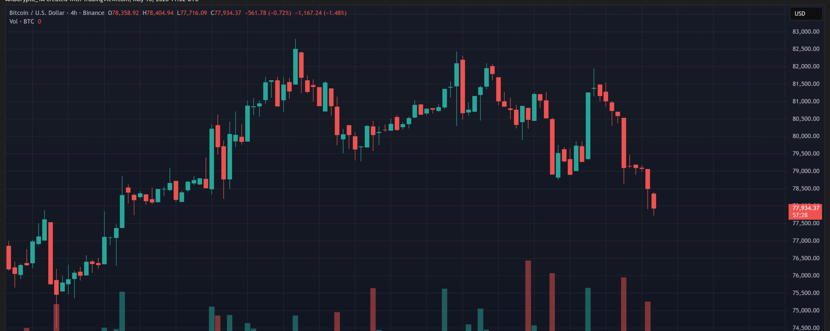

Crypto markets turned red fast after Bitcoin lost the crucial $80,000 level, triggering another wave of panic across major altcoins and wiping momentum from the recent recovery rally.
What started as a healthy pullback quickly became a broader risk-off move once institutional flows weakened, ETF money started leaving the market, and macro pressure returned all at once.
And right now, traders are asking the same question:
Is this just another correction… or the start of a deeper reset?
Bitcoin Lost Momentum Exactly Where Bulls Needed Strength
At the end of April, Bitcoin looked strong again.
Buyers successfully defended the $75K region, sentiment improved, and BTC started climbing back toward $82K as speculative activity returned across the market.
But there was one problem:
Bitcoin simply couldn’t break through resistance.
The market repeatedly rejected moves near the $81K–$82K zone, and each failed breakout slowly weakened bullish momentum.
Once profit-taking accelerated, the structure cracked.
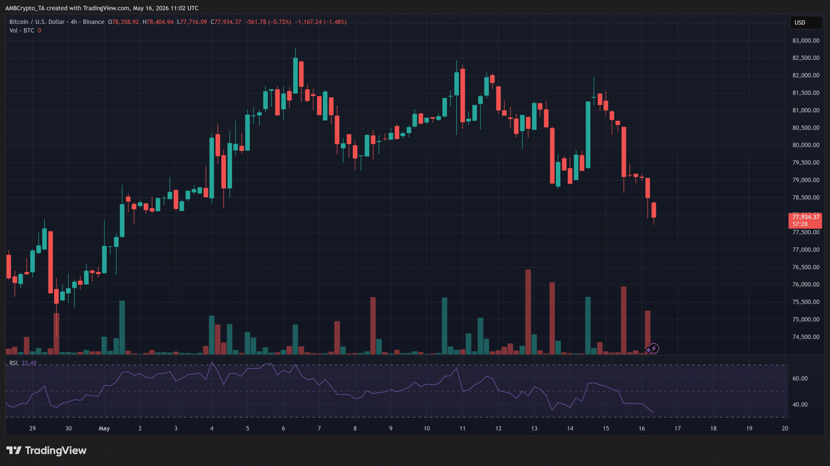
Between May 12 and May 16, heavy selling pressure pushed Bitcoin back below the psychological $80,000 level, shifting market sentiment almost instantly.
And as usual, altcoins got hit even harder.
Altcoins Followed Bitcoin Straight Down
The broader crypto market sold off aggressively alongside BTC:
Solana ($SOL ) dropped nearly 8%
Cardano ($ADA ) lost more than 7%
Hyperliquid ($HYPE ) fell over 6%
Ethereum (ETH) also remained under pressure
Meanwhile, Tron (TRX) and BNB showed comparatively stronger resilience during the sell-off, holding structure better than most large-cap assets.
Still, overall market appetite clearly weakened once Bitcoin lost support.
The Bigger Problem? ETF Money Started Leaving
One of the most important signals behind this move came from institutional flows.
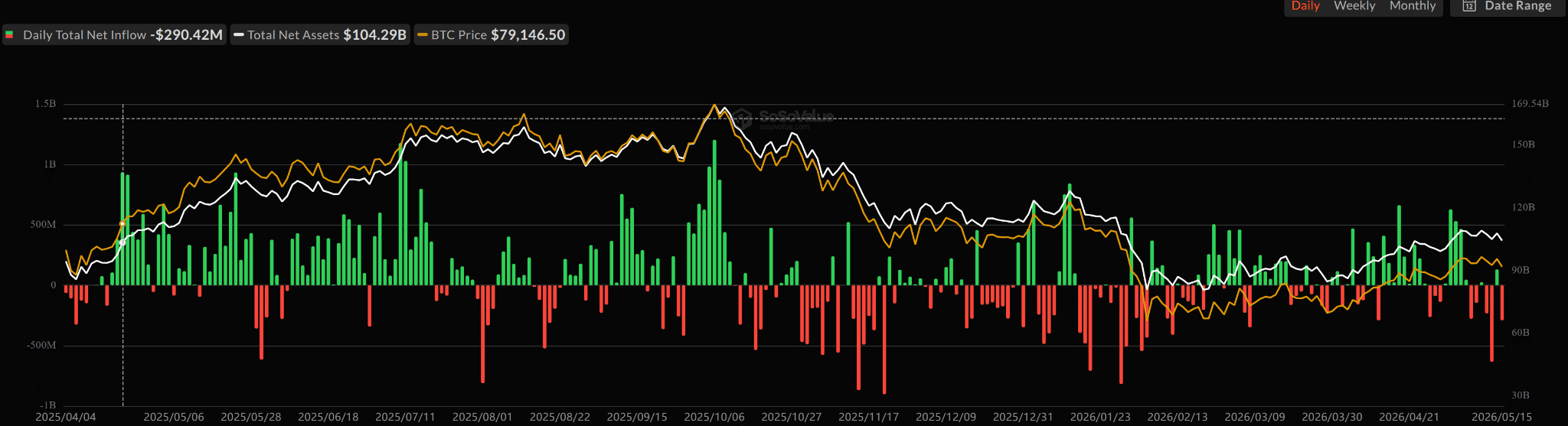
On May 15, U.S. Spot Bitcoin ETFs recorded roughly $290 million in net outflows.
Even more concerning:
none of the 12 Bitcoin ETFs posted positive inflows that day.
That’s a major sentiment shift.
For months, ETF demand has been one of the strongest pillars supporting Bitcoin’s rally. When that capital starts pulling back, markets notice immediately.
Ethereum ETFs also continued bleeding capital, posting another $65.6 million in outflows and extending their losing streak to nearly a full trading week.
The timing wasn’t random either.
As ETF demand weakened, Bitcoin simultaneously lost the $80K region — reinforcing fears that institutional confidence is becoming more fragile under current macro conditions.
Treasury Yields Are Quietly Pressuring Crypto Again
Another major factor sitting behind this drop is the bond market.
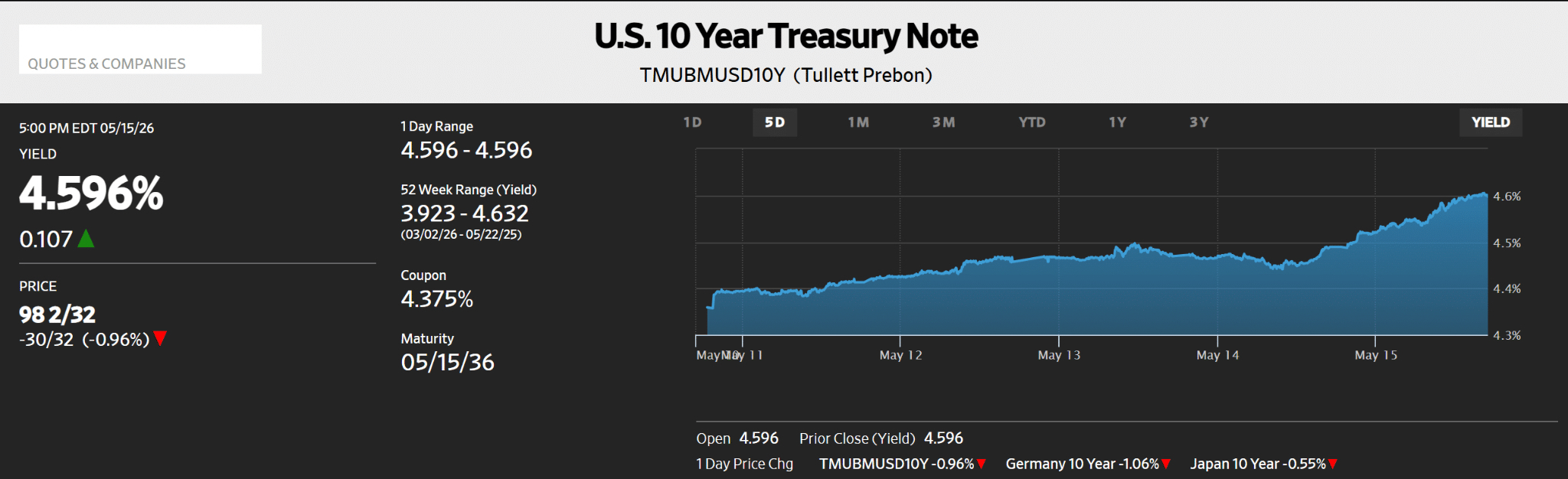
U.S. 10-year Treasury yields climbed back toward the 4.6% region, reaching some of their highest levels in months.
That matters because rising yields change how institutions think about risk.
When government bonds start offering stronger returns, investors become less interested in non-yielding assets like Bitcoin and gold — especially during uncertain economic conditions.
At the same time:
inflation concerns remain sticky
expectations for aggressive rate cuts have weakened
liquidity conditions remain tight
Together, that creates a tougher environment for speculative assets.
BlackRock’s Bitcoin Movement Added More Fear
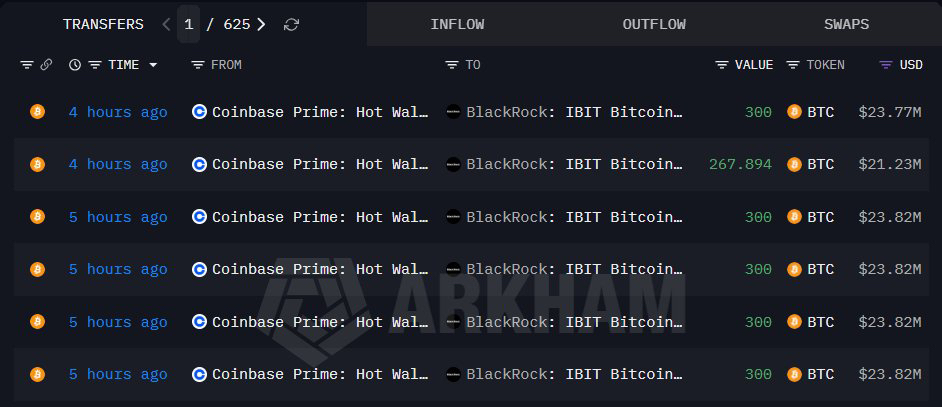
Market attention also shifted toward institutional wallet activity after reports showed BlackRock moved roughly 1,768 BTC — worth around $140 million — from Coinbase Prime during the broader market slowdown.
While large transfers don’t automatically mean selling, traders interpreted the move as another sign institutions may be repositioning more defensively.
And in fragile markets, perception matters almost as much as reality.
So… What Happens Next?
Right now, crypto markets are sitting in a very sensitive zone.
The recent sell-off doesn’t necessarily confirm a larger bear market, but it does expose how dependent current momentum has become on:
ETF inflows
institutional participation
macro liquidity conditions
If ETF outflows continue and Treasury yields keep rising, downside pressure could easily intensify further.
But if inflation cools, yields stabilize, and institutional flows return, Bitcoin could still recover relatively quickly from this weakness.
The next few weeks may decide whether this was simply a leverage flush… or the beginning of a much larger correction.
Final Thoughts
Bitcoin falling below $80K wasn’t caused by one single event.
It was a combination of:
repeated resistance rejections
weakening ETF demand
rising Treasury yields
growing institutional caution
fading market momentum
Crypto markets still remain highly reactive to liquidity and macro conditions, and right now, both are creating pressure simultaneously.
The important thing now isn’t just price.
It’s whether institutional confidence comes back before fear spreads deeper across the market.
#JapaneseSecuritiesFirmsCryptoInvestmentTrusts #BerkshireHeavilyIncreasesAlphabetStake