


With the continuous advancement of digitalization, it has become unprecedentedly easy for individuals and enterprises to store, transmit, and process data. At the same time, people’s concerns about data security and personal privacy are growing. To address this, cryptographers have developed various technologies to protect data privacy, among which zero-knowledge proofs are one of the core technologies.
In this article, while discussing how zero-knowledge proofs can be implemented, we will focus on comparing interactive and non-interactive zero-knowledge proofs.
Zero-knowledge proofs mainly fall into two categories: interactive and non-interactive. Interactive zero-knowledge proofs require the prover and verifier to engage in multiple rounds of dialogue, whereas non-interactive zero-knowledge proofs require no interaction between the two parties.
 Concept diagram of digital security technology
During interactive zero-knowledge proof, the prover needs to respond to questions posed by the verifier. This interaction can be done offline or remotely through networks and other means. The verifier may ask various questions, requiring the prover to provide information beyond what is being proven. The prover must respond in each round according to the requirements.
This kind of interaction can prove relatively complex content, but it also involves certain time and computational costs and requires both participating parties to maintain a connection. In comparison, non-interactive zero-knowledge proofs allow the prover to generate a proof once and send it to the verifier, without multiple rounds of interaction. This approach is faster and has lower computation and communication costs. However, in scenarios that require checking additional information or involve extremely complex content, non-interactive proofs may be infeasible.
One typical method for implementing non-interactive zero-knowledge proofs is the Fiat-Shamir heuristic based on digital signatures. A key difference between the two types of zero-knowledge proofs is the level of trust required. In interactive proofs, the verifier must trust that the prover follows the protocol and answers questions honestly. In non-interactive proofs, the verifier can independently verify the correctness of the proof without relying on the prover, so there is no need to trust the prover.
Another difference lies in computational complexity. Interactive proofs typically require more computational resources because they need multiple rounds of interaction and additional computation. By contrast, in non-interactive proofs, the verifier only needs to perform a single computation, making them more efficient and more scalable.
Interactive and non-interactive zero-knowledge proofs each have their pros and cons, and the best choice depends on specific needs and constraints. If the prover and verifier can communicate in real time, interactive proofs may be more suitable. If they cannot both be online simultaneously or there are concerns about the prover’s trustworthiness, non-interactive proofs are more appropriate. Overall, both types of zero-knowledge proofs should be selected reasonably based on the specific problem and application scenario.
Interactive zero-knowledge proofs are the earliest researched and applied type of zero-knowledge proofs. Through multiple rounds of interaction, the verifier can ask the prover questions, thereby verifying the proven content. This interactivity makes it suitable for solving relatively complex problems.
For example, in the well-known “graph coloring problem,” the prover claims that it can color every vertex in any given graph such that adjacent vertices have different colors. The verifier can use an interactive zero-knowledge proof to determine whether this claim is correct. In the proof process, the prover first colors the graph in some way, and then the verifier chooses any two vertices and asks whether their colors are the same. The prover needs to answer the questions but cannot reveal the coloring method. This interaction continues for multiple rounds. The verifier can check the prover’s random data used in the coloring approach. If the prover reliably answers all questions, then the claim is valid.
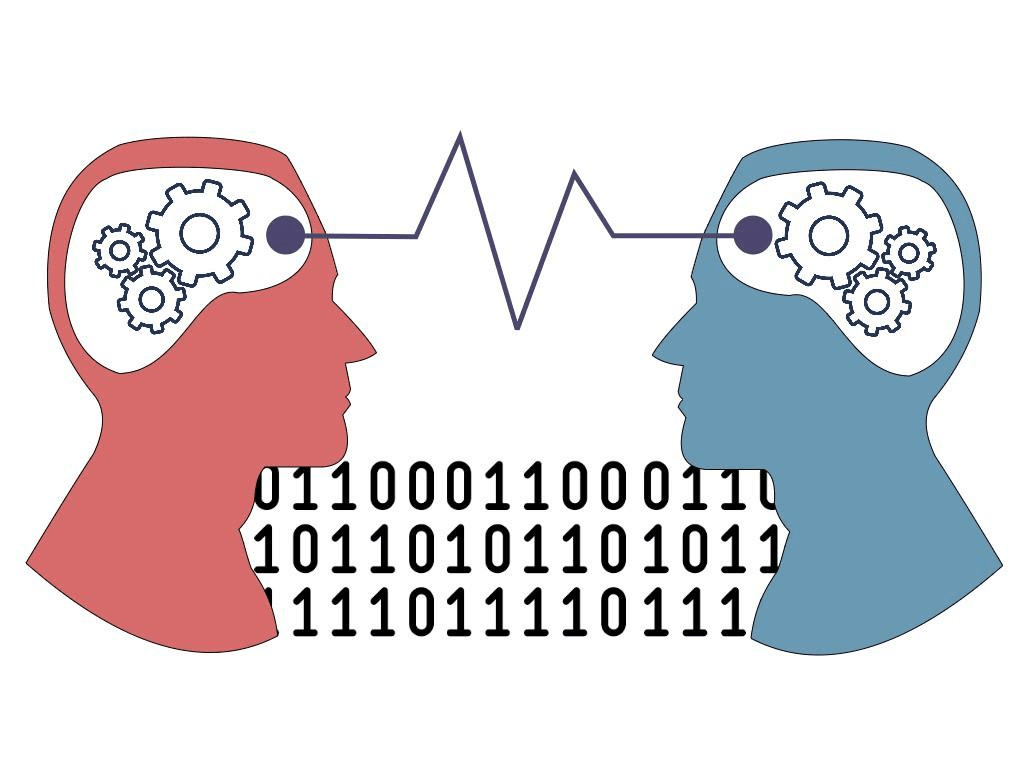 Diagram concept of zero-knowledge proofs
However, interactive zero-knowledge proofs also have certain limitations:
First, the prover and verifier need to communicate interactively, which may be inefficient and time-consuming. To complete the proof, both parties must exchange information multiple times—especially when the content is complex or the data volume is large—potentially requiring a great deal of time. This can be problematic in scenarios with high throughput requirements or real-time decision-making.
Second, interactive zero-knowledge proofs are difficult to scale. As the amount of data to be proven increases, the proof complexity increases proportionally, making it difficult to complete the proof within a reasonable time. This may become a barrier in fields that need to prove large-scale data, such as supply chain management or healthcare.
Third, this method relies on the assumption that both the prover and verifier are honest and trustworthy, but this assumption does not always hold. The prover may try to deceive the verifier by sending false information or manipulating the proof process in other ways, thereby undermining the proof’s integrity and practicality.
Finally, interactive zero-knowledge proofs require specialized cryptographic technology support, which may be difficult to implement and requires high-level technical experts, making it hard for non-technical users to use and limiting its application in certain scenarios.
Overall, although interactive zero-knowledge proof theory can theoretically provide strong security and privacy guarantees, the above limitations to some extent restrict its widespread adoption. With technological advancement, non-interactive zero-knowledge proofs are gradually becoming a more practical choice.
Among them, zkSNARK and zkSTARK are two popular implementations of non-interactive zero-knowledge proofs, widely used in blockchain and cryptography. This article briefly discusses the differences between the two, along with their respective strengths and weaknesses.
zkSNARK (Zero-Knowledge Succinct Non-Interactive Argument of Knowledge) is a highly compressed non-interactive zero-knowledge proof method. It can prove that any computation satisfies certain conditions without revealing the specific computed values or detailed steps. Using zkSNARK, you obtain a verified proof in which the computation result described is correct, but the computation inputs and details are unknown. The main advantage of zkSNARK is that the proof is very compact; only about 200 bytes are needed for the proof to verify complex computation results. The technology also supports efficient cryptography-based privacy-preserving computation, especially suitable for untrusted environments where verification is needed but detailed information is not meant to be leaked, such as cryptocurrency and identity authentication.
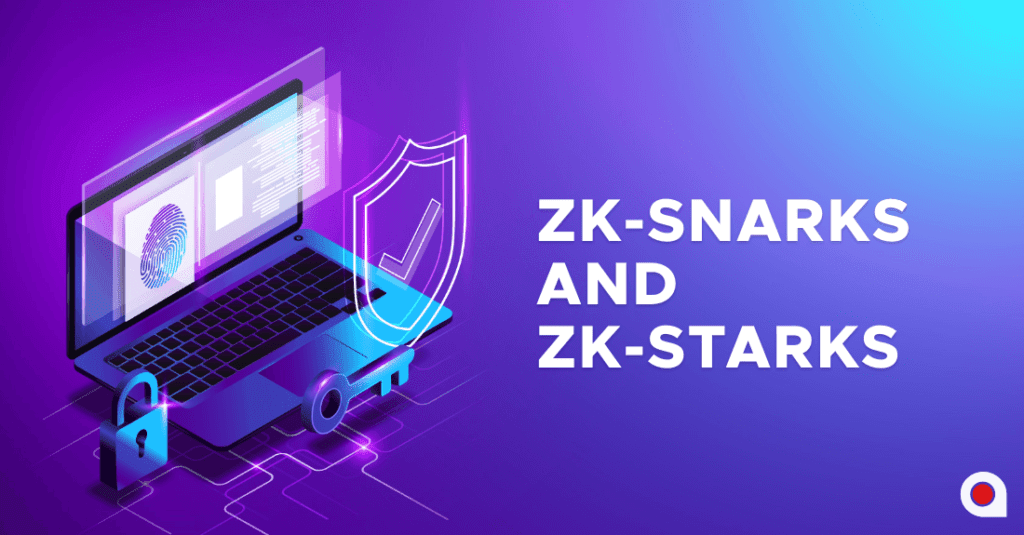 Comparison diagram of two major technologies
Some of the main advantages of zkSNARK are: high efficiency, small proof size, and suitability for high-throughput systems such as blockchains. However, it also has drawbacks: its security depends on the trusted setup process, which carries an attack risk; different parameters are needed for different data selections, resulting in poorer practicality; and the proof process is not transparent enough, requiring access to the private key for verification.
In contrast, zkSTARK is another zero-knowledge proof technology designed for processing complex algorithms and big data. Its advantages include not requiring a trusted third-party setup, providing higher security; more general proofs and strong scalability; good resistance to attacks; and no need for secret keys, making it suitable for key-based computations in untrusted environments. However, zkSTARK has higher computation and proof-size costs, and in some scenarios it is less efficient.
Some major strengths of zkSTARK are: higher transparency, allowing proofs to be verified publicly without accessing secret information; better scalability, where efficiency decreases more slowly as data size increases compared with zkSNARK. However, it also has the following disadvantages: limited applicability—only statements representable as polynomials can be proven; it requires an additional trusted setup step to generate a public reference string; and the technology is not yet fully mature—its long-term security and reliability still need validation.
In summary, zkSTARK is superior to zkSNARK in certain aspects, such as efficiency and security. However, its applications also face some challenges and require careful selection based on specific needs. With the development and optimization of zero-knowledge proof technology, computational efficiency, proof size, and more will improve. We look forward to its broader adoption in areas such as privacy protection and secure verification.