


Three common mistakes in offensive investing
The harder you work, the less likely you are to be luckier, because you may be heading in the wrong direction.
The opposite of defensive investors are offensive investors, who, through extensive research, operate more proactively and frequently, hoping to achieve higher returns than defensive investors.
Buffett: You don't need a high IQ to invest. If you have an IQ of 160, it's useless for investment. You might as well give others 30 points. What you need is to maintain a stable mood and the ability to think independently, to draw conclusions based on facts and reasoning, and not be disturbed by other people's opinions. This is actually difficult for many people. I never make money because others disagree. Your investment will not make money because 1,000 people agree, nor will it lose money because 1,000 people disagree. What you need is emotional stability.
In fact, this view is derived from Graham. The investment master said in the book "Smart Investor" that many talented and energetic people have invested a lot of time in research, but not only did they not make money, but they also lost money. The reason is probably that they put their efforts in the wrong direction.
The harder an investor works, the more he or she needs to figure out which methods are more likely to succeed and which methods are more likely to lead to failure.
The outstanding achievements of all aggressive investors are nothing more than the result of adopting three methods. We will explain the characteristics and problems that may be encountered respectively.
1. Timing Trading
That is to pick a so-called "better time to buy or sell", which usually means buying when the price rises and selling when it falls. And most people tend to choose those currencies that "perform" better than the market average.
For example, many people will constantly see coins that have skyrocketed on Binance’s popular coin price increase list (although few people notice that there are no undefeated generals on it). These popular coins will have larger trading volumes. The more they rise, the more people buy them, and the larger the trading volume.
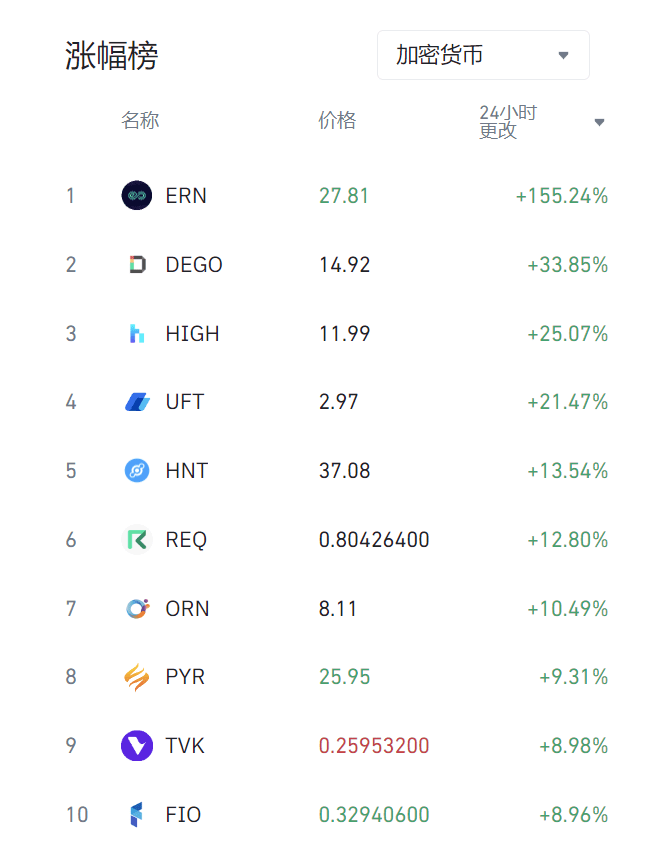
24-hour gainer list on Binance website on September 29, 2022
At the same time, some contract players often use leveraged operations. For example, when the market is bearish, they use USDT to short and then buy it back when the price drops. They can make money even when the price drops or when they buy at the bottom. This is exactly the portrayal of most people in the cryptocurrency circle, and Graham rarely thinks that these people are not worthy of being called "investors."
He believes that all these speculative expectations of judging market trends and continuous buying and selling operations are speculative behavior, and he believes that the cost of speculation is serious losses.
Conclusion: It is difficult to succeed by trying to predict the market and buy low and sell high!
2. Short-term operation
People make extremely short-term operations based on some favorable or unfavorable factors and expect to make a profit. For example, common reasons for buying in the cryptocurrency circle are: Musk mentioning a certain coin, Binance announcing the launch of a trading pair of a certain coin, etc. However, the results of such operations are very dangerous, often "drawing gates", that is, a sharp rise and then a rapid fall.
It is obvious that short-term trading will not produce a long-term victorious general.
3. Long-term operation
This method is for some people to choose projects that have average performance now but are expected to perform well in the future. Investors who take long-term operations often make decisions that seem scientific at the moment after detailed research, but often face unsatisfactory results. The reason is that they will encounter two major problems.
Problem 1: People are prone to making mistakes
Just like when we were optimistic about EOS, ICP, and DOT, we didn’t think there was anything wrong with them - they represented a new and better future, but the actual development was completely different from what most people expected.
For example, EOS, which once carried the concept of blockchain 3.0, and its TPS of 10,000 instantly killed ETH with a TPS of only 10, gave people great expectations. However, the actual situation is that the TPS is far below expectations, and after raising billions of dollars, the team has no intention of making any further operations. The celebrities who called for the project used the huge amount of EOS in their hands to harvest the market.
The investor with the most tragic fate is often the one who has the greatest faith in the project.
Or we often see a project promoting that they will revolutionize a certain field in the future, while proposing dazzling concepts and having celebrity endorsements, which give people sufficient reasons to invest. However, in the eyes of defensive investors, this is the first step to making a mistake.
Smart investors should realize that
Problem 2: Expectations are likely already priced in
Even if the judgment is correct, it is likely that the current market price may have fully reflected the prediction. If the project's benefits are implemented tomorrow, the price often starts to react a few days ago, which is especially obvious in the unregulated cryptocurrency circle. You are the CEO of the project, you know the benefits, your colleagues and relatives know about it, which is reasonable. As for the benefits of the project, if it can be predicted, it has been considered. For example, ATOM released White Paper 2.0, which will cause deflation in the future. This forward benefit may have been priced in by the market, so it is likely to be wrong to buy now.
Whenever we predict the future, there are others doing the same thing for the same reasons, so investors who think a project has long-term promise may find that their predictions are completely wrong, even more so than those who trade in the short term.
Widespread knowledge leads to widespread error. Therefore, in theory, if you can make the right prediction when everyone is wrong, you will definitely make a lot of money, but this only exists in theory. How many analysts can really make a lot of money in the long run?
This goes against one of the two main rules of defensive investing: only buy stocks of important companies with long records of profitability and strong financials.
4. Countermeasures
To consistently and reasonably beat the market and make money in the long run, you must be a smart investor and follow the following two strategies:
(1) Robust strategy
That is, your method is very stable. You will not lose your principal, and you are likely to become the final winner. The three major principles of investment: in-depth analysis, principal safety, and appropriate returns.
(2) Unpopular strategies
There is a saying in the cryptocurrency circle: "Crowded places are the most dangerous." Generally recognized favorable factors will eventually lead to a collapse, without exception. Friends, please remember this.
For example, when BAYC's monkey land auction was hot, everyone raised the gas fee to 4 ETH to grab a piece of land, and the land itself cost 2 ETH, but now the monkey land has fallen below 1 ETH. At the same time, in order to grab the monkey land, the APE token has surged to nearly 30, and now it is close to 5.
For example: ETH merged, and its rebound from the bottom was much stronger than BTC, but its price fell all the way after the merger.
So, are only defensive investors successful? Are aggressive investors not? Of course not. For example, legendary fund manager Peter Lynch always holds hundreds of stocks at the same time, studies them all year round, from morning till night, and has achieved a very high compound annual return.
Generally speaking, for the entire cryptocurrency industry, all coins are overvalued in a bull market, and often undervalued in a bear market. For individual coins, they may even be overvalued or undervalued due to the comments of some big Vs or some meaningless prejudices. In other words, the intrinsic value and external price of the invested coin often deviate, so theoretically, we have the opportunity to make money from this deviation.
But the difficulty is that if you want to buy a coin that is undervalued by the public and you understand, you may need a very long time of patience! When ETH first came to China, Vitalik gave speeches everywhere, hoping to raise some funds, but he encountered a lot of cold eyes. Even after the issuance, there were long articles on the Babbitt forum saying "In the long run, it is worthless" and "Vitalik is the biggest pyramid scheme leader, ETH is the biggest capital plate", and many people panicked and sold it at a few dollars (later the highest price reached nearly 5,000 US dollars per coin).
Some people are determined to short a currency when the public overvalues it. This is a great test of courage, perseverance and financial resources, because there is a possibility of long-term losses, which may cause self-doubt and lead to closing positions. Therefore, I never recommend that novices short some coins at will - the currency circle often has unexpected continuous pulls. To be precise, due to the high risk of contracts and leverage, it can be emphasized that it is impossible for any novice to try to make money in the long term.
In general, aggressive investment is valuable in the cryptocurrency world, but it is extremely difficult to operate. For most users, who do not have the time and ability to research projects, defensive investment is the best choice.
After the main positions are configured in a defensive manner, using 10% of the positions for offensive investment is both interesting and likely to have high returns in the cryptocurrency world. Therefore, I will continue to try to share this with you on Twitter.