


In recent years, we have witnessed all kinds of fancy routines in the social track. It seems that every few days a new social software emerges, quickly attracting users with new gameplay. They appear in an overwhelming manner and loudly declare to be the next "social king", but most of them are gradually abandoned as people's sense of novelty wears off.
Another company that has experienced such ups and downs is Clubhouse, an audio social application that was once hard to get a code for. If you think about it carefully, we haven't seen any news about it in the news for a long time.
Clubhouse highlights: the favorite chat room of bigwigs
Clubhouse was launched in April 2020. Initially, only an iOS version was available, focusing on the use of audio for social interaction. At first, users could only use Clubhouse by invitation. Only 8 months after its launch, the number of users exceeded 600,000. Andreessen Horowitz even invested $10 million in Clubhouse just one month after its launch.
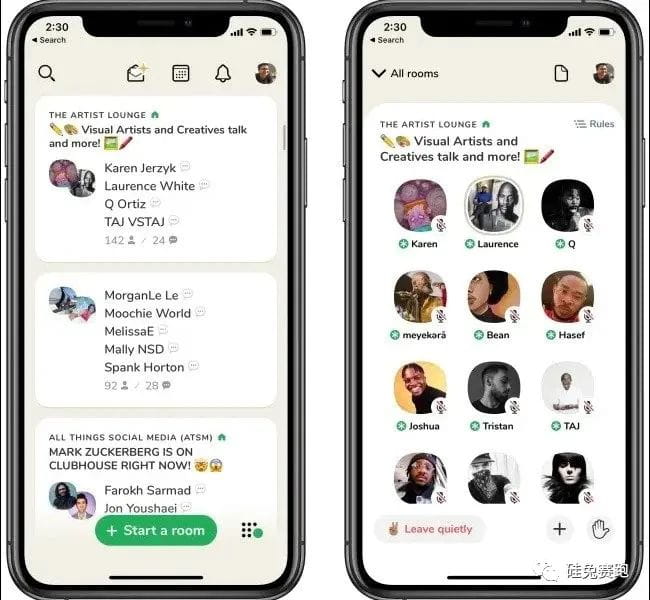 Clubhouse
This popularity has also attracted many celebrities to try it. In early 2021, Elon Musk started chatting in the Clubhouse chat room on time after the Twitter announcement. Within a few minutes after the chat started, the chat room limit of 5,000 people was filled.
Shortly thereafter, Zuckerberg also went online to Clubhouse to chat about his plans for the future of FB. The two of them had a chat that completely made this chat app popular.
In just half a month, the number of Clubhouse downloads rapidly increased from 3.5 million to 8.1 million, and the invitation code on eBay was once sold for $400. During this period, Clubhouse completed a US$100 million Series B financing from Andreessen Horowitz.
One year after Clubhouse was officially launched, the number of weekly active users exceeded 10 million, but the total number of users gradually began to decline.
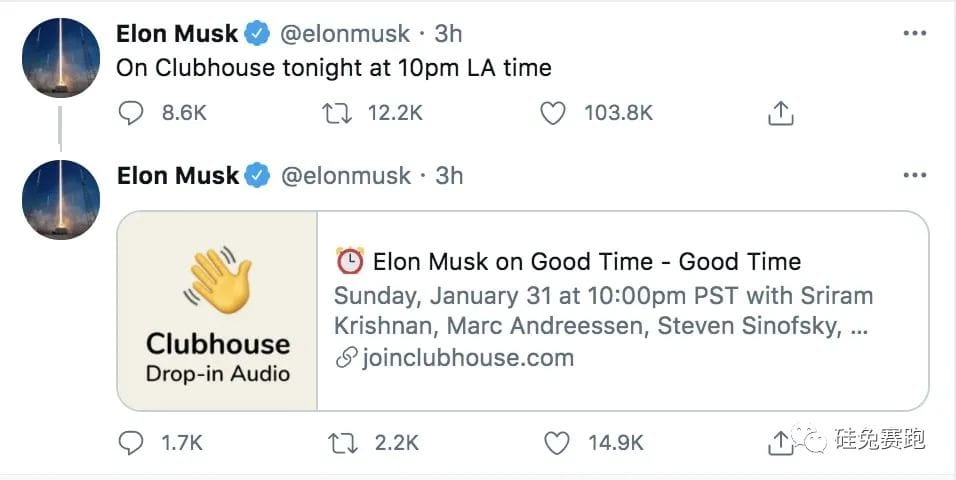 Musk's Twitter preview
Clubhouse also completed its Series C financing round led by Andreessen Horowitz in April 2021, with participation from institutions such as DST Global and Tiger Global. Although the amount of financing was not disclosed to the public, the valuation after this round reached US$4 billion, which tripled from the valuation in the last round of financing three months ago.
In order to attract more users, Clubhouse launched the Android version of the app in May 2021. Six weeks after its launch, 10 million new users joined. Clubhouse also lifted the invitation-only restrictions in July and opened the app to the public.
However, Clubhouse's high-profile operation since its launch has not only brought explosive growth in users and crazy investments from investors, but also aroused the attention of competitors who want to share the voice social pie:
 Memes: Clubhouse’s competitors
Twitter launched the internal beta of Spaces in late 2020, and in May 2021, it opened the feature to any user with more than 600 followers. Twitter even pinned Spaces to the top of its homepage for a time;
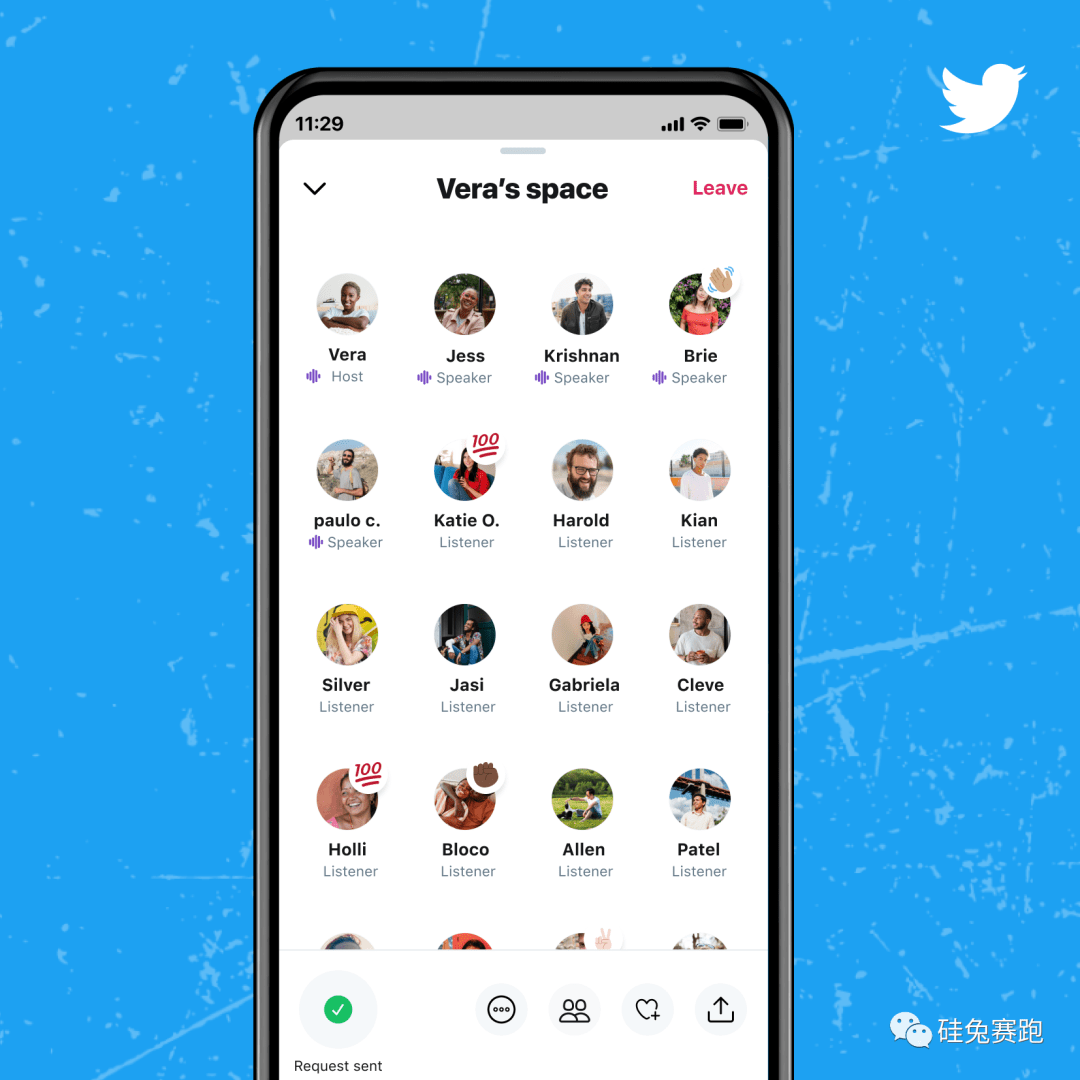
Twitter Spaces
Discord, which uses voice chat as its core function, launched Discord Stage Channels in 2021, allowing users to organize more private and professional small-scale voice lectures and interviews;
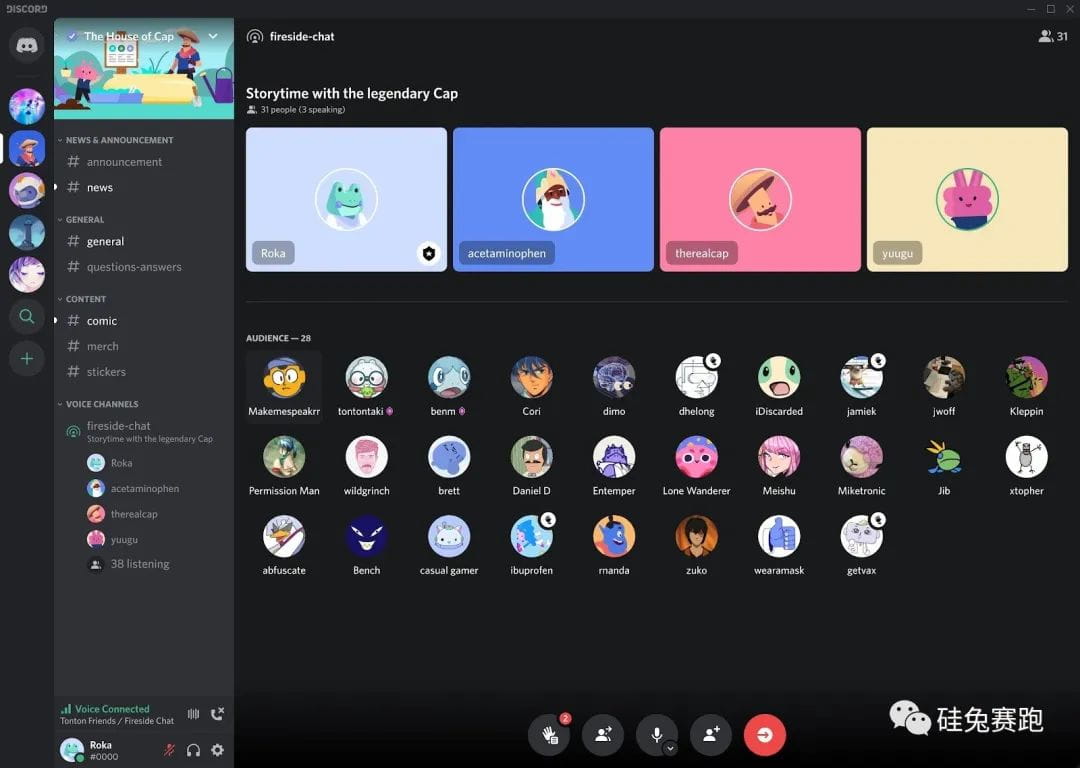 Discord Stage Channels
Facebook launched Facebook Live Audio Rooms in June 2021, where public figures and content creators can initiate voice chats that any user can listen to. Some netizens even joked that Zuckerberg's previous appearance in the Clubhouse chat room was to "steal skills."
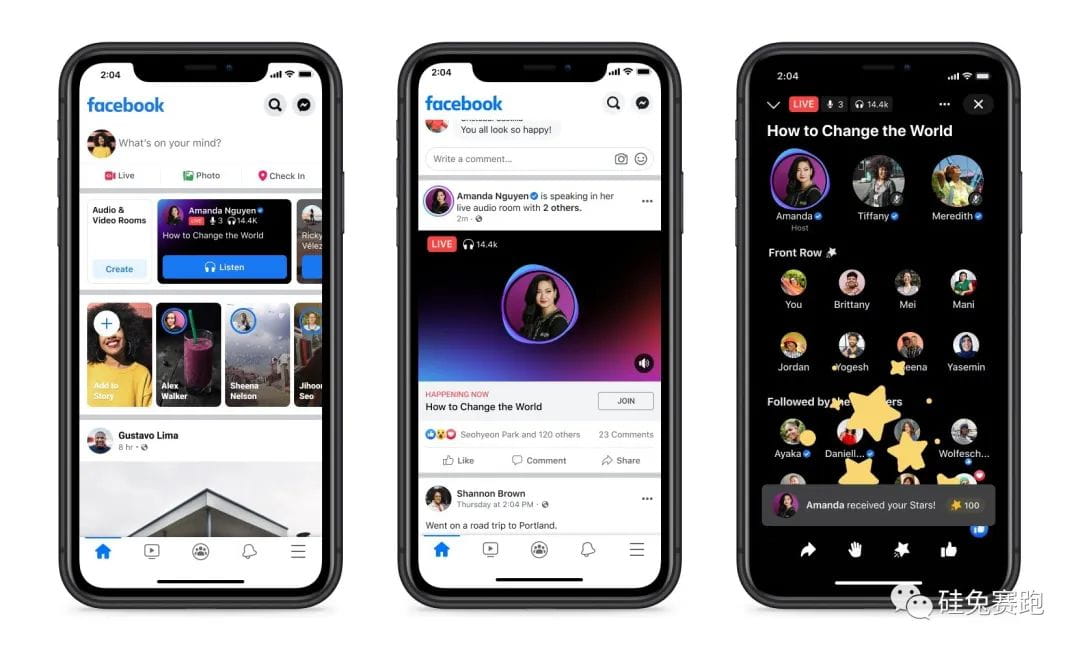 Facebook 的 Live Audio Rooms
In the same month, Spotify also launched its own Clubhouse competitor - Greenroom, which is based on the previously acquired sports audio content app Locker Room. Users from all over the world can create and participate in voice chat rooms, and generate conversations into podcasts.
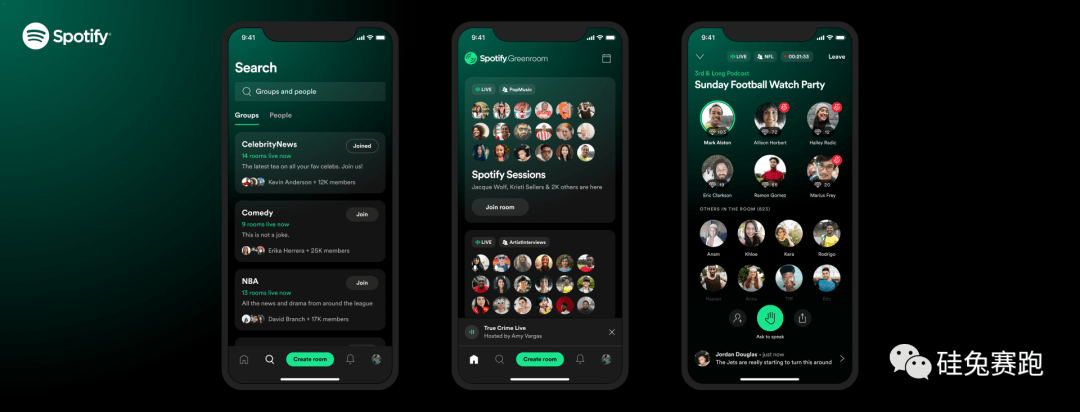 Spotify 的 Greenroom
Faced with the strong onslaught of multiple Clubhouse copies, cracks began to appear in Clubhouse's own walls. For example, the influx of users caused the app to crash frequently, and false information and extreme remarks often appeared in the voice chats on the platform, and Clubhouse was powerless to do anything about it. These have become the weaknesses of Clubhouse. By the second half of 2021, its growth slowed significantly. According to data from App Annie, its downloads reached a peak of 9 million in June, and in November this number was only 920,000.
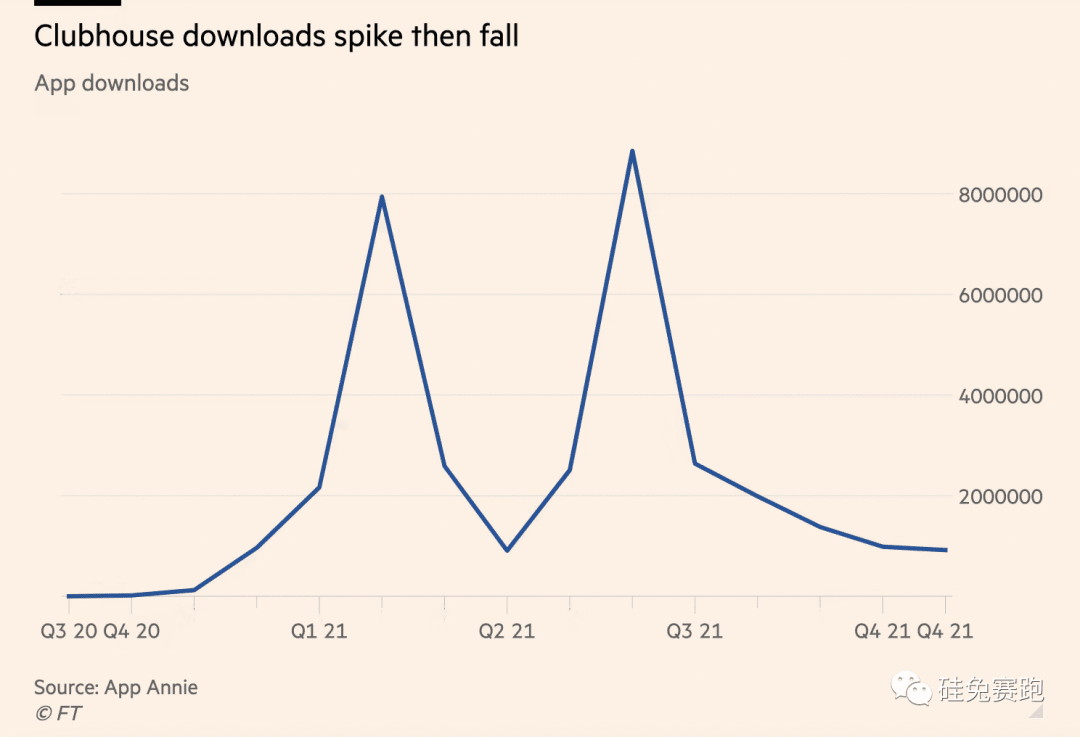 Clubhouse downloads dropped significantly, falling from the altar & self-rescue
In order to retain users and maintain the title of "the hottest social media", Clubhouse has also conducted some explorations.
For example, we cooperated with TED to broadcast exclusive speech content in voice chat rooms, and cooperated with Stripe to allow content creators on Clubhouse to make money. In September 2021, we launched a waving function called "Wave", which allows users to quickly invite friends to join voice chats by clicking the "👋" emoji, encouraging more casual and natural social behavior👇
 Clubhouse’s Wave feature
Less than a month later, Clubhouse launched a feature called "Replays and Clips", which allows users to relisten, capture and record voice clips worth recording and share them on other social media to attract more users to join👇
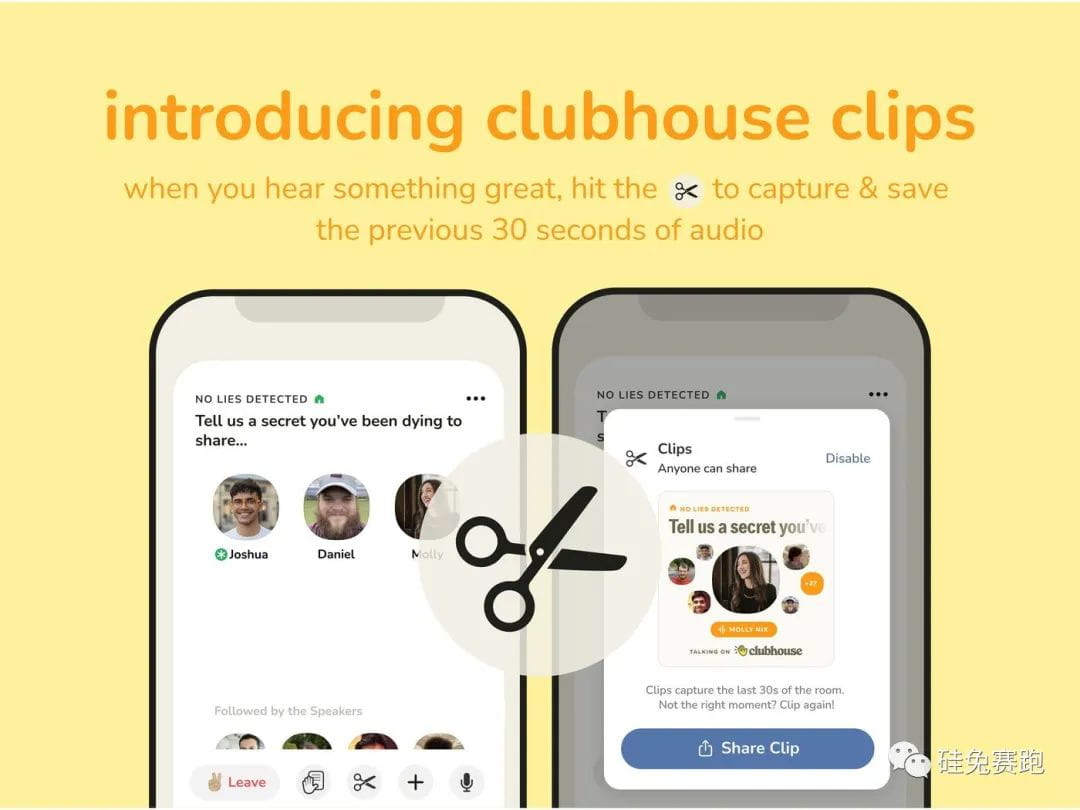 Clubhouse’s Replays and Clips
Last year, Clubhouse also added a text chat function to the app, saying that "we hope everyone can join the conversation in the way that is most comfortable for them." At the same time, it also tested the game function on the app to help users break the ice and start chatting.
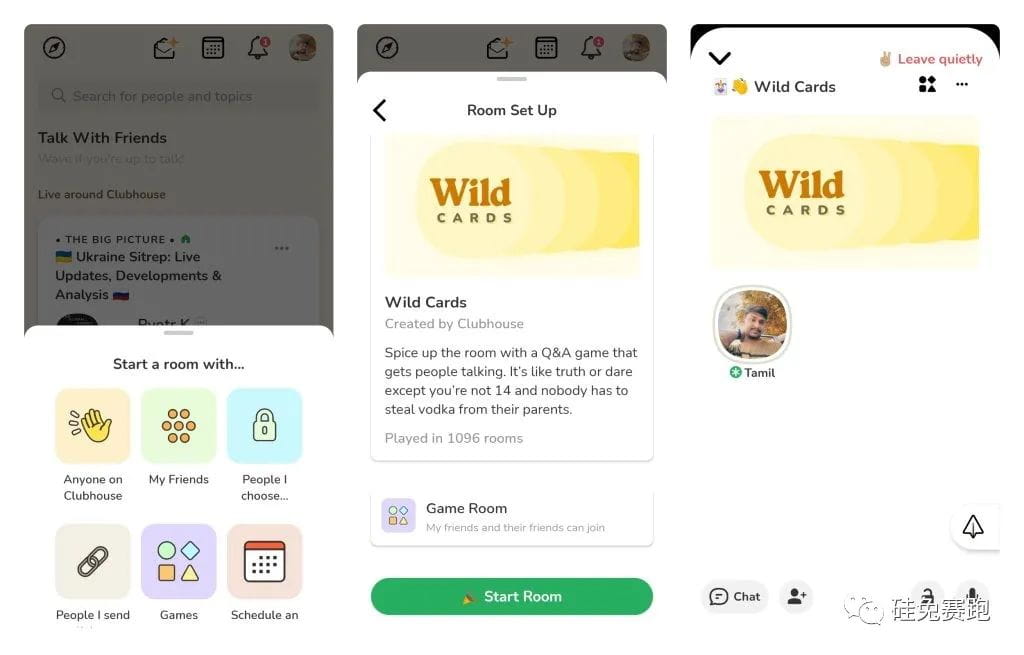 Clubhouse’s wild cards feature
Unfortunately, the impact of these layouts was minimal, and Clubhouse began to be abandoned on a large scale. At the beginning of this year, the number of active users was only 3.5 million, a decrease of about 60% compared to the peak in 2021. At the same time, Clubhouse also carried out two rounds of layoffs last year and this year, respectively. The layoffs in April this year laid off more than half of the employees.
After being away from the public eye for a while, Clubhouse seemed to have gone through some self-reflection. In September, Clubhouse announced in a blog post that "we are back, and this time we are going to make a new Clubhouse." The new version mainly focuses on a brand new chat function "Chats". In the blog post, Clubhouse introduced that this function is like a combination of group chat and Instagram Stories. Users can send voice messages at any time, and other users can listen to messages and reply at any time. Users can chat with friends in the address book or friends of friends, thus increasing the possibility of expanding the circle of friends.
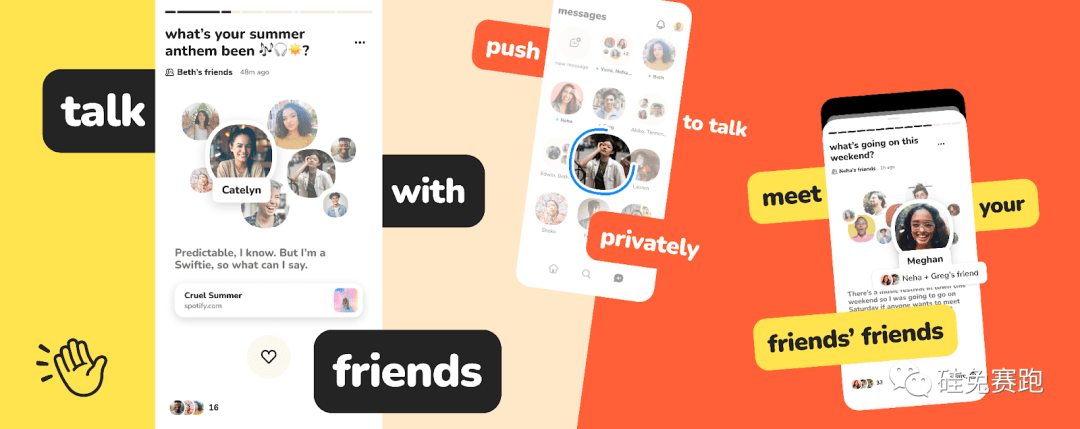 Clubhouse Chats
This "Chats" feature will coexist with the previous voice chat room function, but Clubhouse hopes that this new change will achieve a different effect from the previous voice chat function.
The most core voice is retained in the medium, because voice is easier and faster than text and pictures, and users can better perceive their friends' true mood and status from voice. Asynchronous chat reduces social pressure and makes it easier for users to follow friends' dynamics and join discussions. Chats will also be more in-depth and interesting. It is not difficult to see that Clubhouse is encouraging users to transition from paying attention to voice lectures of celebrities to daily chats with friends.
Faced with the transformation and layoffs, founder Paul Davidson did not attribute it to the recent volatile market environment, but said that this was a decision made to adapt to people's social needs in the post-epidemic era. As people return to physical social interactions and life, it becomes increasingly difficult to find discussions of interest on Clubhouse or to spend time participating in them. The adjustments made by Clubhouse this time are intended to address these pain points, retaining the ease and flexibility of voice so that users can participate at any time, but using daily dating needs to unlock more usage scenarios, and using a better product for a bigger future. As for layoffs, it was because the size of the team was too difficult to leverage changes, and this decision had to be made to ensure that the pace of transformation was light.
Founder: Explosive growth does more harm than good
For startups, being able to achieve explosive growth by becoming an "Internet celebrity" is a dream, which means that it can save high customer acquisition costs and rely on word of mouth to focus the attention of users and investors in a short period of time. This is indeed the story of Clubhouse, which achieved a 10-fold monthly growth a few months after its birth, and quickly ranked first in the App Store in Japan, Germany, Italy and other countries. At the same time, it quickly completed three rounds of financing within a year.
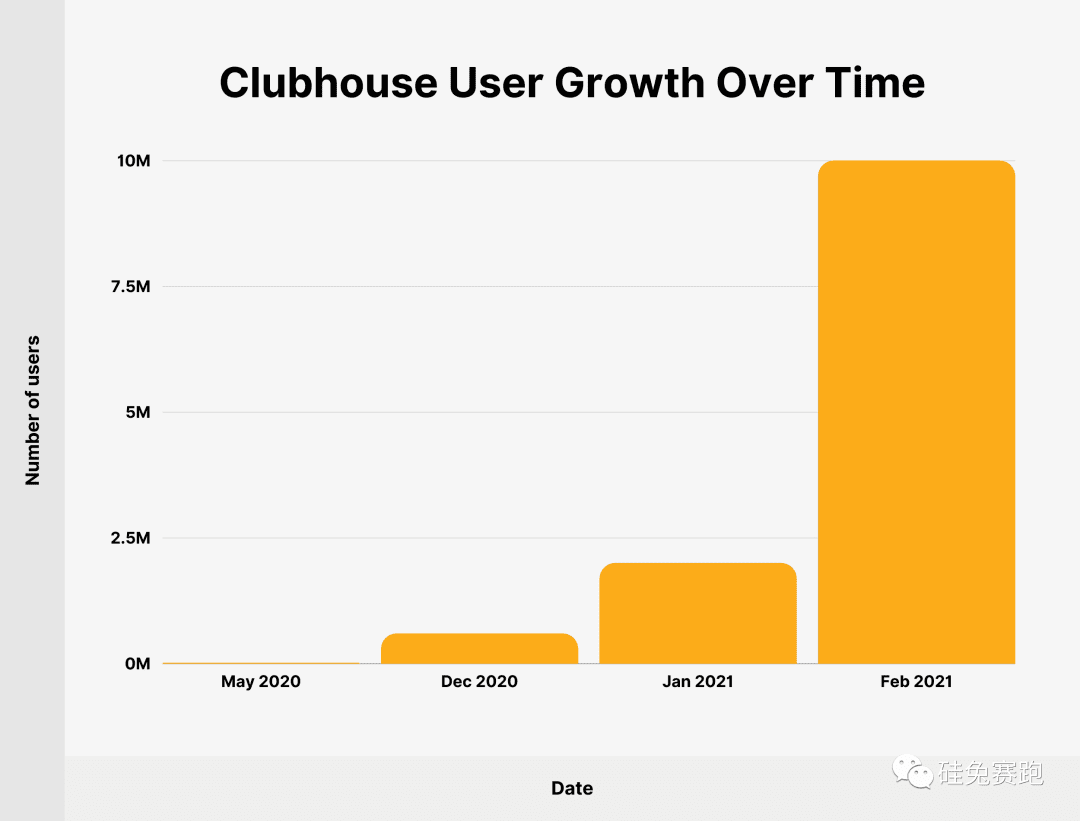 Clubhouse user growth
However, such attention has also brought a lot of pressure to all aspects of Clubhouse's development. For example, with the influx of a large number of users, the app crashed, causing most people to have a very bad first experience and directly abandon it; for example, before a complete discourse control system was established, it was abused by extremist organizations who wanted to "lead the pace"; of course, the most fatal thing is that before the moat was built, other software followed suit, and it lost its unique competitive advantage.
However, being able to experience such ups and downs in the early stages of a company's growth is a great training for the founder's mentality. Paul Davidson said in a previous interview with TechCrunch that he has been trained to be "both Buddhist and brave". When everything goes smoothly, he knows that such momentum will not last, but when encountering setbacks, he will have the confidence to overcome difficulties. However, Davidson also emphasized that he believes that it is not a lucky thing for a startup to become an Internet celebrity. This kind of rocket-like growth is more harmful than beneficial to the company. What a company needs most is steady development.
Clubhouse's decision to transform also shows a change in Davidson's philosophy. It maintains an intimate and flexible voice social core, and extends the sense of surprise that users once had in discovering interesting chats to developing new chat friends. It no longer pursues traffic brought by big Internet celebrities, but instead creates products based on the daily social scenarios and habits of ordinary people. As chats transition from "public" to "private", Clubhouse may also want to peel off a layer of glamorous outer layer and get back to its original intention of using products to connect people when it was first founded.
The good news for Clubhouse is that the clones that once tried frantically to block it have basically lost their momentum. For example, Spotify shut down its live audio app Spotify Live (formerly Greenroom) in April this year, saying that it no longer made sense for Spotify as an independent app. Twitter Spaces was shut down by Musk last year after Elon Musk and a reporter had a quarrel in a Space.
Facebook announced at the end of last year that Facebook Live Audio Rooms will be discontinued, and users will not be able to initiate broadcasts from previous audio rooms; although Discord's Stage Channel feature still exists, Discord has turned off its discovery function, saying that it does not help users find the channels they want to listen to, which means that Clubhouse faces less competition.
But if you think about it carefully, this good news is actually a false proposition, because if even the social giants cannot solve the problem of voice social networking, then the challenge left for Clubhouse will be even greater. Perhaps we can explain it as voice is not the main battlefield of these software, so they have not made any effort, but voice social networking has not made much progress in Europe and the United States in recent years, especially when we make a comparison, Twitter has become a new battlefield for people to record their moods and attitudes in text, Instagram's beautiful picture sharing has opened up new ideas for content creators, and TikTok has set off a short video craze, but the exploration of voice is more limited to podcasts. Voice, which seems to be the most natural medium, cannot open the hearts of this generation of "rather die than not socialize" users.
Clubhouse's renewed attack this time is indeed a bit of a "burn the boats" spirit, but this time it not only needs to save its own destiny, but also carries the expectations of many people for voice social networking. Can Paul Davidson's optimism and Buddhist approach win this battle? Let us wait and see.