
#stablecoin
stablecoin
4M views
19,123 Discussing
Hot
Latest

·
--
USDC Enters EU Dual Supervision Today Under MiCA
Circle's USDC becomes the first significant e-money token under the EU's MiCA framework today, Nov 12. The European Banking Authority now directly supervises its reserves, liquidity, own funds and redemption plans — a milestone for regulated stablecoins in Europe.
$USDC #USDC #MiCA #Stablecoin #CryptoNews
Not financial advice.

25


·
--
Bullish
$BTC
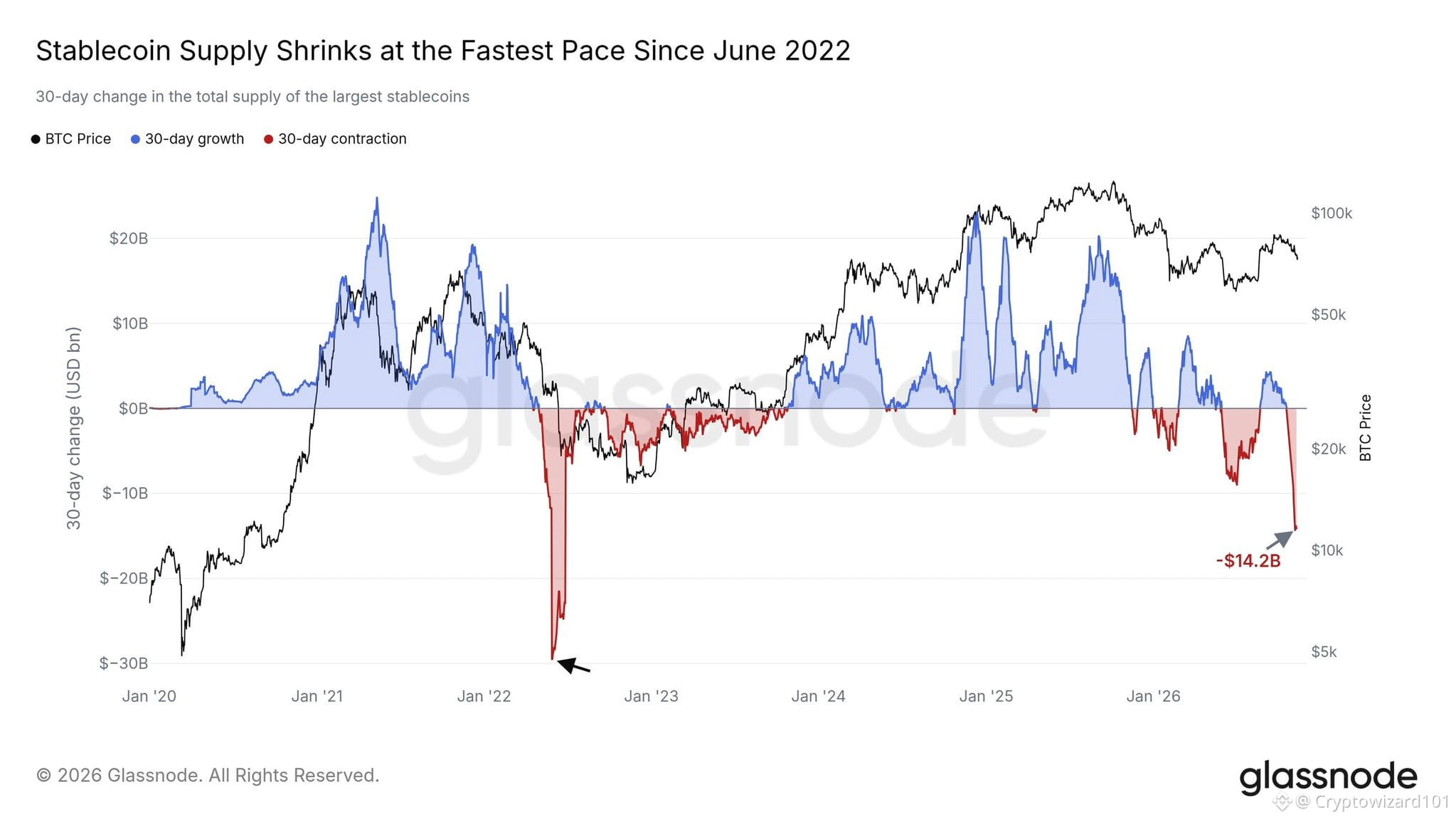
🚨 $14.2 BILLION JUST EXITED THE STABLECOIN MARKET!
#Stablecoin supply has plunged by $14.2 billion in the past 30 days, marking its largest contraction since the 2022 bear market.
{future}(BTCUSDT)
$BTC
🚨 $14.2 BILLION JUST EXITED THE STABLECOIN MARKET!
#Stablecoin supply has plunged by $14.2 billion in the past 30 days, marking its largest contraction since the 2022 bear market.
🚨 $14.2 BILLION JUST EXITED THE STABLECOIN MARKET!
#Stablecoin supply has plunged by $14.2 billion in the past 30 days, marking its largest contraction since the 2022 bear market.
114

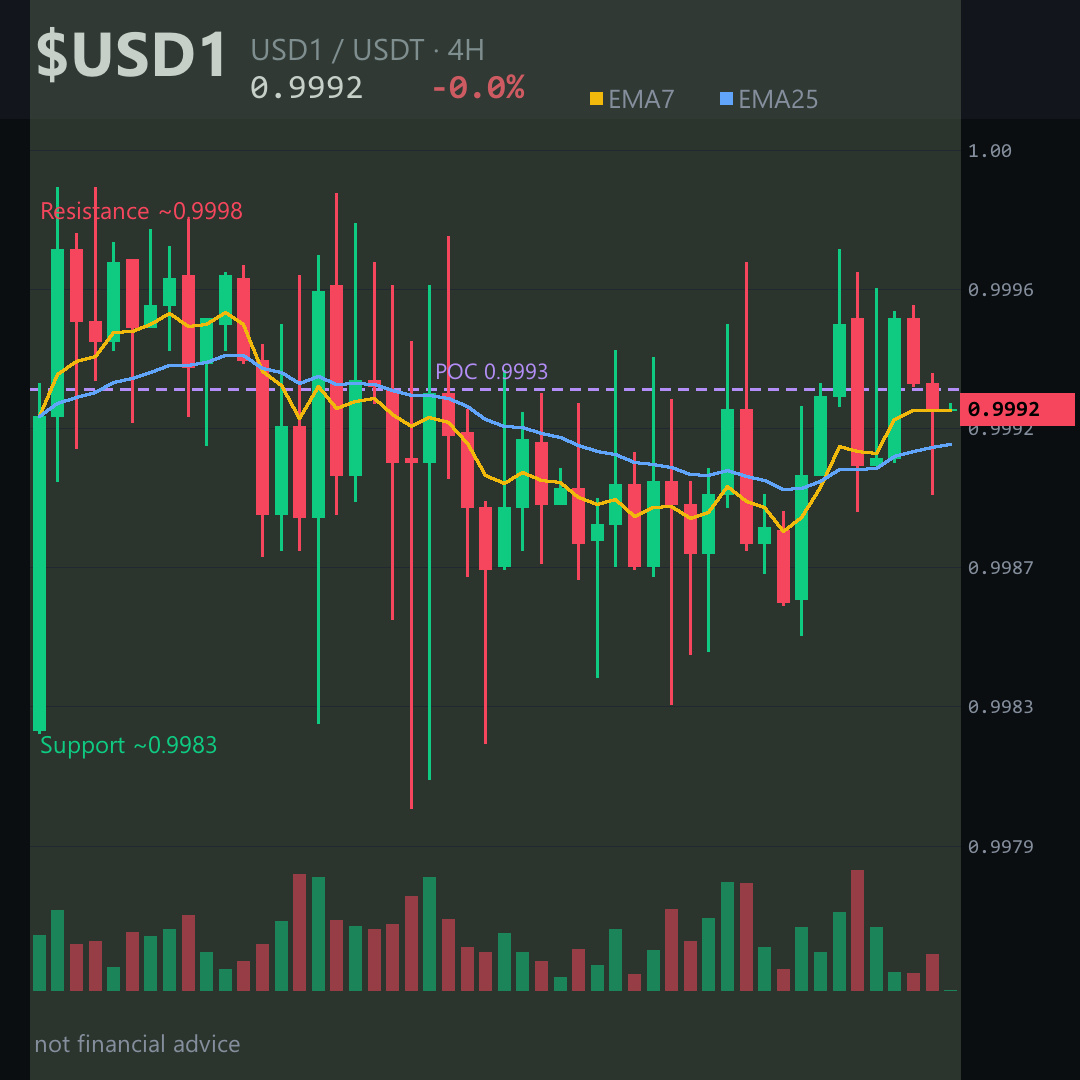
The 4‑hour EMA7 just nudged above the EMA25, but the weekly picture is screaming a different story. Read the levels before you decide 👇
Price is hovering near 0.9992, looking flat on the 4H chart, yet the weekly EMA gap and a sub‑44 RSI whisper a deeper downtrend. With funding at zero and no open interest, the market isn’t paying a premium for longs, hinting that bearish pressure could re‑emerge.
On the weekly frame the key pivot sits around the 1.15 zone. Lose that support and the next barrier lives near the 1.36‑1.37 area; a break below would open a slide toward the low‑0.63 region. If $USD1 can’t hold the ~1.15 area and slips toward the 0.63 zone, the bearish case tightens. Tap $USD1 to pull up the chart and see these zones yourself.
My read: the weekly bearish geometry outweighs the short‑term bullish flicker, so the real risk is a drop below the 1.15 floor.
I’ll break down the next move once price tests the 1.15 floor, so hit follow to stay in the loop. Which side of the 1.15 level are you watching on $USD1? 👇
⚠️ Not financial advice. DYOR.
#USD1 #Crypto #BinanceSquare #Stablecoin
The 4‑hour EMA7 just nudged above the EMA25, but the weekly picture is screaming a different story. Read the levels before you decide 👇
Price is hovering near 0.9992, looking flat on the 4H chart, yet the weekly EMA gap and a sub‑44 RSI whisper a deeper downtrend. With funding at zero and no open interest, the market isn’t paying a premium for longs, hinting that bearish pressure could re‑emerge.
On the weekly frame the key pivot sits around the 1.15 zone. Lose that support and the next barrier lives near the 1.36‑1.37 area; a break below would open a slide toward the low‑0.63 region. If $USD1 can’t hold the ~1.15 area and slips toward the 0.63 zone, the bearish case tightens. Tap $USD1 to pull up the chart and see these zones yourself.
My read: the weekly bearish geometry outweighs the short‑term bullish flicker, so the real risk is a drop below the 1.15 floor.
I’ll break down the next move once price tests the 1.15 floor, so hit follow to stay in the loop. Which side of the 1.15 level are you watching on $USD1 ? 👇
⚠️ Not financial advice. DYOR.
#USD1 #Crypto #BinanceSquare #Stablecoin
23

·
--
Bearish
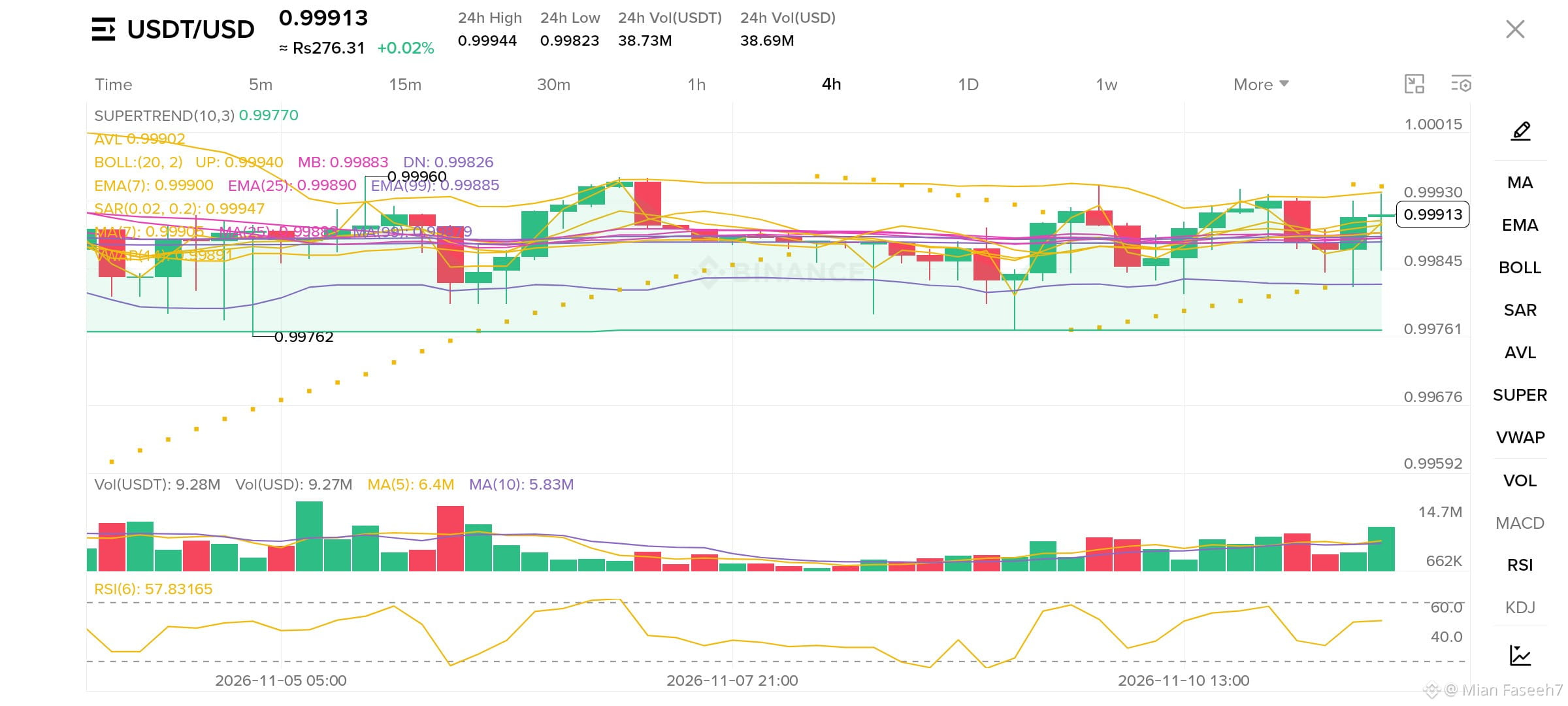
$USDT - $0.99913 pe sab ignore kar rahe hain, lekin me is level ko dekh raha hun
$USDT abhi $0.99913 pe hai, +0.02% up. $0.99944 se neeche aake $0.99823 wale low ko touch karke wapas upar aaya hai, matlab peg abhi bhi strong hold kar raha hai.
Meri nazar me 2 levels bohot important hain:
Support: $0.99826 - Agar ye hold raha to peg bilkul safe hai
Resistance: $0.99944 - Is ke upar USDT me demand wapas aa jayegi
RSI 57.83 pe hai, matlab market neutral hai, panic wali koi baat nahi. Meri raye me jab tak USDT $0.99826 ke upar hai, market me bara dump ka dar nahi hai.
Tum kya karoge? Hold ya Cash?
Follow for daily market updates.
If this analysis helped you, a small Tip is appreciated 🙏
#USDT #Crypto #Stablecoin
48

·
--
🏦 WALL STREET JUST DECLARED WAR ON TETHER
21 banks — Goldman Sachs, Citi, Santander, Deutsche Bank — just committed $270 MILLION to launch their own dollar stablecoin, codenamed Project Faro. 👀
The target: a US-regulated launch in the first half of 2027, built under the GENIUS Act. And the timing is wild — USDT's market cap just shrank $6.6 BILLION in 60 days as crypto liquidity tightens.
Can the banks take on USDT and USDC — or is this too little, too late? 👇
#Stablecoin #Crypto #ProjectFaro
30

·
--
Article
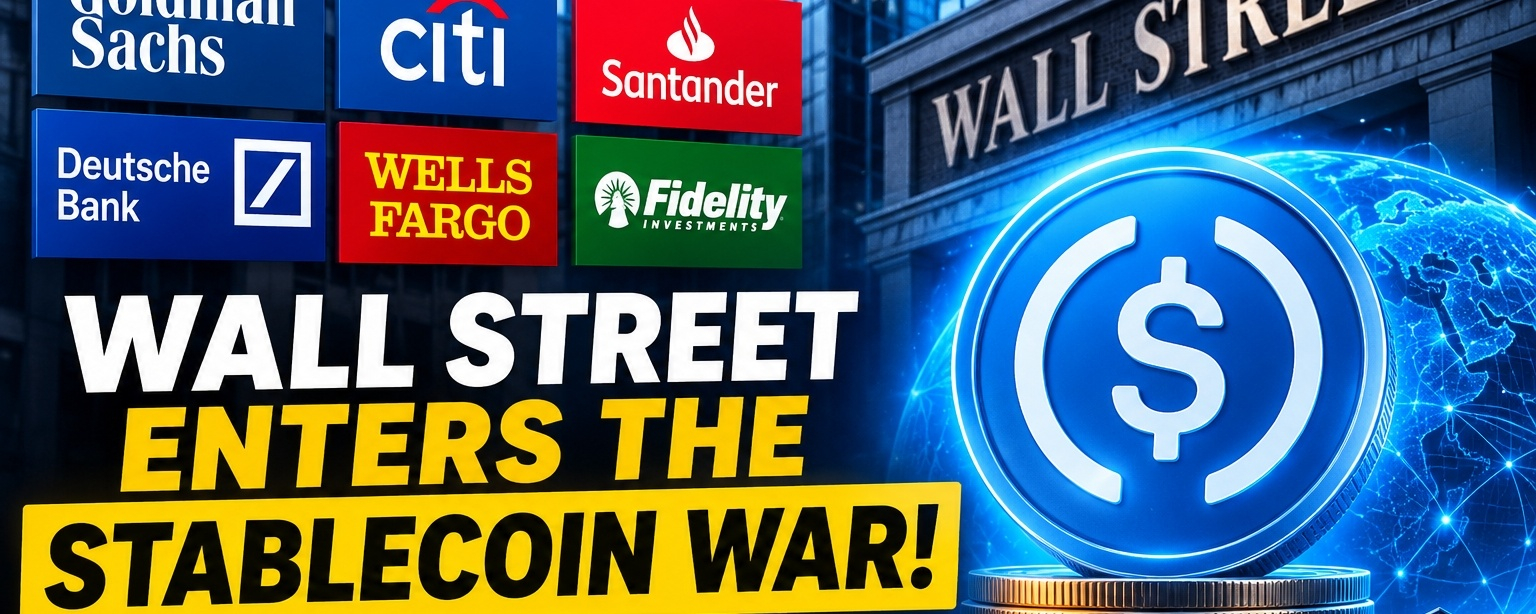
WALL STREET IS ENTERING THE STABLECOIN WAR — $270 MILLION COMMITTED TO A NEW BANK-BACKED PROJECT!The traditional banking industry is making another serious move into crypto.
Goldman Sachs, Citigroup and several major financial institutions are reportedly backing a new stablecoin venture called Project Faro, with approximately $270 million committed to fund its operations.
Here's what you need to know:
🔹 Major Financial Players: Goldman Sachs, Citi, Santander and Deutsche Bank are among the institutions involved, alongside Wells Fargo, Fidelity and MUFG.
🔹 $270 Million Funding: According to a Bloomberg report cited by CoinDesk, the funding is intended to cover five years of operating costs.
🔹 USD Stablecoin First: Project Faro plans to introduce a dollar-pegged stablecoin, with the euro and other G7 currencies also on its longer-term roadmap.
🔹 2027 Target: The planned stablecoin is expected to enter the market in the first half of 2027. It is not live yet.
⚡ WHY THIS MATTERS:
For years, crypto-native companies have dominated the stablecoin market.
Now, major traditional financial institutions are preparing to compete in the same space.
This could create more competition in digital payments, cross-border transfers and blockchain-based financial services.
However, the reported funding has not yet been independently confirmed through public statements from the participating banks.
👇 THE BIG QUESTION:
Can traditional banks challenge USDT and USDC with their own stablecoins?
Or will existing crypto-native stablecoins remain dominant?
Let me know what you think!
Sources – Verify the news
Latest report: CoinDesk – Goldman Sachs, Citi among banks said to commit $270 million to stablecoin venture�
Official confirmation of the consortium: Wells Fargo Newsroom – 21 financial institutions announce stablecoin enterprise�
Additional reporting: Investing.com – Goldman and Citi join global banks in stablecoin venture�
$XAU $USDC $USDT
#Stablecoin #CryptoAdoption #GoldmanSachs #Citi #CryptoNews
WALL STREET IS ENTERING THE STABLECOIN WAR — $270 MILLION COMMITTED TO A NEW BANK-BACKED PROJECT!
The traditional banking industry is making another serious move into crypto.
Goldman Sachs, Citigroup and several major financial institutions are reportedly backing a new stablecoin venture called Project Faro, with approximately $270 million committed to fund its operations.
Here's what you need to know:
🔹 Major Financial Players: Goldman Sachs, Citi, Santander and Deutsche Bank are among the institutions involved, alongside Wells Fargo, Fidelity and MUFG.
🔹 $270 Million Funding: According to a Bloomberg report cited by CoinDesk, the funding is intended to cover five years of operating costs.
🔹 USD Stablecoin First: Project Faro plans to introduce a dollar-pegged stablecoin, with the euro and other G7 currencies also on its longer-term roadmap.
🔹 2027 Target: The planned stablecoin is expected to enter the market in the first half of 2027. It is not live yet.
⚡ WHY THIS MATTERS:
For years, crypto-native companies have dominated the stablecoin market.
Now, major traditional financial institutions are preparing to compete in the same space.
This could create more competition in digital payments, cross-border transfers and blockchain-based financial services.
However, the reported funding has not yet been independently confirmed through public statements from the participating banks.
👇 THE BIG QUESTION:
Can traditional banks challenge USDT and USDC with their own stablecoins?
Or will existing crypto-native stablecoins remain dominant?
Let me know what you think!
Sources – Verify the news
Latest report: CoinDesk – Goldman Sachs, Citi among banks said to commit $270 million to stablecoin venture�
Official confirmation of the consortium: Wells Fargo Newsroom – 21 financial institutions announce stablecoin enterprise�
Additional reporting: Investing.com – Goldman and Citi join global banks in stablecoin venture�
$XAU $USDC $USDT
#Stablecoin #CryptoAdoption #GoldmanSachs #Citi #CryptoNews
1
113

·
--
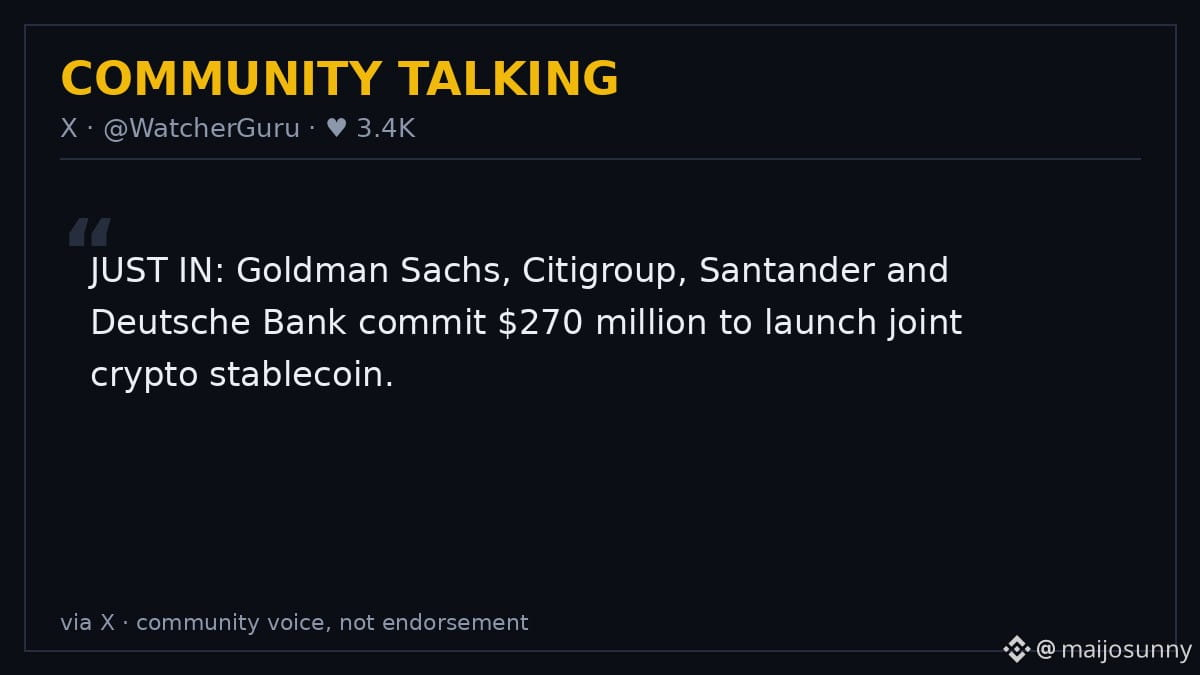
Traders on X are calling this the moment Wall Street stopped watching stablecoins and started building one.
Goldman Sachs, Citigroup, Santander and Deutsche Bank are among 21 financial firms committing around $270M to a joint stablecoin venture, Bloomberg reported Tuesday. The money covers five years of operating costs for a new US-incorporated issuer, codenamed Project Faro, targeting a dollar stablecoin launch in the first half of 2027, with a euro token next.
🔥 Why it matters: the stablecoin market is worth nearly $290B, and $USDT plus $USDC hold roughly 85% of it. A bank-built, GENIUS Act-compliant challenger would not just add another ticker, it would put regulated bank rails directly into cross-border payments and digital asset settlement, the exact use cases the consortium named.
⚠️ But $270M is not reserves. It funds the company, not the coins. The token itself does not exist yet: no CEO, no final name, no announced blockchain, no reserve custodian. A commitment is not a launch, and a 2027 target leaves plenty of room for delay.
My take: this is bigger than one more stablecoin ticker. It is the world's largest banks deciding the GENIUS Act framework is real enough to build on. The real test now is execution, not promises.
👀 What to watch: the CEO hire, the company incorporation, and whether the H1 2027 launch holds. The OCC's GENIUS Act rule takes effect Jan 18, 2027.
Bottom line: Wall Street just put $270M behind a stablecoin challenger while $BTC sits under $74K in a fear market. Is this the start of bank-issued digital dollars, or another consortium that moves slower than crypto?
Not financial advice. DYOR.
#stablecoin #crypto
101

·
--
Wall Street just put real money behind its own stablecoin.
Goldman Sachs, Citi, Santander and Deutsche Bank have committed around $270M to fund a joint venture that will issue a US dollar stablecoin, per Bloomberg. The funding covers five years of operations. The venture builds on a consortium of 21 financial institutions that announced the plan in September, targeting a launch in the first half of 2027, with a euro version to follow.
This is no longer a crypto-native experiment. The world's biggest banks are building their own dollar onchain, under the US GENIUS Act framework, and they are coming for the roughly $290B stablecoin market that Circle and Tether have dominated.
For crypto, this is validation and competition at the same time. Bank stablecoins legitimize onchain dollars and could open new settlement rails for the whole market. But they also squeeze the incumbents: $CRCL and Coinbase shares fell on the news, and a bank-owned token will not feed DeFi the way $USDC does.
The honest risk: this is still a plan, not a product. No company name, no CEO yet, no chain chosen, and the 2027 launch is subject to closing conditions. The market may be pricing in a threat that takes years to arrive.
Watch which chain they pick. That single choice will move markets.
📌 Sharing personal opinions only, not financial advice or a recommendation to buy/sell. Crypto is highly risky; DYOR and you are solely responsible. No coin promotion.
#Stablecoin #Banks #Crypto #Binance
2
995

🔥 BIG NEWS: Goldman Sachs, Citi, Santander, and Deutsche Bank are reportedly joining forces to support a US-based dollar stablecoin venture.
💰 According to Bloomberg, major financial firms are committing around $270 million over five years to fund the project.
👀 Traditional banking giants are making another major move into the stablecoin space. Could this reshape the future of digital payments?
#Stablecoin #USDC #GoldmanSachs #CryptoNews #DigitalFinance
3

🦈 WALL STREET GIANTS PUMP 270M INTO A NEW $USDC COMPETITOR RAIL! 💥
When traditional banking titans like Goldman Sachs and Deutsche Bank pool 270 million into digital rails, institutional liquidity shifts from theory to execution. 📊 This massive capital injection signals a fundamental bridging of legacy finance and on-chain settlement channels. ⚡
Smart money is positioning early as institutional infrastructure scales to handle multi-billion-dollar transaction flows seamlessly. 💡 Are you viewing this banking syndicate move as a bullish adoption catalyst or just another legacy attempt to gatekeep crypto rails? 🤔
⚠️ Not financial advice. Always manage your risk. 🛡️
🏷️ #USDC #Stablecoin #Institutional #Crypto #MarketTrends
🔥 💎
2

·
--
Bullish
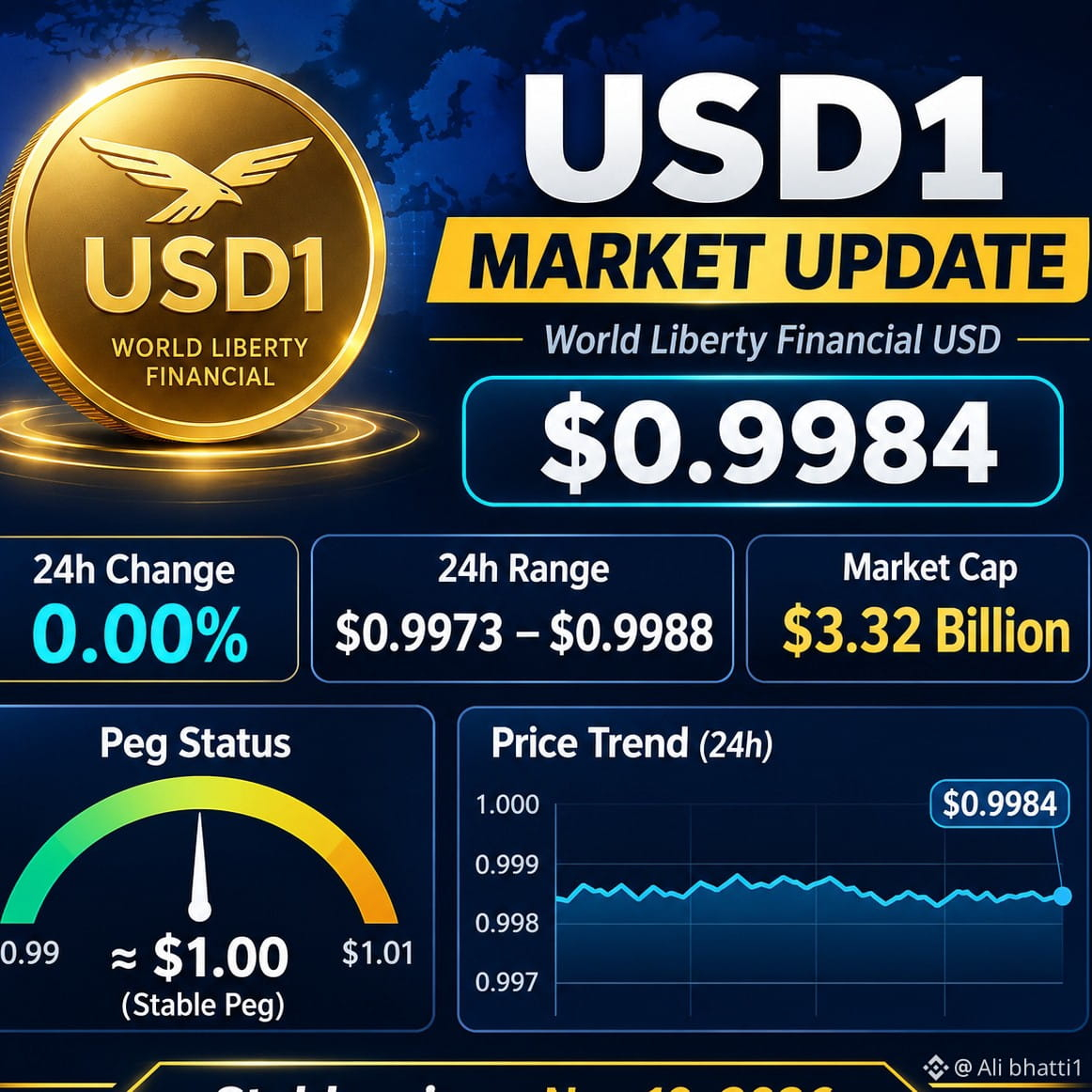
🚀 USD1 Coin – Latest Analysis
USD1 is trading close to its $USD1 1.00 peg, showing stability with minimal price movement. The market outlook remains neutral as USD1 continues to maintain its stablecoin value.
📊 Outlook: Stable / Neutral
💰 Key Level: $1.00
#USD1 #Crypto #BinanceSquare #stablecoin #CryptoAnalysis
{spot}(USD1USDT)
🚀 USD1 Coin – Latest Analysis
USD1 is trading close to its $USD1 1.00 peg, showing stability with minimal price movement. The market outlook remains neutral as USD1 continues to maintain its stablecoin value.
📊 Outlook: Stable / Neutral
💰 Key Level: $1.00
#USD1 #Crypto #BinanceSquare #stablecoin #CryptoAnalysis
USD1 is trading close to its $USD1 1.00 peg, showing stability with minimal price movement. The market outlook remains neutral as USD1 continues to maintain its stablecoin value.
📊 Outlook: Stable / Neutral
💰 Key Level: $1.00
#USD1 #Crypto #BinanceSquare #stablecoin #CryptoAnalysis
80
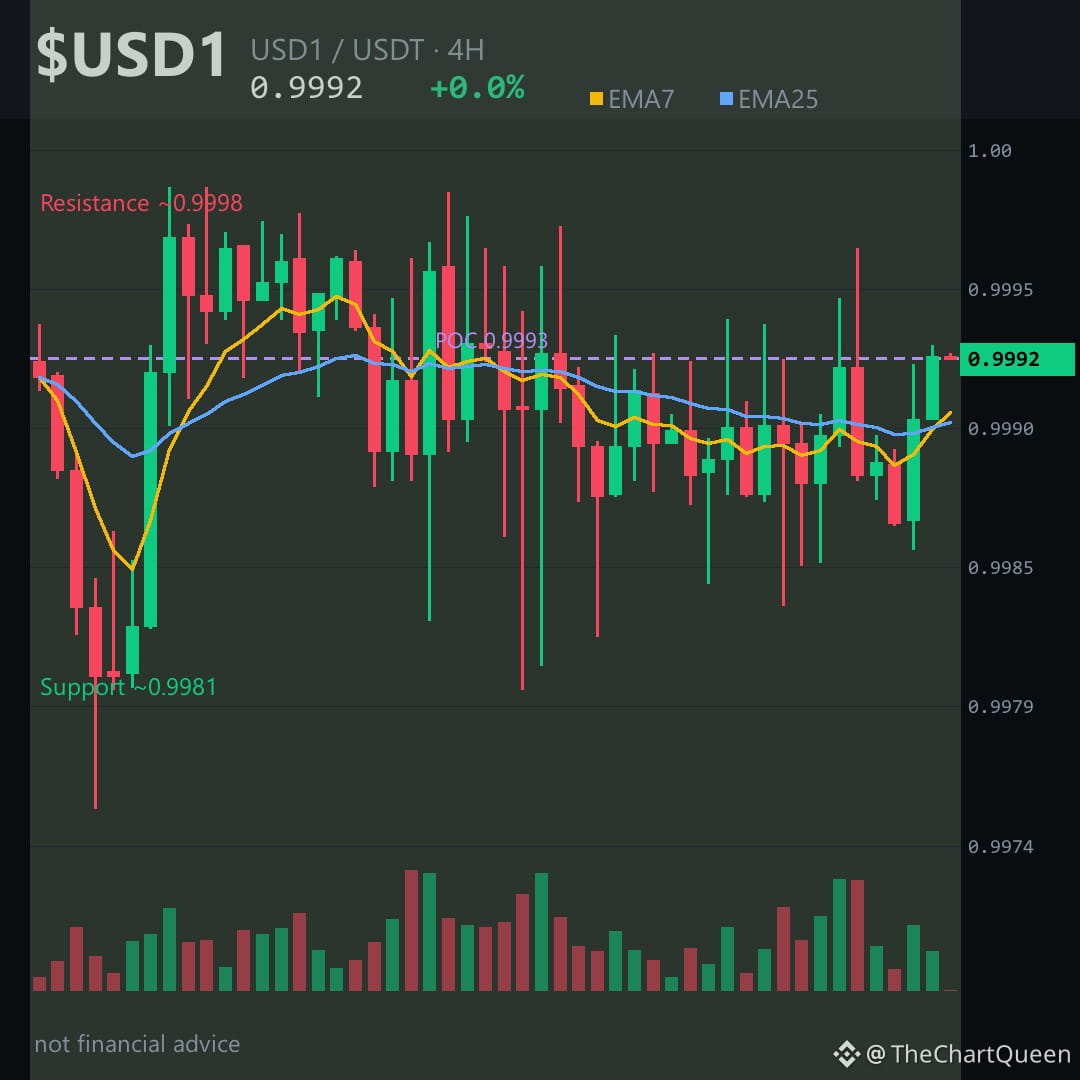
A stablecoin trading like a meme coin — volume is screaming but price is asleep. That’s the trap most will ignore, and the opportunity here is in the *when*, not the *if*.
$USD1 is pinned in a microscopic range — 0.11% in 24h. But volume is $193M. Someone’s positioning while everyone else scrolls past.
The 4H chart is the only one worth reading. Price is hovering just above a bullish fair value gap at 0.9989–0.9990 — an unfilled inefficiency where buyers stepped in aggressively. The pivot sits near 0.9943, but the real line in the sand is 0.9793. Lose that on a 4H close and the whole bullish structure unravels.
EMA7 is crawling above EMA25, RSI is neutral, ATR is basically zero. This is a coiled spring — tight consolidation with the volume point of control near 0.9993 acting like a magnet.
If it breaks clean, the objective zone stretches toward 1.02. That’s meaningful for a stablecoin.
My read: quietly bullish, but it’s a patience game. The invalidation is tight and the reward is asymmetric. Tap $USD1 to pull up the chart and see how clean that FVG looks.
I’ll be watching whether 0.9990 holds or folds. What level are you watching on $USD1 right now? 👇
Follow for the next read on this chart.
⚠️ Not financial advice. DYOR.
#USD1 #Stablecoin #Crypto #BinanceSquare
99
·
--
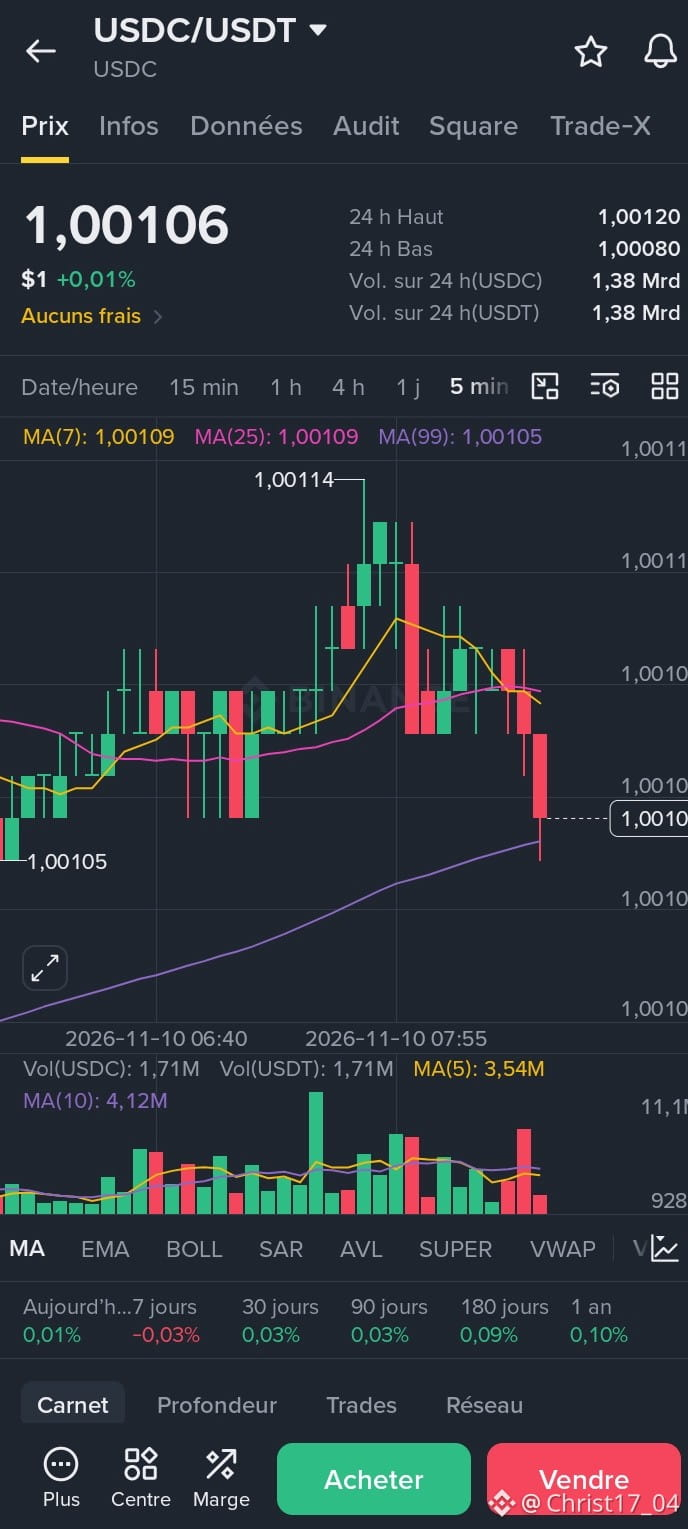
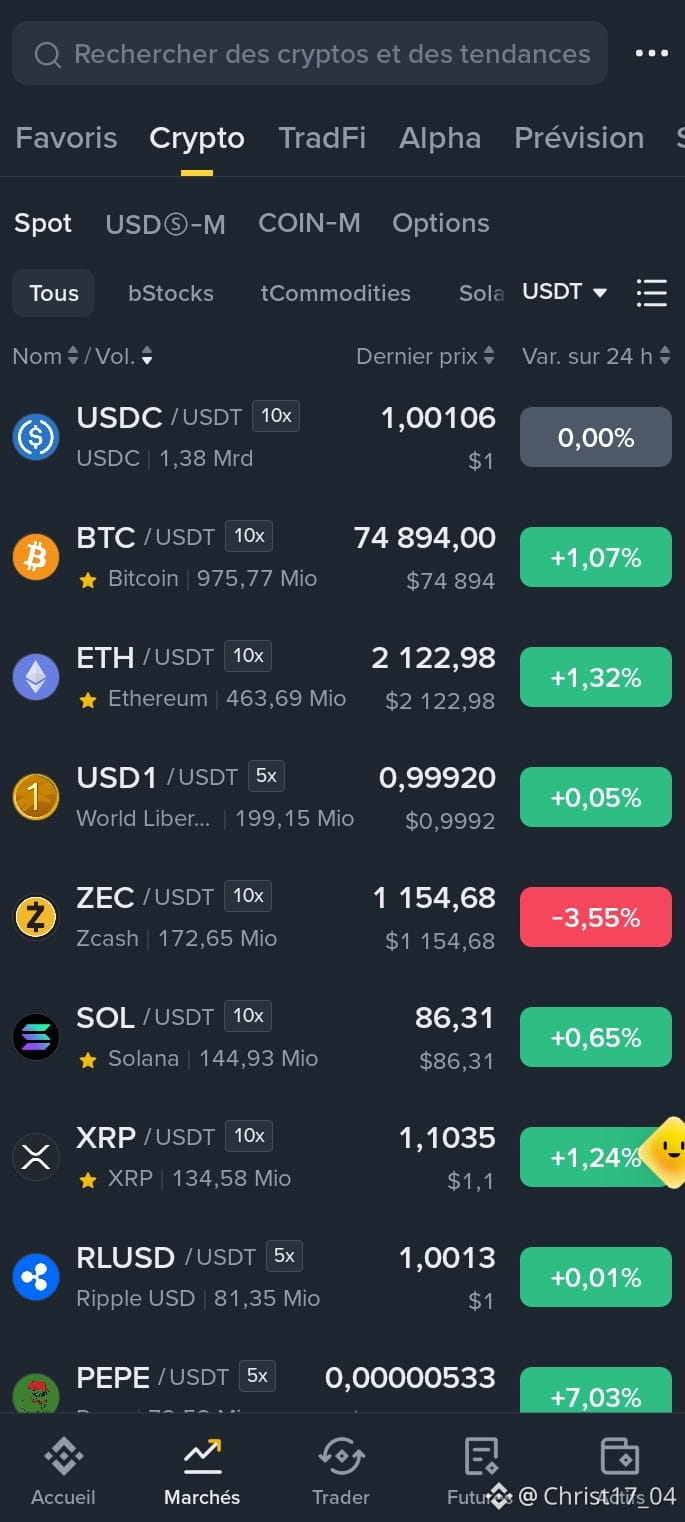
💵 USDT, USDC: WHY ARE STABLECOINS SO IMPORTANT IN CRYPTO?
Hello everyone .
You've probably already used USDT on Binance.But do you really know why stablecoins play such an important role in the crypto ecosystem?
A stablecoin is a cryptocurrency designed to maintain a relatively stable value against a reference asset, most commonly the US dollar. Let's take USDT as an example:
🔹 1 USDT aims to be worth approximately 1 US dollar.
🔹 It allows users to hold dollar-linked value without necessarily leaving the crypto ecosystem.
🔹 It makes trading between different cryptocurrencies easier.
🔹 It is also used for transfers and in certain decentralized financial services.
⚠️ Important: Stable does not mean risk-free. There are risks related to reserves, issuers, and regulations.
🧠 In crypto, understanding Bitcoin is important. But understanding stablecoins is just as important.🥳🥳
💬 Do you mainly use USDT or USDC?
#TradingCommunity $USDT $USDC #Stablecoin #Crypto #BinanceSquare
Margie Dematos Lpg0djd:
usdt
14
2
22

🇺🇸 TODAY: The DOJ filed a civil forfeiture action to recover about $456K in USDT tied to romance scams that lured victims on dating sites and Facebook into fake crypto investments.
#Crypto #Stablecoin
🇺🇸 TODAY: The DOJ filed a civil forfeiture action to recover about $456K in USDT tied to romance scams that lured victims on dating sites and Facebook into fake crypto investments.
#Crypto #Stablecoin
#Crypto #Stablecoin



Article
21 banks commit $270 million to a global stablecoinWhy keep an eye on this project? A new institutional stablecoin could reshape the landscape against $USDT and $USDC as early as 2027.
A consortium of 21 major banks, including Goldman Sachs and Citigroup, has just announced a $270 million investment to launch “Project Faro,” a future global stablecoin. The goal: to offer a credible, compliant alternative to the private players already in place.
The project initially aims to issue a stablecoin backed by the US dollar, with a commercial launch planned for the first half of 2027. The issuer is expected to be incorporated in the United States in the second half of 2026. No governance structure is in place yet: no CEO has been appointed, and no final name has been chosen for the stablecoin.
21 banks commit $270 million to a global stablecoin
Why keep an eye on this project? A new institutional stablecoin could reshape the landscape against $USDT and $USDC as early as 2027.
A consortium of 21 major banks, including Goldman Sachs and Citigroup, has just announced a $270 million investment to launch “Project Faro,” a future global stablecoin. The goal: to offer a credible, compliant alternative to the private players already in place.
The project initially aims to issue a stablecoin backed by the US dollar, with a commercial launch planned for the first half of 2027. The issuer is expected to be incorporated in the United States in the second half of 2026. No governance structure is in place yet: no CEO has been appointed, and no final name has been chosen for the stablecoin.
3
200

#StablecoinSupplyShrinksFastestSince2022
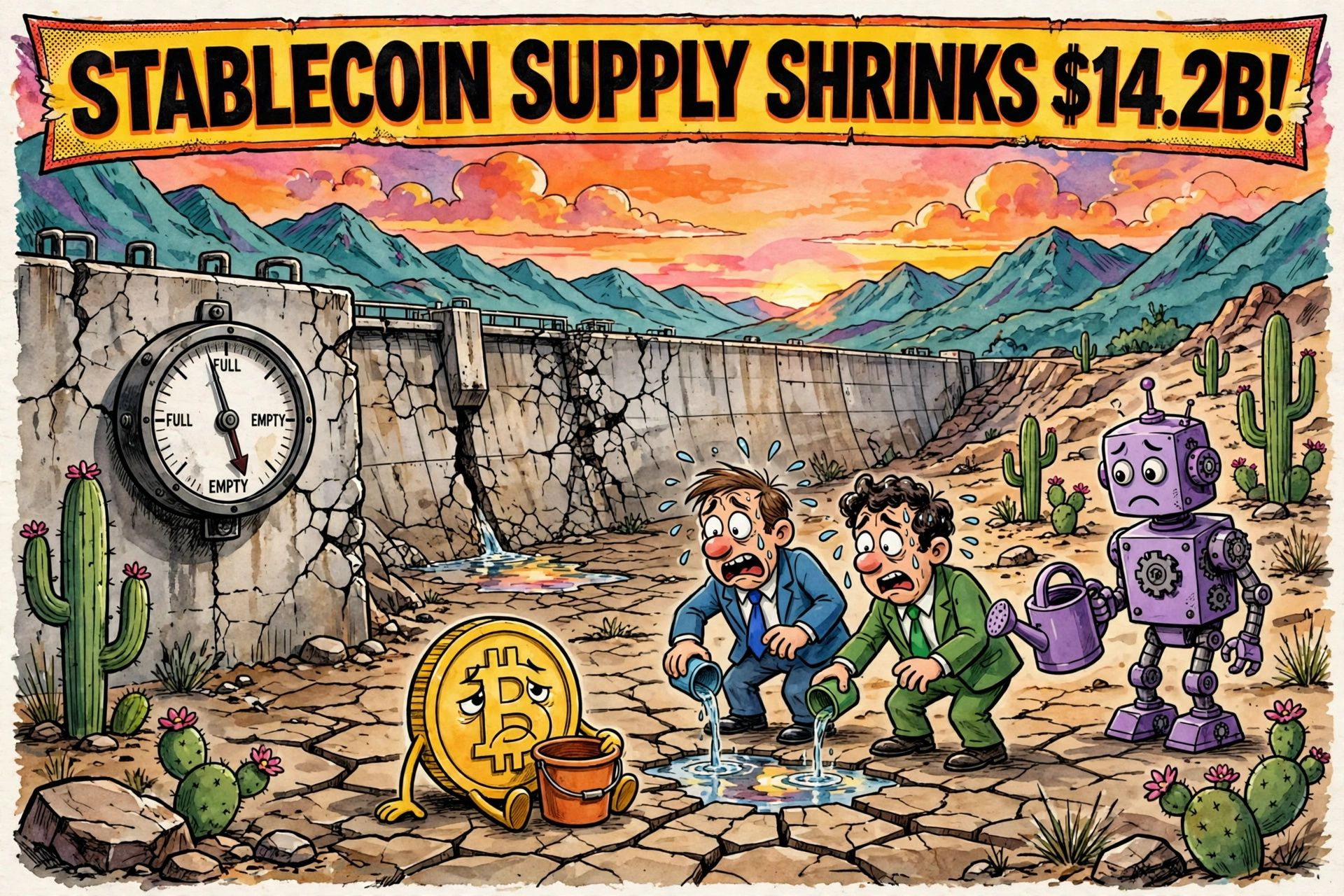
📉 STABLECOIN SUPPLY SHRINKS FASTEST SINCE 2022!
Hey everyone, Glassnode reports that the total stablecoin supply evaporated by $14.2 billion in 30 days, shrinking at its fastest pace since June 2022. In June 2022, supply contracted by nearly $30 billion, and Bitcoin hit a low of $15,500 five months later; USDT and USDC lost nearly $11 billion, bringing the total supply close to $280 billion. Glassnode put it plainly: as money flows out of the market, buyers run out of “ammo”; only when supply grows again will fresh money come in. Bitcoin is hovering around $74,500, still below the short-term holders’ cost basis of $75,600.
Biggest perpetual volatility today: $ZEC 1.005 dollars, $ICP 2,60 dollars, $ZRO 1,59 dollars
#Bitcoin #Stablecoin #Crypto
3

·
--
Today, USDC officially came under the direct supervision of European banking authorities — the first stablecoin to reach this level.
Facts: The European Banking Authority (EBA) designated USDC the first “significant” e-money token under the MiCA framework (announced on Oct. 14, 2026; of the 45 listed tokens, USDC was the first). Starting today, Nov. 12, 2026, the EBA directly supervises the own funds, reserves, liquidity, and recovery and redemption plans of USDC’s issuer in the EU, Circle Internet Financial Europe SAS. The French regulator (ACPR) retains responsibility for governance and management assessments. USDC has a market capitalization of around $74 billion, making it the world’s second-largest stablecoin.
My take: This isn’t about the price of USDC — its peg hasn’t changed, and holders’ redemption rights remain the same. It’s about precedent: a stablecoin this large is now supervised like systemic financial infrastructure, not just a crypto product. Liquidity rules for significant tokens may require 60 percent of reserves to be held as bank deposits, twice the usual standard — a higher bar for anyone wanting to operate in the European market.
What I’m watching: whether the EBA turns its attention to other large tokens next, and how Circle reports its reserves under this new supervision. With BTC still around 74,400, I see this news as a long-term foundation, not a catalyst for today’s prices.
Do you think supervision this strict makes stablecoins more trustworthy, or does it narrow the field of who can compete?
This is my analysis, not financial advice — always DYOR.
#Stablecoin #RegulasiCrypto $USDC
20

·
--
How much does a stablecoin cost before it has issued its first token?
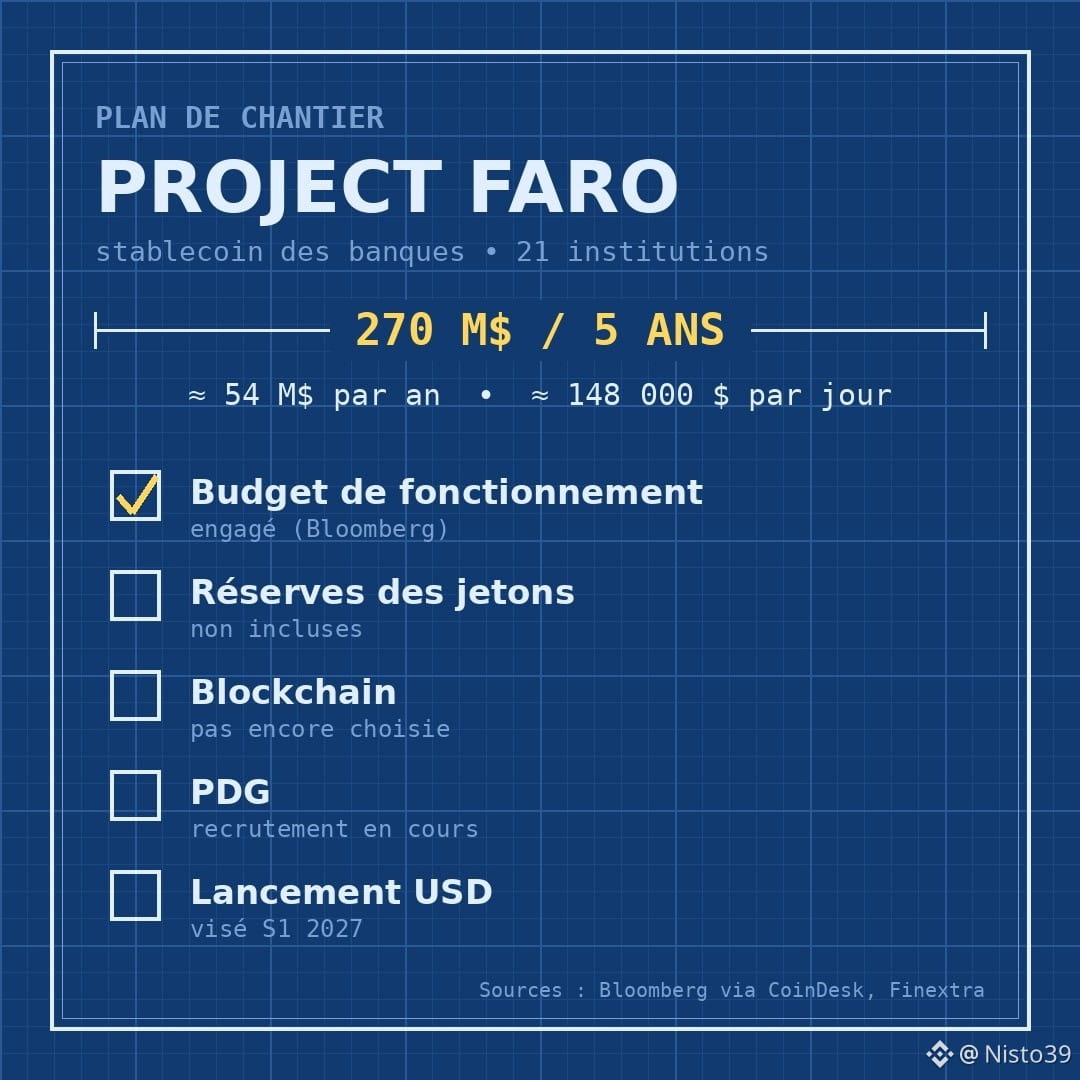
Goldman Sachs, Citi, Santander, Deutsche Bank and the rest have an answer: around $270 million. That’s the amount committed to Project Faro, their planned shared digital dollar, according to Bloomberg (November 10).
I did the math. That $270M has to cover five years of operations. That’s $54M a year, or about $148,000 a day. The reserves that will back each token aren’t even included.
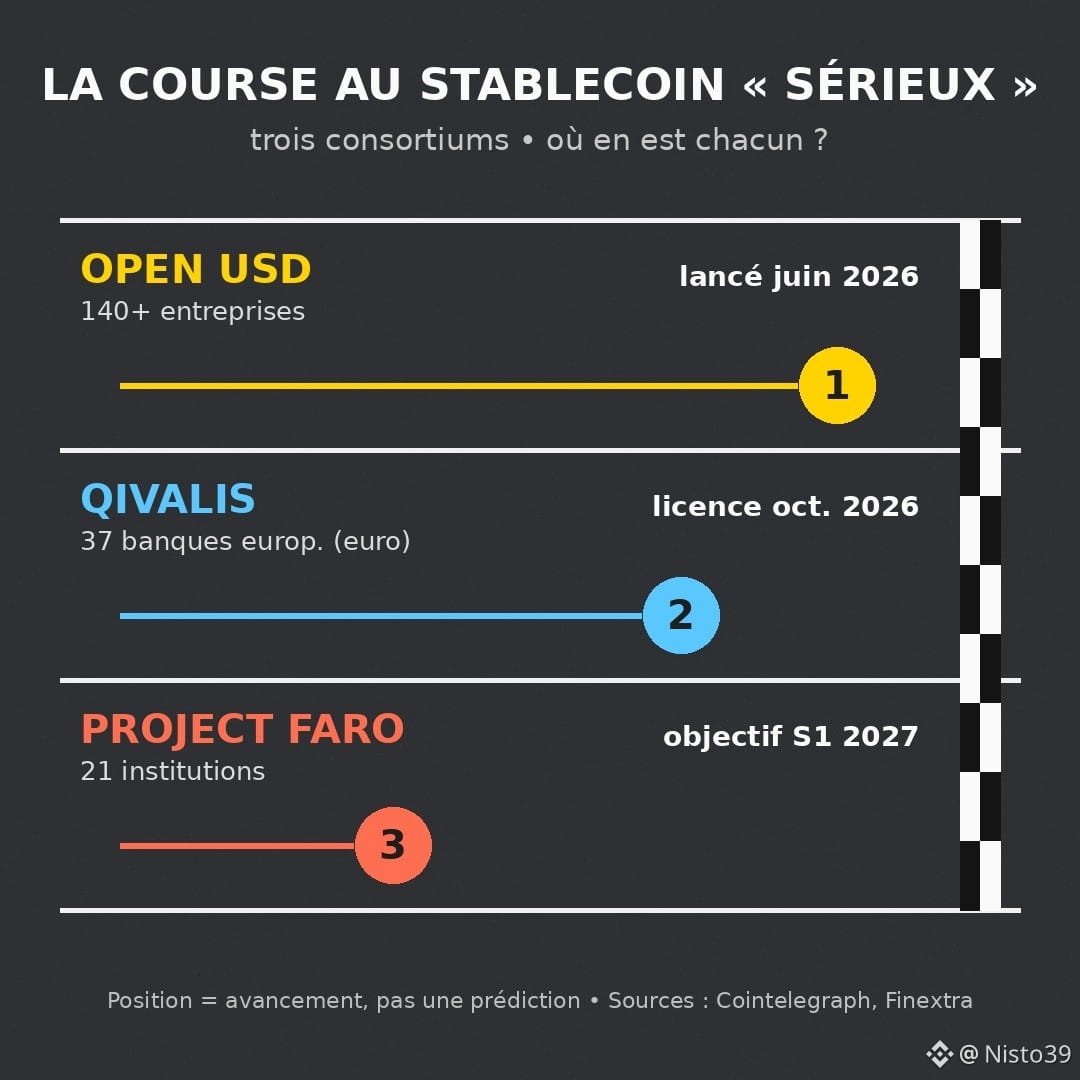
And for now, the future company has no official name, no chosen blockchain, and no CEO (recruitment is underway, according to Finextra). Its stated goal: a dollar stablecoin in the first half of 2027, followed by the euro, then the other G7 currencies.
The timing is curious. The total stablecoin supply just fell 1.4% in a week, its biggest drop since early 2023, and $USDT as well as $USDC have been losing ground since January (The Block). The banks are arriving just as money is flowing out.
My take: this isn’t a bet on crypto; it’s insurance. When 21 institutions are paying $148,000 a day to avoid missing the train, they’re afraid of losing their grip on international payments. Faro even cites cross-border transfers as its primary use case.
One name on the list interests me more than the others: Standard Bank, the South African giant. If banks’ tokenized dollar ever reaches African accounts, the cost of a transfer to Dakar or Lagos could really change. For now, it’s a promise, not a service.
Between a bank stablecoin and one born in crypto, which would you trust more to hold your dollars? And why?
#Stablecoin #Banques #ProjectFaro #Afrique #Crypto
116

FSB urges Turkey to tighten crypto oversight and establish stablecoin rules
- The Financial Stability Board (FSB) urged Turkey to tighten cryptocurrency oversight and establish dedicated rules for stablecoins.
- The FSB recognized Turkey’s progress in crypto licensing.
- It called for stronger enforcement to ensure the regulatory framework is effectively implemented.
- It emphasized the need for closer cooperation with foreign regulators to address cross-border crypto risks together.
#BinanceSquare #CryptoNews #Stablecoin #Regulation #FSB Turkey
$btc $eth
vlikevn Titanbot
Source: CoinTelegraph
📉 Stablecoin liquidity is tightening: USDT’s market cap has fallen by $6.6 billion over the past 60 days—the largest contraction since CryptoQuant began tracking data in 2022, and even twice the drop after the FTX collapse. This signals that fresh capital flowing into the crypto market is slowing down.
Meanwhile, Bitcoin is holding steady around $73,700–$74,000 after October’s CPI came in at 0.4%, above the 0.3% forecast. The market is pricing in a 90% chance of a Fed rate hike in December. One positive sign: outflows from spot Bitcoin ETFs have slowed, reaching just $95 million on Tuesday, down sharply from $412 million last Friday.
Amid the sea of red, $EGLD (MultiversX) stood out, rising 12.90% over the past 24 hours to lead gainers among the top 200, according to CoinCodex.
How long do you think shrinking stablecoin liquidity will weigh on the market’s recovery? 🤔
#CryptoNews #Bitcoin #Stablecoin #EGLD
Market information, not investment advice.
2
181
Log in to explore more content
Join global crypto users on Binance Square
⚡️ Get latest and useful information about crypto.
💬 Trusted by the world’s largest crypto exchange.
👍 Discover real insights from verified creators.
Email / Phone number
Trending Topics
1
#HotCPIDecemberHikePriced
325,844 views
3,256 Discussing
2
#ZcashFallsBelow$1000ForFirstTimeSinceSeptember
9,595 views
62 Discussing
3
#StrategyFaces$2.8BSelloffRiskFromMSCIRemoval
20,584 views
141 Discussing
4
#AnthropicRejectsIPODelayValuationinQuestion
362,552 views
3,210 Discussing
5
#BitcoinETFsLose$1.6BInNovember
8,426 views
45 Discussing
6
#AnthropicDisclosesOver$10BNewComputeDeals
1,677 views
30 Discussing
7
#CoreWeaveJumps10%On168%RevenueGrowth
21,737 views
465 Discussing
8
#CanNvidiaEarningsEaseMarketConcerns?
108,303 views
1,394 Discussing
9
#BarclaysRaisesBlackRockBitcoinETFStake48%
18,846 views
338 Discussing
10
#BitmineReports$6.3BFiscal2026Loss
7,526 views
24 Discussing