

#rls
rls
446,690 views
1,665 Discussing
Hot
Latest

·
--
$RLS +24.92% | $TA +21.84% | $MEME +18.99%
#RLS on BSC nudged up to $0.00239128, gaining +24.92% with $184.2K of 24‑h volume and a $5.4M market cap.
TA on BSC rose to $0.0621, climbing +21.84% on a solid $971.2K volume and a $26.5M market cap.
MEME on Robinhood jumped to $0.00797745, up +18.99% with $223.1K traded and an $8.0M market cap. ⚠️ The thin liquidity means a modest sell‑off could erase today’s gains.
Watch the $971.2K volume on TA; it’s enough to sustain the rally for now, but any dip in depth could trigger a rapid reversal.
#BinanceAlpha #TopGainers #Write2Earn #Binance
6

·
--

Article
A Successful Receipt on the Sender’s Chain Does Not Always Mean the Money Has ArrivedAn Analysis of Compensating Transactions, Partial Settlement, and the Limits of Atomicity in Cross-Chain Payments
Many institutions and developers still treat a successful transaction receipt on the sender’s chain as proof that a payment is complete. In cross-chain systems, that is often not the case.
From reviewing technical documentation and observing basic behavior in controlled environments, one pattern consistently appears: the debit on the source chain can commit successfully, while the destination can still fail at a later step. When that happens, the funds do not automatically return. The system typically executes a **compensating transaction**.
Partial Atomicity
The official Rayls documentation (*Send Enygma Transactions* and *How Enygma Works*) describes the boundaries of atomicity clearly:
- The source call is atomic — the burn and the transfer request succeed or fail together.
- Each individual destination leg is atomic — the mint and any program steps on that leg succeed or fail together.
- All legs of a single payment are **not** atomic. Legs can settle independently.
The documentation states explicitly that “Failures are reversed, not rolled back.” The Hub transaction and the mint on the destination chain are separate transactions. If the mint or a program step fails on the destination, the relayer runs a compensating transaction to return the value to the sender. It is not one atomic transaction across chains.
Until the refund actually lands, the sender’s balance on the source chain remains reduced by the failed amount.
What Is a Compensating Transaction?
A compensating transaction is a **new and separate** transaction created to correct a failure. It is not a rollback of the original transaction.
According to the RaylsEnygmaHandler documentation, if any program step reverts, the entire leg (including the mint) fails. The relayer then returns the value to the sender on the source chain through a compensating mechanism. The refund appears under the **same reference ID** and is recorded as status `RECEIVED` on the source chain, rather than as a pure revert of the original debit.
A simple example consistent with the documented behavior:
- The source debits 10.
- One destination successfully receives 4.
- Another destination fails during execution.
- A separate compensating transaction returns 6 to the sender.
The final result is 4 delivered + 6 returned = 10. The original source transaction remains recorded as successful.
Diagrams
Basic flow:
Atomic vs Multi-Leg:
Partial Settlement Example:
Practical Risks Worth Noting
From the documentation and observations in controlled environments, several points are often overlooked:
1. Refunds are not instant
The Rayls documentation itself notes that until the refund lands, the sender’s balance remains reduced. Delays in the relayer or issues with proof generation can leave funds in a pending state longer than expected.
2. Reconciliation must be done per leg
A single source receipt is not enough. One must match what left the source, what arrived at each destination, what failed, and what was actually returned via the compensating transaction (typically under the same reference ID).
3. Dependence on off-chain components
Failure detection and refund initiation often rely on relayers. Even in local testing, warnings related to balance commitments or proof generation can appear. These risks are higher in production.
4. Controlled results ≠ production guarantees
Clean behavior in a lab with deliberately triggered failures does not automatically translate to production environments with concurrent load, network issues, or state inconsistencies.
Conclusion
A successful receipt on the source chain only proves that the debit committed. It does not prove that every destination received the funds, nor does it prove that any failed portion has been returned.
Successful source execution, destination settlement, and compensating refunds are related events, but they are **not the same event**. Understanding this distinction matters when designing or operating cross-chain settlement flows.
The official Rayls documentation already describes this compensating pattern openly. The important point is not to treat results from controlled environments as full proof of production reliability.
---
Disclaimer:
This article is an analysis based on publicly available Rayls documentation and technical observations in controlled environments. It is not a formal audit, investment advice, or a guarantee of any system’s behavior in production. Readers should verify details directly against the official documentation.
Sources
- Send Enygma Transactions: https://docs.rayls.com/docs/send-enygma-transactions
- How Enygma Works: https://docs.rayls.com/docs/how-enygma-works
- RaylsEnygmaHandler: https://docs.rayls.com/docs/raylsenygmahandler
#RLS $RLS
A Successful Receipt on the Sender’s Chain Does Not Always Mean the Money Has Arrived
An Analysis of Compensating Transactions, Partial Settlement, and the Limits of Atomicity in Cross-Chain Payments
Many institutions and developers still treat a successful transaction receipt on the sender’s chain as proof that a payment is complete. In cross-chain systems, that is often not the case.
From reviewing technical documentation and observing basic behavior in controlled environments, one pattern consistently appears: the debit on the source chain can commit successfully, while the destination can still fail at a later step. When that happens, the funds do not automatically return. The system typically executes a **compensating transaction**.
Partial Atomicity
The official Rayls documentation (*Send Enygma Transactions* and *How Enygma Works*) describes the boundaries of atomicity clearly:
- The source call is atomic — the burn and the transfer request succeed or fail together.
- Each individual destination leg is atomic — the mint and any program steps on that leg succeed or fail together.
- All legs of a single payment are **not** atomic. Legs can settle independently.
The documentation states explicitly that “Failures are reversed, not rolled back.” The Hub transaction and the mint on the destination chain are separate transactions. If the mint or a program step fails on the destination, the relayer runs a compensating transaction to return the value to the sender. It is not one atomic transaction across chains.
Until the refund actually lands, the sender’s balance on the source chain remains reduced by the failed amount.
What Is a Compensating Transaction?
A compensating transaction is a **new and separate** transaction created to correct a failure. It is not a rollback of the original transaction.
According to the RaylsEnygmaHandler documentation, if any program step reverts, the entire leg (including the mint) fails. The relayer then returns the value to the sender on the source chain through a compensating mechanism. The refund appears under the **same reference ID** and is recorded as status `RECEIVED` on the source chain, rather than as a pure revert of the original debit.
A simple example consistent with the documented behavior:
- The source debits 10.
- One destination successfully receives 4.
- Another destination fails during execution.
- A separate compensating transaction returns 6 to the sender.
The final result is 4 delivered + 6 returned = 10. The original source transaction remains recorded as successful.
Diagrams
Basic flow:
Atomic vs Multi-Leg:
Partial Settlement Example:
Practical Risks Worth Noting
From the documentation and observations in controlled environments, several points are often overlooked:
1. Refunds are not instant
The Rayls documentation itself notes that until the refund lands, the sender’s balance remains reduced. Delays in the relayer or issues with proof generation can leave funds in a pending state longer than expected.
2. Reconciliation must be done per leg
A single source receipt is not enough. One must match what left the source, what arrived at each destination, what failed, and what was actually returned via the compensating transaction (typically under the same reference ID).
3. Dependence on off-chain components
Failure detection and refund initiation often rely on relayers. Even in local testing, warnings related to balance commitments or proof generation can appear. These risks are higher in production.
4. Controlled results ≠ production guarantees
Clean behavior in a lab with deliberately triggered failures does not automatically translate to production environments with concurrent load, network issues, or state inconsistencies.
Conclusion
A successful receipt on the source chain only proves that the debit committed. It does not prove that every destination received the funds, nor does it prove that any failed portion has been returned.
Successful source execution, destination settlement, and compensating refunds are related events, but they are **not the same event**. Understanding this distinction matters when designing or operating cross-chain settlement flows.
The official Rayls documentation already describes this compensating pattern openly. The important point is not to treat results from controlled environments as full proof of production reliability.
---
Disclaimer:
This article is an analysis based on publicly available Rayls documentation and technical observations in controlled environments. It is not a formal audit, investment advice, or a guarantee of any system’s behavior in production. Readers should verify details directly against the official documentation.
Sources
- Send Enygma Transactions: https://docs.rayls.com/docs/send-enygma-transactions
- How Enygma Works: https://docs.rayls.com/docs/how-enygma-works
- RaylsEnygmaHandler: https://docs.rayls.com/docs/raylsenygmahandler
#RLS $RLS
308

·
--
$RLS +19.06% | $GSTOCK +18.57% | $TA +16.05%
#RLS on BSC nudged to $0.00217078, climbing +19.06% with $25.4K of 24‑hour volume and a $4.9M market cap.
GSTOCK on BSC pushed up to $0.00512387, up +18.57% on a relatively healthy $369.0K volume and a $5.1M market cap.
TA on BSC rose to $0.0576, gaining +16.05% while trading $1.5M in volume and holding a $24.6M market cap.
The RLS surge sits on thin liquidity, so a modest sell‑off could wipe out much of today’s upside.
Keep an eye on how quickly volume follows price; rapid inflows often precede the next move.
#BinanceAlpha #TopGainers #Write2Earn #Binance
12

·
--
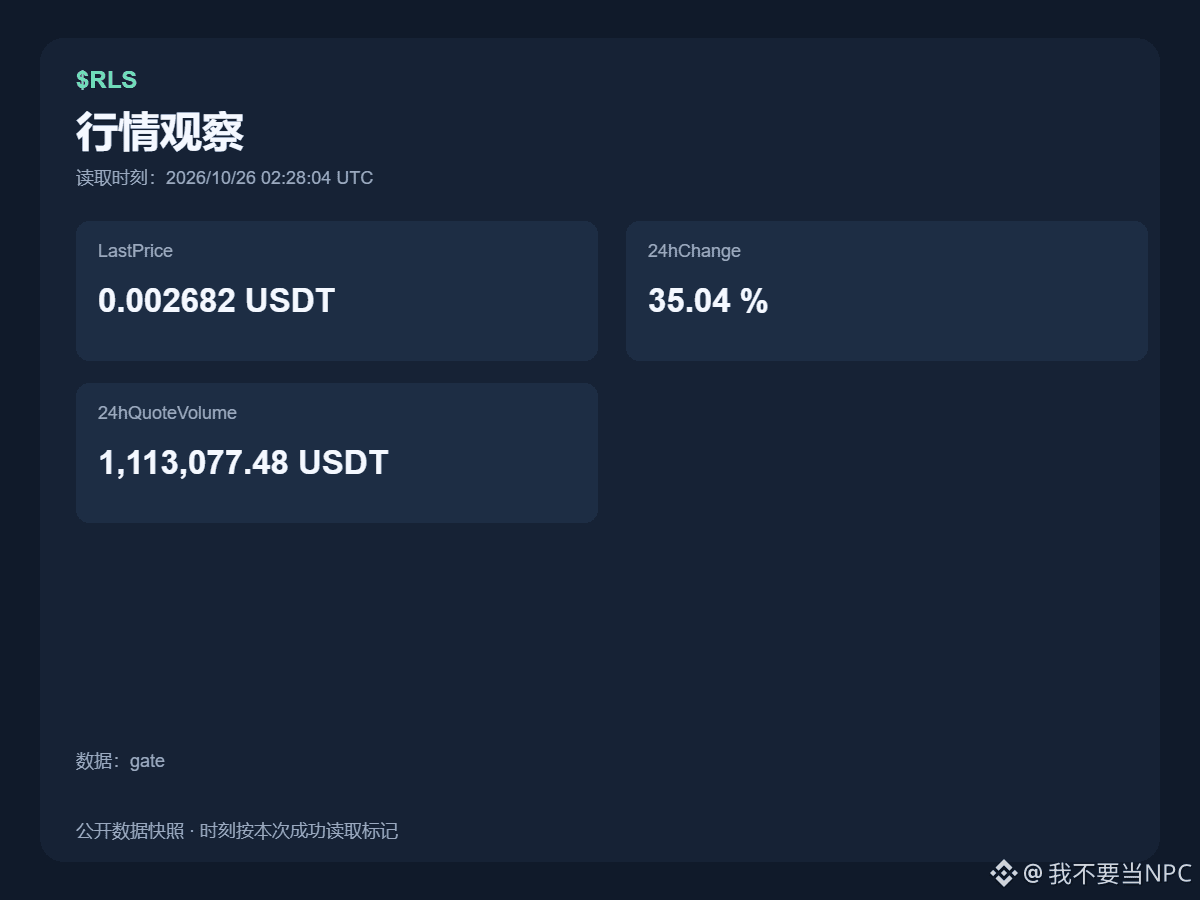
RLS was quoted at 0.002682 USDT in the spot sample, up 35.04% over 24 hours, with a trading volume of about 1.1131 million USDT over the same period. Taken together, the price increase and trading volume suggest this move is fairly significant—but that’s just one set of observations. I’m more curious whether this volume can hold up than in treating 35% as a signal of direction right away.
$RLS
#RLS
#MarketWatch
$RLS
$RLS
#RLS
#MarketWatch
$RLS
1
87

Article
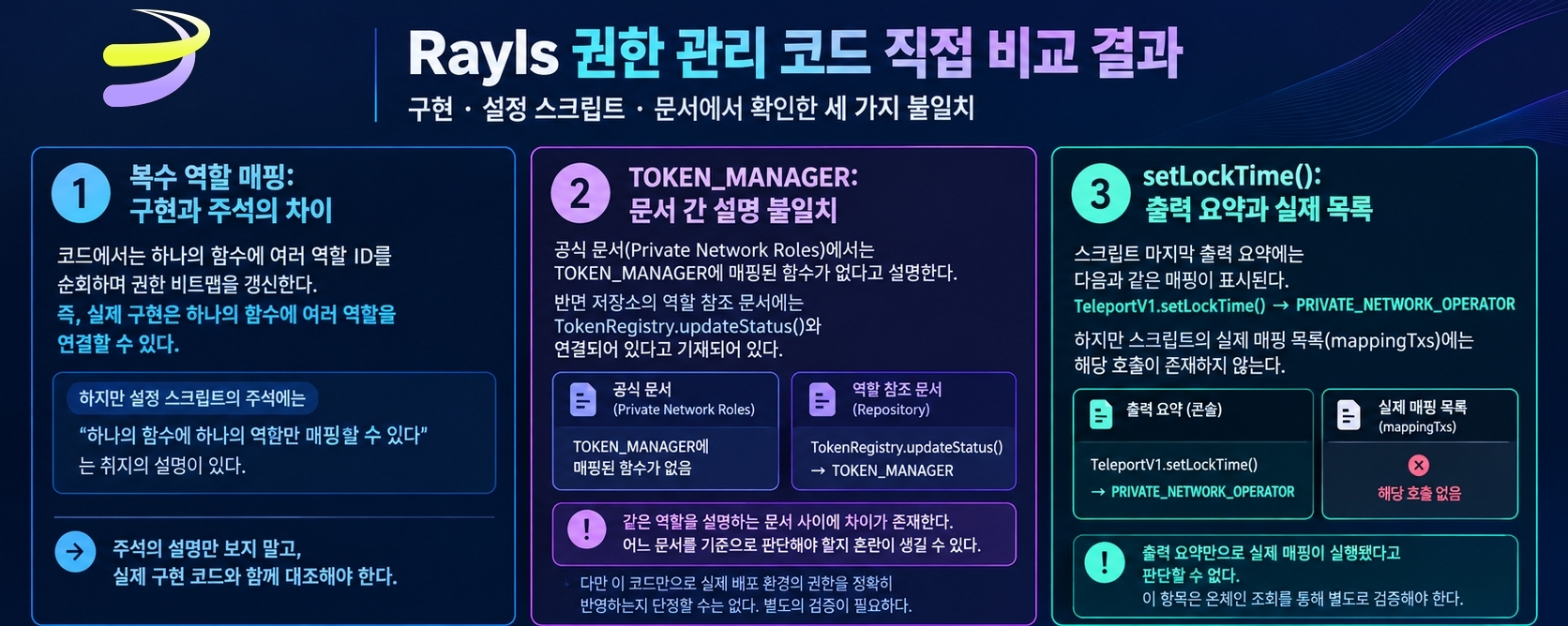
I compared Rayls’ access control code firsthand and found three inconsistenciesWhile exploring Rayls’ Sovereign Contracts repository, I reviewed the role-based permission settings for the Private Network Hub (PNH).
Rather than simply describing what each role does, I compared the implementation code, permission configuration scripts, and official documentation to see whether they aligned.
In an access control system, knowing only the role names isn’t enough. You also need to examine which permissions the code supports, what mappings the configuration scripts apply, and how the documentation describes them.
I compared Rayls’ access control code firsthand and found three inconsistencies
While exploring Rayls’ Sovereign Contracts repository, I reviewed the role-based permission settings for the Private Network Hub (PNH).
Rather than simply describing what each role does, I compared the implementation code, permission configuration scripts, and official documentation to see whether they aligned.
In an access control system, knowing only the role names isn’t enough. You also need to examine which permissions the code supports, what mappings the configuration scripts apply, and how the documentation describes them.
1
59
Article
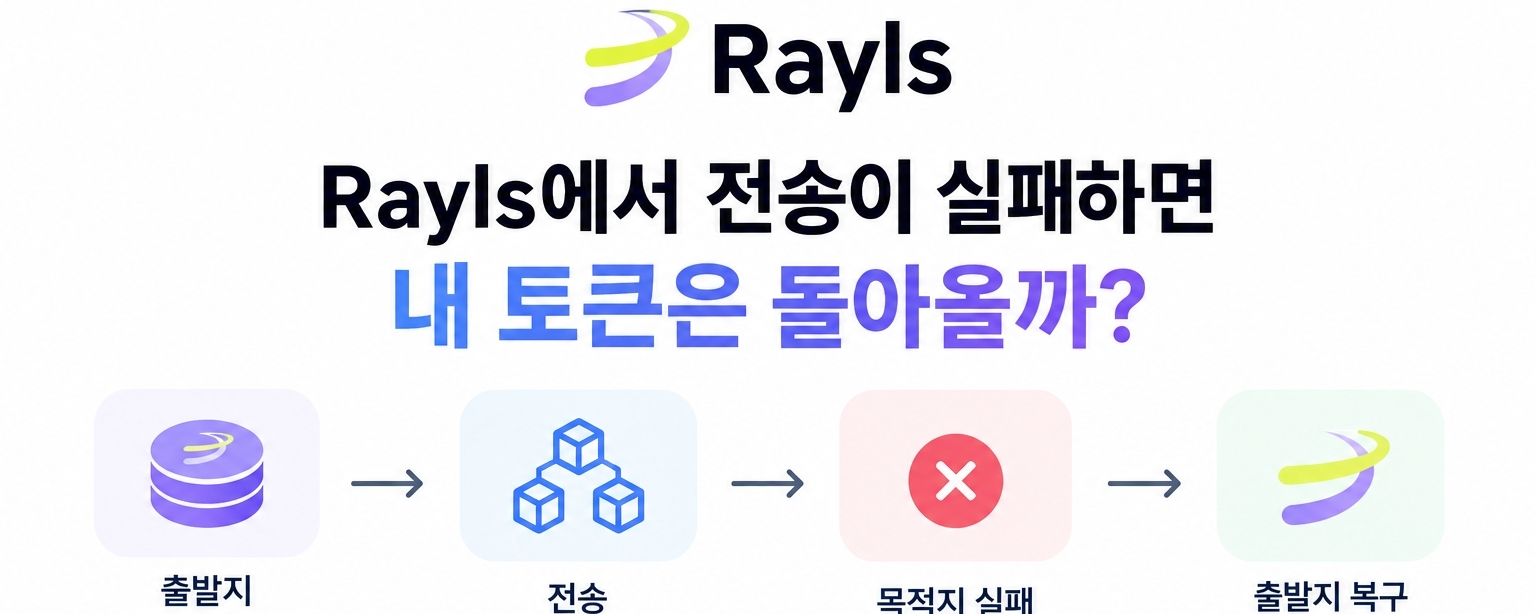
What happens to tokens processed on the source chain if the destination transaction fails during a cross-chain transfer?If a transfer fails on Rayls, will my tokens be returned?
What happens to tokens processed on the source chain if the destination transaction fails during a cross-chain transfer? $RLS
When moving tokens to another chain, assets may be locked or burned on the source chain. But if processing fails on the destination, a procedure is needed to restore the asset state.
Rayls' official documentation describes a recovery mechanism for this situation. However, examining the public code as well reveals additional points that need to be verified.
What happens to tokens processed on the source chain if the destination transaction fails during a cross-chain transfer?
If a transfer fails on Rayls, will my tokens be returned?
What happens to tokens processed on the source chain if the destination transaction fails during a cross-chain transfer? $RLS
When moving tokens to another chain, assets may be locked or burned on the source chain. But if processing fails on the destination, a procedure is needed to restore the asset state.
Rayls' official documentation describes a recovery mechanism for this situation. However, examining the public code as well reveals additional points that need to be verified.
1
81

Partly True
Article
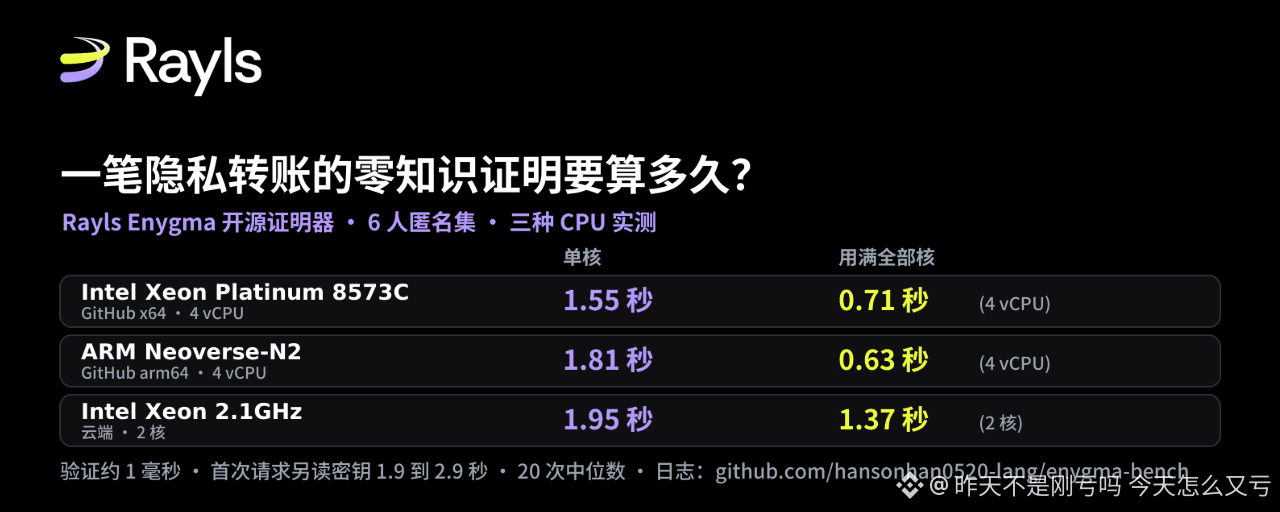
How much computing power does a zero-knowledge-proof private transfer take? Rayls’ open-source prover tested on three CPUsIn my first two articles, I tested Rayls’ proof code on a cloud server, but the numbers came from just one type of machine, and the test code wasn’t available somewhere readers could easily reproduce the results. This time, I’ve made the test code public on GitHub and had GitHub’s own servers run it instead. I tested three types of CPUs, and anyone can click through to view the logs.
Here’s the short answer. Using the six-member anonymity set in Rayls Enygma’s private-transfer circuit as an example, generating a zero-knowledge proof for one transfer takes 1.55 to 1.95 seconds with a single vCPU, and 0.63 to 0.71 seconds with 4 vCPUs. Verifying the proof takes about 1 millisecond. The first time the service processes a transfer of a given size, it also takes an additional 1.9 to 2.9 seconds to load the proving key into memory. Assuming requests are processed serially, a 4-vCPU cloud server can generate 1.4 to 1.6 proofs per second.
How much computing power does a zero-knowledge-proof private transfer take? Rayls’ open-source prover tested on three CPUs
In my first two articles, I tested Rayls’ proof code on a cloud server, but the numbers came from just one type of machine, and the test code wasn’t available somewhere readers could easily reproduce the results. This time, I’ve made the test code public on GitHub and had GitHub’s own servers run it instead. I tested three types of CPUs, and anyone can click through to view the logs.
Here’s the short answer. Using the six-member anonymity set in Rayls Enygma’s private-transfer circuit as an example, generating a zero-knowledge proof for one transfer takes 1.55 to 1.95 seconds with a single vCPU, and 0.63 to 0.71 seconds with 4 vCPUs. Verifying the proof takes about 1 millisecond. The first time the service processes a transfer of a given size, it also takes an additional 1.9 to 2.9 seconds to load the proving key into memory. Assuming requests are processed serially, a 4-vCPU cloud server can generate 1.4 to 1.6 proofs per second.
Here’s the short answer. Using the six-member anonymity set in Rayls Enygma’s private-transfer circuit as an example, generating a zero-knowledge proof for one transfer takes 1.55 to 1.95 seconds with a single vCPU, and 0.63 to 0.71 seconds with 4 vCPUs. Verifying the proof takes about 1 millisecond. The first time the service processes a transfer of a given size, it also takes an additional 1.9 to 2.9 seconds to load the proving key into memory. Assuming requests are processed serially, a 4-vCPU cloud server can generate 1.4 to 1.6 proofs per second.
2
243

·
--
Bearish
#RLS — Rayls getting REAL or Rekt? 😏⚡
LIVE TODAY Oct 6: $0.002205 — $0.0035 range! 😂
Kraken shows $0.0027 (MCap $5.27M, 2B circ, Vol $974K) 📊 TradingView screaming $0.003591 (+8.20% 24h) — this coin can't decide if it's up or down, mood swings like my ex! 🤣
Bitget $0.00255, Gate $0.00255, MEXC $0.00255 — all exchanges synced like boy band!
Trading at $0.00224 — just 7% above ATL $0.002097 from July 1! Basically bottom fishing territory! 🎣 -2.5% today but staking live with 55% APY!
ATL bounce or another leg down? Any chance? 👇
#RLS #Rayls $RLS
{alpha}(560x17ea10b6ae4fde59fdbf471bd28ab9710f508816)
#RLS — Rayls getting REAL or Rekt? 😏⚡
LIVE TODAY Oct 6: $0.002205 — $0.0035 range! 😂
Kraken shows $0.0027 (MCap $5.27M, 2B circ, Vol $974K) 📊 TradingView screaming $0.003591 (+8.20% 24h) — this coin can't decide if it's up or down, mood swings like my ex! 🤣
Bitget $0.00255, Gate $0.00255, MEXC $0.00255 — all exchanges synced like boy band!
Trading at $0.00224 — just 7% above ATL $0.002097 from July 1! Basically bottom fishing territory! 🎣 -2.5% today but staking live with 55% APY!
ATL bounce or another leg down? Any chance? 👇
#RLS #Rayls $RLS
142
·
--
$RLS +4.99% | $SHADOW +4.98% | $LYN +4.74%
#RLS on BSC nudged to $0.00225445, up +4.99% with $5.3K traded and a $5.1M market cap.
SHADOW on Sonic climbed to $1.09, up +4.98% on $30.2K volume, but its sub‑$400K market cap makes the move fragile.
LYN on BSC rose to $0.0259, up +4.74% backed by $374.2K of 24‑hour volume and a $6.6M market cap.
⚡️ The thin liquidity on SHADOW could flip the trend as quickly as it formed.
#BinanceAlpha #TopGainers #Write2Earn #Binance
11
·
--
$BLUAI +5.44% | $RLS +5.44%
#BLUAI closes out this batch at $0.011354, up +5.44% on $758.4K volume, one of the more liquid names in the entire list.
#RLS is also up +5.44% at $0.0021998, but on just $7.2K volume, a far thinner base than BLUAI despite the identical percentage gain.
BLUAI's much deeper turnover makes it the more credible of this closing pair, a reminder that matching percentage gains can hide very different levels of conviction.
#Binance #Write2Earn
2
217

·
--
🚀 $RLS / USDT Breakout Alert! 🟢
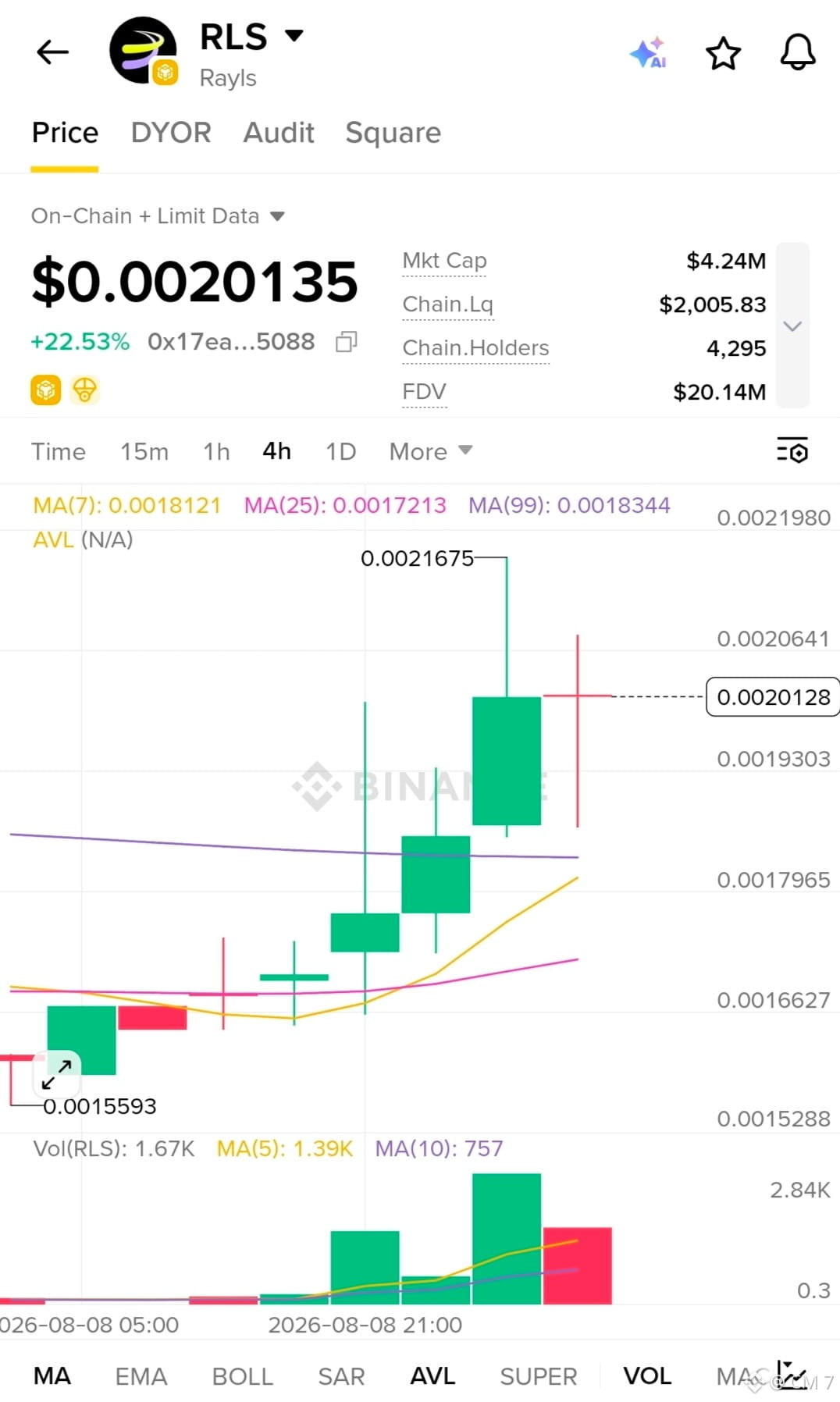
$RLS (Rayls) is showing strong bullish momentum on the 4H chart, pumping +22.53% and breaking past key Moving Averages! 📈
Key Technicals:
Current Price: $0.0020135
24h High: $0.0021675
Support: $0.00181 (MA 7) / $0.00172 (MA 25)
Market Cap: $4.24M | FDV: $20.14M
Volume: Spike in green volume candles showing solid buying pressure.
With the price consolidating above the MA(99) line ($0.00183), bulls are eyeing another retest of the recent $0.00216 peak. Keep a close eye on the volume for potential continuation!
Are you holding or waiting for a pullback? 👇
#RLS #Rayls #CryptoAnalysis #Bullish #BinanceSquareBTC #CryptoTrading #Altcoins@Binance_Square_Official
🚀 $RLS / USDT Breakout Alert! 🟢
$RLS (Rayls) is showing strong bullish momentum on the 4H chart, pumping +22.53% and breaking past key Moving Averages! 📈
Key Technicals:
Current Price: $0.0020135
24h High: $0.0021675
Support: $0.00181 (MA 7) / $0.00172 (MA 25)
Market Cap: $4.24M | FDV: $20.14M
Volume: Spike in green volume candles showing solid buying pressure.
With the price consolidating above the MA(99) line ($0.00183), bulls are eyeing another retest of the recent $0.00216 peak. Keep a close eye on the volume for potential continuation!
Are you holding or waiting for a pullback? 👇
#RLS #Rayls #CryptoAnalysis #Bullish #BinanceSquareBTC #CryptoTrading #Altcoins@Binance Square Official
1
1
136

$RLS /USDT — Explosive Recovery or Bull Trap?
════════════════════════════════
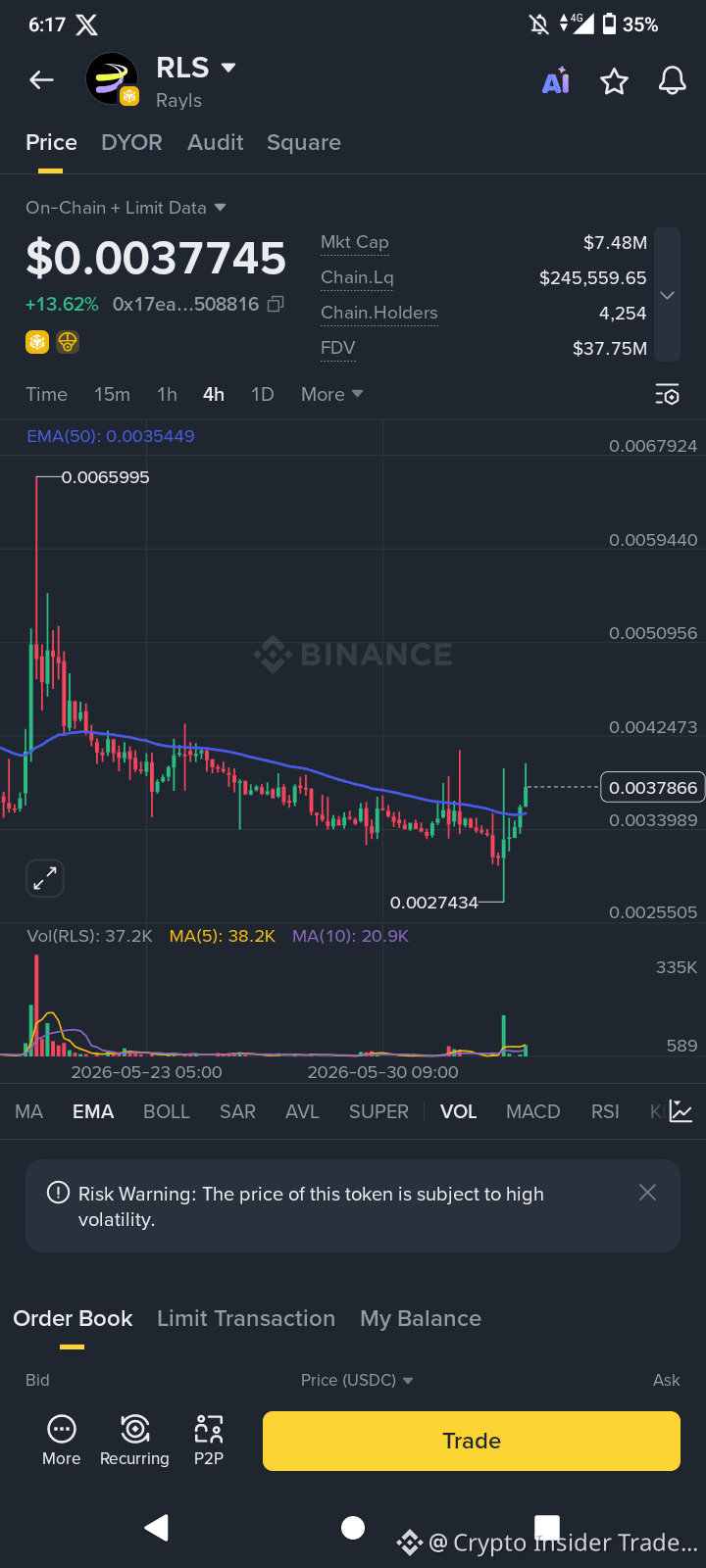
✔︎ $RLS just printed a sharp +16.27% daily candle after bouncing hard from the 0.002269 cycle low.
◆ Massive volume expansion confirms strong buyer interest.
◆ Price reclaimed the 0.003800 zone with the largest volume spike since the 0.005750 peak.
📊 Technical Structure
➤ Downtrend from 0.005750 formed a series of lower highs and lower lows.
➤ Recent breakout pushed price above all major moving averages:
① MA5: 0.003518
② MA10: 0.003403
③ MA20: 0.003435
✔︎ This signals a potential early trend reversal.
📍 Key Levels
➤ R1: 0.004136
➤ R2: 0.004500
➤ S1: 0.003400
➤ S2: 0.002269
🟢 Bullish Scenario
➜ Hold above 0.003800 with strong volume.
➜ Target 0.004136 first.
➜ Breakout above R1 could open the path to 0.004500.
🔴 Bearish Scenario
➜ Failure to hold above MA support cluster.
➜ Retest of 0.003000–0.002269 region.
⚪ Neutral Scenario
➜ Consolidation between 0.003400–0.004000 before the next major move.
◆ Volume surged to 1.59B.
✔︎ Watch whether the next 4H candle closes above the MA cluster.
Not Financial Advice. DYOR.
════════════════════════════════
#RLS #MRVLSoarsOnNVDATrillionDollarOutlook #BitcoinFearGaugeSurgesNearly20%
{alpha}(560x17ea10b6ae4fde59fdbf471bd28ab9710f508816)
$RLS /USDT — Explosive Recovery or Bull Trap?
════════════════════════════════
✔︎ $RLS just printed a sharp +16.27% daily candle after bouncing hard from the 0.002269 cycle low.
◆ Massive volume expansion confirms strong buyer interest.
◆ Price reclaimed the 0.003800 zone with the largest volume spike since the 0.005750 peak.
📊 Technical Structure
➤ Downtrend from 0.005750 formed a series of lower highs and lower lows.
➤ Recent breakout pushed price above all major moving averages:
① MA5: 0.003518
② MA10: 0.003403
③ MA20: 0.003435
✔︎ This signals a potential early trend reversal.
📍 Key Levels
➤ R1: 0.004136
➤ R2: 0.004500
➤ S1: 0.003400
➤ S2: 0.002269
🟢 Bullish Scenario
➜ Hold above 0.003800 with strong volume.
➜ Target 0.004136 first.
➜ Breakout above R1 could open the path to 0.004500.
🔴 Bearish Scenario
➜ Failure to hold above MA support cluster.
➜ Retest of 0.003000–0.002269 region.
⚪ Neutral Scenario
➜ Consolidation between 0.003400–0.004000 before the next major move.
◆ Volume surged to 1.59B.
✔︎ Watch whether the next 4H candle closes above the MA cluster.
Not Financial Advice. DYOR.
════════════════════════════════
#RLS #MRVLSoarsOnNVDATrillionDollarOutlook #BitcoinFearGaugeSurgesNearly20%
════════════════════════════════
✔︎ $RLS just printed a sharp +16.27% daily candle after bouncing hard from the 0.002269 cycle low.
◆ Massive volume expansion confirms strong buyer interest.
◆ Price reclaimed the 0.003800 zone with the largest volume spike since the 0.005750 peak.
📊 Technical Structure
➤ Downtrend from 0.005750 formed a series of lower highs and lower lows.
➤ Recent breakout pushed price above all major moving averages:
① MA5: 0.003518
② MA10: 0.003403
③ MA20: 0.003435
✔︎ This signals a potential early trend reversal.
📍 Key Levels
➤ R1: 0.004136
➤ R2: 0.004500
➤ S1: 0.003400
➤ S2: 0.002269
🟢 Bullish Scenario
➜ Hold above 0.003800 with strong volume.
➜ Target 0.004136 first.
➜ Breakout above R1 could open the path to 0.004500.
🔴 Bearish Scenario
➜ Failure to hold above MA support cluster.
➜ Retest of 0.003000–0.002269 region.
⚪ Neutral Scenario
➜ Consolidation between 0.003400–0.004000 before the next major move.
◆ Volume surged to 1.59B.
✔︎ Watch whether the next 4H candle closes above the MA cluster.
Not Financial Advice. DYOR.
════════════════════════════════
#RLS #MRVLSoarsOnNVDATrillionDollarOutlook #BitcoinFearGaugeSurgesNearly20%
509
Article
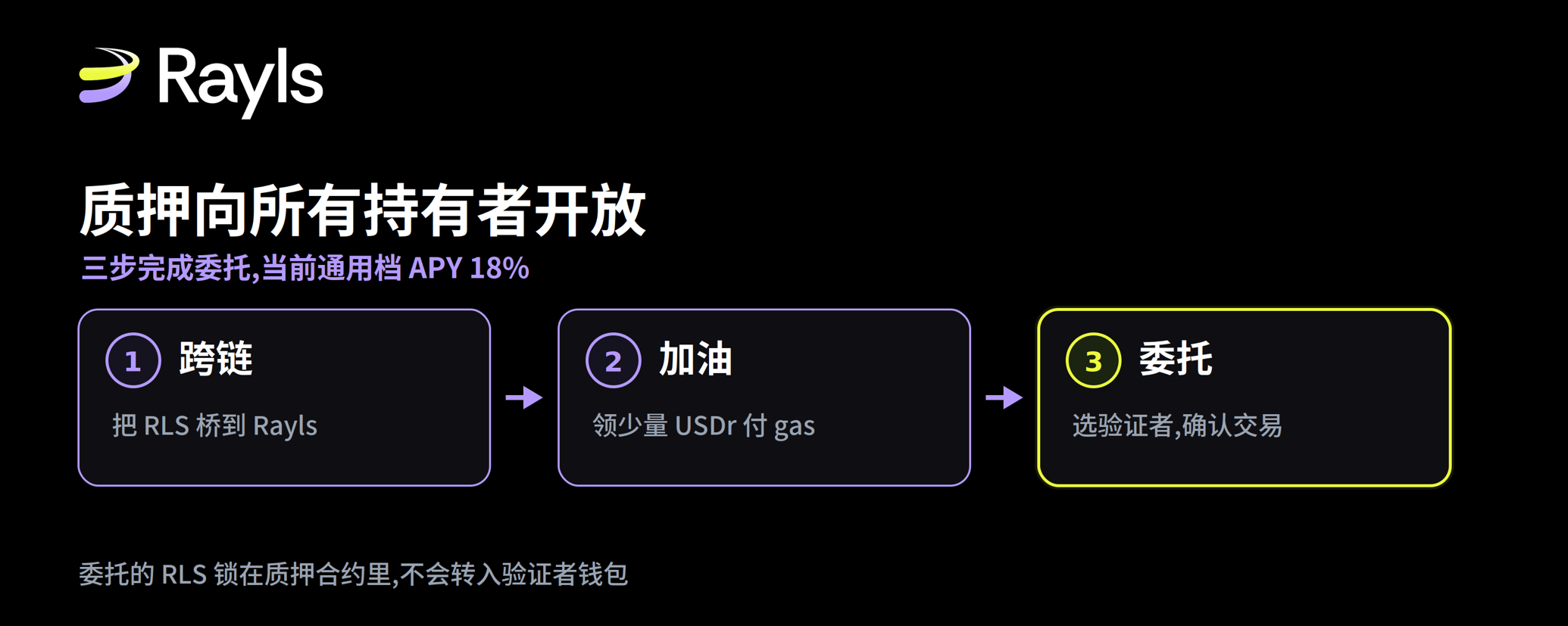
Staking is now open to everyone, but there are a few things you should know firstI started staking from the batch of pre-commitments in June, so I’ve gone through this whole process already. This time it’s open to everyone. A lot of people around me have been asking how to operate it and what to watch out for, so I’m just going to lay everything out clearly in one go.
First, let’s talk about the change itself.
Rayls uses delegated proof-of-stake: validators run nodes, produce blocks, and help secure the public chain. Regular holders don’t need to run nodes themselves—they can delegate their RLS to a validator and share part of the staking rewards.
This mechanism went live in June, but at the time it was only available to wallets that participated in the pre-commitment plan and the liquidity seed activities. Those participants locked their tokens before the mainnet launch, and the official team offered a three-month 55% boosted annualized return. They even sent 1 USDr to each qualifying wallet so they wouldn’t even have to worry about having gas.
Staking is now open to everyone, but there are a few things you should know first
I started staking from the batch of pre-commitments in June, so I’ve gone through this whole process already. This time it’s open to everyone. A lot of people around me have been asking how to operate it and what to watch out for, so I’m just going to lay everything out clearly in one go.
First, let’s talk about the change itself.
Rayls uses delegated proof-of-stake: validators run nodes, produce blocks, and help secure the public chain. Regular holders don’t need to run nodes themselves—they can delegate their RLS to a validator and share part of the staking rewards.
This mechanism went live in June, but at the time it was only available to wallets that participated in the pre-commitment plan and the liquidity seed activities. Those participants locked their tokens before the mainnet launch, and the official team offered a three-month 55% boosted annualized return. They even sent 1 USDr to each qualifying wallet so they wouldn’t even have to worry about having gas.
276

·
--
Bullish
#RLS $RLS Great opportunity, it's still in the alpha phase on Binance. Get to know the crypto Rayls
RLS is the token of the Rayls ecosystem, a blockchain solution focused on financial institutions that require privacy, compliance, and scalability. Here are some key points about RLS and the Rayls ecosystem:
- *Proposition*: Rayls offers a secure, compliant blockchain platform for financial institutions, featuring Privacy Nodes and Private Networks that can process up to 10,000 transactions per second.
- *Tokenomics*: RLS has a fixed total supply of 10 billion tokens, distributed among the Foundation's Treasury, investors, core team, and early developers.
- *Governance*: Rayls plans to transition to a decentralized governance model (DAO) in 2026, allowing RLS holders to participate in decision-making.
- *Partnerships*: Rayls has partnerships with institutions like the Central Bank of Brazil and JPMorgan, enhancing its credibility.
- *Privacy and Compliance*: Rayls' Enygma protocol uses zero-knowledge proofs and post-quantum cryptography to ensure transaction privacy.
The Rayls ecosystem is designed to meet the needs of financial institutions, providing a secure and scalable blockchain solution. The Mainnet V1 launch is scheduled for Q1 2026.
This is not a buy recommendation. Get to know the project; everything depends on research, especially on entries and exits
{alpha}(560x17ea10b6ae4fde59fdbf471bd28ab9710f508816)
#RLS $RLS Great opportunity, it's still in the alpha phase on Binance. Get to know the crypto Rayls
RLS is the token of the Rayls ecosystem, a blockchain solution focused on financial institutions that require privacy, compliance, and scalability. Here are some key points about RLS and the Rayls ecosystem:
- *Proposition*: Rayls offers a secure, compliant blockchain platform for financial institutions, featuring Privacy Nodes and Private Networks that can process up to 10,000 transactions per second.
- *Tokenomics*: RLS has a fixed total supply of 10 billion tokens, distributed among the Foundation's Treasury, investors, core team, and early developers.
- *Governance*: Rayls plans to transition to a decentralized governance model (DAO) in 2026, allowing RLS holders to participate in decision-making.
- *Partnerships*: Rayls has partnerships with institutions like the Central Bank of Brazil and JPMorgan, enhancing its credibility.
- *Privacy and Compliance*: Rayls' Enygma protocol uses zero-knowledge proofs and post-quantum cryptography to ensure transaction privacy.
The Rayls ecosystem is designed to meet the needs of financial institutions, providing a secure and scalable blockchain solution. The Mainnet V1 launch is scheduled for Q1 2026.
This is not a buy recommendation. Get to know the project; everything depends on research, especially on entries and exits
1
310


·
--
Bullish
{alpha}(560x99991c6aabba5a096f24f250b73580f5179b9999)
{alpha}(560x17ea10b6ae4fde59fdbf471bd28ab9710f508816)
{alpha}(560xe32f9e8f7f7222fcd83ee0fc68baf12118448eaf)
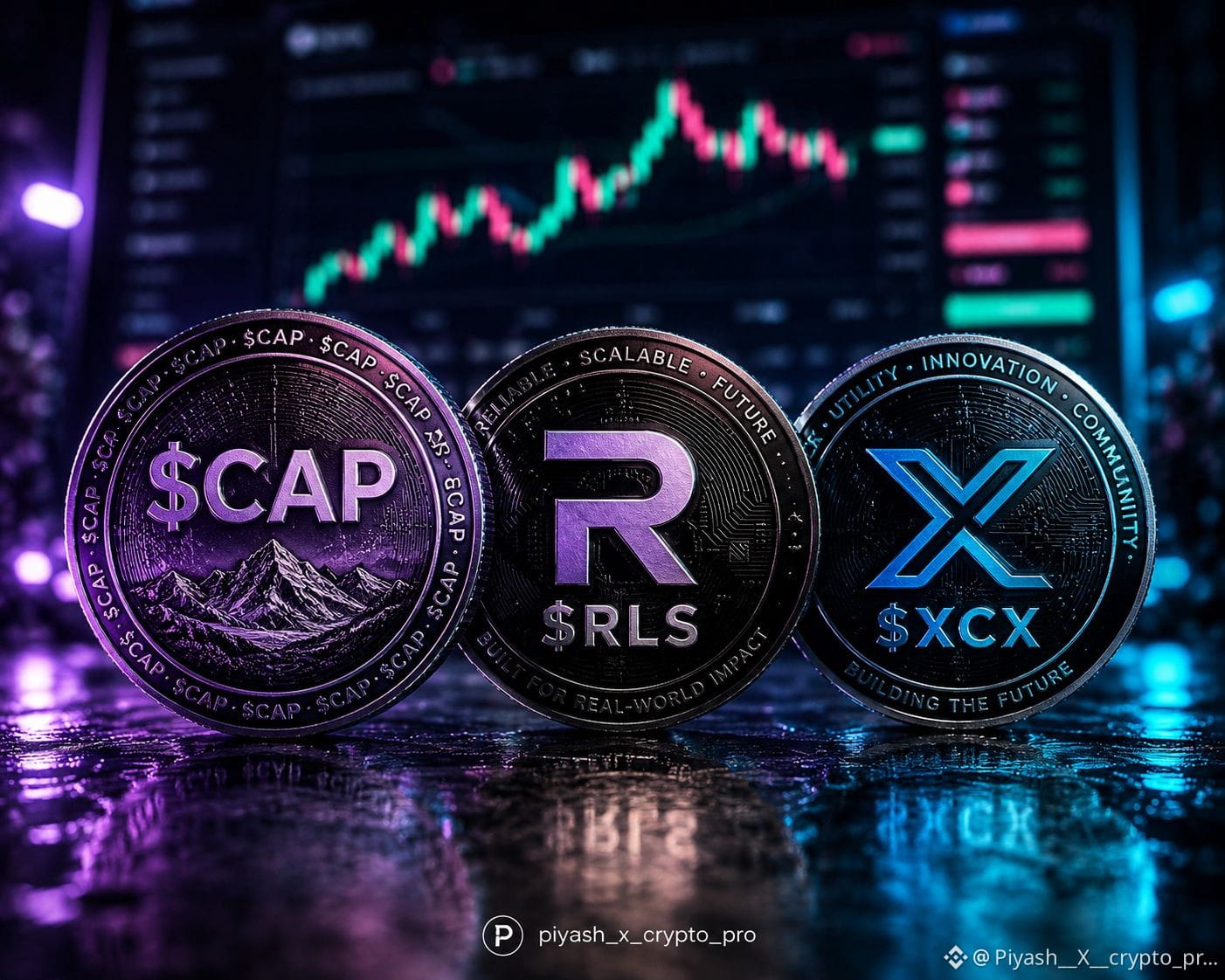
#BinancePick 🚀🔥 3 COINS TO WATCH — $CAP | $RLS | $XCX 📊💎
The crypto market is full of opportunities, but smart traders always do their research before making a move! 👀📈
🟣 $CAP — The Market Watchlist 💜
Keep an eye on its price action and market activity. Could CAP attract more attention from traders? 🔍
🔵 $RLS — The Next Opportunity? ⚡
Every coin has its own story. Watch key price levels, trading volume, and momentum before making any decisions! 📊
🔷 $XCX — Innovation on the Radar 🚀
Could XCX become a coin worth watching? Track its market trend and look for potential trading setups! 🎯
💬 YOUR TURN! 👇
Which coin would you choose to research first?
🔥 $CAP | ⚡ $RLS | 💎 $XCX
Drop your favorite ticker in the comments! 💬🚀
📌 Stay focused. Manage your risk. Always DYOR — these coins are not guaranteed to rise.
#CAP #RLS #XCX #Crypto #Altcoins #CryptoTrading #BinanceSquare #DYOR #CryptoCommunity
98
·
--
$RLS +10.63% | $BSB +10.62% | $ATH +10.49%
#RLS on BSC nudged to $0.00199785, up +10.63% on $40.0K volume and a $4.5 M market cap.
BSB on BSC moved to $0.0961, gaining +10.62% with $3.7 M traded, backing a $24.7 M market cap.
ATH on Ethereum climbed to $0.00620590, up +10.49% on $184.0K volume and a $124.9 M market cap; the thin $184 K flow means the rise could be volatile.
📈 Keep an eye on how quickly volume scales if these Alpha tokens sustain their momentum.
#BinanceAlpha #TopGainers #Write2Earn #Binance
4

Log in to explore more content
Join global crypto users on Binance Square
⚡️ Get latest and useful information about crypto.
💬 Trusted by the world’s largest crypto exchange.
👍 Discover real insights from verified creators.
Email / Phone number
Trending Topics
1
#CanMicrosoftDeliverOnAI
248,001 views
1,990 Discussing
2
#CanGoogleDefindItsCore
143,055 views
1,457 Discussing
3
#EarningsSeason
5.8M views
27,983 Discussing
4
#BitcoinSurpasses$81K
3,011 views
36 Discussing
5
#RobinhoodFalls8.4%AfterItsResults
1,429 views
35 Discussing
6
#KOSPISurges6.63%BackAbove6000
1,708 views
56 Discussing
7
#DatavaultAICantWithdrawBitcoinFromBiconomy
3,988 views
74 Discussing
8
#FOMCWatch
9.2M views
29,167 Discussing
9
#HKPlacesTokenizedFundSecondaryTradingUnderETFLikeFramework
1,075 views
31 Discussing
10
#USGovSellsFTXLinkedAnthropicSharesFor$627M
1,101 views
29 Discussing