

#qnt
qnt
2.4M views
11,203 Discussing
Hot
Latest

·
--
Bullish
Verified
$QNT : From $0.16 to $428… and now everyone is watching 👀
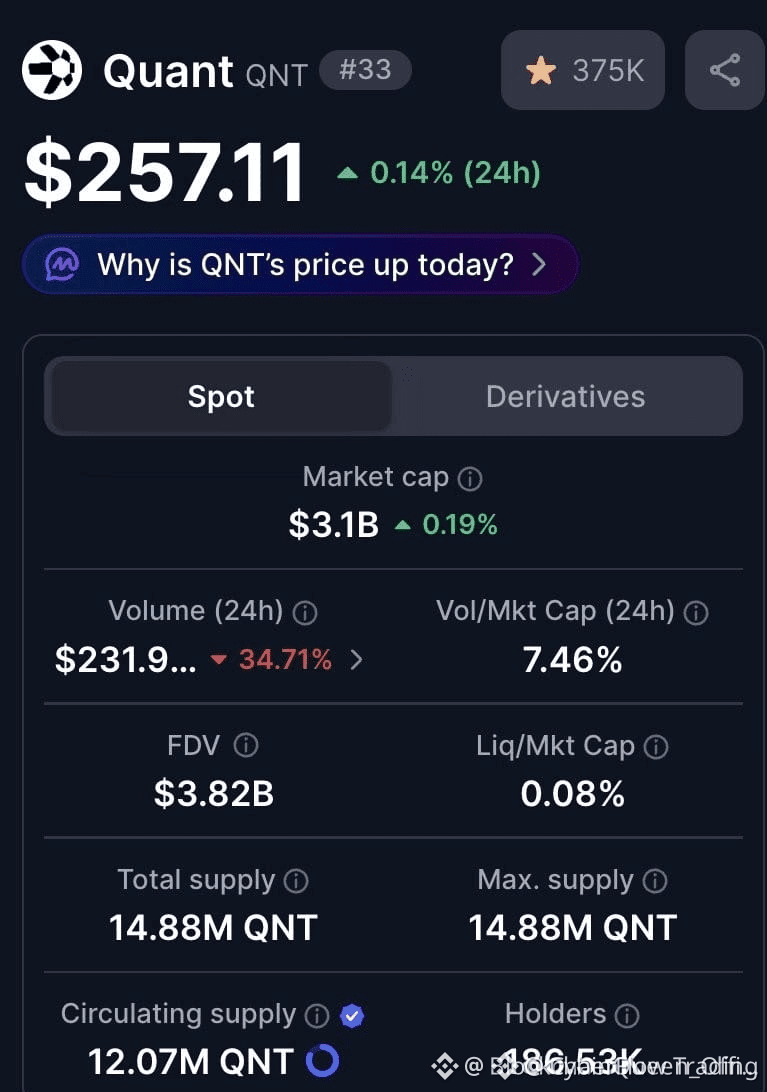
Let’s decode Quant (QNT). Founded in 2018 by Gilbert Verdian, Quant’s core idea is simple: connect different blockchains, distributed ledgers and traditional financial systems. Its main technology, Overledger, is an interoperability layer designed to make these networks communicate. QNT launched in 2018 around $1–$2, eventually falling to an all-time low near $0.16. Then came 2021: QNT exploded from around $10 to an all-time high of approximately $428 in September 2021. The crypto winter followed, sending it to roughly $40 in 2022, before recovering above $160 in 2023–24 and spending much of 2025 around $60–$130. Fast-forward to 2026 and QNT suddenly woke up, reaching the $300+ area and recently trading around $358.
So why is everyone talking about it? The Clearing House announced on September 24 that it selected Quant for the interoperability, orchestration and transaction-management layer of its On-Chain Money Initiative, designed to help financial institutions clear and settle tokenized deposits while connecting to systems including RTP and CHIPS. The network is expected to open to participating institutions in H1 2027. Quant is also involved in tokenized-deposit initiatives in the UK, Europe and Canada.
My 2027 view? I’m bullish, but not blindly. After such a fast move, a correction wouldn’t surprise me. I’m watching $300 as a key psychological zone, then the old ATH around $428. If QNT holds its breakout, institutional adoption continues and the broader market stays bullish, I could see it reclaiming its ATH and potentially reaching $450–$600 in a strong 2027 scenario. But if the hype fades or markets turn risk-off, a deeper retracement is possible.
For me, QNT isn’t interesting simply because it pumped. It’s interesting because the narrative Quant has built since 2018 is meeting a financial world moving toward tokenized money and interoperable infrastructure.
#Qnt
{spot}(QNTUSDT)
$QNT : From $0.16 to $428… and now everyone is watching 👀
Let’s decode Quant (QNT). Founded in 2018 by Gilbert Verdian, Quant’s core idea is simple: connect different blockchains, distributed ledgers and traditional financial systems. Its main technology, Overledger, is an interoperability layer designed to make these networks communicate. QNT launched in 2018 around $1–$2, eventually falling to an all-time low near $0.16. Then came 2021: QNT exploded from around $10 to an all-time high of approximately $428 in September 2021. The crypto winter followed, sending it to roughly $40 in 2022, before recovering above $160 in 2023–24 and spending much of 2025 around $60–$130. Fast-forward to 2026 and QNT suddenly woke up, reaching the $300+ area and recently trading around $358.
So why is everyone talking about it? The Clearing House announced on September 24 that it selected Quant for the interoperability, orchestration and transaction-management layer of its On-Chain Money Initiative, designed to help financial institutions clear and settle tokenized deposits while connecting to systems including RTP and CHIPS. The network is expected to open to participating institutions in H1 2027. Quant is also involved in tokenized-deposit initiatives in the UK, Europe and Canada.
My 2027 view? I’m bullish, but not blindly. After such a fast move, a correction wouldn’t surprise me. I’m watching $300 as a key psychological zone, then the old ATH around $428. If QNT holds its breakout, institutional adoption continues and the broader market stays bullish, I could see it reclaiming its ATH and potentially reaching $450–$600 in a strong 2027 scenario. But if the hype fades or markets turn risk-off, a deeper retracement is possible.
For me, QNT isn’t interesting simply because it pumped. It’s interesting because the narrative Quant has built since 2018 is meeting a financial world moving toward tokenized money and interoperable infrastructure.
#Qnt
Let’s decode Quant (QNT). Founded in 2018 by Gilbert Verdian, Quant’s core idea is simple: connect different blockchains, distributed ledgers and traditional financial systems. Its main technology, Overledger, is an interoperability layer designed to make these networks communicate. QNT launched in 2018 around $1–$2, eventually falling to an all-time low near $0.16. Then came 2021: QNT exploded from around $10 to an all-time high of approximately $428 in September 2021. The crypto winter followed, sending it to roughly $40 in 2022, before recovering above $160 in 2023–24 and spending much of 2025 around $60–$130. Fast-forward to 2026 and QNT suddenly woke up, reaching the $300+ area and recently trading around $358.
So why is everyone talking about it? The Clearing House announced on September 24 that it selected Quant for the interoperability, orchestration and transaction-management layer of its On-Chain Money Initiative, designed to help financial institutions clear and settle tokenized deposits while connecting to systems including RTP and CHIPS. The network is expected to open to participating institutions in H1 2027. Quant is also involved in tokenized-deposit initiatives in the UK, Europe and Canada.
My 2027 view? I’m bullish, but not blindly. After such a fast move, a correction wouldn’t surprise me. I’m watching $300 as a key psychological zone, then the old ATH around $428. If QNT holds its breakout, institutional adoption continues and the broader market stays bullish, I could see it reclaiming its ATH and potentially reaching $450–$600 in a strong 2027 scenario. But if the hype fades or markets turn risk-off, a deeper retracement is possible.
For me, QNT isn’t interesting simply because it pumped. It’s interesting because the narrative Quant has built since 2018 is meeting a financial world moving toward tokenized money and interoperable infrastructure.
#Qnt
1
900



·
--
Article
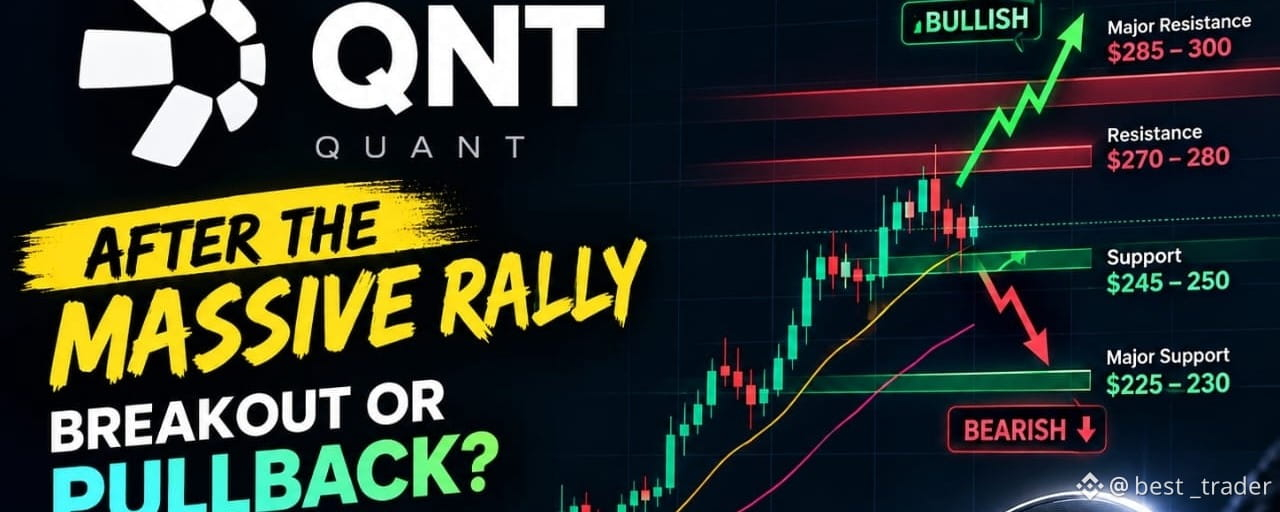
Quant After the Massive Rally — Breakout or Pullback?$QNT | MARKET STRUCTURE UPDATE
Quant has made a strong move recently, but after such a rally, the next price reaction becomes important.
📊 KEY LEVELS
🟢 Support: $245–250
🟢 Major Support: $225–230
🔴 Resistance: $270–280
🔴 Major Resistance: $285–300
🐂 BULLISH SCENARIO
A strong breakout above $280 with volume could strengthen the bullish structure and bring higher levels into focus.
🐻 BEARISH SCENARIO
If QNT loses the $245 area, a deeper pullback toward $225–230 could become possible.
WHAT I'M WATCHING:
• $280 breakout
• Volume confirmation
• $245 support
• $225–230 reaction
• BTC market direction
My approach: I wouldn't chase a sudden green candle after a strong rally. I'd rather wait for breakout confirmation or a clean support retest.
Momentum is strong. Risk management matters even more.
What do you think? 👇
🚀 Breakout above $280
🔄 Pullback first
$QNT
#QNT #Quant #cryptotrading #TechnicalAnalysis #Altcoins
Quant After the Massive Rally — Breakout or Pullback?
$QNT | MARKET STRUCTURE UPDATE
Quant has made a strong move recently, but after such a rally, the next price reaction becomes important.
📊 KEY LEVELS
🟢 Support: $245–250
🟢 Major Support: $225–230
🔴 Resistance: $270–280
🔴 Major Resistance: $285–300
🐂 BULLISH SCENARIO
A strong breakout above $280 with volume could strengthen the bullish structure and bring higher levels into focus.
🐻 BEARISH SCENARIO
If QNT loses the $245 area, a deeper pullback toward $225–230 could become possible.
WHAT I'M WATCHING:
• $280 breakout
• Volume confirmation
• $245 support
• $225–230 reaction
• BTC market direction
My approach: I wouldn't chase a sudden green candle after a strong rally. I'd rather wait for breakout confirmation or a clean support retest.
Momentum is strong. Risk management matters even more.
What do you think? 👇
🚀 Breakout above $280
🔄 Pullback first
$QNT
#QNT #Quant #cryptotrading #TechnicalAnalysis #Altcoins
Quant has made a strong move recently, but after such a rally, the next price reaction becomes important.
📊 KEY LEVELS
🟢 Support: $245–250
🟢 Major Support: $225–230
🔴 Resistance: $270–280
🔴 Major Resistance: $285–300
🐂 BULLISH SCENARIO
A strong breakout above $280 with volume could strengthen the bullish structure and bring higher levels into focus.
🐻 BEARISH SCENARIO
If QNT loses the $245 area, a deeper pullback toward $225–230 could become possible.
WHAT I'M WATCHING:
• $280 breakout
• Volume confirmation
• $245 support
• $225–230 reaction
• BTC market direction
My approach: I wouldn't chase a sudden green candle after a strong rally. I'd rather wait for breakout confirmation or a clean support retest.
Momentum is strong. Risk management matters even more.
What do you think? 👇
🚀 Breakout above $280
🔄 Pullback first
$QNT
#QNT #Quant #cryptotrading #TechnicalAnalysis #Altcoins
515

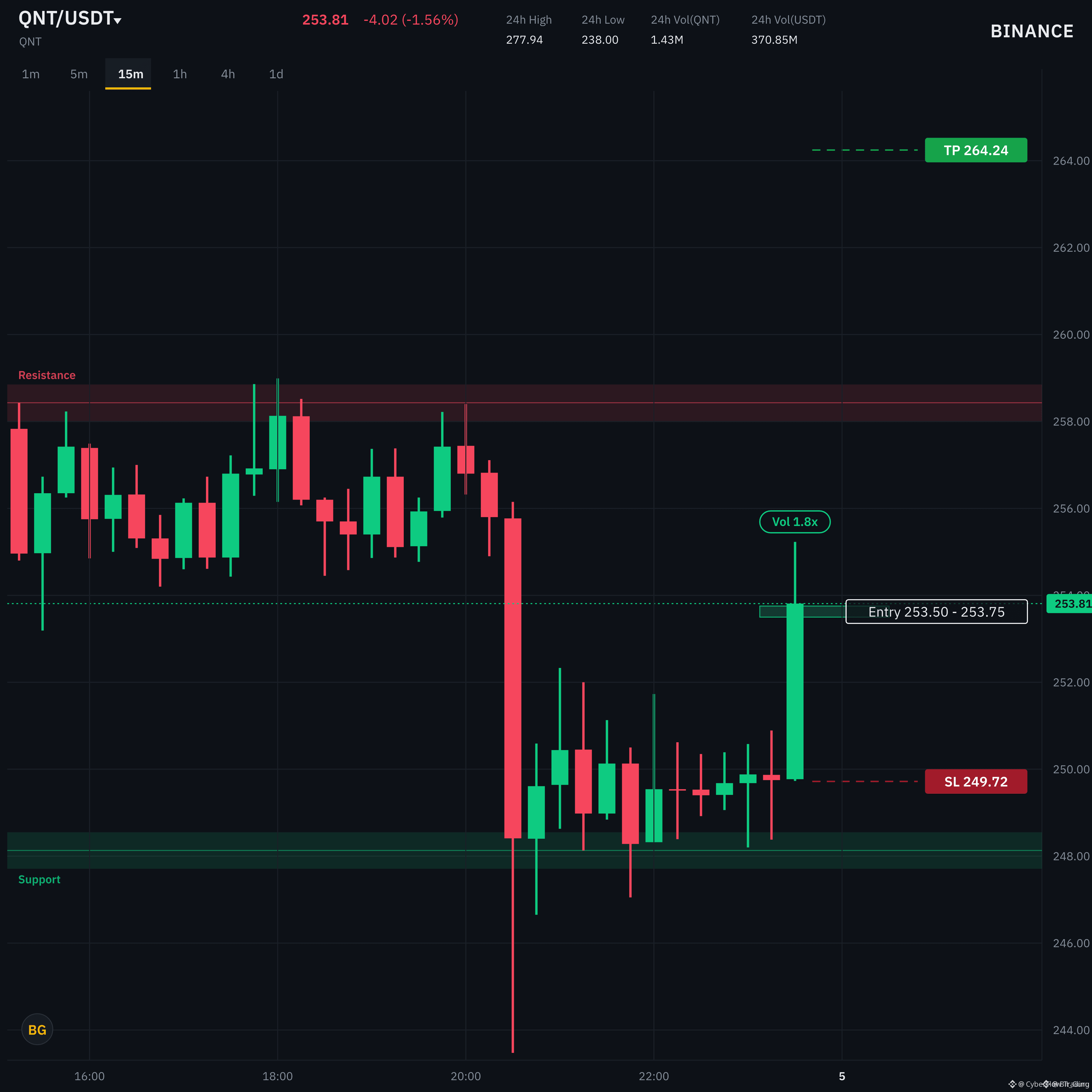
💥 $QNT SETS UP FOR MOMENTUM BREAKOUT AS SMART MONEY DEFENDS KEY DEMAND! ⚡
Entry: 253.499 - 253.753 ⚡
Target 1: 257.788 🚀
Target 2: 261.016 🎯
Target 3: 264.244 💥
Stop Loss: 249.718 ⚠️
📌 $QNT is displaying clear accumulation behavior inside the 253 pocket, absorbing passive sell pressure while establishing a rock-solid floor. 📊 Order flow dynamics strongly favor buyers here as bids continue front-running deeper pullbacks.
💡 With liquidity resting above local highs, the path of least resistance points toward an explosive sweep up toward the upper targets. 💬 Are you placing your bids inside this demand block or waiting for momentum confirmation above 257? 👇
⚠️ Not financial advice. Always manage your risk. 🛡️
🏷️ #QNT #LongSetup #Breakout #Crypto
🔥 💎
💥 $QNT SETS UP FOR MOMENTUM BREAKOUT AS SMART MONEY DEFENDS KEY DEMAND! ⚡
Entry: 253.499 - 253.753 ⚡
Target 1: 257.788 🚀
Target 2: 261.016 🎯
Target 3: 264.244 💥
Stop Loss: 249.718 ⚠️
📌 $QNT is displaying clear accumulation behavior inside the 253 pocket, absorbing passive sell pressure while establishing a rock-solid floor. 📊 Order flow dynamics strongly favor buyers here as bids continue front-running deeper pullbacks.
💡 With liquidity resting above local highs, the path of least resistance points toward an explosive sweep up toward the upper targets. 💬 Are you placing your bids inside this demand block or waiting for momentum confirmation above 257? 👇
⚠️ Not financial advice. Always manage your risk. 🛡️
🏷️ #QNT #LongSetup #Breakout #Crypto
🔥 💎
Entry: 253.499 - 253.753 ⚡
Target 1: 257.788 🚀
Target 2: 261.016 🎯
Target 3: 264.244 💥
Stop Loss: 249.718 ⚠️
📌 $QNT is displaying clear accumulation behavior inside the 253 pocket, absorbing passive sell pressure while establishing a rock-solid floor. 📊 Order flow dynamics strongly favor buyers here as bids continue front-running deeper pullbacks.
💡 With liquidity resting above local highs, the path of least resistance points toward an explosive sweep up toward the upper targets. 💬 Are you placing your bids inside this demand block or waiting for momentum confirmation above 257? 👇
⚠️ Not financial advice. Always manage your risk. 🛡️
🏷️ #QNT #LongSetup #Breakout #Crypto
🔥 💎
121

·
--
$QNT volume trends are signaling a shift in institutional interest.
Trading at $251.28 with a 24-hour volume of $52.24M, QNT is currently navigating a 2.22% daily retracement. Participation metrics remain the primary indicator to watch; a sustained increase in volume on green candles could signal a move toward local resistance, while a significant contraction in liquidity on further downside would suggest a weakening of current support levels.
In this market climate, volume is the most honest indicator of conviction. As liquidity shifts, we must observe whether capital is accumulating or exiting these current levels.
Do you view this…
Tap $QNT for the live chart. #QNT #BinanceSquare
$QNT volume trends are signaling a shift in institutional interest.
Trading at $251.28 with a 24-hour volume of $52.24M, QNT is currently navigating a 2.22% daily retracement. Participation metrics remain the primary indicator to watch; a sustained increase in volume on green candles could signal a move toward local resistance, while a significant contraction in liquidity on further downside would suggest a weakening of current support levels.
In this market climate, volume is the most honest indicator of conviction. As liquidity shifts, we must observe whether capital is accumulating or exiting these current levels.
Do you view this…
Tap $QNT for the live chart. #QNT #BinanceSquare
Trading at $251.28 with a 24-hour volume of $52.24M, QNT is currently navigating a 2.22% daily retracement. Participation metrics remain the primary indicator to watch; a sustained increase in volume on green candles could signal a move toward local resistance, while a significant contraction in liquidity on further downside would suggest a weakening of current support levels.
In this market climate, volume is the most honest indicator of conviction. As liquidity shifts, we must observe whether capital is accumulating or exiting these current levels.
Do you view this…
Tap $QNT for the live chart. #QNT #BinanceSquare
212

·
--
🚨 $QNT MARKET STRUCTURE EXPANSION SIGNALS INSTITUTIONAL RE-ACCUMULATION PHASE ⚡
$QNT is demonstrating a textbook market structure shift following its initial impulse move. 🔍 Smart money is currently respecting established demand blocks, absorbing overhead supply while leaving clear price inefficiencies above.
As volume consolidates above structural support, institutional order flow suggests the current consolidation is setting up another liquidity sweep into higher resistance zones. 📊 Early entries require patient confirmation on lower timeframes to maintain tight risk parameters. 💡
💬 Are you waiting for a fair value gap fill before taking exposure, or tracking the breakout vector live? 👇
⚠️ Not financial advice. Always manage your risk. 🛡️
🏷️ #QNT #Quant #MarketStructure #Crypto
🎯 🦈
🚨 $QNT MARKET STRUCTURE EXPANSION SIGNALS INSTITUTIONAL RE-ACCUMULATION PHASE ⚡
$QNT is demonstrating a textbook market structure shift following its initial impulse move. 🔍 Smart money is currently respecting established demand blocks, absorbing overhead supply while leaving clear price inefficiencies above.
As volume consolidates above structural support, institutional order flow suggests the current consolidation is setting up another liquidity sweep into higher resistance zones. 📊 Early entries require patient confirmation on lower timeframes to maintain tight risk parameters. 💡
💬 Are you waiting for a fair value gap fill before taking exposure, or tracking the breakout vector live? 👇
⚠️ Not financial advice. Always manage your risk. 🛡️
🏷️ #QNT #Quant #MarketStructure #Crypto
🎯 🦈
$QNT is demonstrating a textbook market structure shift following its initial impulse move. 🔍 Smart money is currently respecting established demand blocks, absorbing overhead supply while leaving clear price inefficiencies above.
As volume consolidates above structural support, institutional order flow suggests the current consolidation is setting up another liquidity sweep into higher resistance zones. 📊 Early entries require patient confirmation on lower timeframes to maintain tight risk parameters. 💡
💬 Are you waiting for a fair value gap fill before taking exposure, or tracking the breakout vector live? 👇
⚠️ Not financial advice. Always manage your risk. 🛡️
🏷️ #QNT #Quant #MarketStructure #Crypto
🎯 🦈
80
⚡ $QNT GEARS UP FOR CONTINUATION AS ACCUMULATION ABSORBS SELLER LIQUIDITY! 🚀
Initial expansion moves often leave unfilled liquidity below, and $QNT is currently grinding through a classic high-timeframe retest. 📊 Smart money has been quietly front-running the re-accumulation zone, locking in supply while late sellers exhaust their volume.
When a high-conviction runner consolidates near resistance after an explosive impulse wave, the probability leans heavily toward expansion over breakdown. 🌊 Price action is coiling tight, preparing to reward patience.
💬 Are you riding the momentum on this retest, or waiting for a confirmed breakout print above key resistance? 👇
⚠️ Not financial advice. Always manage your risk. 🛡️
🏷️ #QNT #Crypto #Breakout #Momentum
🚀 ⚡
⚡ $QNT GEARS UP FOR CONTINUATION AS ACCUMULATION ABSORBS SELLER LIQUIDITY! 🚀
Initial expansion moves often leave unfilled liquidity below, and $QNT is currently grinding through a classic high-timeframe retest. 📊 Smart money has been quietly front-running the re-accumulation zone, locking in supply while late sellers exhaust their volume.
When a high-conviction runner consolidates near resistance after an explosive impulse wave, the probability leans heavily toward expansion over breakdown. 🌊 Price action is coiling tight, preparing to reward patience.
💬 Are you riding the momentum on this retest, or waiting for a confirmed breakout print above key resistance? 👇
⚠️ Not financial advice. Always manage your risk. 🛡️
🏷️ #QNT #Crypto #Breakout #Momentum
🚀 ⚡
Initial expansion moves often leave unfilled liquidity below, and $QNT is currently grinding through a classic high-timeframe retest. 📊 Smart money has been quietly front-running the re-accumulation zone, locking in supply while late sellers exhaust their volume.
When a high-conviction runner consolidates near resistance after an explosive impulse wave, the probability leans heavily toward expansion over breakdown. 🌊 Price action is coiling tight, preparing to reward patience.
💬 Are you riding the momentum on this retest, or waiting for a confirmed breakout print above key resistance? 👇
⚠️ Not financial advice. Always manage your risk. 🛡️
🏷️ #QNT #Crypto #Breakout #Momentum
🚀 ⚡
76
🚀 $QNT IS COILING FOR ITS SECOND WAVE AFTER ABSORBING SELLER LIQUIDITY! ⚡
$QNT is consolidating right above the breakout structure, absorbing early profit-taking while buyers aggressively defend the fresh support level. 📊 Volume profiles show smart money holding positions rather than distribution, setting the stage for expansion.
When momentum tokens pause after a primary surge, late shorts often get trapped thinking the trend is exhausted before the second leg ignites. ⚡ The order flow hints that consolidation is coming to an end. 💬 Are you bidding this healthy retest or waiting for confirmation above local highs? 👇
⚠️ Not financial advice. Always manage your risk. 🛡️
🏷️ #QNT #Crypto #Breakout #Momentum #Trading
🔥 ⚡
🚀 $QNT IS COILING FOR ITS SECOND WAVE AFTER ABSORBING SELLER LIQUIDITY! ⚡
$QNT is consolidating right above the breakout structure, absorbing early profit-taking while buyers aggressively defend the fresh support level. 📊 Volume profiles show smart money holding positions rather than distribution, setting the stage for expansion.
When momentum tokens pause after a primary surge, late shorts often get trapped thinking the trend is exhausted before the second leg ignites. ⚡ The order flow hints that consolidation is coming to an end. 💬 Are you bidding this healthy retest or waiting for confirmation above local highs? 👇
⚠️ Not financial advice. Always manage your risk. 🛡️
🏷️ #QNT #Crypto #Breakout #Momentum #Trading
🔥 ⚡
$QNT is consolidating right above the breakout structure, absorbing early profit-taking while buyers aggressively defend the fresh support level. 📊 Volume profiles show smart money holding positions rather than distribution, setting the stage for expansion.
When momentum tokens pause after a primary surge, late shorts often get trapped thinking the trend is exhausted before the second leg ignites. ⚡ The order flow hints that consolidation is coming to an end. 💬 Are you bidding this healthy retest or waiting for confirmation above local highs? 👇
⚠️ Not financial advice. Always manage your risk. 🛡️
🏷️ #QNT #Crypto #Breakout #Momentum #Trading
🔥 ⚡
93
·
--
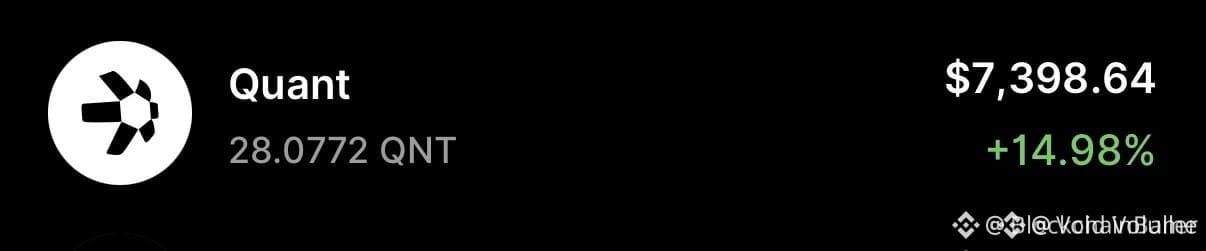
📈 $QNT MACRO EXPANSION TARGETS THE $500 TO $1000 LIQUIDITY POOLS BY 2027 🦈
Long-term structural analysis on $QNT points toward an extended macro re-expansion phase. 📊 As institutional participants continue absorbing overhead supply within historical accumulation ranges, the path toward structural targets between $500 and $1000 reflects a full inefficiency rebalance over the multi-year cycle.
💡 Higher-timeframe market structure suggests that once key macro pivot levels are reclaimed, liquidity pools in upper ranges become high-probability magnets. 🔍 Sustained higher-low construction remains the primary prerequisite for this trajectory.
💬 Do you see $QNT sweeping its macro range targets before 2027, or expecting a deeper liquidity retest first? 👇
⚠️ Not financial advice. Always manage your risk. 🛡️
🏷️ #QNT #Quant #MarketStructure #Crypto #Altcoins
🎯 🦈
📈 $QNT MACRO EXPANSION TARGETS THE $500 TO $1000 LIQUIDITY POOLS BY 2027 🦈
Long-term structural analysis on $QNT points toward an extended macro re-expansion phase. 📊 As institutional participants continue absorbing overhead supply within historical accumulation ranges, the path toward structural targets between $500 and $1000 reflects a full inefficiency rebalance over the multi-year cycle.
💡 Higher-timeframe market structure suggests that once key macro pivot levels are reclaimed, liquidity pools in upper ranges become high-probability magnets. 🔍 Sustained higher-low construction remains the primary prerequisite for this trajectory.
💬 Do you see $QNT sweeping its macro range targets before 2027, or expecting a deeper liquidity retest first? 👇
⚠️ Not financial advice. Always manage your risk. 🛡️
🏷️ #QNT #Quant #MarketStructure #Crypto #Altcoins
🎯 🦈
Long-term structural analysis on $QNT points toward an extended macro re-expansion phase. 📊 As institutional participants continue absorbing overhead supply within historical accumulation ranges, the path toward structural targets between $500 and $1000 reflects a full inefficiency rebalance over the multi-year cycle.
💡 Higher-timeframe market structure suggests that once key macro pivot levels are reclaimed, liquidity pools in upper ranges become high-probability magnets. 🔍 Sustained higher-low construction remains the primary prerequisite for this trajectory.
💬 Do you see $QNT sweeping its macro range targets before 2027, or expecting a deeper liquidity retest first? 👇
⚠️ Not financial advice. Always manage your risk. 🛡️
🏷️ #QNT #Quant #MarketStructure #Crypto #Altcoins
🎯 🦈
76


·
--
Bullish
Everyone Stop scrolling for a minute Today I'm sharing three coins #ZEC #QNT #BCH these could makes you millionaire this Altseason
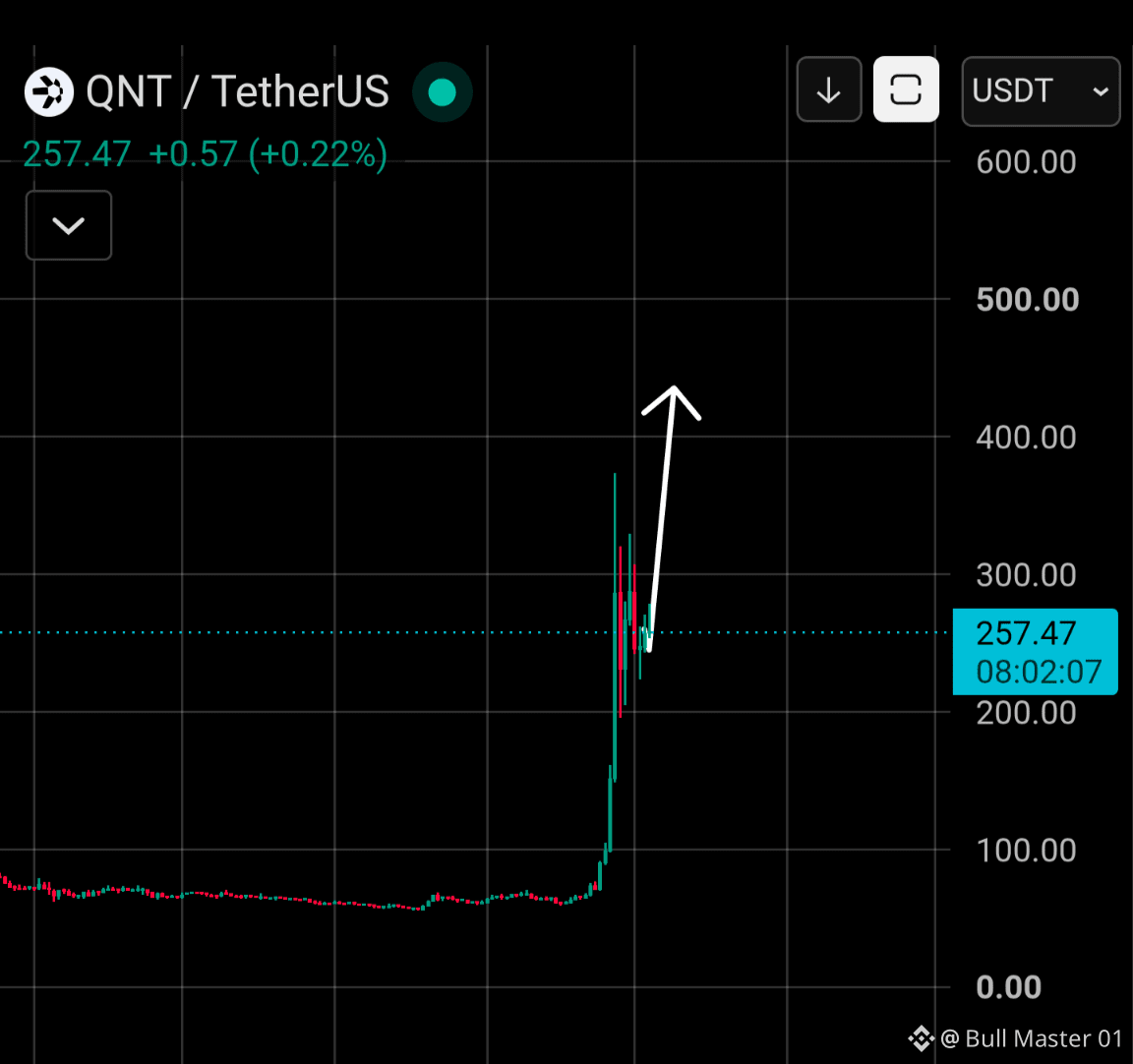
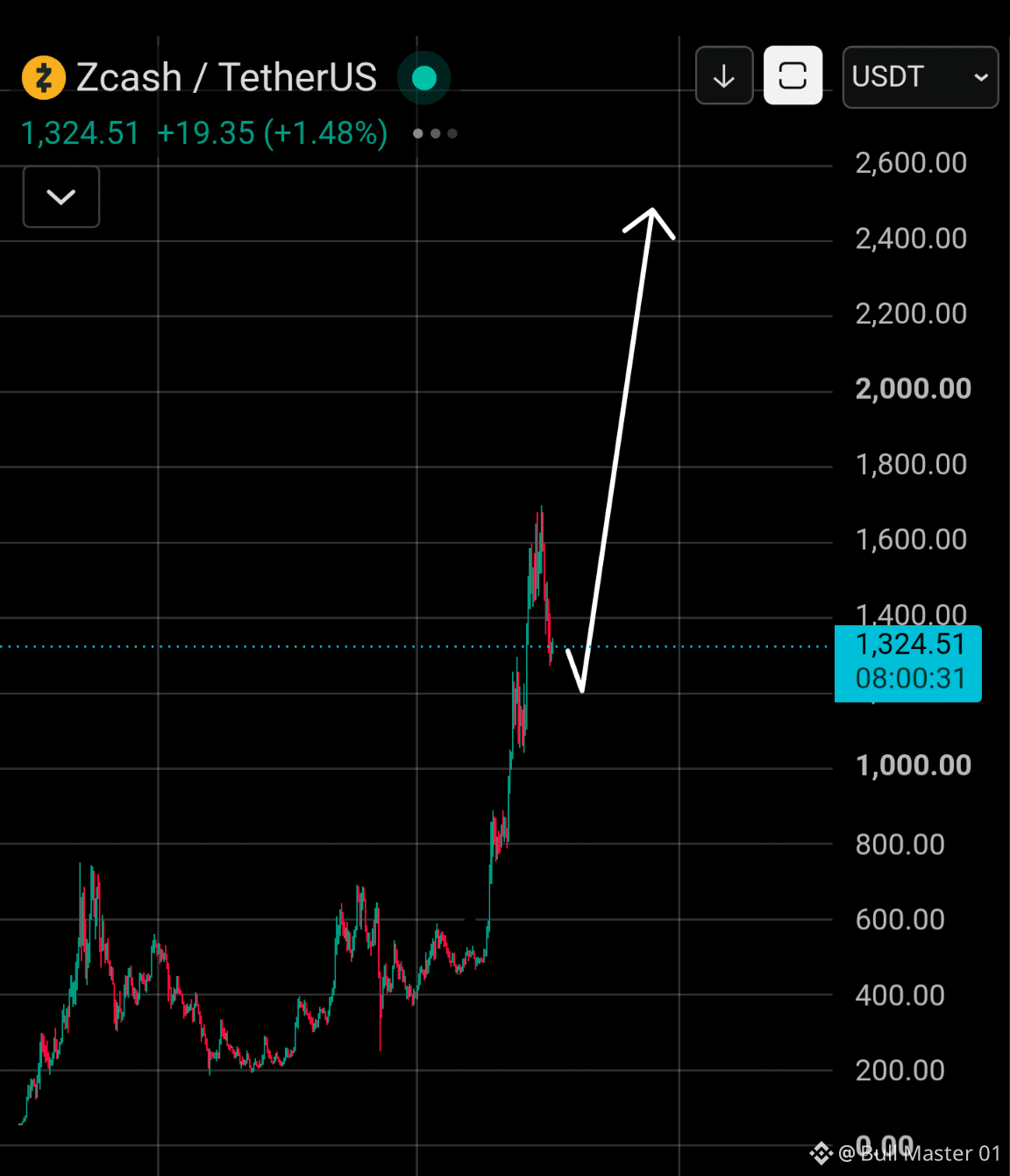
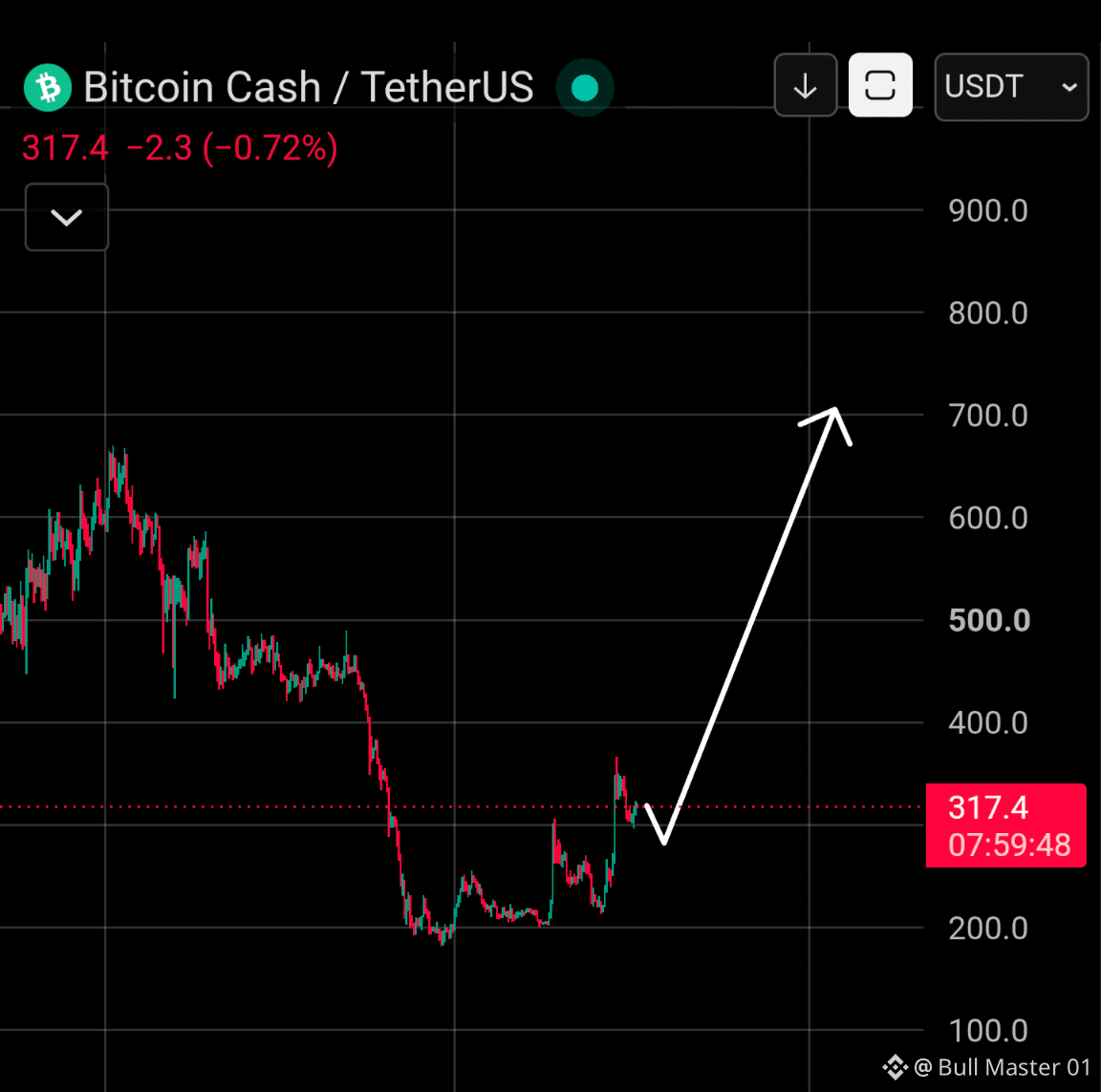
Look at these charts. Three different assets. Three different sectors. All building the same structure massive flush, shakeout, and now a clean recovery with higher lows. This is exactly how life-changing moves start.
Here's what I'm calling Next Targets
$ZEC New ATH: $6,000
The privacy narrative is back and ZEC is leading the charge. We already saw it run from $200 to $1,700. That was just the warm-up.
{spot}(ZECUSDT)
$QNT Target: $800 - $1,000
It ran from $60 to $374 and is now consolidating at $257. That's a launchpad, not a reversal.
{spot}(QNTUSDT)
$BCH Target: $1,200
Same pattern as ZEC and QNT. It flushed to $200, shook out the weak hands, and is now climbing. This is the one nobody's watching yet.
{spot}(BCHUSDT)
I'm already in. Holding tight. DCA-ing on dips. No panic. No chasing. Just patience and execution.
This is the Altseason. The charts don't lie. Don't be the one watching from the sidelines when these print.
Not financial advice. Always manage your risk.
Everyone Stop scrolling for a minute Today I'm sharing three coins #ZEC #QNT #BCH these could makes you millionaire this Altseason
Look at these charts. Three different assets. Three different sectors. All building the same structure massive flush, shakeout, and now a clean recovery with higher lows. This is exactly how life-changing moves start.
Here's what I'm calling Next Targets
$ZEC New ATH: $6,000
The privacy narrative is back and ZEC is leading the charge. We already saw it run from $200 to $1,700. That was just the warm-up.
$QNT Target: $800 - $1,000
It ran from $60 to $374 and is now consolidating at $257. That's a launchpad, not a reversal.
$BCH Target: $1,200
Same pattern as ZEC and QNT. It flushed to $200, shook out the weak hands, and is now climbing. This is the one nobody's watching yet.
I'm already in. Holding tight. DCA-ing on dips. No panic. No chasing. Just patience and execution.
This is the Altseason. The charts don't lie. Don't be the one watching from the sidelines when these print.
Not financial advice. Always manage your risk.
Look at these charts. Three different assets. Three different sectors. All building the same structure massive flush, shakeout, and now a clean recovery with higher lows. This is exactly how life-changing moves start.
Here's what I'm calling Next Targets
$ZEC New ATH: $6,000
The privacy narrative is back and ZEC is leading the charge. We already saw it run from $200 to $1,700. That was just the warm-up.
$QNT Target: $800 - $1,000
It ran from $60 to $374 and is now consolidating at $257. That's a launchpad, not a reversal.
$BCH Target: $1,200
Same pattern as ZEC and QNT. It flushed to $200, shook out the weak hands, and is now climbing. This is the one nobody's watching yet.
I'm already in. Holding tight. DCA-ing on dips. No panic. No chasing. Just patience and execution.
This is the Altseason. The charts don't lie. Don't be the one watching from the sidelines when these print.
Not financial advice. Always manage your risk.
2
1.3k

🚨 $QNT LONG SETUP 🚨
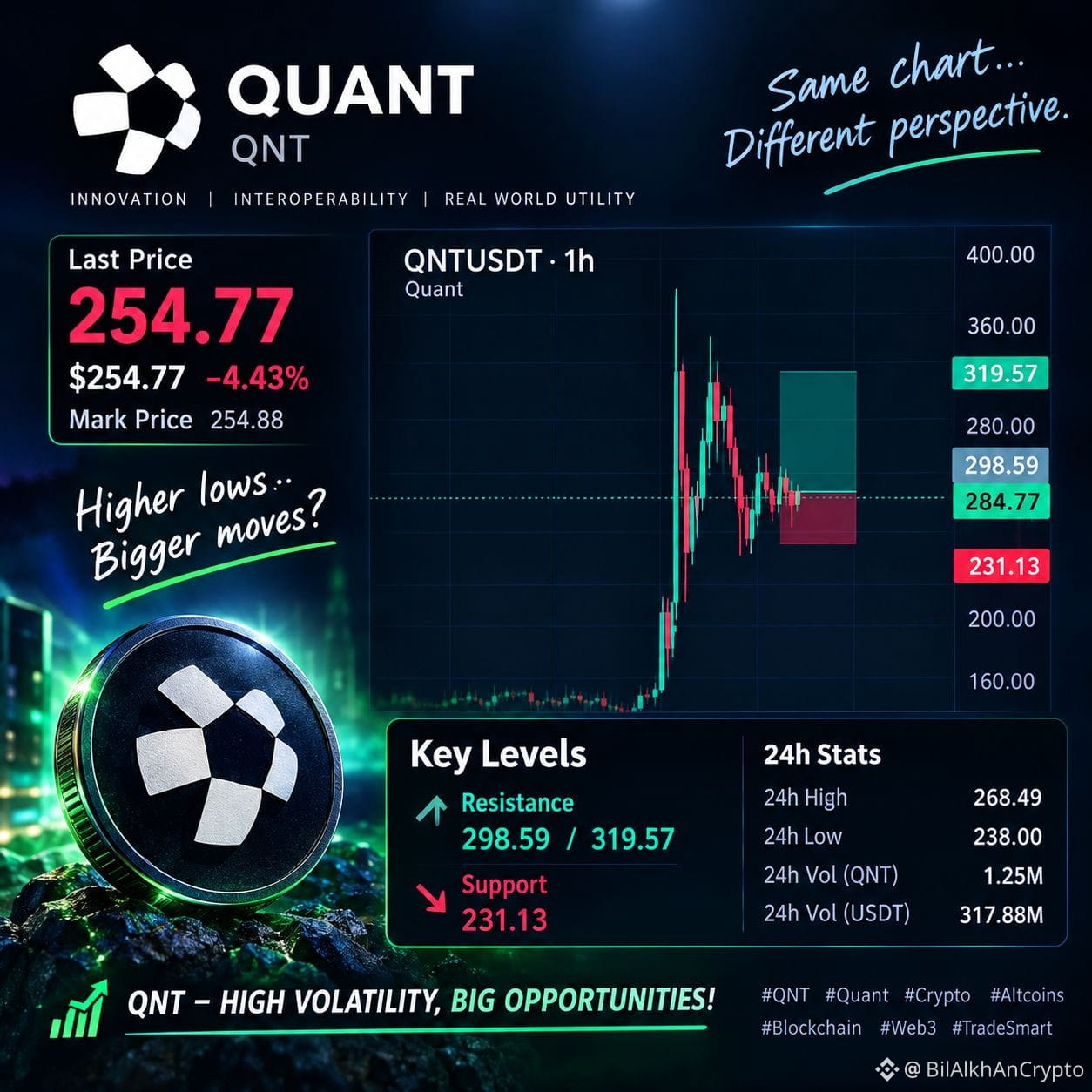
I’m watching $QNT closely for a potential long entry. If price dips into the $260–$240 zone, I’d look to DCA gradually rather than entering all at once.
🎯 Entry: $260–$240
🛑 Stop Loss: $235
🎯 Take Profit: $273 → $298
Let’s see how $QNT plays out. Stay patient, manage your risk, and don’t FOMO. 📈🔥
Long 👇
#QNT #Crypto #CryptoTrading #altcoins #BİNANCESQUARE 🚀📈
{future}(QNTUSDT)
🚨 $QNT LONG SETUP 🚨
I’m watching $QNT closely for a potential long entry. If price dips into the $260–$240 zone, I’d look to DCA gradually rather than entering all at once.
🎯 Entry: $260–$240
🛑 Stop Loss: $235
🎯 Take Profit: $273 → $298
Let’s see how $QNT plays out. Stay patient, manage your risk, and don’t FOMO. 📈🔥
Long 👇
#QNT #Crypto #CryptoTrading #altcoins #BİNANCESQUARE 🚀📈
I’m watching $QNT closely for a potential long entry. If price dips into the $260–$240 zone, I’d look to DCA gradually rather than entering all at once.
🎯 Entry: $260–$240
🛑 Stop Loss: $235
🎯 Take Profit: $273 → $298
Let’s see how $QNT plays out. Stay patient, manage your risk, and don’t FOMO. 📈🔥
Long 👇
#QNT #Crypto #CryptoTrading #altcoins #BİNANCESQUARE 🚀📈
357

·
--
Bullish
QNT shorts just got cleared above $255.
I’d watch for buyers to test the next resistance.
$QNT
{future}(QNTUSDT)
$PUMPBTC
{future}(PUMPBTCUSDT)
$1000000BOB
{future}(1000000BOBUSDT)
🟢 LIQUIDITY ZONE HIT 🟢
Short liquidation spotted 🧨
$3.8619K cleared at $255.75265
Upside liquidity swept — watch reaction 👀
🎯 TP Targets:
TP1: ~$258.31
TP2: ~$260.87
TP3: ~$263.43
#QNT
QNT shorts just got cleared above $255.
I’d watch for buyers to test the next resistance.
$QNT
$PUMPBTC
$1000000BOB
🟢 LIQUIDITY ZONE HIT 🟢
Short liquidation spotted 🧨
$3.8619K cleared at $255.75265
Upside liquidity swept — watch reaction 👀
🎯 TP Targets:
TP1: ~$258.31
TP2: ~$260.87
TP3: ~$263.43
#QNT
I’d watch for buyers to test the next resistance.
$QNT
$PUMPBTC
$1000000BOB
🟢 LIQUIDITY ZONE HIT 🟢
Short liquidation spotted 🧨
$3.8619K cleared at $255.75265
Upside liquidity swept — watch reaction 👀
🎯 TP Targets:
TP1: ~$258.31
TP2: ~$260.87
TP3: ~$263.43
#QNT
12
🚨 $QNT MACRO ACCUMULATION SIGNALS MASSIVE MULTI-YEAR EXPANSION POTENTIAL INTO UPPER LIQUIDITY POOLS ⚡
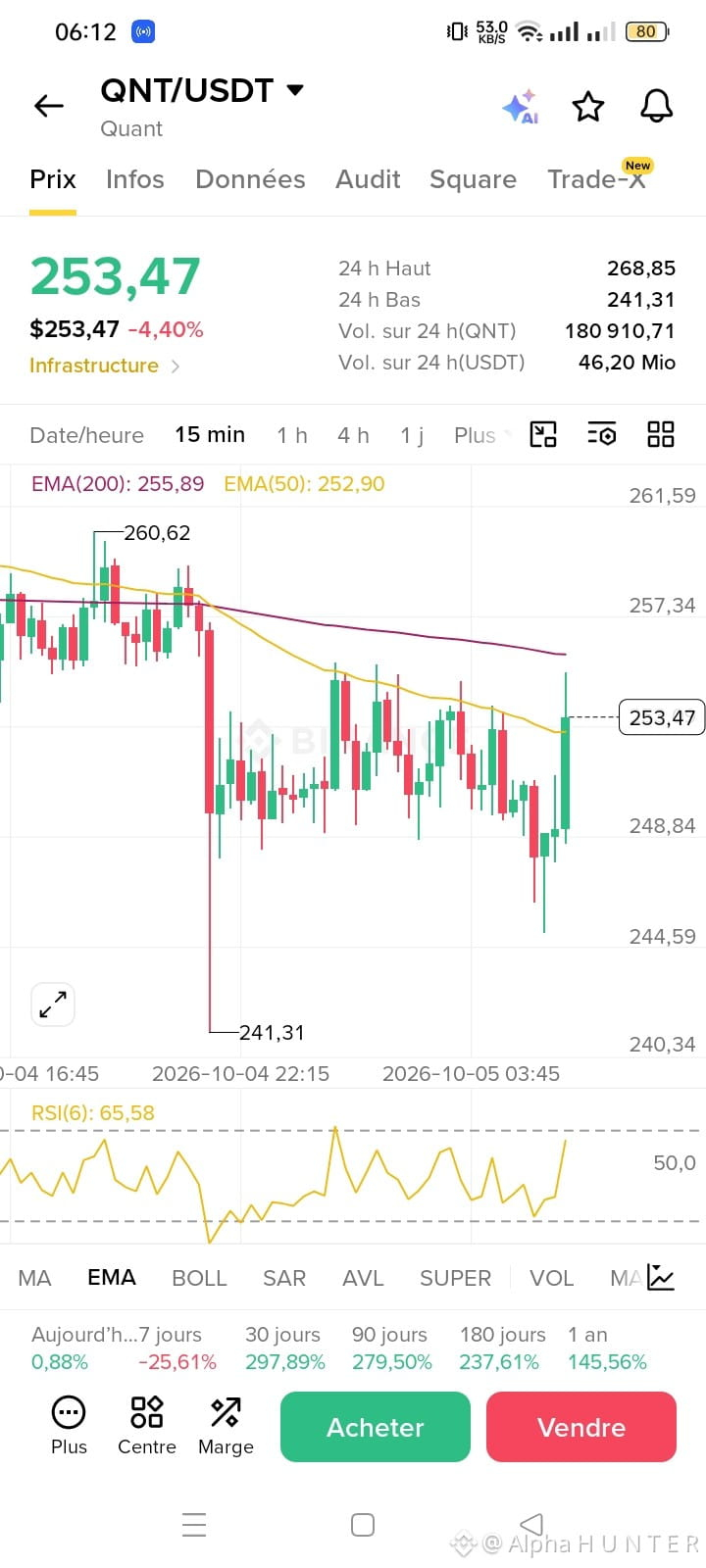
Target: $500 - $1,000 🚀
📌 $QNT is developing a textbook long-term institutional accumulation pattern, compressing tightly inside a macro re-accumulation range. 🦈 Smart money order flow suggests long-term liquidity engineering is quietly underway, preparing for a structural regime shift ahead of the 2027 cycle.
💡 With macro inefficiency gaps sitting unfilled higher up the chart, clearing major structural resistance could trigger an aggressive repricing model into upper historical order blocks. 📈 Long-term structural mechanics favor patience as institutional positioning slowly consolidates below key inflection points. 💬 What macro target are you charting for $QNT as this structure unfolds? 👇
⚠️ Not financial advice. Always manage your risk. 🛡️
🏷️ #QNT #Crypto #MarketStructure #Altcoins #SmartMoney
🎯 🦈
🚨 $QNT MACRO ACCUMULATION SIGNALS MASSIVE MULTI-YEAR EXPANSION POTENTIAL INTO UPPER LIQUIDITY POOLS ⚡
Target: $500 - $1,000 🚀
📌 $QNT is developing a textbook long-term institutional accumulation pattern, compressing tightly inside a macro re-accumulation range. 🦈 Smart money order flow suggests long-term liquidity engineering is quietly underway, preparing for a structural regime shift ahead of the 2027 cycle.
💡 With macro inefficiency gaps sitting unfilled higher up the chart, clearing major structural resistance could trigger an aggressive repricing model into upper historical order blocks. 📈 Long-term structural mechanics favor patience as institutional positioning slowly consolidates below key inflection points. 💬 What macro target are you charting for $QNT as this structure unfolds? 👇
⚠️ Not financial advice. Always manage your risk. 🛡️
🏷️ #QNT #Crypto #MarketStructure #Altcoins #SmartMoney
🎯 🦈
Target: $500 - $1,000 🚀
📌 $QNT is developing a textbook long-term institutional accumulation pattern, compressing tightly inside a macro re-accumulation range. 🦈 Smart money order flow suggests long-term liquidity engineering is quietly underway, preparing for a structural regime shift ahead of the 2027 cycle.
💡 With macro inefficiency gaps sitting unfilled higher up the chart, clearing major structural resistance could trigger an aggressive repricing model into upper historical order blocks. 📈 Long-term structural mechanics favor patience as institutional positioning slowly consolidates below key inflection points. 💬 What macro target are you charting for $QNT as this structure unfolds? 👇
⚠️ Not financial advice. Always manage your risk. 🛡️
🏷️ #QNT #Crypto #MarketStructure #Altcoins #SmartMoney
🎯 🦈

55





·
--
The Holy Grail of Web3: Why Quant QNT Remains a Sleeping Giant in the Institutional Era
As the crypto landscape shifts from speculative retail trading to institutional adoption, interoperability has become the ultimate prize. While many projects try to build bridges between specific blockchains, Quant Network is quietly solving a much bigger problem: connecting traditional legacy systems with the decentralized world.
At the heart of Quant is the Overledger API, the world's first enterprise blockchain operating system. Unlike standard bridges that are historically prone to security breaches, Overledger allows legacy financial networks to seamlessly communicate with multiple blockchains simultaneously. This makes Quant a prime candidate for the future of Central Bank Digital Currencies (CBDCs) and Real World Asset (RWA) tokenization.
What makes QNT particularly interesting to analysts right now is its tokenomics. With a hard cap of just 14.6 million tokens—even scarcer than Bitcoin—and almost the entire supply already in circulation, its economic model is built for scarcity. Developers and enterprises must purchase and lock up QNT to pay for Overledger licensing fees, creating a natural, utility-driven buy pressure as adoption grows.
As traditional finance (TradFi) continues to merge with decentralized finance (DeFi), the demand for secure, regulation-compliant interoperability is scaling fast. Quant is not trying to replace existing blockchains; instead, it is positioning itself as the critical infrastructure that connects them all.
For long-term investors, QNT represents a pure infrastructure play. It might not capture the daily hype of meme coins, but its foundational technology and focus on institutional compliance make it a critical project to watch as the global financial system undergoes its digital transformation.
What are your thoughts on Quant? Is enterprise interoperability the key to the next wave of web3 adoption?
#Quant #QNT #CryptoAnalysis
The Holy Grail of Web3: Why Quant QNT Remains a Sleeping Giant in the Institutional Era
As the crypto landscape shifts from speculative retail trading to institutional adoption, interoperability has become the ultimate prize. While many projects try to build bridges between specific blockchains, Quant Network is quietly solving a much bigger problem: connecting traditional legacy systems with the decentralized world.
At the heart of Quant is the Overledger API, the world's first enterprise blockchain operating system. Unlike standard bridges that are historically prone to security breaches, Overledger allows legacy financial networks to seamlessly communicate with multiple blockchains simultaneously. This makes Quant a prime candidate for the future of Central Bank Digital Currencies (CBDCs) and Real World Asset (RWA) tokenization.
What makes QNT particularly interesting to analysts right now is its tokenomics. With a hard cap of just 14.6 million tokens—even scarcer than Bitcoin—and almost the entire supply already in circulation, its economic model is built for scarcity. Developers and enterprises must purchase and lock up QNT to pay for Overledger licensing fees, creating a natural, utility-driven buy pressure as adoption grows.
As traditional finance (TradFi) continues to merge with decentralized finance (DeFi), the demand for secure, regulation-compliant interoperability is scaling fast. Quant is not trying to replace existing blockchains; instead, it is positioning itself as the critical infrastructure that connects them all.
For long-term investors, QNT represents a pure infrastructure play. It might not capture the daily hype of meme coins, but its foundational technology and focus on institutional compliance make it a critical project to watch as the global financial system undergoes its digital transformation.
What are your thoughts on Quant? Is enterprise interoperability the key to the next wave of web3 adoption?
#Quant #QNT #CryptoAnalysis
As the crypto landscape shifts from speculative retail trading to institutional adoption, interoperability has become the ultimate prize. While many projects try to build bridges between specific blockchains, Quant Network is quietly solving a much bigger problem: connecting traditional legacy systems with the decentralized world.
At the heart of Quant is the Overledger API, the world's first enterprise blockchain operating system. Unlike standard bridges that are historically prone to security breaches, Overledger allows legacy financial networks to seamlessly communicate with multiple blockchains simultaneously. This makes Quant a prime candidate for the future of Central Bank Digital Currencies (CBDCs) and Real World Asset (RWA) tokenization.
What makes QNT particularly interesting to analysts right now is its tokenomics. With a hard cap of just 14.6 million tokens—even scarcer than Bitcoin—and almost the entire supply already in circulation, its economic model is built for scarcity. Developers and enterprises must purchase and lock up QNT to pay for Overledger licensing fees, creating a natural, utility-driven buy pressure as adoption grows.
As traditional finance (TradFi) continues to merge with decentralized finance (DeFi), the demand for secure, regulation-compliant interoperability is scaling fast. Quant is not trying to replace existing blockchains; instead, it is positioning itself as the critical infrastructure that connects them all.
For long-term investors, QNT represents a pure infrastructure play. It might not capture the daily hype of meme coins, but its foundational technology and focus on institutional compliance make it a critical project to watch as the global financial system undergoes its digital transformation.
What are your thoughts on Quant? Is enterprise interoperability the key to the next wave of web3 adoption?
#Quant #QNT #CryptoAnalysis
371

·
--
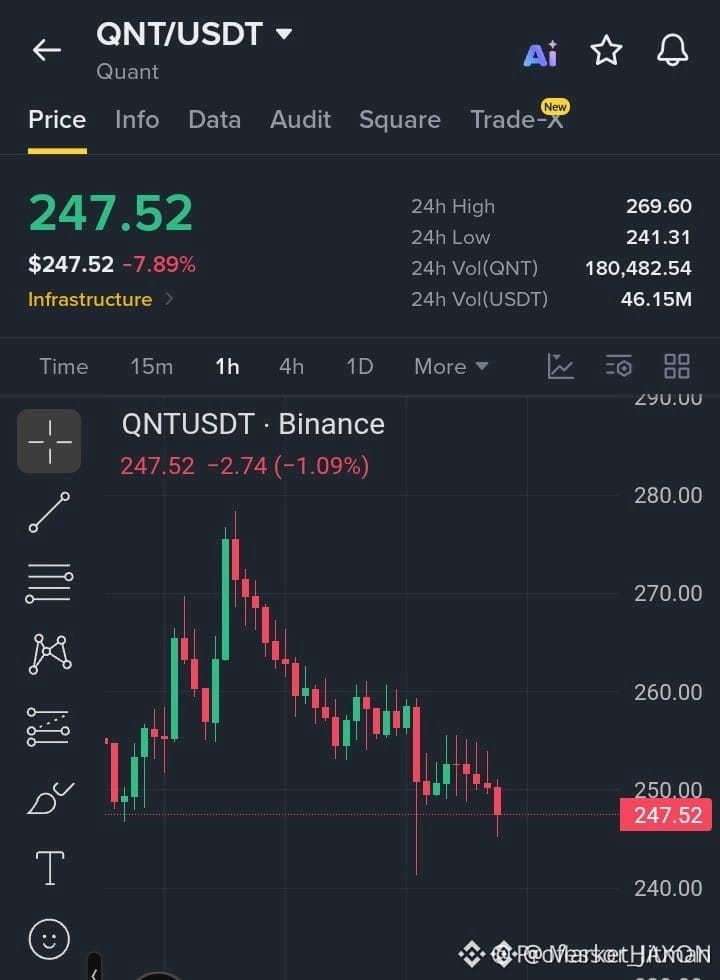
📉 $QNT LOST THE $250 DEFENSE LINE AS BEARISH STRUCTURE PUSHES TOWARD NEW LOWS 🚨
Entry: 247.50 - 249.50 ⚡
Target: 244.00 / 241.50 / 238.00 🎯
Stop Loss: 253.50 🛑
Sellers are systematically grinding down $QNT with a clean series of lower highs, completely eroding the critical $250 psychological level. 📉 The order flow signals expanding downside velocity as buyers fail to stage any meaningful response.
📌 A clean breakdown through the $247 support trigger opens a direct path into lower liquidity pools. 📊 Momentum remains heavily tilted toward the bears as long as price stays capped below resistance. 🤔 Are you fading this bounce or waiting for the $247 flush to confirm? 👇
⚠️ Not financial advice. Always manage your risk. 🛡️
🏷️ #QNT #ShortSetup #Crypto #Altcoins
📉 🐻
📉 $QNT LOST THE $250 DEFENSE LINE AS BEARISH STRUCTURE PUSHES TOWARD NEW LOWS 🚨
Entry: 247.50 - 249.50 ⚡
Target: 244.00 / 241.50 / 238.00 🎯
Stop Loss: 253.50 🛑
Sellers are systematically grinding down $QNT with a clean series of lower highs, completely eroding the critical $250 psychological level. 📉 The order flow signals expanding downside velocity as buyers fail to stage any meaningful response.
📌 A clean breakdown through the $247 support trigger opens a direct path into lower liquidity pools. 📊 Momentum remains heavily tilted toward the bears as long as price stays capped below resistance. 🤔 Are you fading this bounce or waiting for the $247 flush to confirm? 👇
⚠️ Not financial advice. Always manage your risk. 🛡️
🏷️ #QNT #ShortSetup #Crypto #Altcoins
📉 🐻
Entry: 247.50 - 249.50 ⚡
Target: 244.00 / 241.50 / 238.00 🎯
Stop Loss: 253.50 🛑
Sellers are systematically grinding down $QNT with a clean series of lower highs, completely eroding the critical $250 psychological level. 📉 The order flow signals expanding downside velocity as buyers fail to stage any meaningful response.
📌 A clean breakdown through the $247 support trigger opens a direct path into lower liquidity pools. 📊 Momentum remains heavily tilted toward the bears as long as price stays capped below resistance. 🤔 Are you fading this bounce or waiting for the $247 flush to confirm? 👇
⚠️ Not financial advice. Always manage your risk. 🛡️
🏷️ #QNT #ShortSetup #Crypto #Altcoins
📉 🐻
112
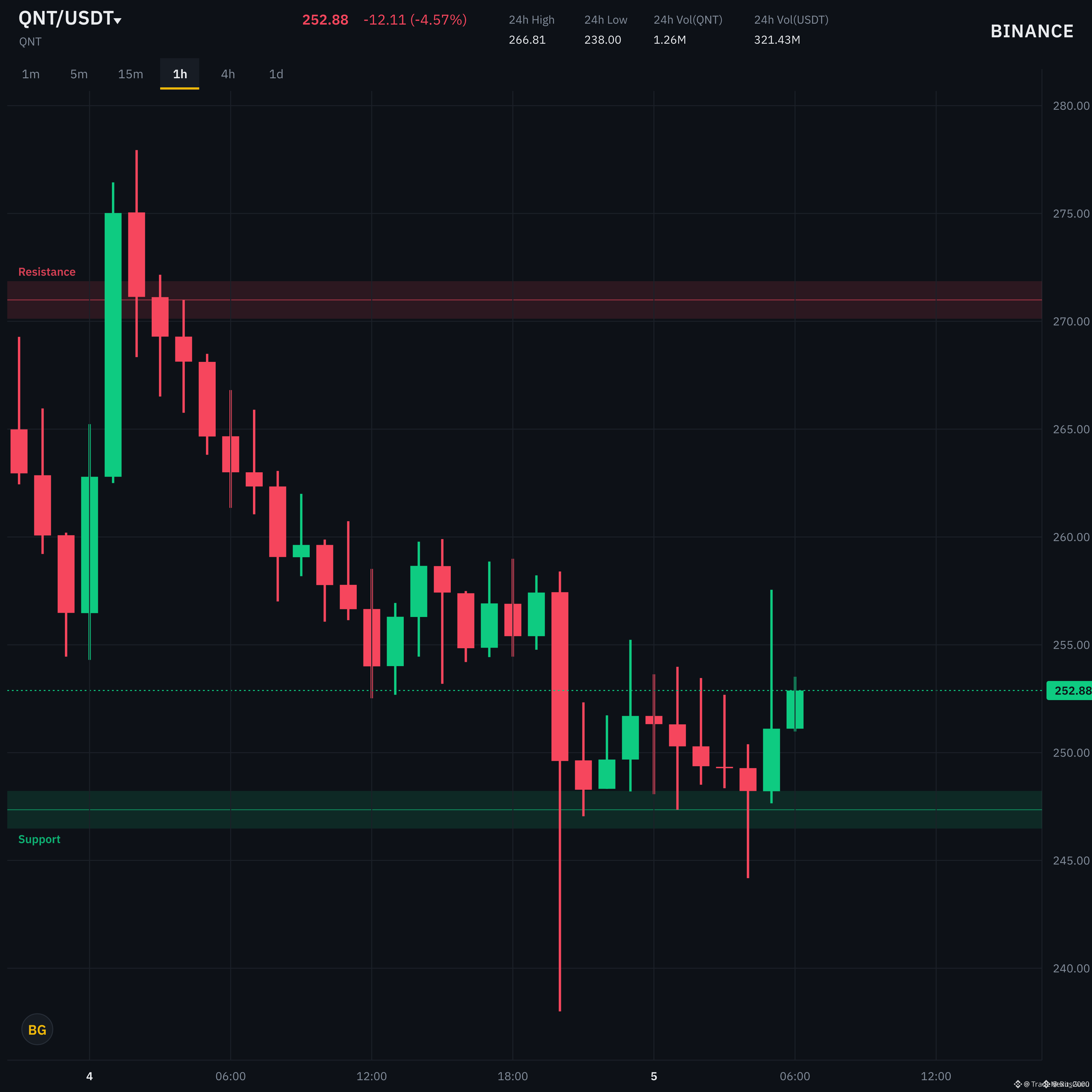
🚨 $QNT INSTITUTIONAL ABSORPTION DETECTED AFTER SWEEPING THE 238 RANGE LOW! 🦈
Entry: 252.82 ⚡
Target: 266.81 🚀
Despite a 4.8% intraday pullback to the 238.00 liquidity pool, order flow reveals steady institutional absorption rather than structural distribution. 📊 Smart money is quietly defending the discount zone around 252.82, absorbing sell-side pressure as buyer interest steadily intensifies throughout the session.
💡 With inefficiency mounting above, this prolonged consolidation signals potential energy building for an explosive reclaim toward the 266.81 swing high. 💬 Are you positioning inside this demand block or waiting for full structural breakout confirmation? 👇
⚠️ Not financial advice. Always manage your risk. 🛡️
🏷️ #QNT #SmartMoney #Crypto #MarketStructure
🎯 🦈
🚨 $QNT INSTITUTIONAL ABSORPTION DETECTED AFTER SWEEPING THE 238 RANGE LOW! 🦈
Entry: 252.82 ⚡
Target: 266.81 🚀
Despite a 4.8% intraday pullback to the 238.00 liquidity pool, order flow reveals steady institutional absorption rather than structural distribution. 📊 Smart money is quietly defending the discount zone around 252.82, absorbing sell-side pressure as buyer interest steadily intensifies throughout the session.
💡 With inefficiency mounting above, this prolonged consolidation signals potential energy building for an explosive reclaim toward the 266.81 swing high. 💬 Are you positioning inside this demand block or waiting for full structural breakout confirmation? 👇
⚠️ Not financial advice. Always manage your risk. 🛡️
🏷️ #QNT #SmartMoney #Crypto #MarketStructure
🎯 🦈
Entry: 252.82 ⚡
Target: 266.81 🚀
Despite a 4.8% intraday pullback to the 238.00 liquidity pool, order flow reveals steady institutional absorption rather than structural distribution. 📊 Smart money is quietly defending the discount zone around 252.82, absorbing sell-side pressure as buyer interest steadily intensifies throughout the session.
💡 With inefficiency mounting above, this prolonged consolidation signals potential energy building for an explosive reclaim toward the 266.81 swing high. 💬 Are you positioning inside this demand block or waiting for full structural breakout confirmation? 👇
⚠️ Not financial advice. Always manage your risk. 🛡️
🏷️ #QNT #SmartMoney #Crypto #MarketStructure
🎯 🦈
84

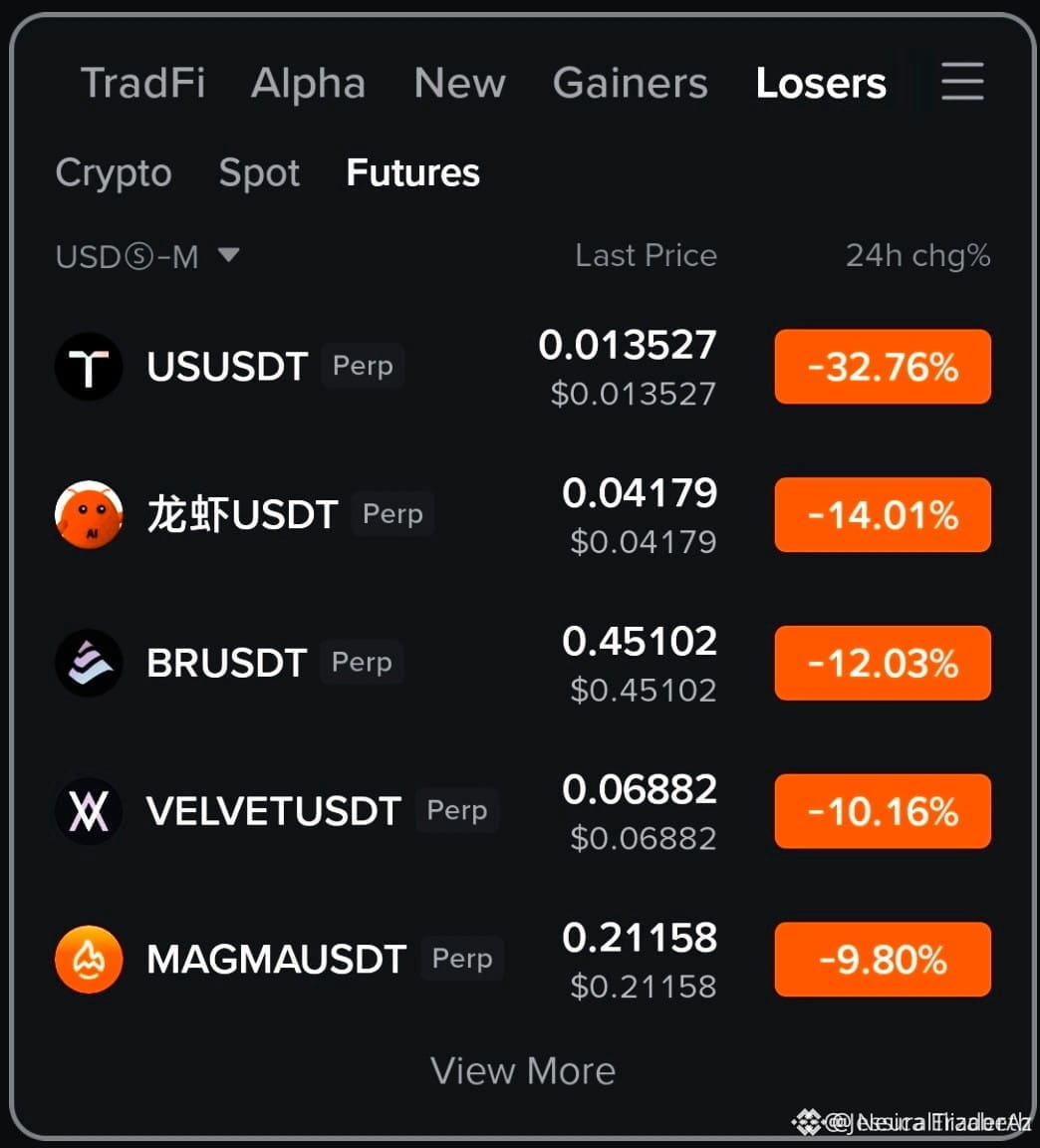
🔴 HEAVY DRAWDOWN IN $QNT AND $BR TRIGGERS MASSIVE INSTITUTIONAL LIQUIDITY SWEEP! 📉
When retail panics over top loser lists, institutional algorithms are often executing strategic sweeps into unmitigated fair value gaps. 🦈 Both $QNT and $BR are currently testing deep structural discount levels, hunting sell-side liquidity beneath recent consolidation ranges.
📊 This aggressive downside expansion flushes overleveraged positions while smart money evaluates order block absorption before structural reclaim. 🔍 Monitoring volume delta and market structure shifts here is crucial before anticipating any clean reversal. 💬 Are you watching for a structural reclaim or waiting for deeper liquidity sweeps below support? 👇
⚠️ Not financial advice. Always manage your risk. 🛡️
🏷️ #QNT #BR #Liquidity #MarketStructure #Crypto
🎯 🦈
🔴 HEAVY DRAWDOWN IN $QNT AND $BR TRIGGERS MASSIVE INSTITUTIONAL LIQUIDITY SWEEP! 📉
When retail panics over top loser lists, institutional algorithms are often executing strategic sweeps into unmitigated fair value gaps. 🦈 Both $QNT and $BR are currently testing deep structural discount levels, hunting sell-side liquidity beneath recent consolidation ranges.
📊 This aggressive downside expansion flushes overleveraged positions while smart money evaluates order block absorption before structural reclaim. 🔍 Monitoring volume delta and market structure shifts here is crucial before anticipating any clean reversal. 💬 Are you watching for a structural reclaim or waiting for deeper liquidity sweeps below support? 👇
⚠️ Not financial advice. Always manage your risk. 🛡️
🏷️ #QNT #BR #Liquidity #MarketStructure #Crypto
🎯 🦈
When retail panics over top loser lists, institutional algorithms are often executing strategic sweeps into unmitigated fair value gaps. 🦈 Both $QNT and $BR are currently testing deep structural discount levels, hunting sell-side liquidity beneath recent consolidation ranges.
📊 This aggressive downside expansion flushes overleveraged positions while smart money evaluates order block absorption before structural reclaim. 🔍 Monitoring volume delta and market structure shifts here is crucial before anticipating any clean reversal. 💬 Are you watching for a structural reclaim or waiting for deeper liquidity sweeps below support? 👇
⚠️ Not financial advice. Always manage your risk. 🛡️
🏷️ #QNT #BR #Liquidity #MarketStructure #Crypto
🎯 🦈
119
Log in to explore more content
Join global crypto users on Binance Square
⚡️ Get latest and useful information about crypto.
💬 Trusted by the world’s largest crypto exchange.
👍 Discover real insights from verified creators.
Email / Phone number
Trending Topics
1
#DriftHackVictimsBeginClaims
19,062 views
332 Discussing
2
#SolanaTokenizedStockVolumeTops$4.4BInSeptember
2,735 views
42 Discussing
3
#BitcoinSpotETFsDraw$6.34BInflowsInQ3
12,561 views
158 Discussing
4
#EthereumValidatorExitQueueJumps392%
186,667 views
1,493 Discussing
5
#IMFApprovesElSalvador$138MWithBitcoinWaiver
17,450 views
98 Discussing
6
#SECHaltsCryptoETFReviewsAmidFundingLapse
318,363 views
2,293 Discussing
7
#ZcashETFPostsFirstWeeklyOutflow$93.6M
103,263 views
268 Discussing
8
#GreekPoliceBustCryptoScamRingArrest17
436,135 views
2,859 Discussing
9
#BitcoinRejectedAt$87K
237,603 views
342 Discussing
10
#FedOctoberRateHikeOddsFallTo17%
453,540 views
2,955 Discussing