
#macrocrypto
macrocrypto
197,688 views
1,564 Discussing
Hot
Latest

Eurostat has released the eurozone’s final inflation data for September. Annual headline HICP inflation was confirmed at 3.8%, while the monthly rate came in at 0.6%. Both figures were fully in line with market expectations and unchanged from the previous readings. Meanwhile, annual core CPI inflation held at 2.2%, with the monthly rate at 0.2%. Core inflation showed no signs of rebounding, and the technical picture points to an exceptionally stable topping-out pattern followed by a decline.
In a broader macroeconomic comparison, eurozone inflation data came fully within the market consensus, effectively dispelling the renewed inflation concerns triggered earlier by individual countries (such as Italy, where September CPI edged up to 4.2%). The core reading of 2.2% shows that inflationary persistence has been effectively contained. This provides strong fundamental support for the European Central Bank to maintain its current policy stance in upcoming rate decisions, substantially reducing the tail risk of another aggressive rate hike by the ECB.
Following the release, volatility in foreign exchange and bond markets eased significantly. Yields on major European government bonds remained range-bound, the US dollar index’s upward momentum was curbed, and liquidity pressures on global risk assets eased further. The high predictability of the inflation trajectory is prompting macro investors to shift from defensive safe-haven assets toward more liquid markets, making the overall macro environment highly favorable for bullish positions.
For crypto assets, core inflation falling to around 2.2% means that monetary tightening cycles in the world’s major economies are nearing their end. This provides $BTC with an excellent macroeconomic cushion. On-chain capital is expected to continue flowing into major assets as risk appetite recovers, building ample momentum for the market to break above key resistance levels.📈
#EurozoneCPI #InflationData #MacroCrypto
60

China released its September trade balance data today, revealing an impressive trade surplus of $1,335.3 billion. This figure comfortably surpassed market expectations of $1,181 billion and improved from the previous month's reading of $1,190.9 billion. Notably, exports denominated in USD surged 36.3% year-over-year, well above the 25% forecast, while USD imports rose 31% against an anticipated 24.3%.
This significant outperformance highlights robust external demand alongside resilient domestic activity in the world's second-largest economy. The sharp acceleration in both import and export growth defies earlier concerns of a synchronized global slowdown, pointing to renewed manufacturing momentum.
Across broader financial markets, strong Chinese trade figures tend to boost global risk sentiment and support commodity prices. A healthier global trade engine can also temper immediate expectations for aggressive stimulus, stabilizing sovereign bond yields and commodity-linked currencies.
For digital assets, solid macro fundamentals in Asia generally bolster cross-border liquidity and improve market confidence. As macroeconomic tailwinds support overall liquidity, risk assets including $BTC could experience constructive buying pressure. #ChinaTrade #GlobalEconomy #MacroCrypto
63

⚡ OIL ANCHORED AT $100 SENDS SHOCKWAVES INTO $W AND $RSR RISK APPETITE! 🌊
Macro headwinds are colliding with crypto order flow as sticky $100 crude forces institutional desks to reassess their inflation playbook. 📊 While energy dominance puts pressure on broader market liquidity, capital is already scouting which high-beta setups can decouple from the macro noise.
When broader consensus crowds into defensive fear, order books often thin out just enough to trigger aggressive counter-trend moves. 💡
🤔 Are you positioning for a relief squeeze here or waiting for the macro dust to settle?
⚠️ Not financial advice. Always manage your risk. 🛡️
🏷️ #W #RSR #MacroCrypto #Altcoins #Crypto
🔥 ⚡


150

#usweeklyjoblessclaimsfallto197000
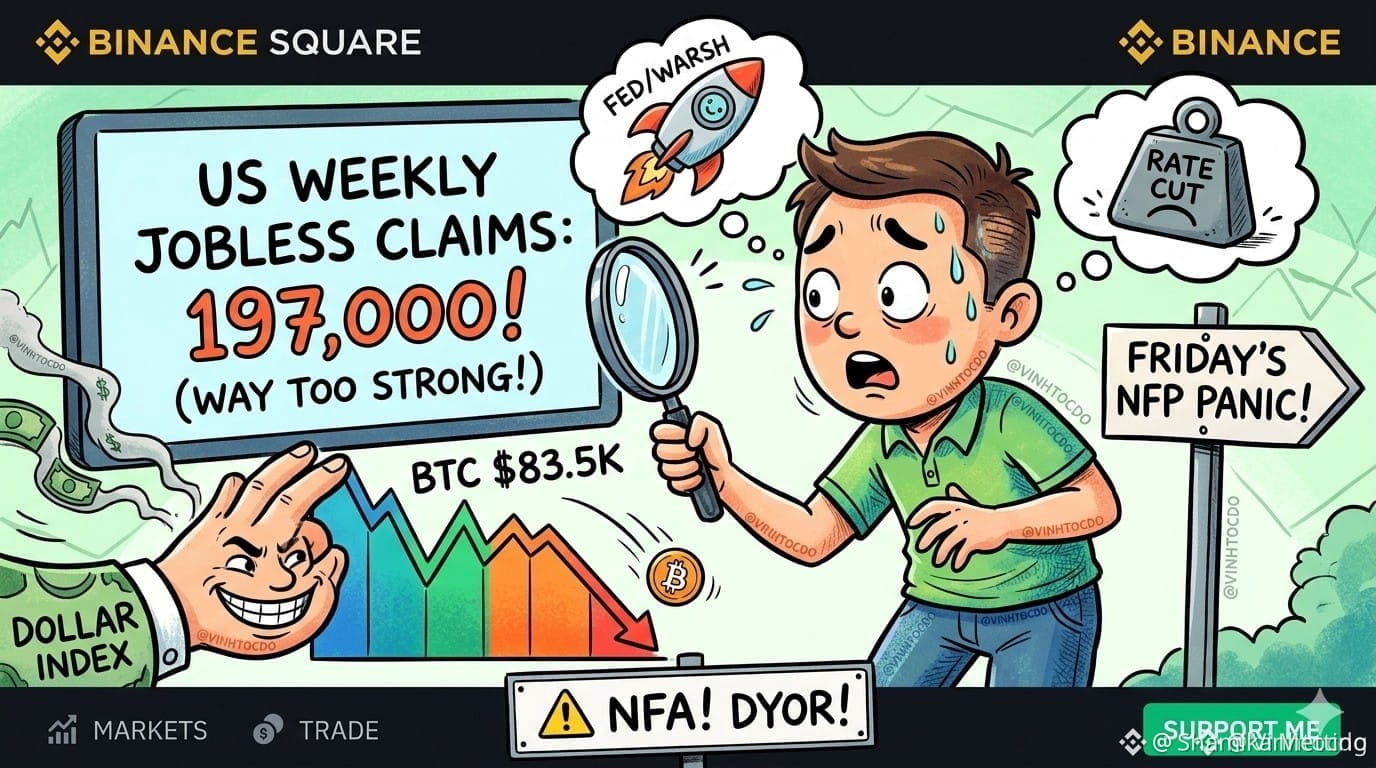
Unemployment benefit claims in the United States fell to 197,000, meaning the job market is very strong! 🤯 Another good sign for the Fed, but a headache for rate cuts.
As a result, the probability of a rate hike in October on the CME FedWatch platform has wobbled, currently at about 47.1%. Yields are rising fast, and Bitcoin has slipped to $83.5k. Traders, get ready for the Non-Farm Payroll data on Friday. Watch the U.S. Dollar Index and set your stop-loss levels! 📉💸
⚠️ Not investment advice. Do your own research (DYOR)!
Please follow up
$BTC
$ETH
$SOL
#FedWatch #MacroCrypto #joblessclaims #CryptoTrading
1
106
#dollarindexhitshighestsincemay2025
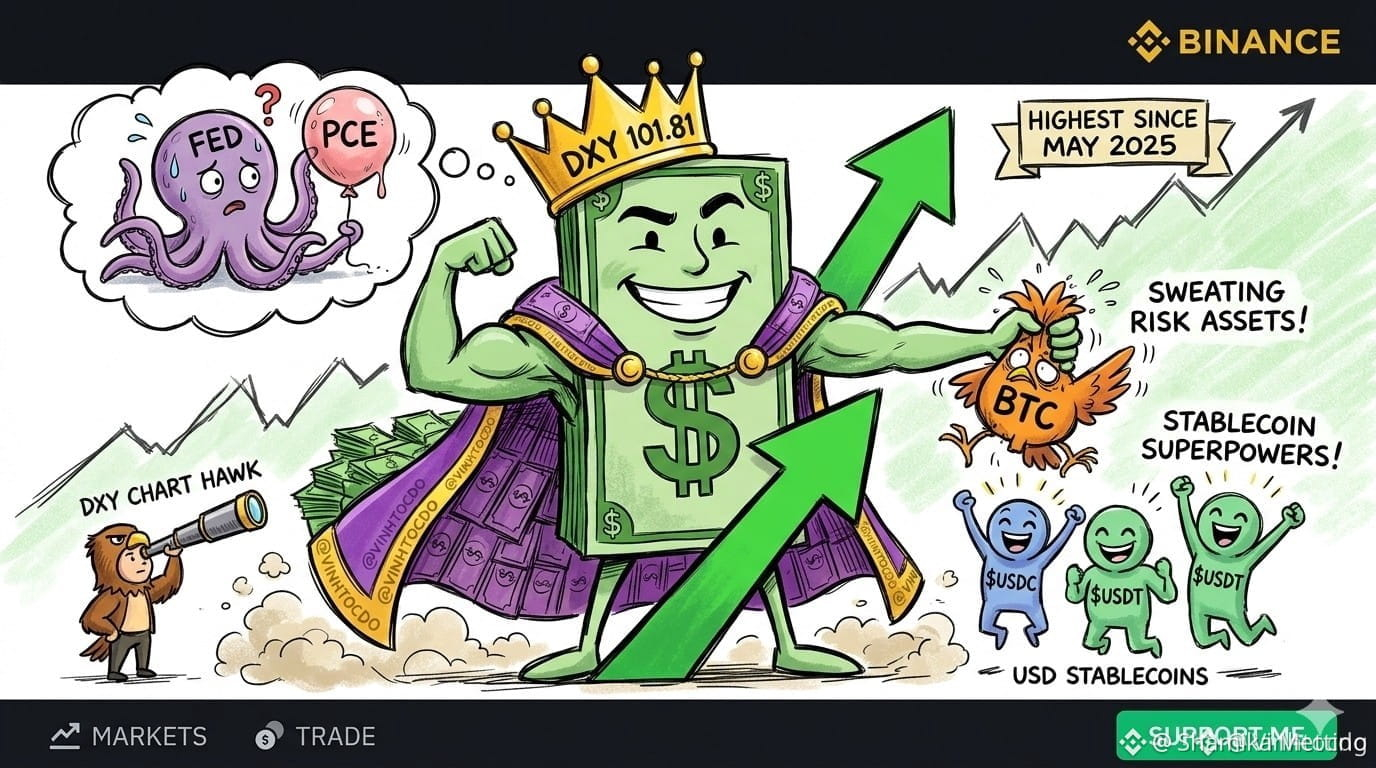
King Dollar returns again, and it’s now smashing through a huge level at 101.81 on the DXY index—highest since May 2025! 💸
Even with weak PCE inflation figures, the Fed has been completely ignored by the dollar and decided to pump anyway. Does this mean your dollar-backed stablecoins will get “superpowers”? Well, 1 USDC is still worth 1 USDC, but your purchasing power definitely feels the heavier weight as the crypto market takes a little breath.
Traders, when the dollar index jumps, risk assets usually get pressured. Lock in your positions, don’t over-leverage, and keep an eagle-eye on the DXY chart! 🦅
⚠️ Alert: Not financial advice. Do your own research!
Don’t let the macroeconomic tide leave you behind! Register now using the code VINHTOCDO or via this link
Follow-up, please
$BTC
$BNB
$ETH
#DXYPump #MacroCrypto #Stablecoins #CryptoTrading
1
72

·
--
Where we are in the rate cycle matters more for crypto than most traders acknowledge.
Rate hikes: liquidity tightens, risk assets reprice lower. 2022 was a clean example.
Rate cuts: liquidity expands, capital flows back into risk. 2020 and early 2023 showed the effect.
The current setup: rates still restrictive, cuts being priced in for later this year. That's the anticipation phase: markets price the cut before it happens.
If cuts are delayed, that anticipation unwinds. That's the primary macro risk for crypto right now.
#MacroCrypto #Bitcoin #BTC
27

·
--
Global inflation and restrictive monetary policies to control it affect crypto. By reducing liquidity and increasing the cost of capital, investors tend to reassess risk assets, putting downward pressure on cryptocurrency prices. Its macroeconomic sensitivity is evident. #MacroCrypto #CryptoEconomy
📊 https://quant-fin.online
📢 @QuantF
━━━━━━━━━━━━━━━━━━
QuantFin — RUF-Flow Protocol v7
Powered by Nexus Flow Dynamics
© 2026 QuantFin. Trading involves risk.
📊 https://quant-fin.online
📢 @QuantF
━━━━━━━━━━━━━━━━━━
QuantFin — RUF-Flow Protocol v7
Powered by Nexus Flow Dynamics
© 2026 QuantFin. Trading involves risk.
44

·
--
everyone thinks $btc dumps are just whale games, but actually this case shows the yen carry trade can smack your portfolio harder than a bad entry.
the mistake is staring at candles only while macro liquidity is getting pulled in the background. that’s how traders fomo buy “support” at $62.5k, then panic if the next liquidity pocket is closer to $50k.
look at the setup: $BTC is hovering near $62,500, around 50% below its oct 2025 peak of $126,198. every major correction in this case lines up with japan defending the yen, not just crypto-native drama.
tokyo and washington also pulled off their first joint yen intervention since 1998, with $59b deployed and $32b dumped in just one week. when the yen carry trade unwinds, risk assets can get hit fast because leveraged money has to de-risk, and that can spill into $ETH, $SOL, and basically anything with beta.
ngl ser, the warning here is simple: if you’re trading crypto while ignoring yen moves, bond yields, and intervention headlines, you’re playing half the board. what’s your take on $BTC from here, bounce zone or $50k magnet?
#Bitcoin #CryptoTrading #MacroCrypto
everyone thinks $btc dumps are just whale games, but actually this case shows the yen carry trade can smack your portfolio harder than a bad entry.
the mistake is staring at candles only while macro liquidity is getting pulled in the background. that’s how traders fomo buy “support” at $62.5k, then panic if the next liquidity pocket is closer to $50k.
look at the setup: $BTC is hovering near $62,500, around 50% below its oct 2025 peak of $126,198. every major correction in this case lines up with japan defending the yen, not just crypto-native drama.
tokyo and washington also pulled off their first joint yen intervention since 1998, with $59b deployed and $32b dumped in just one week. when the yen carry trade unwinds, risk assets can get hit fast because leveraged money has to de-risk, and that can spill into $ETH , $SOL , and basically anything with beta.
ngl ser, the warning here is simple: if you’re trading crypto while ignoring yen moves, bond yields, and intervention headlines, you’re playing half the board. what’s your take on $BTC from here, bounce zone or $50k magnet?
#Bitcoin #CryptoTrading #MacroCrypto

47
·
--
A diplomatic headline can move $BTC faster than a chart pattern: today, “advanced” Iran-Oman talks over the Strait of Hormuz helped Bitcoin reclaim $64K before slipping back near $63.5K.
If you’ve ever chased a green candle and watched it fade within hours, this is why macro matters. Crypto traders don’t just trade charts. We trade fear, oil, war risk, liquidity, and positioning.
$BTC moved roughly 0.8% higher, trading between $63.7K and $64.25K as volume jumped 42%, then gave back part of the move over the last 4 hours. That’s not random noise. It’s the market repricing geopolitical risk in real time.
Oil told the same story, but louder. It dropped more than 2% back below $82 as war-risk premium cooled, then spiked above $88 again when uncertainty returned. In past cycles, I’ve seen this pattern many times: less conflict risk often means lower oil pressure, softer inflation fears, and a better mood for risk assets like $BTC, $ETH, and $BNB.
The lesson is simple. When headlines drive the move, entries need patience. A calmer macro backdrop can support crypto, but headline rallies can reverse fast when fear comes back into the room.
Are you treating this $BTC move as a real risk-on signal, or just another headline-driven trap?
#Bitcoin #CryptoTrading #MacroCrypto
A diplomatic headline can move $BTC faster than a chart pattern: today, “advanced” Iran-Oman talks over the Strait of Hormuz helped Bitcoin reclaim $64K before slipping back near $63.5K.
If you’ve ever chased a green candle and watched it fade within hours, this is why macro matters. Crypto traders don’t just trade charts. We trade fear, oil, war risk, liquidity, and positioning.
$BTC moved roughly 0.8% higher, trading between $63.7K and $64.25K as volume jumped 42%, then gave back part of the move over the last 4 hours. That’s not random noise. It’s the market repricing geopolitical risk in real time.
Oil told the same story, but louder. It dropped more than 2% back below $82 as war-risk premium cooled, then spiked above $88 again when uncertainty returned. In past cycles, I’ve seen this pattern many times: less conflict risk often means lower oil pressure, softer inflation fears, and a better mood for risk assets like $BTC , $ETH , and $BNB .
The lesson is simple. When headlines drive the move, entries need patience. A calmer macro backdrop can support crypto, but headline rallies can reverse fast when fear comes back into the room.
Are you treating this $BTC move as a real risk-on signal, or just another headline-driven trap?
#Bitcoin #CryptoTrading #MacroCrypto

38
·
--
Here’s what happened when geopolitics, oil, and $BTC all moved in the same conversation.
Crypto traders know this pain too well: you see Bitcoin reclaim $64K, FOMO kicks in, and then it slips back toward $63.5K before you can even decide if it’s a breakout or a trap. Macro headlines can turn a clean setup into noise fast.
In this case, $BTC bounced after Qatar said Iran-Oman talks over the Strait of Hormuz had reached an “advanced” stage. That mattered because the Strait is a major oil chokepoint, and lower war risk usually cools oil pressure. Bitcoin traded between roughly $63.7K and $64.25K, up about 0.8%, while volume jumped 42% before the move faded over the next few hours.
We’ve seen this movie before. During past Middle East tension spikes and the Russia-Ukraine shock, oil often reacts first, then risk assets like $BTC and $ETH follow the mood shift. When oil dropped more than 2% below $82, the market briefly read it as relief. But the later jump back above $88 showed how fragile that relief can be.
The lesson is simple: macro-driven pumps are not the same as strong trend reversals. If the headline risk fades, $BNB and broader crypto can catch a bid. If the oil market stays jumpy, traders may keep selling rallies instead of chasing them.
What’s your take: is Bitcoin reacting to real risk relief here, or just another headline-driven fakeout?
#Bitcoin #CryptoMarkets #MacroCrypto

31

After Trump publicly backed Dell, the company’s stock surged 4.4% in a single day.
The value of this unusual move goes beyond the gain itself—political endorsements are becoming an explicit factor in how US equities are priced. From tariff exemptions to AI hardware supply chains, the administration’s stance directly affects the timing and rhythm of reassessments of individual stocks.
It’s also worth noting how this maps onto the crypto market:
1)In the AI infrastructure narrative, Dell is a key distributor of NVIDIA servers. Strength in traditional AI hardware typically boosts sentiment across on-chain AI sectors, creating a synchronization of mood in the chain;
2)The “Trump Trade” has been reactivated: policy beta for risk assets is being amplified, and the correlation between BTC and US tech stocks may rise further;
3)When political factors become the dominant variable, the marginal usefulness of purely technical analysis declines, making the macro–policy–liquidity three-part framework more practical.
In the short term, sector rotation that follows policy narratives is likely to accelerate, and on-chain AI, RWA, and assets tied to US local compliance are more likely to capture a valuation premium.
#TrumpTrade #AI #MacroCrypto
120

·
--
🚨🔥BITCOIN HOLDING $59K — BUT THURSDAY'S PCE DATA COULD BREAK EVERYTHING.
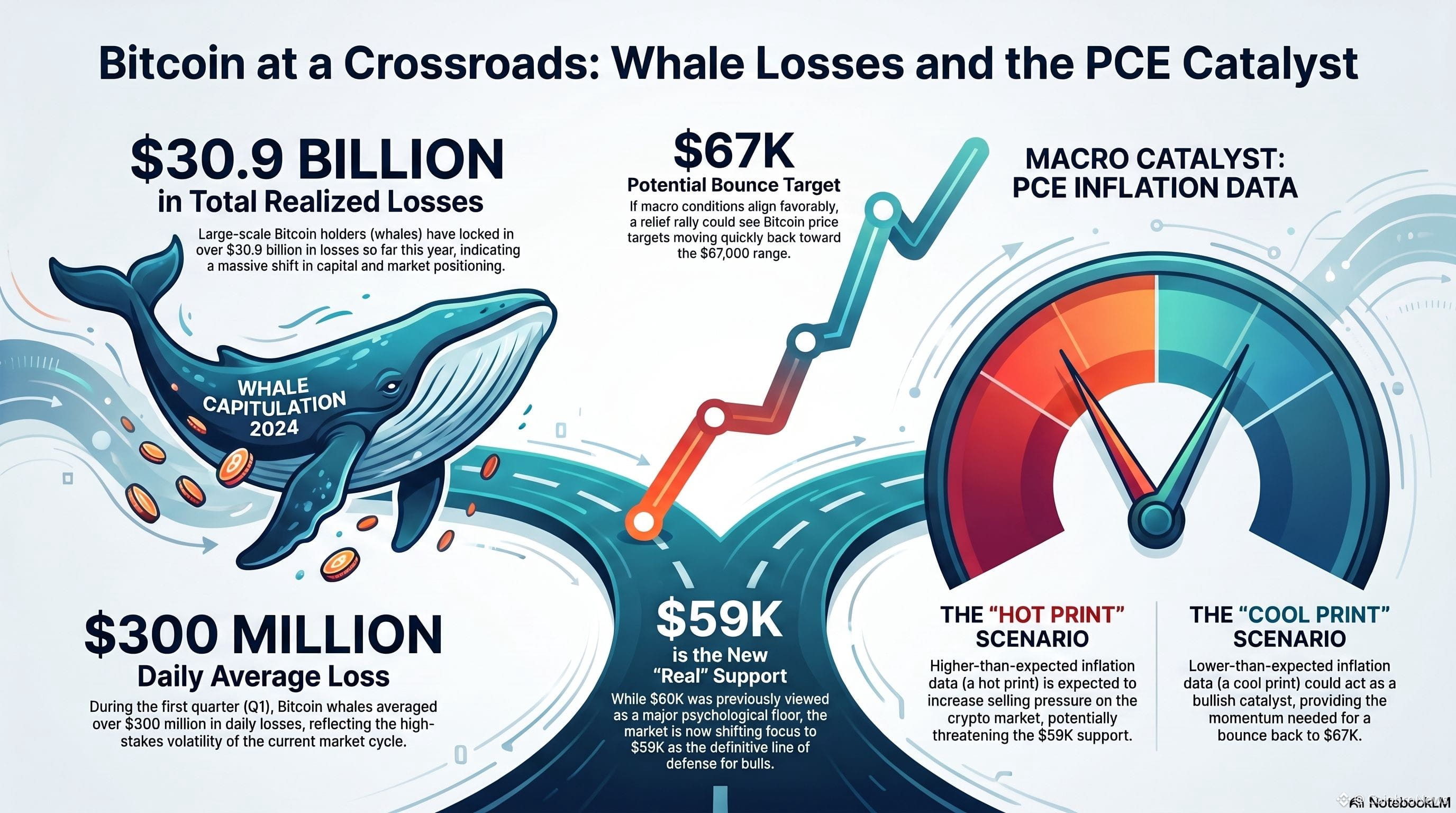
Bitcoin has bounced from $59,000 multiple times in June. That level has replaced $60K as the real support. Wednesday's dip touched $59K again before recovering to $61K — the same pattern that triggered a rally to $67K on June 5.
→ $59K is now the line. Below it, sentiment flips fast.
→ Thursday PCE data (the Fed's preferred inflation gauge) prints tonight — core PCE expected at 3.3–3.4%, highest since October 2023
→ Hot print = dollar strengthens, crypto gets pressured. Cool print = $59K bounce case gets stronger
One data point. Two completely different outcomes for Bitcoin tonight.
Are you buying the $59K support or waiting for PCE first?
"The support is holding. But one number tonight could change everything." — CoinbroNews Analysis
#Bitcoin #BTC #PCE #FederalReserve #CryptoTrading #MacroCrypto
CoinbroNews | coinbronews.com
183
·
--

Article
Goldman Sachs Exits Altcoins: The Real Reason Behind the MoveThe institutional narrative just took a massive hit. Goldman Sachs officially closed down its specialized investment vehicles for $XRP and $SOL . This isn't a routine portfolio adjustment; it is a direct response to a tightening macro environment where global liquidity is drying up fast.
With the US dollar remaining near multi-month highs and Treasury yields locked at elevated levels, major investment banks are choosing to aggressively de-risk. For retail traders, this institutional retreat indicates that altcoin upside will remain heavily restricted until the broader macroeconomic outlook turns accommodating again.
#Solana #XRP #GoldmanSachs #MacroCrypto
{future}(XRPUSDT)
{future}(SOLUSDT)
Goldman Sachs Exits Altcoins: The Real Reason Behind the Move
The institutional narrative just took a massive hit. Goldman Sachs officially closed down its specialized investment vehicles for $XRP and $SOL . This isn't a routine portfolio adjustment; it is a direct response to a tightening macro environment where global liquidity is drying up fast.
With the US dollar remaining near multi-month highs and Treasury yields locked at elevated levels, major investment banks are choosing to aggressively de-risk. For retail traders, this institutional retreat indicates that altcoin upside will remain heavily restricted until the broader macroeconomic outlook turns accommodating again.
#Solana #XRP #GoldmanSachs #MacroCrypto
299

·
--
States that integrate Bitcoin into their reserves. In 2026, it’s real.
El Salvador: a pioneer. Bitcoin as legal tender since 2021.
The sovereign reserves of some emerging countries include BTC.
Several sovereign wealth funds have mandates for indirect crypto exposure via ETFs.
Why this matters for the individual investor:
→ Institutional and sovereign demand creates a structural price floor
→ It reduces the likelihood of a total ban in major economies
→ It legitimizes Bitcoin as an asset class in the global financial conversation
This isn’t a reason to buy blindly.
It’s a context to incorporate into your long-term investment thesis.
#BitcoinEtat
#SovereignReserves
#AdoptionInstitutionnelle
#MacroCrypto
89

·
--
Bullish
🌍 THIS WEEK WILL MOVE CRYPTO HARD — Here's exactly what to watch
📅 MACRO CALENDAR | Week of June 7, 2026
Most crypto traders watch charts.
The smart ones watch THIS first.
━━━━━━━━━━━━━━━━━━
WHY THIS WEEK IS DIFFERENT:
This week has:
→ 6 major US economic data releases
→ 7 Federal Reserve speaker events
→ US–Iran peace talks (no resolution yet)
→ BTC already in extreme fear zone
Any single one of these can send BTC ±10% within minutes.
━━━━━━━━━━━━━━━━━━
THE MOST IMPORTANT EVENT — JOBS REPORT:
Here's how it works (simple version):
📊 WEAK JOBS
→ Economy slowing → Fed more likely to cut rates
→ Rate cuts = cheaper money = investors buy risk assets
→ BTC + altcoins PUMP
📊 STRONG JOBS
→ Economy hot → Fed keeps rates high
→ High rates = expensive money = investors avoid risk
→ BTC + altcoins DUMP
That's it. That's the whole macro game right now.
━━━━━━━━━━━━━━━━━━
THE FED SPEAKER RISK:
7 Fed officials speaking this week. Each one can:
→ Hint at rate path changes
→ React to live economic data
→ Send completely mixed signals
The danger: One hawkish Fed comment right after soft jobs data can cancel out what looks like a bullish setup. This is the hidden volatility that wipes out leveraged positions.
BTC CURRENT REALITY:
→ 92% correlated with S&P 500 — crypto is a risk asset now, full stop
→ Fear & Greed: 11 (Extreme Fear)
→ $60,000 is the line that must hold this week
HOW TO TRADE THIS WEEK:
→ Reduce leverage before data releases
→ Watch BTC reaction within 15 mins of data drop
→ Don't chase moves — wait for confirmation candle
→ Keep 20-30% in stablecoins as dry powder
Knowledge is the edge most retail traders don't have.
Save this post. Share it with someone who needs it.
Follow for daily market updates 🔔
⚠️ NFA — Always DYOR
#CryptoMarket #bitcoin #MacroCrypto #FederalReserve #JobsReport
91

·
--
CPI Day / BTC
📉 CPI day. $63,500 is the line in the sand for Bitcoin.
BTC is sitting near $64,000, coiled and waiting on today's US CPI print. This is the kind of day where the next few hours matter more than the last few weeks.
Here's the setup:
🔹 Bullish trigger: Reclaim and hold above $64,250
🔹 Bearish trigger: Sustained break below $63,500
🔹 The catalyst: A softer-than-expected CPI could cool rate-hike fears and give risk assets room to breathe. A hot print does the opposite
Why it matters beyond BTC: crypto doesn't move in a vacuum. Rate expectations move the dollar, the dollar moves liquidity, and liquidity moves everything from BTC to your altcoin bags.
Zoom out: BTC's still roughly flat on the month despite the daily noise. Today's print will set tone, not necessarily trend.
Not financial advice. Just marking the levels before the number drops.
Where do you think BTC closes today — above or below $64k? 👇
#bitcoin #cpi #MacroCrypto #BİNANCESQUARE
{future}(BTCUSDT)
CPI Day / BTC
📉 CPI day. $63,500 is the line in the sand for Bitcoin.
BTC is sitting near $64,000, coiled and waiting on today's US CPI print. This is the kind of day where the next few hours matter more than the last few weeks.
Here's the setup:
🔹 Bullish trigger: Reclaim and hold above $64,250
🔹 Bearish trigger: Sustained break below $63,500
🔹 The catalyst: A softer-than-expected CPI could cool rate-hike fears and give risk assets room to breathe. A hot print does the opposite
Why it matters beyond BTC: crypto doesn't move in a vacuum. Rate expectations move the dollar, the dollar moves liquidity, and liquidity moves everything from BTC to your altcoin bags.
Zoom out: BTC's still roughly flat on the month despite the daily noise. Today's print will set tone, not necessarily trend.
Not financial advice. Just marking the levels before the number drops.
Where do you think BTC closes today — above or below $64k? 👇
#bitcoin #cpi #MacroCrypto #BİNANCESQUARE
116

·
--
The Global Liquidity Cycle Is Crypto's Real Master Clock
Most analysts fixate on Bitcoin halving cycles as the primary driver of crypto bull and bear markets. But zoom out further and a clearer pattern emerges: global liquidity — specifically the expansion and contraction of central bank balance sheets — maps almost perfectly onto crypto's major moves.
When the Fed, ECB, and PBoC collectively expand their balance sheets, risk assets including crypto receive a structural tailwind. Cheap money flows toward high-beta assets, and $BTC leads the charge. When liquidity tightens — rate hikes, QT programs, dollar strength — crypto corrects sharply, often before traditional equities.
The 2020–2021 bull run was turbocharged by the largest synchronized monetary expansion in history. The 2022 bear market aligned almost precisely with the fastest Fed rate hiking cycle in four decades. This is not coincidence.
For Bitcoin and $ETH specifically, tracking the M2 money supply growth rate across G10 nations offers a macro lead indicator. When global M2 is rising year-over-year, crypto historically outperforms. When it contracts, accumulation strategies tend to outperform active trading.
The takeaway: before analyzing charts or on-chain metrics, check the macro liquidity backdrop. It sets the terrain. Everything else — technicals, sentiment, fundamentals — plays out within that broader context. Trade the macro first, then the micro.
#Crypto #Bitcoin #MacroCrypto #LiquidityCycle #CryptoMarkets
65

Rising Treasury yields and Fed hike odds keep pressuring $BTC
{spot}(BTCUSDT)
$ETH
{spot}(ETHUSDT)
$XRP
{spot}(XRPUSDT)
— the macro story, not crypto fundamentals, driving price.
#Bitcoin #Ethereum #XRP #MacroCrypto #BinanceSquare
Rising Treasury yields and Fed hike odds keep pressuring $BTC
$ETH
$XRP
— the macro story, not crypto fundamentals, driving price.
#Bitcoin #Ethereum #XRP #MacroCrypto #BinanceSquare
$ETH
$XRP
— the macro story, not crypto fundamentals, driving price.
#Bitcoin #Ethereum #XRP #MacroCrypto #BinanceSquare
1
30

Article
The Federal Reserve Just Signaled Rate Hikes Are Back on the Table — And Crypto Is Feeling Every WorThe Federal Reserve Just Signaled Rate Hikes Are Back on the Table — And Crypto Is Feeling Every Word
New Fed Chair Kevin Warsh walked into his first press conference on June 17, 2026 and delivered a message Wall Street and crypto markets were not prepared for: no rate cuts in 2026, a potential rate hike by October, and inflation projections revised to the highest level since 2021.
This is the macro event that is shaping every asset class on earth right now — and crypto is directly in the crossfire.
What the Fed Actually Decided — June 17, 2026
The FOMC voted 12–0 to hold the federal funds rate steady at 3.50%–3.75% for the fourth consecutive meeting. Markets currently price in one 25-basis-point interest rate hike by October 2026, with no further movement through 2027. (Advisor Perspectives)
The grid indicating rate outlook erased an earlier indication for one cut this year and pushed any reductions into 2027 and 2028 as policymakers weigh the durability of an inflation spike brought on by the Iran conflict. The grid indicated a median funds rate projection of 3.8% by year-end — suggesting that a rate hike is very much on the table. (CNBC)
The Inflation Numbers Driving Everything
The committee raised its 2026 PCE inflation projection to 3.6% from 2.7% in March — the largest single-meeting upward revision since the inflation surge began in 2021. Core PCE inflation was similarly revised upward to 3.3% from 2.7%. (Intellectia.AI)
The full inflation picture as of today, June 26, 2026:
◆ Headline PCE (May 2026): 4.1% YoY — highest in over three years, released yesterday
◆ Core PCE (May 2026): 3.4% YoY — highest since October 2023
◆ CPI (May 2026): 4.2% YoY — highest since May 2023
◆ Fed's target: 2.0% — inflation has been above this target for five consecutive years
◆ Q1 2026 GDP (final revision): 2.1% — upward revision from 1.6% prior estimate
◆ Federal funds rate: 3.50%–3.75% — held at this level since late 2025
The combination of sticky inflation above 4% and solid GDP growth at 2.1% gives the Federal Reserve almost no mathematical justification to reduce rates. A strong economy with high inflation is precisely the textbook scenario that demands tighter, not looser, monetary policy.
Who Is Kevin Warsh — And Why His Arrival Changed Everything
Warsh was sworn in on May 22, 2026 after a contentious 54–45 Senate confirmation vote, inheriting a central bank navigating inflation near multi-year highs, an energy shock from ongoing Middle East tensions, and a president who hand-picked him expecting rate cuts. (CNBC)
Warsh has criticized the Fed for overcommunicating. The June statement checked in at just 130 words, compared with 341 words for the April release. The statement offered just a brief summary of economic conditions followed by a vow to control inflation. (CNBC)
The June 17 statement in full key quotes:
◆ "Economic activity is expanding at a solid pace despite elevated uncertainty that owes, in part, to the conflict in the Middle East."
◆ "Inflation remains elevated relative to the Committee's 2 percent goal, in part reflecting supply shocks."
◆ "The Committee will deliver price stability." — three words that signal everything
Warsh confirmed he declined to submit a dot projection — becoming the first Fed Chair in modern history to do so. "I did not submit a dot for me. It's not helpful in the conduct of policy," he said, signaling a full review of Fed communication frameworks including press conferences, dot plots, meetings, and transcripts. (CNBC)
The Immediate Crypto Market Response
Bitcoin dropped 2–4% immediately following the decision, sliding from around $65,000–$66,000 to $63,850–$64,400, while Ethereum declined 2.5–3.5% to trade near $1,730–$1,750. The broader altcoin sector experienced even more severe losses as market breadth contracted sharply. (Intellectia.AI)
Today's additional macro pressure compounds the FOMC impact:
◆ Bitcoin current price: $59,792 — down 2.11% today, 8.5% below pre-FOMC levels
◆ Fear & Greed Index: 13 — Extreme Fear
◆ $10.5 billion options expiry today — largest of 2026, settling against a deeply stressed market
◆ $469 million in ETF outflows yesterday — single-day record for June
Why "Higher for Longer" Is the Single Most Important Phrase in Finance Right Now
When interest rates stay elevated, a precise sequence of events unfolds across all financial markets:
◆ U.S. Treasury yields rise — currently offering 4%+ risk-free returns; capital flows from speculative assets toward guaranteed government yield
◆ Dollar strengthens — historically inversely correlated with Bitcoin; a stronger dollar creates headwinds for all dollar-denominated risk assets
◆ Discount rates increase — assets valued on future cash flows or future adoption get repriced lower; this directly affects growth-oriented crypto protocols
◆ Liquidity contracts — less money circulates in the financial system; speculative markets are always the first to feel reduced liquidity
◆ Institutional reallocation — at 3.75% risk-free rate, the hurdle rate for holding volatile assets rises significantly
The Iran War Energy Shock — The Hidden Driver
The Federal Reserve's inflation problem in 2026 is not purely domestic. The inflation spike is driven significantly by energy supply shocks from the ongoing Middle East conflict, which has disrupted global oil markets and pushed energy prices to multi-year highs. (CNBC)
This creates a policy trap that central bankers fear most:
◆ Supply-side inflation cannot be cured by raising interest rates — you cannot manufacture more oil by making money more expensive
◆ But allowing inflation expectations to become unanchored risks a wage-price spiral that becomes self-fulfilling
◆ Warsh said supply-shock inflation "generally should be looked through when formulating policy" — but also stated the Fed's commitment to 2% inflation is "strong, unanimous, and unambiguous" (CNBC)
◆ This creates direct tension: acknowledge the supply-side cause while still tightening to prevent secondary effects
What History Tells Us About This Macro Environment and Crypto
The three previous periods of sustained high interest rates and their impact on risk assets:
◆ 1979–1982 (Volcker era): Fed pushed rates to 20%; speculative assets collapsed across the board; recovery came only after rates fell decisively
◆ 2022–2023: Fed raised rates from 0.25% to 5.25% in 18 months; Bitcoin fell from $47,000 to $16,000 during the tightening cycle
◆ 2026 difference: Institutional infrastructure — ETFs, corporate treasuries, regulated products — now provides structural demand that did not exist in previous cycles
Bitcoin is increasingly trading as a resilient macro asset rather than a speculative tech stock in 2026. Despite the lack of Federal Reserve rate cuts, Bitcoin has maintained strong support levels as institutional investors increasingly utilize it as a hedge against fiat debasement, partially decoupling its price action from traditional interest rate sensitivities. (KuCoin)
The Key Data Points to Watch Through July 2026
◆ Today (June 26): Multiple Fed officials speak following June FOMC — any signals of rate hike timing will move markets
◆ June 30: Binance EU license deadline; GENIUS Act implementation milestone
◆ July 2026: DTCC tokenization pilot goes live; first production blockchain securities trades in U.S. capital markets history
◆ October 2026: Markets currently pricing a 25-basis-point rate hike as most likely outcome
◆ January 2027: GENIUS Act enforcement begins; all stablecoin issuers must be fully compliant
The Structural Argument That Persists Despite Rate Pressure
Even within a genuine high-rate macro headwind, three structural forces continue building regardless of FOMC decisions:
◆ $357 billion in tokenized assets — institutional adoption of blockchain infrastructure continues irrespective of monetary policy
◆ $296 billion in stablecoins — payments infrastructure is now embedded in global financial rails and does not reverse with rate cycles
◆ $58.72 billion in cumulative Bitcoin ETF inflows since January 2024 — long-term structural demand from regulated institutional vehicles
The macro environment is the most challenging since 2022. The structural buildout is the most advanced in the industry's history. These two realities exist simultaneously — and understanding both is what separates informed participation from reactive decision-making.
When the world's most powerful central bank signals potential rate hikes while inflation stays above 4% for the fifth consecutive year — does "higher for longer" represent the greatest macro challenge crypto has faced in its institutional era, or the ultimate test that proves which projects have genuine long-term value?
#MacroCrypto #FederalReserve #CryptoMarkets #bitcoin #CryptoNews
The Federal Reserve Just Signaled Rate Hikes Are Back on the Table — And Crypto Is Feeling Every Wor
The Federal Reserve Just Signaled Rate Hikes Are Back on the Table — And Crypto Is Feeling Every Word
New Fed Chair Kevin Warsh walked into his first press conference on June 17, 2026 and delivered a message Wall Street and crypto markets were not prepared for: no rate cuts in 2026, a potential rate hike by October, and inflation projections revised to the highest level since 2021.
This is the macro event that is shaping every asset class on earth right now — and crypto is directly in the crossfire.
What the Fed Actually Decided — June 17, 2026
The FOMC voted 12–0 to hold the federal funds rate steady at 3.50%–3.75% for the fourth consecutive meeting. Markets currently price in one 25-basis-point interest rate hike by October 2026, with no further movement through 2027. (Advisor Perspectives)
The grid indicating rate outlook erased an earlier indication for one cut this year and pushed any reductions into 2027 and 2028 as policymakers weigh the durability of an inflation spike brought on by the Iran conflict. The grid indicated a median funds rate projection of 3.8% by year-end — suggesting that a rate hike is very much on the table. (CNBC)
The Inflation Numbers Driving Everything
The committee raised its 2026 PCE inflation projection to 3.6% from 2.7% in March — the largest single-meeting upward revision since the inflation surge began in 2021. Core PCE inflation was similarly revised upward to 3.3% from 2.7%. (Intellectia.AI)
The full inflation picture as of today, June 26, 2026:
◆ Headline PCE (May 2026): 4.1% YoY — highest in over three years, released yesterday
◆ Core PCE (May 2026): 3.4% YoY — highest since October 2023
◆ CPI (May 2026): 4.2% YoY — highest since May 2023
◆ Fed's target: 2.0% — inflation has been above this target for five consecutive years
◆ Q1 2026 GDP (final revision): 2.1% — upward revision from 1.6% prior estimate
◆ Federal funds rate: 3.50%–3.75% — held at this level since late 2025
The combination of sticky inflation above 4% and solid GDP growth at 2.1% gives the Federal Reserve almost no mathematical justification to reduce rates. A strong economy with high inflation is precisely the textbook scenario that demands tighter, not looser, monetary policy.
Who Is Kevin Warsh — And Why His Arrival Changed Everything
Warsh was sworn in on May 22, 2026 after a contentious 54–45 Senate confirmation vote, inheriting a central bank navigating inflation near multi-year highs, an energy shock from ongoing Middle East tensions, and a president who hand-picked him expecting rate cuts. (CNBC)
Warsh has criticized the Fed for overcommunicating. The June statement checked in at just 130 words, compared with 341 words for the April release. The statement offered just a brief summary of economic conditions followed by a vow to control inflation. (CNBC)
The June 17 statement in full key quotes:
◆ "Economic activity is expanding at a solid pace despite elevated uncertainty that owes, in part, to the conflict in the Middle East."
◆ "Inflation remains elevated relative to the Committee's 2 percent goal, in part reflecting supply shocks."
◆ "The Committee will deliver price stability." — three words that signal everything
Warsh confirmed he declined to submit a dot projection — becoming the first Fed Chair in modern history to do so. "I did not submit a dot for me. It's not helpful in the conduct of policy," he said, signaling a full review of Fed communication frameworks including press conferences, dot plots, meetings, and transcripts. (CNBC)
The Immediate Crypto Market Response
Bitcoin dropped 2–4% immediately following the decision, sliding from around $65,000–$66,000 to $63,850–$64,400, while Ethereum declined 2.5–3.5% to trade near $1,730–$1,750. The broader altcoin sector experienced even more severe losses as market breadth contracted sharply. (Intellectia.AI)
Today's additional macro pressure compounds the FOMC impact:
◆ Bitcoin current price: $59,792 — down 2.11% today, 8.5% below pre-FOMC levels
◆ Fear & Greed Index: 13 — Extreme Fear
◆ $10.5 billion options expiry today — largest of 2026, settling against a deeply stressed market
◆ $469 million in ETF outflows yesterday — single-day record for June
Why "Higher for Longer" Is the Single Most Important Phrase in Finance Right Now
When interest rates stay elevated, a precise sequence of events unfolds across all financial markets:
◆ U.S. Treasury yields rise — currently offering 4%+ risk-free returns; capital flows from speculative assets toward guaranteed government yield
◆ Dollar strengthens — historically inversely correlated with Bitcoin; a stronger dollar creates headwinds for all dollar-denominated risk assets
◆ Discount rates increase — assets valued on future cash flows or future adoption get repriced lower; this directly affects growth-oriented crypto protocols
◆ Liquidity contracts — less money circulates in the financial system; speculative markets are always the first to feel reduced liquidity
◆ Institutional reallocation — at 3.75% risk-free rate, the hurdle rate for holding volatile assets rises significantly
The Iran War Energy Shock — The Hidden Driver
The Federal Reserve's inflation problem in 2026 is not purely domestic. The inflation spike is driven significantly by energy supply shocks from the ongoing Middle East conflict, which has disrupted global oil markets and pushed energy prices to multi-year highs. (CNBC)
This creates a policy trap that central bankers fear most:
◆ Supply-side inflation cannot be cured by raising interest rates — you cannot manufacture more oil by making money more expensive
◆ But allowing inflation expectations to become unanchored risks a wage-price spiral that becomes self-fulfilling
◆ Warsh said supply-shock inflation "generally should be looked through when formulating policy" — but also stated the Fed's commitment to 2% inflation is "strong, unanimous, and unambiguous" (CNBC)
◆ This creates direct tension: acknowledge the supply-side cause while still tightening to prevent secondary effects
What History Tells Us About This Macro Environment and Crypto
The three previous periods of sustained high interest rates and their impact on risk assets:
◆ 1979–1982 (Volcker era): Fed pushed rates to 20%; speculative assets collapsed across the board; recovery came only after rates fell decisively
◆ 2022–2023: Fed raised rates from 0.25% to 5.25% in 18 months; Bitcoin fell from $47,000 to $16,000 during the tightening cycle
◆ 2026 difference: Institutional infrastructure — ETFs, corporate treasuries, regulated products — now provides structural demand that did not exist in previous cycles
Bitcoin is increasingly trading as a resilient macro asset rather than a speculative tech stock in 2026. Despite the lack of Federal Reserve rate cuts, Bitcoin has maintained strong support levels as institutional investors increasingly utilize it as a hedge against fiat debasement, partially decoupling its price action from traditional interest rate sensitivities. (KuCoin)
The Key Data Points to Watch Through July 2026
◆ Today (June 26): Multiple Fed officials speak following June FOMC — any signals of rate hike timing will move markets
◆ June 30: Binance EU license deadline; GENIUS Act implementation milestone
◆ July 2026: DTCC tokenization pilot goes live; first production blockchain securities trades in U.S. capital markets history
◆ October 2026: Markets currently pricing a 25-basis-point rate hike as most likely outcome
◆ January 2027: GENIUS Act enforcement begins; all stablecoin issuers must be fully compliant
The Structural Argument That Persists Despite Rate Pressure
Even within a genuine high-rate macro headwind, three structural forces continue building regardless of FOMC decisions:
◆ $357 billion in tokenized assets — institutional adoption of blockchain infrastructure continues irrespective of monetary policy
◆ $296 billion in stablecoins — payments infrastructure is now embedded in global financial rails and does not reverse with rate cycles
◆ $58.72 billion in cumulative Bitcoin ETF inflows since January 2024 — long-term structural demand from regulated institutional vehicles
The macro environment is the most challenging since 2022. The structural buildout is the most advanced in the industry's history. These two realities exist simultaneously — and understanding both is what separates informed participation from reactive decision-making.
When the world's most powerful central bank signals potential rate hikes while inflation stays above 4% for the fifth consecutive year — does "higher for longer" represent the greatest macro challenge crypto has faced in its institutional era, or the ultimate test that proves which projects have genuine long-term value?
#MacroCrypto #FederalReserve #CryptoMarkets #bitcoin #CryptoNews
54

🏦 BTC drops 1.7% after Clarity Act bets are cut
Bitcoin’s price has fallen 1.7% since midnight UTC, reaching $76,862, after reversing a rally from earlier in the day. The drop was due to the odds on Polymarket for the Clarity Act law being cut in half.
Do you think this will affect the price of Bitcoin? 👇
$BTC #MacroCrypto
Informative content. Does not constitute financial advice.
30
Log in to explore more content
Join global crypto users on Binance Square
⚡️ Get latest and useful information about crypto.
💬 Trusted by the world’s largest crypto exchange.
👍 Discover real insights from verified creators.
Email / Phone number
Trending Topics
1
#BinanceRestores28FiatWithdrawals
19,581 views
397 Discussing
2
#BinanceProcesses$4.65BWithdrawals
69,692 views
301 Discussing
3
#ETHFalls16.1%InOctober
4,823 views
135 Discussing
4
#BitcoinETFsSee$643MOutflowLargestSinceJune
0 views
0 Discussing
5
#SouthKoreaPlans11%TaxOnUSStockPerpetualFutures
1 views
7 Discussing
6
#BitcoinClosesAbove50WeekMAFor7thStraightWeek
7,051 views
147 Discussing
7
#HongKongEnablesRoundTheClockTokenizedSettlement
222 views
16 Discussing
8
#IndiaRBIAndFIUReviewOverseasCryptoCards
940 views
35 Discussing
9
#BitcoinSpotETFsPost$203MWeeklyOutflow
7,022 views
48 Discussing
10
#SouthKoreanLawmakerProposesReviewOfAllListedDigitalAssets
2,303 views
51 Discussing