

#lukoil
lukoil
1,864 views
10 Discussing
Hot
Latest


·
--
Verified
Major Oil Deal Exposed in US-Russia Talks! Lukoil Overseas Assets Could Become Key Bargaining Chips
According to The New York Times, negotiations between the US and Russia over the Russia-Ukraine issue have expanded to include a multi-billion-dollar Lukoil oil assets transaction.
The deal involves Lukoil’s overseas assets, including:
👉 Oil fields
👉 Refineries
👉 Gas stations
Reports say the relevant plan was proposed by Putin during his September meeting with US negotiators. It still requires approval from the US government and the Russian side, and has not been finalized.
Why is the market paying attention?
Because Lukoil’s overseas assets are massive. If the transaction moves forward, it could involve multiple aspects, including Russia’s energy assets, sanctions policy, and global oil supply.
Moreover, the energy market itself has been particularly sensitive recently.
So this matter is worth watching in three areas:
① Whether the deal can truly be approved
② How Lukoil’s overseas assets will be handled
③ Whether changes occur in Russian oil supply and sanctions policy
In one sentence:
If the Russia-Ukraine talks further extend to energy assets, the impact may not be limited to geopolitics—it could also affect the global oil market.
#Lukoil #美俄乌谈判据报涉lukoil石油交易
Major Oil Deal Exposed in US-Russia Talks! Lukoil Overseas Assets Could Become Key Bargaining Chips
According to The New York Times, negotiations between the US and Russia over the Russia-Ukraine issue have expanded to include a multi-billion-dollar Lukoil oil assets transaction.
The deal involves Lukoil’s overseas assets, including:
👉 Oil fields
👉 Refineries
👉 Gas stations
Reports say the relevant plan was proposed by Putin during his September meeting with US negotiators. It still requires approval from the US government and the Russian side, and has not been finalized.
Why is the market paying attention?
Because Lukoil’s overseas assets are massive. If the transaction moves forward, it could involve multiple aspects, including Russia’s energy assets, sanctions policy, and global oil supply.
Moreover, the energy market itself has been particularly sensitive recently.
So this matter is worth watching in three areas:
① Whether the deal can truly be approved
② How Lukoil’s overseas assets will be handled
③ Whether changes occur in Russian oil supply and sanctions policy
In one sentence:
If the Russia-Ukraine talks further extend to energy assets, the impact may not be limited to geopolitics—it could also affect the global oil market.
#Lukoil #美俄乌谈判据报涉lukoil石油交易
According to The New York Times, negotiations between the US and Russia over the Russia-Ukraine issue have expanded to include a multi-billion-dollar Lukoil oil assets transaction.
The deal involves Lukoil’s overseas assets, including:
👉 Oil fields
👉 Refineries
👉 Gas stations
Reports say the relevant plan was proposed by Putin during his September meeting with US negotiators. It still requires approval from the US government and the Russian side, and has not been finalized.
Why is the market paying attention?
Because Lukoil’s overseas assets are massive. If the transaction moves forward, it could involve multiple aspects, including Russia’s energy assets, sanctions policy, and global oil supply.
Moreover, the energy market itself has been particularly sensitive recently.
So this matter is worth watching in three areas:
① Whether the deal can truly be approved
② How Lukoil’s overseas assets will be handled
③ Whether changes occur in Russian oil supply and sanctions policy
In one sentence:
If the Russia-Ukraine talks further extend to energy assets, the impact may not be limited to geopolitics—it could also affect the global oil market.
#Lukoil #美俄乌谈判据报涉lukoil石油交易
3.2k

·
--
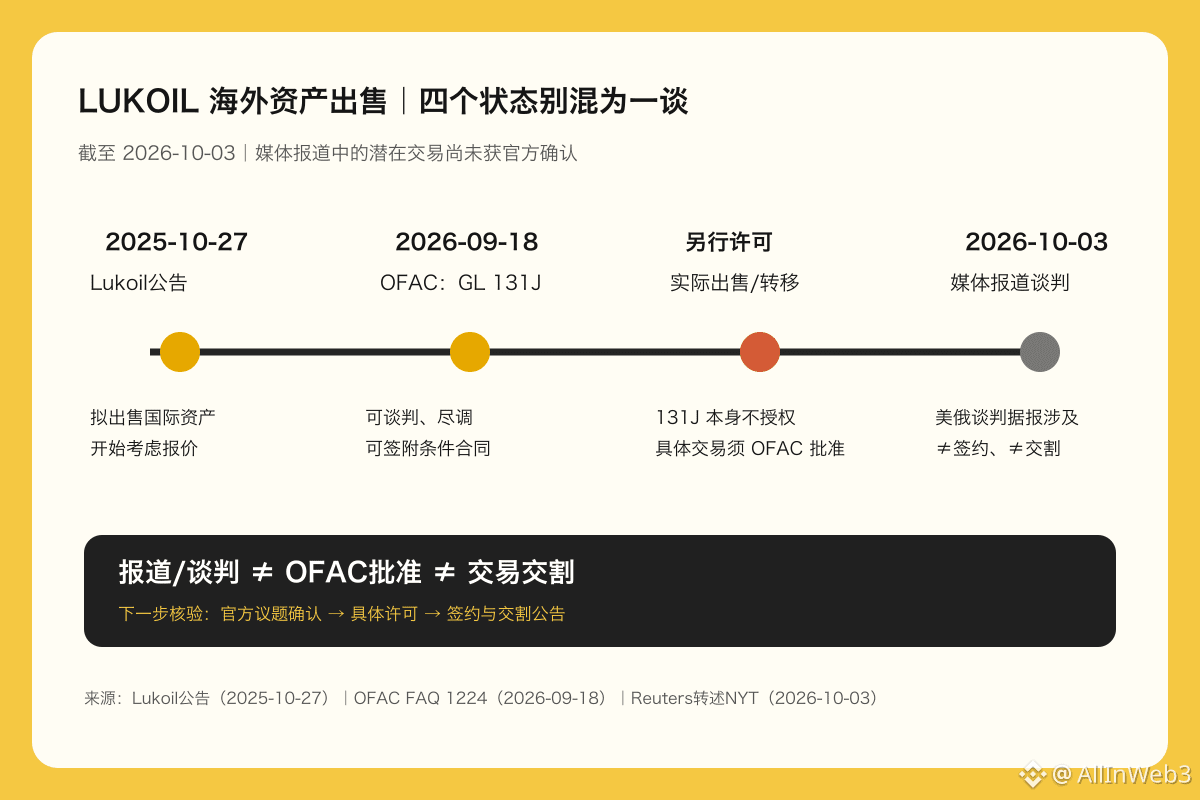
A report says Lukoil’s “multi-billion-dollar deal” involving overseas assets has entered U.S.-Russia negotiations, but the report does not mean approval has been granted, nor does it mean the deal has been closed. On October 3, Reuters, citing The New York Times, said that the U.S.-Russia talks involve a potential transaction that is contingent upon approval by the U.S. government and the Kremlin; as of the time of the report, the White House, the U.S. Treasury, and Lukoil had not responded. The buyer’s arrangements and negotiation details are still media-reported statements from sources, and cannot be written as already-signed facts.
The key boundary in this matter lies in sanctions licensing. Lukoil announced as early as October 27, 2025, that, due to restrictions implemented by some countries, it planned to sell its international assets and began considering potential buyer offers. OFAC’s FAQ 1224, updated on September 18, explains that General License 131J allows negotiations, due diligence, and signing conditional contracts related to the sale of Lukoil International GmbH and its majority-owned subsidiaries, with a deadline of October 22, 2026; however, it clearly does not authorize the actual sale, disposition, or transfer of assets. Any contract would require additional OFAC authorization.
So what’s new today is the reporting thread that “the deal topic has entered U.S.-Russia talks,” not that the sanctions gate is already open. Even if negotiations continue, it still depends on whether OFAC approves it, whether the transaction structure can sever the relationship between LIG and Lukoil, and how the sale proceeds are handled under the sanctions framework. Prior deal offers or buyer rumors cannot replace these conditions.
Next, three verifiable milestones should be monitored: whether the U.S. and Russia sides officially confirm the subject; whether OFAC issues authorization for the specific transaction; and whether Lukoil or the buyer announces the signing and closing. The three represent negotiations, regulatory licensing, and deal completion, respectively, and must not be conflated. For the oil market, even if the news is true, the impact chain is not simply that “the supply changes because assets are sold.” It also depends on the scope of the assets, operational continuity, the buyer’s control, how sale proceeds are frozen or handled, and the sanctions authorizations. Lukoil’s announcement confirms an intention to sell; OFAC documents define the limits of the license; and media reports provide negotiation leads, with different evidentiary standards. At present, there is not enough basis to judge when the transaction will be completed, nor can this be used to infer any one-directional trend in oil prices or related assets. #Lukoil #sanctions
A report says Lukoil’s “multi-billion-dollar deal” involving overseas assets has entered U.S.-Russia negotiations, but the report does not mean approval has been granted, nor does it mean the deal has been closed. On October 3, Reuters, citing The New York Times, said that the U.S.-Russia talks involve a potential transaction that is contingent upon approval by the U.S. government and the Kremlin; as of the time of the report, the White House, the U.S. Treasury, and Lukoil had not responded. The buyer’s arrangements and negotiation details are still media-reported statements from sources, and cannot be written as already-signed facts.
The key boundary in this matter lies in sanctions licensing. Lukoil announced as early as October 27, 2025, that, due to restrictions implemented by some countries, it planned to sell its international assets and began considering potential buyer offers. OFAC’s FAQ 1224, updated on September 18, explains that General License 131J allows negotiations, due diligence, and signing conditional contracts related to the sale of Lukoil International GmbH and its majority-owned subsidiaries, with a deadline of October 22, 2026; however, it clearly does not authorize the actual sale, disposition, or transfer of assets. Any contract would require additional OFAC authorization.
So what’s new today is the reporting thread that “the deal topic has entered U.S.-Russia talks,” not that the sanctions gate is already open. Even if negotiations continue, it still depends on whether OFAC approves it, whether the transaction structure can sever the relationship between LIG and Lukoil, and how the sale proceeds are handled under the sanctions framework. Prior deal offers or buyer rumors cannot replace these conditions.
Next, three verifiable milestones should be monitored: whether the U.S. and Russia sides officially confirm the subject; whether OFAC issues authorization for the specific transaction; and whether Lukoil or the buyer announces the signing and closing. The three represent negotiations, regulatory licensing, and deal completion, respectively, and must not be conflated. For the oil market, even if the news is true, the impact chain is not simply that “the supply changes because assets are sold.” It also depends on the scope of the assets, operational continuity, the buyer’s control, how sale proceeds are frozen or handled, and the sanctions authorizations. Lukoil’s announcement confirms an intention to sell; OFAC documents define the limits of the license; and media reports provide negotiation leads, with different evidentiary standards. At present, there is not enough basis to judge when the transaction will be completed, nor can this be used to infer any one-directional trend in oil prices or related assets. #Lukoil #sanctions
The key boundary in this matter lies in sanctions licensing. Lukoil announced as early as October 27, 2025, that, due to restrictions implemented by some countries, it planned to sell its international assets and began considering potential buyer offers. OFAC’s FAQ 1224, updated on September 18, explains that General License 131J allows negotiations, due diligence, and signing conditional contracts related to the sale of Lukoil International GmbH and its majority-owned subsidiaries, with a deadline of October 22, 2026; however, it clearly does not authorize the actual sale, disposition, or transfer of assets. Any contract would require additional OFAC authorization.
So what’s new today is the reporting thread that “the deal topic has entered U.S.-Russia talks,” not that the sanctions gate is already open. Even if negotiations continue, it still depends on whether OFAC approves it, whether the transaction structure can sever the relationship between LIG and Lukoil, and how the sale proceeds are handled under the sanctions framework. Prior deal offers or buyer rumors cannot replace these conditions.
Next, three verifiable milestones should be monitored: whether the U.S. and Russia sides officially confirm the subject; whether OFAC issues authorization for the specific transaction; and whether Lukoil or the buyer announces the signing and closing. The three represent negotiations, regulatory licensing, and deal completion, respectively, and must not be conflated. For the oil market, even if the news is true, the impact chain is not simply that “the supply changes because assets are sold.” It also depends on the scope of the assets, operational continuity, the buyer’s control, how sale proceeds are frozen or handled, and the sanctions authorizations. Lukoil’s announcement confirms an intention to sell; OFAC documents define the limits of the license; and media reports provide negotiation leads, with different evidentiary standards. At present, there is not enough basis to judge when the transaction will be completed, nor can this be used to infer any one-directional trend in oil prices or related assets. #Lukoil #sanctions
20

·
--
Verified
#usrussiaukrainetalksreportedlyincludelukoiloildeal
🚨 US-Russia talks are now reaching into Big Oil. 🛢️
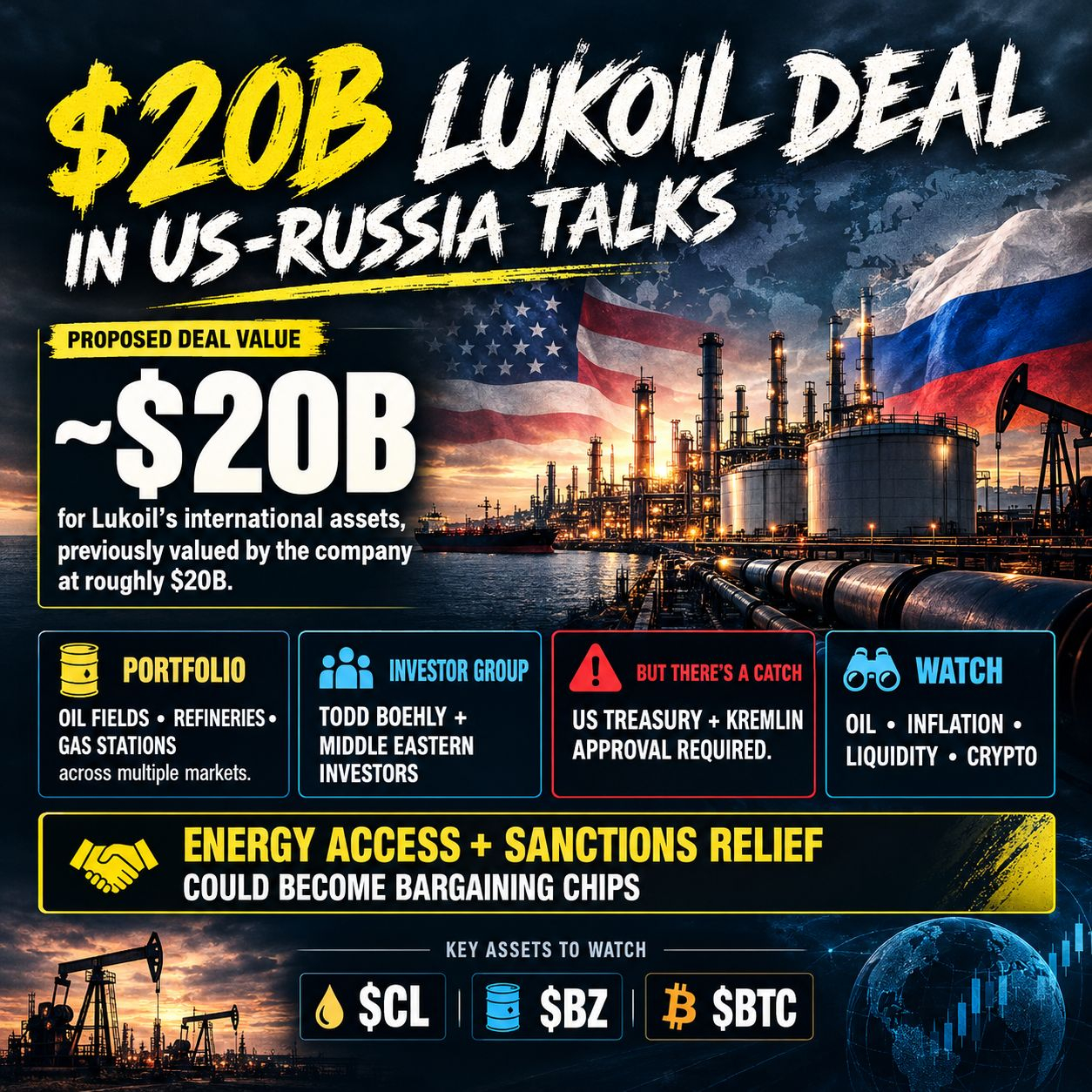
Negotiations over Ukraine have expanded to a proposed multi-billion-dollar deal for Lukoil’s international assets, previously valued by the company at roughly $20B.
The portfolio includes oil fields, refineries and gas stations across multiple markets. The investor group is led by US billionaire Todd Boehly and includes Middle Eastern investors.
But there’s a catch: the deal still needs approval from the US Treasury and the Kremlin.
If it moves forward, energy access and sanctions relief could become bigger bargaining chips in US-Russia relations — with potential implications for global oil prices, inflation, liquidity and crypto.
The question is whether this deal actually gets through.
$CL
{future}(CLUSDT)
$BZ #s1r0z
{future}(BZUSDT)
$BTC
{spot}(BTCUSDT)
#Lukoil #MacroEconomics #OilMarket #Geopolitics
#usrussiaukrainetalksreportedlyincludelukoiloildeal
🚨 US-Russia talks are now reaching into Big Oil. 🛢️
Negotiations over Ukraine have expanded to a proposed multi-billion-dollar deal for Lukoil’s international assets, previously valued by the company at roughly $20B.
The portfolio includes oil fields, refineries and gas stations across multiple markets. The investor group is led by US billionaire Todd Boehly and includes Middle Eastern investors.
But there’s a catch: the deal still needs approval from the US Treasury and the Kremlin.
If it moves forward, energy access and sanctions relief could become bigger bargaining chips in US-Russia relations — with potential implications for global oil prices, inflation, liquidity and crypto.
The question is whether this deal actually gets through.
$CL
$BZ #s1r0z
$BTC
#Lukoil #MacroEconomics #OilMarket #Geopolitics
🚨 US-Russia talks are now reaching into Big Oil. 🛢️
Negotiations over Ukraine have expanded to a proposed multi-billion-dollar deal for Lukoil’s international assets, previously valued by the company at roughly $20B.
The portfolio includes oil fields, refineries and gas stations across multiple markets. The investor group is led by US billionaire Todd Boehly and includes Middle Eastern investors.
But there’s a catch: the deal still needs approval from the US Treasury and the Kremlin.
If it moves forward, energy access and sanctions relief could become bigger bargaining chips in US-Russia relations — with potential implications for global oil prices, inflation, liquidity and crypto.
The question is whether this deal actually gets through.
$CL
$BZ #s1r0z
$BTC
#Lukoil #MacroEconomics #OilMarket #Geopolitics
19

#USRussiaUkraineTalksReportedlyIncludeLukoilOilDeal
🚨 Macro Alert: Geopolitics Meets Big Oil 🛢️
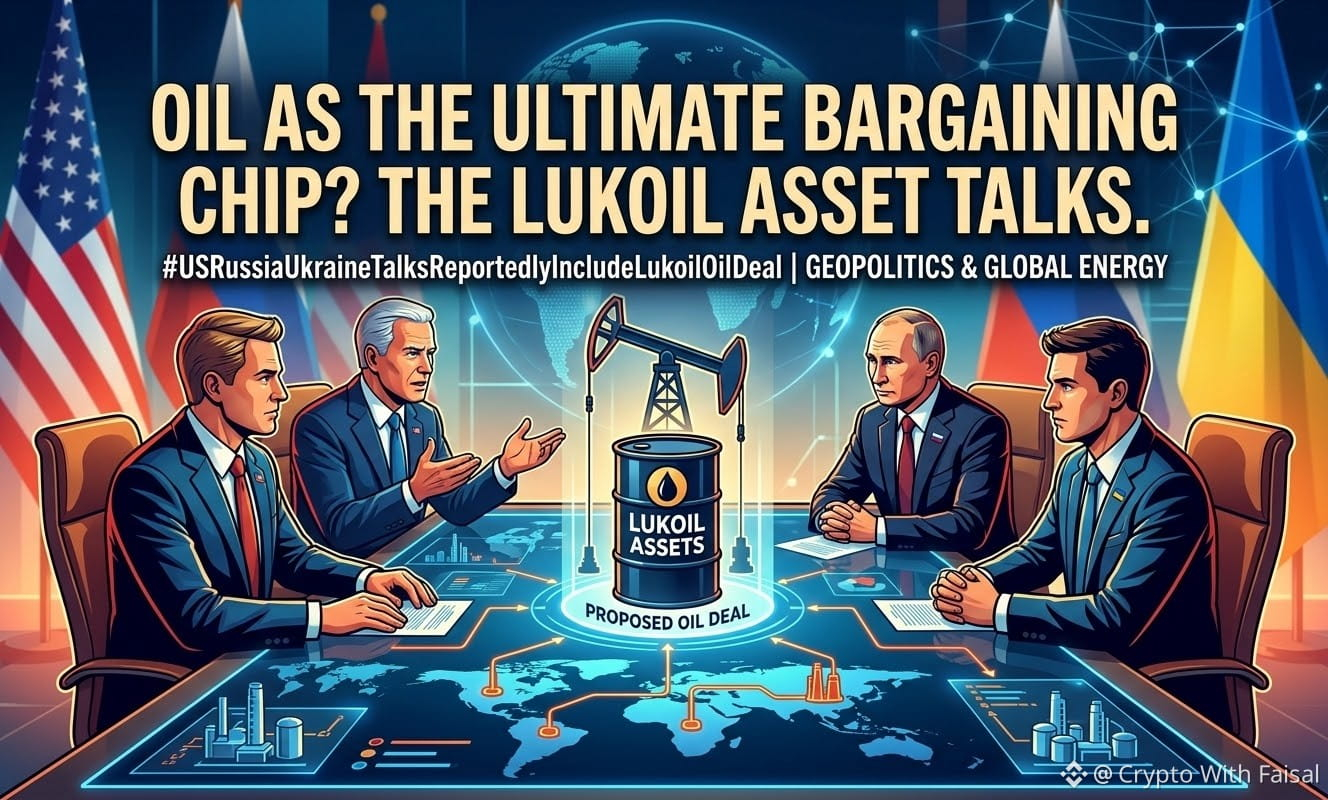
US-Russia negotiations over Ukraine have taken a massive economic turn, expanding to include a proposed multi-billion-dollar deal for the international assets of Russian energy giant Lukoil.
Here are the verified market details:
The Assets: The proposed transaction covers a sprawling global portfolio of Lukoil-owned oil fields, refineries, and gas stations.
Valuation: Lukoil previously valued these international holdings at roughly $20 billion.
The Bidders: The prospective investor group seeking the assets is led by US billionaire Todd Boehly and includes Middle Eastern investors.
The Pitch: Russian President Vladimir Putin proposed the transaction during a Sept. 5 meeting with US negotiators Steve Witkoff and Jared Kushner to demonstrate that US-Russia business could resume.
The Goal: US negotiators view this as a potential way to build goodwill with Moscow while lowering global energy prices.
The Macro View:
Energy access and sanctions relief are becoming direct diplomatic bargaining chips. The deal still requires approval from the US Treasury and the Kremlin. Any major shifts in global oil supply heavily impact macroeconomic inflation and liquidity, which ultimately affects crypto markets.
Do you think this energy deal will push through? 👇
#Lukoil #MacroEconomics #OilMarket #Geopolitics
$CL
{future}(CLUSDT)
$BZ
{future}(BZUSDT)
$BTC
{future}(BTCUSDT)
#USRussiaUkraineTalksReportedlyIncludeLukoilOilDeal
🚨 Macro Alert: Geopolitics Meets Big Oil 🛢️
US-Russia negotiations over Ukraine have taken a massive economic turn, expanding to include a proposed multi-billion-dollar deal for the international assets of Russian energy giant Lukoil.
Here are the verified market details:
The Assets: The proposed transaction covers a sprawling global portfolio of Lukoil-owned oil fields, refineries, and gas stations.
Valuation: Lukoil previously valued these international holdings at roughly $20 billion.
The Bidders: The prospective investor group seeking the assets is led by US billionaire Todd Boehly and includes Middle Eastern investors.
The Pitch: Russian President Vladimir Putin proposed the transaction during a Sept. 5 meeting with US negotiators Steve Witkoff and Jared Kushner to demonstrate that US-Russia business could resume.
The Goal: US negotiators view this as a potential way to build goodwill with Moscow while lowering global energy prices.
The Macro View:
Energy access and sanctions relief are becoming direct diplomatic bargaining chips. The deal still requires approval from the US Treasury and the Kremlin. Any major shifts in global oil supply heavily impact macroeconomic inflation and liquidity, which ultimately affects crypto markets.
Do you think this energy deal will push through? 👇
#Lukoil #MacroEconomics #OilMarket #Geopolitics
$CL
$BZ
$BTC
🚨 Macro Alert: Geopolitics Meets Big Oil 🛢️
US-Russia negotiations over Ukraine have taken a massive economic turn, expanding to include a proposed multi-billion-dollar deal for the international assets of Russian energy giant Lukoil.
Here are the verified market details:
The Assets: The proposed transaction covers a sprawling global portfolio of Lukoil-owned oil fields, refineries, and gas stations.
Valuation: Lukoil previously valued these international holdings at roughly $20 billion.
The Bidders: The prospective investor group seeking the assets is led by US billionaire Todd Boehly and includes Middle Eastern investors.
The Pitch: Russian President Vladimir Putin proposed the transaction during a Sept. 5 meeting with US negotiators Steve Witkoff and Jared Kushner to demonstrate that US-Russia business could resume.
The Goal: US negotiators view this as a potential way to build goodwill with Moscow while lowering global energy prices.
The Macro View:
Energy access and sanctions relief are becoming direct diplomatic bargaining chips. The deal still requires approval from the US Treasury and the Kremlin. Any major shifts in global oil supply heavily impact macroeconomic inflation and liquidity, which ultimately affects crypto markets.
Do you think this energy deal will push through? 👇
#Lukoil #MacroEconomics #OilMarket #Geopolitics
$CL
$BZ
$BTC
272

·
--
#USRussiaUkraineTalksReportedlyIncludeLukoilOilDeal
⚡ U.S.–Russia Talks Reportedly Expand Into a $Billion-Dollar Oil Deal
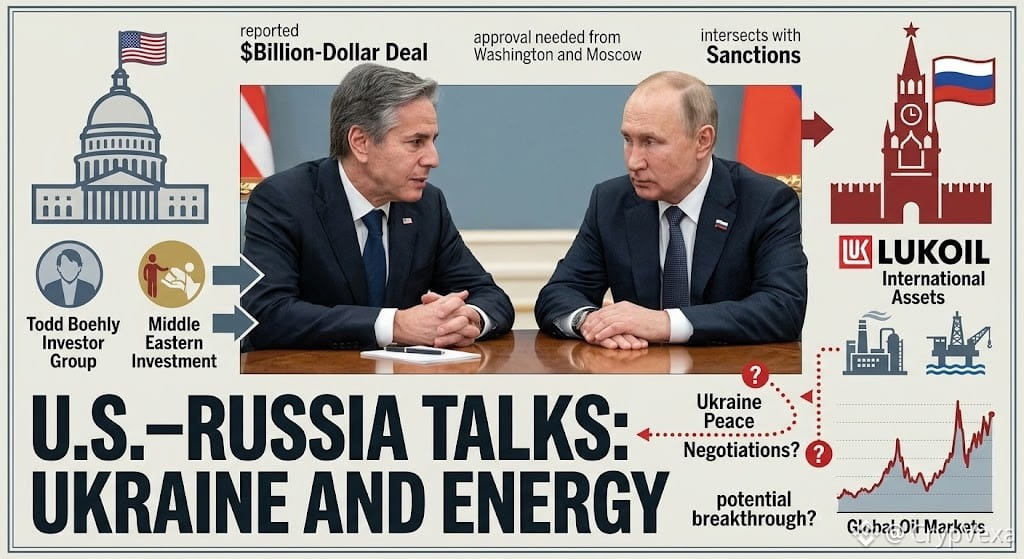
🇺🇸🇷🇺 Reports say discussions over Ukraine may now involve a potential deal for Lukoil’s international oil assets, including refineries, oil fields and fuel stations.
💰 The reported investor group includes U.S. investor Todd Boehly and Middle Eastern business groups, with approvals reportedly needed from both Washington and Moscow.
🛢️ Why it matters: The deal could intersect with sanctions, energy markets and Ukraine peace negotiations.
⚠️ Nothing is confirmed yet. The White House, U.S. Treasury and Lukoil had not commented in the cited reporting.
👀 Could a major oil deal become part of the wider Ukraine negotiations?
#Lukoil #OilMarkets #Ukraine #Geopolitics
#USRussiaUkraineTalksReportedlyIncludeLukoilOilDeal
⚡ U.S.–Russia Talks Reportedly Expand Into a $Billion-Dollar Oil Deal
🇺🇸🇷🇺 Reports say discussions over Ukraine may now involve a potential deal for Lukoil’s international oil assets, including refineries, oil fields and fuel stations.
💰 The reported investor group includes U.S. investor Todd Boehly and Middle Eastern business groups, with approvals reportedly needed from both Washington and Moscow.
🛢️ Why it matters: The deal could intersect with sanctions, energy markets and Ukraine peace negotiations.
⚠️ Nothing is confirmed yet. The White House, U.S. Treasury and Lukoil had not commented in the cited reporting.
👀 Could a major oil deal become part of the wider Ukraine negotiations?
#Lukoil #OilMarkets #Ukraine #Geopolitics
⚡ U.S.–Russia Talks Reportedly Expand Into a $Billion-Dollar Oil Deal
🇺🇸🇷🇺 Reports say discussions over Ukraine may now involve a potential deal for Lukoil’s international oil assets, including refineries, oil fields and fuel stations.
💰 The reported investor group includes U.S. investor Todd Boehly and Middle Eastern business groups, with approvals reportedly needed from both Washington and Moscow.
🛢️ Why it matters: The deal could intersect with sanctions, energy markets and Ukraine peace negotiations.
⚠️ Nothing is confirmed yet. The White House, U.S. Treasury and Lukoil had not commented in the cited reporting.
👀 Could a major oil deal become part of the wider Ukraine negotiations?
#Lukoil #OilMarkets #Ukraine #Geopolitics
1
314
Log in to explore more content
Join global crypto users on Binance Square
⚡️ Get latest and useful information about crypto.
💬 Trusted by the world’s largest crypto exchange.
👍 Discover real insights from verified creators.
Email / Phone number
Trending Topics
1
#ZcashETFPostsFirstWeeklyOutflow$93.6M
10,134 views
44 Discussing
2
#GreekPoliceBustCryptoScamRingArrest17
13,854 views
232 Discussing
3
#BitcoinRejectedAt$87K
77,491 views
108 Discussing
4
#FedOctoberRateHikeOddsFallTo17%
45,550 views
630 Discussing
5
#NvidiaHitsRecordHighUp2.4%
25,489 views
429 Discussing
6
#CanaryFilesAmendedS1ForPEPEETF
10,177 views
283 Discussing
7
#USRussiaUkraineTalksReportedlyIncludeLukoilOilDeal
18,553 views
330 Discussing
8
#BitcoinParesGainsAfterRallyTo$86.5K
41,829 views
155 Discussing
9
#CerebrasSinksNearly20%OnReportNvidiaToPowerOpenAI
95,724 views
940 Discussing
10
#SECProposesCryptoCustodyRules
123,860 views
1,164 Discussing