
#learnwithfatima
learnwithfatima
1M views
2,317 Discussing
Hot
Latest


·
--
Article
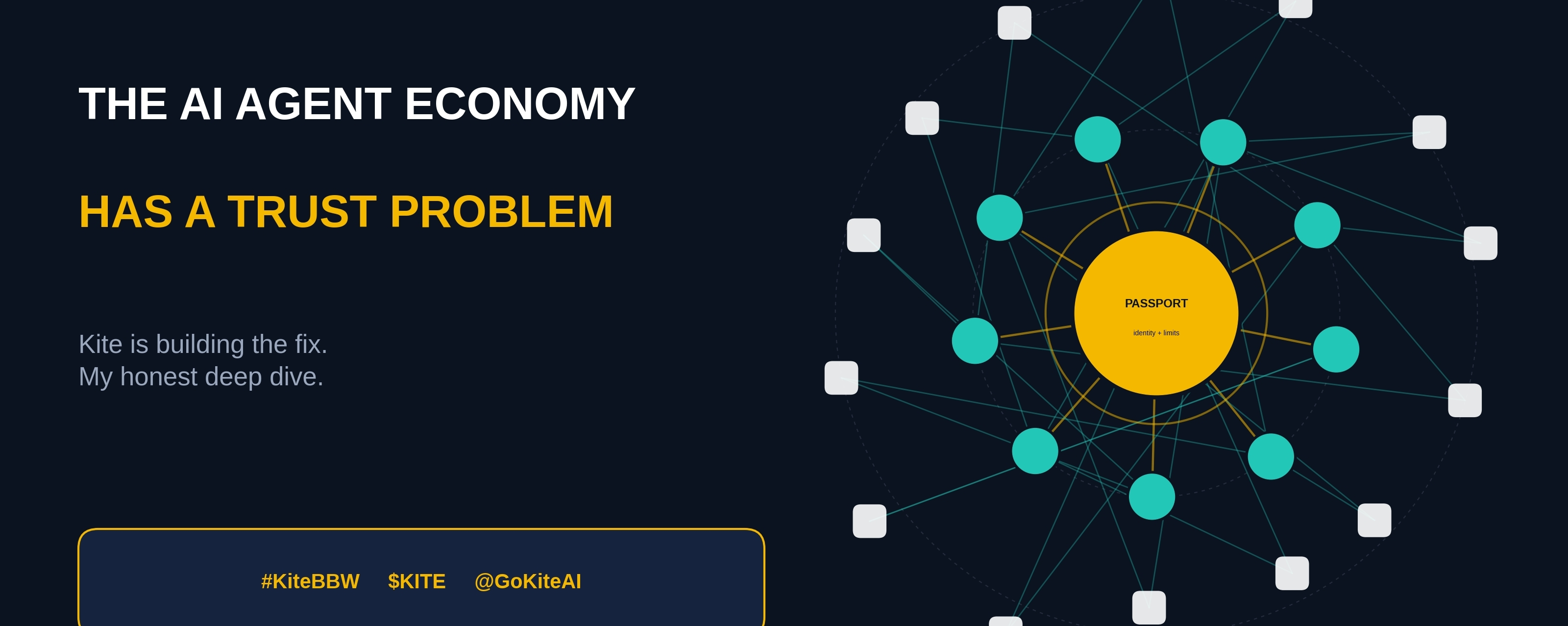
KITE || AGENT PASSPORT || THE AGENT ECONOMYThe AI Agent Economy Has a Trust Problem
Kite is building the fix. My honest deep dive into what is real, what is still unproven and what I am watching.
By Fatima | #LearnWithFatima
The quick takeAI agents can already browse, reason and click buy. What they lack is a safe way to be handedmoney and authority. Kite's bet is that identity and spending rules must come before payments.Its mainnet and Agent Passport are live, the backing is serious and the testnet numbers are big.What is still unproven is paying, repeat, real-world usage. That is the part I am watching.
Picture an AI assistant that books your flight, reorders your groceries and pays for the tools it needs to finish your work. The technology to do most of that already exists. Agents can browse, reason and press the buy button. So why aren't we all letting them?
I don't think the answer is fees. I don't think it's speed either. I think it's trust. Would you hand an autonomous piece of software your card with no limits attached? I wouldn't, and I doubt you would. That gap between what agents can do and what we're willing to let them do is exactly where Kite is aiming.
It's the reason I spent real time digging into it for #KiteBBW .
The real bottleneck is permission, not payment
Most agent economy talk lands on micropayments: agents paying tiny amounts for data, compute or API calls. That matters. But cheap payments alone don't answer the harder question of who is allowed to spend, how much and where.
Think about how we handle this with people. If I send my little cousin to buy lunch, I don't give her access to my whole account. I give her a set amount and one specific shop. The limits are what make delegation possible. Without them I'd just go myself.
Limits are what make delegation possible. Without them, I'd just do it myself
In crypto we learn early that whoever holds the keys holds the money. Agents force a harder version of that lesson. How do you let something act with your money without handing it everything? Kite's answer is to build identity and permissions first, and let payments sit on top of them.
What Kite actually shipped
Kite launched its mainnet in late April 2026 as a sovereign Avalanche L1. It is EVM-compatible and built around native stablecoin settlement for frequent, low-value payments. The design stacks three layers, and the middle one is where the magic is.
Kite Chain is the settlement layer where payments happen. Kite Agent Passport handles identity, delegation and risk control. On top sits the interface layer, where agents and developers register, discover services and plug into agent runtimes. At launch, online shopping was already live and paid API calls were settled through the x402 standard. Kite's treasury also covered network fees during the launch phase, so early users didn't have to think about gas.
Agent Passport: the piece I find most interesting
The Passport works as a programmable wallet plus identity for an AI agent. You fund it, set spending rules, choose which destinations are allowed and keep a kill switch within reach. The agent acts freely inside those boundaries and not outside them.
In practice, Kite describes a flow where you install the Passport skill inside Claude or another major AI model, authorize your agent to buy from major e-commerce sites in a single session and set spending rules and kill switches for each transaction. Developers can also register their agents with the Passport so their skills and services become discoverable to users. Messari's research on the launch notes that PayPal's PYUSD provides a major stablecoin rail for this, with merchant integrations being added.
Why three layers of identity matter
One design choice stands out to me. Kite separates identity into three levels: you, the agent acting for you and a temporary session for each task. The point is containment. If one session misbehaves or gets compromised, the exposure is meant to stay inside that session instead of reaching your agent or main account .
It's the same logic as not reusing one master password everywhere. Limit the blast radius and keep a clear audit trail of who did what. For anyone nervous about handing real money to software, this is the kind of structure that makes the idea feel less scary.
The space frame work in plain English
Kite summarizes its approach with a framework it calls SPACE. I like it because it reads like a checklist for any project that claims to serve agents. Stablecoin-native payments. Programmable constraints. Agent-first authentication. Compliance-ready design. And micropayments that are economically viable
Notice that only one of the five letters is about the money moving itself. The other four are about rules, identity and safety. That tells you what Kite thinks the real problem is.
Betting on Standard instead of One winner
Agent payments is a crowded field of competing standards. Coinbase pushes x402 for per-request stablecoin payments over HTTP. Google has AP2 for agent commerce. Stripe has its Machine Payment Protocol. Anthropic created MCP to connect models with tools.
Kite didn't pick a side. It supports all of them, plus OAuth 2.1, and positions itself as the layer underneath. In an early market nobody knows which standard wins, so broad compatibility lowers the risk of backing the wrong one. It also helps that Coinbase is both an investor and an integration partner on the x402 side.
Evidence versus promises
I always try to separate what's proven from what's only pitched. Here's what's on the record.
Beyond the numbers, the backer list is strong. The $35 million round was led by PayPal Ventures and General Catalyst, and Coinbase Ventures, Samsung Next and 8VC are also listed among backers. Pilot integrations with PayPal and Shopify were announced as underway. Crystal Intelligence, a blockchain analytics and compliance firm, has added transaction monitoring and sanctions screening to the network, which suggests the team is thinking about compliance and not only speed. Kite has also joined the Avalanche Payments Collective as its first AI-agent-focused member.
Where I'm still skeptical
Those are real signals. But I want to be clear about what they are and what they aren't. Testnet interactions aren't paying customers. Pilots aren't production volume. An announced integration isn't the same as people using it every day.
KITE has a total supply of 10 billion tokens. Its utility was designed to roll out in stages: module activation and ecosystem incentives first, then AI service commissions, staking and governance as the network matures. The token's long-term role depends on one thing, which is whether real agents settle real payments on this network. If usage doesn't grow, the narrative alone won't carry it.
There's also competition to respect. The agent payments space is getting crowded, and the big names behind the standards Kite integrates (Coinbase, Google, Stripe) will shape where agent payments flow too. That's my opinion, not a prediction.
What I'm watching instead of the chart1. Do Passport accounts keep growing after campaign attention fades?2. Do merchant and service integrations move from pilots to daily use?3. Do developers keep building on it when incentives are no longer pulling them in?
Why this matters beyond crypto
I create content to help women start in crypto from zero, so here's what I think about when I read projects like this. If agents are going to shop, subscribe and pay on our behalf, the safety controls can't be built only for engineers. A student, a shop owner or a mother managing a household budget should be able to set limits in a couple of minutes and understand exactly what the agent can and can't do.
The projects that make delegation feel safe and simple for ordinary people will matter more than the ones that only win on technical specs. Kite's focus on spending limits, kill switches and verifiable identity points in that direction. Whether it delivers on ease of use is something only time and real adoption will show.
My Takeaway
The agent economy won't be won by whoever has the cheapest transaction. It'll be won by whoever makes people comfortable handing real authority to software. Kite is building around that exact problem, with working infrastructure and serious backers behind it. From here, execution is what counts. I'll keepwatching the usage and not the noise.
So here's my question for you: what's the first thing you'd let an AI agent pay for, and what spending limit would you set?
Beginner glossaryAgent: software powered by AI that can take actions for you, like browsing or buying.L1: a blockchain that runs on its own base network. Kite runs as its own Avalanche L1.Stablecoin: a token designed to track a stable value such as the US dollar.x402: a standard that lets stablecoin payments happen per request over the web.AP2: Google's protocol for agent-driven commerce.MPP: Stripe's Machine Payment Protocol.MCP: Anthropic's Model Context Protocol, which connects AI models to tools and services.Passport: Kite's identity and wallet system for agents, with spending rules and kill switches.
Disclaimer: This is my own research and opinion, not financial advice. Crypto assets are volatile and carry risk. Always do your own research before making any decision.
#KiteBBW $KITE @GoKiteAI @Binance_Square_Official @Binance_Angels @Binance_Academy @CZ
KITE || AGENT PASSPORT || THE AGENT ECONOMY
The AI Agent Economy Has a Trust Problem
Kite is building the fix. My honest deep dive into what is real, what is still unproven and what I am watching.
By Fatima | #LearnWithFatima
The quick takeAI agents can already browse, reason and click buy. What they lack is a safe way to be handedmoney and authority. Kite's bet is that identity and spending rules must come before payments.Its mainnet and Agent Passport are live, the backing is serious and the testnet numbers are big.What is still unproven is paying, repeat, real-world usage. That is the part I am watching.
Picture an AI assistant that books your flight, reorders your groceries and pays for the tools it needs to finish your work. The technology to do most of that already exists. Agents can browse, reason and press the buy button. So why aren't we all letting them?
I don't think the answer is fees. I don't think it's speed either. I think it's trust. Would you hand an autonomous piece of software your card with no limits attached? I wouldn't, and I doubt you would. That gap between what agents can do and what we're willing to let them do is exactly where Kite is aiming.
It's the reason I spent real time digging into it for #KiteBBW .
The real bottleneck is permission, not payment
Most agent economy talk lands on micropayments: agents paying tiny amounts for data, compute or API calls. That matters. But cheap payments alone don't answer the harder question of who is allowed to spend, how much and where.
Think about how we handle this with people. If I send my little cousin to buy lunch, I don't give her access to my whole account. I give her a set amount and one specific shop. The limits are what make delegation possible. Without them I'd just go myself.
Limits are what make delegation possible. Without them, I'd just do it myself
In crypto we learn early that whoever holds the keys holds the money. Agents force a harder version of that lesson. How do you let something act with your money without handing it everything? Kite's answer is to build identity and permissions first, and let payments sit on top of them.
What Kite actually shipped
Kite launched its mainnet in late April 2026 as a sovereign Avalanche L1. It is EVM-compatible and built around native stablecoin settlement for frequent, low-value payments. The design stacks three layers, and the middle one is where the magic is.
Kite Chain is the settlement layer where payments happen. Kite Agent Passport handles identity, delegation and risk control. On top sits the interface layer, where agents and developers register, discover services and plug into agent runtimes. At launch, online shopping was already live and paid API calls were settled through the x402 standard. Kite's treasury also covered network fees during the launch phase, so early users didn't have to think about gas.
Agent Passport: the piece I find most interesting
The Passport works as a programmable wallet plus identity for an AI agent. You fund it, set spending rules, choose which destinations are allowed and keep a kill switch within reach. The agent acts freely inside those boundaries and not outside them.
In practice, Kite describes a flow where you install the Passport skill inside Claude or another major AI model, authorize your agent to buy from major e-commerce sites in a single session and set spending rules and kill switches for each transaction. Developers can also register their agents with the Passport so their skills and services become discoverable to users. Messari's research on the launch notes that PayPal's PYUSD provides a major stablecoin rail for this, with merchant integrations being added.
Why three layers of identity matter
One design choice stands out to me. Kite separates identity into three levels: you, the agent acting for you and a temporary session for each task. The point is containment. If one session misbehaves or gets compromised, the exposure is meant to stay inside that session instead of reaching your agent or main account .
It's the same logic as not reusing one master password everywhere. Limit the blast radius and keep a clear audit trail of who did what. For anyone nervous about handing real money to software, this is the kind of structure that makes the idea feel less scary.
The space frame work in plain English
Kite summarizes its approach with a framework it calls SPACE. I like it because it reads like a checklist for any project that claims to serve agents. Stablecoin-native payments. Programmable constraints. Agent-first authentication. Compliance-ready design. And micropayments that are economically viable
Notice that only one of the five letters is about the money moving itself. The other four are about rules, identity and safety. That tells you what Kite thinks the real problem is.
Betting on Standard instead of One winner
Agent payments is a crowded field of competing standards. Coinbase pushes x402 for per-request stablecoin payments over HTTP. Google has AP2 for agent commerce. Stripe has its Machine Payment Protocol. Anthropic created MCP to connect models with tools.
Kite didn't pick a side. It supports all of them, plus OAuth 2.1, and positions itself as the layer underneath. In an early market nobody knows which standard wins, so broad compatibility lowers the risk of backing the wrong one. It also helps that Coinbase is both an investor and an integration partner on the x402 side.
Evidence versus promises
I always try to separate what's proven from what's only pitched. Here's what's on the record.
Beyond the numbers, the backer list is strong. The $35 million round was led by PayPal Ventures and General Catalyst, and Coinbase Ventures, Samsung Next and 8VC are also listed among backers. Pilot integrations with PayPal and Shopify were announced as underway. Crystal Intelligence, a blockchain analytics and compliance firm, has added transaction monitoring and sanctions screening to the network, which suggests the team is thinking about compliance and not only speed. Kite has also joined the Avalanche Payments Collective as its first AI-agent-focused member.
Where I'm still skeptical
Those are real signals. But I want to be clear about what they are and what they aren't. Testnet interactions aren't paying customers. Pilots aren't production volume. An announced integration isn't the same as people using it every day.
KITE has a total supply of 10 billion tokens. Its utility was designed to roll out in stages: module activation and ecosystem incentives first, then AI service commissions, staking and governance as the network matures. The token's long-term role depends on one thing, which is whether real agents settle real payments on this network. If usage doesn't grow, the narrative alone won't carry it.
There's also competition to respect. The agent payments space is getting crowded, and the big names behind the standards Kite integrates (Coinbase, Google, Stripe) will shape where agent payments flow too. That's my opinion, not a prediction.
What I'm watching instead of the chart1. Do Passport accounts keep growing after campaign attention fades?2. Do merchant and service integrations move from pilots to daily use?3. Do developers keep building on it when incentives are no longer pulling them in?
Why this matters beyond crypto
I create content to help women start in crypto from zero, so here's what I think about when I read projects like this. If agents are going to shop, subscribe and pay on our behalf, the safety controls can't be built only for engineers. A student, a shop owner or a mother managing a household budget should be able to set limits in a couple of minutes and understand exactly what the agent can and can't do.
The projects that make delegation feel safe and simple for ordinary people will matter more than the ones that only win on technical specs. Kite's focus on spending limits, kill switches and verifiable identity points in that direction. Whether it delivers on ease of use is something only time and real adoption will show.
My Takeaway
The agent economy won't be won by whoever has the cheapest transaction. It'll be won by whoever makes people comfortable handing real authority to software. Kite is building around that exact problem, with working infrastructure and serious backers behind it. From here, execution is what counts. I'll keepwatching the usage and not the noise.
So here's my question for you: what's the first thing you'd let an AI agent pay for, and what spending limit would you set?
Beginner glossaryAgent: software powered by AI that can take actions for you, like browsing or buying.L1: a blockchain that runs on its own base network. Kite runs as its own Avalanche L1.Stablecoin: a token designed to track a stable value such as the US dollar.x402: a standard that lets stablecoin payments happen per request over the web.AP2: Google's protocol for agent-driven commerce.MPP: Stripe's Machine Payment Protocol.MCP: Anthropic's Model Context Protocol, which connects AI models to tools and services.Passport: Kite's identity and wallet system for agents, with spending rules and kill switches.
Disclaimer: This is my own research and opinion, not financial advice. Crypto assets are volatile and carry risk. Always do your own research before making any decision.
#KiteBBW $KITE @KITE AI 中文 @Binance Square Official @Binance Angels @Binance Academy @CZ
Elite Entry :
Trust, not tech, is the real bottleneck.
3
1
20
3.9k
·
--
I'm Nominating My self for 2026 #LearnWithFatima
Catogery : Content creator of the year - Rising ✨
Many are asking how to nominate me , Here's full guide for you :
Use the link to open the form of nominations :
[https://www.binance.com/en/square/blockchain-100-2026](https://www.binance.com/en/square/blockchain-100-2026)
Click on Nominations:
Question #1
Are you nominating your self ?
Choose No.
Question #2
Are you representing a person or company in this nominations?
Choose Yes one option and in space write
Fatima_Tariq
Question #3
Who do you wish to nominate?
Fatima_Tariq.
Question #4
Please provide link to nominee social media profile ?
[https://app.binance.com/uni-qr/cpro/1O69852872?l=en&r=RCWBKBLO&uc=app_square_share_link&us=copylink](https://app.binance.com/uni-qr/cpro/1O69852872?l=en&r=RCWBKBLO&uc=app_square_share_link&us=copylink)
Question #5
Which catogery are you nominating for ?
Content creator of the year -Rising star ⭐
Question #6
Please explain why are you nominating ...........?
Great multingual worth full and educational content and guidance along with trading analysis .
[https://app.binance.com/uni-qr/cart/368373006999529?r=RCWBKBLO&l=en&uco=J_Ym5n5Q93Bv4by33ZxnHg&uc=app_square_share_link&us=copylink](https://app.binance.com/uni-qr/cart/368373006999529?r=RCWBKBLO&l=en&uco=J_Ym5n5Q93Bv4by33ZxnHg&uc=app_square_share_link&us=copylink)
Question #7
Question #8
Skip both .
Question #9
-Please provide the nominees contact information?
Choose last option :
prefer not to disclose
Question #10
How would you like us to address ?
Put your name in it.
The one who is filling this form .
Question #11
Choose last option :
prefer not to disclose
Question #12
Is their anything else we should know ?
Write Not at all.
and all done .Also don't forget to mention in comment who nominated for me .
I'm Nominating My self for 2026 #LearnWithFatima
Catogery : Content creator of the year - Rising ✨
Many are asking how to nominate me , Here's full guide for you :
Use the link to open the form of nominations :
https://www.binance.com/en/square/blockchain-100-2026
Click on Nominations:
Question #1
Are you nominating your self ?
Choose No.
Question #2
Are you representing a person or company in this nominations?
Choose Yes one option and in space write
Fatima_Tariq
Question #3
Who do you wish to nominate?
Fatima_Tariq.
Question #4
Please provide link to nominee social media profile ?
https://app.binance.com/uni-qr/cpro/1O69852872?l=en&r=RCWBKBLO&uc=app_square_share_link&us=copylink
Question #5
Which catogery are you nominating for ?
Content creator of the year -Rising star ⭐
Question #6
Please explain why are you nominating ...........?
Great multingual worth full and educational content and guidance along with trading analysis .
https://app.binance.com/uni-qr/cart/368373006999529?r=RCWBKBLO&l=en&uco=J_Ym5n5Q93Bv4by33ZxnHg&uc=app_square_share_link&us=copylink
Question #7
Question #8
Skip both .
Question #9
-Please provide the nominees contact information?
Choose last option :
prefer not to disclose
Question #10
How would you like us to address ?
Put your name in it.
The one who is filling this form .
Question #11
Choose last option :
prefer not to disclose
Question #12
Is their anything else we should know ?
Write Not at all.
and all done .Also don't forget to mention in comment who nominated for me .
Yes I nominate you.
79%
No I'm not nominating.
21%
19 votes • Voting closed
13
3
28
1.2k
·
--
Article
My Halloween Story: From Spooky Nights to Building My Own Identity in Web3 🎃Halloween is the perfect time to mix imagination, mystery, and creativity. This year, I wanted to celebrate it in my own way, with pumpkins, spooky decorations, golden lights, and a little touch of Binance. But behind this Halloween theme, there is a story that means much more to me than costumes and decorations. It is a story about learning, taking risks, finding a community, and slowly building an identity of my own.
If I had to give my Halloween a name, it would be “Trick or Trade: The Journey from Fear to Confidence.”
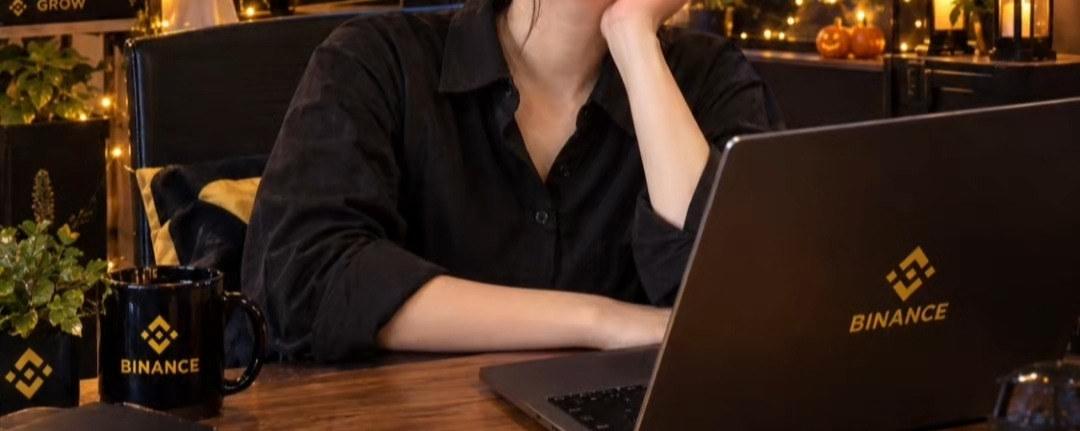
Imagine a dark room illuminated by warm golden lights. Pumpkins glow in the corners, little bats decorate the walls, and a mysterious moon shines through the window. A laptop sits on the desk, surrounded by Binance-themed decorations. Everything looks a little spooky, but there is something exciting about it too. This is the kind of Halloween atmosphere I wanted to create: creative, mysterious, and connected to my journey in Web3.
My real journey into crypto started in 2022, when I was still learning what this world was all about. I did not enter Web3 as an expert. I had questions, curiosity, and a lot to learn. At first, even simple things felt unfamiliar. Wallets, airdrops, online communities, and blockchain projects seemed like pieces of a puzzle I had not yet figured out.
Sometimes, learning something new feels like walking through a haunted house. You cannot see the entire path ahead. Every corner brings another question, and every unfamiliar step can make you hesitate. But you keep moving because you want to discover what is waiting on the other side.
That is how I see my early days in crypto. There were confusing moments, mistakes, and lessons that I could only understand through experience. I learned that excitement alone is not enough. You need patience, research, security awareness, and the willingness to admit when you do not know something.
One of my biggest lessons was that fear should not make every decision for you. In trading, fear can make you hesitate, while excitement can push you into decisions without enough research. The answer is not to ignore those feelings. It is to learn how to manage them. My Halloween reminder to myself is simple: not every opportunity is a treasure, and not every frightening moment is the end of the story.
Binance Square also became part of my experience as I continued learning and sharing content. What started as a journey from limited knowledge gradually became an opportunity to educate others, discuss projects, share market observations, and connect with people from different backgrounds. Reaching more than 67,000 followers has been a meaningful milestone, but the number is only one part of the story. The real value is in the knowledge gained, the community built, and the confidence developed along the way.
As a student, I also understand that growth takes time. I have academic goals, personal ambitions, and responsibilities beyond crypto. Building something independently does not happen overnight. Every small step matters, whether it is learning a new concept, creating an educational post, understanding a mistake, or helping a beginner feel less confused.
So, what does Halloween mean to me this year? It means turning the unknown into an opportunity to learn. The pumpkins represent creativity, the shadows represent the things we have not figured out yet, and the golden Binance lights represent the curiosity that keeps us exploring.
My favorite part of this imagined Halloween celebration is the message behind it: the scariest thing is not starting from zero; it is giving up before discovering how far you can go.
I would love to know how other members of the Binance community celebrate Halloween. Do you prefer spooky costumes, pumpkin decorations, scary stories, or a creative crypto-themed setup like mine?
Share your Halloween memories, show your creativity, and let us make this season a little more mysterious and a lot more memorable.
Happy Halloween to the Binance community!#Halloween #LearnWithFatima #SEAPumpkinFrenzy @BinanceBurmese @BinancePk
My Halloween Story: From Spooky Nights to Building My Own Identity in Web3 🎃
Halloween is the perfect time to mix imagination, mystery, and creativity. This year, I wanted to celebrate it in my own way, with pumpkins, spooky decorations, golden lights, and a little touch of Binance. But behind this Halloween theme, there is a story that means much more to me than costumes and decorations. It is a story about learning, taking risks, finding a community, and slowly building an identity of my own.
If I had to give my Halloween a name, it would be “Trick or Trade: The Journey from Fear to Confidence.”
Imagine a dark room illuminated by warm golden lights. Pumpkins glow in the corners, little bats decorate the walls, and a mysterious moon shines through the window. A laptop sits on the desk, surrounded by Binance-themed decorations. Everything looks a little spooky, but there is something exciting about it too. This is the kind of Halloween atmosphere I wanted to create: creative, mysterious, and connected to my journey in Web3.
My real journey into crypto started in 2022, when I was still learning what this world was all about. I did not enter Web3 as an expert. I had questions, curiosity, and a lot to learn. At first, even simple things felt unfamiliar. Wallets, airdrops, online communities, and blockchain projects seemed like pieces of a puzzle I had not yet figured out.
Sometimes, learning something new feels like walking through a haunted house. You cannot see the entire path ahead. Every corner brings another question, and every unfamiliar step can make you hesitate. But you keep moving because you want to discover what is waiting on the other side.
That is how I see my early days in crypto. There were confusing moments, mistakes, and lessons that I could only understand through experience. I learned that excitement alone is not enough. You need patience, research, security awareness, and the willingness to admit when you do not know something.
One of my biggest lessons was that fear should not make every decision for you. In trading, fear can make you hesitate, while excitement can push you into decisions without enough research. The answer is not to ignore those feelings. It is to learn how to manage them. My Halloween reminder to myself is simple: not every opportunity is a treasure, and not every frightening moment is the end of the story.
Binance Square also became part of my experience as I continued learning and sharing content. What started as a journey from limited knowledge gradually became an opportunity to educate others, discuss projects, share market observations, and connect with people from different backgrounds. Reaching more than 67,000 followers has been a meaningful milestone, but the number is only one part of the story. The real value is in the knowledge gained, the community built, and the confidence developed along the way.
As a student, I also understand that growth takes time. I have academic goals, personal ambitions, and responsibilities beyond crypto. Building something independently does not happen overnight. Every small step matters, whether it is learning a new concept, creating an educational post, understanding a mistake, or helping a beginner feel less confused.
So, what does Halloween mean to me this year? It means turning the unknown into an opportunity to learn. The pumpkins represent creativity, the shadows represent the things we have not figured out yet, and the golden Binance lights represent the curiosity that keeps us exploring.
My favorite part of this imagined Halloween celebration is the message behind it: the scariest thing is not starting from zero; it is giving up before discovering how far you can go.
I would love to know how other members of the Binance community celebrate Halloween. Do you prefer spooky costumes, pumpkin decorations, scary stories, or a creative crypto-themed setup like mine?
Share your Halloween memories, show your creativity, and let us make this season a little more mysterious and a lot more memorable.
Happy Halloween to the Binance community!#Halloween #LearnWithFatima #SEAPumpkinFrenzy @Binance Burmese @Binance Pakistan
6
43
22.9k




·
--
[https://app.binance.com/uni-qr/cact26user/641?uc=app_square_share_link&us=copylink](https://app.binance.com/uni-qr/cact26user/641?uc=app_square_share_link&us=copylink)
Thanks #LearnWithFatima Family
Don't forget to show love support fam
Vote for me Daily . click on link above and click on vote for me.
شكرًا لعائلة #تعلم_مع_فاطمة
لا تنسوا دعمي ومحبتي يا أصدقاء
صوّتوا لي يوميًا. اضغطوا على الرابط أعلاه ثم اضغطوا على "صوّت لي".
感谢#LearnWithFatima 大家庭!
别忘了给我点赞和支持哦!
每天给我投票。点击上方链接,然后点击“投票”即可。
Gracias, familia de #LearnWithFatima.
No olviden mostrar su cariño y apoyo.
Voten por mí a diario. Hagan clic en el enlace de arriba y luego en "Votar por mí".
Cảm ơn gia đình #LearnWithFatima!
Đừng quên thể hiện tình yêu thương và sự ủng hộ nhé mọi người!
Hãy bình chọn cho tôi mỗi ngày. Nhấp vào liên kết ở trên và nhấp vào "bình chọn cho tôi"...
ধন্যবাদ #LearnWithFatima পরিবার
ভালোবাসা ও সমর্থন জানাতে ভুলো না, বন্ধুরা।
প্রতিদিন আমাকে ভোট দিন। উপরের লিঙ্কে ক্লিক করে 'আমাকে ভোট দিন'-এ ক্লিক করুন।
Terima kasih keluarga #LearnWithFatima
Jangan lupa tunjukkan dukungan dan cinta ya!
Vote untukku setiap hari. Klik tautan di atas dan klik vote untukku..
شکریہ #LearnWithFatima Family۔
مجھے روزانہ ووٹ دیں۔ اوپر دیے گئے لنک پر کلک کریں اور میرے لیے ووٹ پر کلک کریں
Teşekkürler #LearnWithFatima Ailesi
Sevginizi ve desteğinizi göstermeyi unutmayın ailem
Bana her gün oy verin. Yukarıdaki linke tıklayın ve bana oy verin..
https://app.binance.com/uni-qr/cact26user/641?uc=app_square_share_link&us=copylink
Thanks #LearnWithFatima Family
Don't forget to show love support fam
Vote for me Daily . click on link above and click on vote for me.
شكرًا لعائلة #تعلم_مع_فاطمة
لا تنسوا دعمي ومحبتي يا أصدقاء
صوّتوا لي يوميًا. اضغطوا على الرابط أعلاه ثم اضغطوا على "صوّت لي".
感谢#LearnWithFatima 大家庭!
别忘了给我点赞和支持哦!
每天给我投票。点击上方链接,然后点击“投票”即可。
Gracias, familia de #LearnWithFatima.
No olviden mostrar su cariño y apoyo.
Voten por mí a diario. Hagan clic en el enlace de arriba y luego en "Votar por mí".
Cảm ơn gia đình #LearnWithFatima!
Đừng quên thể hiện tình yêu thương và sự ủng hộ nhé mọi người!
Hãy bình chọn cho tôi mỗi ngày. Nhấp vào liên kết ở trên và nhấp vào "bình chọn cho tôi"...
ধন্যবাদ #LearnWithFatima পরিবার
ভালোবাসা ও সমর্থন জানাতে ভুলো না, বন্ধুরা।
প্রতিদিন আমাকে ভোট দিন। উপরের লিঙ্কে ক্লিক করে 'আমাকে ভোট দিন'-এ ক্লিক করুন।
Terima kasih keluarga #LearnWithFatima
Jangan lupa tunjukkan dukungan dan cinta ya!
Vote untukku setiap hari. Klik tautan di atas dan klik vote untukku..
شکریہ #LearnWithFatima Family۔
مجھے روزانہ ووٹ دیں۔ اوپر دیے گئے لنک پر کلک کریں اور میرے لیے ووٹ پر کلک کریں
Teşekkürler #LearnWithFatima Ailesi
Sevginizi ve desteğinizi göstermeyi unutmayın ailem
Bana her gün oy verin. Yukarıdaki linke tıklayın ve bana oy verin..

44
2
88
23.8k
·
--
Bullish
Thanks #LearnWithFatima Family
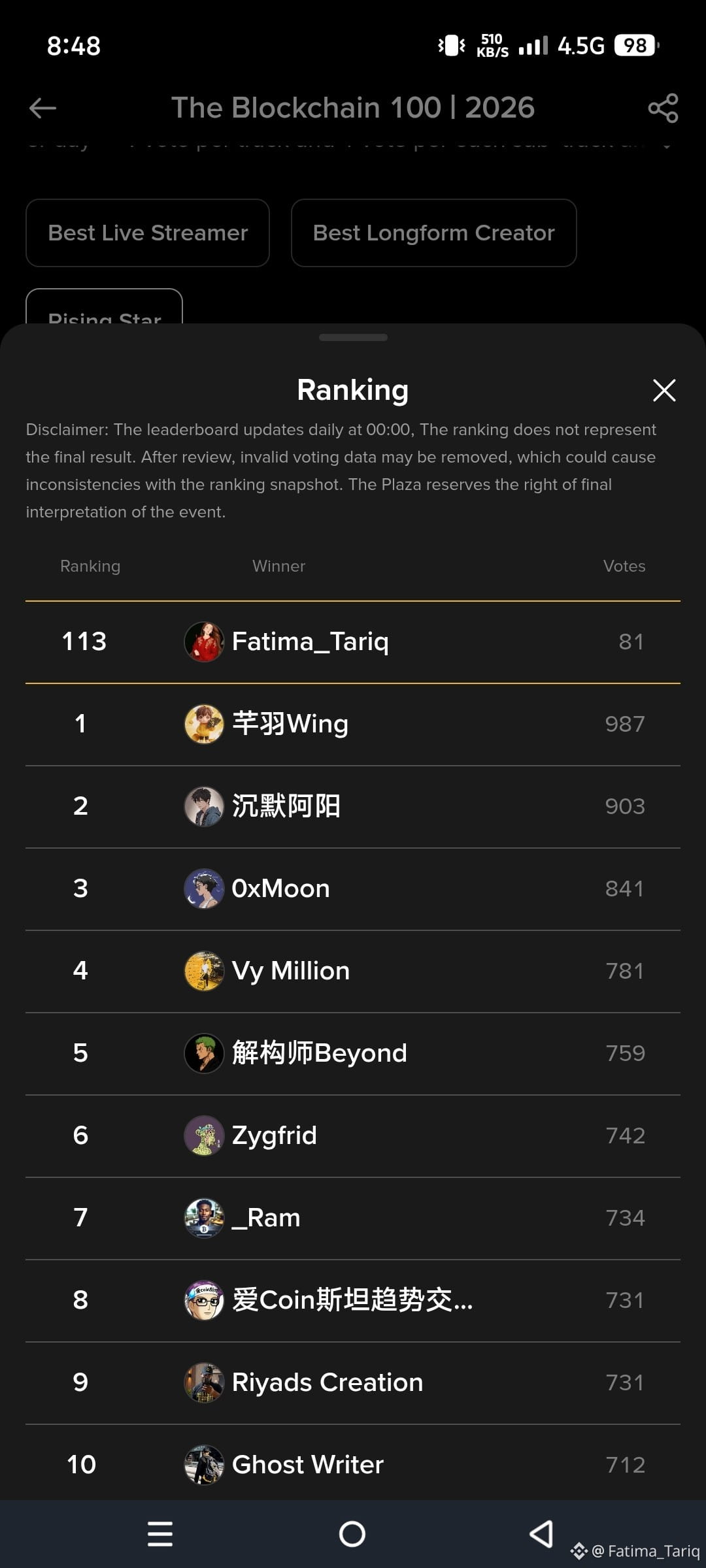
Move forward From 113-95 ✨🌸
Don't forget to show love support fam
Vote for me Daily .
For voting :
Just click link and click vote and done
[https://app.binance.com/uni-qr/cact26user/641?uc=app_square_share_link&us=copylink](https://app.binance.com/uni-qr/cact26user/641?uc=app_square_share_link&us=copylink)
Share screenshot in comment section .
我的个人资料里有投票按钮,请点击投票按钮,大家支持我,爱我的家人。 投票方式:
只需点击链接,然后点击投票即可。
[https://app.binance.com/uni-qr/cact26user/641?uc=app_square_share_link&us=copylink](https://app.binance.com/uni-qr/cact26user/641?uc=app_square_share_link&us=copylink)
يوجد زر تصويت في ملفي الشخصي، انقروا عليه جميعًا وأظهروا دعمكم وحبكم لعائلتي. للتصويت:
انقر على الرابط ثم انقر على "تصويت" وانتهى الأمر. [https://app.binance.com/uni-qr/cact26user/641?uc=app_square_share_link&us=copylink](https://app.binance.com/uni-qr/cact26user/641?uc=app_square_share_link&us=copylink)
Hay un botón de votación en mi perfil, haz clic en el botón de votación, todos muestren su apoyo, amor y familia. Para votar:
Simplemente haz clic en el enlace, luego en "Votar" y listo. [https://app.binance.com/uni-qr/cact26user/641?uc=app_square_share_link&us=copylink](https://app.binance.com/uni-qr/cact26user/641?uc=app_square_share_link&us=copylink)
Thanks #LearnWithFatima Family
Move forward From 113-95 ✨🌸
Don't forget to show love support fam
Vote for me Daily .
For voting :
Just click link and click vote and done
https://app.binance.com/uni-qr/cact26user/641?uc=app_square_share_link&us=copylink
Share screenshot in comment section .
我的个人资料里有投票按钮,请点击投票按钮,大家支持我,爱我的家人。 投票方式:
只需点击链接,然后点击投票即可。
https://app.binance.com/uni-qr/cact26user/641?uc=app_square_share_link&us=copylink
يوجد زر تصويت في ملفي الشخصي، انقروا عليه جميعًا وأظهروا دعمكم وحبكم لعائلتي. للتصويت:
انقر على الرابط ثم انقر على "تصويت" وانتهى الأمر. https://app.binance.com/uni-qr/cact26user/641?uc=app_square_share_link&us=copylink
Hay un botón de votación en mi perfil, haz clic en el botón de votación, todos muestren su apoyo, amor y familia. Para votar:
Simplemente haz clic en el enlace, luego en "Votar" y listo. https://app.binance.com/uni-qr/cact26user/641?uc=app_square_share_link&us=copylink
15
1
19
709

·
--
Hi ,#LearnWithFatima Family !
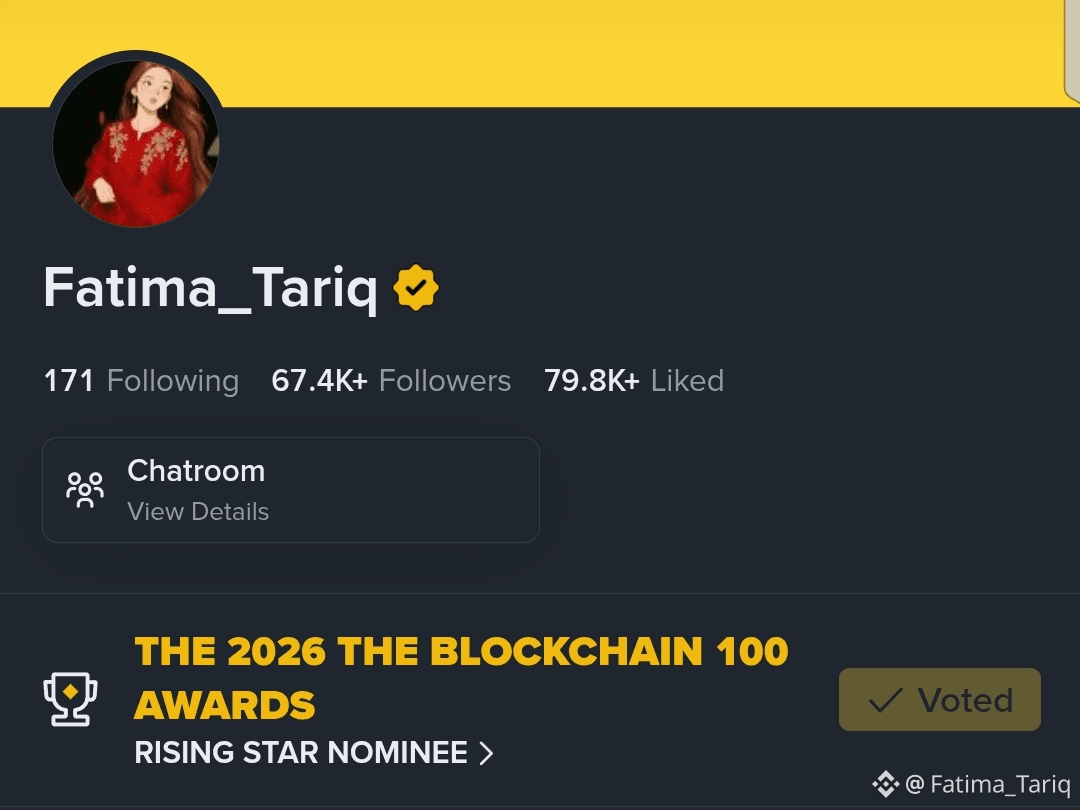
I'm Nominate for Rising Star catogery
Show some support ! Vote for me .
Just Click on Vote button below
[https://app.binance.com/uni-qr/cact26user/641?uc=app_square_share_link&us=copylink](https://app.binance.com/uni-qr/cact26user/641?uc=app_square_share_link&us=copylink)
Hi ,#LearnWithFatima Family !
I'm Nominate for Rising Star catogery
Show some support ! Vote for me .
Just Click on Vote button below
https://app.binance.com/uni-qr/cact26user/641?uc=app_square_share_link&us=copylink
I'm Nominate for Rising Star catogery
Show some support ! Vote for me .
Just Click on Vote button below
https://app.binance.com/uni-qr/cact26user/641?uc=app_square_share_link&us=copylink
37
6
53
5.3k
·
--
Bullish
Dear #LearnWithFatima Family 🙌💛
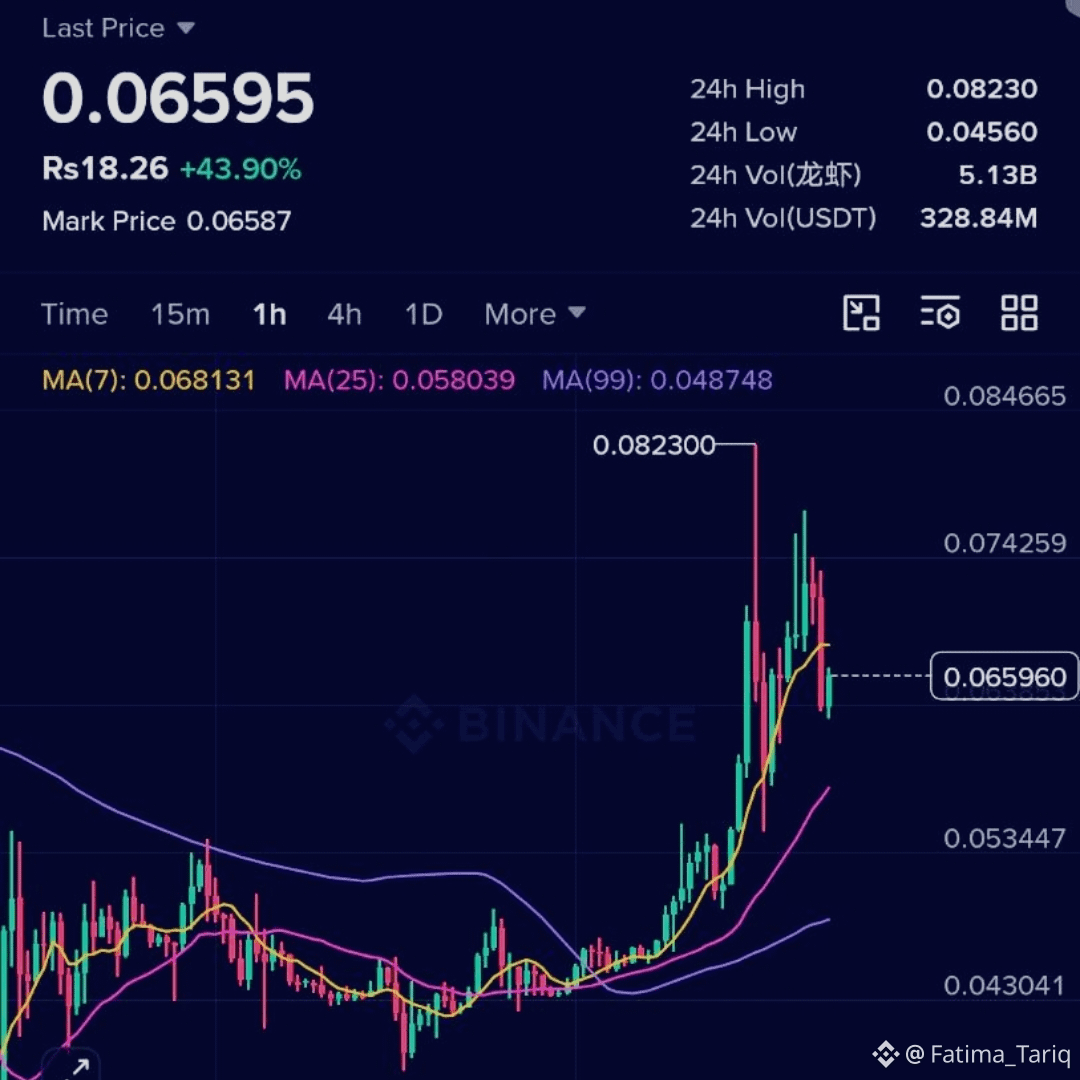
$龙虾 LOBSTER TP1 & TP2 smashed!
congratulations 🥳🎉 to all those who got
profited .
TP1: $0.050 ✅
TP2: $0.060 ✅
The setup is playing out nicely! Now watching $0.075 for TP3 👀
No chasing, just patience and the plan. 📊
NFA, DYOR.
{future}(龙虾USDT)
#BinanceLaunchesBinanceIntelligence #DubaiVARAIssuesReserveAssetAuditCircular #SECApproves3XBitcoinETF #WinklevossFilesSpotZcashETFApplication
Dear #LearnWithFatima Family 🙌💛
$龙虾 LOBSTER TP1 & TP2 smashed!
congratulations 🥳🎉 to all those who got
profited .
TP1: $0.050 ✅
TP2: $0.060 ✅
The setup is playing out nicely! Now watching $0.075 for TP3 👀
No chasing, just patience and the plan. 📊
NFA, DYOR.
#BinanceLaunchesBinanceIntelligence #DubaiVARAIssuesReserveAssetAuditCircular #SECApproves3XBitcoinETF #WinklevossFilesSpotZcashETFApplication
Fatima_Tariq
·
--
Gm #LearnWithFatima Family ! Hope you all doing well, 3 volatile setups I’m watching closely
$龙虾
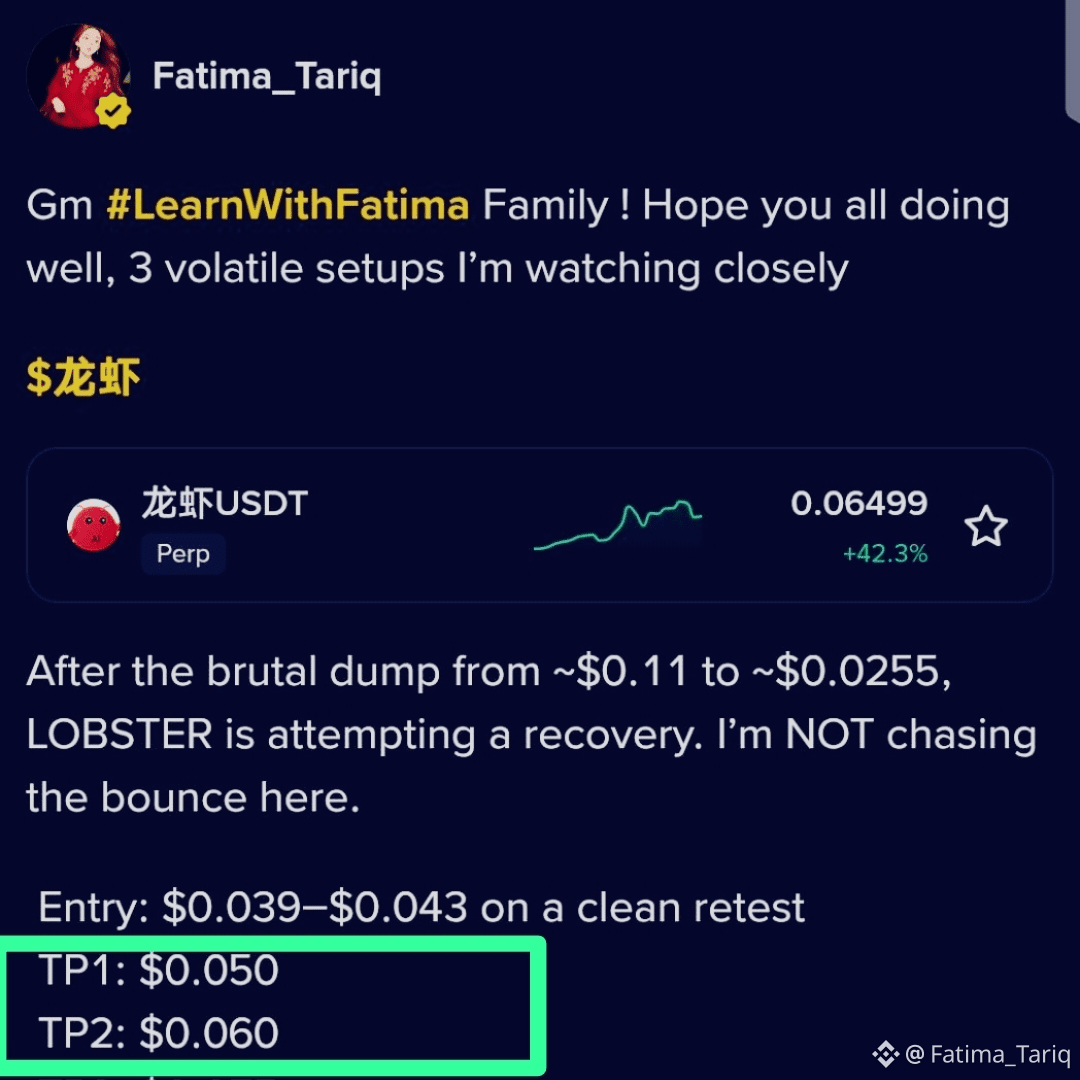
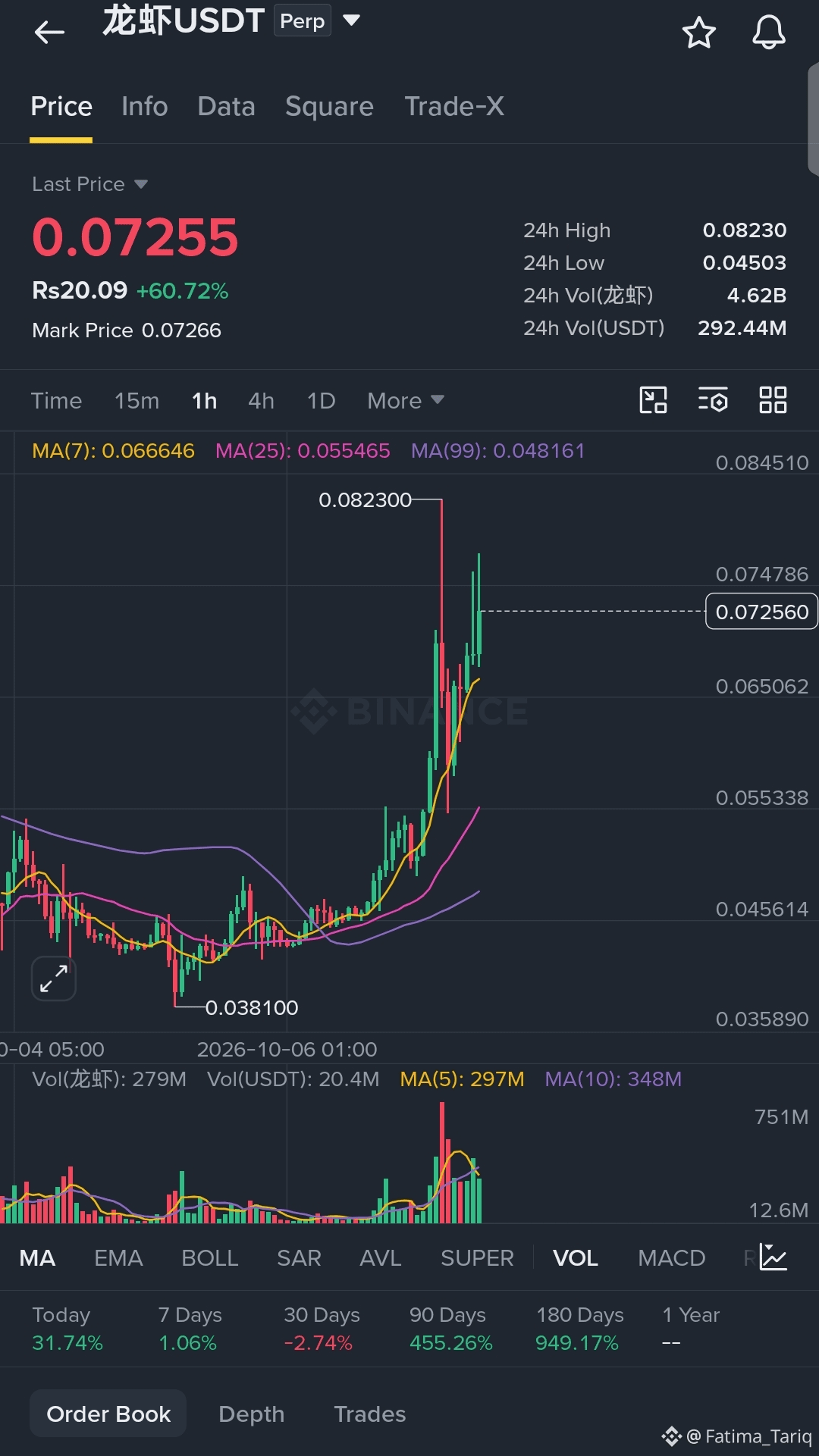
After the brutal dump from ~$0.11 to ~$0.0255, LOBSTER is attempting a recovery. I’m NOT chasing the bounce here.
Entry: $0.039–$0.043 on a clean retest
TP1: $0.050
TP2: $0.060
TP3: $0.075
SL: $0.035
The key is whether buyers can reclaim and hold the ~$0.06 resistance area. If $0.039 breaks with strong selling, I’d rather stay out and wait.
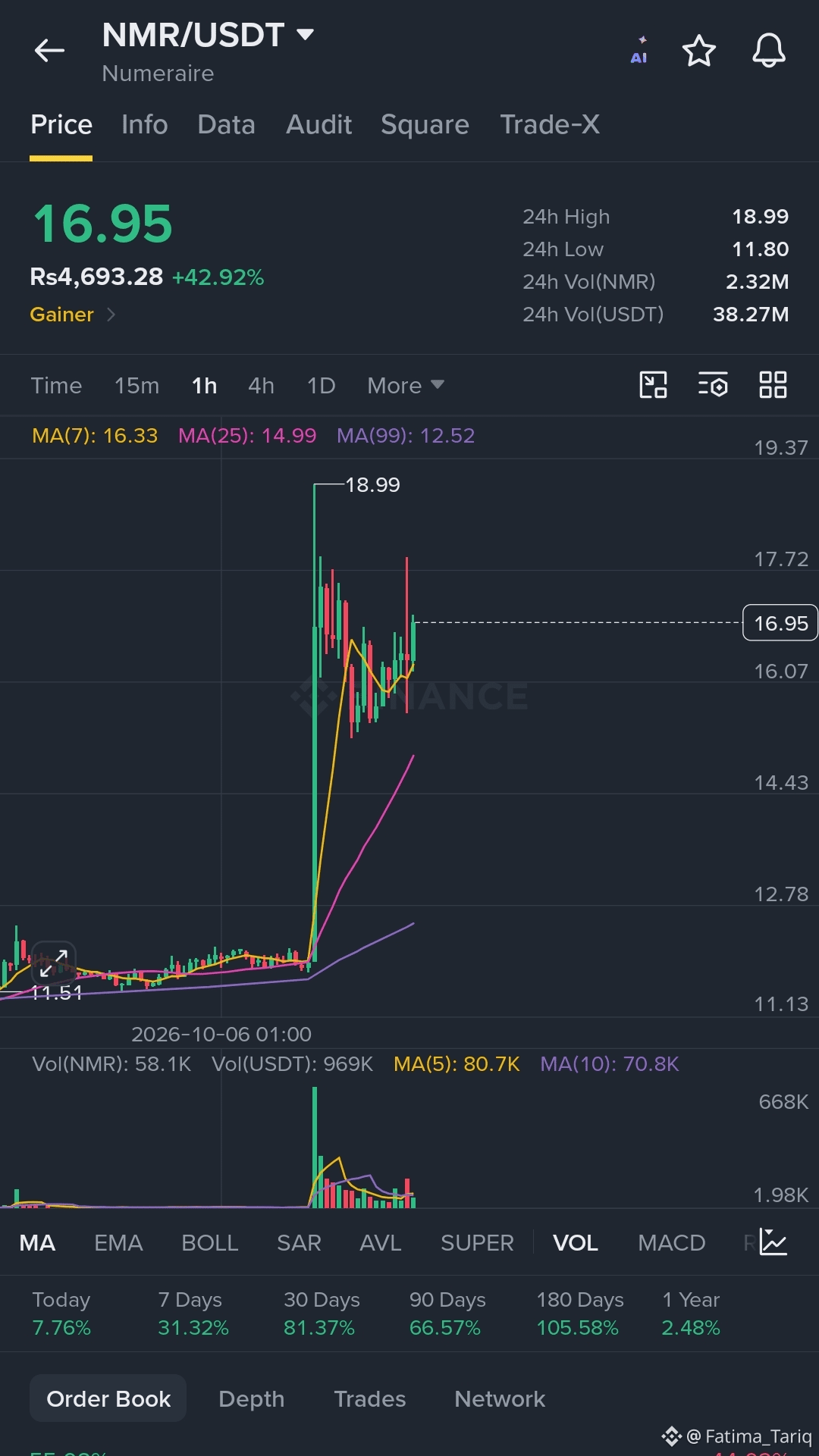
$NMR
NMR has been one of the strongest movers, breaking through the previous $15 area and pushing toward the $19–$20 zone before cooling off.
Entry: $14.50–$15.50 on retest
TP1: $17.50
TP2: $19.00
TP3: $21.00
SL: $13.60
I like NMR more than chasing the other two, but after such an aggressive move, I want confirmation that previous resistance is becoming support.
$ORCA
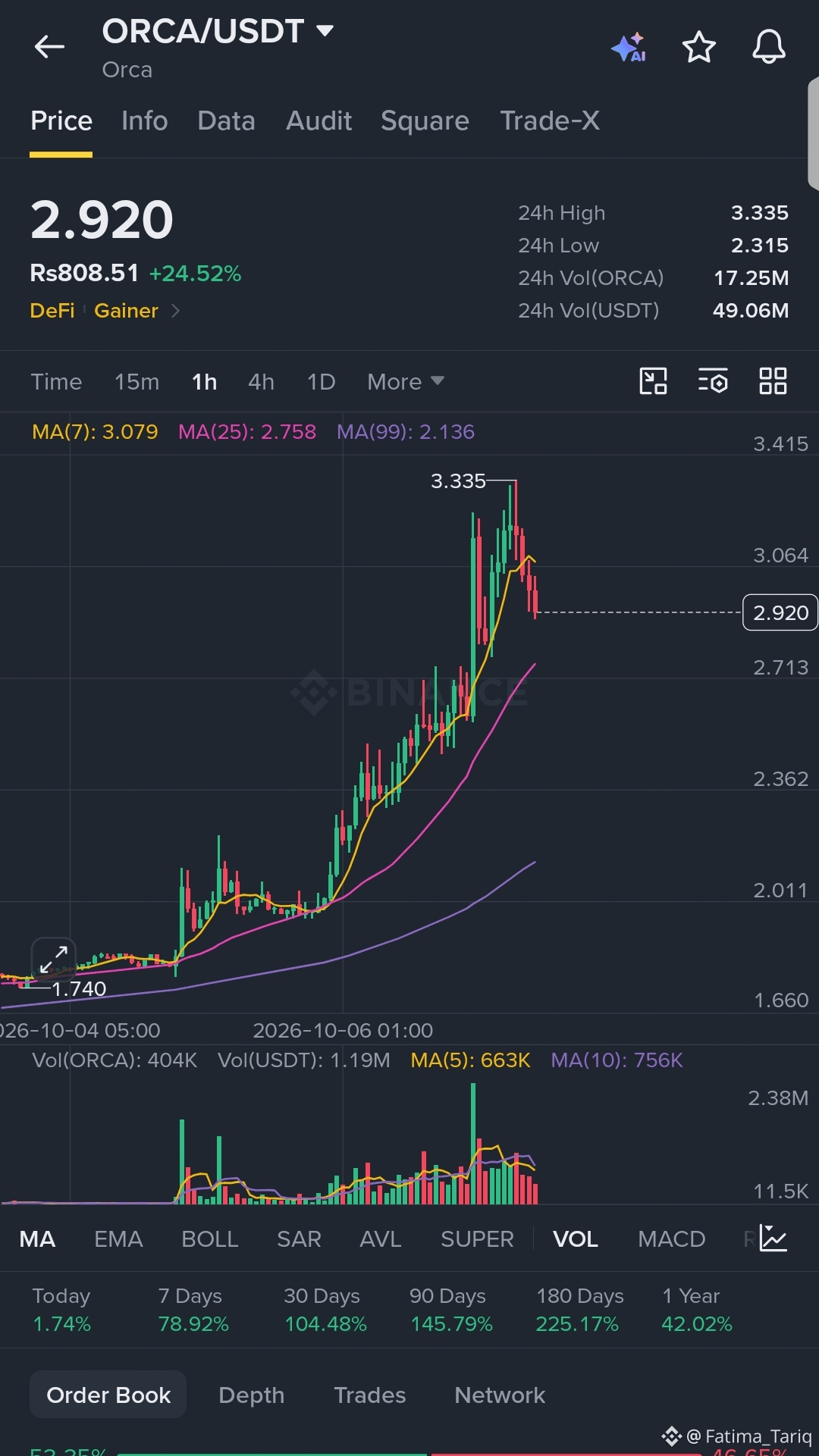
ORCA has gone from around $1 to nearly $3, so the trend is impressive, but the move is already stretched.
My short setup:
Entry: $2.85–$3.00 if rejection confirms
TP1: $2.70
TP2: $2.50
TP3: $2.30
SL: $3.15
For me, the short only makes sense while price keeps rejecting the $3 area. A clean breakout and hold above it invalidates the setup.
⚠️ These are high-volatility setups, not “buy and forget” trades.
Small position size. Clear SL. No unnecessary leverage. Never chase a vertical candle.
DYOR always it's not a Financial advice
Which setup would you take: LOBSTER, NMR or ORCA?
#BinanceLaunchesBinanceIntelligence #WinklevossFilesSpotZcashETFApplication #IglooShutsDownAbstractBlockchain #StrategyMarketCapSurpassesRumble
11
1.3k
·
--
Gm #LearnWithFatima Family ! Hope you all doing well, 3 volatile setups I’m watching closely
$龙虾
{future}(龙虾USDT)
After the brutal dump from ~$0.11 to ~$0.0255, LOBSTER is attempting a recovery. I’m NOT chasing the bounce here.
Entry: $0.039–$0.043 on a clean retest
TP1: $0.050
TP2: $0.060
TP3: $0.075
SL: $0.035
The key is whether buyers can reclaim and hold the ~$0.06 resistance area. If $0.039 breaks with strong selling, I’d rather stay out and wait.
$NMR
{future}(NMRUSDT)
NMR has been one of the strongest movers, breaking through the previous $15 area and pushing toward the $19–$20 zone before cooling off.
Entry: $14.50–$15.50 on retest
TP1: $17.50
TP2: $19.00
TP3: $21.00
SL: $13.60
I like NMR more than chasing the other two, but after such an aggressive move, I want confirmation that previous resistance is becoming support.
$ORCA
{future}(ORCAUSDT)
ORCA has gone from around $1 to nearly $3, so the trend is impressive, but the move is already stretched.
My short setup:
Entry: $2.85–$3.00 if rejection confirms
TP1: $2.70
TP2: $2.50
TP3: $2.30
SL: $3.15
For me, the short only makes sense while price keeps rejecting the $3 area. A clean breakout and hold above it invalidates the setup.
⚠️ These are high-volatility setups, not “buy and forget” trades.
Small position size. Clear SL. No unnecessary leverage. Never chase a vertical candle.
DYOR always it's not a Financial advice
Which setup would you take: LOBSTER, NMR or ORCA?
#BinanceLaunchesBinanceIntelligence #WinklevossFilesSpotZcashETFApplication #IglooShutsDownAbstractBlockchain #StrategyMarketCapSurpassesRumble
Gm #LearnWithFatima Family ! Hope you all doing well, 3 volatile setups I’m watching closely
$龙虾
After the brutal dump from ~$0.11 to ~$0.0255, LOBSTER is attempting a recovery. I’m NOT chasing the bounce here.
Entry: $0.039–$0.043 on a clean retest
TP1: $0.050
TP2: $0.060
TP3: $0.075
SL: $0.035
The key is whether buyers can reclaim and hold the ~$0.06 resistance area. If $0.039 breaks with strong selling, I’d rather stay out and wait.
$NMR
NMR has been one of the strongest movers, breaking through the previous $15 area and pushing toward the $19–$20 zone before cooling off.
Entry: $14.50–$15.50 on retest
TP1: $17.50
TP2: $19.00
TP3: $21.00
SL: $13.60
I like NMR more than chasing the other two, but after such an aggressive move, I want confirmation that previous resistance is becoming support.
$ORCA
ORCA has gone from around $1 to nearly $3, so the trend is impressive, but the move is already stretched.
My short setup:
Entry: $2.85–$3.00 if rejection confirms
TP1: $2.70
TP2: $2.50
TP3: $2.30
SL: $3.15
For me, the short only makes sense while price keeps rejecting the $3 area. A clean breakout and hold above it invalidates the setup.
⚠️ These are high-volatility setups, not “buy and forget” trades.
Small position size. Clear SL. No unnecessary leverage. Never chase a vertical candle.
DYOR always it's not a Financial advice
Which setup would you take: LOBSTER, NMR or ORCA?
#BinanceLaunchesBinanceIntelligence #WinklevossFilesSpotZcashETFApplication #IglooShutsDownAbstractBlockchain #StrategyMarketCapSurpassesRumble
2
1
9
1.7k
·
--
Article
DRIVX: A Closer Look at a Car-Rental Business Built Around a TokenReal-world asset narratives are becoming more common in crypto, but the important question is always: what is actually behind the token?
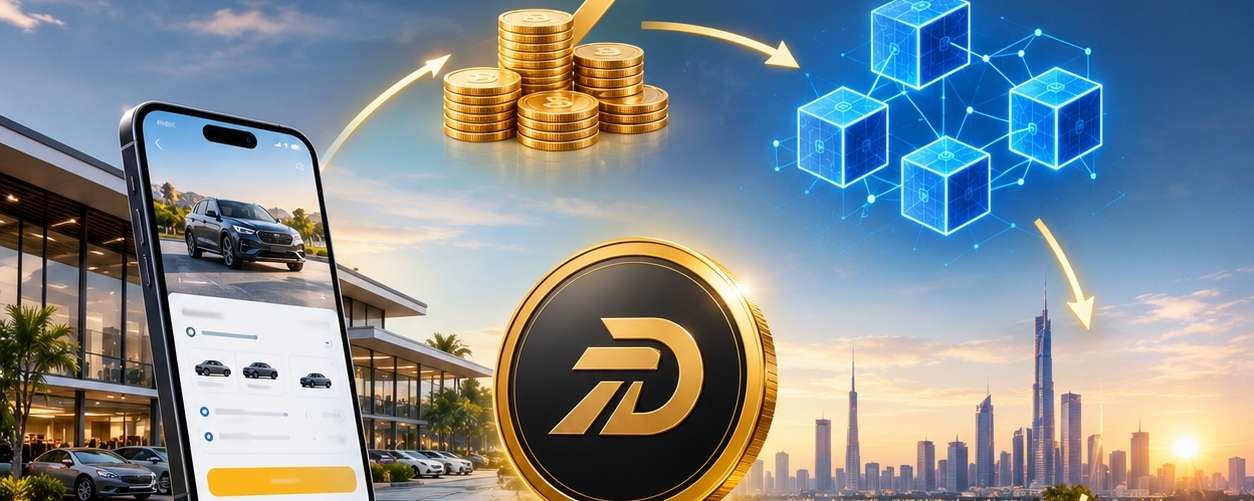
I looked into DRIVX, a BNB Smart Chain project that says it is connecting a real-world rent-a-car operation with an on-chain token ecosystem. Here’s how the model is presented by the project
1️⃣ What is DRIVX?
According to DRIVX, the model has three main steps:
1. Token presaleParticipants acquire DRIVX during the presale.2. Capital → rental operationsThe project says capital is used to expand its car-rental business, including vehicles and operational infrastructure.3. Rental revenue → token ecosystemDRIVX says a portion of mobility revenue is allocated toward token buybacks, burns, DEX liquidity and treasury activities.
The interesting part isn't simply “car rental + crypto.”
It's whether the real-world business can generate sustainable revenue and whether that revenue mechanism can be independently verified on-chain.
2️⃣ Revenue allocation
The project currently describes the mobility-revenue model as:
• 50% → Fleet expansion, operations & logistics• 30% → Buybacks, burns, liquidity & treasury• 15% → Marketing• 5% → Team
The stated objective is to reinvest part of the business revenue into expanding the fleet while allocating another portion toward the token ecosystem.
3️⃣ Tokenomics
DRIVX states a 7 billion total supply.
• 32.86% → Fleet Expansion & Business Growth• 20% → Liquidity• 15% → Marketing & Growth• 15% → Team & Advisors• 10% → Reserve & Ecosystem• 7.14% → Staking & Community Rewards
The project states that the team allocation has a 12-month cliff followed by 24-month linear vesting, while the reserve has a 12-month cliff followed by 36-month linear vesting.
4️⃣ Presale status
The official website currently shows:
Stage 1: $0.01 per DRIVX + 5% bonusStage 2: $0.02 + 5% bonusStage 3: later stage
The website currently identifies Stage 1 as live, so anyone researching the project should verify the latest status directly from official project information rather than relying on older posts or screenshots.
5️⃣ What deserves attention?
For me, these are the areas worth monitoring:
• Can the underlying rental business demonstrate real operating activity and revenue?• Can reported buybacks and burns be verified on-chain?• How will liquidity be structured after listing?• How will the large token allocations enter circulation over time?• When will the proposed staking utility actually launch?• Does token demand come from genuine ecosystem usage, or mainly from speculation?
That's where the DRIVX thesis becomes interesting.
The concept sounds straightforward. The real test is execution, transparency and measurable revenue.
"This is an informational overview, not financial advice or a recommendation to buy DRIVX. Presale tokens can carry substantial risk, including loss of capital. DYOR and verify project information independently" .
#LearnWithFatima
#Market_Update
#dyor #NFA #trading
$BTC
{future}(BTCUSDT)
$BNB
{future}(BNBUSDT)
$ETH
{future}(ETHUSDT)
DRIVX: A Closer Look at a Car-Rental Business Built Around a Token
Real-world asset narratives are becoming more common in crypto, but the important question is always: what is actually behind the token?
I looked into DRIVX, a BNB Smart Chain project that says it is connecting a real-world rent-a-car operation with an on-chain token ecosystem. Here’s how the model is presented by the project
1️⃣ What is DRIVX?
According to DRIVX, the model has three main steps:
1. Token presaleParticipants acquire DRIVX during the presale.2. Capital → rental operationsThe project says capital is used to expand its car-rental business, including vehicles and operational infrastructure.3. Rental revenue → token ecosystemDRIVX says a portion of mobility revenue is allocated toward token buybacks, burns, DEX liquidity and treasury activities.
The interesting part isn't simply “car rental + crypto.”
It's whether the real-world business can generate sustainable revenue and whether that revenue mechanism can be independently verified on-chain.
2️⃣ Revenue allocation
The project currently describes the mobility-revenue model as:
• 50% → Fleet expansion, operations & logistics• 30% → Buybacks, burns, liquidity & treasury• 15% → Marketing• 5% → Team
The stated objective is to reinvest part of the business revenue into expanding the fleet while allocating another portion toward the token ecosystem.
3️⃣ Tokenomics
DRIVX states a 7 billion total supply.
• 32.86% → Fleet Expansion & Business Growth• 20% → Liquidity• 15% → Marketing & Growth• 15% → Team & Advisors• 10% → Reserve & Ecosystem• 7.14% → Staking & Community Rewards
The project states that the team allocation has a 12-month cliff followed by 24-month linear vesting, while the reserve has a 12-month cliff followed by 36-month linear vesting.
4️⃣ Presale status
The official website currently shows:
Stage 1: $0.01 per DRIVX + 5% bonusStage 2: $0.02 + 5% bonusStage 3: later stage
The website currently identifies Stage 1 as live, so anyone researching the project should verify the latest status directly from official project information rather than relying on older posts or screenshots.
5️⃣ What deserves attention?
For me, these are the areas worth monitoring:
• Can the underlying rental business demonstrate real operating activity and revenue?• Can reported buybacks and burns be verified on-chain?• How will liquidity be structured after listing?• How will the large token allocations enter circulation over time?• When will the proposed staking utility actually launch?• Does token demand come from genuine ecosystem usage, or mainly from speculation?
That's where the DRIVX thesis becomes interesting.
The concept sounds straightforward. The real test is execution, transparency and measurable revenue.
"This is an informational overview, not financial advice or a recommendation to buy DRIVX. Presale tokens can carry substantial risk, including loss of capital. DYOR and verify project information independently" .
#LearnWithFatima
#Market_Update
#dyor #NFA #trading
$BTC
$BNB
$ETH
2
10
517
·
--
Crypto Market Recap || October 2
1️⃣ BNB Chain || Tokenized Stocks
- Jan 2026: Tokenized stocks market = $719M
BNB Chain: 13% || Ethereum: 48% || Solana: 31%
- Sep 2026: Market grew to around $3.35B, up ~17% MoM from $2.87B in August. Current market estimates are around $3.7B.
- Oct 2: BNB Chain crossed $1.1B in tokenized stocks & ETFs, around 30% of the market. Ethereum holds $828M (22%), Solana $738M (20%).
- BNB Chain also has 1.8M holders, around 45% of total tokenized-stock holders. Binance Research says tokenized-stock transfers exceeded $100B in Q3, versus only $6B in Q1.
The shift isn't only about market cap. Tokenized equities are becoming usable on-chain assets for trading, collateral and DeFi, with the sector's DeFi deployment ratio rising from 1.8% → 6.3% during 2026.
2️⃣ ₿ Bitcoin || [Leverage + Macro]
- Sep 30: BTC around $83.5K, with OI near 625K BTC, close to a 12-month low.
- Oct 2: BTC climbed toward $86.5K, while OI increased by 27K BTC to around 653K BTC / $56.2B.
- Perpetual funding jumped from roughly 3% → 10% in just two days. Rising OI alongside price suggests new positions are entering, but the higher funding cost also increases liquidation risk if price reverses.
US Jobs | Oct 2
September NFP: +29K
Forecast: +90K
August revised: +133K
Unemployment: 4.2%, up from 4.1%
Before the report, October Fed-hike pricing had already fallen from roughly 69% → 22%.
The key contrast is interesting: tokenization is expanding structural on-chain adoption, while BTC is gaining price with rising leverage. The first is an adoption story; the second remains highly sensitive to funding, liquidity and macro data.
With tokenized assets expanding, BTC leverage rising and US hiring weakening, which factor could have the biggest impact on crypto’s next major move?
#LearnWithFatima #NFPWatch #BitcoinFundingRateTriplesTo10% #ZcashFalls21%FromSeptemberPeak #USSeptemberPayrollsAdd29KUnemploymentRises4.2%
$BTC
{future}(BTCUSDT)
$BNB
{future}(BNBUSDT)
$MAGMA currently at the hype ✈️
{future}(MAGMAUSDT)
Crypto Market Recap || October 2
1️⃣ BNB Chain || Tokenized Stocks
- Jan 2026: Tokenized stocks market = $719M
BNB Chain: 13% || Ethereum: 48% || Solana: 31%
- Sep 2026: Market grew to around $3.35B, up ~17% MoM from $2.87B in August. Current market estimates are around $3.7B.
- Oct 2: BNB Chain crossed $1.1B in tokenized stocks & ETFs, around 30% of the market. Ethereum holds $828M (22%), Solana $738M (20%).
- BNB Chain also has 1.8M holders, around 45% of total tokenized-stock holders. Binance Research says tokenized-stock transfers exceeded $100B in Q3, versus only $6B in Q1.
The shift isn't only about market cap. Tokenized equities are becoming usable on-chain assets for trading, collateral and DeFi, with the sector's DeFi deployment ratio rising from 1.8% → 6.3% during 2026.
2️⃣ ₿ Bitcoin || [Leverage + Macro]
- Sep 30: BTC around $83.5K, with OI near 625K BTC, close to a 12-month low.
- Oct 2: BTC climbed toward $86.5K, while OI increased by 27K BTC to around 653K BTC / $56.2B.
- Perpetual funding jumped from roughly 3% → 10% in just two days. Rising OI alongside price suggests new positions are entering, but the higher funding cost also increases liquidation risk if price reverses.
US Jobs | Oct 2
September NFP: +29K
Forecast: +90K
August revised: +133K
Unemployment: 4.2%, up from 4.1%
Before the report, October Fed-hike pricing had already fallen from roughly 69% → 22%.
The key contrast is interesting: tokenization is expanding structural on-chain adoption, while BTC is gaining price with rising leverage. The first is an adoption story; the second remains highly sensitive to funding, liquidity and macro data.
With tokenized assets expanding, BTC leverage rising and US hiring weakening, which factor could have the biggest impact on crypto’s next major move?
#LearnWithFatima #NFPWatch #BitcoinFundingRateTriplesTo10% #ZcashFalls21%FromSeptemberPeak #USSeptemberPayrollsAdd29KUnemploymentRises4.2%
$BTC
$BNB
$MAGMA currently at the hype ✈️
Tokenization Growth
42%
Leverage Flush
0%
Macro Shift
8%
Liquidity Return
50%
12 votes • Voting closed
1
9
1.3k
·
--
My fvrt coin is $BNB ?
What's your favorite coin #LearnWithFatima family ?
#TrumpTariffs #ProjectCrypto #CPIWatch #IPOWave
My fvrt coin is $BNB ?
What's your favorite coin #LearnWithFatima family ?
#TrumpTariffs #ProjectCrypto #CPIWatch #IPOWave
What's your favorite coin #LearnWithFatima family ?
#TrumpTariffs #ProjectCrypto #CPIWatch #IPOWave
787
398
115
883
·
--
Article
Where Money Truly Moves: How Plasma ($XPL) Is Building Global Liquidity Layer for Stablecoin ERA| #Plasma | @Plasma | $XPL |
Segment 4️⃣ 👇🏻 learn here main flowing part of the plasma story :"Monetary Architecture and the Role of $XPL"
Behind every monetary revolution lies an invisible structure — a design that determines how trust, speed, and value circulate.In traditional finance, this role is played by central banks, clearinghouses, and payment processors.in Plasma, it is encoded directly into protocol logic.This architecture defines not only how stablecoins move, but how the entire liquidity layer sustains itself without friction or failure.
The Structural Blueprint
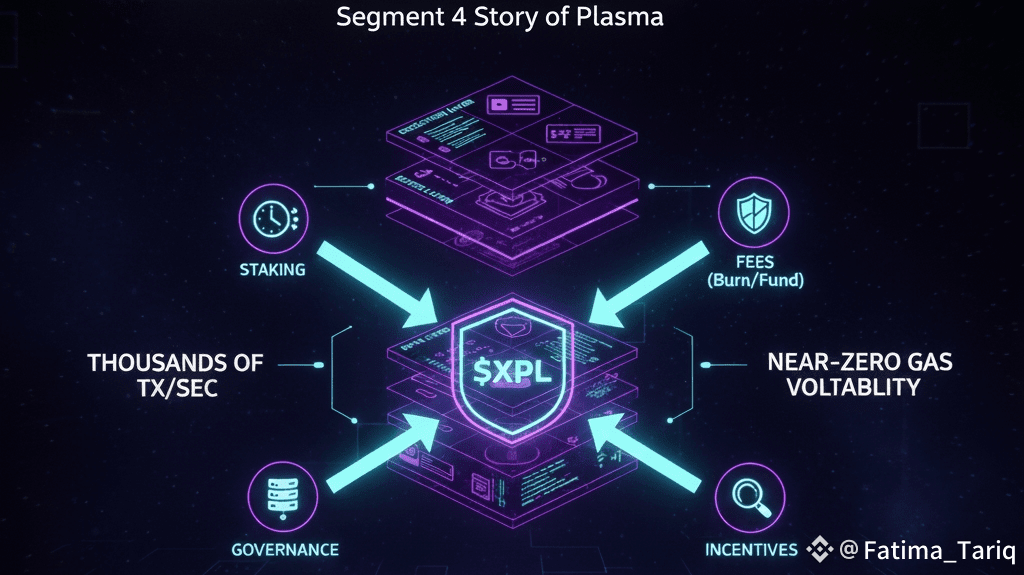
Plasma’s network is built on a modular foundation that separates three essential layers:Execution Layer: Handles transactions and smart contract operations with full EVM compatibility.Settlement Layer: Finalizes transactions and maintains verifiable consensus.Data Layer: Stores state proofs and provides transparency across the ecosystem.This tri-layer design allows Plasma to achieve massive throughput while retaining cryptographic security.Instead of forcing all computation through a single bottleneck, tasks are distributed intelligently.The result: thousands of stablecoin transactions per second, verified and finalized faster than a Visa swipe — with near-zero gas volatility.This is how Plasma turns scalability from a theoretical concept into a lived experience.For stablecoin issuers, it means certainty.For users, it means predictability.For the economy, it means real-time liquidity.
Consensus Without Compromise
At the heart of this performance lies Plasma’s consensus system — a hybrid model combining Delegated Proof of Stake (DPoS) efficiency with Byzantine Fault Tolerance (BFT) security.Validators secure the network by staking $XPL, ensuring that every node has a financial incentive to act honestly.Blocks finalize in under two seconds, and deterministic finality eliminates the risk of reorganization or double-spend.In other words, once a transaction is confirmed, it’s immutable — a level of reliability traditional financial systems spend billions to approximate.This hybrid model allows Plasma to maintain high speed without compromising decentralization, setting it apart from the performance-heavy but centralized alternatives that dominate the current landscape.
The Economic Core: $XPL Token
Xpl is not just a transactional asset — it is the economic engine that fuels, secures, and governs the Plasma network.Its functions span across four critical pillars:Staking: Validators lock $XPL to participate in consensus and earn rewards proportional to their contribution.Fee Settlement: All network fees are denominated in $XPL, ensuring consistent demand tied to transaction volume.Governance: Holders can propose and vote on network upgrades, treasury allocations, and ecosystem grants.Incentives: Developers, liquidity providers, and institutional partners earn $XPL as rewards for ecosystem participation.Unlike the inflationary models of earlier blockchains, Plasma’s tokenomics are designed for sustainability and utility-based value accrual.Every unit of network activity — from a remittance payment to an institutional settlement — generates native economic pressure on $XPL.
Token Velocity and Value Anchoring
In many networks, high token velocity (rapid movement of tokens between users) dilutes value capture.Plasma addresses this with an embedded sink-and-cycle model:transaction fees in xpl are partially burned, permanently reducing circulating supply.A portion of fees funds the validator pool and ecosystem treasury.The rest circulates back to stakers, ensuring long-term alignment between network usage and token value.This design means that as transaction volume scales, supply gradually tightens — anchoring value directly to network performance rather than speculative hype.The more stablecoins flow, the stronger the economic gravity surrounding $XPL.It’s an architecture where activity equals value, creating a feedback loop between infrastructure growth and token stability.
Governance and the Treasury Layer
True decentralization requires more than open code — it requires open governance.Plasma’s on-chain governance model is designed around participatory economics rather than symbolic voting.xpl holders can propose and vote on:Validator incentive adjustments,Treasury-funded ecosystem projectsNetwork parameter updates (e.g., block size, gas scaling)Strategic partnerships and integrationsmThe Plasma Treasury, funded through a percentage of on-chain fees, acts as the ecosystem’s growth fund — financing public goods, developer grants, and liquidity programs.This creates an evolving ecosystem where decisions emerge from the participants who actually use and secure the network, not from a centralized foundation.
Interoperability by Design
Plasma doesn’t exist in isolation — it’s built to interact.Its cross-chain communication protocol (CCP) enables stablecoin and asset transfers across major chains including Ethereum, BNB Chain, and Arbitrum.Rather than rely on external bridges (which introduce custodial risk), CCP uses native proof relays verified directly by validators.This interoperability ensures that liquidity isn’t trapped within a single ecosystem.Stablecoins on Plasma remain part of a larger, global network — exchangeable, composable, and portable without trust assumptions.It’s a structural answer to one of crypto’s oldest problems: fragmented liquidity.
Security and Risk Resilience
Financial infrastructure must be antifragile — capable of not just withstanding shocks, but improving from them.Plasma incorporates multi-layered security through validator staking, slashing mechanisms, and continuous audit trails.Every validator node must post collateral in $XPL, aligning incentives through real economic stakes.If a node acts maliciously, its stake is forfeited — instantly restoring network integrity.Additionally, Plasma’s block attestations and proof logs are open to third-party auditors in real time.This transparency transforms security from a promise into a verifiable, ongoing process.In a world where financial trust is often opaque, Plasma makes it mathematical.
Building the Monetary Internet
What Plasma is constructing goes beyond blockchain — it’s a monetary operating layer for the internet itself.It merges the performance of fintech with the openness of decentralized architecture.Each line of code serves a purpose: to make money move naturally, efficiently, and securely — across every border, chain, and institution.If Ethereum was the dawn of decentralized computation, Plasma represents the dawn of decentralized liquidity.The foundation is no longer speculation; it’s settlement.And the asset behind it — xpl — is more than a token; it’s a claim on the infrastructure of tomorrow’s financial world.
#PrivacyCoinSurge #SolanaETFInflows #LearnWithFatima
Where Money Truly Moves: How Plasma ($XPL) Is Building Global Liquidity Layer for Stablecoin ERA
| #Plasma | @Plasma | $XPL |
Segment 4️⃣ 👇🏻 learn here main flowing part of the plasma story :"Monetary Architecture and the Role of $XPL "
Behind every monetary revolution lies an invisible structure — a design that determines how trust, speed, and value circulate.In traditional finance, this role is played by central banks, clearinghouses, and payment processors.in Plasma, it is encoded directly into protocol logic.This architecture defines not only how stablecoins move, but how the entire liquidity layer sustains itself without friction or failure.
The Structural Blueprint
Plasma’s network is built on a modular foundation that separates three essential layers:Execution Layer: Handles transactions and smart contract operations with full EVM compatibility.Settlement Layer: Finalizes transactions and maintains verifiable consensus.Data Layer: Stores state proofs and provides transparency across the ecosystem.This tri-layer design allows Plasma to achieve massive throughput while retaining cryptographic security.Instead of forcing all computation through a single bottleneck, tasks are distributed intelligently.The result: thousands of stablecoin transactions per second, verified and finalized faster than a Visa swipe — with near-zero gas volatility.This is how Plasma turns scalability from a theoretical concept into a lived experience.For stablecoin issuers, it means certainty.For users, it means predictability.For the economy, it means real-time liquidity.
Consensus Without Compromise
At the heart of this performance lies Plasma’s consensus system — a hybrid model combining Delegated Proof of Stake (DPoS) efficiency with Byzantine Fault Tolerance (BFT) security.Validators secure the network by staking $XPL , ensuring that every node has a financial incentive to act honestly.Blocks finalize in under two seconds, and deterministic finality eliminates the risk of reorganization or double-spend.In other words, once a transaction is confirmed, it’s immutable — a level of reliability traditional financial systems spend billions to approximate.This hybrid model allows Plasma to maintain high speed without compromising decentralization, setting it apart from the performance-heavy but centralized alternatives that dominate the current landscape.
The Economic Core: $XPL Token
Xpl is not just a transactional asset — it is the economic engine that fuels, secures, and governs the Plasma network.Its functions span across four critical pillars:Staking: Validators lock $XPL to participate in consensus and earn rewards proportional to their contribution.Fee Settlement: All network fees are denominated in $XPL , ensuring consistent demand tied to transaction volume.Governance: Holders can propose and vote on network upgrades, treasury allocations, and ecosystem grants.Incentives: Developers, liquidity providers, and institutional partners earn $XPL as rewards for ecosystem participation.Unlike the inflationary models of earlier blockchains, Plasma’s tokenomics are designed for sustainability and utility-based value accrual.Every unit of network activity — from a remittance payment to an institutional settlement — generates native economic pressure on $XPL .
Token Velocity and Value Anchoring
In many networks, high token velocity (rapid movement of tokens between users) dilutes value capture.Plasma addresses this with an embedded sink-and-cycle model:transaction fees in xpl are partially burned, permanently reducing circulating supply.A portion of fees funds the validator pool and ecosystem treasury.The rest circulates back to stakers, ensuring long-term alignment between network usage and token value.This design means that as transaction volume scales, supply gradually tightens — anchoring value directly to network performance rather than speculative hype.The more stablecoins flow, the stronger the economic gravity surrounding $XPL .It’s an architecture where activity equals value, creating a feedback loop between infrastructure growth and token stability.
Governance and the Treasury Layer
True decentralization requires more than open code — it requires open governance.Plasma’s on-chain governance model is designed around participatory economics rather than symbolic voting.xpl holders can propose and vote on:Validator incentive adjustments,Treasury-funded ecosystem projectsNetwork parameter updates (e.g., block size, gas scaling)Strategic partnerships and integrationsmThe Plasma Treasury, funded through a percentage of on-chain fees, acts as the ecosystem’s growth fund — financing public goods, developer grants, and liquidity programs.This creates an evolving ecosystem where decisions emerge from the participants who actually use and secure the network, not from a centralized foundation.
Interoperability by Design
Plasma doesn’t exist in isolation — it’s built to interact.Its cross-chain communication protocol (CCP) enables stablecoin and asset transfers across major chains including Ethereum, BNB Chain, and Arbitrum.Rather than rely on external bridges (which introduce custodial risk), CCP uses native proof relays verified directly by validators.This interoperability ensures that liquidity isn’t trapped within a single ecosystem.Stablecoins on Plasma remain part of a larger, global network — exchangeable, composable, and portable without trust assumptions.It’s a structural answer to one of crypto’s oldest problems: fragmented liquidity.
Security and Risk Resilience
Financial infrastructure must be antifragile — capable of not just withstanding shocks, but improving from them.Plasma incorporates multi-layered security through validator staking, slashing mechanisms, and continuous audit trails.Every validator node must post collateral in $XPL , aligning incentives through real economic stakes.If a node acts maliciously, its stake is forfeited — instantly restoring network integrity.Additionally, Plasma’s block attestations and proof logs are open to third-party auditors in real time.This transparency transforms security from a promise into a verifiable, ongoing process.In a world where financial trust is often opaque, Plasma makes it mathematical.
Building the Monetary Internet
What Plasma is constructing goes beyond blockchain — it’s a monetary operating layer for the internet itself.It merges the performance of fintech with the openness of decentralized architecture.Each line of code serves a purpose: to make money move naturally, efficiently, and securely — across every border, chain, and institution.If Ethereum was the dawn of decentralized computation, Plasma represents the dawn of decentralized liquidity.The foundation is no longer speculation; it’s settlement.And the asset behind it — xpl — is more than a token; it’s a claim on the infrastructure of tomorrow’s financial world.
#PrivacyCoinSurge #SolanaETFInflows #LearnWithFatima
9
339
·
--
Dear #LearnWithFatima Family ! Here is the
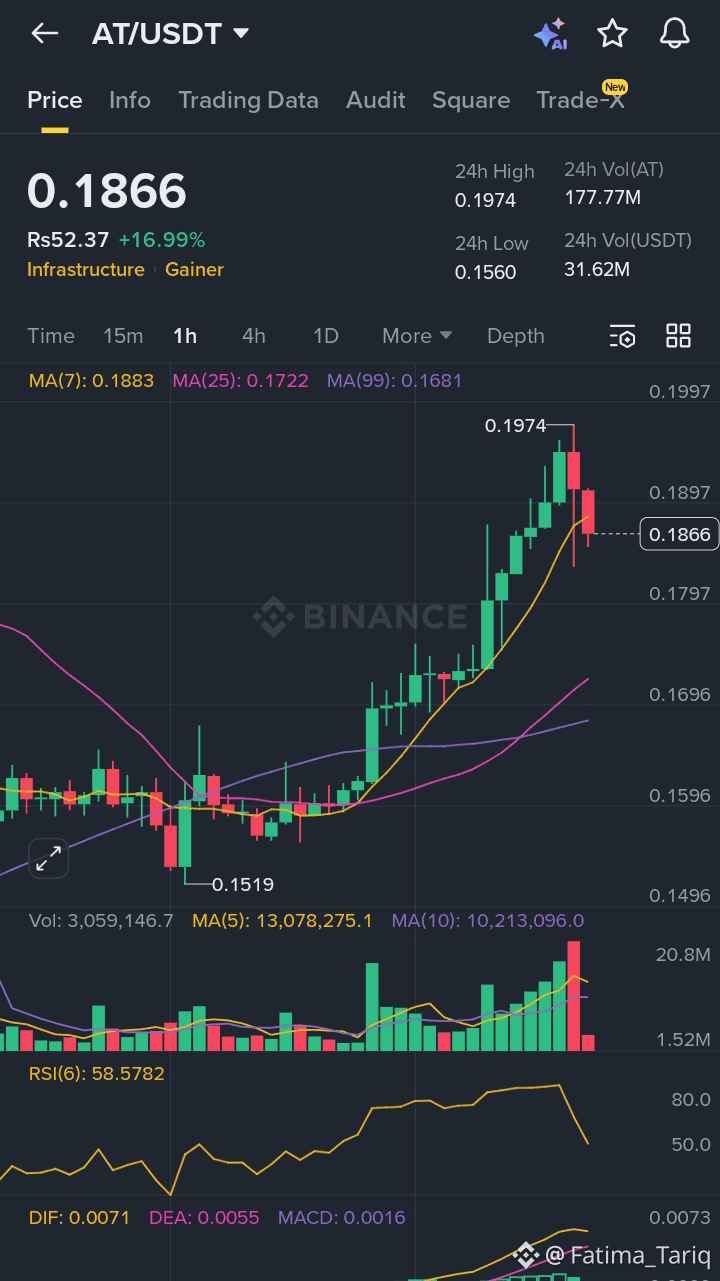
#Market_Update of $AT ( #APRO ) is seeing strong momentum right now, with the price jumping more than 22% in the last 24 hours to around $0.1888. Over the past week, it’s up nearly 90%, supported by heavy trading volume of about $72 million and a market cap near $49 million. This move comes after AT bounced strongly from its mid-December low around $0.079, showing clear bullish strength in the short term.
But as human nature in our mind one question comes what's reason behind it then here is the main reason behind this surge is real progress on the fundamentals. APRO has partnered with BNB Chain to launch an Oracle-as-a-Service, bringing real-time, verifiable data for AI-powered Web3 apps. Its focus on AI oracles, using machine learning and LLM-based agents to filter and validate data, is attracting attention. On top of that, partnerships like the one with Opinion Labs for prediction-market oracles, along with new exchange listings and inclusion in Binance HODLer Airdrops, have boosted visibility and demand.
Technically, the trend of $AT is bullish. Short-term EMAs are pointing up and MACD remains positive, while whale data also shows confidence, with a strong long bias and a long/short ratio around 2.33. However, there is a clear warning sign: the RSI is extremely high at 87.9, meaning the token is heavily overbought. Price is also touching the upper Bollinger Band, which often leads to short-term pullbacks. While the overall setup looks strong, a small correction toward support near $0.14 would be healthy, especially with broader market sentiment still in fear. Patience and risk management are key here.#
#APRO $AT #TradingSignals
1
1
11
2.3k
·
--
❤️🔥🕺Dear #LearnWithFatima Family !🕺❤️🔥
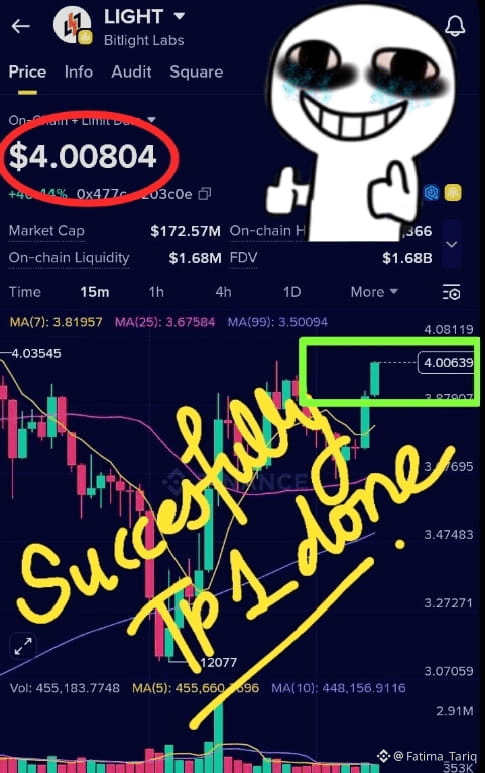
🎉🙌🏻 TP HIT! successfully 😁 🎯
Profits booked, target smashed! 🥳💃🏻
Pure joy — patience + plan = WIN!
#Write2Earn #LIGHT #Market_Update #TradingSignals $LIGHT
❤️🔥🕺Dear #LearnWithFatima Family !🕺❤️🔥
🎉🙌🏻 TP HIT! successfully 😁 🎯
Profits booked, target smashed! 🥳💃🏻
Pure joy — patience + plan = WIN!
#Write2Earn #LIGHT #Market_Update #TradingSignals $LIGHT
🎉🙌🏻 TP HIT! successfully 😁 🎯
Profits booked, target smashed! 🥳💃🏻
Pure joy — patience + plan = WIN!
#Write2Earn #LIGHT #Market_Update #TradingSignals $LIGHT
Fatima_Tariq
·
--
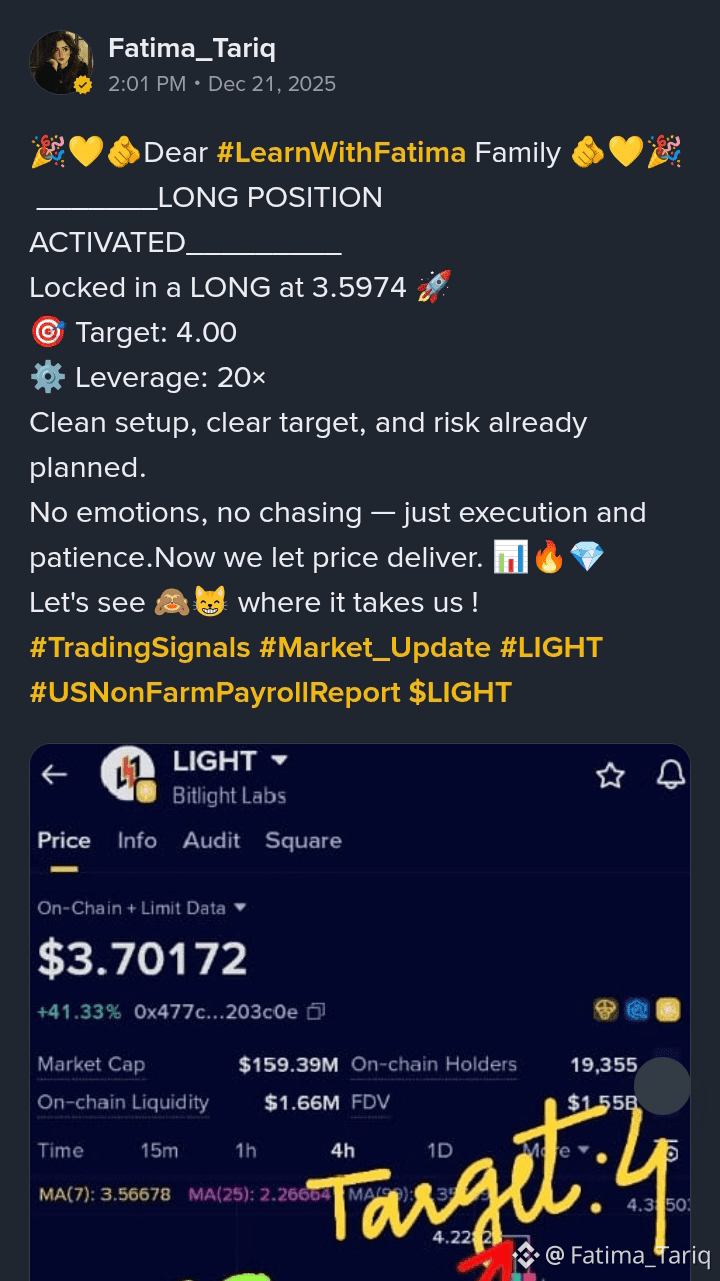
🎉💛🫵Dear #LearnWithFatima Family 🫵💛🎉
_______LONG POSITION ACTIVATED_________
Locked in a LONG at 3.5974 🚀
🎯 Target: 4.00
⚙️ Leverage: 20×
Clean setup, clear target, and risk already planned.
No emotions, no chasing — just execution and patience.Now we let price deliver. 📊🔥💎
Let's see 🙈😸 where it takes us !
#TradingSignals #Market_Update #LIGHT #USNonFarmPayrollReport $LIGHT
1
3
517
·
--
Dear #LearnWithFatima family !Totally blind scalping 🙃! don't know where it will take to me !$CVX #CVX #WriteToEarnUpgrade #CPIWatch
Dear #LearnWithFatima family !Totally blind scalping 🙃! don't know where it will take to me !$CVX #CVX #WriteToEarnUpgrade #CPIWatch
2
419
Log in to explore more content
Join global crypto users on Binance Square
⚡️ Get latest and useful information about crypto.
💬 Trusted by the world’s largest crypto exchange.
👍 Discover real insights from verified creators.
Email / Phone number
Trending Topics
1
#AppleReportsMixedResults
325 views
54 Discussing
2
#BinanceWithdrawalScamWarning
66,473 views
860 Discussing
3
#USMidtermElections
643,943 views
3,407 Discussing
4
#USOctoberNFP-AreRateCutsStillPossible
70,762 views
663 Discussing
5
#Verify1to1BinanceReserves
60,333 views
490 Discussing
6
#BinanceRestores28FiatWithdrawals
193,226 views
1,157 Discussing
7
#NasdaqFalls1.07%AsChipStocksPlunge
32 views
14 Discussing
8
#StrategyRepurchases$208MSTRCAdds811Bitcoin
8,925 views
21 Discussing
9
#FATFLaunchesReviewOfCryptoHubsMoneyLaunderingControls
1,110 views
26 Discussing
10
#BinanceProcesses$4.65BWithdrawals
136,165 views
373 Discussing