

#cryptoregulation
cryptoregulation
16.9M views
48,002 Discussing
Hot
Latest

NEWS | CFTC Unveils Plan to Bring Crypto Exchanges Under Federal Oversight
What happened: The CFTC is seeking public comment on a framework that would create a new federal license for crypto exchanges, with leverage offers as the trigger for…
WPO Take: Neutral pending implementation. The update can change compliance duties and institutional participation. The practical market effect depends on who is covered, when the measure takes effect,…
Upside case: the measure provides usable clarity and expands compliant institutional access.
Downside risk: the measure restricts access, raises costs, or broadly covers crypto products.
Market read: No reliable asset-specific market reaction is available in the current snapshot; impact is assessed from the policy or…
Source: Commodity Futures Trading Commission…; confidence 82/100.
#wpo_report #CryptoRegulation #Blockchain
Information only; not financial advice.
NEWS | CFTC Unveils Plan to Bring Crypto Exchanges Under Federal Oversight
What happened: The CFTC is seeking public comment on a framework that would create a new federal license for crypto exchanges, with leverage offers as the trigger for…
WPO Take: Neutral pending implementation. The update can change compliance duties and institutional participation. The practical market effect depends on who is covered, when the measure takes effect,…
Upside case: the measure provides usable clarity and expands compliant institutional access.
Downside risk: the measure restricts access, raises costs, or broadly covers crypto products.
Market read: No reliable asset-specific market reaction is available in the current snapshot; impact is assessed from the policy or…
Source: Commodity Futures Trading Commission…; confidence 82/100.
#wpo_report #CryptoRegulation #Blockchain
Information only; not financial advice.
What happened: The CFTC is seeking public comment on a framework that would create a new federal license for crypto exchanges, with leverage offers as the trigger for…
WPO Take: Neutral pending implementation. The update can change compliance duties and institutional participation. The practical market effect depends on who is covered, when the measure takes effect,…
Upside case: the measure provides usable clarity and expands compliant institutional access.
Downside risk: the measure restricts access, raises costs, or broadly covers crypto products.
Market read: No reliable asset-specific market reaction is available in the current snapshot; impact is assessed from the policy or…
Source: Commodity Futures Trading Commission…; confidence 82/100.
#wpo_report #CryptoRegulation #Blockchain
Information only; not financial advice.
129

Advocacy group Better Markets is pushing back against the CFTC's retail crypto oversight framework, arguing the SEC offers superior investor protection. While crypto advocates often favor the CFTC for its perceived regulatory clarity and commodity approach, this debate highlights the ongoing turf war in Washington. Ultimately, whichever agency wins jurisdiction will permanently reshape how everyday traders access digital assets, impacting compliance costs and market liquidity across the entire sector. #CryptoRegulation #SEC #CFTC
Advocacy group Better Markets is pushing back against the CFTC's retail crypto oversight framework, arguing the SEC offers superior investor protection. While crypto advocates often favor the CFTC for its perceived regulatory clarity and commodity approach, this debate highlights the ongoing turf war in Washington. Ultimately, whichever agency wins jurisdiction will permanently reshape how everyday traders access digital assets, impacting compliance costs and market liquidity across the entire sector. #CryptoRegulation #SEC #CFTC

🇧🇷 Brazil users, note the date: Nov 1.
Binance will require a purpose and counterparty details for every international crypto transfer.
Over $50K: choose from 96 purpose codes Some transfers capped at $100K
Missing information means your withdrawal won't go through.
#Brazil #Binance #CryptoRegulation
🇧🇷 Brazil users, note the date: Nov 1.
Binance will require a purpose and counterparty details for every international crypto transfer.
Over $50K: choose from 96 purpose codes Some transfers capped at $100K
Missing information means your withdrawal won't go through.
#Brazil #Binance #CryptoRegulation
Binance will require a purpose and counterparty details for every international crypto transfer.
Over $50K: choose from 96 purpose codes Some transfers capped at $100K
Missing information means your withdrawal won't go through.
#Brazil #Binance #CryptoRegulation


·
--
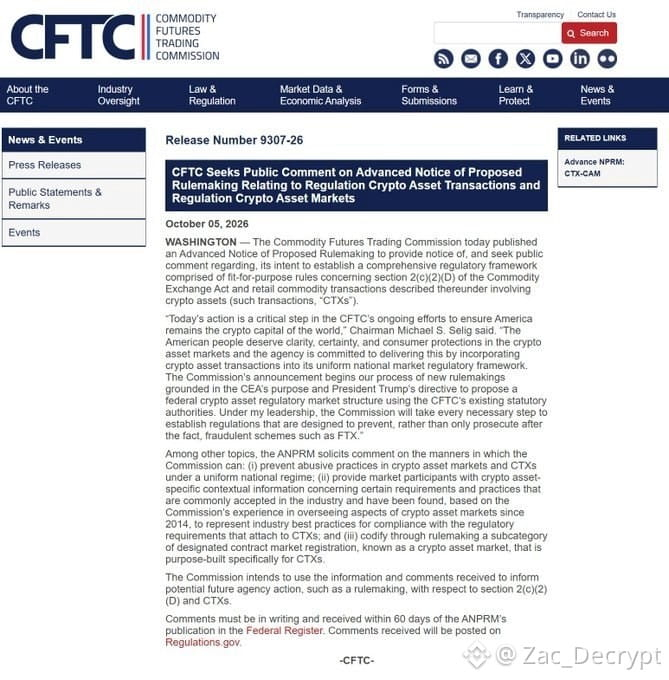
🇺🇸 CFTC MOVES TOWARD NEW CRYPTO MARKET RULES
The CFTC has proposed a new regulatory framework for crypto asset transactions and markets
• CFTC is seeking public comments on the proposal
• Framework would cover certain retail crypto transactions
• Focus on preventing abusive practices and strengthening consumer protections
• Proposal also considers a dedicated crypto asset market category
• Public comments will be accepted for 60 days
This is an advanced notice of proposed rulemaking (ANPRM) - not final rules yet 🇺🇸₿
#CFTC #CryptoRegulation
🇺🇸 CFTC MOVES TOWARD NEW CRYPTO MARKET RULES
The CFTC has proposed a new regulatory framework for crypto asset transactions and markets
• CFTC is seeking public comments on the proposal
• Framework would cover certain retail crypto transactions
• Focus on preventing abusive practices and strengthening consumer protections
• Proposal also considers a dedicated crypto asset market category
• Public comments will be accepted for 60 days
This is an advanced notice of proposed rulemaking (ANPRM) - not final rules yet 🇺🇸₿
#CFTC #CryptoRegulation
The CFTC has proposed a new regulatory framework for crypto asset transactions and markets
• CFTC is seeking public comments on the proposal
• Framework would cover certain retail crypto transactions
• Focus on preventing abusive practices and strengthening consumer protections
• Proposal also considers a dedicated crypto asset market category
• Public comments will be accepted for 60 days
This is an advanced notice of proposed rulemaking (ANPRM) - not final rules yet 🇺🇸₿
#CFTC #CryptoRegulation
69
Big win for crypto self-custody as U.S. regulators officially drop the controversial reporting rule that targeted private wallets and mixing services. For years, this proposal loomed like a dark cloud over decentralized finance, threatening user privacy. Now that FinCEN has officially withdrawn it, builders and holders can breathe easier. It is a massive step forward for financial sovereignty, proving that community pushback and advocacy actually work in shaping regulatory outcomes. $BTC $ETH #CryptoRegulation #SelfCustody #Privacy
Big win for crypto self-custody as U.S. regulators officially drop the controversial reporting rule that targeted private wallets and mixing services. For years, this proposal loomed like a dark cloud over decentralized finance, threatening user privacy. Now that FinCEN has officially withdrawn it, builders and holders can breathe easier. It is a massive step forward for financial sovereignty, proving that community pushback and advocacy actually work in shaping regulatory outcomes. $BTC $ETH #CryptoRegulation #SelfCustody #Privacy
17

·
--
🇺🇸 The CFTC isn't waiting for Congress anymore.
After the Clarity Act stalled in the Senate in September, CFTC Chair Michael Selig says the agency will build a federal crypto pathway using the authority it already has.
On Monday the CFTC opened a 60-day public comment period on two proposals:
📌 Regulation CTX for retail crypto transactions, including leveraged trading
📌 Regulation CAM for crypto markets
Ideas on the table include proof of reserves, segregated customer funds, and registered intermediaries.
Clear rules could pull more institutional money into $BTC, $ETH and $SOL. Or more red tape could slow everything down. 🤔
Bullish catalyst or new headache? Drop your take below 👇
#CFTC #CryptoRegulation #Bitcoin
🇺🇸 The CFTC isn't waiting for Congress anymore.
After the Clarity Act stalled in the Senate in September, CFTC Chair Michael Selig says the agency will build a federal crypto pathway using the authority it already has.
On Monday the CFTC opened a 60-day public comment period on two proposals:
📌 Regulation CTX for retail crypto transactions, including leveraged trading
📌 Regulation CAM for crypto markets
Ideas on the table include proof of reserves, segregated customer funds, and registered intermediaries.
Clear rules could pull more institutional money into $BTC , $ETH and $SOL . Or more red tape could slow everything down. 🤔
Bullish catalyst or new headache? Drop your take below 👇
#CFTC #CryptoRegulation #Bitcoin
After the Clarity Act stalled in the Senate in September, CFTC Chair Michael Selig says the agency will build a federal crypto pathway using the authority it already has.
On Monday the CFTC opened a 60-day public comment period on two proposals:
📌 Regulation CTX for retail crypto transactions, including leveraged trading
📌 Regulation CAM for crypto markets
Ideas on the table include proof of reserves, segregated customer funds, and registered intermediaries.
Clear rules could pull more institutional money into $BTC , $ETH and $SOL . Or more red tape could slow everything down. 🤔
Bullish catalyst or new headache? Drop your take below 👇
#CFTC #CryptoRegulation #Bitcoin
58
Rain is pushing ahead with a US trust bank charter application, even as community banks launch legal challenges against OCC crypto rules. It’s a bold regulatory gamble. While federal oversight could unlock massive institutional trust, the timing invites intense scrutiny. If this strategy pays off, it sets a major precedent for crypto banking; if not, it hits a wall of red tape. The clash between traditional banking and digital assets is escalating fast. #CryptoRegulation #Banking #OCC
Rain is pushing ahead with a US trust bank charter application, even as community banks launch legal challenges against OCC crypto rules. It’s a bold regulatory gamble. While federal oversight could unlock massive institutional trust, the timing invites intense scrutiny. If this strategy pays off, it sets a major precedent for crypto banking; if not, it hits a wall of red tape. The clash between traditional banking and digital assets is escalating fast. #CryptoRegulation #Banking #OCC
44

🚨 CLARITY ACT STALLS — CFTC MOVES AHEAD WITH NEW CRYPTO RULES
Summary:
The U.S. Commodity Futures Trading Commission has proposed a new round of crypto-market rules following the stalled CLARITY Act, with Chairman Michael Selig saying the effort is “just the beginning.” "Benzinga source" (https://reference-url-citation.invalid/0)
Key Points:
🔹 CFTC proposed its first major crypto market-structure rules
🔹 Proposals cover crypto trading platforms registered with the CFTC
🔹 Framework includes margined, leveraged and financed crypto trading
🔹 BTC and ETH are among the assets discussed
🔹 Spot crypto trading is not comprehensively covered
🔹 The proposals are still subject to public comment
Market Insight:
The stalled CLARITY Act has not stopped U.S. crypto rulemaking. The CFTC is moving forward within its existing authority, while broader spot-market regulation still depends on congressional action.
Assets to Watch: BTC • ETH • XRP
#CryptoRegulation #CFTC #bitcoin #Ethereum #Crypto $BTC $ETH $XRP
{future}(XRPUSDT)
{future}(ETHUSDT)
{future}(BTCUSDT)
🚨 CLARITY ACT STALLS — CFTC MOVES AHEAD WITH NEW CRYPTO RULES
Summary:
The U.S. Commodity Futures Trading Commission has proposed a new round of crypto-market rules following the stalled CLARITY Act, with Chairman Michael Selig saying the effort is “just the beginning.” "Benzinga source" (https://reference-url-citation.invalid/0)
Key Points:
🔹 CFTC proposed its first major crypto market-structure rules
🔹 Proposals cover crypto trading platforms registered with the CFTC
🔹 Framework includes margined, leveraged and financed crypto trading
🔹 BTC and ETH are among the assets discussed
🔹 Spot crypto trading is not comprehensively covered
🔹 The proposals are still subject to public comment
Market Insight:
The stalled CLARITY Act has not stopped U.S. crypto rulemaking. The CFTC is moving forward within its existing authority, while broader spot-market regulation still depends on congressional action.
Assets to Watch: BTC • ETH • XRP
#CryptoRegulation #CFTC #bitcoin #Ethereum #Crypto $BTC $ETH $XRP
Summary:
The U.S. Commodity Futures Trading Commission has proposed a new round of crypto-market rules following the stalled CLARITY Act, with Chairman Michael Selig saying the effort is “just the beginning.” "Benzinga source" (https://reference-url-citation.invalid/0)
Key Points:
🔹 CFTC proposed its first major crypto market-structure rules
🔹 Proposals cover crypto trading platforms registered with the CFTC
🔹 Framework includes margined, leveraged and financed crypto trading
🔹 BTC and ETH are among the assets discussed
🔹 Spot crypto trading is not comprehensively covered
🔹 The proposals are still subject to public comment
Market Insight:
The stalled CLARITY Act has not stopped U.S. crypto rulemaking. The CFTC is moving forward within its existing authority, while broader spot-market regulation still depends on congressional action.
Assets to Watch: BTC • ETH • XRP
#CryptoRegulation #CFTC #bitcoin #Ethereum #Crypto $BTC $ETH $XRP

87

·
--
🚨 Crypto & U.S. Elections
Fairshake, a major crypto political action committee, is backing 32 House incumbents — 13 Democrats and 19 Republicans — who support pro-crypto policies. The move highlights the crypto industry's growing effort to build bipartisan support for crypto legislation in the U.S. 🇺🇸₿
#Crypto #Bitcoin #crypto #btc
{spot}(BTCUSDT)
#CryptoRegulation
🚨 Crypto & U.S. Elections
Fairshake, a major crypto political action committee, is backing 32 House incumbents — 13 Democrats and 19 Republicans — who support pro-crypto policies. The move highlights the crypto industry's growing effort to build bipartisan support for crypto legislation in the U.S. 🇺🇸₿
#Crypto #Bitcoin #crypto #btc
#CryptoRegulation
Fairshake, a major crypto political action committee, is backing 32 House incumbents — 13 Democrats and 19 Republicans — who support pro-crypto policies. The move highlights the crypto industry's growing effort to build bipartisan support for crypto legislation in the U.S. 🇺🇸₿
#Crypto #Bitcoin #crypto #btc
#CryptoRegulation
70
The CFTC is making a bold play to recapture offshore volume by proposing a federal framework for retail leverage through Reg CTX and CAM. With Congress dragging its feet on market structure, this move could finally repatriate massive liquidity back to US shores. If approved, regulated exchanges might soon offer competitive leverage legally, fundamentally shifting how domestic retail traders access high-risk crypto derivatives. #CFTC #CryptoRegulation #Trading
The CFTC is making a bold play to recapture offshore volume by proposing a federal framework for retail leverage through Reg CTX and CAM. With Congress dragging its feet on market structure, this move could finally repatriate massive liquidity back to US shores. If approved, regulated exchanges might soon offer competitive leverage legally, fundamentally shifting how domestic retail traders access high-risk crypto derivatives. #CFTC #CryptoRegulation #Trading
Crypto super PAC Fairshake is doubling down on political influence by backing 32 House candidates who supported the 2025 CLARITY bill. While this market structure legislation remains stalled in the Senate, these strategic campaign investments show the industry is actively building a pro-crypto legislative firewall. By rewarding lawmakers who push for regulatory clarity, digital asset advocates are turning campaign finance into a powerful tool for long-term policy reform in Washington. #CryptoRegulation #Fairshake #USPolitics
Crypto super PAC Fairshake is doubling down on political influence by backing 32 House candidates who supported the 2025 CLARITY bill. While this market structure legislation remains stalled in the Senate, these strategic campaign investments show the industry is actively building a pro-crypto legislative firewall. By rewarding lawmakers who push for regulatory clarity, digital asset advocates are turning campaign finance into a powerful tool for long-term policy reform in Washington. #CryptoRegulation #Fairshake #USPolitics
FinCEN just dropped its heavy-handed crypto mixing and unhosted wallet rules, signaling a major shift toward deregulation under the current administration. While regulators are stepping back, privacy remains a double-edged sword for the market. Expect intense scrutiny to shift toward compliance tools, but this move undeniably relieves immediate regulatory pressure on self-custody and transaction privacy. Decentralization just scored a quiet win in the US. #CryptoRegulation #Privacy #DeFi
FinCEN just dropped its heavy-handed crypto mixing and unhosted wallet rules, signaling a major shift toward deregulation under the current administration. While regulators are stepping back, privacy remains a double-edged sword for the market. Expect intense scrutiny to shift toward compliance tools, but this move undeniably relieves immediate regulatory pressure on self-custody and transaction privacy. Decentralization just scored a quiet win in the US. #CryptoRegulation #Privacy #DeFi
Traditional banking institutions are fighting hard to block the OCC from granting federal charters to crypto firms, but advocacy groups are pushing right back. This turf war highlights how traditional finance feels threatened by regulated digital assets entering the mainstream. If crypto companies successfully secure these charters, it paves the way for deeper integration and institutional legitimacy. The regulatory battle lines are clearly drawn, and the outcome will shape the future of banking. #CryptoRegulation #Banking #OCC
Traditional banking institutions are fighting hard to block the OCC from granting federal charters to crypto firms, but advocacy groups are pushing right back. This turf war highlights how traditional finance feels threatened by regulated digital assets entering the mainstream. If crypto companies successfully secure these charters, it paves the way for deeper integration and institutional legitimacy. The regulatory battle lines are clearly drawn, and the outcome will shape the future of banking. #CryptoRegulation #Banking #OCC
Fairshake is making bold moves in Washington, dropping a massive backing list for over 30 U.S. House incumbents. By splitting substantial funds evenly across party lines, crypto is proving it wants bipartisan staying power. This strategic deployment of capital shows the industry isn't just reacting to policy anymore—it is actively shaping the political playing field to secure long-term regulatory clarity. Smart lobbying in action. #CryptoRegulation #Fairshake #USPolitics
Fairshake is making bold moves in Washington, dropping a massive backing list for over 30 U.S. House incumbents. By splitting substantial funds evenly across party lines, crypto is proving it wants bipartisan staying power. This strategic deployment of capital shows the industry isn't just reacting to policy anymore—it is actively shaping the political playing field to secure long-term regulatory clarity. Smart lobbying in action. #CryptoRegulation #Fairshake #USPolitics
With the CLARITY Act stalled in Congress, regulators are stepping into the vacuum. Following the SEC's recent moves, the CFTC is now mobilizing its existing statutory powers to enforce a compliance framework. This regulatory tag-team approach signals that U.S. oversight is intensifying regardless of legislative gridlock. For traders and builders, navigating parallel rules from both agencies is becoming the new baseline for market participation. Stay alert as enforcement ramps up. $BTC $ETH #CryptoRegulation #SEC #CFTC
With the CLARITY Act stalled in Congress, regulators are stepping into the vacuum. Following the SEC's recent moves, the CFTC is now mobilizing its existing statutory powers to enforce a compliance framework. This regulatory tag-team approach signals that U.S. oversight is intensifying regardless of legislative gridlock. For traders and builders, navigating parallel rules from both agencies is becoming the new baseline for market participation. Stay alert as enforcement ramps up. $BTC $ETH #CryptoRegulation #SEC #CFTC
12
Big regulatory shifts are heading our way as the CFTC steps up to propose a dedicated federal framework for leveraged retail crypto trading. Introducing new rules and exchange structures could finally bring much-needed clarity to derivatives, but it also signals stricter oversight ahead. While institutional compliance costs might rise initially, establishing robust regulatory standards is a crucial step for long-term market maturation and building mainstream investor confidence. $BTC $ETH #CryptoRegulation #CFTC #Trading
Big regulatory shifts are heading our way as the CFTC steps up to propose a dedicated federal framework for leveraged retail crypto trading. Introducing new rules and exchange structures could finally bring much-needed clarity to derivatives, but it also signals stricter oversight ahead. While institutional compliance costs might rise initially, establishing robust regulatory standards is a crucial step for long-term market maturation and building mainstream investor confidence. $BTC $ETH #CryptoRegulation #CFTC #Trading
26
FinCEN dropping its aggressive crypto mixing proposal is a major quiet win for financial privacy advocates. The original plan risked overreaching and freezing entirely legal blockchain transactions just to catch bad actors. While compliance and anti-money laundering remain top priorities, regulators are finally realizing that sledgehammer policies hurt everyday users more than criminals. Striking the right balance between security and open-network freedom is essential for healthy crypto adoption moving forward. $BTC $ETH #CryptoRegulation #Privacy #FinCEN
FinCEN dropping its aggressive crypto mixing proposal is a major quiet win for financial privacy advocates. The original plan risked overreaching and freezing entirely legal blockchain transactions just to catch bad actors. While compliance and anti-money laundering remain top priorities, regulators are finally realizing that sledgehammer policies hurt everyday users more than criminals. Striking the right balance between security and open-network freedom is essential for healthy crypto adoption moving forward. $BTC $ETH #CryptoRegulation #Privacy #FinCEN
31

·
--
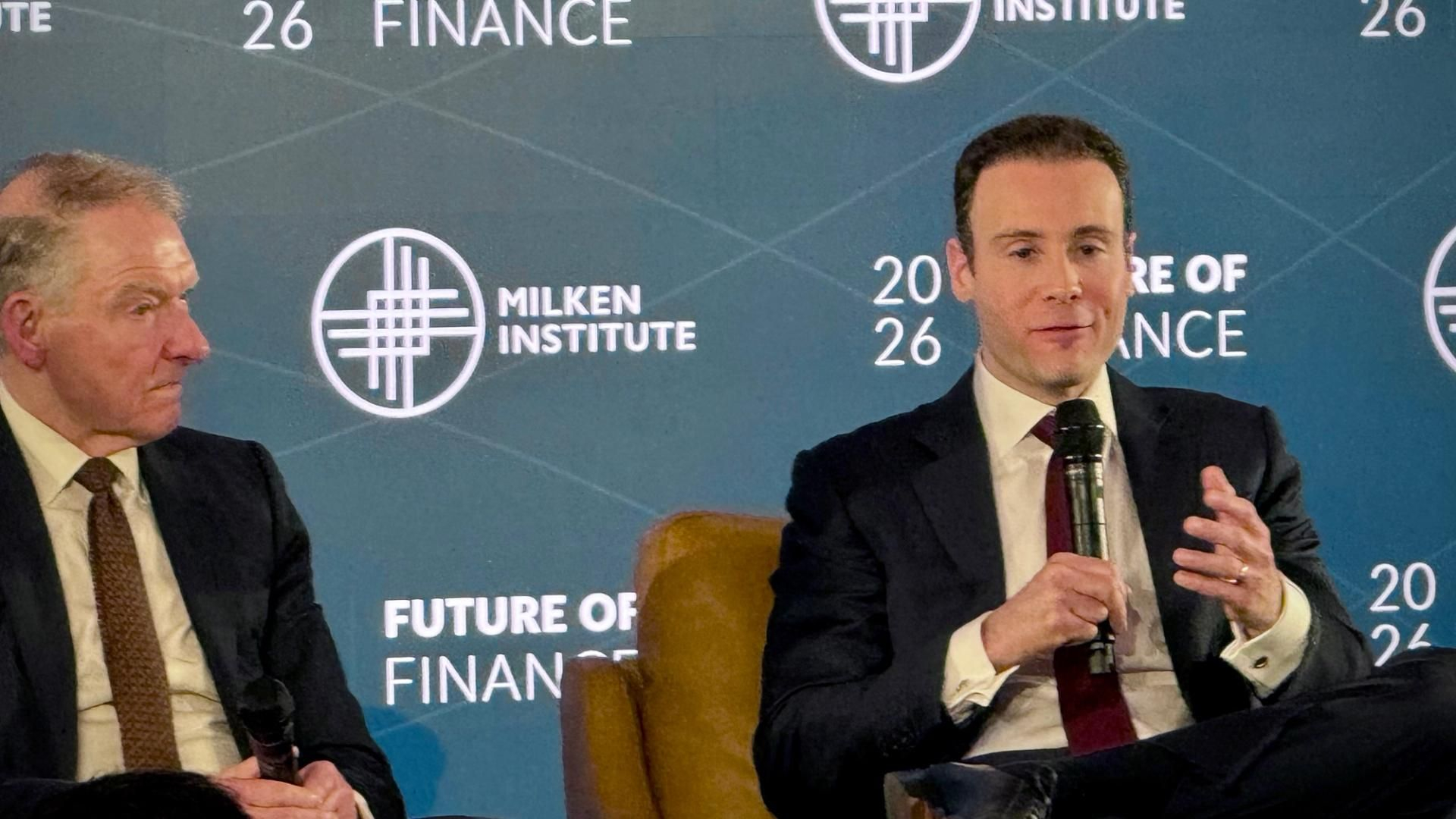
🚨 CFTC PROPOSES DERIVATIVE RULES WHILE $BTC SPOT TRADING ESCAPES FEDERAL OVERSIGHT! 💥
Washington is tightening the screws on crypto derivatives, but the CFTC just left spot market trading completely out of their proposed framework. 📊 This keeps simple spot buying outside direct agency jurisdiction, leaving the CFTC and SEC still locked in a stalemate over who governs digital assets.
💡 Derivatives desks will face heavier compliance burdens, but unencumbered spot order flow could give underlying market liquidity room to breathe. 🌊 Institutional desks watch regulatory grey zones closely when building core positions. 💬 Do you think spot immunity keeps the momentum alive or adds long-term regulatory risk? 👇
⚠️ Not financial advice. Always manage your risk. 🛡️
🏷️ #BTC #CryptoRegulation #CFTC #MarketAnalysis
⚡ 💎
🚨 CFTC PROPOSES DERIVATIVE RULES WHILE $BTC SPOT TRADING ESCAPES FEDERAL OVERSIGHT! 💥
Washington is tightening the screws on crypto derivatives, but the CFTC just left spot market trading completely out of their proposed framework. 📊 This keeps simple spot buying outside direct agency jurisdiction, leaving the CFTC and SEC still locked in a stalemate over who governs digital assets.
💡 Derivatives desks will face heavier compliance burdens, but unencumbered spot order flow could give underlying market liquidity room to breathe. 🌊 Institutional desks watch regulatory grey zones closely when building core positions. 💬 Do you think spot immunity keeps the momentum alive or adds long-term regulatory risk? 👇
⚠️ Not financial advice. Always manage your risk. 🛡️
🏷️ #BTC #CryptoRegulation #CFTC #MarketAnalysis
⚡ 💎
Washington is tightening the screws on crypto derivatives, but the CFTC just left spot market trading completely out of their proposed framework. 📊 This keeps simple spot buying outside direct agency jurisdiction, leaving the CFTC and SEC still locked in a stalemate over who governs digital assets.
💡 Derivatives desks will face heavier compliance burdens, but unencumbered spot order flow could give underlying market liquidity room to breathe. 🌊 Institutional desks watch regulatory grey zones closely when building core positions. 💬 Do you think spot immunity keeps the momentum alive or adds long-term regulatory risk? 👇
⚠️ Not financial advice. Always manage your risk. 🛡️
🏷️ #BTC #CryptoRegulation #CFTC #MarketAnalysis
⚡ 💎
21

·
--
💥 CFTC UNVEILS HISTORIC FIRST-EVER U.S. CRYPTO RULES COVERING $SOL AND $BNB 🚨
The U.S. CFTC is taking direct aim at market manipulation with its first dedicated crypto framework. 🔍 By introducing institutional registration guidelines and strict anti-fraud safeguards, regulators are essentially building the infrastructure for traditional capital allocation. 📊
Removing systemic uncertainty around market integrity paves the way for serious order flow to step in. 💡 Clear rules usually trigger front-running by smart money institutions positioning ahead of full market compliance. 🌊
💬 Does clear regulatory structure ignite the next macro bull run, or will compliance drag down DEX momentum? 👇
⚠️ Not financial advice. Always manage your risk. 🛡️
🏷️ #SOL #CryptoRegulation #BNB #Crypto #MarketInsight
🔥 💎
💥 CFTC UNVEILS HISTORIC FIRST-EVER U.S. CRYPTO RULES COVERING $SOL AND $BNB 🚨
The U.S. CFTC is taking direct aim at market manipulation with its first dedicated crypto framework. 🔍 By introducing institutional registration guidelines and strict anti-fraud safeguards, regulators are essentially building the infrastructure for traditional capital allocation. 📊
Removing systemic uncertainty around market integrity paves the way for serious order flow to step in. 💡 Clear rules usually trigger front-running by smart money institutions positioning ahead of full market compliance. 🌊
💬 Does clear regulatory structure ignite the next macro bull run, or will compliance drag down DEX momentum? 👇
⚠️ Not financial advice. Always manage your risk. 🛡️
🏷️ #SOL #CryptoRegulation #BNB #Crypto #MarketInsight
🔥 💎
The U.S. CFTC is taking direct aim at market manipulation with its first dedicated crypto framework. 🔍 By introducing institutional registration guidelines and strict anti-fraud safeguards, regulators are essentially building the infrastructure for traditional capital allocation. 📊
Removing systemic uncertainty around market integrity paves the way for serious order flow to step in. 💡 Clear rules usually trigger front-running by smart money institutions positioning ahead of full market compliance. 🌊
💬 Does clear regulatory structure ignite the next macro bull run, or will compliance drag down DEX momentum? 👇
⚠️ Not financial advice. Always manage your risk. 🛡️
🏷️ #SOL #CryptoRegulation #BNB #Crypto #MarketInsight
🔥 💎
51

·
--
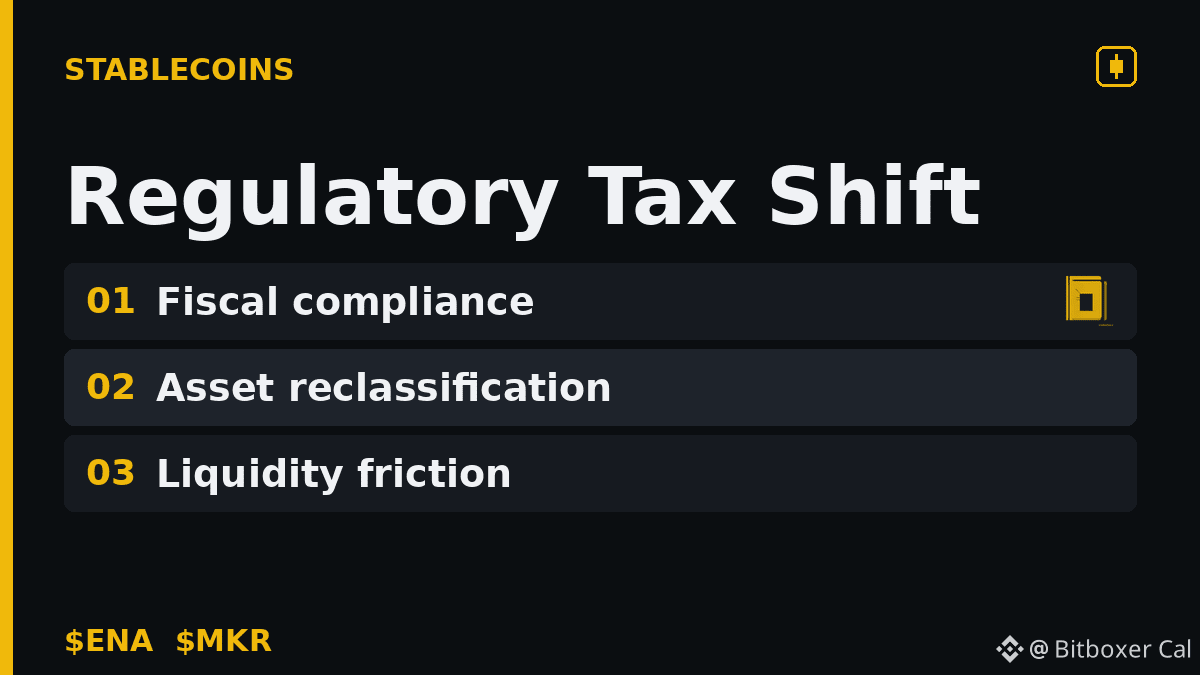
Why are global regulators suddenly treating $ENA and $MKR as taxable assets instead of digital experiments?
This shift forces stablecoins from neutral mediums into rigid financial tools. Protocols must now build tax compliance directly into their core code. Watch the liquidity impact; that is the real variable to track.
$ENA $MKR #Stablecoins #CryptoRegulation #DeFi
Why are global regulators suddenly treating $ENA and $MKR as taxable assets instead of digital experiments?
This shift forces stablecoins from neutral mediums into rigid financial tools. Protocols must now build tax compliance directly into their core code. Watch the liquidity impact; that is the real variable to track.
$ENA $MKR #Stablecoins #CryptoRegulation #DeFi
This shift forces stablecoins from neutral mediums into rigid financial tools. Protocols must now build tax compliance directly into their core code. Watch the liquidity impact; that is the real variable to track.
$ENA $MKR #Stablecoins #CryptoRegulation #DeFi
197
Log in to explore more content
Join global crypto users on Binance Square
⚡️ Get latest and useful information about crypto.
💬 Trusted by the world’s largest crypto exchange.
👍 Discover real insights from verified creators.
Email / Phone number
Trending Topics
1
#BinanceLaunchesBinanceIntelligence
100,939 views
1,075 Discussing
2
#StriveBuys2000BTCFor$169M
2,927 views
48 Discussing
3
#EvernorthXRPTreasuryCompletesSPACMerger
68,562 views
730 Discussing
4
#ADAGains10%Above$0.27
38,983 views
229 Discussing
5
#ETHUp70%InQ3ButLiquidityFalls
262,100 views
1,797 Discussing
6
#EthStakingExitQueueHits2026High
100,089 views
1,201 Discussing
7
#FedOctoberHoldOdds82.3%
106,107 views
1,159 Discussing
8
#Nikkei225Jumps2.5%ToThreeMonthHigh
106,186 views
1,372 Discussing
9
#CircleMints$2.75BUSDCOnSolanaIn7Days
2,771 views
59 Discussing
10
#DriftHackVictimsBeginClaims
218,868 views
2,037 Discussing