

#cryptohistory
cryptohistory
2.4M views
2,431 Discussing
Hot
Latest

·
--
🚨 $BTC MACRO SURVIVAL: ONLY 30% OF 2016 TOP 10 RETAINED INSTITUTIONAL DOMINANCE! 📊
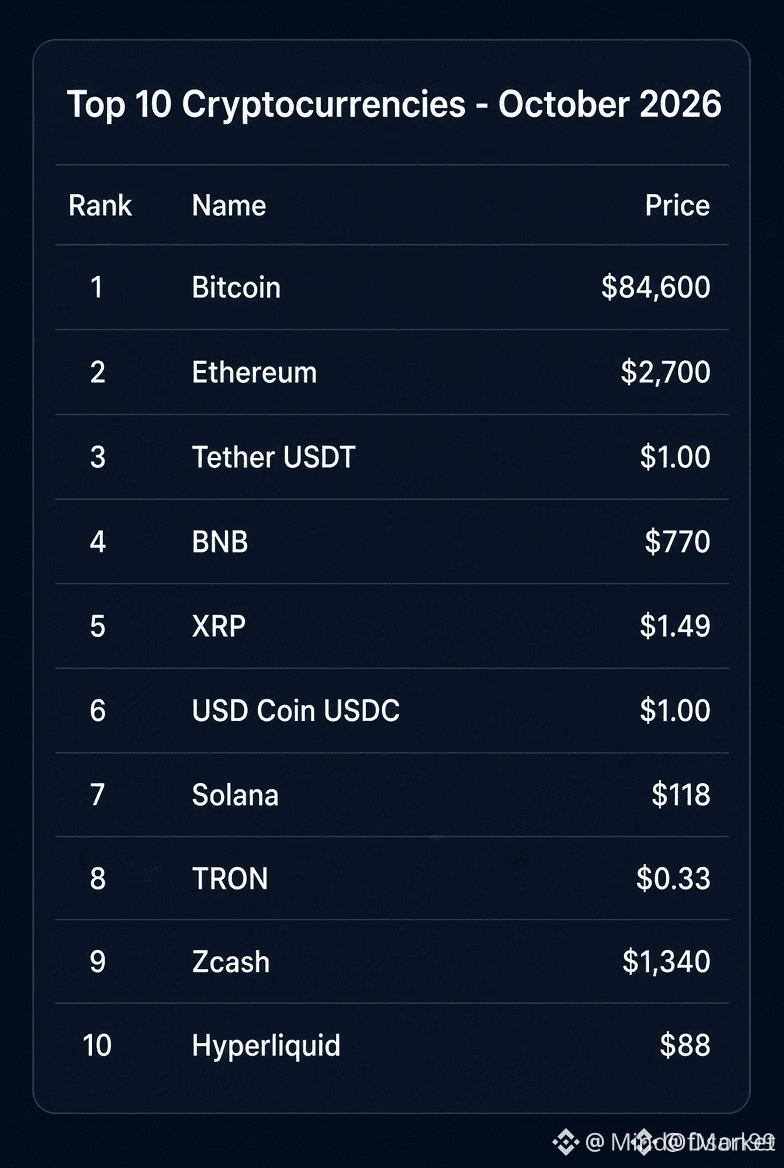
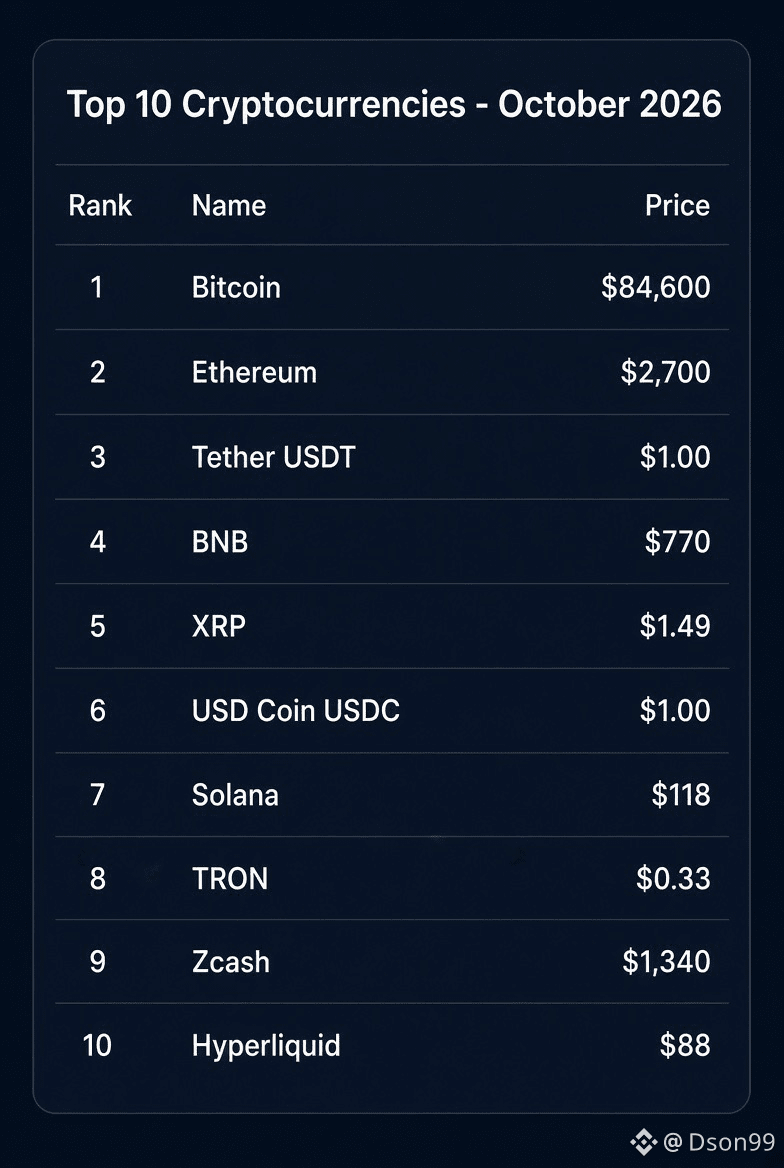
A decade of structural order flow reveals a brutal truth about crypto longevity. Back in 2016, $BTC traded at $610 and $ETH at $13, surrounded by legacy assets that faded into inefficiency. 🔍 Only premier assets with deep liquidity like $BTC at $85,000 and $ETH at $2,700 sustained long-term structural dominance.
Smart money allocates strictly toward macro volume profiles, leaving obsolete protocols in structural decay. 💡 Survival demands continuous institutional demand rather than past cycle glory. 💬 Which coin in today's top ten do you expect to remain dominant in five years? 👇
⚠️ Not financial advice. Always manage your risk. 🛡️
🏷️ #BTC #CryptoHistory #Macro #Altcoins
🎯 🦈
🚨 $BTC MACRO SURVIVAL: ONLY 30% OF 2016 TOP 10 RETAINED INSTITUTIONAL DOMINANCE! 📊
A decade of structural order flow reveals a brutal truth about crypto longevity. Back in 2016, $BTC traded at $610 and $ETH at $13, surrounded by legacy assets that faded into inefficiency. 🔍 Only premier assets with deep liquidity like $BTC at $85,000 and $ETH at $2,700 sustained long-term structural dominance.
Smart money allocates strictly toward macro volume profiles, leaving obsolete protocols in structural decay. 💡 Survival demands continuous institutional demand rather than past cycle glory. 💬 Which coin in today's top ten do you expect to remain dominant in five years? 👇
⚠️ Not financial advice. Always manage your risk. 🛡️
🏷️ #BTC #CryptoHistory #Macro #Altcoins
🎯 🦈
A decade of structural order flow reveals a brutal truth about crypto longevity. Back in 2016, $BTC traded at $610 and $ETH at $13, surrounded by legacy assets that faded into inefficiency. 🔍 Only premier assets with deep liquidity like $BTC at $85,000 and $ETH at $2,700 sustained long-term structural dominance.
Smart money allocates strictly toward macro volume profiles, leaving obsolete protocols in structural decay. 💡 Survival demands continuous institutional demand rather than past cycle glory. 💬 Which coin in today's top ten do you expect to remain dominant in five years? 👇
⚠️ Not financial advice. Always manage your risk. 🛡️
🏷️ #BTC #CryptoHistory #Macro #Altcoins
🎯 🦈
18

·
--
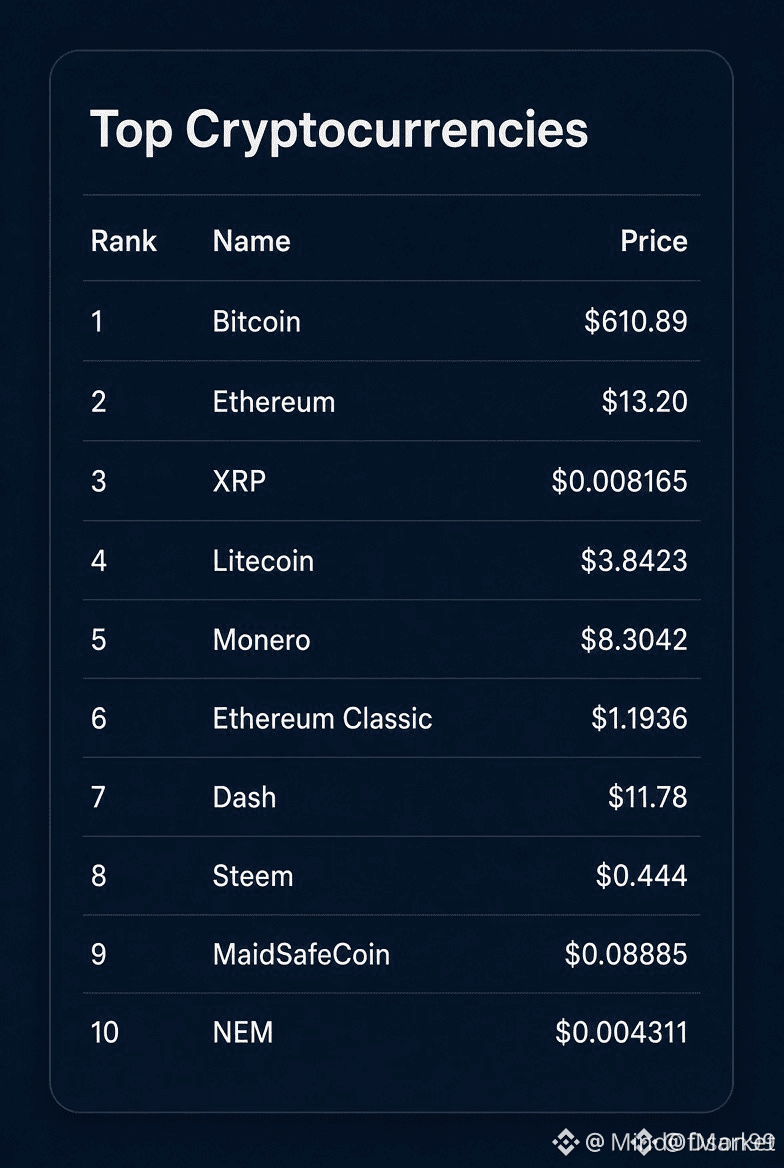
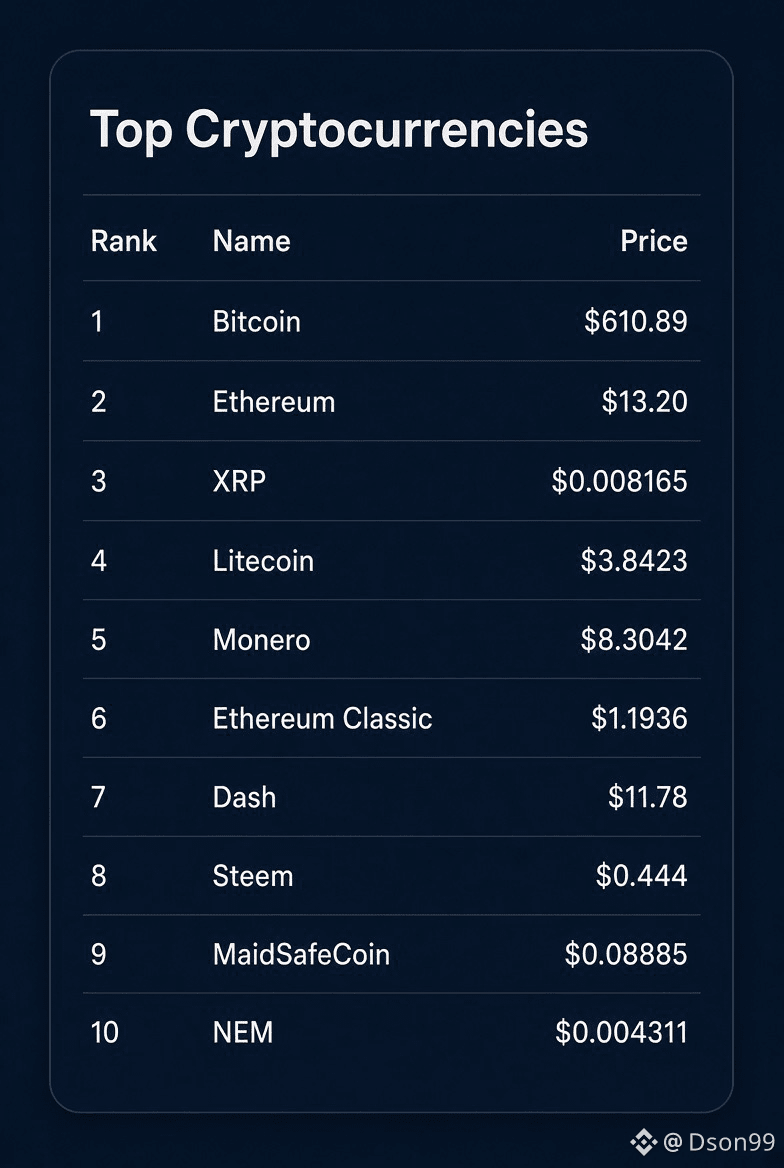
📊 TOP 10 COINS OF 2016—WHERE ARE THEY NOW?
In 2016, Bitcoin was only about $610, Ethereum $13.
The top 10 back then included: BTC, ETH, XRP, LTC, XMR, ETC, DASH, STEEM, MAID, NEM.
Now (10/2026):
🔸BTC: ~$84,000–85,000 → Still #1
🔹ETH: ~$2,700 → Still top 2
🔹XRP: ~$1.50 → Risen strongly
🔹LTC: ~$68
🔹XMR: ~$545
🔹ETC: ~$9
🔹DASH: ~$58
🔹STEEM: ~$0.06
🔹MAID & NEM: Almost disappeared from the spotlight
Only a few names are still going strong after 10 years.
The crypto market is truly brutal.
Brothers, which coin from the old list will still be alive and thriving for the next 5 years? How does it compare to today’s top 10?
$BTC $COLLECT $CT
#bitcoin #CryptoHistory #BinanceSquare
{future}(CTUSDT)
{future}(COLLECTUSDT)
{future}(BTCUSDT)
📊 TOP 10 COINS OF 2016—WHERE ARE THEY NOW?
In 2016, Bitcoin was only about $610, Ethereum $13. The top 10 back then included: BTC, ETH, XRP, LTC, XMR, ETC, DASH, STEEM, MAID, NEM.
Now (10/2026):
🔸BTC: ~$84,000–85,000 → Still #1
🔹ETH: ~$2,700 → Still top 2
🔹XRP: ~$1.50 → Risen strongly
🔹LTC: ~$68
🔹XMR: ~$545
🔹ETC: ~$9
🔹DASH: ~$58
🔹STEEM: ~$0.06
🔹MAID & NEM: Almost disappeared from the spotlight
Only a few names are still going strong after 10 years. The crypto market is truly brutal.
Brothers, which coin from the old list will still be alive and thriving for the next 5 years? How does it compare to today’s top 10?
$BTC $COLLECT $CT
#bitcoin #CryptoHistory #BinanceSquare
In 2016, Bitcoin was only about $610, Ethereum $13. The top 10 back then included: BTC, ETH, XRP, LTC, XMR, ETC, DASH, STEEM, MAID, NEM.
Now (10/2026):
🔸BTC: ~$84,000–85,000 → Still #1
🔹ETH: ~$2,700 → Still top 2
🔹XRP: ~$1.50 → Risen strongly
🔹LTC: ~$68
🔹XMR: ~$545
🔹ETC: ~$9
🔹DASH: ~$58
🔹STEEM: ~$0.06
🔹MAID & NEM: Almost disappeared from the spotlight
Only a few names are still going strong after 10 years. The crypto market is truly brutal.
Brothers, which coin from the old list will still be alive and thriving for the next 5 years? How does it compare to today’s top 10?
$BTC $COLLECT $CT
#bitcoin #CryptoHistory #BinanceSquare
4
4.4k

·
--
🍕 The most expensive lunch in history! Imagine buying two slices of pizza for $1.1 billion? 🤯💰
Everyone knows the story of the programmer “Laszlo Hanyecz,” who paid 10,000 Bitcoins—$BTC —for two pizzas back in 2010 (back then they were worth only $41)..
💡 But have you ever wondered what happened to the person who received the 10,000 Bitcoins?
The young man, Jeremy Sturdivant, who delivered the pizza and received the Bitcoins, didn’t become a billionaire either! Instead, he cashed out all of it later to cover his travel expenses and rides on tour buses! 😅🚌
The hard lesson here: Wealth in crypto doesn’t require buying only at the very beginning… it also needs awareness, patience, and risk management to hold on to it! 💎🙌
❓ Question for followers:
If you were in the shoes of the guy who received the 10,000 Bitcoins in 2010… would you sell them immediately or keep them until today? Share your opinion in the comments! 👇
#BTC #CryptoHistory #BinanceSquare #Write2Earn $QNT $MOVR
{future}(MOVRUSDT)
🍕 The most expensive lunch in history! Imagine buying two slices of pizza for $1.1 billion? 🤯💰
Everyone knows the story of the programmer “Laszlo Hanyecz,” who paid 10,000 Bitcoins—$BTC —for two pizzas back in 2010 (back then they were worth only $41)..
💡 But have you ever wondered what happened to the person who received the 10,000 Bitcoins?
The young man, Jeremy Sturdivant, who delivered the pizza and received the Bitcoins, didn’t become a billionaire either! Instead, he cashed out all of it later to cover his travel expenses and rides on tour buses! 😅🚌
The hard lesson here: Wealth in crypto doesn’t require buying only at the very beginning… it also needs awareness, patience, and risk management to hold on to it! 💎🙌
❓ Question for followers:
If you were in the shoes of the guy who received the 10,000 Bitcoins in 2010… would you sell them immediately or keep them until today? Share your opinion in the comments! 👇
#BTC #CryptoHistory #BinanceSquare #Write2Earn $QNT $MOVR
Everyone knows the story of the programmer “Laszlo Hanyecz,” who paid 10,000 Bitcoins—$BTC —for two pizzas back in 2010 (back then they were worth only $41)..
💡 But have you ever wondered what happened to the person who received the 10,000 Bitcoins?
The young man, Jeremy Sturdivant, who delivered the pizza and received the Bitcoins, didn’t become a billionaire either! Instead, he cashed out all of it later to cover his travel expenses and rides on tour buses! 😅🚌
The hard lesson here: Wealth in crypto doesn’t require buying only at the very beginning… it also needs awareness, patience, and risk management to hold on to it! 💎🙌
❓ Question for followers:
If you were in the shoes of the guy who received the 10,000 Bitcoins in 2010… would you sell them immediately or keep them until today? Share your opinion in the comments! 👇
#BTC #CryptoHistory #BinanceSquare #Write2Earn $QNT $MOVR


الأخ عبدو:
التجارب السابقة تجعلك تخزن العملات وتعيش فقيرا
7
10
13.6k

·
--
FROM A $0.10 ICO TO GLOBAL MARKET LEADERSHIP: THE 9-YEAR $BNB EVOLUTION 🌕 💥
📌 Back in the summer of 2017, $BNB offered early believers a seat at the table for just $0.10 to $0.15 per token during its initial raise. 📊 Nearly a decade later, that modest start has transformed into one of the most liquid assets and powerful ecosystem hubs in financial history.
💡 Reminders like this prove that generational market shifts are forged through full cycles of infrastructure building and relentless conviction. 💬 Were you around during the early $BNB accumulation days, or did you catch the wave later in the cycle? 👇
⚠️ Not financial advice. Always manage your risk. 🛡️
🏷️ #BNB #Altcoins #CryptoHistory #BNBChain
💎 🚀
FROM A $0.10 ICO TO GLOBAL MARKET LEADERSHIP: THE 9-YEAR $BNB EVOLUTION 🌕 💥
📌 Back in the summer of 2017, $BNB offered early believers a seat at the table for just $0.10 to $0.15 per token during its initial raise. 📊 Nearly a decade later, that modest start has transformed into one of the most liquid assets and powerful ecosystem hubs in financial history.
💡 Reminders like this prove that generational market shifts are forged through full cycles of infrastructure building and relentless conviction. 💬 Were you around during the early $BNB accumulation days, or did you catch the wave later in the cycle? 👇
⚠️ Not financial advice. Always manage your risk. 🛡️
🏷️ #BNB #Altcoins #CryptoHistory #BNBChain
💎 🚀
📌 Back in the summer of 2017, $BNB offered early believers a seat at the table for just $0.10 to $0.15 per token during its initial raise. 📊 Nearly a decade later, that modest start has transformed into one of the most liquid assets and powerful ecosystem hubs in financial history.
💡 Reminders like this prove that generational market shifts are forged through full cycles of infrastructure building and relentless conviction. 💬 Were you around during the early $BNB accumulation days, or did you catch the wave later in the cycle? 👇
⚠️ Not financial advice. Always manage your risk. 🛡️
🏷️ #BNB #Altcoins #CryptoHistory #BNBChain
💎 🚀

13

·
--
Bullish
TWO PIZZAS FOR 10,000 BTC: BITCOIN MAKES HISTORY!
Imagine paying 10,000 Bitcoin for two pizzas. In 2010, that was worth roughly $41.
On May 18, Florida programmer Laszlo Hanyecz offered 10,000 BTC to anyone willing to deliver two large pizzas.
Four days later, Jeremy Sturdivant, known online as "jercos," arranged the order from Papa John's and received the Bitcoin.
May 22, 2010, became Bitcoin Pizza Day.
The remarkable part? The restaurant didn't accept Bitcoin directly. Another person paid for the pizzas and accepted BTC in return.
At the time, each Bitcoin was worth approximately $0.0041. What looked like an ordinary dinner became a milestone in cryptocurrency history.
MY FINAL TAKE
This wasn't simply an expensive meal. It demonstrated that Bitcoin could be exchanged for something tangible, helping establish its usefulness beyond mining and transfers.
Today, Bitcoin's payment utility, adoption and long-term value remain important subjects of debate.
Was spending 10,000 BTC on pizza a costly mistake or a necessary milestone in Bitcoin's history?
#Bitcoin #CryptoHistory
$BTC
{spot}(BTCUSDT)
TWO PIZZAS FOR 10,000 BTC: BITCOIN MAKES HISTORY!
Imagine paying 10,000 Bitcoin for two pizzas. In 2010, that was worth roughly $41.
On May 18, Florida programmer Laszlo Hanyecz offered 10,000 BTC to anyone willing to deliver two large pizzas.
Four days later, Jeremy Sturdivant, known online as "jercos," arranged the order from Papa John's and received the Bitcoin.
May 22, 2010, became Bitcoin Pizza Day.
The remarkable part? The restaurant didn't accept Bitcoin directly. Another person paid for the pizzas and accepted BTC in return.
At the time, each Bitcoin was worth approximately $0.0041. What looked like an ordinary dinner became a milestone in cryptocurrency history.
MY FINAL TAKE
This wasn't simply an expensive meal. It demonstrated that Bitcoin could be exchanged for something tangible, helping establish its usefulness beyond mining and transfers.
Today, Bitcoin's payment utility, adoption and long-term value remain important subjects of debate.
Was spending 10,000 BTC on pizza a costly mistake or a necessary milestone in Bitcoin's history?
#Bitcoin #CryptoHistory
$BTC
Imagine paying 10,000 Bitcoin for two pizzas. In 2010, that was worth roughly $41.
On May 18, Florida programmer Laszlo Hanyecz offered 10,000 BTC to anyone willing to deliver two large pizzas.
Four days later, Jeremy Sturdivant, known online as "jercos," arranged the order from Papa John's and received the Bitcoin.
May 22, 2010, became Bitcoin Pizza Day.
The remarkable part? The restaurant didn't accept Bitcoin directly. Another person paid for the pizzas and accepted BTC in return.
At the time, each Bitcoin was worth approximately $0.0041. What looked like an ordinary dinner became a milestone in cryptocurrency history.
MY FINAL TAKE
This wasn't simply an expensive meal. It demonstrated that Bitcoin could be exchanged for something tangible, helping establish its usefulness beyond mining and transfers.
Today, Bitcoin's payment utility, adoption and long-term value remain important subjects of debate.
Was spending 10,000 BTC on pizza a costly mistake or a necessary milestone in Bitcoin's history?
#Bitcoin #CryptoHistory
$BTC

56

·
--
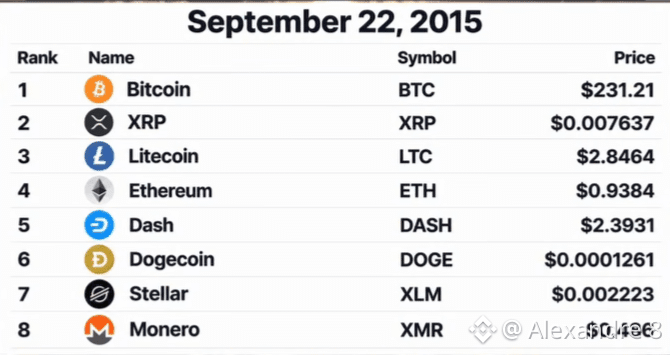
Time Capsule: Where were you on September 22, 2015? ⏳⏳
Looking at the crypto market’s past gives us a unique perspective on cycles, volatility, and above all, resilience.
On September 22, 2015 — exactly a few years ago — this was the Top 8 of the largest cryptocurrencies by market capitalization:
Bitcoin ($BTC): $231.21 2. XRP ($XRP): $0.0076 3. Litecoin ($LTC): $2.84 4. Ethereum ($ETH): $0.93 5. Dash ($DASH): $2.39 6. Dogecoin ($DOGE): $0.00012 7. Stellar ($XLM): $0.0022 8. Monero ($XMR): $0.48
What does this X-ray teach us?
The Rise of Ethereum: Launched just a few months before this photo, ETH was worth less than $1.00. Anyone who saw the potential of smart contracts at the time witnessed one of the biggest valuations in history.
Bitcoin’s Resilience: Buying BTC at $231 seemed “expensive” or “risky” to many. Today, it has consolidated as the leading global digital store of value.
The Evolution of Narratives: Pioneering projects like Dash and Monero were all the rage for privacy and payments. Today, the market has made room for new theses like DePIN, Artificial Intelligence, and Layer 2s.
Surviving market cycles requires patience and a long-term mindset.
If you could go back in time with just $100 in your pocket in 2015, which of these coins would you bet on?
#Bitcoin #Ethereum #CryptoHistory
Time Capsule: Where were you on September 22, 2015? ⏳⏳
Looking at the crypto market’s past gives us a unique perspective on cycles, volatility, and above all, resilience.
On September 22, 2015 — exactly a few years ago — this was the Top 8 of the largest cryptocurrencies by market capitalization:
Bitcoin ($BTC): $231.21 2. XRP ($XRP): $0.0076 3. Litecoin ($LTC): $2.84 4. Ethereum ($ETH): $0.93 5. Dash ($DASH): $2.39 6. Dogecoin ($DOGE): $0.00012 7. Stellar ($XLM): $0.0022 8. Monero ($XMR): $0.48
What does this X-ray teach us?
The Rise of Ethereum: Launched just a few months before this photo, ETH was worth less than $1.00. Anyone who saw the potential of smart contracts at the time witnessed one of the biggest valuations in history.
Bitcoin’s Resilience: Buying BTC at $231 seemed “expensive” or “risky” to many. Today, it has consolidated as the leading global digital store of value.
The Evolution of Narratives: Pioneering projects like Dash and Monero were all the rage for privacy and payments. Today, the market has made room for new theses like DePIN, Artificial Intelligence, and Layer 2s.
Surviving market cycles requires patience and a long-term mindset.
If you could go back in time with just $100 in your pocket in 2015, which of these coins would you bet on?
#Bitcoin #Ethereum #CryptoHistory
Looking at the crypto market’s past gives us a unique perspective on cycles, volatility, and above all, resilience.
On September 22, 2015 — exactly a few years ago — this was the Top 8 of the largest cryptocurrencies by market capitalization:
Bitcoin ($BTC): $231.21 2. XRP ($XRP): $0.0076 3. Litecoin ($LTC): $2.84 4. Ethereum ($ETH): $0.93 5. Dash ($DASH): $2.39 6. Dogecoin ($DOGE): $0.00012 7. Stellar ($XLM): $0.0022 8. Monero ($XMR): $0.48
What does this X-ray teach us?
The Rise of Ethereum: Launched just a few months before this photo, ETH was worth less than $1.00. Anyone who saw the potential of smart contracts at the time witnessed one of the biggest valuations in history.
Bitcoin’s Resilience: Buying BTC at $231 seemed “expensive” or “risky” to many. Today, it has consolidated as the leading global digital store of value.
The Evolution of Narratives: Pioneering projects like Dash and Monero were all the rage for privacy and payments. Today, the market has made room for new theses like DePIN, Artificial Intelligence, and Layer 2s.
Surviving market cycles requires patience and a long-term mindset.
If you could go back in time with just $100 in your pocket in 2015, which of these coins would you bet on?
#Bitcoin #Ethereum #CryptoHistory
4
2.4k

Title: The $500 Million Pizza That Changed Finance Forever
On May 22, 2010, a developer named Laszlo Hanyecz made history by buying two Papa John’s pizzas for 10,000 Bitcoins.
At the time, 10,000 BTC was worth roughly $41. Today, those same Bitcoins are worth hundreds of millions of dollars!
Why does this story matter?
First Real Transaction: Before this purchase, Bitcoin was just a theoretical experiment. This moment proved that crypto could actually function as a real-world currency.
Patience & Vision: Early believers who held onto their assets (HODL) changed their financial lives forever.
#bitcoin #CryptoHistory #BTC #BinanceSquare #HoldOnTight
Title: The $500 Million Pizza That Changed Finance Forever
On May 22, 2010, a developer named Laszlo Hanyecz made history by buying two Papa John’s pizzas for 10,000 Bitcoins.
At the time, 10,000 BTC was worth roughly $41. Today, those same Bitcoins are worth hundreds of millions of dollars!
Why does this story matter?
First Real Transaction: Before this purchase, Bitcoin was just a theoretical experiment. This moment proved that crypto could actually function as a real-world currency.
Patience & Vision: Early believers who held onto their assets (HODL) changed their financial lives forever.
#bitcoin #CryptoHistory #BTC #BinanceSquare #HoldOnTight
On May 22, 2010, a developer named Laszlo Hanyecz made history by buying two Papa John’s pizzas for 10,000 Bitcoins.
At the time, 10,000 BTC was worth roughly $41. Today, those same Bitcoins are worth hundreds of millions of dollars!
Why does this story matter?
First Real Transaction: Before this purchase, Bitcoin was just a theoretical experiment. This moment proved that crypto could actually function as a real-world currency.
Patience & Vision: Early believers who held onto their assets (HODL) changed their financial lives forever.
#bitcoin #CryptoHistory #BTC #BinanceSquare #HoldOnTight
1
120

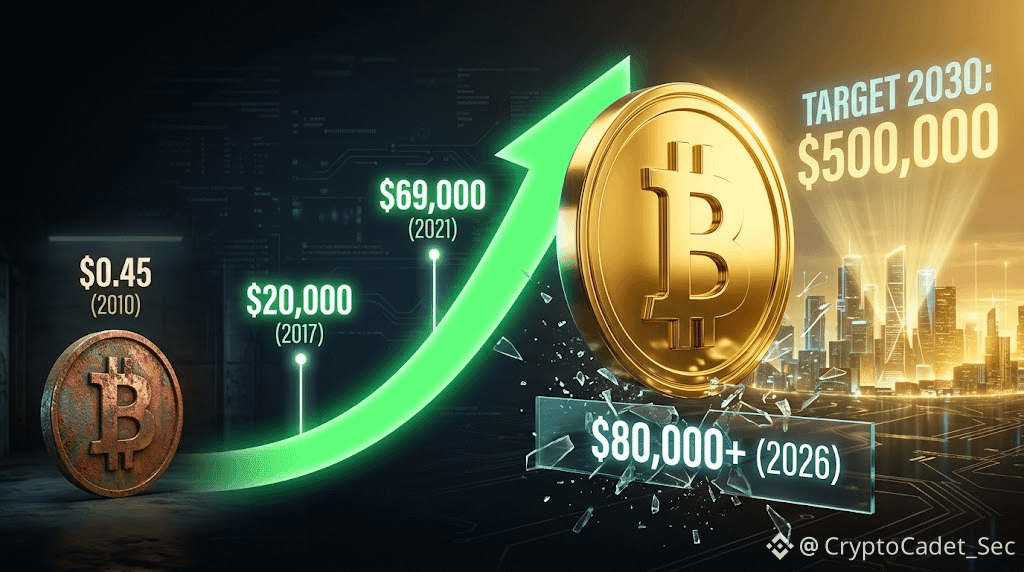
🚀 FROM $0.45 TO $80,000+: THE UNSTOPPABLE EVOLUTION OF BITCOIN! 💸📈
If you ever think you are "too late" to crypto, look closely at the macroeconomic timeline. The structural growth of digital gold over the last two decades tells a story that traditional finance simply cannot replicate.
📈 The Historic Timeline:
• 2010 Baseline: In its earliest trading days, a single $BTC was valued at a humble $0.45.
• 2013 Halving Cycle: Bitcoin witnessed its first major paradigm shift, violently breaking past $1,000 for the first time.
• 2017 Retail Boom: The world took notice as institutional infrastructure started taking shape, driving the asset to a peak near $20,000.
• 2021 Institutional Wave: Corporate balance sheets and corporate trust fueled a historic expansion, pushing Bitcoin up to $69,000.
• 2026 Macro Era: Defying legacy financial tightening, Bitcoin shattered all expectations to confidently cross the monumental $80,000 psychological milestone.
🔮 The 2030 Predictive Outlook:
As global central bank policies shift and supply inflation drops closer to absolute zero following future halving events, institutional models point toward an aggressive macro valuation expansion. Major asset management frameworks project that by 2030, $BTC is mathematically positioned to target a conservative range of $250,000 to $500,000 per coin.
The structural chart proves that volatility is simply the price you pay for generational value expansion. Plan for the long horizon.
#Bitcoin #CryptoHistory #SmartInvesting
🚀 FROM $0.45 TO $80,000+: THE UNSTOPPABLE EVOLUTION OF BITCOIN! 💸📈
If you ever think you are "too late" to crypto, look closely at the macroeconomic timeline. The structural growth of digital gold over the last two decades tells a story that traditional finance simply cannot replicate.
📈 The Historic Timeline:
• 2010 Baseline: In its earliest trading days, a single $BTC was valued at a humble $0.45.
• 2013 Halving Cycle: Bitcoin witnessed its first major paradigm shift, violently breaking past $1,000 for the first time.
• 2017 Retail Boom: The world took notice as institutional infrastructure started taking shape, driving the asset to a peak near $20,000.
• 2021 Institutional Wave: Corporate balance sheets and corporate trust fueled a historic expansion, pushing Bitcoin up to $69,000.
• 2026 Macro Era: Defying legacy financial tightening, Bitcoin shattered all expectations to confidently cross the monumental $80,000 psychological milestone.
🔮 The 2030 Predictive Outlook:
As global central bank policies shift and supply inflation drops closer to absolute zero following future halving events, institutional models point toward an aggressive macro valuation expansion. Major asset management frameworks project that by 2030, $BTC is mathematically positioned to target a conservative range of $250,000 to $500,000 per coin.
The structural chart proves that volatility is simply the price you pay for generational value expansion. Plan for the long horizon.
#Bitcoin #CryptoHistory #SmartInvesting
If you ever think you are "too late" to crypto, look closely at the macroeconomic timeline. The structural growth of digital gold over the last two decades tells a story that traditional finance simply cannot replicate.
📈 The Historic Timeline:
• 2010 Baseline: In its earliest trading days, a single $BTC was valued at a humble $0.45.
• 2013 Halving Cycle: Bitcoin witnessed its first major paradigm shift, violently breaking past $1,000 for the first time.
• 2017 Retail Boom: The world took notice as institutional infrastructure started taking shape, driving the asset to a peak near $20,000.
• 2021 Institutional Wave: Corporate balance sheets and corporate trust fueled a historic expansion, pushing Bitcoin up to $69,000.
• 2026 Macro Era: Defying legacy financial tightening, Bitcoin shattered all expectations to confidently cross the monumental $80,000 psychological milestone.
🔮 The 2030 Predictive Outlook:
As global central bank policies shift and supply inflation drops closer to absolute zero following future halving events, institutional models point toward an aggressive macro valuation expansion. Major asset management frameworks project that by 2030, $BTC is mathematically positioned to target a conservative range of $250,000 to $500,000 per coin.
The structural chart proves that volatility is simply the price you pay for generational value expansion. Plan for the long horizon.
#Bitcoin #CryptoHistory #SmartInvesting
73

·
--
Bullish
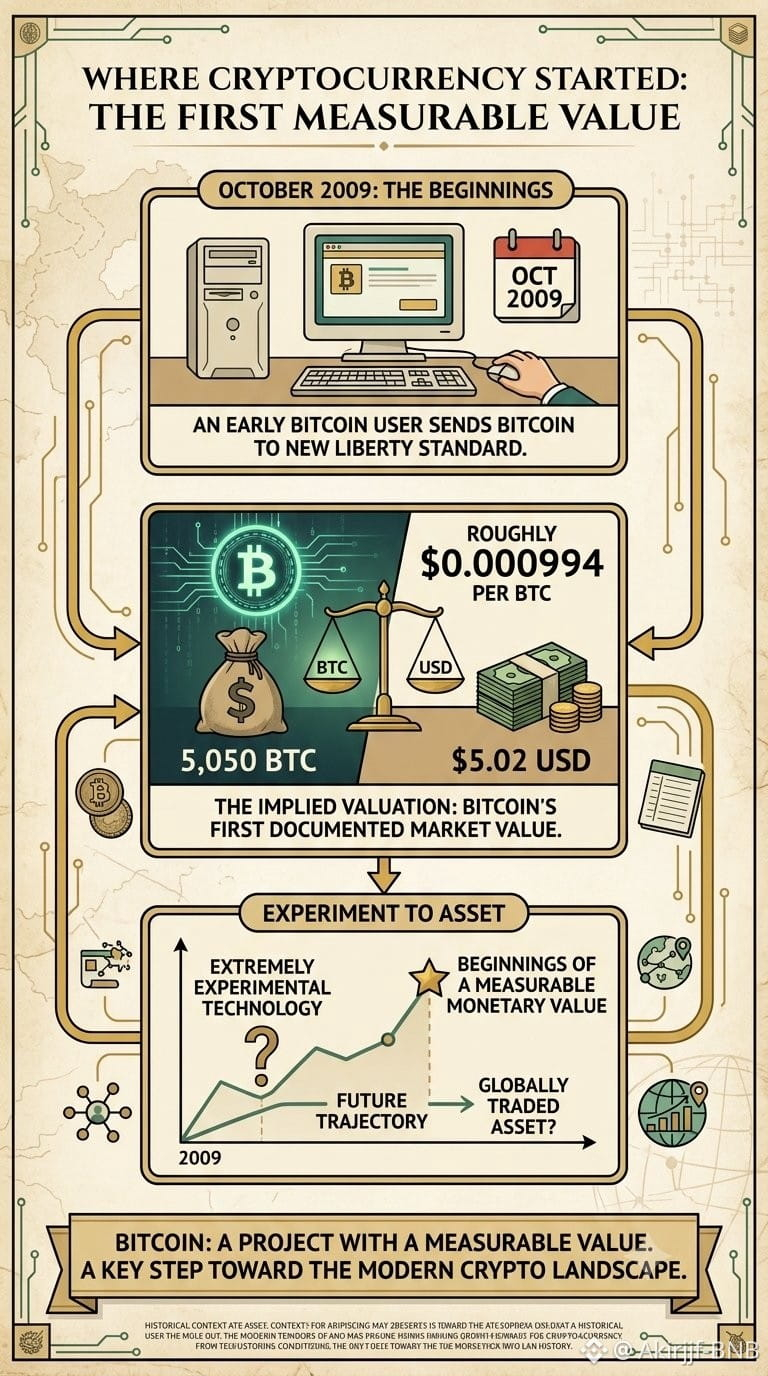
In October 2009, 5,050 bitcoins were exchanged for just $5.02 ($0.000994/BTC). 💰
What began as an experimental code project obtained its first measurable monetary value—laying the groundwork for today’s global financial revolution. 📈
#bitcoin #CryptoHistory $BTC $ETH $BNB
{spot}(BTCUSDT)
#Blockchai
In October 2009, 5,050 bitcoins were exchanged for just $5.02 ($0.000994/BTC). 💰
What began as an experimental code project obtained its first measurable monetary value—laying the groundwork for today’s global financial revolution. 📈
#bitcoin #CryptoHistory $BTC $ETH $BNB
#Blockchai
What began as an experimental code project obtained its first measurable monetary value—laying the groundwork for today’s global financial revolution. 📈
#bitcoin #CryptoHistory $BTC $ETH $BNB
#Blockchai
1
84

·
--
Picture this: you wake up to find an anonymous wallet just created 184 billion coins out of thin air, completely breaking the core protocol rules.
Every investor knows the stomach-dropping fear of an infinite mint glitch that destroys asset value in seconds. It is the exact nightmare people experienced during the $LUNC hyper-inflation spiral, where unbacked supply crushed market confidence.
Back in August 2010, the Bitcoin network faced its most terrifying bug known as the value overflow incident. At that moment, only about 3.8 million $BTC existed in total circulation. Suddenly, block 74638 generated an output of over 184.4 billion coins, meaning one person had just printed almost 8,800 times the entire 21 million supply that will ever exist.
Unlike modern protocol disasters that drag on for months across governance forums, the early developers patched the code and rolled back the chain within five hours. The phantom coins vanished, but the event proved that even the most robust monetary design is only as strong as the code securing it.
Where do you think modern crypto networks would land if an exploit of this magnitude happened today?
#Bitcoin #CryptoHistory #Blockchain
Picture this: you wake up to find an anonymous wallet just created 184 billion coins out of thin air, completely breaking the core protocol rules.
Every investor knows the stomach-dropping fear of an infinite mint glitch that destroys asset value in seconds. It is the exact nightmare people experienced during the $LUNC hyper-inflation spiral, where unbacked supply crushed market confidence.
Back in August 2010, the Bitcoin network faced its most terrifying bug known as the value overflow incident. At that moment, only about 3.8 million $BTC existed in total circulation. Suddenly, block 74638 generated an output of over 184.4 billion coins, meaning one person had just printed almost 8,800 times the entire 21 million supply that will ever exist.
Unlike modern protocol disasters that drag on for months across governance forums, the early developers patched the code and rolled back the chain within five hours. The phantom coins vanished, but the event proved that even the most robust monetary design is only as strong as the code securing it.
Where do you think modern crypto networks would land if an exploit of this magnitude happened today?
#Bitcoin #CryptoHistory #Blockchain
Every investor knows the stomach-dropping fear of an infinite mint glitch that destroys asset value in seconds. It is the exact nightmare people experienced during the $LUNC hyper-inflation spiral, where unbacked supply crushed market confidence.
Back in August 2010, the Bitcoin network faced its most terrifying bug known as the value overflow incident. At that moment, only about 3.8 million $BTC existed in total circulation. Suddenly, block 74638 generated an output of over 184.4 billion coins, meaning one person had just printed almost 8,800 times the entire 21 million supply that will ever exist.
Unlike modern protocol disasters that drag on for months across governance forums, the early developers patched the code and rolled back the chain within five hours. The phantom coins vanished, but the event proved that even the most robust monetary design is only as strong as the code securing it.
Where do you think modern crypto networks would land if an exploit of this magnitude happened today?
#Bitcoin #CryptoHistory #Blockchain
247

everyone thinks hard caps in crypto are untouchable math from day one, but actually even the cleanest ledgers have survived insane inflation bugs.
most of us obsess over tokenomics and supply schedules, only to get rekt the second an exploit bypasses the contract limits completely.
back in 2010, when only about 3.8 million $BTC existed, a single overflow glitch allowed someone to mint 184 billion coins out of thin air. that was almost 8,800 times the entire 21 million supply cap that will ever exist, nearly destroying the network overnight before satoshi pushed an emergency patch.
ngl if an infinite mint bug hit $ETH or major alts today like that value overflow did back then, half the market cap would vanish before devs could coordinate a fix. we take bulletproof code for granted ser, but early on it was pure chaos and luck that kept the supply intact.
how do you think the market would react if a top 10 chain had an unchecked mint exploit tomorrow?
#CryptoHistory #Bitcoin #Tokenomics
everyone thinks hard caps in crypto are untouchable math from day one, but actually even the cleanest ledgers have survived insane inflation bugs.
most of us obsess over tokenomics and supply schedules, only to get rekt the second an exploit bypasses the contract limits completely.
back in 2010, when only about 3.8 million $BTC existed, a single overflow glitch allowed someone to mint 184 billion coins out of thin air. that was almost 8,800 times the entire 21 million supply cap that will ever exist, nearly destroying the network overnight before satoshi pushed an emergency patch.
ngl if an infinite mint bug hit $ETH or major alts today like that value overflow did back then, half the market cap would vanish before devs could coordinate a fix. we take bulletproof code for granted ser, but early on it was pure chaos and luck that kept the supply intact.
how do you think the market would react if a top 10 chain had an unchecked mint exploit tomorrow?
#CryptoHistory #Bitcoin #Tokenomics
most of us obsess over tokenomics and supply schedules, only to get rekt the second an exploit bypasses the contract limits completely.
back in 2010, when only about 3.8 million $BTC existed, a single overflow glitch allowed someone to mint 184 billion coins out of thin air. that was almost 8,800 times the entire 21 million supply cap that will ever exist, nearly destroying the network overnight before satoshi pushed an emergency patch.
ngl if an infinite mint bug hit $ETH or major alts today like that value overflow did back then, half the market cap would vanish before devs could coordinate a fix. we take bulletproof code for granted ser, but early on it was pure chaos and luck that kept the supply intact.
how do you think the market would react if a top 10 chain had an unchecked mint exploit tomorrow?
#CryptoHistory #Bitcoin #Tokenomics
9
In August 2010, a single transaction created 184,467,440,737 bitcoins out of nothing.
Most traders lose sleep worrying about market dumps and liquidations, but few realize that the hardest lesson in crypto is understanding that even foundational code can fail.
An integer overflow in block 74638 suddenly spawned billions of $BTC, completely breaking the 21 million supply limit. For a few tense hours, the scarcity model that underpins this entire asset class was broken.
Having seen multiple market cycles, you realize that survival comes down to how networks handle catastrophic failure. Satoshi and early developers pushed a fix within hours, resetting the chain and wiping the phantom coins away. We saw similar resilience tested years later across ecosystems like $ETH and $SOL during their own major network events.
How much protocol risk do you actually price into your long-term holdings?
#Bitcoin #CryptoHistory #Blockchain
In August 2010, a single transaction created 184,467,440,737 bitcoins out of nothing.
Most traders lose sleep worrying about market dumps and liquidations, but few realize that the hardest lesson in crypto is understanding that even foundational code can fail.
An integer overflow in block 74638 suddenly spawned billions of $BTC , completely breaking the 21 million supply limit. For a few tense hours, the scarcity model that underpins this entire asset class was broken.
Having seen multiple market cycles, you realize that survival comes down to how networks handle catastrophic failure. Satoshi and early developers pushed a fix within hours, resetting the chain and wiping the phantom coins away. We saw similar resilience tested years later across ecosystems like $ETH and $SOL during their own major network events.
How much protocol risk do you actually price into your long-term holdings?
#Bitcoin #CryptoHistory #Blockchain
Most traders lose sleep worrying about market dumps and liquidations, but few realize that the hardest lesson in crypto is understanding that even foundational code can fail.
An integer overflow in block 74638 suddenly spawned billions of $BTC , completely breaking the 21 million supply limit. For a few tense hours, the scarcity model that underpins this entire asset class was broken.
Having seen multiple market cycles, you realize that survival comes down to how networks handle catastrophic failure. Satoshi and early developers pushed a fix within hours, resetting the chain and wiping the phantom coins away. We saw similar resilience tested years later across ecosystems like $ETH and $SOL during their own major network events.
How much protocol risk do you actually price into your long-term holdings?
#Bitcoin #CryptoHistory #Blockchain

17
Picture this: a developer logs into an obscure forum on a quiet August afternoon and posts a thread titled simply "Strange block 74638."
We often trade under the illusion that blockchain code is completely infallible, but few things create more dread than realizing a hidden software glitch could break market confidence in seconds.
That unassuming forum post by Jeff Garzik documented the infamous value overflow bug, where an integer overflow generated over 184 billion $BTC out of thin air. It instantly shattered the 21 million supply cap and threatened the survival of the entire network before Satoshi and the core developers patched the chain within five hours.
When we compare that early incident to multi-million dollar smart contract exploits on $ETH today, the fundamental lesson remains identical. Code is written by humans, and true network resilience depends on how swiftly a community can detect an anomaly and coordinate a fix under pressure.
How do you think the market would react if an exploit of that scale hit a top network today?
#Bitcoin #CryptoHistory #Blockchain
Picture this: a developer logs into an obscure forum on a quiet August afternoon and posts a thread titled simply "Strange block 74638."
We often trade under the illusion that blockchain code is completely infallible, but few things create more dread than realizing a hidden software glitch could break market confidence in seconds.
That unassuming forum post by Jeff Garzik documented the infamous value overflow bug, where an integer overflow generated over 184 billion $BTC out of thin air. It instantly shattered the 21 million supply cap and threatened the survival of the entire network before Satoshi and the core developers patched the chain within five hours.
When we compare that early incident to multi-million dollar smart contract exploits on $ETH today, the fundamental lesson remains identical. Code is written by humans, and true network resilience depends on how swiftly a community can detect an anomaly and coordinate a fix under pressure.
How do you think the market would react if an exploit of that scale hit a top network today?
#Bitcoin #CryptoHistory #Blockchain
We often trade under the illusion that blockchain code is completely infallible, but few things create more dread than realizing a hidden software glitch could break market confidence in seconds.
That unassuming forum post by Jeff Garzik documented the infamous value overflow bug, where an integer overflow generated over 184 billion $BTC out of thin air. It instantly shattered the 21 million supply cap and threatened the survival of the entire network before Satoshi and the core developers patched the chain within five hours.
When we compare that early incident to multi-million dollar smart contract exploits on $ETH today, the fundamental lesson remains identical. Code is written by humans, and true network resilience depends on how swiftly a community can detect an anomaly and coordinate a fix under pressure.
How do you think the market would react if an exploit of that scale hit a top network today?
#Bitcoin #CryptoHistory #Blockchain
16

·
--
$ZEC History Lesson from 2016
I was actively trading when $ZECwas launched in 2016.
Here's something most new traders won't believe: It reached 3,000 BTC at its peak.
Yes, 3,000 BTC - not USD.
Back then we didn't have USD pairs like today, we traded alts against BTC.
And because of Zcash's slow-start mining, the initial circulating supply was extremely low, which created that historic pump.
Were you trading back then? Let's see how many OGs are still here.
#zec #CryptoHistory #Binance
$BTC
{spot}(BTCUSDT)
$ZEC
{spot}(ZECUSDT)
$ZEC History Lesson from 2016
I was actively trading when $ZECwas launched in 2016.
Here's something most new traders won't believe: It reached 3,000 BTC at its peak.
Yes, 3,000 BTC - not USD.
Back then we didn't have USD pairs like today, we traded alts against BTC.
And because of Zcash's slow-start mining, the initial circulating supply was extremely low, which created that historic pump.
Were you trading back then? Let's see how many OGs are still here.
#zec #CryptoHistory #Binance
$BTC
$ZEC
I was actively trading when $ZECwas launched in 2016.
Here's something most new traders won't believe: It reached 3,000 BTC at its peak.
Yes, 3,000 BTC - not USD.
Back then we didn't have USD pairs like today, we traded alts against BTC.
And because of Zcash's slow-start mining, the initial circulating supply was extremely low, which created that historic pump.
Were you trading back then? Let's see how many OGs are still here.
#zec #CryptoHistory #Binance
$BTC
$ZEC
330

·
--
EXPLOSIVE SCARCITY MEMORY: WHEN $ZEC TRADED AT 3,000 BTC PER TOKEN! 🦈 📊
Looking back at $ZEC market structure from 2016 reveals one of the most extreme supply-side liquidity squeezes in crypto history. 🔍 Due to the slow-start mining architecture, initial circulating supply was near zero, causing bid-ask spreads to explode across BTC pair order books.
During initial price discovery, aggressive demand met non-existent sell-side liquidity, briefly driving $ZEC to an astonishing peak of 3,000 BTC per token. 📊 It remains a textbook case of how severe order book illiquidity and structural supply scarcity distort asset valuation. 💬 Did you trade during the BTC-pair era, or did you enter after stablecoin liquidity took over? 👇
⚠️ Not financial advice. Always manage your risk. 🛡️
🏷️ #ZEC #MarketStructure #OrderFlow #CryptoHistory
🧠 🛡️
EXPLOSIVE SCARCITY MEMORY: WHEN $ZEC TRADED AT 3,000 BTC PER TOKEN! 🦈 📊
Looking back at $ZEC market structure from 2016 reveals one of the most extreme supply-side liquidity squeezes in crypto history. 🔍 Due to the slow-start mining architecture, initial circulating supply was near zero, causing bid-ask spreads to explode across BTC pair order books.
During initial price discovery, aggressive demand met non-existent sell-side liquidity, briefly driving $ZEC to an astonishing peak of 3,000 BTC per token. 📊 It remains a textbook case of how severe order book illiquidity and structural supply scarcity distort asset valuation. 💬 Did you trade during the BTC-pair era, or did you enter after stablecoin liquidity took over? 👇
⚠️ Not financial advice. Always manage your risk. 🛡️
🏷️ #ZEC #MarketStructure #OrderFlow #CryptoHistory
🧠 🛡️
Looking back at $ZEC market structure from 2016 reveals one of the most extreme supply-side liquidity squeezes in crypto history. 🔍 Due to the slow-start mining architecture, initial circulating supply was near zero, causing bid-ask spreads to explode across BTC pair order books.
During initial price discovery, aggressive demand met non-existent sell-side liquidity, briefly driving $ZEC to an astonishing peak of 3,000 BTC per token. 📊 It remains a textbook case of how severe order book illiquidity and structural supply scarcity distort asset valuation. 💬 Did you trade during the BTC-pair era, or did you enter after stablecoin liquidity took over? 👇
⚠️ Not financial advice. Always manage your risk. 🛡️
🏷️ #ZEC #MarketStructure #OrderFlow #CryptoHistory
🧠 🛡️
268
·
--
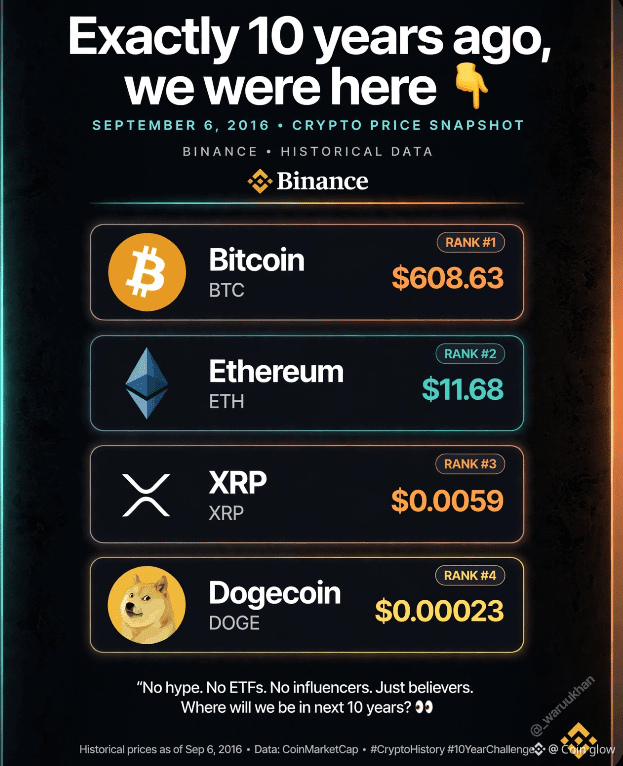
Exactly 10 years ago, we were here 👇
September 6, 2016
₿ Bitcoin: $608.63
Ξ Ethereum: $11.68
XRP: $0.0059
Ð Dogecoin: $0.00023
No hype. No ETFs. No influencers. Just believers.
Where will we be in next 10 years? 👀
#CryptoHistory #10YearChallenge #BinanceSquareFamily
$BTC $XRP $ETH
Exactly 10 years ago, we were here 👇
September 6, 2016
₿ Bitcoin: $608.63
Ξ Ethereum: $11.68
XRP: $0.0059
Ð Dogecoin: $0.00023
No hype. No ETFs. No influencers. Just believers.
Where will we be in next 10 years? 👀
#CryptoHistory #10YearChallenge #BinanceSquareFamily
$BTC $XRP $ETH
September 6, 2016
₿ Bitcoin: $608.63
Ξ Ethereum: $11.68
XRP: $0.0059
Ð Dogecoin: $0.00023
No hype. No ETFs. No influencers. Just believers.
Where will we be in next 10 years? 👀
#CryptoHistory #10YearChallenge #BinanceSquareFamily
$BTC $XRP $ETH
47

·
--

Article
Ancient $BTC Wallets Turn $120 Into $3 Million: What It Means for New InvestorsHave you ever wondered how a handful of old Bitcoin wallets can still move millions of dollars? The recent surge of activity from decade‑old wallets—moving a combined $15.7 million in just a week—shows that even the earliest adopters are still in the game, and their moves can teach us a lot about the market’s hidden dynamics.
The Concept
Bitcoin’s early days were all about experimentation and a small community of enthusiasts. Those first wallets, created in 2014 and earlier, were often left untouched, like a time capsule. When a wallet finally decides to move its funds, it can signal a shift in sentiment or a strategic sale. Think of it as a veteran investor deciding to cash out after years of holding, which can ripple through the market. #BitcoinBasics #CryptoHistory
Real‑World Example
Between August 29 and September 4, four old wallets collectively transferred $15.7 million. One notable batch was sent to Coinbase, a move that many interpret as a sale. This isn’t just a random dump; it’s a calculated exit that can influence price movements. When large holders (whales) move their coins, it often precedes market swings, giving traders a chance to adjust their strategies. The fact that these wallets are decades old adds a layer of intrigue—imagine a 2010 investor suddenly deciding to liquidate a massive position in 2026.
Takeaway
If you’re new to crypto, keep an eye on wallet activity. Tools like blockchain explorers let you track large transfers and spot potential market catalysts. Remember, the market is a living ecosystem where even the oldest players can still shape the future. Start by monitoring $BTC wallet movements and use that data to inform your own buying or selling decisions. #CryptoEducation
What do you think—will the next wave of old wallet activity signal a new trend, or is it just a one‑off event?
Ancient $BTC Wallets Turn $120 Into $3 Million: What It Means for New Investors
Have you ever wondered how a handful of old Bitcoin wallets can still move millions of dollars? The recent surge of activity from decade‑old wallets—moving a combined $15.7 million in just a week—shows that even the earliest adopters are still in the game, and their moves can teach us a lot about the market’s hidden dynamics.
The Concept
Bitcoin’s early days were all about experimentation and a small community of enthusiasts. Those first wallets, created in 2014 and earlier, were often left untouched, like a time capsule. When a wallet finally decides to move its funds, it can signal a shift in sentiment or a strategic sale. Think of it as a veteran investor deciding to cash out after years of holding, which can ripple through the market. #BitcoinBasics #CryptoHistory
Real‑World Example
Between August 29 and September 4, four old wallets collectively transferred $15.7 million. One notable batch was sent to Coinbase, a move that many interpret as a sale. This isn’t just a random dump; it’s a calculated exit that can influence price movements. When large holders (whales) move their coins, it often precedes market swings, giving traders a chance to adjust their strategies. The fact that these wallets are decades old adds a layer of intrigue—imagine a 2010 investor suddenly deciding to liquidate a massive position in 2026.
Takeaway
If you’re new to crypto, keep an eye on wallet activity. Tools like blockchain explorers let you track large transfers and spot potential market catalysts. Remember, the market is a living ecosystem where even the oldest players can still shape the future. Start by monitoring $BTC wallet movements and use that data to inform your own buying or selling decisions. #CryptoEducation
What do you think—will the next wave of old wallet activity signal a new trend, or is it just a one‑off event?
The Concept
Bitcoin’s early days were all about experimentation and a small community of enthusiasts. Those first wallets, created in 2014 and earlier, were often left untouched, like a time capsule. When a wallet finally decides to move its funds, it can signal a shift in sentiment or a strategic sale. Think of it as a veteran investor deciding to cash out after years of holding, which can ripple through the market. #BitcoinBasics #CryptoHistory
Real‑World Example
Between August 29 and September 4, four old wallets collectively transferred $15.7 million. One notable batch was sent to Coinbase, a move that many interpret as a sale. This isn’t just a random dump; it’s a calculated exit that can influence price movements. When large holders (whales) move their coins, it often precedes market swings, giving traders a chance to adjust their strategies. The fact that these wallets are decades old adds a layer of intrigue—imagine a 2010 investor suddenly deciding to liquidate a massive position in 2026.
Takeaway
If you’re new to crypto, keep an eye on wallet activity. Tools like blockchain explorers let you track large transfers and spot potential market catalysts. Remember, the market is a living ecosystem where even the oldest players can still shape the future. Start by monitoring $BTC wallet movements and use that data to inform your own buying or selling decisions. #CryptoEducation
What do you think—will the next wave of old wallet activity signal a new trend, or is it just a one‑off event?
24

·
--
🚨⚡ $ETH CHANGED FOREVER HERE, AND EVERY HOLDER SHOULD KNOW WHY.
$ETH HOLDERS, THIS ONE MATTERS. 👀
More than 3.6 million ETH left a vulnerable contract. Ethereum answered with a chain split.
The 2016 DAO attack drained more than 3.6 million ETH from an insecure contract. The community voted for a fork that moved affected funds to a withdrawal contract, while miners who rejected that decision continued the chain now known as Ethereum Classic.
The shockwave
A smart-contract failure became a debate about whether code, community consensus, or recovery should define a blockchain.
The lesson
Technology risk does not end at price. Governance decisions can permanently reshape an ecosystem.
🧠 THE EDGE
Keep this fork on your radar; one crisis permanently reshaped Ethereum.
🔥 Keep $ETH on your radar. $ETH history does not repeat quietly.
$ETH #ETH #CryptoStory #CryptoHistory
🚨⚡ $ETH CHANGED FOREVER HERE, AND EVERY HOLDER SHOULD KNOW WHY.
$ETH HOLDERS, THIS ONE MATTERS. 👀
More than 3.6 million ETH left a vulnerable contract. Ethereum answered with a chain split.
The 2016 DAO attack drained more than 3.6 million ETH from an insecure contract. The community voted for a fork that moved affected funds to a withdrawal contract, while miners who rejected that decision continued the chain now known as Ethereum Classic.
The shockwave
A smart-contract failure became a debate about whether code, community consensus, or recovery should define a blockchain.
The lesson
Technology risk does not end at price. Governance decisions can permanently reshape an ecosystem.
🧠 THE EDGE
Keep this fork on your radar; one crisis permanently reshaped Ethereum.
🔥 Keep $ETH on your radar. $ETH history does not repeat quietly.
$ETH #ETH #CryptoStory #CryptoHistory
$ETH HOLDERS, THIS ONE MATTERS. 👀
More than 3.6 million ETH left a vulnerable contract. Ethereum answered with a chain split.
The 2016 DAO attack drained more than 3.6 million ETH from an insecure contract. The community voted for a fork that moved affected funds to a withdrawal contract, while miners who rejected that decision continued the chain now known as Ethereum Classic.
The shockwave
A smart-contract failure became a debate about whether code, community consensus, or recovery should define a blockchain.
The lesson
Technology risk does not end at price. Governance decisions can permanently reshape an ecosystem.
🧠 THE EDGE
Keep this fork on your radar; one crisis permanently reshaped Ethereum.
🔥 Keep $ETH on your radar. $ETH history does not repeat quietly.
$ETH #ETH #CryptoStory #CryptoHistory
65

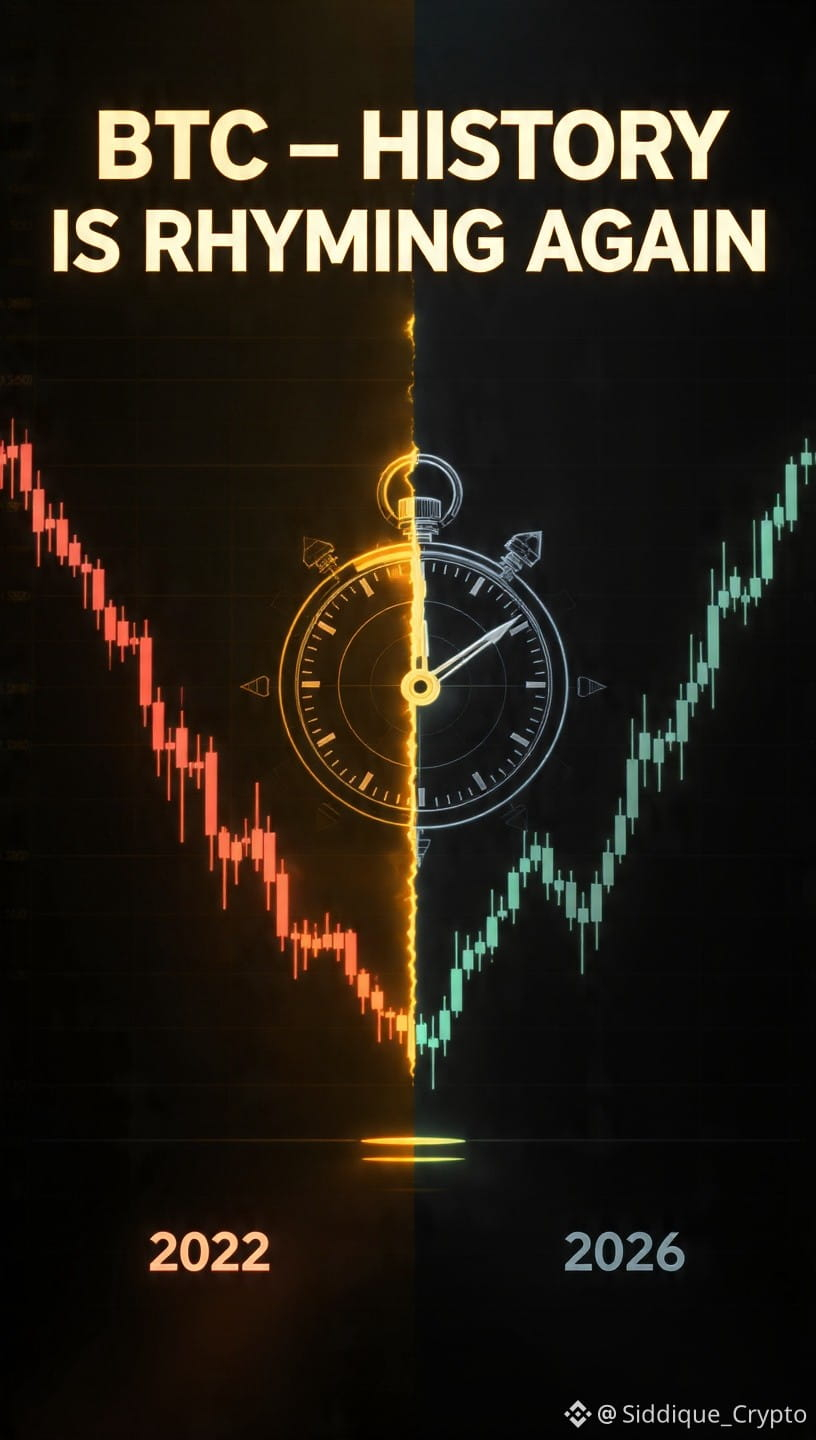
$BTC — History Is Rhyming Again 👀📊
One of the most powerful concepts in markets — history does not repeat exactly but it rhymes. And right now Bitcoin is showing a familiar pattern.
2022 Cycle:
📉 Lost key support level
💀 Massive capitulation followed
😱 Maximum fear and panic
📊 Everyone called Bitcoin dead
🚀 That exact zone became the launchpad for the next bull run
2026 Right Now:
📊 Similar consolidation pattern forming
👀 Same type of fear and uncertainty present
🔄 Identical structure playing out on the charts
⚡ Current zone mirrors previous bull run ignition point
Why cycle comparisons matter:
📊 Bitcoin has followed remarkably similar macro patterns each cycle
👥 Human psychology drives markets — fear and greed repeat
🔄 Capitulation zones historically become accumulation zones
🧠 Those who understood the pattern in 2022 were rewarded
Important reality check:
⚠️ History rhymes — it does not repeat exactly
⚠️ Macro conditions in 2026 are different from 2022
⚠️ New Fed Chair and geopolitical tensions add uncertainty
⚠️ Pattern recognition is a tool — not a guarantee
The key question:
Is 2026 consolidation zone the same ignition point that 2022 created? 👀
Time will tell — but the pattern is impossible to ignore. 📊
💬 Do you think history is repeating for BTC? Drop below!
DYOR — Not financial advice! 🙏
#bitcoin #BTC #MarketCycles #CryptoHistory #dyor
$BTC — History Is Rhyming Again 👀📊
One of the most powerful concepts in markets — history does not repeat exactly but it rhymes. And right now Bitcoin is showing a familiar pattern.
2022 Cycle:
📉 Lost key support level
💀 Massive capitulation followed
😱 Maximum fear and panic
📊 Everyone called Bitcoin dead
🚀 That exact zone became the launchpad for the next bull run
2026 Right Now:
📊 Similar consolidation pattern forming
👀 Same type of fear and uncertainty present
🔄 Identical structure playing out on the charts
⚡ Current zone mirrors previous bull run ignition point
Why cycle comparisons matter:
📊 Bitcoin has followed remarkably similar macro patterns each cycle
👥 Human psychology drives markets — fear and greed repeat
🔄 Capitulation zones historically become accumulation zones
🧠 Those who understood the pattern in 2022 were rewarded
Important reality check:
⚠️ History rhymes — it does not repeat exactly
⚠️ Macro conditions in 2026 are different from 2022
⚠️ New Fed Chair and geopolitical tensions add uncertainty
⚠️ Pattern recognition is a tool — not a guarantee
The key question:
Is 2026 consolidation zone the same ignition point that 2022 created? 👀
Time will tell — but the pattern is impossible to ignore. 📊
💬 Do you think history is repeating for BTC? Drop below!
DYOR — Not financial advice! 🙏
#bitcoin #BTC #MarketCycles #CryptoHistory #dyor
One of the most powerful concepts in markets — history does not repeat exactly but it rhymes. And right now Bitcoin is showing a familiar pattern.
2022 Cycle:
📉 Lost key support level
💀 Massive capitulation followed
😱 Maximum fear and panic
📊 Everyone called Bitcoin dead
🚀 That exact zone became the launchpad for the next bull run
2026 Right Now:
📊 Similar consolidation pattern forming
👀 Same type of fear and uncertainty present
🔄 Identical structure playing out on the charts
⚡ Current zone mirrors previous bull run ignition point
Why cycle comparisons matter:
📊 Bitcoin has followed remarkably similar macro patterns each cycle
👥 Human psychology drives markets — fear and greed repeat
🔄 Capitulation zones historically become accumulation zones
🧠 Those who understood the pattern in 2022 were rewarded
Important reality check:
⚠️ History rhymes — it does not repeat exactly
⚠️ Macro conditions in 2026 are different from 2022
⚠️ New Fed Chair and geopolitical tensions add uncertainty
⚠️ Pattern recognition is a tool — not a guarantee
The key question:
Is 2026 consolidation zone the same ignition point that 2022 created? 👀
Time will tell — but the pattern is impossible to ignore. 📊
💬 Do you think history is repeating for BTC? Drop below!
DYOR — Not financial advice! 🙏
#bitcoin #BTC #MarketCycles #CryptoHistory #dyor
140

·
--
Bullish
We all know the legendary story: on May 22, 2010, Laszlo Hanyecz bought two pizzas for 10,000 $BTC. At the time, it was just a fun experiment worth about $41. Today? Those pizzas are worth hundreds of millions of dollars! 🤯
But Binance Pizza Day isn't just a meme—it's a reminder of how fast the crypto space evolves.
What started as a niche digital currency used to buy fast food has transformed into a global financial ecosystem. With institutional adoption rising, Layer-2 scaling, and massive ecosystems built on networks like $BNB and $SOL, the utility of crypto is expanding way beyond just a store of value.
💡 The Big Takeaway: Market cycles will always have ups and downs, but the long-term trend of adoption hasn't stopped. Every pullback in history has eventually led to new infrastructure and new highs.
Are you a HODLer waiting for the next big wave, or are you actively trading the daily ranges? Drop your strategy below! 👇
#BinancePizzaDay🍕 #CryptoHistory $BTC # #bitcoin #writetoearn
We all know the legendary story: on May 22, 2010, Laszlo Hanyecz bought two pizzas for 10,000 $BTC . At the time, it was just a fun experiment worth about $41. Today? Those pizzas are worth hundreds of millions of dollars! 🤯
But Binance Pizza Day isn't just a meme—it's a reminder of how fast the crypto space evolves.
What started as a niche digital currency used to buy fast food has transformed into a global financial ecosystem. With institutional adoption rising, Layer-2 scaling, and massive ecosystems built on networks like $BNB and $SOL, the utility of crypto is expanding way beyond just a store of value.
💡 The Big Takeaway: Market cycles will always have ups and downs, but the long-term trend of adoption hasn't stopped. Every pullback in history has eventually led to new infrastructure and new highs.
Are you a HODLer waiting for the next big wave, or are you actively trading the daily ranges? Drop your strategy below! 👇
#BinancePizzaDay🍕 #CryptoHistory $BTC # #bitcoin #writetoearn
But Binance Pizza Day isn't just a meme—it's a reminder of how fast the crypto space evolves.
What started as a niche digital currency used to buy fast food has transformed into a global financial ecosystem. With institutional adoption rising, Layer-2 scaling, and massive ecosystems built on networks like $BNB and $SOL, the utility of crypto is expanding way beyond just a store of value.
💡 The Big Takeaway: Market cycles will always have ups and downs, but the long-term trend of adoption hasn't stopped. Every pullback in history has eventually led to new infrastructure and new highs.
Are you a HODLer waiting for the next big wave, or are you actively trading the daily ranges? Drop your strategy below! 👇
#BinancePizzaDay🍕 #CryptoHistory $BTC # #bitcoin #writetoearn
1
1
162
Log in to explore more content
Join global crypto users on Binance Square
⚡️ Get latest and useful information about crypto.
💬 Trusted by the world’s largest crypto exchange.
👍 Discover real insights from verified creators.
Email / Phone number
Trending Topics
1
#ZcashETFPostsFirstWeeklyOutflow$93.6M
5,263 views
34 Discussing
2
#GreekPoliceBustCryptoScamRingArrest17
7,008 views
157 Discussing
3
#BitcoinRejectedAt$87K
66,403 views
99 Discussing
4
#FedOctoberRateHikeOddsFallTo17%
37,525 views
560 Discussing
5
#NvidiaHitsRecordHighUp2.4%
18,802 views
379 Discussing
6
#CanaryFilesAmendedS1ForPEPEETF
8,100 views
254 Discussing
7
#USRussiaUkraineTalksReportedlyIncludeLukoilOilDeal
16,804 views
308 Discussing
8
#BitcoinParesGainsAfterRallyTo$86.5K
40,973 views
154 Discussing
9
#CerebrasSinksNearly20%OnReportNvidiaToPowerOpenAI
93,082 views
910 Discussing
10
#SECProposesCryptoCustodyRules
119,757 views
1,114 Discussing