
#bitcoinhaving
bitcoinhaving
301,501 views
726 Discussing
Hot
Latest


·
--
Bullish
$Bitcoin crose $79000 #bitcoin #Bitcoinhaving
$Bitcoin crose $79000 #bitcoin #Bitcoinhaving

78

·
--
Bullish
A Bitcoin I Buy Last week with 0.63 Usdt goes to 1.37Usdt, I think it will be Something Great if hold The Bitcoin till 2030 #BitcoinMaximalism #Bitcoinhaving
A Bitcoin I Buy Last week with 0.63 Usdt goes to 1.37Usdt, I think it will be Something Great if hold The Bitcoin till 2030 #BitcoinMaximalism #Bitcoinhaving
55

Bitcoin pump
Bitcoin halving#Bitcoinhaving $
Bitcoin pump
Bitcoin halving#Bitcoinhaving $
Bitcoin halving#Bitcoinhaving $
8


·
--
#BTCPerpFundingRateHits20MonthHigh $BTC
The perpetual swap market is sending a strong signal: Bitcoin’s funding rates have just surged to a 20-month high.
Long traders are heavily paying shorts to keep their leveraged positions open, reflecting the aggressive bullish bias dominating derivatives platforms right now.
What this means for the market:
• Bulls in Control: High positive funding shows strong conviction among traders aiming for the next major breakout.
• Liquidation Risk: Over-leveraged long positions leave the market vulnerable. Any sharp downward move or overhead resistance test could trigger a long squeeze.
• Divergence Check: Futures bias is high, but spot volume needs to match this momentum for a clean, sustained move.
Keep your risk managed and stick to your strategy—high funding environments bring high volatility. 🧠⚡
$ETH $BNB
#Bitcoinhaving
#BTCPerpFundingRateHits20MonthHigh $BTC
The perpetual swap market is sending a strong signal: Bitcoin’s funding rates have just surged to a 20-month high.
Long traders are heavily paying shorts to keep their leveraged positions open, reflecting the aggressive bullish bias dominating derivatives platforms right now.
What this means for the market:
• Bulls in Control: High positive funding shows strong conviction among traders aiming for the next major breakout.
• Liquidation Risk: Over-leveraged long positions leave the market vulnerable. Any sharp downward move or overhead resistance test could trigger a long squeeze.
• Divergence Check: Futures bias is high, but spot volume needs to match this momentum for a clean, sustained move.
Keep your risk managed and stick to your strategy—high funding environments bring high volatility. 🧠⚡
$ETH $BNB
#Bitcoinhaving
The perpetual swap market is sending a strong signal: Bitcoin’s funding rates have just surged to a 20-month high.
Long traders are heavily paying shorts to keep their leveraged positions open, reflecting the aggressive bullish bias dominating derivatives platforms right now.
What this means for the market:
• Bulls in Control: High positive funding shows strong conviction among traders aiming for the next major breakout.
• Liquidation Risk: Over-leveraged long positions leave the market vulnerable. Any sharp downward move or overhead resistance test could trigger a long squeeze.
• Divergence Check: Futures bias is high, but spot volume needs to match this momentum for a clean, sustained move.
Keep your risk managed and stick to your strategy—high funding environments bring high volatility. 🧠⚡
$ETH $BNB
#Bitcoinhaving

5
396

Something BIG is coming for $BITCOIN 🤩
I really hope you're positioned🤫🤫
Major news could be just around the corner, and the market is showing signs that volatility may be about to return. Whether it's a major institutional announcement, regulatory development, or a significant market catalyst, Bitcoin could be preparing for a decisive move.
Smart investors are staying alert and watching the charts closely. If this turns out to be the catalyst many are expecting, the next move could catch a lot of people by surprise.
{future}(BTCUSDT)
#Bitcoinhaving
#Bitcoin
#BTC
Something BIG is coming for $BITCOIN 🤩
I really hope you're positioned🤫🤫
Major news could be just around the corner, and the market is showing signs that volatility may be about to return. Whether it's a major institutional announcement, regulatory development, or a significant market catalyst, Bitcoin could be preparing for a decisive move.
Smart investors are staying alert and watching the charts closely. If this turns out to be the catalyst many are expecting, the next move could catch a lot of people by surprise.
#Bitcoinhaving
#Bitcoin
#BTC
I really hope you're positioned🤫🤫
Major news could be just around the corner, and the market is showing signs that volatility may be about to return. Whether it's a major institutional announcement, regulatory development, or a significant market catalyst, Bitcoin could be preparing for a decisive move.
Smart investors are staying alert and watching the charts closely. If this turns out to be the catalyst many are expecting, the next move could catch a lot of people by surprise.
#Bitcoinhaving
#Bitcoin
#BTC
61

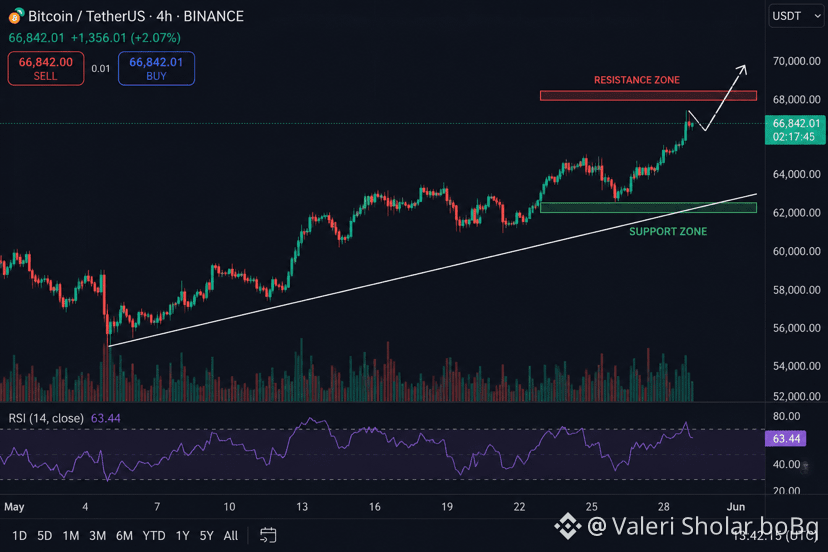
$BTC Update🚨
🔹 Bitcoin remains bullish above key support levels.
🔹 Buyers are still controlling the market structure.
🔹 A breakout above recent resistance could trigger another upward move.
🔹 Short-term pullbacks may offer fresh entry opportunities.
🔹 Risk management remains important due to market volatility.
Trading View:
📌 Bias: Bullish
📌 Support Zone: Recent swing lows
📌 Target: Next resistance level and new highs if momentum continues
#BTC #Bitcoinhaving
{spot}(BTCUSDT)
$BTC Update🚨
🔹 Bitcoin remains bullish above key support levels.
🔹 Buyers are still controlling the market structure.
🔹 A breakout above recent resistance could trigger another upward move.
🔹 Short-term pullbacks may offer fresh entry opportunities.
🔹 Risk management remains important due to market volatility.
Trading View:
📌 Bias: Bullish
📌 Support Zone: Recent swing lows
📌 Target: Next resistance level and new highs if momentum continues
#BTC #Bitcoinhaving
🔹 Bitcoin remains bullish above key support levels.
🔹 Buyers are still controlling the market structure.
🔹 A breakout above recent resistance could trigger another upward move.
🔹 Short-term pullbacks may offer fresh entry opportunities.
🔹 Risk management remains important due to market volatility.
Trading View:
📌 Bias: Bullish
📌 Support Zone: Recent swing lows
📌 Target: Next resistance level and new highs if momentum continues
#BTC #Bitcoinhaving
98

·
--
$BTC Bitcoin is trading near $62.8K as market pressure continues. Short-term volatility remains high, but long-term holders are still accumulating BTC. 📈💎#Bitcoinhaving #BinanceSquareTalks #BTC
$BTC Bitcoin is trading near $62.8K as market pressure continues. Short-term volatility remains high, but long-term holders are still accumulating BTC. 📈💎#Bitcoinhaving #BinanceSquareTalks #BTC

1
88

·
--
BTC may be heading toward the $52K–$55K zone.
A short-term consolidation there may follow before the next major move.
BTC's next move after reaching the $52K–$55K zone?
{future}(BTCUSDT)
BitcoinFallsTo$62K #BTC #Bitcoinhaving #TechnicalAnalysis
BTC may be heading toward the $52K–$55K zone.
A short-term consolidation there may follow before the next major move.
BTC's next move after reaching the $52K–$55K zone?
BitcoinFallsTo$62K #BTC #Bitcoinhaving #TechnicalAnalysis
A short-term consolidation there may follow before the next major move.
BTC's next move after reaching the $52K–$55K zone?
BitcoinFallsTo$62K #BTC #Bitcoinhaving #TechnicalAnalysis
Continuation of the downtrend
38%
Consolidation in this zone
25%
Strong reversal and recovery
12%
Need more confirmation
25%
8 votes • Voting closed
1
213

·
--
Bitcoin is holding steady as the markets await developments.Bitcoin is holding steady as the markets await developments.
Bitcoin is experiencing relative stability in today's trading despite ongoing caution in the global markets. Investors are closely watching the Federal Reserve's decisions regarding interest rates, which directly impact the crypto market.
Analysts believe that Bitcoin holding its current support levels could trigger a new altcoin rally in the near future, especially with rising trading volumes and ongoing institutional investor interest.
Bitcoin is holding steady as the markets await developments.
Bitcoin is holding steady as the markets await developments.
Bitcoin is experiencing relative stability in today's trading despite ongoing caution in the global markets. Investors are closely watching the Federal Reserve's decisions regarding interest rates, which directly impact the crypto market.
Analysts believe that Bitcoin holding its current support levels could trigger a new altcoin rally in the near future, especially with rising trading volumes and ongoing institutional investor interest.
Bitcoin is experiencing relative stability in today's trading despite ongoing caution in the global markets. Investors are closely watching the Federal Reserve's decisions regarding interest rates, which directly impact the crypto market.
Analysts believe that Bitcoin holding its current support levels could trigger a new altcoin rally in the near future, especially with rising trading volumes and ongoing institutional investor interest.
90
·
--
Bullish
🚨 The Market Is Sending a Clear Signal... Are You Watching?
While most traders are waiting for the next big pump, smart money is quietly positioning itself.
📊 Things I'm watching:
✅ Bitcoin holding key support levels
✅ AI tokens showing strong relative strength
✅ Stablecoin inflows increasing again
✅ Exchange reserves continuing to decline
Historically, these signals appear before major market expansions.
My watchlist this month:
🔹 BTC
🔹 ETH
🔹 BNB
🔹 LINK
🔹 TAO
Remember:
"The biggest profits are usually made before the crowd becomes bullish."
What's your highest conviction coin right now? 👇
#Bitcoinhaving
{future}(BTCUSDT)
{future}(BNBUSDT)
$BTC #bnblauncpool #BinanceSquareTalks #altcoins
🚨 The Market Is Sending a Clear Signal... Are You Watching?
While most traders are waiting for the next big pump, smart money is quietly positioning itself.
📊 Things I'm watching:
✅ Bitcoin holding key support levels
✅ AI tokens showing strong relative strength
✅ Stablecoin inflows increasing again
✅ Exchange reserves continuing to decline
Historically, these signals appear before major market expansions.
My watchlist this month:
🔹 BTC
🔹 ETH
🔹 BNB
🔹 LINK
🔹 TAO
Remember:
"The biggest profits are usually made before the crowd becomes bullish."
What's your highest conviction coin right now? 👇
#Bitcoinhaving
$BTC #bnblauncpool #BinanceSquareTalks #altcoins
While most traders are waiting for the next big pump, smart money is quietly positioning itself.
📊 Things I'm watching:
✅ Bitcoin holding key support levels
✅ AI tokens showing strong relative strength
✅ Stablecoin inflows increasing again
✅ Exchange reserves continuing to decline
Historically, these signals appear before major market expansions.
My watchlist this month:
🔹 BTC
🔹 ETH
🔹 BNB
🔹 LINK
🔹 TAO
Remember:
"The biggest profits are usually made before the crowd becomes bullish."
What's your highest conviction coin right now? 👇
#Bitcoinhaving
$BTC #bnblauncpool #BinanceSquareTalks #altcoins
94
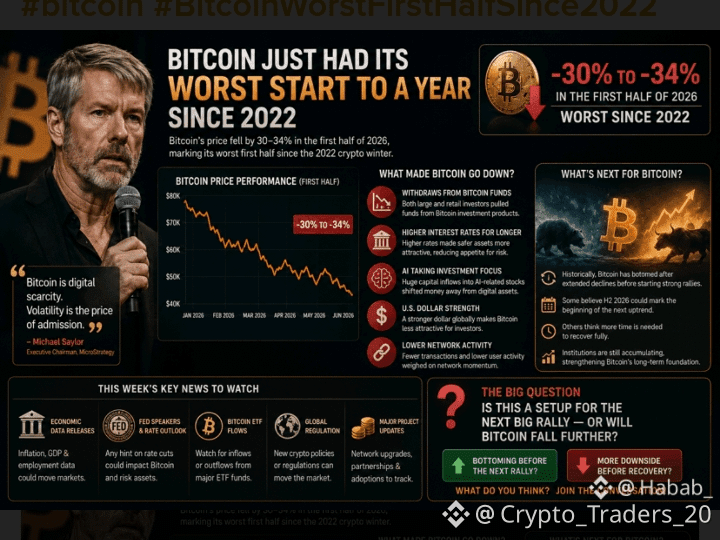
$BITCOIN just recorded its weakest first half of the year since 2022.
During the first six months of 2026, $BITCOIN declined by roughly 30–34%, making it the toughest start to a year since the 2022 crypto bear market.
The recent downturn has been driven by macroeconomic uncertainty, cautious investor sentiment, and reduced risk appetite across financial markets. Despite the price weakness, institutional interest continues to grow, showing that long-term confidence in Bitcoin remains intact.
So, what pushed $BITCOIN lower? 👇
🔻 Heavy outflows from Bitcoin investment funds.
Both institutional and retail investors pulled capital from Bitcoin-focused funds, choosing to reduce their exposure amid market uncertainty. These sustained outflows increased selling pressure and contributed to Bitcoin's decline throughout the first half of the year.
While short-term sentiment remains cautious, many investors are watching closely to see whether stronger institutional participation can help fuel the next recovery.
#Bitcoinhaving #ETH🔥🔥🔥🔥🔥🔥
#USDT。
{future}(ETHUSDT)
{future}(BTCUSDT)
$BITCOIN just recorded its weakest first half of the year since 2022.
During the first six months of 2026, $BITCOIN declined by roughly 30–34%, making it the toughest start to a year since the 2022 crypto bear market.
The recent downturn has been driven by macroeconomic uncertainty, cautious investor sentiment, and reduced risk appetite across financial markets. Despite the price weakness, institutional interest continues to grow, showing that long-term confidence in Bitcoin remains intact.
So, what pushed $BITCOIN lower? 👇
🔻 Heavy outflows from Bitcoin investment funds.
Both institutional and retail investors pulled capital from Bitcoin-focused funds, choosing to reduce their exposure amid market uncertainty. These sustained outflows increased selling pressure and contributed to Bitcoin's decline throughout the first half of the year.
While short-term sentiment remains cautious, many investors are watching closely to see whether stronger institutional participation can help fuel the next recovery.
#Bitcoinhaving #ETH🔥🔥🔥🔥🔥🔥
#USDT。
During the first six months of 2026, $BITCOIN declined by roughly 30–34%, making it the toughest start to a year since the 2022 crypto bear market.
The recent downturn has been driven by macroeconomic uncertainty, cautious investor sentiment, and reduced risk appetite across financial markets. Despite the price weakness, institutional interest continues to grow, showing that long-term confidence in Bitcoin remains intact.
So, what pushed $BITCOIN lower? 👇
🔻 Heavy outflows from Bitcoin investment funds.
Both institutional and retail investors pulled capital from Bitcoin-focused funds, choosing to reduce their exposure amid market uncertainty. These sustained outflows increased selling pressure and contributed to Bitcoin's decline throughout the first half of the year.
While short-term sentiment remains cautious, many investors are watching closely to see whether stronger institutional participation can help fuel the next recovery.
#Bitcoinhaving #ETH🔥🔥🔥🔥🔥🔥
#USDT。
1
72
·
--

Article
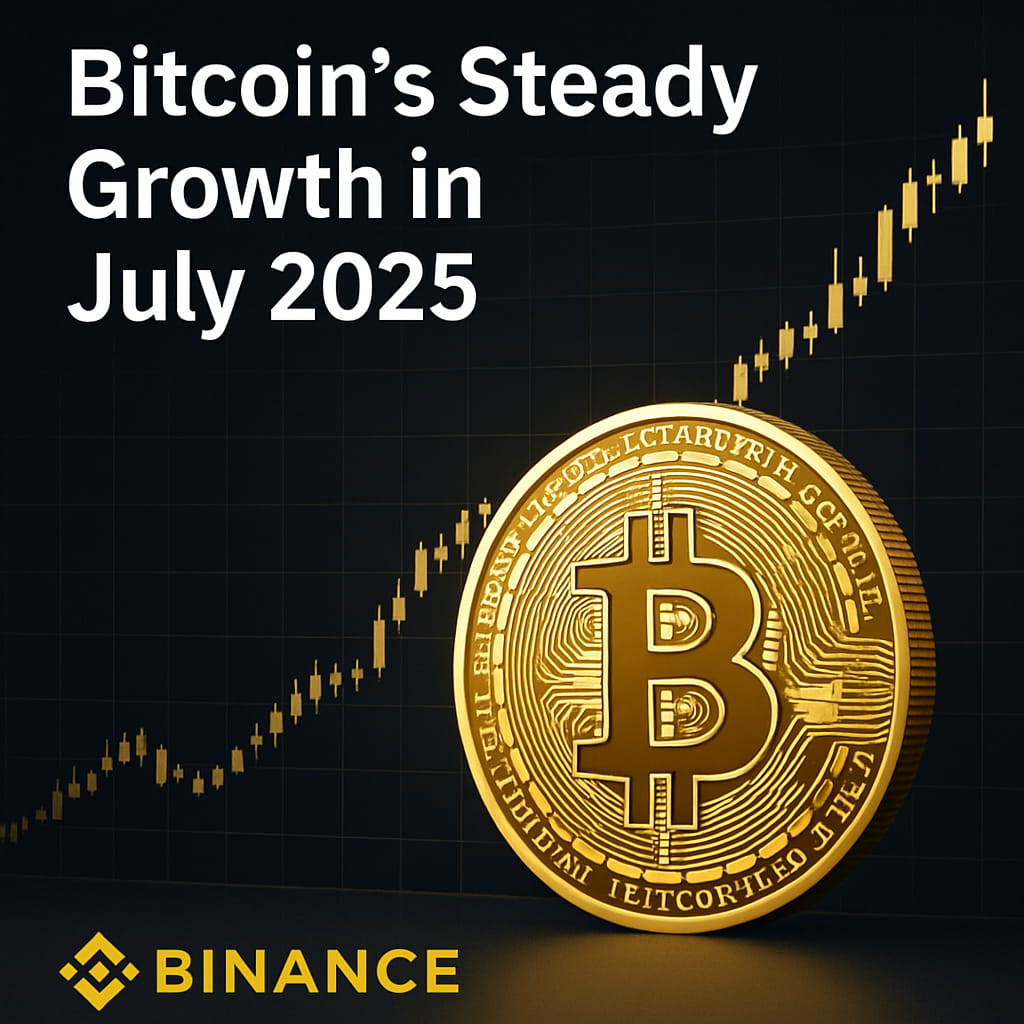
#Bitcoin Ethereum hit multi month highs$BITCOIN oin and $ETH hereum climbed to multi-month highs in early September 2026, with $BTC pushing above $80,000–$81,000 and ETH breaking past $2,500
#Bitcoinhaving
#BitcoinDunyamiz
#Bitcoin Ethereum hit multi month highs
$BITCOIN oin and $ETH hereum climbed to multi-month highs in early September 2026, with $BTC pushing above $80,000–$81,000 and ETH breaking past $2,500
#Bitcoinhaving
#BitcoinDunyamiz
#Bitcoinhaving
#BitcoinDunyamiz
37

WHY IS BITCOIN SO HARD TO DESTROY? ₿
Bitcoin has something no central bank can simply create: a decentralized network with no single owner.
Who stands behind Bitcoin?
Not a government. Not a company.
Its strength comes from thousands of participants: miners, developers, nodes, users and investors who keep the network operating.
Bitcoin also survives because its rules are built into its protocol: limited supply, decentralized validation and a network spread across the world.
Could Bitcoin collapse? Of course, no asset is risk-free.
But destroying Bitcoin would require more than crashing its price — it would require breaking the global network that supports it.
Bitcoin’s greatest strength may be that there is no single point of failure.
#Bitcoin #BTC突破7万大关 #Bitcoinhaving
WHY IS BITCOIN SO HARD TO DESTROY? ₿
Bitcoin has something no central bank can simply create: a decentralized network with no single owner.
Who stands behind Bitcoin?
Not a government. Not a company.
Its strength comes from thousands of participants: miners, developers, nodes, users and investors who keep the network operating.
Bitcoin also survives because its rules are built into its protocol: limited supply, decentralized validation and a network spread across the world.
Could Bitcoin collapse? Of course, no asset is risk-free.
But destroying Bitcoin would require more than crashing its price — it would require breaking the global network that supports it.
Bitcoin’s greatest strength may be that there is no single point of failure.
#Bitcoin #BTC突破7万大关 #Bitcoinhaving
Bitcoin has something no central bank can simply create: a decentralized network with no single owner.
Who stands behind Bitcoin?
Not a government. Not a company.
Its strength comes from thousands of participants: miners, developers, nodes, users and investors who keep the network operating.
Bitcoin also survives because its rules are built into its protocol: limited supply, decentralized validation and a network spread across the world.
Could Bitcoin collapse? Of course, no asset is risk-free.
But destroying Bitcoin would require more than crashing its price — it would require breaking the global network that supports it.
Bitcoin’s greatest strength may be that there is no single point of failure.
#Bitcoin #BTC突破7万大关 #Bitcoinhaving
2
1
181

·
--

Article
My BTC take$BTC still looks strong, but I’m not chasing the pump. I’d rather see a healthy pullback and watch how buyers react at support.
Patience > FOMO.
#bitcoin #thought #Bitcoinhaving #BitcoinForecast #BitcoinWarnings
My BTC take
$BTC still looks strong, but I’m not chasing the pump. I’d rather see a healthy pullback and watch how buyers react at support.
Patience > FOMO.
#bitcoin #thought #Bitcoinhaving #BitcoinForecast #BitcoinWarnings
Patience > FOMO.
#bitcoin #thought #Bitcoinhaving #BitcoinForecast #BitcoinWarnings
8

$BTC is around $79.5K, consolidating after a strong August recovery. The short-term structure is neutral-to-bullish, but volatility remains high. �
Reuters +1
📊 Key Levels
Resistance: $80,500 → $82,800
Bullish breakout: Above $82,800 could open a move toward $90,000+. �
Reuters
Support: $76,000 → $75,700
Major support: $71,800
Risk: A sustained break below $71,800 would weaken the bullish setup considerably. �
Reuters
🔥 Market View
Bitcoin gained roughly 25% in August, but September can historically be a difficult month for BTC. Rising expectations for U.S. rate hikes and geopolitical/inflation risks could create sharp pullbacks. �
MarketWatch +1
My short-term view: 🟢 Bullish above $82.8K | Neutral between $76K–$82.8K |
{spot}(BTCUSDT)
#BTC突破7万大关 #Bitcoinhaving
$BTC is around $79.5K, consolidating after a strong August recovery. The short-term structure is neutral-to-bullish, but volatility remains high. �
Reuters +1
📊 Key Levels
Resistance: $80,500 → $82,800
Bullish breakout: Above $82,800 could open a move toward $90,000+. �
Reuters
Support: $76,000 → $75,700
Major support: $71,800
Risk: A sustained break below $71,800 would weaken the bullish setup considerably. �
Reuters
🔥 Market View
Bitcoin gained roughly 25% in August, but September can historically be a difficult month for BTC. Rising expectations for U.S. rate hikes and geopolitical/inflation risks could create sharp pullbacks. �
MarketWatch +1
My short-term view: 🟢 Bullish above $82.8K | Neutral between $76K–$82.8K |
#BTC突破7万大关 #Bitcoinhaving
Reuters +1
📊 Key Levels
Resistance: $80,500 → $82,800
Bullish breakout: Above $82,800 could open a move toward $90,000+. �
Reuters
Support: $76,000 → $75,700
Major support: $71,800
Risk: A sustained break below $71,800 would weaken the bullish setup considerably. �
Reuters
🔥 Market View
Bitcoin gained roughly 25% in August, but September can historically be a difficult month for BTC. Rising expectations for U.S. rate hikes and geopolitical/inflation risks could create sharp pullbacks. �
MarketWatch +1
My short-term view: 🟢 Bullish above $82.8K | Neutral between $76K–$82.8K |
#BTC突破7万大关 #Bitcoinhaving

1
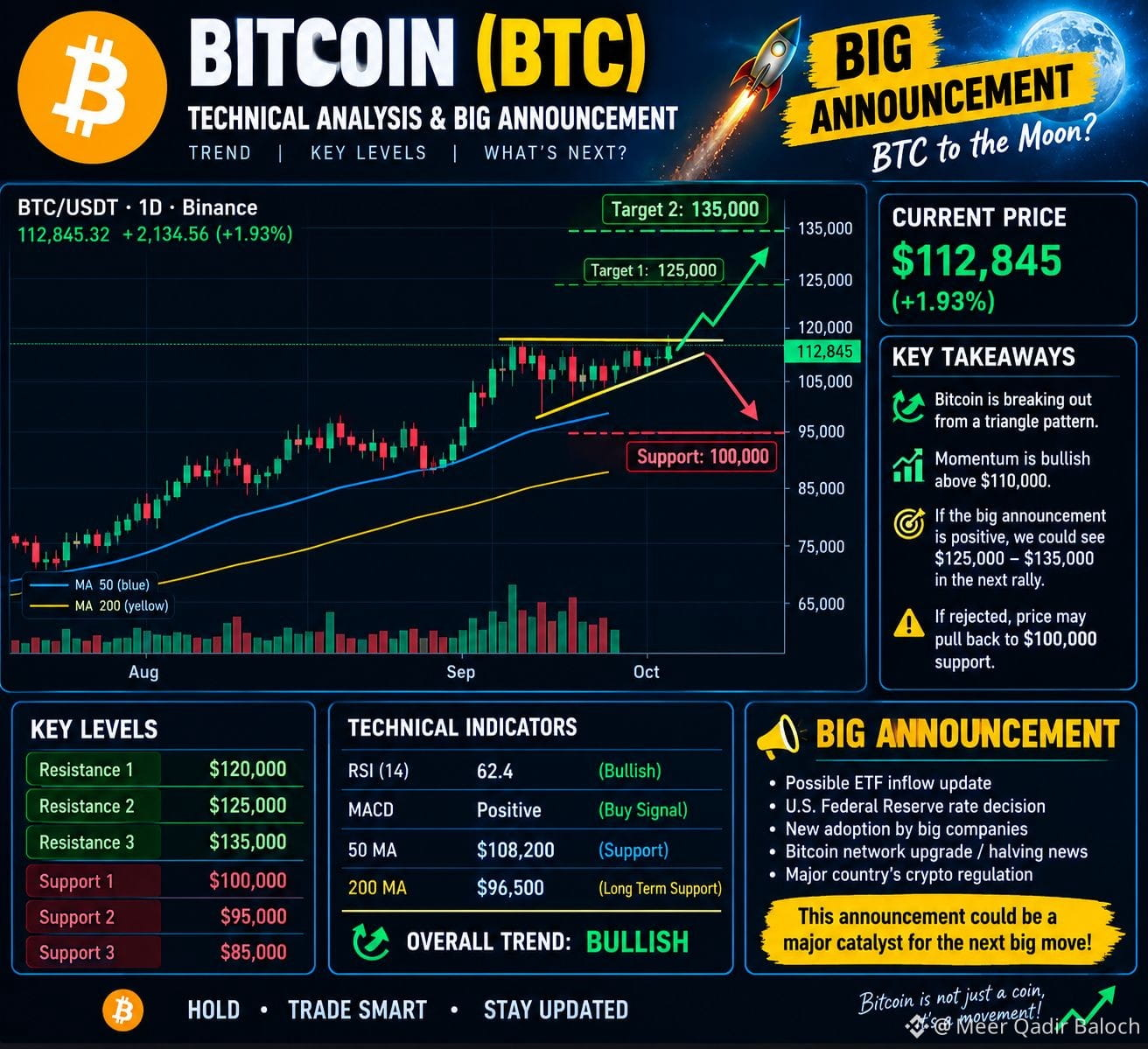
$BTC ) Latest Analysis — 7 Sep 2026
BTC is around $79.3K, consolidating just below the important $80K psychological level. Recent data shows Bitcoin has recovered strongly, but the market remains sensitive to U.S. interest-rate expectations. �
Reuters +1
🔹 Bullish scenario:
A clean break and daily close above $80K–$82K could open the way toward $90K, with the previous major resistance around $82.8K. �
Reuters
🔸 Key support:
Watch $76K–$78K. Holding this zone would keep the recovery structure intact; losing it could bring stronger selling pressure. �
21Shares
⚠️ Main risk:
Expect volatility around U.S. inflation and Federal Reserve rate expectations. Higher rates/yields can pressure Bitcoin and other risk assets. �
Reuters +1
🎯 Short-term view: Neutral → cautiously bullish above $78K, but BTC needs a convincing break above $82K to strengthen the bullish trend.
*Not financial advice—crypto remains highly volatile.*
{spot}(BTCUSDT)
#BitcoinDunyamiz #Bitcoinhaving
$BTC ) Latest Analysis — 7 Sep 2026
BTC is around $79.3K, consolidating just below the important $80K psychological level. Recent data shows Bitcoin has recovered strongly, but the market remains sensitive to U.S. interest-rate expectations. �
Reuters +1
🔹 Bullish scenario:
A clean break and daily close above $80K–$82K could open the way toward $90K, with the previous major resistance around $82.8K. �
Reuters
🔸 Key support:
Watch $76K–$78K. Holding this zone would keep the recovery structure intact; losing it could bring stronger selling pressure. �
21Shares
⚠️ Main risk:
Expect volatility around U.S. inflation and Federal Reserve rate expectations. Higher rates/yields can pressure Bitcoin and other risk assets. �
Reuters +1
🎯 Short-term view: Neutral → cautiously bullish above $78K, but BTC needs a convincing break above $82K to strengthen the bullish trend.
*Not financial advice—crypto remains highly volatile.*
#BitcoinDunyamiz #Bitcoinhaving
BTC is around $79.3K, consolidating just below the important $80K psychological level. Recent data shows Bitcoin has recovered strongly, but the market remains sensitive to U.S. interest-rate expectations. �
Reuters +1
🔹 Bullish scenario:
A clean break and daily close above $80K–$82K could open the way toward $90K, with the previous major resistance around $82.8K. �
Reuters
🔸 Key support:
Watch $76K–$78K. Holding this zone would keep the recovery structure intact; losing it could bring stronger selling pressure. �
21Shares
⚠️ Main risk:
Expect volatility around U.S. inflation and Federal Reserve rate expectations. Higher rates/yields can pressure Bitcoin and other risk assets. �
Reuters +1
🎯 Short-term view: Neutral → cautiously bullish above $78K, but BTC needs a convincing break above $82K to strengthen the bullish trend.
*Not financial advice—crypto remains highly volatile.*
#BitcoinDunyamiz #Bitcoinhaving
64

·
--
Bullish
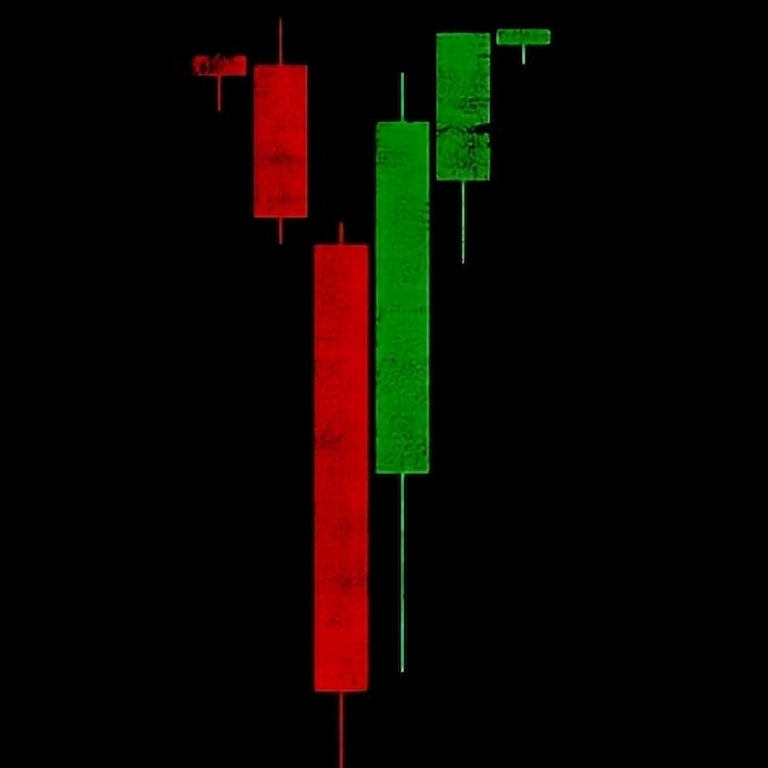
📊 A quick technical overview of the current movement of $BTC :
Bitcoin is now trading in a critical area between $79,500 and $80,000.
🔼 Positive scenario: A 4-hour candle close above $81,200 opens the way directly to test the previous high at $82,000, then higher levels.
🔽 Negative scenario: A break of the current support at $78,500 could lead us to a quick correction toward the $76,000 area.
💡 Tip: Stick to risk management and always activate your Stop-Loss order.
Share your opinion: Do we see a breakout above 82k this week? 🚀 Or a correction?
#BTC☀ #Bitcoinhaving #TechnicalAnalysis #BinanceSquare
$BNB
{future}(BNBUSDT)
$BTC
{future}(BTCUSDT)
📊 A quick technical overview of the current movement of $BTC :
Bitcoin is now trading in a critical area between $79,500 and $80,000.
🔼 Positive scenario: A 4-hour candle close above $81,200 opens the way directly to test the previous high at $82,000, then higher levels.
🔽 Negative scenario: A break of the current support at $78,500 could lead us to a quick correction toward the $76,000 area.
💡 Tip: Stick to risk management and always activate your Stop-Loss order.
Share your opinion: Do we see a breakout above 82k this week? 🚀 Or a correction?
#BTC☀ #Bitcoinhaving #TechnicalAnalysis #BinanceSquare
$BNB
$BTC
Bitcoin is now trading in a critical area between $79,500 and $80,000.
🔼 Positive scenario: A 4-hour candle close above $81,200 opens the way directly to test the previous high at $82,000, then higher levels.
🔽 Negative scenario: A break of the current support at $78,500 could lead us to a quick correction toward the $76,000 area.
💡 Tip: Stick to risk management and always activate your Stop-Loss order.
Share your opinion: Do we see a breakout above 82k this week? 🚀 Or a correction?
#BTC☀ #Bitcoinhaving #TechnicalAnalysis #BinanceSquare
$BNB
$BTC

MarketVoyager:
تحليل واضح والمستويات المذكورة مهمة خصوصا إغلاق الأربع ساعات فوق 81200 أو كسر دعم 78500 وإدارة المخاطر تبقى الأساس
1
2
4
210
·
--

Article
$BNB Strong Bullish Momentum!$BTC Market Check!$ETH Market Update!⚠️ $BTC /USDT Testing $79.6k Support!
Bitcoin is down -1.99%, currently trading around $79,630 after reaching a 24h high of $81,324.
📈 Key Levels to Watch:
• Immediate Support: $78,618
• Main Resistance: $82,282
Will buyers defend the $78.6k level or are we heading lower?
📉 Bitcoin Pullback: Dip Buy or Danger Zone?
After breaking past $82,000,$BTC has pulled back to $79,630. The 4-hour chart is showing a slight consolidation phase.
• 24h High: $81,324
• 24h Low: $78,618
Are you opening long positions here or waiting for a drop to lower support #BitcoinDunyamiz
{spot}(BTCUSDT)
$BNB has broken out to $755.30 (+3.89%), tapping a fresh 24h high of $757.78! After bouncing strongly from the $709.17 low, buyers are pushing hard on the 4H chart.
📈 Key Levels:
• 24h High: $757.78
• Support Zone: $730 - $709
Is $BNB heading straight for $765+ next
🔥 BNB Breaking Higher!
$BNB is pumping today, trading at $755.30 with strong buying volume! Up over +3.8% in the last 24 hours, it just hit $757.78.
• Current Price: $755.30
• 24h Low: $709.17
• 24h High: $757.78
Are you holding long or taking profits here#BitcoinForecast
{spot}(BNBUSDT)
📊 $ETH/USDT
Ethereum is down -2.84%, currently trading around $2,453.51 after rejecting from local resistance near $2,566.
Key Levels:
• 24h Low Support: $2,430.67
• 24h High Resistance: $2,531.40
Will $2,430 hold as support, or are we going lower
After reaching a high of $2,531.40, $ETH has pulled back to $2,453.51. Even with the dip, buyers remain heavily active with over 93% on the order book bidding long!
• Current Price: $2,453.51
• 24h Low: $2,430.67
• 24h High: $2,531.40
Are you opening a Long position here or waiting for $2,400? Drop your targets below#Bitcoinhaving
{spot}(ETHUSDT)
$BNB Strong Bullish Momentum!$BTC Market Check!$ETH Market Update!
⚠️ $BTC /USDT Testing $79.6k Support!
Bitcoin is down -1.99%, currently trading around $79,630 after reaching a 24h high of $81,324.
📈 Key Levels to Watch:
• Immediate Support: $78,618
• Main Resistance: $82,282
Will buyers defend the $78.6k level or are we heading lower?
📉 Bitcoin Pullback: Dip Buy or Danger Zone?
After breaking past $82,000,$BTC has pulled back to $79,630. The 4-hour chart is showing a slight consolidation phase.
• 24h High: $81,324
• 24h Low: $78,618
Are you opening long positions here or waiting for a drop to lower support #BitcoinDunyamiz
$BNB has broken out to $755.30 (+3.89%), tapping a fresh 24h high of $757.78! After bouncing strongly from the $709.17 low, buyers are pushing hard on the 4H chart.
📈 Key Levels:
• 24h High: $757.78
• Support Zone: $730 - $709
Is $BNB heading straight for $765+ next
🔥 BNB Breaking Higher!
$BNB is pumping today, trading at $755.30 with strong buying volume! Up over +3.8% in the last 24 hours, it just hit $757.78.
• Current Price: $755.30
• 24h Low: $709.17
• 24h High: $757.78
Are you holding long or taking profits here#BitcoinForecast
📊 $ETH/USDT
Ethereum is down -2.84%, currently trading around $2,453.51 after rejecting from local resistance near $2,566.
Key Levels:
• 24h Low Support: $2,430.67
• 24h High Resistance: $2,531.40
Will $2,430 hold as support, or are we going lower
After reaching a high of $2,531.40, $ETH has pulled back to $2,453.51. Even with the dip, buyers remain heavily active with over 93% on the order book bidding long!
• Current Price: $2,453.51
• 24h Low: $2,430.67
• 24h High: $2,531.40
Are you opening a Long position here or waiting for $2,400? Drop your targets below#Bitcoinhaving
Bitcoin is down -1.99%, currently trading around $79,630 after reaching a 24h high of $81,324.
📈 Key Levels to Watch:
• Immediate Support: $78,618
• Main Resistance: $82,282
Will buyers defend the $78.6k level or are we heading lower?
📉 Bitcoin Pullback: Dip Buy or Danger Zone?
After breaking past $82,000,$BTC has pulled back to $79,630. The 4-hour chart is showing a slight consolidation phase.
• 24h High: $81,324
• 24h Low: $78,618
Are you opening long positions here or waiting for a drop to lower support #BitcoinDunyamiz
$BNB has broken out to $755.30 (+3.89%), tapping a fresh 24h high of $757.78! After bouncing strongly from the $709.17 low, buyers are pushing hard on the 4H chart.
📈 Key Levels:
• 24h High: $757.78
• Support Zone: $730 - $709
Is $BNB heading straight for $765+ next
🔥 BNB Breaking Higher!
$BNB is pumping today, trading at $755.30 with strong buying volume! Up over +3.8% in the last 24 hours, it just hit $757.78.
• Current Price: $755.30
• 24h Low: $709.17
• 24h High: $757.78
Are you holding long or taking profits here#BitcoinForecast
📊 $ETH/USDT
Ethereum is down -2.84%, currently trading around $2,453.51 after rejecting from local resistance near $2,566.
Key Levels:
• 24h Low Support: $2,430.67
• 24h High Resistance: $2,531.40
Will $2,430 hold as support, or are we going lower
After reaching a high of $2,531.40, $ETH has pulled back to $2,453.51. Even with the dip, buyers remain heavily active with over 93% on the order book bidding long!
• Current Price: $2,453.51
• 24h Low: $2,430.67
• 24h High: $2,531.40
Are you opening a Long position here or waiting for $2,400? Drop your targets below#Bitcoinhaving
5

·
--
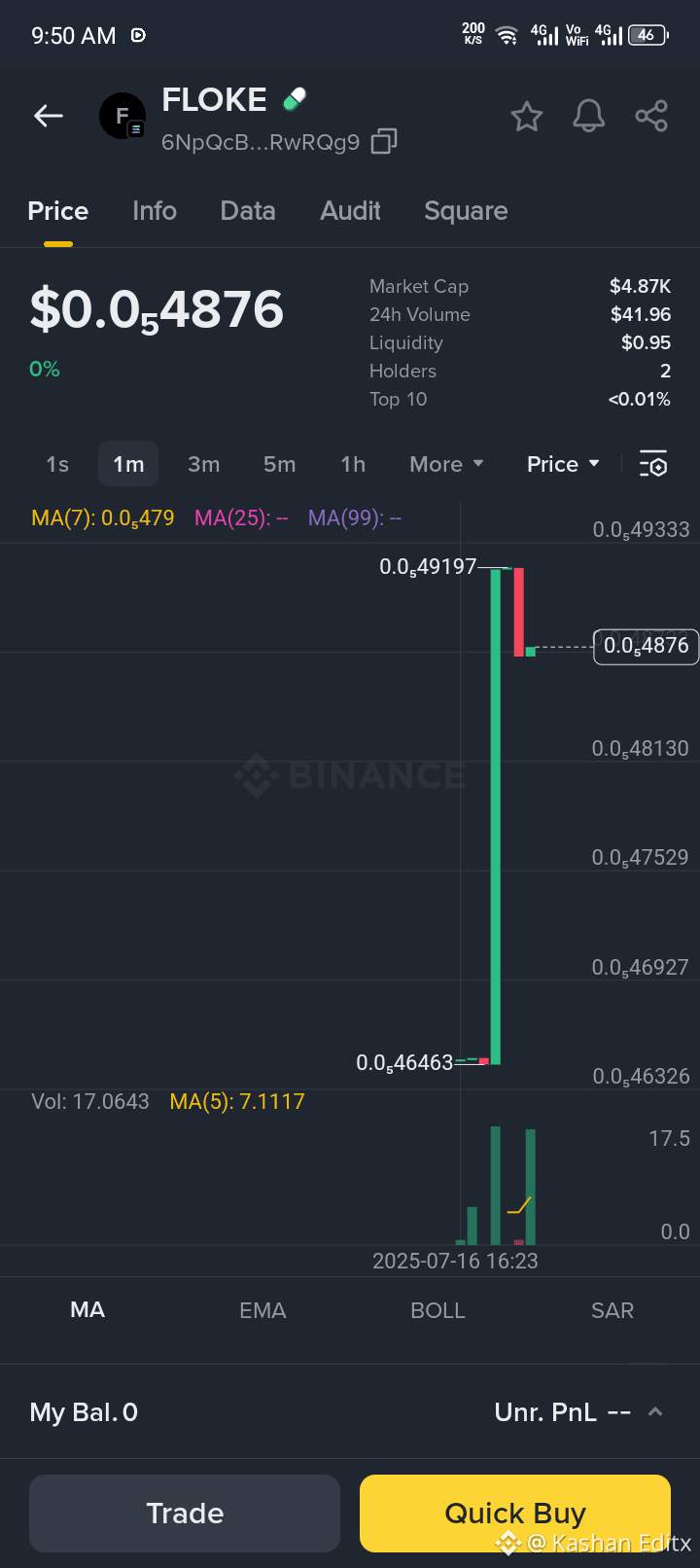
👀 Looking at FLOKE, one thing is clear — liquidity is very low.
📊 The market cap is only $4.87K and the holders are also very few, so the movement could be risky.
⚠️ In such low-liquidity coins, the price can go up and down quickly.
🔥 Even if BTC and ETH remain stable, it is important to manage your own risk separately in a coin like FLOKE.
👇 Are you watching FLOKE or do you think it is better to stay away from it?
$FLOKI
{spot}(FLOKIUSDT)
{future}(FLOCKUSDT)
#FlokiCoin #FLOKI✅ #Bitcoinhaving #USWeeklyInitialJoblessClaimsRiseTo206000 #BitcoinEthereumHitMultiMonthHighs
👀 Looking at FLOKE, one thing is clear — liquidity is very low.
📊 The market cap is only $4.87K and the holders are also very few, so the movement could be risky.
⚠️ In such low-liquidity coins, the price can go up and down quickly.
🔥 Even if BTC and ETH remain stable, it is important to manage your own risk separately in a coin like FLOKE.
👇 Are you watching FLOKE or do you think it is better to stay away from it?
$FLOKI
#FlokiCoin #FLOKI✅ #Bitcoinhaving #USWeeklyInitialJoblessClaimsRiseTo206000 #BitcoinEthereumHitMultiMonthHighs
📊 The market cap is only $4.87K and the holders are also very few, so the movement could be risky.
⚠️ In such low-liquidity coins, the price can go up and down quickly.
🔥 Even if BTC and ETH remain stable, it is important to manage your own risk separately in a coin like FLOKE.
👇 Are you watching FLOKE or do you think it is better to stay away from it?
$FLOKI
#FlokiCoin #FLOKI✅ #Bitcoinhaving #USWeeklyInitialJoblessClaimsRiseTo206000 #BitcoinEthereumHitMultiMonthHighs
70
Log in to explore more content
Join global crypto users on Binance Square
⚡️ Get latest and useful information about crypto.
💬 Trusted by the world’s largest crypto exchange.
👍 Discover real insights from verified creators.
Email / Phone number
Trending Topics
1
#USAugustPPIRisesLessThanExpected
54,741 views
846 Discussing
2
#SECApprovesNasdaqTexasCommodityTrustRule
29,183 views
609 Discussing
3
#ECBRaisesRatesSecondTimeTo2.5%
26,786 views
436 Discussing
4
#USContinuingJoblessClaims1.774M
35,473 views
526 Discussing
5
#USAugustPPIYoYRisesTo5.4%
33,666 views
407 Discussing
6
#AppleDebutsFoldablePhone
112,165 views
1,573 Discussing
7
#TSMCAugustRevenueUp53.3%YoY
27,526 views
560 Discussing
8
#IranSaysReadyToEscalateWarWithUS
39,494 views
543 Discussing
9
#EUExtendsCentralContactPointToCASPs
34,155 views
554 Discussing
10
#US10YTreasuryYieldHitsHighestSinceNov2023
73,092 views
859 Discussing