
#12381
12381
2 views
2 Discussing
Hot
Latest

·
--
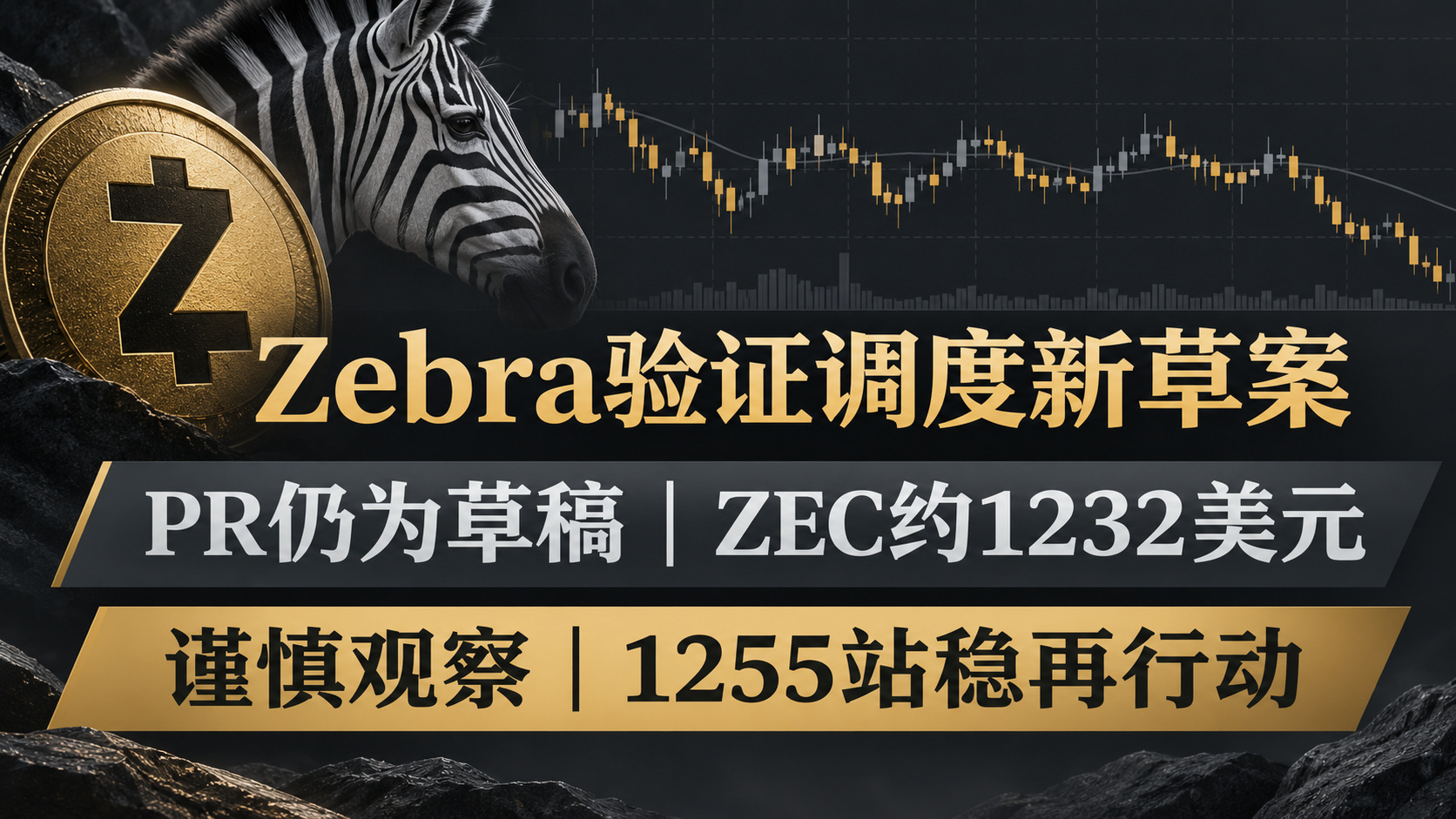
New Zebra validation scheduling draft | ZEC rebound unconfirmed | I’m waiting for evidence of implementation
My stance is cautious observation. On November 9, the Zebra client maintained by the Zcash Foundation opened PR #12381, proposing to remove an extra layer of buffered scheduling from the block transaction validation path and pass transactions directly to a clonable validator. The author explains that the extra worker thread previously added a serial handoff without limiting the actual number of parallel validations; the buffers for the transaction pool and block routing remain unchanged. I checked the GitHub page and changed files: the core code only concerns validation routing and transaction validators, and the current status is Draft, Open, and not merged. This is not a performance improvement that has already been deployed, much less the discovery or fixing of a Zcash consensus vulnerability.
The market significance of this change is node processing efficiency and reliability, not an immediate change in token supply. If subsequent tests show that fewer scheduling handoffs can reduce validation overhead, that could help node operation over the long term. But there is currently no official percentage improvement in throughput and no mainnet comparison data. More importantly, code review, testing, merging, a version release, and node adoption are separate stages; a holdup at any stage means the draft cannot be treated as a realized positive catalyst. The Zebra PR #12378 I mentioned earlier concerns peer scoring for structurally invalid transactions; this change concerns scheduling for validation of normal block transactions. They are different topics.
The market action is not yet enough to lend support to a technical draft. At around 09:16 Beijing time, ZEC/USDT on Binance was around $1,232.52, with a rolling 24-hour opening reference of $1,256.58, a high of $1,290, and a low of $1,180.02, down about 1.92%. ZEC/USD on Kraken was around $1,229.98, with a 24-hour low of $1,180.84; prices on the two platforms were moving in a similar direction. That is a recovery from around $1,217 recorded at 07:46, but there is no evidence that this rebound was driven by the new PR, and there are no actual trades to review. ZEC still appears under Most Searched on Binance Square, but there is no trending tag directly related to this draft, so I’m using only the coin tag. The latest Farside ZCSH entry is a net inflow of $1.8 million on November 6, not new institutional money coming in today.
I’m watching $1,180 as near-term support and $1,230 as the rebound balance level, with resistance at $1,255 and $1,290 above. If the price breaks below $1,180 and fails to recover on a retest, the short-term recovery thesis is invalidated. Only if it holds above $1,255 consistently, and BTC also stops losing $75,000, would I consider the rebound more likely to persist. Actual fund flows on the next trading day, whether Zebra completes its review, and official progress on restoring Binance withdrawals are all external conditions that need to be rechecked; price alone isn’t enough.
If I were trading this myself, I would stay out for now, with a small spot position as my only planned directional trade. I would open an initial position using 1% of total capital only if ZEC closes above $1,255 for two consecutive 15-minute candles, holds $1,230 on a pullback, and BTC stays above $75,000. I would add at most another 1% after a break above $1,290, keeping the total position at no more than 2%, and would not use high leverage. The first target is $1,290, where I would halve the position; the second target is $1,330, where I would reduce the remaining position by half. The stop-loss is below $1,175. If the PR is withdrawn, an official test report produces negative results, or the price breaks below $1,180 and fails to recover, I would close the remaining position. If the conditions aren’t met, I stay out; the plan doesn’t count as a profit.
#ZEC
The above is solely my personal market observation and does not constitute investment advice.
29
Log in to explore more content
Join global crypto users on Binance Square
⚡️ Get latest and useful information about crypto.
💬 Trusted by the world’s largest crypto exchange.
👍 Discover real insights from verified creators.
Email / Phone number
Trending Topics
1
#CPITestsDecemberRateOutlook
722,417 views
3,387 Discussing
2
#NvidiaInvestigatesAfterHuang’sAffairApology
279,073 views
2,168 Discussing
3
#AnthropicRejectsIPODelayValuationinQuestion
72,358 views
663 Discussing
4
#US-IranTalksFuelStrongStockMarketRebound
16,081 views
192 Discussing
5
#BitcoinFiveWeeklyLosses
303,866 views
2,515 Discussing
6
#AIChipSlumpNasdaq
171,807 views
1,520 Discussing
7
#BitcoinSpotETFsPost$201MNetOutflowForThirdStraightDay
62 views
1 Discussing
8
#CryptoLiquidationsReach$1.16BIn24Hours
29,044 views
62 Discussing
9
#TetherFreezes5EthereumAddressesHoldingAbout24.35MUSDT
0 views
0 Discussing
10
#StrategyBuys1037BTCLastWeek
7,346 views
86 Discussing