
悟小空Floor
757 Posts

悟小空Floor
Report
Block User
关注行业叙事、市场信号与早期机会,欢迎关注,干货为主。
Open Trade

BNB Holder
Frequent Trader
2.9 Years
96 Following
22.3K+ Followers
8.8K+ Liked
Posts
Portfolio
All
Quotes
Live
PINNED
·
--
$BNB After breaking through $760, it has seen a slight pullback, but it is still holding above $750 for now, and the short-term bullish structure has not been broken.
Next, watch the $761-$765 resistance area first. If trading volume continues to increase and the price can hold above $765, it has a chance to challenge the previous high of $780 again. After a breakout, pay attention to the $800 psychological level.
The first support below is at $750, with further support at $740 and $733.
#美伊互袭油轮冲突升级
$BNB After breaking through $760, it has seen a slight pullback, but it is still holding above $750 for now, and the short-term bullish structure has not been broken.
Next, watch the $761-$765 resistance area first. If trading volume continues to increase and the price can hold above $765, it has a chance to challenge the previous high of $780 again. After a breakout, pay attention to the $800 psychological level.
The first support below is at $750, with further support at $740 and $733.
#美伊互袭油轮冲突升级
Next, watch the $761-$765 resistance area first. If trading volume continues to increase and the price can hold above $765, it has a chance to challenge the previous high of $780 again. After a breakout, pay attention to the $800 psychological level.
The first support below is at $750, with further support at $740 and $733.
#美伊互袭油轮冲突升级
1.7k
4
97
1.7k
·
--


叮当 Doraemon
·
--
4Stock’s Market Cap Briefly Surges Past $40 Million, Continuing to Set New Highs
On September 8, according to GMGN data, 4Stock’s market cap briefly broke above $32 million and continued setting new highs. It is now reported at $24.79 million, and within less than 3 hours of going live, trading volume reached $22.9 million.
4Stock is the “Stock Meme” narrative introduced by Four.meme. It first launches a 4Stock underlying asset linked to stock assets, and then allows the community to issue Memes using that asset as the pool. BNC4 is the first 4Stock, (theoretically) 1:1 anchoring the corresponding stock asset.
The path difference of MEME on the 4Stock and Robinhood Chain lies in the issuance base: the former is built on the BSC launchpad of Four.meme, using 4Stock as the underlying asset to enable community pairing and issuance; the latter uses tokenized U.S. stocks directly as the liquidity pool. As the first 4Stock, BNC4 theoretically 1:1 anchors the stock, and in essence it expands the “stock Meme” narrative from a single AMC target into a replicable infrastructure layer.
4Stock is the “Stock Meme” narrative introduced by Four.meme. It first launches a 4Stock underlying asset linked to stock assets, and then allows the community to issue Memes using that asset as the pool. BNC4 is the first 4Stock, (theoretically) 1:1 anchoring the corresponding stock asset.
The path difference of MEME on the 4Stock and Robinhood Chain lies in the issuance base: the former is built on the BSC launchpad of Four.meme, using 4Stock as the underlying asset to enable community pairing and issuance; the latter uses tokenized U.S. stocks directly as the liquidity pool. As the first 4Stock, BNC4 theoretically 1:1 anchors the stock, and in essence it expands the “stock Meme” narrative from a single AMC target into a replicable infrastructure layer.
56
·
--
@gobby_y 6666
@YZZ竹竹 6666

YZZ竹竹
·
--
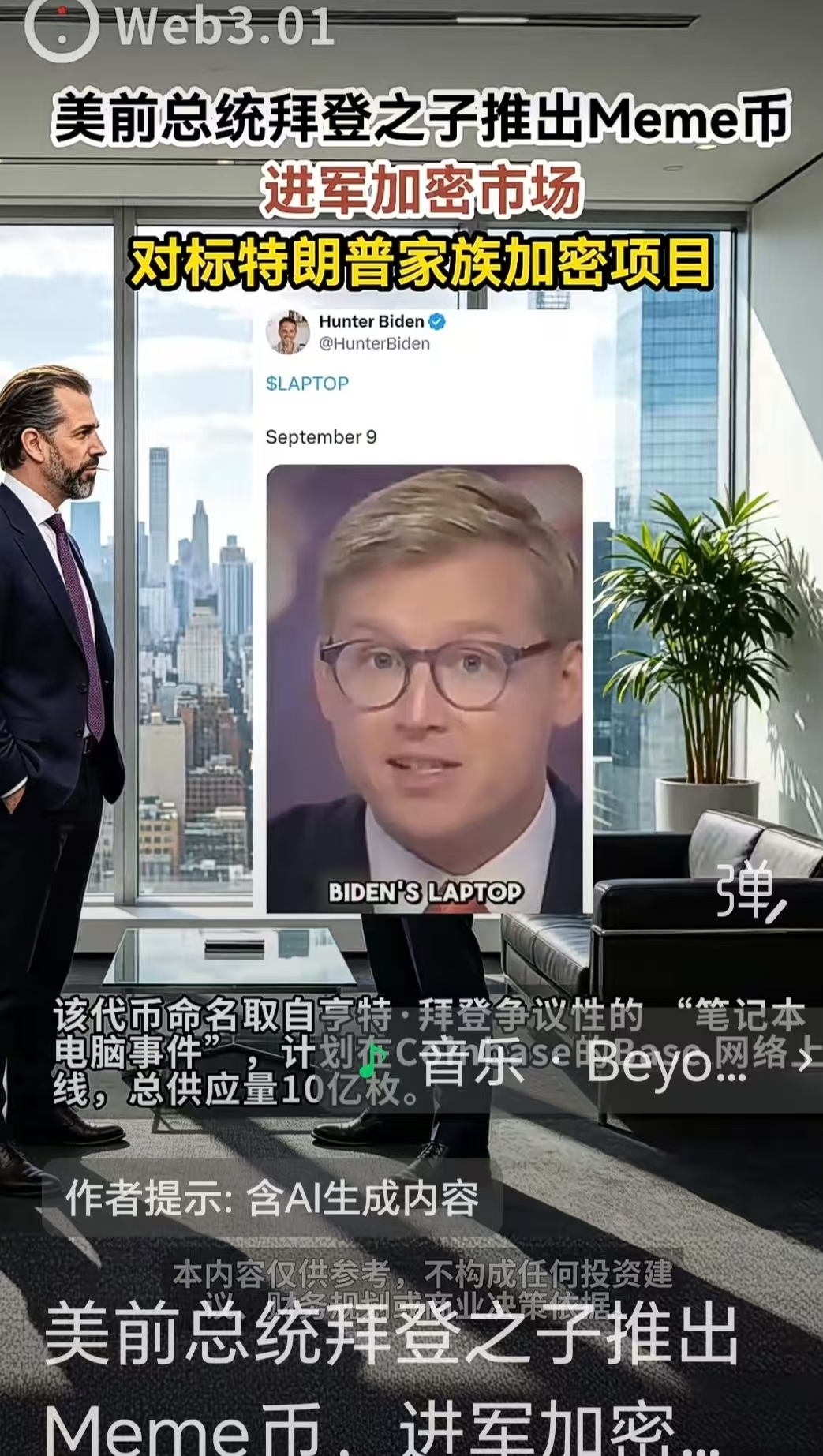
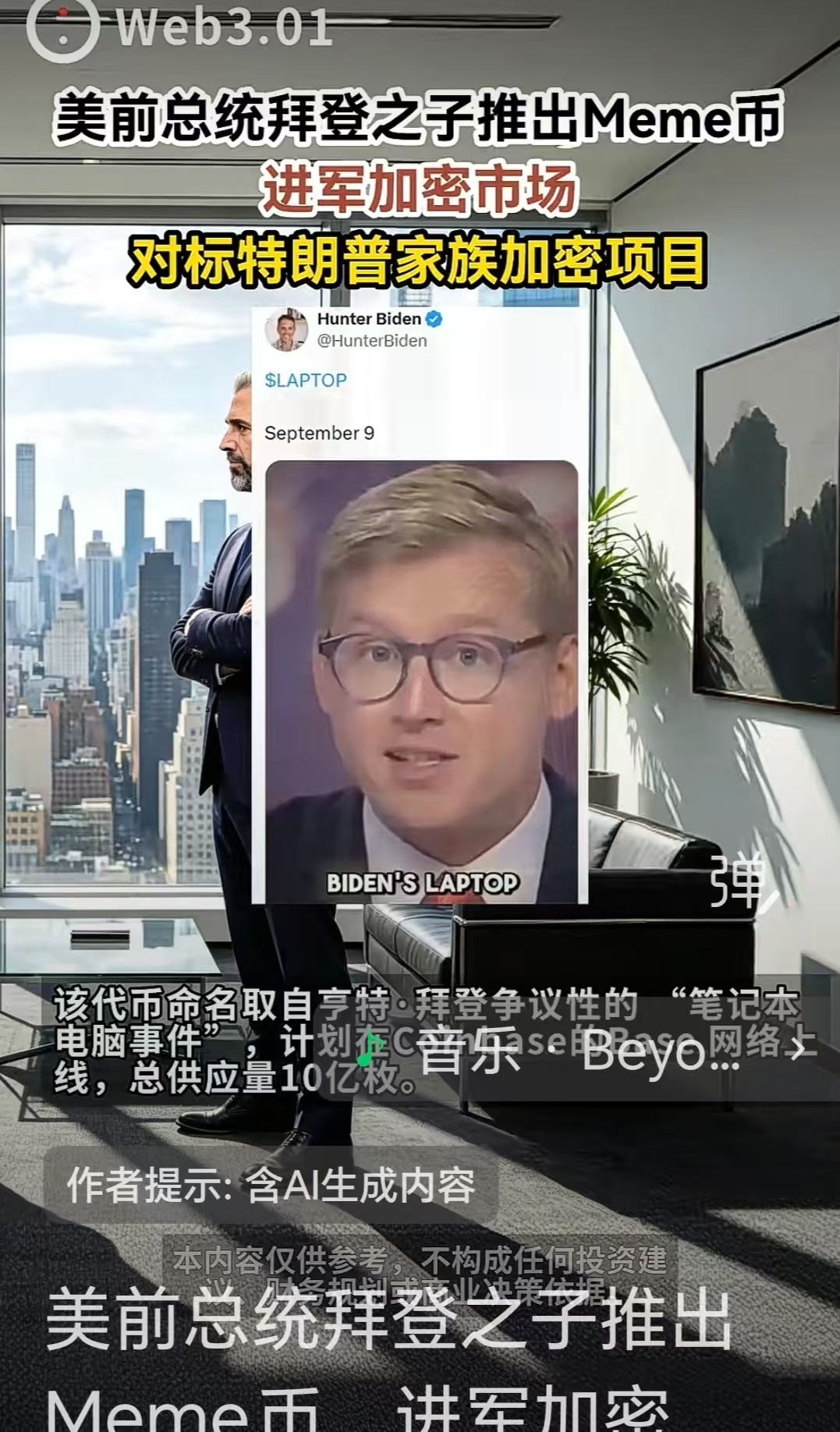
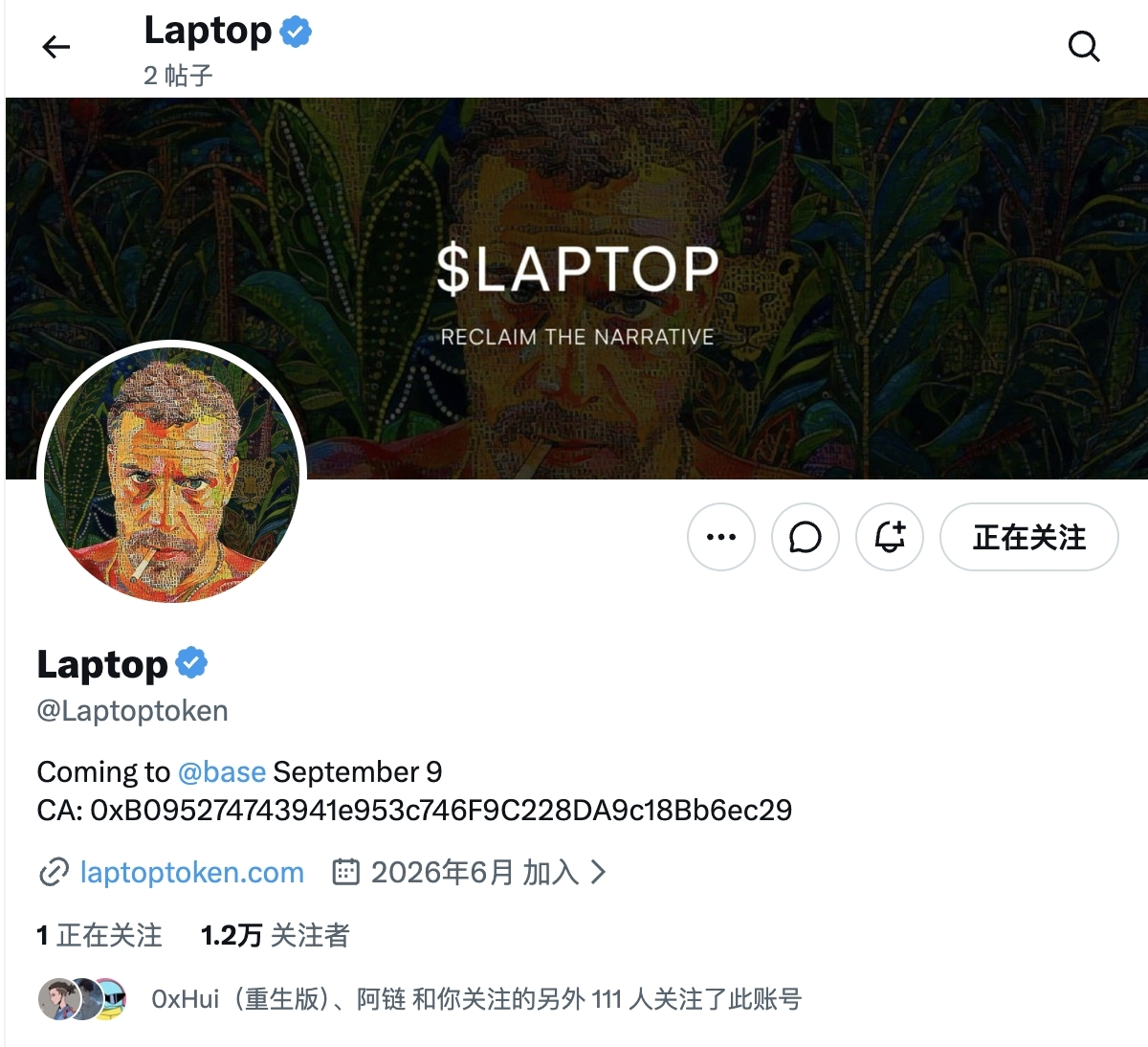
Political Meme Bombshell! Hunter Biden Announces $LAPTOP Will Launch on the Base Chain on September 9
U.S. political headlines are once again sweeping the crypto market! Hunter Biden has confirmed via an official X account that on September 9, he will release a meme token called $LAPTOP on the Base chain with a total supply of 1 billion.
The token name directly references that year’s famous laptop incident—political jokes cranked to the max. Key highlights include: 30% of the tokens held by the team will be locked for 6 months, then unlocked over two years; about 20% of the allocation for an Airdrop will precisely target the “wallet with losses of $TRUMP ,” Substack subscribers, and an email list; and it also incorporates a real-world prediction event—if it comes true, tokens will be burned; if it doesn’t, proceeds will be donated to charity.
Large numbers of copycat versions have already appeared across the internet. The official call urges investors to make sure they verify #官方指定頻道與合約地址 and stay vigilant against scams.
U.S. political headlines are once again sweeping the crypto market! Hunter Biden has confirmed via an official X account that on September 9, he will release a meme token called $LAPTOP on the Base chain with a total supply of 1 billion.
The token name directly references that year’s famous laptop incident—political jokes cranked to the max. Key highlights include: 30% of the tokens held by the team will be locked for 6 months, then unlocked over two years; about 20% of the allocation for an Airdrop will precisely target the “wallet with losses of $TRUMP ,” Substack subscribers, and an email list; and it also incorporates a real-world prediction event—if it comes true, tokens will be burned; if it doesn’t, proceeds will be donated to charity.
Large numbers of copycat versions have already appeared across the internet. The official call urges investors to make sure they verify #官方指定頻道與合約地址 and stay vigilant against scams.
51
·
--
🚨 30K Gold Badge = Posting gets you 9.99U directly. Ordinary people = Posting also enters airdrop draws—see who gets the higher views.
@mifeng888999 @Seven_78977
Little Bee officially launches on September 10th👇
✅ 30K Gold Badge posts → 9.99U equivalent tokens; you receive as many as you post
✅ Regular users’ posts → the higher the views, the higher the airdrop probability
If people are viewing your content, Little Bee rewards you—this isn’t a lottery; it’s content that mines.
See you on September 10th.🐝
@mifeng888999 Official account, join the official chat room🔥
#meme板块关注热点
🚨 30K Gold Badge = Posting gets you 9.99U directly. Ordinary people = Posting also enters airdrop draws—see who gets the higher views.
@小蜜蜂xmf @Seven七七
Little Bee officially launches on September 10th👇
✅ 30K Gold Badge posts → 9.99U equivalent tokens; you receive as many as you post
✅ Regular users’ posts → the higher the views, the higher the airdrop probability
If people are viewing your content, Little Bee rewards you—this isn’t a lottery; it’s content that mines.
See you on September 10th.🐝
@小蜜蜂xmf Official account, join the official chat room🔥
#meme板块关注热点
@小蜜蜂xmf @Seven七七
Little Bee officially launches on September 10th👇
✅ 30K Gold Badge posts → 9.99U equivalent tokens; you receive as many as you post
✅ Regular users’ posts → the higher the views, the higher the airdrop probability
If people are viewing your content, Little Bee rewards you—this isn’t a lottery; it’s content that mines.
See you on September 10th.🐝
@小蜜蜂xmf Official account, join the official chat room🔥
#meme板块关注热点

282
·
--
🎙️ The US stock market is finally about to open today—ready to feast on profits!
End
02 h 21 m 16 s
10.5k
22
26
·
--
Bullish
$BNB Price rises to around 720–722 USD
The current price has already reached an important resistance zone. On August 22, BNB hit a high of around 726 USD, then quickly pulled back, so there may be substantial trapped positions and short-term profit-taking orders in the 725–730 USD range. If trading volume continues to expand and the daily chart holds above 730 USD, upside room is expected to open up, with the next target possibly at 740–750 USD.
If, after a sharp rise, it falls back below 715 USD again, that indicates insufficient breakout strength, and the price may first retest 705–710 USD; 700 USD is the level this rebound should not easily lose.
#美国8月非农数据今日公布
$BNB Price rises to around 720–722 USD
The current price has already reached an important resistance zone. On August 22, BNB hit a high of around 726 USD, then quickly pulled back, so there may be substantial trapped positions and short-term profit-taking orders in the 725–730 USD range. If trading volume continues to expand and the daily chart holds above 730 USD, upside room is expected to open up, with the next target possibly at 740–750 USD.
If, after a sharp rise, it falls back below 715 USD again, that indicates insufficient breakout strength, and the price may first retest 705–710 USD; 700 USD is the level this rebound should not easily lose.
#美国8月非农数据今日公布
The current price has already reached an important resistance zone. On August 22, BNB hit a high of around 726 USD, then quickly pulled back, so there may be substantial trapped positions and short-term profit-taking orders in the 725–730 USD range. If trading volume continues to expand and the daily chart holds above 730 USD, upside room is expected to open up, with the next target possibly at 740–750 USD.
If, after a sharp rise, it falls back below 715 USD again, that indicates insufficient breakout strength, and the price may first retest 705–710 USD; 700 USD is the level this rebound should not easily lose.
#美国8月非农数据今日公布
2.7k
9
155
2.7k
·
--
666
666
YZZ竹竹
·
--
【Crypto Belief Recharged! Michael Saylor Shouts “We’re Back,” MicroStrategy Blasts $370 Million to Scoop Up 4,603 More Bitcoins】
Michael Saylor, founder and executive chairman of MicroStrategy (the world’s largest corporate Bitcoin holder, Strategy / MicroStrategy), posted on a social media platform shouting “We’re ₿ack!,” officially announcing that the company is restarting its Bitcoin purchase plan and ending a two-month pause during which it had been waiting and watching—again igniting intense market attention.
According to the latest filing MicroStrategy submitted to the U.S. Securities and Exchange Commission (SEC), during the period from August 24 to 30, the company spent $369.7 million to raise funds by issuing new shares and buy 4,603 Bitcoins, with an average acquisition cost of about $80,318 per coin. This marks the first time the company has substantially replenished its holdings since the end of June, when it temporarily reduced its position and paused further buying in response to its asset allocation framework.
After this latest increase, MicroStrategy and its subsidiaries’ total Bitcoin holdings have risen to 845,050 BTC, with total investment costs of approximately $6.373 billion. Market analysts noted that, as Saylor’s real-world actions have crushed prior concerns about corporate liquidity and selling, this major round of additional buying not only reaffirms its steadfast belief in the long-term value of cryptocurrencies, but also injects a shot of confidence into the broader crypto asset market.
Michael Saylor, founder and executive chairman of MicroStrategy (the world’s largest corporate Bitcoin holder, Strategy / MicroStrategy), posted on a social media platform shouting “We’re ₿ack!,” officially announcing that the company is restarting its Bitcoin purchase plan and ending a two-month pause during which it had been waiting and watching—again igniting intense market attention.
According to the latest filing MicroStrategy submitted to the U.S. Securities and Exchange Commission (SEC), during the period from August 24 to 30, the company spent $369.7 million to raise funds by issuing new shares and buy 4,603 Bitcoins, with an average acquisition cost of about $80,318 per coin. This marks the first time the company has substantially replenished its holdings since the end of June, when it temporarily reduced its position and paused further buying in response to its asset allocation framework.
After this latest increase, MicroStrategy and its subsidiaries’ total Bitcoin holdings have risen to 845,050 BTC, with total investment costs of approximately $6.373 billion. Market analysts noted that, as Saylor’s real-world actions have crushed prior concerns about corporate liquidity and selling, this major round of additional buying not only reaffirms its steadfast belief in the long-term value of cryptocurrencies, but also injects a shot of confidence into the broader crypto asset market.
133
·
--
$BNB From the trend, after touching around $725 on August 22, prices continued to fall; the $700 level has turned from support into a short-term resistance. First, we need to see whether $675—$680 can hold.
If it breaks, the price may pull back to the $650—$660 area. Resistance is mainly concentrated at $695—$700. Only if there is a volume-supported breakout and a firm hold above $700 will there be a chance to challenge $720—$725 again.
This article is for market analysis only and does not constitute investment advice.#美联储加息概率升至68%
$BNB From the trend, after touching around $725 on August 22, prices continued to fall; the $700 level has turned from support into a short-term resistance. First, we need to see whether $675—$680 can hold.
If it breaks, the price may pull back to the $650—$660 area. Resistance is mainly concentrated at $695—$700. Only if there is a volume-supported breakout and a firm hold above $700 will there be a chance to challenge $720—$725 again.
This article is for market analysis only and does not constitute investment advice.#美联储加息概率升至68%
If it breaks, the price may pull back to the $650—$660 area. Resistance is mainly concentrated at $695—$700. Only if there is a volume-supported breakout and a firm hold above $700 will there be a chance to challenge $720—$725 again.
This article is for market analysis only and does not constitute investment advice.#美联储加息概率升至68%
2.5k
9
143
2.5k
·
--
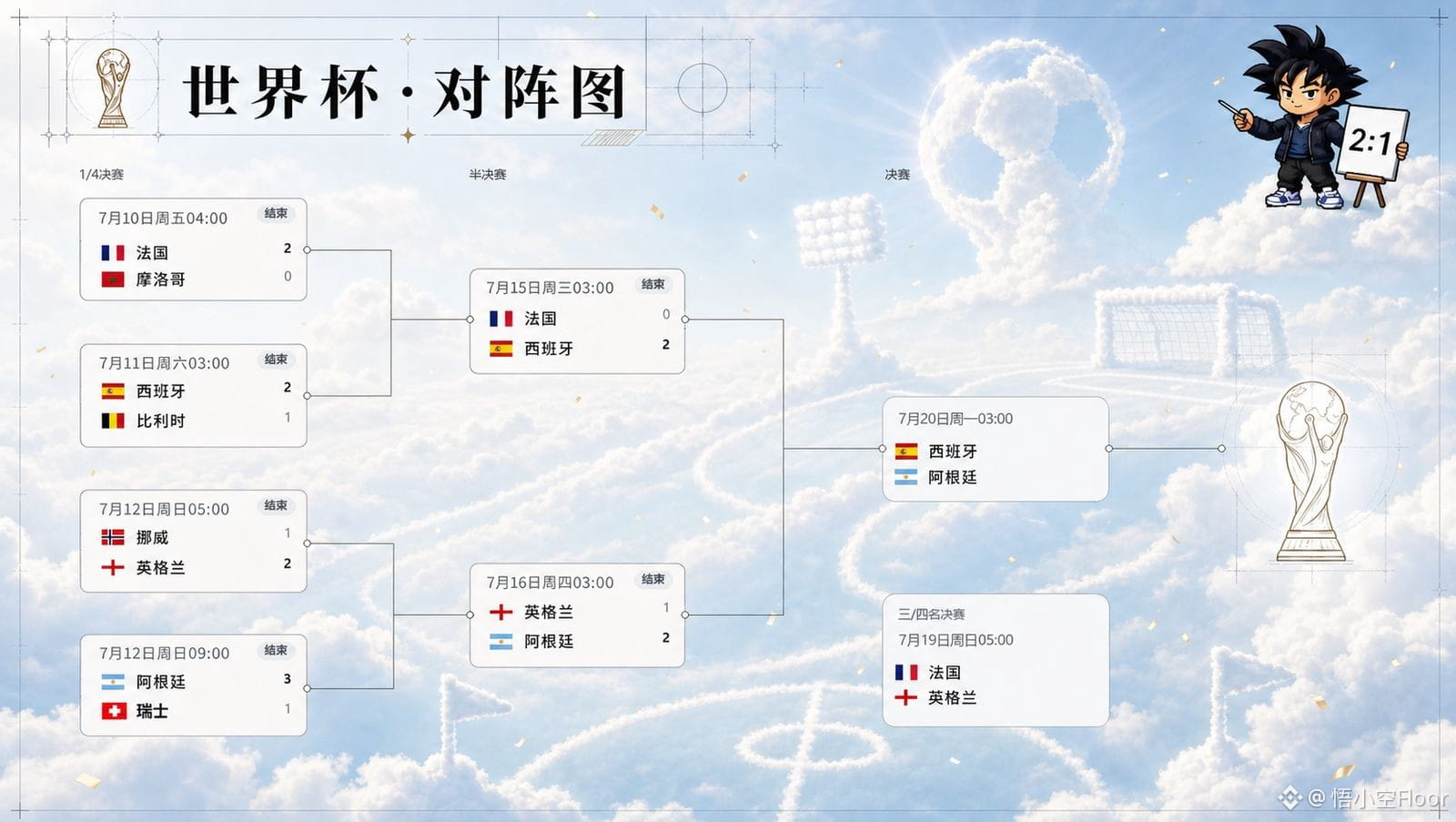
England is just 5 minutes away from the World Cup final
At the 85th minute, they were still leading Argentina 1-0.
But in the final minutes, they conceded two goals in quick succession, and the match ended 1-2—meaning the final ticket they looked set to secure slipped away.
Now they have to battle France for third place
------------------------------
France vs England
I think France will take third place, with a scoreline leaning toward 2-1, 3-2.
France should really want to win this match—it's Deschamps’ last game in charge of the French national team; once it’s over, he officially bids farewell.
Mbappé also still has the Golden Boot to contend for. He and Messi currently both have 8 goals—he just has one fewer assist, and if he scores again, he’ll have a chance to reclaim his spot.
England isn’t without opportunities either. Saliba’s back injury has flared up, so he likely won’t play, and France’s center-backs will definitely need to make changes.
If Kane can hold his position in the box, and with Bellingham surging forward from behind, it won’t be easy for France to keep a clean sheet.
My prediction: France win by a narrow margin. France had an extra day of rest, and they have more attacking options.
The above is only pre-match analysis, not betting advice
#BTC
England is just 5 minutes away from the World Cup final
At the 85th minute, they were still leading Argentina 1-0.
But in the final minutes, they conceded two goals in quick succession, and the match ended 1-2—meaning the final ticket they looked set to secure slipped away.
Now they have to battle France for third place
------------------------------
France vs England
I think France will take third place, with a scoreline leaning toward 2-1, 3-2.
France should really want to win this match—it's Deschamps’ last game in charge of the French national team; once it’s over, he officially bids farewell.
Mbappé also still has the Golden Boot to contend for. He and Messi currently both have 8 goals—he just has one fewer assist, and if he scores again, he’ll have a chance to reclaim his spot.
England isn’t without opportunities either. Saliba’s back injury has flared up, so he likely won’t play, and France’s center-backs will definitely need to make changes.
If Kane can hold his position in the box, and with Bellingham surging forward from behind, it won’t be easy for France to keep a clean sheet.
My prediction: France win by a narrow margin. France had an extra day of rest, and they have more attacking options.
The above is only pre-match analysis, not betting advice
#BTC
At the 85th minute, they were still leading Argentina 1-0.
But in the final minutes, they conceded two goals in quick succession, and the match ended 1-2—meaning the final ticket they looked set to secure slipped away.
Now they have to battle France for third place
------------------------------
France vs England
I think France will take third place, with a scoreline leaning toward 2-1, 3-2.
France should really want to win this match—it's Deschamps’ last game in charge of the French national team; once it’s over, he officially bids farewell.
Mbappé also still has the Golden Boot to contend for. He and Messi currently both have 8 goals—he just has one fewer assist, and if he scores again, he’ll have a chance to reclaim his spot.
England isn’t without opportunities either. Saliba’s back injury has flared up, so he likely won’t play, and France’s center-backs will definitely need to make changes.
If Kane can hold his position in the box, and with Bellingham surging forward from behind, it won’t be easy for France to keep a clean sheet.
My prediction: France win by a narrow margin. France had an extra day of rest, and they have more attacking options.
The above is only pre-match analysis, not betting advice
#BTC
148
·
--
Many people talk about @Openledger (OPEN), and their first reaction is the price fluctuations. But what I'm more concerned about is what kind of underlying construction it is doing. AI has developed to this day, and the question is no longer whether the model can run, but how to make the value flow between data, models, and applications.
The OPEN token plays a role in payment and governance in this process. Users need to pay fees when calling models or agents, and these fees are distributed to data providers, model developers, and computing power supporters. The token also represents governance rights, allowing community members to vote on system upgrades and setting standards. In this way, the direction of the network's development is not determined by a single team, but is pushed forward by participants collectively.
In terms of market data, the current price of OPEN is about $0.47, with a market capitalization of around $100 million. Recently, the price has continued to decline, dropping more than half from its historical high of $1.82. The unlocking pressure is the biggest risk, as 78% of the tokens have not yet entered circulation. In the future, if demand growth cannot keep up with the unlocking pace, the price may continue to be under pressure. However, the potential demand brought by the technical route and ecological cooperation provides support in the medium to long term. OP Stack and EigenDA bring high throughput and low cost, while ModelFactory V2 and cross-chain integration plans will expand use cases.
I believe the value of @Openledger lies in making AI no longer a closed black box, but rather becoming a publicly transparent economic network. Contributions from each link can be recorded and settled, allowing users to not only be users but also contributors and governors. If this direction works out, OPEN will not just be a story of token prices, but rather the cornerstone of a truly grounded AI ecosystem.
#OpenLedger $OPEN
{spot}(OPENUSDT)
Many people talk about @OpenLedger (OPEN), and their first reaction is the price fluctuations. But what I'm more concerned about is what kind of underlying construction it is doing. AI has developed to this day, and the question is no longer whether the model can run, but how to make the value flow between data, models, and applications.
The OPEN token plays a role in payment and governance in this process. Users need to pay fees when calling models or agents, and these fees are distributed to data providers, model developers, and computing power supporters. The token also represents governance rights, allowing community members to vote on system upgrades and setting standards. In this way, the direction of the network's development is not determined by a single team, but is pushed forward by participants collectively.
In terms of market data, the current price of OPEN is about $0.47, with a market capitalization of around $100 million. Recently, the price has continued to decline, dropping more than half from its historical high of $1.82. The unlocking pressure is the biggest risk, as 78% of the tokens have not yet entered circulation. In the future, if demand growth cannot keep up with the unlocking pace, the price may continue to be under pressure. However, the potential demand brought by the technical route and ecological cooperation provides support in the medium to long term. OP Stack and EigenDA bring high throughput and low cost, while ModelFactory V2 and cross-chain integration plans will expand use cases.
I believe the value of @OpenLedger lies in making AI no longer a closed black box, but rather becoming a publicly transparent economic network. Contributions from each link can be recorded and settled, allowing users to not only be users but also contributors and governors. If this direction works out, OPEN will not just be a story of token prices, but rather the cornerstone of a truly grounded AI ecosystem.
#OpenLedger $OPEN
The OPEN token plays a role in payment and governance in this process. Users need to pay fees when calling models or agents, and these fees are distributed to data providers, model developers, and computing power supporters. The token also represents governance rights, allowing community members to vote on system upgrades and setting standards. In this way, the direction of the network's development is not determined by a single team, but is pushed forward by participants collectively.
In terms of market data, the current price of OPEN is about $0.47, with a market capitalization of around $100 million. Recently, the price has continued to decline, dropping more than half from its historical high of $1.82. The unlocking pressure is the biggest risk, as 78% of the tokens have not yet entered circulation. In the future, if demand growth cannot keep up with the unlocking pace, the price may continue to be under pressure. However, the potential demand brought by the technical route and ecological cooperation provides support in the medium to long term. OP Stack and EigenDA bring high throughput and low cost, while ModelFactory V2 and cross-chain integration plans will expand use cases.
I believe the value of @OpenLedger lies in making AI no longer a closed black box, but rather becoming a publicly transparent economic network. Contributions from each link can be recorded and settled, allowing users to not only be users but also contributors and governors. If this direction works out, OPEN will not just be a story of token prices, but rather the cornerstone of a truly grounded AI ecosystem.
#OpenLedger $OPEN
1
438
·
--
Many people mention blockchain and often feel that transactions are slow, costs are high, and the experience is poor. @Somnia_Network aims to break this inherent impression. It is a public chain compatible with EVM, which set its goal from the very beginning to the scale of internet-level applications, hoping to make it a reality for millions of users to be online simultaneously.
Somnia's performance data is quite impressive. In early tests, the network achieved millions of TPS, with confirmation times reduced to under one second, and transaction fees even below one cent. Such performance conditions make it feasible for applications like on-chain games, social platforms, and virtual worlds that require high-frequency interactions.
This performance comes from the underlying design. Smart contracts are optimized through compilation execution, improving running efficiency. The IceDB database provides fast access capabilities for on-chain states. The MultiStream consensus processes transactions in a distributed manner, addressing throughput limitations. Compression and BLS signatures reduce data transmission pressure between nodes, maintaining smooth operation even under high concurrency. Various enhancements combined allow Somnia to maintain performance and stability.
The token economy is also worth attention. The total supply of SOMI is 1 billion, with around 16% in circulation, and the remaining portion locked in teams, investors, and ecological funds. Half of the transaction fees will be burned, while the other half will be distributed to validators and the community. Becoming a validation node requires staking 5 million SOMI, which to some extent ensures security and stability. The ecological fund is used to incentivize developers and users, promoting more applications to land on-chain.
Ecological construction is accelerating. @Somnia_Network has announced collaborations with over seventy projects including Google Cloud, LayerZero, and Thirdweb, focusing on cross-chain capabilities, developer tools, and high-throughput applications. After the mainnet launch, the first batch of metaverse and gaming DApps has already started testing, and community activities and exchange incentives are bringing new attention to the token.
#Somnia $SOMI
{spot}(SOMIUSDT)
Many people mention blockchain and often feel that transactions are slow, costs are high, and the experience is poor. @Somnia Official aims to break this inherent impression. It is a public chain compatible with EVM, which set its goal from the very beginning to the scale of internet-level applications, hoping to make it a reality for millions of users to be online simultaneously.
Somnia's performance data is quite impressive. In early tests, the network achieved millions of TPS, with confirmation times reduced to under one second, and transaction fees even below one cent. Such performance conditions make it feasible for applications like on-chain games, social platforms, and virtual worlds that require high-frequency interactions.
This performance comes from the underlying design. Smart contracts are optimized through compilation execution, improving running efficiency. The IceDB database provides fast access capabilities for on-chain states. The MultiStream consensus processes transactions in a distributed manner, addressing throughput limitations. Compression and BLS signatures reduce data transmission pressure between nodes, maintaining smooth operation even under high concurrency. Various enhancements combined allow Somnia to maintain performance and stability.
The token economy is also worth attention. The total supply of SOMI is 1 billion, with around 16% in circulation, and the remaining portion locked in teams, investors, and ecological funds. Half of the transaction fees will be burned, while the other half will be distributed to validators and the community. Becoming a validation node requires staking 5 million SOMI, which to some extent ensures security and stability. The ecological fund is used to incentivize developers and users, promoting more applications to land on-chain.
Ecological construction is accelerating. @Somnia Official has announced collaborations with over seventy projects including Google Cloud, LayerZero, and Thirdweb, focusing on cross-chain capabilities, developer tools, and high-throughput applications. After the mainnet launch, the first batch of metaverse and gaming DApps has already started testing, and community activities and exchange incentives are bringing new attention to the token.
#Somnia $SOMI
Somnia's performance data is quite impressive. In early tests, the network achieved millions of TPS, with confirmation times reduced to under one second, and transaction fees even below one cent. Such performance conditions make it feasible for applications like on-chain games, social platforms, and virtual worlds that require high-frequency interactions.
This performance comes from the underlying design. Smart contracts are optimized through compilation execution, improving running efficiency. The IceDB database provides fast access capabilities for on-chain states. The MultiStream consensus processes transactions in a distributed manner, addressing throughput limitations. Compression and BLS signatures reduce data transmission pressure between nodes, maintaining smooth operation even under high concurrency. Various enhancements combined allow Somnia to maintain performance and stability.
The token economy is also worth attention. The total supply of SOMI is 1 billion, with around 16% in circulation, and the remaining portion locked in teams, investors, and ecological funds. Half of the transaction fees will be burned, while the other half will be distributed to validators and the community. Becoming a validation node requires staking 5 million SOMI, which to some extent ensures security and stability. The ecological fund is used to incentivize developers and users, promoting more applications to land on-chain.
Ecological construction is accelerating. @Somnia Official has announced collaborations with over seventy projects including Google Cloud, LayerZero, and Thirdweb, focusing on cross-chain capabilities, developer tools, and high-throughput applications. After the mainnet launch, the first batch of metaverse and gaming DApps has already started testing, and community activities and exchange incentives are bringing new attention to the token.
#Somnia $SOMI
1
382
·
--
The performance of the $MITO token has recently attracted considerable attention, with the price fluctuating around $0.16, a market cap of approximately $32 million, and a daily trading volume exceeding $15 million. Such data reflects that market sentiment has not completely cooled down, with the circulating portion accounting for about 18%, while most tokens remain locked.
@MitosisOrg is itself a chain that focuses on liquidity, aiming to free up funds from a single liquidity pool. In a traditional model, users can only rely on profit sharing after depositing assets, with no flexible operations available. Mitosis introduces the EOL model and miAsset, converting positions into usable tokens that can circulate on-chain and generate profits.
The setting of Matrix Vaults has brought topics to the market. It promises a yield rate of up to 80% to 150%, which is highly attractive in the short term. While funds are pouring in, it also raises concerns about sustainability. If the yield curve cannot be maintained or if there are liquidity withdrawals, the market may face new fluctuations. On the other hand, the team is advancing Chromo AMM, aiming to achieve a large-scale total locked amount in the next quarter, which will become an important milestone for testing the project's execution.
Another aspect of token economics is the unlocking pressure. It is expected that in March 2026, 20% of tokens will enter the market. Without corresponding demand growth, this batch of unlocking is likely to become a catalyst for price declines. The market has already digested this risk in advance, and fear sentiment has suppressed price performance to a certain extent.
Mitosis also has a positive side. It adopts a dual-layer design of EVM and Cosmos in its cross-chain architecture, which has expansion potential in the future. It has also entered Binance's lending ecosystem, enhancing institutional-level usage demand. These actions show that the project is not just staying in the conceptual phase but is gradually establishing a complete ecological network.
#Mitosis $MITO
{spot}(MITOUSDT)
The performance of the $MITO token has recently attracted considerable attention, with the price fluctuating around $0.16, a market cap of approximately $32 million, and a daily trading volume exceeding $15 million. Such data reflects that market sentiment has not completely cooled down, with the circulating portion accounting for about 18%, while most tokens remain locked.
@Mitosis Official is itself a chain that focuses on liquidity, aiming to free up funds from a single liquidity pool. In a traditional model, users can only rely on profit sharing after depositing assets, with no flexible operations available. Mitosis introduces the EOL model and miAsset, converting positions into usable tokens that can circulate on-chain and generate profits.
The setting of Matrix Vaults has brought topics to the market. It promises a yield rate of up to 80% to 150%, which is highly attractive in the short term. While funds are pouring in, it also raises concerns about sustainability. If the yield curve cannot be maintained or if there are liquidity withdrawals, the market may face new fluctuations. On the other hand, the team is advancing Chromo AMM, aiming to achieve a large-scale total locked amount in the next quarter, which will become an important milestone for testing the project's execution.
Another aspect of token economics is the unlocking pressure. It is expected that in March 2026, 20% of tokens will enter the market. Without corresponding demand growth, this batch of unlocking is likely to become a catalyst for price declines. The market has already digested this risk in advance, and fear sentiment has suppressed price performance to a certain extent.
Mitosis also has a positive side. It adopts a dual-layer design of EVM and Cosmos in its cross-chain architecture, which has expansion potential in the future. It has also entered Binance's lending ecosystem, enhancing institutional-level usage demand. These actions show that the project is not just staying in the conceptual phase but is gradually establishing a complete ecological network.
#Mitosis $MITO
@Mitosis Official is itself a chain that focuses on liquidity, aiming to free up funds from a single liquidity pool. In a traditional model, users can only rely on profit sharing after depositing assets, with no flexible operations available. Mitosis introduces the EOL model and miAsset, converting positions into usable tokens that can circulate on-chain and generate profits.
The setting of Matrix Vaults has brought topics to the market. It promises a yield rate of up to 80% to 150%, which is highly attractive in the short term. While funds are pouring in, it also raises concerns about sustainability. If the yield curve cannot be maintained or if there are liquidity withdrawals, the market may face new fluctuations. On the other hand, the team is advancing Chromo AMM, aiming to achieve a large-scale total locked amount in the next quarter, which will become an important milestone for testing the project's execution.
Another aspect of token economics is the unlocking pressure. It is expected that in March 2026, 20% of tokens will enter the market. Without corresponding demand growth, this batch of unlocking is likely to become a catalyst for price declines. The market has already digested this risk in advance, and fear sentiment has suppressed price performance to a certain extent.
Mitosis also has a positive side. It adopts a dual-layer design of EVM and Cosmos in its cross-chain architecture, which has expansion potential in the future. It has also entered Binance's lending ecosystem, enhancing institutional-level usage demand. These actions show that the project is not just staying in the conceptual phase but is gradually establishing a complete ecological network.
#Mitosis $MITO

1
310
·
--
Price is the core signal of the financial system, yet it is often controlled by a few institutions. Retail investors often encounter delayed market data by several minutes, and must pay for upgrades to see real-time data. Large institutions can access faster channels, but at a high cost.
The approach of @PythNetwork is very direct. It does not collect and resell through intermediaries, but instead allows trading companies, market makers, and exchanges to directly publish raw prices to the network. Institutions like Jump, Jane Street, and Virtu are already providing data. The prices formed this way are faster and more authentic, requiring no additional processing steps. Developers can directly use the data on-chain through interfaces, covering a wide range of assets, including cryptocurrencies, stocks, foreign exchange, commodities, and macroeconomic indicators.
This model was first validated in DeFi. Derivatives trading, lending markets, and stablecoin protocols are extremely reliant on price data. @PythNetwork has quickly established itself here, currently supporting hundreds of blockchains, integrating over six hundred projects, with a cumulative trading volume exceeding one trillion dollars. The market share in the derivatives field even exceeds sixty percent. In addition to the crypto market, Pyth is also attempting to bring official economic data on-chain, incorporating more real-world indicators into the system.
The PYTH token is the core of the entire network's operation. Data contributors are incentivized, applications pay fees when calling prices, and the income flows back into the DAO. Tokens serve functions such as payment, rewards, and governance, creating a closed loop for incentives and distribution within the ecosystem. Holders can vote on cross-chain expansion, fee structures, and other directions. The growth of the network is gradually tied to the value of the tokens, with the cyclical effect continually amplified.
In terms of price performance, PYTH is currently still far below its historical high, situated between consolidation and rebound. Market sentiment is occasionally cautious, but the long-term logic is clear.
#PythRoadmap $PYTH
{spot}(PYTHUSDT)
Price is the core signal of the financial system, yet it is often controlled by a few institutions. Retail investors often encounter delayed market data by several minutes, and must pay for upgrades to see real-time data. Large institutions can access faster channels, but at a high cost.
The approach of @PythNetwork is very direct. It does not collect and resell through intermediaries, but instead allows trading companies, market makers, and exchanges to directly publish raw prices to the network. Institutions like Jump, Jane Street, and Virtu are already providing data. The prices formed this way are faster and more authentic, requiring no additional processing steps. Developers can directly use the data on-chain through interfaces, covering a wide range of assets, including cryptocurrencies, stocks, foreign exchange, commodities, and macroeconomic indicators.
This model was first validated in DeFi. Derivatives trading, lending markets, and stablecoin protocols are extremely reliant on price data. @PythNetwork has quickly established itself here, currently supporting hundreds of blockchains, integrating over six hundred projects, with a cumulative trading volume exceeding one trillion dollars. The market share in the derivatives field even exceeds sixty percent. In addition to the crypto market, Pyth is also attempting to bring official economic data on-chain, incorporating more real-world indicators into the system.
The PYTH token is the core of the entire network's operation. Data contributors are incentivized, applications pay fees when calling prices, and the income flows back into the DAO. Tokens serve functions such as payment, rewards, and governance, creating a closed loop for incentives and distribution within the ecosystem. Holders can vote on cross-chain expansion, fee structures, and other directions. The growth of the network is gradually tied to the value of the tokens, with the cyclical effect continually amplified.
In terms of price performance, PYTH is currently still far below its historical high, situated between consolidation and rebound. Market sentiment is occasionally cautious, but the long-term logic is clear.
#PythRoadmap $PYTH
The approach of @PythNetwork is very direct. It does not collect and resell through intermediaries, but instead allows trading companies, market makers, and exchanges to directly publish raw prices to the network. Institutions like Jump, Jane Street, and Virtu are already providing data. The prices formed this way are faster and more authentic, requiring no additional processing steps. Developers can directly use the data on-chain through interfaces, covering a wide range of assets, including cryptocurrencies, stocks, foreign exchange, commodities, and macroeconomic indicators.
This model was first validated in DeFi. Derivatives trading, lending markets, and stablecoin protocols are extremely reliant on price data. @PythNetwork has quickly established itself here, currently supporting hundreds of blockchains, integrating over six hundred projects, with a cumulative trading volume exceeding one trillion dollars. The market share in the derivatives field even exceeds sixty percent. In addition to the crypto market, Pyth is also attempting to bring official economic data on-chain, incorporating more real-world indicators into the system.
The PYTH token is the core of the entire network's operation. Data contributors are incentivized, applications pay fees when calling prices, and the income flows back into the DAO. Tokens serve functions such as payment, rewards, and governance, creating a closed loop for incentives and distribution within the ecosystem. Holders can vote on cross-chain expansion, fee structures, and other directions. The growth of the network is gradually tied to the value of the tokens, with the cyclical effect continually amplified.
In terms of price performance, PYTH is currently still far below its historical high, situated between consolidation and rebound. Market sentiment is occasionally cautious, but the long-term logic is clear.
#PythRoadmap $PYTH

1
211
·
--
I have been following @Dolomite_io for a while now, and it feels to me less like a traditional lending protocol and more like a 'financial operating system' that operates across multiple chains.
What first truly attracted me was its account system. After assets are deposited, they turn into a virtual balance that can be freely switched between scenarios such as trading, borrowing, collateralization, and liquidity provision. I don't have to make repeated transfers, nor do I have to worry about consuming gas frequently. This experience made me realize that Dolomite aims to solve the problem of inefficient fund flow on-chain.
Another impressive point for me is the token mechanism. DOLO is the foundational layer, representing the ticket to enter the ecosystem. veDOLO is the governance token that can only be obtained after locking it up; it not only grants voting rights but also allows one to enjoy a share of the protocol's income. The design of oDOLO is even more clever; it is a reward for liquidity contribution that can be redeemed at a discount for veDOLO. In this way, the protocol combines liquidity providers and long-term governors, incentivizing those who are truly willing to stay.
Multi-chain deployment is also an important strategy for Dolomite. It not only operates on Arbitrum and Ethereum but also entered Berachain early on. Through Chainlink's CCIP cross-chain communication, user assets can flow freely between different chains without being fragmented. Although Berachain's ecosystem is still in its early stages, Dolomite has already secured a relatively high TVL within it, which shows me its keen sense for emerging ecosystems.
Of course, security is also a key consideration for me. Dolomite's liquidation mechanism relies on oracle price updates to ensure that borrowing does not encounter issues due to delays. Meanwhile, it has completed multiple rounds of audits, and its operational logic and parameters are publicly transparent. Although cross-chain itself is complex, relying on a mature underlying solution allows for relatively controllable risk management.
The value of @Dolomite_io lies not in a single function but in its liberation of users from cumbersome on-chain operations, while also providing participants with a genuine sense of belonging through its token and governance design. When I use it, I feel like I'm not just a user, but a part of the ecological community. This positioning and experience are the biggest reasons why I am optimistic about Dolomite.
#Dolomite $DOLO
{spot}(DOLOUSDT)
I have been following @Dolomite for a while now, and it feels to me less like a traditional lending protocol and more like a 'financial operating system' that operates across multiple chains.
What first truly attracted me was its account system. After assets are deposited, they turn into a virtual balance that can be freely switched between scenarios such as trading, borrowing, collateralization, and liquidity provision. I don't have to make repeated transfers, nor do I have to worry about consuming gas frequently. This experience made me realize that Dolomite aims to solve the problem of inefficient fund flow on-chain.
Another impressive point for me is the token mechanism. DOLO is the foundational layer, representing the ticket to enter the ecosystem. veDOLO is the governance token that can only be obtained after locking it up; it not only grants voting rights but also allows one to enjoy a share of the protocol's income. The design of oDOLO is even more clever; it is a reward for liquidity contribution that can be redeemed at a discount for veDOLO. In this way, the protocol combines liquidity providers and long-term governors, incentivizing those who are truly willing to stay.
Multi-chain deployment is also an important strategy for Dolomite. It not only operates on Arbitrum and Ethereum but also entered Berachain early on. Through Chainlink's CCIP cross-chain communication, user assets can flow freely between different chains without being fragmented. Although Berachain's ecosystem is still in its early stages, Dolomite has already secured a relatively high TVL within it, which shows me its keen sense for emerging ecosystems.
Of course, security is also a key consideration for me. Dolomite's liquidation mechanism relies on oracle price updates to ensure that borrowing does not encounter issues due to delays. Meanwhile, it has completed multiple rounds of audits, and its operational logic and parameters are publicly transparent. Although cross-chain itself is complex, relying on a mature underlying solution allows for relatively controllable risk management.
The value of @Dolomite lies not in a single function but in its liberation of users from cumbersome on-chain operations, while also providing participants with a genuine sense of belonging through its token and governance design. When I use it, I feel like I'm not just a user, but a part of the ecological community. This positioning and experience are the biggest reasons why I am optimistic about Dolomite.
#Dolomite $DOLO
What first truly attracted me was its account system. After assets are deposited, they turn into a virtual balance that can be freely switched between scenarios such as trading, borrowing, collateralization, and liquidity provision. I don't have to make repeated transfers, nor do I have to worry about consuming gas frequently. This experience made me realize that Dolomite aims to solve the problem of inefficient fund flow on-chain.
Another impressive point for me is the token mechanism. DOLO is the foundational layer, representing the ticket to enter the ecosystem. veDOLO is the governance token that can only be obtained after locking it up; it not only grants voting rights but also allows one to enjoy a share of the protocol's income. The design of oDOLO is even more clever; it is a reward for liquidity contribution that can be redeemed at a discount for veDOLO. In this way, the protocol combines liquidity providers and long-term governors, incentivizing those who are truly willing to stay.
Multi-chain deployment is also an important strategy for Dolomite. It not only operates on Arbitrum and Ethereum but also entered Berachain early on. Through Chainlink's CCIP cross-chain communication, user assets can flow freely between different chains without being fragmented. Although Berachain's ecosystem is still in its early stages, Dolomite has already secured a relatively high TVL within it, which shows me its keen sense for emerging ecosystems.
Of course, security is also a key consideration for me. Dolomite's liquidation mechanism relies on oracle price updates to ensure that borrowing does not encounter issues due to delays. Meanwhile, it has completed multiple rounds of audits, and its operational logic and parameters are publicly transparent. Although cross-chain itself is complex, relying on a mature underlying solution allows for relatively controllable risk management.
The value of @Dolomite lies not in a single function but in its liberation of users from cumbersome on-chain operations, while also providing participants with a genuine sense of belonging through its token and governance design. When I use it, I feel like I'm not just a user, but a part of the ecological community. This positioning and experience are the biggest reasons why I am optimistic about Dolomite.
#Dolomite $DOLO

1
339
·
--
Many people think of "scan login" when they mention @WalletConnect . However, if it's only understood as a convenient entry point, it underestimates its position in the entire Web3 ecosystem. To me, WalletConnect is more like an invisible highway connecting wallets and applications, users and protocols.
Data can explain everything. By 2025, it has supported over 500 wallets and more than 60,000 applications, covering more than thirty mainstream public chains. About 120,000 connections are completed through it every day, meaning that behind thousands of interactions, WalletConnect is silently running. For users, this is a habitual presence; for developers, this is an infrastructure.
Several features I have used made me feel its iterative thinking. Smart Sessions allow one authorization to cover multiple operations without repeated signature confirmation. Link Mode shortens the initial connection time to two seconds, almost imperceptibly. Cross-chain aggregation routing solves latency and compatibility, allowing me to switch between different networks smoothly.
$WCT tokens are another key point. Its role is not only as a network incentive but also as a governance tool. Nodes need to stake tokens to provide services, and stakers can share in the usage fees and participate in voting. In the past year, the price of WCT has fluctuated significantly, dropping from a high of 1.34 USD to a new low of 0.26 USD, but the value logic of the tokens has not changed. Price is merely a reflection of market sentiment, while the underlying network connection volume and usage frequency are what truly support it in the long term.
The reason I believe @WalletConnect has the potential to go further is its accumulation of security and compliance. More than three top-level audits, a bug bounty program, and formal verification of Smart Sessions constantly enhance its security level.
Therefore, I prefer to see WalletConnect as the "electric company" of Web3. You may not mention it every day, but every time you open an application or complete an on-chain transaction, you cannot be separated from the energy it provides. Regardless of market sentiment in the future, the infrastructure that can truly smooth out the user experience will be remembered long-term, and WalletConnect is continuously accumulating in that direction.
#WalletConnect $WCT
{spot}(WCTUSDT)
Many people think of "scan login" when they mention @WalletConnect . However, if it's only understood as a convenient entry point, it underestimates its position in the entire Web3 ecosystem. To me, WalletConnect is more like an invisible highway connecting wallets and applications, users and protocols.
Data can explain everything. By 2025, it has supported over 500 wallets and more than 60,000 applications, covering more than thirty mainstream public chains. About 120,000 connections are completed through it every day, meaning that behind thousands of interactions, WalletConnect is silently running. For users, this is a habitual presence; for developers, this is an infrastructure.
Several features I have used made me feel its iterative thinking. Smart Sessions allow one authorization to cover multiple operations without repeated signature confirmation. Link Mode shortens the initial connection time to two seconds, almost imperceptibly. Cross-chain aggregation routing solves latency and compatibility, allowing me to switch between different networks smoothly.
$WCT tokens are another key point. Its role is not only as a network incentive but also as a governance tool. Nodes need to stake tokens to provide services, and stakers can share in the usage fees and participate in voting. In the past year, the price of WCT has fluctuated significantly, dropping from a high of 1.34 USD to a new low of 0.26 USD, but the value logic of the tokens has not changed. Price is merely a reflection of market sentiment, while the underlying network connection volume and usage frequency are what truly support it in the long term.
The reason I believe @WalletConnect has the potential to go further is its accumulation of security and compliance. More than three top-level audits, a bug bounty program, and formal verification of Smart Sessions constantly enhance its security level.
Therefore, I prefer to see WalletConnect as the "electric company" of Web3. You may not mention it every day, but every time you open an application or complete an on-chain transaction, you cannot be separated from the energy it provides. Regardless of market sentiment in the future, the infrastructure that can truly smooth out the user experience will be remembered long-term, and WalletConnect is continuously accumulating in that direction.
#WalletConnect $WCT
Data can explain everything. By 2025, it has supported over 500 wallets and more than 60,000 applications, covering more than thirty mainstream public chains. About 120,000 connections are completed through it every day, meaning that behind thousands of interactions, WalletConnect is silently running. For users, this is a habitual presence; for developers, this is an infrastructure.
Several features I have used made me feel its iterative thinking. Smart Sessions allow one authorization to cover multiple operations without repeated signature confirmation. Link Mode shortens the initial connection time to two seconds, almost imperceptibly. Cross-chain aggregation routing solves latency and compatibility, allowing me to switch between different networks smoothly.
$WCT tokens are another key point. Its role is not only as a network incentive but also as a governance tool. Nodes need to stake tokens to provide services, and stakers can share in the usage fees and participate in voting. In the past year, the price of WCT has fluctuated significantly, dropping from a high of 1.34 USD to a new low of 0.26 USD, but the value logic of the tokens has not changed. Price is merely a reflection of market sentiment, while the underlying network connection volume and usage frequency are what truly support it in the long term.
The reason I believe @WalletConnect has the potential to go further is its accumulation of security and compliance. More than three top-level audits, a bug bounty program, and formal verification of Smart Sessions constantly enhance its security level.
Therefore, I prefer to see WalletConnect as the "electric company" of Web3. You may not mention it every day, but every time you open an application or complete an on-chain transaction, you cannot be separated from the energy it provides. Regardless of market sentiment in the future, the infrastructure that can truly smooth out the user experience will be remembered long-term, and WalletConnect is continuously accumulating in that direction.
#WalletConnect $WCT
1
176
·
--
I have always felt that the uniqueness of @HoloworldAI lies in its attempt to address two common pain points: the unfair distribution of tokens in Web3 and the lack of long-term incentives in AI projects. It does not merely focus on technology but ties the economic model to practical applications.
First, let's talk about distribution. Most projects' token issuance methods ultimately allow large holders to take most of the tokens. HoloLaunch, launched by Holoworld, uses points to measure contributions. Writing content, being active in the community, and promoting the project can all accumulate points, which can then be exchanged for allocation quotas for new projects. Each person can take a maximum of 1%, avoiding whale monopolies. This approach is more about providing real benefits to the 'doers' in the community.
Next, let's look at infrastructure. AI cannot run without data and computing power. Holoworld has established a market through the MCP Network, where nodes provide resources in exchange for HOLO, and ordinary users can delegate their tokens to nodes to share profits, while application parties pay for services. As a result, the resources for AI are no longer controlled by big companies, but are collectively provided by the community.
Finally, on the product level. Holoworld has not stopped at the concept stage; it has launched Agent Studio, Agent Market, and Ava AI. The former makes agents more expressive, the middle one allows anyone to create their own AI character, and Ava serves as a flagship character for demonstration, capable of autonomously generating videos and content. All of these are tied to the $HOLO token, forming a cycle.
I see Holoworld's value logic as putting AI and Web3 at the same table, allowing them to mutually sustain each other. Its goal is not to create a gimmick but to try to build a truly sustainable ecosystem.
#HoloworldAI $HOLO
{spot}(HOLOUSDT)
I have always felt that the uniqueness of @HoloworldAI lies in its attempt to address two common pain points: the unfair distribution of tokens in Web3 and the lack of long-term incentives in AI projects. It does not merely focus on technology but ties the economic model to practical applications.
First, let's talk about distribution. Most projects' token issuance methods ultimately allow large holders to take most of the tokens. HoloLaunch, launched by Holoworld, uses points to measure contributions. Writing content, being active in the community, and promoting the project can all accumulate points, which can then be exchanged for allocation quotas for new projects. Each person can take a maximum of 1%, avoiding whale monopolies. This approach is more about providing real benefits to the 'doers' in the community.
Next, let's look at infrastructure. AI cannot run without data and computing power. Holoworld has established a market through the MCP Network, where nodes provide resources in exchange for HOLO, and ordinary users can delegate their tokens to nodes to share profits, while application parties pay for services. As a result, the resources for AI are no longer controlled by big companies, but are collectively provided by the community.
Finally, on the product level. Holoworld has not stopped at the concept stage; it has launched Agent Studio, Agent Market, and Ava AI. The former makes agents more expressive, the middle one allows anyone to create their own AI character, and Ava serves as a flagship character for demonstration, capable of autonomously generating videos and content. All of these are tied to the $HOLO token, forming a cycle.
I see Holoworld's value logic as putting AI and Web3 at the same table, allowing them to mutually sustain each other. Its goal is not to create a gimmick but to try to build a truly sustainable ecosystem.
#HoloworldAI $HOLO
First, let's talk about distribution. Most projects' token issuance methods ultimately allow large holders to take most of the tokens. HoloLaunch, launched by Holoworld, uses points to measure contributions. Writing content, being active in the community, and promoting the project can all accumulate points, which can then be exchanged for allocation quotas for new projects. Each person can take a maximum of 1%, avoiding whale monopolies. This approach is more about providing real benefits to the 'doers' in the community.
Next, let's look at infrastructure. AI cannot run without data and computing power. Holoworld has established a market through the MCP Network, where nodes provide resources in exchange for HOLO, and ordinary users can delegate their tokens to nodes to share profits, while application parties pay for services. As a result, the resources for AI are no longer controlled by big companies, but are collectively provided by the community.
Finally, on the product level. Holoworld has not stopped at the concept stage; it has launched Agent Studio, Agent Market, and Ava AI. The former makes agents more expressive, the middle one allows anyone to create their own AI character, and Ava serves as a flagship character for demonstration, capable of autonomously generating videos and content. All of these are tied to the $HOLO token, forming a cycle.
I see Holoworld's value logic as putting AI and Web3 at the same table, allowing them to mutually sustain each other. Its goal is not to create a gimmick but to try to build a truly sustainable ecosystem.
#HoloworldAI $HOLO

2
282
·
--
What would happen if you wanted to deploy an AI model on Ethereum right now? Just running one inference could burn over a million dollars in gas, and the speed is as slow as a traffic jam, while the amount of data simply cannot hold up. In other words, AI and traditional public chains are almost 'naturally incompatible'.
0G was born to solve this problem. It did not choose to patch the old public chain but instead created an AI-native public chain. The core idea is simple: break the blockchain into several layers suitable for AI. The storage layer shards data redundantly and can be restored at any time; the data availability layer ensures bandwidth and low latency; the consensus layer uses specially optimized mechanisms and parallel networks to allow for infinite scalability of transaction volume. The result is that running AI models on 0G is no longer a fantasy.
The role of tokens is also crucial. Developers must use 0G to deploy models or access computing power; node operators stake tokens to gain access to computing power rights and rewards; the community can also participate in governance using tokens, voting on protocol upgrades and incentive distributions. More notably, those running AI nodes can earn additional rewards, encouraging more people to join in.
I think the value logic of 0G is particularly straightforward: for AI to be decentralized, a dedicated infrastructure is needed, and 0G has built this entry point perfectly. It is not just following trends but truly transforming the needs of AI into blockchain capabilities. If on-chain AI explodes in the future, the position of 0G will be as indispensable as the 'power grid'.
#0G $0G
{spot}(0GUSDT)
What would happen if you wanted to deploy an AI model on Ethereum right now? Just running one inference could burn over a million dollars in gas, and the speed is as slow as a traffic jam, while the amount of data simply cannot hold up. In other words, AI and traditional public chains are almost 'naturally incompatible'.
0G was born to solve this problem. It did not choose to patch the old public chain but instead created an AI-native public chain. The core idea is simple: break the blockchain into several layers suitable for AI. The storage layer shards data redundantly and can be restored at any time; the data availability layer ensures bandwidth and low latency; the consensus layer uses specially optimized mechanisms and parallel networks to allow for infinite scalability of transaction volume. The result is that running AI models on 0G is no longer a fantasy.
The role of tokens is also crucial. Developers must use 0G to deploy models or access computing power; node operators stake tokens to gain access to computing power rights and rewards; the community can also participate in governance using tokens, voting on protocol upgrades and incentive distributions. More notably, those running AI nodes can earn additional rewards, encouraging more people to join in.
I think the value logic of 0G is particularly straightforward: for AI to be decentralized, a dedicated infrastructure is needed, and 0G has built this entry point perfectly. It is not just following trends but truly transforming the needs of AI into blockchain capabilities. If on-chain AI explodes in the future, the position of 0G will be as indispensable as the 'power grid'.
#0G $0G
0G was born to solve this problem. It did not choose to patch the old public chain but instead created an AI-native public chain. The core idea is simple: break the blockchain into several layers suitable for AI. The storage layer shards data redundantly and can be restored at any time; the data availability layer ensures bandwidth and low latency; the consensus layer uses specially optimized mechanisms and parallel networks to allow for infinite scalability of transaction volume. The result is that running AI models on 0G is no longer a fantasy.
The role of tokens is also crucial. Developers must use 0G to deploy models or access computing power; node operators stake tokens to gain access to computing power rights and rewards; the community can also participate in governance using tokens, voting on protocol upgrades and incentive distributions. More notably, those running AI nodes can earn additional rewards, encouraging more people to join in.
I think the value logic of 0G is particularly straightforward: for AI to be decentralized, a dedicated infrastructure is needed, and 0G has built this entry point perfectly. It is not just following trends but truly transforming the needs of AI into blockchain capabilities. If on-chain AI explodes in the future, the position of 0G will be as indispensable as the 'power grid'.
#0G $0G

2
501
·
--
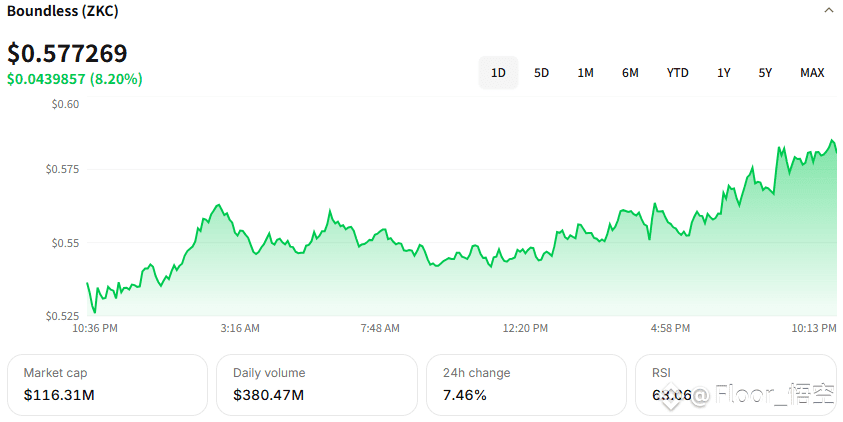
$ZKC The recent price fluctuations have sparked a lot of discussions. From a high of $0.8, it fell back to $0.55, and now it has stabilized around $0.58, making the short-term trend feel like a roller coaster. However, if one only looks at the chart, it's easy to overlook the significance of Boundless itself.
@boundless_network The core of this is turning zero-knowledge proofs into a public service. Developers submit requests, prover nodes generate proofs, and the chain only needs to verify the results. This avoids redundant calculations, improves efficiency, and allows computing power to scale with the increase in nodes. This is not just theory; the mainnet Beta has already launched, with over 1500 nodes participating, proving that the market is gradually taking shape.
ZK Coin (ZKC) plays a dual role in this. Nodes must stake it as collateral, and only after the proof is completed will they receive rewards. Failures will trigger partial destruction or transfer, ensuring task delivery. For ordinary holders, staking not only allows them to share in some rewards but also enjoy the scarcity effect brought by token lock-up. The PoVW mechanism makes "mining" useful; the more computing power contributed, the higher the rewards.
Short-term prices are influenced by market sentiment, exchange spreads, and unlocking pressures, making fluctuations inevitable. However, in the long run, the value of Boundless is not in short-term ups and downs but in whether it can truly become the underlying support for cross-chain and DePIN, as well as AI computation. If the ecosystem continues to expand, the demand for ZKC will gradually increase.
For me, this story feels more like a long-term participation opportunity. Prices will fluctuate, but as more chains and applications choose Boundless, the staking and usage scenarios for ZKC will become clearer.
#Boundless $ZKC
{spot}(ZKCUSDT)
$ZKC The recent price fluctuations have sparked a lot of discussions. From a high of $0.8, it fell back to $0.55, and now it has stabilized around $0.58, making the short-term trend feel like a roller coaster. However, if one only looks at the chart, it's easy to overlook the significance of Boundless itself.
@boundless_network The core of this is turning zero-knowledge proofs into a public service. Developers submit requests, prover nodes generate proofs, and the chain only needs to verify the results. This avoids redundant calculations, improves efficiency, and allows computing power to scale with the increase in nodes. This is not just theory; the mainnet Beta has already launched, with over 1500 nodes participating, proving that the market is gradually taking shape.
ZK Coin (ZKC) plays a dual role in this. Nodes must stake it as collateral, and only after the proof is completed will they receive rewards. Failures will trigger partial destruction or transfer, ensuring task delivery. For ordinary holders, staking not only allows them to share in some rewards but also enjoy the scarcity effect brought by token lock-up. The PoVW mechanism makes "mining" useful; the more computing power contributed, the higher the rewards.
Short-term prices are influenced by market sentiment, exchange spreads, and unlocking pressures, making fluctuations inevitable. However, in the long run, the value of Boundless is not in short-term ups and downs but in whether it can truly become the underlying support for cross-chain and DePIN, as well as AI computation. If the ecosystem continues to expand, the demand for ZKC will gradually increase.
For me, this story feels more like a long-term participation opportunity. Prices will fluctuate, but as more chains and applications choose Boundless, the staking and usage scenarios for ZKC will become clearer.
#Boundless $ZKC
@boundless_network The core of this is turning zero-knowledge proofs into a public service. Developers submit requests, prover nodes generate proofs, and the chain only needs to verify the results. This avoids redundant calculations, improves efficiency, and allows computing power to scale with the increase in nodes. This is not just theory; the mainnet Beta has already launched, with over 1500 nodes participating, proving that the market is gradually taking shape.
ZK Coin (ZKC) plays a dual role in this. Nodes must stake it as collateral, and only after the proof is completed will they receive rewards. Failures will trigger partial destruction or transfer, ensuring task delivery. For ordinary holders, staking not only allows them to share in some rewards but also enjoy the scarcity effect brought by token lock-up. The PoVW mechanism makes "mining" useful; the more computing power contributed, the higher the rewards.
Short-term prices are influenced by market sentiment, exchange spreads, and unlocking pressures, making fluctuations inevitable. However, in the long run, the value of Boundless is not in short-term ups and downs but in whether it can truly become the underlying support for cross-chain and DePIN, as well as AI computation. If the ecosystem continues to expand, the demand for ZKC will gradually increase.
For me, this story feels more like a long-term participation opportunity. Prices will fluctuate, but as more chains and applications choose Boundless, the staking and usage scenarios for ZKC will become clearer.
#Boundless $ZKC
2
240
Log in to explore more content
Join global crypto users on Binance Square
⚡️ Get latest and useful information about crypto.
💬 Trusted by the world’s largest crypto exchange.
👍 Discover real insights from verified creators.
Email / Phone number
Trending Topics
AppleDebutsFoldablePhone
13,634 views
313 Discussing
Apple just dropped the foldable iPhone — and the market is paying attention. This isn't just another product cycle; it's a new product category, a new CEO on stage, and a $1,999 price tag that pushes $AAPL further into ultra-premium territory. Foldables are the narrative, and Apple is now the headline.
#appledebutsfoldablephone #EUExtendsCentralContactPointToCASPs #US10YTreasuryYieldHitsHighestSinceNov2023 #BrentCrudeTops$100 #USTreasuryToBuyBackUpTo$6BLongDatedDebt
KimHotbae
·0 Likes
·865 views
EUExtendsCentralContactPointToCASPs
1,281 views
75 Discussing
US10YTreasuryYieldHitsHighestSinceNov2023
16,365 views
299 Discussing