
Sheemm
9.7k Posts

Sheemm
 Square Verified+
Report
Block User
Nothing to say🤗
High-Frequency Trader
5.4 Years
966 Following
44.2K+ Followers
45.2K+ Liked
Posts
All
Quotes
Live
·
--
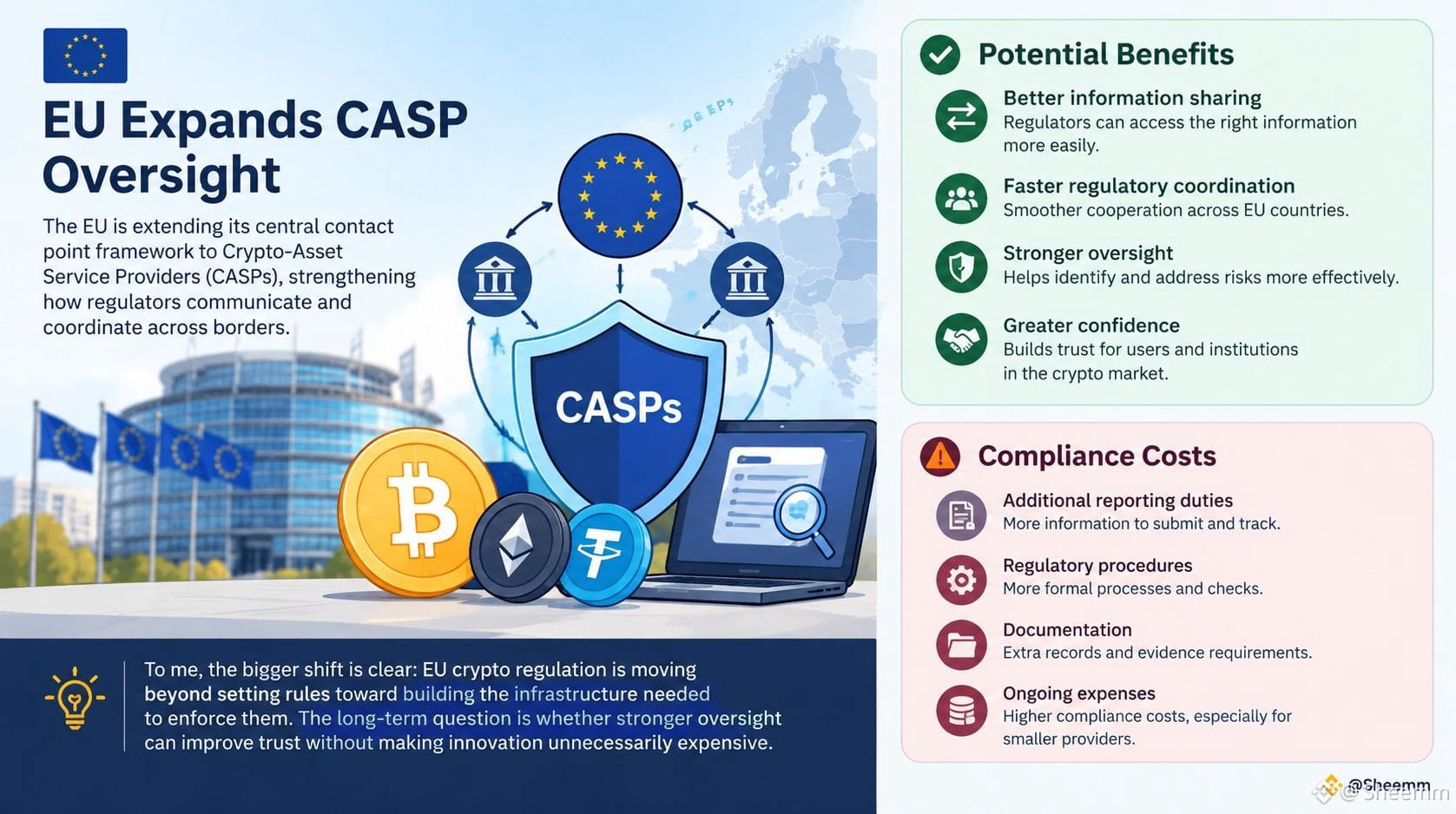
#EUExtendsCentralContactPointToCASPs The EU is extending its central contact point framework to Crypto-Asset Service Providers (CASPs), strengthening how regulators communicate and coordinate across borders. 🇪🇺
Potential benefits: Better information sharing, faster regulatory coordination, stronger oversight and potentially greater confidence for users and institutions entering the crypto market.
Compliance costs: CASPs may face additional reporting duties, regulatory procedures, documentation and ongoing compliance expenses. Smaller providers could feel this burden more heavily than larger platforms.
To me, the bigger shift is clear: EU crypto regulation is moving beyond setting rules toward building the infrastructure needed to enforce them. The long-term question is whether stronger oversight can improve trust without making innovation unnecessarily expensive.
$AAPLB
$ABT.US
$NAK.US
#BinanceSquareTalks
#EUExtendsCentralContactPointToCASPs
#EUExtendsCentralContactPointToCASPs The EU is extending its central contact point framework to Crypto-Asset Service Providers (CASPs), strengthening how regulators communicate and coordinate across borders. 🇪🇺
Potential benefits: Better information sharing, faster regulatory coordination, stronger oversight and potentially greater confidence for users and institutions entering the crypto market.
Compliance costs: CASPs may face additional reporting duties, regulatory procedures, documentation and ongoing compliance expenses. Smaller providers could feel this burden more heavily than larger platforms.
To me, the bigger shift is clear: EU crypto regulation is moving beyond setting rules toward building the infrastructure needed to enforce them. The long-term question is whether stronger oversight can improve trust without making innovation unnecessarily expensive.
$AAPLB
$ABT.US
$NAK.US
#BinanceSquareTalks
#EUExtendsCentralContactPointToCASPs
Potential benefits: Better information sharing, faster regulatory coordination, stronger oversight and potentially greater confidence for users and institutions entering the crypto market.
Compliance costs: CASPs may face additional reporting duties, regulatory procedures, documentation and ongoing compliance expenses. Smaller providers could feel this burden more heavily than larger platforms.
To me, the bigger shift is clear: EU crypto regulation is moving beyond setting rules toward building the infrastructure needed to enforce them. The long-term question is whether stronger oversight can improve trust without making innovation unnecessarily expensive.
$AAPLB
$ABT.US
$NAK.US
#BinanceSquareTalks
#EUExtendsCentralContactPointToCASPs
1
127
·
--
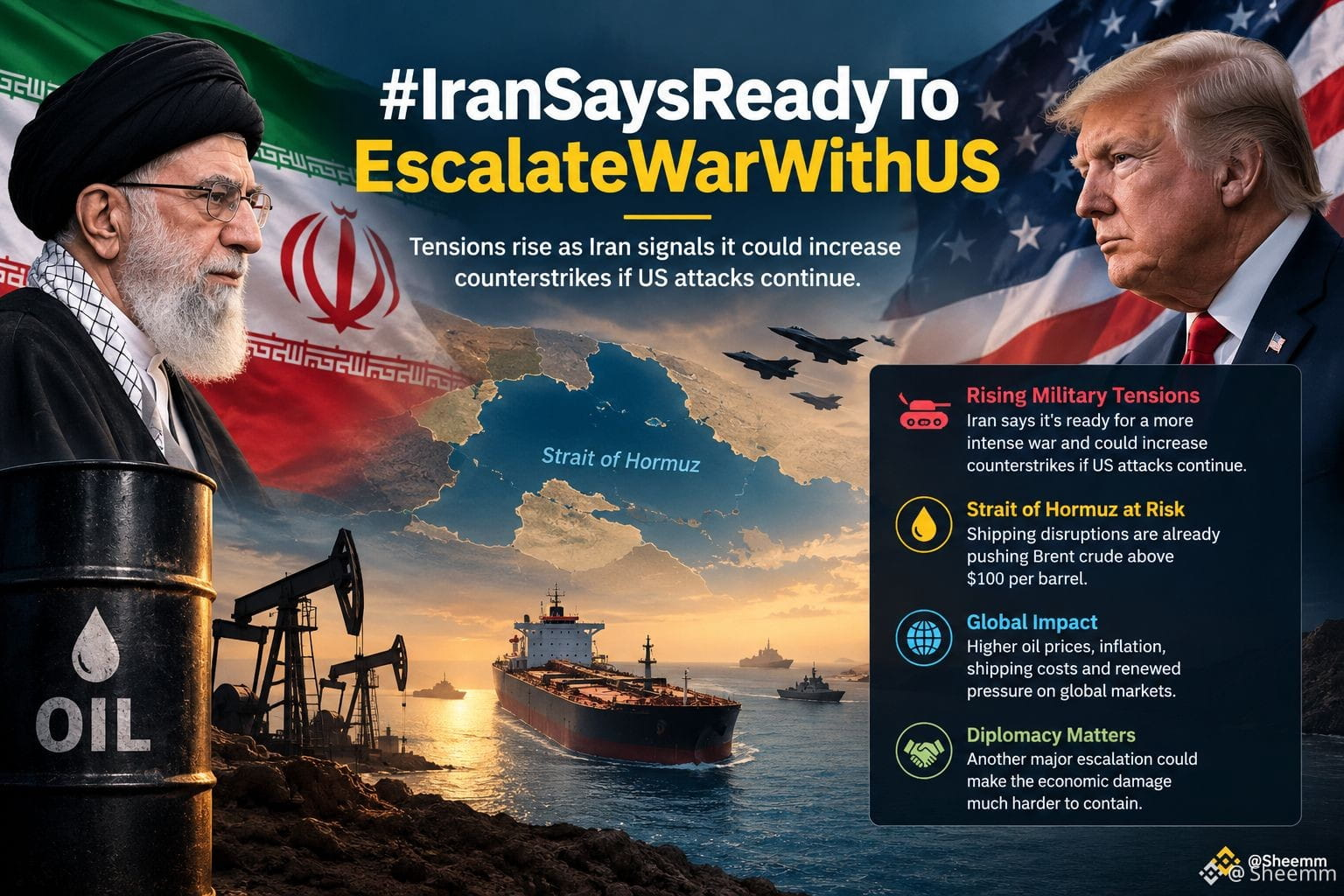
#IranSaysReadyToEscalateWarWithUS The Iran-US conflict is entering an even more dangerous phase. Iranian officials have warned that Tehran is prepared for a more intense war and could increase counterstrikes if US attacks continue.
What concerns me most is that this is no longer only about direct military strikes. The Strait of Hormuz has become a major pressure point, with shipping disruptions already pushing Brent crude above $100 per barrel.
If tensions keep rising, the impact could spread far beyond the battlefield through higher oil prices, inflation, shipping costs and renewed pressure on global markets.
For now, diplomacy looks increasingly important because another major escalation could make the economic damage much harder to contain.
$VTHO
{future}(VTHOUSDT)
$ZEST
{alpha}(560x5506599c722389a60580b5213ea1da60d64754a1)
$NET
{future}(NETUSDT)
#AppleDebutsFoldablePhone
#Write2Earn
#MarketMeltdown
#IranSaysReadyToEscalateWarWithUS The Iran-US conflict is entering an even more dangerous phase. Iranian officials have warned that Tehran is prepared for a more intense war and could increase counterstrikes if US attacks continue.
What concerns me most is that this is no longer only about direct military strikes. The Strait of Hormuz has become a major pressure point, with shipping disruptions already pushing Brent crude above $100 per barrel.
If tensions keep rising, the impact could spread far beyond the battlefield through higher oil prices, inflation, shipping costs and renewed pressure on global markets.
For now, diplomacy looks increasingly important because another major escalation could make the economic damage much harder to contain.
$VTHO
$ZEST
$NET
#AppleDebutsFoldablePhone
#Write2Earn
#MarketMeltdown
What concerns me most is that this is no longer only about direct military strikes. The Strait of Hormuz has become a major pressure point, with shipping disruptions already pushing Brent crude above $100 per barrel.
If tensions keep rising, the impact could spread far beyond the battlefield through higher oil prices, inflation, shipping costs and renewed pressure on global markets.
For now, diplomacy looks increasingly important because another major escalation could make the economic damage much harder to contain.
$VTHO
$ZEST
$NET
#AppleDebutsFoldablePhone
#Write2Earn
#MarketMeltdown
3
535
·
--
#AppleDebutsFoldablePhone
Apple entry into foldables isn't just about bending glass—it’s about redefining what a multi-device workflow actually feels like.
If the rumors of a crease-free display and hybrid OS hold true, this isn't just a phone that folds; it’s a pocket-sized iPad built for serious split-screen productivity. Apple waited until the hardware matured, prioritizing durability and seamless hinge mechanics over being first to market.
Whether you’re editing on the go or multitasking across apps, the real test is how natural it fits into daily use. The bar for foldable hardware just got set.
What’s your take—are you upgrading on launch day or waiting for version 2.0?
$BULLA =On fire
$AAPL.US
$M
#Write2Earrn
#BankOfAmericaGroupPilotsUSBDCStablecoin
#LAPTOPFoundationXAccountSuspended
#AppleDebutsFoldablePhone
Apple entry into foldables isn't just about bending glass—it’s about redefining what a multi-device workflow actually feels like.
If the rumors of a crease-free display and hybrid OS hold true, this isn't just a phone that folds; it’s a pocket-sized iPad built for serious split-screen productivity. Apple waited until the hardware matured, prioritizing durability and seamless hinge mechanics over being first to market.
Whether you’re editing on the go or multitasking across apps, the real test is how natural it fits into daily use. The bar for foldable hardware just got set.
What’s your take—are you upgrading on launch day or waiting for version 2.0?
$BULLA =On fire
$AAPL.US
$M
#Write2Earrn
#BankOfAmericaGroupPilotsUSBDCStablecoin
#LAPTOPFoundationXAccountSuspended
Apple entry into foldables isn't just about bending glass—it’s about redefining what a multi-device workflow actually feels like.
If the rumors of a crease-free display and hybrid OS hold true, this isn't just a phone that folds; it’s a pocket-sized iPad built for serious split-screen productivity. Apple waited until the hardware matured, prioritizing durability and seamless hinge mechanics over being first to market.
Whether you’re editing on the go or multitasking across apps, the real test is how natural it fits into daily use. The bar for foldable hardware just got set.
What’s your take—are you upgrading on launch day or waiting for version 2.0?
$BULLA =On fire
$AAPL.US
$M
#Write2Earrn
#BankOfAmericaGroupPilotsUSBDCStablecoin
#LAPTOPFoundationXAccountSuspended
2
319
·
--
$ATOM
{future}(ATOMUSDT)
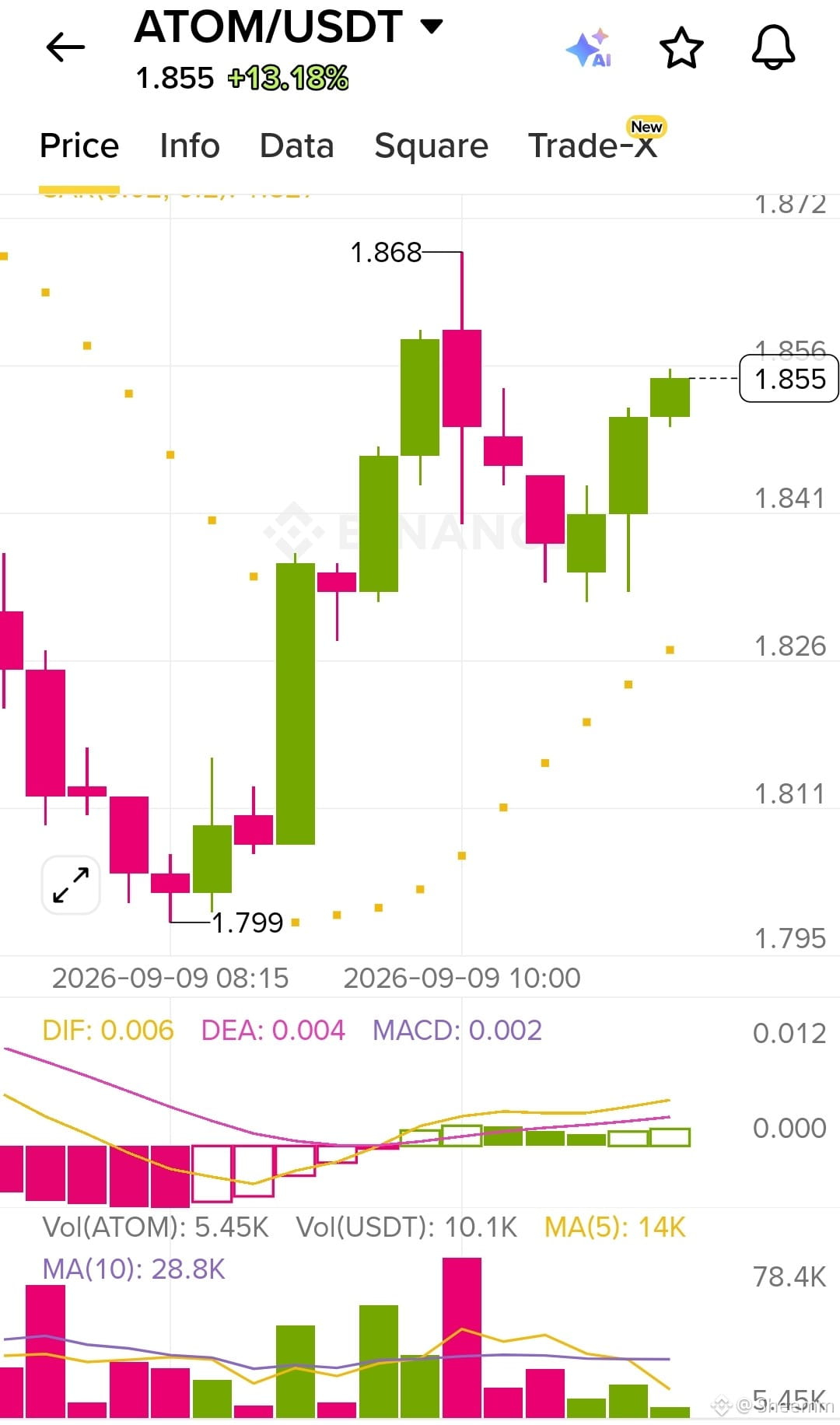
ATOM (Cosmos) Snapshot & Technical Analysis
Launched in 2019 by Tendermint, Cosmos ($ATOM) emerged as the "Internet of Blockchains," revolutionizing Web3 with its Inter-Blockchain Communication (IBC) protocol and Cosmos SDK (powering chains like Osmosis and Injective). Historically reaching an all-time high of ~$44.70 in 2022, ATOM remains a foundational ecosystem asset.
Technical Setup:
Current Price: $1.855 (+13.18%)
Recent Range: Bounced strongly off local low at $1.799 up to $1.868.
Indicators: MACD shows bullish momentum (DIF: 0.006 > DEA: 0.004) with green histograms expanding.
Target: $1.87+ break
out | Support: $1.80
$DOGE $DOGS
#writetoearn
#DowFallsOver600Points
$ATOM
ATOM (Cosmos) Snapshot & Technical Analysis
Launched in 2019 by Tendermint, Cosmos ($ATOM ) emerged as the "Internet of Blockchains," revolutionizing Web3 with its Inter-Blockchain Communication (IBC) protocol and Cosmos SDK (powering chains like Osmosis and Injective). Historically reaching an all-time high of ~$44.70 in 2022, ATOM remains a foundational ecosystem asset.
Technical Setup:
Current Price: $1.855 (+13.18%)
Recent Range: Bounced strongly off local low at $1.799 up to $1.868.
Indicators: MACD shows bullish momentum (DIF: 0.006 > DEA: 0.004) with green histograms expanding.
Target: $1.87+ break
out | Support: $1.80
$DOGE $DOGS
#writetoearn
#DowFallsOver600Points
ATOM (Cosmos) Snapshot & Technical Analysis
Launched in 2019 by Tendermint, Cosmos ($ATOM ) emerged as the "Internet of Blockchains," revolutionizing Web3 with its Inter-Blockchain Communication (IBC) protocol and Cosmos SDK (powering chains like Osmosis and Injective). Historically reaching an all-time high of ~$44.70 in 2022, ATOM remains a foundational ecosystem asset.
Technical Setup:
Current Price: $1.855 (+13.18%)
Recent Range: Bounced strongly off local low at $1.799 up to $1.868.
Indicators: MACD shows bullish momentum (DIF: 0.006 > DEA: 0.004) with green histograms expanding.
Target: $1.87+ break
out | Support: $1.80
$DOGE $DOGS
#writetoearn
#DowFallsOver600Points
2
223
·
--
#USDestroysFiveIranianOilTankers
BREAKING
🔥 ESCALATION IN THE GULF:
US forces destroyed 5 Iranian crude oil carriers in the Gulf of Oman and near Kharg Island. US CENTCOM confirmed the strikes came in direct retaliation after the IRGC targeted a US Navy warship with ballistic missiles twice.
The targeted vessels—including the M/T Kaviz and M/T Derya—were identified as part of Tehran’s shadow network funding the IRGC. US forces ordered crews to evacuate before rendering the tankers inoperable. In response, Tehran launched retaliatory missile strikes toward US assets in Jordan.
As global energy risks soar, Washington warns further attacks on US warships will cost Iran more of its fleet. 🚨🚢
$VET
$ZEC
$EPIC
#DYORAlways
#Write2Earrn
#TradeHere☝️🤗
#USDestroysFiveIranianOilTankers
BREAKING
🔥 ESCALATION IN THE GULF:
US forces destroyed 5 Iranian crude oil carriers in the Gulf of Oman and near Kharg Island. US CENTCOM confirmed the strikes came in direct retaliation after the IRGC targeted a US Navy warship with ballistic missiles twice.
The targeted vessels—including the M/T Kaviz and M/T Derya—were identified as part of Tehran’s shadow network funding the IRGC. US forces ordered crews to evacuate before rendering the tankers inoperable. In response, Tehran launched retaliatory missile strikes toward US assets in Jordan.
As global energy risks soar, Washington warns further attacks on US warships will cost Iran more of its fleet. 🚨🚢
$VET
$ZEC
$EPIC
#DYORAlways
#Write2Earrn
#TradeHere☝️🤗
BREAKING
🔥 ESCALATION IN THE GULF:
US forces destroyed 5 Iranian crude oil carriers in the Gulf of Oman and near Kharg Island. US CENTCOM confirmed the strikes came in direct retaliation after the IRGC targeted a US Navy warship with ballistic missiles twice.
The targeted vessels—including the M/T Kaviz and M/T Derya—were identified as part of Tehran’s shadow network funding the IRGC. US forces ordered crews to evacuate before rendering the tankers inoperable. In response, Tehran launched retaliatory missile strikes toward US assets in Jordan.
As global energy risks soar, Washington warns further attacks on US warships will cost Iran more of its fleet. 🚨🚢
$VET
$ZEC
$EPIC
#DYORAlways
#Write2Earrn
#TradeHere☝️🤗

5
530
·
--
Verified
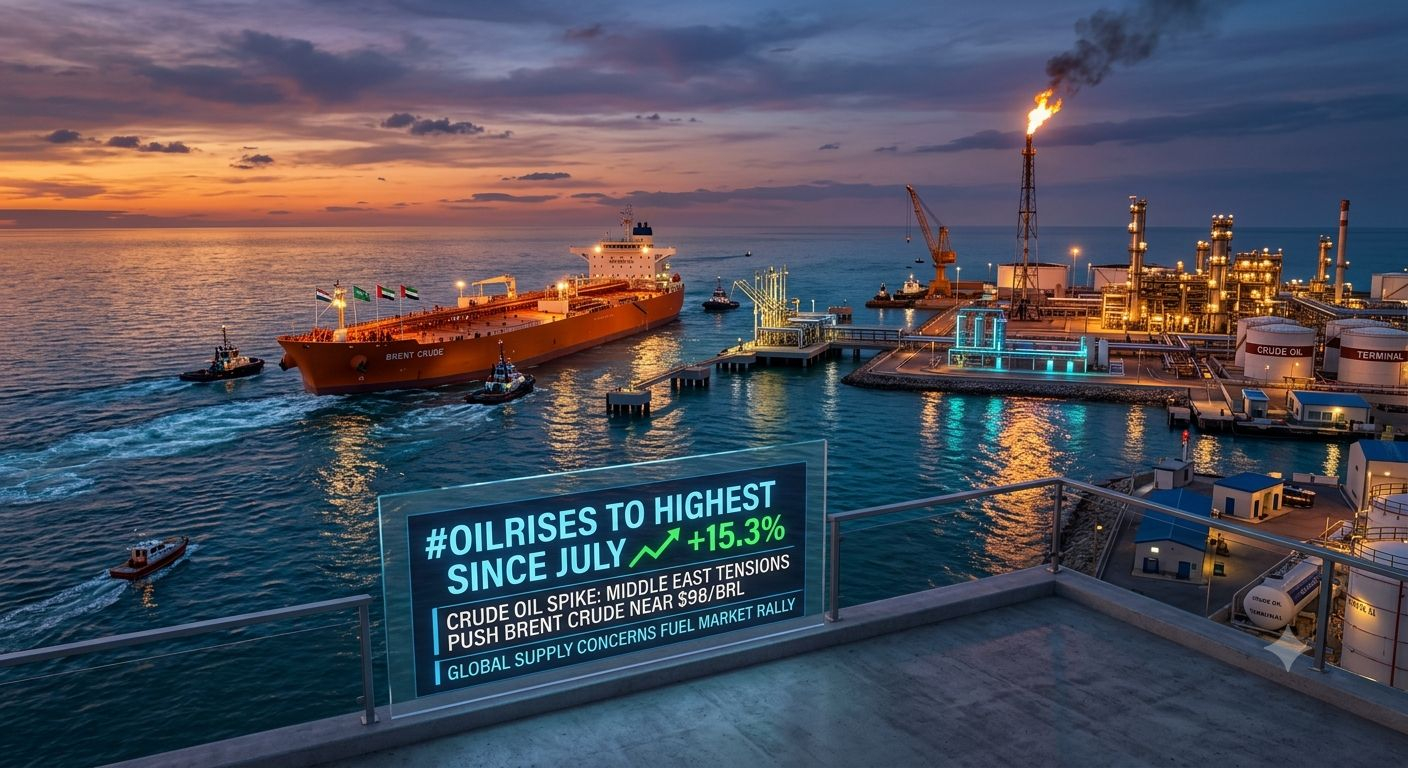
#OilRisesToHighestSinceJuly
📈 BREAKING: Crude oil prices have spiked to their highest level since July as escalating tensions in the Middle East shake global markets.
Brent crude hit multi-week highs near $98/barrel, driven by retaliatory military strikes, growing supply disruption fears in the Strait of Hormuz, and dwindling global reserves. With major shipping lanes restricted and energy demand rebounding, analysts warn a severe supply crunch could send prices soaring even further if regional conflict continues to intensify. ⛽⚡
$ATOM
$DOT
$INTWB
#Write2Earn!
#USStocksCloseLowerIntelRises9%
#OilRisesToHighestSinceJuly
📈 BREAKING: Crude oil prices have spiked to their highest level since July as escalating tensions in the Middle East shake global markets.
Brent crude hit multi-week highs near $98/barrel, driven by retaliatory military strikes, growing supply disruption fears in the Strait of Hormuz, and dwindling global reserves. With major shipping lanes restricted and energy demand rebounding, analysts warn a severe supply crunch could send prices soaring even further if regional conflict continues to intensify. ⛽⚡
$ATOM
$DOT
$INTWB
#Write2Earn!
#USStocksCloseLowerIntelRises9%
📈 BREAKING: Crude oil prices have spiked to their highest level since July as escalating tensions in the Middle East shake global markets.
Brent crude hit multi-week highs near $98/barrel, driven by retaliatory military strikes, growing supply disruption fears in the Strait of Hormuz, and dwindling global reserves. With major shipping lanes restricted and energy demand rebounding, analysts warn a severe supply crunch could send prices soaring even further if regional conflict continues to intensify. ⛽⚡
$ATOM
$DOT
$INTWB
#Write2Earn!
#USStocksCloseLowerIntelRises9%
1
8
2.2k
·
--
#USStrikesTargetsNearHormuzAndJask 🚨 BREAKING: The US military launched strikes against Iranian crude oil tankers near Jask and Kharg Island after US Navy warships evaded incoming missile attacks.
US CENTCOM confirmed the destruction of multiple Iranian vessels in retaliation, warning Tehran of further economic costs to its oil fleet. Meanwhile, Iran’s Revolutionary Guard (IRGC) warned remaining tanker crews in the Gulf to abandon ship and claimed to have downed an MQ-1 drone over the Strait of Hormuz.
Energy markets react as tension peaks along this critical choke point. 🌊⛽
$FF
$KAT
$RAY
#AEROSurges17%In24Hours
#USStrikesTargetsNearHormuzAndJask 🚨 BREAKING: The US military launched strikes against Iranian crude oil tankers near Jask and Kharg Island after US Navy warships evaded incoming missile attacks.
US CENTCOM confirmed the destruction of multiple Iranian vessels in retaliation, warning Tehran of further economic costs to its oil fleet. Meanwhile, Iran’s Revolutionary Guard (IRGC) warned remaining tanker crews in the Gulf to abandon ship and claimed to have downed an MQ-1 drone over the Strait of Hormuz.
Energy markets react as tension peaks along this critical choke point. 🌊⛽
$FF
$KAT
$RAY
#AEROSurges17%In24Hours
US CENTCOM confirmed the destruction of multiple Iranian vessels in retaliation, warning Tehran of further economic costs to its oil fleet. Meanwhile, Iran’s Revolutionary Guard (IRGC) warned remaining tanker crews in the Gulf to abandon ship and claimed to have downed an MQ-1 drone over the Strait of Hormuz.
Energy markets react as tension peaks along this critical choke point. 🌊⛽
$FF
$KAT
$RAY
#AEROSurges17%In24Hours

3
957
·
--
#CanadaTariffsOnUSTakeEffect
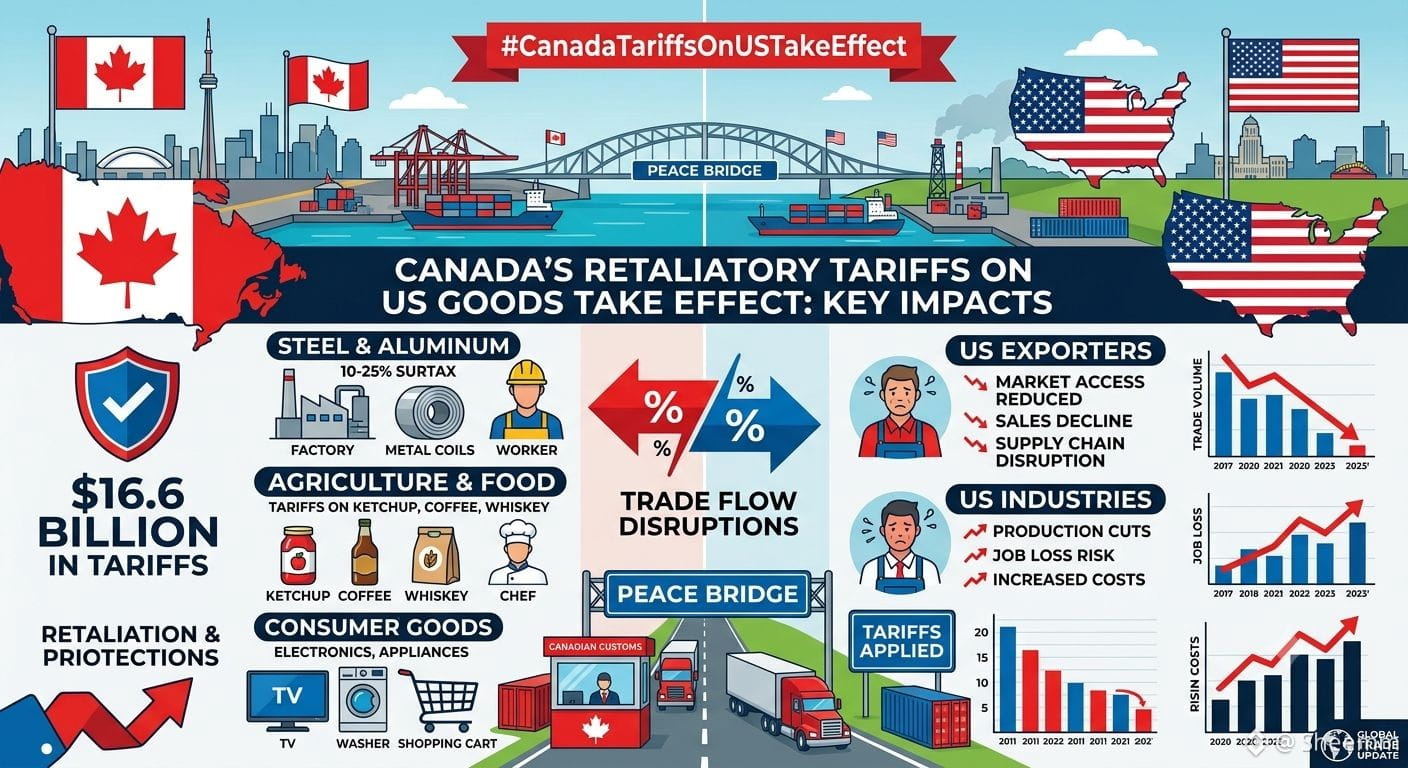
Canada’s retaliatory tariffs against the US mark a critical turning point in North American trade dynamics. With duty rates directly targeting key American exports—from steel and aluminum to consumer goods—businesses on both sides of the border are re-evaluating supply chains and cost structures.
While designed to protect domestic industries and signal economic resilience, these measures inevitably pressure consumer prices and disrupt integrated market flows. As cross-border trade friction escalates, the focus shifts toward diplomatic negotiations, policy recalibration, and long-term economic strategy. Stay informed on regulatory updates and market shifts as the situation evolves.
$QKC
{spot}(QKCUSDT)
$MIRA
{future}(MIRAUSDT)
$DOT
{future}(DOTUSDT)
#AEROSurges17%In24Hours
#CanadaTariffsOnUSTakeEffect
#CanadaTariffsOnUSTakeEffect
Canada’s retaliatory tariffs against the US mark a critical turning point in North American trade dynamics. With duty rates directly targeting key American exports—from steel and aluminum to consumer goods—businesses on both sides of the border are re-evaluating supply chains and cost structures.
While designed to protect domestic industries and signal economic resilience, these measures inevitably pressure consumer prices and disrupt integrated market flows. As cross-border trade friction escalates, the focus shifts toward diplomatic negotiations, policy recalibration, and long-term economic strategy. Stay informed on regulatory updates and market shifts as the situation evolves.
$QKC
$MIRA
$DOT
#AEROSurges17%In24Hours
#CanadaTariffsOnUSTakeEffect
Canada’s retaliatory tariffs against the US mark a critical turning point in North American trade dynamics. With duty rates directly targeting key American exports—from steel and aluminum to consumer goods—businesses on both sides of the border are re-evaluating supply chains and cost structures.
While designed to protect domestic industries and signal economic resilience, these measures inevitably pressure consumer prices and disrupt integrated market flows. As cross-border trade friction escalates, the focus shifts toward diplomatic negotiations, policy recalibration, and long-term economic strategy. Stay informed on regulatory updates and market shifts as the situation evolves.
$QKC
$MIRA
$DOT
#AEROSurges17%In24Hours
#CanadaTariffsOnUSTakeEffect
2
471
·
--
Institutional RWAs Meets Compliance on @Dusk_Foundation
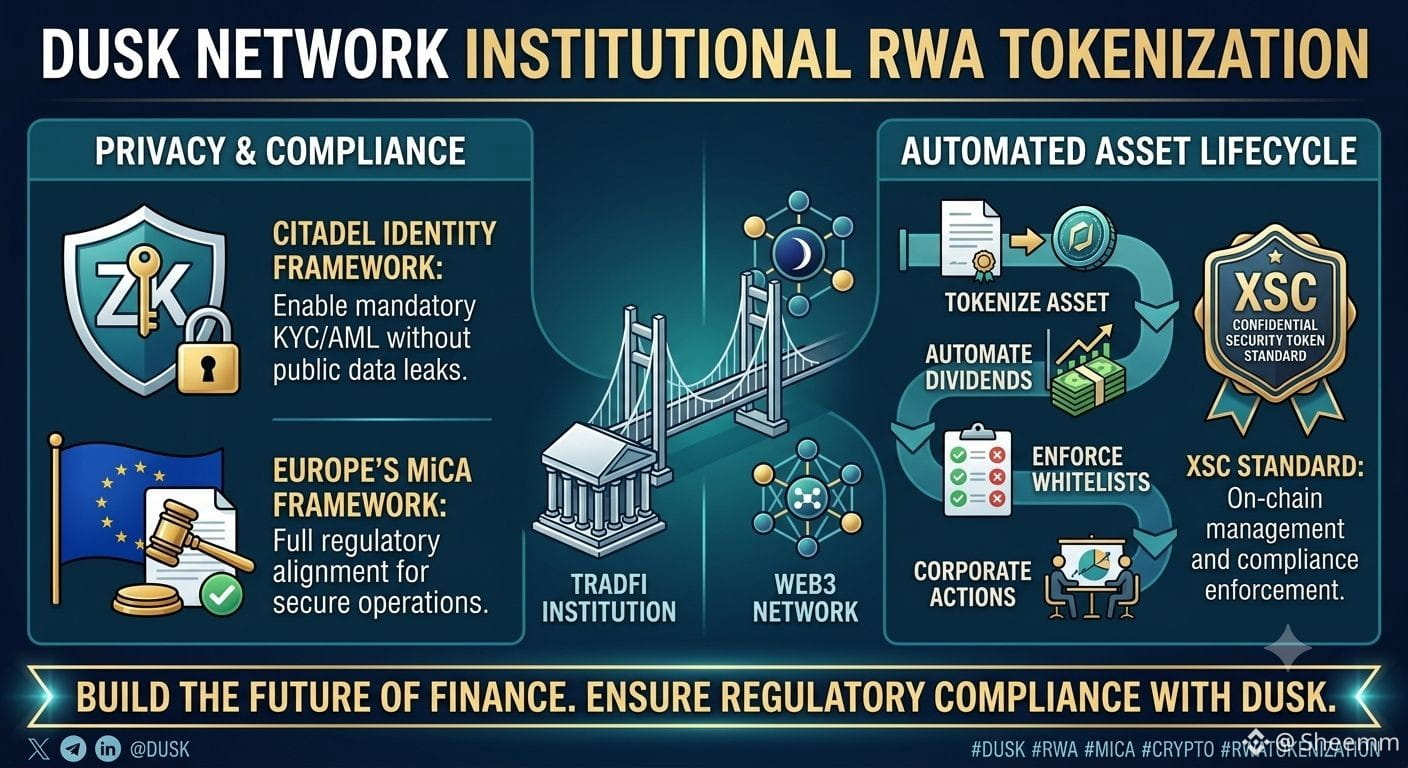
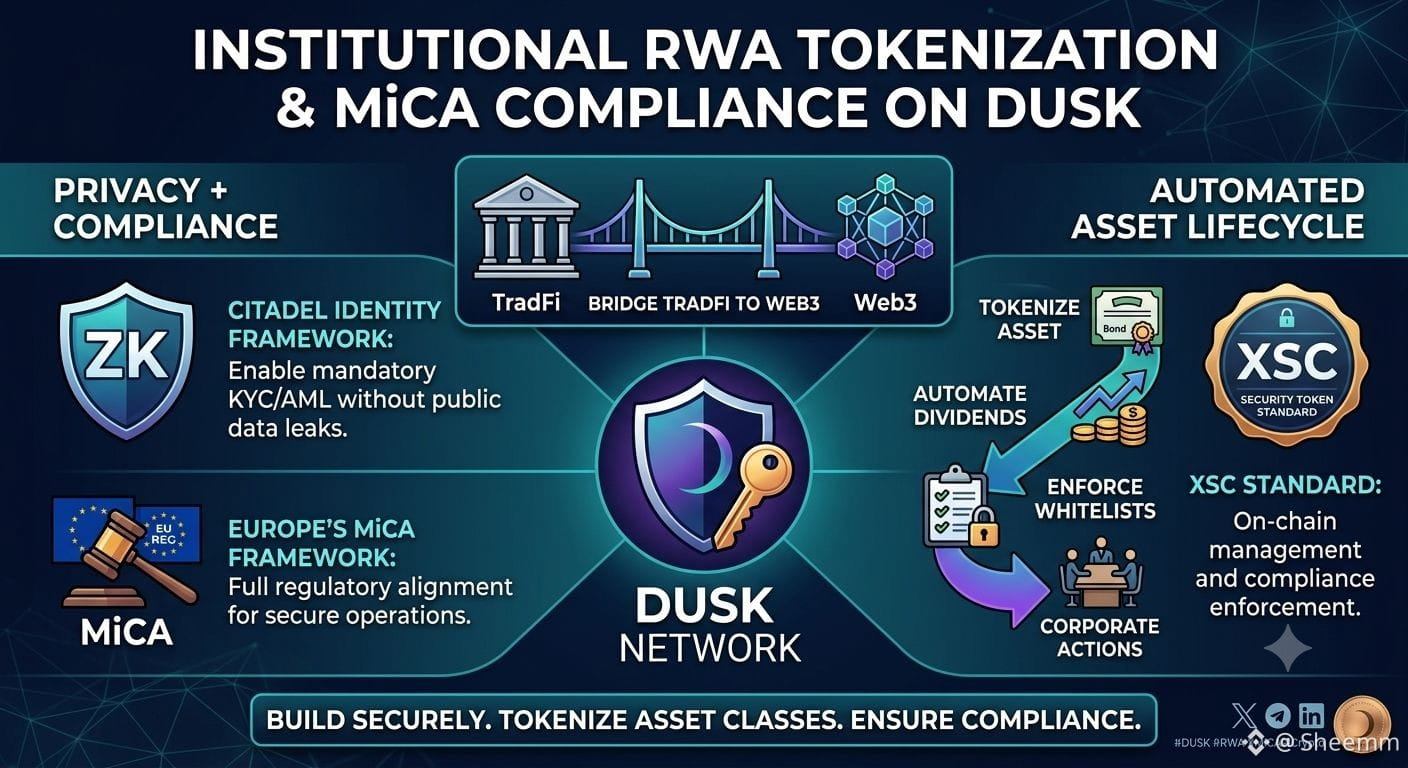
Real-World Asset (RWA) tokenization requires more than just high throughput—it demands strict regulatory alignment. Built specifically as a Layer-1 blockchain for compliant finance, @Dusk empowers institutions to tokenize bonds, equities, and real estate while adhering to Europe’s MiCA framework.
🔒 Key Highlights: #dusk
Privacy + Compliance: Utilizes zero-knowledge proofs via the Citadel identity framework to enable mandatory KYC/AML checks without leaking sensitive user data.
Automated Asset Lifecycle: Uses the Confidential Security Token (XSC) standard to handle corporate actions, dividends, and whitelist enforcement on-chain.
The bridge between TradFi and Web3 is officially built. ⚡
$DUSK
{future}(DUSKUSDT)
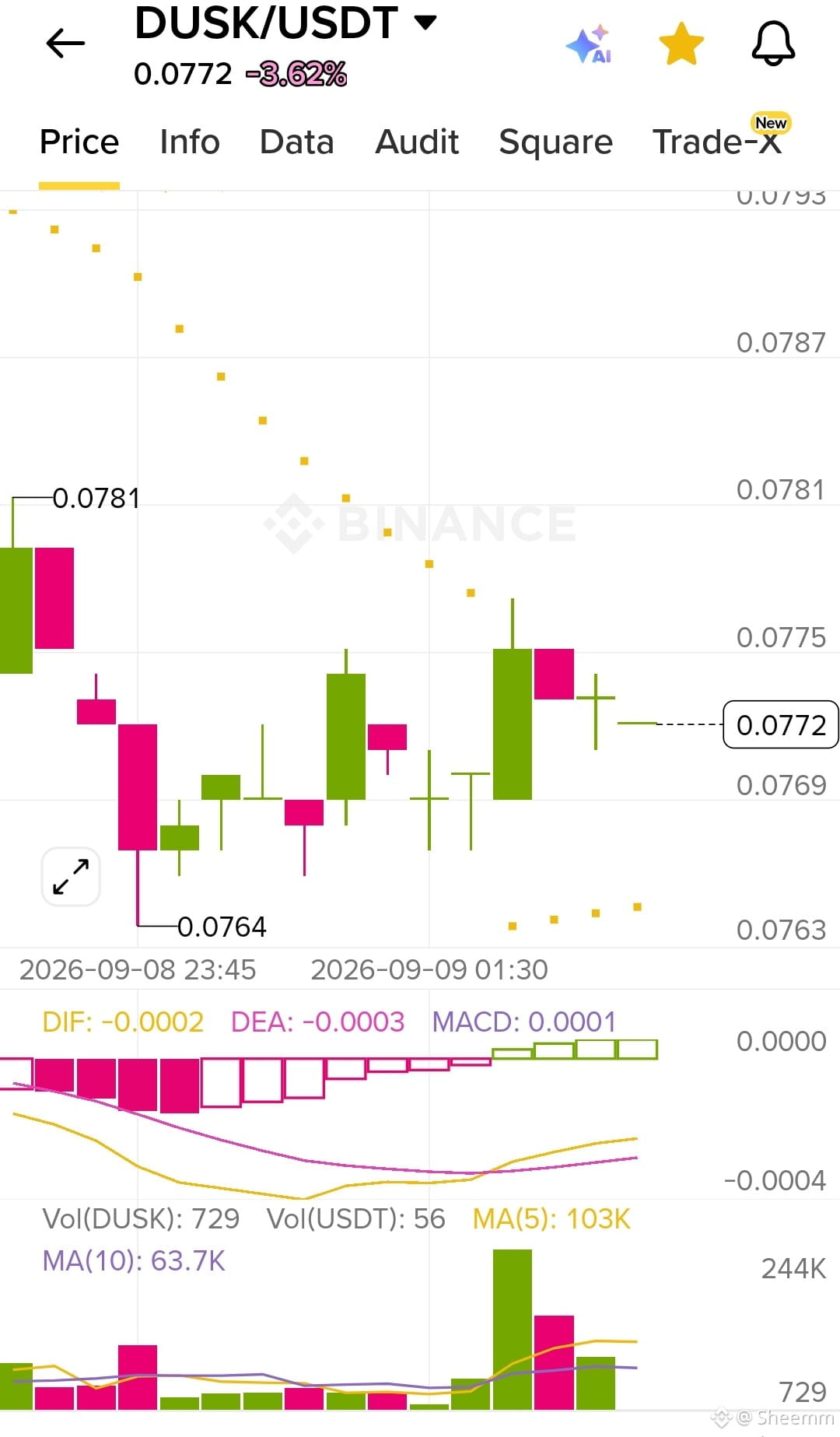
DUSK Update
Trading at 0.0772 USDT (-3.62%). Price rebounded off the 0.0764 support level with MACD turning slightly positive. Eyeing 0.0781 resistance next as buying volume shows signs of life. 📊
$BANANAS31
$GEV
#Write2Earn!
#CanadaToImpose15%To50%TariffsOnUSGoods
Institutional RWAs Meets Compliance on @Dusk
Real-World Asset (RWA) tokenization requires more than just high throughput—it demands strict regulatory alignment. Built specifically as a Layer-1 blockchain for compliant finance, @Dusk empowers institutions to tokenize bonds, equities, and real estate while adhering to Europe’s MiCA framework.
🔒 Key Highlights: #dusk
Privacy + Compliance: Utilizes zero-knowledge proofs via the Citadel identity framework to enable mandatory KYC/AML checks without leaking sensitive user data.
Automated Asset Lifecycle: Uses the Confidential Security Token (XSC) standard to handle corporate actions, dividends, and whitelist enforcement on-chain.
The bridge between TradFi and Web3 is officially built. ⚡
$DUSK
DUSK Update
Trading at 0.0772 USDT (-3.62%). Price rebounded off the 0.0764 support level with MACD turning slightly positive. Eyeing 0.0781 resistance next as buying volume shows signs of life. 📊
$BANANAS31
$GEV
#Write2Earn!
#CanadaToImpose15%To50%TariffsOnUSGoods
Real-World Asset (RWA) tokenization requires more than just high throughput—it demands strict regulatory alignment. Built specifically as a Layer-1 blockchain for compliant finance, @Dusk empowers institutions to tokenize bonds, equities, and real estate while adhering to Europe’s MiCA framework.
🔒 Key Highlights: #dusk
Privacy + Compliance: Utilizes zero-knowledge proofs via the Citadel identity framework to enable mandatory KYC/AML checks without leaking sensitive user data.
Automated Asset Lifecycle: Uses the Confidential Security Token (XSC) standard to handle corporate actions, dividends, and whitelist enforcement on-chain.
The bridge between TradFi and Web3 is officially built. ⚡
$DUSK
DUSK Update
Trading at 0.0772 USDT (-3.62%). Price rebounded off the 0.0764 support level with MACD turning slightly positive. Eyeing 0.0781 resistance next as buying volume shows signs of life. 📊
$BANANAS31
$GEV
#Write2Earn!
#CanadaToImpose15%To50%TariffsOnUSGoods
473
·
--
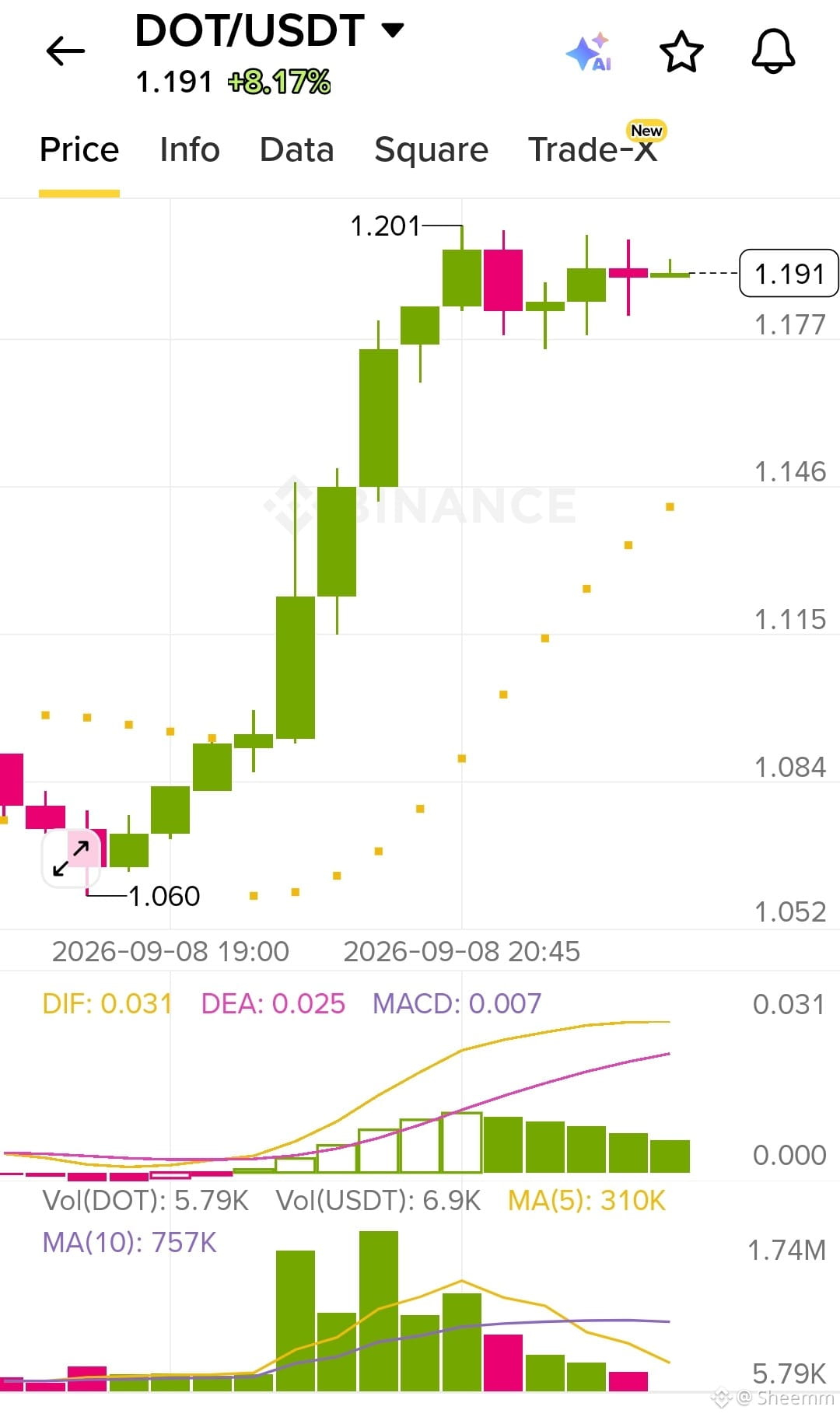
$DOT
{future}(DOTUSDT)
Polkadot (DOT) was created by Ethereum co-founder Gavin Wood to solve blockchain interoperability, launching its mainnet in May 2020. Built around a central Relay Chain connected to specialized parachains, DOT quickly became a top-tier Web3 infrastructure project, pioneering seamless cross-chain data and asset transfers.
All-Time High (ATH): $55.00 (November 2021)
All-Time Low (ATL): $2.69 (August 2020)
Current Snap: $1.191 (+8.17%)
Despite severe market cycles, Polkadot’s ongoing evolution into "Polkadot 2.0" focuses on dynamic blockspace allocation and scalability. It remains a foundational layer for decentralized technology. 🌐⛓️
$DOGE
$XRP
$DOT
Polkadot (DOT) was created by Ethereum co-founder Gavin Wood to solve blockchain interoperability, launching its mainnet in May 2020. Built around a central Relay Chain connected to specialized parachains, DOT quickly became a top-tier Web3 infrastructure project, pioneering seamless cross-chain data and asset transfers.
All-Time High (ATH): $55.00 (November 2021)
All-Time Low (ATL): $2.69 (August 2020)
Current Snap: $1.191 (+8.17%)
Despite severe market cycles, Polkadot’s ongoing evolution into "Polkadot 2.0" focuses on dynamic blockspace allocation and scalability. It remains a foundational layer for decentralized technology. 🌐⛓️
$DOGE
$XRP
Polkadot (DOT) was created by Ethereum co-founder Gavin Wood to solve blockchain interoperability, launching its mainnet in May 2020. Built around a central Relay Chain connected to specialized parachains, DOT quickly became a top-tier Web3 infrastructure project, pioneering seamless cross-chain data and asset transfers.
All-Time High (ATH): $55.00 (November 2021)
All-Time Low (ATL): $2.69 (August 2020)
Current Snap: $1.191 (+8.17%)
Despite severe market cycles, Polkadot’s ongoing evolution into "Polkadot 2.0" focuses on dynamic blockspace allocation and scalability. It remains a foundational layer for decentralized technology. 🌐⛓️
$DOGE
$XRP
5
1.1k
·
--
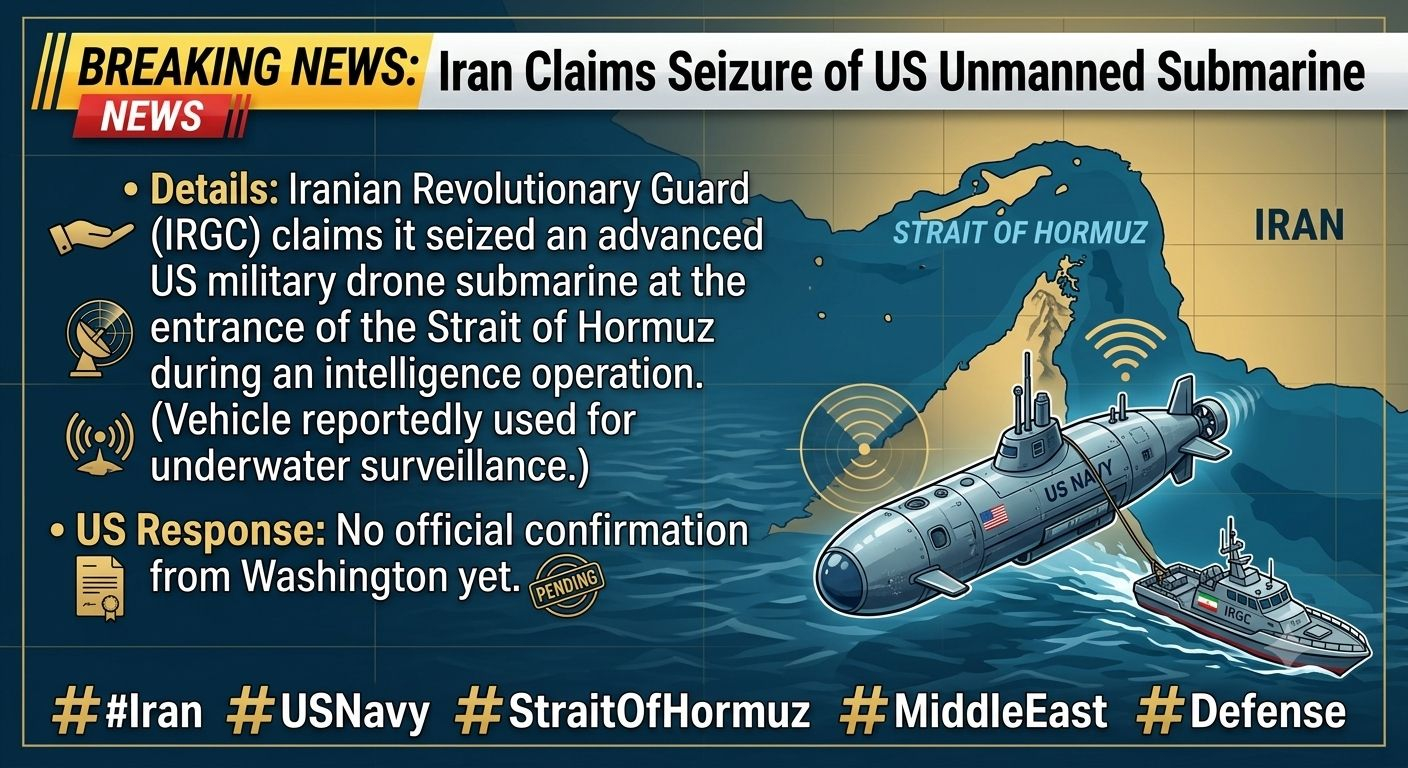
BREAKING: #IranSaysItCapturedUSUnmannedSubmarine 🌊
Iran’s Revolutionary Guard (IRGC) claims it seized an advanced US military drone submarine at the entrance of the Strait of Hormuz.
• Details: Captured during an intelligence operation; vehicle reportedly used for underwater surveillance.
• US Response: No official confirmation from Washington yet.
#CanadaTariffsOnUSTakeEffect
#MarketImpact
#write2earn🌐💹
BREAKING: #IranSaysItCapturedUSUnmannedSubmarine 🌊
Iran’s Revolutionary Guard (IRGC) claims it seized an advanced US military drone submarine at the entrance of the Strait of Hormuz.
• Details: Captured during an intelligence operation; vehicle reportedly used for underwater surveillance.
• US Response: No official confirmation from Washington yet.
#CanadaTariffsOnUSTakeEffect
#MarketImpact
#write2earn🌐💹
Iran’s Revolutionary Guard (IRGC) claims it seized an advanced US military drone submarine at the entrance of the Strait of Hormuz.
• Details: Captured during an intelligence operation; vehicle reportedly used for underwater surveillance.
• US Response: No official confirmation from Washington yet.
#CanadaTariffsOnUSTakeEffect
#MarketImpact
#write2earn🌐💹
3
343
·
--
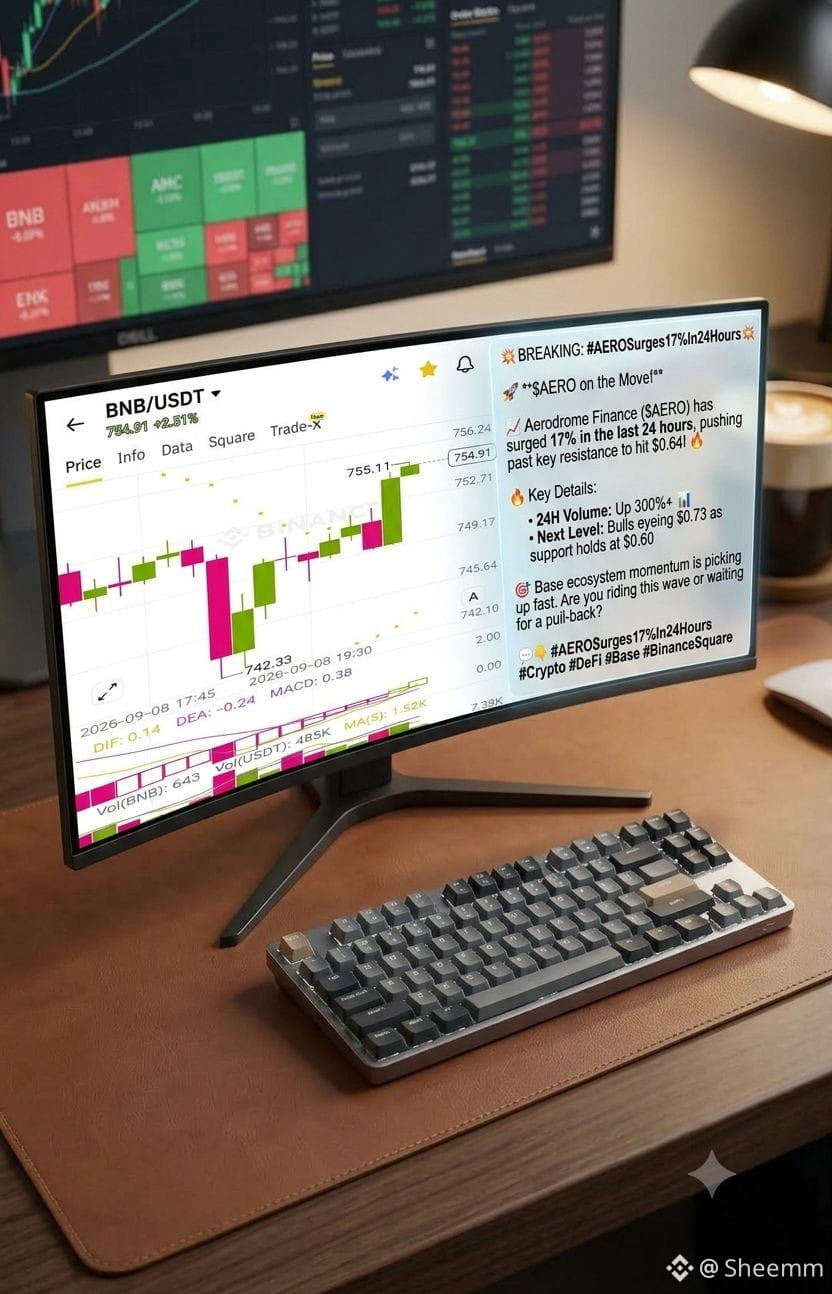
#AEROSurges17%In24Hours
🚀 $AERO on the Move! 📈
Aerodrome Finance ($AERO) has surged 17% in the last 24 hours, pushing past key resistance to hit $0.64! 🔥
• 24H Volume: Up 300%+ 📊
• Next Level: Bulls eyeing $0.73 as support holds at $0.60 🎯
Base ecosystem momentum is picking up fast. Are you riding this wave or waiting for a pull-back?
$FF
$O
#Write2Earn
#AEROSurges17%In24Hours
🚀 $AERO on the Move! 📈
Aerodrome Finance ($AERO ) has surged 17% in the last 24 hours, pushing past key resistance to hit $0.64! 🔥
• 24H Volume: Up 300%+ 📊
• Next Level: Bulls eyeing $0.73 as support holds at $0.60 🎯
Base ecosystem momentum is picking up fast. Are you riding this wave or waiting for a pull-back?
$FF
$O
#Write2Earn
🚀 $AERO on the Move! 📈
Aerodrome Finance ($AERO ) has surged 17% in the last 24 hours, pushing past key resistance to hit $0.64! 🔥
• 24H Volume: Up 300%+ 📊
• Next Level: Bulls eyeing $0.73 as support holds at $0.60 🎯
Base ecosystem momentum is picking up fast. Are you riding this wave or waiting for a pull-back?
$FF
$O
#Write2Earn
2
295
·
--
$BNB
{future}(BNBUSDT)
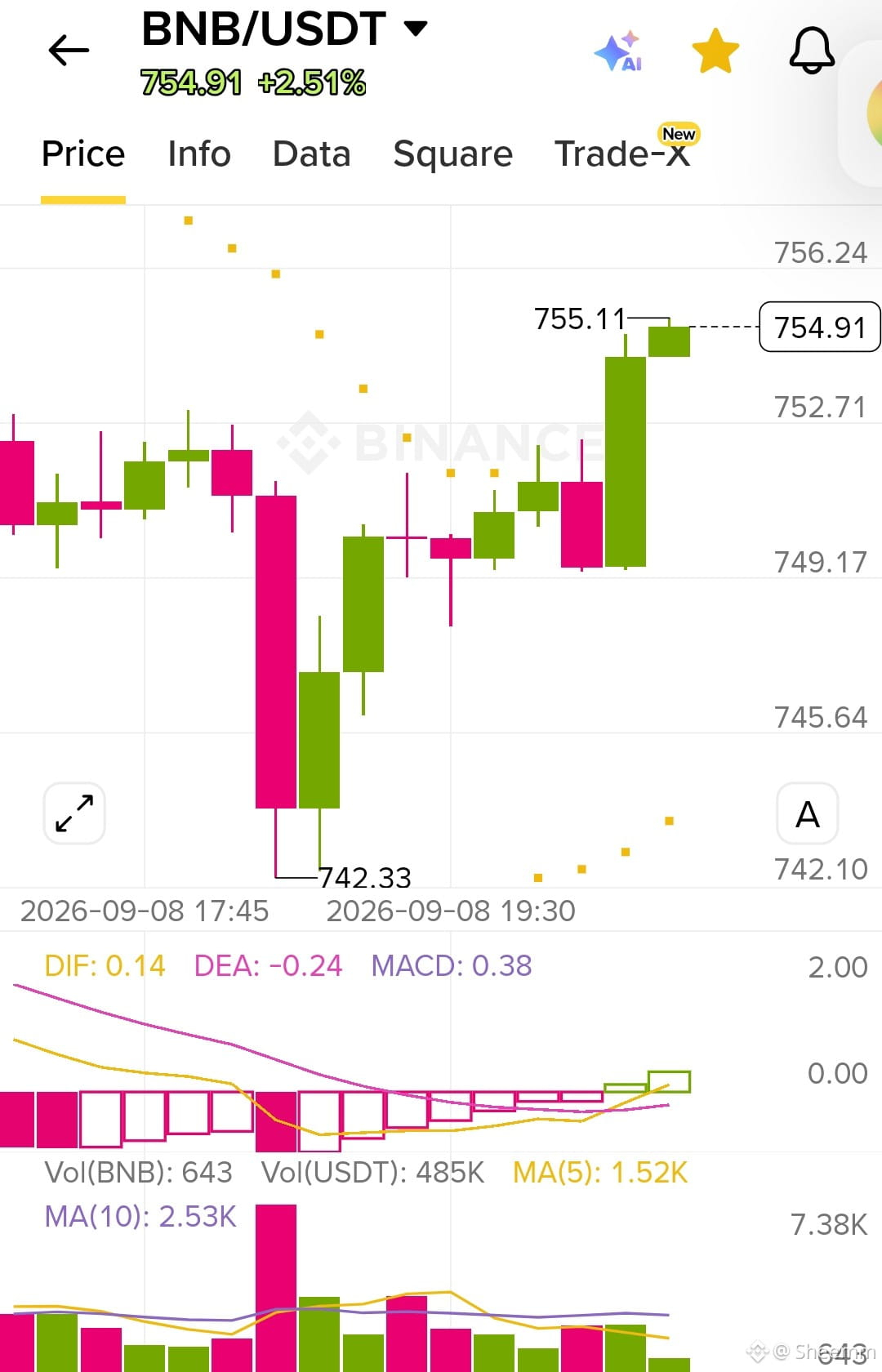
Strong Rebound Alert! 🟢
After a sharp dip to $742.33, #BNB showed a powerful V-shaped recovery, breaking through short-term resistance to hit $754.91 (+2.51%)! 📈
Key Indicators:
• MACD: Bullish crossover confirmed (0.38)
• Volume: Solid buying pressure standardizing the move upward
Are we testing the $756.24 high next, or consolidating here?
$ETH
$SOL
#DYORAlways
#TradeHere☝️🤗
$BNB
Strong Rebound Alert! 🟢
After a sharp dip to $742.33, #BNB showed a powerful V-shaped recovery, breaking through short-term resistance to hit $754.91 (+2.51%)! 📈
Key Indicators:
• MACD: Bullish crossover confirmed (0.38)
• Volume: Solid buying pressure standardizing the move upward
Are we testing the $756.24 high next, or consolidating here?
$ETH
$SOL
#DYORAlways
#TradeHere☝️🤗
Strong Rebound Alert! 🟢
After a sharp dip to $742.33, #BNB showed a powerful V-shaped recovery, breaking through short-term resistance to hit $754.91 (+2.51%)! 📈
Key Indicators:
• MACD: Bullish crossover confirmed (0.38)
• Volume: Solid buying pressure standardizing the move upward
Are we testing the $756.24 high next, or consolidating here?
$ETH
$SOL
#DYORAlways
#TradeHere☝️🤗
3
170
·
--
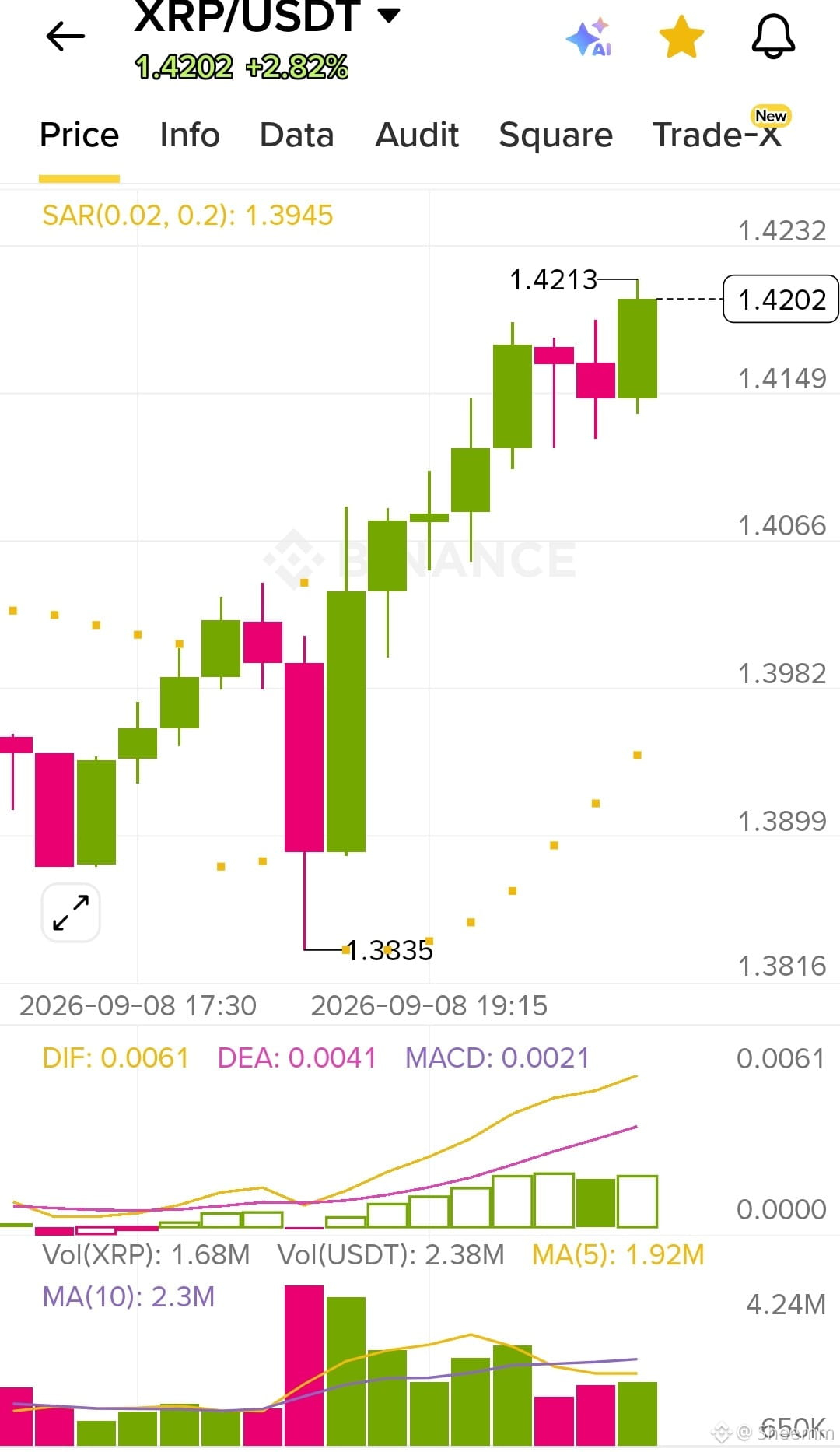
$XRP
{future}(XRPUSDT)
Bulls in Full Control! 🚀
After a sharp dip down to $1.3835,XRP staged an aggressive V-shaped recovery, breaking key levels to hit a high of $1.4213! 📈
🔹 Current Price: $1.4202 (+2.82%)
🔹 SAR Support: $1.3945 (Bullish Trend Confirmed)
🔹 MACD Indicator: MACD line holding above DEA with expanding green histogram bars, signaling strong upward momentum.
Volume is backing this breakout. Are we targeting $1.45 next or consolidating here?
$LINEA
{future}(LINEAUSDT)
$DOT
{future}(DOTUSDT)
#USIranTradeTankerStrikesEscalate
#MarketImpact
$XRP
Bulls in Full Control! 🚀
After a sharp dip down to $1.3835,XRP staged an aggressive V-shaped recovery, breaking key levels to hit a high of $1.4213! 📈
🔹 Current Price: $1.4202 (+2.82%)
🔹 SAR Support: $1.3945 (Bullish Trend Confirmed)
🔹 MACD Indicator: MACD line holding above DEA with expanding green histogram bars, signaling strong upward momentum.
Volume is backing this breakout. Are we targeting $1.45 next or consolidating here?
$LINEA
$DOT
#USIranTradeTankerStrikesEscalate
#MarketImpact
Bulls in Full Control! 🚀
After a sharp dip down to $1.3835,XRP staged an aggressive V-shaped recovery, breaking key levels to hit a high of $1.4213! 📈
🔹 Current Price: $1.4202 (+2.82%)
🔹 SAR Support: $1.3945 (Bullish Trend Confirmed)
🔹 MACD Indicator: MACD line holding above DEA with expanding green histogram bars, signaling strong upward momentum.
Volume is backing this breakout. Are we targeting $1.45 next or consolidating here?
$LINEA
$DOT
#USIranTradeTankerStrikesEscalate
#MarketImpact
4
492
·
--
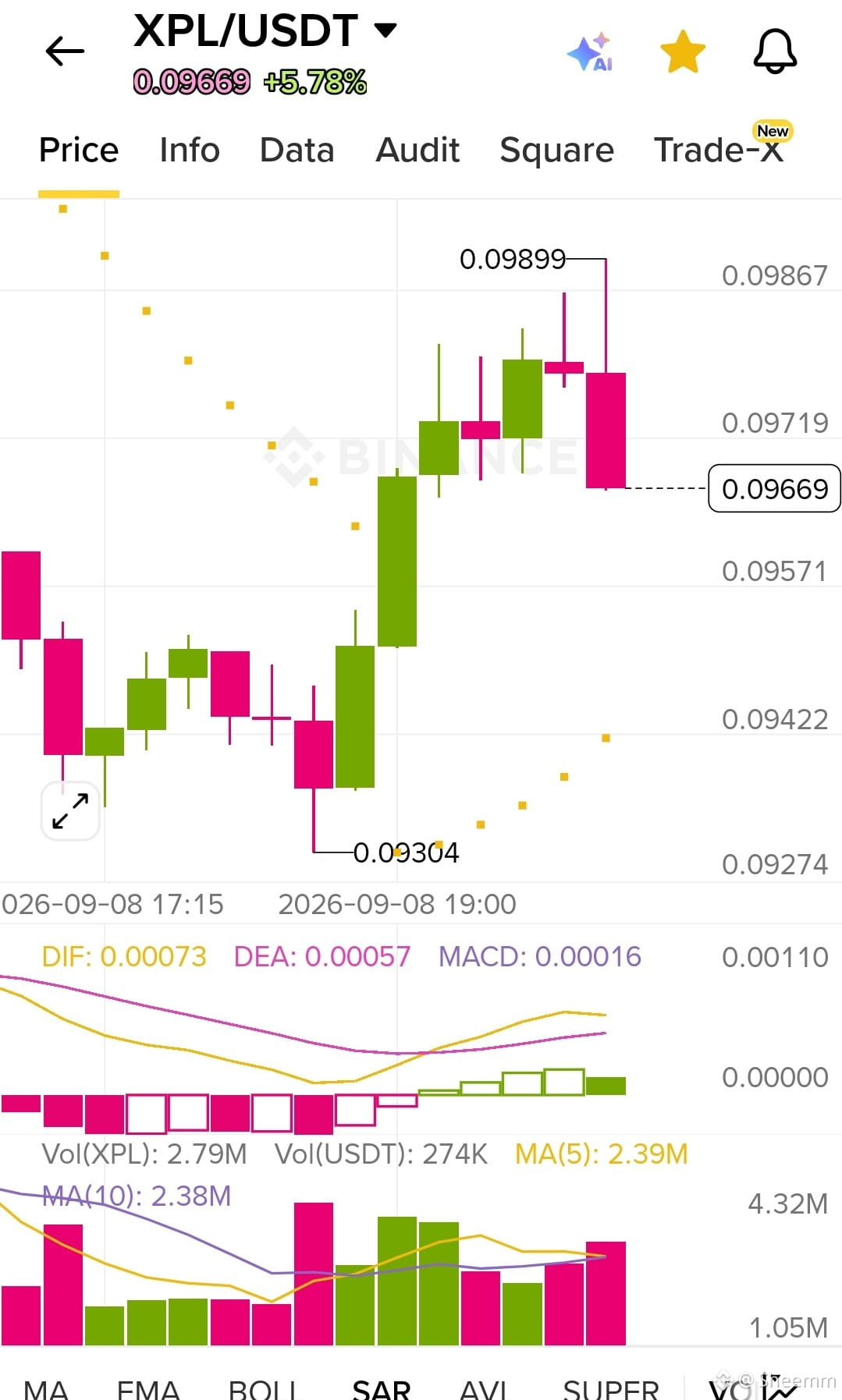
🚀 $XPL
{future}(XPLUSDT)
XPL/USDT Update! 🚀
XPL is showing solid momentum, up +5.78% at $0.09669! After hitting a quick high of $0.09899, we're seeing a slight pullback, but MACD remains bullish above zero line. 📈
Key level to watch: $0.0989 breakout target! 🎯
$PEPE
{alpha}()
$FIL
{future}(FILUSDT)
#DYORAlways
#Write2Earn
#Plasma
@Plasma
🚀 $XPL
XPL/USDT Update! 🚀
XPL is showing solid momentum, up +5.78% at $0.09669! After hitting a quick high of $0.09899, we're seeing a slight pullback, but MACD remains bullish above zero line. 📈
Key level to watch: $0.0989 breakout target! 🎯
$PEPE
$FIL
#DYORAlways
#Write2Earn
#Plasma
@Plasma
XPL/USDT Update! 🚀
XPL is showing solid momentum, up +5.78% at $0.09669! After hitting a quick high of $0.09899, we're seeing a slight pullback, but MACD remains bullish above zero line. 📈
Key level to watch: $0.0989 breakout target! 🎯
$PEPE
$FIL
#DYORAlways
#Write2Earn
#Plasma
@Plasma
2
541
·
--
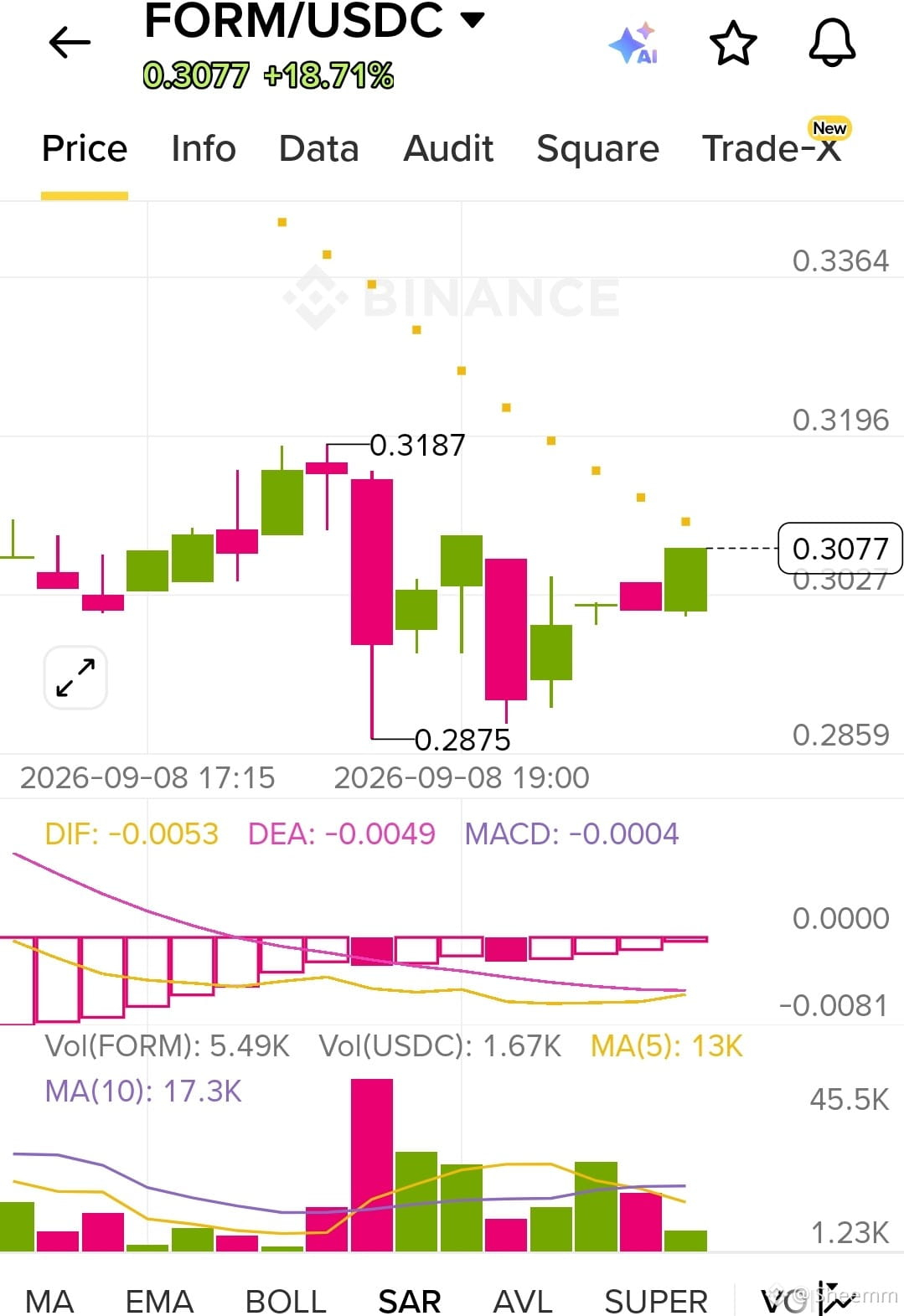
$FORM flexing power! Rebounding sharp off the $0.2875 low back up to $0.3077 (+18.71%). Bullish green candles pushing back toward the $0.3187 resistance zone. Watch for a breakout!
$DOGE
$DOGS
#CanadaToImpose15%To50%TariffsOnUSGoods #Write2Earn
#CanadaTariffsOnUSTakeEffect
$FORM flexing power! Rebounding sharp off the $0.2875 low back up to $0.3077 (+18.71%). Bullish green candles pushing back toward the $0.3187 resistance zone. Watch for a breakout!
$DOGE
$DOGS
#CanadaToImpose15%To50%TariffsOnUSGoods #Write2Earn
#CanadaTariffsOnUSTakeEffect
$DOGE
$DOGS
#CanadaToImpose15%To50%TariffsOnUSGoods #Write2Earn
#CanadaTariffsOnUSTakeEffect
3
197
·
--
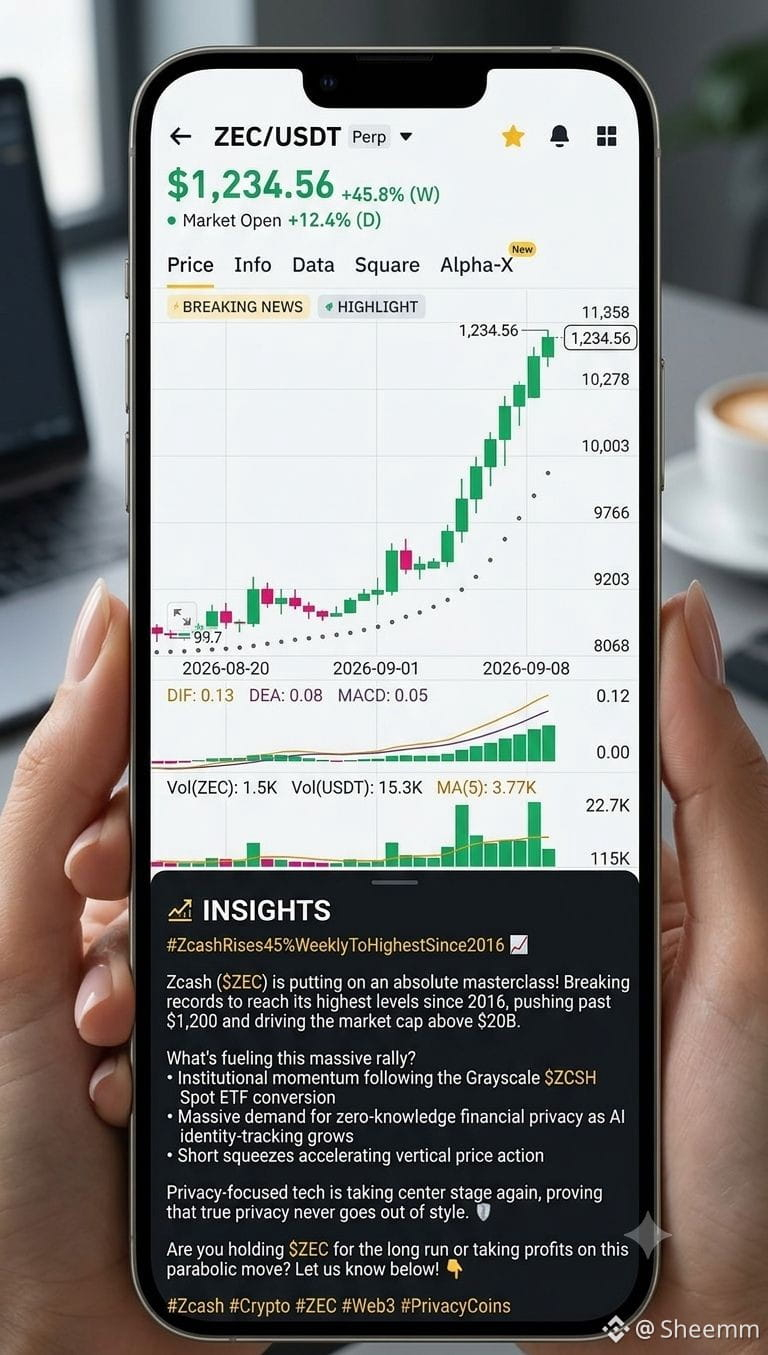
#ZcashRises45%WeeklyToHighestSince2016 Zcash (ZEC) is putting on an absolute masterclass! Breaking records to reach its highest levels since 2016, pushing past $1,200 and driving the market cap above $20B.
What’s fueling this massive rally?
• Institutional momentum following the Grayscale $ZCSH Spot ETF conversion
• Massive demand for zero-knowledge financial privacy as AI identity-tracking grows
• Short squeezes accelerating vertical price action
Privacy-focused tech is taking center stage again, proving that true privacy never goes out of style. 🛡️
$ZEC
$FORM
$INJ
#write2earn🌐💹
#ZcashRises45%WeeklyToHighestSince2016 Zcash (ZEC) is putting on an absolute masterclass! Breaking records to reach its highest levels since 2016, pushing past $1,200 and driving the market cap above $20B.
What’s fueling this massive rally?
• Institutional momentum following the Grayscale $ZCSH Spot ETF conversion
• Massive demand for zero-knowledge financial privacy as AI identity-tracking grows
• Short squeezes accelerating vertical price action
Privacy-focused tech is taking center stage again, proving that true privacy never goes out of style. 🛡️
$ZEC
$FORM
$INJ
#write2earn🌐💹
What’s fueling this massive rally?
• Institutional momentum following the Grayscale $ZCSH Spot ETF conversion
• Massive demand for zero-knowledge financial privacy as AI identity-tracking grows
• Short squeezes accelerating vertical price action
Privacy-focused tech is taking center stage again, proving that true privacy never goes out of style. 🛡️
$ZEC
$FORM
$INJ
#write2earn🌐💹
2
342
·
--
$TSLL
{future}(TSLLUSDT)
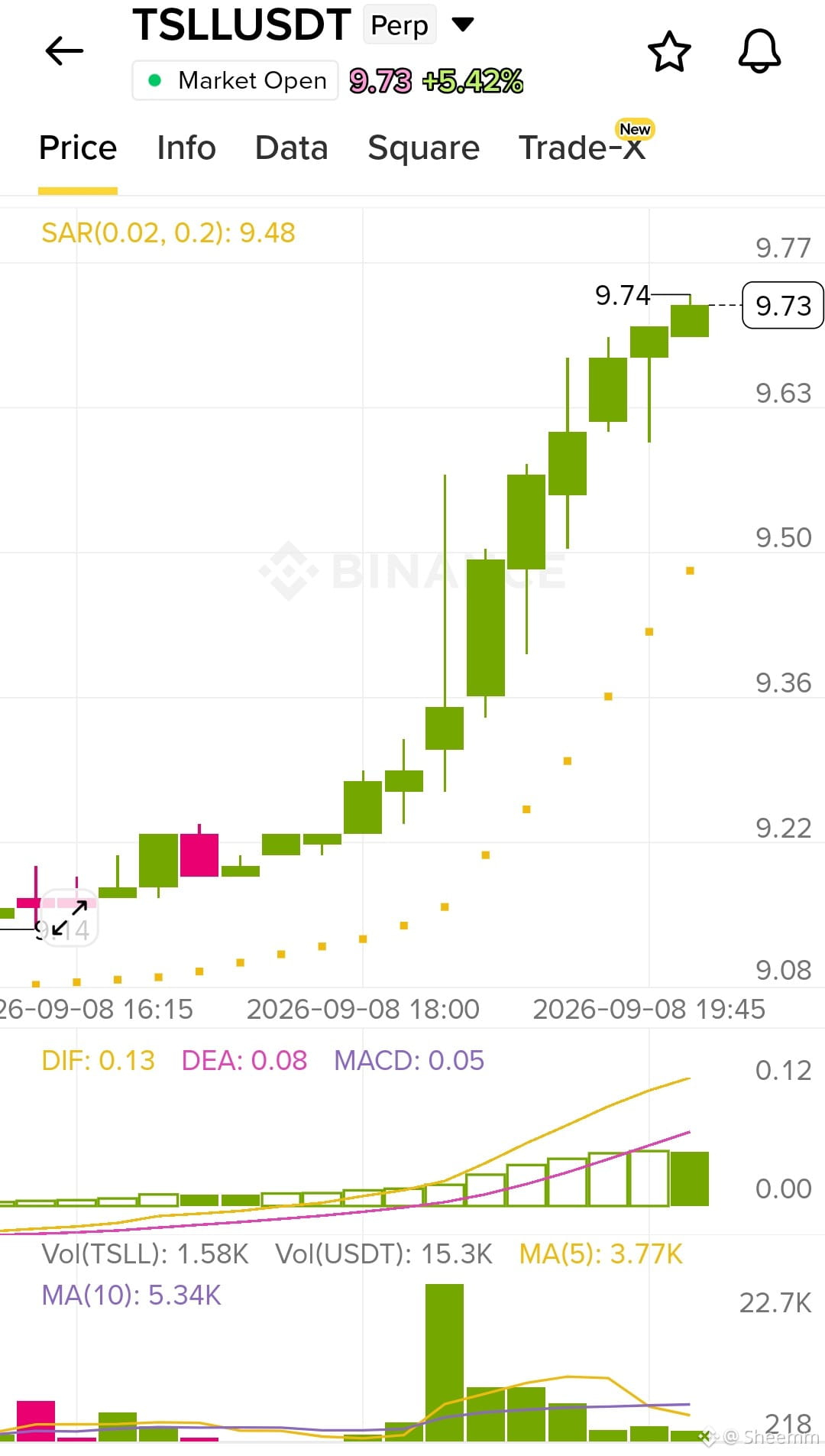
shows strong bullish momentum, pushing up to 9.73 (+5.42%). Parabolic SAR trails below at 9.48, signaling clear support, while MACD confirms solid upward expansion. Steady green candles reflect continuous buying pressure. Are you locking profits here or riding the wave higher? 📈🚀
$DDOG
{future}(DDOGUSDT)
$MARS.ETF
{etf_us}(MARS.ETF)
#CanadaTariffsOnUSTakeEffect
#Write2Earn!
#YenBreaks155NearingYearHigh
$TSLL
shows strong bullish momentum, pushing up to 9.73 (+5.42%). Parabolic SAR trails below at 9.48, signaling clear support, while MACD confirms solid upward expansion. Steady green candles reflect continuous buying pressure. Are you locking profits here or riding the wave higher? 📈🚀
$DDOG
$MARS.ETF
#CanadaTariffsOnUSTakeEffect
#Write2Earn!
#YenBreaks155NearingYearHigh
shows strong bullish momentum, pushing up to 9.73 (+5.42%). Parabolic SAR trails below at 9.48, signaling clear support, while MACD confirms solid upward expansion. Steady green candles reflect continuous buying pressure. Are you locking profits here or riding the wave higher? 📈🚀
$DDOG
$MARS.ETF
#CanadaTariffsOnUSTakeEffect
#Write2Earn!
#YenBreaks155NearingYearHigh
4
273
·
--
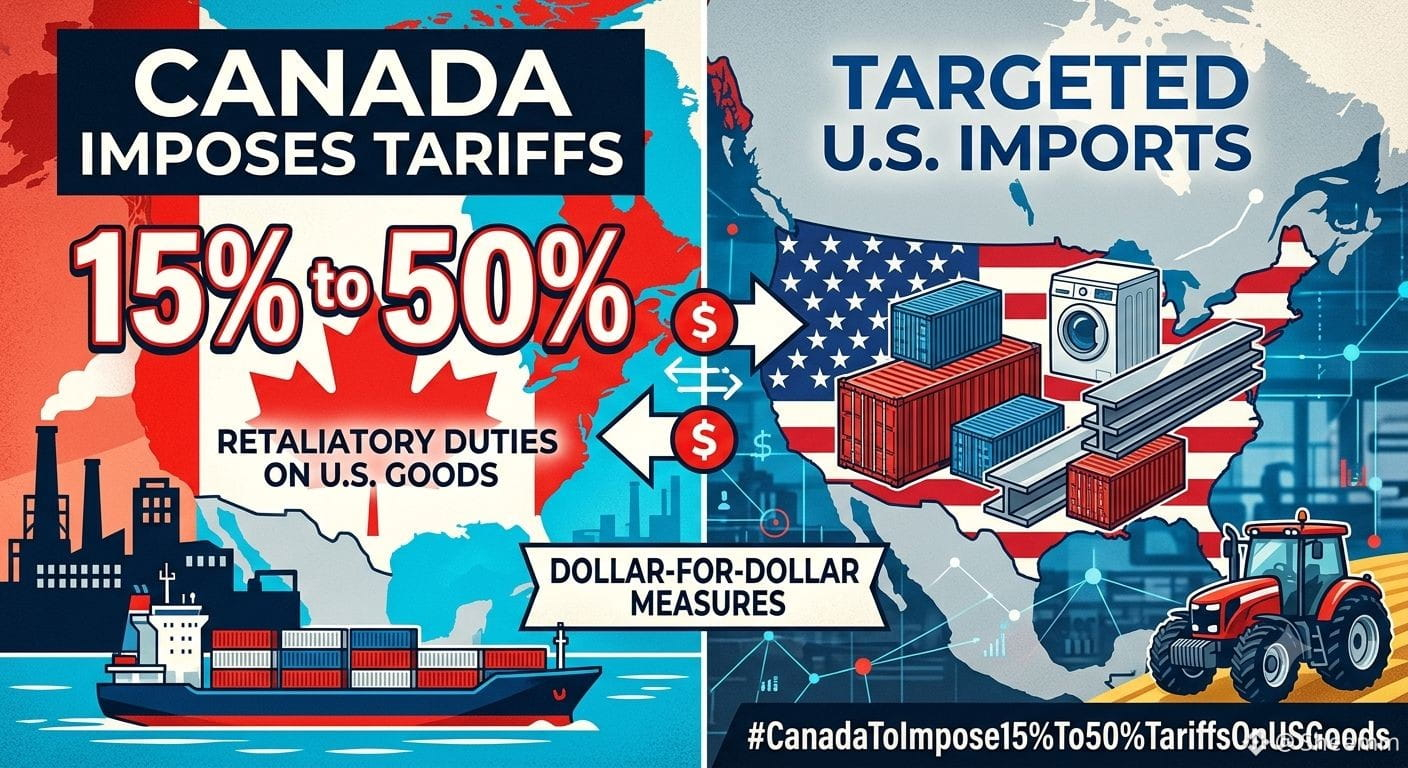
#CanadaToImpose15%To50%TariffsOnUSGoods Canada has officially activated dollar-for-dollar counter-tariffs ranging from 15% to 50% on 27.6 billion (C37.5B) of American imports. The retaliatory measures directly mirror aggressive U.S. duties, targeting key American sectors including steel, aluminum, dairy, home appliances, agricultural equipment, and electronics.
With existing 25% rates doubled to 50% on major industrial categories, cross-border supply chains face unprecedented pressure. As trade talks break down and economic friction reaches new highs, both Canadian consumers and American exporters are bracing for widespread price hikes and severe market disruptions
#USCanada #GlobalEconomy
$SCR
{future}(SCRUSDT)
$SC
{spot}(SCUSDT)
$SD
{alpha}(10x30d20208d987713f46dfd34ef128bb16c404d10f)
#write2earn🌐💹
#BinanceSquareFamily ❤️
#CanadaToImpose15%To50%TariffsOnUSGoods Canada has officially activated dollar-for-dollar counter-tariffs ranging from 15% to 50% on 27.6 billion (C37.5B) of American imports. The retaliatory measures directly mirror aggressive U.S. duties, targeting key American sectors including steel, aluminum, dairy, home appliances, agricultural equipment, and electronics.
With existing 25% rates doubled to 50% on major industrial categories, cross-border supply chains face unprecedented pressure. As trade talks break down and economic friction reaches new highs, both Canadian consumers and American exporters are bracing for widespread price hikes and severe market disruptions
#USCanada #GlobalEconomy
$SCR
$SC
$SD
#write2earn🌐💹
#BinanceSquareFamily ❤️
With existing 25% rates doubled to 50% on major industrial categories, cross-border supply chains face unprecedented pressure. As trade talks break down and economic friction reaches new highs, both Canadian consumers and American exporters are bracing for widespread price hikes and severe market disruptions
#USCanada #GlobalEconomy
$SCR
$SC
$SD
#write2earn🌐💹
#BinanceSquareFamily ❤️
3
375
·
--
#CanadaTariffsOnUSTakeEffect
Canada’s retaliatory tariffs targeting nearly $28 billion in American goods have officially taken effect, matching U.S. levies "dollar-for-dollar". The 15% to 50% duties hit U.S. steel, dairy, electronics, and agricultural equipment following collapsed trade talks.
With cross-border tensions escalating rapidly, both economies face major disruption.
#Write2Earn
#BinanceExplorers
$FF
$S
$G
#CanadaTariffsOnUSTakeEffect
Canada’s retaliatory tariffs targeting nearly $28 billion in American goods have officially taken effect, matching U.S. levies "dollar-for-dollar". The 15% to 50% duties hit U.S. steel, dairy, electronics, and agricultural equipment following collapsed trade talks.
With cross-border tensions escalating rapidly, both economies face major disruption.
#Write2Earn
#BinanceExplorers
$FF
$S
$G
Canada’s retaliatory tariffs targeting nearly $28 billion in American goods have officially taken effect, matching U.S. levies "dollar-for-dollar". The 15% to 50% duties hit U.S. steel, dairy, electronics, and agricultural equipment following collapsed trade talks.
With cross-border tensions escalating rapidly, both economies face major disruption.
#Write2Earn
#BinanceExplorers
$FF
$S
$G
2
414
Log in to explore more content
Join global crypto users on Binance Square
⚡️ Get latest and useful information about crypto.
💬 Trusted by the world’s largest crypto exchange.
👍 Discover real insights from verified creators.
Email / Phone number
Trending Topics
SECApprovesNasdaqTexasCommodityTrustRule
11 views
40 Discussing
#secapprovesnasdaqtexascommoditytrustrule
🚨 SEC JUST OPENED ANOTHER DOOR FOR CRYPTO! 🇺🇸🔥
The SEC approved Nasdaq Texas’ updated rules for crypto commodity-trust products, creating a clearer framework for digital commodities and allowing more flexibility for crypto investment products.
The approved framework specifically uses $BTC , $ETH , $SOL and XRP as examples of assets meeting the relevant eligibility requirements. 👀
It also allows up to 15% of a trust’s NAV in certain assets that don't meet the standard eligibility tests.
🔥 More regulatory clarity
🔥 More flexibility for crypto ETPs
🔥 More potential institutional access
This could be another step toward deeper Wall Street + crypto integration. 🚀
#bitcoin #xrp #crypto
Faizan Crypto Learner
·0 Likes
·90 views
ECBRaisesRatesSecondTimeTo2.5%
26 views
23 Discussing
USContinuingJoblessClaims1.774M
1,449 views
124 Discussing