

夏木KRIS
9.3k Posts

夏木KRIS
 Square Verified+
Report
Block User
聚焦超级个体、美股、加密货币、贵金属、AI。
Exploring the Sovereign Individual US Stocks、Crypto、Precious Metals、AI.

2025 Blockchain 100 — Independent Researcher

Traders League Badge Expert

原创之星
Frequent Trader
8.4 Years
292 Following
79.2K+ Followers
159.1K+ Liked
3 Badges
Posts
All
Quotes
Videos
PINNED
·
--
$57,800
Perhaps this is the bottom of the current $BTC Bitcoin bear market
Looking back now, I’m increasingly convinced that around $57,800 may be the true bottom of this BTC bear market.
At the end of June, Bitcoin was driven down to about $57,800, setting a new 21-month low. At the time, the environment was actually very poor: the Fed was leaning hawkish, and ETF flows were continuing to bleed out. Just the withdrawals in June alone totaled tens of billions of dollars, and market sentiment had already been crushed into extreme pessimism.
But with so many bearish factors, BTC still didn’t keep collapsing.
Now Bitcoin has rebounded all the way from $57,800. Today, it even briefly broke above $79,000—an upside rally of more than 36% from the lows. At the same time, ETF capital has started flowing back in again, and regulatory expectations are beginning to turn more favorable.
So now I’m going to start treating $57,800 as a very important level.
The bottom of a bear market is often something that falls out—only after some time do people realize: the lowest point was already behind us long ago.
$57,800
Perhaps this is the bottom of the current $BTC Bitcoin bear market
Looking back now, I’m increasingly convinced that around $57,800 may be the true bottom of this BTC bear market.
At the end of June, Bitcoin was driven down to about $57,800, setting a new 21-month low. At the time, the environment was actually very poor: the Fed was leaning hawkish, and ETF flows were continuing to bleed out. Just the withdrawals in June alone totaled tens of billions of dollars, and market sentiment had already been crushed into extreme pessimism.
But with so many bearish factors, BTC still didn’t keep collapsing.
Now Bitcoin has rebounded all the way from $57,800. Today, it even briefly broke above $79,000—an upside rally of more than 36% from the lows. At the same time, ETF capital has started flowing back in again, and regulatory expectations are beginning to turn more favorable.
So now I’m going to start treating $57,800 as a very important level.
The bottom of a bear market is often something that falls out—only after some time do people realize: the lowest point was already behind us long ago.
Perhaps this is the bottom of the current $BTC Bitcoin bear market
Looking back now, I’m increasingly convinced that around $57,800 may be the true bottom of this BTC bear market.
At the end of June, Bitcoin was driven down to about $57,800, setting a new 21-month low. At the time, the environment was actually very poor: the Fed was leaning hawkish, and ETF flows were continuing to bleed out. Just the withdrawals in June alone totaled tens of billions of dollars, and market sentiment had already been crushed into extreme pessimism.
But with so many bearish factors, BTC still didn’t keep collapsing.
Now Bitcoin has rebounded all the way from $57,800. Today, it even briefly broke above $79,000—an upside rally of more than 36% from the lows. At the same time, ETF capital has started flowing back in again, and regulatory expectations are beginning to turn more favorable.
So now I’m going to start treating $57,800 as a very important level.
The bottom of a bear market is often something that falls out—only after some time do people realize: the lowest point was already behind us long ago.
9
11
2.2k
PINNED
·
--
Bullish
Verified
Dual Anchor Currency Era: Why Only Gold and Bitcoin Will Survive in the End
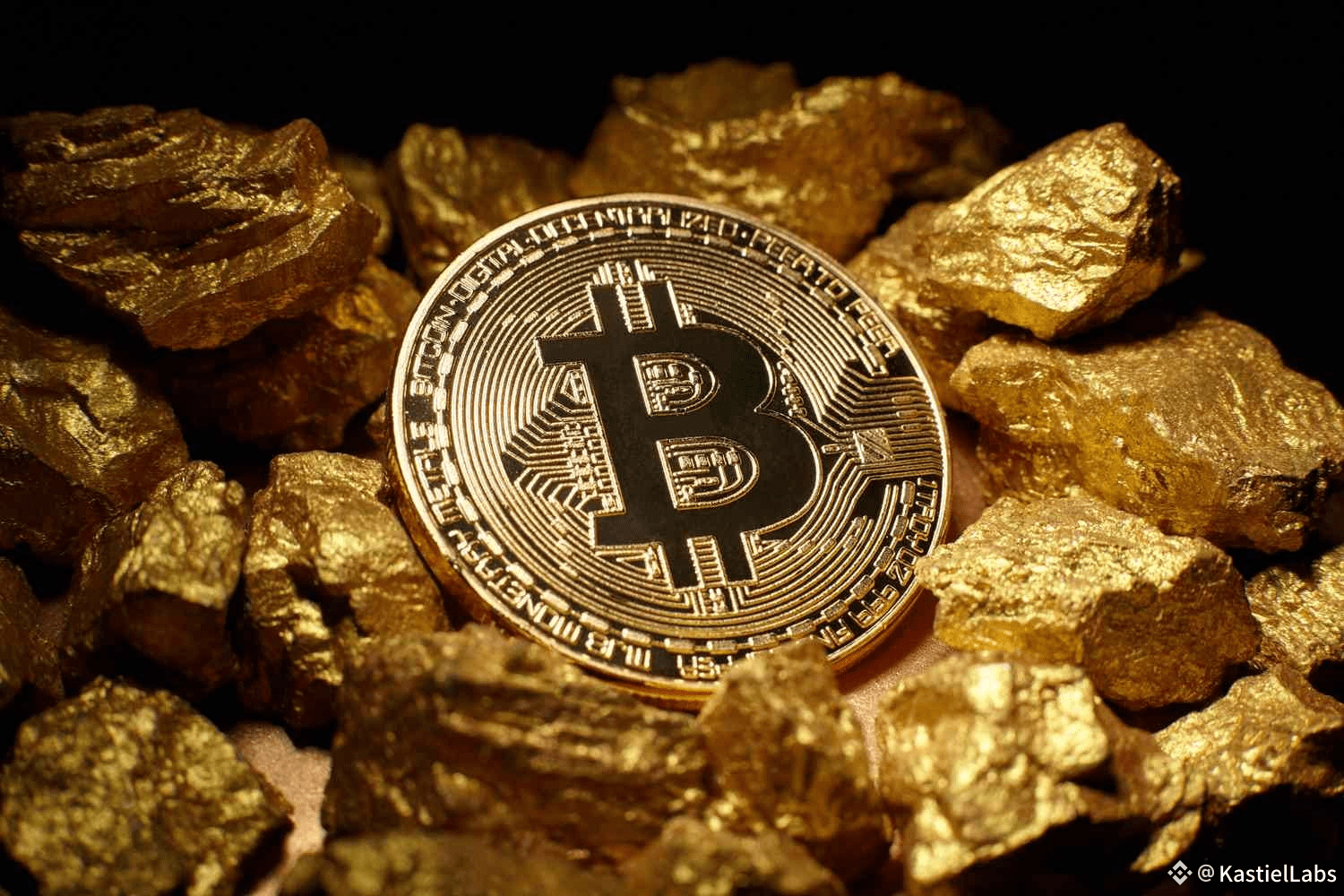
I increasingly feel that we are heading towards a strange yet inevitable future. The world is forming two distinctly different trust systems: one based on 'material', gold; the other supported by 'algorithms', Bitcoin.
China continues to increase its gold reserves, this action seems more like preparing a defense in advance. Gold does not depend on any country, nor does it require third-party guarantees; its value comes from the accumulation of time and the common trust of humanity. Meanwhile, the United States is promoting the institutionalization of cryptocurrencies, with frequent interactions between capital and regulatory bodies, and financial giants are all making plans. They are trying to make digital currency the core tool of the new financial system, using new rules to consolidate dominance.
When one country hoards physical assets and another builds computational power infrastructure, the world's monetary order has begun to loosen. The dollar once represented global credit, but now with rising debts, excessive currency issuance, and diminishing trust, the system itself is beginning to show signs of fatigue.
The currency of the future may be underground or in the cloud. Gold remains the most solid store of value in the real world, while Bitcoin is gradually gaining a similar status in the digital realm. One embodies stability and tradition, while the other symbolizes openness and innovation.
I often think that gold connects to the civilizations of the past, while Bitcoin leads to the order of the future. As the credit system of the dollar gradually collapses, humanity is searching for a new anchor point of 'trust'; these two assets may become new pivot points.
This transformation is not a distant fantasy, but a migration that is quietly happening. We are moving from national credit to consensus credit, from printing presses to computational power and time. Yet most people have not realized that they are already standing at the historical watershed.
$BTC
{spot}(BTCUSDT)
$PAXG
{spot}(PAXGUSDT)
Dual Anchor Currency Era: Why Only Gold and Bitcoin Will Survive in the End
I increasingly feel that we are heading towards a strange yet inevitable future. The world is forming two distinctly different trust systems: one based on 'material', gold; the other supported by 'algorithms', Bitcoin.
China continues to increase its gold reserves, this action seems more like preparing a defense in advance. Gold does not depend on any country, nor does it require third-party guarantees; its value comes from the accumulation of time and the common trust of humanity. Meanwhile, the United States is promoting the institutionalization of cryptocurrencies, with frequent interactions between capital and regulatory bodies, and financial giants are all making plans. They are trying to make digital currency the core tool of the new financial system, using new rules to consolidate dominance.
When one country hoards physical assets and another builds computational power infrastructure, the world's monetary order has begun to loosen. The dollar once represented global credit, but now with rising debts, excessive currency issuance, and diminishing trust, the system itself is beginning to show signs of fatigue.
The currency of the future may be underground or in the cloud. Gold remains the most solid store of value in the real world, while Bitcoin is gradually gaining a similar status in the digital realm. One embodies stability and tradition, while the other symbolizes openness and innovation.
I often think that gold connects to the civilizations of the past, while Bitcoin leads to the order of the future. As the credit system of the dollar gradually collapses, humanity is searching for a new anchor point of 'trust'; these two assets may become new pivot points.
This transformation is not a distant fantasy, but a migration that is quietly happening. We are moving from national credit to consensus credit, from printing presses to computational power and time. Yet most people have not realized that they are already standing at the historical watershed.
$BTC
$PAXG
I increasingly feel that we are heading towards a strange yet inevitable future. The world is forming two distinctly different trust systems: one based on 'material', gold; the other supported by 'algorithms', Bitcoin.
China continues to increase its gold reserves, this action seems more like preparing a defense in advance. Gold does not depend on any country, nor does it require third-party guarantees; its value comes from the accumulation of time and the common trust of humanity. Meanwhile, the United States is promoting the institutionalization of cryptocurrencies, with frequent interactions between capital and regulatory bodies, and financial giants are all making plans. They are trying to make digital currency the core tool of the new financial system, using new rules to consolidate dominance.
When one country hoards physical assets and another builds computational power infrastructure, the world's monetary order has begun to loosen. The dollar once represented global credit, but now with rising debts, excessive currency issuance, and diminishing trust, the system itself is beginning to show signs of fatigue.
The currency of the future may be underground or in the cloud. Gold remains the most solid store of value in the real world, while Bitcoin is gradually gaining a similar status in the digital realm. One embodies stability and tradition, while the other symbolizes openness and innovation.
I often think that gold connects to the civilizations of the past, while Bitcoin leads to the order of the future. As the credit system of the dollar gradually collapses, humanity is searching for a new anchor point of 'trust'; these two assets may become new pivot points.
This transformation is not a distant fantasy, but a migration that is quietly happening. We are moving from national credit to consensus credit, from printing presses to computational power and time. Yet most people have not realized that they are already standing at the historical watershed.
$BTC
$PAXG
100
56
274
15k
·
--
$ZEN returned to $7.2
I think this is an opportunity to reposition
$ZEN today followed the market pullback and has come back to the area around $7.2, with a 24-hour decline of nearly 9%.
But I still really like the token distribution structure for $ZEN .
Currently, the circulating supply is about 18.4 million coins, and the maximum supply is only 21 million. Nearly 88% of the tokens have already entered circulation, so the pressure from additional future supply is relatively limited.
And Horizen has now shifted to the Base ecosystem. Its positioning is now an EVM L3 focused on privacy finance—primarily working on privacy DeFi, payments, and compliance applications—no longer just the old “sidechain” narrative.
When ZEN surged to nearly $8 earlier, many people wanted to chase it. Now that it’s back around $7.2, that’s actually the level where I’m willing to reposition.
My target for October was $9.7, and for now I’m not changing that goal.
$ZEN returned to $7.2
I think this is an opportunity to reposition
$ZEN today followed the market pullback and has come back to the area around $7.2, with a 24-hour decline of nearly 9%.
But I still really like the token distribution structure for $ZEN .
Currently, the circulating supply is about 18.4 million coins, and the maximum supply is only 21 million. Nearly 88% of the tokens have already entered circulation, so the pressure from additional future supply is relatively limited.
And Horizen has now shifted to the Base ecosystem. Its positioning is now an EVM L3 focused on privacy finance—primarily working on privacy DeFi, payments, and compliance applications—no longer just the old “sidechain” narrative.
When ZEN surged to nearly $8 earlier, many people wanted to chase it. Now that it’s back around $7.2, that’s actually the level where I’m willing to reposition.
My target for October was $9.7, and for now I’m not changing that goal.
I think this is an opportunity to reposition
$ZEN today followed the market pullback and has come back to the area around $7.2, with a 24-hour decline of nearly 9%.
But I still really like the token distribution structure for $ZEN .
Currently, the circulating supply is about 18.4 million coins, and the maximum supply is only 21 million. Nearly 88% of the tokens have already entered circulation, so the pressure from additional future supply is relatively limited.
And Horizen has now shifted to the Base ecosystem. Its positioning is now an EVM L3 focused on privacy finance—primarily working on privacy DeFi, payments, and compliance applications—no longer just the old “sidechain” narrative.
When ZEN surged to nearly $8 earlier, many people wanted to chase it. Now that it’s back around $7.2, that’s actually the level where I’m willing to reposition.
My target for October was $9.7, and for now I’m not changing that goal.
2
1.3k
·
--
Are $牛来 and $MARSCOIN Binance's insiders?
Are $牛来 and $MARSCOIN Binance's insiders?


币安Binance华语
·
--
Binance will support the airdrop plan for users holding SpaceX (SPCXB) and MarsCoin (MARSCOIN), as well as the airdrop plan for users holding Invesco QQQ Trust (QQQB) for Niu Lai (牛来).
👉 点击了解更多
👉 点击了解更多

1
705
·
--
Verified
The era of $币安人生 is over
In the next phase, I’m buying $牛来 and $MARSCOIN
Today’s announcement from Binance—I think it will directly change the way these two coins will be played going forward.
Binance officially announced:
If you hold $MARSCOIN, you can receive an airdrop of SpaceX tokenized securities $SPCXB.
If you hold $牛来, you can receive an airdrop of Invesco QQQ Trust tokenized ETF $QQQB.
And it’s not just the project team’s original on-chain airdrops.
Binance will also set aside an additional 30% of the spot trading fees paid in MARSCOIN and 牛来, respectively, and distribute them as rewards to holders of SPCXB and QQQB.
So it’s not just Meme narrative anymore—these two coins are now starting to connect directly with traditional assets like SpaceX and the Nasdaq 100.
In the next phase, I’m going to place my chips on 牛来 and MARSCOIN.
The era of $币安人生 is over
In the next phase, I’m buying $牛来 and $MARSCOIN
Today’s announcement from Binance—I think it will directly change the way these two coins will be played going forward.
Binance officially announced:
If you hold $MARSCOIN , you can receive an airdrop of SpaceX tokenized securities $SPCXB.
If you hold $牛来 , you can receive an airdrop of Invesco QQQ Trust tokenized ETF $QQQB.
And it’s not just the project team’s original on-chain airdrops.
Binance will also set aside an additional 30% of the spot trading fees paid in MARSCOIN and 牛来, respectively, and distribute them as rewards to holders of SPCXB and QQQB.
So it’s not just Meme narrative anymore—these two coins are now starting to connect directly with traditional assets like SpaceX and the Nasdaq 100.
In the next phase, I’m going to place my chips on 牛来 and MARSCOIN.
In the next phase, I’m buying $牛来 and $MARSCOIN
Today’s announcement from Binance—I think it will directly change the way these two coins will be played going forward.
Binance officially announced:
If you hold $MARSCOIN , you can receive an airdrop of SpaceX tokenized securities $SPCXB.
If you hold $牛来 , you can receive an airdrop of Invesco QQQ Trust tokenized ETF $QQQB.
And it’s not just the project team’s original on-chain airdrops.
Binance will also set aside an additional 30% of the spot trading fees paid in MARSCOIN and 牛来, respectively, and distribute them as rewards to holders of SPCXB and QQQB.
So it’s not just Meme narrative anymore—these two coins are now starting to connect directly with traditional assets like SpaceX and the Nasdaq 100.
In the next phase, I’m going to place my chips on 牛来 and MARSCOIN.
1
1
1.4k
·
--
13 years ago, the person who urged everyone to buy $BTC
is now urging everyone to buy $QNT again.
Same words—after 13 years, they’ve appeared again.
Will he guess right again this time?
13 years ago, the person who urged everyone to buy $BTC
is now urging everyone to buy $QNT again.
Same words—after 13 years, they’ve appeared again.
Will he guess right again this time?
is now urging everyone to buy $QNT again.
Same words—after 13 years, they’ve appeared again.
Will he guess right again this time?
夏木KRIS
·
--
People who told everyone to buy $BTC more than 13 years ago
are now telling everyone to buy $QNT again.
I think this one is definitely worth paying attention to.
In 2013, Jan Gold once posted a tweet:
“Everyone should at least buy 1 BTC. The risk is losing $300, and the potential upside is $10,000.”
13 years later, today, he re-shared his own tweet from back then—only this time he replaced BTC with $QNT .
“Everyone should at least buy 1 QNT. The risk is losing $120, and the potential upside is $10,000.”
After this tweet was posted, it immediately surged to 10 million views, and the QNT price also climbed rapidly. It’s currently around $260, with a single-day rise that briefly approached 80%.
Of course, getting BTC right 13 years ago doesn’t mean QNT will necessarily replicate BTC’s performance this time.
But someone who openly urged people to buy BTC as far back as 2013, 13 years later again calling out QNT using almost the exact same wording—this by itself is enough to put QNT on my watch list.
Because someone whose judgment was good enough to tell people to buy when Bitcoin was still around 300 won’t be wrong now
are now telling everyone to buy $QNT again.
I think this one is definitely worth paying attention to.
In 2013, Jan Gold once posted a tweet:
“Everyone should at least buy 1 BTC. The risk is losing $300, and the potential upside is $10,000.”
13 years later, today, he re-shared his own tweet from back then—only this time he replaced BTC with $QNT .
“Everyone should at least buy 1 QNT. The risk is losing $120, and the potential upside is $10,000.”
After this tweet was posted, it immediately surged to 10 million views, and the QNT price also climbed rapidly. It’s currently around $260, with a single-day rise that briefly approached 80%.
Of course, getting BTC right 13 years ago doesn’t mean QNT will necessarily replicate BTC’s performance this time.
But someone who openly urged people to buy BTC as far back as 2013, 13 years later again calling out QNT using almost the exact same wording—this by itself is enough to put QNT on my watch list.
Because someone whose judgment was good enough to tell people to buy when Bitcoin was still around 300 won’t be wrong now
2
1.1k
·
--
$QNT might be the next $ZEC
Lately, I’ve been feeling more and more that QNT and ZEC have something very similar: both have extremely scarce circulating supply.
ZEC’s maximum supply is 21 million coins, and $QNT ’s maximum supply is also only about 14.88 million—actually fewer than ZEC.
For coins with supply in the tens of millions, once a large portion of the coins are held long-term, the amount that genuinely stays available for trading on the market drops even further. When a rally starts, the price elasticity can become extremely dramatic.
ZEC has already demonstrated this for the market in this cycle—rising from a few hundred dollars all the way to more than $1,600.
Now QNT is running into catalysts like institutional-grade tokenization, bank payment networks, and digital bonds, and market attention has suddenly picked up as well.
So to me right now, QNT is increasingly starting to look like ZEC before its launch.
For ZEC, I’m seeing $10,000; for this QNT cycle, I’m first looking at $1,000.
$QNT might be the next $ZEC
Lately, I’ve been feeling more and more that QNT and ZEC have something very similar: both have extremely scarce circulating supply.
ZEC’s maximum supply is 21 million coins, and $QNT ’s maximum supply is also only about 14.88 million—actually fewer than ZEC.
For coins with supply in the tens of millions, once a large portion of the coins are held long-term, the amount that genuinely stays available for trading on the market drops even further. When a rally starts, the price elasticity can become extremely dramatic.
ZEC has already demonstrated this for the market in this cycle—rising from a few hundred dollars all the way to more than $1,600.
Now QNT is running into catalysts like institutional-grade tokenization, bank payment networks, and digital bonds, and market attention has suddenly picked up as well.
So to me right now, QNT is increasingly starting to look like ZEC before its launch.
For ZEC, I’m seeing $10,000; for this QNT cycle, I’m first looking at $1,000.
Lately, I’ve been feeling more and more that QNT and ZEC have something very similar: both have extremely scarce circulating supply.
ZEC’s maximum supply is 21 million coins, and $QNT ’s maximum supply is also only about 14.88 million—actually fewer than ZEC.
For coins with supply in the tens of millions, once a large portion of the coins are held long-term, the amount that genuinely stays available for trading on the market drops even further. When a rally starts, the price elasticity can become extremely dramatic.
ZEC has already demonstrated this for the market in this cycle—rising from a few hundred dollars all the way to more than $1,600.
Now QNT is running into catalysts like institutional-grade tokenization, bank payment networks, and digital bonds, and market attention has suddenly picked up as well.
So to me right now, QNT is increasingly starting to look like ZEC before its launch.
For ZEC, I’m seeing $10,000; for this QNT cycle, I’m first looking at $1,000.
1
2
12.7k
·
--
Verified
$QNT This surge is huge
There are a few super bullish catalysts coming next
$QNT Recently suddenly went viral, but the catalysts afterward are only just starting.
On September 28, Quant will showcase institutional-grade tokenized settlement with Murex at Sibos, including tokenized U.S. Treasuries, tokenized deposits, and on-chain repos.
In Q1 2027, the UK plans to issue three digital bonds, using tokenized deposits to complete transaction settlement.
In the first half of 2027, The Clearing House’s On-Chain Money Initiative in collaboration with Quant also plans to open up to U.S. financial institutions, connecting tokenized deposits to traditional payment networks such as RTP and CHIPS.
So $QNT is no longer just an “interoperability” concept coin—it’s moving into real financial infrastructure like banks, RWA, and tokenized deposits.
Earlier I mentioned that coins like QNT, with concentrated “chips,” will have extremely strong upside once both capital and the narrative catch up.
For this bull cycle, my target price for QNT is still $1,000.
$QNT This surge is huge
There are a few super bullish catalysts coming next
$QNT Recently suddenly went viral, but the catalysts afterward are only just starting.
On September 28, Quant will showcase institutional-grade tokenized settlement with Murex at Sibos, including tokenized U.S. Treasuries, tokenized deposits, and on-chain repos.
In Q1 2027, the UK plans to issue three digital bonds, using tokenized deposits to complete transaction settlement.
In the first half of 2027, The Clearing House’s On-Chain Money Initiative in collaboration with Quant also plans to open up to U.S. financial institutions, connecting tokenized deposits to traditional payment networks such as RTP and CHIPS.
So $QNT is no longer just an “interoperability” concept coin—it’s moving into real financial infrastructure like banks, RWA, and tokenized deposits.
Earlier I mentioned that coins like QNT, with concentrated “chips,” will have extremely strong upside once both capital and the narrative catch up.
For this bull cycle, my target price for QNT is still $1,000.
There are a few super bullish catalysts coming next
$QNT Recently suddenly went viral, but the catalysts afterward are only just starting.
On September 28, Quant will showcase institutional-grade tokenized settlement with Murex at Sibos, including tokenized U.S. Treasuries, tokenized deposits, and on-chain repos.
In Q1 2027, the UK plans to issue three digital bonds, using tokenized deposits to complete transaction settlement.
In the first half of 2027, The Clearing House’s On-Chain Money Initiative in collaboration with Quant also plans to open up to U.S. financial institutions, connecting tokenized deposits to traditional payment networks such as RTP and CHIPS.
So $QNT is no longer just an “interoperability” concept coin—it’s moving into real financial infrastructure like banks, RWA, and tokenized deposits.
Earlier I mentioned that coins like QNT, with concentrated “chips,” will have extremely strong upside once both capital and the narrative catch up.
For this bull cycle, my target price for QNT is still $1,000.
2
4.3k
·
--
$QNT These are strong-fund tokens with highly concentrated chips
I’m directly bullish to $1000
QNT’s recent run has become very obvious: the rally speed is fast, and the pullbacks are also very limited.
You can’t just look at this coin using the usual logic for ordinary altcoins. With such a high level of chip concentration, once capital starts pushing upward continuously, the price elasticity can become extremely exaggerated.
Especially now that $QNT has regained market attention. Jan Gold, who called on everyone to buy BTC 13 years ago, has also publicly singled out QNT—so both sentiment and capital are being lifted at the same time.
I don’t really care how much it will rise in the short term. In this bull cycle, my target for $QNT is directly seeing $1000.
$QNT These are strong-fund tokens with highly concentrated chips
I’m directly bullish to $1000
QNT’s recent run has become very obvious: the rally speed is fast, and the pullbacks are also very limited.
You can’t just look at this coin using the usual logic for ordinary altcoins. With such a high level of chip concentration, once capital starts pushing upward continuously, the price elasticity can become extremely exaggerated.
Especially now that $QNT has regained market attention. Jan Gold, who called on everyone to buy BTC 13 years ago, has also publicly singled out QNT—so both sentiment and capital are being lifted at the same time.
I don’t really care how much it will rise in the short term. In this bull cycle, my target for $QNT is directly seeing $1000.
I’m directly bullish to $1000
QNT’s recent run has become very obvious: the rally speed is fast, and the pullbacks are also very limited.
You can’t just look at this coin using the usual logic for ordinary altcoins. With such a high level of chip concentration, once capital starts pushing upward continuously, the price elasticity can become extremely exaggerated.
Especially now that $QNT has regained market attention. Jan Gold, who called on everyone to buy BTC 13 years ago, has also publicly singled out QNT—so both sentiment and capital are being lifted at the same time.
I don’t really care how much it will rise in the short term. In this bull cycle, my target for $QNT is directly seeing $1000.
6
2
4.2k
·
--
People who told everyone to buy $BTC more than 13 years ago
are now telling everyone to buy $QNT again.
I think this one is definitely worth paying attention to.
In 2013, Jan Gold once posted a tweet:
“Everyone should at least buy 1 BTC. The risk is losing $300, and the potential upside is $10,000.”
13 years later, today, he re-shared his own tweet from back then—only this time he replaced BTC with $QNT .
“Everyone should at least buy 1 QNT. The risk is losing $120, and the potential upside is $10,000.”
After this tweet was posted, it immediately surged to 10 million views, and the QNT price also climbed rapidly. It’s currently around $260, with a single-day rise that briefly approached 80%.
Of course, getting BTC right 13 years ago doesn’t mean QNT will necessarily replicate BTC’s performance this time.
But someone who openly urged people to buy BTC as far back as 2013, 13 years later again calling out QNT using almost the exact same wording—this by itself is enough to put QNT on my watch list.
Because someone whose judgment was good enough to tell people to buy when Bitcoin was still around 300 won’t be wrong now
People who told everyone to buy $BTC more than 13 years ago
are now telling everyone to buy $QNT again.
I think this one is definitely worth paying attention to.
In 2013, Jan Gold once posted a tweet:
“Everyone should at least buy 1 BTC. The risk is losing $300, and the potential upside is $10,000.”
13 years later, today, he re-shared his own tweet from back then—only this time he replaced BTC with $QNT .
“Everyone should at least buy 1 QNT. The risk is losing $120, and the potential upside is $10,000.”
After this tweet was posted, it immediately surged to 10 million views, and the QNT price also climbed rapidly. It’s currently around $260, with a single-day rise that briefly approached 80%.
Of course, getting BTC right 13 years ago doesn’t mean QNT will necessarily replicate BTC’s performance this time.
But someone who openly urged people to buy BTC as far back as 2013, 13 years later again calling out QNT using almost the exact same wording—this by itself is enough to put QNT on my watch list.
Because someone whose judgment was good enough to tell people to buy when Bitcoin was still around 300 won’t be wrong now
are now telling everyone to buy $QNT again.
I think this one is definitely worth paying attention to.
In 2013, Jan Gold once posted a tweet:
“Everyone should at least buy 1 BTC. The risk is losing $300, and the potential upside is $10,000.”
13 years later, today, he re-shared his own tweet from back then—only this time he replaced BTC with $QNT .
“Everyone should at least buy 1 QNT. The risk is losing $120, and the potential upside is $10,000.”
After this tweet was posted, it immediately surged to 10 million views, and the QNT price also climbed rapidly. It’s currently around $260, with a single-day rise that briefly approached 80%.
Of course, getting BTC right 13 years ago doesn’t mean QNT will necessarily replicate BTC’s performance this time.
But someone who openly urged people to buy BTC as far back as 2013, 13 years later again calling out QNT using almost the exact same wording—this by itself is enough to put QNT on my watch list.
Because someone whose judgment was good enough to tell people to buy when Bitcoin was still around 300 won’t be wrong now
1
1
18
30.3k
·
--
$BTC next leg up, I first look at $89,200
A few days ago, when the market pulled back, I kept reminding everyone not to get shaken out. If you can take it, then accumulate in batches.
Now $BTC has returned to around $84,000. In the past week, it’s rebounded by nearly 5%.
More importantly, the capital hasn’t left. The U.S. spot BTC ETF had a net inflow of $2.4 billion last week—its best week in nearly a year. And the cumulative fund flow since 2026 has also turned positive again.
So for this pullback, I haven’t changed my view.
The move from 76,000 to 84,000 is already completed. For the next leg, I’m still looking at $89,200. After a breakout, it’s time to challenge $90,000 again.
$BTC next leg up, I first look at $89,200
A few days ago, when the market pulled back, I kept reminding everyone not to get shaken out. If you can take it, then accumulate in batches.
Now $BTC has returned to around $84,000. In the past week, it’s rebounded by nearly 5%.
More importantly, the capital hasn’t left. The U.S. spot BTC ETF had a net inflow of $2.4 billion last week—its best week in nearly a year. And the cumulative fund flow since 2026 has also turned positive again.
So for this pullback, I haven’t changed my view.
The move from 76,000 to 84,000 is already completed. For the next leg, I’m still looking at $89,200. After a breakout, it’s time to challenge $90,000 again.
A few days ago, when the market pulled back, I kept reminding everyone not to get shaken out. If you can take it, then accumulate in batches.
Now $BTC has returned to around $84,000. In the past week, it’s rebounded by nearly 5%.
More importantly, the capital hasn’t left. The U.S. spot BTC ETF had a net inflow of $2.4 billion last week—its best week in nearly a year. And the cumulative fund flow since 2026 has also turned positive again.
So for this pullback, I haven’t changed my view.
The move from 76,000 to 84,000 is already completed. For the next leg, I’m still looking at $89,200. After a breakout, it’s time to challenge $90,000 again.
1
3
2.4k
·
--
Partly True
$ZEC has broken through again to over $1,600
When the broader market pulled back a few days ago, many altcoins were dropping badly, but ZEC kept holding around $1,500.
Now that the market has rebounded, ZEC has surged directly back above $1,600, with a gain of more than 7% in 24 hours.
From my previous reminder to buy the dip at $1,130–$1,150, we’ve now opened up nearly 45% more upside.
At the same time, Grayscale’s Zcash ETF will also start trading on a 3-for-1 split-adjusted basis beginning September 30.
That’s also why when the market has been down recently, I haven’t moved $ZEC .
After holding $1,500, I’ll continue to hold it here. For the next leg, I’ll first see if we can break above the previous high again.
$ZEC has broken through again to over $1,600
When the broader market pulled back a few days ago, many altcoins were dropping badly, but ZEC kept holding around $1,500.
Now that the market has rebounded, ZEC has surged directly back above $1,600, with a gain of more than 7% in 24 hours.
From my previous reminder to buy the dip at $1,130–$1,150, we’ve now opened up nearly 45% more upside.
At the same time, Grayscale’s Zcash ETF will also start trading on a 3-for-1 split-adjusted basis beginning September 30.
That’s also why when the market has been down recently, I haven’t moved $ZEC .
After holding $1,500, I’ll continue to hold it here. For the next leg, I’ll first see if we can break above the previous high again.
When the broader market pulled back a few days ago, many altcoins were dropping badly, but ZEC kept holding around $1,500.
Now that the market has rebounded, ZEC has surged directly back above $1,600, with a gain of more than 7% in 24 hours.
From my previous reminder to buy the dip at $1,130–$1,150, we’ve now opened up nearly 45% more upside.
At the same time, Grayscale’s Zcash ETF will also start trading on a 3-for-1 split-adjusted basis beginning September 30.
That’s also why when the market has been down recently, I haven’t moved $ZEC .
After holding $1,500, I’ll continue to hold it here. For the next leg, I’ll first see if we can break above the previous high again.
3
2.6k
·
--
$ETH has returned to around $2700
Funds are also starting to come back
$ETH previously pulled back from around $2800 to above $2600, and I didn’t think that drop was too serious.
Now the price has returned to around $2700, and last week the US spot ETH ETF saw net inflows of nearly $690 million, directly reversing the prior week’s net outflow of about $140 million.
This set of data is more important than simply looking at day-to-day price moves.
$BTC has already helped pull market sentiment back. If later on funds start spreading into ETH and large-cap altcoins, it’s very easy for ETH to test $2800 again.
$ETH has returned to around $2700
Funds are also starting to come back
$ETH previously pulled back from around $2800 to above $2600, and I didn’t think that drop was too serious.
Now the price has returned to around $2700, and last week the US spot ETH ETF saw net inflows of nearly $690 million, directly reversing the prior week’s net outflow of about $140 million.
This set of data is more important than simply looking at day-to-day price moves.
$BTC has already helped pull market sentiment back. If later on funds start spreading into ETH and large-cap altcoins, it’s very easy for ETH to test $2800 again.
Funds are also starting to come back
$ETH previously pulled back from around $2800 to above $2600, and I didn’t think that drop was too serious.
Now the price has returned to around $2700, and last week the US spot ETH ETF saw net inflows of nearly $690 million, directly reversing the prior week’s net outflow of about $140 million.
This set of data is more important than simply looking at day-to-day price moves.
$BTC has already helped pull market sentiment back. If later on funds start spreading into ETH and large-cap altcoins, it’s very easy for ETH to test $2800 again.
1
4
2.3k
·
--
Verified
$PUMP returned to $0.0049,
$PUMP followed the market pullback at first, but has recently started to strengthen noticeably again. In the past week, it has already rebounded by nearly 8%.
I think PUMP is not just a meme-cycle play.
Pump.fun has generated about $322 million in revenue so far this year. Among crypto projects’ revenues tracked by CoinGecko, it ranks second, only behind Hyperliquid.
That means it’s at least not a project with only a narrative and no cash flow.
Now PUMP is around $0.0049, and it still has almost double room to move before it reaches the vicinity of its all-time high of $0.009.
If this meme round becomes active again, platform tokens like PUMP—directly benefiting from trading activity—can continue to be held in the position.
$PUMP returned to $0.0049,
$PUMP followed the market pullback at first, but has recently started to strengthen noticeably again. In the past week, it has already rebounded by nearly 8%.
I think PUMP is not just a meme-cycle play.
Pump.fun has generated about $322 million in revenue so far this year. Among crypto projects’ revenues tracked by CoinGecko, it ranks second, only behind Hyperliquid.
That means it’s at least not a project with only a narrative and no cash flow.
Now PUMP is around $0.0049, and it still has almost double room to move before it reaches the vicinity of its all-time high of $0.009.
If this meme round becomes active again, platform tokens like PUMP—directly benefiting from trading activity—can continue to be held in the position.
$PUMP followed the market pullback at first, but has recently started to strengthen noticeably again. In the past week, it has already rebounded by nearly 8%.
I think PUMP is not just a meme-cycle play.
Pump.fun has generated about $322 million in revenue so far this year. Among crypto projects’ revenues tracked by CoinGecko, it ranks second, only behind Hyperliquid.
That means it’s at least not a project with only a narrative and no cash flow.
Now PUMP is around $0.0049, and it still has almost double room to move before it reaches the vicinity of its all-time high of $0.009.
If this meme round becomes active again, platform tokens like PUMP—directly benefiting from trading activity—can continue to be held in the position.
2
2.1k
·
--
$BANK crashed to $0.035, and I’m planning to buy back in
Earlier, $BANK surged up to $0.55, but it has now come back to around $0.035—the price has basically given back almost all of the previous gains.
But Lorenzo isn’t purely a storytelling project. What it does is on-chain asset management—turning traditional finance strategies like quantitative and structured yield into on-chain products. BANK, meanwhile, plays the role of governance and the veBANK system.
$BANK crashed to $0.035, and I’m planning to buy back in
Earlier, $BANK surged up to $0.55, but it has now come back to around $0.035—the price has basically given back almost all of the previous gains.
But Lorenzo isn’t purely a storytelling project. What it does is on-chain asset management—turning traditional finance strategies like quantitative and structured yield into on-chain products. BANK, meanwhile, plays the role of governance and the veBANK system.
Earlier, $BANK surged up to $0.55, but it has now come back to around $0.035—the price has basically given back almost all of the previous gains.
But Lorenzo isn’t purely a storytelling project. What it does is on-chain asset management—turning traditional finance strategies like quantitative and structured yield into on-chain products. BANK, meanwhile, plays the role of governance and the veBANK system.
1
6
2.6k
·
--
$ROBO I already bought a round when it was $0.0083 ahead of me. Now the price has returned to around $0.01, and I’m still willing to keep holding.
The reason is very simple: AI + robots are still one of the narratives I value highly in this bull market, and $ROBO currently has a circulating market cap of only about $22 million.
What Fabric wants to do isn’t just to launch a robot concept coin. Instead, it aims to build the payment, identity, and verification infrastructure for future robots. Ultimately, the network fees will all be related to ROBO.
$ROBO I already bought a round when it was $0.0083 ahead of me. Now the price has returned to around $0.01, and I’m still willing to keep holding.
The reason is very simple: AI + robots are still one of the narratives I value highly in this bull market, and $ROBO currently has a circulating market cap of only about $22 million.
What Fabric wants to do isn’t just to launch a robot concept coin. Instead, it aims to build the payment, identity, and verification infrastructure for future robots. Ultimately, the network fees will all be related to ROBO.
The reason is very simple: AI + robots are still one of the narratives I value highly in this bull market, and $ROBO currently has a circulating market cap of only about $22 million.
What Fabric wants to do isn’t just to launch a robot concept coin. Instead, it aims to build the payment, identity, and verification infrastructure for future robots. Ultimately, the network fees will all be related to ROBO.
1
1
2.8k
·
--
Verified
$HOME There’s only about $0.0065 left.
It’s already down more than 90% from this year’s $0.075 all-time high.
But the project itself is still building.
What the DeFi App wants to solve are DeFi’s most troublesome issues: cross-chain, gas, wallets, and complex operations—bringing as much as possible (swaps, yield, and contract trades) into a single entry point, while still keeping user custody of their assets.
Right now, the circulating market cap of HOME is only around $28 million.
When the market was at its craziest before, I wasn’t interested in chasing coins like this. After it dropped 90%, though, it entered a range I’m actually willing to observe again and pick up more positions.
This level can pick up some volume.
$HOME There’s only about $0.0065 left.
It’s already down more than 90% from this year’s $0.075 all-time high.
But the project itself is still building.
What the DeFi App wants to solve are DeFi’s most troublesome issues: cross-chain, gas, wallets, and complex operations—bringing as much as possible (swaps, yield, and contract trades) into a single entry point, while still keeping user custody of their assets.
Right now, the circulating market cap of HOME is only around $28 million.
When the market was at its craziest before, I wasn’t interested in chasing coins like this. After it dropped 90%, though, it entered a range I’m actually willing to observe again and pick up more positions.
This level can pick up some volume.
It’s already down more than 90% from this year’s $0.075 all-time high.
But the project itself is still building.
What the DeFi App wants to solve are DeFi’s most troublesome issues: cross-chain, gas, wallets, and complex operations—bringing as much as possible (swaps, yield, and contract trades) into a single entry point, while still keeping user custody of their assets.
Right now, the circulating market cap of HOME is only around $28 million.
When the market was at its craziest before, I wasn’t interested in chasing coins like this. After it dropped 90%, though, it entered a range I’m actually willing to observe again and pick up more positions.
This level can pick up some volume.
1
6
2.7k
·
--
$BTC Spot BTC ETFs continue to attract money for 6 straight days, pulling in over $2.8 billion
This pullback actually doesn’t make me as worried
In the past few days, BTC has retreated from above $87,000, and market sentiment has suddenly turned more cautious.
But I noticed one key data point: US spot BTC ETFs have recorded net inflows for 6 consecutive trading days, totaling more than $2.8 billion.
Among them, IBIT pulled in about $1.35 billion over six days, accounting for roughly half.
What’s even more interesting is that while the BTC price is correcting, the ETF is still seeing continuous inflows. On Thursday, net inflows fell to $191 million, but at least for now it hasn’t flipped into sustained outflows.
So over these days, I’ve been reminding everyone that on pullbacks you can look for opportunities to buy—not just because the price is down.
If later on the ETFs continue to maintain net inflows, I would still treat this pullback as a bull-market correction and view this phase of the market that way.
$BTC Spot BTC ETFs continue to attract money for 6 straight days, pulling in over $2.8 billion
This pullback actually doesn’t make me as worried
In the past few days, BTC has retreated from above $87,000, and market sentiment has suddenly turned more cautious.
But I noticed one key data point: US spot BTC ETFs have recorded net inflows for 6 consecutive trading days, totaling more than $2.8 billion.
Among them, IBIT pulled in about $1.35 billion over six days, accounting for roughly half.
What’s even more interesting is that while the BTC price is correcting, the ETF is still seeing continuous inflows. On Thursday, net inflows fell to $191 million, but at least for now it hasn’t flipped into sustained outflows.
So over these days, I’ve been reminding everyone that on pullbacks you can look for opportunities to buy—not just because the price is down.
If later on the ETFs continue to maintain net inflows, I would still treat this pullback as a bull-market correction and view this phase of the market that way.
This pullback actually doesn’t make me as worried
In the past few days, BTC has retreated from above $87,000, and market sentiment has suddenly turned more cautious.
But I noticed one key data point: US spot BTC ETFs have recorded net inflows for 6 consecutive trading days, totaling more than $2.8 billion.
Among them, IBIT pulled in about $1.35 billion over six days, accounting for roughly half.
What’s even more interesting is that while the BTC price is correcting, the ETF is still seeing continuous inflows. On Thursday, net inflows fell to $191 million, but at least for now it hasn’t flipped into sustained outflows.
So over these days, I’ve been reminding everyone that on pullbacks you can look for opportunities to buy—not just because the price is down.
If later on the ETFs continue to maintain net inflows, I would still treat this pullback as a bull-market correction and view this phase of the market that way.
1
4
4.8k
·
--
Iran is willing to reopen the Strait of Hormuz in 7 days
Trump outright refused
This news could have a bigger impact on the market than many people think.
Iran proposed that if the U.S. lifts the maritime blockade on Iranian ports, eases oil sanctions, and calls a ceasefire, it can reopen the Strait of Hormuz within 7 days while also resuming nuclear talks.
Trump’s latest response is: No.
A few days ago, the market had just been pushed by Iran’s signals of willingness to negotiate, bringing Brent crude back below $100—but now the biggest uncertainty is back again.
When the Strait of Hormuz returns to normal navigation will directly affect the market’s expectations for crude supply and inflation.
So over the next few days, in addition to $BTC , I’ll also keep an eye on oil prices. If oil prices start surging upward again—$CL —volatility in risk assets in the short term is very likely to be amplified again.
Iran is willing to reopen the Strait of Hormuz in 7 days
Trump outright refused
This news could have a bigger impact on the market than many people think.
Iran proposed that if the U.S. lifts the maritime blockade on Iranian ports, eases oil sanctions, and calls a ceasefire, it can reopen the Strait of Hormuz within 7 days while also resuming nuclear talks.
Trump’s latest response is: No.
A few days ago, the market had just been pushed by Iran’s signals of willingness to negotiate, bringing Brent crude back below $100—but now the biggest uncertainty is back again.
When the Strait of Hormuz returns to normal navigation will directly affect the market’s expectations for crude supply and inflation.
So over the next few days, in addition to $BTC , I’ll also keep an eye on oil prices. If oil prices start surging upward again—$CL —volatility in risk assets in the short term is very likely to be amplified again.
Trump outright refused
This news could have a bigger impact on the market than many people think.
Iran proposed that if the U.S. lifts the maritime blockade on Iranian ports, eases oil sanctions, and calls a ceasefire, it can reopen the Strait of Hormuz within 7 days while also resuming nuclear talks.
Trump’s latest response is: No.
A few days ago, the market had just been pushed by Iran’s signals of willingness to negotiate, bringing Brent crude back below $100—but now the biggest uncertainty is back again.
When the Strait of Hormuz returns to normal navigation will directly affect the market’s expectations for crude supply and inflation.
So over the next few days, in addition to $BTC , I’ll also keep an eye on oil prices. If oil prices start surging upward again—$CL —volatility in risk assets in the short term is very likely to be amplified again.
4
7.3k
·
--
Verified
Strategy wants to change the rules again
The proposal from Strategy recently is quite interesting.
The company plans to convert four preferred stocks—$STRC , $TRD, STRF, and STRK—so that the dividend record date will be daily, including weekends and public holidays. Dividends that meet the criteria will be paid on the next business day.
Note: it’s not suddenly increasing the dividend.
Strategy clearly stated that the dividend yield and the overall periodic dividend obligations will not increase due to this change. The main purpose is to improve the price stability, liquidity, and demand for the preferred shares.
In the past, Strategy kept expanding financing instruments through common shares, convertible bonds, and preferred shares, and then put the capital into BTC. Now even the interest payment frequency for preferred shares is being adjusted again.
A shareholder vote will take place on October 28. If it passes, STRC can begin implementation as early as November 1.
$MSTRB $MSTR
Strategy wants to change the rules again
The proposal from Strategy recently is quite interesting.
The company plans to convert four preferred stocks—$STRC , $TRD, STRF, and STRK—so that the dividend record date will be daily, including weekends and public holidays. Dividends that meet the criteria will be paid on the next business day.
Note: it’s not suddenly increasing the dividend.
Strategy clearly stated that the dividend yield and the overall periodic dividend obligations will not increase due to this change. The main purpose is to improve the price stability, liquidity, and demand for the preferred shares.
In the past, Strategy kept expanding financing instruments through common shares, convertible bonds, and preferred shares, and then put the capital into BTC. Now even the interest payment frequency for preferred shares is being adjusted again.
A shareholder vote will take place on October 28. If it passes, STRC can begin implementation as early as November 1.
$MSTRB $MSTR
The proposal from Strategy recently is quite interesting.
The company plans to convert four preferred stocks—$STRC , $TRD, STRF, and STRK—so that the dividend record date will be daily, including weekends and public holidays. Dividends that meet the criteria will be paid on the next business day.
Note: it’s not suddenly increasing the dividend.
Strategy clearly stated that the dividend yield and the overall periodic dividend obligations will not increase due to this change. The main purpose is to improve the price stability, liquidity, and demand for the preferred shares.
In the past, Strategy kept expanding financing instruments through common shares, convertible bonds, and preferred shares, and then put the capital into BTC. Now even the interest payment frequency for preferred shares is being adjusted again.
A shareholder vote will take place on October 28. If it passes, STRC can begin implementation as early as November 1.
$MSTRB $MSTR
1
686
Log in to explore more content
Join global crypto users on Binance Square
⚡️ Get latest and useful information about crypto.
💬 Trusted by the world’s largest crypto exchange.
👍 Discover real insights from verified creators.
Email / Phone number
Trending Topics
FedProposesPaymentStablecoinRules
652 views
50 Discussing
🚨 BREAKING: FED PROPOSES 2% CAPITAL REQUIREMENT FOR STABLECOIN ISSUERS! 🇺🇸💵
🏦 The proposed framework would require a 2% capital buffer on the first $20 BILLION of token issuance for covered payment stablecoin issuers.
🚫 NO DIRECT YIELD: Payment stablecoin issuers would also be prohibited from paying interest or yield directly to token holders.
📋 The proposal is part of the Federal Reserve’s implementation of the GENIUS Act and includes additional capital and risk-management requirements.
🌐 Stablecoin regulation is entering a more defined phase in the U.S.
👀 Could tighter capital rules reshape the stablecoin market?
Follow for daily updates ⚡
$QNT $ONE $BTW
#FedProposesPaymentStablecoinRules
Salotra Crypto
·0 Likes
·243 views
ChinaMayLetAlibabaByteDanceBuyNvidiaChips
3,356 views
166 Discussing
USChinaRelease$30BTariffCutProductLists
265 views
20 Discussing