
加密导师朵儿
557 Posts

加密导师朵儿
Report
Block User
✅币安聊天室ID 1171709603 一位加密货币投资爱好者,精通山寨币布局和主力币分析。《合约》每天日内波段,月稳定收益达到80%以上。{现货} 周期性埋伏潜力币,熊市买入,牛市卖出,年收益300%以上。五湖四海认识就是朋友!
13 Following
981 Followers
1.6K+ Liked
Posts
PINNED
·
--
🔥🔥🔥 Binance ID: 1171709603
The latest feature is here! Binance Chat rooms have opened the 【Private Chat】 feature!
From now on, chatting with friends will be more convenient—no more worries about messages getting buried!
Using it is super easy:
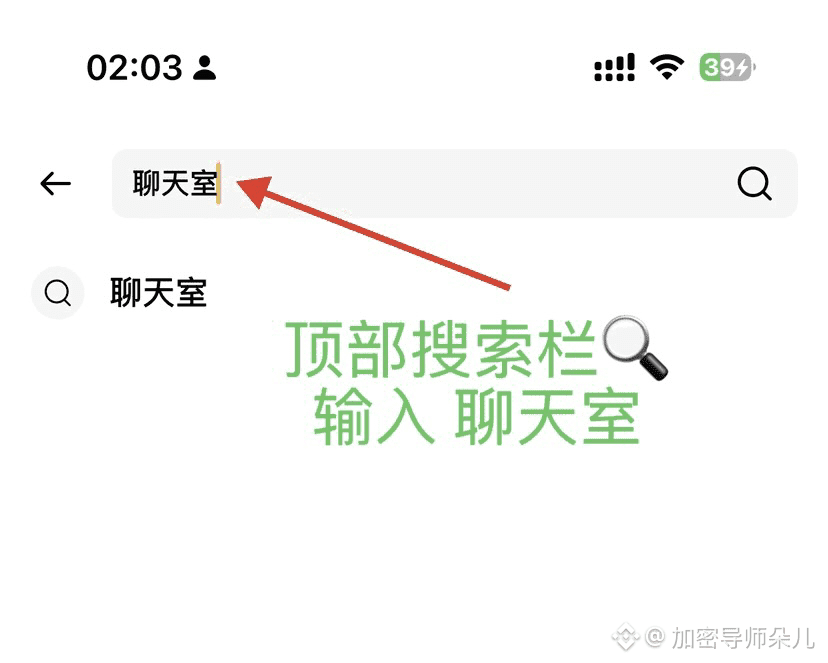
① On the Binance homepage, use the search bar at the top and type 【Chat】 to find the entry
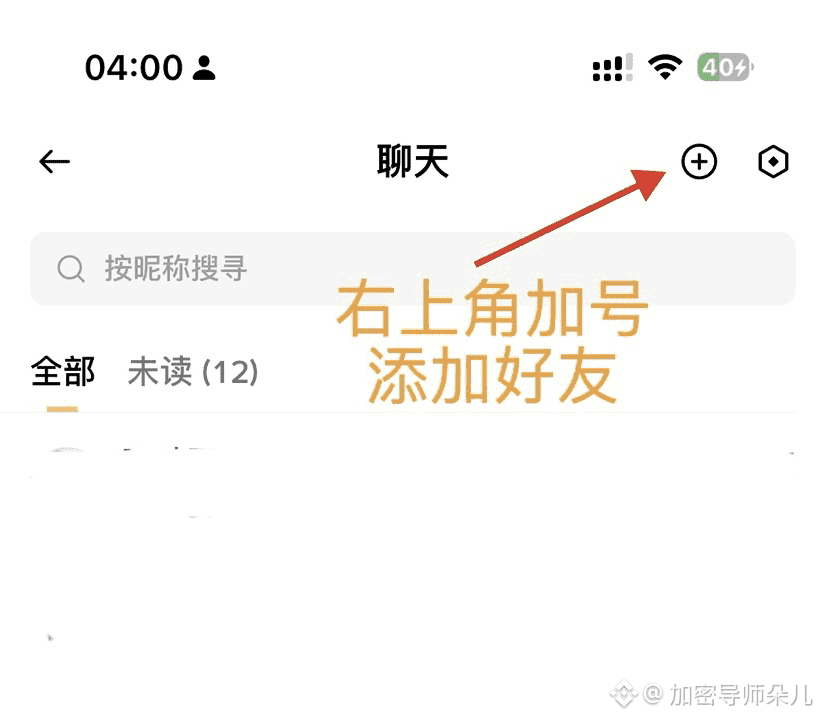
② Tap the + in the top-right corner to add a “Dua’er”
③ Enter your Binance ID (for example, mine: 1171709603) (or scan the QR code directly)
④ One-click search—you can add me and chat anytime!
Family/friends, add a Dua’er first—then we can directly communicate in real time about market trends and opportunities!
🔥🔥🔥 Binance ID: 1171709603
The latest feature is here! Binance Chat rooms have opened the 【Private Chat】 feature!
From now on, chatting with friends will be more convenient—no more worries about messages getting buried!
Using it is super easy:
① On the Binance homepage, use the search bar at the top and type 【Chat】 to find the entry
② Tap the + in the top-right corner to add a “Dua’er”
③ Enter your Binance ID (for example, mine: 1171709603) (or scan the QR code directly)
④ One-click search—you can add me and chat anytime!
Family/friends, add a Dua’er first—then we can directly communicate in real time about market trends and opportunities!
The latest feature is here! Binance Chat rooms have opened the 【Private Chat】 feature!
From now on, chatting with friends will be more convenient—no more worries about messages getting buried!
Using it is super easy:
① On the Binance homepage, use the search bar at the top and type 【Chat】 to find the entry
② Tap the + in the top-right corner to add a “Dua’er”
③ Enter your Binance ID (for example, mine: 1171709603) (or scan the QR code directly)
④ One-click search—you can add me and chat anytime!
Family/friends, add a Dua’er first—then we can directly communicate in real time about market trends and opportunities!

26
·
--
How much principal is needed to achieve: financial freedom, luxury cars and mansions, and travel the world
Back when I only had 1,200 USDT (U) in capital and lost it down to 400U, my assets are now at 30 million
When I first entered the crypto world, like many beginners, I was obsessed with getting rich overnight—chasing pumps and dumps, using high leverage, going all-in on low-cap coins. In the end, I lost terribly. Later, lying in bed unable to sleep, I finally realized: the crypto market isn’t a casino. If you want to make money long-term, you have to understand the rules
I turned the lessons I learned from my losses into 6 survival iron laws. Following these 6 rules, I slowly grew my position from 1,200U and earned my first real bucket of gold in life:
1. Sharp rise, then slower fall—most likely they’re accumulating
After the main force pumps, they usually won’t just immediately run. Pullbacks are for shaking out weak hands. Stay calm—don’t panic. The best opportunity to profit is still ahead.
2. Fast sell-offs are hard to rebound—be careful of distribution
After a crash, if the bounce lacks strength, it means nobody wants to buy. Get out quickly—don’t hesitate.
3. High-volume at high levels doesn’t necessarily mean the top
High-volume at high levels could mean new funds are coming in. As long as the trend hasn’t broken, you can keep holding. But low volume at high levels means you must leave immediately.
4. Volume at the bottom needs confirmation—multiple times for stability
One burst of volume doesn’t prove much. Continuous rising volume is what truly indicates real money is entering—then buying the dip is more reliable.
5. The core is emotion; volume is the answer
Don’t stare at indicators and analyze blindly. Volume reflects market sentiment. When sentiment is there, the trend is there; when sentiment disperses, the trend ends.
6. Cultivate “no anxious intent” to last long
Don’t be greedy, don’t be afraid, and don’t get impatient. Only those who can stay in cash and wait for opportunities are the long-term winners in crypto.
Playing with small capital is also simple: split your money into 5 parts. Use 10x leverage on 1 part each time, only trade major coins. When you profit, lock in the gains—keep the principal safe.
The biggest enemy in trading has never been the news or policy side. It’s your own mindset.
Now that the market is moving again, don’t keep envying others or blindly following the crowd. If you genuinely want a comeback, come “hide and wait” with Dōu’er for 100x coins! Dà Huì will share the trading logic and entry points, help you execute strictly, and get back everything you lost!
How much principal is needed to achieve: financial freedom, luxury cars and mansions, and travel the world
Back when I only had 1,200 USDT (U) in capital and lost it down to 400U, my assets are now at 30 million
When I first entered the crypto world, like many beginners, I was obsessed with getting rich overnight—chasing pumps and dumps, using high leverage, going all-in on low-cap coins. In the end, I lost terribly. Later, lying in bed unable to sleep, I finally realized: the crypto market isn’t a casino. If you want to make money long-term, you have to understand the rules
I turned the lessons I learned from my losses into 6 survival iron laws. Following these 6 rules, I slowly grew my position from 1,200U and earned my first real bucket of gold in life:
1. Sharp rise, then slower fall—most likely they’re accumulating
After the main force pumps, they usually won’t just immediately run. Pullbacks are for shaking out weak hands. Stay calm—don’t panic. The best opportunity to profit is still ahead.
2. Fast sell-offs are hard to rebound—be careful of distribution
After a crash, if the bounce lacks strength, it means nobody wants to buy. Get out quickly—don’t hesitate.
3. High-volume at high levels doesn’t necessarily mean the top
High-volume at high levels could mean new funds are coming in. As long as the trend hasn’t broken, you can keep holding. But low volume at high levels means you must leave immediately.
4. Volume at the bottom needs confirmation—multiple times for stability
One burst of volume doesn’t prove much. Continuous rising volume is what truly indicates real money is entering—then buying the dip is more reliable.
5. The core is emotion; volume is the answer
Don’t stare at indicators and analyze blindly. Volume reflects market sentiment. When sentiment is there, the trend is there; when sentiment disperses, the trend ends.
6. Cultivate “no anxious intent” to last long
Don’t be greedy, don’t be afraid, and don’t get impatient. Only those who can stay in cash and wait for opportunities are the long-term winners in crypto.
Playing with small capital is also simple: split your money into 5 parts. Use 10x leverage on 1 part each time, only trade major coins. When you profit, lock in the gains—keep the principal safe.
The biggest enemy in trading has never been the news or policy side. It’s your own mindset.
Now that the market is moving again, don’t keep envying others or blindly following the crowd. If you genuinely want a comeback, come “hide and wait” with Dōu’er for 100x coins! Dà Huì will share the trading logic and entry points, help you execute strictly, and get back everything you lost!
Back when I only had 1,200 USDT (U) in capital and lost it down to 400U, my assets are now at 30 million
When I first entered the crypto world, like many beginners, I was obsessed with getting rich overnight—chasing pumps and dumps, using high leverage, going all-in on low-cap coins. In the end, I lost terribly. Later, lying in bed unable to sleep, I finally realized: the crypto market isn’t a casino. If you want to make money long-term, you have to understand the rules
I turned the lessons I learned from my losses into 6 survival iron laws. Following these 6 rules, I slowly grew my position from 1,200U and earned my first real bucket of gold in life:
1. Sharp rise, then slower fall—most likely they’re accumulating
After the main force pumps, they usually won’t just immediately run. Pullbacks are for shaking out weak hands. Stay calm—don’t panic. The best opportunity to profit is still ahead.
2. Fast sell-offs are hard to rebound—be careful of distribution
After a crash, if the bounce lacks strength, it means nobody wants to buy. Get out quickly—don’t hesitate.
3. High-volume at high levels doesn’t necessarily mean the top
High-volume at high levels could mean new funds are coming in. As long as the trend hasn’t broken, you can keep holding. But low volume at high levels means you must leave immediately.
4. Volume at the bottom needs confirmation—multiple times for stability
One burst of volume doesn’t prove much. Continuous rising volume is what truly indicates real money is entering—then buying the dip is more reliable.
5. The core is emotion; volume is the answer
Don’t stare at indicators and analyze blindly. Volume reflects market sentiment. When sentiment is there, the trend is there; when sentiment disperses, the trend ends.
6. Cultivate “no anxious intent” to last long
Don’t be greedy, don’t be afraid, and don’t get impatient. Only those who can stay in cash and wait for opportunities are the long-term winners in crypto.
Playing with small capital is also simple: split your money into 5 parts. Use 10x leverage on 1 part each time, only trade major coins. When you profit, lock in the gains—keep the principal safe.
The biggest enemy in trading has never been the news or policy side. It’s your own mindset.
Now that the market is moving again, don’t keep envying others or blindly following the crowd. If you genuinely want a comeback, come “hide and wait” with Dōu’er for 100x coins! Dà Huì will share the trading logic and entry points, help you execute strictly, and get back everything you lost!

1
18
·
--
He’s just a regular office worker—using 7000U with me, he turned 2 million in just a few months!
No hype, no playing the odds. Two trades a day, steady and down-to-earth—he’s been eating well. Now his account has more than his ten years of wages!
I’m not bragging. Real wealth comes—not from luck, but from these three moves:
First move: buy the dip into a mistaken sell + heavy-position counterattack
We never chase or kill on momentum—we only take the shares that the major players have mistakenly sold off.
We place a 5% trial position in advance. Once the breakout is confirmed, we immediately max out with a 30% position—taking the first bite of the takeoff trend!
Second move: rotate positions + eat profits bite by bite
I don’t take anyone to gamble on life or death—I teach people how to “roll” upward.
Split your capital into 3 parts:
One rides the main uptrend.
One does the arbitrage trades.
One handles pullback corrections to make up for gains.
It looks slow, but it’s ridiculously fast in practice.
Third move: discipline! discipline! discipline!
“Set fixed stop-loss points, take profit in batches.”
Go in with logic, exit with a plan—then let the market do the rest.
A lot of people in the crypto space trade every day, and every trade loses money.
We only do two trades per day, and each one is as steady as punching a time clock.
If you:
Have been liquidated and want to turn it around
Don’t understand technicals but won’t give up
Have capital but no one taught you
Then I’m your “lifeline” in this market cycle.
No exaggeration—a fan once gambled and lost 400k. With me, he earned it back in two months!
Want to turn it around? Don’t just say it.
Tap my profile and ask me for the rhythm!
This market won’t wait for you. Miss it, and you’ll still be grinding away for rent, lying to your wife, and bowing your head to life.
But the people on my team have already:
Switched to new phones
Paid off their debts
Some even quit next month to go full-time on a side hustle!
Not random trade calls, not empty hype. It’s real strategy—live execution while rolling.
In crypto, one day can equal half a year. While you’re still watching, others have already landed ashore.
Don’t wait until the market moves before you chase, and don’t wait until your account hits zero to regret it.
Do’er is all about real trades, not hype. There are still spots in the team. Brothers and sisters who want to learn methods and turn things around—hop on the train with us and do it together!
He’s just a regular office worker—using 7000U with me, he turned 2 million in just a few months!
No hype, no playing the odds. Two trades a day, steady and down-to-earth—he’s been eating well. Now his account has more than his ten years of wages!
I’m not bragging. Real wealth comes—not from luck, but from these three moves:
First move: buy the dip into a mistaken sell + heavy-position counterattack
We never chase or kill on momentum—we only take the shares that the major players have mistakenly sold off.
We place a 5% trial position in advance. Once the breakout is confirmed, we immediately max out with a 30% position—taking the first bite of the takeoff trend!
Second move: rotate positions + eat profits bite by bite
I don’t take anyone to gamble on life or death—I teach people how to “roll” upward.
Split your capital into 3 parts:
One rides the main uptrend.
One does the arbitrage trades.
One handles pullback corrections to make up for gains.
It looks slow, but it’s ridiculously fast in practice.
Third move: discipline! discipline! discipline!
“Set fixed stop-loss points, take profit in batches.”
Go in with logic, exit with a plan—then let the market do the rest.
A lot of people in the crypto space trade every day, and every trade loses money.
We only do two trades per day, and each one is as steady as punching a time clock.
If you:
Have been liquidated and want to turn it around
Don’t understand technicals but won’t give up
Have capital but no one taught you
Then I’m your “lifeline” in this market cycle.
No exaggeration—a fan once gambled and lost 400k. With me, he earned it back in two months!
Want to turn it around? Don’t just say it.
Tap my profile and ask me for the rhythm!
This market won’t wait for you. Miss it, and you’ll still be grinding away for rent, lying to your wife, and bowing your head to life.
But the people on my team have already:
Switched to new phones
Paid off their debts
Some even quit next month to go full-time on a side hustle!
Not random trade calls, not empty hype. It’s real strategy—live execution while rolling.
In crypto, one day can equal half a year. While you’re still watching, others have already landed ashore.
Don’t wait until the market moves before you chase, and don’t wait until your account hits zero to regret it.
Do’er is all about real trades, not hype. There are still spots in the team. Brothers and sisters who want to learn methods and turn things around—hop on the train with us and do it together!
No hype, no playing the odds. Two trades a day, steady and down-to-earth—he’s been eating well. Now his account has more than his ten years of wages!
I’m not bragging. Real wealth comes—not from luck, but from these three moves:
First move: buy the dip into a mistaken sell + heavy-position counterattack
We never chase or kill on momentum—we only take the shares that the major players have mistakenly sold off.
We place a 5% trial position in advance. Once the breakout is confirmed, we immediately max out with a 30% position—taking the first bite of the takeoff trend!
Second move: rotate positions + eat profits bite by bite
I don’t take anyone to gamble on life or death—I teach people how to “roll” upward.
Split your capital into 3 parts:
One rides the main uptrend.
One does the arbitrage trades.
One handles pullback corrections to make up for gains.
It looks slow, but it’s ridiculously fast in practice.
Third move: discipline! discipline! discipline!
“Set fixed stop-loss points, take profit in batches.”
Go in with logic, exit with a plan—then let the market do the rest.
A lot of people in the crypto space trade every day, and every trade loses money.
We only do two trades per day, and each one is as steady as punching a time clock.
If you:
Have been liquidated and want to turn it around
Don’t understand technicals but won’t give up
Have capital but no one taught you
Then I’m your “lifeline” in this market cycle.
No exaggeration—a fan once gambled and lost 400k. With me, he earned it back in two months!
Want to turn it around? Don’t just say it.
Tap my profile and ask me for the rhythm!
This market won’t wait for you. Miss it, and you’ll still be grinding away for rent, lying to your wife, and bowing your head to life.
But the people on my team have already:
Switched to new phones
Paid off their debts
Some even quit next month to go full-time on a side hustle!
Not random trade calls, not empty hype. It’s real strategy—live execution while rolling.
In crypto, one day can equal half a year. While you’re still watching, others have already landed ashore.
Don’t wait until the market moves before you chase, and don’t wait until your account hits zero to regret it.
Do’er is all about real trades, not hype. There are still spots in the team. Brothers and sisters who want to learn methods and turn things around—hop on the train with us and do it together!

1
31
·
--
Coin trading for over a year and still haven’t made 1 million? Here are 10 brutally honest tips—please read them all.💡 It’s not a secret method; it’s to help you get clear-minded.
After 7 years in coin trading and earning 50 million, remember these 10 tips.
Over the years, I’ve summarized the following ten pieces of coin-trading hard-won advice👇
1、If your trading fund isn’t that big—say within 200,000—then catching the main upward wave once a year is enough. Never stay fully invested all the time.
2、A person will never earn wealth beyond their level of cognition. First, practice on a simulation account to train your real mindset and courage. In a simulation you can fail an unlimited number of times, but in real trading, failing once might be all it takes—and you may end up staying away from the market forever.
3、When you encounter major positive news, if you don’t sell the same day, remember this: on the next day, when it opens higher (gap up), you must sell. When good news gets priced in, it often becomes bad news.
4、For major holidays and festivals, reduce your position—or even go to cash—one week in advance. Based on past patterns, holidays tend to drop.
5、For medium- to long-term strategies, keep enough cash in hand. Sell into strength after a spike, then buy back after a sell-off. Rolling operations are the best approach.
6、For short-term trades, focus mainly on trading volume and chart patterns. Trade charts that move sharply and remain active. Don’t touch charts that aren’t active.
7、When the downtrend slows down, rebounds are also slow; when the downtrend accelerates, rebounds happen quickly.
8、If you buy it wrong, admit it and cut your loss in time. Protect your capital—this is the foundation of surviving the market.
9、For short-term trades using a 15-minute K-line chart, you must pay attention to it. Based on the KDJ indicator, you can find relatively good buy and sell points.
10、There are countless technical methods for coin trading. You only need to master and control a few. Don’t be greedy for too many👉
Have you ever wondered why others can succeed so easily? The secret is right here—follow me. Duer is always around. Feel free to consult me👏
Coin trading for over a year and still haven’t made 1 million? Here are 10 brutally honest tips—please read them all.💡 It’s not a secret method; it’s to help you get clear-minded.
After 7 years in coin trading and earning 50 million, remember these 10 tips.
Over the years, I’ve summarized the following ten pieces of coin-trading hard-won advice👇
1、If your trading fund isn’t that big—say within 200,000—then catching the main upward wave once a year is enough. Never stay fully invested all the time.
2、A person will never earn wealth beyond their level of cognition. First, practice on a simulation account to train your real mindset and courage. In a simulation you can fail an unlimited number of times, but in real trading, failing once might be all it takes—and you may end up staying away from the market forever.
3、When you encounter major positive news, if you don’t sell the same day, remember this: on the next day, when it opens higher (gap up), you must sell. When good news gets priced in, it often becomes bad news.
4、For major holidays and festivals, reduce your position—or even go to cash—one week in advance. Based on past patterns, holidays tend to drop.
5、For medium- to long-term strategies, keep enough cash in hand. Sell into strength after a spike, then buy back after a sell-off. Rolling operations are the best approach.
6、For short-term trades, focus mainly on trading volume and chart patterns. Trade charts that move sharply and remain active. Don’t touch charts that aren’t active.
7、When the downtrend slows down, rebounds are also slow; when the downtrend accelerates, rebounds happen quickly.
8、If you buy it wrong, admit it and cut your loss in time. Protect your capital—this is the foundation of surviving the market.
9、For short-term trades using a 15-minute K-line chart, you must pay attention to it. Based on the KDJ indicator, you can find relatively good buy and sell points.
10、There are countless technical methods for coin trading. You only need to master and control a few. Don’t be greedy for too many👉
Have you ever wondered why others can succeed so easily? The secret is right here—follow me. Duer is always around. Feel free to consult me👏
After 7 years in coin trading and earning 50 million, remember these 10 tips.
Over the years, I’ve summarized the following ten pieces of coin-trading hard-won advice👇
1、If your trading fund isn’t that big—say within 200,000—then catching the main upward wave once a year is enough. Never stay fully invested all the time.
2、A person will never earn wealth beyond their level of cognition. First, practice on a simulation account to train your real mindset and courage. In a simulation you can fail an unlimited number of times, but in real trading, failing once might be all it takes—and you may end up staying away from the market forever.
3、When you encounter major positive news, if you don’t sell the same day, remember this: on the next day, when it opens higher (gap up), you must sell. When good news gets priced in, it often becomes bad news.
4、For major holidays and festivals, reduce your position—or even go to cash—one week in advance. Based on past patterns, holidays tend to drop.
5、For medium- to long-term strategies, keep enough cash in hand. Sell into strength after a spike, then buy back after a sell-off. Rolling operations are the best approach.
6、For short-term trades, focus mainly on trading volume and chart patterns. Trade charts that move sharply and remain active. Don’t touch charts that aren’t active.
7、When the downtrend slows down, rebounds are also slow; when the downtrend accelerates, rebounds happen quickly.
8、If you buy it wrong, admit it and cut your loss in time. Protect your capital—this is the foundation of surviving the market.
9、For short-term trades using a 15-minute K-line chart, you must pay attention to it. Based on the KDJ indicator, you can find relatively good buy and sell points.
10、There are countless technical methods for coin trading. You only need to master and control a few. Don’t be greedy for too many👉
Have you ever wondered why others can succeed so easily? The secret is right here—follow me. Duer is always around. Feel free to consult me👏

1
2
119
·
--
I’ve been trading coins for 9 years. Now I’m 38, with assets in the eight figures. When I go out to hotels, I don’t look at the prices.
It’s not bragging—just the truth. Compared with the 80s crowd around me who work in factories or do e-commerce, I’m way more comfortable.
In this day and age, trying to turn things around by dead-salary alone is too hard. I saw that ten years ago, so I went all in on trading. I’ve taken so many losses that only now do I have the confidence.
I’ve seen too many markets. I’ve been through both bull and bear, both blowouts and crashes—I’m used to all of it. The reason I can survive until now is that I stick to a few principles. It’s not that my technical skills are that great; it’s knowing when to hide, and when to charge.
The most典型 case is when it rises insanely fast and drops very slowly—don’t chase. That’s the market maker accumulating, slowly setting a trap for you. Then, after the spike, you get a weak little uptick—don’t fantasize about bottom-picking. Usually it’s the market maker distributing at high levels, pretending it’s a rebound to make you the next bag holder.
And many people see a bit of volume suddenly appear near the top and panic to sell. But it might not be the top. Sometimes the market maker is pulling the last wave. Still, if it goes up to high levels and there’s no volume at all, that’s when you really should run. If you don’t, you’re basically waiting to be the unlucky last passenger who boards the final train.
Don’t rush just because there’s volume at the bottom either—many times it’s a bull trap. The real signal to enter is when it keeps putting out volume for several consecutive days and can stay stable without dropping—that’s the entry signal.
In the end, trading coins is all about trading emotions. How the market moves depends on emotion, and emotion is reflected in trading volume. When you feel like you’re about to rush in, it’s basically because the market maker is ready to leave. When you feel afraid and want to run, they’ve usually already bought their positions.
That’s how the crypto world is. When it comes to getting cut and getting cut again, it’s always those same types of people. People who get liquidated aren’t lacking talent—they just can’t control their hands. Anyone who imagines a one-time explosion to turn it around gets cleaned up by the market.
I don’t think I’m that great. I’ve just been changing, always watching, always learning. Making money isn’t because of luck, but because of post-trade reviews again and again, the traps I stepped into, and adjusting my strategy. Relying on fantasies, relying on signal groups, relying on luck—no one can last more than half a year in this market.
Now I run data with AI systems—model strategies, one set after another—and I trade in line with the rhythm to capture the swings. Plainly put, the crypto market doesn’t lack opportunities; it lacks people who can actually understand those opportunities.
If you want to make more money, you need to follow the right people. Stop being a “sucker”/bag holder. These days, anyone still trading based on gut feelings is doing pretty badly. The market is always there—but your capital and your chances might only come a few times. Find “Duo’er”—use systematic thinking to take you through the fog of investing.
I’ve been trading coins for 9 years. Now I’m 38, with assets in the eight figures. When I go out to hotels, I don’t look at the prices.
It’s not bragging—just the truth. Compared with the 80s crowd around me who work in factories or do e-commerce, I’m way more comfortable.
In this day and age, trying to turn things around by dead-salary alone is too hard. I saw that ten years ago, so I went all in on trading. I’ve taken so many losses that only now do I have the confidence.
I’ve seen too many markets. I’ve been through both bull and bear, both blowouts and crashes—I’m used to all of it. The reason I can survive until now is that I stick to a few principles. It’s not that my technical skills are that great; it’s knowing when to hide, and when to charge.
The most典型 case is when it rises insanely fast and drops very slowly—don’t chase. That’s the market maker accumulating, slowly setting a trap for you. Then, after the spike, you get a weak little uptick—don’t fantasize about bottom-picking. Usually it’s the market maker distributing at high levels, pretending it’s a rebound to make you the next bag holder.
And many people see a bit of volume suddenly appear near the top and panic to sell. But it might not be the top. Sometimes the market maker is pulling the last wave. Still, if it goes up to high levels and there’s no volume at all, that’s when you really should run. If you don’t, you’re basically waiting to be the unlucky last passenger who boards the final train.
Don’t rush just because there’s volume at the bottom either—many times it’s a bull trap. The real signal to enter is when it keeps putting out volume for several consecutive days and can stay stable without dropping—that’s the entry signal.
In the end, trading coins is all about trading emotions. How the market moves depends on emotion, and emotion is reflected in trading volume. When you feel like you’re about to rush in, it’s basically because the market maker is ready to leave. When you feel afraid and want to run, they’ve usually already bought their positions.
That’s how the crypto world is. When it comes to getting cut and getting cut again, it’s always those same types of people. People who get liquidated aren’t lacking talent—they just can’t control their hands. Anyone who imagines a one-time explosion to turn it around gets cleaned up by the market.
I don’t think I’m that great. I’ve just been changing, always watching, always learning. Making money isn’t because of luck, but because of post-trade reviews again and again, the traps I stepped into, and adjusting my strategy. Relying on fantasies, relying on signal groups, relying on luck—no one can last more than half a year in this market.
Now I run data with AI systems—model strategies, one set after another—and I trade in line with the rhythm to capture the swings. Plainly put, the crypto market doesn’t lack opportunities; it lacks people who can actually understand those opportunities.
If you want to make more money, you need to follow the right people. Stop being a “sucker”/bag holder. These days, anyone still trading based on gut feelings is doing pretty badly. The market is always there—but your capital and your chances might only come a few times. Find “Duo’er”—use systematic thinking to take you through the fog of investing.
It’s not bragging—just the truth. Compared with the 80s crowd around me who work in factories or do e-commerce, I’m way more comfortable.
In this day and age, trying to turn things around by dead-salary alone is too hard. I saw that ten years ago, so I went all in on trading. I’ve taken so many losses that only now do I have the confidence.
I’ve seen too many markets. I’ve been through both bull and bear, both blowouts and crashes—I’m used to all of it. The reason I can survive until now is that I stick to a few principles. It’s not that my technical skills are that great; it’s knowing when to hide, and when to charge.
The most典型 case is when it rises insanely fast and drops very slowly—don’t chase. That’s the market maker accumulating, slowly setting a trap for you. Then, after the spike, you get a weak little uptick—don’t fantasize about bottom-picking. Usually it’s the market maker distributing at high levels, pretending it’s a rebound to make you the next bag holder.
And many people see a bit of volume suddenly appear near the top and panic to sell. But it might not be the top. Sometimes the market maker is pulling the last wave. Still, if it goes up to high levels and there’s no volume at all, that’s when you really should run. If you don’t, you’re basically waiting to be the unlucky last passenger who boards the final train.
Don’t rush just because there’s volume at the bottom either—many times it’s a bull trap. The real signal to enter is when it keeps putting out volume for several consecutive days and can stay stable without dropping—that’s the entry signal.
In the end, trading coins is all about trading emotions. How the market moves depends on emotion, and emotion is reflected in trading volume. When you feel like you’re about to rush in, it’s basically because the market maker is ready to leave. When you feel afraid and want to run, they’ve usually already bought their positions.
That’s how the crypto world is. When it comes to getting cut and getting cut again, it’s always those same types of people. People who get liquidated aren’t lacking talent—they just can’t control their hands. Anyone who imagines a one-time explosion to turn it around gets cleaned up by the market.
I don’t think I’m that great. I’ve just been changing, always watching, always learning. Making money isn’t because of luck, but because of post-trade reviews again and again, the traps I stepped into, and adjusting my strategy. Relying on fantasies, relying on signal groups, relying on luck—no one can last more than half a year in this market.
Now I run data with AI systems—model strategies, one set after another—and I trade in line with the rhythm to capture the swings. Plainly put, the crypto market doesn’t lack opportunities; it lacks people who can actually understand those opportunities.
If you want to make more money, you need to follow the right people. Stop being a “sucker”/bag holder. These days, anyone still trading based on gut feelings is doing pretty badly. The market is always there—but your capital and your chances might only come a few times. Find “Duo’er”—use systematic thinking to take you through the fog of investing.

1
1
38
·
--
Let me tell you a real story! Last year, there was a fellow coin trader who was in total despair. His account went from over 300,000 U straight down to just 10,000 U. He was almost breaking down.
#币圈生存法则
But who would’ve thought that in just five months, he not only got his principal back, but also netted 50,000 U in profit! The logic behind it— I think everyone who plays with coins should really listen carefully.
At first, I went through his trade history. It was a classic case of the “weed trader problems,” all of them showing up: when others bought, he chased too; the moment the price dipped, he panicked and sold; when the mood improved, he went all-in. He kept losing and refused to let go.
$SKL
I told him to pause trading for a week to review and reassess. But when I did the numbers, it shocked me— 90% of his losses came down to just two reasons: he couldn’t control his impulses to trade recklessly, and the stop-loss rules he had set were basically just for show.
To address these issues, I helped him set two strict rules: in any single trade, losses must never exceed 5%. If he loses 10% in a single day, he stops immediately and doesn’t play anymore.
And he doesn’t pick openings blindly either. He only watches BTC and ETH’s key support and resistance levels, placing the stop-loss 1.5% beyond the key level—very steady and disciplined.
Also, as soon as profit reaches 5%, he first withdraws the principal, and then continues trading only with the profit—so risk drops to the minimum.
Finally, there’s one key move: he took 2000 U and split it to buy 3 small altcoins—but not random buying!
He had to satisfy two conditions: on-chain data must show that big holders haven’t fled, and the coin’s available amount on the exchange must be steadily decreasing. This can be a strong signal that a pump might be coming.
That’s how it went— 10,000 U recovered the break-even point within five months and even made an extra 50,000 U.$DEXE
Actually, in this coin world, 10,000 U is not an absolute dead end. Many people fall because of their obsession with “getting back to even fast.”
I’ve always said: in the crypto market, living longer matters more than making money faster.
To win, you don’t rely on a one-time reckless surge—you rely on long-term stability. If you can understand that, you’ve already won half!
In the past, I was stumbling around alone in the dark. Now the light is in my hand.
The light has always been on—do you follow?#币圈暴富
Let me tell you a real story! Last year, there was a fellow coin trader who was in total despair. His account went from over 300,000 U straight down to just 10,000 U. He was almost breaking down.
#币圈生存法则
But who would’ve thought that in just five months, he not only got his principal back, but also netted 50,000 U in profit! The logic behind it— I think everyone who plays with coins should really listen carefully.
At first, I went through his trade history. It was a classic case of the “weed trader problems,” all of them showing up: when others bought, he chased too; the moment the price dipped, he panicked and sold; when the mood improved, he went all-in. He kept losing and refused to let go.
$SKL
I told him to pause trading for a week to review and reassess. But when I did the numbers, it shocked me— 90% of his losses came down to just two reasons: he couldn’t control his impulses to trade recklessly, and the stop-loss rules he had set were basically just for show.
To address these issues, I helped him set two strict rules: in any single trade, losses must never exceed 5%. If he loses 10% in a single day, he stops immediately and doesn’t play anymore.
And he doesn’t pick openings blindly either. He only watches BTC and ETH’s key support and resistance levels, placing the stop-loss 1.5% beyond the key level—very steady and disciplined.
Also, as soon as profit reaches 5%, he first withdraws the principal, and then continues trading only with the profit—so risk drops to the minimum.
Finally, there’s one key move: he took 2000 U and split it to buy 3 small altcoins—but not random buying!
He had to satisfy two conditions: on-chain data must show that big holders haven’t fled, and the coin’s available amount on the exchange must be steadily decreasing. This can be a strong signal that a pump might be coming.
That’s how it went— 10,000 U recovered the break-even point within five months and even made an extra 50,000 U.$DEXE
Actually, in this coin world, 10,000 U is not an absolute dead end. Many people fall because of their obsession with “getting back to even fast.”
I’ve always said: in the crypto market, living longer matters more than making money faster.
To win, you don’t rely on a one-time reckless surge—you rely on long-term stability. If you can understand that, you’ve already won half!
In the past, I was stumbling around alone in the dark. Now the light is in my hand.
The light has always been on—do you follow?#币圈暴富
#币圈生存法则
But who would’ve thought that in just five months, he not only got his principal back, but also netted 50,000 U in profit! The logic behind it— I think everyone who plays with coins should really listen carefully.
At first, I went through his trade history. It was a classic case of the “weed trader problems,” all of them showing up: when others bought, he chased too; the moment the price dipped, he panicked and sold; when the mood improved, he went all-in. He kept losing and refused to let go.
$SKL
I told him to pause trading for a week to review and reassess. But when I did the numbers, it shocked me— 90% of his losses came down to just two reasons: he couldn’t control his impulses to trade recklessly, and the stop-loss rules he had set were basically just for show.
To address these issues, I helped him set two strict rules: in any single trade, losses must never exceed 5%. If he loses 10% in a single day, he stops immediately and doesn’t play anymore.
And he doesn’t pick openings blindly either. He only watches BTC and ETH’s key support and resistance levels, placing the stop-loss 1.5% beyond the key level—very steady and disciplined.
Also, as soon as profit reaches 5%, he first withdraws the principal, and then continues trading only with the profit—so risk drops to the minimum.
Finally, there’s one key move: he took 2000 U and split it to buy 3 small altcoins—but not random buying!
He had to satisfy two conditions: on-chain data must show that big holders haven’t fled, and the coin’s available amount on the exchange must be steadily decreasing. This can be a strong signal that a pump might be coming.
That’s how it went— 10,000 U recovered the break-even point within five months and even made an extra 50,000 U.$DEXE
Actually, in this coin world, 10,000 U is not an absolute dead end. Many people fall because of their obsession with “getting back to even fast.”
I’ve always said: in the crypto market, living longer matters more than making money faster.
To win, you don’t rely on a one-time reckless surge—you rely on long-term stability. If you can understand that, you’ve already won half!
In the past, I was stumbling around alone in the dark. Now the light is in my hand.
The light has always been on—do you follow?#币圈暴富

83
·
--
Turning a small capital around isn’t that hard! Learn 3 life-saving rules
If your capital is less than 1000U, let me give you some advice: stop randomly trading coins! The crypto market has never been a playground for gamblers. If you want to turn things around with small capital, it’s about rules—not luck.
There was a follower who started with only 900U. He didn’t chase trends or get involved in insider info. He simply followed 3 iron rules and, over 3 months, steadily grew it to nearly 30,000U—never got liquidated even once. His experience is shared with you today with no reservations. Remember these 3 points, and even small capital can slowly build big returns!
1. Divide your funds into three parts—no all-in is the premise
The most deadly mistake with small capital is going all in. Split your principal evenly into 3 portions. Each portion must have a clear purpose—never mix them up:
• 1 portion for short-term trades: catch small fluctuations, enter and exit quickly, take profit when you see it, and never turn small gains into big losses by being greedy;
• 1 portion for mid- to long-term positions: wait until the major trend forms before entering. Don’t constantly watch the screen or fiddle around—reduce pointless actions;
• 1 portion as life-saving capital: do not move it under any circumstances. No matter whether the market rises or falls, keep it reserved. In critical moments it acts as a fallback—keep your mountain green, and you won’t fear missing opportunities.
2. Only seize certain opportunities—stay in cash when needed
For about 80% of the time, the crypto market is grinding in a range. Frequent trading only wastes money on trading fees. The more you tinker, the more you lose.
When there’s no clear setup, go decisively to cash—don’t stare at the charts, don’t let your hands itch; enter only after the trend is clear and the signals are unmistakable.
After you become profitable, remember to withdraw some in time. Take profit and secure it—only when the money lands in your own account do you truly make real gains.
3. Follow the rules for stop-loss and take-profit—don’t be greedy, don’t hold on blindly, and don’t chase highs
Small capital can’t withstand even a single big loss. You must control your emotions with rules:
• Set a strict stop-loss. If you’re wrong, leave decisively. Don’t delude yourself that “the market will bounce back.”
• When profit reaches your preset level, reduce your position. Don’t chase higher prices out of greed. Taking part off keeps you more steady.
• Never add to a losing position blindly to average down. The more you add, the easier it is to get trapped deeply. Small capital can’t afford it.
I can’t guarantee every single trade will be correct, but I can guarantee you’ll follow the rules for every trade. Small capital isn’t scary. What’s scary is rushing for a comeback, messing up your rhythm.
The case of turning 900U into 30,000U isn’t about luck—it’s about patience: don’t be greedy, don’t panic, and don’t gamble.
The core of turning small capital around has never been getting rich overnight. It’s first staying alive, then slowly earning.
Follow me—no inflated, empty talk, and no unrealistic fantasies
Turning a small capital around isn’t that hard! Learn 3 life-saving rules
If your capital is less than 1000U, let me give you some advice: stop randomly trading coins! The crypto market has never been a playground for gamblers. If you want to turn things around with small capital, it’s about rules—not luck.
There was a follower who started with only 900U. He didn’t chase trends or get involved in insider info. He simply followed 3 iron rules and, over 3 months, steadily grew it to nearly 30,000U—never got liquidated even once. His experience is shared with you today with no reservations. Remember these 3 points, and even small capital can slowly build big returns!
1. Divide your funds into three parts—no all-in is the premise
The most deadly mistake with small capital is going all in. Split your principal evenly into 3 portions. Each portion must have a clear purpose—never mix them up:
• 1 portion for short-term trades: catch small fluctuations, enter and exit quickly, take profit when you see it, and never turn small gains into big losses by being greedy;
• 1 portion for mid- to long-term positions: wait until the major trend forms before entering. Don’t constantly watch the screen or fiddle around—reduce pointless actions;
• 1 portion as life-saving capital: do not move it under any circumstances. No matter whether the market rises or falls, keep it reserved. In critical moments it acts as a fallback—keep your mountain green, and you won’t fear missing opportunities.
2. Only seize certain opportunities—stay in cash when needed
For about 80% of the time, the crypto market is grinding in a range. Frequent trading only wastes money on trading fees. The more you tinker, the more you lose.
When there’s no clear setup, go decisively to cash—don’t stare at the charts, don’t let your hands itch; enter only after the trend is clear and the signals are unmistakable.
After you become profitable, remember to withdraw some in time. Take profit and secure it—only when the money lands in your own account do you truly make real gains.
3. Follow the rules for stop-loss and take-profit—don’t be greedy, don’t hold on blindly, and don’t chase highs
Small capital can’t withstand even a single big loss. You must control your emotions with rules:
• Set a strict stop-loss. If you’re wrong, leave decisively. Don’t delude yourself that “the market will bounce back.”
• When profit reaches your preset level, reduce your position. Don’t chase higher prices out of greed. Taking part off keeps you more steady.
• Never add to a losing position blindly to average down. The more you add, the easier it is to get trapped deeply. Small capital can’t afford it.
I can’t guarantee every single trade will be correct, but I can guarantee you’ll follow the rules for every trade. Small capital isn’t scary. What’s scary is rushing for a comeback, messing up your rhythm.
The case of turning 900U into 30,000U isn’t about luck—it’s about patience: don’t be greedy, don’t panic, and don’t gamble.
The core of turning small capital around has never been getting rich overnight. It’s first staying alive, then slowly earning.
Follow me—no inflated, empty talk, and no unrealistic fantasies
If your capital is less than 1000U, let me give you some advice: stop randomly trading coins! The crypto market has never been a playground for gamblers. If you want to turn things around with small capital, it’s about rules—not luck.
There was a follower who started with only 900U. He didn’t chase trends or get involved in insider info. He simply followed 3 iron rules and, over 3 months, steadily grew it to nearly 30,000U—never got liquidated even once. His experience is shared with you today with no reservations. Remember these 3 points, and even small capital can slowly build big returns!
1. Divide your funds into three parts—no all-in is the premise
The most deadly mistake with small capital is going all in. Split your principal evenly into 3 portions. Each portion must have a clear purpose—never mix them up:
• 1 portion for short-term trades: catch small fluctuations, enter and exit quickly, take profit when you see it, and never turn small gains into big losses by being greedy;
• 1 portion for mid- to long-term positions: wait until the major trend forms before entering. Don’t constantly watch the screen or fiddle around—reduce pointless actions;
• 1 portion as life-saving capital: do not move it under any circumstances. No matter whether the market rises or falls, keep it reserved. In critical moments it acts as a fallback—keep your mountain green, and you won’t fear missing opportunities.
2. Only seize certain opportunities—stay in cash when needed
For about 80% of the time, the crypto market is grinding in a range. Frequent trading only wastes money on trading fees. The more you tinker, the more you lose.
When there’s no clear setup, go decisively to cash—don’t stare at the charts, don’t let your hands itch; enter only after the trend is clear and the signals are unmistakable.
After you become profitable, remember to withdraw some in time. Take profit and secure it—only when the money lands in your own account do you truly make real gains.
3. Follow the rules for stop-loss and take-profit—don’t be greedy, don’t hold on blindly, and don’t chase highs
Small capital can’t withstand even a single big loss. You must control your emotions with rules:
• Set a strict stop-loss. If you’re wrong, leave decisively. Don’t delude yourself that “the market will bounce back.”
• When profit reaches your preset level, reduce your position. Don’t chase higher prices out of greed. Taking part off keeps you more steady.
• Never add to a losing position blindly to average down. The more you add, the easier it is to get trapped deeply. Small capital can’t afford it.
I can’t guarantee every single trade will be correct, but I can guarantee you’ll follow the rules for every trade. Small capital isn’t scary. What’s scary is rushing for a comeback, messing up your rhythm.
The case of turning 900U into 30,000U isn’t about luck—it’s about patience: don’t be greedy, don’t panic, and don’t gamble.
The core of turning small capital around has never been getting rich overnight. It’s first staying alive, then slowly earning.
Follow me—no inflated, empty talk, and no unrealistic fantasies

1
110
·
--
If your account currently only has a few hundred to a few thousand USDT (U), don’t fantasize about changing your life with a single trade.
The real path for small capital to grow has never been about gambling—it’s built up little by little. A follower of mine started trading with 1,500U. Before that, he liked to go all-in: chasing when prices rose, averaging down when they fell, and in the end his account got smaller and smaller. Later, I helped him rebuild his rules. After four months, his account reached 45,000U. What changed him were three trading principles.
First, always leave yourself a fallback.
Splitting your funds across accounts is the greatest sense of security for a trader. A short-term position, a trend position, and a reserve position each take on different tasks. That way, when market conditions change, one wrong trade won’t destroy your chances of making a comeback.
Second, only wait for high-quality opportunities.
The market isn’t worth trading every day. Participate less in ranging/choppy conditions. Don’t place a bet unless the trend is confirmed. The people who truly make money are often not the ones who trade the most, but the ones who wait the longest.
Third, keep emotions out of trading.
When you’re losing, don’t rush to get even. When you’re winning, don’t try to squeeze every last bit of profit out of the move. Cut losses when it’s time to stop loss, and lock in gains when it’s time to take profit.
Many people don’t lose because of the market—they lose because of greed and fear. If small capital wants to grow, the most important thing isn’t speed, but consistency. Your account can grow slowly, but only if you stay in the market the whole time. Protect your principal—and you’ll earn the right to wait for wealth growth.
If your account currently only has a few hundred to a few thousand USDT (U), don’t fantasize about changing your life with a single trade.
The real path for small capital to grow has never been about gambling—it’s built up little by little. A follower of mine started trading with 1,500U. Before that, he liked to go all-in: chasing when prices rose, averaging down when they fell, and in the end his account got smaller and smaller. Later, I helped him rebuild his rules. After four months, his account reached 45,000U. What changed him were three trading principles.
First, always leave yourself a fallback.
Splitting your funds across accounts is the greatest sense of security for a trader. A short-term position, a trend position, and a reserve position each take on different tasks. That way, when market conditions change, one wrong trade won’t destroy your chances of making a comeback.
Second, only wait for high-quality opportunities.
The market isn’t worth trading every day. Participate less in ranging/choppy conditions. Don’t place a bet unless the trend is confirmed. The people who truly make money are often not the ones who trade the most, but the ones who wait the longest.
Third, keep emotions out of trading.
When you’re losing, don’t rush to get even. When you’re winning, don’t try to squeeze every last bit of profit out of the move. Cut losses when it’s time to stop loss, and lock in gains when it’s time to take profit.
Many people don’t lose because of the market—they lose because of greed and fear. If small capital wants to grow, the most important thing isn’t speed, but consistency. Your account can grow slowly, but only if you stay in the market the whole time. Protect your principal—and you’ll earn the right to wait for wealth growth.
The real path for small capital to grow has never been about gambling—it’s built up little by little. A follower of mine started trading with 1,500U. Before that, he liked to go all-in: chasing when prices rose, averaging down when they fell, and in the end his account got smaller and smaller. Later, I helped him rebuild his rules. After four months, his account reached 45,000U. What changed him were three trading principles.
First, always leave yourself a fallback.
Splitting your funds across accounts is the greatest sense of security for a trader. A short-term position, a trend position, and a reserve position each take on different tasks. That way, when market conditions change, one wrong trade won’t destroy your chances of making a comeback.
Second, only wait for high-quality opportunities.
The market isn’t worth trading every day. Participate less in ranging/choppy conditions. Don’t place a bet unless the trend is confirmed. The people who truly make money are often not the ones who trade the most, but the ones who wait the longest.
Third, keep emotions out of trading.
When you’re losing, don’t rush to get even. When you’re winning, don’t try to squeeze every last bit of profit out of the move. Cut losses when it’s time to stop loss, and lock in gains when it’s time to take profit.
Many people don’t lose because of the market—they lose because of greed and fear. If small capital wants to grow, the most important thing isn’t speed, but consistency. Your account can grow slowly, but only if you stay in the market the whole time. Protect your principal—and you’ll earn the right to wait for wealth growth.

2
3
331
·
--
If you’ve been trading coins for over a year and still haven’t made 1 million, read this article and then come find Duor. I’ve been trading coins for eight years, and my cumulative profit is over 50 million. Today, I’ll share the ten lessons I summarized from the pitfalls I stepped on along the way, the positions that got blown up, the drawdowns I recovered from—until I finally achieved financial freedom:
1. If your principal isn’t big (e.g., within 100,000), don’t always think about going all-in. If you can catch the main uptrend only once within a year, that’s enough. Before the market arrives, patience is your strongest weapon.
2. People can never make money beyond their level of understanding. Before placing real trades, practice your mindset and nerve using a paper/simulated account. A simulated account allows you to fail unlimited times, but in real trading, one major mistake can get you eliminated.
3. Remember: when good news is implemented, it becomes bad news. If a major good news event doesn’t see you exit on the day it lands, and the next day opens higher, it’s recommended to sell promptly—otherwise you’re very likely to get stuck in a trap.
4. Be extra cautious during holidays. History has proven again and again that reducing positions ahead of holidays—or even going flat—is the sensible move. “Prices must drop during holidays” isn’t something people say casually.
5. The key to medium- and long-term trading is preserving enough cash, selling high and buying low, and making rolling adjustments. Don’t always dream of eating everything in one wave—that’s the game of the whales, not something retail traders can count on.
6. For short-term trades, only choose coins with active trading volume and big chart fluctuations. Don’t touch inactive ones. It wastes time and wears down your mindset.
7. If the market is slowly grinding lower, rebounds can be especially frustrating and drawn-out; but if the selloff accelerates, rebounds often come much faster. Timing the rhythm is crucial.
8. If you buy it wrong, admit it and cut the loss immediately. As long as your principal is still there, opportunities are always there—this is the foundation of survival.
9. If you’re monitoring the market for short-term trades, definitely watch the 15-minute candlestick chart and use the KDJ indicator as well—it can help you find quite a few golden buy/sell points.
10. There are thousands of trading techniques—you don’t need to master them all. Being proficient in one or two methods is enough. The key is to drill them to perfection!
These ten pieces of practical advice above are lessons I paid for with real money. Taking fewer detours is itself a way of making money. If you’re still wandering in confusion, why not come find Duor? Duor will help you break out of your predicament!
Follow Duor—no bragging, no empty promises, just sharing real-world experience you can use to survive in this space. There are spots in the team—whether you join or not is up to you?
If you’ve been trading coins for over a year and still haven’t made 1 million, read this article and then come find Duor. I’ve been trading coins for eight years, and my cumulative profit is over 50 million. Today, I’ll share the ten lessons I summarized from the pitfalls I stepped on along the way, the positions that got blown up, the drawdowns I recovered from—until I finally achieved financial freedom:
1. If your principal isn’t big (e.g., within 100,000), don’t always think about going all-in. If you can catch the main uptrend only once within a year, that’s enough. Before the market arrives, patience is your strongest weapon.
2. People can never make money beyond their level of understanding. Before placing real trades, practice your mindset and nerve using a paper/simulated account. A simulated account allows you to fail unlimited times, but in real trading, one major mistake can get you eliminated.
3. Remember: when good news is implemented, it becomes bad news. If a major good news event doesn’t see you exit on the day it lands, and the next day opens higher, it’s recommended to sell promptly—otherwise you’re very likely to get stuck in a trap.
4. Be extra cautious during holidays. History has proven again and again that reducing positions ahead of holidays—or even going flat—is the sensible move. “Prices must drop during holidays” isn’t something people say casually.
5. The key to medium- and long-term trading is preserving enough cash, selling high and buying low, and making rolling adjustments. Don’t always dream of eating everything in one wave—that’s the game of the whales, not something retail traders can count on.
6. For short-term trades, only choose coins with active trading volume and big chart fluctuations. Don’t touch inactive ones. It wastes time and wears down your mindset.
7. If the market is slowly grinding lower, rebounds can be especially frustrating and drawn-out; but if the selloff accelerates, rebounds often come much faster. Timing the rhythm is crucial.
8. If you buy it wrong, admit it and cut the loss immediately. As long as your principal is still there, opportunities are always there—this is the foundation of survival.
9. If you’re monitoring the market for short-term trades, definitely watch the 15-minute candlestick chart and use the KDJ indicator as well—it can help you find quite a few golden buy/sell points.
10. There are thousands of trading techniques—you don’t need to master them all. Being proficient in one or two methods is enough. The key is to drill them to perfection!
These ten pieces of practical advice above are lessons I paid for with real money. Taking fewer detours is itself a way of making money. If you’re still wandering in confusion, why not come find Duor? Duor will help you break out of your predicament!
Follow Duor—no bragging, no empty promises, just sharing real-world experience you can use to survive in this space. There are spots in the team—whether you join or not is up to you?
1. If your principal isn’t big (e.g., within 100,000), don’t always think about going all-in. If you can catch the main uptrend only once within a year, that’s enough. Before the market arrives, patience is your strongest weapon.
2. People can never make money beyond their level of understanding. Before placing real trades, practice your mindset and nerve using a paper/simulated account. A simulated account allows you to fail unlimited times, but in real trading, one major mistake can get you eliminated.
3. Remember: when good news is implemented, it becomes bad news. If a major good news event doesn’t see you exit on the day it lands, and the next day opens higher, it’s recommended to sell promptly—otherwise you’re very likely to get stuck in a trap.
4. Be extra cautious during holidays. History has proven again and again that reducing positions ahead of holidays—or even going flat—is the sensible move. “Prices must drop during holidays” isn’t something people say casually.
5. The key to medium- and long-term trading is preserving enough cash, selling high and buying low, and making rolling adjustments. Don’t always dream of eating everything in one wave—that’s the game of the whales, not something retail traders can count on.
6. For short-term trades, only choose coins with active trading volume and big chart fluctuations. Don’t touch inactive ones. It wastes time and wears down your mindset.
7. If the market is slowly grinding lower, rebounds can be especially frustrating and drawn-out; but if the selloff accelerates, rebounds often come much faster. Timing the rhythm is crucial.
8. If you buy it wrong, admit it and cut the loss immediately. As long as your principal is still there, opportunities are always there—this is the foundation of survival.
9. If you’re monitoring the market for short-term trades, definitely watch the 15-minute candlestick chart and use the KDJ indicator as well—it can help you find quite a few golden buy/sell points.
10. There are thousands of trading techniques—you don’t need to master them all. Being proficient in one or two methods is enough. The key is to drill them to perfection!
These ten pieces of practical advice above are lessons I paid for with real money. Taking fewer detours is itself a way of making money. If you’re still wandering in confusion, why not come find Duor? Duor will help you break out of your predicament!
Follow Duor—no bragging, no empty promises, just sharing real-world experience you can use to survive in this space. There are spots in the team—whether you join or not is up to you?

101
·
--
I’ve been trading coins for eight years. I went from a liquidated “greenhorn” to making a living by trading today, raising my family by trading.
In 2024, my capital multiplied by 50x. If I hadn’t withdrawn money twice in the middle to buy a house outright, that number would have been 85x.
#币圈
Today, I’m sharing my best-kept trading methods and insights with all my friends in the crypto world—no reservations. Remember: when you stand on the shoulders of giants, you can save at least ten years of detours.
Everything else is just fluff. What’s the specific way to play? I’ll break down my playbook for you:
First step: Divide your positions like building blocks—set up in three parts, don’t randomly fiddle
With 800U, I let it take the first trade using one-third, while the remaining two-thirds are tightly kept. Remember: add to your position only when there’s a signal—never. If it drops, don’t chase bottoms. If you’re losing, don’t stubbornly hold out. With small capital, you must value your life more—every dollar must be spent where it matters.
Second step: Only trade the points you’re sure about—when it’s a range-bound market, never reach in $TLM
Finding entry points is like aiming at a target: aim first, then pull the trigger. When I can’t finish an entire move in one go, I split it into three parts to trade: first wave for the breakout start, second wave to buy the pullback, third wave to ride the continuation. In a range-bound market, I’ll simply close the software—never do pointless operations.
Third step: Roll profits into the next trades like a snowball—lock in the stop-loss and don’t waver
Make 100U on the first trade, then immediately use that 100U as the new principal to roll into the next wave. Your position grows gradually, but never more than 30% of your principal. Profits are only for generating more profit—never to gamble on big moves. Controlling position sizing is the core of rolling the snowball.
Fourth step: Take profit when it’s good—while others go crazy, I withdraw first
When others chase after a pump and get liquidated, I help them take profit; when others cut their losses, we enter according to the rhythm. I don’t greedily take the entire move, but I still eat the meat in every segment. Turning a bankroll over has never been about gambling—it’s built up little by little through compounding.
This playbook is tailored for small capital. The smaller the principal, the more you need to leverage the power of “rhythm” to roll out an earth-shaking scale. $VANRY
I’ve seen too many people holding a few thousand U, watching charts while stomping their feet, trading terribly, and ending up losing more and getting more panicked—losing even more as they get more anxious.
And my team leads the trades—never based on gambling. It’s all about this “position control + rhythm” combo punch. Step by step, steady and solid. Doubling your account is just a side effect. The core goal is—let your account balance be a little higher every day than the day before. #币圈生存法则
I’ve been trading coins for eight years. I went from a liquidated “greenhorn” to making a living by trading today, raising my family by trading.
In 2024, my capital multiplied by 50x. If I hadn’t withdrawn money twice in the middle to buy a house outright, that number would have been 85x.
#币圈
Today, I’m sharing my best-kept trading methods and insights with all my friends in the crypto world—no reservations. Remember: when you stand on the shoulders of giants, you can save at least ten years of detours.
Everything else is just fluff. What’s the specific way to play? I’ll break down my playbook for you:
First step: Divide your positions like building blocks—set up in three parts, don’t randomly fiddle
With 800U, I let it take the first trade using one-third, while the remaining two-thirds are tightly kept. Remember: add to your position only when there’s a signal—never. If it drops, don’t chase bottoms. If you’re losing, don’t stubbornly hold out. With small capital, you must value your life more—every dollar must be spent where it matters.
Second step: Only trade the points you’re sure about—when it’s a range-bound market, never reach in $TLM
Finding entry points is like aiming at a target: aim first, then pull the trigger. When I can’t finish an entire move in one go, I split it into three parts to trade: first wave for the breakout start, second wave to buy the pullback, third wave to ride the continuation. In a range-bound market, I’ll simply close the software—never do pointless operations.
Third step: Roll profits into the next trades like a snowball—lock in the stop-loss and don’t waver
Make 100U on the first trade, then immediately use that 100U as the new principal to roll into the next wave. Your position grows gradually, but never more than 30% of your principal. Profits are only for generating more profit—never to gamble on big moves. Controlling position sizing is the core of rolling the snowball.
Fourth step: Take profit when it’s good—while others go crazy, I withdraw first
When others chase after a pump and get liquidated, I help them take profit; when others cut their losses, we enter according to the rhythm. I don’t greedily take the entire move, but I still eat the meat in every segment. Turning a bankroll over has never been about gambling—it’s built up little by little through compounding.
This playbook is tailored for small capital. The smaller the principal, the more you need to leverage the power of “rhythm” to roll out an earth-shaking scale. $VANRY
I’ve seen too many people holding a few thousand U, watching charts while stomping their feet, trading terribly, and ending up losing more and getting more panicked—losing even more as they get more anxious.
And my team leads the trades—never based on gambling. It’s all about this “position control + rhythm” combo punch. Step by step, steady and solid. Doubling your account is just a side effect. The core goal is—let your account balance be a little higher every day than the day before. #币圈生存法则
In 2024, my capital multiplied by 50x. If I hadn’t withdrawn money twice in the middle to buy a house outright, that number would have been 85x.
#币圈
Today, I’m sharing my best-kept trading methods and insights with all my friends in the crypto world—no reservations. Remember: when you stand on the shoulders of giants, you can save at least ten years of detours.
Everything else is just fluff. What’s the specific way to play? I’ll break down my playbook for you:
First step: Divide your positions like building blocks—set up in three parts, don’t randomly fiddle
With 800U, I let it take the first trade using one-third, while the remaining two-thirds are tightly kept. Remember: add to your position only when there’s a signal—never. If it drops, don’t chase bottoms. If you’re losing, don’t stubbornly hold out. With small capital, you must value your life more—every dollar must be spent where it matters.
Second step: Only trade the points you’re sure about—when it’s a range-bound market, never reach in $TLM
Finding entry points is like aiming at a target: aim first, then pull the trigger. When I can’t finish an entire move in one go, I split it into three parts to trade: first wave for the breakout start, second wave to buy the pullback, third wave to ride the continuation. In a range-bound market, I’ll simply close the software—never do pointless operations.
Third step: Roll profits into the next trades like a snowball—lock in the stop-loss and don’t waver
Make 100U on the first trade, then immediately use that 100U as the new principal to roll into the next wave. Your position grows gradually, but never more than 30% of your principal. Profits are only for generating more profit—never to gamble on big moves. Controlling position sizing is the core of rolling the snowball.
Fourth step: Take profit when it’s good—while others go crazy, I withdraw first
When others chase after a pump and get liquidated, I help them take profit; when others cut their losses, we enter according to the rhythm. I don’t greedily take the entire move, but I still eat the meat in every segment. Turning a bankroll over has never been about gambling—it’s built up little by little through compounding.
This playbook is tailored for small capital. The smaller the principal, the more you need to leverage the power of “rhythm” to roll out an earth-shaking scale. $VANRY
I’ve seen too many people holding a few thousand U, watching charts while stomping their feet, trading terribly, and ending up losing more and getting more panicked—losing even more as they get more anxious.
And my team leads the trades—never based on gambling. It’s all about this “position control + rhythm” combo punch. Step by step, steady and solid. Doubling your account is just a side effect. The core goal is—let your account balance be a little higher every day than the day before. #币圈生存法则

1
113
·
--
I used to think that trading coins had to rely on K-lines, indicator crossovers, wave theory, and all that—staring at the chart every day, analyzing Chan theory. It looked so “high-level,” but the result was one round of huge losses after another: three times stepping into traps, and I literally suffered a serious liver strain.
Until one day, I suddenly saw the light. I gave up those complicated technical analyses and started using a simple “let-it-ride/lie-fallow” approach. I didn’t expect that this seemingly “lazy” strategy would take me from 7700U all the way to 14WU!
The method is simple:
Chase breakouts—don’t touch the ranging (consolidation)!
In a sideways consolidation, traps that lure you into buying often lead you straight into losing trades.#币圈生存法则
After that, I chased breakouts and avoided the consolidation range!
The moment price breaks to a new high, I enter right away. If it’s a fake breakout, stop out immediately—if it’s a real breakout, hold steady and catch a profit. Don’t hesitate—if you miss the opportunity, you’ll lose.
Watch the chart every day, but not just to watch charts. Grab opportunities and enter!
Big position? Doesn’t exist! I only use 20% of my capital.
I never go all-in—each trade uses only 20% of my position. A small allocation, steady entry, steady exit. Take profit when I’m making money; if I lose, I take a break and don’t do revenge trading!$SYN While others do dozens of trades a day, I only do two trades per week—but in the end, my account grew more than theirs.
If you can’t make the strategy work, thinking about it won’t help—stability is king!
Only trade the setups you can understand; everything else gets abandoned.
I used to keep trying to catch the bottoms and pick the tops, but the more I did it, the more I lost. I just follow the market and don’t predict the future. When it goes up, I chase longs; when it goes down, I chase shorts. However the market moves, I move with it. Don’t try to guess what the future will be—trend continuation is the most reliable opportunity to make money.$JTO
See? I’m not some genius. I’m just making money with the simplest strategy: steady and consistent, staying in sync with the market’s rhythm, doing simple things and making big money.
You’re not moving fast enough—you’re just bumping around in the dark alone. Sister Du’er is always there. The lights are ahead. If you don’t follow, you’ll always be groping in the dark.#币圈暴富
I used to think that trading coins had to rely on K-lines, indicator crossovers, wave theory, and all that—staring at the chart every day, analyzing Chan theory. It looked so “high-level,” but the result was one round of huge losses after another: three times stepping into traps, and I literally suffered a serious liver strain.
Until one day, I suddenly saw the light. I gave up those complicated technical analyses and started using a simple “let-it-ride/lie-fallow” approach. I didn’t expect that this seemingly “lazy” strategy would take me from 7700U all the way to 14WU!
The method is simple:
Chase breakouts—don’t touch the ranging (consolidation)!
In a sideways consolidation, traps that lure you into buying often lead you straight into losing trades.#币圈生存法则
After that, I chased breakouts and avoided the consolidation range!
The moment price breaks to a new high, I enter right away. If it’s a fake breakout, stop out immediately—if it’s a real breakout, hold steady and catch a profit. Don’t hesitate—if you miss the opportunity, you’ll lose.
Watch the chart every day, but not just to watch charts. Grab opportunities and enter!
Big position? Doesn’t exist! I only use 20% of my capital.
I never go all-in—each trade uses only 20% of my position. A small allocation, steady entry, steady exit. Take profit when I’m making money; if I lose, I take a break and don’t do revenge trading!$SYN While others do dozens of trades a day, I only do two trades per week—but in the end, my account grew more than theirs.
If you can’t make the strategy work, thinking about it won’t help—stability is king!
Only trade the setups you can understand; everything else gets abandoned.
I used to keep trying to catch the bottoms and pick the tops, but the more I did it, the more I lost. I just follow the market and don’t predict the future. When it goes up, I chase longs; when it goes down, I chase shorts. However the market moves, I move with it. Don’t try to guess what the future will be—trend continuation is the most reliable opportunity to make money.$JTO
See? I’m not some genius. I’m just making money with the simplest strategy: steady and consistent, staying in sync with the market’s rhythm, doing simple things and making big money.
You’re not moving fast enough—you’re just bumping around in the dark alone. Sister Du’er is always there. The lights are ahead. If you don’t follow, you’ll always be groping in the dark.#币圈暴富
Until one day, I suddenly saw the light. I gave up those complicated technical analyses and started using a simple “let-it-ride/lie-fallow” approach. I didn’t expect that this seemingly “lazy” strategy would take me from 7700U all the way to 14WU!
The method is simple:
Chase breakouts—don’t touch the ranging (consolidation)!
In a sideways consolidation, traps that lure you into buying often lead you straight into losing trades.#币圈生存法则
After that, I chased breakouts and avoided the consolidation range!
The moment price breaks to a new high, I enter right away. If it’s a fake breakout, stop out immediately—if it’s a real breakout, hold steady and catch a profit. Don’t hesitate—if you miss the opportunity, you’ll lose.
Watch the chart every day, but not just to watch charts. Grab opportunities and enter!
Big position? Doesn’t exist! I only use 20% of my capital.
I never go all-in—each trade uses only 20% of my position. A small allocation, steady entry, steady exit. Take profit when I’m making money; if I lose, I take a break and don’t do revenge trading!$SYN While others do dozens of trades a day, I only do two trades per week—but in the end, my account grew more than theirs.
If you can’t make the strategy work, thinking about it won’t help—stability is king!
Only trade the setups you can understand; everything else gets abandoned.
I used to keep trying to catch the bottoms and pick the tops, but the more I did it, the more I lost. I just follow the market and don’t predict the future. When it goes up, I chase longs; when it goes down, I chase shorts. However the market moves, I move with it. Don’t try to guess what the future will be—trend continuation is the most reliable opportunity to make money.$JTO
See? I’m not some genius. I’m just making money with the simplest strategy: steady and consistent, staying in sync with the market’s rhythm, doing simple things and making big money.
You’re not moving fast enough—you’re just bumping around in the dark alone. Sister Du’er is always there. The lights are ahead. If you don’t follow, you’ll always be groping in the dark.#币圈暴富

138
·
--
I daresay the crypto market is the best place for ordinary people to rise up—but you have to find the right method. Keep discipline and quit gambling on “all-in” trades!
Last year, I brought a follower with me. Starting with 1,000U, in three months he reached 60,000U. Throughout the whole process, he had zero liquidation events and never blew up from a drawdown collapse.
It definitely wasn’t luck. Luck may let you profit for a moment, but it won’t last. And my “three decisive strikes”—though slow, they’re steady!
First strike: Split the capital. Never go all-in—even if you want to.
Split 1,000U into three parts:
350U for intraday (only 1 trade per day—don’t overtrade)
350U for swing trades (place a trade only once every ten-odd days or half a month)
300U as the back-up (if it really goes wrong, you still have a chance to recover)
Key point: absolutely don’t go all-in! ❗️❗️
Second strike: Only bite the thickest meat; don’t touch the rest.
Don’t trade in a range-bound market (80% of losses die here).
If the direction is unclear, stay out of the market (I’d rather not make money than blindly lose).
Only act when the trend is clearly defined.
Remember this line:
Market conditions may not show up every day, but your life must go on every day.
Third strike: Hard-code the rules and reset your emotions.
• Stop loss at 2%—as normal as eating.
• Take profit at 4%: cut the position in half first.
• If your account profit exceeds the principal by 20%, withdraw 30% immediately.
• Never add to your position when you’re in a loss.
This is the root cause of why 90% of people can’t turn things around.
Make sure you remember: don’t bet, don’t hold on stubbornly, and don’t fantasize.
So what now?
Now his account has long since broken through 100,000U+.
Even more importantly—
he doesn’t have to stay up all night watching the chart anymore.
Every day, 5 minutes to check the levels, then done.
Want to turn it around?
Remember this sentence:
Make sure you leave yourself the资格 to place the next trade.
Split your capital, wait for the right timing, and control the intensity.
These things won’t be flashy, but they can save you from taking five years’ worth of detours.
In the crypto market, you can’t get rich fast. If you want things fast, first slow yourself down.
The market will always be there. Find your “Duo’er”—use systematic thinking to help you get through the fog of investing.
I daresay the crypto market is the best place for ordinary people to rise up—but you have to find the right method. Keep discipline and quit gambling on “all-in” trades!
Last year, I brought a follower with me. Starting with 1,000U, in three months he reached 60,000U. Throughout the whole process, he had zero liquidation events and never blew up from a drawdown collapse.
It definitely wasn’t luck. Luck may let you profit for a moment, but it won’t last. And my “three decisive strikes”—though slow, they’re steady!
First strike: Split the capital. Never go all-in—even if you want to.
Split 1,000U into three parts:
350U for intraday (only 1 trade per day—don’t overtrade)
350U for swing trades (place a trade only once every ten-odd days or half a month)
300U as the back-up (if it really goes wrong, you still have a chance to recover)
Key point: absolutely don’t go all-in! ❗️❗️
Second strike: Only bite the thickest meat; don’t touch the rest.
Don’t trade in a range-bound market (80% of losses die here).
If the direction is unclear, stay out of the market (I’d rather not make money than blindly lose).
Only act when the trend is clearly defined.
Remember this line:
Market conditions may not show up every day, but your life must go on every day.
Third strike: Hard-code the rules and reset your emotions.
• Stop loss at 2%—as normal as eating.
• Take profit at 4%: cut the position in half first.
• If your account profit exceeds the principal by 20%, withdraw 30% immediately.
• Never add to your position when you’re in a loss.
This is the root cause of why 90% of people can’t turn things around.
Make sure you remember: don’t bet, don’t hold on stubbornly, and don’t fantasize.
So what now?
Now his account has long since broken through 100,000U+.
Even more importantly—
he doesn’t have to stay up all night watching the chart anymore.
Every day, 5 minutes to check the levels, then done.
Want to turn it around?
Remember this sentence:
Make sure you leave yourself the资格 to place the next trade.
Split your capital, wait for the right timing, and control the intensity.
These things won’t be flashy, but they can save you from taking five years’ worth of detours.
In the crypto market, you can’t get rich fast. If you want things fast, first slow yourself down.
The market will always be there. Find your “Duo’er”—use systematic thinking to help you get through the fog of investing.
Last year, I brought a follower with me. Starting with 1,000U, in three months he reached 60,000U. Throughout the whole process, he had zero liquidation events and never blew up from a drawdown collapse.
It definitely wasn’t luck. Luck may let you profit for a moment, but it won’t last. And my “three decisive strikes”—though slow, they’re steady!
First strike: Split the capital. Never go all-in—even if you want to.
Split 1,000U into three parts:
350U for intraday (only 1 trade per day—don’t overtrade)
350U for swing trades (place a trade only once every ten-odd days or half a month)
300U as the back-up (if it really goes wrong, you still have a chance to recover)
Key point: absolutely don’t go all-in! ❗️❗️
Second strike: Only bite the thickest meat; don’t touch the rest.
Don’t trade in a range-bound market (80% of losses die here).
If the direction is unclear, stay out of the market (I’d rather not make money than blindly lose).
Only act when the trend is clearly defined.
Remember this line:
Market conditions may not show up every day, but your life must go on every day.
Third strike: Hard-code the rules and reset your emotions.
• Stop loss at 2%—as normal as eating.
• Take profit at 4%: cut the position in half first.
• If your account profit exceeds the principal by 20%, withdraw 30% immediately.
• Never add to your position when you’re in a loss.
This is the root cause of why 90% of people can’t turn things around.
Make sure you remember: don’t bet, don’t hold on stubbornly, and don’t fantasize.
So what now?
Now his account has long since broken through 100,000U+.
Even more importantly—
he doesn’t have to stay up all night watching the chart anymore.
Every day, 5 minutes to check the levels, then done.
Want to turn it around?
Remember this sentence:
Make sure you leave yourself the资格 to place the next trade.
Split your capital, wait for the right timing, and control the intensity.
These things won’t be flashy, but they can save you from taking five years’ worth of detours.
In the crypto market, you can’t get rich fast. If you want things fast, first slow yourself down.
The market will always be there. Find your “Duo’er”—use systematic thinking to help you get through the fog of investing.

1
128
·
--
Many people come to the crypto market just thinking about getting rich overnight. Let me tell you the truth: if you want to get rich, don’t gamble recklessly! When I started, I only had a few thousand USDT (U). I’m not a big player, and I’m not a tycoon—just a regular retail trader. But now my account balance is over fifty million. You might not believe it, but it’s a fact! I’ve never tried to greedily make as much as possible in a single run. I only ask one question: should I enter this wave? How did I build up? Now I’ll share my多年心得 (many years of experience) with you:
Phase 1: Control the position to practice
Start with 1000U. Split it into 5 parts—200U per trade. Set a stop loss and take profit on every order. Don’t chase trades, don’t hold stubbornly against the market. Don’t bet on going against the trend—only trade opportunities I can clearly understand.
Phase 2: Add to positions after becoming profitable
Once my account reaches 10,000U, I control each trade to about 25% of the total position.
If the market moves in a favorable direction, I add in batches and catch the “golden middle section” of the trend.
Phase 3: Take profits and withdraw
After the account breaks 200,000, I start locking part of the profits each week to withdraw. It’s not because I’m afraid of losing—I’m afraid that I’ll get too overconfident. Stability is the biggest kind of extreme profit!
The root causes of why most people get liquidated:
Positions are a mess—they don’t know how to control risk
No stop loss—once they lose, they lose all the way
They’re right about the direction, but they die holding against the move
A follower who started with me at 900U and grew it to 18,000U withdrew yesterday. They were so excited they couldn’t sleep until after midnight. We talked on the phone for two hours. Watching their journey and growth all the way, I truly feel very encouraged and gratified!
Follow Dou’er. No boasting, no empty promises—just sharing practical experience that helps you survive in this space. There are only a few spots left in the team. If you want to learn the method and make a comeback, come aboard and do it together!
Many people come to the crypto market just thinking about getting rich overnight. Let me tell you the truth: if you want to get rich, don’t gamble recklessly! When I started, I only had a few thousand USDT (U). I’m not a big player, and I’m not a tycoon—just a regular retail trader. But now my account balance is over fifty million. You might not believe it, but it’s a fact! I’ve never tried to greedily make as much as possible in a single run. I only ask one question: should I enter this wave? How did I build up? Now I’ll share my多年心得 (many years of experience) with you:
Phase 1: Control the position to practice
Start with 1000U. Split it into 5 parts—200U per trade. Set a stop loss and take profit on every order. Don’t chase trades, don’t hold stubbornly against the market. Don’t bet on going against the trend—only trade opportunities I can clearly understand.
Phase 2: Add to positions after becoming profitable
Once my account reaches 10,000U, I control each trade to about 25% of the total position.
If the market moves in a favorable direction, I add in batches and catch the “golden middle section” of the trend.
Phase 3: Take profits and withdraw
After the account breaks 200,000, I start locking part of the profits each week to withdraw. It’s not because I’m afraid of losing—I’m afraid that I’ll get too overconfident. Stability is the biggest kind of extreme profit!
The root causes of why most people get liquidated:
Positions are a mess—they don’t know how to control risk
No stop loss—once they lose, they lose all the way
They’re right about the direction, but they die holding against the move
A follower who started with me at 900U and grew it to 18,000U withdrew yesterday. They were so excited they couldn’t sleep until after midnight. We talked on the phone for two hours. Watching their journey and growth all the way, I truly feel very encouraged and gratified!
Follow Dou’er. No boasting, no empty promises—just sharing practical experience that helps you survive in this space. There are only a few spots left in the team. If you want to learn the method and make a comeback, come aboard and do it together!
Phase 1: Control the position to practice
Start with 1000U. Split it into 5 parts—200U per trade. Set a stop loss and take profit on every order. Don’t chase trades, don’t hold stubbornly against the market. Don’t bet on going against the trend—only trade opportunities I can clearly understand.
Phase 2: Add to positions after becoming profitable
Once my account reaches 10,000U, I control each trade to about 25% of the total position.
If the market moves in a favorable direction, I add in batches and catch the “golden middle section” of the trend.
Phase 3: Take profits and withdraw
After the account breaks 200,000, I start locking part of the profits each week to withdraw. It’s not because I’m afraid of losing—I’m afraid that I’ll get too overconfident. Stability is the biggest kind of extreme profit!
The root causes of why most people get liquidated:
Positions are a mess—they don’t know how to control risk
No stop loss—once they lose, they lose all the way
They’re right about the direction, but they die holding against the move
A follower who started with me at 900U and grew it to 18,000U withdrew yesterday. They were so excited they couldn’t sleep until after midnight. We talked on the phone for two hours. Watching their journey and growth all the way, I truly feel very encouraged and gratified!
Follow Dou’er. No boasting, no empty promises—just sharing practical experience that helps you survive in this space. There are only a few spots left in the team. If you want to learn the method and make a comeback, come aboard and do it together!

85
·
--
He’s just an ordinary office worker. He uses 7000U to work with me, and in just a few months turns it into 2 million!
No pumping up empty hype, no gambling on luck. Two trades a day—steady, down-to-earth, and making real money. His account now has more than his salary from ten years!
I’m not exaggerating. True wealth comes not from luck, but from these three moves:
First move: buy the dip after a wrong kill + counterattack with heavy weight
We never chase the highs or sell the lows. We only trade the chips that the main forces wrongly liquidated.
We lay the groundwork with a 5% trial position in advance. Once the breakout is confirmed, we go all in with a 30% position to grab the first bite of the soaring move!
Second move: rotate positions + take profits one bite at a time
I don’t teach people to bet their lives. I teach them how to “roll” up.
We split the principal into 3 parts:
One part follows the main uptrend.
One part does arbitrage trades.
One part covers drawdowns and supplements profits.
It looks slow, but it’s ridiculously fast.
Third move: discipline! discipline! discipline!
“Set the stop-loss points, take profit in batches.”
Enter with logic, exit with a plan—everything else is left to the market.
A lot of people in the crypto space do trades every day, yet they lose every trade.
We only do two trades per day, and each one is as steady as a precision strike!
If you:
Have been liquidated and want to turn things around
Don’t understand the technicals, but you’re not willing to give up
Have capital, but nobody to teach you
Then I’m the “lifesaving straw” for this round of market you’re in.
Not exaggerating—one fan once was a gambler who lost 400k, and with me, they earned it all back in two months!
Want to turn it around? Don’t just say it.
Tap my profile and ask me for the rhythm!
This market won’t wait for you. If you miss it, you’ll keep working overtime for rent, lying to your wife, and bowing your head to life.
Meanwhile, the people on my side already have:
Someone got a new phone
Someone paid off their debts
Someone just quit their job next month to go do side gigs!
Not random hype, not a pie-in-the-sky scheme. It’s a real strategy with real trading, rolling in practice!
In crypto, one day can equal half a year. While you’re still watching from the sidelines, they’ve already made it ashore!
Don’t wait until the trend is over to chase. Don’t wait until your account hits zero to regret it.
Duer Sister only does real trades, not hype. There are still spots in the team right now. If you want to learn the methods and turn things around, brothers and sisters—hop on the train and let’s do it together!
He’s just an ordinary office worker. He uses 7000U to work with me, and in just a few months turns it into 2 million!
No pumping up empty hype, no gambling on luck. Two trades a day—steady, down-to-earth, and making real money. His account now has more than his salary from ten years!
I’m not exaggerating. True wealth comes not from luck, but from these three moves:
First move: buy the dip after a wrong kill + counterattack with heavy weight
We never chase the highs or sell the lows. We only trade the chips that the main forces wrongly liquidated.
We lay the groundwork with a 5% trial position in advance. Once the breakout is confirmed, we go all in with a 30% position to grab the first bite of the soaring move!
Second move: rotate positions + take profits one bite at a time
I don’t teach people to bet their lives. I teach them how to “roll” up.
We split the principal into 3 parts:
One part follows the main uptrend.
One part does arbitrage trades.
One part covers drawdowns and supplements profits.
It looks slow, but it’s ridiculously fast.
Third move: discipline! discipline! discipline!
“Set the stop-loss points, take profit in batches.”
Enter with logic, exit with a plan—everything else is left to the market.
A lot of people in the crypto space do trades every day, yet they lose every trade.
We only do two trades per day, and each one is as steady as a precision strike!
If you:
Have been liquidated and want to turn things around
Don’t understand the technicals, but you’re not willing to give up
Have capital, but nobody to teach you
Then I’m the “lifesaving straw” for this round of market you’re in.
Not exaggerating—one fan once was a gambler who lost 400k, and with me, they earned it all back in two months!
Want to turn it around? Don’t just say it.
Tap my profile and ask me for the rhythm!
This market won’t wait for you. If you miss it, you’ll keep working overtime for rent, lying to your wife, and bowing your head to life.
Meanwhile, the people on my side already have:
Someone got a new phone
Someone paid off their debts
Someone just quit their job next month to go do side gigs!
Not random hype, not a pie-in-the-sky scheme. It’s a real strategy with real trading, rolling in practice!
In crypto, one day can equal half a year. While you’re still watching from the sidelines, they’ve already made it ashore!
Don’t wait until the trend is over to chase. Don’t wait until your account hits zero to regret it.
Duer Sister only does real trades, not hype. There are still spots in the team right now. If you want to learn the methods and turn things around, brothers and sisters—hop on the train and let’s do it together!
No pumping up empty hype, no gambling on luck. Two trades a day—steady, down-to-earth, and making real money. His account now has more than his salary from ten years!
I’m not exaggerating. True wealth comes not from luck, but from these three moves:
First move: buy the dip after a wrong kill + counterattack with heavy weight
We never chase the highs or sell the lows. We only trade the chips that the main forces wrongly liquidated.
We lay the groundwork with a 5% trial position in advance. Once the breakout is confirmed, we go all in with a 30% position to grab the first bite of the soaring move!
Second move: rotate positions + take profits one bite at a time
I don’t teach people to bet their lives. I teach them how to “roll” up.
We split the principal into 3 parts:
One part follows the main uptrend.
One part does arbitrage trades.
One part covers drawdowns and supplements profits.
It looks slow, but it’s ridiculously fast.
Third move: discipline! discipline! discipline!
“Set the stop-loss points, take profit in batches.”
Enter with logic, exit with a plan—everything else is left to the market.
A lot of people in the crypto space do trades every day, yet they lose every trade.
We only do two trades per day, and each one is as steady as a precision strike!
If you:
Have been liquidated and want to turn things around
Don’t understand the technicals, but you’re not willing to give up
Have capital, but nobody to teach you
Then I’m the “lifesaving straw” for this round of market you’re in.
Not exaggerating—one fan once was a gambler who lost 400k, and with me, they earned it all back in two months!
Want to turn it around? Don’t just say it.
Tap my profile and ask me for the rhythm!
This market won’t wait for you. If you miss it, you’ll keep working overtime for rent, lying to your wife, and bowing your head to life.
Meanwhile, the people on my side already have:
Someone got a new phone
Someone paid off their debts
Someone just quit their job next month to go do side gigs!
Not random hype, not a pie-in-the-sky scheme. It’s a real strategy with real trading, rolling in practice!
In crypto, one day can equal half a year. While you’re still watching from the sidelines, they’ve already made it ashore!
Don’t wait until the trend is over to chase. Don’t wait until your account hits zero to regret it.
Duer Sister only does real trades, not hype. There are still spots in the team right now. If you want to learn the methods and turn things around, brothers and sisters—hop on the train and let’s do it together!

1
2
101
·
--
I dare to say that the crypto market is the best place for ordinary people to turn their lives around—but you also need to find the right method, stick to discipline, and quit gambling your positions away (all-in on a single trade)!
Last year, I brought a follower.
Starting with 1,000U, in three months he reached 60,000U, with zero liquidation and no drawdown catastrophe throughout.
He didn’t rely on luck. Luck might make you profitable for a moment, but it won’t last. And my “three decisive moves”—although slower, it’s steady!
First move: split your capital. Don’t go all-in even when you’re hungry to trade.
Split the 1,000U into three parts:
350U for intraday (only 1 trade per day—no overtrading)
350U for swing trades (only once every ten days to half a month)
300U as the back-up plan (if it truly loses, you still have a chance to recover)
Key point: absolutely do not go all-in ❗️❗️
Second move: only bite the thickest meat; don’t touch the rest
Don’t trade in a range/sideways market (80% of losses die here)
If direction is unclear, stay out of the market (I’d rather make no profit than blindly lose money)
Only trade when the price action is clear
Remember this line:
Market conditions don’t necessarily appear every day, but your life must be there every day.
Third move: lock in the rules and reset your emotions
• Stop-loss 2%—normal, like eating
• Take profit 4%: reduce half the position first
• If account profit exceeds 20% of the principal, withdraw 30% immediately
• Never add to your position when you’re losing
This is the root of why 90% of people can’t turn things around
Remember for sure: don’t gamble, don’t stubbornly hold, and don’t fantasize.
So what now?
Now his account has long broken through 100,000U+.
Even more important—
he doesn’t need to stay up late watching the charts anymore.
Every day, 5 minutes: check the levels, then you’re done.
Want to make a comeback? Remember this line:
You must always leave yourself the right to place the next trade.
Splitting positions, waiting for the right timing, and controlling your “fire”—
these things aren’t exciting, but they can save you from taking a five-year detour.
In crypto, making money can’t be quick. If you want it fast—first slow yourself down.
The market is always there. Find your “dóù’er” (your opportunity), and with a systematic mindset, I’ll help you cross through the fog of investing.
I dare to say that the crypto market is the best place for ordinary people to turn their lives around—but you also need to find the right method, stick to discipline, and quit gambling your positions away (all-in on a single trade)!
Last year, I brought a follower.
Starting with 1,000U, in three months he reached 60,000U, with zero liquidation and no drawdown catastrophe throughout.
He didn’t rely on luck. Luck might make you profitable for a moment, but it won’t last. And my “three decisive moves”—although slower, it’s steady!
First move: split your capital. Don’t go all-in even when you’re hungry to trade.
Split the 1,000U into three parts:
350U for intraday (only 1 trade per day—no overtrading)
350U for swing trades (only once every ten days to half a month)
300U as the back-up plan (if it truly loses, you still have a chance to recover)
Key point: absolutely do not go all-in ❗️❗️
Second move: only bite the thickest meat; don’t touch the rest
Don’t trade in a range/sideways market (80% of losses die here)
If direction is unclear, stay out of the market (I’d rather make no profit than blindly lose money)
Only trade when the price action is clear
Remember this line:
Market conditions don’t necessarily appear every day, but your life must be there every day.
Third move: lock in the rules and reset your emotions
• Stop-loss 2%—normal, like eating
• Take profit 4%: reduce half the position first
• If account profit exceeds 20% of the principal, withdraw 30% immediately
• Never add to your position when you’re losing
This is the root of why 90% of people can’t turn things around
Remember for sure: don’t gamble, don’t stubbornly hold, and don’t fantasize.
So what now?
Now his account has long broken through 100,000U+.
Even more important—
he doesn’t need to stay up late watching the charts anymore.
Every day, 5 minutes: check the levels, then you’re done.
Want to make a comeback? Remember this line:
You must always leave yourself the right to place the next trade.
Splitting positions, waiting for the right timing, and controlling your “fire”—
these things aren’t exciting, but they can save you from taking a five-year detour.
In crypto, making money can’t be quick. If you want it fast—first slow yourself down.
The market is always there. Find your “dóù’er” (your opportunity), and with a systematic mindset, I’ll help you cross through the fog of investing.
Last year, I brought a follower.
Starting with 1,000U, in three months he reached 60,000U, with zero liquidation and no drawdown catastrophe throughout.
He didn’t rely on luck. Luck might make you profitable for a moment, but it won’t last. And my “three decisive moves”—although slower, it’s steady!
First move: split your capital. Don’t go all-in even when you’re hungry to trade.
Split the 1,000U into three parts:
350U for intraday (only 1 trade per day—no overtrading)
350U for swing trades (only once every ten days to half a month)
300U as the back-up plan (if it truly loses, you still have a chance to recover)
Key point: absolutely do not go all-in ❗️❗️
Second move: only bite the thickest meat; don’t touch the rest
Don’t trade in a range/sideways market (80% of losses die here)
If direction is unclear, stay out of the market (I’d rather make no profit than blindly lose money)
Only trade when the price action is clear
Remember this line:
Market conditions don’t necessarily appear every day, but your life must be there every day.
Third move: lock in the rules and reset your emotions
• Stop-loss 2%—normal, like eating
• Take profit 4%: reduce half the position first
• If account profit exceeds 20% of the principal, withdraw 30% immediately
• Never add to your position when you’re losing
This is the root of why 90% of people can’t turn things around
Remember for sure: don’t gamble, don’t stubbornly hold, and don’t fantasize.
So what now?
Now his account has long broken through 100,000U+.
Even more important—
he doesn’t need to stay up late watching the charts anymore.
Every day, 5 minutes: check the levels, then you’re done.
Want to make a comeback? Remember this line:
You must always leave yourself the right to place the next trade.
Splitting positions, waiting for the right timing, and controlling your “fire”—
these things aren’t exciting, but they can save you from taking a five-year detour.
In crypto, making money can’t be quick. If you want it fast—first slow yourself down.
The market is always there. Find your “dóù’er” (your opportunity), and with a systematic mindset, I’ll help you cross through the fog of investing.

12
1
16
7.9k
·
--
I used to think that trading coins depended on K-lines, indicator crossovers, the Elliott Wave Theory—stuff like that. Every day I stared at the charts, analyzed everything about Chan theory; it looked “high level.” The result was one disastrous loss after another, getting caught in three bear traps. I was literally dying from frustration.
Until one day, it suddenly clicked. I gave up those complicated technical analyses and started using a simple “half-committed / do-nothing” approach. And surprisingly, this seemingly “lazy” strategy took me all the way from 7700U to 14WU!
The method is simple:
Chase the breakout—don’t touch the range!
In sideways consolidation and fakeout traps, people usually end up entering losing trades. #币圈生存法则
Later, I chased breakouts and avoided the consolidation range!
When the price breaks to a new high, I enter immediately. For a false breakout, I cut loss right away; for a real breakout, I hold steady and grab a good profit. Don’t hesitate—if you miss the chance, you’ll end up losing.
Watch the market every day—but not to watch for watching’s sake. Seize opportunities and enter trades!
Big position? Not happening. I only use 20% of my capital!
I never go full margin. Each trade uses only 20% of my position. Small position, steady entry, steady exit. Take profit when I’m winning; if I lose, I rest. I don’t do reversal trades! $SYN
While others place dozens of trades a day, I only do two trades a week—but in the end, my account grows more than theirs.
If you can’t do a strategy, thinking about it won’t help. Stability is king!
Only trade the market setups you can understand. Everything else—give it up!
I used to always try to catch bottoms and tops, and the more I did it, the more I lost. I just follow the market. I don’t predict the future. When it goes up, I chase long; when it goes down, I chase short. However the market moves, that’s how I follow. Don’t try to figure out what the future will be—trend continuation is the steadiest money-making opportunity. $JTO
See? I’m not really a genius. I’m just making money with the simplest strategy—earning steadily, staying in sync with the market rhythm, doing simple things, and making big money.
You’re not moving fast enough—you’re just bumping around in the dark on your own. Sister Du’er is always there—the light is right ahead. If you don’t keep up, you’ll always be groping in the night. #币圈暴富
I used to think that trading coins depended on K-lines, indicator crossovers, the Elliott Wave Theory—stuff like that. Every day I stared at the charts, analyzed everything about Chan theory; it looked “high level.” The result was one disastrous loss after another, getting caught in three bear traps. I was literally dying from frustration.
Until one day, it suddenly clicked. I gave up those complicated technical analyses and started using a simple “half-committed / do-nothing” approach. And surprisingly, this seemingly “lazy” strategy took me all the way from 7700U to 14WU!
The method is simple:
Chase the breakout—don’t touch the range!
In sideways consolidation and fakeout traps, people usually end up entering losing trades. #币圈生存法则
Later, I chased breakouts and avoided the consolidation range!
When the price breaks to a new high, I enter immediately. For a false breakout, I cut loss right away; for a real breakout, I hold steady and grab a good profit. Don’t hesitate—if you miss the chance, you’ll end up losing.
Watch the market every day—but not to watch for watching’s sake. Seize opportunities and enter trades!
Big position? Not happening. I only use 20% of my capital!
I never go full margin. Each trade uses only 20% of my position. Small position, steady entry, steady exit. Take profit when I’m winning; if I lose, I rest. I don’t do reversal trades! $SYN
While others place dozens of trades a day, I only do two trades a week—but in the end, my account grows more than theirs.
If you can’t do a strategy, thinking about it won’t help. Stability is king!
Only trade the market setups you can understand. Everything else—give it up!
I used to always try to catch bottoms and tops, and the more I did it, the more I lost. I just follow the market. I don’t predict the future. When it goes up, I chase long; when it goes down, I chase short. However the market moves, that’s how I follow. Don’t try to figure out what the future will be—trend continuation is the steadiest money-making opportunity. $JTO
See? I’m not really a genius. I’m just making money with the simplest strategy—earning steadily, staying in sync with the market rhythm, doing simple things, and making big money.
You’re not moving fast enough—you’re just bumping around in the dark on your own. Sister Du’er is always there—the light is right ahead. If you don’t keep up, you’ll always be groping in the night. #币圈暴富
Until one day, it suddenly clicked. I gave up those complicated technical analyses and started using a simple “half-committed / do-nothing” approach. And surprisingly, this seemingly “lazy” strategy took me all the way from 7700U to 14WU!
The method is simple:
Chase the breakout—don’t touch the range!
In sideways consolidation and fakeout traps, people usually end up entering losing trades. #币圈生存法则
Later, I chased breakouts and avoided the consolidation range!
When the price breaks to a new high, I enter immediately. For a false breakout, I cut loss right away; for a real breakout, I hold steady and grab a good profit. Don’t hesitate—if you miss the chance, you’ll end up losing.
Watch the market every day—but not to watch for watching’s sake. Seize opportunities and enter trades!
Big position? Not happening. I only use 20% of my capital!
I never go full margin. Each trade uses only 20% of my position. Small position, steady entry, steady exit. Take profit when I’m winning; if I lose, I rest. I don’t do reversal trades! $SYN
While others place dozens of trades a day, I only do two trades a week—but in the end, my account grows more than theirs.
If you can’t do a strategy, thinking about it won’t help. Stability is king!
Only trade the market setups you can understand. Everything else—give it up!
I used to always try to catch bottoms and tops, and the more I did it, the more I lost. I just follow the market. I don’t predict the future. When it goes up, I chase long; when it goes down, I chase short. However the market moves, that’s how I follow. Don’t try to figure out what the future will be—trend continuation is the steadiest money-making opportunity. $JTO
See? I’m not really a genius. I’m just making money with the simplest strategy—earning steadily, staying in sync with the market rhythm, doing simple things, and making big money.
You’re not moving fast enough—you’re just bumping around in the dark on your own. Sister Du’er is always there—the light is right ahead. If you don’t keep up, you’ll always be groping in the night. #币圈暴富

1
87
·
--
A college classmate blew up 7 times, leaving only 3,000U. He found me, and I taught him the rules—he rolled his account to 150,000U in three months! No miracle trades, no insider info, just the iron law of “rolling the position + position control.”
Blown up 7 times, the account was down to only 3,000U. Everyone advised him to exit early—but three months later, the account smashed through to 150,000U+!
This isn’t luck, and it isn’t all-in gambling. It’s a “roll the account + position management” approach that most people misunderstand. It looks simple, but very few can truly grit their teeth and stick with it.
Why does rolling the account always get cursed as “trader behavior”?
When people hear “roll,” they automatically think of going all-in and hard-holding. But they forget the core is “control.” Use small positions to secure stable returns, then roll out bigger room using profits—that’s the real essence of rolling.
A 3-step practical method—follow it and you can replicate:
1. 30% starter position—don’t be greedy with leverage: Use only 30% of the principal to test. If your direction is right, add another 20%. Going heavy from the start is the culprit behind blowups.
2. Roll when floating profit hits 7%-10%: When you reach the profit target, take partial profits, then add positions with those profits—let profits earn profits. That’s the finesse of rolling.
3. Double-and-lock—keep the principal safe forever: Once the account doubles, withdraw half the profit to lock it in. The rest keeps rolling. The principal is always 0 risk—the account gets thicker the more you roll!
Start with 2,400U, use 2x leverage only. For each trade, take profit when you reach 9% floating profit. Some people mock, “With returns like that, how could you get rich—how many years would it take?” But while they keep getting blown up, this method keeps delivering stable withdrawals.
Earn 972U in one round—10 rounds is 9,720U! This isn’t a miracle. It’s the compounding effect of profits building on profits and time stacking on time, like snowballing: slow at first, then rolling faster and faster.
Market conditions change endlessly, but human nature never does.
Rolling the account is never about “getting rich overnight.” It’s about using iron discipline to exchange for the certainty of getting rich!
Real cases around me have already proven it: one person went from 1,500U to 75,000U steadily; another rolled from 3,000U to 150,000U. Every single return is the result of position control, timing the rhythm, and hard-holding discipline.
The crypto market never lacks opportunities—what it lacks are people who know how to control positions, understand timing, and can keep going!
If you’re the one who keeps losing, instead of struggling at the edge of liquidation, follow the right approach and grind discipline.
Follow Dǒu’er to lock in a clear strategy and real track record. If you genuinely want to break the deadlock and turn your life around—action is the only answer❗️
A college classmate blew up 7 times, leaving only 3,000U. He found me, and I taught him the rules—he rolled his account to 150,000U in three months! No miracle trades, no insider info, just the iron law of “rolling the position + position control.”
Blown up 7 times, the account was down to only 3,000U. Everyone advised him to exit early—but three months later, the account smashed through to 150,000U+!
This isn’t luck, and it isn’t all-in gambling. It’s a “roll the account + position management” approach that most people misunderstand. It looks simple, but very few can truly grit their teeth and stick with it.
Why does rolling the account always get cursed as “trader behavior”?
When people hear “roll,” they automatically think of going all-in and hard-holding. But they forget the core is “control.” Use small positions to secure stable returns, then roll out bigger room using profits—that’s the real essence of rolling.
A 3-step practical method—follow it and you can replicate:
1. 30% starter position—don’t be greedy with leverage: Use only 30% of the principal to test. If your direction is right, add another 20%. Going heavy from the start is the culprit behind blowups.
2. Roll when floating profit hits 7%-10%: When you reach the profit target, take partial profits, then add positions with those profits—let profits earn profits. That’s the finesse of rolling.
3. Double-and-lock—keep the principal safe forever: Once the account doubles, withdraw half the profit to lock it in. The rest keeps rolling. The principal is always 0 risk—the account gets thicker the more you roll!
Start with 2,400U, use 2x leverage only. For each trade, take profit when you reach 9% floating profit. Some people mock, “With returns like that, how could you get rich—how many years would it take?” But while they keep getting blown up, this method keeps delivering stable withdrawals.
Earn 972U in one round—10 rounds is 9,720U! This isn’t a miracle. It’s the compounding effect of profits building on profits and time stacking on time, like snowballing: slow at first, then rolling faster and faster.
Market conditions change endlessly, but human nature never does.
Rolling the account is never about “getting rich overnight.” It’s about using iron discipline to exchange for the certainty of getting rich!
Real cases around me have already proven it: one person went from 1,500U to 75,000U steadily; another rolled from 3,000U to 150,000U. Every single return is the result of position control, timing the rhythm, and hard-holding discipline.
The crypto market never lacks opportunities—what it lacks are people who know how to control positions, understand timing, and can keep going!
If you’re the one who keeps losing, instead of struggling at the edge of liquidation, follow the right approach and grind discipline.
Follow Dǒu’er to lock in a clear strategy and real track record. If you genuinely want to break the deadlock and turn your life around—action is the only answer❗️
Blown up 7 times, the account was down to only 3,000U. Everyone advised him to exit early—but three months later, the account smashed through to 150,000U+!
This isn’t luck, and it isn’t all-in gambling. It’s a “roll the account + position management” approach that most people misunderstand. It looks simple, but very few can truly grit their teeth and stick with it.
Why does rolling the account always get cursed as “trader behavior”?
When people hear “roll,” they automatically think of going all-in and hard-holding. But they forget the core is “control.” Use small positions to secure stable returns, then roll out bigger room using profits—that’s the real essence of rolling.
A 3-step practical method—follow it and you can replicate:
1. 30% starter position—don’t be greedy with leverage: Use only 30% of the principal to test. If your direction is right, add another 20%. Going heavy from the start is the culprit behind blowups.
2. Roll when floating profit hits 7%-10%: When you reach the profit target, take partial profits, then add positions with those profits—let profits earn profits. That’s the finesse of rolling.
3. Double-and-lock—keep the principal safe forever: Once the account doubles, withdraw half the profit to lock it in. The rest keeps rolling. The principal is always 0 risk—the account gets thicker the more you roll!
Start with 2,400U, use 2x leverage only. For each trade, take profit when you reach 9% floating profit. Some people mock, “With returns like that, how could you get rich—how many years would it take?” But while they keep getting blown up, this method keeps delivering stable withdrawals.
Earn 972U in one round—10 rounds is 9,720U! This isn’t a miracle. It’s the compounding effect of profits building on profits and time stacking on time, like snowballing: slow at first, then rolling faster and faster.
Market conditions change endlessly, but human nature never does.
Rolling the account is never about “getting rich overnight.” It’s about using iron discipline to exchange for the certainty of getting rich!
Real cases around me have already proven it: one person went from 1,500U to 75,000U steadily; another rolled from 3,000U to 150,000U. Every single return is the result of position control, timing the rhythm, and hard-holding discipline.
The crypto market never lacks opportunities—what it lacks are people who know how to control positions, understand timing, and can keep going!
If you’re the one who keeps losing, instead of struggling at the edge of liquidation, follow the right approach and grind discipline.
Follow Dǒu’er to lock in a clear strategy and real track record. If you genuinely want to break the deadlock and turn your life around—action is the only answer❗️

103
·
--
A crypto-market newcomer with less than 600U in trading capital—here’s what Duer wants to say straight: don’t rush into operations.
The crypto market isn’t a place to bet on price going up or down. It’s a strategy game. The less capital you have, the more you need to engrave the word “stability” into your brain—you have to stay as calm as an old hunter.
A while back I helped a friend. He started with 500U. When placing orders, his hands were shaking—he was afraid that if he made one mistake, everything would go to zero. I told him: don’t panic. Follow discipline. Even with a small capital base, you can still grow it.
Guess what happened? In one month, his account hit 5,000U. In three months, he climbed to 18,000U. Throughout the whole time, he never blew his position. Some people say it was luck. Let me tell you the truth—there are only three iron rules you can’t break.
Rule one: split your money into three parts, keep a fallback
150U for day trading—focus only on Bitcoin and Ethereum. If the market moves three to five percentage points, exit. Don’t get greedy.
150U for swing trading—wait for signals to be clear before acting. Hold for about three to five days to stay steady.
The remaining 200U is your ace card. If the sky falls, don’t touch it.
People who go all-in always get flustered when prices rise or panic when prices fall—they can’t go far. Real winners know to keep funds out of the market. That’s the confidence to turn things around.
Rule two: follow the trend—don’t waste time in range-bound markets
Seventy percent of the time, the market is moving sideways. If you tinker in there every day, you’re basically sending money to the exchange as fees. If there’s no signal, wait—don’t scratch that itch. Only when a trend appears, act decisively. Take half off when you’ve made 12%. That’s the real way to lock in gains.
Experts are always like: “No action unless necessary. If you act, you’re right.” When my friend doubled his account, he never chased after pumps in a hurry. You think that’s being timid? No—that’s what someone learns after suffering real losses.
Rule three: set rules and control your hand
I’ll give you three red lines—memorize them:
· If a single trade loses 2%, exit immediately. Don’t hesitate for even a second
· If you gain 4% or more, reduce your position by half first. Let the rest run on its own
· If you lose, then you lose—never average down. Once you do, emotion will trap you
You don’t need to nail every market move, but you must obey every rule. Making money, plainly speaking, is using a system to restrain your little bursts of bad emotion.
Finally, let me say something from the heart: having a small capital base isn’t scary. What’s scary is having your whole mind fixed on “one big turnaround.”
Going from 500U to 18,000U isn’t luck—it’s rules, patience, and iron discipline. Follow this approach, and you can turn from just another newcomer who keeps handing over money into someone who truly eats profits.
A crypto-market newcomer with less than 600U in trading capital—here’s what Duer wants to say straight: don’t rush into operations.
The crypto market isn’t a place to bet on price going up or down. It’s a strategy game. The less capital you have, the more you need to engrave the word “stability” into your brain—you have to stay as calm as an old hunter.
A while back I helped a friend. He started with 500U. When placing orders, his hands were shaking—he was afraid that if he made one mistake, everything would go to zero. I told him: don’t panic. Follow discipline. Even with a small capital base, you can still grow it.
Guess what happened? In one month, his account hit 5,000U. In three months, he climbed to 18,000U. Throughout the whole time, he never blew his position. Some people say it was luck. Let me tell you the truth—there are only three iron rules you can’t break.
Rule one: split your money into three parts, keep a fallback
150U for day trading—focus only on Bitcoin and Ethereum. If the market moves three to five percentage points, exit. Don’t get greedy.
150U for swing trading—wait for signals to be clear before acting. Hold for about three to five days to stay steady.
The remaining 200U is your ace card. If the sky falls, don’t touch it.
People who go all-in always get flustered when prices rise or panic when prices fall—they can’t go far. Real winners know to keep funds out of the market. That’s the confidence to turn things around.
Rule two: follow the trend—don’t waste time in range-bound markets
Seventy percent of the time, the market is moving sideways. If you tinker in there every day, you’re basically sending money to the exchange as fees. If there’s no signal, wait—don’t scratch that itch. Only when a trend appears, act decisively. Take half off when you’ve made 12%. That’s the real way to lock in gains.
Experts are always like: “No action unless necessary. If you act, you’re right.” When my friend doubled his account, he never chased after pumps in a hurry. You think that’s being timid? No—that’s what someone learns after suffering real losses.
Rule three: set rules and control your hand
I’ll give you three red lines—memorize them:
· If a single trade loses 2%, exit immediately. Don’t hesitate for even a second
· If you gain 4% or more, reduce your position by half first. Let the rest run on its own
· If you lose, then you lose—never average down. Once you do, emotion will trap you
You don’t need to nail every market move, but you must obey every rule. Making money, plainly speaking, is using a system to restrain your little bursts of bad emotion.
Finally, let me say something from the heart: having a small capital base isn’t scary. What’s scary is having your whole mind fixed on “one big turnaround.”
Going from 500U to 18,000U isn’t luck—it’s rules, patience, and iron discipline. Follow this approach, and you can turn from just another newcomer who keeps handing over money into someone who truly eats profits.
The crypto market isn’t a place to bet on price going up or down. It’s a strategy game. The less capital you have, the more you need to engrave the word “stability” into your brain—you have to stay as calm as an old hunter.
A while back I helped a friend. He started with 500U. When placing orders, his hands were shaking—he was afraid that if he made one mistake, everything would go to zero. I told him: don’t panic. Follow discipline. Even with a small capital base, you can still grow it.
Guess what happened? In one month, his account hit 5,000U. In three months, he climbed to 18,000U. Throughout the whole time, he never blew his position. Some people say it was luck. Let me tell you the truth—there are only three iron rules you can’t break.
Rule one: split your money into three parts, keep a fallback
150U for day trading—focus only on Bitcoin and Ethereum. If the market moves three to five percentage points, exit. Don’t get greedy.
150U for swing trading—wait for signals to be clear before acting. Hold for about three to five days to stay steady.
The remaining 200U is your ace card. If the sky falls, don’t touch it.
People who go all-in always get flustered when prices rise or panic when prices fall—they can’t go far. Real winners know to keep funds out of the market. That’s the confidence to turn things around.
Rule two: follow the trend—don’t waste time in range-bound markets
Seventy percent of the time, the market is moving sideways. If you tinker in there every day, you’re basically sending money to the exchange as fees. If there’s no signal, wait—don’t scratch that itch. Only when a trend appears, act decisively. Take half off when you’ve made 12%. That’s the real way to lock in gains.
Experts are always like: “No action unless necessary. If you act, you’re right.” When my friend doubled his account, he never chased after pumps in a hurry. You think that’s being timid? No—that’s what someone learns after suffering real losses.
Rule three: set rules and control your hand
I’ll give you three red lines—memorize them:
· If a single trade loses 2%, exit immediately. Don’t hesitate for even a second
· If you gain 4% or more, reduce your position by half first. Let the rest run on its own
· If you lose, then you lose—never average down. Once you do, emotion will trap you
You don’t need to nail every market move, but you must obey every rule. Making money, plainly speaking, is using a system to restrain your little bursts of bad emotion.
Finally, let me say something from the heart: having a small capital base isn’t scary. What’s scary is having your whole mind fixed on “one big turnaround.”
Going from 500U to 18,000U isn’t luck—it’s rules, patience, and iron discipline. Follow this approach, and you can turn from just another newcomer who keeps handing over money into someone who truly eats profits.

1
2
643
·
--
If you’ve been trading coins for more than a year and still haven’t made 1 million, it’s recommended you watch these 10 brutally honest tips.💡 Not a magic formula—just to help you wake up.
After 7 years of trading, I’ve made 50 million. Remember these 10 tips for trading coins:
Over the years, I’ve summed up the following ten pieces of trading coin wisdom👇
1. If your capital isn’t very large—say, within 200,000—grabbing the main bull-run breakout once a year is enough. Never be fully invested all the time.
2. No one can ever earn wealth beyond their level of understanding. First, simulate trading to train your real mindset and courage. A simulation can fail endlessly, but real trading—if you fail once, it might be everything, and you may even end up staying away from the market forever.
3. When you encounter major positive catalysts, if you don’t sell on the same day, remember: if the next day opens higher, you must sell. When good news is “realized,” it often turns into bad news.
4. When there are major holidays, reduce your position a week in advance—or even go to cash entirely. Based on past experience, holidays will almost certainly drop.
5. For medium- to long-term strategies: keep enough cash on hand. Sell into strength after the price rises, then buy back after a sell-off. Rolling execution is the best approach.
6. For short-term trading, mainly look at trading volume and chart patterns. Trade the ones with big moves and high activity. Don’t touch the ones that are inactive.
7. When the downtrend slows down, rebounds will also be slow; when the sell-off accelerates, rebounds will be fast.
8. If you buy the wrong thing, admit it. Cut your loss in time, and protect your capital—that is the foundation for surviving in the market.
9. For short-term trades, when you look at the 15-minute K-line chart, you must pay attention. Using the KDJ indicator, you can find relatively good entry and exit points.
10. There are countless techniques and methods in trading coins. You only need to master and control a few of them—don’t be greedy for too many👉
Have you ever wondered why others can succeed effortlessly? The secret is right here—follow me. Do’er is always here. Feel free to consult with me👏
If you’ve been trading coins for more than a year and still haven’t made 1 million, it’s recommended you watch these 10 brutally honest tips.💡 Not a magic formula—just to help you wake up.
After 7 years of trading, I’ve made 50 million. Remember these 10 tips for trading coins:
Over the years, I’ve summed up the following ten pieces of trading coin wisdom👇
1. If your capital isn’t very large—say, within 200,000—grabbing the main bull-run breakout once a year is enough. Never be fully invested all the time.
2. No one can ever earn wealth beyond their level of understanding. First, simulate trading to train your real mindset and courage. A simulation can fail endlessly, but real trading—if you fail once, it might be everything, and you may even end up staying away from the market forever.
3. When you encounter major positive catalysts, if you don’t sell on the same day, remember: if the next day opens higher, you must sell. When good news is “realized,” it often turns into bad news.
4. When there are major holidays, reduce your position a week in advance—or even go to cash entirely. Based on past experience, holidays will almost certainly drop.
5. For medium- to long-term strategies: keep enough cash on hand. Sell into strength after the price rises, then buy back after a sell-off. Rolling execution is the best approach.
6. For short-term trading, mainly look at trading volume and chart patterns. Trade the ones with big moves and high activity. Don’t touch the ones that are inactive.
7. When the downtrend slows down, rebounds will also be slow; when the sell-off accelerates, rebounds will be fast.
8. If you buy the wrong thing, admit it. Cut your loss in time, and protect your capital—that is the foundation for surviving in the market.
9. For short-term trades, when you look at the 15-minute K-line chart, you must pay attention. Using the KDJ indicator, you can find relatively good entry and exit points.
10. There are countless techniques and methods in trading coins. You only need to master and control a few of them—don’t be greedy for too many👉
Have you ever wondered why others can succeed effortlessly? The secret is right here—follow me. Do’er is always here. Feel free to consult with me👏
After 7 years of trading, I’ve made 50 million. Remember these 10 tips for trading coins:
Over the years, I’ve summed up the following ten pieces of trading coin wisdom👇
1. If your capital isn’t very large—say, within 200,000—grabbing the main bull-run breakout once a year is enough. Never be fully invested all the time.
2. No one can ever earn wealth beyond their level of understanding. First, simulate trading to train your real mindset and courage. A simulation can fail endlessly, but real trading—if you fail once, it might be everything, and you may even end up staying away from the market forever.
3. When you encounter major positive catalysts, if you don’t sell on the same day, remember: if the next day opens higher, you must sell. When good news is “realized,” it often turns into bad news.
4. When there are major holidays, reduce your position a week in advance—or even go to cash entirely. Based on past experience, holidays will almost certainly drop.
5. For medium- to long-term strategies: keep enough cash on hand. Sell into strength after the price rises, then buy back after a sell-off. Rolling execution is the best approach.
6. For short-term trading, mainly look at trading volume and chart patterns. Trade the ones with big moves and high activity. Don’t touch the ones that are inactive.
7. When the downtrend slows down, rebounds will also be slow; when the sell-off accelerates, rebounds will be fast.
8. If you buy the wrong thing, admit it. Cut your loss in time, and protect your capital—that is the foundation for surviving in the market.
9. For short-term trades, when you look at the 15-minute K-line chart, you must pay attention. Using the KDJ indicator, you can find relatively good entry and exit points.
10. There are countless techniques and methods in trading coins. You only need to master and control a few of them—don’t be greedy for too many👉
Have you ever wondered why others can succeed effortlessly? The secret is right here—follow me. Do’er is always here. Feel free to consult with me👏

8
1
28
19.4k
·
--
Contracts—if your principal is less than 3000U, spend one minute to read this first.
This will absolutely help you earn steadily and eliminate blind trading!
I’ve seen a beginner standing on the edge of liquidation, with only 2100U left in the account. Later, they changed their strategy: in 5 months, they reached 110,000U. These days, it stays stable at over 320,000U. No luck involved—there are three techniques.
First: Quit the habit of going all-in (hunting big risk).
Split 2100U into three parts:
700 for short-term trades—only take small swings; leave once you hit the target, don’t get greedy.
700 for trend trading—wait for the real setup; don’t trade too frequently.
700 as backup capital—don’t move it lightly at any time.
Remember, the biggest advantage of small capital isn’t making money fast—it’s being less likely to get wiped out.
Second: Only trade deterministic trends.
Most of the time, the market is ranging. If there’s no opportunity, wait. Trade only when there’s a trend.
Don’t place orders every day, and don’t trade just because you’re restless.
The one who usually makes money isn’t the person who trades the most—it’s the one who waits the longest.
Enter when the setup is confirmed, and protect profits as soon as your target is reached.
Third: Use discipline to restrain yourself.
You must follow these three rules:
Limit loss per trade to within your principal; once stop-loss is triggered, exit immediately.
When you reach your profit target, first protect part of the gains—then let the remaining position follow the trend.
When you’re losing, never blindly average down; don’t use an incorrect move to cover up another mistake.
If you judge the market wrong, you can start over. Once your principal is gone, there’s no next chance.
Many people want to use contracts to turn things around, but they ignore the most important point: staying alive is what gives you the right to make money.
For small capital to grow big, there’s no shortcut. Trade less, keep a light position size, and follow strict discipline. Accumulate trade by trade—time will give you the answer.
Follow D[o]uer. No bragging, no empty promises—only share real experience that helps you survive in the market. There’s room for the team too—whether you join is up to you?
Contracts—if your principal is less than 3000U, spend one minute to read this first.
This will absolutely help you earn steadily and eliminate blind trading!
I’ve seen a beginner standing on the edge of liquidation, with only 2100U left in the account. Later, they changed their strategy: in 5 months, they reached 110,000U. These days, it stays stable at over 320,000U. No luck involved—there are three techniques.
First: Quit the habit of going all-in (hunting big risk).
Split 2100U into three parts:
700 for short-term trades—only take small swings; leave once you hit the target, don’t get greedy.
700 for trend trading—wait for the real setup; don’t trade too frequently.
700 as backup capital—don’t move it lightly at any time.
Remember, the biggest advantage of small capital isn’t making money fast—it’s being less likely to get wiped out.
Second: Only trade deterministic trends.
Most of the time, the market is ranging. If there’s no opportunity, wait. Trade only when there’s a trend.
Don’t place orders every day, and don’t trade just because you’re restless.
The one who usually makes money isn’t the person who trades the most—it’s the one who waits the longest.
Enter when the setup is confirmed, and protect profits as soon as your target is reached.
Third: Use discipline to restrain yourself.
You must follow these three rules:
Limit loss per trade to within your principal; once stop-loss is triggered, exit immediately.
When you reach your profit target, first protect part of the gains—then let the remaining position follow the trend.
When you’re losing, never blindly average down; don’t use an incorrect move to cover up another mistake.
If you judge the market wrong, you can start over. Once your principal is gone, there’s no next chance.
Many people want to use contracts to turn things around, but they ignore the most important point: staying alive is what gives you the right to make money.
For small capital to grow big, there’s no shortcut. Trade less, keep a light position size, and follow strict discipline. Accumulate trade by trade—time will give you the answer.
Follow D[o]uer. No bragging, no empty promises—only share real experience that helps you survive in the market. There’s room for the team too—whether you join is up to you?
This will absolutely help you earn steadily and eliminate blind trading!
I’ve seen a beginner standing on the edge of liquidation, with only 2100U left in the account. Later, they changed their strategy: in 5 months, they reached 110,000U. These days, it stays stable at over 320,000U. No luck involved—there are three techniques.
First: Quit the habit of going all-in (hunting big risk).
Split 2100U into three parts:
700 for short-term trades—only take small swings; leave once you hit the target, don’t get greedy.
700 for trend trading—wait for the real setup; don’t trade too frequently.
700 as backup capital—don’t move it lightly at any time.
Remember, the biggest advantage of small capital isn’t making money fast—it’s being less likely to get wiped out.
Second: Only trade deterministic trends.
Most of the time, the market is ranging. If there’s no opportunity, wait. Trade only when there’s a trend.
Don’t place orders every day, and don’t trade just because you’re restless.
The one who usually makes money isn’t the person who trades the most—it’s the one who waits the longest.
Enter when the setup is confirmed, and protect profits as soon as your target is reached.
Third: Use discipline to restrain yourself.
You must follow these three rules:
Limit loss per trade to within your principal; once stop-loss is triggered, exit immediately.
When you reach your profit target, first protect part of the gains—then let the remaining position follow the trend.
When you’re losing, never blindly average down; don’t use an incorrect move to cover up another mistake.
If you judge the market wrong, you can start over. Once your principal is gone, there’s no next chance.
Many people want to use contracts to turn things around, but they ignore the most important point: staying alive is what gives you the right to make money.
For small capital to grow big, there’s no shortcut. Trade less, keep a light position size, and follow strict discipline. Accumulate trade by trade—time will give you the answer.
Follow D[o]uer. No bragging, no empty promises—only share real experience that helps you survive in the market. There’s room for the team too—whether you join is up to you?

5
5
5.1k
Log in to explore more content
Join global crypto users on Binance Square
⚡️ Get latest and useful information about crypto.
💬 Trusted by the world’s largest crypto exchange.
👍 Discover real insights from verified creators.
Email / Phone number
Trending Topics
BitcoinSurpasses$77000
15,782 views
216 Discussing
$BTC is ripping higher despite it all. 🚀
Today marked the first rate hike in over 3 years, while the CLARITY Act stalled again yesterday.
Setup big long again - thank me later
Entry : $75500 - $76500
Stoploss : $74900
Take profit : $77000 - $78000
Get ready for a crazy growth cycle. 🔥
TF_bnb
·16 Likes
·6.9k views
ParadigmDisclosesZECHolding
60,273 views
975 Discussing
BitcoinETFsShed$450M
24,976 views
215 Discussing