
晃悠菌
28 Posts
晃悠菌
Report
Block User
0 Following
13 Followers
26 Liked
Posts
·
--
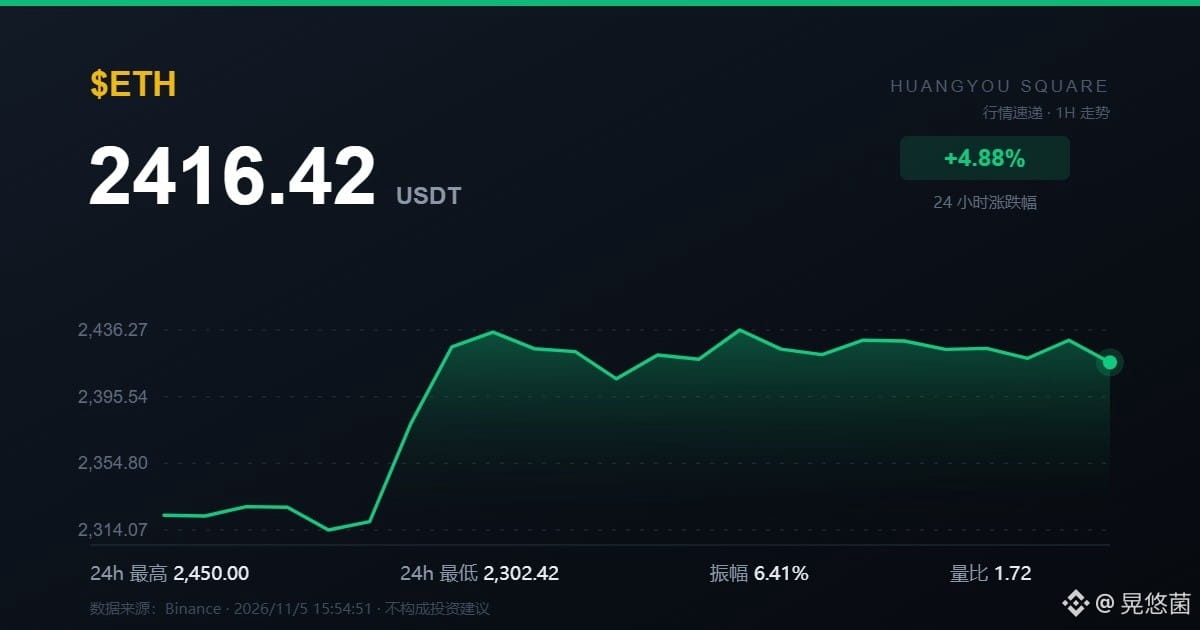
**$ETH up 4.88%: The number isn't important—who's driving it is**
Here's the takeaway: a 4.88% rise in a day is barely an appetizer in crypto, but given the current context, it at least shows that the bulls haven't given up. $ETH is currently at 2416.42 USDT. Anyone willing to buy in at this level has a plan.
Don't celebrate just yet. The daily gain is one of the easiest metrics to misread. It only tells you who was buying over the past 24 hours, not who will step in tomorrow. An asset that's up 4.88% can fall by roughly the same percentage just as easily; the math is never symmetrical, because you only have one pot of capital.
What I care more about is whether this rally has real conviction. For an asset the size of $ETH , a decent bullish candle usually isn't something retail traders can produce; they can chase a rally, but they can't lift the price. So when you see this number, your first thought shouldn't be “Should I chase it?” but “Who's driving it, and what do they plan to do once they're done?” If you can't answer that, every reason you come up with to enter later is just an excuse to save face.
Also, don't use $ETH 's gains as a template for $BTC, or for high-beta assets like $SOL . The same bullish candle means completely different things for a market leader and a follower: one may signal conviction, while the other is often just sentiment. Confuse the two, and position management becomes meaningless.
As for whether 2416.42 can hold, the market will answer that with subsequent trading volume. There's no need for either of us to guess in advance.
The above is not investment advice. Your position is your responsibility—don't let someone else's emotions make the call for you.
#ETH #MarketMoves
**$ETH up 4.88%: The number isn't important—who's driving it is**
Here's the takeaway: a 4.88% rise in a day is barely an appetizer in crypto, but given the current context, it at least shows that the bulls haven't given up. $ETH is currently at 2416.42 USDT. Anyone willing to buy in at this level has a plan.
Don't celebrate just yet. The daily gain is one of the easiest metrics to misread. It only tells you who was buying over the past 24 hours, not who will step in tomorrow. An asset that's up 4.88% can fall by roughly the same percentage just as easily; the math is never symmetrical, because you only have one pot of capital.
What I care more about is whether this rally has real conviction. For an asset the size of $ETH , a decent bullish candle usually isn't something retail traders can produce; they can chase a rally, but they can't lift the price. So when you see this number, your first thought shouldn't be “Should I chase it?” but “Who's driving it, and what do they plan to do once they're done?” If you can't answer that, every reason you come up with to enter later is just an excuse to save face.
Also, don't use $ETH 's gains as a template for $BTC , or for high-beta assets like $SOL . The same bullish candle means completely different things for a market leader and a follower: one may signal conviction, while the other is often just sentiment. Confuse the two, and position management becomes meaningless.
As for whether 2416.42 can hold, the market will answer that with subsequent trading volume. There's no need for either of us to guess in advance.
The above is not investment advice. Your position is your responsibility—don't let someone else's emotions make the call for you.
#ETH #MarketMoves
Here's the takeaway: a 4.88% rise in a day is barely an appetizer in crypto, but given the current context, it at least shows that the bulls haven't given up. $ETH is currently at 2416.42 USDT. Anyone willing to buy in at this level has a plan.
Don't celebrate just yet. The daily gain is one of the easiest metrics to misread. It only tells you who was buying over the past 24 hours, not who will step in tomorrow. An asset that's up 4.88% can fall by roughly the same percentage just as easily; the math is never symmetrical, because you only have one pot of capital.
What I care more about is whether this rally has real conviction. For an asset the size of $ETH , a decent bullish candle usually isn't something retail traders can produce; they can chase a rally, but they can't lift the price. So when you see this number, your first thought shouldn't be “Should I chase it?” but “Who's driving it, and what do they plan to do once they're done?” If you can't answer that, every reason you come up with to enter later is just an excuse to save face.
Also, don't use $ETH 's gains as a template for $BTC , or for high-beta assets like $SOL . The same bullish candle means completely different things for a market leader and a follower: one may signal conviction, while the other is often just sentiment. Confuse the two, and position management becomes meaningless.
As for whether 2416.42 can hold, the market will answer that with subsequent trading volume. There's no need for either of us to guess in advance.
The above is not investment advice. Your position is your responsibility—don't let someone else's emotions make the call for you.
#ETH #MarketMoves
227
·
--
Bank breached, but the vulnerability was at a third-party service providerCrédit Mutuel Arkéa has resumed operations, but what we should remember most about this incident isn’t that “customer funds were unaffected”—it’s that the point of entry for the attack wasn’t the bank itself.
The attackers got in through a service provider’s platform. A bank can build its walls as high as it likes, but if even one outsourced vendor is lax about managing account permissions, the door is open. These kinds of supply chain attacks have long been nothing new in the on-chain world. Now traditional banks are learning that lesson the hard way.
“Customer funds were unaffected” is worth questioning further: Were they really not transferred, or have they simply not been discovered yet? Traditional finance ledgers are closed off, and customers can only wait for the bank to notify them. Crypto users can at least monitor the movement of $BTC, $ETH, and USDT on-chain themselves—this isn’t about feeling superior; it’s a difference in transparency.
Bank breached, but the vulnerability was at a third-party service provider
Crédit Mutuel Arkéa has resumed operations, but what we should remember most about this incident isn’t that “customer funds were unaffected”—it’s that the point of entry for the attack wasn’t the bank itself.
The attackers got in through a service provider’s platform. A bank can build its walls as high as it likes, but if even one outsourced vendor is lax about managing account permissions, the door is open. These kinds of supply chain attacks have long been nothing new in the on-chain world. Now traditional banks are learning that lesson the hard way.
“Customer funds were unaffected” is worth questioning further: Were they really not transferred, or have they simply not been discovered yet? Traditional finance ledgers are closed off, and customers can only wait for the bank to notify them. Crypto users can at least monitor the movement of $BTC , $ETH , and USDT on-chain themselves—this isn’t about feeling superior; it’s a difference in transparency.
The attackers got in through a service provider’s platform. A bank can build its walls as high as it likes, but if even one outsourced vendor is lax about managing account permissions, the door is open. These kinds of supply chain attacks have long been nothing new in the on-chain world. Now traditional banks are learning that lesson the hard way.
“Customer funds were unaffected” is worth questioning further: Were they really not transferred, or have they simply not been discovered yet? Traditional finance ledgers are closed off, and customers can only wait for the bank to notify them. Crypto users can at least monitor the movement of $BTC , $ETH , and USDT on-chain themselves—this isn’t about feeling superior; it’s a difference in transparency.
252
·
--
Brown Won, But Did the Crypto Industry Really Lose?The conclusion first: this isn’t a “headwind” for the crypto industry—the playing field has changed. Over the past two years, the industry has effectively translated the phrase “regulatory clarity” into “leave us alone.” Now that line needs to pass scrutiny again.
The Digital Chamber itself called this outcome “the most consequential adverse outcome,” and that’s no exaggeration. Sherrod Brown isn’t a lawmaker you can mollify with a few donations and a few rounds of lobbying. He has long focused on consumer protection and financial risk, and in a climate where Democrats are regaining ground, that narrative is especially effective. “Regulatory accountability,” put in plain English, means this: you have to prove you’re not ripping off retail investors first.
Brown Won, But Did the Crypto Industry Really Lose?
The conclusion first: this isn’t a “headwind” for the crypto industry—the playing field has changed. Over the past two years, the industry has effectively translated the phrase “regulatory clarity” into “leave us alone.” Now that line needs to pass scrutiny again.
The Digital Chamber itself called this outcome “the most consequential adverse outcome,” and that’s no exaggeration. Sherrod Brown isn’t a lawmaker you can mollify with a few donations and a few rounds of lobbying. He has long focused on consumer protection and financial risk, and in a climate where Democrats are regaining ground, that narrative is especially effective. “Regulatory accountability,” put in plain English, means this: you have to prove you’re not ripping off retail investors first.
The Digital Chamber itself called this outcome “the most consequential adverse outcome,” and that’s no exaggeration. Sherrod Brown isn’t a lawmaker you can mollify with a few donations and a few rounds of lobbying. He has long focused on consumer protection and financial risk, and in a climate where Democrats are regaining ground, that narrative is especially effective. “Regulatory accountability,” put in plain English, means this: you have to prove you’re not ripping off retail investors first.
310
·
--
Attacks at Machine Speed, Defenses at Human SpeedLet’s start with the bottom line: in this market, what you should really be watching isn’t the pullback—it’s the exchange’s servers.
India’s cybersecurity agency has issued a warning, saying attackers are using AI to help launch attacks on crypto exchanges and other financial institutions—at “machine speed.” Those four words carry more weight than the headline itself. In the past, defenders had days or even weeks to patch a vulnerability between its discovery and exploitation. Now scripts scan, probe, and spread laterally automatically. While people are still in a meeting, the vulnerability has already been breached. Even more troubling are social engineering and phishing: AI-written phishing emails no longer have grammatical errors or look obviously fake. They impersonate customer support or project teams offering airdrops, and specifically target holders of $BTC $ETH .
Attacks at Machine Speed, Defenses at Human Speed
Let’s start with the bottom line: in this market, what you should really be watching isn’t the pullback—it’s the exchange’s servers.
India’s cybersecurity agency has issued a warning, saying attackers are using AI to help launch attacks on crypto exchanges and other financial institutions—at “machine speed.” Those four words carry more weight than the headline itself. In the past, defenders had days or even weeks to patch a vulnerability between its discovery and exploitation. Now scripts scan, probe, and spread laterally automatically. While people are still in a meeting, the vulnerability has already been breached. Even more troubling are social engineering and phishing: AI-written phishing emails no longer have grammatical errors or look obviously fake. They impersonate customer support or project teams offering airdrops, and specifically target holders of $BTC $ETH .
India’s cybersecurity agency has issued a warning, saying attackers are using AI to help launch attacks on crypto exchanges and other financial institutions—at “machine speed.” Those four words carry more weight than the headline itself. In the past, defenders had days or even weeks to patch a vulnerability between its discovery and exploitation. Now scripts scan, probe, and spread laterally automatically. While people are still in a meeting, the vulnerability has already been breached. Even more troubling are social engineering and phishing: AI-written phishing emails no longer have grammatical errors or look obviously fake. They impersonate customer support or project teams offering airdrops, and specifically target holders of $BTC $ETH .
258
·
--
SOL, ETH, and NEAR weaken together, but ZEC holds firmThe conclusion first: the root cause of this decline is that patience has worn thin, not that tokens are changing hands. $SOL, $ETH, and $NEAR have all weakened in unison, while only ZEC is holding firm—this is no coincidence; it’s a matter of capital structure.
Mainstream public chains tell the same story: ecosystem, narrative, activity. When risk appetite contracts, they all get sold off together, with virtually no independence.$ETH is the foundation of market liquidity; when that foundation weakens, high-beta coins like $SOL naturally fall faster than anything else.$NEAR is an even clearer example: the narrative is still on the wall, but buyers have already pulled out. “Ecosystem prosperity” is worthless in the face of liquidity.
SOL, ETH, and NEAR weaken together, but ZEC holds firm
The conclusion first: the root cause of this decline is that patience has worn thin, not that tokens are changing hands. $SOL , $ETH , and $NEAR have all weakened in unison, while only ZEC is holding firm—this is no coincidence; it’s a matter of capital structure.
Mainstream public chains tell the same story: ecosystem, narrative, activity. When risk appetite contracts, they all get sold off together, with virtually no independence.$ETH is the foundation of market liquidity; when that foundation weakens, high-beta coins like $SOL naturally fall faster than anything else.$NEAR is an even clearer example: the narrative is still on the wall, but buyers have already pulled out. “Ecosystem prosperity” is worthless in the face of liquidity.
Mainstream public chains tell the same story: ecosystem, narrative, activity. When risk appetite contracts, they all get sold off together, with virtually no independence.$ETH is the foundation of market liquidity; when that foundation weakens, high-beta coins like $SOL naturally fall faster than anything else.$NEAR is an even clearer example: the narrative is still on the wall, but buyers have already pulled out. “Ecosystem prosperity” is worthless in the face of liquidity.
1k
·
--
【Market Movement】
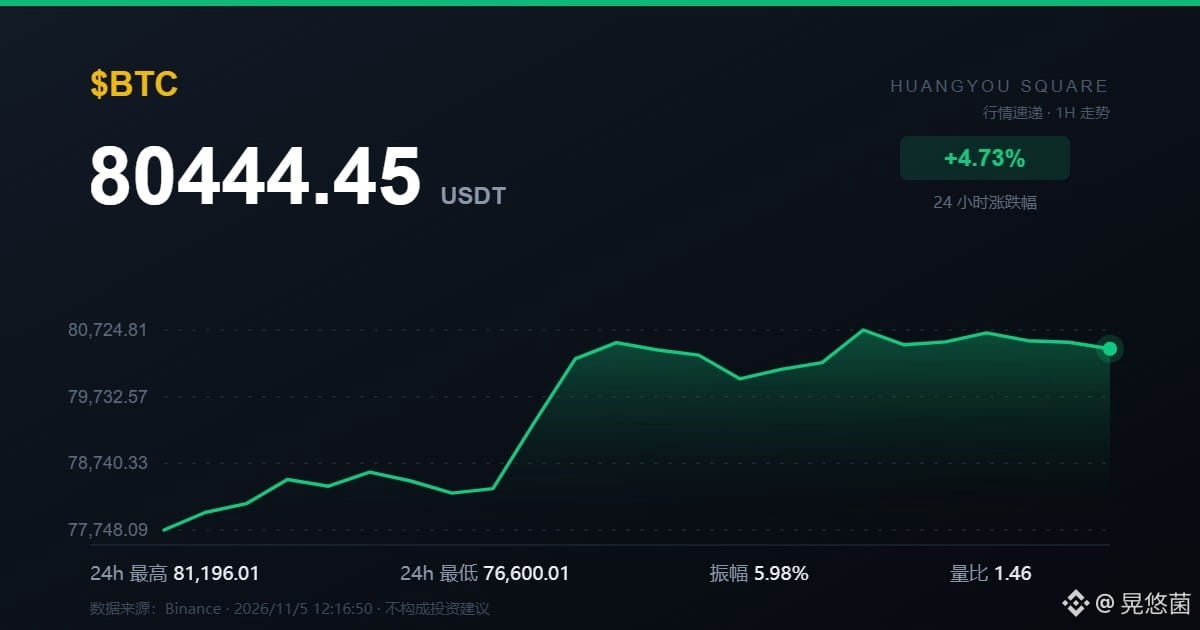
$BTC Current price: 80450.00 USDT, 24h +4.67%.
The above content does not constitute investment advice. Please do your own research and manage your risk.
#MarketMovement
【Market Movement】
$BTC Current price: 80450.00 USDT, 24h +4.67%.
The above content does not constitute investment advice. Please do your own research and manage your risk.
#MarketMovement
$BTC Current price: 80450.00 USDT, 24h +4.67%.
The above content does not constitute investment advice. Please do your own research and manage your risk.
#MarketMovement
116
·
--
【Unusual Market Activity】
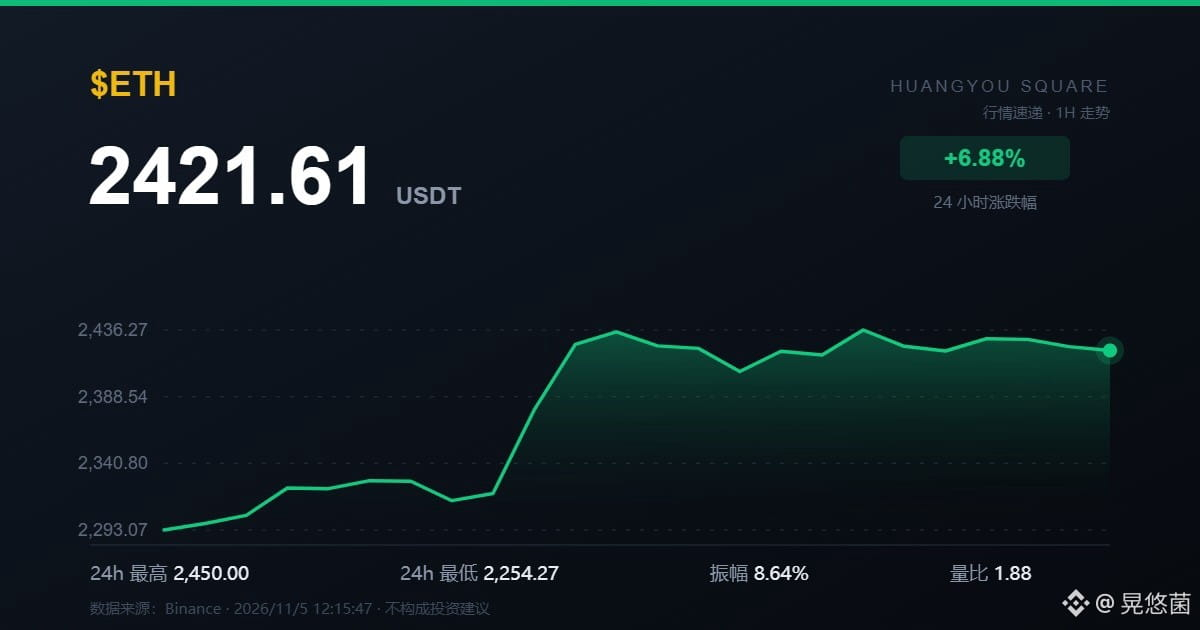
$ETH Current price: 2421.61 USDT, up 6.88% over 24h. Trading volume is 1.9 times higher than the previous day, with an intraday range of 8.6%. The price is near its 24h high.
This content does not constitute investment advice. Please do your own research and manage your risk.
#UnusualMarketActivity
【Unusual Market Activity】
$ETH Current price: 2421.61 USDT, up 6.88% over 24h. Trading volume is 1.9 times higher than the previous day, with an intraday range of 8.6%. The price is near its 24h high.
This content does not constitute investment advice. Please do your own research and manage your risk.
#UnusualMarketActivity
$ETH Current price: 2421.61 USDT, up 6.88% over 24h. Trading volume is 1.9 times higher than the previous day, with an intraday range of 8.6%. The price is near its 24h high.
This content does not constitute investment advice. Please do your own research and manage your risk.
#UnusualMarketActivity
59
·
--
French bank admits it was hacked; $133 million is just “the ballpark”A traditional bank gets hacked for over $100 million, and the most telling part isn’t the amount—it’s the phrase “the scale is about right.”
Crédit Mutuel Arkéa confirmed it was hit by a cyberattack but refused to disclose the exact losses. As for the $133 million figure revealed by ZachXBT, the official response was: they wouldn’t confirm a specific number, but acknowledged that it was in the right ballpark. In other words, the money really is gone; they just don’t want to say how much. If a bank can admit it was breached but can’t even give a figure, outsiders can only guess how effective its risk controls really are.
The whole process is rather ironic: an on-chain sleuth puts the clues out in the open, and only later does the bank “confirm” them. There’s a whole process involving compliance departments, risk-control teams, and audit reports, yet the first to spot the problem was someone monitoring on-chain addresses. This isn’t the first time, and it won’t be the last.
French bank admits it was hacked; $133 million is just “the ballpark”
A traditional bank gets hacked for over $100 million, and the most telling part isn’t the amount—it’s the phrase “the scale is about right.”
Crédit Mutuel Arkéa confirmed it was hit by a cyberattack but refused to disclose the exact losses. As for the $133 million figure revealed by ZachXBT, the official response was: they wouldn’t confirm a specific number, but acknowledged that it was in the right ballpark. In other words, the money really is gone; they just don’t want to say how much. If a bank can admit it was breached but can’t even give a figure, outsiders can only guess how effective its risk controls really are.
The whole process is rather ironic: an on-chain sleuth puts the clues out in the open, and only later does the bank “confirm” them. There’s a whole process involving compliance departments, risk-control teams, and audit reports, yet the first to spot the problem was someone monitoring on-chain addresses. This isn’t the first time, and it won’t be the last.
Crédit Mutuel Arkéa confirmed it was hit by a cyberattack but refused to disclose the exact losses. As for the $133 million figure revealed by ZachXBT, the official response was: they wouldn’t confirm a specific number, but acknowledged that it was in the right ballpark. In other words, the money really is gone; they just don’t want to say how much. If a bank can admit it was breached but can’t even give a figure, outsiders can only guess how effective its risk controls really are.
The whole process is rather ironic: an on-chain sleuth puts the clues out in the open, and only later does the bank “confirm” them. There’s a whole process involving compliance departments, risk-control teams, and audit reports, yet the first to spot the problem was someone monitoring on-chain addresses. This isn’t the first time, and it won’t be the last.
216
·
--
Crypto PAC Bets on the Wrong Candidate as Ohio Senate Seat FlipsFairshake didn’t get the outcome it wanted this time. Former Democratic senator Sherrod Brown defeated Jon Husted to reclaim his Senate seat, leaving the crypto industry’s most influential political action committee out of pocket and without the result it was seeking.
Brown has long been the kind of lawmaker the crypto industry would rather not see in office. Fairshake had clearly backed his opponent—and lost. This was about more than just losing an election: it also cast doubt on the industry’s popular argument over the past two years that political donations could buy policy favor.
Crypto PAC Bets on the Wrong Candidate as Ohio Senate Seat Flips
Fairshake didn’t get the outcome it wanted this time. Former Democratic senator Sherrod Brown defeated Jon Husted to reclaim his Senate seat, leaving the crypto industry’s most influential political action committee out of pocket and without the result it was seeking.
Brown has long been the kind of lawmaker the crypto industry would rather not see in office. Fairshake had clearly backed his opponent—and lost. This was about more than just losing an election: it also cast doubt on the industry’s popular argument over the past two years that political donations could buy policy favor.
Brown has long been the kind of lawmaker the crypto industry would rather not see in office. Fairshake had clearly backed his opponent—and lost. This was about more than just losing an election: it also cast doubt on the industry’s popular argument over the past two years that political donations could buy policy favor.
38
·
--
ZachXBT Names French Bank in $133 Million Crypto Theft CaseOn-chain sleuth ZachXBT has struck again. This time, he has pointed the finger at a French bank, saying it may be the victim of a crypto asset theft involving losses that could exceed $133 million. According to Cointelegraph, the bank has yet to confirm any connection to the incident.
What makes this noteworthy is not the figure itself, but the structure of the narrative: on one side is a public accusation by an on-chain investigator; on the other, silence at the institutional level. Until the bank issues an official response, all the details are just one side’s account, and the nature of the incident, who is responsible, and where the funds went remain uncertain. Treating “suspected” as “confirmed” is one of the most common pitfalls in cases like this.
ZachXBT Names French Bank in $133 Million Crypto Theft Case
On-chain sleuth ZachXBT has struck again. This time, he has pointed the finger at a French bank, saying it may be the victim of a crypto asset theft involving losses that could exceed $133 million. According to Cointelegraph, the bank has yet to confirm any connection to the incident.
What makes this noteworthy is not the figure itself, but the structure of the narrative: on one side is a public accusation by an on-chain investigator; on the other, silence at the institutional level. Until the bank issues an official response, all the details are just one side’s account, and the nature of the incident, who is responsible, and where the funds went remain uncertain. Treating “suspected” as “confirmed” is one of the most common pitfalls in cases like this.
What makes this noteworthy is not the figure itself, but the structure of the narrative: on one side is a public accusation by an on-chain investigator; on the other, silence at the institutional level. Until the bank issues an official response, all the details are just one side’s account, and the nature of the incident, who is responsible, and where the funds went remain uncertain. Treating “suspected” as “confirmed” is one of the most common pitfalls in cases like this.
265
·
--
U.S. Midterm Votes Are Being Counted: Could the Winds of Crypto Regulation Shift?Votes are being counted in the U.S. midterm elections, and Cointelegraph is running a live blog to track developments: Democrats are closing in on control of Congress. The stakes go beyond which party wins. A number of candidates backed by the crypto industry are also vying for seats in Congress, and the results could shape the future direction of digital asset regulation.
The significance of this for the crypto community is clear. In recent years, the regulatory stance has largely depended on who holds key positions: who chairs the committees, which bills make it onto the agenda, and who gets to ask questions at hearings. While midterm elections don’t directly determine the White House’s policy direction, they can change the pace of legislation and the obstacles it faces. That’s why the market is watching the results in every key district.
U.S. Midterm Votes Are Being Counted: Could the Winds of Crypto Regulation Shift?
Votes are being counted in the U.S. midterm elections, and Cointelegraph is running a live blog to track developments: Democrats are closing in on control of Congress. The stakes go beyond which party wins. A number of candidates backed by the crypto industry are also vying for seats in Congress, and the results could shape the future direction of digital asset regulation.
The significance of this for the crypto community is clear. In recent years, the regulatory stance has largely depended on who holds key positions: who chairs the committees, which bills make it onto the agenda, and who gets to ask questions at hearings. While midterm elections don’t directly determine the White House’s policy direction, they can change the pace of legislation and the obstacles it faces. That’s why the market is watching the results in every key district.
The significance of this for the crypto community is clear. In recent years, the regulatory stance has largely depended on who holds key positions: who chairs the committees, which bills make it onto the agenda, and who gets to ask questions at hearings. While midterm elections don’t directly determine the White House’s policy direction, they can change the pace of legislation and the obstacles it faces. That’s why the market is watching the results in every key district.
214
·
--
U.S. Crypto Regulation: Regulators, Not Elections, Hold the Real PowerThe U.S. midterm elections are heating up, but many in the crypto community don’t expect a change in Congress to resolve the regulatory challenges. In a Cointelegraph report, a lawyer at 1inch put it bluntly: regardless of the election results, it’s regulators—not politicians—who will really move crypto policy forward.
That may sound pessimistic, but it’s pretty realistic. Over the past few years, U.S. crypto rules haven’t generally been laid out one by one through legislation. Instead, they’ve taken shape through regulators’ enforcement actions, interpretive guidance, and licensing practices. Congress may argue, but regulators often have the final say over the compliance boundaries that projects actually face. Elections change who holds the seats, not how this system works.
U.S. Crypto Regulation: Regulators, Not Elections, Hold the Real Power
The U.S. midterm elections are heating up, but many in the crypto community don’t expect a change in Congress to resolve the regulatory challenges. In a Cointelegraph report, a lawyer at 1inch put it bluntly: regardless of the election results, it’s regulators—not politicians—who will really move crypto policy forward.
That may sound pessimistic, but it’s pretty realistic. Over the past few years, U.S. crypto rules haven’t generally been laid out one by one through legislation. Instead, they’ve taken shape through regulators’ enforcement actions, interpretive guidance, and licensing practices. Congress may argue, but regulators often have the final say over the compliance boundaries that projects actually face. Elections change who holds the seats, not how this system works.
That may sound pessimistic, but it’s pretty realistic. Over the past few years, U.S. crypto rules haven’t generally been laid out one by one through legislation. Instead, they’ve taken shape through regulators’ enforcement actions, interpretive guidance, and licensing practices. Congress may argue, but regulators often have the final say over the compliance boundaries that projects actually face. Elections change who holds the seats, not how this system works.
59
·
--
Four coins under pressure as key support levels become a line of defense for market sentimentThe market action isn’t looking good. All four coins—XRP, Cardano (ADA), Near Protocol (NEAR), and Zcash (ZEC)—are under pressure, and market attention has shifted back to key support levels. U.Today used the phrase “bloodbath” right in its headline.
It’s worth noting that these four coins aren’t all the same kind of asset: XRP represents the old-school payments narrative, ADA is a veteran layer-1 blockchain, NEAR is a layer-1 blockchain that has refreshed its narrative in recent years, and ZEC belongs to the privacy sector. The fact that all four are being hit at once suggests the problem isn’t any individual project’s fundamentals, but a broader pullback in risk appetite. At times like this, poring over white papers and tracking ecosystem developments one project at a time isn’t very useful—when liquidity ebbs, good and bad assets alike get sold.
Four coins under pressure as key support levels become a line of defense for market sentiment
The market action isn’t looking good. All four coins—XRP, Cardano (ADA), Near Protocol (NEAR), and Zcash (ZEC)—are under pressure, and market attention has shifted back to key support levels. U.Today used the phrase “bloodbath” right in its headline.
It’s worth noting that these four coins aren’t all the same kind of asset: XRP represents the old-school payments narrative, ADA is a veteran layer-1 blockchain, NEAR is a layer-1 blockchain that has refreshed its narrative in recent years, and ZEC belongs to the privacy sector. The fact that all four are being hit at once suggests the problem isn’t any individual project’s fundamentals, but a broader pullback in risk appetite. At times like this, poring over white papers and tracking ecosystem developments one project at a time isn’t very useful—when liquidity ebbs, good and bad assets alike get sold.
It’s worth noting that these four coins aren’t all the same kind of asset: XRP represents the old-school payments narrative, ADA is a veteran layer-1 blockchain, NEAR is a layer-1 blockchain that has refreshed its narrative in recent years, and ZEC belongs to the privacy sector. The fact that all four are being hit at once suggests the problem isn’t any individual project’s fundamentals, but a broader pullback in risk appetite. At times like this, poring over white papers and tracking ecosystem developments one project at a time isn’t very useful—when liquidity ebbs, good and bad assets alike get sold.
1
1.6k
·
--
South Korean Regulators Turn Up the Heat on Exchanges: 80% in Cold Wallets Still Isn’t EnoughAfter Binance was hacked, South Korean regulators did more than issue a statement—they directly called on exchanges to increase the proportion of assets held in cold wallets. South Korea is already one of the world’s strictest markets when it comes to exchange asset reserves: at least 80% of customer assets must be kept in cold wallets, a requirement already enshrined in regulations. Now regulators say that still isn’t enough.
This stance is worth considering. An 80% threshold would already earn top marks in many markets, but South Korean regulators’ logic is clear: the 20% left in hot wallets is the only window of opportunity for hackers. The smaller that window, the better—ideally, so small that hackers have no chance to strike. The Binance incident has effectively given the entire industry a free penetration test.
South Korean Regulators Turn Up the Heat on Exchanges: 80% in Cold Wallets Still Isn’t Enough
After Binance was hacked, South Korean regulators did more than issue a statement—they directly called on exchanges to increase the proportion of assets held in cold wallets. South Korea is already one of the world’s strictest markets when it comes to exchange asset reserves: at least 80% of customer assets must be kept in cold wallets, a requirement already enshrined in regulations. Now regulators say that still isn’t enough.
This stance is worth considering. An 80% threshold would already earn top marks in many markets, but South Korean regulators’ logic is clear: the 20% left in hot wallets is the only window of opportunity for hackers. The smaller that window, the better—ideally, so small that hackers have no chance to strike. The Binance incident has effectively given the entire industry a free penetration test.
This stance is worth considering. An 80% threshold would already earn top marks in many markets, but South Korean regulators’ logic is clear: the 20% left in hot wallets is the only window of opportunity for hackers. The smaller that window, the better—ideally, so small that hackers have no chance to strike. The Binance incident has effectively given the entire industry a free penetration test.
748
·
--
North Korea denies involvement in Binance theft, points finger at USNorth Korea denies any connection to the Binance crypto theft involving as much as $6.3 billion, instead pointing the finger at the United States. Kim Yo Jong said the US accusations were politically motivated. The news comes from Cointelegraph.
The FBI previously attributed the attack to North Korea. This kind of attribution is nothing unusual in the industry: after an exchange is hacked, security teams and on-chain analytics firms often quickly identify Pyongyang as the culprit. But this time, North Korea publicly hit back, turning the matter into more than a technical forensics issue—it has become a battle of public opinion and diplomatic mudslinging.
North Korea denies involvement in Binance theft, points finger at US
North Korea denies any connection to the Binance crypto theft involving as much as $6.3 billion, instead pointing the finger at the United States. Kim Yo Jong said the US accusations were politically motivated. The news comes from Cointelegraph.
The FBI previously attributed the attack to North Korea. This kind of attribution is nothing unusual in the industry: after an exchange is hacked, security teams and on-chain analytics firms often quickly identify Pyongyang as the culprit. But this time, North Korea publicly hit back, turning the matter into more than a technical forensics issue—it has become a battle of public opinion and diplomatic mudslinging.
The FBI previously attributed the attack to North Korea. This kind of attribution is nothing unusual in the industry: after an exchange is hacked, security teams and on-chain analytics firms often quickly identify Pyongyang as the culprit. But this time, North Korea publicly hit back, turning the matter into more than a technical forensics issue—it has become a battle of public opinion and diplomatic mudslinging.
85
·
--
AI is now hackers’ tool for picking targets: your wallet is being scored by modelsSecurity researchers have uncovered something disturbing: major AI models like Claude, Gemini, and Kimi are being used by cybercriminals as “data analysts.” They’re not using them to write code, but to process stolen data, identify wealthy crypto holders, and rank potential targets by “how much this person is worth.”
This used to be the most labor-intensive step. Hackers had to comb through chat logs, dig through social media accounts, cross-reference addresses, guess people’s holdings, and manually decide who was worth targeting. Now they can hand the data straight to a model, which maps connections, extracts clues, and scores victims based on their assets—producing a “priority list” in minutes. Who to target first and who to target later becomes crystal clear.
AI is now hackers’ tool for picking targets: your wallet is being scored by models
Security researchers have uncovered something disturbing: major AI models like Claude, Gemini, and Kimi are being used by cybercriminals as “data analysts.” They’re not using them to write code, but to process stolen data, identify wealthy crypto holders, and rank potential targets by “how much this person is worth.”
This used to be the most labor-intensive step. Hackers had to comb through chat logs, dig through social media accounts, cross-reference addresses, guess people’s holdings, and manually decide who was worth targeting. Now they can hand the data straight to a model, which maps connections, extracts clues, and scores victims based on their assets—producing a “priority list” in minutes. Who to target first and who to target later becomes crystal clear.
This used to be the most labor-intensive step. Hackers had to comb through chat logs, dig through social media accounts, cross-reference addresses, guess people’s holdings, and manually decide who was worth targeting. Now they can hand the data straight to a model, which maps connections, extracts clues, and scores victims based on their assets—producing a “priority list” in minutes. Who to target first and who to target later becomes crystal clear.
96
·
--
NEAR, XRP, ZEC, and SHIB Test Key Support; Daily Closes to Decide Rebound ProspectsNEAR, XRP, ZEC, and SHIB have all reached a point where they need to make a clear move. U.Today’s price analysis says it plainly: they’re testing key support, and the next one or two daily closes could determine whether a rebound is still possible.
Why keep emphasizing the “daily close”? Because an intraday wick and the closing price are two completely different things. If the price dips below support intraday and then recovers, it’s often just a liquidity grab that triggers a batch of stop-losses before moving back up. But if the daily candle actually closes below support, the structure has deteriorated—and reclaiming that level afterward will be much harder.
NEAR, XRP, ZEC, and SHIB Test Key Support; Daily Closes to Decide Rebound Prospects
NEAR, XRP, ZEC, and SHIB have all reached a point where they need to make a clear move. U.Today’s price analysis says it plainly: they’re testing key support, and the next one or two daily closes could determine whether a rebound is still possible.
Why keep emphasizing the “daily close”? Because an intraday wick and the closing price are two completely different things. If the price dips below support intraday and then recovers, it’s often just a liquidity grab that triggers a batch of stop-losses before moving back up. But if the daily candle actually closes below support, the structure has deteriorated—and reclaiming that level afterward will be much harder.
Why keep emphasizing the “daily close”? Because an intraday wick and the closing price are two completely different things. If the price dips below support intraday and then recovers, it’s often just a liquidity grab that triggers a batch of stop-losses before moving back up. But if the daily candle actually closes below support, the structure has deteriorated—and reclaiming that level afterward will be much harder.
1
1.4k
·
--
Bank of Korea surveys 31 institutions on their crypto exposureThe Bank of Korea didn’t give advance notice this time. It went straight to 31 financial institutions with a questionnaire. The questions were very specific: What would happen to your business if a major exchange suddenly shut down, if the market continued to decline over an extended period, or if another institution suffered heavy losses on crypto assets?
These three hypothetical scenarios have each played out in real life over the past few years. An exchange collapsing is no mere hypothetical, nor is an institution getting caught out by a crypto failure. By putting these scenarios on the table for stress testing, the central bank is showing that crypto is no longer just “a game for insiders”—it has become an unavoidable part of traditional financial institutions’ balance sheets.
Bank of Korea surveys 31 institutions on their crypto exposure
The Bank of Korea didn’t give advance notice this time. It went straight to 31 financial institutions with a questionnaire. The questions were very specific: What would happen to your business if a major exchange suddenly shut down, if the market continued to decline over an extended period, or if another institution suffered heavy losses on crypto assets?
These three hypothetical scenarios have each played out in real life over the past few years. An exchange collapsing is no mere hypothetical, nor is an institution getting caught out by a crypto failure. By putting these scenarios on the table for stress testing, the central bank is showing that crypto is no longer just “a game for insiders”—it has become an unavoidable part of traditional financial institutions’ balance sheets.
These three hypothetical scenarios have each played out in real life over the past few years. An exchange collapsing is no mere hypothetical, nor is an institution getting caught out by a crypto failure. By putting these scenarios on the table for stress testing, the central bank is showing that crypto is no longer just “a game for insiders”—it has become an unavoidable part of traditional financial institutions’ balance sheets.
2
·
--
BTC leads four major cryptocurrencies into consolidation as key support levels come into focusThis technical analysis roundup dated November 2 puts it plainly: LINK, NEAR, BNB, and BTC have all entered a consolidation phase after October’s pullback. In other words, the market has paused to catch its breath, with bulls and bears waiting for the other side to make the first move. The biggest mistake right now is rushing to guess which way prices will go. What really matters is whether each asset can hold its key support levels.
BTC remains the “anchor” of the market. If it can’t stabilize, there’s little point in the other three making moves. The key support test BTC is facing now will largely determine whether short-term sentiment recovers or prices continue to probe lower. In my view, rather than focusing on rebounds in smaller coins, it’s better to first watch whether the broader market can hold this line—that’s where the momentum starts.
BTC leads four major cryptocurrencies into consolidation as key support levels come into focus
This technical analysis roundup dated November 2 puts it plainly: LINK, NEAR, BNB, and BTC have all entered a consolidation phase after October’s pullback. In other words, the market has paused to catch its breath, with bulls and bears waiting for the other side to make the first move. The biggest mistake right now is rushing to guess which way prices will go. What really matters is whether each asset can hold its key support levels.
BTC remains the “anchor” of the market. If it can’t stabilize, there’s little point in the other three making moves. The key support test BTC is facing now will largely determine whether short-term sentiment recovers or prices continue to probe lower. In my view, rather than focusing on rebounds in smaller coins, it’s better to first watch whether the broader market can hold this line—that’s where the momentum starts.
BTC remains the “anchor” of the market. If it can’t stabilize, there’s little point in the other three making moves. The key support test BTC is facing now will largely determine whether short-term sentiment recovers or prices continue to probe lower. In my view, rather than focusing on rebounds in smaller coins, it’s better to first watch whether the broader market can hold this line—that’s where the momentum starts.
1
957
·
--
BTCPay Server warns of theft from outdated hot wallets, recommends shutting down servers for nowThe self-hosted payment processor BTCPay Server has issued a rather rare warning: after receiving multiple reports of attackers draining funds from hot wallets without authorization, the project’s official recommendation was to shut down the server for now. Note: “shut down,” not “upgrade and see what happens.” In an open-source project, that kind of wording is basically the highest-level alarm.
The key point is “outdated versions.” The risk doesn’t stem from BTCPay’s design itself, but from instances still running obsolete software. The biggest advantage of open-source software is that anyone can audit it—and that’s also where the biggest pitfall lies: the code gets updated, but the version on your machine doesn’t, leaving the vulnerability exposed.
BTCPay Server warns of theft from outdated hot wallets, recommends shutting down servers for now
The self-hosted payment processor BTCPay Server has issued a rather rare warning: after receiving multiple reports of attackers draining funds from hot wallets without authorization, the project’s official recommendation was to shut down the server for now. Note: “shut down,” not “upgrade and see what happens.” In an open-source project, that kind of wording is basically the highest-level alarm.
The key point is “outdated versions.” The risk doesn’t stem from BTCPay’s design itself, but from instances still running obsolete software. The biggest advantage of open-source software is that anyone can audit it—and that’s also where the biggest pitfall lies: the code gets updated, but the version on your machine doesn’t, leaving the vulnerability exposed.
The key point is “outdated versions.” The risk doesn’t stem from BTCPay’s design itself, but from instances still running obsolete software. The biggest advantage of open-source software is that anyone can audit it—and that’s also where the biggest pitfall lies: the code gets updated, but the version on your machine doesn’t, leaving the vulnerability exposed.
1
44
Log in to explore more content
Join global crypto users on Binance Square
⚡️ Get latest and useful information about crypto.
💬 Trusted by the world’s largest crypto exchange.
👍 Discover real insights from verified creators.
Email / Phone number
Trending Topics
BinanceReopensWithdrawalsForMoreAssets
749,386 views
4,048 Discussing
Security Incident | Recovery Update #8: Withdrawals for More Assets to Reopen (2026-11-05)
Binance Announcement
·305 Likes
·1.3M views
Binance98PercentReplenished
128,886 views
1,488 Discussing
StrategySTRCResumesIssuanceAfterOver170Days
9,761 views
258 Discussing