
kithe
2.2k Posts

kithe
Alpha挖掘选手|加密爱好者|仅分享个人看法不做参考投资建议!
Open Trade
Frequent Trader
2.5 Years
433 Following
15.8K+ Followers
12.5K+ Liked
Posts
Portfolio
All
Quotes
Videos
Live
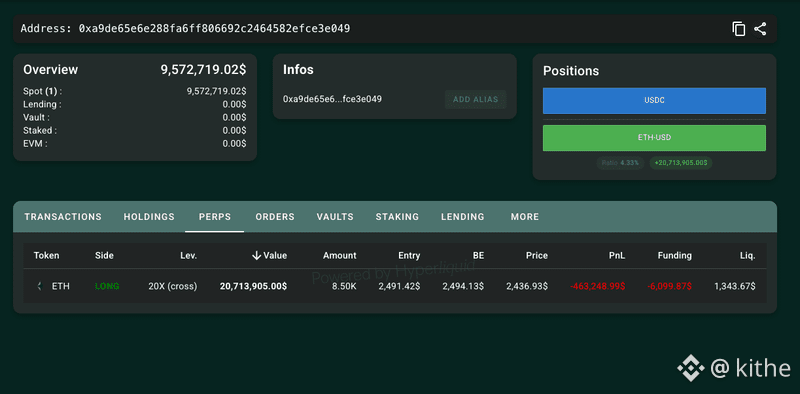
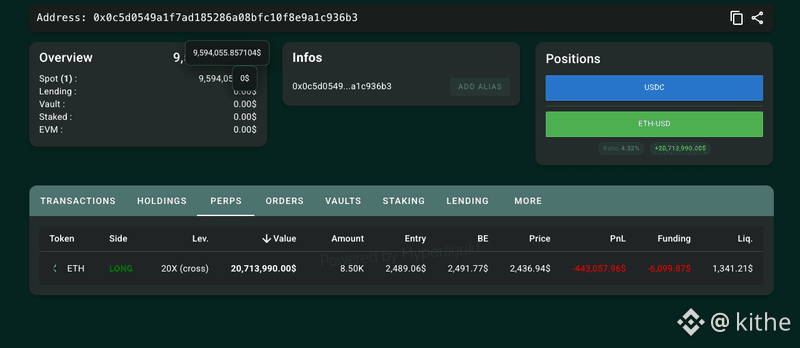
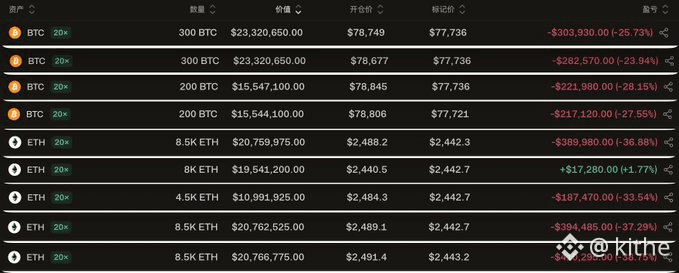
This this this, this big brother is not just a little bit savage—he straight up opened a long position of $170 million.
1,000 BTC plus 38,000 ETH, with the BTC average price around 788,000. Now he’s still down more than $2 million.
The key is that Waller just poured a bit of cold water on the market’s rate-cut expectations at Jackson Hole. And this guy—he turns around and adds more.
Is this big brother betting that there won’t be a rate hike in September, or does he simply think this pullback is basically free money?
Of course, if a big player dares to open a position like this, he must have his own reasoning. But a $170 million position isn’t something to mess around with.
If he’s right on direction, he profits. If he’s wrong, then it’s a big performance for the market’s “large-scale stop-loss” event.
$BTC$HYPE
1,000 BTC plus 38,000 ETH, with the BTC average price around 788,000. Now he’s still down more than $2 million.
The key is that Waller just poured a bit of cold water on the market’s rate-cut expectations at Jackson Hole. And this guy—he turns around and adds more.
Is this big brother betting that there won’t be a rate hike in September, or does he simply think this pullback is basically free money?
Of course, if a big player dares to open a position like this, he must have his own reasoning. But a $170 million position isn’t something to mess around with.
If he’s right on direction, he profits. If he’s wrong, then it’s a big performance for the market’s “large-scale stop-loss” event.
$BTC$HYPE
Every day it’s just you guys talking these good-news things 😂
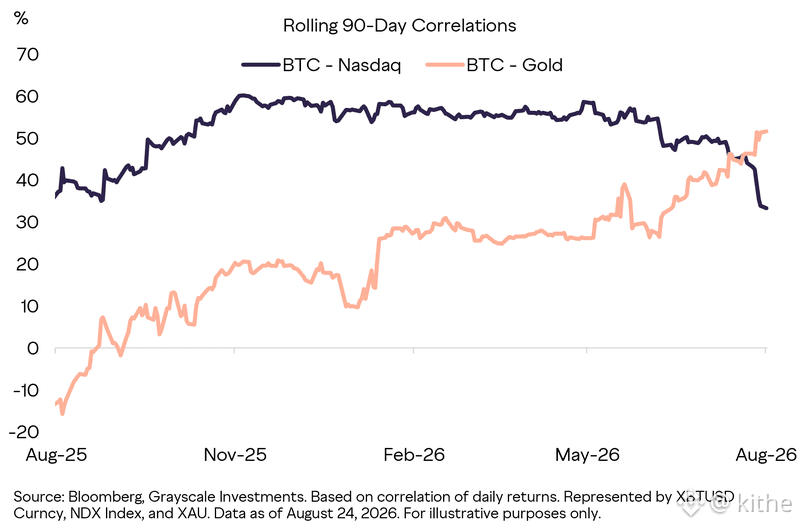
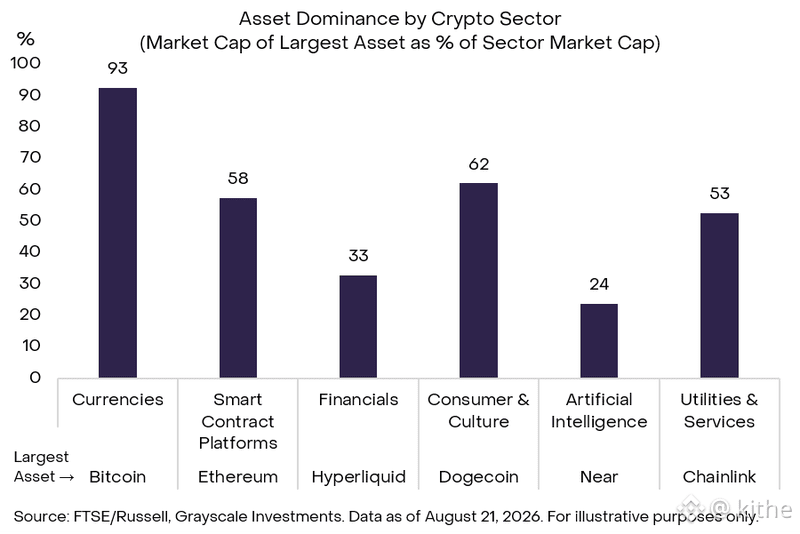
This time, the angle Grayscale gave is actually pretty interesting. The correlation between Bitcoin and the Nasdaq has dropped from over 60% to around 33%. Instead, it’s becoming more and more like gold—the correlation has reached over 50%.
Put simply, the market seems to be starting to treat BTC again as a “scarce asset,” not just moving up and down with U.S. stocks.
Also, if you look at U.S. debt—it’s already at 4 trillion dollars. Long-term bond yields are also trending upward, so naturally capital will start looking for things that are less dependent on the traditional financial system.
So if this round BTC can really break out, I think the “digital gold” story might get lively again.
The only question is: with this much good news, can the price finally hold its head up and perform? hahaha
$BTC $XAU$BTC
This time, the angle Grayscale gave is actually pretty interesting. The correlation between Bitcoin and the Nasdaq has dropped from over 60% to around 33%. Instead, it’s becoming more and more like gold—the correlation has reached over 50%.
Put simply, the market seems to be starting to treat BTC again as a “scarce asset,” not just moving up and down with U.S. stocks.
Also, if you look at U.S. debt—it’s already at 4 trillion dollars. Long-term bond yields are also trending upward, so naturally capital will start looking for things that are less dependent on the traditional financial system.
So if this round BTC can really break out, I think the “digital gold” story might get lively again.
The only question is: with this much good news, can the price finally hold its head up and perform? hahaha
$BTC $XAU$BTC
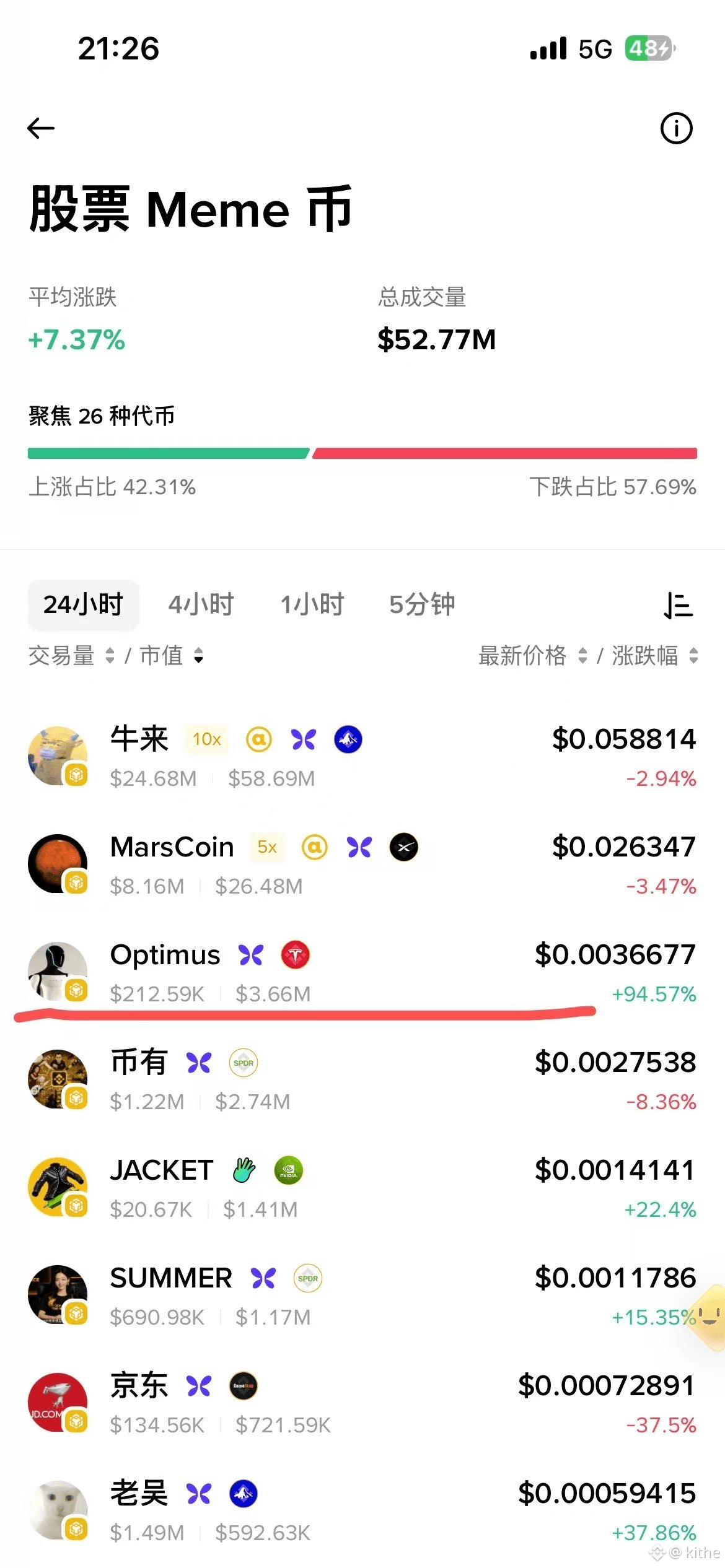
🔥 $Optimus is officially live on Binance in the MEME Stocks section!
Tesla Optimus humanoid robot + Meme + RWA
Hot narratives are fermenting on-chain!
📊 Current market cap: $4.5M
🚀 Binance Stocks Meme section: TOP3
🪙 Total supply: 1 billion tokens
🏦 Core narrative: Liquidity pool anchored to Tesla stock
Holding 100,000 $Optimus tokens lets you participate in Tesla stock dividends, building an on-chain narrative of “holding tokens means participating in shareholder rights.”
Contract address:
0x937f5ca6b4d465b9dc7e18b3f40b4d1376db7777
⚡ Buy 3%|Sell 3%
Tesla has Optimus robots, and on-chain there is also $Optimus as the “Optimus Prime”.
Tesla Optimus humanoid robot + Meme + RWA
Hot narratives are fermenting on-chain!
📊 Current market cap: $4.5M
🚀 Binance Stocks Meme section: TOP3
🪙 Total supply: 1 billion tokens
🏦 Core narrative: Liquidity pool anchored to Tesla stock
Holding 100,000 $Optimus tokens lets you participate in Tesla stock dividends, building an on-chain narrative of “holding tokens means participating in shareholder rights.”
Contract address:
0x937f5ca6b4d465b9dc7e18b3f40b4d1376db7777
⚡ Buy 3%|Sell 3%
Tesla has Optimus robots, and on-chain there is also $Optimus as the “Optimus Prime”.
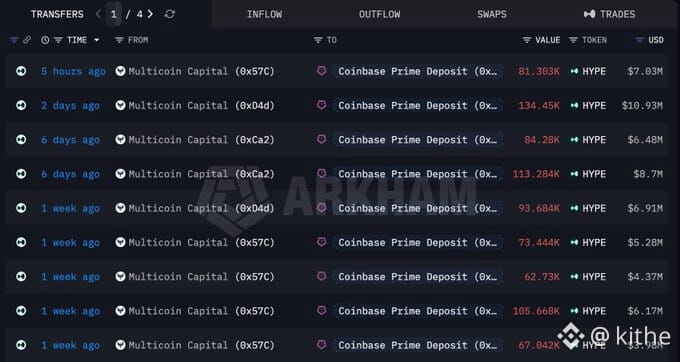
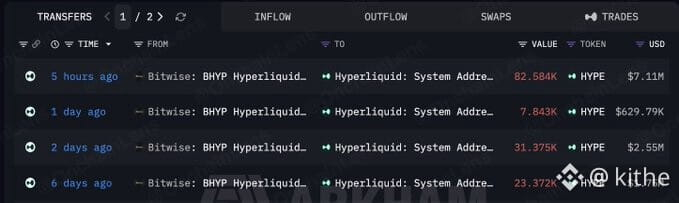
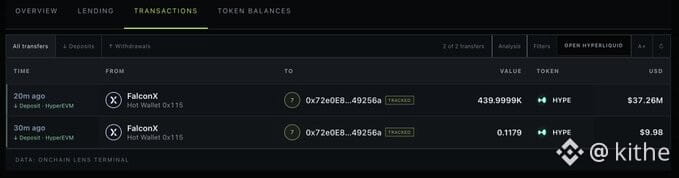
Woke up and saw these on-chain big whales all buying hype—what’s going on?
On one side, a brand-new wallet just scoops up about 440,000 HYPE $HYPE .
On the other, Multicoin keeps sending funds to Coinbase Prime.
Even Bitwise’s BHYP wallet is adding to positions on Hyperliquid.
Looking at it now, it’s clear the whales are still all writing the story around $HYPE .
The high is already up to 86—I’m a bit panicked about my short order at 81 😭
Surely we won’t miss out on hype below 100 this year, right?
$HYPE $HYPE
On one side, a brand-new wallet just scoops up about 440,000 HYPE $HYPE .
On the other, Multicoin keeps sending funds to Coinbase Prime.
Even Bitwise’s BHYP wallet is adding to positions on Hyperliquid.
Looking at it now, it’s clear the whales are still all writing the story around $HYPE .
The high is already up to 86—I’m a bit panicked about my short order at 81 😭
Surely we won’t miss out on hype below 100 this year, right?
$HYPE $HYPE
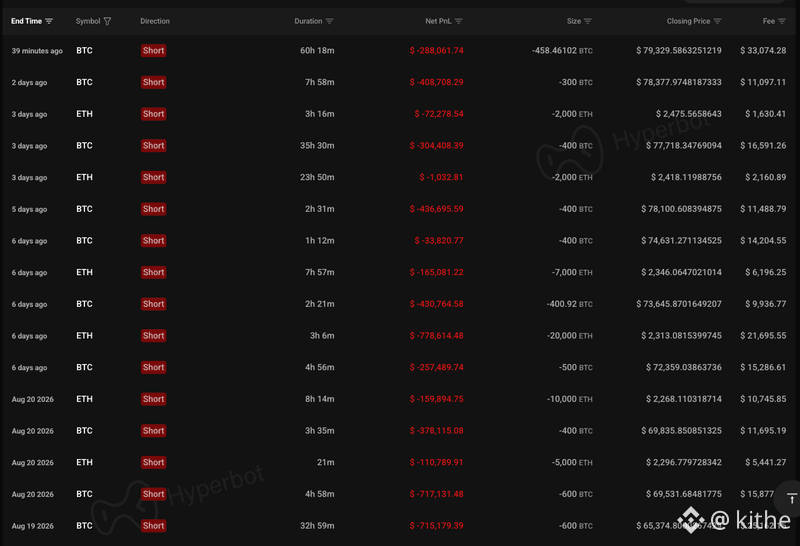
Who ever heard of a gambler losing every day, or a kid crying every day.
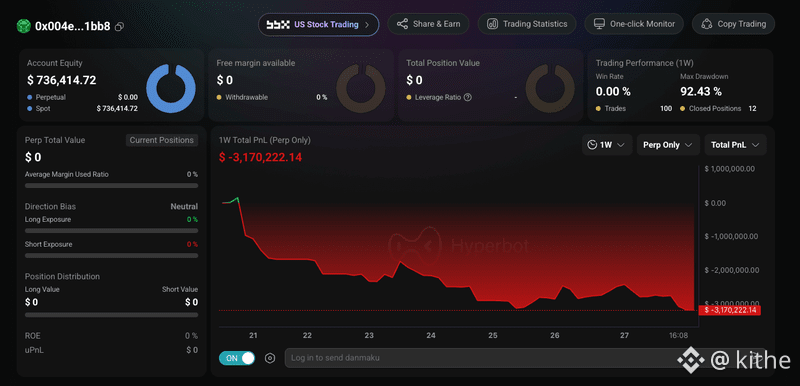
But this big brother really has grit—16 straight blanks, 16 straight losses 🤣
One huge bullish long candle: 20x short on $38.07 million, and it got blown up right away.
Since switching to short on August 19, he’s already been educated by the market for 16 straight times. After holding for 60 hours, he’s down $2.88 million.
I can only say, the big brother has money. If it were an ordinary person, they should probably jump already.
$BTC
But this big brother really has grit—16 straight blanks, 16 straight losses 🤣
One huge bullish long candle: 20x short on $38.07 million, and it got blown up right away.
Since switching to short on August 19, he’s already been educated by the market for 16 straight times. After holding for 60 hours, he’s down $2.88 million.
I can only say, the big brother has money. If it were an ordinary person, they should probably jump already.
$BTC
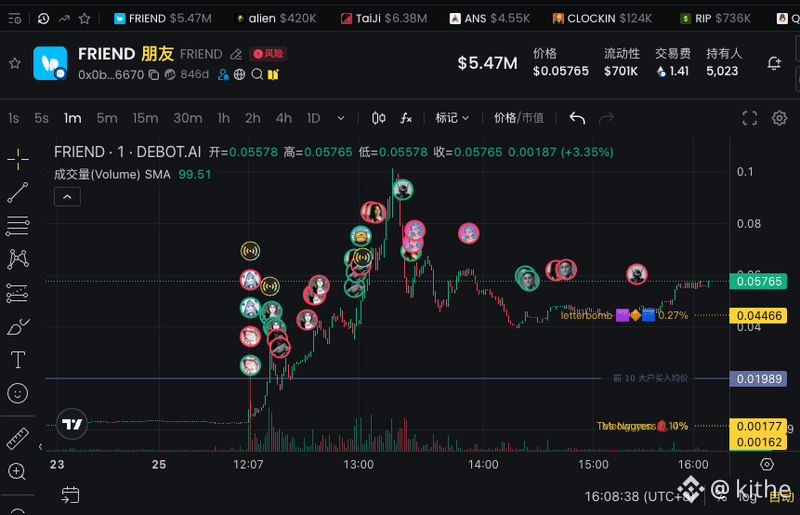
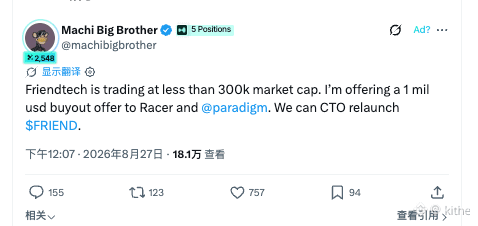
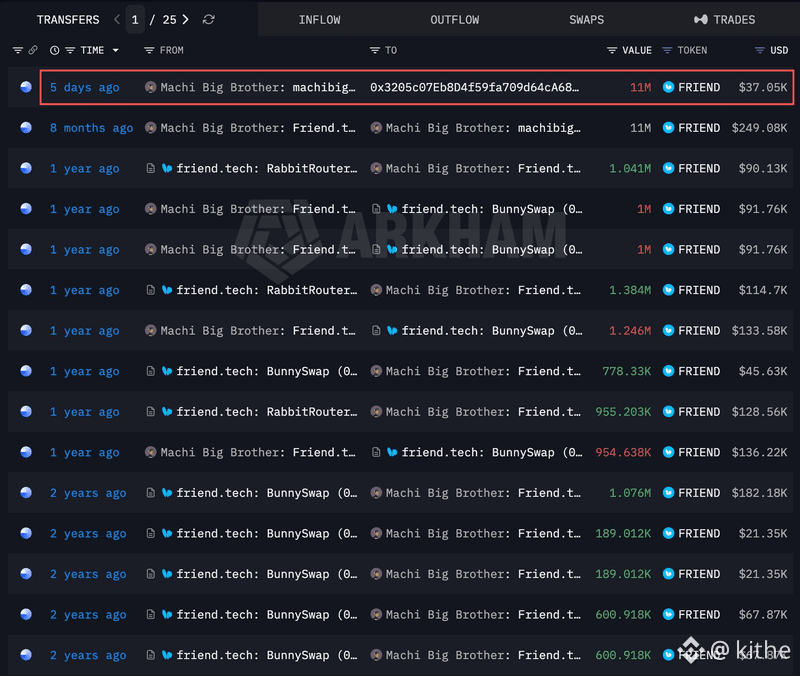
No wonder Ma Ji was looking for Racer and paradigm to acquire—turns out he’s been trapped in so much.
Earlier, he spent about $16.7 million to buy 11 million $FRIEND tokens. Now his loss is already over $16 million.
Today he directly offered $1 million, hoping to buy the project back and run it himself.
This move has a bit of “I’m down so much, I might as well be the market maker myself” energy.
After he posted this message, $FRIEND immediately jumped from 0.00472 → 0.096, up 20x.
Those who bought at the bottom got wrecked.
Earlier, he spent about $16.7 million to buy 11 million $FRIEND tokens. Now his loss is already over $16 million.
Today he directly offered $1 million, hoping to buy the project back and run it himself.
This move has a bit of “I’m down so much, I might as well be the market maker myself” energy.
After he posted this message, $FRIEND immediately jumped from 0.00472 → 0.096, up 20x.
Those who bought at the bottom got wrecked.
Grant Cardone is at it again 😄
Originally, the plan was to allocate 350 BTC to their Lauderdale real estate project—but now they’ve increased it to 900 BTC, a 2.5x jump.
The combo of real estate + BTC—real estate earns rental income as a traditional asset, while BTC adds a bit of excitement to the balance sheet.
Actually, seeing this makes me want to talk about DCA-ing BTC as a regular person.
Big players can buy a few hundred or a few thousand coins in one go, of course, but regular people don’t have that kind of capacity. That’s exactly why DCA matters: you don’t have to guess the highs and lows every day, and you don’t panic and run just because there’s a pullback.
Buy a portion of your spare money little by little each month. Don’t chase when it’s up; don’t panic when it’s down. Stretch the timeline a bit more—and it’s actually more suitable for regular players.
At the very least, this shows that more and more traditional investors are starting to treat BTC as a long-term asset allocation, not just something to trade for a quick win.
$BTC
$BTC
Originally, the plan was to allocate 350 BTC to their Lauderdale real estate project—but now they’ve increased it to 900 BTC, a 2.5x jump.
The combo of real estate + BTC—real estate earns rental income as a traditional asset, while BTC adds a bit of excitement to the balance sheet.
Actually, seeing this makes me want to talk about DCA-ing BTC as a regular person.
Big players can buy a few hundred or a few thousand coins in one go, of course, but regular people don’t have that kind of capacity. That’s exactly why DCA matters: you don’t have to guess the highs and lows every day, and you don’t panic and run just because there’s a pullback.
Buy a portion of your spare money little by little each month. Don’t chase when it’s up; don’t panic when it’s down. Stretch the timeline a bit more—and it’s actually more suitable for regular players.
At the very least, this shows that more and more traditional investors are starting to treat BTC as a long-term asset allocation, not just something to trade for a quick win.
$BTC
$BTC


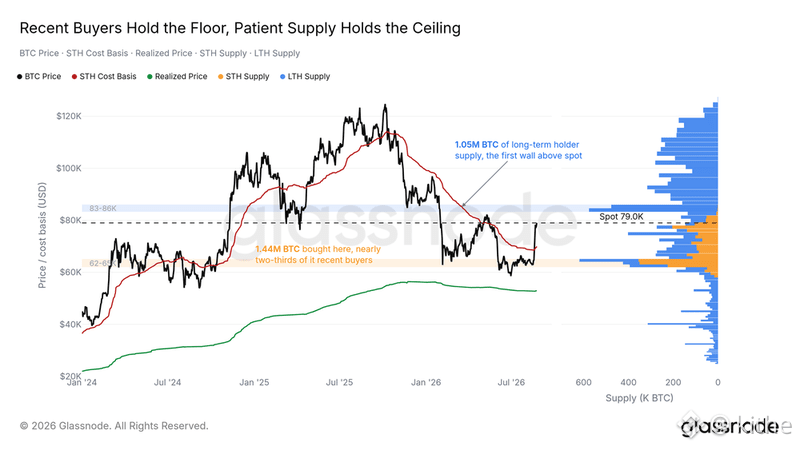
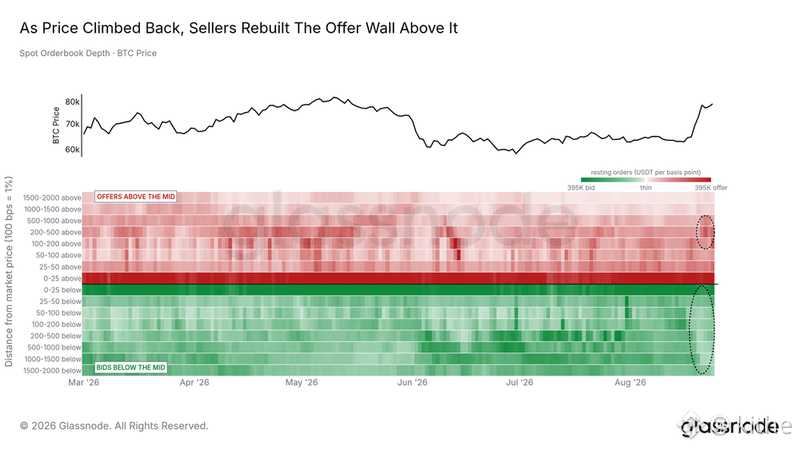
This rebound on the “big pie” really doesn’t seem to be driven purely by emotion and forcing the market up.
Glassnode data shows that on August 19, there was the largest single-day short liquidation since 2019; then BTC rebounded directly by 26%.
More importantly, the spot ETF saw a net inflow of $2.23 billion over the week. Meanwhile, coins are still steadily flowing out of exchanges, which indicates that the capital is genuinely moving in.
But now, there’s considerable pressure in the 81K–86K zone. To push higher, you first need to chew through that wall.
Personally, I’m watching two levels: whether 83.3K can hold and whether 80K can be defended.
If it holds, there may be more to come; if it doesn’t hold, don’t rush to pop the champagne yet
$BTC
Glassnode data shows that on August 19, there was the largest single-day short liquidation since 2019; then BTC rebounded directly by 26%.
More importantly, the spot ETF saw a net inflow of $2.23 billion over the week. Meanwhile, coins are still steadily flowing out of exchanges, which indicates that the capital is genuinely moving in.
But now, there’s considerable pressure in the 81K–86K zone. To push higher, you first need to chew through that wall.
Personally, I’m watching two levels: whether 83.3K can hold and whether 80K can be defended.
If it holds, there may be more to come; if it doesn’t hold, don’t rush to pop the champagne yet
$BTC
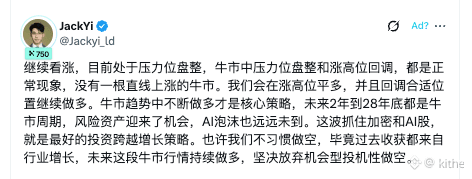
Big Brother Hua has spoken again! Keep watching for the upside!
At this point, his thinking is actually pretty straightforward: consolidating around the resistance level is normal. If it rises too high, take profit on the longs first, then wait for the pullback and go long again.
He even directly sees 2028, believing that at least for this period, the market trend will still be bullish—so try not to short.
Personally, I feel that if the market really does break out, going long with the trend is definitely more comfortable than constantly trying to guess the top every day.
After all, in a bull market, the most uncomfortable thing isn’t failing to make money—it’s always thinking about trying to touch the top, only to get repeatedly educated by losing shorts 🤣
As for AI, Big Brother Hua also thinks it’s nowhere near the bubble stage yet. All we can say is, next we’ll see which of these two main themes continues to gain momentum first.
$BTC
At this point, his thinking is actually pretty straightforward: consolidating around the resistance level is normal. If it rises too high, take profit on the longs first, then wait for the pullback and go long again.
He even directly sees 2028, believing that at least for this period, the market trend will still be bullish—so try not to short.
Personally, I feel that if the market really does break out, going long with the trend is definitely more comfortable than constantly trying to guess the top every day.
After all, in a bull market, the most uncomfortable thing isn’t failing to make money—it’s always thinking about trying to touch the top, only to get repeatedly educated by losing shorts 🤣
As for AI, Big Brother Hua also thinks it’s nowhere near the bubble stage yet. All we can say is, next we’ll see which of these two main themes continues to gain momentum first.
$BTC

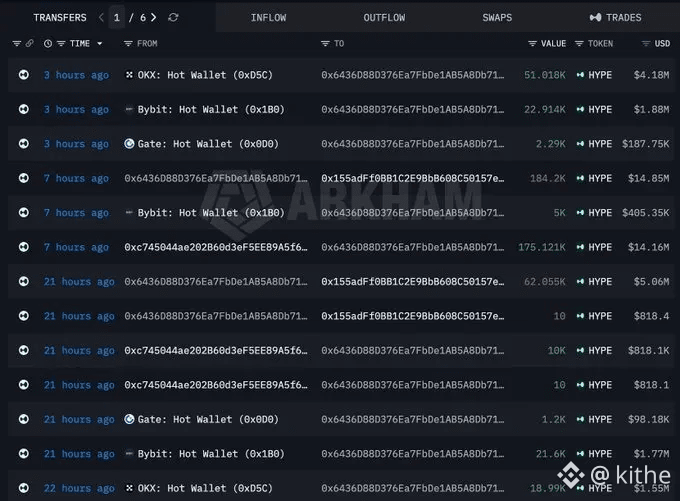
This whale has been continuously accumulating HYPE.
In the past two days, across various exchanges, it has bought 387,952 units $HYPE
Yes, it’s 387,952 units worth 31.5 million USD
This this this—this round, apart from ZEC, it’s HYPE that directly held steady at 80+
By the way, is there a chance we’ll see HYPE hit 100+ this year?
My 81 short position is trembling 😨
In the past two days, across various exchanges, it has bought 387,952 units $HYPE
Yes, it’s 387,952 units worth 31.5 million USD
This this this—this round, apart from ZEC, it’s HYPE that directly held steady at 80+
By the way, is there a chance we’ll see HYPE hit 100+ this year?
My 81 short position is trembling 😨
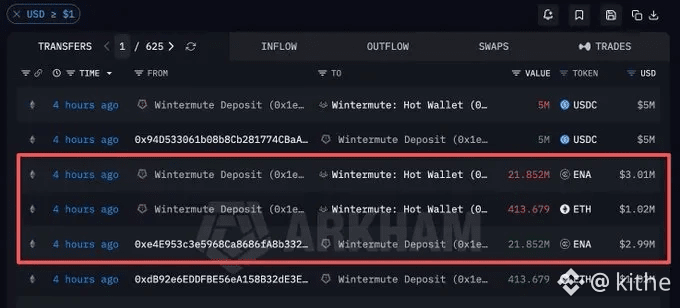
$ENA The increase over the past two days is quite decent. In the past week, it’s up 58.09%, and the current price is 0.14+.
But the more it surges, the more you should pay attention to what the big players are doing.
Hack VC, this scumbag venture capital firm, has an associated address that’s suspected of selling $3 million worth of $ENA via Wintermute.
Four hours ago, the address 0x2a5…590CF transferred 21.85 million ENA into Wintermute’s recharge address through multiple relays.
Just as ENA started to rise, the chips began moving to market maker addresses. Whether the next step is actually selling or just rebalancing is hard to guess😁
$ENA
But the more it surges, the more you should pay attention to what the big players are doing.
Hack VC, this scumbag venture capital firm, has an associated address that’s suspected of selling $3 million worth of $ENA via Wintermute.
Four hours ago, the address 0x2a5…590CF transferred 21.85 million ENA into Wintermute’s recharge address through multiple relays.
Just as ENA started to rise, the chips began moving to market maker addresses. Whether the next step is actually selling or just rebalancing is hard to guess😁
$ENA

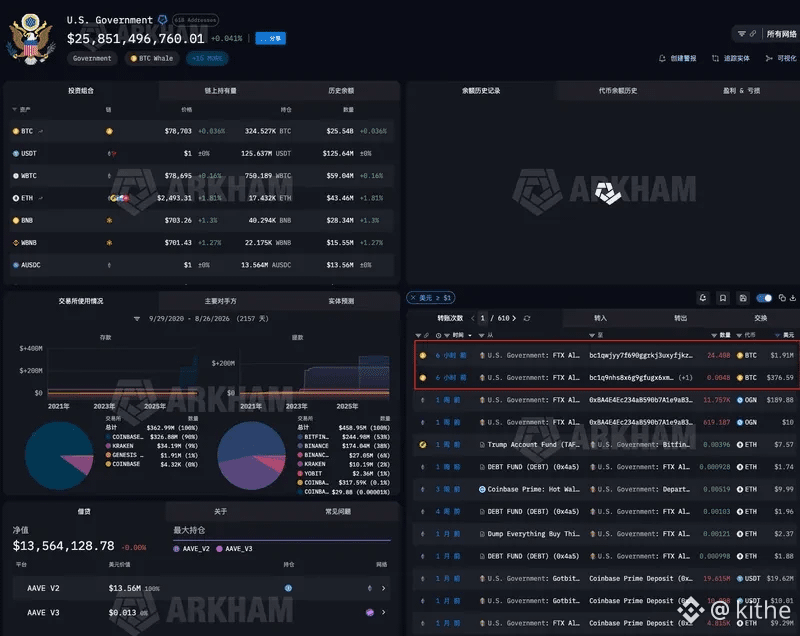
Verified
5 hours ago, a wallet related to the US government’s seizure of assets connected to FTX Alameda transferred out 24.4 coins $BTC !
So far, the wallet hasn’t moved. Is this going to sell $BTC ?
$BTC
So far, the wallet hasn’t moved. Is this going to sell $BTC ?
$BTC
Teacher, has there been any recent attention on U.S. federal debt?
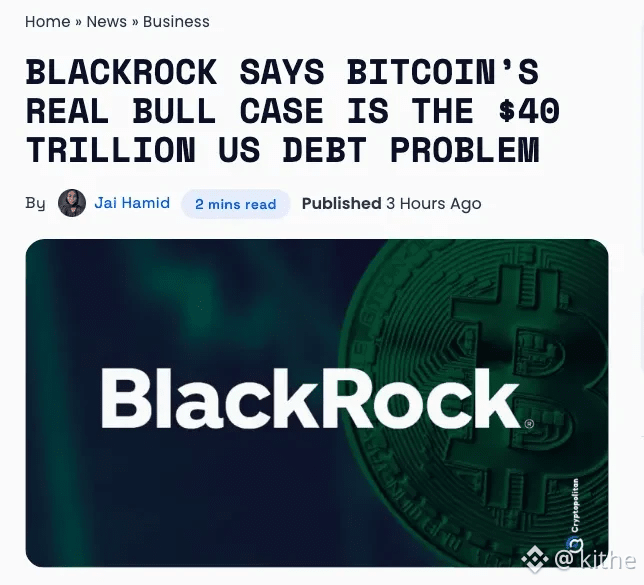
The U.S. federal debt surpassed $40 trillion on August 18. It has already reached $40 trillion, and interest alone is nearing $1 trillion a year.
The head of digital assets at BlackRock also mentioned that the recent rise in BTC is related to the U.S. debt situation to some extent.
In plain terms, people have started to worry that the debt snowball in the U.S. dollar system is getting bigger and bigger, so assets like gold and BTC are being brought back as “safe havens.”
BTC’s short-term rise and fall still depends on liquidity, but the story of U.S. debt can’t be solved in just a day or two.
The bigger the debt snowball becomes, the more it continuously adds a long-term narrative for BTC.
The U.S. borrows money, and the big pie is responsible for rising?
$NVDAB
The U.S. federal debt surpassed $40 trillion on August 18. It has already reached $40 trillion, and interest alone is nearing $1 trillion a year.
The head of digital assets at BlackRock also mentioned that the recent rise in BTC is related to the U.S. debt situation to some extent.
In plain terms, people have started to worry that the debt snowball in the U.S. dollar system is getting bigger and bigger, so assets like gold and BTC are being brought back as “safe havens.”
BTC’s short-term rise and fall still depends on liquidity, but the story of U.S. debt can’t be solved in just a day or two.
The bigger the debt snowball becomes, the more it continuously adds a long-term narrative for BTC.
The U.S. borrows money, and the big pie is responsible for rising?
$NVDAB
Verified
Well, look at this—the big move seems to be heading toward $80k.
Have these past couple of days' emotions already been digested about enough? Getting ready for the next takeoff?
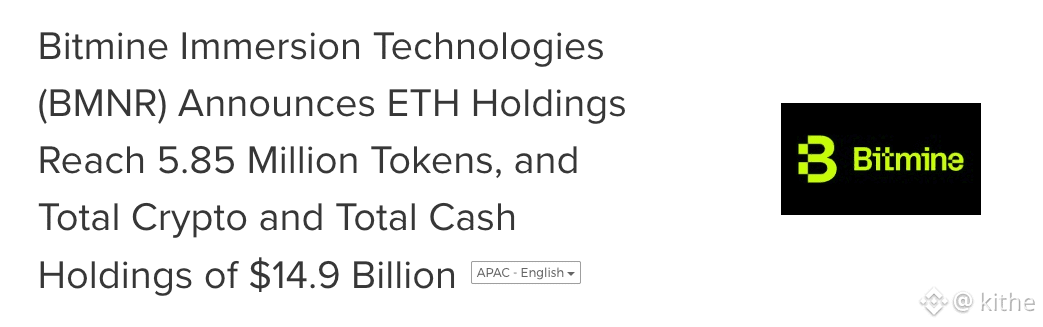
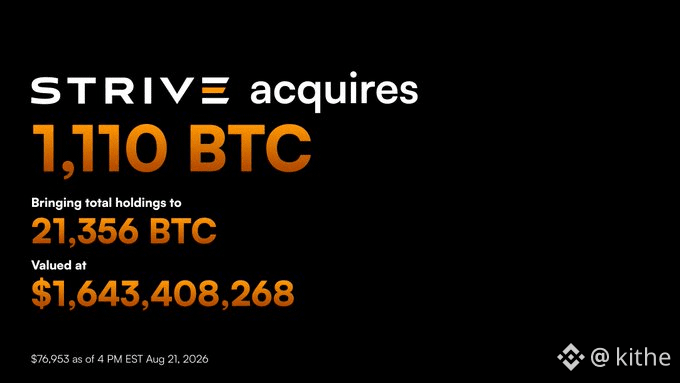
On one side, Strive just spent $81.5 million to buy BTC again; on the other, BitMine added another 32,000 ETH in a week. Institutions clearly think they don't have enough chips on hand.
Especially BitMine: its ETH holdings are already close to 5% of the total supply, and it has staked 87% of its ETH—clearly not here to trade a quick round and leave.
I think after the short-term consolidation and digestion are basically done, the next wave is genuinely worth looking forward to. BTC first target is $80k, and don’t underestimate ETH either!
Have these past couple of days' emotions already been digested about enough? Getting ready for the next takeoff?
On one side, Strive just spent $81.5 million to buy BTC again; on the other, BitMine added another 32,000 ETH in a week. Institutions clearly think they don't have enough chips on hand.
Especially BitMine: its ETH holdings are already close to 5% of the total supply, and it has staked 87% of its ETH—clearly not here to trade a quick round and leave.
I think after the short-term consolidation and digestion are basically done, the next wave is genuinely worth looking forward to. BTC first target is $80k, and don’t underestimate ETH either!
LIT has become the dark horse of this round of bulls.
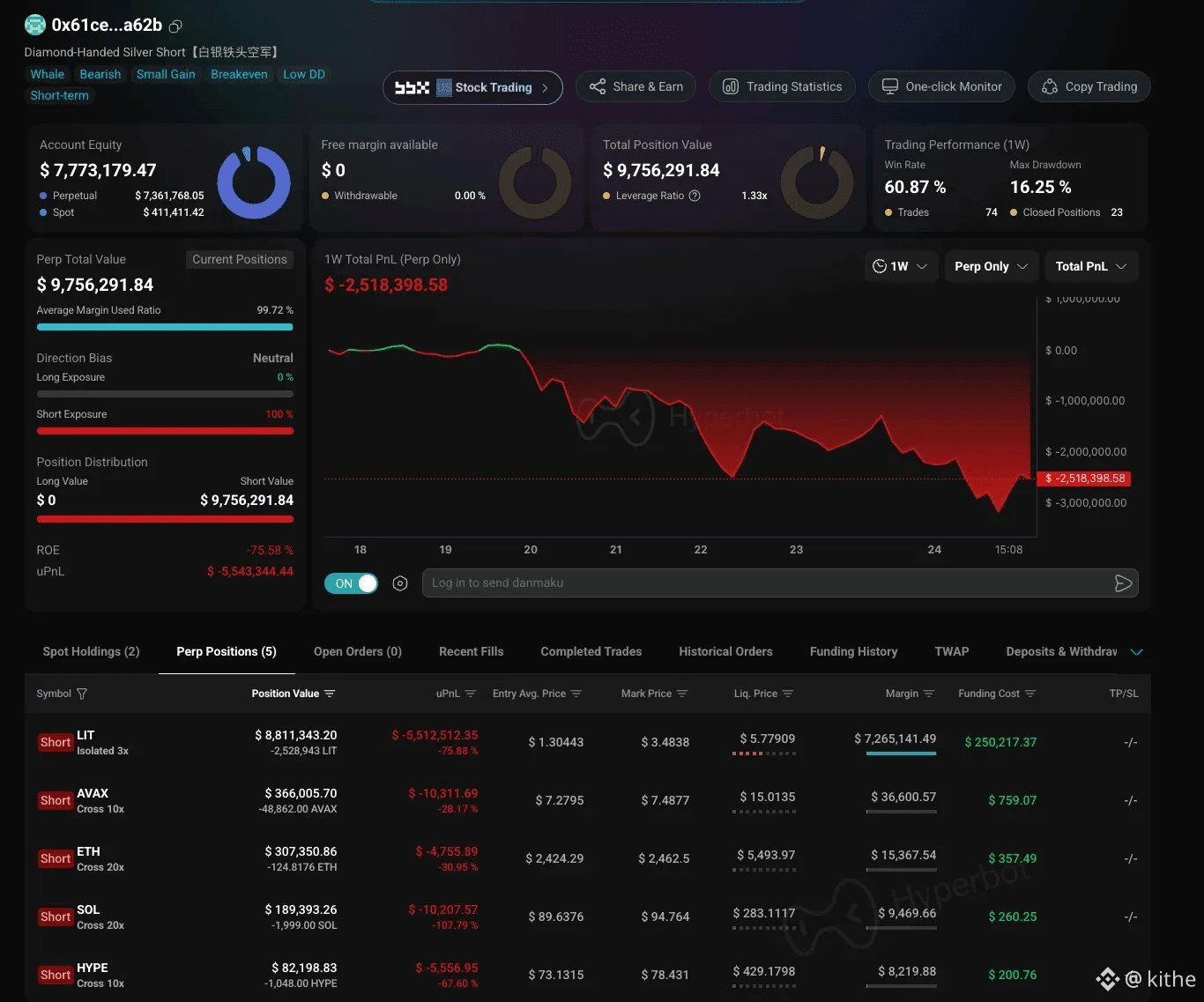
Just today, when it first hit the Korean exchange, Upbit, it surged violently—straight up scaring the No. 1 big short on Hyperliquid so badly that he hurriedly added $2.5 million in margin 😂
This guy is holding 2.528 million LIT, with an entry price of only $1.3—he’s already sitting on an unrealized loss of $5.6 million.
And the funniest part? After topping up, the per-coin margin has already been stacked to $7.16 million, and the liquidation price is still at $5.78.
This isn’t just a normal short anymore—it’s got a bit of a “taking on LIT” vibe.
Now we’ll see whether LIT will keep putting pressure on this big guy.
Just today, when it first hit the Korean exchange, Upbit, it surged violently—straight up scaring the No. 1 big short on Hyperliquid so badly that he hurriedly added $2.5 million in margin 😂
This guy is holding 2.528 million LIT, with an entry price of only $1.3—he’s already sitting on an unrealized loss of $5.6 million.
And the funniest part? After topping up, the per-coin margin has already been stacked to $7.16 million, and the liquidation price is still at $5.78.
This isn’t just a normal short anymore—it’s got a bit of a “taking on LIT” vibe.
Now we’ll see whether LIT will keep putting pressure on this big guy.
交易赢奖励,邀请你一起参加~

Verified
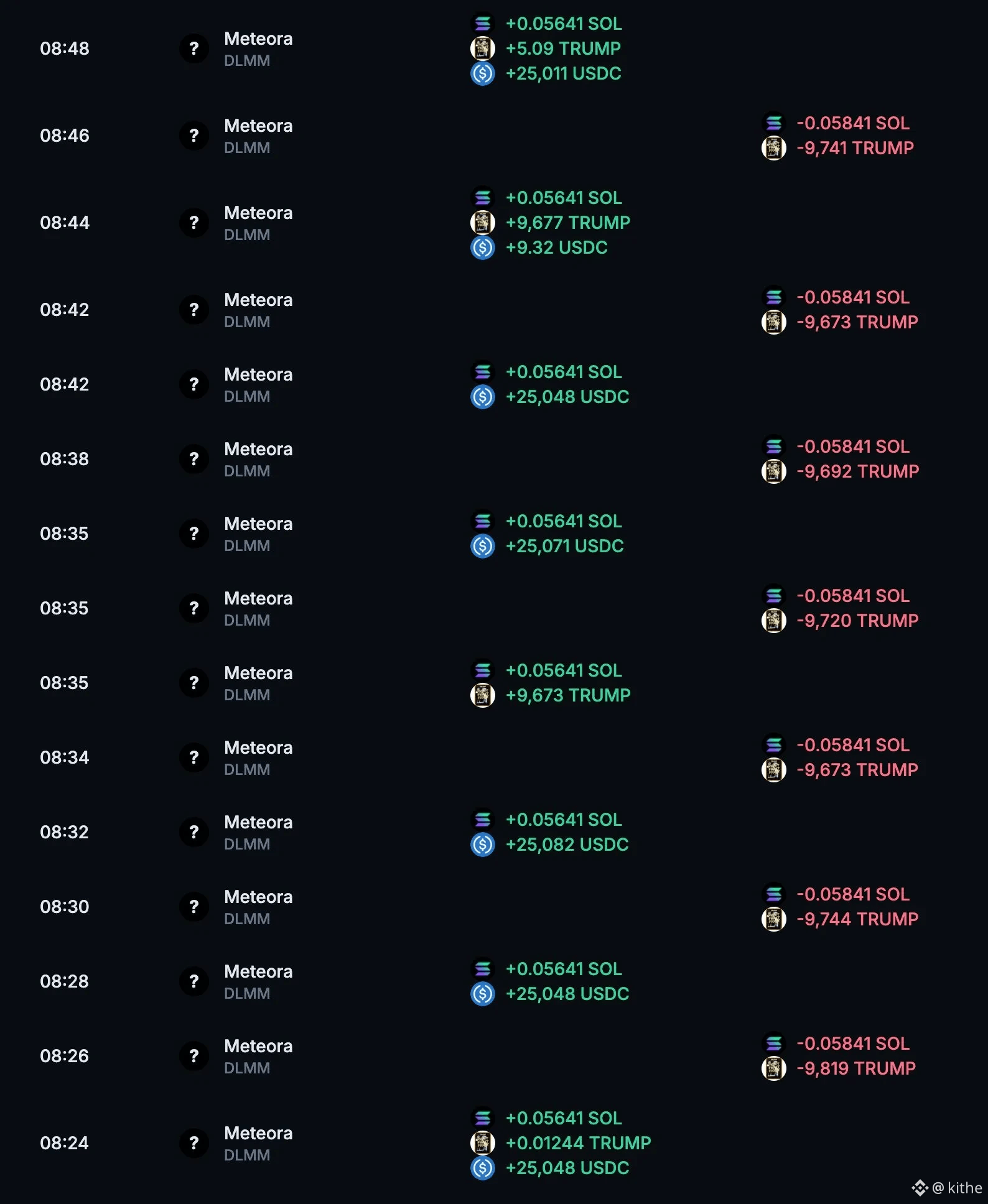
Well, yesterday we were still talking about $TRUMP
keeping the order book propped up, and today we see the team already started selling.
Yesterday, 3.837 million tokens $TRUMP
—worth about $9.33 million—were transferred to OKX. Early this morning, they sold another 1.1 million tokens via single-sided liquidity, receiving 2.94 million USDC in return, at an average price of $2.68.
This is interesting.
On one side, the coin price has risen nearly 86% in a week and market sentiment is really high; on the other, the team has already started cashing out.
Put simply: retail traders are still figuring out how much more it can go up, while the team is already working out how to convert their holdings into USDC.
Of course, selling 1.1 million tokens doesn’t necessarily mean an immediate dump—there are still plenty of remaining tokens. But when you see the team continuously releasing sell pressure from this position, you still need to stay alert.
$TRUMP
keeping the order book propped up, and today we see the team already started selling.
Yesterday, 3.837 million tokens $TRUMP
—worth about $9.33 million—were transferred to OKX. Early this morning, they sold another 1.1 million tokens via single-sided liquidity, receiving 2.94 million USDC in return, at an average price of $2.68.
This is interesting.
On one side, the coin price has risen nearly 86% in a week and market sentiment is really high; on the other, the team has already started cashing out.
Put simply: retail traders are still figuring out how much more it can go up, while the team is already working out how to convert their holdings into USDC.
Of course, selling 1.1 million tokens doesn’t necessarily mean an immediate dump—there are still plenty of remaining tokens. But when you see the team continuously releasing sell pressure from this position, you still need to stay alert.
$TRUMP
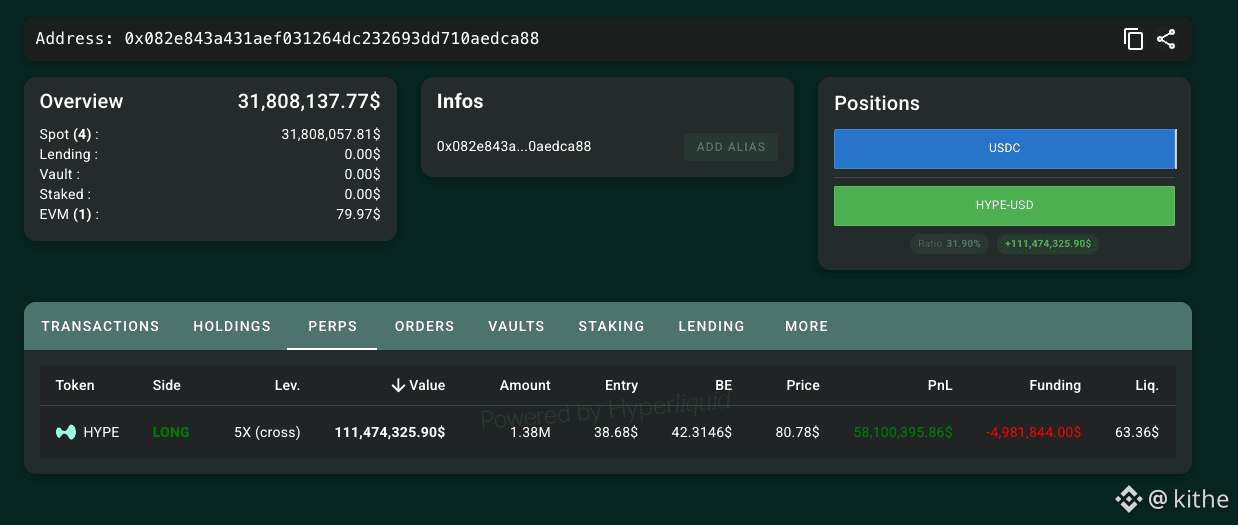
This is a real big brother—HYPE long positions held for 10 months
Profit: 57.18 million USD. Position size went from over 53 million to directly to 110 million,
Back then, he opened a long at 38.6 with 1.38 million HYPE coins, and watched them soar along with the coin price—no hesitation at all.
The most insane part is that over these 10 months, he paid 4.98 million USD just in funding fees.
Now the coin has broken 80 and hit a fresh all-time high, and he still has absolutely no intention of taking profit.
That kind of resolve—"I don’t care whether the market is up or down; I just hold"—seriously, ordinary retail traders can’t learn it, and they can’t afford it either. If it were me, with a 10% move, I’d want to run already 🤣
But that said, anyone who can hold for 10 months without wavering usually won’t be left without reward by the market. That’s the difference between diamond hands and greenhorns.
$HYPE
Profit: 57.18 million USD. Position size went from over 53 million to directly to 110 million,
Back then, he opened a long at 38.6 with 1.38 million HYPE coins, and watched them soar along with the coin price—no hesitation at all.
The most insane part is that over these 10 months, he paid 4.98 million USD just in funding fees.
Now the coin has broken 80 and hit a fresh all-time high, and he still has absolutely no intention of taking profit.
That kind of resolve—"I don’t care whether the market is up or down; I just hold"—seriously, ordinary retail traders can’t learn it, and they can’t afford it either. If it were me, with a 10% move, I’d want to run already 🤣
But that said, anyone who can hold for 10 months without wavering usually won’t be left without reward by the market. That’s the difference between diamond hands and greenhorns.
$HYPE
Verified
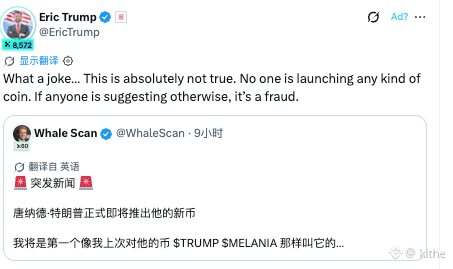
Haha, Trump’s son personally stepped in to refute the rumor.
Over the past two days, the crypto community has been spreading that “Trump’s kid is going to issue tokens again,” making it sound just like the real thing.
But then the person came out and slapped it down directly: nothing like that—don’t spread nonsense.🤣
That said, cutting the “wheatgrass” right as soon as it sprouts—there’s a bit of a lack of sportsmanship. At least wait for the project to grow a little.
But you’re saying this has nothing to do with $TRUMP ? I don’t believe that.
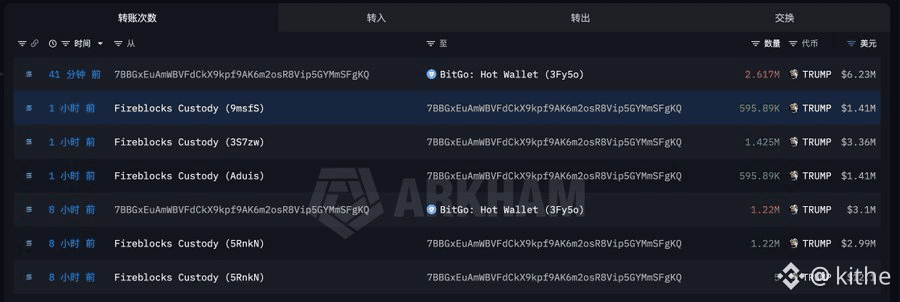
It’s just too coincidental: at the same moment the refutation message came out, 3,837,000 TRUMP
(valued at $9.33 million) had, about an hour earlier, been transferred out from the team address—then routed through BitGo straight into OKX.
The timing is so precise it’s more accurate than a TV drama.
You’re telling me this is a coincidence?
That’s just too insulting to people’s intelligence.
If you ask me, this script is all too familiar: first, release a rumor like “going to issue tokens again” to attract attention; once the market heats up, the team address quietly offloads; and finally, the refutation comes in to wrap it up—perfect closed loop.
While the wheatgrass is still debating “whether or not they’ll issue tokens,” their money has already been safely pocketed.
$TRUMP
Over the past two days, the crypto community has been spreading that “Trump’s kid is going to issue tokens again,” making it sound just like the real thing.
But then the person came out and slapped it down directly: nothing like that—don’t spread nonsense.🤣
That said, cutting the “wheatgrass” right as soon as it sprouts—there’s a bit of a lack of sportsmanship. At least wait for the project to grow a little.
But you’re saying this has nothing to do with $TRUMP ? I don’t believe that.
It’s just too coincidental: at the same moment the refutation message came out, 3,837,000 TRUMP
(valued at $9.33 million) had, about an hour earlier, been transferred out from the team address—then routed through BitGo straight into OKX.
The timing is so precise it’s more accurate than a TV drama.
You’re telling me this is a coincidence?
That’s just too insulting to people’s intelligence.
If you ask me, this script is all too familiar: first, release a rumor like “going to issue tokens again” to attract attention; once the market heats up, the team address quietly offloads; and finally, the refutation comes in to wrap it up—perfect closed loop.
While the wheatgrass is still debating “whether or not they’ll issue tokens,” their money has already been safely pocketed.
$TRUMP
This is absolutely insane.
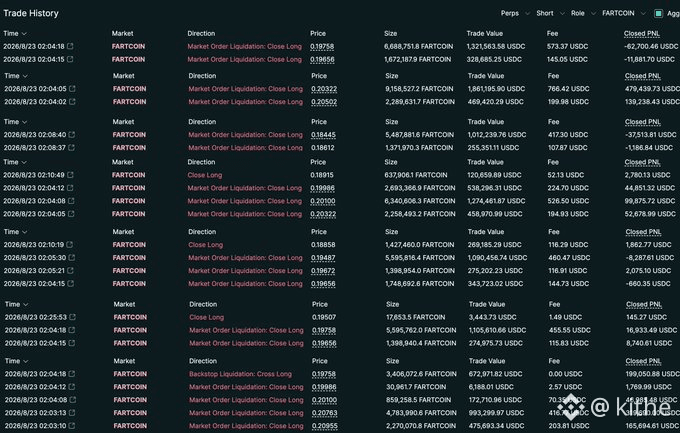
In 5 minutes, 7 wallets, and 65,000,000 FARTCOIN were directly pulled into liquidation—worth nearly $13 million. On average, a wallet was wiped out in less than a minute; it’s even faster than a Double 11 flash sale.
Honestly, the name FARTCOIN alone doesn’t sound like a serious thing you’d bet on—but the crypto crowd can’t help loving this kind of thing. Whatever high you got from the pumps, that’s how brutal it is when liquidation hits. Once contract leverage goes up, getting hit on both the long and short sides is basically routine. These 7 guys most likely either chased longs at the top or held positions so aggressively they got liquidated anyway. The system “cuts your losses” for you—there’s not even a chance to regret it.
Most ironic of all: the liquidity of a meme coin like this is already thin. Once a chain liquidation is triggered, the price gets smashed with absolutely no logic. You think you’re trading crypto, but in reality you’re just handing money to the exchanges and counterparties.
Conclusion: In the crypto world, a name with “coin” in it isn’t necessarily trustworthy, and anything with “leverage” in it is definitely dangerous. The lesson from these 7 wallets can be summed up in one line—don’t treat FARTCOIN like a serious asset, and don’t joke around with your entire net worth. 😆
$FARTCOIN
In 5 minutes, 7 wallets, and 65,000,000 FARTCOIN were directly pulled into liquidation—worth nearly $13 million. On average, a wallet was wiped out in less than a minute; it’s even faster than a Double 11 flash sale.
Honestly, the name FARTCOIN alone doesn’t sound like a serious thing you’d bet on—but the crypto crowd can’t help loving this kind of thing. Whatever high you got from the pumps, that’s how brutal it is when liquidation hits. Once contract leverage goes up, getting hit on both the long and short sides is basically routine. These 7 guys most likely either chased longs at the top or held positions so aggressively they got liquidated anyway. The system “cuts your losses” for you—there’s not even a chance to regret it.
Most ironic of all: the liquidity of a meme coin like this is already thin. Once a chain liquidation is triggered, the price gets smashed with absolutely no logic. You think you’re trading crypto, but in reality you’re just handing money to the exchanges and counterparties.
Conclusion: In the crypto world, a name with “coin” in it isn’t necessarily trustworthy, and anything with “leverage” in it is definitely dangerous. The lesson from these 7 wallets can be summed up in one line—don’t treat FARTCOIN like a serious asset, and don’t joke around with your entire net worth. 😆
$FARTCOIN
Log in to explore more content