Binance Square

CoinRank

image
Verified Creator
CoinRank is a global crypto media platform dedicated to delivering cutting-edge insights into the blockchain and Web3 industry. Through in-depth reporting and e
6 Following
5.3K+ Followers
8.8K+ Liked
930 Shared
Posts
·
--
🚨 NEW: SpaceX and xAI have officially announced their merger, integrating Elon Musk’s space operations with his core AI assets.
In January, on-chain stablecoin transaction volume surpassed $10 trillion, with USDC alone accounting for more than $8.4 trillion.
🇺🇸TRUMP: WILL PUSH TO FAST-TRACK BITCOIN AND CRYPTO MARKET STRUCTURE LEGISLATION INTO LAW
The October 10 Crash Revisited: Was USDe the Cause, or a Misplaced Blame?Bitcoin’s major decline occurred before USDe price deviations, indicating USDe did not initiate the October 10 market crash.   USDe price dislocation remained largely isolated to one exchange and did not propagate across the broader market.   Exchange infrastructure stress, API disruptions, and rigid liquidation mechanisms amplified volatility and drove cascading liquidations. A DELAYED DEBATE THAT EXPOSED A DEEPER DIVIDE   The sharp market crash on October 10 should have faded into history, like many previous episodes of extreme volatility. Prices eventually stabilized, and attention moved on.   Instead, months later, the event returned to the center of industry discussion. This time, the focus was not price, but responsibility.   OKX founder and CEO Star Xu publicly argued that the crash was not accidental. In his view, Binance’s yield campaign around Ethena’s USDe, combined with its collateral treatment, created structural leverage that amplified market stress and triggered cascading liquidations.     Dragonfly partner Haseeb Qureshi strongly rejected this explanation. He argued that the narrative fails on both timing and cross exchange transmission, and that it misidentifies correlation as causation.   As Binance founder Changpeng Zhao and Ethena founder Guy Young joined the discussion, the debate evolved into a broader question. Was the October 10 crash driven by risky product design, or by infrastructure failure under extreme stress?   The answer matters. It determines what the industry chooses to fix next.   THE OKX ARGUMENT: STRUCTURAL LEVERAGE AS THE ROOT CAUSE   Star Xu’s position can be summarized clearly. Yield incentives combined with incorrect collateral classification created systemic leverage.   According to this view, Binance offered temporary high yield on USDe while allowing it to function as margin collateral with treatment similar to USDT and USDC. This design encouraged users to view USDe as a low risk asset.   However, USDe is not a traditional fiat backed stablecoin. It is a synthetic dollar product supported by hedging and trading strategies. Its stability depends on execution conditions and market structure, not only on reserves.   Star Xu described a leverage loop that emerged from this setup. Users converted stablecoins into USDe to earn yield. They then used USDe as collateral to borrow stablecoins, which were again converted into USDe. This cycle repeated.   As long as markets were calm, the loop appeared profitable and safe. Reported yields increased, and risks remained hidden. But when volatility arrived on October 10, the accumulated leverage turned fragile. Liquidations accelerated, and USDe price deviations became part of a broader cascade.     In this narrative, the crash was not caused by a single shock, but by leverage that had been quietly built into the system.   THE TIMING AND TRANSMISSION PROBLEM   Haseeb Qureshi’s rebuttal focused on facts that challenge this story.   First, the timeline does not align. Public data shows that Bitcoin’s sharp decline and local bottom occurred roughly thirty minutes before USDe showed significant price deviation on Binance. This suggests that the major market move was already underway before USDe became unstable.   If USDe reacted after the primary sell off, it is difficult to argue that it initiated the crash.   Second, the scope of impact was limited. USDe price deviations were largely confined to Binance’s order book. Other major venues did not experience the same dislocation. A true systemic trigger would normally propagate across platforms.   Previous systemic failures such as Terra, Three Arrows Capital, or FTX affected balance sheets everywhere. USDe did not produce a similar global effect.   From this perspective, USDe appears less like the source of the fire and more like one of the first assets to show stress after the system had already begun to fail.   A MORE PLAUSIBLE EXPLANATION: INFRASTRUCTURE FAILURE UNDER STRESS   Rather than a simple cause, Haseeb Qureshi proposed a layered explanation that better fits market mechanics.   The initial shock came from outside crypto. Political and macro uncertainty spiked, and crypto markets were among the few risk assets still trading at full speed.   Trading volume surged. At the same time, key exchange infrastructure struggled. API availability and execution reliability degraded at critical moments. This impaired market makers’ ability to rebalance inventory across venues.   Without functioning arbitrage, prices diverged. Liquidation engines continued to operate mechanically, even as liquidity disappeared. Automatic deleveraging mechanisms further disrupted hedging flows.   In this environment, market makers could no longer act as buyers of last resort. Altcoin markets, which are highly path dependent, entered a vacuum. Once price discovery broke, declines became structural rather than incremental.   Within this framework, USDe was not irrelevant. But it functioned as an early stress indicator inside an already unstable system, not as the original trigger.   WHO WAS RIGHT AND WHO WAS NOT   Based on timing, transmission, and market structure, the weight of evidence favors Haseeb Qureshi’s interpretation of the October 10 crash.   This does not mean Star Xu identified a false risk. Leverage loops driven by yield incentives are real and dangerous. They deserve scrutiny.   However, elevating that risk into the primary cause of the October 10 crash overstates its role. The data does not support USDe as the initiating factor.   The more credible conclusion is that infrastructure failure and liquidation mechanics under extreme conditions played the dominant role. Binance’s responsibility, therefore, lies more in system reliability than in the existence of a yield campaign itself.   These are different categories of responsibility, and they imply very different fixes.   WHY THIS DEBATE MATTERS   The significance of this debate is not about assigning blame. It is about choosing the correct lesson.   If the industry concludes that the problem was simply USDe or similar yield products, it may avoid deeper reforms. The more uncomfortable truth is that crypto markets still lack robust stabilizing mechanisms during stress.   Liquidation systems are designed to minimize platform losses, not to protect market integrity. API resilience, liquidity backstops, and volatility buffers remain underdeveloped.   October 10 was not an anomaly. It was a stress test that arrived earlier than expected.   Understanding its true cause will determine whether the next shock becomes manageable, or catastrophic. 〈The October 10 Crash Revisited: Was USDe the Cause, or a Misplaced Blame?〉這篇文章最早發佈於《CoinRank》。

The October 10 Crash Revisited: Was USDe the Cause, or a Misplaced Blame?

Bitcoin’s major decline occurred before USDe price deviations, indicating USDe did not initiate the October 10 market crash.


USDe price dislocation remained largely isolated to one exchange and did not propagate across the broader market.


Exchange infrastructure stress, API disruptions, and rigid liquidation mechanisms amplified volatility and drove cascading liquidations.

A DELAYED DEBATE THAT EXPOSED A DEEPER DIVIDE


The sharp market crash on October 10 should have faded into history, like many previous episodes of extreme volatility. Prices eventually stabilized, and attention moved on.


Instead, months later, the event returned to the center of industry discussion. This time, the focus was not price, but responsibility.


OKX founder and CEO Star Xu publicly argued that the crash was not accidental. In his view, Binance’s yield campaign around Ethena’s USDe, combined with its collateral treatment, created structural leverage that amplified market stress and triggered cascading liquidations.


Dragonfly partner Haseeb Qureshi strongly rejected this explanation. He argued that the narrative fails on both timing and cross exchange transmission, and that it misidentifies correlation as causation.


As Binance founder Changpeng Zhao and Ethena founder Guy Young joined the discussion, the debate evolved into a broader question. Was the October 10 crash driven by risky product design, or by infrastructure failure under extreme stress?


The answer matters. It determines what the industry chooses to fix next.


THE OKX ARGUMENT: STRUCTURAL LEVERAGE AS THE ROOT CAUSE


Star Xu’s position can be summarized clearly. Yield incentives combined with incorrect collateral classification created systemic leverage.


According to this view, Binance offered temporary high yield on USDe while allowing it to function as margin collateral with treatment similar to USDT and USDC. This design encouraged users to view USDe as a low risk asset.


However, USDe is not a traditional fiat backed stablecoin. It is a synthetic dollar product supported by hedging and trading strategies. Its stability depends on execution conditions and market structure, not only on reserves.


Star Xu described a leverage loop that emerged from this setup. Users converted stablecoins into USDe to earn yield. They then used USDe as collateral to borrow stablecoins, which were again converted into USDe. This cycle repeated.


As long as markets were calm, the loop appeared profitable and safe. Reported yields increased, and risks remained hidden. But when volatility arrived on October 10, the accumulated leverage turned fragile. Liquidations accelerated, and USDe price deviations became part of a broader cascade.


In this narrative, the crash was not caused by a single shock, but by leverage that had been quietly built into the system.


THE TIMING AND TRANSMISSION PROBLEM


Haseeb Qureshi’s rebuttal focused on facts that challenge this story.


First, the timeline does not align. Public data shows that Bitcoin’s sharp decline and local bottom occurred roughly thirty minutes before USDe showed significant price deviation on Binance. This suggests that the major market move was already underway before USDe became unstable.


If USDe reacted after the primary sell off, it is difficult to argue that it initiated the crash.


Second, the scope of impact was limited. USDe price deviations were largely confined to Binance’s order book. Other major venues did not experience the same dislocation. A true systemic trigger would normally propagate across platforms.


Previous systemic failures such as Terra, Three Arrows Capital, or FTX affected balance sheets everywhere. USDe did not produce a similar global effect.


From this perspective, USDe appears less like the source of the fire and more like one of the first assets to show stress after the system had already begun to fail.


A MORE PLAUSIBLE EXPLANATION: INFRASTRUCTURE FAILURE UNDER STRESS


Rather than a simple cause, Haseeb Qureshi proposed a layered explanation that better fits market mechanics.


The initial shock came from outside crypto. Political and macro uncertainty spiked, and crypto markets were among the few risk assets still trading at full speed.


Trading volume surged. At the same time, key exchange infrastructure struggled. API availability and execution reliability degraded at critical moments. This impaired market makers’ ability to rebalance inventory across venues.


Without functioning arbitrage, prices diverged. Liquidation engines continued to operate mechanically, even as liquidity disappeared. Automatic deleveraging mechanisms further disrupted hedging flows.


In this environment, market makers could no longer act as buyers of last resort. Altcoin markets, which are highly path dependent, entered a vacuum. Once price discovery broke, declines became structural rather than incremental.


Within this framework, USDe was not irrelevant. But it functioned as an early stress indicator inside an already unstable system, not as the original trigger.


WHO WAS RIGHT AND WHO WAS NOT


Based on timing, transmission, and market structure, the weight of evidence favors Haseeb Qureshi’s interpretation of the October 10 crash.


This does not mean Star Xu identified a false risk. Leverage loops driven by yield incentives are real and dangerous. They deserve scrutiny.


However, elevating that risk into the primary cause of the October 10 crash overstates its role. The data does not support USDe as the initiating factor.


The more credible conclusion is that infrastructure failure and liquidation mechanics under extreme conditions played the dominant role. Binance’s responsibility, therefore, lies more in system reliability than in the existence of a yield campaign itself.


These are different categories of responsibility, and they imply very different fixes.


WHY THIS DEBATE MATTERS


The significance of this debate is not about assigning blame. It is about choosing the correct lesson.


If the industry concludes that the problem was simply USDe or similar yield products, it may avoid deeper reforms. The more uncomfortable truth is that crypto markets still lack robust stabilizing mechanisms during stress.


Liquidation systems are designed to minimize platform losses, not to protect market integrity. API resilience, liquidity backstops, and volatility buffers remain underdeveloped.


October 10 was not an anomaly. It was a stress test that arrived earlier than expected.


Understanding its true cause will determine whether the next shock becomes manageable, or catastrophic.

〈The October 10 Crash Revisited: Was USDe the Cause, or a Misplaced Blame?〉這篇文章最早發佈於《CoinRank》。
CoinRank Daily Data Report (2/3)|Crypto bear market is nearing end, with $60K as key bitcoin floo...Bitcoin downside may be limited without a broader equity bear market Compass Point analysts suggest Bitcoin is testing weak support, but a deeper decline would likely require a full U.S. equity market downturn. The $60,000 level is seen as a critical psychological and structural floor if risk assets continue to deteriorate.   Blame narratives continue to shape market volatility Changpeng Zhao has pushed back against renewed scrutiny over Binance’s alleged role in October’s flash crash. The ongoing blame game highlights how trust, perception, and narrative risk continue to amplify volatility during market stress.   Macro events and policy uncertainty remain key drivers Developments ranging from Elon Musk’s decision to combine xAI with SpaceX, to unresolved stablecoin yield discussions at the White House, and legal troubles facing Russia’s largest Bitcoin mining firm, show that external political, regulatory, and corporate forces are increasingly influencing crypto market expectations. Welcome to CoinDesk Daily Data Report. In this column series, CoinDesk will provide important daily cryptocurrency data news, allowing readers to quickly understand the latest developments in the cryptocurrency market.   Crypto bear market is nearing end, with $60K as key bitcoin floor, Compass Point analysts say   According to Compass Point analysts, bitcoin is testing weak support but further downside would likely require a broader U.S. equity bear market. The firm points to $60K as a key potential floor, framing it as an important level for market stabilization if risk assets worsen.   CZ pushes back against Binance ‘FUD’ as blame game for crypto crash persists   Changpeng Zhao responded to renewed scrutiny over Binance’s alleged role in October’s crypto flash crash. His comments push back on accusations circulating in the market as the blame game around the sell-off continues.   Elon Musk merges AI company xAI with rocket company SpaceX to build AI in space   Elon Musk has combined xAI with SpaceX in a deal that Bloomberg reports could price a future IPO at around $1.25 trillion. The move aims to blend SpaceX’s infrastructure with xAI’s technology for space‑based AI applications.   Russia’s biggest bitcoin mining firm’s founder arrested for tax evasion while his company faces bankruptcy   The founder of Russia’s largest bitcoin mining firm was arrested on tax‑evasion charges as the company faces mounting pressure from energy debts, regulatory constraints, and insolvency claims. An En+ subsidiary has reportedly filed an insolvency claim, compounding the firm’s troubles.   Crypto industry, banks not yet close to stablecoin yield deal at White House meeting   Industry insiders met with White House advisers to discuss stablecoin yield and market‑structure legislation, but sources say the parties remain far apart. The administration urged compromises this month to move the Senate’s crypto bill forward. 〈CoinRank Daily Data Report (2/3)|Crypto bear market is nearing end, with $60K as key bitcoin floor, Compass Point analysts say〉這篇文章最早發佈於《CoinRank》。

CoinRank Daily Data Report (2/3)|Crypto bear market is nearing end, with $60K as key bitcoin floo...

Bitcoin downside may be limited without a broader equity bear market

Compass Point analysts suggest Bitcoin is testing weak support, but a deeper decline would likely require a full U.S. equity market downturn. The $60,000 level is seen as a critical psychological and structural floor if risk assets continue to deteriorate.


Blame narratives continue to shape market volatility

Changpeng Zhao has pushed back against renewed scrutiny over Binance’s alleged role in October’s flash crash. The ongoing blame game highlights how trust, perception, and narrative risk continue to amplify volatility during market stress.


Macro events and policy uncertainty remain key drivers

Developments ranging from Elon Musk’s decision to combine xAI with SpaceX, to unresolved stablecoin yield discussions at the White House, and legal troubles facing Russia’s largest Bitcoin mining firm, show that external political, regulatory, and corporate forces are increasingly influencing crypto market expectations.

Welcome to CoinDesk Daily Data Report. In this column series, CoinDesk will provide important daily cryptocurrency data news, allowing readers to quickly understand the latest developments in the cryptocurrency market.


Crypto bear market is nearing end, with $60K as key bitcoin floor, Compass Point analysts say


According to Compass Point analysts, bitcoin is testing weak support but further downside would likely require a broader U.S. equity bear market. The firm points to $60K as a key potential floor, framing it as an important level for market stabilization if risk assets worsen.


CZ pushes back against Binance ‘FUD’ as blame game for crypto crash persists


Changpeng Zhao responded to renewed scrutiny over Binance’s alleged role in October’s crypto flash crash. His comments push back on accusations circulating in the market as the blame game around the sell-off continues.


Elon Musk merges AI company xAI with rocket company SpaceX to build AI in space


Elon Musk has combined xAI with SpaceX in a deal that Bloomberg reports could price a future IPO at around $1.25 trillion. The move aims to blend SpaceX’s infrastructure with xAI’s technology for space‑based AI applications.


Russia’s biggest bitcoin mining firm’s founder arrested for tax evasion while his company faces bankruptcy


The founder of Russia’s largest bitcoin mining firm was arrested on tax‑evasion charges as the company faces mounting pressure from energy debts, regulatory constraints, and insolvency claims. An En+ subsidiary has reportedly filed an insolvency claim, compounding the firm’s troubles.


Crypto industry, banks not yet close to stablecoin yield deal at White House meeting


Industry insiders met with White House advisers to discuss stablecoin yield and market‑structure legislation, but sources say the parties remain far apart. The administration urged compromises this month to move the Senate’s crypto bill forward.

〈CoinRank Daily Data Report (2/3)|Crypto bear market is nearing end, with $60K as key bitcoin floor, Compass Point analysts say〉這篇文章最早發佈於《CoinRank》。
COINRANK EVENING UPDATE White House to meet with crypto companies and banks at 1 PM ET to discuss the market structure bill Vitalik Buterin says he earned $70,000 in 2025 by shorting Polymarket and argues that prediction market oracle security standards are too low Strategy spent $75.3 million last week to acquire 855 more Bitcoin Coinbase backed Kontigo has been cut off by multiple financial institutions over Venezuela sanctions concerns Blockstream CEO denies any financial ties to Jeffrey Epstein
COINRANK EVENING UPDATE

White House to meet with crypto companies and banks at 1 PM ET to discuss the market structure bill

Vitalik Buterin says he earned $70,000 in 2025 by shorting Polymarket and argues that prediction market oracle security standards are too low

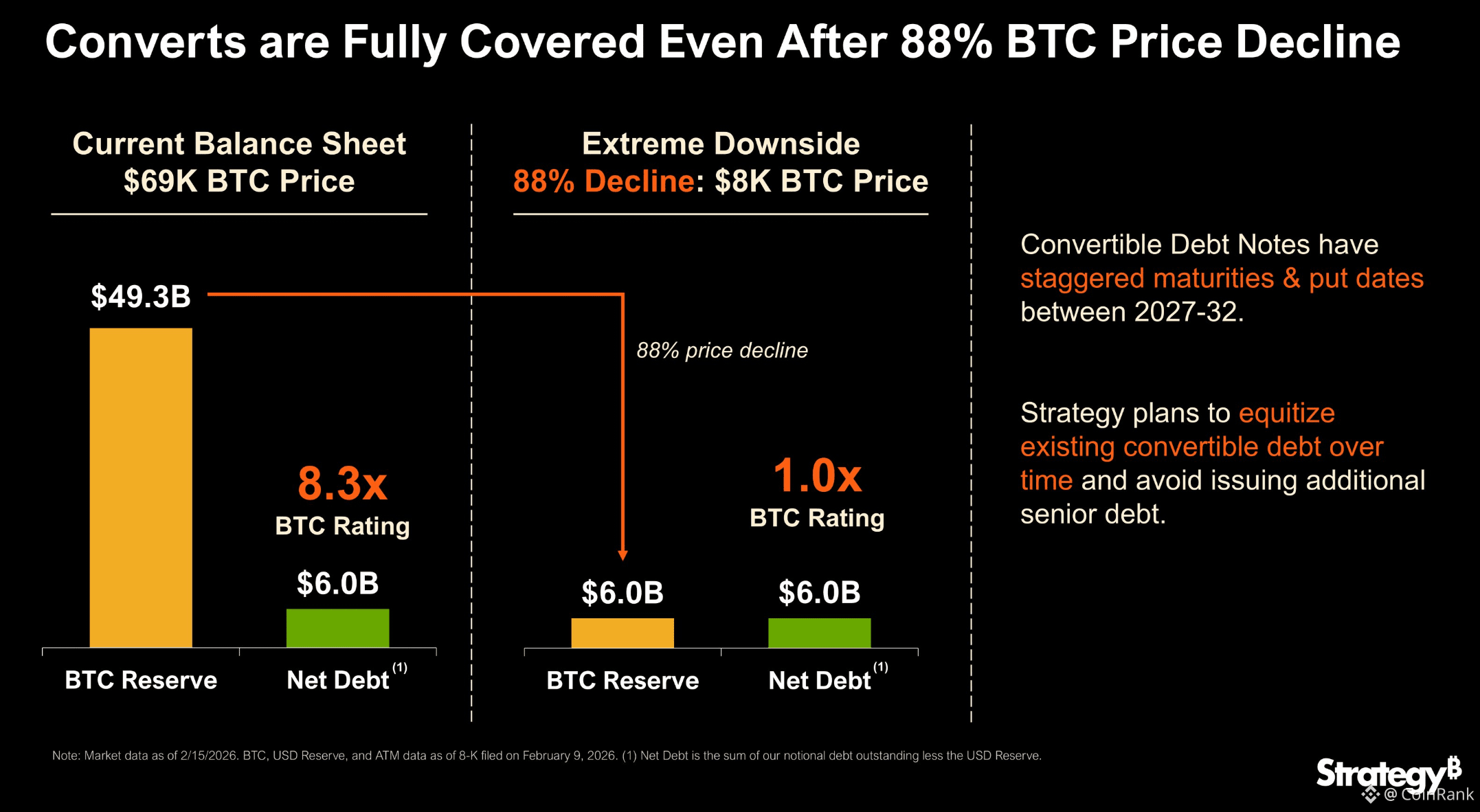
Strategy spent $75.3 million last week to acquire 855 more Bitcoin

Coinbase backed Kontigo has been cut off by multiple financial institutions over Venezuela sanctions concerns

Blockstream CEO denies any financial ties to Jeffrey Epstein
Luxembourg grants Ripple a full EU Electronic Money Institution (EMI) license, enabling regulated payment services across all 27 EU member states and strengthening the compliance foundation for $XRP-related use cases. #Ripple #XRP
Luxembourg grants Ripple a full EU Electronic Money Institution (EMI) license, enabling regulated payment services across all 27 EU member states and strengthening the compliance foundation for $XRP-related use cases.

#Ripple #XRP
⚡️TRUMP LAUNCHES $12B STRATEGIC CRITICAL MINERALS STOCKPILE U.S. President Trump announced the launch of a $12 billion strategic critical minerals stockpile, aimed at reducing reliance on China’s supply chains and strengthening domestic manufacturing and national security resilience.
⚡️TRUMP LAUNCHES $12B STRATEGIC CRITICAL MINERALS STOCKPILE

U.S. President Trump announced the launch of a $12 billion strategic critical minerals stockpile, aimed at reducing reliance on China’s supply chains and strengthening domestic manufacturing and national security resilience.
COINRANK MIDDAY UPDATE White House to hold a meeting on Feb 3 at 2:00 with crypto firms and banks to discuss stablecoin yield structures (via @EleanorTerrett) Trend Research reports cumulative losses of $554M on ETH positions Justin Sun plans to increase BTC holdings by $50M–$100M UBS Group raises its equity exposure to Strategy to $805M Solana continues to lead all chains in 7-day revenue and DEX trading volume #CoinRank
COINRANK MIDDAY UPDATE

White House to hold a meeting on Feb 3 at 2:00 with crypto firms and banks to discuss stablecoin yield structures (via @EleanorTerrett)

Trend Research reports cumulative losses of $554M on ETH positions

Justin Sun plans to increase BTC holdings by $50M–$100M

UBS Group raises its equity exposure to Strategy to $805M

Solana continues to lead all chains in 7-day revenue and DEX trading volume

#CoinRank
QCP Capital: After Kevin Warsh was confirmed as the next Fed Chair, risk-off sentiment intensified. $BTC broke below $80k, bottoming near $74.5k; $ETH fell under $2,170. Over $2.5B in long liquidations and continued ETF outflows pressured the market. BTC is holding $74k–75k (2025 cycle low). Options remain cautious but hedging demand has eased. Holding $74k may signal a short-term base; reclaiming $80k is key for sentiment repair.
QCP Capital: After Kevin Warsh was confirmed as the next Fed Chair, risk-off sentiment intensified. $BTC broke below $80k, bottoming near $74.5k; $ETH fell under $2,170. Over $2.5B in long liquidations and continued ETF outflows pressured the market.

BTC is holding $74k–75k (2025 cycle low). Options remain cautious but hedging demand has eased. Holding $74k may signal a short-term base; reclaiming $80k is key for sentiment repair.
COINRANK MORNING UPDATE A Nevada court has issued a 2-week temporary restraining order against Polymarket Strategy’s holdings of approximately 712,000 BTC are currently showing an unrealized loss exceeding $900 million South Korea’s KOSPI Index closed down 5.26% at 4,949.69 Vitalik Buterin said the idea behind content-curation creator platforms is not inherently complex The CEO of Blockstream denied any financial ties to Epstein #GM #CoinRank
COINRANK MORNING UPDATE

A Nevada court has issued a 2-week temporary restraining order against Polymarket

Strategy’s holdings of approximately 712,000 BTC are currently showing an unrealized loss exceeding $900 million

South Korea’s KOSPI Index closed down 5.26% at 4,949.69

Vitalik Buterin said the idea behind content-curation creator platforms is not inherently complex

The CEO of Blockstream denied any financial ties to Epstein

#GM #CoinRank
India Keeps Crypto Taxes Unchanged, Tightens Compliance Rules According to CoinDesk, India’s 2026–27 federal budget leaves its crypto tax regime untouched, maintaining the 30% capital gains tax on crypto income and the 1% tax deducted at source (TDS) on transactions—disappointing industry groups that had lobbied for relief. Rather than cutting taxes, the government is strengthening enforcement. From April 1, 2026, new penalties will apply to entities that fail to properly report crypto transactions under Section 509 of the Income Tax Act. Missing filings will incur a fine of 200 rupees (about $2.2) per day until compliance is met. In cases of incorrect disclosures—or failure to correct errors after they are flagged—a separate fixed penalty of 50,000 rupees (around $545) will be imposed. Officials say the measures are designed to improve compliance and transparency, but market participants warn that tighter penalties, combined with already high taxes, could continue to add friction for crypto traders.
India Keeps Crypto Taxes Unchanged, Tightens Compliance Rules

According to CoinDesk, India’s 2026–27 federal budget leaves its crypto tax regime untouched, maintaining the 30% capital gains tax on crypto income and the 1% tax deducted at source (TDS) on transactions—disappointing industry groups that had lobbied for relief.

Rather than cutting taxes, the government is strengthening enforcement. From April 1, 2026, new penalties will apply to entities that fail to properly report crypto transactions under Section 509 of the Income Tax Act. Missing filings will incur a fine of 200 rupees (about $2.2) per day until compliance is met. In cases of incorrect disclosures—or failure to correct errors after they are flagged—a separate fixed penalty of 50,000 rupees (around $545) will be imposed.

Officials say the measures are designed to improve compliance and transparency, but market participants warn that tighter penalties, combined with already high taxes, could continue to add friction for crypto traders.
CATHIE WOOD: BITCOIN MAY HAVE FORMED A BOTTOM, UPSIDE MOMENTUM BUILDING #BTC #CNBC
CATHIE WOOD: BITCOIN MAY HAVE FORMED A BOTTOM, UPSIDE MOMENTUM BUILDING

#BTC #CNBC
When Privacy Coins Rally, the Cycle Is Usually Near the EndPrivacy coins tend to surge when major crypto narratives are exhausted, making their rallies a recurring late cycle signal rather than a sustainable growth trend.   In recent cycles, privacy rallies have been driven more by regulatory contrast and emotional positioning than by real technological breakthroughs or broad user demand.   The gap between actual privacy needs and the extreme design of many privacy coins limits long term adoption, causing these assets to function as the final rotation before market momentum fades. PRIVACY RALLIES ARE A RECURRING LATE CYCLE SIGNAL   In every major crypto cycle, certain signals tend to appear near the end. One of the most consistent is the sudden rally of privacy focused tokens. This pattern has repeated for more than a decade, and each time it briefly captures market attention before fading again.   Privacy coins rarely lead a bull market. They almost never define the next long term trend. Yet they reliably show up when the market is running out of ideas. This is not coincidence. It reflects a structural response to late cycle conditions rather than a renewed belief in privacy as a growth sector.   When privacy becomes the focus, it usually means the market has reached a point where there is little left to speculate on.   WHEN NARRATIVES ARE EXHAUSTED CAPITAL LOOKS BACKWARD   Late in a bull market, most dominant narratives have already been priced in. DeFi has peaked, NFTs have fragmented, and new infrastructure stories lack immediate credibility. Even promising themes like AI and on chain integration require time before real adoption appears.   At this stage, the market often turns backward instead of forward. It searches for ideas that feel timeless rather than new. Privacy fits this role perfectly. It has existed since 2014. It is tied to the original ideals of decentralization. And it does not require near term data to support its value.   In the transition between bull and bear markets, privacy is often reframed as a return to fundamentals rather than another speculative trade. This reframing gives late stage capital a narrative justification for one last rotation.   2017 SHOWED HOW POWERFUL THE PRIVACY STORY COULD BECOME   The 2017 cycle marked the peak moment for privacy coins. At that time, the crypto industry lacked direction. There were few meaningful applications, and even Bitcoin’s role as the central asset was still debated.   In that environment, privacy tokens moved to the center of attention. Concepts like zero knowledge proofs and ring signatures felt revolutionary. Some projects were openly marketed as better versions of Bitcoin.   Market enthusiasm reached extreme levels. Certain privacy coins briefly attracted more discussion than Bitcoin itself. Prices moved in ways that now seem irrational. This was not because privacy solved a broader problem, but because the market needed something to believe in once growth narratives ran thin.   THE 2021 TO 2022 PHASE TURNED PRIVACY INTO A CAPITAL STORY   The next major return of privacy came at the end of the 2021 cycle. This time, the driver was not technical exploration but capital packaging.   After DeFi, NFTs, and the metaverse, the market needed another funding narrative. Privacy was repositioned as the next infrastructure layer. Large financing rounds and top tier investors created the impression that privacy was finally ready for mass adoption.     What was missing was demand validation. Very few participants questioned whether everyday users were willing to accept higher costs and complexity purely for privacy. When the market cooled, the answer became clear. Adoption existed, but it was narrow. The gap between narrative and reality was exposed quickly.   THE CURRENT CYCLE IS ABOUT REGULATION NOT TECHNOLOGY   In the current cycle, the timing of privacy coin rallies is especially revealing. Most major moves began in the second half of 2025, well after the broader bull market had matured.   There was no clear technological breakthrough driving these gains. The most plausible explanation was regulatory contrast. As crypto became increasingly regulated, privacy coins stood out precisely because they were less compliant.   By 2025, crypto had largely been absorbed into regulatory frameworks across major jurisdictions. Identity checks and anti money laundering rules became unavoidable. Although crypto assets were no longer treated as securities, they were not treated as anonymous instruments either.   Against this backdrop, privacy coins became a symbolic counter trade. For some investors, they represented resistance rather than opportunity. This made them attractive at a moment when trust in the system felt fragile.   LATE ENDORSEMENTS OF PRIVACY OFTEN SIGNAL DISTRIBUTION   Public support for privacy from influential figures and institutions mostly appeared after price moves had already begun. From a market structure perspective, this timing matters.   Rather than acting as catalysts, these endorsements often coincided with periods of distribution. The narrative helped justify prices, but it did not explain their origin. In past cycles, similar patterns emerged just before sharp reversals.   Even when specific events temporarily extended momentum, the overall structure remained the same. Prices surged quickly and retraced just as fast.   REAL WORLD PRIVACY NEEDS ARE MORE LIMITED THAN THE NARRATIVE SUGGESTS   Privacy has survived for more than ten years because it does serve real use cases. However, these use cases are far narrower than the narrative implies.   Most people do not want complete invisibility. They want discretion. In traditional finance, dark pools exist to reduce market impact, not to remove auditability. Transactions can still be verified if necessary.   In contrast, many privacy coins push privacy to an extreme. When anonymity is the default rather than an option, it creates friction with regulators and institutions. This leads to a paradox where using a privacy coin can itself become a red flag.   For the majority of users, there is little incentive to hold or transact in assets that attract disproportionate scrutiny.   WHY PRIVACY COINS APPEAR AT THE END OF THE CYCLE   Privacy coins tend to rally late because they do not depend on immediate adoption or delivery. They function as emotional assets rather than productive ones.   When the market runs out of future oriented stories, it turns to ideology. Privacy becomes a symbol of dissatisfaction with the current system. This makes it a powerful narrative tool, but a weak foundation for sustained value.   As a result, privacy coins often act as the final rotation before momentum breaks. They are rarely the beginning of something new. More often, they are the market’s last attempt to keep the cycle alive. 〈When Privacy Coins Rally, the Cycle Is Usually Near the End〉這篇文章最早發佈於《CoinRank》。

When Privacy Coins Rally, the Cycle Is Usually Near the End

Privacy coins tend to surge when major crypto narratives are exhausted, making their rallies a recurring late cycle signal rather than a sustainable growth trend.


In recent cycles, privacy rallies have been driven more by regulatory contrast and emotional positioning than by real technological breakthroughs or broad user demand.


The gap between actual privacy needs and the extreme design of many privacy coins limits long term adoption, causing these assets to function as the final rotation before market momentum fades.

PRIVACY RALLIES ARE A RECURRING LATE CYCLE SIGNAL


In every major crypto cycle, certain signals tend to appear near the end. One of the most consistent is the sudden rally of privacy focused tokens. This pattern has repeated for more than a decade, and each time it briefly captures market attention before fading again.


Privacy coins rarely lead a bull market. They almost never define the next long term trend. Yet they reliably show up when the market is running out of ideas. This is not coincidence. It reflects a structural response to late cycle conditions rather than a renewed belief in privacy as a growth sector.


When privacy becomes the focus, it usually means the market has reached a point where there is little left to speculate on.


WHEN NARRATIVES ARE EXHAUSTED CAPITAL LOOKS BACKWARD


Late in a bull market, most dominant narratives have already been priced in. DeFi has peaked, NFTs have fragmented, and new infrastructure stories lack immediate credibility. Even promising themes like AI and on chain integration require time before real adoption appears.


At this stage, the market often turns backward instead of forward. It searches for ideas that feel timeless rather than new. Privacy fits this role perfectly. It has existed since 2014. It is tied to the original ideals of decentralization. And it does not require near term data to support its value.


In the transition between bull and bear markets, privacy is often reframed as a return to fundamentals rather than another speculative trade. This reframing gives late stage capital a narrative justification for one last rotation.


2017 SHOWED HOW POWERFUL THE PRIVACY STORY COULD BECOME


The 2017 cycle marked the peak moment for privacy coins. At that time, the crypto industry lacked direction. There were few meaningful applications, and even Bitcoin’s role as the central asset was still debated.


In that environment, privacy tokens moved to the center of attention. Concepts like zero knowledge proofs and ring signatures felt revolutionary. Some projects were openly marketed as better versions of Bitcoin.


Market enthusiasm reached extreme levels. Certain privacy coins briefly attracted more discussion than Bitcoin itself. Prices moved in ways that now seem irrational. This was not because privacy solved a broader problem, but because the market needed something to believe in once growth narratives ran thin.


THE 2021 TO 2022 PHASE TURNED PRIVACY INTO A CAPITAL STORY


The next major return of privacy came at the end of the 2021 cycle. This time, the driver was not technical exploration but capital packaging.


After DeFi, NFTs, and the metaverse, the market needed another funding narrative. Privacy was repositioned as the next infrastructure layer. Large financing rounds and top tier investors created the impression that privacy was finally ready for mass adoption.


What was missing was demand validation. Very few participants questioned whether everyday users were willing to accept higher costs and complexity purely for privacy. When the market cooled, the answer became clear. Adoption existed, but it was narrow. The gap between narrative and reality was exposed quickly.


THE CURRENT CYCLE IS ABOUT REGULATION NOT TECHNOLOGY


In the current cycle, the timing of privacy coin rallies is especially revealing. Most major moves began in the second half of 2025, well after the broader bull market had matured.


There was no clear technological breakthrough driving these gains. The most plausible explanation was regulatory contrast. As crypto became increasingly regulated, privacy coins stood out precisely because they were less compliant.


By 2025, crypto had largely been absorbed into regulatory frameworks across major jurisdictions. Identity checks and anti money laundering rules became unavoidable. Although crypto assets were no longer treated as securities, they were not treated as anonymous instruments either.


Against this backdrop, privacy coins became a symbolic counter trade. For some investors, they represented resistance rather than opportunity. This made them attractive at a moment when trust in the system felt fragile.


LATE ENDORSEMENTS OF PRIVACY OFTEN SIGNAL DISTRIBUTION


Public support for privacy from influential figures and institutions mostly appeared after price moves had already begun. From a market structure perspective, this timing matters.


Rather than acting as catalysts, these endorsements often coincided with periods of distribution. The narrative helped justify prices, but it did not explain their origin. In past cycles, similar patterns emerged just before sharp reversals.


Even when specific events temporarily extended momentum, the overall structure remained the same. Prices surged quickly and retraced just as fast.


REAL WORLD PRIVACY NEEDS ARE MORE LIMITED THAN THE NARRATIVE SUGGESTS


Privacy has survived for more than ten years because it does serve real use cases. However, these use cases are far narrower than the narrative implies.


Most people do not want complete invisibility. They want discretion. In traditional finance, dark pools exist to reduce market impact, not to remove auditability. Transactions can still be verified if necessary.


In contrast, many privacy coins push privacy to an extreme. When anonymity is the default rather than an option, it creates friction with regulators and institutions. This leads to a paradox where using a privacy coin can itself become a red flag.


For the majority of users, there is little incentive to hold or transact in assets that attract disproportionate scrutiny.


WHY PRIVACY COINS APPEAR AT THE END OF THE CYCLE


Privacy coins tend to rally late because they do not depend on immediate adoption or delivery. They function as emotional assets rather than productive ones.


When the market runs out of future oriented stories, it turns to ideology. Privacy becomes a symbol of dissatisfaction with the current system. This makes it a powerful narrative tool, but a weak foundation for sustained value.


As a result, privacy coins often act as the final rotation before momentum breaks. They are rarely the beginning of something new. More often, they are the market’s last attempt to keep the cycle alive.

〈When Privacy Coins Rally, the Cycle Is Usually Near the End〉這篇文章最早發佈於《CoinRank》。
🔍#CNBC host Jim Cramer said Bitcoin buyers may be starting to cluster again, with renewed interest potentially pushing $BTC prices back toward the $82,000 range. #CoinRank #BTC
🔍#CNBC host Jim Cramer said Bitcoin buyers may be starting to cluster again, with renewed interest potentially pushing $BTC prices back toward the $82,000 range.

#CoinRank #BTC
Why Bitcoin and Ethereum Fall With the Market but Fail to RallyBitcoin and Ethereum are not lagging due to macro conditions, but because the crypto market is still absorbing the final phase of a long deleveraging cycle driven by excessive retail leverage.   Capital has not exited risk assets entirely. It has rotated into AI equities and precious metals, while crypto remains constrained by weak narratives, thin liquidity, and cautious existing capital.   The current underperformance reflects structural digestion rather than fundamental failure, suggesting this phase is about stabilization and patience, not the end of the long term thesis. THIS IS NOT A MACRO STORY BUT A STRUCTURAL ONE   Bitcoin and Ethereum have clearly underperformed while equities, AI related stocks, and precious metals moved higher. Many investors explain this by calling crypto a pure risk asset. That explanation sounds reasonable on the surface, but it fails to explain the full picture.   If macro conditions were the real driver, the behavior of BTC and ETH would be difficult to justify. Liquidity expectations are improving, rate cuts are back in the discussion, and inflation uncertainty has not disappeared. In such an environment, high beta assets usually benefit. The fact that crypto does not suggests the problem is internal rather than macro driven.   The current weakness of Bitcoin and Ethereum reflects a structural phase of the crypto market itself. This phase is not about valuation collapse or narrative failure. It is about where the market sits within a longer cycle of leverage, participation, and capital behavior.   DELEVERAGING IS THE DOMINANT FORCE   Since last October, the crypto market has been moving through a prolonged deleveraging process. This decline was not caused by one specific shock. It was the natural outcome of excessive leverage built up earlier in the cycle.   A large portion of retail traders relied on 10x to 20x leverage. As volatility increased and trends weakened, these positions were gradually forced out. What looks like a slow price drift is in fact a steady removal of fragile capital.     The key issue is what followed. After leveraged capital exited, it was not immediately replaced by new money. This left the market dominated by existing holders who were more cautious and less willing to deploy aggressively.   As a result, volatility compressed, trading activity declined, and the market became unusually sensitive to negative narratives. In this environment, even small selloffs can appear exaggerated, while positive developments struggle to generate momentum.   CAPITAL HAS NOT LEFT RISK ASSETS IT HAS MOVED AWAY FROM CRYPTO   The underperformance of BTC and ETH does not mean investors abandoned risk entirely. Capital simply flowed elsewhere.   AI related stocks in the United States and Asia entered powerful uptrends. Precious metals experienced sharp rallies driven by momentum and fear of missing out. These markets absorbed a large share of retail attention and risk capital.   This matters because retail investors in Asia and the U.S. remain the primary source of crypto trading volume. When their capital is limited, it flows toward narratives that feel clearer and easier to justify.   At the moment, crypto lacks a simple and unified story. Instead, it faces fragmented narratives, lingering memories of volatility, and constant reminders of leverage related risk. This makes it a less attractive destination in the short term, even if the long term case remains intact.   TIMEFRAME DETERMINES THE CONCLUSION   If performance is measured over three years, Bitcoin and Ethereum clearly lag behind many major assets. Ethereum appears especially weak under this lens.   However, when the timeframe is extended to six years, the picture changes completely. Since early 2020, both BTC and ETH still outperform most asset classes, with Ethereum ranking among the strongest.   What appears to be failure in the short term is better understood as mean reversion within a longer cycle. Markets do not move in straight lines. Periods of leadership are often followed by periods of consolidation.     The most common analytical mistake is to use short term price behavior to invalidate long term structural logic.   ROTATION IS NORMAL NOT A WARNING SIGNAL   Before its squeeze last year, silver was one of the worst performing risk assets on a multi year basis. Today, it stands near the top of performance rankings.   Bitcoin and Ethereum are in a similar position. Their current weakness reflects timing, not obsolescence.   As long as Bitcoin retains its role as a long term store of value, and as long as Ethereum remains central to on chain settlement, AI integration, and real world asset infrastructure, there is no rational basis to assume permanent underperformance.   THE MARKET IS REPLAYING A CLASSIC DELEVERAGING PATTERN   The current crypto market structure closely resembles historical deleveraging cycles in traditional markets. One useful comparison is the Chinese equity market in 2015.   After a leverage driven boom collapsed, the market entered a long phase of grinding decline, repeated liquidation events, falling volatility, and extended consolidation. Only after leverage was fully absorbed and macro conditions improved did a sustained bull market emerge.   Bitcoin and broad crypto indices show similar structural features today. These include reduced volatility, persistent futures contango, low trading activity, and discounted valuations in leverage linked instruments.   This is not a sign of weakness. It is a sign of digestion.   ETHEREUM AND TESLA SHARE A SIMILAR PATH   Ethereum’s recent behavior mirrors the price action Tesla experienced before its next major rally. Tesla went through an extended phase of topping, sharp decline, and long sideways consolidation before fundamentals and macro alignment finally triggered a breakout.   Both assets carried heavy narrative weight. Both attracted large amounts of speculative leverage. Both suffered from crowded positioning and emotional trading at the top.   What followed was not immediate recovery, but time. Volatility faded. Weak hands exited. Fundamentals quietly improved in the background.   Ethereum now appears to be in a comparable phase.   THIS IS NOT ABOUT RISK ASSETS IT IS ABOUT MARKET STRUCTURE   Labeling BTC and ETH as simple risk assets misses the point. They exhibit high beta behavior in some environments, but they also display defensive characteristics during certain stress events due to their settlement and custody properties.   The real reason they react faster to negative narratives than positive ones lies in market structure. Crypto remains retail dominated. Institutional participation is limited and often passive. ETFs and digital asset treasuries rely on slow execution strategies designed to minimize impact, not drive momentum.   Meanwhile, opportunistic traders benefit from exploiting thin liquidity, especially during off peak hours. This dynamic amplifies downside moves and suppresses upside follow through.   Without new inflows or renewed speculative enthusiasm, existing capital alone cannot overcome these structural pressures.   A MARKET WAITING FOR THE NEXT PHASE   The current phase for Bitcoin and Ethereum is not about collapse. It is about endurance.   As deleveraging nears completion, volatility remains low, and negative narratives lose marginal impact, conditions gradually reset. History shows that strong trends rarely begin during moments of maximum pessimism or boredom. They begin after structure stabilizes.   This is a period that tests patience, not conviction. 〈Why Bitcoin and Ethereum Fall With the Market but Fail to Rally〉這篇文章最早發佈於《CoinRank》。

Why Bitcoin and Ethereum Fall With the Market but Fail to Rally

Bitcoin and Ethereum are not lagging due to macro conditions, but because the crypto market is still absorbing the final phase of a long deleveraging cycle driven by excessive retail leverage.


Capital has not exited risk assets entirely. It has rotated into AI equities and precious metals, while crypto remains constrained by weak narratives, thin liquidity, and cautious existing capital.


The current underperformance reflects structural digestion rather than fundamental failure, suggesting this phase is about stabilization and patience, not the end of the long term thesis.

THIS IS NOT A MACRO STORY BUT A STRUCTURAL ONE


Bitcoin and Ethereum have clearly underperformed while equities, AI related stocks, and precious metals moved higher. Many investors explain this by calling crypto a pure risk asset. That explanation sounds reasonable on the surface, but it fails to explain the full picture.


If macro conditions were the real driver, the behavior of BTC and ETH would be difficult to justify. Liquidity expectations are improving, rate cuts are back in the discussion, and inflation uncertainty has not disappeared. In such an environment, high beta assets usually benefit. The fact that crypto does not suggests the problem is internal rather than macro driven.


The current weakness of Bitcoin and Ethereum reflects a structural phase of the crypto market itself. This phase is not about valuation collapse or narrative failure. It is about where the market sits within a longer cycle of leverage, participation, and capital behavior.


DELEVERAGING IS THE DOMINANT FORCE


Since last October, the crypto market has been moving through a prolonged deleveraging process. This decline was not caused by one specific shock. It was the natural outcome of excessive leverage built up earlier in the cycle.


A large portion of retail traders relied on 10x to 20x leverage. As volatility increased and trends weakened, these positions were gradually forced out. What looks like a slow price drift is in fact a steady removal of fragile capital.


The key issue is what followed. After leveraged capital exited, it was not immediately replaced by new money. This left the market dominated by existing holders who were more cautious and less willing to deploy aggressively.


As a result, volatility compressed, trading activity declined, and the market became unusually sensitive to negative narratives. In this environment, even small selloffs can appear exaggerated, while positive developments struggle to generate momentum.


CAPITAL HAS NOT LEFT RISK ASSETS IT HAS MOVED AWAY FROM CRYPTO


The underperformance of BTC and ETH does not mean investors abandoned risk entirely. Capital simply flowed elsewhere.


AI related stocks in the United States and Asia entered powerful uptrends. Precious metals experienced sharp rallies driven by momentum and fear of missing out. These markets absorbed a large share of retail attention and risk capital.


This matters because retail investors in Asia and the U.S. remain the primary source of crypto trading volume. When their capital is limited, it flows toward narratives that feel clearer and easier to justify.


At the moment, crypto lacks a simple and unified story. Instead, it faces fragmented narratives, lingering memories of volatility, and constant reminders of leverage related risk. This makes it a less attractive destination in the short term, even if the long term case remains intact.


TIMEFRAME DETERMINES THE CONCLUSION


If performance is measured over three years, Bitcoin and Ethereum clearly lag behind many major assets. Ethereum appears especially weak under this lens.


However, when the timeframe is extended to six years, the picture changes completely. Since early 2020, both BTC and ETH still outperform most asset classes, with Ethereum ranking among the strongest.


What appears to be failure in the short term is better understood as mean reversion within a longer cycle. Markets do not move in straight lines. Periods of leadership are often followed by periods of consolidation.


The most common analytical mistake is to use short term price behavior to invalidate long term structural logic.


ROTATION IS NORMAL NOT A WARNING SIGNAL


Before its squeeze last year, silver was one of the worst performing risk assets on a multi year basis. Today, it stands near the top of performance rankings.


Bitcoin and Ethereum are in a similar position. Their current weakness reflects timing, not obsolescence.


As long as Bitcoin retains its role as a long term store of value, and as long as Ethereum remains central to on chain settlement, AI integration, and real world asset infrastructure, there is no rational basis to assume permanent underperformance.


THE MARKET IS REPLAYING A CLASSIC DELEVERAGING PATTERN


The current crypto market structure closely resembles historical deleveraging cycles in traditional markets. One useful comparison is the Chinese equity market in 2015.


After a leverage driven boom collapsed, the market entered a long phase of grinding decline, repeated liquidation events, falling volatility, and extended consolidation. Only after leverage was fully absorbed and macro conditions improved did a sustained bull market emerge.


Bitcoin and broad crypto indices show similar structural features today. These include reduced volatility, persistent futures contango, low trading activity, and discounted valuations in leverage linked instruments.


This is not a sign of weakness. It is a sign of digestion.


ETHEREUM AND TESLA SHARE A SIMILAR PATH


Ethereum’s recent behavior mirrors the price action Tesla experienced before its next major rally. Tesla went through an extended phase of topping, sharp decline, and long sideways consolidation before fundamentals and macro alignment finally triggered a breakout.


Both assets carried heavy narrative weight. Both attracted large amounts of speculative leverage. Both suffered from crowded positioning and emotional trading at the top.


What followed was not immediate recovery, but time. Volatility faded. Weak hands exited. Fundamentals quietly improved in the background.


Ethereum now appears to be in a comparable phase.


THIS IS NOT ABOUT RISK ASSETS IT IS ABOUT MARKET STRUCTURE


Labeling BTC and ETH as simple risk assets misses the point. They exhibit high beta behavior in some environments, but they also display defensive characteristics during certain stress events due to their settlement and custody properties.


The real reason they react faster to negative narratives than positive ones lies in market structure. Crypto remains retail dominated. Institutional participation is limited and often passive. ETFs and digital asset treasuries rely on slow execution strategies designed to minimize impact, not drive momentum.


Meanwhile, opportunistic traders benefit from exploiting thin liquidity, especially during off peak hours. This dynamic amplifies downside moves and suppresses upside follow through.


Without new inflows or renewed speculative enthusiasm, existing capital alone cannot overcome these structural pressures.


A MARKET WAITING FOR THE NEXT PHASE


The current phase for Bitcoin and Ethereum is not about collapse. It is about endurance.


As deleveraging nears completion, volatility remains low, and negative narratives lose marginal impact, conditions gradually reset. History shows that strong trends rarely begin during moments of maximum pessimism or boredom. They begin after structure stabilizes.


This is a period that tests patience, not conviction.

〈Why Bitcoin and Ethereum Fall With the Market but Fail to Rally〉這篇文章最早發佈於《CoinRank》。
GN🌙 CoinRank Evening Headlines! #Jupiter announced plans to integrate the prediction market Polymarket, signaling deeper convergence between #DeFi trading and #predictionmarkets. An address dubbed the “1011 insider whale” ranked first in realized profits on Hyperliquid, highlighting outsized whale gains amid elevated derivatives activity. Blockchain security firm PeckShield reported that crypto-related thefts totaled $86 million in January 2026, underscoring persistent security risks across the #crypto sector. The #CryptoQuant CEO said the market is unlikely to repeat the previous cycle’s 70% crash as long as Strategy does not engage in large-scale selling, pointing to continued #institutional influence. Several tokens including HYPE, BERA, and XDC are set for large unlocks next week, with HYPE alone facing unlocks valued at roughly $305 million, raising concerns over short-term #supplypressure . #CoinRank  
GN🌙 CoinRank Evening Headlines!

#Jupiter announced plans to integrate the prediction market Polymarket, signaling deeper convergence between #DeFi trading and #predictionmarkets.

An address dubbed the “1011 insider whale” ranked first in realized profits on Hyperliquid, highlighting outsized whale gains amid elevated derivatives activity.

Blockchain security firm PeckShield reported that crypto-related thefts totaled $86 million in January 2026, underscoring persistent security risks across the #crypto sector.

The #CryptoQuant CEO said the market is unlikely to repeat the previous cycle’s 70% crash as long as Strategy does not engage in large-scale selling, pointing to continued #institutional influence.

Several tokens including HYPE, BERA, and XDC are set for large unlocks next week, with HYPE alone facing unlocks valued at roughly $305 million, raising concerns over short-term #supplypressure .

#CoinRank  
FTX Expected to Launch New Round of Creditor Distributions on March 31 FTX creditor representative #Sunil said that #FTX is expected to begin a new round of fund distributions to creditors on March 31, marking the next phase in its ongoing repayment process.
FTX Expected to Launch New Round of Creditor Distributions on March 31

FTX creditor representative #Sunil said that #FTX is expected to begin a new round of fund distributions to creditors on March 31, marking the next phase in its ongoing repayment process.
Hello☕ CoinRank Afternoon Brew! Michael Saylor said the February #STRC dividend yield was raised by 25 basis points, reflecting ongoing adjustments to #Strategy’s capital structure amid market volatility. Seven siblings reportedly spent $31 million to purchase 12,771 #ETH , highlighting continued #whale accumulation during the recent market downturn. The whale address “pension-usdt.eth” opened another #Ethereum long position, with a liquidation price set at $1,261, signaling elevated #leverage risk in derivatives markets. #Bitcoin was overtaken by Tesla in the global asset market cap rankings, falling to 14th place as broader risk assets weakened.
Hello☕ CoinRank Afternoon Brew!

Michael Saylor said the February #STRC dividend yield was raised by 25 basis points, reflecting ongoing adjustments to #Strategy’s capital structure amid market volatility.

Seven siblings reportedly spent $31 million to purchase 12,771 #ETH , highlighting continued #whale accumulation during the recent market downturn.

The whale address “pension-usdt.eth” opened another #Ethereum long position, with a liquidation price set at $1,261, signaling elevated #leverage risk in derivatives markets.

#Bitcoin was overtaken by Tesla in the global asset market cap rankings, falling to 14th place as broader risk assets weakened.
Japan’s Sanae Takaichi Clarifies Yen Remarks, Emphasizes Economic Resilience Japan’s Prime Minister Sanae Takaichi clarified her comments on the weak #yen , saying she was not advocating for either a strong or weak currency but stressing the need to build an economic system resilient to #FX volatility. She noted that yen depreciation could present opportunities for the #export sector and provide a buffer for the #automotive industry against U.S. tariffs.
Japan’s Sanae Takaichi Clarifies Yen Remarks, Emphasizes Economic Resilience

Japan’s Prime Minister Sanae Takaichi clarified her comments on the weak #yen , saying she was not advocating for either a strong or weak currency but stressing the need to build an economic system resilient to #FX volatility. She noted that yen depreciation could present opportunities for the #export sector and provide a buffer for the #automotive industry against U.S. tariffs.
Login to explore more contents
Explore the latest crypto news
⚡️ Be a part of the latests discussions in crypto
💬 Interact with your favorite creators
👍 Enjoy content that interests you
Email / Phone number
Sitemap
Cookie Preferences
Platform T&Cs