

The U.S. economic landscape changed significantly in June, with Consumer Price Index (CPI) data showing year-over-year inflation at 3%. This was a significant drop from the four-decade peak of 9.1% last year.
However, on August 10, the new Consumer Price Index (CPI) is due to be released, showing the inflation rate for July. According to market estimates, industry insiders are preparing for disturbing news - the annual inflation rate in July is expected to soar, which will cause concern among cryptocurrency investors.
Why are cryptocurrency prices at risk of falling today?
Since peaking at more than 9% last year, annual U.S. inflation has continued to decline after the Federal Reserve took aggressive interest rate hikes to bring down soaring prices.
In July, the U.S. Bureau of Labor Statistics released a CPI report showing that inflation fell further to 3% in June. The Federal Reserve raised interest rates by another 25 basis points (bps) late last month, which many hope may be the last rate hike for a while, sparking optimism in U.S. financial markets, including cryptocurrencies.
But now, the latest market expectations suggest that the annual inflation rate may rise to 3.3% in July from 3% in June, suggesting that the Fed's battle with rising costs is not entirely over.
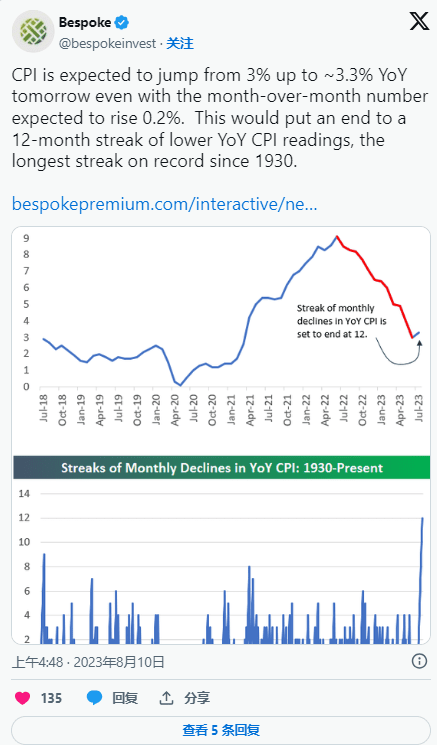
If these predictions come true, the likelihood of additional rate hikes will rise significantly, triggering a new round of uncertainty that could affect cryptocurrencies and stock markets.
Cryptocurrency prices ahead of CPI report
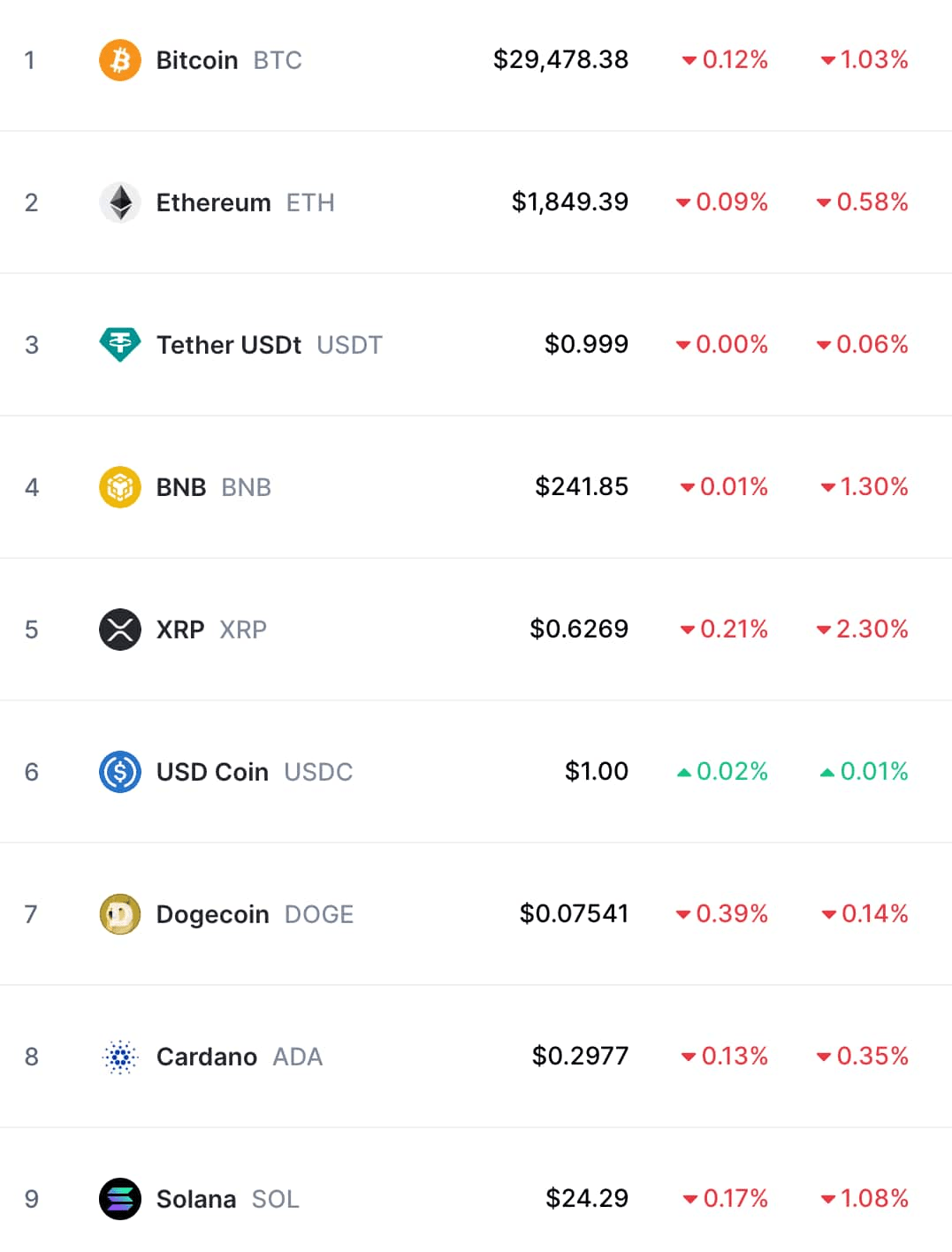
As of writing, most major cryptocurrencies are in the red over the past 24 hours. The premier crypto asset, Bitcoin ( BTC ), is down more than 1% on the day, Ethereum ( ETH ) is down about 0.6%, and Binance Coin ( BNB ) is down 1.3%.
XRP ( XRP ) led the declines, falling 2.3% on the 24-hour chart. Meanwhile, Dogecoin ( DOGE ), Cardano ( ADA ), and Solana ( SOL ) fell 0.14%, 0.35%, and 1.08%, respectively.
Although the current decline seems modest, it has the potential to expand. The situation depends on the upcoming CPI data, which, if it shows a surge in inflation of 3.3% or more in July, could trigger a defensive reaction from investors and extend the current losses.