

In the Asian market on Thursday (July 13), Bitcoin continued to fluctuate around the $30,400 range, and it was found from the volatility that the market was stabilizing. The crypto market awaits the arrival of the next halving cycle, which is seen as a key signal for a classic bull market. Huobi Research Institute pointed out that the specific time point is expected to be April 27, 2024. As the halving is imminent and external funds intervene in the short-term speculation, the market conditions will gradually heat up.
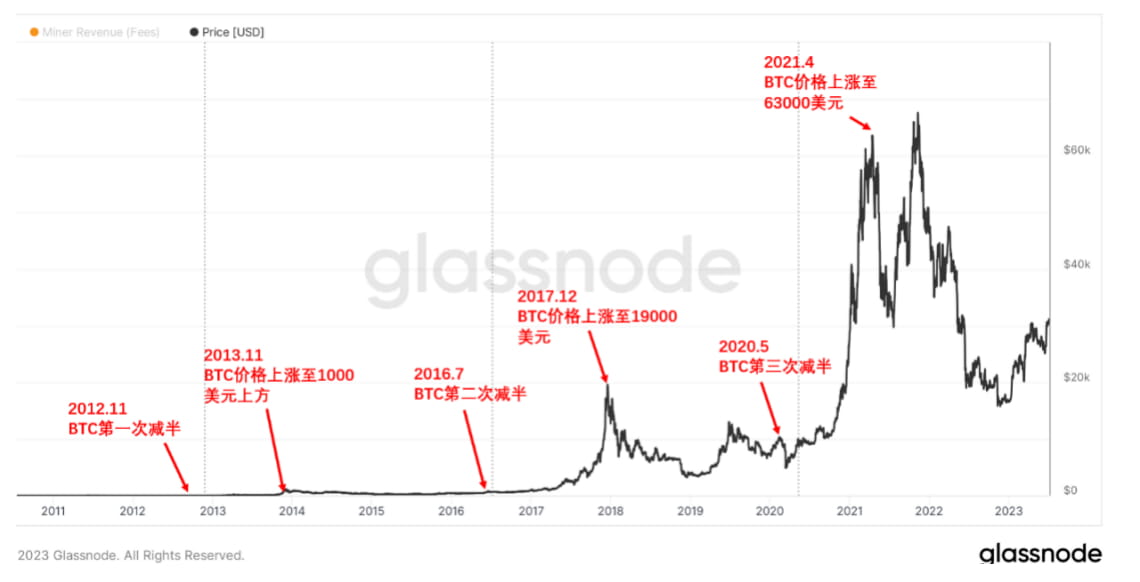
Typically, Bitcoin’s block reward halving event occurs approximately every four years. Bitcoin's halving event will cause the number of new Bitcoins miners receive from mining to be halved. Initially, the reward for each mined block was 50 Bitcoins, but was first halved to 25 Bitcoins in 2012, again to 12.5 Bitcoins in 2016, and to 6.25 Bitcoins in 2020. This halving process is designed to control the supply of Bitcoin and bring it gradually closer to its maximum issuance limit.
By halving the block reward, the Bitcoin network encourages miners to continue to participate in mining and causes the supply of Bitcoin to gradually decrease. Since the halving event reduces the economic incentive for mining, it may have an impact on miners' revenue. However, the halving will also increase the scarcity of Bitcoin to a certain extent, which may have a positive impact on the price.
Will the “classic bull market” of halving be repeated?
Take Litecoin (LTC) as an example. When the token was halved for the first time, the halving effect started 3 months in advance, and the price of LTC also rose all the way, with an increase of 420% in 3 months. However, the price fell sharply in the later period. There was no price surge near the halving time, but a long-term low fluctuation state. The reason may be that the block reward is halved and the mining output of miners is halved, resulting in increased costs, so miners will selectively stop operations. This will also lead to a decrease in the amount of LTC circulating into the market. According to the theory of supply and demand, the halving of LTC will lead to an increase in its price if demand remains unchanged.
In order to further understand the halving market, you can also take Bitcoin as an example. Bitcoin did not see a major increase near the time of the third halving, and there was no bull run in the crypto market until a year later.
Historical data shows that halving will indeed promote the rise of token prices, but the reason is not simply a change in the supply and demand relationship of tokens. It is more likely to be the benefits of halving and market sentiment, or it may be short-term speculation caused by the intervention of external funds. Secondly, it is difficult to grasp the specific start and end times of token price increases, so investors need more comprehensive analysis to guide transactions. For example, project progress, community popularity, project side operations, miner-related data, etc.
Judging from the historical data, the price changes of halving tokens have the following characteristics:
1. Before the official halving, the price of the halving token will rise several months in advance;
2. The price will reach a high before the halving day, and then decline. A low may appear near the halving day. It is recommended to plan ahead;
3. After the official halving, the price of the halved token will be less affected by the halving, and the main fluctuations will still follow the changes in the overall market.
However, Huobi Research Institute emphasizes that the above characteristics do not apply to Bitcoin. The Bitcoin bull market is most likely to occur one year after the halving. This is also a bull market in the encryption industry and is related to industry progress and macroeconomics. Investors need to accurately grasp the rising period of tokens and stop profits in time to avoid capital losses.
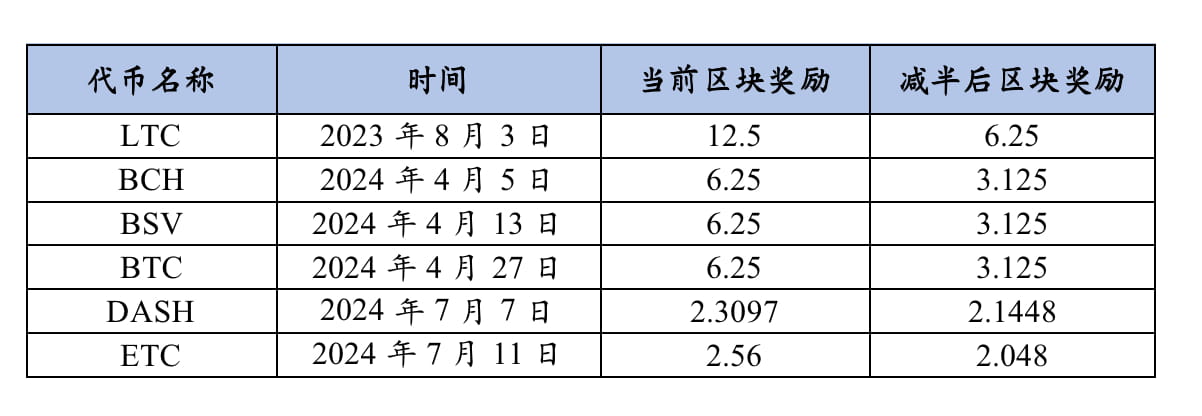
As the crypto market gradually recovers, Bitcoin Cash (BCH), Litecoin and other tokens are about to halve, and the market will gradually start to hype the concept of halving. The following is the halving schedule of key tokens:
The halving event does bring many opportunities to traders. The halving event usually triggers the market's attention to the scarcity of tokens, which in turn increases the possibility of token price increases. The reduction in supply and the increase in market demand may lead to an increase in token prices.
“For traders who are good at taking advantage of volatile market conditions, this means more opportunities for short-term trading and profit taking. Increased price volatility provides traders with more buying and selling opportunities, which can be traded through technical analysis and risk management strategies,” Huobi Research mentioned.
It should be noted that although the halving market may bring opportunities, there are still risks and uncertainties in the market. The impact of halving on the crypto market is complex, such as market sentiment, global economic environment and policy changes. Additionally, different cryptocurrencies may react differently to the halving event. Therefore, investors, traders and market makers should make informed decisions and strategic adjustments based on reference to relevant factors and market conditions.
Since the entire crypto market is still in a bear market, the news of the halving may attract more retail investors' attention. Historical experience shows that halving does bring greater instability to already volatile markets. Traders need to be aware of the risks. Halving events usually trigger market fluctuations, which may lead to violent fluctuations in token prices. This market uncertainty can increase the risk of trading, especially for short-term traders. Rapid price increases or decreases can cause traders to buy or sell at the wrong time, resulting in losses.
In addition, the halving event may lead to reduced liquidity in the market. Due to increased price volatility and trading activity, markets may become more volatile and widening bid-ask spreads may occur. This may increase transaction costs and difficulty in executing transactions.
Finally, there is information asymmetry. The halving event may trigger various rumors and inaccurate information inside and outside the market. This information asymmetry can lead traders to make poor decisions. Traders need to treat various information sources with caution and conduct sufficient research and analysis to obtain accurate and reliable information.
Overall, traders should evaluate and seize opportunities in the halving market based on their risk tolerance, investment goals, and trading strategies to maximize the market's potential.