

BlockchainReporter
27.8k Posts

BlockchainReporter
 Square Verified+
Report
Block User
The World's Page on Emerging Tech | Cryptocurrencies | Bitcoin | Blockchain | NFT | blockchainreporter.net
2 Following
42.0K+ Followers
180.1K+ Liked
Posts

Article
Lowest Fee Bitcoin ATMs Announces Launch of More Than 400 ATMs NationwideLas Vegas, NV, October 1st, 2026, Chainwire
Lowest Fee Bitcoin ATMs announced the launch of more than 400 cryptocurrency ATMs across the United States. The machines allow customers to purchase Bitcoin, Ethereum, USDT and USDC with cash at a stated flat 5% fee. Customers can also pre-register online before visiting an ATM.
Lowest Fee Bitcoin ATMs, a new nationwide low-fee Bitcoin ATM operator, launched today with an initial rollout of more than 400 Bitcoin ATMs across the United States, a footprint that places it amongst the largest Bitcoin ATM operators in the country on its first day. It also launched with a name that does most of the marketing department’s job for it. The brand charges a flat 5% Bitcoin ATM fee to buy Bitcoin, Ethereum, USDT or USDC with cash, displays the fee and exchange rate on screen before the customer confirms, and, as of today, lets first-time customers register online in about two minutes so they can skip onboarding at the machine entirely.
400+ Bitcoin ATM locations on day one
Most Bitcoin ATM operators in the U.S. run a few dozen machines. Lowest Fee Bitcoin ATMs opens with more than 400 Bitcoin ATM locations in the convenience stores, gas stations and shopping centers people already visit, with machines in Florida, California, Arizona and Texas among other states, as the first phase of a larger rollout.
“Four hundred machines is not a pilot. It’s a network,” said Quincy Mathis, Operations Manager at Lowest Fee Bitcoin ATMs. “We wanted to be one of the biggest Bitcoin ATM operators in the country on the day we opened, because a low fee only matters if there’s a machine near you. This is phase one.”
Buy Bitcoin, Ethereum, USDT and USDC with cash: coins, limits and one fee
Every Lowest Fee Bitcoin ATM sells Bitcoin (BTC), Ethereum (ETH), Tether (USDT) and USD Coin (USDC) for cash, all at the same 5% fee, all sent directly to the customer’s own wallet. No bank account or credit card is needed. The machines are non-custodial: the company never holds customer funds.
Bitcoin ATM daily limits are set by verification tier:
Tier 1, phone number only: up to $2,000 per day
Tier 2, government ID and Tax ID: up to $50,000 per day
Bitcoin ATM fees compared: what $1,000 buys
The typical Bitcoin ATM in the United States charges roughly 12% to 15% to buy, and some of the largest national brands charge 20% or more. Here is what that looks like when a customer walks up with $1,000 in cash:
Illustrative, based on posted percentage fees only and before exchange rate. Many operators add an exchange-rate markup on top of the posted fee; Lowest Fee Bitcoin ATMs shows both the fee and the rate on screen before a transaction is confirmed. Industry figures reflect publicly reported U.S. Bitcoin ATM fee ranges. See how the Bitcoin ATM fees compare.
At a 20% machine, one dollar in every five never becomes crypto. At Lowest Fee Bitcoin ATMs, it’s one in twenty. The name is not subtle; neither is a 20% fee.
“We wanted a rate people can look at on the receipt and feel good about, not one they have to make peace with,” said Quincy Mathis. “Five percent, shown up front, with the exchange rate right next to it. That’s the whole pitch.”
Stablecoin ATMs are becoming the way people send money overseas
A growing share of customers are using the machines as USDT and USDC ATMs, buying dollar pegged stable coins to send money to family and friends overseas and to pay suppliers and contractors abroad. A customer inserts cash, the stable coins arrive in the recipient’s wallet within minutes, and the recipient holds dollars they can keep or cash out locally. No wire counter, no multi-day wait, and no bank account needed to send.
That makes the fee gap matter more, not less. Someone sending $1,000 home once a month pays about $600 a year in fees at a 5% machine, $1,440 to $1,800 at a typical machine, and $2,400 at a 20% machine. The difference is real money to the people who can least afford to lose it, which is why low fees matter most to remittance customers.
“The people using stable coins to support family abroad are exactly the people who shouldn’t be paying 20% for the privilege,” said Quincy Mathis.
How to use a Bitcoin ATM: four steps, under two minutes, now with online pre-registration
New with today’s launch is online Bitcoin ATM pre-registration. First-time customers can pre-register online before they ever visit a machine, so the first visit is as fast as the tenth. At any of the 400+ machines, they simply enter their phone number.
Register online, once. About two minutes on a phone.
Walk up and enter your phone number. The machine recognizes you. No paperwork at the kiosk.
Pick a coin, scan your wallet, insert cash. Scan your wallet’s QR code and feed in the bills.
Check the screen and confirm. The fee and exchange rate are displayed before you press anything. Crypto lands in your wallet within minutes.
Customers who would rather register at the machine still can. It just takes a little longer, and the company would like to gently point out that it no longer has to. A full walkthrough of how a Bitcoin ATM works is on the company’s website.
Compliance, briefly
Lowest Fee Bitcoin ATMs is a FinCEN-registered money services business, and every machine operates in compliance with federal and state regulations. Customer data is encrypted, and transactions are non-custodial and irreversible. No government agency, bank, utility or tech-support line will ever ask anyone to pay them at a Bitcoin ATM; if someone does, it is a scam. Common questions are answered in the company’s Bitcoin ATM FAQ.
Find a low-fee Bitcoin ATM near you
Lowest Fee Bitcoin ATMs are live now at 400+ locations across the United States, with further phases of the rollout to follow. Customers can find a Bitcoin ATM near them and pre-register at lowestfeebitcoinatms.com. New customers can use code LOWEST at the machine for 20% off the transaction fee, which brings the fee on that $1,000 transaction down to $40.
About Lowest Fee Bitcoin ATMs
Lowest Fee Bitcoin ATMs is a nationwide low-fee Bitcoin ATM operator whose initial network of more than 400 machines ranks among the largest in the United States. Customers can buy Bitcoin, Ethereum, USDT and USDC with cash for a flat 5% fee, with the fee and exchange rate displayed on screen before every transaction. The company is a FinCEN-registered money services business. Users can learn more at lowestfeebitcoinatms.com.
Contact
Marketing DirectorBrian S. SmithLowest Fee Bitcoin ATMssupport@lowestfeebitcoinatms.com
This article is not intended as financial advice. Educational purposes only.
Lowest Fee Bitcoin ATMs Announces Launch of More Than 400 ATMs Nationwide
Las Vegas, NV, October 1st, 2026, Chainwire
Lowest Fee Bitcoin ATMs announced the launch of more than 400 cryptocurrency ATMs across the United States. The machines allow customers to purchase Bitcoin, Ethereum, USDT and USDC with cash at a stated flat 5% fee. Customers can also pre-register online before visiting an ATM.
Lowest Fee Bitcoin ATMs, a new nationwide low-fee Bitcoin ATM operator, launched today with an initial rollout of more than 400 Bitcoin ATMs across the United States, a footprint that places it amongst the largest Bitcoin ATM operators in the country on its first day. It also launched with a name that does most of the marketing department’s job for it. The brand charges a flat 5% Bitcoin ATM fee to buy Bitcoin, Ethereum, USDT or USDC with cash, displays the fee and exchange rate on screen before the customer confirms, and, as of today, lets first-time customers register online in about two minutes so they can skip onboarding at the machine entirely.
400+ Bitcoin ATM locations on day one
Most Bitcoin ATM operators in the U.S. run a few dozen machines. Lowest Fee Bitcoin ATMs opens with more than 400 Bitcoin ATM locations in the convenience stores, gas stations and shopping centers people already visit, with machines in Florida, California, Arizona and Texas among other states, as the first phase of a larger rollout.
“Four hundred machines is not a pilot. It’s a network,” said Quincy Mathis, Operations Manager at Lowest Fee Bitcoin ATMs. “We wanted to be one of the biggest Bitcoin ATM operators in the country on the day we opened, because a low fee only matters if there’s a machine near you. This is phase one.”
Buy Bitcoin, Ethereum, USDT and USDC with cash: coins, limits and one fee
Every Lowest Fee Bitcoin ATM sells Bitcoin (BTC), Ethereum (ETH), Tether (USDT) and USD Coin (USDC) for cash, all at the same 5% fee, all sent directly to the customer’s own wallet. No bank account or credit card is needed. The machines are non-custodial: the company never holds customer funds.
Bitcoin ATM daily limits are set by verification tier:
Tier 1, phone number only: up to $2,000 per day
Tier 2, government ID and Tax ID: up to $50,000 per day
Bitcoin ATM fees compared: what $1,000 buys
The typical Bitcoin ATM in the United States charges roughly 12% to 15% to buy, and some of the largest national brands charge 20% or more. Here is what that looks like when a customer walks up with $1,000 in cash:
Illustrative, based on posted percentage fees only and before exchange rate. Many operators add an exchange-rate markup on top of the posted fee; Lowest Fee Bitcoin ATMs shows both the fee and the rate on screen before a transaction is confirmed. Industry figures reflect publicly reported U.S. Bitcoin ATM fee ranges. See how the Bitcoin ATM fees compare.
At a 20% machine, one dollar in every five never becomes crypto. At Lowest Fee Bitcoin ATMs, it’s one in twenty. The name is not subtle; neither is a 20% fee.
“We wanted a rate people can look at on the receipt and feel good about, not one they have to make peace with,” said Quincy Mathis. “Five percent, shown up front, with the exchange rate right next to it. That’s the whole pitch.”
Stablecoin ATMs are becoming the way people send money overseas
A growing share of customers are using the machines as USDT and USDC ATMs, buying dollar pegged stable coins to send money to family and friends overseas and to pay suppliers and contractors abroad. A customer inserts cash, the stable coins arrive in the recipient’s wallet within minutes, and the recipient holds dollars they can keep or cash out locally. No wire counter, no multi-day wait, and no bank account needed to send.
That makes the fee gap matter more, not less. Someone sending $1,000 home once a month pays about $600 a year in fees at a 5% machine, $1,440 to $1,800 at a typical machine, and $2,400 at a 20% machine. The difference is real money to the people who can least afford to lose it, which is why low fees matter most to remittance customers.
“The people using stable coins to support family abroad are exactly the people who shouldn’t be paying 20% for the privilege,” said Quincy Mathis.
How to use a Bitcoin ATM: four steps, under two minutes, now with online pre-registration
New with today’s launch is online Bitcoin ATM pre-registration. First-time customers can pre-register online before they ever visit a machine, so the first visit is as fast as the tenth. At any of the 400+ machines, they simply enter their phone number.
Register online, once. About two minutes on a phone.
Walk up and enter your phone number. The machine recognizes you. No paperwork at the kiosk.
Pick a coin, scan your wallet, insert cash. Scan your wallet’s QR code and feed in the bills.
Check the screen and confirm. The fee and exchange rate are displayed before you press anything. Crypto lands in your wallet within minutes.
Customers who would rather register at the machine still can. It just takes a little longer, and the company would like to gently point out that it no longer has to. A full walkthrough of how a Bitcoin ATM works is on the company’s website.
Compliance, briefly
Lowest Fee Bitcoin ATMs is a FinCEN-registered money services business, and every machine operates in compliance with federal and state regulations. Customer data is encrypted, and transactions are non-custodial and irreversible. No government agency, bank, utility or tech-support line will ever ask anyone to pay them at a Bitcoin ATM; if someone does, it is a scam. Common questions are answered in the company’s Bitcoin ATM FAQ.
Find a low-fee Bitcoin ATM near you
Lowest Fee Bitcoin ATMs are live now at 400+ locations across the United States, with further phases of the rollout to follow. Customers can find a Bitcoin ATM near them and pre-register at lowestfeebitcoinatms.com. New customers can use code LOWEST at the machine for 20% off the transaction fee, which brings the fee on that $1,000 transaction down to $40.
About Lowest Fee Bitcoin ATMs
Lowest Fee Bitcoin ATMs is a nationwide low-fee Bitcoin ATM operator whose initial network of more than 400 machines ranks among the largest in the United States. Customers can buy Bitcoin, Ethereum, USDT and USDC with cash for a flat 5% fee, with the fee and exchange rate displayed on screen before every transaction. The company is a FinCEN-registered money services business. Users can learn more at lowestfeebitcoinatms.com.
Contact
Marketing DirectorBrian S. SmithLowest Fee Bitcoin ATMssupport@lowestfeebitcoinatms.com
This article is not intended as financial advice. Educational purposes only.
Lowest Fee Bitcoin ATMs announced the launch of more than 400 cryptocurrency ATMs across the United States. The machines allow customers to purchase Bitcoin, Ethereum, USDT and USDC with cash at a stated flat 5% fee. Customers can also pre-register online before visiting an ATM.
Lowest Fee Bitcoin ATMs, a new nationwide low-fee Bitcoin ATM operator, launched today with an initial rollout of more than 400 Bitcoin ATMs across the United States, a footprint that places it amongst the largest Bitcoin ATM operators in the country on its first day. It also launched with a name that does most of the marketing department’s job for it. The brand charges a flat 5% Bitcoin ATM fee to buy Bitcoin, Ethereum, USDT or USDC with cash, displays the fee and exchange rate on screen before the customer confirms, and, as of today, lets first-time customers register online in about two minutes so they can skip onboarding at the machine entirely.
400+ Bitcoin ATM locations on day one
Most Bitcoin ATM operators in the U.S. run a few dozen machines. Lowest Fee Bitcoin ATMs opens with more than 400 Bitcoin ATM locations in the convenience stores, gas stations and shopping centers people already visit, with machines in Florida, California, Arizona and Texas among other states, as the first phase of a larger rollout.
“Four hundred machines is not a pilot. It’s a network,” said Quincy Mathis, Operations Manager at Lowest Fee Bitcoin ATMs. “We wanted to be one of the biggest Bitcoin ATM operators in the country on the day we opened, because a low fee only matters if there’s a machine near you. This is phase one.”
Buy Bitcoin, Ethereum, USDT and USDC with cash: coins, limits and one fee
Every Lowest Fee Bitcoin ATM sells Bitcoin (BTC), Ethereum (ETH), Tether (USDT) and USD Coin (USDC) for cash, all at the same 5% fee, all sent directly to the customer’s own wallet. No bank account or credit card is needed. The machines are non-custodial: the company never holds customer funds.
Bitcoin ATM daily limits are set by verification tier:
Tier 1, phone number only: up to $2,000 per day
Tier 2, government ID and Tax ID: up to $50,000 per day
Bitcoin ATM fees compared: what $1,000 buys
The typical Bitcoin ATM in the United States charges roughly 12% to 15% to buy, and some of the largest national brands charge 20% or more. Here is what that looks like when a customer walks up with $1,000 in cash:
Illustrative, based on posted percentage fees only and before exchange rate. Many operators add an exchange-rate markup on top of the posted fee; Lowest Fee Bitcoin ATMs shows both the fee and the rate on screen before a transaction is confirmed. Industry figures reflect publicly reported U.S. Bitcoin ATM fee ranges. See how the Bitcoin ATM fees compare.
At a 20% machine, one dollar in every five never becomes crypto. At Lowest Fee Bitcoin ATMs, it’s one in twenty. The name is not subtle; neither is a 20% fee.
“We wanted a rate people can look at on the receipt and feel good about, not one they have to make peace with,” said Quincy Mathis. “Five percent, shown up front, with the exchange rate right next to it. That’s the whole pitch.”
Stablecoin ATMs are becoming the way people send money overseas
A growing share of customers are using the machines as USDT and USDC ATMs, buying dollar pegged stable coins to send money to family and friends overseas and to pay suppliers and contractors abroad. A customer inserts cash, the stable coins arrive in the recipient’s wallet within minutes, and the recipient holds dollars they can keep or cash out locally. No wire counter, no multi-day wait, and no bank account needed to send.
That makes the fee gap matter more, not less. Someone sending $1,000 home once a month pays about $600 a year in fees at a 5% machine, $1,440 to $1,800 at a typical machine, and $2,400 at a 20% machine. The difference is real money to the people who can least afford to lose it, which is why low fees matter most to remittance customers.
“The people using stable coins to support family abroad are exactly the people who shouldn’t be paying 20% for the privilege,” said Quincy Mathis.
How to use a Bitcoin ATM: four steps, under two minutes, now with online pre-registration
New with today’s launch is online Bitcoin ATM pre-registration. First-time customers can pre-register online before they ever visit a machine, so the first visit is as fast as the tenth. At any of the 400+ machines, they simply enter their phone number.
Register online, once. About two minutes on a phone.
Walk up and enter your phone number. The machine recognizes you. No paperwork at the kiosk.
Pick a coin, scan your wallet, insert cash. Scan your wallet’s QR code and feed in the bills.
Check the screen and confirm. The fee and exchange rate are displayed before you press anything. Crypto lands in your wallet within minutes.
Customers who would rather register at the machine still can. It just takes a little longer, and the company would like to gently point out that it no longer has to. A full walkthrough of how a Bitcoin ATM works is on the company’s website.
Compliance, briefly
Lowest Fee Bitcoin ATMs is a FinCEN-registered money services business, and every machine operates in compliance with federal and state regulations. Customer data is encrypted, and transactions are non-custodial and irreversible. No government agency, bank, utility or tech-support line will ever ask anyone to pay them at a Bitcoin ATM; if someone does, it is a scam. Common questions are answered in the company’s Bitcoin ATM FAQ.
Find a low-fee Bitcoin ATM near you
Lowest Fee Bitcoin ATMs are live now at 400+ locations across the United States, with further phases of the rollout to follow. Customers can find a Bitcoin ATM near them and pre-register at lowestfeebitcoinatms.com. New customers can use code LOWEST at the machine for 20% off the transaction fee, which brings the fee on that $1,000 transaction down to $40.
About Lowest Fee Bitcoin ATMs
Lowest Fee Bitcoin ATMs is a nationwide low-fee Bitcoin ATM operator whose initial network of more than 400 machines ranks among the largest in the United States. Customers can buy Bitcoin, Ethereum, USDT and USDC with cash for a flat 5% fee, with the fee and exchange rate displayed on screen before every transaction. The company is a FinCEN-registered money services business. Users can learn more at lowestfeebitcoinatms.com.
Contact
Marketing DirectorBrian S. SmithLowest Fee Bitcoin ATMssupport@lowestfeebitcoinatms.com
This article is not intended as financial advice. Educational purposes only.
1
158
Article
Travala’s Crypto Loyalty Program Passes 170,000 Members, Sets Long-Term Goal of 30% of AVA Supply...Singapore, Singapore, October 1st, 2026, Chainwire
With around 16% of AVA’s circulating supply already locked, the AVA Smart Program introduces new lock levels as part of a wider overhaul of AVA’s tokenomics.
The AVA Foundation and Travala today announced new standard lock levels for the AVA Smart Program, alongside a long-term goal of 30% of AVA’s circulating supply locked.
The AVA Smart Program—Travala’s crypto loyalty program—has more than 170,000 members, up 110% year on year as of August. Approximately 12.1 million AVA is now locked across the program and AVA+ Rewards, representing around 16% of the token’s circulating supply.
Travala, a crypto-native travel platform, has more than 1.87 million monthly active users and generated over $113 million in gross revenue in 2025. It sees more than 17,000 room nights, flights, car rentals, and activities booked every month.
From no earlier than 1 November 2026, new Smart memberships will require double the current AVA lock for every tier. Existing members keep their current requirements while their membership remains active, and can choose to move to the new levels after implementation to increase the AVA eligible for the AVA Smart Bonus. AVA Smart Bonus amounts remain 15% per year for Steel to Platinum and 20% for Diamond, subject to the program rules.
If existing members move to the new levels, locked AVA would reach approximately 20 million, around 27% of circulating supply. Continued growth in AVA+ Rewards adoption would take that toward the long-term goal of 30%.
Steve Hipwell, AVA Foundation Lead Contributor, said: “Having 16% of AVA’s circulating supply locked within a travel loyalty program demonstrates genuine real-world utility. The new lock levels reward our existing members for being early, and give the whole community a clear long-term goal of 30% of circulating supply locked.”
Juan Otero, Travala CEO, said: “More than 170,000 travellers are now part of the AVA Smart Program, and those who lock AVA get more from every trip they book with us. This update rewards everyone who has already made that commitment and gives our most loyal members the option to go further.”
The update follows last week’s launch of the AVA Permanent Strategic Reserve, under which Travala matches the AVA Foundation’s monthly open-market buybacks, doubling buyback volume. Travala’s matched tokens are held in a multisig reserve it has committed never to sell or transfer. In September, the two buybacks together repurchased 739,762 AVA, and more than 4.8 million AVA has been repurchased through the Foundation’s program to date.
See this article for full details, including tier requirements, grandfathering rules, and FAQs.
About AVA Foundation
The AVA Foundation oversees the AVA token ecosystem, including the AVA Smart Program, AVA token and Travel Tiger NFTs. The AVA token functions as the key to accessing the AVA Smart Program, which provides travel perks and other benefits to Travala customers, such as AVA payment discounts, AVA loyalty rewards and other benefits. AVA tokenises the concept of loyalty reward programs using blockchain technology, bringing web3 to traditional loyalty models. For more information, users can visit www.avafoundation.org.
About Travala
Founded in 2017 and now backed by industry giant Binance, Travala is the leading crypto-native travel booking service, offering 2,200,000+ properties across 230 countries, 600+ airlines, 50,000+ car rental locations and 400,000+ activities globally. Travala is a champion of cryptocurrency adoption, accepting over 100 leading cryptocurrencies alongside traditional payment methods. For more information, users can visit www.travala.com.
Important Information
This announcement describes planned changes to the AVA Smart Program, which may be adjusted. It is not financial or investment advice, and not an offer, solicitation or inducement to acquire, hold or lock AVA. AVA Smart Bonus amounts are subject to the program rules and may change; nothing here guarantees any token price or return. Locked AVA remains the member’s property and is not a deposit, investment product or interest-bearing account. Not directed at persons in the United Kingdom, the United Arab Emirates or any jurisdiction where distribution would be unlawful.
Contact
Chief Marketing OfficerSam WoollardTravalasam@travala.com
This article is not intended as financial advice. Educational purposes only.
Travala’s Crypto Loyalty Program Passes 170,000 Members, Sets Long-Term Goal of 30% of AVA Supply...
Singapore, Singapore, October 1st, 2026, Chainwire
With around 16% of AVA’s circulating supply already locked, the AVA Smart Program introduces new lock levels as part of a wider overhaul of AVA’s tokenomics.
The AVA Foundation and Travala today announced new standard lock levels for the AVA Smart Program, alongside a long-term goal of 30% of AVA’s circulating supply locked.
The AVA Smart Program—Travala’s crypto loyalty program—has more than 170,000 members, up 110% year on year as of August. Approximately 12.1 million AVA is now locked across the program and AVA+ Rewards, representing around 16% of the token’s circulating supply.
Travala, a crypto-native travel platform, has more than 1.87 million monthly active users and generated over $113 million in gross revenue in 2025. It sees more than 17,000 room nights, flights, car rentals, and activities booked every month.
From no earlier than 1 November 2026, new Smart memberships will require double the current AVA lock for every tier. Existing members keep their current requirements while their membership remains active, and can choose to move to the new levels after implementation to increase the AVA eligible for the AVA Smart Bonus. AVA Smart Bonus amounts remain 15% per year for Steel to Platinum and 20% for Diamond, subject to the program rules.
If existing members move to the new levels, locked AVA would reach approximately 20 million, around 27% of circulating supply. Continued growth in AVA+ Rewards adoption would take that toward the long-term goal of 30%.
Steve Hipwell, AVA Foundation Lead Contributor, said: “Having 16% of AVA’s circulating supply locked within a travel loyalty program demonstrates genuine real-world utility. The new lock levels reward our existing members for being early, and give the whole community a clear long-term goal of 30% of circulating supply locked.”
Juan Otero, Travala CEO, said: “More than 170,000 travellers are now part of the AVA Smart Program, and those who lock AVA get more from every trip they book with us. This update rewards everyone who has already made that commitment and gives our most loyal members the option to go further.”
The update follows last week’s launch of the AVA Permanent Strategic Reserve, under which Travala matches the AVA Foundation’s monthly open-market buybacks, doubling buyback volume. Travala’s matched tokens are held in a multisig reserve it has committed never to sell or transfer. In September, the two buybacks together repurchased 739,762 AVA, and more than 4.8 million AVA has been repurchased through the Foundation’s program to date.
See this article for full details, including tier requirements, grandfathering rules, and FAQs.
About AVA Foundation
The AVA Foundation oversees the AVA token ecosystem, including the AVA Smart Program, AVA token and Travel Tiger NFTs. The AVA token functions as the key to accessing the AVA Smart Program, which provides travel perks and other benefits to Travala customers, such as AVA payment discounts, AVA loyalty rewards and other benefits. AVA tokenises the concept of loyalty reward programs using blockchain technology, bringing web3 to traditional loyalty models. For more information, users can visit www.avafoundation.org.
About Travala
Founded in 2017 and now backed by industry giant Binance, Travala is the leading crypto-native travel booking service, offering 2,200,000+ properties across 230 countries, 600+ airlines, 50,000+ car rental locations and 400,000+ activities globally. Travala is a champion of cryptocurrency adoption, accepting over 100 leading cryptocurrencies alongside traditional payment methods. For more information, users can visit www.travala.com.
Important Information
This announcement describes planned changes to the AVA Smart Program, which may be adjusted. It is not financial or investment advice, and not an offer, solicitation or inducement to acquire, hold or lock AVA. AVA Smart Bonus amounts are subject to the program rules and may change; nothing here guarantees any token price or return. Locked AVA remains the member’s property and is not a deposit, investment product or interest-bearing account. Not directed at persons in the United Kingdom, the United Arab Emirates or any jurisdiction where distribution would be unlawful.
Contact
Chief Marketing OfficerSam WoollardTravalasam@travala.com
This article is not intended as financial advice. Educational purposes only.
With around 16% of AVA’s circulating supply already locked, the AVA Smart Program introduces new lock levels as part of a wider overhaul of AVA’s tokenomics.
The AVA Foundation and Travala today announced new standard lock levels for the AVA Smart Program, alongside a long-term goal of 30% of AVA’s circulating supply locked.
The AVA Smart Program—Travala’s crypto loyalty program—has more than 170,000 members, up 110% year on year as of August. Approximately 12.1 million AVA is now locked across the program and AVA+ Rewards, representing around 16% of the token’s circulating supply.
Travala, a crypto-native travel platform, has more than 1.87 million monthly active users and generated over $113 million in gross revenue in 2025. It sees more than 17,000 room nights, flights, car rentals, and activities booked every month.
From no earlier than 1 November 2026, new Smart memberships will require double the current AVA lock for every tier. Existing members keep their current requirements while their membership remains active, and can choose to move to the new levels after implementation to increase the AVA eligible for the AVA Smart Bonus. AVA Smart Bonus amounts remain 15% per year for Steel to Platinum and 20% for Diamond, subject to the program rules.
If existing members move to the new levels, locked AVA would reach approximately 20 million, around 27% of circulating supply. Continued growth in AVA+ Rewards adoption would take that toward the long-term goal of 30%.
Steve Hipwell, AVA Foundation Lead Contributor, said: “Having 16% of AVA’s circulating supply locked within a travel loyalty program demonstrates genuine real-world utility. The new lock levels reward our existing members for being early, and give the whole community a clear long-term goal of 30% of circulating supply locked.”
Juan Otero, Travala CEO, said: “More than 170,000 travellers are now part of the AVA Smart Program, and those who lock AVA get more from every trip they book with us. This update rewards everyone who has already made that commitment and gives our most loyal members the option to go further.”
The update follows last week’s launch of the AVA Permanent Strategic Reserve, under which Travala matches the AVA Foundation’s monthly open-market buybacks, doubling buyback volume. Travala’s matched tokens are held in a multisig reserve it has committed never to sell or transfer. In September, the two buybacks together repurchased 739,762 AVA, and more than 4.8 million AVA has been repurchased through the Foundation’s program to date.
See this article for full details, including tier requirements, grandfathering rules, and FAQs.
About AVA Foundation
The AVA Foundation oversees the AVA token ecosystem, including the AVA Smart Program, AVA token and Travel Tiger NFTs. The AVA token functions as the key to accessing the AVA Smart Program, which provides travel perks and other benefits to Travala customers, such as AVA payment discounts, AVA loyalty rewards and other benefits. AVA tokenises the concept of loyalty reward programs using blockchain technology, bringing web3 to traditional loyalty models. For more information, users can visit www.avafoundation.org.
About Travala
Founded in 2017 and now backed by industry giant Binance, Travala is the leading crypto-native travel booking service, offering 2,200,000+ properties across 230 countries, 600+ airlines, 50,000+ car rental locations and 400,000+ activities globally. Travala is a champion of cryptocurrency adoption, accepting over 100 leading cryptocurrencies alongside traditional payment methods. For more information, users can visit www.travala.com.
Important Information
This announcement describes planned changes to the AVA Smart Program, which may be adjusted. It is not financial or investment advice, and not an offer, solicitation or inducement to acquire, hold or lock AVA. AVA Smart Bonus amounts are subject to the program rules and may change; nothing here guarantees any token price or return. Locked AVA remains the member’s property and is not a deposit, investment product or interest-bearing account. Not directed at persons in the United Kingdom, the United Arab Emirates or any jurisdiction where distribution would be unlawful.
Contact
Chief Marketing OfficerSam WoollardTravalasam@travala.com
This article is not intended as financial advice. Educational purposes only.
412
Article
Tria Launches Native XRP Ledger Support Across Wallet, Card and TradingNew York, USA, September 30th, 2026, Chainwire
Integration lets users hold XRP, RLUSD, and USDC and use XRP to fund Tria cards and Hyperliquid or Decibel trading accounts without manually bridging or swapping.
Tria, the self-custodial neofinance platform for trading, earning, spending and moving assets across chains, today announced native support for the XRP Ledger, making XRP directly usable across Tria’s wallet, card and trading products.
Users can now receive, hold and send XRP, RLUSD and USDC on the native XRP Ledger, use XRP to book or top up a Tria card, and fund futures trading accounts on Hyperliquid or Decibel—all from inside Tria.
The integration removes the manual bridging and swapping that typically sits between an onchain balance and where a user wants to put it to work. Tria handles the underlying routing, allowing users to move from holding XRP to spending or trading without navigating multiple networks and applications themselves.
“XRP has one of the largest and most established communities in digital assets, but holding an asset and being able to use it seamlessly are still very different things,” said Vijit Katta, Co-founder and CEO of Tria. “With XRP Ledger support inside Tria, users can keep control of their assets while moving directly into spending or trading without stitching together bridges, swaps and separate apps.”
For card users, XRP can be used for both initial card booking and subsequent top-ups. For traders, XRP Ledger balances can fund futures accounts on Hyperliquid or Decibel. Tria displays both an estimated amount and guaranteed minimum before users confirm a card or trading top-up.
Transactions directly on the XRP Ledger typically settle in approximately three to five seconds, while cross-network card and trading top-ups generally take between one and three minutes.
The launch supports XRP, RLUSD and USDC on the native XRP Ledger. New XRP Ledger accounts require a 1 XRP reserve, with an additional 0.2 XRP reserve for each enabled token. Those reserves remain in the user’s account and are not paid to Tria. Tria recommends an initial deposit of at least 2 XRP to allow for reserve requirements and transaction fees.
Support is limited to the native XRP Ledger. XRP transferred through Ethereum, BNB Chain or the XRPL EVM sidechain is not supported by the integration.
The launch expands Tria’s broader push to make digital assets usable across financial products without forcing users to manage the infrastructure underneath each transaction. Tria brings spending, trading and cross-chain money movement into a single self-custodial interface designed to make assets portable across networks and applications.
XRP Ledger support is available now in the Tria app, with no access code required.
Get started on Tria.
About Tria
Tria is a self-custodial neofinance platform that lets users trade, earn, spend and move assets across chains from a single interface. Tria combines consumer financial products with cross-chain infrastructure designed to make digital assets usable without requiring users to manually navigate bridges, networks and fragmented applications.
For more information, visit tria.so.
Contact
Jon PhillipsPhillComm GlobalTria@PhillCommGlobal
This article is not intended as financial advice. Educational purposes only.
Tria Launches Native XRP Ledger Support Across Wallet, Card and Trading
New York, USA, September 30th, 2026, Chainwire
Integration lets users hold XRP, RLUSD, and USDC and use XRP to fund Tria cards and Hyperliquid or Decibel trading accounts without manually bridging or swapping.
Tria, the self-custodial neofinance platform for trading, earning, spending and moving assets across chains, today announced native support for the XRP Ledger, making XRP directly usable across Tria’s wallet, card and trading products.
Users can now receive, hold and send XRP, RLUSD and USDC on the native XRP Ledger, use XRP to book or top up a Tria card, and fund futures trading accounts on Hyperliquid or Decibel—all from inside Tria.
The integration removes the manual bridging and swapping that typically sits between an onchain balance and where a user wants to put it to work. Tria handles the underlying routing, allowing users to move from holding XRP to spending or trading without navigating multiple networks and applications themselves.
“XRP has one of the largest and most established communities in digital assets, but holding an asset and being able to use it seamlessly are still very different things,” said Vijit Katta, Co-founder and CEO of Tria. “With XRP Ledger support inside Tria, users can keep control of their assets while moving directly into spending or trading without stitching together bridges, swaps and separate apps.”
For card users, XRP can be used for both initial card booking and subsequent top-ups. For traders, XRP Ledger balances can fund futures accounts on Hyperliquid or Decibel. Tria displays both an estimated amount and guaranteed minimum before users confirm a card or trading top-up.
Transactions directly on the XRP Ledger typically settle in approximately three to five seconds, while cross-network card and trading top-ups generally take between one and three minutes.
The launch supports XRP, RLUSD and USDC on the native XRP Ledger. New XRP Ledger accounts require a 1 XRP reserve, with an additional 0.2 XRP reserve for each enabled token. Those reserves remain in the user’s account and are not paid to Tria. Tria recommends an initial deposit of at least 2 XRP to allow for reserve requirements and transaction fees.
Support is limited to the native XRP Ledger. XRP transferred through Ethereum, BNB Chain or the XRPL EVM sidechain is not supported by the integration.
The launch expands Tria’s broader push to make digital assets usable across financial products without forcing users to manage the infrastructure underneath each transaction. Tria brings spending, trading and cross-chain money movement into a single self-custodial interface designed to make assets portable across networks and applications.
XRP Ledger support is available now in the Tria app, with no access code required.
Get started on Tria.
About Tria
Tria is a self-custodial neofinance platform that lets users trade, earn, spend and move assets across chains from a single interface. Tria combines consumer financial products with cross-chain infrastructure designed to make digital assets usable without requiring users to manually navigate bridges, networks and fragmented applications.
For more information, visit tria.so.
Contact
Jon PhillipsPhillComm GlobalTria@PhillCommGlobal
This article is not intended as financial advice. Educational purposes only.
Integration lets users hold XRP, RLUSD, and USDC and use XRP to fund Tria cards and Hyperliquid or Decibel trading accounts without manually bridging or swapping.
Tria, the self-custodial neofinance platform for trading, earning, spending and moving assets across chains, today announced native support for the XRP Ledger, making XRP directly usable across Tria’s wallet, card and trading products.
Users can now receive, hold and send XRP, RLUSD and USDC on the native XRP Ledger, use XRP to book or top up a Tria card, and fund futures trading accounts on Hyperliquid or Decibel—all from inside Tria.
The integration removes the manual bridging and swapping that typically sits between an onchain balance and where a user wants to put it to work. Tria handles the underlying routing, allowing users to move from holding XRP to spending or trading without navigating multiple networks and applications themselves.
“XRP has one of the largest and most established communities in digital assets, but holding an asset and being able to use it seamlessly are still very different things,” said Vijit Katta, Co-founder and CEO of Tria. “With XRP Ledger support inside Tria, users can keep control of their assets while moving directly into spending or trading without stitching together bridges, swaps and separate apps.”
For card users, XRP can be used for both initial card booking and subsequent top-ups. For traders, XRP Ledger balances can fund futures accounts on Hyperliquid or Decibel. Tria displays both an estimated amount and guaranteed minimum before users confirm a card or trading top-up.
Transactions directly on the XRP Ledger typically settle in approximately three to five seconds, while cross-network card and trading top-ups generally take between one and three minutes.
The launch supports XRP, RLUSD and USDC on the native XRP Ledger. New XRP Ledger accounts require a 1 XRP reserve, with an additional 0.2 XRP reserve for each enabled token. Those reserves remain in the user’s account and are not paid to Tria. Tria recommends an initial deposit of at least 2 XRP to allow for reserve requirements and transaction fees.
Support is limited to the native XRP Ledger. XRP transferred through Ethereum, BNB Chain or the XRPL EVM sidechain is not supported by the integration.
The launch expands Tria’s broader push to make digital assets usable across financial products without forcing users to manage the infrastructure underneath each transaction. Tria brings spending, trading and cross-chain money movement into a single self-custodial interface designed to make assets portable across networks and applications.
XRP Ledger support is available now in the Tria app, with no access code required.
Get started on Tria.
About Tria
Tria is a self-custodial neofinance platform that lets users trade, earn, spend and move assets across chains from a single interface. Tria combines consumer financial products with cross-chain infrastructure designed to make digital assets usable without requiring users to manually navigate bridges, networks and fragmented applications.
For more information, visit tria.so.
Contact
Jon PhillipsPhillComm GlobalTria@PhillCommGlobal
This article is not intended as financial advice. Educational purposes only.
497
Article
Amaze Holdings (NYSE: AMZE) Executes Binding LOI to Acquire BullionFX | Alchemy, a Decentralized ...NEWPORT BEACH, California, September 29th, 2026, Chainwire
Proposed acquisition would bring a gold-backed decentralized financial ecosystem, including decentralized financial infrastructure targeting retail, institutional, and blockchain markets.
A retail and institutional platform designed for the rapidly growing stablecoin industry, delivering compliance-focused infrastructure for payments, yield, lending and open-ecosystem, industry-wide decentralized financial applications.
Institutional gold-based infrastructure spanning gold as a currency, gold-collateralized USD products and gold-backed financial products, anchored to an Ethereum-based Layer 2 network designed as a stable foundation for the next generation of industry products.
Proprietary yield engines designed to power institutional products targeting competitive returns by bridging traditional and decentralized markets.
Amaze Holdings, Inc. (NYSE American: AMZE) (“Amaze” or the “Company”) today announced it has entered into a binding Letter of Intent (“LOI”) to acquire the assets of BullionFX, including its core platform Alchemy (collectively, the “BullionFX Assets”), for stock valued at approximately $155 million.
The BullionFX Assets comprise the technology, infrastructure and intellectual property behind a blockchain financial ecosystem built around auditable physical gold. If completed, the acquisition would mark a strategic expansion for Amaze beyond creator commerce and into gold-backed digital-asset infrastructure. The transaction comes amid a broad resurgence in cryptocurrency markets, rapid growth in volume within the stablecoin industry, renewed institutional engagement with digital assets, and continued strength in gold as a long-established store of value. Adjusted stablecoin transaction volume hit $1.79 trillion in June 2026, up 125% year on year, according to Visa Onchain Analytics (Allium).
“Crypto’s renewed momentum and gold’s enduring role as a store of value have opened a rare window for infrastructure built on both,” said Joel Krutz, Interim Chief Executive Officer of Amaze. “Alchemy is a full-stack, gold-backed financial ecosystem, and we believe bringing it into the public markets can create meaningful long-term value for our stockholders.”
The acquisition gives Amaze the technology, infrastructure and intellectual property behind a comprehensive decentralized finance (DeFi) ecosystem in which every unit of digital value is tied to physical gold held by independent custodians. The platform’s architecture supports lending and borrowing protocols, yield products, cross-chain interoperability, and an Ethereum-based Layer 2 network that links traditional and decentralized finance while offering the rapidly growing market of gold- and USD-backed stablecoins users’ broad functionality, including access to yield opportunities.
Following closing, Amaze intends to prioritize activation of the self-custody retail wallet and yield engines and, as an initial institutional application, to pursue a listed Stable Asset Treasury (“SAT”) vehicle for gold and USD, subject to applicable regulatory approvals.
“We have seen traditional financial markets adopt blockchain, and more recently stablecoins, as a direct result of retail users seeking more control, custody, and transferability of their own assets. We believe traditional finance will increasingly bridge with decentralized finance to extract the ideal attributes of both industries. Alchemy is well-positioned to compete in bringing to market a range of bridged traditional and decentralized financial products to introduce innovative financial offerings on a retail and institutional level while seeking to mitigate certain risks associated with traditional stablecoin models,” said Stephen Moss, Founder, BullionFX. “Joining a publicly listed company gives Alchemy the access and institutional credibility to accelerate our mission. That mission is a stable, transparent financial ecosystem for retail users that bridges traditional and decentralized finance.”
INSIDE THE ALCHEMY PLATFORM
$GOLD, Backed by Physical Gold. Alchemy’s core $GOLD token is designed to be backed one-to-one by vaulted, independently custodied and audited physical gold, with reserves intended to be subject to real-time attestation through third-party, institutional-grade audit mechanisms. $GOLD is designed to serve as the network’s settlement asset, combining the stability of a hard asset with the speed and transparency of blockchain settlement.
Built for the Stablecoin Industry. Alchemy is a retail and institutional platform designed for the rapidly growing stablecoin industry. Its compliance-focused architecture is built to support gold-linked payments, yield, lending and borrowing, cross-chain interoperability and open-ecosystem DeFi applications that third-party developers can build on.
Institutional Gold Infrastructure on Ethereum Layer 2. For institutions, Alchemy provides gold-based infrastructure spanning gold as a currency, gold-collateralized USD products and gold-backed financial products. Running on an Ethereum-based Layer 2 network, it is designed to bring gold’s stability on-chain as a foundation for future industry products.
Proprietary Yield Engines. Alchemy’s proprietary yield engines for gold and USD are designed to power institutional products targeting competitive returns by bridging traditional and decentralized markets.
Self-Custody for Retail. A planned self-custody retail wallet is designed to give users direct access to gold-linked payments, yield and DeFi applications while keeping control of their own assets.
“Stablecoins have proven the demand for digital money. The next question is what that money is anchored to,” said Simon Rahme, Co-Founder and CTO, BullionFX | Alchemy. “We engineered Alchemy’s Layer 2 so that gold sits inside the settlement layer itself rather than on top of it. That gives developers and institutions a base for payments, lending and yield products, with reserves designed to be verifiable on-chain.”
Transaction Terms
Under the LOI, which contains certain binding provisions, the parties will work toward definitive agreements. The transaction, if consummated, will result in significant issuance of Amaze common stock to BullionFX. Final terms are subject to due diligence, regulatory review, approval by each party’s board of directors and other customary closing conditions.
About Amaze Holdings, Inc. (NYSE American: AMZE)
Amaze Holdings, Inc. is an end-to-end, creator-powered commerce platform offering tools for brand development, product creation, advanced e-commerce, audience growth and scalable managed services. By helping people turn what they know, create and share into sustainable income, Amaze enables creators to build deeper audience relationships and more flexible paths to a better life. Discover more at www.amaze.co.
Cautionary Note Regarding Forward-Looking Statements
This news release contains “forward-looking statements” within the meaning of Section 27A of the Securities Act of 1933, and Section 21E of the Securities Exchange Act of 1934, and the Private Securities Litigation Reform Act of 1995, including statements regarding the proposed acquisition of the BullionFX Assets; the anticipated benefits, capabilities and potential of those assets; the parties’ ability to negotiate and enter into definitive agreements; the ability to successfully integrate the BullionFX Assets and realize anticipated synergies and value creation; the ability to generate anticipated yields or returns from proprietary yield engines or other platform features; the timing and success of planned product launches, including the self-custody retail wallet and Stable Asset Treasury vehicle; and expectations regarding the adoption and growth of decentralized finance, stablecoins, and gold-backed digital assets. Forward-looking statements often contain words such as “expects,” “anticipates,” “intends,” “plans,” “believes,” “will,” “should,” “could,” “may,” “designed to,” or “targeted.” These statements are based on management’s current views and assumptions and are not guarantees of future performance. Important factors that could cause actual results to differ materially include, without limitation: the ability of the parties to negotiate and execute definitive agreements; the completion of due diligence; the receipt of required regulatory, stockholder and board approvals and the satisfaction of other closing conditions; the occurrence of any event that could give rise to termination; the significant dilution to Amaze stockholders in connection with the transaction; the continued availability of capital and financing; the ability to commercialize and operationalize the BullionFX Assets; Amaze’s lack of operating history in digital asset infrastructure and decentralized finance; the performance and security of blockchain-based technology and digital assets; risks related to smart contract vulnerabilities, software bugs, cyberattacks, hacking incidents, and operational failures affecting blockchain-based systems; evolving federal and state laws, regulations and guidance applicable to digital assets, stablecoins, decentralized finance platforms and related custodial arrangements, including potential classification of tokens as securities; the creditworthiness, performance and regulatory status of third-party custodians holding physical gold reserves; the ability to maintain one-to-one gold backing and real-time attestation as described, and the risk that reserves may not be verified as anticipated; competition from established and emerging participants in the digital asset, stablecoin and decentralized finance industries; the ability to protect and enforce intellectual property rights in the acquired technology; the volatility of cryptocurrency and gold markets; prevailing market, regulatory and business conditions; and other risks and uncertainties described in Amaze’s filings with the Securities and Exchange Commission, including its most recent Annual Report on Form 10-K. Readers are cautioned not to place undue reliance on these forward-looking statements, which speak only as of the date of this release. Amaze undertakes no obligation to update any forward-looking statement except as required by law.
Contact
Amaze Investor RelationsAmaze Holdings, Inc.ir@amaze.co888-672-0365
This article is not intended as financial advice. Educational purposes only.
Amaze Holdings (NYSE: AMZE) Executes Binding LOI to Acquire BullionFX | Alchemy, a Decentralized ...
NEWPORT BEACH, California, September 29th, 2026, Chainwire
Proposed acquisition would bring a gold-backed decentralized financial ecosystem, including decentralized financial infrastructure targeting retail, institutional, and blockchain markets.
A retail and institutional platform designed for the rapidly growing stablecoin industry, delivering compliance-focused infrastructure for payments, yield, lending and open-ecosystem, industry-wide decentralized financial applications.
Institutional gold-based infrastructure spanning gold as a currency, gold-collateralized USD products and gold-backed financial products, anchored to an Ethereum-based Layer 2 network designed as a stable foundation for the next generation of industry products.
Proprietary yield engines designed to power institutional products targeting competitive returns by bridging traditional and decentralized markets.
Amaze Holdings, Inc. (NYSE American: AMZE) (“Amaze” or the “Company”) today announced it has entered into a binding Letter of Intent (“LOI”) to acquire the assets of BullionFX, including its core platform Alchemy (collectively, the “BullionFX Assets”), for stock valued at approximately $155 million.
The BullionFX Assets comprise the technology, infrastructure and intellectual property behind a blockchain financial ecosystem built around auditable physical gold. If completed, the acquisition would mark a strategic expansion for Amaze beyond creator commerce and into gold-backed digital-asset infrastructure. The transaction comes amid a broad resurgence in cryptocurrency markets, rapid growth in volume within the stablecoin industry, renewed institutional engagement with digital assets, and continued strength in gold as a long-established store of value. Adjusted stablecoin transaction volume hit $1.79 trillion in June 2026, up 125% year on year, according to Visa Onchain Analytics (Allium).
“Crypto’s renewed momentum and gold’s enduring role as a store of value have opened a rare window for infrastructure built on both,” said Joel Krutz, Interim Chief Executive Officer of Amaze. “Alchemy is a full-stack, gold-backed financial ecosystem, and we believe bringing it into the public markets can create meaningful long-term value for our stockholders.”
The acquisition gives Amaze the technology, infrastructure and intellectual property behind a comprehensive decentralized finance (DeFi) ecosystem in which every unit of digital value is tied to physical gold held by independent custodians. The platform’s architecture supports lending and borrowing protocols, yield products, cross-chain interoperability, and an Ethereum-based Layer 2 network that links traditional and decentralized finance while offering the rapidly growing market of gold- and USD-backed stablecoins users’ broad functionality, including access to yield opportunities.
Following closing, Amaze intends to prioritize activation of the self-custody retail wallet and yield engines and, as an initial institutional application, to pursue a listed Stable Asset Treasury (“SAT”) vehicle for gold and USD, subject to applicable regulatory approvals.
“We have seen traditional financial markets adopt blockchain, and more recently stablecoins, as a direct result of retail users seeking more control, custody, and transferability of their own assets. We believe traditional finance will increasingly bridge with decentralized finance to extract the ideal attributes of both industries. Alchemy is well-positioned to compete in bringing to market a range of bridged traditional and decentralized financial products to introduce innovative financial offerings on a retail and institutional level while seeking to mitigate certain risks associated with traditional stablecoin models,” said Stephen Moss, Founder, BullionFX. “Joining a publicly listed company gives Alchemy the access and institutional credibility to accelerate our mission. That mission is a stable, transparent financial ecosystem for retail users that bridges traditional and decentralized finance.”
INSIDE THE ALCHEMY PLATFORM
$GOLD, Backed by Physical Gold. Alchemy’s core $GOLD token is designed to be backed one-to-one by vaulted, independently custodied and audited physical gold, with reserves intended to be subject to real-time attestation through third-party, institutional-grade audit mechanisms. $GOLD is designed to serve as the network’s settlement asset, combining the stability of a hard asset with the speed and transparency of blockchain settlement.
Built for the Stablecoin Industry. Alchemy is a retail and institutional platform designed for the rapidly growing stablecoin industry. Its compliance-focused architecture is built to support gold-linked payments, yield, lending and borrowing, cross-chain interoperability and open-ecosystem DeFi applications that third-party developers can build on.
Institutional Gold Infrastructure on Ethereum Layer 2. For institutions, Alchemy provides gold-based infrastructure spanning gold as a currency, gold-collateralized USD products and gold-backed financial products. Running on an Ethereum-based Layer 2 network, it is designed to bring gold’s stability on-chain as a foundation for future industry products.
Proprietary Yield Engines. Alchemy’s proprietary yield engines for gold and USD are designed to power institutional products targeting competitive returns by bridging traditional and decentralized markets.
Self-Custody for Retail. A planned self-custody retail wallet is designed to give users direct access to gold-linked payments, yield and DeFi applications while keeping control of their own assets.
“Stablecoins have proven the demand for digital money. The next question is what that money is anchored to,” said Simon Rahme, Co-Founder and CTO, BullionFX | Alchemy. “We engineered Alchemy’s Layer 2 so that gold sits inside the settlement layer itself rather than on top of it. That gives developers and institutions a base for payments, lending and yield products, with reserves designed to be verifiable on-chain.”
Transaction Terms
Under the LOI, which contains certain binding provisions, the parties will work toward definitive agreements. The transaction, if consummated, will result in significant issuance of Amaze common stock to BullionFX. Final terms are subject to due diligence, regulatory review, approval by each party’s board of directors and other customary closing conditions.
About Amaze Holdings, Inc. (NYSE American: AMZE)
Amaze Holdings, Inc. is an end-to-end, creator-powered commerce platform offering tools for brand development, product creation, advanced e-commerce, audience growth and scalable managed services. By helping people turn what they know, create and share into sustainable income, Amaze enables creators to build deeper audience relationships and more flexible paths to a better life. Discover more at www.amaze.co.
Cautionary Note Regarding Forward-Looking Statements
This news release contains “forward-looking statements” within the meaning of Section 27A of the Securities Act of 1933, and Section 21E of the Securities Exchange Act of 1934, and the Private Securities Litigation Reform Act of 1995, including statements regarding the proposed acquisition of the BullionFX Assets; the anticipated benefits, capabilities and potential of those assets; the parties’ ability to negotiate and enter into definitive agreements; the ability to successfully integrate the BullionFX Assets and realize anticipated synergies and value creation; the ability to generate anticipated yields or returns from proprietary yield engines or other platform features; the timing and success of planned product launches, including the self-custody retail wallet and Stable Asset Treasury vehicle; and expectations regarding the adoption and growth of decentralized finance, stablecoins, and gold-backed digital assets. Forward-looking statements often contain words such as “expects,” “anticipates,” “intends,” “plans,” “believes,” “will,” “should,” “could,” “may,” “designed to,” or “targeted.” These statements are based on management’s current views and assumptions and are not guarantees of future performance. Important factors that could cause actual results to differ materially include, without limitation: the ability of the parties to negotiate and execute definitive agreements; the completion of due diligence; the receipt of required regulatory, stockholder and board approvals and the satisfaction of other closing conditions; the occurrence of any event that could give rise to termination; the significant dilution to Amaze stockholders in connection with the transaction; the continued availability of capital and financing; the ability to commercialize and operationalize the BullionFX Assets; Amaze’s lack of operating history in digital asset infrastructure and decentralized finance; the performance and security of blockchain-based technology and digital assets; risks related to smart contract vulnerabilities, software bugs, cyberattacks, hacking incidents, and operational failures affecting blockchain-based systems; evolving federal and state laws, regulations and guidance applicable to digital assets, stablecoins, decentralized finance platforms and related custodial arrangements, including potential classification of tokens as securities; the creditworthiness, performance and regulatory status of third-party custodians holding physical gold reserves; the ability to maintain one-to-one gold backing and real-time attestation as described, and the risk that reserves may not be verified as anticipated; competition from established and emerging participants in the digital asset, stablecoin and decentralized finance industries; the ability to protect and enforce intellectual property rights in the acquired technology; the volatility of cryptocurrency and gold markets; prevailing market, regulatory and business conditions; and other risks and uncertainties described in Amaze’s filings with the Securities and Exchange Commission, including its most recent Annual Report on Form 10-K. Readers are cautioned not to place undue reliance on these forward-looking statements, which speak only as of the date of this release. Amaze undertakes no obligation to update any forward-looking statement except as required by law.
Contact
Amaze Investor RelationsAmaze Holdings, Inc.ir@amaze.co888-672-0365
This article is not intended as financial advice. Educational purposes only.
Proposed acquisition would bring a gold-backed decentralized financial ecosystem, including decentralized financial infrastructure targeting retail, institutional, and blockchain markets.
A retail and institutional platform designed for the rapidly growing stablecoin industry, delivering compliance-focused infrastructure for payments, yield, lending and open-ecosystem, industry-wide decentralized financial applications.
Institutional gold-based infrastructure spanning gold as a currency, gold-collateralized USD products and gold-backed financial products, anchored to an Ethereum-based Layer 2 network designed as a stable foundation for the next generation of industry products.
Proprietary yield engines designed to power institutional products targeting competitive returns by bridging traditional and decentralized markets.
Amaze Holdings, Inc. (NYSE American: AMZE) (“Amaze” or the “Company”) today announced it has entered into a binding Letter of Intent (“LOI”) to acquire the assets of BullionFX, including its core platform Alchemy (collectively, the “BullionFX Assets”), for stock valued at approximately $155 million.
The BullionFX Assets comprise the technology, infrastructure and intellectual property behind a blockchain financial ecosystem built around auditable physical gold. If completed, the acquisition would mark a strategic expansion for Amaze beyond creator commerce and into gold-backed digital-asset infrastructure. The transaction comes amid a broad resurgence in cryptocurrency markets, rapid growth in volume within the stablecoin industry, renewed institutional engagement with digital assets, and continued strength in gold as a long-established store of value. Adjusted stablecoin transaction volume hit $1.79 trillion in June 2026, up 125% year on year, according to Visa Onchain Analytics (Allium).
“Crypto’s renewed momentum and gold’s enduring role as a store of value have opened a rare window for infrastructure built on both,” said Joel Krutz, Interim Chief Executive Officer of Amaze. “Alchemy is a full-stack, gold-backed financial ecosystem, and we believe bringing it into the public markets can create meaningful long-term value for our stockholders.”
The acquisition gives Amaze the technology, infrastructure and intellectual property behind a comprehensive decentralized finance (DeFi) ecosystem in which every unit of digital value is tied to physical gold held by independent custodians. The platform’s architecture supports lending and borrowing protocols, yield products, cross-chain interoperability, and an Ethereum-based Layer 2 network that links traditional and decentralized finance while offering the rapidly growing market of gold- and USD-backed stablecoins users’ broad functionality, including access to yield opportunities.
Following closing, Amaze intends to prioritize activation of the self-custody retail wallet and yield engines and, as an initial institutional application, to pursue a listed Stable Asset Treasury (“SAT”) vehicle for gold and USD, subject to applicable regulatory approvals.
“We have seen traditional financial markets adopt blockchain, and more recently stablecoins, as a direct result of retail users seeking more control, custody, and transferability of their own assets. We believe traditional finance will increasingly bridge with decentralized finance to extract the ideal attributes of both industries. Alchemy is well-positioned to compete in bringing to market a range of bridged traditional and decentralized financial products to introduce innovative financial offerings on a retail and institutional level while seeking to mitigate certain risks associated with traditional stablecoin models,” said Stephen Moss, Founder, BullionFX. “Joining a publicly listed company gives Alchemy the access and institutional credibility to accelerate our mission. That mission is a stable, transparent financial ecosystem for retail users that bridges traditional and decentralized finance.”
INSIDE THE ALCHEMY PLATFORM
$GOLD, Backed by Physical Gold. Alchemy’s core $GOLD token is designed to be backed one-to-one by vaulted, independently custodied and audited physical gold, with reserves intended to be subject to real-time attestation through third-party, institutional-grade audit mechanisms. $GOLD is designed to serve as the network’s settlement asset, combining the stability of a hard asset with the speed and transparency of blockchain settlement.
Built for the Stablecoin Industry. Alchemy is a retail and institutional platform designed for the rapidly growing stablecoin industry. Its compliance-focused architecture is built to support gold-linked payments, yield, lending and borrowing, cross-chain interoperability and open-ecosystem DeFi applications that third-party developers can build on.
Institutional Gold Infrastructure on Ethereum Layer 2. For institutions, Alchemy provides gold-based infrastructure spanning gold as a currency, gold-collateralized USD products and gold-backed financial products. Running on an Ethereum-based Layer 2 network, it is designed to bring gold’s stability on-chain as a foundation for future industry products.
Proprietary Yield Engines. Alchemy’s proprietary yield engines for gold and USD are designed to power institutional products targeting competitive returns by bridging traditional and decentralized markets.
Self-Custody for Retail. A planned self-custody retail wallet is designed to give users direct access to gold-linked payments, yield and DeFi applications while keeping control of their own assets.
“Stablecoins have proven the demand for digital money. The next question is what that money is anchored to,” said Simon Rahme, Co-Founder and CTO, BullionFX | Alchemy. “We engineered Alchemy’s Layer 2 so that gold sits inside the settlement layer itself rather than on top of it. That gives developers and institutions a base for payments, lending and yield products, with reserves designed to be verifiable on-chain.”
Transaction Terms
Under the LOI, which contains certain binding provisions, the parties will work toward definitive agreements. The transaction, if consummated, will result in significant issuance of Amaze common stock to BullionFX. Final terms are subject to due diligence, regulatory review, approval by each party’s board of directors and other customary closing conditions.
About Amaze Holdings, Inc. (NYSE American: AMZE)
Amaze Holdings, Inc. is an end-to-end, creator-powered commerce platform offering tools for brand development, product creation, advanced e-commerce, audience growth and scalable managed services. By helping people turn what they know, create and share into sustainable income, Amaze enables creators to build deeper audience relationships and more flexible paths to a better life. Discover more at www.amaze.co.
Cautionary Note Regarding Forward-Looking Statements
This news release contains “forward-looking statements” within the meaning of Section 27A of the Securities Act of 1933, and Section 21E of the Securities Exchange Act of 1934, and the Private Securities Litigation Reform Act of 1995, including statements regarding the proposed acquisition of the BullionFX Assets; the anticipated benefits, capabilities and potential of those assets; the parties’ ability to negotiate and enter into definitive agreements; the ability to successfully integrate the BullionFX Assets and realize anticipated synergies and value creation; the ability to generate anticipated yields or returns from proprietary yield engines or other platform features; the timing and success of planned product launches, including the self-custody retail wallet and Stable Asset Treasury vehicle; and expectations regarding the adoption and growth of decentralized finance, stablecoins, and gold-backed digital assets. Forward-looking statements often contain words such as “expects,” “anticipates,” “intends,” “plans,” “believes,” “will,” “should,” “could,” “may,” “designed to,” or “targeted.” These statements are based on management’s current views and assumptions and are not guarantees of future performance. Important factors that could cause actual results to differ materially include, without limitation: the ability of the parties to negotiate and execute definitive agreements; the completion of due diligence; the receipt of required regulatory, stockholder and board approvals and the satisfaction of other closing conditions; the occurrence of any event that could give rise to termination; the significant dilution to Amaze stockholders in connection with the transaction; the continued availability of capital and financing; the ability to commercialize and operationalize the BullionFX Assets; Amaze’s lack of operating history in digital asset infrastructure and decentralized finance; the performance and security of blockchain-based technology and digital assets; risks related to smart contract vulnerabilities, software bugs, cyberattacks, hacking incidents, and operational failures affecting blockchain-based systems; evolving federal and state laws, regulations and guidance applicable to digital assets, stablecoins, decentralized finance platforms and related custodial arrangements, including potential classification of tokens as securities; the creditworthiness, performance and regulatory status of third-party custodians holding physical gold reserves; the ability to maintain one-to-one gold backing and real-time attestation as described, and the risk that reserves may not be verified as anticipated; competition from established and emerging participants in the digital asset, stablecoin and decentralized finance industries; the ability to protect and enforce intellectual property rights in the acquired technology; the volatility of cryptocurrency and gold markets; prevailing market, regulatory and business conditions; and other risks and uncertainties described in Amaze’s filings with the Securities and Exchange Commission, including its most recent Annual Report on Form 10-K. Readers are cautioned not to place undue reliance on these forward-looking statements, which speak only as of the date of this release. Amaze undertakes no obligation to update any forward-looking statement except as required by law.
Contact
Amaze Investor RelationsAmaze Holdings, Inc.ir@amaze.co888-672-0365
This article is not intended as financial advice. Educational purposes only.
1
116
Article
PrimeXBT Adds 15 New Crypto Futures, Taking the Total to Over 170Castries, Saint Lucia, September 29th, 2026, Chainwire
PrimeXBT, a global multi-asset broker and crypto assets service provider, has added 15 new Crypto Futures to its PXTrader 2.0 platform, bringing the total selection to more than 170. The expansion gives traders greater choice and more ways to respond to opportunities across the evolving crypto market.
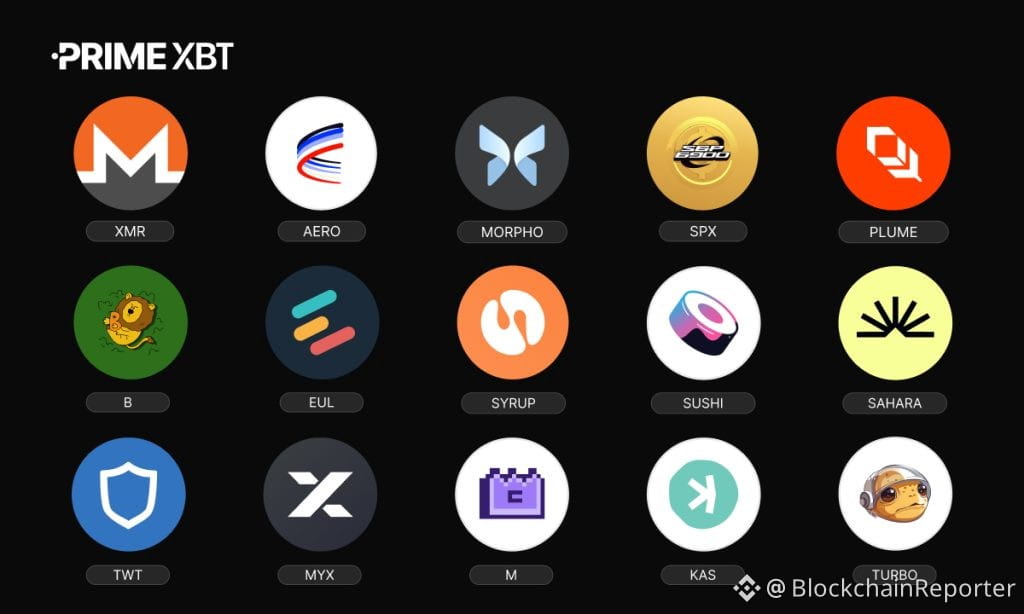
All 15 new Crypto Futures are paired against USDT and include a diverse mix of established and emerging projects: Monero (XMR), Aerodrome Finance (AERO), Morpho (MORPHO), Euler (EUL), Maple Finance (SYRUP), SushiSwap (SUSHI), MYX Finance (MYX), Sahara AI (SAHARA), SPX6900 (SPX), MemeCore (M), Turbo (TURBO), Plume (PLUME), Kaspa (KAS), BUILDon (B) and Trust Wallet Token (TWT).
The additions broaden access to projects across DeFi, AI, infrastructure, privacy and community-driven assets. They also deepen the selection within individual sectors, allowing traders to respond more selectively as market attention shifts.
“Bitcoin remains central to the crypto market, but the landscape around it has become broader and more dynamic. Individual assets can respond very differently to project developments, changing sentiment and liquidity conditions,” said Jonatan Randin, Senior Market Analyst at PrimeXBT. “Expanding our Crypto Futures offering gives traders more ways to follow these dynamics and express their market views as new trends emerge.”
The new Crypto Futures are available with adjustable leverage of up to 1:100, a 0.01% maker fee and a taker fee from 0.045%. High-volume traders can access lower fees through PrimeXBT’s VIP program, with the taker fee falling to 0.015% at VIP 5 tier. Accounts can be denominated in USD, USDT, USDC, BTC or ETH, while the built-in exchange feature allows clients to convert other supported crypto holdings into their preferred account currency for trading.
Through PXTrader 2.0, traders can take long and short positions with advanced risk-management tools, VWAP execution and a real order book backed by deep liquidity, while TradingView-powered charts support market analysis. Crypto Futures are available through the same account as Crypto CFDs and CFDs on Forex, indices, commodities and shares. Clients can also hold, buy, and exchange supported cryptocurrencies.
The launch strengthens PrimeXBT’s position as an all-in-one destination for modern crypto traders. By combining more than 170 Crypto Futures with competitive pricing, advanced execution and integrated access to traditional and digital markets, PrimeXBT gives traders the market choice and flexibility to act as new opportunities emerge.
To learn more about available Crypto Futures, users can visit PrimeXBT website.
About PrimeXBT
PrimeXBT is a global multi-asset broker and crypto asset service provider trusted by traders in more than 150 countries. The platform bridges traditional and digital markets within one integrated environment, redefining versatility and innovation in online trading. Clients can access Forex, CFDs on indices, commodities, shares, crypto, and Crypto Futures, as well as buy, store and exchange cryptocurrencies. This unified experience extends across both the native PXTrader 2.0 platform and MetaTrader 5, supported by advanced risk-management tools and a wide range of funding options in crypto, fiat and local payment methods. Since 2018, PrimeXBT has focused on empowering traders through broad multi-asset access, fair and transparent conditions, professional-grade technology and dedicated human support. By combining expertise, trust and a client-first approach, PrimeXBT sets a benchmark of excellence in the financial industry and provides traders with the tools they need to trade, grow and succeed with confidence.
Disclaimer: The content provided here is for informational purposes only and is not intended as personal investment advice and does not constitute a solicitation or invitation to engage in any financial transactions, investments, or related activities. Past performance is not a reliable indicator of future results. The financial products offered by the Company are complex and come with a high risk of losing money rapidly due to leverage. These products may not be suitable for all investors. Before engaging, users should consider whether they understand how these leveraged products work and whether they can afford the high risk of losing their money. The Company does not accept clients from the Restricted Jurisdictions as indicated on its website / T&Cs. Some products and services, including MT5, may not be available in users jurisdiction. The applicable legal entity and its respective products and services depend on the client’s country of residence and the entity with which the client has established a contractual relationship during registration.
Contact
PrimeXBTpr@primexbt.com
This article is not intended as financial advice. Educational purposes only.
PrimeXBT Adds 15 New Crypto Futures, Taking the Total to Over 170
Castries, Saint Lucia, September 29th, 2026, Chainwire
PrimeXBT, a global multi-asset broker and crypto assets service provider, has added 15 new Crypto Futures to its PXTrader 2.0 platform, bringing the total selection to more than 170. The expansion gives traders greater choice and more ways to respond to opportunities across the evolving crypto market.
All 15 new Crypto Futures are paired against USDT and include a diverse mix of established and emerging projects: Monero (XMR), Aerodrome Finance (AERO), Morpho (MORPHO), Euler (EUL), Maple Finance (SYRUP), SushiSwap (SUSHI), MYX Finance (MYX), Sahara AI (SAHARA), SPX6900 (SPX), MemeCore (M), Turbo (TURBO), Plume (PLUME), Kaspa (KAS), BUILDon (B) and Trust Wallet Token (TWT).
The additions broaden access to projects across DeFi, AI, infrastructure, privacy and community-driven assets. They also deepen the selection within individual sectors, allowing traders to respond more selectively as market attention shifts.
“Bitcoin remains central to the crypto market, but the landscape around it has become broader and more dynamic. Individual assets can respond very differently to project developments, changing sentiment and liquidity conditions,” said Jonatan Randin, Senior Market Analyst at PrimeXBT. “Expanding our Crypto Futures offering gives traders more ways to follow these dynamics and express their market views as new trends emerge.”
The new Crypto Futures are available with adjustable leverage of up to 1:100, a 0.01% maker fee and a taker fee from 0.045%. High-volume traders can access lower fees through PrimeXBT’s VIP program, with the taker fee falling to 0.015% at VIP 5 tier. Accounts can be denominated in USD, USDT, USDC, BTC or ETH, while the built-in exchange feature allows clients to convert other supported crypto holdings into their preferred account currency for trading.
Through PXTrader 2.0, traders can take long and short positions with advanced risk-management tools, VWAP execution and a real order book backed by deep liquidity, while TradingView-powered charts support market analysis. Crypto Futures are available through the same account as Crypto CFDs and CFDs on Forex, indices, commodities and shares. Clients can also hold, buy, and exchange supported cryptocurrencies.
The launch strengthens PrimeXBT’s position as an all-in-one destination for modern crypto traders. By combining more than 170 Crypto Futures with competitive pricing, advanced execution and integrated access to traditional and digital markets, PrimeXBT gives traders the market choice and flexibility to act as new opportunities emerge.
To learn more about available Crypto Futures, users can visit PrimeXBT website.
About PrimeXBT
PrimeXBT is a global multi-asset broker and crypto asset service provider trusted by traders in more than 150 countries. The platform bridges traditional and digital markets within one integrated environment, redefining versatility and innovation in online trading. Clients can access Forex, CFDs on indices, commodities, shares, crypto, and Crypto Futures, as well as buy, store and exchange cryptocurrencies. This unified experience extends across both the native PXTrader 2.0 platform and MetaTrader 5, supported by advanced risk-management tools and a wide range of funding options in crypto, fiat and local payment methods. Since 2018, PrimeXBT has focused on empowering traders through broad multi-asset access, fair and transparent conditions, professional-grade technology and dedicated human support. By combining expertise, trust and a client-first approach, PrimeXBT sets a benchmark of excellence in the financial industry and provides traders with the tools they need to trade, grow and succeed with confidence.
Disclaimer: The content provided here is for informational purposes only and is not intended as personal investment advice and does not constitute a solicitation or invitation to engage in any financial transactions, investments, or related activities. Past performance is not a reliable indicator of future results. The financial products offered by the Company are complex and come with a high risk of losing money rapidly due to leverage. These products may not be suitable for all investors. Before engaging, users should consider whether they understand how these leveraged products work and whether they can afford the high risk of losing their money. The Company does not accept clients from the Restricted Jurisdictions as indicated on its website / T&Cs. Some products and services, including MT5, may not be available in users jurisdiction. The applicable legal entity and its respective products and services depend on the client’s country of residence and the entity with which the client has established a contractual relationship during registration.
Contact
PrimeXBTpr@primexbt.com
This article is not intended as financial advice. Educational purposes only.
PrimeXBT, a global multi-asset broker and crypto assets service provider, has added 15 new Crypto Futures to its PXTrader 2.0 platform, bringing the total selection to more than 170. The expansion gives traders greater choice and more ways to respond to opportunities across the evolving crypto market.
All 15 new Crypto Futures are paired against USDT and include a diverse mix of established and emerging projects: Monero (XMR), Aerodrome Finance (AERO), Morpho (MORPHO), Euler (EUL), Maple Finance (SYRUP), SushiSwap (SUSHI), MYX Finance (MYX), Sahara AI (SAHARA), SPX6900 (SPX), MemeCore (M), Turbo (TURBO), Plume (PLUME), Kaspa (KAS), BUILDon (B) and Trust Wallet Token (TWT).
The additions broaden access to projects across DeFi, AI, infrastructure, privacy and community-driven assets. They also deepen the selection within individual sectors, allowing traders to respond more selectively as market attention shifts.
“Bitcoin remains central to the crypto market, but the landscape around it has become broader and more dynamic. Individual assets can respond very differently to project developments, changing sentiment and liquidity conditions,” said Jonatan Randin, Senior Market Analyst at PrimeXBT. “Expanding our Crypto Futures offering gives traders more ways to follow these dynamics and express their market views as new trends emerge.”
The new Crypto Futures are available with adjustable leverage of up to 1:100, a 0.01% maker fee and a taker fee from 0.045%. High-volume traders can access lower fees through PrimeXBT’s VIP program, with the taker fee falling to 0.015% at VIP 5 tier. Accounts can be denominated in USD, USDT, USDC, BTC or ETH, while the built-in exchange feature allows clients to convert other supported crypto holdings into their preferred account currency for trading.
Through PXTrader 2.0, traders can take long and short positions with advanced risk-management tools, VWAP execution and a real order book backed by deep liquidity, while TradingView-powered charts support market analysis. Crypto Futures are available through the same account as Crypto CFDs and CFDs on Forex, indices, commodities and shares. Clients can also hold, buy, and exchange supported cryptocurrencies.
The launch strengthens PrimeXBT’s position as an all-in-one destination for modern crypto traders. By combining more than 170 Crypto Futures with competitive pricing, advanced execution and integrated access to traditional and digital markets, PrimeXBT gives traders the market choice and flexibility to act as new opportunities emerge.
To learn more about available Crypto Futures, users can visit PrimeXBT website.
About PrimeXBT
PrimeXBT is a global multi-asset broker and crypto asset service provider trusted by traders in more than 150 countries. The platform bridges traditional and digital markets within one integrated environment, redefining versatility and innovation in online trading. Clients can access Forex, CFDs on indices, commodities, shares, crypto, and Crypto Futures, as well as buy, store and exchange cryptocurrencies. This unified experience extends across both the native PXTrader 2.0 platform and MetaTrader 5, supported by advanced risk-management tools and a wide range of funding options in crypto, fiat and local payment methods. Since 2018, PrimeXBT has focused on empowering traders through broad multi-asset access, fair and transparent conditions, professional-grade technology and dedicated human support. By combining expertise, trust and a client-first approach, PrimeXBT sets a benchmark of excellence in the financial industry and provides traders with the tools they need to trade, grow and succeed with confidence.
Disclaimer: The content provided here is for informational purposes only and is not intended as personal investment advice and does not constitute a solicitation or invitation to engage in any financial transactions, investments, or related activities. Past performance is not a reliable indicator of future results. The financial products offered by the Company are complex and come with a high risk of losing money rapidly due to leverage. These products may not be suitable for all investors. Before engaging, users should consider whether they understand how these leveraged products work and whether they can afford the high risk of losing their money. The Company does not accept clients from the Restricted Jurisdictions as indicated on its website / T&Cs. Some products and services, including MT5, may not be available in users jurisdiction. The applicable legal entity and its respective products and services depend on the client’s country of residence and the entity with which the client has established a contractual relationship during registration.
Contact
PrimeXBTpr@primexbt.com
This article is not intended as financial advice. Educational purposes only.
76
Article
Beldex Launches $1 Million Grants Program for Privacy InnovationVictoria, Seychelles, September 29th, 2026, Chainwire
Beldex, a privacy-centric blockchain ecosystem, today announced the launch of the Beldex Grants Program, committing $1 million to support developers building privacy-preserving applications, infrastructure and tooling on the Beldex network. Instead of operating on fixed cycles, the program accepts proposals on an ongoing basis, with funding decisions driven by project readiness instead of calendar deadlines.
The program will be formally introduced at Korea Blockchain Week 2026 in Seoul by the end of September. The program is open globally to developers, startups and teams. To qualify, projects must be built on or meaningfully utilize the Beldex network, with privacy forming a fundamental part of the project’s architecture, functionality or user experience.
Opening the Network to Outside Builders
For the most part, Beldex has built its own ecosystem, including BChat, BelNet, Beldex Browser, BNS and the Beldex wallet. The Grants Program marks the next step in Beldex’s growth, opening its infrastructure to external developers and supporting the development of privacy-first applications, integrations, and tools across the ecosystem.
Cris Blanco, Chief Strategy Officer at Beldex, said: “Beldex has spent years building privacy infrastructure and products. The next phase is about opening that foundation to developers and growing an ecosystem beyond what Beldex builds itself. We don’t expect the most important privacy applications of the future to all come from inside one organisation. The Grants Program is about giving builders the infrastructure, support and capital to take those ideas from concept to production.”
Funding is not allocated in fixed amounts. Each grant is sized around the scope and technical complexity of the individual proposal, with the program open to a broad range of privacy-focused projects, including:
Privacy-Preserving Applications: Private payments, identity, communications, networking and related consumer or enterprise use cases.
Infrastructure, Research & Tooling: Protocol contributions, SDK development, middleware and research that strengthens the Beldex privacy stack.
Integration & Interoperability: Wallet integrations, developer integrations, and interoperability layers linking external ecosystems to Beldex.
The program is not limited to these categories, and developers working on other privacy-focused use cases are also encouraged to apply.
Funding Tied to Delivery, Not Promises
Projects are reviewed individually instead of a competitive judging process. Each proposal is evaluated based on its scope, requirements and potential contribution to the Beldex ecosystem. For projects selected to move forward, the scope, milestones and funding structure are determined based on the project’s individual requirements.
Funding is released in stages, with each verified deliverable unlocking the next round of support, ensuring accountability while keeping projects on track from development to delivery.
Typical funding stages may include:
Prototype — a working proof-of-concept demonstrating the core privacy features
Testing — integration and testing in a live environment, including the Beldex testnet where applicable
Mainnet/Production — full deployment for public or enterprise use, where applicable
Afanddy Bin Hushni, Chairman of Beldex, said: “We are not interested in handing out lump sums and hoping for the best. Funding is tied to clear, verifiable milestones, so ambition is matched by real delivery. The goal is simple: help strong teams turn promising ideas into technology people actually use”
Beyond capital, approved teams may receive developer documentation and SDK resources, technical guidance for building on Beldex, integration support for relevant Beldex infrastructure, and access to ecosystem resources and ongoing support.
Developers will also be able to build with Beldex’s growing developer infrastructure, including Privacy Tokens, the Beldex Extension Wallet and the Beldex Web3.js SDK. The intent is to make it easier for developers to build privacy-focused applications using Beldex’s existing infrastructure rather than requiring teams to develop the underlying privacy infrastructure from scratch.
Applications will open through the official Beldex Grants Portal alongside the program’s formal introduction at Korea Blockchain Week. Proposals are reviewed on a rolling basis, with funding available to approved projects while program funds remain available.
Full eligibility details, funding structure and technical documentation are available at https://www.beldex.io/grants.
About Beldex
Beldex is building the infrastructure for a privacy-first internet. The ecosystem pairs blockchain with advanced cryptographic techniques to give users greater control over their data, transactions, communications and online activity.
BChat is built for private messaging, BelNet provides decentralized private networking, the Beldex Browser enables privacy-focused web browsing, and BNS offers a decentralized naming system for the Beldex ecosystem.
The network is secured by a masternode layer running Proof-of-Stake consensus, with BDX, Beldex’s native privacy-preserving currency, used in transactions and staking across the ecosystem.
Beyond its existing products, Beldex continues to invest in emerging privacy technology, including Privacy Tokens, account-based addresses, a privacy-first EVM environment, quantum-safe cryptography research and privacy-preserving infrastructure for emerging AI applications.
Contact
Media ContactShawn GBeldexshawn@beldex.io
This article is not intended as financial advice. Educational purposes only.
Beldex Launches $1 Million Grants Program for Privacy Innovation
Victoria, Seychelles, September 29th, 2026, Chainwire
Beldex, a privacy-centric blockchain ecosystem, today announced the launch of the Beldex Grants Program, committing $1 million to support developers building privacy-preserving applications, infrastructure and tooling on the Beldex network. Instead of operating on fixed cycles, the program accepts proposals on an ongoing basis, with funding decisions driven by project readiness instead of calendar deadlines.
The program will be formally introduced at Korea Blockchain Week 2026 in Seoul by the end of September. The program is open globally to developers, startups and teams. To qualify, projects must be built on or meaningfully utilize the Beldex network, with privacy forming a fundamental part of the project’s architecture, functionality or user experience.
Opening the Network to Outside Builders
For the most part, Beldex has built its own ecosystem, including BChat, BelNet, Beldex Browser, BNS and the Beldex wallet. The Grants Program marks the next step in Beldex’s growth, opening its infrastructure to external developers and supporting the development of privacy-first applications, integrations, and tools across the ecosystem.
Cris Blanco, Chief Strategy Officer at Beldex, said: “Beldex has spent years building privacy infrastructure and products. The next phase is about opening that foundation to developers and growing an ecosystem beyond what Beldex builds itself. We don’t expect the most important privacy applications of the future to all come from inside one organisation. The Grants Program is about giving builders the infrastructure, support and capital to take those ideas from concept to production.”
Funding is not allocated in fixed amounts. Each grant is sized around the scope and technical complexity of the individual proposal, with the program open to a broad range of privacy-focused projects, including:
Privacy-Preserving Applications: Private payments, identity, communications, networking and related consumer or enterprise use cases.
Infrastructure, Research & Tooling: Protocol contributions, SDK development, middleware and research that strengthens the Beldex privacy stack.
Integration & Interoperability: Wallet integrations, developer integrations, and interoperability layers linking external ecosystems to Beldex.
The program is not limited to these categories, and developers working on other privacy-focused use cases are also encouraged to apply.
Funding Tied to Delivery, Not Promises
Projects are reviewed individually instead of a competitive judging process. Each proposal is evaluated based on its scope, requirements and potential contribution to the Beldex ecosystem. For projects selected to move forward, the scope, milestones and funding structure are determined based on the project’s individual requirements.
Funding is released in stages, with each verified deliverable unlocking the next round of support, ensuring accountability while keeping projects on track from development to delivery.
Typical funding stages may include:
Prototype — a working proof-of-concept demonstrating the core privacy features
Testing — integration and testing in a live environment, including the Beldex testnet where applicable
Mainnet/Production — full deployment for public or enterprise use, where applicable
Afanddy Bin Hushni, Chairman of Beldex, said: “We are not interested in handing out lump sums and hoping for the best. Funding is tied to clear, verifiable milestones, so ambition is matched by real delivery. The goal is simple: help strong teams turn promising ideas into technology people actually use”
Beyond capital, approved teams may receive developer documentation and SDK resources, technical guidance for building on Beldex, integration support for relevant Beldex infrastructure, and access to ecosystem resources and ongoing support.
Developers will also be able to build with Beldex’s growing developer infrastructure, including Privacy Tokens, the Beldex Extension Wallet and the Beldex Web3.js SDK. The intent is to make it easier for developers to build privacy-focused applications using Beldex’s existing infrastructure rather than requiring teams to develop the underlying privacy infrastructure from scratch.
Applications will open through the official Beldex Grants Portal alongside the program’s formal introduction at Korea Blockchain Week. Proposals are reviewed on a rolling basis, with funding available to approved projects while program funds remain available.
Full eligibility details, funding structure and technical documentation are available at https://www.beldex.io/grants.
About Beldex
Beldex is building the infrastructure for a privacy-first internet. The ecosystem pairs blockchain with advanced cryptographic techniques to give users greater control over their data, transactions, communications and online activity.
BChat is built for private messaging, BelNet provides decentralized private networking, the Beldex Browser enables privacy-focused web browsing, and BNS offers a decentralized naming system for the Beldex ecosystem.
The network is secured by a masternode layer running Proof-of-Stake consensus, with BDX, Beldex’s native privacy-preserving currency, used in transactions and staking across the ecosystem.
Beyond its existing products, Beldex continues to invest in emerging privacy technology, including Privacy Tokens, account-based addresses, a privacy-first EVM environment, quantum-safe cryptography research and privacy-preserving infrastructure for emerging AI applications.
Contact
Media ContactShawn GBeldexshawn@beldex.io
This article is not intended as financial advice. Educational purposes only.
Beldex, a privacy-centric blockchain ecosystem, today announced the launch of the Beldex Grants Program, committing $1 million to support developers building privacy-preserving applications, infrastructure and tooling on the Beldex network. Instead of operating on fixed cycles, the program accepts proposals on an ongoing basis, with funding decisions driven by project readiness instead of calendar deadlines.
The program will be formally introduced at Korea Blockchain Week 2026 in Seoul by the end of September. The program is open globally to developers, startups and teams. To qualify, projects must be built on or meaningfully utilize the Beldex network, with privacy forming a fundamental part of the project’s architecture, functionality or user experience.
Opening the Network to Outside Builders
For the most part, Beldex has built its own ecosystem, including BChat, BelNet, Beldex Browser, BNS and the Beldex wallet. The Grants Program marks the next step in Beldex’s growth, opening its infrastructure to external developers and supporting the development of privacy-first applications, integrations, and tools across the ecosystem.
Cris Blanco, Chief Strategy Officer at Beldex, said: “Beldex has spent years building privacy infrastructure and products. The next phase is about opening that foundation to developers and growing an ecosystem beyond what Beldex builds itself. We don’t expect the most important privacy applications of the future to all come from inside one organisation. The Grants Program is about giving builders the infrastructure, support and capital to take those ideas from concept to production.”
Funding is not allocated in fixed amounts. Each grant is sized around the scope and technical complexity of the individual proposal, with the program open to a broad range of privacy-focused projects, including:
Privacy-Preserving Applications: Private payments, identity, communications, networking and related consumer or enterprise use cases.
Infrastructure, Research & Tooling: Protocol contributions, SDK development, middleware and research that strengthens the Beldex privacy stack.
Integration & Interoperability: Wallet integrations, developer integrations, and interoperability layers linking external ecosystems to Beldex.
The program is not limited to these categories, and developers working on other privacy-focused use cases are also encouraged to apply.
Funding Tied to Delivery, Not Promises
Projects are reviewed individually instead of a competitive judging process. Each proposal is evaluated based on its scope, requirements and potential contribution to the Beldex ecosystem. For projects selected to move forward, the scope, milestones and funding structure are determined based on the project’s individual requirements.
Funding is released in stages, with each verified deliverable unlocking the next round of support, ensuring accountability while keeping projects on track from development to delivery.
Typical funding stages may include:
Prototype — a working proof-of-concept demonstrating the core privacy features
Testing — integration and testing in a live environment, including the Beldex testnet where applicable
Mainnet/Production — full deployment for public or enterprise use, where applicable
Afanddy Bin Hushni, Chairman of Beldex, said: “We are not interested in handing out lump sums and hoping for the best. Funding is tied to clear, verifiable milestones, so ambition is matched by real delivery. The goal is simple: help strong teams turn promising ideas into technology people actually use”
Beyond capital, approved teams may receive developer documentation and SDK resources, technical guidance for building on Beldex, integration support for relevant Beldex infrastructure, and access to ecosystem resources and ongoing support.
Developers will also be able to build with Beldex’s growing developer infrastructure, including Privacy Tokens, the Beldex Extension Wallet and the Beldex Web3.js SDK. The intent is to make it easier for developers to build privacy-focused applications using Beldex’s existing infrastructure rather than requiring teams to develop the underlying privacy infrastructure from scratch.
Applications will open through the official Beldex Grants Portal alongside the program’s formal introduction at Korea Blockchain Week. Proposals are reviewed on a rolling basis, with funding available to approved projects while program funds remain available.
Full eligibility details, funding structure and technical documentation are available at https://www.beldex.io/grants.
About Beldex
Beldex is building the infrastructure for a privacy-first internet. The ecosystem pairs blockchain with advanced cryptographic techniques to give users greater control over their data, transactions, communications and online activity.
BChat is built for private messaging, BelNet provides decentralized private networking, the Beldex Browser enables privacy-focused web browsing, and BNS offers a decentralized naming system for the Beldex ecosystem.
The network is secured by a masternode layer running Proof-of-Stake consensus, with BDX, Beldex’s native privacy-preserving currency, used in transactions and staking across the ecosystem.
Beyond its existing products, Beldex continues to invest in emerging privacy technology, including Privacy Tokens, account-based addresses, a privacy-first EVM environment, quantum-safe cryptography research and privacy-preserving infrastructure for emerging AI applications.
Contact
Media ContactShawn GBeldexshawn@beldex.io
This article is not intended as financial advice. Educational purposes only.
203
Article
Crystal Intelligence Aids $655K Crypto Fraud Probe in PragueAmsterdam, Netherlands, September 29th, 2026, Chainwire
Crystal Intelligence cooperated with law enforcement in support of the cross-border investigation in Prague
Ukraine’s National Cyber Police led a criminal investigation into crypto-asset fraud exceeding $655,000, resulting in an international law enforcement operation and authorized searches of the suspect’s residence in Prague, Czech Republic. As part of the proceedings, Crystal Intelligence provided blockchain analytics support to help investigators trace the movement of crypto assets.
According to the National Cyber Police of Ukraine, the suspect allegedly misappropriated the funds under the guise of a crypto investment. After receiving the assets, he transferred them across various crypto services and employed methods designed to obscure their origin and subsequent movement – a pattern consistent with crypto-layering typologies increasingly seen in fraud cases of this type.
In response to the law enforcement request, Crystal provided blockchain analytics to help trace the movement of assets across multiple services. This information supported investigators as part of the broader analysis conducted during the criminal proceedings. Crystal acted in full cooperation with law enforcement, providing the most complete assistance possible within its remit as a private analytics company.
Working within an international cooperation framework, Ukrainian authorities coordinated with Czech law enforcement to confirm the suspect’s place of residence, as confirmed in the official Cyber Police statement. The authorized search was conducted with the direct participation of representatives from the National Police of Ukraine, under criminal proceedings initiated under Part 5 of Article 190 (Fraud) of the Criminal Code of Ukraine.
Officers seized computer equipment, mobile devices, data storage media, hardware crypto wallets, handwritten notes, payment cards, and financial and business documents. The pre-trial investigation is ongoing.
Crystal Intelligence is committed to the responsible use of blockchain technology and to supporting law enforcement agencies in their efforts to combat crypto-related crime. Cooperation with authorities in cases of this kind reflects Crystal’s broader mission to build a world where trust and safety are standard in crypto.
“This case demonstrates how blockchain analytics can directly support law enforcement in cross-border investigations,” said Nicholas Smart, Chief Intelligence Officer at Crystal Intelligence. “When funds move across services and jurisdictions, the on-chain record does not disappear. It can be traced, mapped, and used as court-level evidence. We are pleased our analysis contributed to the work Ukrainian investigators were doing, and we remain committed to cooperating fully with law enforcement wherever we can.”
In this case, the combination of traditional law enforcement methods, international cooperation, and modern blockchain analytics made it possible to identify the cryptocurrency infrastructure linked to the suspect and trace the movement of assets across multiple services. A key outcome was building a complete picture of the fund flows – moving from individual transactions to a full understanding of the scheme and those behind it.
Today, law enforcement operates in an environment where technology evolves at an extraordinary speed. Cybercrime, artificial intelligence, crypto assets, and the cross-border nature of crime create new challenges – not only for criminals, but for law enforcement systems too. If criminals are using new technologies to cover their tracks and move assets across jurisdictions, law enforcement must respond by developing its own technological and analytical capabilities.
“This investigation demonstrates that today’s law enforcement challenges can be effectively overcome. By combining traditional investigative methods, international cooperation, and blockchain analytics, we were able to map the full flow of funds – moving from individual transactions to a complete picture of the scheme and everyone involved in it. Technology doesn’t replace skilled investigators – it amplifies them. Crime has no borders, and modern justice must use tools that work the same way.” Oleksandr Plakhotnyuk – Chief of Division for Combating Crimes Related to Virtual Assets, Cyberpolice Department of the National Police of Ukraine
About Crystal Intelligence
Crystal Intelligence is a blockchain analytics and compliance company trusted by law enforcement agencies, financial institutions, and crypto businesses worldwide. Crystal’s platform supports fund tracing, transaction monitoring, and investigation across 330+ blockchains, with access to over 110,000 attributed entities and data on 30 million risky transfers. Crystal holds ISO 27001 certification and operates under GDPR-compliant, EU-based data governance.
Notes to Editors
Case facts in this release are sourced from the official statement published by the National Cyber Police of Ukraine on September 21, 2026: cyberpolice.gov.ua. Law enforcement officers are continuing to analyze information obtained during the searches. The pre-trial investigation remains ongoing.
Contact
PR managerLesiaCrystal Intelligencelesia.klochai@crystalintelligence.com
This article is not intended as financial advice. Educational purposes only.
Crystal Intelligence Aids $655K Crypto Fraud Probe in Prague
Amsterdam, Netherlands, September 29th, 2026, Chainwire
Crystal Intelligence cooperated with law enforcement in support of the cross-border investigation in Prague
Ukraine’s National Cyber Police led a criminal investigation into crypto-asset fraud exceeding $655,000, resulting in an international law enforcement operation and authorized searches of the suspect’s residence in Prague, Czech Republic. As part of the proceedings, Crystal Intelligence provided blockchain analytics support to help investigators trace the movement of crypto assets.
According to the National Cyber Police of Ukraine, the suspect allegedly misappropriated the funds under the guise of a crypto investment. After receiving the assets, he transferred them across various crypto services and employed methods designed to obscure their origin and subsequent movement – a pattern consistent with crypto-layering typologies increasingly seen in fraud cases of this type.
In response to the law enforcement request, Crystal provided blockchain analytics to help trace the movement of assets across multiple services. This information supported investigators as part of the broader analysis conducted during the criminal proceedings. Crystal acted in full cooperation with law enforcement, providing the most complete assistance possible within its remit as a private analytics company.
Working within an international cooperation framework, Ukrainian authorities coordinated with Czech law enforcement to confirm the suspect’s place of residence, as confirmed in the official Cyber Police statement. The authorized search was conducted with the direct participation of representatives from the National Police of Ukraine, under criminal proceedings initiated under Part 5 of Article 190 (Fraud) of the Criminal Code of Ukraine.
Officers seized computer equipment, mobile devices, data storage media, hardware crypto wallets, handwritten notes, payment cards, and financial and business documents. The pre-trial investigation is ongoing.
Crystal Intelligence is committed to the responsible use of blockchain technology and to supporting law enforcement agencies in their efforts to combat crypto-related crime. Cooperation with authorities in cases of this kind reflects Crystal’s broader mission to build a world where trust and safety are standard in crypto.
“This case demonstrates how blockchain analytics can directly support law enforcement in cross-border investigations,” said Nicholas Smart, Chief Intelligence Officer at Crystal Intelligence. “When funds move across services and jurisdictions, the on-chain record does not disappear. It can be traced, mapped, and used as court-level evidence. We are pleased our analysis contributed to the work Ukrainian investigators were doing, and we remain committed to cooperating fully with law enforcement wherever we can.”
In this case, the combination of traditional law enforcement methods, international cooperation, and modern blockchain analytics made it possible to identify the cryptocurrency infrastructure linked to the suspect and trace the movement of assets across multiple services. A key outcome was building a complete picture of the fund flows – moving from individual transactions to a full understanding of the scheme and those behind it.
Today, law enforcement operates in an environment where technology evolves at an extraordinary speed. Cybercrime, artificial intelligence, crypto assets, and the cross-border nature of crime create new challenges – not only for criminals, but for law enforcement systems too. If criminals are using new technologies to cover their tracks and move assets across jurisdictions, law enforcement must respond by developing its own technological and analytical capabilities.
“This investigation demonstrates that today’s law enforcement challenges can be effectively overcome. By combining traditional investigative methods, international cooperation, and blockchain analytics, we were able to map the full flow of funds – moving from individual transactions to a complete picture of the scheme and everyone involved in it. Technology doesn’t replace skilled investigators – it amplifies them. Crime has no borders, and modern justice must use tools that work the same way.” Oleksandr Plakhotnyuk – Chief of Division for Combating Crimes Related to Virtual Assets, Cyberpolice Department of the National Police of Ukraine
About Crystal Intelligence
Crystal Intelligence is a blockchain analytics and compliance company trusted by law enforcement agencies, financial institutions, and crypto businesses worldwide. Crystal’s platform supports fund tracing, transaction monitoring, and investigation across 330+ blockchains, with access to over 110,000 attributed entities and data on 30 million risky transfers. Crystal holds ISO 27001 certification and operates under GDPR-compliant, EU-based data governance.
Notes to Editors
Case facts in this release are sourced from the official statement published by the National Cyber Police of Ukraine on September 21, 2026: cyberpolice.gov.ua. Law enforcement officers are continuing to analyze information obtained during the searches. The pre-trial investigation remains ongoing.
Contact
PR managerLesiaCrystal Intelligencelesia.klochai@crystalintelligence.com
This article is not intended as financial advice. Educational purposes only.
Crystal Intelligence cooperated with law enforcement in support of the cross-border investigation in Prague
Ukraine’s National Cyber Police led a criminal investigation into crypto-asset fraud exceeding $655,000, resulting in an international law enforcement operation and authorized searches of the suspect’s residence in Prague, Czech Republic. As part of the proceedings, Crystal Intelligence provided blockchain analytics support to help investigators trace the movement of crypto assets.
According to the National Cyber Police of Ukraine, the suspect allegedly misappropriated the funds under the guise of a crypto investment. After receiving the assets, he transferred them across various crypto services and employed methods designed to obscure their origin and subsequent movement – a pattern consistent with crypto-layering typologies increasingly seen in fraud cases of this type.
In response to the law enforcement request, Crystal provided blockchain analytics to help trace the movement of assets across multiple services. This information supported investigators as part of the broader analysis conducted during the criminal proceedings. Crystal acted in full cooperation with law enforcement, providing the most complete assistance possible within its remit as a private analytics company.
Working within an international cooperation framework, Ukrainian authorities coordinated with Czech law enforcement to confirm the suspect’s place of residence, as confirmed in the official Cyber Police statement. The authorized search was conducted with the direct participation of representatives from the National Police of Ukraine, under criminal proceedings initiated under Part 5 of Article 190 (Fraud) of the Criminal Code of Ukraine.
Officers seized computer equipment, mobile devices, data storage media, hardware crypto wallets, handwritten notes, payment cards, and financial and business documents. The pre-trial investigation is ongoing.
Crystal Intelligence is committed to the responsible use of blockchain technology and to supporting law enforcement agencies in their efforts to combat crypto-related crime. Cooperation with authorities in cases of this kind reflects Crystal’s broader mission to build a world where trust and safety are standard in crypto.
“This case demonstrates how blockchain analytics can directly support law enforcement in cross-border investigations,” said Nicholas Smart, Chief Intelligence Officer at Crystal Intelligence. “When funds move across services and jurisdictions, the on-chain record does not disappear. It can be traced, mapped, and used as court-level evidence. We are pleased our analysis contributed to the work Ukrainian investigators were doing, and we remain committed to cooperating fully with law enforcement wherever we can.”
In this case, the combination of traditional law enforcement methods, international cooperation, and modern blockchain analytics made it possible to identify the cryptocurrency infrastructure linked to the suspect and trace the movement of assets across multiple services. A key outcome was building a complete picture of the fund flows – moving from individual transactions to a full understanding of the scheme and those behind it.
Today, law enforcement operates in an environment where technology evolves at an extraordinary speed. Cybercrime, artificial intelligence, crypto assets, and the cross-border nature of crime create new challenges – not only for criminals, but for law enforcement systems too. If criminals are using new technologies to cover their tracks and move assets across jurisdictions, law enforcement must respond by developing its own technological and analytical capabilities.
“This investigation demonstrates that today’s law enforcement challenges can be effectively overcome. By combining traditional investigative methods, international cooperation, and blockchain analytics, we were able to map the full flow of funds – moving from individual transactions to a complete picture of the scheme and everyone involved in it. Technology doesn’t replace skilled investigators – it amplifies them. Crime has no borders, and modern justice must use tools that work the same way.” Oleksandr Plakhotnyuk – Chief of Division for Combating Crimes Related to Virtual Assets, Cyberpolice Department of the National Police of Ukraine
About Crystal Intelligence
Crystal Intelligence is a blockchain analytics and compliance company trusted by law enforcement agencies, financial institutions, and crypto businesses worldwide. Crystal’s platform supports fund tracing, transaction monitoring, and investigation across 330+ blockchains, with access to over 110,000 attributed entities and data on 30 million risky transfers. Crystal holds ISO 27001 certification and operates under GDPR-compliant, EU-based data governance.
Notes to Editors
Case facts in this release are sourced from the official statement published by the National Cyber Police of Ukraine on September 21, 2026: cyberpolice.gov.ua. Law enforcement officers are continuing to analyze information obtained during the searches. The pre-trial investigation remains ongoing.
Contact
PR managerLesiaCrystal Intelligencelesia.klochai@crystalintelligence.com
This article is not intended as financial advice. Educational purposes only.
1
72
Article
BTSE Bhutan Receives Financial Services License for Digital Asset Trading Services in Gelephu Min...Gelephu, Bhutan, September 29th, 2026, Chainwire
BTSE Exchange Pte Ltd (“BTSE Bhutan”) today announced that it has been granted a Financial Services License (FSL) by the Gelephu Financial Services Office (GFSO), the financial regulator of the Gelephu Mindfulness City (GMC) Special Administrative Region. The license follows the In-Principle Approval that BTSE Bhutan received in April 2026 and confirms that the company has satisfied all pre-conditions stipulated by the GFSO.
The FSL authorizes BTSE Bhutan to carry out two regulated activities: operating a multilateral trading facility for the exchange of virtual assets, and providing institutional-grade custody services for the safeguarding and storage of virtual assets. With the license now in effect, BTSE Bhutan becomes a fully regulated venue for both trading and custody services within the GFSO framework.
Phased launch of trading services
BTSE Bhutan will begin onboarding users in the coming weeks, with spot trading services launching initially for the BTC/USDT and ETH/USDT trading pairs. More crypto trading pairs will be introduced in subsequent phases, subject to the platform’s listing framework and regulatory requirements. Fiat on-ramp and off-ramp services are planned for a later stage of the rollout, enabling users to move between US dollars and virtual assets directly through the platform.
All client assets will be held under the company’s licensed custody arrangements, in line with GFSO requirements.
“Receiving our Financial Services License is a major milestone as we plan to launch our retail trading platform globally,” said Yew Chong Quak, CEO of BTSE Bhutan. “We are grateful to the Gelephu Financial Services Office for the rigor and clarity of its process. Our priority now is to launch Bitcoin and Ethereum trading services, expanding our offerings step by step, and holding ourselves to the highest standards of compliance and security as we build a virtual asset ecosystem that GMC can be proud of.”
Building in Bhutan
Since receiving its In-Principle Approval, BTSE Bhutan has appointed key personnel to oversee core operations and is currently building out its presence in Gelephu, with plans to establish a local office in line with its commitments. The company will continue to grow its team and hire local talent to support its presence in Bhutan over time.
About BTSE Bhutan
BTSE Bhutan is a licensed virtual asset service provider operating within the Gelephu Mindfulness City (GMC) Special Administrative Region in Bhutan. Regulated by the Gelephu Financial Services Office, the company operates a multilateral trading facility alongside institutional-grade virtual asset custody infrastructure, providing secure, compliant trading and custody services for virtual assets.
For more information, visit www.btse.bt or contact media@btse.com.
About Gelephu Mindfulness City
The Gelephu Mindfulness City Special Administrative Region is a visionary initiative creating a world-class economic hub in southern Bhutan, centered on mindfulness, sustainability, and innovation. The SAR integrates traditional Bhutanese values with globally recognized legal frameworks, cutting-edge design and technology, while harnessing the Kingdom’s abundant renewable energy resources to serve as a global exemplar of holistic development.
For more information, visit www.gmc.bt or contact info@gmc.bt
Investment inquiries: invest@gmc.bt
Contact
Ker Zhengmedia@btse.com
This article is not intended as financial advice. Educational purposes only.
BTSE Bhutan Receives Financial Services License for Digital Asset Trading Services in Gelephu Min...
Gelephu, Bhutan, September 29th, 2026, Chainwire
BTSE Exchange Pte Ltd (“BTSE Bhutan”) today announced that it has been granted a Financial Services License (FSL) by the Gelephu Financial Services Office (GFSO), the financial regulator of the Gelephu Mindfulness City (GMC) Special Administrative Region. The license follows the In-Principle Approval that BTSE Bhutan received in April 2026 and confirms that the company has satisfied all pre-conditions stipulated by the GFSO.
The FSL authorizes BTSE Bhutan to carry out two regulated activities: operating a multilateral trading facility for the exchange of virtual assets, and providing institutional-grade custody services for the safeguarding and storage of virtual assets. With the license now in effect, BTSE Bhutan becomes a fully regulated venue for both trading and custody services within the GFSO framework.
Phased launch of trading services
BTSE Bhutan will begin onboarding users in the coming weeks, with spot trading services launching initially for the BTC/USDT and ETH/USDT trading pairs. More crypto trading pairs will be introduced in subsequent phases, subject to the platform’s listing framework and regulatory requirements. Fiat on-ramp and off-ramp services are planned for a later stage of the rollout, enabling users to move between US dollars and virtual assets directly through the platform.
All client assets will be held under the company’s licensed custody arrangements, in line with GFSO requirements.
“Receiving our Financial Services License is a major milestone as we plan to launch our retail trading platform globally,” said Yew Chong Quak, CEO of BTSE Bhutan. “We are grateful to the Gelephu Financial Services Office for the rigor and clarity of its process. Our priority now is to launch Bitcoin and Ethereum trading services, expanding our offerings step by step, and holding ourselves to the highest standards of compliance and security as we build a virtual asset ecosystem that GMC can be proud of.”
Building in Bhutan
Since receiving its In-Principle Approval, BTSE Bhutan has appointed key personnel to oversee core operations and is currently building out its presence in Gelephu, with plans to establish a local office in line with its commitments. The company will continue to grow its team and hire local talent to support its presence in Bhutan over time.
About BTSE Bhutan
BTSE Bhutan is a licensed virtual asset service provider operating within the Gelephu Mindfulness City (GMC) Special Administrative Region in Bhutan. Regulated by the Gelephu Financial Services Office, the company operates a multilateral trading facility alongside institutional-grade virtual asset custody infrastructure, providing secure, compliant trading and custody services for virtual assets.
For more information, visit www.btse.bt or contact media@btse.com.
About Gelephu Mindfulness City
The Gelephu Mindfulness City Special Administrative Region is a visionary initiative creating a world-class economic hub in southern Bhutan, centered on mindfulness, sustainability, and innovation. The SAR integrates traditional Bhutanese values with globally recognized legal frameworks, cutting-edge design and technology, while harnessing the Kingdom’s abundant renewable energy resources to serve as a global exemplar of holistic development.
For more information, visit www.gmc.bt or contact info@gmc.bt
Investment inquiries: invest@gmc.bt
Contact
Ker Zhengmedia@btse.com
This article is not intended as financial advice. Educational purposes only.
BTSE Exchange Pte Ltd (“BTSE Bhutan”) today announced that it has been granted a Financial Services License (FSL) by the Gelephu Financial Services Office (GFSO), the financial regulator of the Gelephu Mindfulness City (GMC) Special Administrative Region. The license follows the In-Principle Approval that BTSE Bhutan received in April 2026 and confirms that the company has satisfied all pre-conditions stipulated by the GFSO.
The FSL authorizes BTSE Bhutan to carry out two regulated activities: operating a multilateral trading facility for the exchange of virtual assets, and providing institutional-grade custody services for the safeguarding and storage of virtual assets. With the license now in effect, BTSE Bhutan becomes a fully regulated venue for both trading and custody services within the GFSO framework.
Phased launch of trading services
BTSE Bhutan will begin onboarding users in the coming weeks, with spot trading services launching initially for the BTC/USDT and ETH/USDT trading pairs. More crypto trading pairs will be introduced in subsequent phases, subject to the platform’s listing framework and regulatory requirements. Fiat on-ramp and off-ramp services are planned for a later stage of the rollout, enabling users to move between US dollars and virtual assets directly through the platform.
All client assets will be held under the company’s licensed custody arrangements, in line with GFSO requirements.
“Receiving our Financial Services License is a major milestone as we plan to launch our retail trading platform globally,” said Yew Chong Quak, CEO of BTSE Bhutan. “We are grateful to the Gelephu Financial Services Office for the rigor and clarity of its process. Our priority now is to launch Bitcoin and Ethereum trading services, expanding our offerings step by step, and holding ourselves to the highest standards of compliance and security as we build a virtual asset ecosystem that GMC can be proud of.”
Building in Bhutan
Since receiving its In-Principle Approval, BTSE Bhutan has appointed key personnel to oversee core operations and is currently building out its presence in Gelephu, with plans to establish a local office in line with its commitments. The company will continue to grow its team and hire local talent to support its presence in Bhutan over time.
About BTSE Bhutan
BTSE Bhutan is a licensed virtual asset service provider operating within the Gelephu Mindfulness City (GMC) Special Administrative Region in Bhutan. Regulated by the Gelephu Financial Services Office, the company operates a multilateral trading facility alongside institutional-grade virtual asset custody infrastructure, providing secure, compliant trading and custody services for virtual assets.
For more information, visit www.btse.bt or contact media@btse.com.
About Gelephu Mindfulness City
The Gelephu Mindfulness City Special Administrative Region is a visionary initiative creating a world-class economic hub in southern Bhutan, centered on mindfulness, sustainability, and innovation. The SAR integrates traditional Bhutanese values with globally recognized legal frameworks, cutting-edge design and technology, while harnessing the Kingdom’s abundant renewable energy resources to serve as a global exemplar of holistic development.
For more information, visit www.gmc.bt or contact info@gmc.bt
Investment inquiries: invest@gmc.bt
Contact
Ker Zhengmedia@btse.com
This article is not intended as financial advice. Educational purposes only.
1
146
Article
AlgoQuant Asset Management Selects Liquid Mercury to Enhance Digital Asset Trading InfrastructureChicago, United States, September 28th, 2026, Chainwire
AlgoQuant will deploy Liquid Mercury’s institutional-grade trading technology to scale its multi-strategy investment platform and enhance execution capabilities across global digital asset markets.
Liquid Mercury, a leading technology provider for digital asset marketplaces and crypto trading, announced today that it has been engaged by AlgoQuant Asset Management, an investment manager focused on solving inefficiencies in fast-evolving markets, to provide trading technology and infrastructure services.
The engagement will enable AlgoQuant to leverage Liquid Mercury’s institutional-grade trading technology and infrastructure to enhance its multi-strategy investment platform. AlgoQuant will gain access to deep liquidity, advanced execution capabilities, and professional-grade trading tools that support the firm’s commitment to quantitative excellence, risk integrity, and operational resilience.
Liquid Mercury’s battle-tested platform combined with AlgoQuant’s sophisticated quantitative strategies provides a powerful foundation for executing complex digital asset trades across global markets. This technology integration allows AlgoQuant to maintain 24/7 trading operations while scaling talent, capital, and technology without compromising precision.
With a team spanning key global financial and digital asset markets, AlgoQuant operates as a multi-strategy investment platform designed to perform across diverse market environments. Through Liquid Mercury’s platform, AlgoQuant will benefit from access to top-tier liquidity providers, low-latency infrastructure, and comprehensive middle and back-office tools designed to meet the demands of institutional asset managers operating in digital asset markets.
“AlgoQuant came to us with very specific infrastructure requirements that are unique to their sophisticated quantitative strategies,” stated Liquid Mercury CEO, Tony Saliba. “What sets Liquid Mercury apart is our ability to shape our tech stack to meet each client’s distinct needs. This level of customization isn’t something firms can always find off the shelf, but our battle-tested platform was built with the flexibility to adapt while maintaining institutional-grade standards. We’re honored to provide the tailored technology infrastructure that will support AlgoQuant as it continues to scale its investment platform.”
“Liquid Mercury has been an excellent technology partner for AlgoQuant Asset Management,” said Alexander Goncharov, President of AlgoQuant Asset Management. “We are very pleased with their sophisticated technology stack, collaborative approach, and willingness to tailor the platform to our specific needs. Their infrastructure delivers the speed, reliability, and precision required in today’s digital asset markets while integrating seamlessly with our proprietary systems and workflows.”
About AlgoQuant Asset Management
AlgoQuant is an investment manager with a clear mission: to solve inefficiencies in fast-evolving markets. From day one, the firm has been focused on building a platform that can scale talent, capital, and technology without compromising precision. At the heart of AlgoQuant’s model is a commitment to quantitative excellence, risk integrity, and operational resilience.
AlgoQuant operates as a multi-strategy investment platform with global reach, featuring team members and trading teams based in key global financial and digital asset markets. The firm’s structure supports 24/7 execution, oversight, and engagement with global allocators.
Further information can be found at www.aq.io
About Liquid Mercury
Liquid Mercury powers professional crypto trading and digital asset marketplaces. Founded by legendary trader Tony Saliba, who was featured in Jack Schwager’s “Market Wizards,” Liquid Mercury is the #1 choice for sophisticated buy-side and institutional sell-side trading professionals moving into crypto.
Mercury Pro is an institutional-grade trading platform designed specifically for professional traders navigating crypto derivatives and spot markets. The platform offers sophisticated trade execution tools including DMA routing, staging, execution algorithms, and anonymous multi-dealer RFQ to source block liquidity. Traders can manage all orders and trade data in a single platform with real-time views of balances and account positions.
Key capabilities include access to crypto derivatives at leading onshore and offshore exchanges, institutional-sized pricing with top OTC liquidity providers, and a wide range of spot products across leading exchanges. The platform supports both single-leg and multi-leg orders in net price structures, with low-latency infrastructure built for high-frequency and algorithmic trading strategies.
Liquid Mercury integrates with world-class custodians including Fireblocks, Gemini, and BitGo, and provides comprehensive APIs (FIX, WebSocket, and REST) for automated trading and workflow customization. Built by professionals for professionals, Liquid Mercury combines battle-tested trading technology with deep liquidity access and best-in-class workflow automation.
For more information about Liquid Mercury and the $MERC token, users can visit www.liquidmercury.com or merc.liquidmercury.com.
Disclaimer
This press release is for informational purposes only and does not constitute an offer to sell, or a solicitation of an offer to buy, any securities or fund interests in any jurisdiction. Any offer or solicitation of interests in any fund managed by AlgoQuant Asset Management Corp will be made only by definitive offering documents, and only to eligible investors in accordance with applicable law. No statement in this press release is, or should be construed as, a representation as to the past or future performance of any fund or strategy managed by AlgoQuant.
Contact
DirectorKent EganLiquid Mercurysales@liquidmercury.com
This article is not intended as financial advice. Educational purposes only.
AlgoQuant Asset Management Selects Liquid Mercury to Enhance Digital Asset Trading Infrastructure
Chicago, United States, September 28th, 2026, Chainwire
AlgoQuant will deploy Liquid Mercury’s institutional-grade trading technology to scale its multi-strategy investment platform and enhance execution capabilities across global digital asset markets.
Liquid Mercury, a leading technology provider for digital asset marketplaces and crypto trading, announced today that it has been engaged by AlgoQuant Asset Management, an investment manager focused on solving inefficiencies in fast-evolving markets, to provide trading technology and infrastructure services.
The engagement will enable AlgoQuant to leverage Liquid Mercury’s institutional-grade trading technology and infrastructure to enhance its multi-strategy investment platform. AlgoQuant will gain access to deep liquidity, advanced execution capabilities, and professional-grade trading tools that support the firm’s commitment to quantitative excellence, risk integrity, and operational resilience.
Liquid Mercury’s battle-tested platform combined with AlgoQuant’s sophisticated quantitative strategies provides a powerful foundation for executing complex digital asset trades across global markets. This technology integration allows AlgoQuant to maintain 24/7 trading operations while scaling talent, capital, and technology without compromising precision.
With a team spanning key global financial and digital asset markets, AlgoQuant operates as a multi-strategy investment platform designed to perform across diverse market environments. Through Liquid Mercury’s platform, AlgoQuant will benefit from access to top-tier liquidity providers, low-latency infrastructure, and comprehensive middle and back-office tools designed to meet the demands of institutional asset managers operating in digital asset markets.
“AlgoQuant came to us with very specific infrastructure requirements that are unique to their sophisticated quantitative strategies,” stated Liquid Mercury CEO, Tony Saliba. “What sets Liquid Mercury apart is our ability to shape our tech stack to meet each client’s distinct needs. This level of customization isn’t something firms can always find off the shelf, but our battle-tested platform was built with the flexibility to adapt while maintaining institutional-grade standards. We’re honored to provide the tailored technology infrastructure that will support AlgoQuant as it continues to scale its investment platform.”
“Liquid Mercury has been an excellent technology partner for AlgoQuant Asset Management,” said Alexander Goncharov, President of AlgoQuant Asset Management. “We are very pleased with their sophisticated technology stack, collaborative approach, and willingness to tailor the platform to our specific needs. Their infrastructure delivers the speed, reliability, and precision required in today’s digital asset markets while integrating seamlessly with our proprietary systems and workflows.”
About AlgoQuant Asset Management
AlgoQuant is an investment manager with a clear mission: to solve inefficiencies in fast-evolving markets. From day one, the firm has been focused on building a platform that can scale talent, capital, and technology without compromising precision. At the heart of AlgoQuant’s model is a commitment to quantitative excellence, risk integrity, and operational resilience.
AlgoQuant operates as a multi-strategy investment platform with global reach, featuring team members and trading teams based in key global financial and digital asset markets. The firm’s structure supports 24/7 execution, oversight, and engagement with global allocators.
Further information can be found at www.aq.io
About Liquid Mercury
Liquid Mercury powers professional crypto trading and digital asset marketplaces. Founded by legendary trader Tony Saliba, who was featured in Jack Schwager’s “Market Wizards,” Liquid Mercury is the #1 choice for sophisticated buy-side and institutional sell-side trading professionals moving into crypto.
Mercury Pro is an institutional-grade trading platform designed specifically for professional traders navigating crypto derivatives and spot markets. The platform offers sophisticated trade execution tools including DMA routing, staging, execution algorithms, and anonymous multi-dealer RFQ to source block liquidity. Traders can manage all orders and trade data in a single platform with real-time views of balances and account positions.
Key capabilities include access to crypto derivatives at leading onshore and offshore exchanges, institutional-sized pricing with top OTC liquidity providers, and a wide range of spot products across leading exchanges. The platform supports both single-leg and multi-leg orders in net price structures, with low-latency infrastructure built for high-frequency and algorithmic trading strategies.
Liquid Mercury integrates with world-class custodians including Fireblocks, Gemini, and BitGo, and provides comprehensive APIs (FIX, WebSocket, and REST) for automated trading and workflow customization. Built by professionals for professionals, Liquid Mercury combines battle-tested trading technology with deep liquidity access and best-in-class workflow automation.
For more information about Liquid Mercury and the $MERC token, users can visit www.liquidmercury.com or merc.liquidmercury.com.
Disclaimer
This press release is for informational purposes only and does not constitute an offer to sell, or a solicitation of an offer to buy, any securities or fund interests in any jurisdiction. Any offer or solicitation of interests in any fund managed by AlgoQuant Asset Management Corp will be made only by definitive offering documents, and only to eligible investors in accordance with applicable law. No statement in this press release is, or should be construed as, a representation as to the past or future performance of any fund or strategy managed by AlgoQuant.
Contact
DirectorKent EganLiquid Mercurysales@liquidmercury.com
This article is not intended as financial advice. Educational purposes only.
AlgoQuant will deploy Liquid Mercury’s institutional-grade trading technology to scale its multi-strategy investment platform and enhance execution capabilities across global digital asset markets.
Liquid Mercury, a leading technology provider for digital asset marketplaces and crypto trading, announced today that it has been engaged by AlgoQuant Asset Management, an investment manager focused on solving inefficiencies in fast-evolving markets, to provide trading technology and infrastructure services.
The engagement will enable AlgoQuant to leverage Liquid Mercury’s institutional-grade trading technology and infrastructure to enhance its multi-strategy investment platform. AlgoQuant will gain access to deep liquidity, advanced execution capabilities, and professional-grade trading tools that support the firm’s commitment to quantitative excellence, risk integrity, and operational resilience.
Liquid Mercury’s battle-tested platform combined with AlgoQuant’s sophisticated quantitative strategies provides a powerful foundation for executing complex digital asset trades across global markets. This technology integration allows AlgoQuant to maintain 24/7 trading operations while scaling talent, capital, and technology without compromising precision.
With a team spanning key global financial and digital asset markets, AlgoQuant operates as a multi-strategy investment platform designed to perform across diverse market environments. Through Liquid Mercury’s platform, AlgoQuant will benefit from access to top-tier liquidity providers, low-latency infrastructure, and comprehensive middle and back-office tools designed to meet the demands of institutional asset managers operating in digital asset markets.
“AlgoQuant came to us with very specific infrastructure requirements that are unique to their sophisticated quantitative strategies,” stated Liquid Mercury CEO, Tony Saliba. “What sets Liquid Mercury apart is our ability to shape our tech stack to meet each client’s distinct needs. This level of customization isn’t something firms can always find off the shelf, but our battle-tested platform was built with the flexibility to adapt while maintaining institutional-grade standards. We’re honored to provide the tailored technology infrastructure that will support AlgoQuant as it continues to scale its investment platform.”
“Liquid Mercury has been an excellent technology partner for AlgoQuant Asset Management,” said Alexander Goncharov, President of AlgoQuant Asset Management. “We are very pleased with their sophisticated technology stack, collaborative approach, and willingness to tailor the platform to our specific needs. Their infrastructure delivers the speed, reliability, and precision required in today’s digital asset markets while integrating seamlessly with our proprietary systems and workflows.”
About AlgoQuant Asset Management
AlgoQuant is an investment manager with a clear mission: to solve inefficiencies in fast-evolving markets. From day one, the firm has been focused on building a platform that can scale talent, capital, and technology without compromising precision. At the heart of AlgoQuant’s model is a commitment to quantitative excellence, risk integrity, and operational resilience.
AlgoQuant operates as a multi-strategy investment platform with global reach, featuring team members and trading teams based in key global financial and digital asset markets. The firm’s structure supports 24/7 execution, oversight, and engagement with global allocators.
Further information can be found at www.aq.io
About Liquid Mercury
Liquid Mercury powers professional crypto trading and digital asset marketplaces. Founded by legendary trader Tony Saliba, who was featured in Jack Schwager’s “Market Wizards,” Liquid Mercury is the #1 choice for sophisticated buy-side and institutional sell-side trading professionals moving into crypto.
Mercury Pro is an institutional-grade trading platform designed specifically for professional traders navigating crypto derivatives and spot markets. The platform offers sophisticated trade execution tools including DMA routing, staging, execution algorithms, and anonymous multi-dealer RFQ to source block liquidity. Traders can manage all orders and trade data in a single platform with real-time views of balances and account positions.
Key capabilities include access to crypto derivatives at leading onshore and offshore exchanges, institutional-sized pricing with top OTC liquidity providers, and a wide range of spot products across leading exchanges. The platform supports both single-leg and multi-leg orders in net price structures, with low-latency infrastructure built for high-frequency and algorithmic trading strategies.
Liquid Mercury integrates with world-class custodians including Fireblocks, Gemini, and BitGo, and provides comprehensive APIs (FIX, WebSocket, and REST) for automated trading and workflow customization. Built by professionals for professionals, Liquid Mercury combines battle-tested trading technology with deep liquidity access and best-in-class workflow automation.
For more information about Liquid Mercury and the $MERC token, users can visit www.liquidmercury.com or merc.liquidmercury.com.
Disclaimer
This press release is for informational purposes only and does not constitute an offer to sell, or a solicitation of an offer to buy, any securities or fund interests in any jurisdiction. Any offer or solicitation of interests in any fund managed by AlgoQuant Asset Management Corp will be made only by definitive offering documents, and only to eligible investors in accordance with applicable law. No statement in this press release is, or should be construed as, a representation as to the past or future performance of any fund or strategy managed by AlgoQuant.
Contact
DirectorKent EganLiquid Mercurysales@liquidmercury.com
This article is not intended as financial advice. Educational purposes only.
156
Verified

Article
Buy USDT Gift Card: USDT Gift Card Announces Digital Gifting Service With Free RedemptionBerlin, Germany, September 24th, 2026, Chainwire
The online service lets buyers give personalised USDT gift cards before recipients have a wallet, with the full gift value available on redemption.
USDT Gift Card announces the availability of its digital cryptocurrency gifting service at BuyUSDTGiftCard.com. The service allows buyers to create personalised USDT gift cards without needing the recipient’s wallet address at purchase. Recipients can receive their card first, arrange a compatible wallet later and redeem the full USDT face value without an activation or redemption fee charged by the service.
The offering combines ten card designs, optional name personalisation, email delivery and access to the issued card on the website. Buyers can pay in USDT TRC-20 or TRX on the TRON network. Every card is denominated in USDT, regardless of the payment asset selected at checkout, and an issued, unused card has no expiry.
The announcement introduces the service to people looking for a practical way to give cryptocurrency for birthdays, graduations, celebrations or a personal thank-you. A buyer can prepare the gift without asking the recipient to set up a wallet in advance or requesting an address that might reveal the surprise. The recipient chooses where to receive the USDT when ready to redeem.
For someone receiving cryptocurrency for the first time, this separates the moment of receiving a gift from the process of choosing a wallet. A recipient does not need a wallet to receive the digital card. To redeem it, they will need a TRON address that supports USDT TRC-20. Experienced users can select a compatible wallet they already use, giving both groups the same straightforward redemption process.
Free redemption is a central feature of the service. A card with a face value of 100 USDT redeems for 100 USDT. USDT Gift Card handles the resources required for the outgoing transfer on TRON, so the recipient does not need to purchase or send TRX to activate the card. No redemption fee is deducted from the gift’s face value by the service.
Purchase costs are displayed separately. The buyer can review the card value, service fee and total before paying, while their payment wallet or exchange may charge its own sending fee. Later transfers made from the recipient’s wallet are separate transactions. This distinction allows buyers to understand the purchase cost while knowing how much USDT the card will deliver to the chosen receiving address.
The available designs include Emerald, Obsidian, Pearl, Ocean and Celebration. Buyers can add a recipient’s name and view a live preview before placing an order. Each finished card combines the selected artwork, gift value, private redemption code and QR code in a downloadable image, giving the sender a personalised gift to present and the recipient the information needed to use it.
To buy a USDT gift card, the customer chooses the value and design, enters an email address for delivery and selects a payment asset. The invoice provides the payment address, exact amount and payment deadline. The checkout page displays progress as payment is detected and confirmed, then makes the issued card available on the order page. A copy is also sent by email.
Buyers can keep the card until the occasion and privately share its image or redemption link with the intended recipient. The website’s guide to buying and redeeming USDT gift cards explains each stage, from choosing a design to receiving the USDT. It also distinguishes the invoice’s payment deadline from the absence of an expiry date on an issued, unused card.
Redemption starts when the recipient opens the private gift link, scans the QR code or enters the card code on the website. The service displays the card’s value and asks for a TRON address supporting USDT TRC-20. The recipient reviews the address and confirms the request. Once the outgoing transaction has been accepted by the network, the page shows that it has been sent and provides a transaction link. Final arrival depends on network processing and the receiving wallet or platform.
Neither buying nor redeeming a card requires an account with USDT Gift Card. Each card is redeemed once, and its code and private link should be shared only with the intended recipient. The website does not require a wallet’s seed phrase or private key for redemption.
About USDT Gift Card
USDT Gift Card is an independent online service for creating, sharing and redeeming digital gifts denominated in USDT. Available through its website, the service combines personalised card designs with USDT TRC-20 redemption on the TRON network. Recipients choose their receiving address at redemption and receive the full card value without a service redemption fee. USDT Gift Card is not affiliated with or endorsed by Tether. To explore the service and available designs, visit Buy USDT Gift Card.
Contact
Michael Frezzsupport@buyusdtgiftcard.com
This article is not intended as financial advice. Educational purposes only.
Buy USDT Gift Card: USDT Gift Card Announces Digital Gifting Service With Free Redemption
Berlin, Germany, September 24th, 2026, Chainwire
The online service lets buyers give personalised USDT gift cards before recipients have a wallet, with the full gift value available on redemption.
USDT Gift Card announces the availability of its digital cryptocurrency gifting service at BuyUSDTGiftCard.com. The service allows buyers to create personalised USDT gift cards without needing the recipient’s wallet address at purchase. Recipients can receive their card first, arrange a compatible wallet later and redeem the full USDT face value without an activation or redemption fee charged by the service.
The offering combines ten card designs, optional name personalisation, email delivery and access to the issued card on the website. Buyers can pay in USDT TRC-20 or TRX on the TRON network. Every card is denominated in USDT, regardless of the payment asset selected at checkout, and an issued, unused card has no expiry.
The announcement introduces the service to people looking for a practical way to give cryptocurrency for birthdays, graduations, celebrations or a personal thank-you. A buyer can prepare the gift without asking the recipient to set up a wallet in advance or requesting an address that might reveal the surprise. The recipient chooses where to receive the USDT when ready to redeem.
For someone receiving cryptocurrency for the first time, this separates the moment of receiving a gift from the process of choosing a wallet. A recipient does not need a wallet to receive the digital card. To redeem it, they will need a TRON address that supports USDT TRC-20. Experienced users can select a compatible wallet they already use, giving both groups the same straightforward redemption process.
Free redemption is a central feature of the service. A card with a face value of 100 USDT redeems for 100 USDT. USDT Gift Card handles the resources required for the outgoing transfer on TRON, so the recipient does not need to purchase or send TRX to activate the card. No redemption fee is deducted from the gift’s face value by the service.
Purchase costs are displayed separately. The buyer can review the card value, service fee and total before paying, while their payment wallet or exchange may charge its own sending fee. Later transfers made from the recipient’s wallet are separate transactions. This distinction allows buyers to understand the purchase cost while knowing how much USDT the card will deliver to the chosen receiving address.
The available designs include Emerald, Obsidian, Pearl, Ocean and Celebration. Buyers can add a recipient’s name and view a live preview before placing an order. Each finished card combines the selected artwork, gift value, private redemption code and QR code in a downloadable image, giving the sender a personalised gift to present and the recipient the information needed to use it.
To buy a USDT gift card, the customer chooses the value and design, enters an email address for delivery and selects a payment asset. The invoice provides the payment address, exact amount and payment deadline. The checkout page displays progress as payment is detected and confirmed, then makes the issued card available on the order page. A copy is also sent by email.
Buyers can keep the card until the occasion and privately share its image or redemption link with the intended recipient. The website’s guide to buying and redeeming USDT gift cards explains each stage, from choosing a design to receiving the USDT. It also distinguishes the invoice’s payment deadline from the absence of an expiry date on an issued, unused card.
Redemption starts when the recipient opens the private gift link, scans the QR code or enters the card code on the website. The service displays the card’s value and asks for a TRON address supporting USDT TRC-20. The recipient reviews the address and confirms the request. Once the outgoing transaction has been accepted by the network, the page shows that it has been sent and provides a transaction link. Final arrival depends on network processing and the receiving wallet or platform.
Neither buying nor redeeming a card requires an account with USDT Gift Card. Each card is redeemed once, and its code and private link should be shared only with the intended recipient. The website does not require a wallet’s seed phrase or private key for redemption.
About USDT Gift Card
USDT Gift Card is an independent online service for creating, sharing and redeeming digital gifts denominated in USDT. Available through its website, the service combines personalised card designs with USDT TRC-20 redemption on the TRON network. Recipients choose their receiving address at redemption and receive the full card value without a service redemption fee. USDT Gift Card is not affiliated with or endorsed by Tether. To explore the service and available designs, visit Buy USDT Gift Card.
Contact
Michael Frezzsupport@buyusdtgiftcard.com
This article is not intended as financial advice. Educational purposes only.
The online service lets buyers give personalised USDT gift cards before recipients have a wallet, with the full gift value available on redemption.
USDT Gift Card announces the availability of its digital cryptocurrency gifting service at BuyUSDTGiftCard.com. The service allows buyers to create personalised USDT gift cards without needing the recipient’s wallet address at purchase. Recipients can receive their card first, arrange a compatible wallet later and redeem the full USDT face value without an activation or redemption fee charged by the service.
The offering combines ten card designs, optional name personalisation, email delivery and access to the issued card on the website. Buyers can pay in USDT TRC-20 or TRX on the TRON network. Every card is denominated in USDT, regardless of the payment asset selected at checkout, and an issued, unused card has no expiry.
The announcement introduces the service to people looking for a practical way to give cryptocurrency for birthdays, graduations, celebrations or a personal thank-you. A buyer can prepare the gift without asking the recipient to set up a wallet in advance or requesting an address that might reveal the surprise. The recipient chooses where to receive the USDT when ready to redeem.
For someone receiving cryptocurrency for the first time, this separates the moment of receiving a gift from the process of choosing a wallet. A recipient does not need a wallet to receive the digital card. To redeem it, they will need a TRON address that supports USDT TRC-20. Experienced users can select a compatible wallet they already use, giving both groups the same straightforward redemption process.
Free redemption is a central feature of the service. A card with a face value of 100 USDT redeems for 100 USDT. USDT Gift Card handles the resources required for the outgoing transfer on TRON, so the recipient does not need to purchase or send TRX to activate the card. No redemption fee is deducted from the gift’s face value by the service.
Purchase costs are displayed separately. The buyer can review the card value, service fee and total before paying, while their payment wallet or exchange may charge its own sending fee. Later transfers made from the recipient’s wallet are separate transactions. This distinction allows buyers to understand the purchase cost while knowing how much USDT the card will deliver to the chosen receiving address.
The available designs include Emerald, Obsidian, Pearl, Ocean and Celebration. Buyers can add a recipient’s name and view a live preview before placing an order. Each finished card combines the selected artwork, gift value, private redemption code and QR code in a downloadable image, giving the sender a personalised gift to present and the recipient the information needed to use it.
To buy a USDT gift card, the customer chooses the value and design, enters an email address for delivery and selects a payment asset. The invoice provides the payment address, exact amount and payment deadline. The checkout page displays progress as payment is detected and confirmed, then makes the issued card available on the order page. A copy is also sent by email.
Buyers can keep the card until the occasion and privately share its image or redemption link with the intended recipient. The website’s guide to buying and redeeming USDT gift cards explains each stage, from choosing a design to receiving the USDT. It also distinguishes the invoice’s payment deadline from the absence of an expiry date on an issued, unused card.
Redemption starts when the recipient opens the private gift link, scans the QR code or enters the card code on the website. The service displays the card’s value and asks for a TRON address supporting USDT TRC-20. The recipient reviews the address and confirms the request. Once the outgoing transaction has been accepted by the network, the page shows that it has been sent and provides a transaction link. Final arrival depends on network processing and the receiving wallet or platform.
Neither buying nor redeeming a card requires an account with USDT Gift Card. Each card is redeemed once, and its code and private link should be shared only with the intended recipient. The website does not require a wallet’s seed phrase or private key for redemption.
About USDT Gift Card
USDT Gift Card is an independent online service for creating, sharing and redeeming digital gifts denominated in USDT. Available through its website, the service combines personalised card designs with USDT TRC-20 redemption on the TRON network. Recipients choose their receiving address at redemption and receive the full card value without a service redemption fee. USDT Gift Card is not affiliated with or endorsed by Tether. To explore the service and available designs, visit Buy USDT Gift Card.
Contact
Michael Frezzsupport@buyusdtgiftcard.com
This article is not intended as financial advice. Educational purposes only.
1
592

Article
Streamex Converts Interest Into Capital As GLDY Investment Strategy Secures $1M+ Institutional Al...Miami, Florida, September 24th, 2026, Chainwire
A Metalayer Capital strategy backed by an initial institutional allocation uses GLDY as the long leg of a delta-neutral gold trade, creating a new channel for demand for Streamex’s yield-bearing tokenized gold, with follow-on investments anticipated.
Streamex Corp., a Nasdaq-listed a technology company building the future of the commodity markets through tokenization, has secured a commitment of institutional capital, a test of whether tokenized commodities can draw buyers beyond individual investors.
A leading institutional investor has made an initial $1 million allocation, with follow-on investments anticipated, to a relative-value strategy that uses GLDY, Streamex’s gold-backed token, as its long gold position, according to a person with knowledge of the matter who isn’t authorized to speak on behalf of the company. The strategy is run by Metalayer Capital, a systematic investment manager, through its Aureon Relative Value Fund, the person said. Metalayer Capital was founded by former Two Sigma executives. Metalayer Capital declined to comment.
The strategy pairs GLDY with an offsetting short position in gold-linked perpetual futures, so it is designed to be largely indifferent to whether gold prices rise or fall, the person said. It aims instead to earn the yield GLDY pays, which Streamex targets at 3.5% a year in additional gold generated through a gold-leasing program.
For Streamex, the significance lies in the mechanics: money deployed into the long position goes into GLDY, adding to the assets under management on which the company earns fees.
The initial allocation of $1 million is final, with follow-on investments anticipated, and its significance lies in who is buying: it suggests that tokenized securities such as GLDY are drawing interest not only from accredited individual investors but also from the institutional investor community.
In August, Streamex laid out a list of goals for the following 90 days. “Converting the first institutional allocations into GLDY was at the top of that list,” said Henry McPhie, the company’s co-founder and chief executive. He called the arrangement “a fundamentally different growth channel than selling to one investor at a time.”
Beyond the initial $1 million, the rest of the commitment remain at the purview of the investor, and there is no assurance that any additional amount of GLDY will be bought.
The companies have other ties. Metalayer also acts as a liquidity provider for GLDY on certain trading venues and can mint and redeem the token directly with the issuer, the person said. Streamex doesn’t manage or sponsor the fund and isn’t compensated based on money the fund raises.
GLDY is offered only to eligible investors under exemptions from securities registration, and its holders to date have largely been accredited investors seeking yield. Streamex has made six consecutive monthly distributions on the token, most recently in September, and publishes its gold reserves through a Chainlink proof-of-reserves feed.
Contact
Yaroslav Provadacontact@stratosphere.vip
This article is not intended as financial advice. Educational purposes only.
Streamex Converts Interest Into Capital As GLDY Investment Strategy Secures $1M+ Institutional Al...
Miami, Florida, September 24th, 2026, Chainwire
A Metalayer Capital strategy backed by an initial institutional allocation uses GLDY as the long leg of a delta-neutral gold trade, creating a new channel for demand for Streamex’s yield-bearing tokenized gold, with follow-on investments anticipated.
Streamex Corp., a Nasdaq-listed a technology company building the future of the commodity markets through tokenization, has secured a commitment of institutional capital, a test of whether tokenized commodities can draw buyers beyond individual investors.
A leading institutional investor has made an initial $1 million allocation, with follow-on investments anticipated, to a relative-value strategy that uses GLDY, Streamex’s gold-backed token, as its long gold position, according to a person with knowledge of the matter who isn’t authorized to speak on behalf of the company. The strategy is run by Metalayer Capital, a systematic investment manager, through its Aureon Relative Value Fund, the person said. Metalayer Capital was founded by former Two Sigma executives. Metalayer Capital declined to comment.
The strategy pairs GLDY with an offsetting short position in gold-linked perpetual futures, so it is designed to be largely indifferent to whether gold prices rise or fall, the person said. It aims instead to earn the yield GLDY pays, which Streamex targets at 3.5% a year in additional gold generated through a gold-leasing program.
For Streamex, the significance lies in the mechanics: money deployed into the long position goes into GLDY, adding to the assets under management on which the company earns fees.
The initial allocation of $1 million is final, with follow-on investments anticipated, and its significance lies in who is buying: it suggests that tokenized securities such as GLDY are drawing interest not only from accredited individual investors but also from the institutional investor community.
In August, Streamex laid out a list of goals for the following 90 days. “Converting the first institutional allocations into GLDY was at the top of that list,” said Henry McPhie, the company’s co-founder and chief executive. He called the arrangement “a fundamentally different growth channel than selling to one investor at a time.”
Beyond the initial $1 million, the rest of the commitment remain at the purview of the investor, and there is no assurance that any additional amount of GLDY will be bought.
The companies have other ties. Metalayer also acts as a liquidity provider for GLDY on certain trading venues and can mint and redeem the token directly with the issuer, the person said. Streamex doesn’t manage or sponsor the fund and isn’t compensated based on money the fund raises.
GLDY is offered only to eligible investors under exemptions from securities registration, and its holders to date have largely been accredited investors seeking yield. Streamex has made six consecutive monthly distributions on the token, most recently in September, and publishes its gold reserves through a Chainlink proof-of-reserves feed.
Contact
Yaroslav Provadacontact@stratosphere.vip
This article is not intended as financial advice. Educational purposes only.
A Metalayer Capital strategy backed by an initial institutional allocation uses GLDY as the long leg of a delta-neutral gold trade, creating a new channel for demand for Streamex’s yield-bearing tokenized gold, with follow-on investments anticipated.
Streamex Corp., a Nasdaq-listed a technology company building the future of the commodity markets through tokenization, has secured a commitment of institutional capital, a test of whether tokenized commodities can draw buyers beyond individual investors.
A leading institutional investor has made an initial $1 million allocation, with follow-on investments anticipated, to a relative-value strategy that uses GLDY, Streamex’s gold-backed token, as its long gold position, according to a person with knowledge of the matter who isn’t authorized to speak on behalf of the company. The strategy is run by Metalayer Capital, a systematic investment manager, through its Aureon Relative Value Fund, the person said. Metalayer Capital was founded by former Two Sigma executives. Metalayer Capital declined to comment.
The strategy pairs GLDY with an offsetting short position in gold-linked perpetual futures, so it is designed to be largely indifferent to whether gold prices rise or fall, the person said. It aims instead to earn the yield GLDY pays, which Streamex targets at 3.5% a year in additional gold generated through a gold-leasing program.
For Streamex, the significance lies in the mechanics: money deployed into the long position goes into GLDY, adding to the assets under management on which the company earns fees.
The initial allocation of $1 million is final, with follow-on investments anticipated, and its significance lies in who is buying: it suggests that tokenized securities such as GLDY are drawing interest not only from accredited individual investors but also from the institutional investor community.
In August, Streamex laid out a list of goals for the following 90 days. “Converting the first institutional allocations into GLDY was at the top of that list,” said Henry McPhie, the company’s co-founder and chief executive. He called the arrangement “a fundamentally different growth channel than selling to one investor at a time.”
Beyond the initial $1 million, the rest of the commitment remain at the purview of the investor, and there is no assurance that any additional amount of GLDY will be bought.
The companies have other ties. Metalayer also acts as a liquidity provider for GLDY on certain trading venues and can mint and redeem the token directly with the issuer, the person said. Streamex doesn’t manage or sponsor the fund and isn’t compensated based on money the fund raises.
GLDY is offered only to eligible investors under exemptions from securities registration, and its holders to date have largely been accredited investors seeking yield. Streamex has made six consecutive monthly distributions on the token, most recently in September, and publishes its gold reserves through a Chainlink proof-of-reserves feed.
Contact
Yaroslav Provadacontact@stratosphere.vip
This article is not intended as financial advice. Educational purposes only.
186
Verified

Article
HIFI Raises $37 Million to Build Tokenized Financial Infrastructure As Wall Street Moves OnchainNew York, New York, September 24th, 2026, Chainwire
Led by Left Lane Capital, the round will extend HIFI’s stablecoin settlement platform into tokenized capital markets and card issuance.
HIFI, the financial infrastructure company for stablecoin payments and tokenized assets, today announced $37 million in Series A funding led by Left Lane Capital. The financing will support the scaling of HIFI’s tokenized capital markets infrastructure and the expansion of its broader product suite, including stablecoin payments and card products.
HIFI was selected as a participant in DTCC’s July production trades using DTC-tokenized assets, alongside BlackRock, Goldman Sachs and Nasdaq. In September, the company announced a partnership with Visa to expand money movement and card capabilities using its stablecoin settlement platform, beginning with stablecoin-funded payouts to over 4 billion Visa cards worldwide.
HIFI’s infrastructure moves over $7 billion in annualized volume and has onboarded more than 10,000 businesses and 200,000 end users while its payment capabilities reach across 87 countries. Sumitomo, a Fortune Global 500 conglomerate, is rebuilding its cash management and trading operations on HIFI’s rails; Dapper is building new digital marketplaces on the platform; and Arival Bank is powering stablecoin payment experiences for its customers.
Citi projects the stablecoin market could reach $1.9 trillion by 2030, up from roughly $300 billion today, underpinning as much as $100 trillion in annual onchain settlement volume. Public equities are expected to lead capital markets onto that infrastructure, with Citi estimating approximately 3% of the U.S. equity market will be tokenized by the end of the decade. Rules for digital assets are arriving market by market rather than all at once, and each new jurisdiction adds its own banking partners, stablecoin issuers, payment networks and compliance requirements. HIFI absorbs that coordination so its customers can build once and operate across every rail and jurisdiction it supports.
“We think of settlement as one problem, not three,” said Zach Walsh, CEO of HIFI. “Whether it’s a stablecoin settling a payment, a tokenized receivable funding a card, or a tokenized security clearing a trade, the underlying event is identical: value moves and settles at the same instant, instead of moving now and settling days later. Payments, spending, and capital markets have historically needed separate infrastructure. We built one layer that solves it for all three.”
“The growth HIFI has demonstrated reflects both the strength of the team and the speed at which stablecoins have become a core part of global financial infrastructure,” said Matthew Miller, Managing Partner at Left Lane Capital, which led HIFI’s Series A. “HIFI is building an important layer in that market, giving developers the infrastructure to create products that can operate across networks and borders. We believe HIFI will become a foundational platform for the next generation of financial applications.”
About HIFI
Founded in 2022, HIFI is a New York-based financial technology company building entirely new infrastructure for money in the internet economy. Its composable API platform enables developers, fintechs and global businesses to build next-generation financial products that move, convert, route and program value across stablecoins, bank rails and payment networks through a single integration. HIFI brings together global money movement, programmable controls, compliance and settlement infrastructure, allowing companies to build products with tokenized money. HIFI’s infrastructure serves over 10,000 businesses and 200,000 end users today, with payouts supported across 87 countries.
Users can learn more at HIFI.com.
About Left Lane Capital
Founded in 2019, Left Lane Capital is a New York and London-based venture capital and growth equity firm investing in high-growth internet and consumer technology businesses globally. Left Lane’s mission is to partner with extraordinary entrepreneurs who create category-defining companies across growth sectors of the economy. Select investments include Bilt Rewards, Lemfi, Kast, M1 Finance, Wayflyer, Talkiatry, Blank Street, and more.
For more information, users can visit www.leftlane.com.
Contact
Jon PhillipsPhillComm GlobalHIFI@PhillComm.Global
This article is not intended as financial advice. Educational purposes only.
HIFI Raises $37 Million to Build Tokenized Financial Infrastructure As Wall Street Moves Onchain
New York, New York, September 24th, 2026, Chainwire
Led by Left Lane Capital, the round will extend HIFI’s stablecoin settlement platform into tokenized capital markets and card issuance.
HIFI, the financial infrastructure company for stablecoin payments and tokenized assets, today announced $37 million in Series A funding led by Left Lane Capital. The financing will support the scaling of HIFI’s tokenized capital markets infrastructure and the expansion of its broader product suite, including stablecoin payments and card products.
HIFI was selected as a participant in DTCC’s July production trades using DTC-tokenized assets, alongside BlackRock, Goldman Sachs and Nasdaq. In September, the company announced a partnership with Visa to expand money movement and card capabilities using its stablecoin settlement platform, beginning with stablecoin-funded payouts to over 4 billion Visa cards worldwide.
HIFI’s infrastructure moves over $7 billion in annualized volume and has onboarded more than 10,000 businesses and 200,000 end users while its payment capabilities reach across 87 countries. Sumitomo, a Fortune Global 500 conglomerate, is rebuilding its cash management and trading operations on HIFI’s rails; Dapper is building new digital marketplaces on the platform; and Arival Bank is powering stablecoin payment experiences for its customers.
Citi projects the stablecoin market could reach $1.9 trillion by 2030, up from roughly $300 billion today, underpinning as much as $100 trillion in annual onchain settlement volume. Public equities are expected to lead capital markets onto that infrastructure, with Citi estimating approximately 3% of the U.S. equity market will be tokenized by the end of the decade. Rules for digital assets are arriving market by market rather than all at once, and each new jurisdiction adds its own banking partners, stablecoin issuers, payment networks and compliance requirements. HIFI absorbs that coordination so its customers can build once and operate across every rail and jurisdiction it supports.
“We think of settlement as one problem, not three,” said Zach Walsh, CEO of HIFI. “Whether it’s a stablecoin settling a payment, a tokenized receivable funding a card, or a tokenized security clearing a trade, the underlying event is identical: value moves and settles at the same instant, instead of moving now and settling days later. Payments, spending, and capital markets have historically needed separate infrastructure. We built one layer that solves it for all three.”
“The growth HIFI has demonstrated reflects both the strength of the team and the speed at which stablecoins have become a core part of global financial infrastructure,” said Matthew Miller, Managing Partner at Left Lane Capital, which led HIFI’s Series A. “HIFI is building an important layer in that market, giving developers the infrastructure to create products that can operate across networks and borders. We believe HIFI will become a foundational platform for the next generation of financial applications.”
About HIFI
Founded in 2022, HIFI is a New York-based financial technology company building entirely new infrastructure for money in the internet economy. Its composable API platform enables developers, fintechs and global businesses to build next-generation financial products that move, convert, route and program value across stablecoins, bank rails and payment networks through a single integration. HIFI brings together global money movement, programmable controls, compliance and settlement infrastructure, allowing companies to build products with tokenized money. HIFI’s infrastructure serves over 10,000 businesses and 200,000 end users today, with payouts supported across 87 countries.
Users can learn more at HIFI.com.
About Left Lane Capital
Founded in 2019, Left Lane Capital is a New York and London-based venture capital and growth equity firm investing in high-growth internet and consumer technology businesses globally. Left Lane’s mission is to partner with extraordinary entrepreneurs who create category-defining companies across growth sectors of the economy. Select investments include Bilt Rewards, Lemfi, Kast, M1 Finance, Wayflyer, Talkiatry, Blank Street, and more.
For more information, users can visit www.leftlane.com.
Contact
Jon PhillipsPhillComm GlobalHIFI@PhillComm.Global
This article is not intended as financial advice. Educational purposes only.
Led by Left Lane Capital, the round will extend HIFI’s stablecoin settlement platform into tokenized capital markets and card issuance.
HIFI, the financial infrastructure company for stablecoin payments and tokenized assets, today announced $37 million in Series A funding led by Left Lane Capital. The financing will support the scaling of HIFI’s tokenized capital markets infrastructure and the expansion of its broader product suite, including stablecoin payments and card products.
HIFI was selected as a participant in DTCC’s July production trades using DTC-tokenized assets, alongside BlackRock, Goldman Sachs and Nasdaq. In September, the company announced a partnership with Visa to expand money movement and card capabilities using its stablecoin settlement platform, beginning with stablecoin-funded payouts to over 4 billion Visa cards worldwide.
HIFI’s infrastructure moves over $7 billion in annualized volume and has onboarded more than 10,000 businesses and 200,000 end users while its payment capabilities reach across 87 countries. Sumitomo, a Fortune Global 500 conglomerate, is rebuilding its cash management and trading operations on HIFI’s rails; Dapper is building new digital marketplaces on the platform; and Arival Bank is powering stablecoin payment experiences for its customers.
Citi projects the stablecoin market could reach $1.9 trillion by 2030, up from roughly $300 billion today, underpinning as much as $100 trillion in annual onchain settlement volume. Public equities are expected to lead capital markets onto that infrastructure, with Citi estimating approximately 3% of the U.S. equity market will be tokenized by the end of the decade. Rules for digital assets are arriving market by market rather than all at once, and each new jurisdiction adds its own banking partners, stablecoin issuers, payment networks and compliance requirements. HIFI absorbs that coordination so its customers can build once and operate across every rail and jurisdiction it supports.
“We think of settlement as one problem, not three,” said Zach Walsh, CEO of HIFI. “Whether it’s a stablecoin settling a payment, a tokenized receivable funding a card, or a tokenized security clearing a trade, the underlying event is identical: value moves and settles at the same instant, instead of moving now and settling days later. Payments, spending, and capital markets have historically needed separate infrastructure. We built one layer that solves it for all three.”
“The growth HIFI has demonstrated reflects both the strength of the team and the speed at which stablecoins have become a core part of global financial infrastructure,” said Matthew Miller, Managing Partner at Left Lane Capital, which led HIFI’s Series A. “HIFI is building an important layer in that market, giving developers the infrastructure to create products that can operate across networks and borders. We believe HIFI will become a foundational platform for the next generation of financial applications.”
About HIFI
Founded in 2022, HIFI is a New York-based financial technology company building entirely new infrastructure for money in the internet economy. Its composable API platform enables developers, fintechs and global businesses to build next-generation financial products that move, convert, route and program value across stablecoins, bank rails and payment networks through a single integration. HIFI brings together global money movement, programmable controls, compliance and settlement infrastructure, allowing companies to build products with tokenized money. HIFI’s infrastructure serves over 10,000 businesses and 200,000 end users today, with payouts supported across 87 countries.
Users can learn more at HIFI.com.
About Left Lane Capital
Founded in 2019, Left Lane Capital is a New York and London-based venture capital and growth equity firm investing in high-growth internet and consumer technology businesses globally. Left Lane’s mission is to partner with extraordinary entrepreneurs who create category-defining companies across growth sectors of the economy. Select investments include Bilt Rewards, Lemfi, Kast, M1 Finance, Wayflyer, Talkiatry, Blank Street, and more.
For more information, users can visit www.leftlane.com.
Contact
Jon PhillipsPhillComm GlobalHIFI@PhillComm.Global
This article is not intended as financial advice. Educational purposes only.
374
Article
Travala Launches Permanent AVA Strategic Reserve, Doubles Monthly Open-Market BuybacksSingapore, Singapore, September 23rd, 2026, Chainwire
More travel bookings → more member givebacks → more open-market AVA buybacks → more AVA permanently locked. A new matching structure doubles monthly open-market buyback volume, building a reserve Travala has committed never to sell or transfer.
Travala, the leading crypto-native travel booking platform, and the AVA Foundation today announced a new matching buyback structure for the AVA token. The initiative introduces a new Travala-funded buyback operating independently and in addition to the AVA Foundation’s existing rewards-replenishment buyback, doubling monthly open-market buyback volume. The matched AVA will be transferred to a Strategic Reserve that Travala has committed never to sell or transfer.
Each month, the AVA Foundation replenishes the prior month’s AVA givebacks by repurchasing the exact quantity of AVA distributed to AVA Smart Program members on the open market, token for token, and transferring those tokens back into the Ecosystem Incentives Wallet, an established pillar of the AVA rewards model. To date, a total of 4,824,722 AVA has been repurchased through historical buybacks to replenish AVA rewards distributed to AVA Smart members.
Starting now, Travala will independently match that same amount every month, buying back an equal quantity of AVA on the open market and transferring it to the new Travala AVA Strategic Reserve Wallet, secured through multi-signature custody. Travala has committed that AVA held in the Reserve will never be sold or transferred out. Both buybacks are separately verifiable on-chain.
Together, the two mechanisms double monthly open-market buyback volume to 2x the volume of AVA Smart member givebacks, up from 1x previously. While the Foundation’s buyback replenishes the rewards pool, Travala’s matching buyback permanently removes the matched amount from circulating supply under Travala’s commitment never to sell or transfer the tokens.
The inaugural Travala Monthly AVA Buyback has already been completed. Following the AVA Foundation’s September buyback of 369,881.04 AVA for August AVA Smart member givebacks, Travala independently matched the amount with an additional 369,881.04 AVA open-market buyback. Together, the two buybacks resulted in 739,762.08 AVA being repurchased from the open market, with Travala’s 369,881.04 AVA allocation transferred to the new AVA Strategic Reserve Wallet, where it will remain permanently outside circulating supply under Travala’s commitment never to sell or transfer the tokens. The Reserve is publicly verifiable on-chain at 0x7bed1889c21d9eb3560463c14cd74fe29f2d03b6.
“AVA is at the center of everything we’re building at Travala,” said Juan Otero, CEO of Travala. “It’s how our community is rewarded and how they engage with the platform every day. This matching buyback reflects just how integral AVA is to our ecosystem, and we’re proud to make that commitment permanent and fully verifiable for the community that’s built this with us.”
The mechanism scales directly with platform activity: higher AVA Smart member givebacks result in larger AVA Foundation buybacks and, through Travala’s matching structure, larger Travala open-market buybacks and additional AVA being permanently locked in the Strategic Reserve.
Because AVA transferred into the AVA Strategic Reserve Wallet is permanently locked under Travala’s commitment never to sell or transfer the tokens, each monthly allocation is removed from circulating supply and excluded from AVA’s official circulating supply via the AVA circulating supply API. Travala will also submit the Reserve wallet address to CoinMarketCap and CoinGecko for treatment as non-circulating under their respective methodologies.
Every transfer across both wallets is verifiable on-chain, and Travala and the AVA Foundation will report both buyback figures publicly each month going forward. Each monthly Travala buyback will be executed after the AVA Foundation’s giveback figure for the prior month has been published.
This announcement follows AVA’s recent listing on Bithumb’s KRW market, expanding direct access for Korean traders and adding a new venue alongside AVA’s existing exchange footprint.
Travala was also recently named by Amazon Web Services as a customer case study for the general availability launch of its Bedrock AgentCore payments platform, with CEO Juan Otero quoted on how the integration streamlines agentic, conversational booking across Travala’s inventory of more than 2.2 million hotels globally.
About Travala
Founded in 2017 and now backed by industry giant Binance, Travala is the leading crypto-native travel booking service, offering 2,200,000+ properties across 230 countries, 600+ airlines, 50,000+ car rental locations, and 400,000+ activities globally. Travala is a champion of cryptocurrency adoption, accepting over 100 leading cryptocurrencies alongside traditional payment methods. In addition to unbeatable prices via its Best Price Guarantee, Smart members on Travala can also enjoy additional discounts and loyalty rewards for eligible bookings made on the platform. For more information about Travala, visit: www.travala.com.
About AVA Foundation
The AVA Foundation oversees the AVA token ecosystem, including the AVA Smart Program, AVA token, and Travel Tiger NFTs. The AVA token functions as the key to accessing the AVA Smart Program, which provides travel perks and other benefits to Travala customers, such as AVA payment discounts, AVA loyalty rewards, gated access benefits, and more. AVA tokenises the concept of loyalty reward programs using blockchain technology, bringing web3 to traditional loyalty models. For more information, visit: www.avafoundation.org
Contact
Chief Marketing OfficerSam WoollardTravalasam@travala.com
This article is not intended as financial advice. Educational purposes only.
Travala Launches Permanent AVA Strategic Reserve, Doubles Monthly Open-Market Buybacks
Singapore, Singapore, September 23rd, 2026, Chainwire
More travel bookings → more member givebacks → more open-market AVA buybacks → more AVA permanently locked. A new matching structure doubles monthly open-market buyback volume, building a reserve Travala has committed never to sell or transfer.
Travala, the leading crypto-native travel booking platform, and the AVA Foundation today announced a new matching buyback structure for the AVA token. The initiative introduces a new Travala-funded buyback operating independently and in addition to the AVA Foundation’s existing rewards-replenishment buyback, doubling monthly open-market buyback volume. The matched AVA will be transferred to a Strategic Reserve that Travala has committed never to sell or transfer.
Each month, the AVA Foundation replenishes the prior month’s AVA givebacks by repurchasing the exact quantity of AVA distributed to AVA Smart Program members on the open market, token for token, and transferring those tokens back into the Ecosystem Incentives Wallet, an established pillar of the AVA rewards model. To date, a total of 4,824,722 AVA has been repurchased through historical buybacks to replenish AVA rewards distributed to AVA Smart members.
Starting now, Travala will independently match that same amount every month, buying back an equal quantity of AVA on the open market and transferring it to the new Travala AVA Strategic Reserve Wallet, secured through multi-signature custody. Travala has committed that AVA held in the Reserve will never be sold or transferred out. Both buybacks are separately verifiable on-chain.
Together, the two mechanisms double monthly open-market buyback volume to 2x the volume of AVA Smart member givebacks, up from 1x previously. While the Foundation’s buyback replenishes the rewards pool, Travala’s matching buyback permanently removes the matched amount from circulating supply under Travala’s commitment never to sell or transfer the tokens.
The inaugural Travala Monthly AVA Buyback has already been completed. Following the AVA Foundation’s September buyback of 369,881.04 AVA for August AVA Smart member givebacks, Travala independently matched the amount with an additional 369,881.04 AVA open-market buyback. Together, the two buybacks resulted in 739,762.08 AVA being repurchased from the open market, with Travala’s 369,881.04 AVA allocation transferred to the new AVA Strategic Reserve Wallet, where it will remain permanently outside circulating supply under Travala’s commitment never to sell or transfer the tokens. The Reserve is publicly verifiable on-chain at 0x7bed1889c21d9eb3560463c14cd74fe29f2d03b6.
“AVA is at the center of everything we’re building at Travala,” said Juan Otero, CEO of Travala. “It’s how our community is rewarded and how they engage with the platform every day. This matching buyback reflects just how integral AVA is to our ecosystem, and we’re proud to make that commitment permanent and fully verifiable for the community that’s built this with us.”
The mechanism scales directly with platform activity: higher AVA Smart member givebacks result in larger AVA Foundation buybacks and, through Travala’s matching structure, larger Travala open-market buybacks and additional AVA being permanently locked in the Strategic Reserve.
Because AVA transferred into the AVA Strategic Reserve Wallet is permanently locked under Travala’s commitment never to sell or transfer the tokens, each monthly allocation is removed from circulating supply and excluded from AVA’s official circulating supply via the AVA circulating supply API. Travala will also submit the Reserve wallet address to CoinMarketCap and CoinGecko for treatment as non-circulating under their respective methodologies.
Every transfer across both wallets is verifiable on-chain, and Travala and the AVA Foundation will report both buyback figures publicly each month going forward. Each monthly Travala buyback will be executed after the AVA Foundation’s giveback figure for the prior month has been published.
This announcement follows AVA’s recent listing on Bithumb’s KRW market, expanding direct access for Korean traders and adding a new venue alongside AVA’s existing exchange footprint.
Travala was also recently named by Amazon Web Services as a customer case study for the general availability launch of its Bedrock AgentCore payments platform, with CEO Juan Otero quoted on how the integration streamlines agentic, conversational booking across Travala’s inventory of more than 2.2 million hotels globally.
About Travala
Founded in 2017 and now backed by industry giant Binance, Travala is the leading crypto-native travel booking service, offering 2,200,000+ properties across 230 countries, 600+ airlines, 50,000+ car rental locations, and 400,000+ activities globally. Travala is a champion of cryptocurrency adoption, accepting over 100 leading cryptocurrencies alongside traditional payment methods. In addition to unbeatable prices via its Best Price Guarantee, Smart members on Travala can also enjoy additional discounts and loyalty rewards for eligible bookings made on the platform. For more information about Travala, visit: www.travala.com.
About AVA Foundation
The AVA Foundation oversees the AVA token ecosystem, including the AVA Smart Program, AVA token, and Travel Tiger NFTs. The AVA token functions as the key to accessing the AVA Smart Program, which provides travel perks and other benefits to Travala customers, such as AVA payment discounts, AVA loyalty rewards, gated access benefits, and more. AVA tokenises the concept of loyalty reward programs using blockchain technology, bringing web3 to traditional loyalty models. For more information, visit: www.avafoundation.org
Contact
Chief Marketing OfficerSam WoollardTravalasam@travala.com
This article is not intended as financial advice. Educational purposes only.
More travel bookings → more member givebacks → more open-market AVA buybacks → more AVA permanently locked. A new matching structure doubles monthly open-market buyback volume, building a reserve Travala has committed never to sell or transfer.
Travala, the leading crypto-native travel booking platform, and the AVA Foundation today announced a new matching buyback structure for the AVA token. The initiative introduces a new Travala-funded buyback operating independently and in addition to the AVA Foundation’s existing rewards-replenishment buyback, doubling monthly open-market buyback volume. The matched AVA will be transferred to a Strategic Reserve that Travala has committed never to sell or transfer.
Each month, the AVA Foundation replenishes the prior month’s AVA givebacks by repurchasing the exact quantity of AVA distributed to AVA Smart Program members on the open market, token for token, and transferring those tokens back into the Ecosystem Incentives Wallet, an established pillar of the AVA rewards model. To date, a total of 4,824,722 AVA has been repurchased through historical buybacks to replenish AVA rewards distributed to AVA Smart members.
Starting now, Travala will independently match that same amount every month, buying back an equal quantity of AVA on the open market and transferring it to the new Travala AVA Strategic Reserve Wallet, secured through multi-signature custody. Travala has committed that AVA held in the Reserve will never be sold or transferred out. Both buybacks are separately verifiable on-chain.
Together, the two mechanisms double monthly open-market buyback volume to 2x the volume of AVA Smart member givebacks, up from 1x previously. While the Foundation’s buyback replenishes the rewards pool, Travala’s matching buyback permanently removes the matched amount from circulating supply under Travala’s commitment never to sell or transfer the tokens.
The inaugural Travala Monthly AVA Buyback has already been completed. Following the AVA Foundation’s September buyback of 369,881.04 AVA for August AVA Smart member givebacks, Travala independently matched the amount with an additional 369,881.04 AVA open-market buyback. Together, the two buybacks resulted in 739,762.08 AVA being repurchased from the open market, with Travala’s 369,881.04 AVA allocation transferred to the new AVA Strategic Reserve Wallet, where it will remain permanently outside circulating supply under Travala’s commitment never to sell or transfer the tokens. The Reserve is publicly verifiable on-chain at 0x7bed1889c21d9eb3560463c14cd74fe29f2d03b6.
“AVA is at the center of everything we’re building at Travala,” said Juan Otero, CEO of Travala. “It’s how our community is rewarded and how they engage with the platform every day. This matching buyback reflects just how integral AVA is to our ecosystem, and we’re proud to make that commitment permanent and fully verifiable for the community that’s built this with us.”
The mechanism scales directly with platform activity: higher AVA Smart member givebacks result in larger AVA Foundation buybacks and, through Travala’s matching structure, larger Travala open-market buybacks and additional AVA being permanently locked in the Strategic Reserve.
Because AVA transferred into the AVA Strategic Reserve Wallet is permanently locked under Travala’s commitment never to sell or transfer the tokens, each monthly allocation is removed from circulating supply and excluded from AVA’s official circulating supply via the AVA circulating supply API. Travala will also submit the Reserve wallet address to CoinMarketCap and CoinGecko for treatment as non-circulating under their respective methodologies.
Every transfer across both wallets is verifiable on-chain, and Travala and the AVA Foundation will report both buyback figures publicly each month going forward. Each monthly Travala buyback will be executed after the AVA Foundation’s giveback figure for the prior month has been published.
This announcement follows AVA’s recent listing on Bithumb’s KRW market, expanding direct access for Korean traders and adding a new venue alongside AVA’s existing exchange footprint.
Travala was also recently named by Amazon Web Services as a customer case study for the general availability launch of its Bedrock AgentCore payments platform, with CEO Juan Otero quoted on how the integration streamlines agentic, conversational booking across Travala’s inventory of more than 2.2 million hotels globally.
About Travala
Founded in 2017 and now backed by industry giant Binance, Travala is the leading crypto-native travel booking service, offering 2,200,000+ properties across 230 countries, 600+ airlines, 50,000+ car rental locations, and 400,000+ activities globally. Travala is a champion of cryptocurrency adoption, accepting over 100 leading cryptocurrencies alongside traditional payment methods. In addition to unbeatable prices via its Best Price Guarantee, Smart members on Travala can also enjoy additional discounts and loyalty rewards for eligible bookings made on the platform. For more information about Travala, visit: www.travala.com.
About AVA Foundation
The AVA Foundation oversees the AVA token ecosystem, including the AVA Smart Program, AVA token, and Travel Tiger NFTs. The AVA token functions as the key to accessing the AVA Smart Program, which provides travel perks and other benefits to Travala customers, such as AVA payment discounts, AVA loyalty rewards, gated access benefits, and more. AVA tokenises the concept of loyalty reward programs using blockchain technology, bringing web3 to traditional loyalty models. For more information, visit: www.avafoundation.org
Contact
Chief Marketing OfficerSam WoollardTravalasam@travala.com
This article is not intended as financial advice. Educational purposes only.
1
603
Article
Global Financial Ecosystem Converges in Tashkent As Central Asia’s Trading Hub Expands: Uzbekista...The Traders Fair Uzbekistan 2026 is set for November 14, 2026, at the JW Marriott Hotel Tashkent. Organized by iEVENTS (formerly FINEXPO), this major financial and fintech summit brings together over 2,000 retail traders, investors, brokers, liquidity providers, and fintech innovators. The day-long event features an interactive exhibition floor with global financial brands, dual speaking halls hosting technical masterclasses and panel discussions on forex, crypto, stocks, and market strategies, as well as dedicated B2B networking hubs designed to connect international trading platforms with Central Asia’s growing market.
As Uzbekistan accelerates market reforms and digital transformation, the summit positions Tashkent as Central Asia’s leading hub for commercial growth. The event connects global institutional players with local market leaders through curated B2B platforms and interactive masterclasses, creating a direct runway for strategic cross-border partnerships.
We are thrilled to welcome Dupoin, a leading global financial services provider, as the official Global Sponsor. Renowned for its all-in-one trading app and robust liquidity infrastructure, Dupoin offers multi-asset trading across forex, commodities, and equities—setting a benchmark for transparency, innovation, and client-centric solutions across international markets.
Event HighlightsThe program is anchored by high-impact panel discussions designed to tackle the core realities of modern financial markets. Industry leaders will lead continuous sessions in dual speaking halls, diving into the critical spectrum between disciplined trading, long-term investing, and speculative gambling. Panelists will dismantle popular market trends by offering an honest evaluation of copy trading and signal services, while addressing the psychological traps of leverage and risk management. Through these expert-led discussions, delegates will gain actionable, high-level strategies for advanced capital preservation, practical risk mitigation, and sustainable portfolio growth across forex, crypto, stocks, and multi-asset markets.
Event Schedule | November 14, 202609:00 – 18:00: Registration & Badge Pickup10:00: Expo Floor Kickoff & Opening10:00 – 18:00: Keynote Presentations, Panel Discussions & Insight Hall Networking18:00: Exhibition Floor Closing18:30: VIP Dinner & Evening Celebration (Private event for sponsors, IBs, and B2B partners)
Registration & AccessFree educational passes are open for retail participants, alongside institutional packages for B2B attendees. Sponsorship and speaking opportunities remain open for qualified fintech firms and brokerages.
For registration, floor plans, and partnership details, visit tradersfair.com/uzbekistan2026.
This article is not intended as financial advice. Educational purposes only.
Global Financial Ecosystem Converges in Tashkent As Central Asia’s Trading Hub Expands: Uzbekista...
The Traders Fair Uzbekistan 2026 is set for November 14, 2026, at the JW Marriott Hotel Tashkent. Organized by iEVENTS (formerly FINEXPO), this major financial and fintech summit brings together over 2,000 retail traders, investors, brokers, liquidity providers, and fintech innovators. The day-long event features an interactive exhibition floor with global financial brands, dual speaking halls hosting technical masterclasses and panel discussions on forex, crypto, stocks, and market strategies, as well as dedicated B2B networking hubs designed to connect international trading platforms with Central Asia’s growing market.
As Uzbekistan accelerates market reforms and digital transformation, the summit positions Tashkent as Central Asia’s leading hub for commercial growth. The event connects global institutional players with local market leaders through curated B2B platforms and interactive masterclasses, creating a direct runway for strategic cross-border partnerships.
We are thrilled to welcome Dupoin, a leading global financial services provider, as the official Global Sponsor. Renowned for its all-in-one trading app and robust liquidity infrastructure, Dupoin offers multi-asset trading across forex, commodities, and equities—setting a benchmark for transparency, innovation, and client-centric solutions across international markets.
Event HighlightsThe program is anchored by high-impact panel discussions designed to tackle the core realities of modern financial markets. Industry leaders will lead continuous sessions in dual speaking halls, diving into the critical spectrum between disciplined trading, long-term investing, and speculative gambling. Panelists will dismantle popular market trends by offering an honest evaluation of copy trading and signal services, while addressing the psychological traps of leverage and risk management. Through these expert-led discussions, delegates will gain actionable, high-level strategies for advanced capital preservation, practical risk mitigation, and sustainable portfolio growth across forex, crypto, stocks, and multi-asset markets.
Event Schedule | November 14, 202609:00 – 18:00: Registration & Badge Pickup10:00: Expo Floor Kickoff & Opening10:00 – 18:00: Keynote Presentations, Panel Discussions & Insight Hall Networking18:00: Exhibition Floor Closing18:30: VIP Dinner & Evening Celebration (Private event for sponsors, IBs, and B2B partners)
Registration & AccessFree educational passes are open for retail participants, alongside institutional packages for B2B attendees. Sponsorship and speaking opportunities remain open for qualified fintech firms and brokerages.
For registration, floor plans, and partnership details, visit tradersfair.com/uzbekistan2026.
This article is not intended as financial advice. Educational purposes only.
As Uzbekistan accelerates market reforms and digital transformation, the summit positions Tashkent as Central Asia’s leading hub for commercial growth. The event connects global institutional players with local market leaders through curated B2B platforms and interactive masterclasses, creating a direct runway for strategic cross-border partnerships.
We are thrilled to welcome Dupoin, a leading global financial services provider, as the official Global Sponsor. Renowned for its all-in-one trading app and robust liquidity infrastructure, Dupoin offers multi-asset trading across forex, commodities, and equities—setting a benchmark for transparency, innovation, and client-centric solutions across international markets.
Event HighlightsThe program is anchored by high-impact panel discussions designed to tackle the core realities of modern financial markets. Industry leaders will lead continuous sessions in dual speaking halls, diving into the critical spectrum between disciplined trading, long-term investing, and speculative gambling. Panelists will dismantle popular market trends by offering an honest evaluation of copy trading and signal services, while addressing the psychological traps of leverage and risk management. Through these expert-led discussions, delegates will gain actionable, high-level strategies for advanced capital preservation, practical risk mitigation, and sustainable portfolio growth across forex, crypto, stocks, and multi-asset markets.
Event Schedule | November 14, 202609:00 – 18:00: Registration & Badge Pickup10:00: Expo Floor Kickoff & Opening10:00 – 18:00: Keynote Presentations, Panel Discussions & Insight Hall Networking18:00: Exhibition Floor Closing18:30: VIP Dinner & Evening Celebration (Private event for sponsors, IBs, and B2B partners)
Registration & AccessFree educational passes are open for retail participants, alongside institutional packages for B2B attendees. Sponsorship and speaking opportunities remain open for qualified fintech firms and brokerages.
For registration, floor plans, and partnership details, visit tradersfair.com/uzbekistan2026.
This article is not intended as financial advice. Educational purposes only.
353
Article
CloudTech Powers Institutional-Grade Digital Asset Trading for Australian Investors Through Integ...Melbourne AU, Palo Alto CA, September 22nd, 2026, Chainwire
CloudTech Group, a leading blockchain financial infrastructure firm, has launched RooRooEx, a next-generation digital asset trading platform designed to give professionals, high-net-worth individuals, and individual investors access to institutional-grade trading tools, liquidity, and pricing.
Built on Integral’s digital asset trading technology, RooRooEx connects to multiple liquidity providers, giving users access to aggregated pricing and more efficient trade execution. Orders are automatically routed across different liquidity sources in real time, helping CloudTech deliver more competitive pricing while reducing slippage across a market that operates around the clock.
The launch comes as Australia strengthens its oversight of digital asset services. The shift towards clearer standards raises expectations among both institutional and individual investors, who increasingly want the security, pricing transparency and reliability associated with established financial markets when trading digital assets.
Enabled by Integral’s trading infrastructure, RooRooEx supports AUD and USD trading pairs across major cryptocurrencies, alongside USDT trading capabilities. The platform also offers advanced trading functionality including market orders, limit orders and time-weighted average price (TWAP) strategies.
Edward Zhang, General Manager of Treasury, Custody and Capital Markets at CloudTech Group, said the launch is another important step in the company’s vision to become a global leader in digital asset infrastructure.
“For too long, many of the benefits traditionally available to professional investors have been difficult for individual investors, including high-net-worth (HNW) individuals and sophisticated traders, to access in the OTC market. By combining our trading and custody capabilities with Integral’s digital asset trading workflows and infrastructure, RooRooEx aims to bridge this gap, serving both institutional clients and HNW individual investors with access to deeper liquidity, institutional-grade pricing and sophisticated trading capabilities through a seamless and intuitive platform.” Mr Zhang said.
“Trust, security and robust governance are at the heart of everything we do. With comprehensive, role-based access and built-in controls across the front, middle and back offices, RooRooEx empowers clients to manage trading activities, monitor risk exposures, and oversee settlements and reconciliations within a structured control framework. This integrated approach delivers greater transparency, accountability and operational oversight, giving institutional and high-net-worth investors greater confidence in the security of their assets.”
Harpal Sandhu, Chief Executive Officer of Integral, said: “As digital asset markets mature, firms must offer investors the same calibre of sophisticated technology available in traditional financial markets. Integral enables CloudTech to deliver exactly that – institutional-grade pricing, execution and liquidity through the RooRooEx platform, helping it better serve clients in fast-moving, 24/7 markets.”
The RooRooEx platform will be available globally, with an initial strategic focus on Australia, Singapore and Malaysia.
About CloudTech Group
CloudTech Group Pty Ltd, founded in August 2021, leverages blockchain, a potent force for change, to elevate traditional businesses and processes. Our four pillars – swap, spend, store, save – drive operational transformation grounded in transparency and accessibility.
About RooRooEx
RooRooEx combines the advantages of exchange-based trading and OTC markets, delivering a flexible and integrated trading experience with competitive pricing, efficient execution, and tailored solutions for both institutional clients and high-net-worth individuals. Designed to accommodate a range of trading needs, RooRooEx brings together the accessibility and efficiency of an exchange with the flexibility and personalised service of OTC trading.
As a complementary service, RooRooEx also integrates with CloudTech Custody, allowing users to apply for a dedicated custody account for secure asset storage and long-term safekeeping. Users retain the flexibility to withdraw assets to their own external wallets or transfer them to CloudTech’s independent custody platform for additional security.
About Integral
Integral is the currency technology partner to hundreds of financial institutions, including banks, brokers, investors, and cross-border payment companies, who have embedded Integral’s technology in their workflows and customer-facing services.
Adopted first by the financial markets and now integrated across all industries, our embedded FX and crypto services are solving the currency challenges faced by every global organization.
Founded in 1993, we support customers from our offices in Palo Alto, New York, London, Tokyo, Singapore, and Bengaluru. Additional information is available at www.integral.com.
2026 Integral Development Corp. All rights reserved. Integral technology is protected under U.S. patents and patent-pending applications and related intellectual property rights.
Contact: Integral, 380 Portage Avenue, Palo Alto, California 94306
Email: integral@aspectusgroup.com | LinkedIn: Integral Development Corp.
Media Contact
Jared Wright
Account Director at Honner
ctg@honner.com.au
0411 690 221
Contact
Integralintegral@aspectusgroup.com
This article is not intended as financial advice. Educational purposes only.
CloudTech Powers Institutional-Grade Digital Asset Trading for Australian Investors Through Integ...
Melbourne AU, Palo Alto CA, September 22nd, 2026, Chainwire
CloudTech Group, a leading blockchain financial infrastructure firm, has launched RooRooEx, a next-generation digital asset trading platform designed to give professionals, high-net-worth individuals, and individual investors access to institutional-grade trading tools, liquidity, and pricing.
Built on Integral’s digital asset trading technology, RooRooEx connects to multiple liquidity providers, giving users access to aggregated pricing and more efficient trade execution. Orders are automatically routed across different liquidity sources in real time, helping CloudTech deliver more competitive pricing while reducing slippage across a market that operates around the clock.
The launch comes as Australia strengthens its oversight of digital asset services. The shift towards clearer standards raises expectations among both institutional and individual investors, who increasingly want the security, pricing transparency and reliability associated with established financial markets when trading digital assets.
Enabled by Integral’s trading infrastructure, RooRooEx supports AUD and USD trading pairs across major cryptocurrencies, alongside USDT trading capabilities. The platform also offers advanced trading functionality including market orders, limit orders and time-weighted average price (TWAP) strategies.
Edward Zhang, General Manager of Treasury, Custody and Capital Markets at CloudTech Group, said the launch is another important step in the company’s vision to become a global leader in digital asset infrastructure.
“For too long, many of the benefits traditionally available to professional investors have been difficult for individual investors, including high-net-worth (HNW) individuals and sophisticated traders, to access in the OTC market. By combining our trading and custody capabilities with Integral’s digital asset trading workflows and infrastructure, RooRooEx aims to bridge this gap, serving both institutional clients and HNW individual investors with access to deeper liquidity, institutional-grade pricing and sophisticated trading capabilities through a seamless and intuitive platform.” Mr Zhang said.
“Trust, security and robust governance are at the heart of everything we do. With comprehensive, role-based access and built-in controls across the front, middle and back offices, RooRooEx empowers clients to manage trading activities, monitor risk exposures, and oversee settlements and reconciliations within a structured control framework. This integrated approach delivers greater transparency, accountability and operational oversight, giving institutional and high-net-worth investors greater confidence in the security of their assets.”
Harpal Sandhu, Chief Executive Officer of Integral, said: “As digital asset markets mature, firms must offer investors the same calibre of sophisticated technology available in traditional financial markets. Integral enables CloudTech to deliver exactly that – institutional-grade pricing, execution and liquidity through the RooRooEx platform, helping it better serve clients in fast-moving, 24/7 markets.”
The RooRooEx platform will be available globally, with an initial strategic focus on Australia, Singapore and Malaysia.
About CloudTech Group
CloudTech Group Pty Ltd, founded in August 2021, leverages blockchain, a potent force for change, to elevate traditional businesses and processes. Our four pillars – swap, spend, store, save – drive operational transformation grounded in transparency and accessibility.
About RooRooEx
RooRooEx combines the advantages of exchange-based trading and OTC markets, delivering a flexible and integrated trading experience with competitive pricing, efficient execution, and tailored solutions for both institutional clients and high-net-worth individuals. Designed to accommodate a range of trading needs, RooRooEx brings together the accessibility and efficiency of an exchange with the flexibility and personalised service of OTC trading.
As a complementary service, RooRooEx also integrates with CloudTech Custody, allowing users to apply for a dedicated custody account for secure asset storage and long-term safekeeping. Users retain the flexibility to withdraw assets to their own external wallets or transfer them to CloudTech’s independent custody platform for additional security.
About Integral
Integral is the currency technology partner to hundreds of financial institutions, including banks, brokers, investors, and cross-border payment companies, who have embedded Integral’s technology in their workflows and customer-facing services.
Adopted first by the financial markets and now integrated across all industries, our embedded FX and crypto services are solving the currency challenges faced by every global organization.
Founded in 1993, we support customers from our offices in Palo Alto, New York, London, Tokyo, Singapore, and Bengaluru. Additional information is available at www.integral.com.
2026 Integral Development Corp. All rights reserved. Integral technology is protected under U.S. patents and patent-pending applications and related intellectual property rights.
Contact: Integral, 380 Portage Avenue, Palo Alto, California 94306
Email: integral@aspectusgroup.com | LinkedIn: Integral Development Corp.
Media Contact
Jared Wright
Account Director at Honner
ctg@honner.com.au
0411 690 221
Contact
Integralintegral@aspectusgroup.com
This article is not intended as financial advice. Educational purposes only.
CloudTech Group, a leading blockchain financial infrastructure firm, has launched RooRooEx, a next-generation digital asset trading platform designed to give professionals, high-net-worth individuals, and individual investors access to institutional-grade trading tools, liquidity, and pricing.
Built on Integral’s digital asset trading technology, RooRooEx connects to multiple liquidity providers, giving users access to aggregated pricing and more efficient trade execution. Orders are automatically routed across different liquidity sources in real time, helping CloudTech deliver more competitive pricing while reducing slippage across a market that operates around the clock.
The launch comes as Australia strengthens its oversight of digital asset services. The shift towards clearer standards raises expectations among both institutional and individual investors, who increasingly want the security, pricing transparency and reliability associated with established financial markets when trading digital assets.
Enabled by Integral’s trading infrastructure, RooRooEx supports AUD and USD trading pairs across major cryptocurrencies, alongside USDT trading capabilities. The platform also offers advanced trading functionality including market orders, limit orders and time-weighted average price (TWAP) strategies.
Edward Zhang, General Manager of Treasury, Custody and Capital Markets at CloudTech Group, said the launch is another important step in the company’s vision to become a global leader in digital asset infrastructure.
“For too long, many of the benefits traditionally available to professional investors have been difficult for individual investors, including high-net-worth (HNW) individuals and sophisticated traders, to access in the OTC market. By combining our trading and custody capabilities with Integral’s digital asset trading workflows and infrastructure, RooRooEx aims to bridge this gap, serving both institutional clients and HNW individual investors with access to deeper liquidity, institutional-grade pricing and sophisticated trading capabilities through a seamless and intuitive platform.” Mr Zhang said.
“Trust, security and robust governance are at the heart of everything we do. With comprehensive, role-based access and built-in controls across the front, middle and back offices, RooRooEx empowers clients to manage trading activities, monitor risk exposures, and oversee settlements and reconciliations within a structured control framework. This integrated approach delivers greater transparency, accountability and operational oversight, giving institutional and high-net-worth investors greater confidence in the security of their assets.”
Harpal Sandhu, Chief Executive Officer of Integral, said: “As digital asset markets mature, firms must offer investors the same calibre of sophisticated technology available in traditional financial markets. Integral enables CloudTech to deliver exactly that – institutional-grade pricing, execution and liquidity through the RooRooEx platform, helping it better serve clients in fast-moving, 24/7 markets.”
The RooRooEx platform will be available globally, with an initial strategic focus on Australia, Singapore and Malaysia.
About CloudTech Group
CloudTech Group Pty Ltd, founded in August 2021, leverages blockchain, a potent force for change, to elevate traditional businesses and processes. Our four pillars – swap, spend, store, save – drive operational transformation grounded in transparency and accessibility.
About RooRooEx
RooRooEx combines the advantages of exchange-based trading and OTC markets, delivering a flexible and integrated trading experience with competitive pricing, efficient execution, and tailored solutions for both institutional clients and high-net-worth individuals. Designed to accommodate a range of trading needs, RooRooEx brings together the accessibility and efficiency of an exchange with the flexibility and personalised service of OTC trading.
As a complementary service, RooRooEx also integrates with CloudTech Custody, allowing users to apply for a dedicated custody account for secure asset storage and long-term safekeeping. Users retain the flexibility to withdraw assets to their own external wallets or transfer them to CloudTech’s independent custody platform for additional security.
About Integral
Integral is the currency technology partner to hundreds of financial institutions, including banks, brokers, investors, and cross-border payment companies, who have embedded Integral’s technology in their workflows and customer-facing services.
Adopted first by the financial markets and now integrated across all industries, our embedded FX and crypto services are solving the currency challenges faced by every global organization.
Founded in 1993, we support customers from our offices in Palo Alto, New York, London, Tokyo, Singapore, and Bengaluru. Additional information is available at www.integral.com.
2026 Integral Development Corp. All rights reserved. Integral technology is protected under U.S. patents and patent-pending applications and related intellectual property rights.
Contact: Integral, 380 Portage Avenue, Palo Alto, California 94306
Email: integral@aspectusgroup.com | LinkedIn: Integral Development Corp.
Media Contact
Jared Wright
Account Director at Honner
ctg@honner.com.au
0411 690 221
Contact
Integralintegral@aspectusgroup.com
This article is not intended as financial advice. Educational purposes only.
265
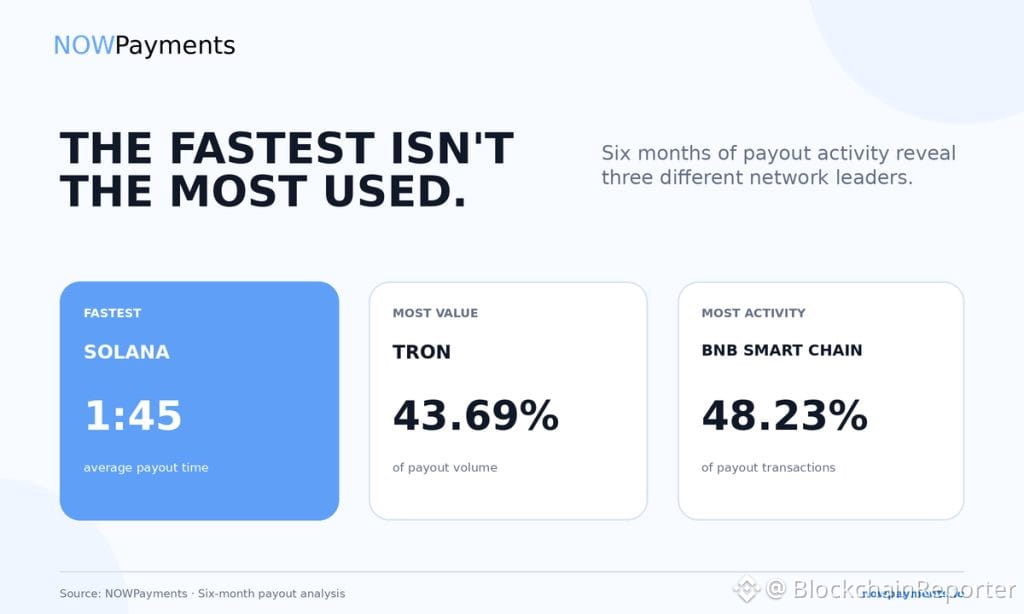
Article
NOWPayments Releases Cross-Chain Payout Data Revealing Key Performance Benchmarks Across TRON, BN...Tallinn, Estonia, September 21st, 2026, Chainwire
NOWPayments today published new empirical data analyzing six months of enterprise payout activity, offering a comparative performance benchmark across TRON, BNB Smart Chain, Solana, Bitcoin, and Ethereum to help businesses select optimal blockchain rails based on speed, transaction volume, and cost efficiency.
The dataset reveals distinct operational advantages depending on transfer priorities: Solana recorded the fastest average payout speed at 1 minute and 45 seconds while accounting for 3.08% of volume and 3.86% of transactions. TRON led in total monetary volume at 43.69%, and BNB Smart Chain handled the largest share of individual payout transactions at 48.23%.
High-Frequency Payouts Put BNB Smart Chain in the Lead
Together, TRON, BNB Smart Chain, Ethereum, Bitcoin, and Solana accounted for 94.04% of payout volume and 77.84% of payout transactions during the period analyzed.
BNB Smart Chain accounted for 48.23% of transactions, compared with 15.73% for TRON. Its share of payout volume was lower at 21.75%.
The network handled far more individual transfers without carrying the largest share of value, a pattern consistent with higher-frequency, lower-value payouts in the NOWPayments dataset.
Higher-Value Payouts Put TRON in the Lead
TRON moved 43.69% of payout volume, more than twice BNB Smart Chain’s 21.75% share, despite accounting for a much smaller share of transactions.
Based on those shares, the average TRON payout was approximately 6.2 times larger than the average BNB Smart Chain payout during the period. The networks served different payout patterns: TRON carried more value, while BNB Smart Chain handled far more individual transfers.
Ethereum ranked third by volume at 18.84% and represented 7.42% of transactions. Bitcoin accounted for 6.68% of volume and 2.60% of transactions, while Solana represented 3.08% of volume and 3.86% of transactions.
The data suggests a practical framework for matching the network to the payout flow:
The data offers a starting point, not a universal network recommendation.
When Speed Matters, Solana Leads
Solana led on speed with an average payout time of 1:45. Bitcoin followed at 2:53, ahead of TRON at 3:08 and BNB Smart Chain at 3:13. Ethereum recorded the longest average at 5:56.
The gap between the fastest and slowest networks was 4 minutes and 11 seconds. Every network in the comparison still averaged less than six minutes, while TRON and BNB Smart Chain were separated by only five seconds.
The fastest network was not the most widely used. That points to a broader principle: crypto infrastructure should be evaluated across the full movement of funds, not by a single headline metric.
Kate Lifshits, Commercial Director at NOWPayments, applies the same data-first approach in Crypto That Works for Business, her Cryptopolitan series on the commercial impact of crypto payments. The first column, the 22% Sales Boost Hiding in Your Crypto Checkout, examined checkout performance; future editions will cover other points where payment infrastructure affects revenue, costs, and growth.
“The useful question is not which network tops a leaderboard. It is what a specific payout flow needs to optimize: value, frequency, speed, or cost,” said Kate Lifshits, Commercial Director at NOWPayments.
When Cost Matters, The Best Route May Not Be a Blockchain Network
When minimizing payout costs is the priority, comparing blockchain networks may be the wrong place to start.
NOWPayments allows businesses to send payouts to ChangeNOW Pro wallets with no network or service fees within the ecosystem. Creator Andy Tries Coding publicly tested the route and reported receiving a fee-free payout in under five seconds.
Recipients are identified by email and confirm the transfer before funds move, so businesses do not need to collect wallet addresses at the beginning of the payout process. An interactive guide walks through the process from payout creation to recipient access.
The takeaway is simple: define the payout flow first, then select the network or route. Value, frequency, speed, and cost will not point every business to the same answer.
About NOWPayments
NOWPayments is a crypto business ecosystem designed to help companies accept payments, automate mass payouts, manage stablecoin treasury, and scale global digital asset operations through a single infrastructure. The platform supports more than 350 cryptocurrencies, over 30 stablecoins, flexible settlement options, and enterprise-grade APIs.
Contacts
PR ManagerAngelina T.NOWPaymentsangelina.tmk@nowpayments.ioCommercial DirectorKate L.NOWPaymentskate.l@nowpayments.io
NOWPayments Releases Cross-Chain Payout Data Revealing Key Performance Benchmarks Across TRON, BN...
Tallinn, Estonia, September 21st, 2026, Chainwire
NOWPayments today published new empirical data analyzing six months of enterprise payout activity, offering a comparative performance benchmark across TRON, BNB Smart Chain, Solana, Bitcoin, and Ethereum to help businesses select optimal blockchain rails based on speed, transaction volume, and cost efficiency.
The dataset reveals distinct operational advantages depending on transfer priorities: Solana recorded the fastest average payout speed at 1 minute and 45 seconds while accounting for 3.08% of volume and 3.86% of transactions. TRON led in total monetary volume at 43.69%, and BNB Smart Chain handled the largest share of individual payout transactions at 48.23%.
High-Frequency Payouts Put BNB Smart Chain in the Lead
Together, TRON, BNB Smart Chain, Ethereum, Bitcoin, and Solana accounted for 94.04% of payout volume and 77.84% of payout transactions during the period analyzed.
BNB Smart Chain accounted for 48.23% of transactions, compared with 15.73% for TRON. Its share of payout volume was lower at 21.75%.
The network handled far more individual transfers without carrying the largest share of value, a pattern consistent with higher-frequency, lower-value payouts in the NOWPayments dataset.
Higher-Value Payouts Put TRON in the Lead
TRON moved 43.69% of payout volume, more than twice BNB Smart Chain’s 21.75% share, despite accounting for a much smaller share of transactions.
Based on those shares, the average TRON payout was approximately 6.2 times larger than the average BNB Smart Chain payout during the period. The networks served different payout patterns: TRON carried more value, while BNB Smart Chain handled far more individual transfers.
Ethereum ranked third by volume at 18.84% and represented 7.42% of transactions. Bitcoin accounted for 6.68% of volume and 2.60% of transactions, while Solana represented 3.08% of volume and 3.86% of transactions.
The data suggests a practical framework for matching the network to the payout flow:
The data offers a starting point, not a universal network recommendation.
When Speed Matters, Solana Leads
Solana led on speed with an average payout time of 1:45. Bitcoin followed at 2:53, ahead of TRON at 3:08 and BNB Smart Chain at 3:13. Ethereum recorded the longest average at 5:56.
The gap between the fastest and slowest networks was 4 minutes and 11 seconds. Every network in the comparison still averaged less than six minutes, while TRON and BNB Smart Chain were separated by only five seconds.
The fastest network was not the most widely used. That points to a broader principle: crypto infrastructure should be evaluated across the full movement of funds, not by a single headline metric.
Kate Lifshits, Commercial Director at NOWPayments, applies the same data-first approach in Crypto That Works for Business, her Cryptopolitan series on the commercial impact of crypto payments. The first column, the 22% Sales Boost Hiding in Your Crypto Checkout, examined checkout performance; future editions will cover other points where payment infrastructure affects revenue, costs, and growth.
“The useful question is not which network tops a leaderboard. It is what a specific payout flow needs to optimize: value, frequency, speed, or cost,” said Kate Lifshits, Commercial Director at NOWPayments.
When Cost Matters, The Best Route May Not Be a Blockchain Network
When minimizing payout costs is the priority, comparing blockchain networks may be the wrong place to start.
NOWPayments allows businesses to send payouts to ChangeNOW Pro wallets with no network or service fees within the ecosystem. Creator Andy Tries Coding publicly tested the route and reported receiving a fee-free payout in under five seconds.
Recipients are identified by email and confirm the transfer before funds move, so businesses do not need to collect wallet addresses at the beginning of the payout process. An interactive guide walks through the process from payout creation to recipient access.
The takeaway is simple: define the payout flow first, then select the network or route. Value, frequency, speed, and cost will not point every business to the same answer.
About NOWPayments
NOWPayments is a crypto business ecosystem designed to help companies accept payments, automate mass payouts, manage stablecoin treasury, and scale global digital asset operations through a single infrastructure. The platform supports more than 350 cryptocurrencies, over 30 stablecoins, flexible settlement options, and enterprise-grade APIs.
Contacts
PR ManagerAngelina T.NOWPaymentsangelina.tmk@nowpayments.ioCommercial DirectorKate L.NOWPaymentskate.l@nowpayments.io
NOWPayments today published new empirical data analyzing six months of enterprise payout activity, offering a comparative performance benchmark across TRON, BNB Smart Chain, Solana, Bitcoin, and Ethereum to help businesses select optimal blockchain rails based on speed, transaction volume, and cost efficiency.
The dataset reveals distinct operational advantages depending on transfer priorities: Solana recorded the fastest average payout speed at 1 minute and 45 seconds while accounting for 3.08% of volume and 3.86% of transactions. TRON led in total monetary volume at 43.69%, and BNB Smart Chain handled the largest share of individual payout transactions at 48.23%.
High-Frequency Payouts Put BNB Smart Chain in the Lead
Together, TRON, BNB Smart Chain, Ethereum, Bitcoin, and Solana accounted for 94.04% of payout volume and 77.84% of payout transactions during the period analyzed.
BNB Smart Chain accounted for 48.23% of transactions, compared with 15.73% for TRON. Its share of payout volume was lower at 21.75%.
The network handled far more individual transfers without carrying the largest share of value, a pattern consistent with higher-frequency, lower-value payouts in the NOWPayments dataset.
Higher-Value Payouts Put TRON in the Lead
TRON moved 43.69% of payout volume, more than twice BNB Smart Chain’s 21.75% share, despite accounting for a much smaller share of transactions.
Based on those shares, the average TRON payout was approximately 6.2 times larger than the average BNB Smart Chain payout during the period. The networks served different payout patterns: TRON carried more value, while BNB Smart Chain handled far more individual transfers.
Ethereum ranked third by volume at 18.84% and represented 7.42% of transactions. Bitcoin accounted for 6.68% of volume and 2.60% of transactions, while Solana represented 3.08% of volume and 3.86% of transactions.
The data suggests a practical framework for matching the network to the payout flow:
The data offers a starting point, not a universal network recommendation.
When Speed Matters, Solana Leads
Solana led on speed with an average payout time of 1:45. Bitcoin followed at 2:53, ahead of TRON at 3:08 and BNB Smart Chain at 3:13. Ethereum recorded the longest average at 5:56.
The gap between the fastest and slowest networks was 4 minutes and 11 seconds. Every network in the comparison still averaged less than six minutes, while TRON and BNB Smart Chain were separated by only five seconds.
The fastest network was not the most widely used. That points to a broader principle: crypto infrastructure should be evaluated across the full movement of funds, not by a single headline metric.
Kate Lifshits, Commercial Director at NOWPayments, applies the same data-first approach in Crypto That Works for Business, her Cryptopolitan series on the commercial impact of crypto payments. The first column, the 22% Sales Boost Hiding in Your Crypto Checkout, examined checkout performance; future editions will cover other points where payment infrastructure affects revenue, costs, and growth.
“The useful question is not which network tops a leaderboard. It is what a specific payout flow needs to optimize: value, frequency, speed, or cost,” said Kate Lifshits, Commercial Director at NOWPayments.
When Cost Matters, The Best Route May Not Be a Blockchain Network
When minimizing payout costs is the priority, comparing blockchain networks may be the wrong place to start.
NOWPayments allows businesses to send payouts to ChangeNOW Pro wallets with no network or service fees within the ecosystem. Creator Andy Tries Coding publicly tested the route and reported receiving a fee-free payout in under five seconds.
Recipients are identified by email and confirm the transfer before funds move, so businesses do not need to collect wallet addresses at the beginning of the payout process. An interactive guide walks through the process from payout creation to recipient access.
The takeaway is simple: define the payout flow first, then select the network or route. Value, frequency, speed, and cost will not point every business to the same answer.
About NOWPayments
NOWPayments is a crypto business ecosystem designed to help companies accept payments, automate mass payouts, manage stablecoin treasury, and scale global digital asset operations through a single infrastructure. The platform supports more than 350 cryptocurrencies, over 30 stablecoins, flexible settlement options, and enterprise-grade APIs.
Contacts
PR ManagerAngelina T.NOWPaymentsangelina.tmk@nowpayments.ioCommercial DirectorKate L.NOWPaymentskate.l@nowpayments.io
93
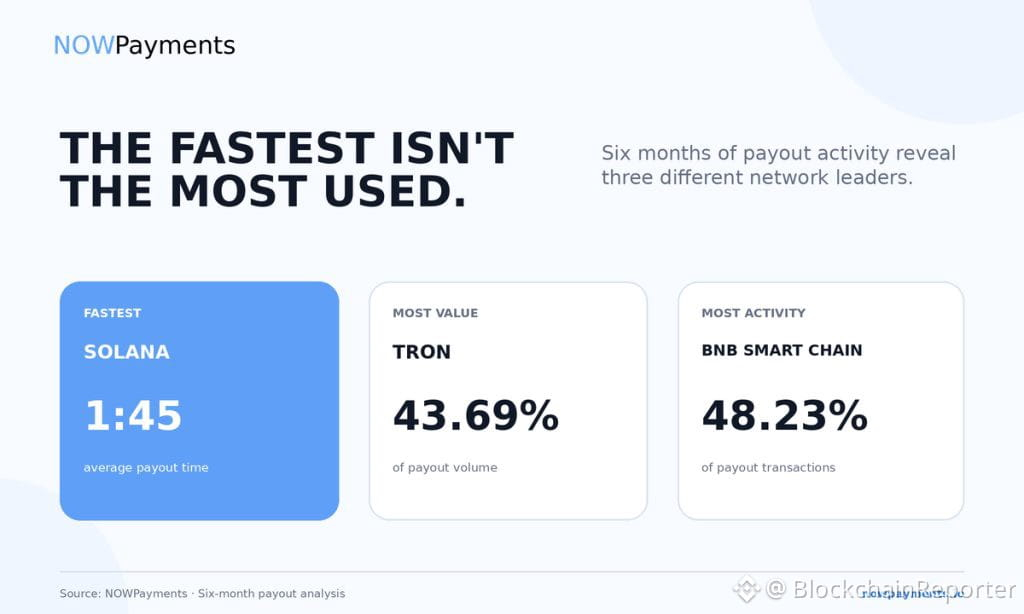
Article
NOWPayments Releases Cross-Chain Payout Data Revealing Key Performance Benchmarks Across TRON, BN...Tallinn, Estonia, September 21st, 2026, Chainwire
NOWPayments today published new empirical data analyzing six months of enterprise payout activity, offering a comparative performance benchmark across TRON, BNB Smart Chain, Solana, Bitcoin, and Ethereum to help businesses select optimal blockchain rails based on speed, transaction volume, and cost efficiency.
The dataset reveals distinct operational advantages depending on transfer priorities: Solana recorded the fastest average payout speed at 1 minute and 45 seconds while accounting for 3.08% of volume and 3.86% of transactions. TRON led in total monetary volume at 43.69%, and BNB Smart Chain handled the largest share of individual payout transactions at 48.23%.
High-Frequency Payouts Put BNB Smart Chain in the Lead
Together, TRON, BNB Smart Chain, Ethereum, Bitcoin, and Solana accounted for 94.04% of payout volume and 77.84% of payout transactions during the period analyzed.
BNB Smart Chain accounted for 48.23% of transactions, compared with 15.73% for TRON. Its share of payout volume was lower at 21.75%.
The network handled far more individual transfers without carrying the largest share of value, a pattern consistent with higher-frequency, lower-value payouts in the NOWPayments dataset.
Higher-Value Payouts Put TRON in the Lead
TRON moved 43.69% of payout volume, more than twice BNB Smart Chain’s 21.75% share, despite accounting for a much smaller share of transactions.
Based on those shares, the average TRON payout was approximately 6.2 times larger than the average BNB Smart Chain payout during the period. The networks served different payout patterns: TRON carried more value, while BNB Smart Chain handled far more individual transfers.
Ethereum ranked third by volume at 18.84% and represented 7.42% of transactions. Bitcoin accounted for 6.68% of volume and 2.60% of transactions, while Solana represented 3.08% of volume and 3.86% of transactions.
The data suggests a practical framework for matching the network to the payout flow:
The data offers a starting point, not a universal network recommendation.
When Speed Matters, Solana Leads
Solana led on speed with an average payout time of 1:45. Bitcoin followed at 2:53, ahead of TRON at 3:08 and BNB Smart Chain at 3:13. Ethereum recorded the longest average at 5:56.
The gap between the fastest and slowest networks was 4 minutes and 11 seconds. Every network in the comparison still averaged less than six minutes, while TRON and BNB Smart Chain were separated by only five seconds.
The fastest network was not the most widely used. That points to a broader principle: crypto infrastructure should be evaluated across the full movement of funds, not by a single headline metric.
Kate Lifshits, Commercial Director at NOWPayments, applies the same data-first approach in Crypto That Works for Business, her Cryptopolitan series on the commercial impact of crypto payments. The first column, the 22% Sales Boost Hiding in Your Crypto Checkout, examined checkout performance; future editions will cover other points where payment infrastructure affects revenue, costs, and growth.
“The useful question is not which network tops a leaderboard. It is what a specific payout flow needs to optimize: value, frequency, speed, or cost,” said Kate Lifshits, Commercial Director at NOWPayments.
When Cost Matters, The Best Route May Not Be a Blockchain Network
When minimizing payout costs is the priority, comparing blockchain networks may be the wrong place to start.
NOWPayments allows businesses to send payouts to ChangeNOW Pro wallets with no network or service fees within the ecosystem. Creator Andy Tries Coding publicly tested the route and reported receiving a fee-free payout in under five seconds.
Recipients are identified by email and confirm the transfer before funds move, so businesses do not need to collect wallet addresses at the beginning of the payout process. An interactive guide walks through the process from payout creation to recipient access.
The takeaway is simple: define the payout flow first, then select the network or route. Value, frequency, speed, and cost will not point every business to the same answer.
About NOWPayments
NOWPayments is a crypto business ecosystem designed to help companies accept payments, automate mass payouts, manage stablecoin treasury, and scale global digital asset operations through a single infrastructure. The platform supports more than 350 cryptocurrencies, over 30 stablecoins, flexible settlement options, and enterprise-grade APIs.
Contacts
PR ManagerAngelina T.NOWPaymentsangelina.tmk@nowpayments.ioCommercial DirectorKate L.NOWPaymentskate.l@nowpayments.io
This article is not intended as financial advice. Educational purposes only.
NOWPayments Releases Cross-Chain Payout Data Revealing Key Performance Benchmarks Across TRON, BN...
Tallinn, Estonia, September 21st, 2026, Chainwire
NOWPayments today published new empirical data analyzing six months of enterprise payout activity, offering a comparative performance benchmark across TRON, BNB Smart Chain, Solana, Bitcoin, and Ethereum to help businesses select optimal blockchain rails based on speed, transaction volume, and cost efficiency.
The dataset reveals distinct operational advantages depending on transfer priorities: Solana recorded the fastest average payout speed at 1 minute and 45 seconds while accounting for 3.08% of volume and 3.86% of transactions. TRON led in total monetary volume at 43.69%, and BNB Smart Chain handled the largest share of individual payout transactions at 48.23%.
High-Frequency Payouts Put BNB Smart Chain in the Lead
Together, TRON, BNB Smart Chain, Ethereum, Bitcoin, and Solana accounted for 94.04% of payout volume and 77.84% of payout transactions during the period analyzed.
BNB Smart Chain accounted for 48.23% of transactions, compared with 15.73% for TRON. Its share of payout volume was lower at 21.75%.
The network handled far more individual transfers without carrying the largest share of value, a pattern consistent with higher-frequency, lower-value payouts in the NOWPayments dataset.
Higher-Value Payouts Put TRON in the Lead
TRON moved 43.69% of payout volume, more than twice BNB Smart Chain’s 21.75% share, despite accounting for a much smaller share of transactions.
Based on those shares, the average TRON payout was approximately 6.2 times larger than the average BNB Smart Chain payout during the period. The networks served different payout patterns: TRON carried more value, while BNB Smart Chain handled far more individual transfers.
Ethereum ranked third by volume at 18.84% and represented 7.42% of transactions. Bitcoin accounted for 6.68% of volume and 2.60% of transactions, while Solana represented 3.08% of volume and 3.86% of transactions.
The data suggests a practical framework for matching the network to the payout flow:
The data offers a starting point, not a universal network recommendation.
When Speed Matters, Solana Leads
Solana led on speed with an average payout time of 1:45. Bitcoin followed at 2:53, ahead of TRON at 3:08 and BNB Smart Chain at 3:13. Ethereum recorded the longest average at 5:56.
The gap between the fastest and slowest networks was 4 minutes and 11 seconds. Every network in the comparison still averaged less than six minutes, while TRON and BNB Smart Chain were separated by only five seconds.
The fastest network was not the most widely used. That points to a broader principle: crypto infrastructure should be evaluated across the full movement of funds, not by a single headline metric.
Kate Lifshits, Commercial Director at NOWPayments, applies the same data-first approach in Crypto That Works for Business, her Cryptopolitan series on the commercial impact of crypto payments. The first column, the 22% Sales Boost Hiding in Your Crypto Checkout, examined checkout performance; future editions will cover other points where payment infrastructure affects revenue, costs, and growth.
“The useful question is not which network tops a leaderboard. It is what a specific payout flow needs to optimize: value, frequency, speed, or cost,” said Kate Lifshits, Commercial Director at NOWPayments.
When Cost Matters, The Best Route May Not Be a Blockchain Network
When minimizing payout costs is the priority, comparing blockchain networks may be the wrong place to start.
NOWPayments allows businesses to send payouts to ChangeNOW Pro wallets with no network or service fees within the ecosystem. Creator Andy Tries Coding publicly tested the route and reported receiving a fee-free payout in under five seconds.
Recipients are identified by email and confirm the transfer before funds move, so businesses do not need to collect wallet addresses at the beginning of the payout process. An interactive guide walks through the process from payout creation to recipient access.
The takeaway is simple: define the payout flow first, then select the network or route. Value, frequency, speed, and cost will not point every business to the same answer.
About NOWPayments
NOWPayments is a crypto business ecosystem designed to help companies accept payments, automate mass payouts, manage stablecoin treasury, and scale global digital asset operations through a single infrastructure. The platform supports more than 350 cryptocurrencies, over 30 stablecoins, flexible settlement options, and enterprise-grade APIs.
Contacts
PR ManagerAngelina T.NOWPaymentsangelina.tmk@nowpayments.ioCommercial DirectorKate L.NOWPaymentskate.l@nowpayments.io
This article is not intended as financial advice. Educational purposes only.
NOWPayments today published new empirical data analyzing six months of enterprise payout activity, offering a comparative performance benchmark across TRON, BNB Smart Chain, Solana, Bitcoin, and Ethereum to help businesses select optimal blockchain rails based on speed, transaction volume, and cost efficiency.
The dataset reveals distinct operational advantages depending on transfer priorities: Solana recorded the fastest average payout speed at 1 minute and 45 seconds while accounting for 3.08% of volume and 3.86% of transactions. TRON led in total monetary volume at 43.69%, and BNB Smart Chain handled the largest share of individual payout transactions at 48.23%.
High-Frequency Payouts Put BNB Smart Chain in the Lead
Together, TRON, BNB Smart Chain, Ethereum, Bitcoin, and Solana accounted for 94.04% of payout volume and 77.84% of payout transactions during the period analyzed.
BNB Smart Chain accounted for 48.23% of transactions, compared with 15.73% for TRON. Its share of payout volume was lower at 21.75%.
The network handled far more individual transfers without carrying the largest share of value, a pattern consistent with higher-frequency, lower-value payouts in the NOWPayments dataset.
Higher-Value Payouts Put TRON in the Lead
TRON moved 43.69% of payout volume, more than twice BNB Smart Chain’s 21.75% share, despite accounting for a much smaller share of transactions.
Based on those shares, the average TRON payout was approximately 6.2 times larger than the average BNB Smart Chain payout during the period. The networks served different payout patterns: TRON carried more value, while BNB Smart Chain handled far more individual transfers.
Ethereum ranked third by volume at 18.84% and represented 7.42% of transactions. Bitcoin accounted for 6.68% of volume and 2.60% of transactions, while Solana represented 3.08% of volume and 3.86% of transactions.
The data suggests a practical framework for matching the network to the payout flow:
The data offers a starting point, not a universal network recommendation.
When Speed Matters, Solana Leads
Solana led on speed with an average payout time of 1:45. Bitcoin followed at 2:53, ahead of TRON at 3:08 and BNB Smart Chain at 3:13. Ethereum recorded the longest average at 5:56.
The gap between the fastest and slowest networks was 4 minutes and 11 seconds. Every network in the comparison still averaged less than six minutes, while TRON and BNB Smart Chain were separated by only five seconds.
The fastest network was not the most widely used. That points to a broader principle: crypto infrastructure should be evaluated across the full movement of funds, not by a single headline metric.
Kate Lifshits, Commercial Director at NOWPayments, applies the same data-first approach in Crypto That Works for Business, her Cryptopolitan series on the commercial impact of crypto payments. The first column, the 22% Sales Boost Hiding in Your Crypto Checkout, examined checkout performance; future editions will cover other points where payment infrastructure affects revenue, costs, and growth.
“The useful question is not which network tops a leaderboard. It is what a specific payout flow needs to optimize: value, frequency, speed, or cost,” said Kate Lifshits, Commercial Director at NOWPayments.
When Cost Matters, The Best Route May Not Be a Blockchain Network
When minimizing payout costs is the priority, comparing blockchain networks may be the wrong place to start.
NOWPayments allows businesses to send payouts to ChangeNOW Pro wallets with no network or service fees within the ecosystem. Creator Andy Tries Coding publicly tested the route and reported receiving a fee-free payout in under five seconds.
Recipients are identified by email and confirm the transfer before funds move, so businesses do not need to collect wallet addresses at the beginning of the payout process. An interactive guide walks through the process from payout creation to recipient access.
The takeaway is simple: define the payout flow first, then select the network or route. Value, frequency, speed, and cost will not point every business to the same answer.
About NOWPayments
NOWPayments is a crypto business ecosystem designed to help companies accept payments, automate mass payouts, manage stablecoin treasury, and scale global digital asset operations through a single infrastructure. The platform supports more than 350 cryptocurrencies, over 30 stablecoins, flexible settlement options, and enterprise-grade APIs.
Contacts
PR ManagerAngelina T.NOWPaymentsangelina.tmk@nowpayments.ioCommercial DirectorKate L.NOWPaymentskate.l@nowpayments.io
This article is not intended as financial advice. Educational purposes only.
89

Article
CryptoPawn Launches Protocol Integration Allowing Authorized AI Agents to Participate in Crypto-B...Johannesburg, South Africa, September 21st, 2026, Chainwire
CryptoPawn, a Delaware-licensed pawnbroker focused on digital assets, today published a new industry framework detailing four key requirements—identity, permission, collateral, and liability—that must be resolved before automated AI agents can participate in regulated crypto-backed transactions.
AI agents are already moving beyond information retrieval and into transactions. New wallet infrastructure allows software agents to hold and transfer digital assets, while machine-payment protocols enable programmatic payments for digital services.
Some technical building blocks for borrowing already exist. Developer frameworks allow agents to supply collateral, borrow and repay on decentralised finance protocols. These are protocol-level transactions, not examples of regulated lenders treating AI agents as independent borrowers. Broader regulated use still depends on identity, authority, compliance and risk controls.
1. The First Issue is Identity
An autonomous software agent is not automatically the legal customer in a financial transaction. Where an agent acts for an individual or business, the verified person or legal entity remains the contractual party and the agent operates only within the authority granted to it.
Under the US federal E-SIGN Act, a contract cannot be denied legal effect solely because an electronic agent was involved, provided the agent’s action is legally attributable to the person being bound. That recognition does not displace customer identification, due diligence or licensing requirements.
2. The Second Issue is Permission
Any system allowing an agent to initiate borrowing would need clear limits around what it could pledge, how much it could borrow, the agreement duration and when human approval would be required.
An agent might be authorised to pay routine operating expenses but not to pledge assets as collateral. Records would therefore need to show what the agent was permitted to do and whether its action fell within the owner’s mandate.
3. The Third Issue is Collateral
Borrowing against Bitcoin, Ethereum or other crypto collateral requires clarity over ownership and the right to place that asset at risk. Wallet access alone does not establish authority to pledge the assets held within it.
An agent may be technically capable of moving an asset while still lacking legal authority to encumber it. Any agent-enabled model would need to connect wallet access, ownership and permission to use those assets as collateral.
4. The Fourth Issue is Liability
If an agent exceeds its mandate, acts on outdated information or makes a decision its owner disputes, the contractual framework will need to determine where responsibility lies.
NIST’s work on AI-agent security examines least-privilege authorisation, binding agent identity to human authority, tamper-resistant auditing and prompt-injection controls. The US Treasury’s 2026 Financial Services AI Risk Management Framework similarly emphasises accountability, transparency and resilience in financial-sector AI deployments.
These questions apply differently to agents operating within predetermined rules and agents acting as digital representatives for people or businesses.
For CryptoPawn, the second model provides the clearer practical connection. Under its current process, the human or business customer remains the verified contractual party. CryptoPawn’s AI-agent onboarding model is designed around that principal-agent relationship: a verified principal can authorise an agent to assist within defined permissions, while the principal remains the borrower and owner of the pledged collateral.
Agentic commerce raises a broader question than whether software can make a payment. As agents gain greater ability to act with money and digital assets, financial infrastructure will need to define the boundaries of their economic authority. The practical question is how authorised software can participate in a crypto-backed transaction while the verified customer retains control of identity, collateral and contractual responsibility.
About CryptoPawn
CryptoPawn is a Delaware-licensed pawnbroker focused on crypto-backed pawn transactions involving supported digital assets.
Contact
MissMichelle CaveBrandfundi (Pty) Ltdmichelle@brandfundi.co.za
This article is not intended as financial advice. Educational purposes only.
CryptoPawn Launches Protocol Integration Allowing Authorized AI Agents to Participate in Crypto-B...
Johannesburg, South Africa, September 21st, 2026, Chainwire
CryptoPawn, a Delaware-licensed pawnbroker focused on digital assets, today published a new industry framework detailing four key requirements—identity, permission, collateral, and liability—that must be resolved before automated AI agents can participate in regulated crypto-backed transactions.
AI agents are already moving beyond information retrieval and into transactions. New wallet infrastructure allows software agents to hold and transfer digital assets, while machine-payment protocols enable programmatic payments for digital services.
Some technical building blocks for borrowing already exist. Developer frameworks allow agents to supply collateral, borrow and repay on decentralised finance protocols. These are protocol-level transactions, not examples of regulated lenders treating AI agents as independent borrowers. Broader regulated use still depends on identity, authority, compliance and risk controls.
1. The First Issue is Identity
An autonomous software agent is not automatically the legal customer in a financial transaction. Where an agent acts for an individual or business, the verified person or legal entity remains the contractual party and the agent operates only within the authority granted to it.
Under the US federal E-SIGN Act, a contract cannot be denied legal effect solely because an electronic agent was involved, provided the agent’s action is legally attributable to the person being bound. That recognition does not displace customer identification, due diligence or licensing requirements.
2. The Second Issue is Permission
Any system allowing an agent to initiate borrowing would need clear limits around what it could pledge, how much it could borrow, the agreement duration and when human approval would be required.
An agent might be authorised to pay routine operating expenses but not to pledge assets as collateral. Records would therefore need to show what the agent was permitted to do and whether its action fell within the owner’s mandate.
3. The Third Issue is Collateral
Borrowing against Bitcoin, Ethereum or other crypto collateral requires clarity over ownership and the right to place that asset at risk. Wallet access alone does not establish authority to pledge the assets held within it.
An agent may be technically capable of moving an asset while still lacking legal authority to encumber it. Any agent-enabled model would need to connect wallet access, ownership and permission to use those assets as collateral.
4. The Fourth Issue is Liability
If an agent exceeds its mandate, acts on outdated information or makes a decision its owner disputes, the contractual framework will need to determine where responsibility lies.
NIST’s work on AI-agent security examines least-privilege authorisation, binding agent identity to human authority, tamper-resistant auditing and prompt-injection controls. The US Treasury’s 2026 Financial Services AI Risk Management Framework similarly emphasises accountability, transparency and resilience in financial-sector AI deployments.
These questions apply differently to agents operating within predetermined rules and agents acting as digital representatives for people or businesses.
For CryptoPawn, the second model provides the clearer practical connection. Under its current process, the human or business customer remains the verified contractual party. CryptoPawn’s AI-agent onboarding model is designed around that principal-agent relationship: a verified principal can authorise an agent to assist within defined permissions, while the principal remains the borrower and owner of the pledged collateral.
Agentic commerce raises a broader question than whether software can make a payment. As agents gain greater ability to act with money and digital assets, financial infrastructure will need to define the boundaries of their economic authority. The practical question is how authorised software can participate in a crypto-backed transaction while the verified customer retains control of identity, collateral and contractual responsibility.
About CryptoPawn
CryptoPawn is a Delaware-licensed pawnbroker focused on crypto-backed pawn transactions involving supported digital assets.
Contact
MissMichelle CaveBrandfundi (Pty) Ltdmichelle@brandfundi.co.za
This article is not intended as financial advice. Educational purposes only.
CryptoPawn, a Delaware-licensed pawnbroker focused on digital assets, today published a new industry framework detailing four key requirements—identity, permission, collateral, and liability—that must be resolved before automated AI agents can participate in regulated crypto-backed transactions.
AI agents are already moving beyond information retrieval and into transactions. New wallet infrastructure allows software agents to hold and transfer digital assets, while machine-payment protocols enable programmatic payments for digital services.
Some technical building blocks for borrowing already exist. Developer frameworks allow agents to supply collateral, borrow and repay on decentralised finance protocols. These are protocol-level transactions, not examples of regulated lenders treating AI agents as independent borrowers. Broader regulated use still depends on identity, authority, compliance and risk controls.
1. The First Issue is Identity
An autonomous software agent is not automatically the legal customer in a financial transaction. Where an agent acts for an individual or business, the verified person or legal entity remains the contractual party and the agent operates only within the authority granted to it.
Under the US federal E-SIGN Act, a contract cannot be denied legal effect solely because an electronic agent was involved, provided the agent’s action is legally attributable to the person being bound. That recognition does not displace customer identification, due diligence or licensing requirements.
2. The Second Issue is Permission
Any system allowing an agent to initiate borrowing would need clear limits around what it could pledge, how much it could borrow, the agreement duration and when human approval would be required.
An agent might be authorised to pay routine operating expenses but not to pledge assets as collateral. Records would therefore need to show what the agent was permitted to do and whether its action fell within the owner’s mandate.
3. The Third Issue is Collateral
Borrowing against Bitcoin, Ethereum or other crypto collateral requires clarity over ownership and the right to place that asset at risk. Wallet access alone does not establish authority to pledge the assets held within it.
An agent may be technically capable of moving an asset while still lacking legal authority to encumber it. Any agent-enabled model would need to connect wallet access, ownership and permission to use those assets as collateral.
4. The Fourth Issue is Liability
If an agent exceeds its mandate, acts on outdated information or makes a decision its owner disputes, the contractual framework will need to determine where responsibility lies.
NIST’s work on AI-agent security examines least-privilege authorisation, binding agent identity to human authority, tamper-resistant auditing and prompt-injection controls. The US Treasury’s 2026 Financial Services AI Risk Management Framework similarly emphasises accountability, transparency and resilience in financial-sector AI deployments.
These questions apply differently to agents operating within predetermined rules and agents acting as digital representatives for people or businesses.
For CryptoPawn, the second model provides the clearer practical connection. Under its current process, the human or business customer remains the verified contractual party. CryptoPawn’s AI-agent onboarding model is designed around that principal-agent relationship: a verified principal can authorise an agent to assist within defined permissions, while the principal remains the borrower and owner of the pledged collateral.
Agentic commerce raises a broader question than whether software can make a payment. As agents gain greater ability to act with money and digital assets, financial infrastructure will need to define the boundaries of their economic authority. The practical question is how authorised software can participate in a crypto-backed transaction while the verified customer retains control of identity, collateral and contractual responsibility.
About CryptoPawn
CryptoPawn is a Delaware-licensed pawnbroker focused on crypto-backed pawn transactions involving supported digital assets.
Contact
MissMichelle CaveBrandfundi (Pty) Ltdmichelle@brandfundi.co.za
This article is not intended as financial advice. Educational purposes only.
1
505
Article
Multi-Asset Trading Venue Monochrome Exchange Announces IEO of Its Native Token, $MCRSydney, New South Wales, Australia, September 20th, 2026, Chainwire
Monochrome Exchange, a multi-asset trading platform, has announced the Initial Exchange Offering (IEO) of its native utility token, MCR. The platform aims to consolidate crypto, equities, bonds, and real-world assets into a single venue where trades settle on-chain. The exchange is currently live, featuring over 260 active markets.
MCR Initial Exchange Offering Details
Date: September 21, 13:00 UTC+8 to September 28, 13:00 UTC+8
Location: Monochrome Launchpad (monochrome.exchange/launchpad)
Token Price: $0.88 per MCR
Public Sale Supply: 10,500,000 MCR (5% of total supply)
Vesting Schedule: 1-month cliff from Token Generation Event (TGE), followed by 3-month linear vesting
Commitment Asset: USDT
Subscription Limits: No minimum; maximum of $100,000 per account
The MCR offering will take place directly on the Monochrome Exchange platform. Users can participate by depositing USDT and committing funds on the offering page during the designated seven-day window. Following the one-month cliff after the TGE, MCR tokens will vest linearly and be credited directly to user accounts.
Live Platform Offerings
Monochrome Exchange currently supports trading across four asset classes from a single account balance:
Crypto: Spot and perpetual markets.
Equities: Nearly 150 markets, including tokenized exposure to US and Hong Kong equities (e.g., AAPL, NVDA, TSLA, BYD).
ETFs and Indices: Over 30 options including SPY, QQQ, and XLE.
Commodities: Gold, silver, platinum, crude oil, Brent, natural gas, and copper.
Pre-IPO Markets: Tokenized exposure to private companies, including OpenAI and Anthropic.
Leadership and Backing
Monochrome Exchange was founded by Jeff Yew, former Chief Executive Officer of Binance Australia, where he led local operations for the world’s largest cryptocurrency exchange by trading volume. He subsequently founded Monochrome Asset Management, the investment manager behind the first direct-holdings spot Bitcoin ETF of its kind admitted to trading on Cboe under an ASIC-issued Australian Financial Services Licence.
Yew has over a decade of experience across exchange operations, digital asset licensing and the design of regulated investment products. “Tokenisation has produced a large number of assets that barely trade,” said Jeff Yew. “The harder problem has always been the market underneath them: liquidity, settlement, and compliance that holds up. We listed the markets first and are offering the token second.”
Monochrome Exchange operates as a separate entity from Monochrome Asset Management. Jeff Yew’s professional history does not extend any licence, authorisation or regulatory status of any Monochrome affiliate to Monochrome Exchange or to the MCR token.
How It Works
The offering is conducted entirely within the Monochrome Exchange platform. Participation follows four steps:
Account. Participants open a Monochrome Exchange account and enable two-factor authentication.
Deposit. USDT is deposited to the exchange account. Deposits are credited once confirmed on-chain.
Commitment. Funds are committed on the offering page during the seven-day window, which opens on 21 September at 13:00 UTC+8 and closes on 28 September at 13:00 UTC+8, or earlier if the allocation is filled. There is no minimum subscription and a maximum of $100,000 per account.
Distribution. MCR is held against the participant’s account from the Token Generation Event. No tokens unlock during the first month. Following the cliff, the allocation vests linearly over three months and is credited automatically as it unlocks.
No external wallet, bridge or on-chain transaction is required at any stage, and no claim transaction is necessary.
MCR Tokenomics and Deflationary Mechanism
The maximum supply of MCR is capped at 210,000,000 tokens. Tokens allocated to the team and advisors are locked for 12 months, followed by a 36-month linear vesting schedule.
$MCR Tokenomics
Vesting Schedule
The token incorporates a buy-back and burn mechanism driven by platform activity:
20% of net platform profit will be used to buy back MCR from the open market quarterly.
25% of all Launchpad and Digital IPO fee revenue will be added to the buy-back allocation.
Purchased tokens will be sent to a verifiable burn address to reduce the circulating supply.
Token Utility
MCR serves multiple functions within the Monochrome ecosystem:
Fee Discounts: Holders receive trading fee discounts ranging from 10% to 50%, tiered by holdings.
Exclusive Access: MCR acts as the access token for Launchpad offerings and upcoming Digital IPOs, with allocations weighted by user balances.
Staking: Users can stake MCR to earn rewards, increase allocation weight, and qualify for the node program.
Governance: Holders can participate in voting on platform listings, Launchpad parameters, and treasury deployment.
Digital IPOs and Leadership
Monochrome Exchange is developing a Digital IPO framework designed to streamline the public listing process by moving issuance, subscription, allocation, and settlement on-chain. MCR will be required to participate in these offerings. The platform schedules its first Digital IPO for Q1 2027.
The exchange was founded by Jeff Yew, former CEO of Binance Australia and founder of Monochrome Asset Management. Yew brings a decade of experience in exchange operations and digital asset licensing. Monochrome Exchange operates as a separate entity from Monochrome Asset Management. Jeff Yew’s professional history does not extend any license, authorization, or regulatory status of Monochrome affiliates to Monochrome Exchange or the MCR token.
About Monochrome
Monochrome Exchange is a multi-asset trading venue where crypto, equities, ETFs, commodities and pre-IPO markets trade from a single account and settle on-chain. The platform currently lists more than 260 markets, including tokenised exposure to US and Hong Kong equities, index and sector ETFs, precious metals and energy, and private companies including OpenAI and Anthropic.
Monochrome Exchange was founded by Jeff Yew, former Chief Executive Officer of Binance Australia and founder of Monochrome Asset Management, the investment manager behind the first direct-holdings spot Bitcoin ETF of its kind admitted to trading on Cboe. MCR is the native utility token of the exchange, used for trading fee discounts, allocation in Launchpad offerings and Digital IPOs, staking and governance.
Monochrome Exchange is a separate entity from Monochrome Asset Management and operates independently of it.
Socials
Website: monochrome.exchange
Twitter: x.com/Monochrome_EN
Disclaimer
MCR is a utility token and does not confer ownership, dividends, profit-sharing, or redemption rights. Digital assets carry significant risks, including total loss. Users are advised to review the full documentation, risk factors, tokenomics, and vesting schedules at docs.monochrome.exchange prior to participation.
Contact
Jeff YewMonochromeinfo@monochrome.co
This article is not intended as financial advice. Educational purposes only.
Multi-Asset Trading Venue Monochrome Exchange Announces IEO of Its Native Token, $MCR
Sydney, New South Wales, Australia, September 20th, 2026, Chainwire
Monochrome Exchange, a multi-asset trading platform, has announced the Initial Exchange Offering (IEO) of its native utility token, MCR. The platform aims to consolidate crypto, equities, bonds, and real-world assets into a single venue where trades settle on-chain. The exchange is currently live, featuring over 260 active markets.
MCR Initial Exchange Offering Details
Date: September 21, 13:00 UTC+8 to September 28, 13:00 UTC+8
Location: Monochrome Launchpad (monochrome.exchange/launchpad)
Token Price: $0.88 per MCR
Public Sale Supply: 10,500,000 MCR (5% of total supply)
Vesting Schedule: 1-month cliff from Token Generation Event (TGE), followed by 3-month linear vesting
Commitment Asset: USDT
Subscription Limits: No minimum; maximum of $100,000 per account
The MCR offering will take place directly on the Monochrome Exchange platform. Users can participate by depositing USDT and committing funds on the offering page during the designated seven-day window. Following the one-month cliff after the TGE, MCR tokens will vest linearly and be credited directly to user accounts.
Live Platform Offerings
Monochrome Exchange currently supports trading across four asset classes from a single account balance:
Crypto: Spot and perpetual markets.
Equities: Nearly 150 markets, including tokenized exposure to US and Hong Kong equities (e.g., AAPL, NVDA, TSLA, BYD).
ETFs and Indices: Over 30 options including SPY, QQQ, and XLE.
Commodities: Gold, silver, platinum, crude oil, Brent, natural gas, and copper.
Pre-IPO Markets: Tokenized exposure to private companies, including OpenAI and Anthropic.
Leadership and Backing
Monochrome Exchange was founded by Jeff Yew, former Chief Executive Officer of Binance Australia, where he led local operations for the world’s largest cryptocurrency exchange by trading volume. He subsequently founded Monochrome Asset Management, the investment manager behind the first direct-holdings spot Bitcoin ETF of its kind admitted to trading on Cboe under an ASIC-issued Australian Financial Services Licence.
Yew has over a decade of experience across exchange operations, digital asset licensing and the design of regulated investment products. “Tokenisation has produced a large number of assets that barely trade,” said Jeff Yew. “The harder problem has always been the market underneath them: liquidity, settlement, and compliance that holds up. We listed the markets first and are offering the token second.”
Monochrome Exchange operates as a separate entity from Monochrome Asset Management. Jeff Yew’s professional history does not extend any licence, authorisation or regulatory status of any Monochrome affiliate to Monochrome Exchange or to the MCR token.
How It Works
The offering is conducted entirely within the Monochrome Exchange platform. Participation follows four steps:
Account. Participants open a Monochrome Exchange account and enable two-factor authentication.
Deposit. USDT is deposited to the exchange account. Deposits are credited once confirmed on-chain.
Commitment. Funds are committed on the offering page during the seven-day window, which opens on 21 September at 13:00 UTC+8 and closes on 28 September at 13:00 UTC+8, or earlier if the allocation is filled. There is no minimum subscription and a maximum of $100,000 per account.
Distribution. MCR is held against the participant’s account from the Token Generation Event. No tokens unlock during the first month. Following the cliff, the allocation vests linearly over three months and is credited automatically as it unlocks.
No external wallet, bridge or on-chain transaction is required at any stage, and no claim transaction is necessary.
MCR Tokenomics and Deflationary Mechanism
The maximum supply of MCR is capped at 210,000,000 tokens. Tokens allocated to the team and advisors are locked for 12 months, followed by a 36-month linear vesting schedule.
$MCR Tokenomics
Vesting Schedule
The token incorporates a buy-back and burn mechanism driven by platform activity:
20% of net platform profit will be used to buy back MCR from the open market quarterly.
25% of all Launchpad and Digital IPO fee revenue will be added to the buy-back allocation.
Purchased tokens will be sent to a verifiable burn address to reduce the circulating supply.
Token Utility
MCR serves multiple functions within the Monochrome ecosystem:
Fee Discounts: Holders receive trading fee discounts ranging from 10% to 50%, tiered by holdings.
Exclusive Access: MCR acts as the access token for Launchpad offerings and upcoming Digital IPOs, with allocations weighted by user balances.
Staking: Users can stake MCR to earn rewards, increase allocation weight, and qualify for the node program.
Governance: Holders can participate in voting on platform listings, Launchpad parameters, and treasury deployment.
Digital IPOs and Leadership
Monochrome Exchange is developing a Digital IPO framework designed to streamline the public listing process by moving issuance, subscription, allocation, and settlement on-chain. MCR will be required to participate in these offerings. The platform schedules its first Digital IPO for Q1 2027.
The exchange was founded by Jeff Yew, former CEO of Binance Australia and founder of Monochrome Asset Management. Yew brings a decade of experience in exchange operations and digital asset licensing. Monochrome Exchange operates as a separate entity from Monochrome Asset Management. Jeff Yew’s professional history does not extend any license, authorization, or regulatory status of Monochrome affiliates to Monochrome Exchange or the MCR token.
About Monochrome
Monochrome Exchange is a multi-asset trading venue where crypto, equities, ETFs, commodities and pre-IPO markets trade from a single account and settle on-chain. The platform currently lists more than 260 markets, including tokenised exposure to US and Hong Kong equities, index and sector ETFs, precious metals and energy, and private companies including OpenAI and Anthropic.
Monochrome Exchange was founded by Jeff Yew, former Chief Executive Officer of Binance Australia and founder of Monochrome Asset Management, the investment manager behind the first direct-holdings spot Bitcoin ETF of its kind admitted to trading on Cboe. MCR is the native utility token of the exchange, used for trading fee discounts, allocation in Launchpad offerings and Digital IPOs, staking and governance.
Monochrome Exchange is a separate entity from Monochrome Asset Management and operates independently of it.
Socials
Website: monochrome.exchange
Twitter: x.com/Monochrome_EN
Disclaimer
MCR is a utility token and does not confer ownership, dividends, profit-sharing, or redemption rights. Digital assets carry significant risks, including total loss. Users are advised to review the full documentation, risk factors, tokenomics, and vesting schedules at docs.monochrome.exchange prior to participation.
Contact
Jeff YewMonochromeinfo@monochrome.co
This article is not intended as financial advice. Educational purposes only.
Monochrome Exchange, a multi-asset trading platform, has announced the Initial Exchange Offering (IEO) of its native utility token, MCR. The platform aims to consolidate crypto, equities, bonds, and real-world assets into a single venue where trades settle on-chain. The exchange is currently live, featuring over 260 active markets.
MCR Initial Exchange Offering Details
Date: September 21, 13:00 UTC+8 to September 28, 13:00 UTC+8
Location: Monochrome Launchpad (monochrome.exchange/launchpad)
Token Price: $0.88 per MCR
Public Sale Supply: 10,500,000 MCR (5% of total supply)
Vesting Schedule: 1-month cliff from Token Generation Event (TGE), followed by 3-month linear vesting
Commitment Asset: USDT
Subscription Limits: No minimum; maximum of $100,000 per account
The MCR offering will take place directly on the Monochrome Exchange platform. Users can participate by depositing USDT and committing funds on the offering page during the designated seven-day window. Following the one-month cliff after the TGE, MCR tokens will vest linearly and be credited directly to user accounts.
Live Platform Offerings
Monochrome Exchange currently supports trading across four asset classes from a single account balance:
Crypto: Spot and perpetual markets.
Equities: Nearly 150 markets, including tokenized exposure to US and Hong Kong equities (e.g., AAPL, NVDA, TSLA, BYD).
ETFs and Indices: Over 30 options including SPY, QQQ, and XLE.
Commodities: Gold, silver, platinum, crude oil, Brent, natural gas, and copper.
Pre-IPO Markets: Tokenized exposure to private companies, including OpenAI and Anthropic.
Leadership and Backing
Monochrome Exchange was founded by Jeff Yew, former Chief Executive Officer of Binance Australia, where he led local operations for the world’s largest cryptocurrency exchange by trading volume. He subsequently founded Monochrome Asset Management, the investment manager behind the first direct-holdings spot Bitcoin ETF of its kind admitted to trading on Cboe under an ASIC-issued Australian Financial Services Licence.
Yew has over a decade of experience across exchange operations, digital asset licensing and the design of regulated investment products. “Tokenisation has produced a large number of assets that barely trade,” said Jeff Yew. “The harder problem has always been the market underneath them: liquidity, settlement, and compliance that holds up. We listed the markets first and are offering the token second.”
Monochrome Exchange operates as a separate entity from Monochrome Asset Management. Jeff Yew’s professional history does not extend any licence, authorisation or regulatory status of any Monochrome affiliate to Monochrome Exchange or to the MCR token.
How It Works
The offering is conducted entirely within the Monochrome Exchange platform. Participation follows four steps:
Account. Participants open a Monochrome Exchange account and enable two-factor authentication.
Deposit. USDT is deposited to the exchange account. Deposits are credited once confirmed on-chain.
Commitment. Funds are committed on the offering page during the seven-day window, which opens on 21 September at 13:00 UTC+8 and closes on 28 September at 13:00 UTC+8, or earlier if the allocation is filled. There is no minimum subscription and a maximum of $100,000 per account.
Distribution. MCR is held against the participant’s account from the Token Generation Event. No tokens unlock during the first month. Following the cliff, the allocation vests linearly over three months and is credited automatically as it unlocks.
No external wallet, bridge or on-chain transaction is required at any stage, and no claim transaction is necessary.
MCR Tokenomics and Deflationary Mechanism
The maximum supply of MCR is capped at 210,000,000 tokens. Tokens allocated to the team and advisors are locked for 12 months, followed by a 36-month linear vesting schedule.
$MCR Tokenomics
Vesting Schedule
The token incorporates a buy-back and burn mechanism driven by platform activity:
20% of net platform profit will be used to buy back MCR from the open market quarterly.
25% of all Launchpad and Digital IPO fee revenue will be added to the buy-back allocation.
Purchased tokens will be sent to a verifiable burn address to reduce the circulating supply.
Token Utility
MCR serves multiple functions within the Monochrome ecosystem:
Fee Discounts: Holders receive trading fee discounts ranging from 10% to 50%, tiered by holdings.
Exclusive Access: MCR acts as the access token for Launchpad offerings and upcoming Digital IPOs, with allocations weighted by user balances.
Staking: Users can stake MCR to earn rewards, increase allocation weight, and qualify for the node program.
Governance: Holders can participate in voting on platform listings, Launchpad parameters, and treasury deployment.
Digital IPOs and Leadership
Monochrome Exchange is developing a Digital IPO framework designed to streamline the public listing process by moving issuance, subscription, allocation, and settlement on-chain. MCR will be required to participate in these offerings. The platform schedules its first Digital IPO for Q1 2027.
The exchange was founded by Jeff Yew, former CEO of Binance Australia and founder of Monochrome Asset Management. Yew brings a decade of experience in exchange operations and digital asset licensing. Monochrome Exchange operates as a separate entity from Monochrome Asset Management. Jeff Yew’s professional history does not extend any license, authorization, or regulatory status of Monochrome affiliates to Monochrome Exchange or the MCR token.
About Monochrome
Monochrome Exchange is a multi-asset trading venue where crypto, equities, ETFs, commodities and pre-IPO markets trade from a single account and settle on-chain. The platform currently lists more than 260 markets, including tokenised exposure to US and Hong Kong equities, index and sector ETFs, precious metals and energy, and private companies including OpenAI and Anthropic.
Monochrome Exchange was founded by Jeff Yew, former Chief Executive Officer of Binance Australia and founder of Monochrome Asset Management, the investment manager behind the first direct-holdings spot Bitcoin ETF of its kind admitted to trading on Cboe. MCR is the native utility token of the exchange, used for trading fee discounts, allocation in Launchpad offerings and Digital IPOs, staking and governance.
Monochrome Exchange is a separate entity from Monochrome Asset Management and operates independently of it.
Socials
Website: monochrome.exchange
Twitter: x.com/Monochrome_EN
Disclaimer
MCR is a utility token and does not confer ownership, dividends, profit-sharing, or redemption rights. Digital assets carry significant risks, including total loss. Users are advised to review the full documentation, risk factors, tokenomics, and vesting schedules at docs.monochrome.exchange prior to participation.
Contact
Jeff YewMonochromeinfo@monochrome.co
This article is not intended as financial advice. Educational purposes only.
224
Article
MarketAcross Partners With KBW2026 for Fourth TimeSeoul, South Korea, September 17th, 2026, Chainwire
MarketAcross, a blockchain and Web3 PR and marketing firm, has been named the official media partner of KBW2026 (Korea Blockchain Week) marking the fourth time the two organizations have partnered.
As KBW2026’s official media partner, Market Across will support the event’s global communications and media relations, helping connect the conference and its participants with leading crypto, technology and financial media. The collaboration will span communications surrounding the event, including press outreach, media engagement and support for participating companies and speakers.
KBW2026 will take place Sept. 29-Oct. 1 in Seoul, with its main conference running Sept. 30-Oct. 1 at Walkerhill Hotels & Resorts. The program is expected to feature more than 300 speakers across three stages and over 100 sessions, alongside more than 300 side events taking place throughout the week.
“KBW has become one of the most important meeting points for the global Web3 industry, and we’re proud to return as its official media partner for the fourth time,” said Itai Elizur, co-founder and managing partner at MarketAcross. “Korea continues to play an important role in the industry, and KBW consistently creates an opportunity to connect its local ecosystem with founders, investors, institutions and media from around the world.”
The renewed partnership builds on several years of collaboration between MarketAcross and Korea Blockchain Week. Market Across has supported previous editions of KBW as a media and communications partner, working to expand international awareness of the event and connect participating projects with relevant global press.
The partnership also reflects the continued international interest in South Korea’s blockchain and digital asset ecosystem. KBW brings together companies, investors, developers, institutions and policymakers from Korea and overseas for discussions spanning blockchain infrastructure, digital assets, institutional adoption and the broader development of Web3.
For MarketAcross, the collaboration forms part of its broader work with major blockchain and crypto conferences globally. The firm provides event organizers with end-to-end communications support before and during conferences, including media strategy, press outreach, interview coordination and on-site media support.
With Market Across returning as official meida partner for a fourth time, the two organizations will continue working together to extend KBW2026’s reach to international audiences and support media engagement throughout the event.
About MarketAcross
MarketAcross is a blockchain and Web3 PR and marketing firm providing end-to-end communications services for companies and events across the industry. The company works with blockchain companies, protocols and conferences globally on public relations, content, messaging, media strategy and press relations.
Contact
Leora Schreiberpr@marketacross.com
This article is not intended as financial advice. Educational purposes only.
MarketAcross Partners With KBW2026 for Fourth Time
Seoul, South Korea, September 17th, 2026, Chainwire
MarketAcross, a blockchain and Web3 PR and marketing firm, has been named the official media partner of KBW2026 (Korea Blockchain Week) marking the fourth time the two organizations have partnered.
As KBW2026’s official media partner, Market Across will support the event’s global communications and media relations, helping connect the conference and its participants with leading crypto, technology and financial media. The collaboration will span communications surrounding the event, including press outreach, media engagement and support for participating companies and speakers.
KBW2026 will take place Sept. 29-Oct. 1 in Seoul, with its main conference running Sept. 30-Oct. 1 at Walkerhill Hotels & Resorts. The program is expected to feature more than 300 speakers across three stages and over 100 sessions, alongside more than 300 side events taking place throughout the week.
“KBW has become one of the most important meeting points for the global Web3 industry, and we’re proud to return as its official media partner for the fourth time,” said Itai Elizur, co-founder and managing partner at MarketAcross. “Korea continues to play an important role in the industry, and KBW consistently creates an opportunity to connect its local ecosystem with founders, investors, institutions and media from around the world.”
The renewed partnership builds on several years of collaboration between MarketAcross and Korea Blockchain Week. Market Across has supported previous editions of KBW as a media and communications partner, working to expand international awareness of the event and connect participating projects with relevant global press.
The partnership also reflects the continued international interest in South Korea’s blockchain and digital asset ecosystem. KBW brings together companies, investors, developers, institutions and policymakers from Korea and overseas for discussions spanning blockchain infrastructure, digital assets, institutional adoption and the broader development of Web3.
For MarketAcross, the collaboration forms part of its broader work with major blockchain and crypto conferences globally. The firm provides event organizers with end-to-end communications support before and during conferences, including media strategy, press outreach, interview coordination and on-site media support.
With Market Across returning as official meida partner for a fourth time, the two organizations will continue working together to extend KBW2026’s reach to international audiences and support media engagement throughout the event.
About MarketAcross
MarketAcross is a blockchain and Web3 PR and marketing firm providing end-to-end communications services for companies and events across the industry. The company works with blockchain companies, protocols and conferences globally on public relations, content, messaging, media strategy and press relations.
Contact
Leora Schreiberpr@marketacross.com
This article is not intended as financial advice. Educational purposes only.
MarketAcross, a blockchain and Web3 PR and marketing firm, has been named the official media partner of KBW2026 (Korea Blockchain Week) marking the fourth time the two organizations have partnered.
As KBW2026’s official media partner, Market Across will support the event’s global communications and media relations, helping connect the conference and its participants with leading crypto, technology and financial media. The collaboration will span communications surrounding the event, including press outreach, media engagement and support for participating companies and speakers.
KBW2026 will take place Sept. 29-Oct. 1 in Seoul, with its main conference running Sept. 30-Oct. 1 at Walkerhill Hotels & Resorts. The program is expected to feature more than 300 speakers across three stages and over 100 sessions, alongside more than 300 side events taking place throughout the week.
“KBW has become one of the most important meeting points for the global Web3 industry, and we’re proud to return as its official media partner for the fourth time,” said Itai Elizur, co-founder and managing partner at MarketAcross. “Korea continues to play an important role in the industry, and KBW consistently creates an opportunity to connect its local ecosystem with founders, investors, institutions and media from around the world.”
The renewed partnership builds on several years of collaboration between MarketAcross and Korea Blockchain Week. Market Across has supported previous editions of KBW as a media and communications partner, working to expand international awareness of the event and connect participating projects with relevant global press.
The partnership also reflects the continued international interest in South Korea’s blockchain and digital asset ecosystem. KBW brings together companies, investors, developers, institutions and policymakers from Korea and overseas for discussions spanning blockchain infrastructure, digital assets, institutional adoption and the broader development of Web3.
For MarketAcross, the collaboration forms part of its broader work with major blockchain and crypto conferences globally. The firm provides event organizers with end-to-end communications support before and during conferences, including media strategy, press outreach, interview coordination and on-site media support.
With Market Across returning as official meida partner for a fourth time, the two organizations will continue working together to extend KBW2026’s reach to international audiences and support media engagement throughout the event.
About MarketAcross
MarketAcross is a blockchain and Web3 PR and marketing firm providing end-to-end communications services for companies and events across the industry. The company works with blockchain companies, protocols and conferences globally on public relations, content, messaging, media strategy and press relations.
Contact
Leora Schreiberpr@marketacross.com
This article is not intended as financial advice. Educational purposes only.
414
Log in to explore more content
Join global crypto users on Binance Square
⚡️ Get latest and useful information about crypto.
💬 Trusted by the world’s largest crypto exchange.
👍 Discover real insights from verified creators.
Email / Phone number