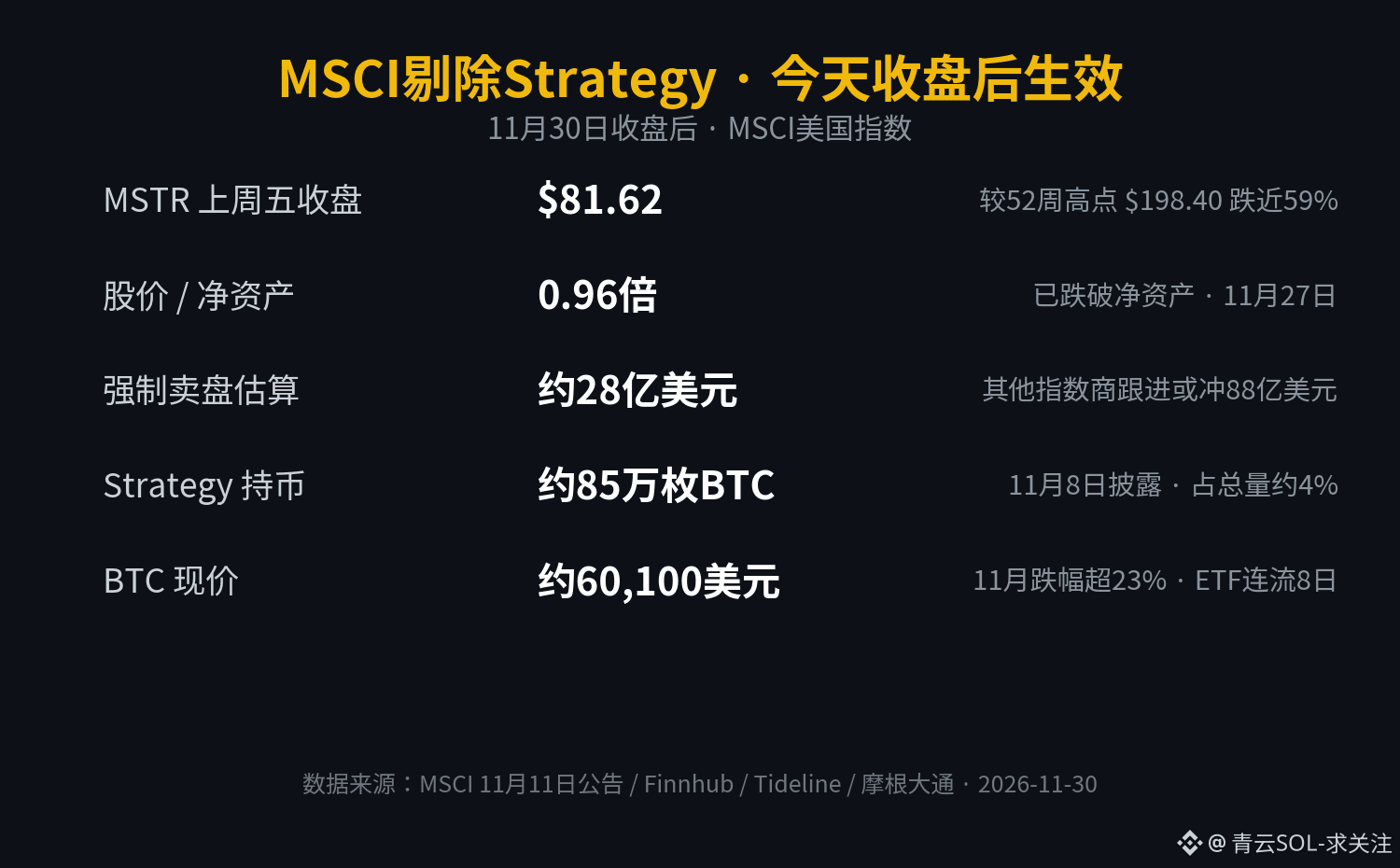
#msci剔除strategy今天生效 🔥 $2.8 billion in passive funds must sell today—the biggest backer of Bitcoin has been kicked out
On November 11, MSCI confirmed that it would remove Strategy from its U.S. indexes, effective after the market close on November 30. Today is the day it takes effect: passive funds tracking these indexes must sell their MSTR holdings before the close. JPMorgan estimates forced selling of about $2.8 billion; if other index providers follow suit, the total could reach $8.8 billion.
This isn’t a delisting. MSTR will still trade on Nasdaq, and Strategy doesn’t have to sell a single bitcoin. But the numbers sting: MSTR closed at $81.62 last Friday, nearly 59% below its 52-week high of $198.40, and its share price is now just 0.96 times its net asset value. As of November 8, it still held about 850,000 bitcoins. But during the week of November 22, it raised $177 million by selling shares and used just $29.6 million to buy bitcoin. For the first time, the share-issuing, bitcoin-buying machine is starting to sputter.
$BTC is currently around $60,100, down more than 23% in November. As of November 27, U.S. spot ETFs had seen eight consecutive trading days of outflows. The Fear and Greed Index stood at 11 on November 29—extreme fear. Being dropped from an index doesn’t directly trigger bitcoin sales, but it takes away ammunition Strategy needs to keep adding to its holdings.
My view: In the short term, this is a real negative. Today’s selling pressure on MSTR will spill over into bitcoin’s price, and whether $60,000 holds depends on tonight’s U.S. market open. Over the longer term, though, this is a stress test. If Strategy weathers the removal and keeps financing going through its software business and preferred stock, the treasury model still has a future. If it doesn’t, bitcoin will lose one of its biggest over-the-counter buyers.
In a bear market, the first to get shown the door are often not the weakest, but those carrying the most leverage.