


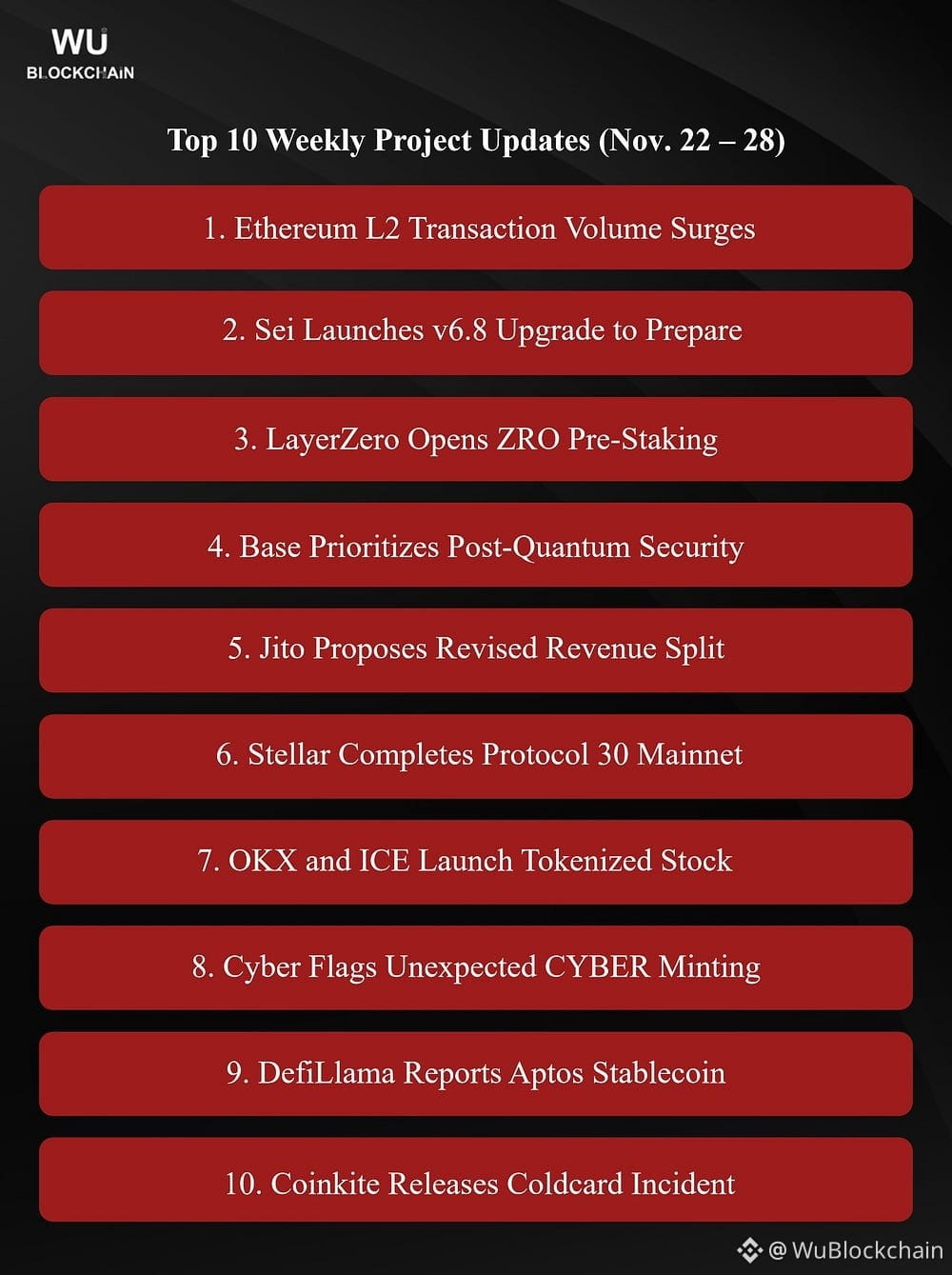
1. Ethereum L2 Transaction Volume Surges More Than Sevenfold as Mainnet Settlement Fees Fall from $150m to About $630,000 link
According to unfolded, Ethereum Layer 2 networks recorded approximately 7.4 billion transactions in 2026 to date, up sharply from about 900 million for the entirety of 2023. Over the same period, however, settlement and data fees paid to the Ethereum mainnet amounted to only about $630,000, far below the roughly $150 million recorded for the full year in 2023, equating to approximately $0.08 in fees for every 1,000 L2 transactions.
The main reason is that Ethereum’s Blob mechanism, introduced in 2024, sharply reduced the cost of publishing Rollup data. Despite continued growth in L2 transaction activity, direct fee revenue generated for the Ethereum mainnet has declined significantly, raising questions over whether L2 scaling can effectively drive ETH value capture.
2. Sei Launches v6.8 Upgrade to Prepare for Removal of Cosmos Components and Sei Giga Rollout link
Wu Block reported that Sei Labs announced on social media that the Sei v6.8 upgrade had gone live on the pacific-1 network, preparing for the removal of Cosmos components under the SIP-3 proposal and the subsequent Sei Giga upgrade. The upgrade removed modules including the oracle, Tokenfactory, token vesting and Cosmos gRPC, and prepared the remaining Cosmos state for migration to Sei Giga’s FlatKV storage system. It also enabled rate limits by default for RPC, improved eth_getLogs query performance, reduced the time required to query 2,000 blocks by about 60% and cut median latency under high load by roughly 75%.
3. LayerZero Opens ZRO Pre-Staking as Foundation Plans to Stake 10% of Total Supply link
LayerZero announced that ZRO pre-staking is now open on its new blockchain, Zero, with staked assets set to support the production of the first blocks when the mainnet launches on November 30. The LayerZero Foundation plans to stake 100 million ZRO tokens under the same terms as regular users, representing 10% of the token’s total supply. Staking rewards will begin accruing on November 30, while all staked tokens are scheduled to unlock together on March 31, 2027, with early exits prohibited during the staking period.
4. Base Prioritizes Post-Quantum Security in 2027 as Everest Upgrade Prepares Wallets for New Safeguards link
Base founder Jesse Pollak said Base will make post-quantum security a 2027 priority, with plans to introduce a new transaction type called Base Transactions through the upcoming fifth network upgrade, Everest. The upgrade will lay the groundwork for future wallet adoption of post-quantum security technologies.
Under EIP-8430, the transaction format supports future extensions to authentication mechanisms, potentially allowing wallets to adopt new security solutions without changing their addresses. However, it still relies on existing cryptographic technologies and does not yet provide resistance to quantum attacks, while the implementation timeline for the relevant safeguards remains undetermined. Pollak also said Base will focus on expanding transactions, payments and lending in 2027, while preparing for AI agents to participate in financial transactions. He disclosed that weekly trading volume for tokenized stocks on Base has reached $1 billion and expects AI-agent finance to become a significant trend in 2027.
5. Jito Proposes Revised Revenue Split, Routing New Income to Foundation Before DAO Shares $20 Million link
Jito submitted the JIP-40 governance proposal on November 23, seeking to allocate revenue from sources such as BAM plugin fees to the Jito Foundation first for network development and business expansion. Under the proposal, the DAO would only begin sharing in new revenue once it reaches an aggregate annual threshold of $20 million, after which revenue would generally be allocated 80% to the DAO and 20% to the foundation. The adjustment would not affect the DAO’s existing revenue sources, and the 80% share of JTX platform fees allocated to the DAO would continue to be used entirely for JTO token buybacks and burns. The proposal has not yet received formal approval.
6. Stellar Completes Protocol 30 Mainnet Upgrade with Post-Quantum Signature Verification link
WuBlockchain reported that Stellar has announced the mainnet launch of the Bell (Protocol 30) upgrade. The upgrade introduces multiplexed smart contract addresses, allowing a single smart contract to serve multiple clients; adds post-quantum ML-DSA signature verification; and improves the precision of ledger close-time records to the millisecond level, laying the foundation for shorter closing intervals in the future. Existing smart contracts can continue to operate without modification. Stellar stressed that post-quantum signature verification currently applies only to smart contracts and does not represent a comprehensive post-quantum upgrade.
7. OKX and ICE Launch Tokenized Stock Platform With $1.64 Million First-Day Volume, 93% Linked to Suspected Market Maker link
According to on-chain data platform Allium, OKXICE, the tokenized stock trading platform launched by OKX and Intercontinental Exchange (ICE), the parent company of the New York Stock Exchange, officially launched on November 23 and recorded approximately $1.64 million in cumulative trading volume during its first trading day through the US market close. Tokenized stocks from Circle, Strategy, Robinhood and Coinbase accounted for approximately 99% of trading volume. Allium said one wallet suspected of belonging to the platform’s liquidity provider generated 93% of total trading volume. OKXICE has confirmed that 113 assets, including stocks and ETFs, will be listed in phases.
8. Cyber Flags Unexpected CYBER Minting on Solana and Advises Users to Avoid Cross-Chain Bridge link
Wu Block reported that Cyber, an Ethereum Layer 2 project, said its team detected unexpected CYBER minting on the Solana network, followed by CYBER being transferred out of the bridge’s vault contract on Ethereum. The team is investigating the cause of the incident and identifying affected assets and cross-chain routes. Cyber advises users not to use the CYBER cross-chain bridge or deposit CYBER on exchanges for the time being, while adding that users do not need to migrate tokens, connect their wallets or sign any transactions as a result. Updates will be published through official accounts.
On November 23, Cyber said it had confirmed and blocked the earlier CYBER cross-chain bridge attack, and would use project treasury funds to cover all CYBER that was abnormally minted during the incident. The team is working with exchanges to restore deposit and withdrawal services, while the cross-chain bridge remains suspended for a comprehensive security review. The investigation results will be released after the review is completed.
9. DefiLlama Reports Aptos Stablecoin Market Cap at $948m, Up 35.8% in 30 Days link
According to DefiLlama data, the total stablecoin market cap on the Aptos chain reached $948 million as of November 23, rising 17.51% over the past seven days and 35.80% over the past 30 days. USDT accounted for about $464 million, or 48.97% of the total, while USDC had a market cap of roughly $439 million and grew 107% over the past 30 days. USDCBL and USD1 stood at approximately $25.81 million and $19.12 million, respectively. Together, USDT and USDC represented about 95.2% of Aptos’s total stablecoin market cap.
10. Coinkite Releases Coldcard Incident Review: Bitcoin Theft Traced to Firmware Flaw, Not Device Intrusion link
Coinkite, the developer of the Coldcard hardware wallet, published a security incident review concluding that an earlier bitcoin theft resulted from a flaw in its seed phrase generation mechanism rather than an intrusion of the device. From March 29, 2021 to July 30, 2026, affected firmware was misconfigured to disable the hardware random number generator and use an insufficiently secure pseudorandom number algorithm instead, allowing attackers to derive wallet private keys offline.
The flaw went undetected in at least 15 independent reviews. As of November 18, Coinkite had received roughly 300 loss-related tickets covering 242 customer accounts. According to Galaxy Research, more than 8,600 addresses had 1,778.84 BTC stolen, worth approximately $107 million. Coinkite released fixed firmware on July 31, but the update cannot eliminate the security risks associated with the original seed phrases, meaning affected users must still generate new seed phrases and transfer their assets. The identity of the attacker remains unknown, and Coinkite has not decided whether to compensate affected users.
Follow us
Twitter: https://twitter.com/WuBlockchain
Telegram: https://t.me/wublockchainenglish