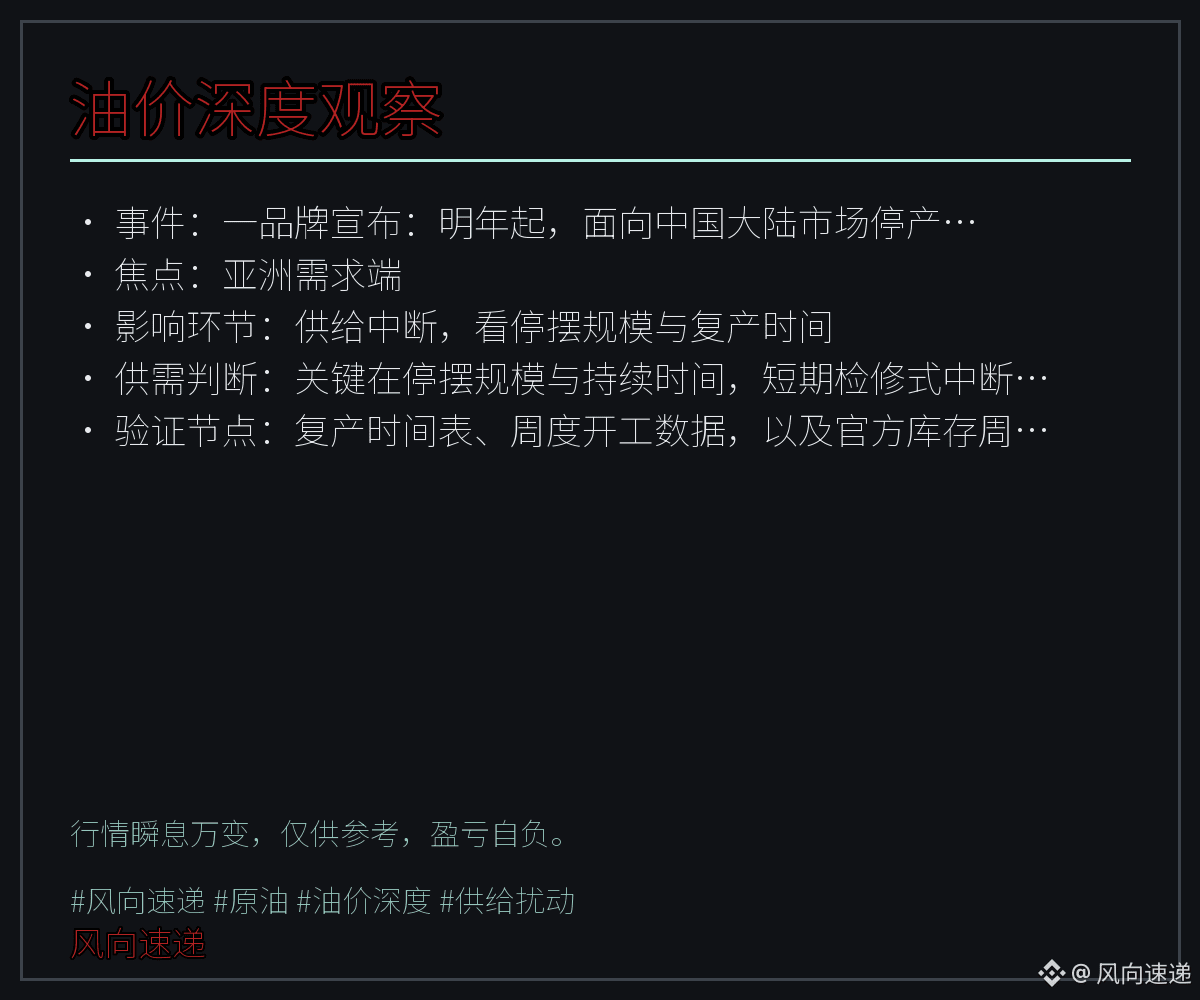
In-Depth Oil Price Watch
【Key Event】
A brand announces: Starting next year, it will stop producing fuel-powered vehicles for the mainland China market (within 1 hour)
【Who Is Influencing Oil Prices】
China is causing a disruption in the supply chain. The focus is on the demand side in Asia. Upstream oil fields, refineries, and export terminals are the three most vulnerable links in the supply chain; a shutdown at any one of them will first affect the pace of shipments.
【Transmission Chain】
If the demand side in Asia comes to a halt, the first effects will be on current output and export shipments, then on spot premiums and discounts as reflected in the pace of inventory drawdowns.
A decline in refinery throughput will also reduce refined product output. Changes in crack spreads often signal the shift earlier than absolute crude prices do.
【Supply, Demand, and Pricing】
The key factors are the scale and duration of the shutdown. Short-term, maintenance-related disruptions can usually be offset by spare capacity in other producing regions.
WTI is currently trading around $84.28, with 24-hour volatility of +4.40%. Volatility has increased, indicating that this kind of risk is being priced in rapidly. Going forward, it will be important to see whether actual supply and demand data confirm the concerns. Markets often price one-off disruptions as short-lived; persistence is what determines whether the price floor moves higher.
【What to Watch Next】
Watch the restart schedule, weekly operating data, and the scale of inventory drawdowns in official weekly stock reports.
【What Would Invalidate This Outlook】
If production resumes faster than expected, or oil-producing countries release spare capacity to make up the shortfall, expectations of a supply gap will quickly narrow.
Markets can change in an instant. For reference only; you are responsible for any gains or losses.
#风向速递 #原油 #油价深度 #SupplyDisruption