
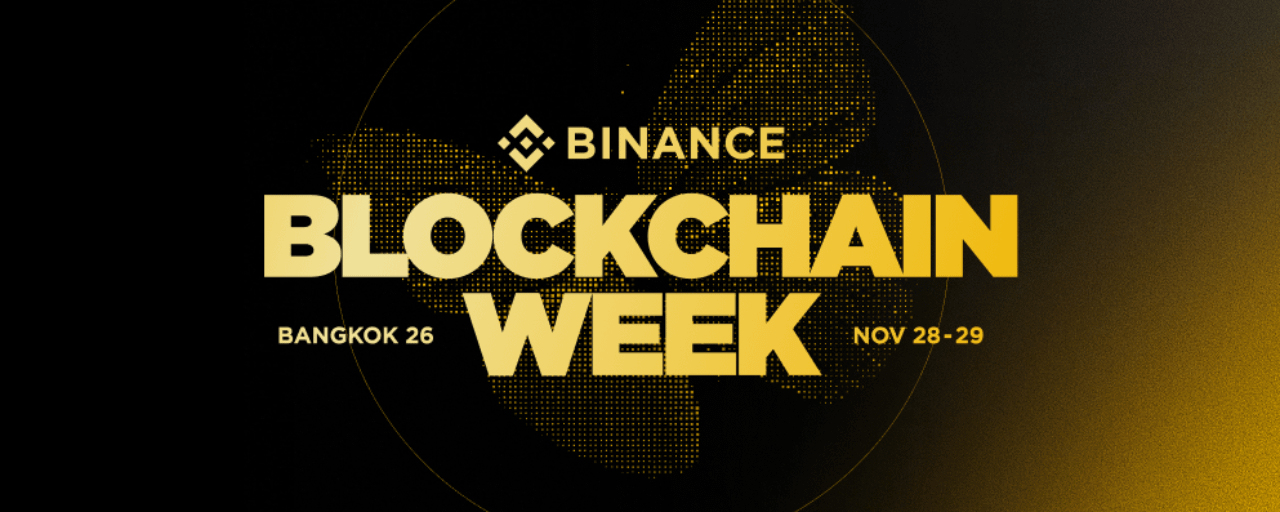

🚀BREAKING BINANCE BLOCKCHAIN WEEK 2026: THE FUTURE OF CRYPTO, AI & GLOBAL FINANCE IS COMING TO BANGKOK!
The cryptocurrency industry is entering a new phase of development.
What started as an experiment with Bitcoin has gradually evolved into a global ecosystem involving decentralized finance, institutional investments, tokenization, stable coins, artificial intelligence, and blockchain-powered financial infrastructure.
Now, one of the industry's biggest gatherings is preparing to bring these developments together.
Binance Blockchain Week 2026 is returning to Asia, bringing global financial leaders, policymakers, institutional investors, developers, and blockchain innovators to Bangkok, Thailand, on November 28–29, 2026.
This year's theme is simple but powerful:
EVOLVE.
And it reflects something much bigger than another cryptocurrency conference.
The financial world is changing, traditional institutions are exploring blockchain technology, AI is transforming financial services, and digital assets are increasingly becoming part of the global economic conversation.
Let's explore why this event matters and what the industry could take away from it.
🌍 1. Binance Blockchain Week 2026: A Global Meeting Point
Binance Blockchain Week is designed to bring together different parts of the digital finance ecosystem.
The 2026 edition will take place at the Queen Sirikit National Convention Center in Bangkok.
The event will feature discussions covering:
Institutional adoption of digital assets.
Artificial intelligence and financial technology.
Real-world asset tokenization.
Stablecoins and global payments.
Decentralized finance (DeFi).
Blockchain infrastructure.
Regulatory developments.
The future of capital markets.
The importance of these discussions is growing because blockchain is no longer limited to cryptocurrency trading.
Financial institutions are exploring how blockchain can improve settlement, asset ownership, transparency, and access to financial markets.
🏦 2. Traditional Finance Meets Crypto
One of the most interesting aspects of Binance Blockchain Week 2026 is the participation of major financial institutions.
The announced lineup includes representatives from:
BlackRock
Nasdaq
Visa
Franklin Templeton
Tether
DBS Bank
Ondo Finance
FTSE Russell
Mirae Asset Securities
Why does this matter?
For years, traditional finance and cryptocurrency operated largely as separate ecosystems.
Today, that separation is becoming less clear.
Financial institutions are exploring tokenized assets, digital payment infrastructure, stablecoins, and blockchain-based financial products.
The participation of traditional finance leaders highlights an important question:
Will blockchain become part of the infrastructure powering the next generation of global financial markets?
The answer could shape the financial industry for decades.
💰 3. Real-World Asset Tokenization: A Major Opportunity
Real-world asset tokenization could become one of the most important developments in blockchain technology.
Imagine being able to represent ownership of traditional assets through digital tokens on a blockchain.
Potential applications include:
Government bonds.
Real estate.
Financial securities.
Commodities.
Private credit.
Investment funds.
Tokenization could make certain financial assets easier to transfer, track, and access.
It could also enable new financial products and improve settlement efficiency.
However, successful adoption requires more than blockchain technology.
Legal ownership, investor protection, custody, liquidity, and regulatory clarity are equally important.
This is why discussions involving companies such as BlackRock, Nasdaq, Franklin Templeton, and Ondo Finance are particularly interesting.
The next stage of tokenization will depend on how effectively traditional financial systems connect with blockchain infrastructure.
🤖 4. AI + Blockchain: The Next Big Revolution?
Artificial intelligence is rapidly changing how people interact with technology.
At the same time, blockchain is creating new possibilities for decentralized applications and digital ownership.
Combining these technologies could open an entirely new category of financial services.
Consider the possibility of AI agents that can:
Analyze financial markets.
Execute permitted transactions.
Manage digital payment workflows.
Interact with decentralized applications.
Purchase computing resources.
Communicate with other AI agents.
Blockchain-based payment systems could provide infrastructure for these interactions.
One major question expected to receive attention during the event is whether AI agents could eventually execute a significant share of financial transactions.
This is an important area to watch.
AI does not automatically make a financial system trustworthy or secure. Identity verification, permissions, transaction monitoring, and human oversight will remain essential.
But the combination of AI and blockchain could fundamentally change how digital financial services operate.
🪙 5. Stablecoins: The Future of Digital Payments?
Stablecoins are becoming an increasingly important part of the cryptocurrency ecosystem.
Unlike traditional cryptocurrencies with highly volatile prices, stablecoins are designed to maintain a relatively stable value, often by referencing a fiat currency such as the US dollar.
Their potential applications include:
International payments.
Cross-border transfers.
Digital commerce.
On-chain trading.
Decentralized finance.
Business settlements.
Major payment and financial companies are increasingly examining how blockchain-based payment infrastructure could support global transactions.
At Binance Blockchain Week, discussions involving Visa, Tether, Celo, and other industry participants will explore whether stablecoins could become a major part of future payment systems.
The real opportunity is not simply creating more stablecoins.
It is building reliable payment infrastructure that people and businesses can actually use.
🔐 6. Regulation, Security and Trust
Blockchain adoption cannot grow sustainably without trust.
As digital assets become more connected with traditional finance, regulatory clarity and consumer protection become increasingly important.
The 2026 event will bring together government and regulatory representatives from countries including Kazakhstan, Bhutan, Ghana, and Thailand.
Important discussion areas include:
Digital asset regulation.
International compliance.
Anti-money laundering standards.
Cybersecurity.
Investor protection.
Responsible innovation.
Another important subject is the security of blockchain infrastructure.
As more financial activity moves on-chain, the importance of secure wallets, smart contract audits, transaction monitoring, and transparent operations will increase.
Innovation and security must develop together.
🌏 7. Why Bangkok Is an Important Destination
Bangkok is hosting Binance Blockchain Week at an interesting moment for the Asian digital asset ecosystem.
Asia has become an important region for cryptocurrency adoption, blockchain development, fintech innovation, and digital payments.
Thailand, in particular, has been developing its digital asset and financial technology ecosystem.
Bringing policymakers, investors, technology companies, and crypto communities together in Bangkok creates an opportunity for international collaboration.
The event is also a chance for builders and entrepreneurs to exchange ideas, discover partnerships, and learn about emerging technologies.
Blockchain is a global industry, and Asia will remain an important part of its future.
⭐ 8. Major Names to Watch at Binance Blockchain Week
The announced speaker lineup includes several influential figures from the financial and technology industries.
Some notable names include:
Changpeng Zhao (CZ): Founder of Binance.
Richard Teng: Co-CEO of Binance.
Yi He: Co-CEO and Co-Founder of Binance.
Arthur Hayes: CIO of Maelstrom.
Dan Maley: APAC Head of Digital Assets at BlackRock.
Roger Bayston: Head of Digital Assets Ecosystem Development at Franklin Templeton.
Nischint Sanghavi: Head of Digital Currencies, Asia Pacific, at Visa.
Alex Svanevik: CEO of Nansen.
The presence of leaders from finance, blockchain research, payments, and digital asset companies makes the event particularly interesting.
These conversations can help the industry understand where capital, technology, and innovation may be heading.
📅 9. What to Expect on November 28–29
The two-day program is divided into major themes.
DAY 1: THE EVOLUTION OF CAPITAL
The first day focuses on the changing financial system.
Key topics include:
Institutional digital asset adoption.
Tokenized financial assets.
Stablecoins and payment systems.
24/7 financial markets.
Digital asset regulations.
Cybersecurity and compliance.
DAY 2: THE NEXT GENERATION OF FINANCE
The second day looks toward the future of financial technology.
Key topics include:
AI agents and autonomous finance.
Blockchain infrastructure.
DeFi development.
Emerging digital asset markets.
Financial applications of AI.
The next generation of Web3 products.
The agenda reflects an industry moving beyond speculation and toward practical financial applications.
🔮 10. What Could This Mean for the Future of Crypto?
Events like Binance Blockchain Week do not automatically guarantee higher cryptocurrency prices or a market rally.
However, they provide an opportunity to understand the direction of the industry.
There are several long-term developments worth watching:
Institutional Adoption: More traditional financial institutions exploring blockchain could expand the role of digital assets in global finance.
Tokenization: Bringing traditional assets on-chain could create new investment and financial infrastructure opportunities.
AI Integration: AI-powered financial applications could introduce new ways to interact with blockchain networks.
Stablecoin Payments: Digital currencies designed for price stability could improve certain cross-border payment and settlement processes.
Better Regulation: Clearer rules could help responsible companies develop sustainable blockchain businesses.
The real measure of success will not be the number of announcements made during the event.
It will be the products, partnerships, infrastructure, and real-world adoption that follow.
💎 FINAL THOUGHTS: THE NEXT CHAPTER OF BLOCKCHAIN IS ABOUT TO BEGIN
Binance Blockchain Week 2026 is more than a gathering of cryptocurrency enthusiasts.
It represents an important conversation about how financial systems, technology, and digital ownership may evolve over the coming years.
Bitcoin introduced the world to decentralized digital money.
Ethereum expanded the possibilities of programmable blockchain applications.
DeFi created new financial services.
Tokenization is bringing traditional assets into digital environments.
And AI could introduce a completely new way for people and machines to interact with financial systems.
These developments are happening simultaneously.
The next generation of finance may not belong exclusively to traditional banks or crypto-native companies.
It could emerge from collaboration between both worlds.
The biggest opportunity may not be the next cryptocurrency that goes up 100%. It may be the technology that changes how the entire financial system works.
🚀 Bangkok is preparing to bring that conversation to the global stage.
The future is not just digital. The future is evolving.
🔥 LET'S DISCUSS!
Which technology do you believe will have the biggest impact on the future of finance?
Bitcoin and institutional adoption
AI + Blockchain
Real-world asset tokenization
Stable coins and global payments
Decentralized Finance (DeFi)
Share your thoughts in the comments!
