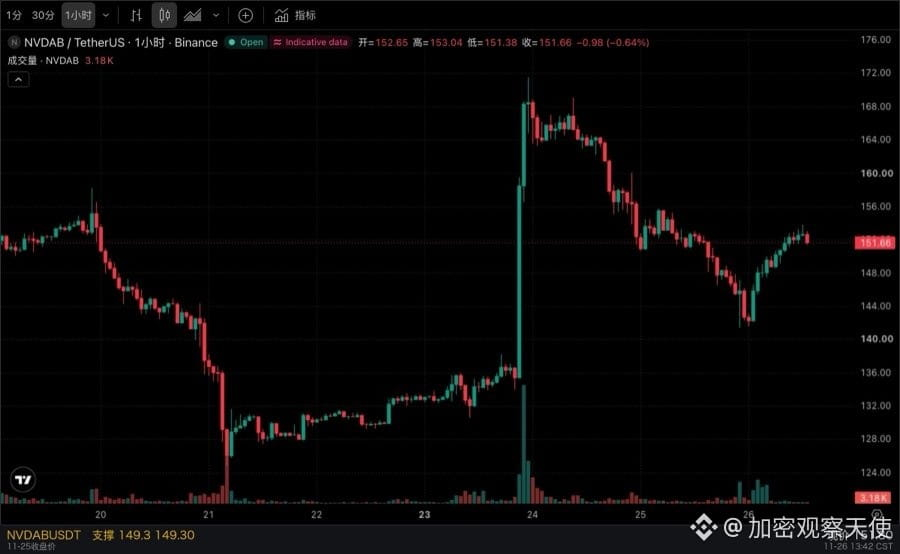
Yesterday, S&P put Nvidia’s AA rating on negative watch, meaning it could be downgraded a notch within 90 days. That same day, its credit default swap spread climbed to 147 basis points, a record high. This means that while the stock market is still arguing over whether valuations are too high, the bond market has already started pricing in the risk of not getting paid back. The same company, two completely different answers from two markets.
First, what is a CDS? It’s insurance against a company defaulting on its debt. The more expensive the premium, the more the market thinks you might not be able to pay. One hundred basis points means paying one dollar a year in premiums for every hundred dollars of debt.
In June this year, Nvidia’s spread was still at 40 basis points. Yesterday, it reached 147. On a thousand dollars of debt, the cost of protection rose from four dollars to fourteen dollars and seventy cents.
What’s really alarming is the group of new cloud providers whose debt it backs. CoreWeave borrows money to buy Nvidia chips, then rents out computing power to pay down its debt. Its five-year CDS spread jumped 209 basis points in a single day yesterday, to 15.34%. At that price, the implied probability of default within five years is over 70%.
Oracle’s CDS spread reached 316 basis points, higher than Bear Stearns’ in early 2008. Its implied five-year probability of default is around 23%; a year ago, it was only 6%.
These figures all point to the same thing: money is going in circles through the industry. Nvidia finances its customers, customers use that money to buy chips, and those chips then drive Nvidia’s revenue. When the chain gets strained, the thinnest link is the first to break.
What I’m unsure about is whether these insurance prices will translate into actual defaults. The credit market’s logic makes sense, but it can’t prove what will happen. It may just be pricing in worries about the next few years ahead of time.
$NVDAB closed at 149.30 yesterday, down 3.91%, and is another 10% below where it was the day Jensen came back. $MSTRB rose 8.78% at the same time. Faced with the same inflation data, one is being repriced by the bond market, while the other is being treated as a hedge against inflation.
The bond market has already moved; the stock market hasn’t fully fallen yet. Which way this gap closes next depends on whether anyone keeps footing the bill for capital spending.