If you hold a New Taiwan dollar stablecoin that can be redeemed 1:1, should the issuer deposit part of its reserves with the central bank? Taiwan’s central bank has published a draft proposal for public comment. It has not yet taken effect.
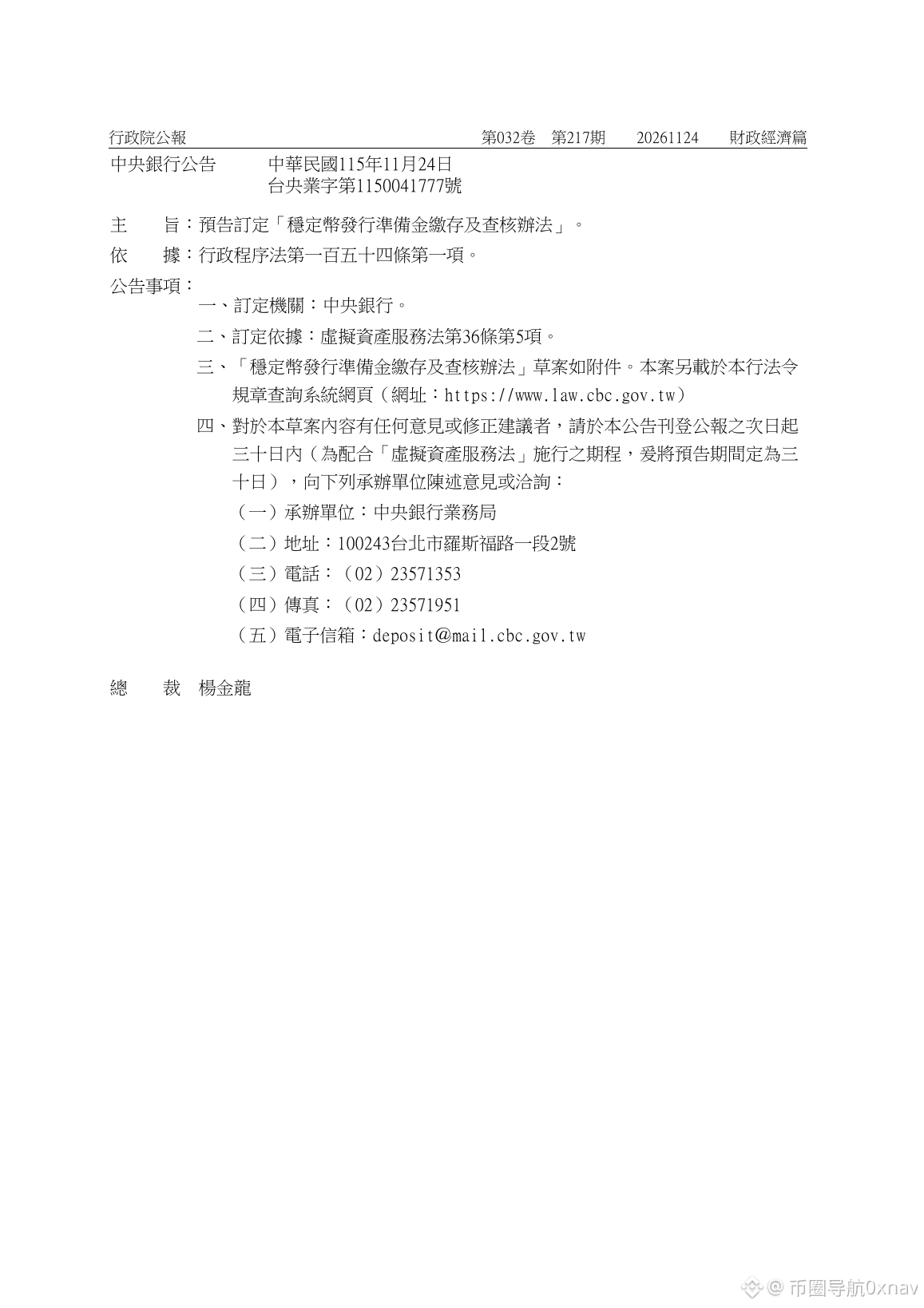
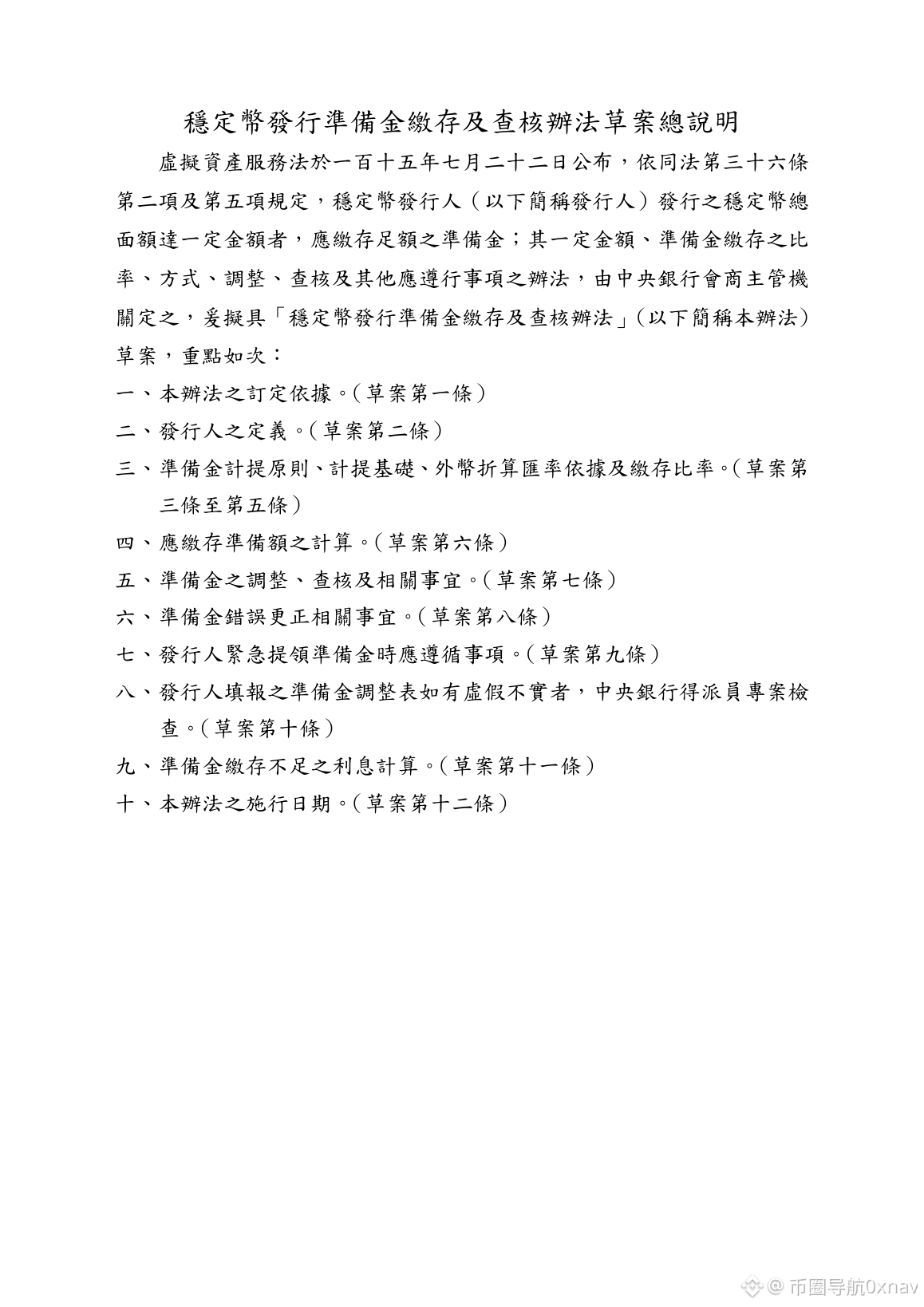
On November 24, the central bank published a notice in the Executive Yuan Gazette (Taiwan Central Bank Business Affairs Letter No. 1150041777), announcing a proposed “Regulations Governing the Deposit and Examination of Stablecoin Issuance Reserves.” The legal basis is Article 36 of the Virtual Asset Services Act, promulgated on July 22 this year: issuers whose stablecoin circulation reaches a certain amount must deposit sufficient reserves; the threshold, ratio, method, and examination procedures are to be determined by the central bank in consultation with the competent authority. The effective date in Article 12 of the draft is still blank. This is only a public-comment notice—not a system that is already in operation.
Here are a few points more directly relevant to ordinary people 👇
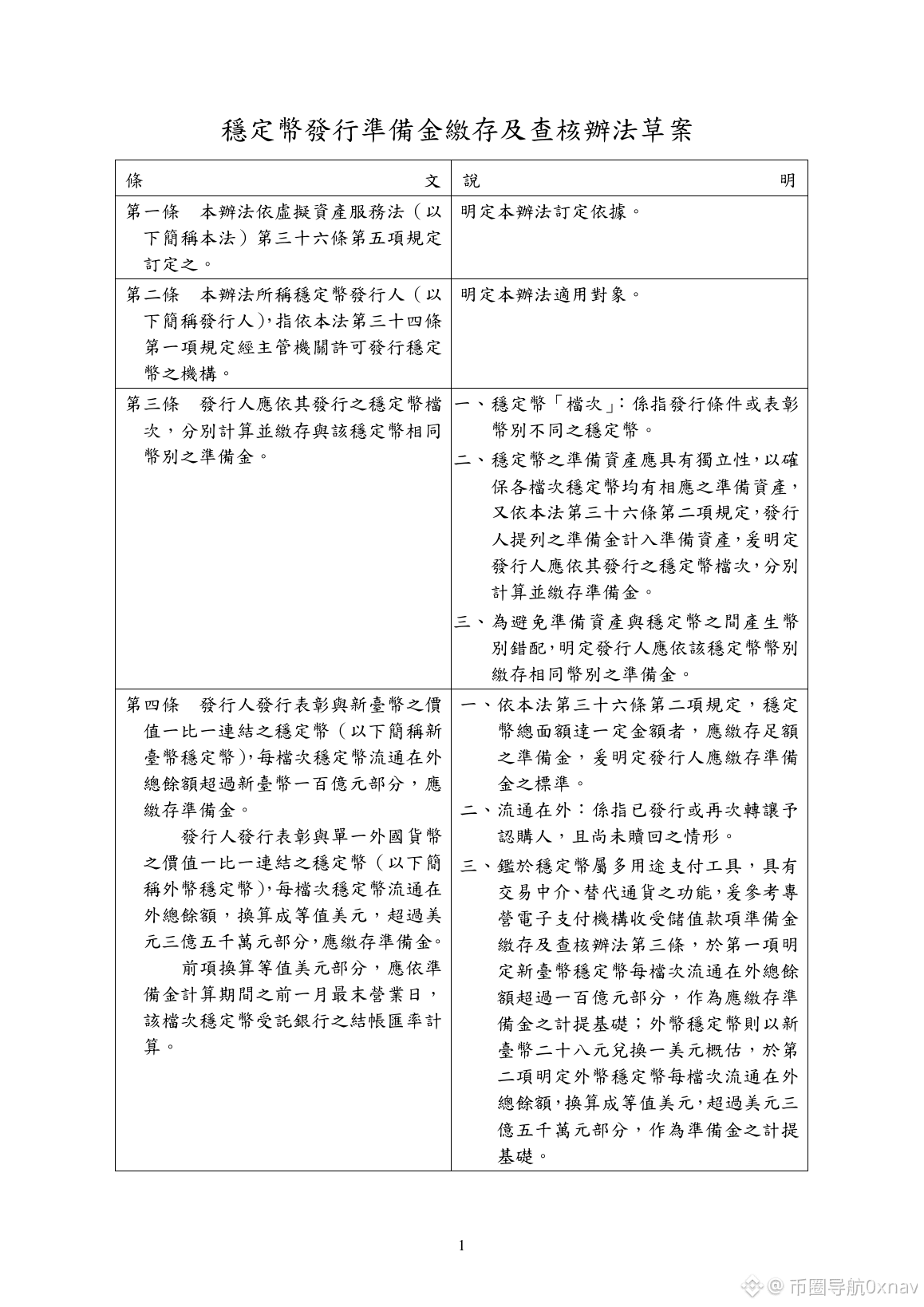
🔹 First, be clear about who has to deposit reserves: The “issuer” in the draft refers to an institution that has received authorization from the competent authority to issue stablecoins under Article 34, Paragraph 1 of the Act. This does not automatically apply to every stablecoin worldwide, or to projects that have not yet obtained authorization to operate in Taiwan.
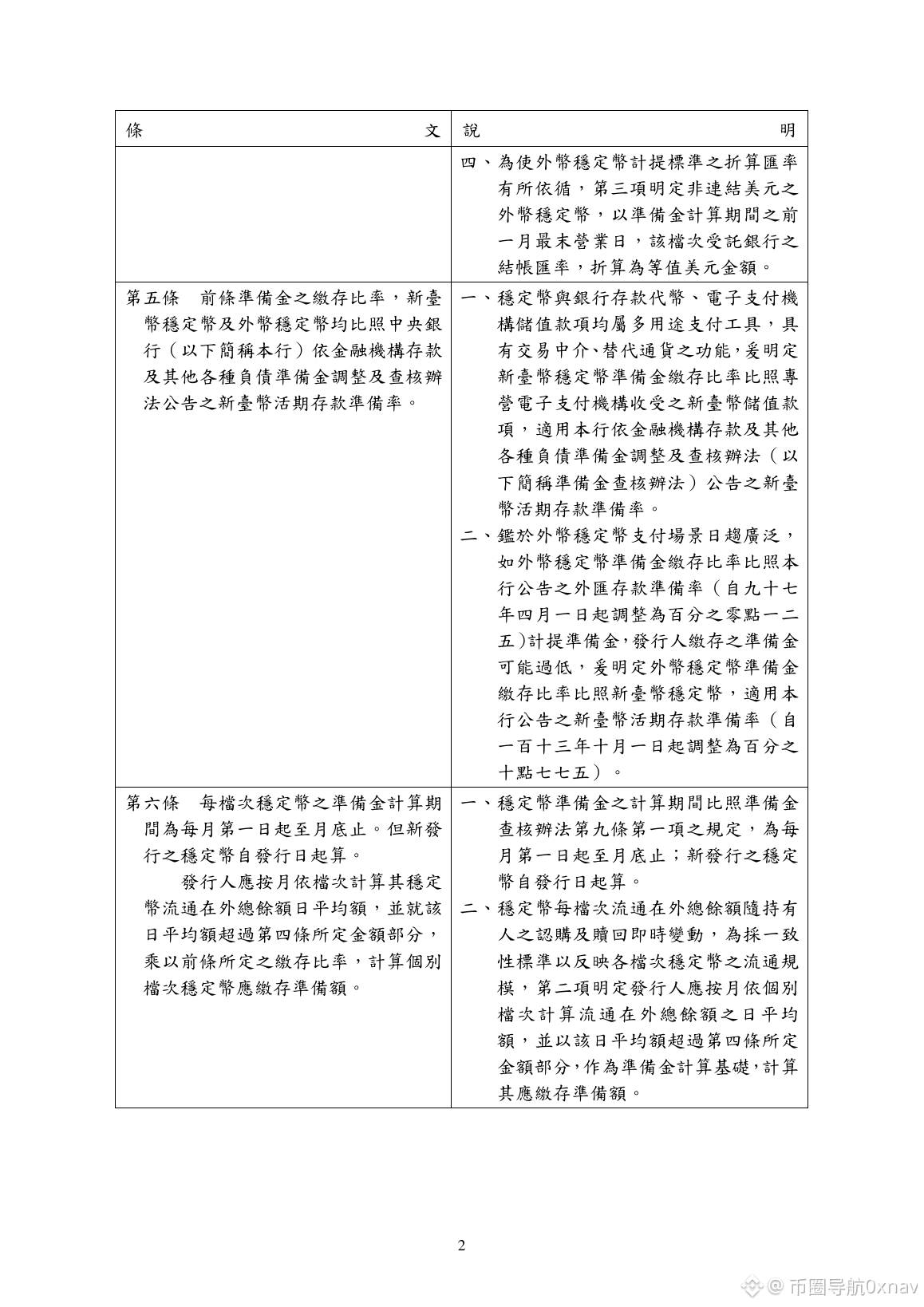
🔹 Reserves are required only once the threshold is exceeded, and only on the excess: For each stablecoin pegged 1:1 to the New Taiwan dollar, the amount above NT$10 billion in total outstanding balance must be deposited. For each stablecoin pegged 1:1 to a single foreign currency, the amount above US$350 million, calculated in the equivalent value in U.S. dollars, must be deposited. The draft’s explanatory notes state that the foreign-currency threshold is estimated using an exchange rate of NT$28 to US$1. “Outstanding” refers to balances that have been issued or transferred again to subscribers and have not yet been redeemed.
🔹 The deposit ratio is benchmarked against the New Taiwan dollar demand-deposit reserve ratio: The same ratio applies to both New Taiwan dollar and foreign-currency stablecoins; the lower foreign-currency deposit reserve ratio of 0.125% does not apply. The draft’s explanatory notes state that the New Taiwan dollar demand-deposit reserve ratio has been 10.775% since October 1, 2024. The amount is calculated using the daily average for each month. Issuers must open a dedicated reserve account at the central bank and, within the first five business days of each month, top it up or withdraw any excess. The account earns no interest, and funds cannot be moved in or out freely, except for adjustments or corrections.
🔹 What if there are mass redemptions? If redemptions are so extensive that the outstanding balance falls below the threshold, the issuer may submit supporting documents and apply to the central bank to withdraw reserves from the dedicated account for that tier. If the balance later exceeds the threshold again, the issuer must deposit the reserves once more. If an adjustment statement is false or inaccurate, the central bank may conduct a special inspection. If the amount deposited is insufficient, interest will be charged based on the number of days in the calculation period, in accordance with Article 52, Paragraph 3 of the Virtual Asset Services Act.
Comments must be submitted to the central bank’s Department of Banking within 30 days after the day the notice is published in the Gazette. The effective date of the regulations and whether the provisions will be revised are still subject to the end of the comment period and subsequent procedures. For holders, this is about whether “Taiwan-authorized issuers must deposit the amount above the threshold with the central bank”—it does not mean that a redemption payment will disappear from your wallet if you open it today.
#台湾央行预告稳定币准备金办法 #BTC #ETH