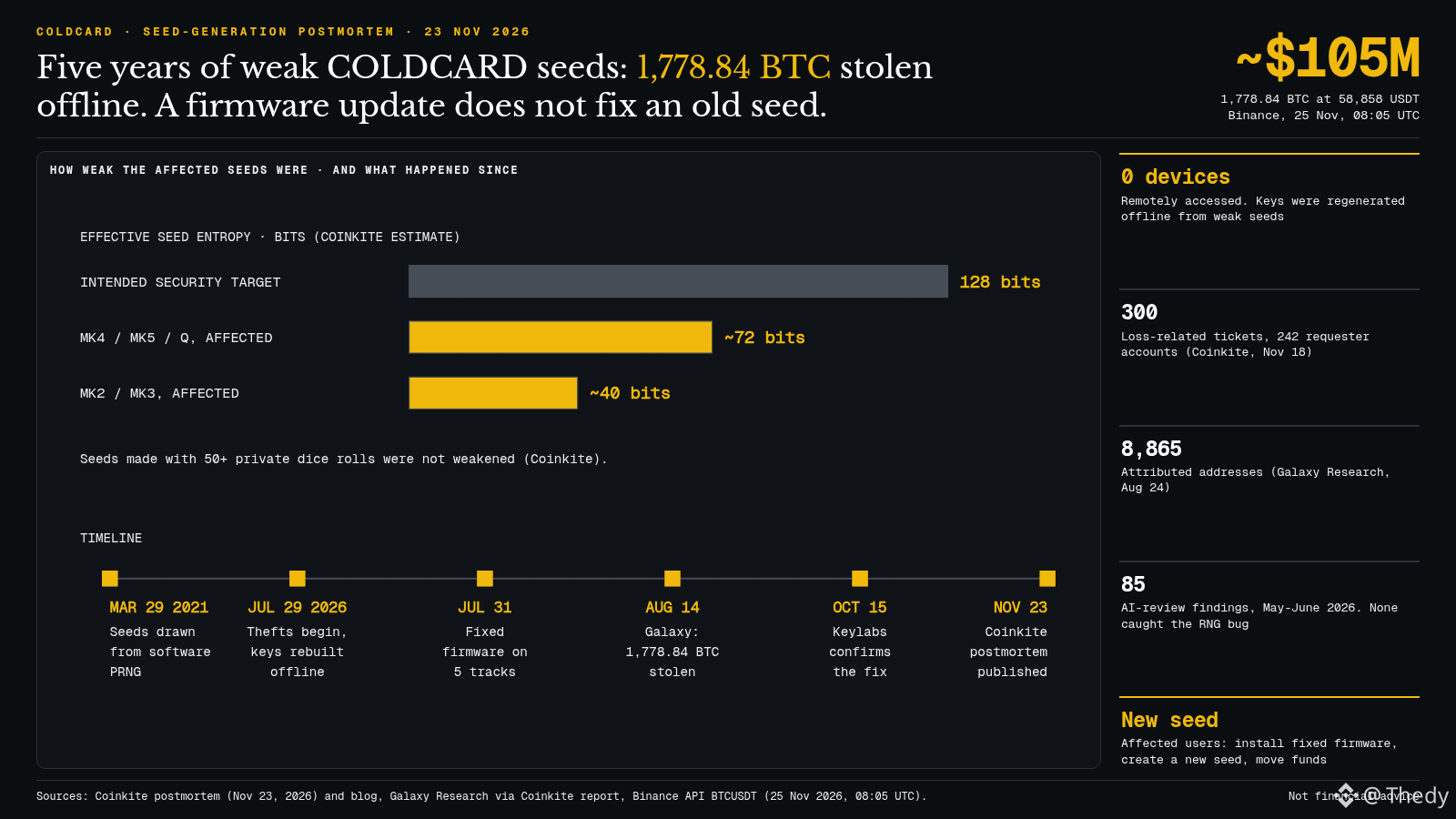
Coinkite published the full postmortem of the COLDCARD vulnerability on 23/11: for more than 5 years (29/03/2021 to 30/07/2026), the firmware generated seeds using a software generator (Yasmarang, MicroPython) instead of the STM32 hardware RNG. Updating your device does not repair a seed created during that period.
Who needs to act: anyone with a COLDCARD whose seed was generated on affected firmware. Mk2/Mk3 from 4.0.1 to 4.1.9, Mk4/Mk5 before 5.6.0, Q before 1.5.0Q, Edge versions before 6.6.0X / 6.6.0QX. Details are on the Security Status page at coldcard.com.
Coinkite's #1 recommendation is simple: install verified, corrected firmware, create a NEW seed, verify the backup, then move your funds. This includes wallets with a passphrase. Seeds created using more than 50 private dice rolls were not weakened.
Why this is serious: according to Coinkite, effective entropy fell to ~40 bits (Mk2/Mk3) or ~72 bits (Mk4, Mk5, Q), instead of 128. No devices were hacked remotely; attackers recalculated the keys offline as early as 29/07. Galaxy Research counted 1 778,84 $BTC stolen from more than 8 600 addresses, or about $105M at this morning's Binance price (58 858 USDT, 08:05 UTC). As of 18/11, Coinkite has recorded 300 loss reports for 242 accounts; the actual total is probably higher.
A detail that gives pause: 15 security reviews and one AI-assisted review (85 issues flagged between May and June 2026) failed to catch the bug.
My take: the main risk today is fake “support” and recovery offers. No legitimate person will ever ask for your 24 words.
Have you already checked when your hardware seed was generated, or do you consider it safe forever?
#Bitcoin #CryptoSecurity