
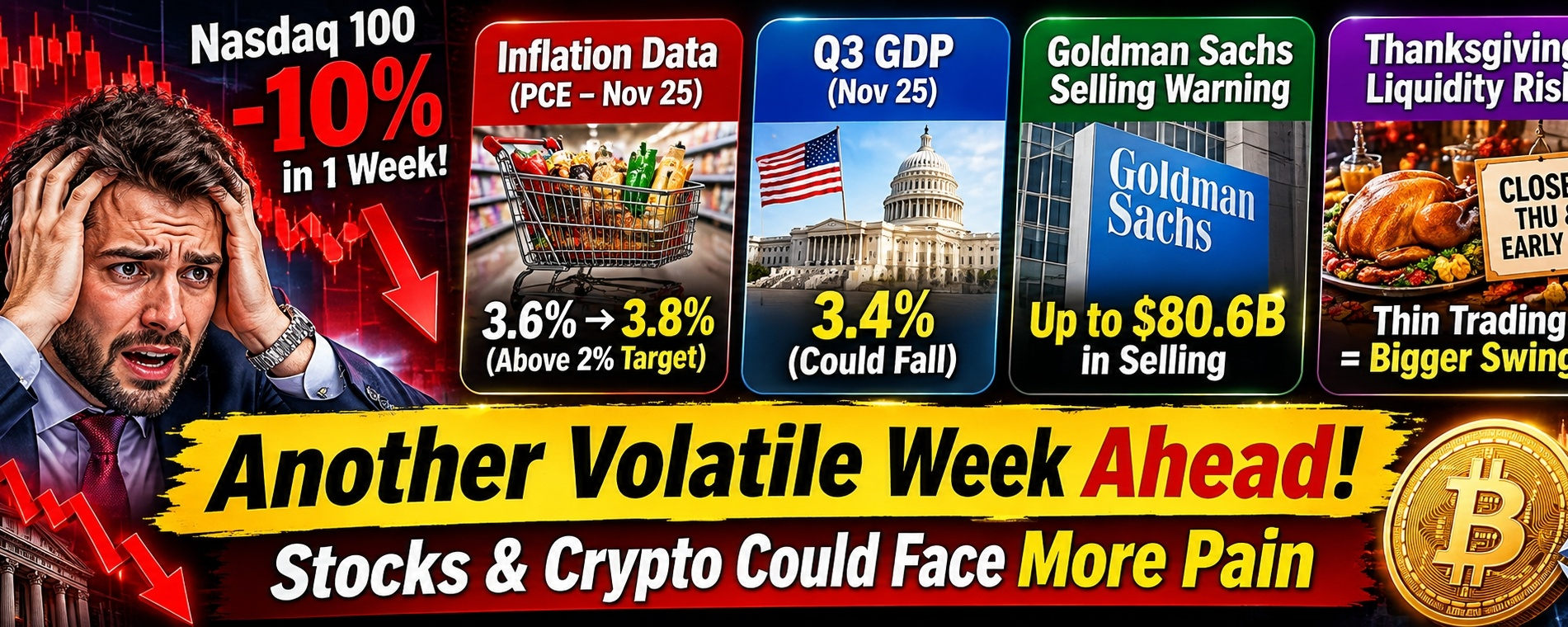


The stock market is already under serious pressure, but the coming week could bring even more pain for investors.
After the Nasdaq 100 suffered a brutal weekly drop of more than 10%, its worst weekly performance since the COVID crash in 2020, many investors are asking one big question:
Is the worst finally behind us, or is another major selloff coming?
Unfortunately, there are several reasons to stay alert. 👇
1. Inflation Data Could Shake the Market Again 📊
Wednesday, November 25, brings the October PCE inflation report, one of the Federal Reserve's most closely watched inflation measures.
• Headline inflation is expected to rise from 3.6% to 3.8%.
• That's well above the Fed's 2% inflation target.
• Markets are already pricing in a 90% chance of a 25-basis-point rate hike in December.
If inflation comes in hotter than expected, investors could start worrying about even tighter monetary policy.
And higher interest rates are usually bad news for stocks, especially growth and technology companies.
2. Q3 GDP Could Add More Pressure 📉
The revised U.S. GDP report is also scheduled for Wednesday.
The initial estimate showed the economy growing at an annual rate of 3.4%.
But what happens if the new numbers show weaker growth?
Investors could face an uncomfortable combination: rising inflation and slowing economic growth.
That's the kind of situation markets really don't like.
3. Goldman Sachs Warns of Up to $80.6 BILLION in Potential Selling 💰
This is perhaps one of the biggest risks.
Goldman Sachs estimates that systematic investment funds could sell massive amounts of U.S. stocks depending on market conditions:
• $28.6 billion if stocks rebound.
• $65.8 billion if markets move sideways.
• $80.6 billion if the market continues falling.
These funds have already sold around $57 billion in U.S. stocks over the past month.
The scary part? This type of selling can happen automatically when market conditions trigger certain trading strategies.
That means even a small drop could potentially create more selling pressure.
4. Thanksgiving Could Make Market Swings Even Bigger 🇺🇸
The timing makes things even more interesting.
• Thursday, November 26: U.S. stock markets will be closed for Thanksgiving.
• Friday, November 27: Markets will close early.
Trading activity is likely to be thinner around the holiday.
When fewer buyers and sellers are active, even relatively small orders can cause bigger price movements.
If forced selling continues during this period, volatility could increase quickly.
AND WHAT ABOUT CRYPTO? ₿
Bitcoin and the wider crypto market aren't completely separate from Wall Street.
When investors become fearful, reduce risk and move away from speculative assets, crypto can also come under pressure.
If stocks continue falling, digital assets could face another wave of volatility.
THE BIG QUESTION IS: WHAT HAPPENS NEXT?
We have inflation data, GDP revisions, potential systematic selling and holiday liquidity risks all lining up in the same week.
That's a lot for an already nervous market to handle.
A strong rebound is still possible, but another sharp selloff cannot be ruled out.
One thing is clear: the coming week could test investors' patience, confidence and risk management.
Stay alert. Protect your capital. Don't let market panic make your decisions for you.
Because in a market like this, one unexpected headline can change everything. 🚨